All posts by mpositiveone@gmail.com

Khayyam (1927-2019) | A composer who couldn’t be straitjacketed in any style

Rahon, PUNJAB / Mumbai, MAHARASHTRA :
KhayyamMPOs20aug2019

A composer who understood the nuances of Urdu and Hindi as much as the ‘sargam’ itself

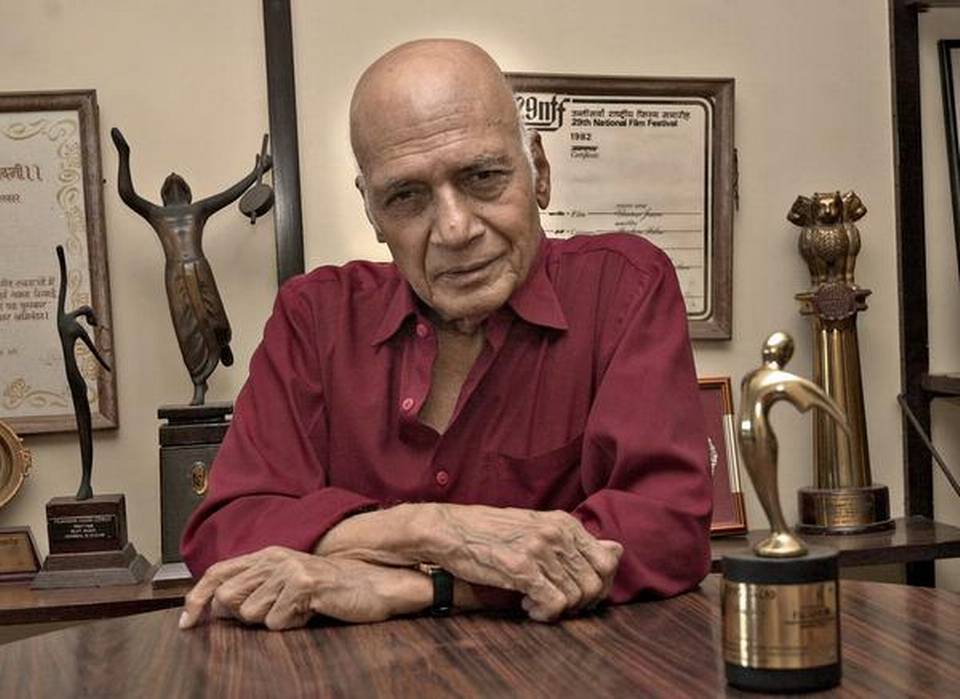
If there is one word or phrase to pin down Khayyam’s music , it would be ‘literary’ or ‘poetic’. He was a music composer who understood the nuances of Urdu and Hindi as much as the ‘sargam’ itself. So, in the ideal spirit of collaboration, the songs were deeply resonant both in the thought and feeling of the writer as much as Khayyam’s own melody. No wonder some of his films had the poet or the artist as a protagonist, points out film and music expert Pavan Jha. The acme of it were Umrao Jaan (1982, Rekha as a courtesanand even more so Kabhi Kabhie (1977 Amitabh Bachchan as a ‘shayar’), two of the biggest successes of his career in Hindi cinema that began in the late 40s.

Yash Chopra’s Kabhi Kabhie also marked the peak of his steady association with poet-writer-lyricist Sahir Ludhianvi, the other high point of which came earlier in Phir Subah Hogi (1958) and later also in Trishul (1978).

While remaining resolutely “Indian”, Khayyam’s music spanned a range — from the classical to semi-classical, folk to ghazal. “From pahadi to Punjabi, Braj to Awadh his musical influences encompassed the entire North India. He composed one of Mohammed Rafi’s best non-film bhajans — Paoon padoon tore Shyam,” says Jha. His contribution to the light classical non-film music may have come under the shadow of the film music but was just as significant. He was the one to have composed I Write, I Recite for Meena Kumari with the actress singing her own ‘nazms’ in the album.

Changing with the times

When it came to film music itself, he never got straitjacketed in any specific style, kept adapting with the times, the subject and characters of his films. So, in a film like Kabhi Kabhie, along with a melancholic and romantic title track and Main pal do pal ka shayar hoon he also created the youthful and energetic Tere chehre se, Pyaar kar liya to kya and Chahe chale chhuriyan. In Phir Subah Hogi he composed the devastatingly satirical Aasman pe hai khuda, a brilliant comment on the sad state of the nation, which resonates till date. As do Chin-o-arab hamara and the sad yet hopeful Wo subah kabhi to aayegi. Yet in the same film soundtrack he also had the beautiful love song Phir na keeje meri gustaakh nigahee ka gila.

Though he came out with great work in every decade that he spent in the Hindi film industry, it was not until the 70s and 80s — with Kabhi Kabhie and Umrao Jaan — that he catapulted into the big league of music composers. His amazing repertoire in the two films is what most would recollect him for, but there have been gems studded all over his abundantly rich discography. Like the Sahir  creation Parbaton kpedon par shaam kbasera hai in Shagoon (1964), Majrooh Sultanpuri’s Shaam-e-gham ki kasam sung from the heart by Talat Mehmood in Footpath (1953) or Majrooh’s Rafi-Suman Kalyanpur duet Thehriye hosh mein aa loon from Mohabbat Isko Kehte Hain (1965). There are the beautiful Aankhon mein humne, Aaj bichade hain and Hazaar raahein in Thodisi Bewafai (1980) and Dikahyi diye yun, Karoge yaad to and Phir chhidi raat in Bazaar (1982).

Kaifi Azmi was another writer-lyricist with whom Khayyam created magic in Shola Aur Shabnam (1961) with songs like Jeet hi lenge baazi hum tum and later in Akhri Khat (1966) with Bhupendra singing Rut jawan jawan, raat meherbaan. Of the present lot of lyricists, though he had a great friend and admirer in Gulzar, he collaborated briefly with him in Thodisi Bewafai and later, in the 90s, on the television programme Dard (Dil ka ek chehra dikhayi dega, sung by Jagjit Kaur and Bhupendra). There was an abandoned venture of the two, called Kharidaar, in which actor Rekha is supposed to have sung one song. Also, Khayyam and his wife, singer Jagjit Kaur, are said to have organised the sangeet for Rakhee-Gulzar wedding.

Among the playback singers he worked a lot with Talat Mehmood, Mukesh and even more so with Mohammed Rafi. Perhaps one the best examples of teaming up with Rafi was the mellifluous and haunting Kahin ek naazuk masoom ladki in Shankar Hussain (1977)Not to forget Aur kuchh der theher in Akhri Khat and Jaane kya dhoondhti rehti hain ye aankhein mujh mein in Shola Aur Shabnam, the latter taking Rafi’s voice from low notes to the high in a magical seamless musical stretch.

Lata Mangeshkar sang the lilting Baharo mera jeevan bhi sanwaro in Akhri Khat under his baton, Aap yun faaslon se and Apne aap raaton mein in Shankar Hussain and Aye dil-e-nadaan and Khwaab ban kar koi aayega in Razia Sultan (1983). He was one of the crucial figures to have helped shape Asha Bhonsle’s formidable career. The two peaked in Umrao Jaan but it was in an earlier film called Footpath that Asha got the major break of getting to sing for the lead. He also gave the film industry the booming vocals of Kabban Mirza in Aayee zanjeer ki jhankar in Razia Sultan and unique voice of Jagjit Kaur, also his wife, in songs like Tum apna ranj-o-gham apni pareshani mujhe de do in Shagoon(1964) and Dekh lo aaj humko jee bhar ke, koi lauta nahin phir marr ke in Bazaar(1982), a prophetic song in retrospect.

source: http://www.thehindu.com / The Hindu / Home> Entertainment> Music / by Namrata Joshi / May 20th, 2019
I have no regrets: Indian tennis great Akhtar Ali

Kolkata, WEST BENGAL :

A member of India’s Davis Cup teams from the late 1950s to the mid 1960s, Ali holds an enviable 9-2 win-loss record in the tourney – rated as the World Cup of the sport.

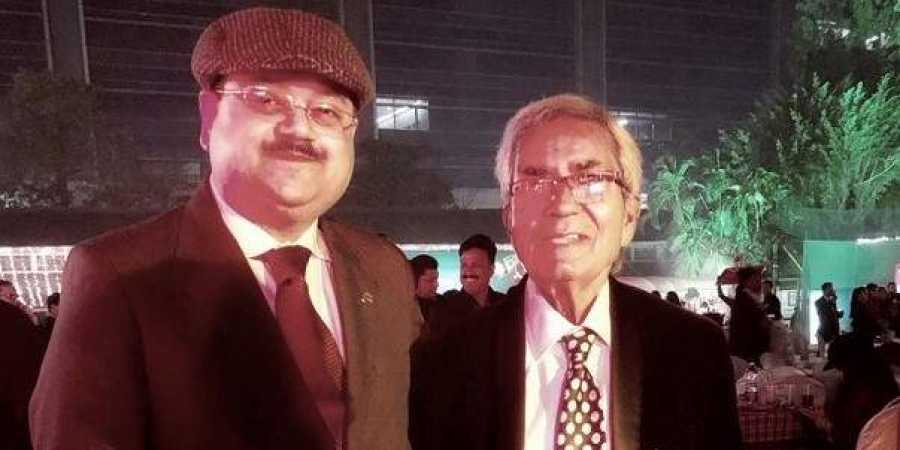
Akhtar Ali (R) at a club event in Kolkata. (Photo | Twitter)

Kolkata :

Notwithstanding his failing health and advanced age, India’s celebrated tennis player and legendary coach Akhtar Ali still keeps a keen eye on the courts of the eastern metropolis to spot and guide budding talent. Now a 80-plus veteran, Ali leads a simple life, spending time with his grandchildren and has little hesitation in saying: “I have no regrets”.

A member of India’s Davis Cup teams from the late 1950s to the mid 1960s, Ali holds an enviable 9-2 win-loss record in the tourney – rated as the World Cup of the sport. Proficient in both singles and doubles, he has played alongside the country’s legends like Ramanathan Krishnan, Naresh Kumar, Premjit Lall and Jaidip Mukerjea.

Later, as a coach, he guided the creme de la creme of Indian tennis — Ramesh Krishnan, Vijay Amritraj, Anand Amritraj and Leander Paes. Even Sania Mirza once publicly expressed her indebtedness to Ali for having set her on the right track during her formative years.

As a player, Ali grabbed the limelight in 1955, when he first claimed the Junior national title, and continued his wonderful show to reach the semi-finals of the Junior Wimbledon.

The Davis Cup stints till bring tears to his eyes as Ali turns emotional and nostalgic.

“In 1964, I went to Lahore to play the Davis Cup. Myself, S.P. Misra and Gaurav Misra. Four matches we won, one match could not be completed due to bad weather,” he recalled during an interview with IANS.

But it is India’s 3-2 victory over Brazil in 1966 on his South Club home ground that Ali cherishes the most, though he did not get to play any of the matches.

“The Davis Cup was a big thing in those days. I was a member of the Davis Cup squad. When India beat Brazil, that was a big moment and that is the lasting memory I have. That was the first big tie we won and we reached the final,” he said.

The Brazil victory and his son Zeeshan Ali’s success as both a tennis player and coach keeps coming back as one converses with him.

“I have no regrets. I am very attached with the 1966 Brazil win. My son is also a national champion and Davis Cup coach. There is no other family in the world which has a father-son duo to have played and also coached Davis Cup teams”.

In fact, the International Tennis Federation confirmed this in 2013.

Talking about his success as a coach, Ali said: “I enjoy coaching and I work hard. I have produced the maximum national champions and Davis Cup players. I also coached Belgium and Malaysia. I went to the best coaches to learn,” said Ali, who got the coveted Arjuna Award in 2000.

He leads a disciplined and routine life in a nicely done-up South Kolkata flat.

“After I wake up, I do my namaaz. Then I go to the club (South Club). I go to the Saturday Club also. Then I come home, have my lunch and if there is bank work, I do that.

“I lead a simple life. I go to South Club again and help the players. I am not coaching anybody at the moment because I am not well. But I help BTA (Bengal Tennis Association) in finding promising players. That keeps me busy. I love coaching. I enjoy it.

“I go to bed early. Sometimes my grandchildren come over and I spend time with them. It’s good fun,” he recalled, satisfaction ringing in his voice.

However, notwithstanding his high spirits, Ali has recently had his bouts of illness.

“I had lost eight kilos. My hand was shaking and it was tough for me. I took a lot of medicine. I saw the doctor. Doctor told me this was due to old age.

“I am much better now. I am pulling on. I am fit. I train light and can run a little bit” he said.

India’s recent performance in Davis Cup, a tournament in which the country finished runners-up thrice in the past, may not be that noteworthy, but Ali is optimistic.

“We have talented youngsters, but they have to work very hard,” he maintained.

source: http://www.newindianexpress.com / The New Indian Express / Home> Sport> Tennis / by IANS / August 18th, 2019

Tomb of Kashmir’s last Muslim ruler lies in ruins at Nalanda

Biswak Village – Nalanda, BIHAR  :

Yusuf Shah Chak, the last independent Muslim Ruler of Kashmir Valley, is buried in Nalanda and his tomb is in disrepair and unprotected.

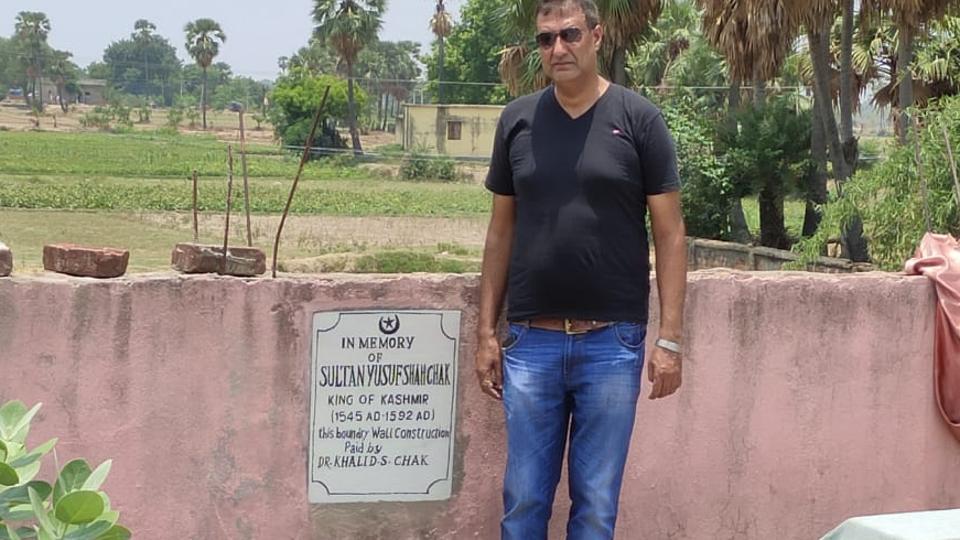
Yasir Iqbal, a descendant of Yusuf Shah Chak, at the tomb of Kashmir’s last Muslim ruler’s grave in Nalanda. (HT Photo )

With the Centre revoking Article 370 which gave special status to J&K, the Kashmir Valley is once again in focus. But Yusuf Shah Chak. the last independent Muslim ruler of the Valley, has remained obscured and unknown for a long time.

Chak is buried in Nalanda and his tomb is in disrepair and unprotected.

Chak was exiled to Bihar by the Mughal emperor Akbar. The area where he had settled along with his family and relatives in Biswak village in Nalanda and also maintained a cavalry force of 500 horses, was later known as Kashmiri Chak. Though the exiled Kashmiri ruler died in Odisha in 1592, his body was brought to Bihar and has been lying buried along with the tombs of his wife, sons and other relatives at the graveyard at Biswak near Kashmiri Chak.

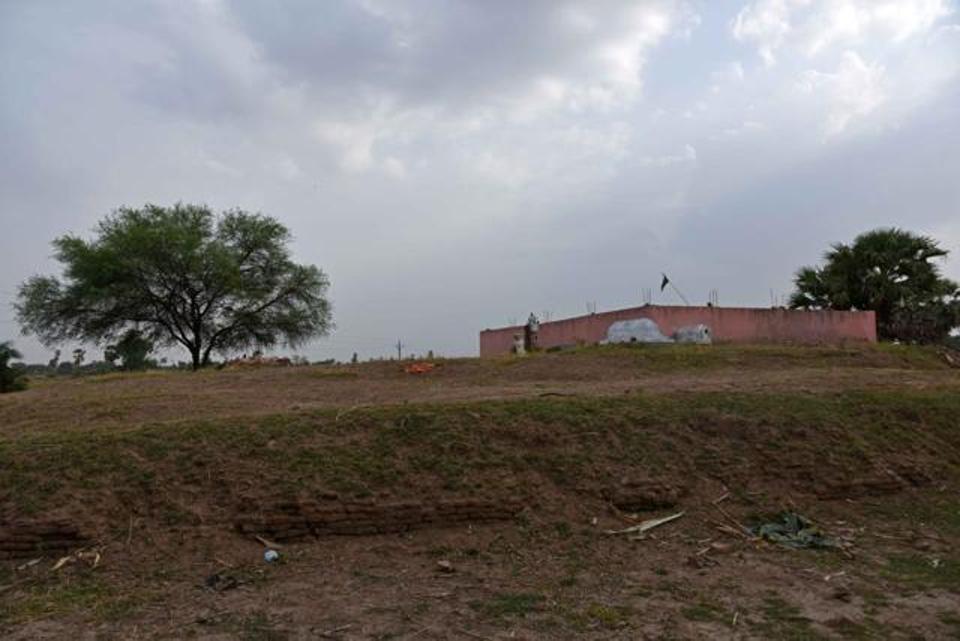
Though his Mazaar is encircled with boundary wall, the land outside this wall at the cemetery is open and has remained prone to encroachments in the past. Some concrete structures and thatched roof hutments too have come up around its periphery.

Earlier, some locals erected a boundary wall around his Mazaar, but the entire area of the cemetery outside this wall is open to encroachment.

A view of the ‘mazar’ of Yusuf Shah Chak, the last Muslim ruler of Kashmir Valley. ( HT Photo )

Recently, Yasir Iqbal, a descendant of the Chak ruler’s relative, wrote a letter to the Minority Welfare Department, Bihar, drawing the attention towards the increasing threats of encroachments at the site of the cemetery .

He has made an appeal to take steps to stop encroachment and has also requested for the boundary wall at the cemetery. In the letter, Iqbal also made requests to preserve this piece of history and to take initiatives to tap tourism potential of the site.

“The minority welfare department has forwarded the request letter to the department concerned which is responsible for creating the boundary walls at graveyards and has directed to take actions as necessary,” SI Faisal, special secretary cum director, minority welfare department, said.

The site has a great tourism potential and it can be tapped. “But it’s the domain of the tourism department. They should take initiatives in this direction and should develop it,” he said.

Yasir Iqbal said many Kashmiris have been eager to come here to pay tribute to their last ruler. “Many intellectuals have also been coming here, but the place lack even basic infrastructure. Even the road to Kashmiri Chak village was developed in 1977 when Sheikh Abdulla, the prominent leader of Kashmir had arrived to witness Yusuf Shah’s tomb” he said. There is also no place at the village to stay. “You have to find the accommodation whether at Islampur or at Rajgir,” he said.

However, the biggest concern has been encroachment of the land. “The cemetery is spread over five acre land area at Biswak and over one acre land at Kashmiri Chak. But the tombs of Yusuf Shah, his wife and sons for decades remained unknown. There was almost a jungle around it and the tombs were hardly visible. Then we got it constructed a few years ago. But the area outside is still open and is being encroached inch by inch. Some concrete structures and thatched roof hutments have also come up on its border areas,” he said.

Yusuf Shah Chak ruled Kashmir from 1579 to 1586. In 1579 he was deceitfully imprisoned by the Mughal emperor Akbar, but was later released and was exiled to Biswak area of Bihar.

“He had a Mansabdaari of 500 horses. In fact, his love and knowledge of art and literature had impressed Mughal Badshaah and that became the reason for his release. He had married Habba Khatoon, the legendary poetess whose verses are still sung by the locals in Kashmir,” he said.

source: http://www.hindustantimes.com / Hindustan Times / Home> India> Cities> Patna / by Reena Sipan, Hindustan Times, Patna / August 07th, 2019

Justice Ismail – Indian citizen, Pakistan high commissioner in Delhi

Gorakhpur,  UTTAR PRADESH :

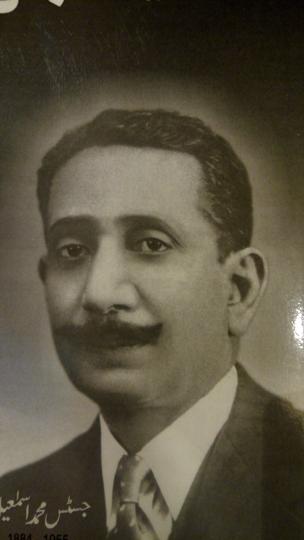
Justice Mohammad Ismail

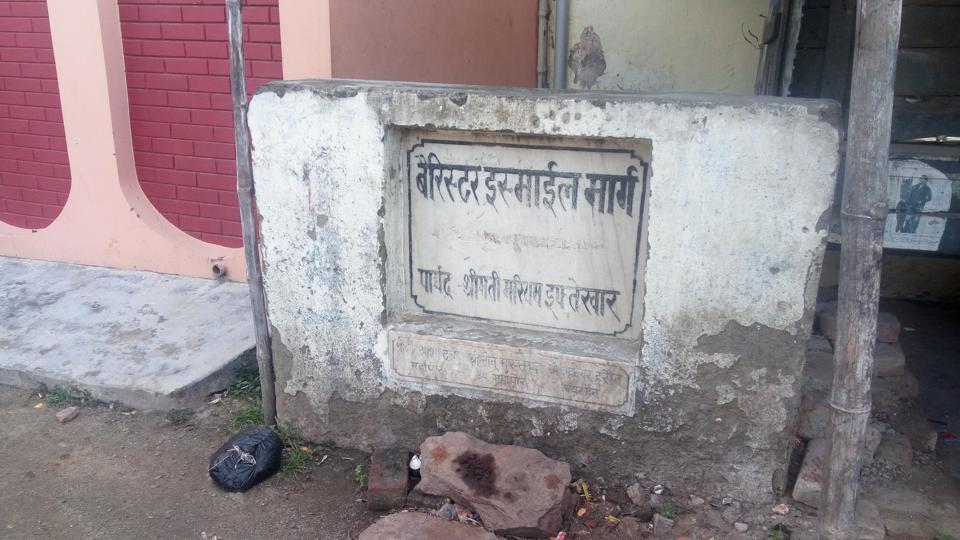
An old, white building located in Unchwa area and a road named after him are just a few markers left to remind posterity of justice Mohammad Ismail, who agreed to serve as Pakistan’s first high commissioner in India but on the condition that he would discharge his duties as an Indian citizen.

Pakistan PM Liaquat Ali Khan insisted that justice Ismail serve as high commissioner but the offer was only accepted when Indian PM Jawahar Lal Nehru and his Pakistan counterpart agreed to accept the condition, which showed the immense love of justice Ismail towards his country.

Born in Gorakhpur in 1844, justice Ismail, also held several eminent posts including Chairman of Gorakhpur Municipal Board between 1915 to 1932, besides acting as government pleader.

“Yes, justice Ismail was the first High commissioner of Pakistan in India. Those days, instead of embassies there were offices of the high commissioner in all Commonwealth countries,” explained DDU Gorakhpur University Modern History professor Chandra Bhushan Ankur.

The road named after justice Ismail

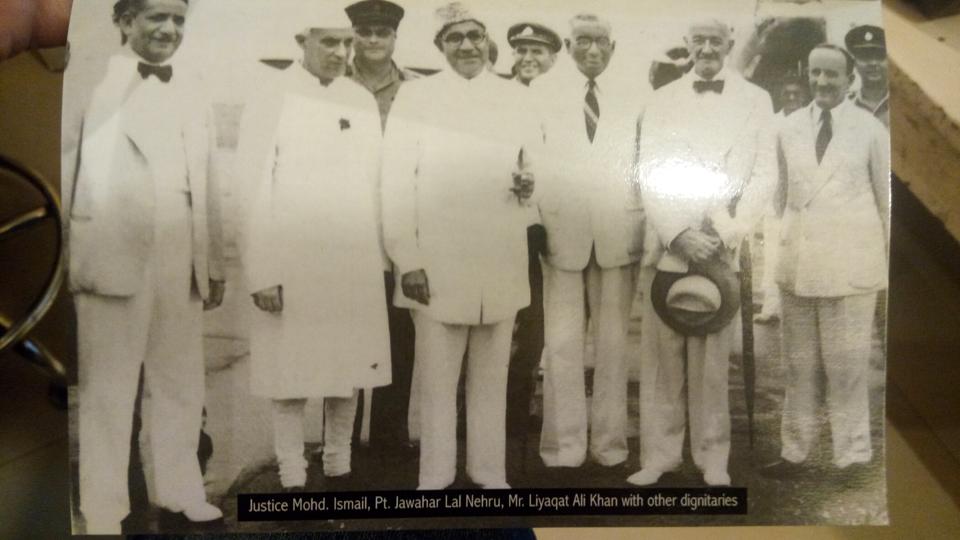
Justice Ismail’s nephew and city-based physician, Aziz, who has preserved rare photographs of justice Ismail with dignitaries including Nehru, Sarojni Naidu, and others, said “Since Ismail was well known to leaders of both countries, the Pakistan government approached him to take charge as Pakistan’s high commissioner in Delhi. Considering the prevailing situation in the subcontinent after partition, he agreed to function as their high commissioner on condition that he shall not relinquish his Indian citizenship and the proposal was accepted by both countries and he remained the sole example in international diplomatic history to have acted as High commissioner of one country while being the citizen of another.

“It’s important to note that after his tenure came to end, Pakistan further proposed his name as its representative in the United Nations but justice Ismail declined the offer as it would again require him accept Pakistani citizenship, which he didn’t like. He loved his motherland so he declined the offer and came back to Gorakhpur in 1953. He died in Unnao and was buried in Gorakhpur.”

Justice Imail , Pt Jawahar Lal Nehru and Pakistan PM Liaquat Ali Khan

Aziz further said: “It was then during this period that Ismail managed the affairs of refugees for the safe passage and was instrumental in bringing together the PMs of both countries to pen the Nehru-Liaquat Pact, a bilateral treaty which allowed refugees to return and dispose of their property, abducted women and looted property to be returned and most importantly guaranteeing the rights of minorities.

In 1922, during the freedom movement, when Nehru was arrested from Gorakhpur, justice Ismail as government prosecutor politely refused to pursue the case against the latter, citing his close relationship with the Nehru family. Years later, when Nehru Became PM, he proposed to name Lal Diggi Park after justice Ismail but that couldn’t happen.

Justice Ismail completed his graduation from Anglo Oriental College, which later become Aligarh Muslim University, before moving to England to earn a degree of Barrister from Lincoln’s Inc. On returning to India around 1915, he started practising in court and later rose to become government advocate in the Allahabad high court and then acted as Chief Judge in central India with headquarters in Raigarh.

source: http://www.hindustantimes.com / HindustanTimes / Home> India> Cities / by Abdul Jadid / August 14th, 2019

Karate champ from Kolkata slums to represent India in Thailand

Beniakupur, Kolkata, WEST BENGAL :

AyeshaNoorMPOs16aug2019

Ayesha Noor, a 21-year-old Karate champion from the slums of Kolkata, will be representing India in an upcoming international sports meet, which is to be held in Thailand. Her story is nothing but inspirational and heartening.

The 21-year-old’s journey witnesses a lot of suffering; Ayesha was afflicted with epileptic seizures from the time of birth. She lost her father in 2010, and her mother Shakila Begum had to make ends meet by sewing clothes from home.

A ray of hope for young Ayesha while she was living in the slums of Beniakupur in Kolkata, coach M. A. Ali saw potential and took her under his wing, grooming her to be a solid contender in Karate.

AyeshaNoor02MPOs16aug2019

The young karate champion has won three gold medals for India, making her a fierce force to be reckoned with. Her first win was in 2010, followed by winning gold again in Bangkok in 2013 and 2015. Ayesha Noor was honoured by the United States of America as the ‘Hero of Gender Equality’ in 2017, at a function held at the American Center in New Delhi. She was also awarded the ‘Times Women Heroes Award’ on 7th June, by the Times of India. At such a young age, Ayesha Noor has now become a great influence for many.

A documentary film has also been made which depicts her journey from the slums of Kolkata to winning gold in karate at the international level, despite her health condition and financial struggle. The story of this young karate champ is nothing but inspirational. We can’t wait to watch her slay at the international sports meet in Thailand. More power to you, Ayesha!

source: http://www.femina.in / Femina / Home> Trending> Achievers / by Eden Noronha / August 10th, 2019

Meiraba and Samiya — the next big thing

Hyderabad, TELANGANA :

Future bright: Their innate talent and recent run of results hark well for Maisnam Meiraba and Samiya Farooqui.

Duo says the tag motivates and spurs them on

For the 16-year-old shuttler Maisnam Meiraba (singles player), this year has been phenomenal in terms of overall performance.

Following the recent bronze medal in the Bulgarian junior International, he’s now in Panchkula playing a junior ranking tournament which is also a selection tournament for the upcoming World juniors. There will be another in Bengaluru that he will play as well.

“We have a lot of shuttlers now. The popularity of and interest for the sport has been on the rise,” he says over phone, referring to his home State Manipur that people mostly associate with football.

Boxer Mary Kom and Weightlifter Mirabhai Chanu are a couple of other sportspersons who’ve made their name from the region.

Now Meiraba, though it’s too early, is observed by experts as a potential star player for the future.

Four-in-a-row

Since January, he notably has won four consecutive junior (u-19) ranking tournaments in Bengaluru, Vijayawada, Chennai and Trivandrum, reached the quarterfinals in the German junior International, won bronze in the Yonex-Roza Bty junior International in Thailand, won gold in the White Nights junior International in Russia.

While Meiraba shuttles between Imphal and Bengaluru where he’s been training at the Prakash Padukone Badmintorn  Academy, Samiya Farooqui (16), who won the girls’ singles gold in Bulgaria and is considered as another potential star in the making, hails from and trains in Hyderabad.

She won her maiden junior (u-19) ranking tournament in Chennai early this year. “I would say Meiraba’s is power game, while Samiya’s is an all-round game,” says the junior National coach Sanjay Mishra.

“Meiraba’s strengths are his speed, power, and accuracy. He has to work on fitness; improve his stamina. For instance, to reach the final of, say, a five-day tournament, you need to win four or five matches in a tight schedule.

“Samiya, I think, has to work on power. She’s very good with half smashes; deception, in general. Also, she’s a fighter; doesn’t give up easily, ” he adds.

Meiraba responds saying he’s always been working on his fitness and agrees that he might be found lacking when compared to the other Asian players, especially from China and Indonesia. “They are physically dominating,” he says.

He says he’s particularly been working on his smash and forecourt play for now.

Reducing errors

Samiya, on the other hand, believes she has to work on reducing committing unforced errors.

Samiya, who has been juggling a lot between the junior and senior circuits, will not be available for the World juniors, for she will be focussing on the upcoming senior tournaments in Myanmar and Nepal.

Asked if it’s extra pressure to live up to the big expectation — being considered as potential future stars — both of them say it motivates them and makes them want to maximise their potential. Samiya is even being touted the next Saina Nehwal!

source: http://www.thehindu.com / The Hindu / Home> Sports> Other Sports / by S. Prasanna Venkatesan / Chennai – August 15th, 2019

Assam freedom fighter’s Tricolour to flutter again

ASSAM :

CommanderSahibMPOs15aug2019

Khadi flag was specially made in 1947 after it was clear that the British were leaving

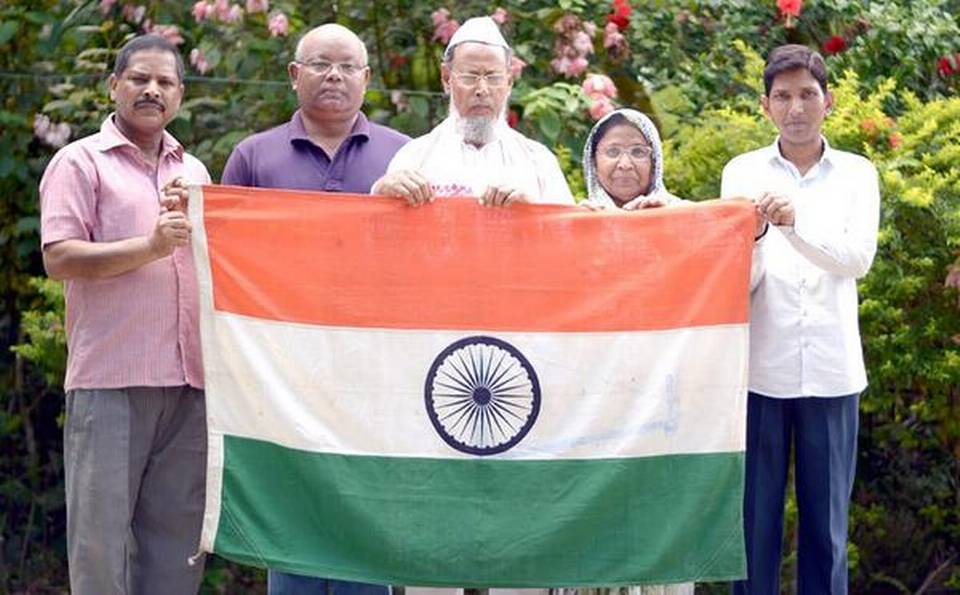
Nurul Hussain had intended to display his father’s most prized possession — a khadi Tricolour of 1947 vintage — to mark India’s 75th Independence Day.

But friends and neighbours in Sivasagar district’s Demow town, about 380 km east of Guwahati, advised him not to wait that long. He agreed to unfurl the National Flag on Thursday.

“They have a point. I am 78 and the only survivor among Mohammed Hussain’s five sons,” he said.

Mohammed Hussain spent the later part of his life as a cleric. Locals, however, knew him more as Commander Sahib than a maulvi. “He had sown the seeds of revolt against the British in this part. People gradually began to call him Commander Sahib. The British were so angry with his rebellion that they confiscated 47 ‘bighas’ of land he owned,” Mr. Hussain told The Hindu from Demow.

After Commander Sahib died in 1971, his youngest son took over the responsibility of preserving what his father referred to as his treasure box.

More than a flag

“The box contains much more than the spotless khadi flag. There are records pertaining to his joining the freedom movement under Mahatma Gandhi, his joining the Indian National Congress and assorted items associated with many a great leader,” said Mr. Hussain, who was the founder-teacher of the Demow Town High School in 1970.

The flag was specially made in 1947 after it became clear that the British were leaving India. The records, Mr. Hussain said, trace the history of the movement in eastern Assam from 1938 to 1947, including the Quit India movement.

Many among the town’s 30,000 people will turn up at the courtyard of the Hussain house for the unfurling of the flag at 7 a.m.

“Everybody knows Commander Sahib’s house. Many of us will be there for the unfurling to see a 72-year-old National Flag, neatly preserved, being hoisted for the first time since 1947,” said Umesh Chetia, a local resident.

source: http://www.thehindu.com / The Hindu / Home> News> States> Other States / by Rahul Karmakar / Guwahati – August 15th, 2019

How a group of eight locals rescued people stuck in flooded homes in Kodagu

Kodagu,  KARNATAKA :

Around 50 residents of Kodagu’s Goodugadde village were stranded in their flooded homes on Friday morning.

FloodKF14aug2019

Around 50 residents of Kodagu’s Goodugadde village were stranded in their flooded homes on Friday morning, hoping that help would come before the river Cauvery would take away their lives.

Luckily for Goodugadde’s residents, help came in the form of eight Good Samaritans, who ferried them to safe places through small iron-made coracles.

Mustafa, a 32-year-old activist from Kodagu, suspected that people were stranded in Goodugadde and other villages along the banks of the Cauvery river. Mustafa had heard from the local grapevine that many people had not left their homes despite a flood warning.

At around 6 am on Friday, Mustafa and his friends Ranjith Kumar, Afzal, Iliyas, Shafiq and four others from Siddapura, were anxious as the Dubbare Rafting Team was busy with rescue elsewhere.

Mustafa and his friends rushed to the Siddapura Police Station and requested the police to lend them the iron-made coracle lookalikes that the police had kept in the evidence room, which they had seized when they busted an illegal sand mining ring.

“We call it thappe in Kannada. They are circular, iron made vessels sand miners use to transport sand. It’s smaller than a coracle but bigger than the round vessels used to carry sand in construction sites. We wanted those so we could row it and look for stranded people,” Mustafa explains.

When the group reached Goodugadde, they found several senior citizens, children and middle aged people stranded in their flooded homes. Many were sitting on their rooftops, while some of them clung to trees, waiting for help.

“There were about 50 people. We began rescue at 7am and it went on till 11 am. We lost count of the number of trips we made to bring all of them to safety. They were sent to relief camps in Siddapura. By 12 pm, the Dubbare Rafting Team came to help us and we continued rescue operations in Baradi and Kakkattagadu villages,” Ranjith Kumar says.

Mustafa, Ranjith and the team of local rescuers claim that they are experienced swimmers and that they had volunteered during rescue operations in the floods that hit Kodagu in 2018.

“We have lived along the banks of river Cauvery all our lives. We have a very close relationship with the river and swimming is the first thing we learnt as children. We are expert swimmers and if our skill could be put to use to help people in need, then it’s our duty to help them. What is the point of being an expert at something and not helping those who could benefit from it?” Mustafa says.

Mustafa and his motley crew continue their rescue operations even now. “We will help as much as we can. Our people have seen too much damage due to rains and floods. Currently, we are going back and forth Goodugadde and recovering their belongings,” Mustafa adds.

source: http://www.thenewsminute.com / The News Minute / Home> Karnataka Floods / by Theja Ram / August 10th, 2019

Dubai-based Indian expat dies while rescuing kids from Kerala floods

KERALA / U.A.E :

(Photo via Manorama) / khaleejtimes.com

He couldn’t come out of the water as there was a strong undercurrent.

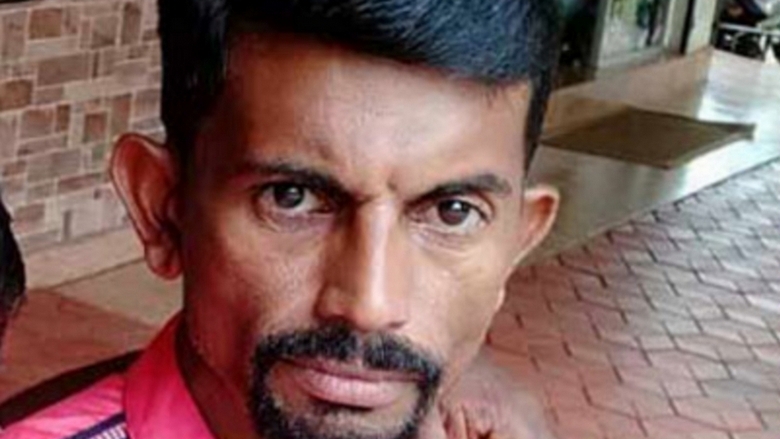
Flood in the Indian state of Kerala has claimed life of a Dubai expat. Razak Akkiparambil, a support staff of a school in Dubai, died after rescuing two children, including his son, who were caught in flood water.

The incident happened on Tuesday afternoon, Razak’s brother-in-law Shareef, said over the phone from Malappuram district, which is among the worst-hit regions.

“Razak had come to Kerala for his daughter’s marriage, which was held on August 4. The family had come to my home. The incident happened around 2.30 pm (IST). He saw these kids walk down to the water-filled paddy fields. It’s now filled up to the height of two people and soon these kids were in deep. As soon as Razak saw the kids were in danger, he rushed and jumped into the water to save them. He managed to hand over two kids safely to another person. But he couldn’t come out as there was a strong undercurrent. He is just 42 years but couldn’t cope with the sudden rush of water and collapsed. And as everyone was focusing on kids, no one noticed Razak drowning. He was pulled out of the water only after 15 minutes. We rushed him to a hospital but the doctor said he passed away before reaching there,” said Shareef, who works at Our Own English High School.

“We both work in the same school. Razak is there for some 10 years now. We had travelled together to Kerala for the marriage.”

Razak, a father of three, is survived by his family. They are devastated with the news of his untimely death.

“They were already affected by flood last year. They had somehow managed to renovate their house for the wedding. But again were hit by floods from last week. Luckily the wedding went well. It was his big dream. Now he is no more. The cremation will be tomorrow.”

ashwani@kjhaleejtimes.com

source: http://www.khaleejtimes.com / Khaleej Times / Home> UAE> Dubai / by Ashwani Kumar, Dubai / August 14th, 2019

Meet the Indian who has performed Haj 25 times

Bengaluru, KARNATAKA :

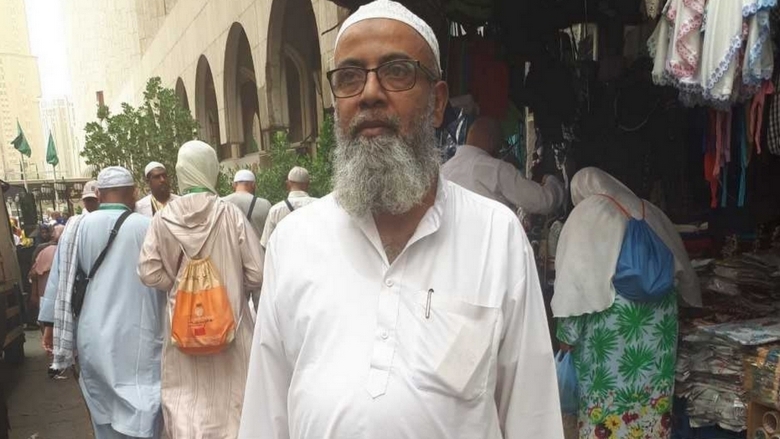
Taqiullah Khan leads at least five Umrah groups to the holy city every year (Photograph: Sahim Salim / Khaleej Times )

62-year-old Taqiullah Khan has also performed Umrah an epic 126 times.

Indian national Taqiullah Khan performed Haj for the first time in 1994. The Bengaluru resident, now 62, has undertaken the journey 25 times in as many years ever since.

Khan is now back in Makkah to perform his 26th Haj.

Khan has also performed the lesser pilgrimage, Umrah, an epic 126 times!

For most Muslims, the holy journey is a once-in-a-lifetime experience due to the costs, difficulties and sacrifices involved. For Khan, it’s an annual affair, thanks to his tours and travels company.

“I have been coming here so many times that I know Makkah and Madina better than Bengaluru,” he quipped.

The first Haj

Interestingly, Khan’s mother had “predicted” that Haj would become an annual journey for him.

A year before he went for his first Haj, he had sent his parents for the journey in 1993.

“I requested that they pray for me to be able to visit the blessed land. When my mother came back, she told she had made this particular dua (supplication) so much that she believed I would perform Haj every year.”

Just like his mother predicted, Khan’s journey began in 1994. “I went as a Haji (pilgrim) like any other Muslim back then. I went back again the next year with my wife.”

He founded Tawakkul Tours and Travels in 1996 and applied for the Haj quota. He has been coming as a Haj guide ever since.

The father of three doesn’t necessarily have to come to the holy city along with the groups that his firm is responsible for. “For me, this is an honour from Allah and I wouldn’t miss it for the world. Most people consider themselves lucky if they are able to undertake the journey once in their lifetime. Allah has blessed me to perform Haj every year.”

Khan also leads at least five Umrah groups to the holy city every year.

He holds something called the Munazzam licence, which is granted to Haj organisers. “So you see, Allah has blessed me so much that this is actually my bread and butter, too.”

The Indian’s wife and two of their three children are Hajis as well.

The ‘missed’ Haj

Khan has just missed the Haj of 1999 since 1994. He had suffered a motorbike accident and his doctor asked him to avoid undertaking the arduous journey.

“But I have still performed Haj 25 times in 25 Gregorian years because I was lucky enough to get two pilgrimages in 1996.”

That year, Dhul Hijjah – the Islamic calendar month in which the journey is undertaken – came twice in 1996: January and December.

Preparations

Khan’s company gets a quota of 100 pilgrims every year. “This time, our quota increased by seven, Alhamdulillah.”

Khan said he starts preparing for the Haj season as soon the fasting month of Ramadan ends. “That’s when the government of India announces the Haj quotas.”

Khan’s biggest strength is his family. “They have been very supportive of my endeavours. Not once have they asked me to depute someone else to lead the groups since they, too, believe that this is an honour.”

Safety guaranteed

Khan is most impressed with the way the annual pilgrimage is organised.

“In the 25 years I have been leading Haj groups, not once have I heard a Haja (female pilgrim) complain about harassment. Not once has anyone complained about robberies or any serious crimes.

“It is amazing how the government manages to organise all this so efficiently year after year despite receiving in excess of two million pilgrims.”

Most memorable Haj

Though Khan maintained that each of his 25 pilgrimages was special, his first Haj in 1994 is the “most memorable”. “Haj season fell in the month of May. It was very hot then. But it remains the most special Haj for me. I remember every single aspect of that maiden trip. I enjoyed it.”

During the Haj of 1997, when a massive fire broke out in the tent city of Mina, Khan and his group of 60 Hajis were just 500 metres away from the tent in which a cylinder exploded. The tragedy had claimed over 200 lives.

“The police evacuated us and we managed to escape. We came back to the holy city. Thanks to the government’s efficiency, we were able to go back to Mina the very next day. That’s another Haj memory that will always remain with me.”

When asked how long he plans to continue the annual journey, pat comes the reply: “As long as my health permits, I don’t plan to give this up.”

sahim@khaleejtimes.com

How Haj has changed in 25 years

1. Photo ban lifted: According to Takiullah Khan, photography was banned in the holy sanctuary till about a decade ago.

2. End of ‘rocket stretchers’: In the 90s, elderly or disabled pilgrims would be taken for circumambulation on a stretcher by four men, who would “speed through the crowds”. “It was a very dangerous practice and people would just move out of the way as they were afraid of getting hurt. Thank God, we have wheelchairs now,” said Khan.

3. Drinking Zamzam from the source: Till about five years ago, pilgrims could descend to the Zamzam well and drink the holy water from its source.

4. Just two ‘mataf’ areas: Masjid Al Haram has four Mataf (areas to circumambulate the Holy Kaabah) floors today. It used to be just two when Khan first went for Haj.

5. Ascending Mount Safa: Pilgrims could previously ascend the Mount Safa and look at the Holy Kaabah while praying. Today, it stands behind a glass enclosure.

source: http://www.khaleejtimes.com / Khaleej Times / Home> Region> Saudi Arabia / by Sahim Salim (reporting from Makkah) / August 08th, 2019