All posts by mpositiveone@gmail.com

Being Bohra in Chennai

Chennai, TAMIL NADU :

With their presence in the city for over 200 years, more than 1,800 families have found a home here. A walk through George Town reveals the community’s rich cultural stories.
Photos: Ashwin Prasath

Chennai :

Their favourite food is not biryani and they wear burqas in hot pink, forest green, bright blue and every colour one can imagine, except black. Meet the Bohras, a sect of the Shia Muslims whose history in Chennai dates back to more than 200 years.

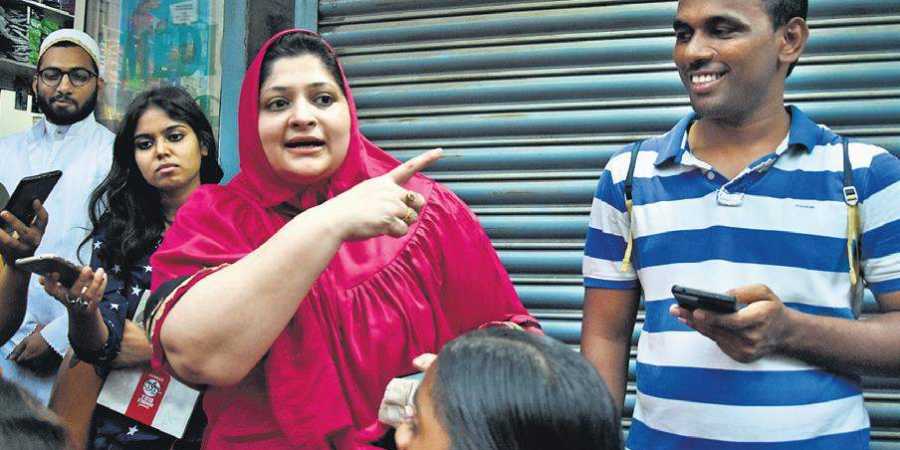
“The Bohra community originated in Yemen and later spread to India and Pakistan. In India, they primarily settled in Gujarat before spreading out to different cities. So, we have Gujarati influence on our food, language and traditions. We speak Gujarati with references from Persian and Arabic,” said Tasneem Kutubuddin dressed in a dark pink burqa or rida, their traditional costume. She was leading a heritage walk — Understanding the Bohras in the city — on Sunday at George Town.While women wear ridas that cover their head and body but not their faces,  Bohra men wear a three-piece white outfit and white cap called a topi with gold embroidery.
Bohri02CF27aug2019

Migrating to Chennai
Mulla Jafferji Ibne Mulla Ismailji was the first Bohra to come to Chennai. He travelled till Arcot in 1790 via the Malabar coast to join his uncle in the bangle business. He later migrated to Chennai in 1793 and set up a garment business in George Town.

“Whenever Bohras migrate to a city, if they are the first ones from their community there, they buy a land for cemetery and prayer. Also, each prayer area has a community hall attached to it where we all dine together. So, this was the first piece of land brought by a Bohra in Chennai,” said Tasneem pointing towards the Mohammedi Masjid in Angappa Naicken Street at George Town.

Chennai has three Dawoodi Bohra mosques — Mohammedi Masjid, Saifee mosque in Moore street, Mannady and the third one at Basin bridge.  Today, more than 1,800 Bohra families are living in the city and are primarily settled in Madhavaram, Royapuram and George Town. The Dawoodi Bohras are followers of the 27th Dai or high priest and can be found in about 40 countries around the world. They have separate administration offices in each city.

The MSB Matriculation Higher Secondary School at Thiruvalluvar Nagar in George Town is set up especially for the children of Bohra community. According to Tasneem, the school follows the Tamil Nadu State Board syllabus along with a Siyat Islamia curriculum.

“About 800-odd children study in this school. For the kids from the community who are studying in other schools, MSB offers a weekend programme to educate them on the history of the community and Quran,” she said.

Communal dining
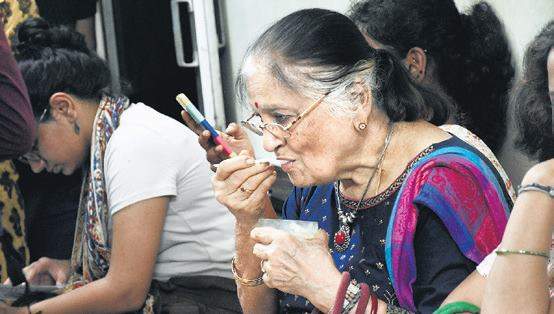
Food plays an integral part of a Bohra’s daily life. Eating from a thal is a tradition that still continues in many families. A thali is a large round metal plate, around which the family sits, helping themselves from the same plate, course-by-course, during every meal of the day. A lot of their dishes are influenced from the Gujarati cuisine.

Apart from non-vegetarian dishes like pulao and kebab, the cuisine boasts some unique vegetarian dishes including a cold baingan bharta made with curd and spring onion, sev ni tarkari in which bhel puri sev is cooked with onions, and their quintessential dal chawal palida, a combination of rice and dal served with a flavourful concoction of drumsticks, bottle gourd and kokum.

Unfortunately, the Bohra community does not have many restaurants serving the savoury dishes. But, to try their traditional sweets, head to Mannady Street to find sweet shops maintained by Bohris including Hatimy’s and Alambaradar.

Try some of their heady sweet treats like malida (a sweet made with wheat and jaggery), lacchka (a cracked wheat halwa, usually made on first day of the year of Bohra calendar), kalamro (a yogurt based rice pudding) and the famous malai khaja which is also called Bohri puff pastry.

An interesting concept among the Bohras are the community kitchens that are attached to the masjid. “The concept is similar to the dabbawalas in Mumbai. Food gets prepared early in the morning, packed in boxes and numbered. People collect their boxes and replace it with an empty box for the next meal. One needs to pay a nominal amount. Usually, the well-to-do families pay for four to five people, so that the poor can get food for free,” said Tasneem.

The concept of community kitchen began around five years ago when their religious head, Syedna Dr Mufaddal Saifuddin said that women must be freed from the kitchen. So, this kitchen makes lunch for the entire Dawoodi Bohra community across Chennai, every day. The rule is applied across every city and every country.

source: http://www.newindianexpress.com / The New Indian Express / Home> Cities> Chennai / by K V Navya / Express News Service / August 26th, 2019

Rare honour for Hyderabad’s wildlife photographer

Hyderabad, TELANGANA :

Ismail01MPOs27aug2019

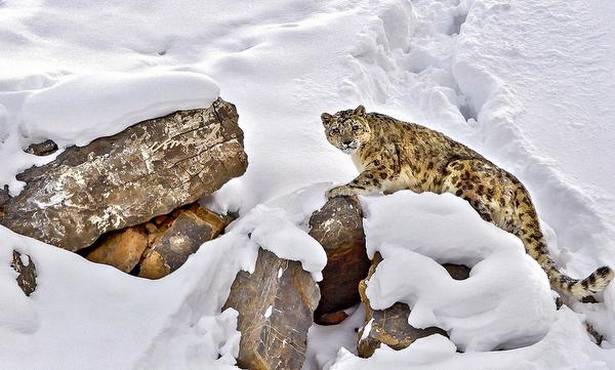
Hyderabad’s Ismail Sheriff only lensman to be invited to conference on snow leopards in Kazakhstan

For city-based wildlife photographer Ismail Sheriff, known for capturing the elusive snow leopards on camera, it was a rare honour to be invited as the only lensman to a recent conference on conservation of snow leopards in Kazakhstan.

The conference attended by delegates from 12 countries including Russia, India, Bhutan, Nepal, Pakistan, Afghanistan and Mongolia, focussed on initiating various measures to increase the population of snow leopards.

“It was indeed an honour to be there. I am glad that my adventure in Kibber (Himachal Pradesh) where I first sighted a snow leopard five years ago and subsequent sightings of the magnificent species helped me come thus far,” he tells The Hindu.

Rare captures of the elusive snow leopards by City-based wildlife photographer Ismail Sheriff. PHOTO: Special Arrangement

Mr. Sheriff, 39, started off on the big cat trail nine years ago, mostly photographing Royal Bengal Tigers and gradually moved on to snow leopards.

“India has about 250 snow leopards and interestingly, there are no territories for them like tigers. They often travel across about 150-200 square km, transgressing even borders of a few countries,” says Mr. Sheriff, who is into fine arts printing apart from pursuing his passion in wildlife photography.

“Unlike spotting tigers in a reserve forest, this is a different ball game altogether because the biggest challenge comes from the freezing conditions. Often, we have to brave life-threatening landslides and avalanches. It was a spine-chilling experience for me,” he explains. “But, still these factors don’t deter me as anything related to a snow leopard gives me joy,” he adds.

The maximum snow leopards, Mr. Sheriff says, are in China — about 2,000 — and it is Kazakhstan’s national animal and hence, that country’s concern for conservation is pretty much understandable.

“Groups of wild dogs pose serious threat to the leopards, especially the cubs. They also deny food to the leopards by taking away their kill. And, then there is climate change which is making the snow leopards come closer to the human habitat,” he points out.

What are the corrective measures being planned? “It has been decided to have a four km grid with trap cameras to understand their behavioural pattern, density and prey base, and educate the locals about the importance of protecting them. We generally travel to the mountain ranges during winter and by the time we have the second edition of the conference in January 2020, we should have more practical solutions to ensure an increase in their numbers,” he concludes.

source: http://www.thehindu.com / The Hindu / Home> News> Cities> Hyderabad / by V.V. Subrahmanyam / Hyderabad – August 26th, 2019
Son-of-the-soil diplomat does nation proud

Hyderabad, TELANGANA / New York, U.S.A :

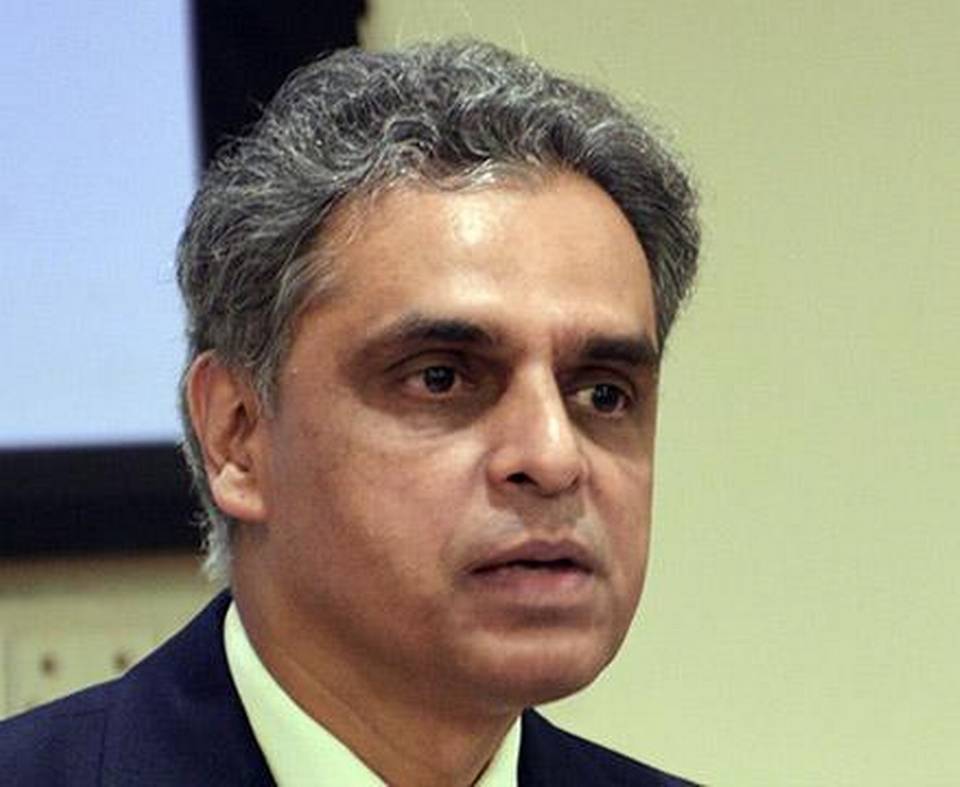
Syed Akbaruddin
Syed Akbaruddin

Syed Akbaruddin’s friends describe him as a thorough professional

India’s Permanent Representative to the United Nations, Syed Akbaruddin, won accolades from Twitteratti after he extended his ‘hand of friendship’ to Pakistani journalists and reportedly asserted at the U.N. Security Council’s closed consultation on Kashmir that Article 370 was an internal matter of the country. But unbeknownst to many, the suave diplomat has a strong Hyderabadi connection, including that of serving as joint secretary of Nizam College Students’ Union.

Those who have been acquainted with Mr. Akbaruddin describe him as ‘focussed’, ‘articulate’, ‘soft spoken’ and with ‘no enemies’.

“He was a degree student at the Nizam College from 1977 to 1980. His father S. Bashiruddin was head of the Department of Journalism from the early 70s to the mid-80s and then moved to Dr. B.R. Ambedkar as its Vice-Chancellor. He also served as Ambassador to Qatar,” says his friend and journalist M. Somasekhar, who met the diplomat around six months ago. “He was active in student politics in the college and was very popular. He continues to be articulate and soft spoken.”

Mr. Akbaruddin’s school, Hyderabad Public School at Begumpet, tweeted its appreciation on Tuesday, “We are proud to recognize the man of the moment, Syed Akbaruddin who is the permanent representative of India at the United Nations, an alumnus of the HPS @IndiaUNNewYork @AkbaruddinIndia @UN #HPSBegumpet #HPS #Alumni #Hyderabad #Begumpet”.

Managing editor of Siasat Daily, Zaheeruddin Ali Khan, who was the diplomat’s junior in Nizam College, describes Mr. Akbaruddin as ‘truly secular’ and ‘highly efficient’ with a deep understanding of not just diplomatic issues, but also those connected to the culture of the country.

“We had organised an exhibition of Indian calligraphy exhibits in Delhi in 2013. It was there that he understood its potential and wanted to project it as India’s contribution to global Islamic culture. A thorough professional, one can never find him in controversies and has always maintained a clean record,” Mr. Khan says.

source: http://www.thehindu.com / The Hindu / Home> News> Cities> Hyderabad / by Syed Mohammed / Hyderabad – August 22nd, 2019

Khaki dream comes true

Gaya, BIHAR / NEW DELHI / Hyderabad, TELANGANA :

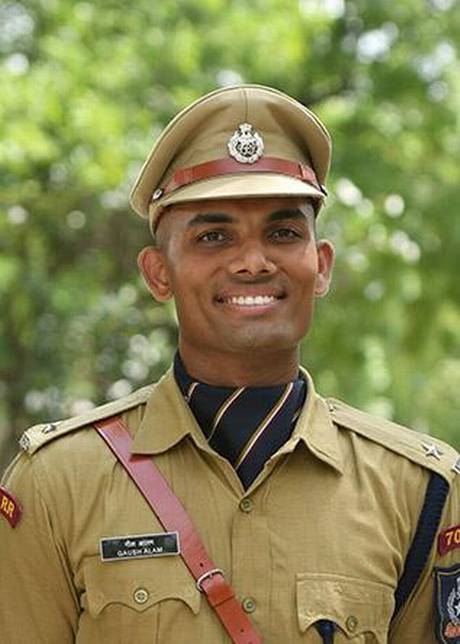
Gaush Alam
Gaush Alam

Gaush Alam, an IPS probationer allotted to Telangana cadre, has been adjudged the best all-round probationer.

An alma mater of IIT-Bombay, Mr. Alam would receive the Prime Minister’s Baton, Home Ministry’s Revolver and the Vice President of India’s Trophy for exemplary performance, apart from six other trophies during the Dikshant Samaro.

A native of Gaya district in Bihar, Mr. Alam was brought up in New Delhi. He worked with a multinational company in Bengaluru after completing his B.Tech in Mechanical Engineering from IIT-Bombay. “A year after working with a private company, I started preparing for civil services examination and got selected in my first attempt. Soon, I joined the academy in 2017,” he said. His father served in the Indian Army as Subedar.

“I have completed two years of training at the NPA and will join the Telangana cadre soon. I am quite excited about my new posting,” he said adding that he would miss the training days. Another IPS probationer Richa Tomar, who bagged 1973 Batch IPS Officers’ Trophy for the Best All-round Lady IPS probationer, was a nursing mother when she got selected for the services and joined the premier police academy.

“Shivansh (her son) was one year old when I joined the academy. I have struggled a lot to fulfil my dream of joining the civil services,” she said.

Hailing from Hassanjiwani, a small village near Baghpat in Uttar Pradesh, Ms. Tomar completed her M.Sc (microbiology). “Before clearing the UPSC examination, I worked in DANIPS (Delhi, Andaman and Nicobar Islands Police Service) and my husband is also an ACP in New Delhi,” said Ms. Tomar, who has been allocated to Rajasthan cadre.

“The training here is rigorous and challenging and my major focus after joining the cadre would be to prevent crime against women and children,” she said.

The Second Best All-round IPS Probationer of 2017 batch, Palash Chandra Dhali, is still wondering how his parents got the courage to enrol him in English-medium school, even being daily-wage labourers.

“My father, Pravhas Dhali, was a construction worker, and we used to live in Odisha. He enrolled me in an English-medium private school, which I believe has helped me in completing my engineering and clearing the civil services examination,” he said.

The IPS probationer hails from West Bengal and has been allotted home cadre. He worked with the NTPC and Indian Telecom Service before joining the NPA.

source: http://www.thehindu.com / The Hindu / Home> News> Cities> Hyderabad / by Abhinay Deshpande / Hyderabad – August 22nd, 2019

Nagpur Police constable’s daughter Alfiya Khan Pathan bags bronze medal in international boxing

Nagpur, MAHARASHTRA :

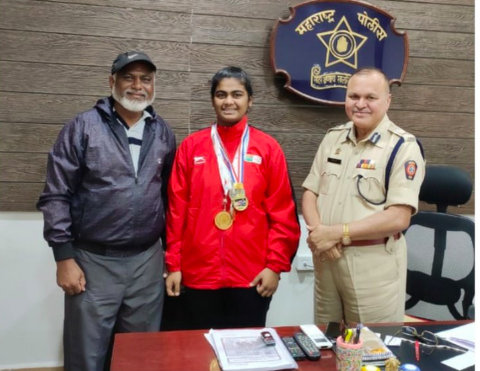
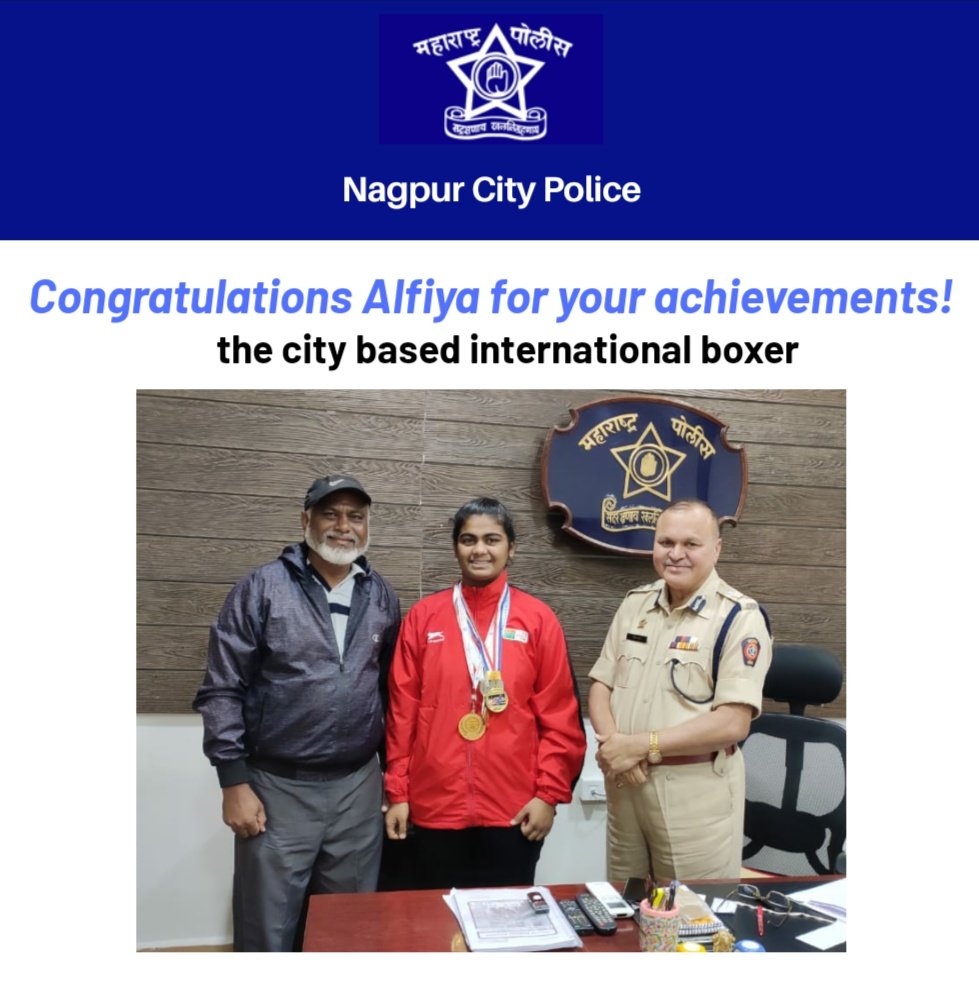
Akram Khan, Alfiya Khan along with Joint Commissioner of Police Ravindra Kadam

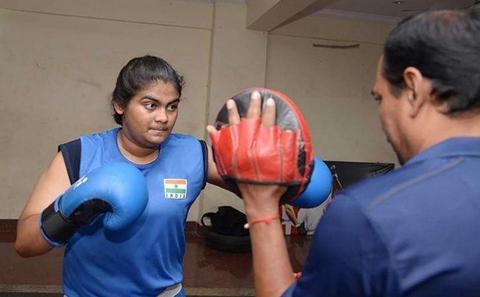
Nagpur Police constable Akram Khan’s 16-year-old daughter Alfiya Khan Pathan won the bronze medal in the ongoing 80+ kg category at the 3rd Nations Cup International Boxing Championship.

City’s only international boxer, Alfiya had earlier won a silver medal in the previous edition. The championship took place in Serbia on Sunday night. . Alifiya defeated Russian boxer Vorontsova Valeriia and clinched the third spot.

Alfiya Khan Pathan (Photo source: facebook)

The Indian team won four gold, four silver and four bronze medals and clinched the runners-up trophy. Also, Tamanna (48kg), Ambeshori Devi (57kg), Preeti Dahiya (60kg) Priyanka (66kg) bagged the gold medals.

In 50kg category, Karnataka’s Anju Devi, Maharashtra’s Simran Verma (52kg), Haryana’s Manshi Dalal (75kg) and Punjab’s Tanishbir Kaur Sandhu (80kg) bagged silver medals. Nagpur’s Alfiya (+80kg), Neha (54kg), Goa’s Aashreya Naik (63kg), Khushi (70kg) and bagged bronze medals each.

In 2018, the international boxer during the Khelo India games had created history in Nagpur division after bagging the top spot.

Nagpur Police on its official Twitter handle posted,”At 16, Alfiya Khan Pathan, daughter of Police Constable Akram Khan Pathan, is leaving everyone in awe, with her commendable performance in the boxing ring. Nagpur Police congratulates Alfiya for her achievements.”

Nagpur City Police

@NagpurPolice

At 16, Alfiya Khan Pathan, daughter of Police Constable Akram Khan Pathan, is leaving everyone in awe, with her commendable performance in the boxing ring.

Nagpur Police congratulates Alfiya for her achievements.

NagpurPoliceMPOs24aug2019

source: http://www.nationnext.in / Nation Next / Home> Next News> Sport / by Radhika Dhawad / August 21st, 2019

Krishna district collector to get national POSHAN Abhiyan award from PM

Krishna District, Machilipatnam, (Vijayawada) , ANDHRA PRADESH :

Krishna topped in implementation of the scheme and as part of it, convergency action meetings were held, community-based events and immunisation programmes were taken up with 100 per cent success rate.

Vijayawada :

Krishna District Collector A Md Imtiaz will receive the national POSHAN Abhiyan award from Prime Minister Narendra Modi in New Delhi on Friday.

Imtiaz will be receiving the award for effective implementation of the PM’s Overarching Scheme for holistic nutrition (POSHAN) scheme implemented by the Union Women Development and Child Welfare Department to provide nutritious food to women.

Krishna topped in implementation of the scheme and as part of it, convergency action meetings were held, community-based events and immunisation programmes were taken up with 100 per cent success rate.

source: http://www.newindianexpress.com / The New Indian Express / Home> Cities> Vijayawada / by Express News Service / August 23rd, 2019

How Shah Jahan connects Bhopal, Delhi, and England

DELHI / Bhopal, MADHYA PRADESH :

How two rulers with a common name left a rich history and culture for its people but one is more renowned than the other.

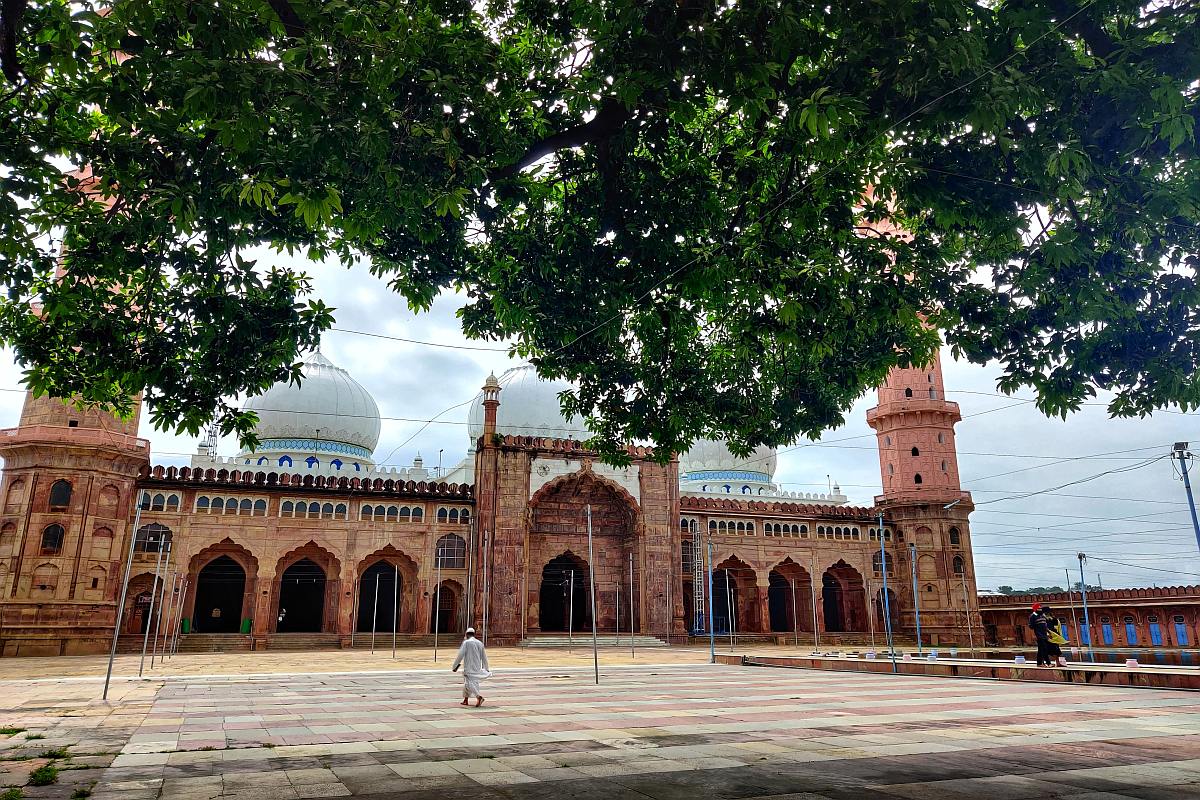
Taj-ul-Masajid, Bhopal (Photo: SNS/Aena Thakur)

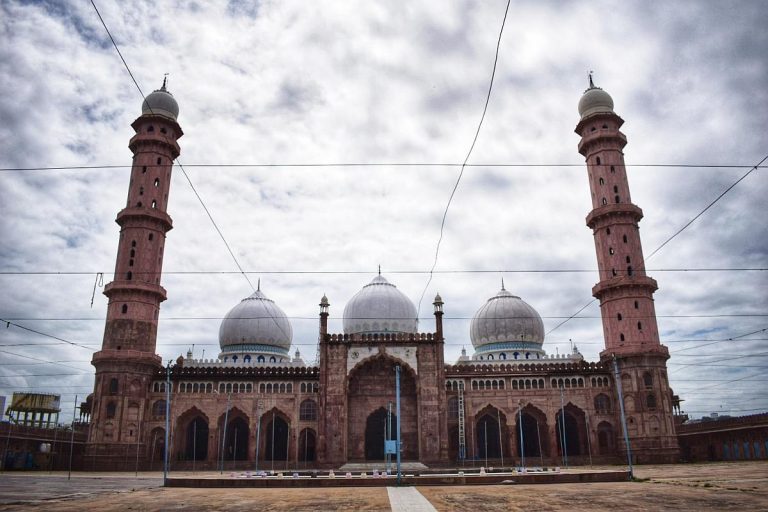
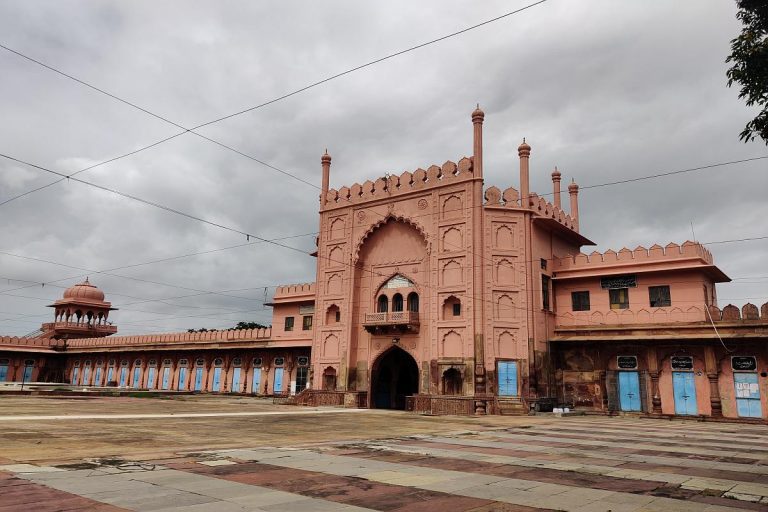
In the heart of Madhya Pradesh’s capital city, Bhopal, resides Taj-ul-Masajid which literally translates to the ‘crown of mosques’. The mosque was intended to be the largest mosque in the country and was based on the design of Delhi’s Jama Masjid. In a town called Woking in England stands a mosque called Shah Jahan.

The common denominator between these three mosques is the name Shah Jahan. The fifth Mughal emperor Shah Jahan built the Jama Masjid in Delhi and the third female ruler of Bhopal, Shah Jahan Begum built Taj-ul-Masajid of Bhopal. The Bhopal’s matriarch went a step ahead as she also funded the construction of England’s first Mosque in 1889.

Taj-ul-Masajid (Image: SNS/Aena Thakur)

In the 19th century when India was a British colony, the princely state of Bhopal had a string of female rulers for roughly 107 years. The city was founded in 1707 by Afghan ruler Dost Muhammad Khan. Surrounded by Rajputs in Rajasthan and Marathas in Maharashtra, Bhopal was a vulnerable state yet the female rulers with their loyal allegiance to the British rule survived the turbulent times.

The female dynasty of Bhopal started with the death of young Nawab Nazar Muhammad Khan. His 18-year-old wife Qudsia Begum decided that the legacy of her family shall continue and declared her 15-month-old daughter Sikandar as the rightful heir of the state. In 1819, Qudsia Begum became the first Muslim female who defied the veil and became the ruler of Bhopal. Her rule was legitimised by the British and the clergy.

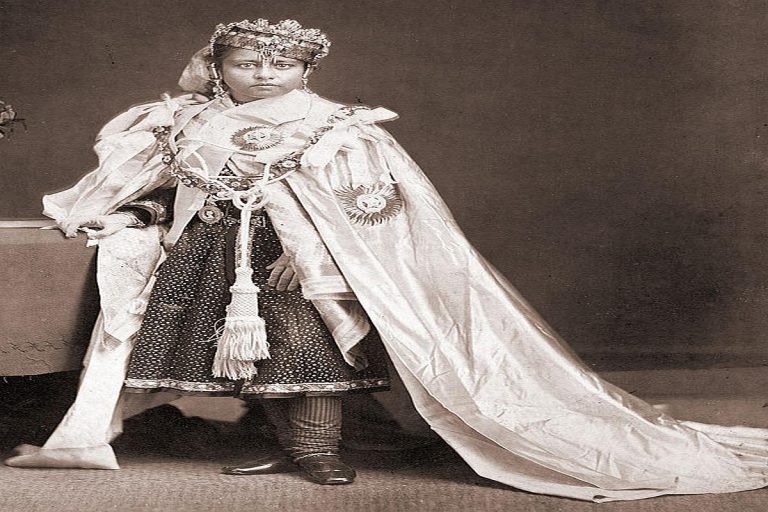
Both Qudsia (1819-37) and Sikandar (1847-68) were known to be tough rulers who strengthened Bhopal’s military and trained themselves to fight. However, it was the third matriarch of Bhopal, Shah Jahan Begum who brought in the period of flourishing art and culture just like her male Mughal namesake.

Unlike Qudsia and Sikandar, Shah Jahan was not known for her tough training for battles. Shah Jahan followed the system of veil and was more interested in literature, poetry, and arts.

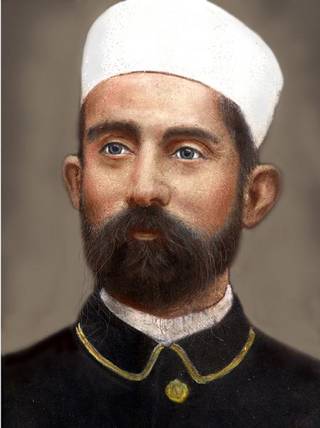
Shah Jahan Begam of Bhopal (Image: Wikimedia Commons)

Interested in Urdu and Persian poetry, Shah Jahan Begum also offered state pensions to poets like Amir Minai, a contemporary of Mirza Ghalib.

Shah Jahan Begum ordered that a dictionary of select terms in Hindustani, Persian, Arabic, Sanskrit, English, and Turkish was compiled to facilitate translation of literature between these languages. A poet herself, Shah Jahan Begum also patronized a group of female poets. According to Siobhan Lambert-Hurley’s book Muslim women, Reform and Princely Patronage, these gifted women included “Hasanara Begam ‘Namkeen,’ author of a diwan and two prose publications, Munawwar Jahan Begam and Musharraf Jahan Begam, the daughters of Nawab Mustafa Khan ‘Shefta,’ and several others.”

In her book, Siobhan Lambert-Hurley also mentions, “Shah Jahan’s interest in this area was so great that she charged a male poet at her court, Abul Qasim ‘Muhtasham’, to devote himself to collecting an anthology of female poets writing in Persian. Entitled Akhtar-i-taban, it publicized the work of 81 poetesses when it was printed in Bhopal in 1881 in dedication to the ruling Begam.”

Her ambitions for grand architecture is evident from the fact that her daughter Sultan Begum in her biography mentioned that she has lost count of the number of palaces and buildings, her mother made. Some of the prominent buildings that still remain are Taj-ul-Masajid, Taj Mahal, Ali Manzil, and Benazir.

Taj Mahal, Bhopal (Image: Wikimedia Commons)

Unlike Mughal emperor, Shah Jahan’s Taj Mahal which is a tomb, Bhopal’s Taj Mahal was a palace for the Begum. Shah Jahan Begum also helped orientalist and scholar Dr Gottlieb Wilhelm Leitner in constructing England’s first mosque which is also called the Shah Jahan mosque.

The similarities do not stop here. Just like the Mughal emperor built a planned city named Shahjahanabad, the Begum too built a neighbourhood with the same name. Hurley mentions in her book, “Shah Jahan was also responsible for building an entirely new neighbourhood of homes and offices within her capital that was predictably named Shahjahanabad. Unlike the version at Delhi, however, it was laid out on a uniform plan in-keeping with the latest ideas of town planning in Britain.”

Taj-ul-Masajid, Bhopal (Image: SNS/Aena Thakur)

Shah Jahan Begum of Bhopal encouraged female participation in education, religion, and culture. She was responsible for setting up institutions for female education, she reserved areas in mosques for veiled women to pray on special occasions, she also constructed a Pakka bazaar exclusively for women.

Shah Jahan Begum’s daughter Sultan Jahan Begum was the last Begum of Bhopal whose reign ended in 1926. The reign of female rulers in Bhopal broke stereotypes and brought in various reforms in the princely state. Even though women still continue to fight for their rights it should not be forgotten that the Begums did assert their authority in the 19th century and it can be done again.

source: http://www.thestatesman.com / The Statesman / Home> Features / by Aena Thakur, New Delhi / August 20th, 2019

Syed Husain Bilgrami: An English scholar in Nizam’s court

HYDERABAD :

Torch bearer Syed Husain Bilgrami, Special arrangement

Apart from holding high ranking positions in Nizam’s dominion, Syed Husain Bilgrami was also made a member of the Secretary of State’s Council, in London.

Nawab Imad-ul Mulk is a familiar name in the annals of Hyderabad’s 19th century history. He was a noted educationalist, civil servant, prominent administrator and a noted scholar in the Nizam’s dominions. He was private secretary to Salar Jung I, the then Prime Minister of Hyderabad State; also a tutor and conscience keeper of the Nizam — Mahboob Ali Pasha — whose government he served with great distinction. For his dedication for work, strength of character and extraordinary mastery over English language and literature, the British government also utilised his services on many occasions. He had the rare honour of having served as member in the Secretary of State’s Council .He also had the distinction of having met along with Salar Jung I, Queen Victoria at Buckingham Palace in London.

Nawab Imad ul Mulk was the title that the Nizam bestowed in recognition of the services he rendered, with which he was well known in Hyderabadi circles; but his actual name was Syed Husain Bilgrami.

Syed Husain Bilgrami was born in 1844 at Gaya, where his father held high position under the East India Company administration. He was educated at the Presidency College, Calcutta from where he graduated in English literature. In 1868 he became a Professor at the Canning College in Lucknow before joining the service of the Nizam of Hyderabad in 1873. It was the time when Salar Jung I the Prime Minister of Hyderabad state was looking for English educated young men to be appointed in Hyderabad to modernise the administration and to improve educational facilities in the dominions. In 1872, Salar Jung while on a visit to Lucknow, met young Syed and was attracted to his intelligence and demeanour. He was invited to join the Hyderabad service, which he did the next year. For his impeccable English, both spoken and written, Syed Husain was taken as the private secretary to Salar Jung. The rest of his long career was irrevocably bound with Hyderabad.

The story goes that when Salar Jung asked Syed where his family originally hailed from, he answered, ‘Bilgrami’ (in the then United Provinces). The Prime Minister in a lighter vein suggested that Bilgrami could as well be added to his name and thus he became Syed Husain Bilgrami.

Bilgrami’s rise to prominence in Hyderabad was due to his sheer work as an educationalist. As the first Director of Public Instruction (1875- 1902) he initiated several reforms to improve the educational set up in the state. He was instrumental in the establishment of the Nizam College with English medium, with Dr Aghoranath Chattopadhyay, (father of Sarojini Naidu) as its first Principal. It is said that Bilgrami was the person who discovered the genius in Chattopadhyay, the first Indian to obtain D. Sc in Biochemistry from Edinburgh University. The College was affiliated to Madras University as there was no University in the Hyderabad dominions by then. Bilgrami was for some years taken by the government of India, as a member of the Universities Commission, a forerunner of the present UGC. In Hyderabad, he established Madarsa- i- Aizza, a school exclusively for the children of the nobles with a view to make them cultured and more responsible towards society. A crowning achievement of Bilgrami in the furthering of education in Hyderabad was the establishment of a girls school in 1885 with his personal funds. This was hailed as one of its kind in the country as the girls were taught besides usual subjects, needle work, household duties etc. English, besides Urdu and Arabic, was made the medium of instruction. To make girls from traditional families attend school, bullock carts with curtains were arranged to fetch them to school and back home.

In Hyderabad state, with a view to foster industrial growth, Bilgrami established three Industrial Schools at three important towns in the state, Aurangabad, Warangal and Hyderabad, which later grew to be Engineering Colleges. The State Central Library in Hyderabad also owes its establishment to the untiring efforts of Syed Husain Bilgrami.

Bilgrami was also a prolific writer in English and his books include Historical and Descriptive Sketches of His Highness, the Nizam’s Dominions, in 2 volumes, and A Memoir of Sir Salar Jung I. Besides, he had also composed several poems.

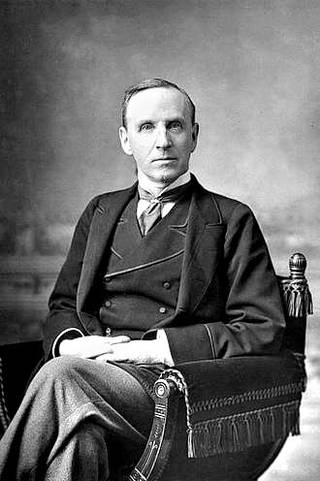
Lord Morely, the Secretary of State for India, who took Bilgrami as a member of his council.

The career graph of Syed Husain Bilgrami reached its zenith when he was made a member of the Secretary of State’s Council, in London. After the Liberal Party came to power in Great Britain in 1906, the new Secretary of State for India, Lord Morley, along with Lord Minto, the Viceroy of India wanted to initiate certain administrative and legislative reforms which ultimately resulted in the passing of India Councils Act of 1909 ( popularly known as Morley-Minto Reforms). For the task of formulating the reforms, Morley took two Indians as members to his council. The first was Syed Husain Bilgrami, who from the days of his first visit to England accompanying Salar Jung way back in 1876, had maintained friendship with several high ranking British political leaders of his time like Disraeli, Lord Salisbury, Gladstone etc. The other Indian appointed to the council by Morley was Krishna G Gupta, a senior ICS officer. Bilgrami thus played a key role in the passing of the first ever Constitutional Act of 1909.

Indian ayahs

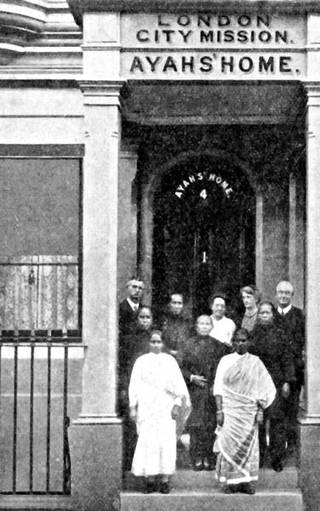
As a member of the Council of the Secretary of State for India, Bilgrami once made history by protesting the pitiable and callous attitude to Indian ayahs and other caretaker women who had been abandoned by their British employers. Many British officials in those days, employed Indian ayahs to look after their children on the long voyage from India to Britain and the employer was to provide for their passage home. But many a time those ayahs were dismissed once they reach Britain and left to fend for themselves. Such conditions led even to the founding of a ‘Ayahs Home in East London’, where such abandoned destitute ayahs were temporarily provided with food and shelter.

Ayas House / special arrangement

In May 1908, an Indian ayah Meera Sayal from Bombay arrived in London with a British family that was returning home. But she was abandoned by the family on the busy Kings Cross road in Central London, with a mere one pound in hand. The matter was brought to the notice of the India Office in London by the manager at Ayahs Home. The British authorities were of the opinion that Indian ayahs had no legal remedy in the absence of any written agreements that they would be taken back to India and quoted a precedent when the India Office in London in a similar case in 1890 had declined to take any action.

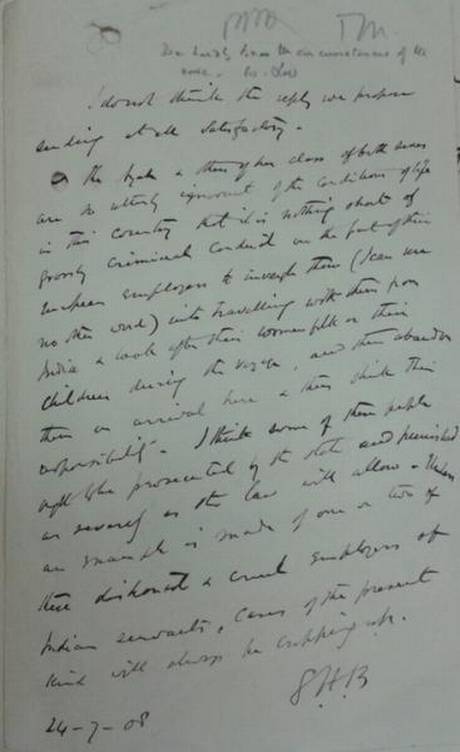
The protest note Bilgrami wrote as a member of the council of Secretary of State for India.

But Syed Husain Bilgrami, as a member of the Secretary of State’s Council felt hugely outraged and immediately wrote a strongly worded resentment on “the dishonest and cruel European employers inveighing Indian servants to travel with them and abandoning them on arrival in Britain”. This bold stand of Syed Husain Bilgrami reflected how he was a man of lofty principles and high ideals with a strong sense of duty and impeccable uprightness. This letter dated July 14, 1908, had been quoted in many future complaints of the Asian caretakers against British employers that ultimately led to the betterment of Indian ayahs going with British families to London.

After returning from England in 1909, Bilgrami spent his retirement in Hyderabad in a villa on the slopes of the iconic Naubath Pahad, overlooking the waters of Hussain Sagar and died in 1926, aged 82. Bilgrami had four sons and all of them were brilliant as they excelled in their different chosen fields. Nawab Sir Mehdi Yar Jung Bahadur, the Education and Finance member in Nizam’s administration and who led a delegation to the Round Table Conference in London in 1930 -31, as a representative of the Nizam, was one of Bilgrami’s sons. Yar Jung as the Vice-Chancellor of Osmania University, had hosted the 5th session of the Indian History Congress (IHC) in 1941. Today Bilgrami’s progeny has a network that is spread across all the continents. Prof. Akeel Bilgrami, the California=based renowned academic intellectual, is one among the high-profile, large Bilgrami family.

source: http://www.thehindu.com / The Hindu / Home> Society> History & Culture> Hyderabad Heritage / by K S S Seshan / August 19th, 2019

This Kashmiri carpet maker brings Persian rugs to Chennai

Srinagar, JAMMU & KASHMIR / Chennai, TAMIL NADU :

SamiMeerMPOs23aug2019

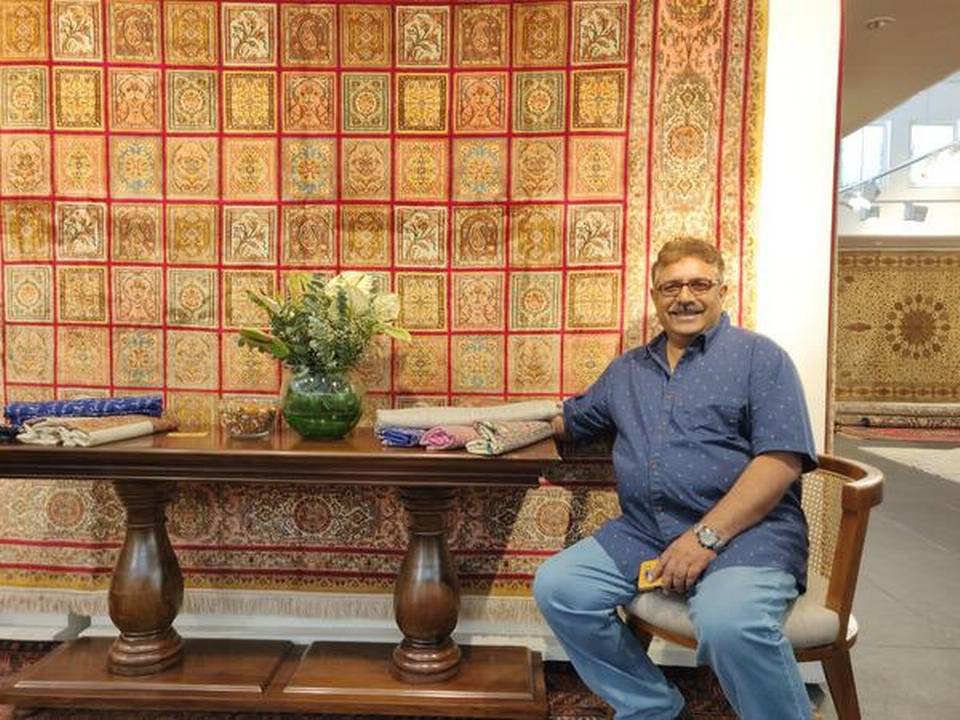
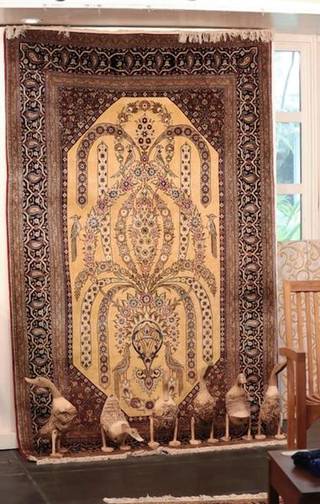
You can expect Kirmani, Heriz and Isfahani rugs, kilims, and Pashmina shawls at an exhibition by Sami Meer, a third-generation Kashmiri carpet-maker

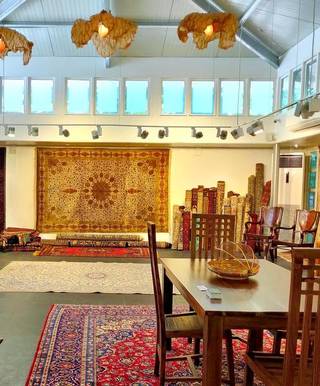
The interior of Folly at Amethyst today is decked up like a bride. Sunlight streaming in from a series of square windows on top bounces off the carpets that cover almost every inch of the space. It is Sami Meer’s, a third-generation Kashmiri carpet maker, exhibition that is on display.

After inviting visitors in with a handful of dry fruits, Sami unrolls a red carpet. “It’s a kilim,” he describes the woollen tapestry, “They are travel rugs, made by the Khanabadosh people; they are nomads who go from mountain to mountain with their sheep and goats.”

His collection of almost 60 carpets, kilims and pashmina shawls is hung on the walls, rolled into bundles and made to stand in the corners, and some laid out on the floor at Folly. “Those are original Persian rugs,” he points towards one wall. “Then we have Kashmiri silk ones,” he says, running a finger along a soft velvety baby blue carpet. “The Persian weavers who settled in Kashmir imparted their weaving techniques and designs to the Kashmiris,” he says. “The design may be Persian, but the silk workmanship is Kashmiri.”

SamiMeer02MPOs23aug2019

Sami sources his carpets from weavers in Iran, Balochistan in Pakistan, Afghanistan, Morocco and Turkey. All the carpets on display are hand-knotted, he informs us. “The knottage is so unique that a collector can identify which area it is from,” he says, flipping over two carpets to show the different stitches on their underside: “The first is from Isfahan, the second from Heriz.” Similarly, he goes on to show rugs from Kirman and Nain — areas in modern-day Iran.

He not only sources these rugs, but his shop, Virasat in Neelankarai, also offers repairs, servicing and washing options. Most of the servicing is outsourced to workers in Delhi and Srinagar. “I have grown up watching my grandfather and father weave such carpets at our home in Srinagar,” he says. He, however, moved to Chennai  owing to growing tensions in Kashmir in 1992. “We tried going home in 2010, but came back to Chennai in 2016 after the fallout from Burhan Wani’s encounter made it difficult for our shop to stay open.”

SamiMeer03MPOs23aug2019

“The price for each carpet depends on its size and quality; for the Persian ones, it depends on which area they were made in…” he says. The silk on silk Kashmiri rugs start from ₹25,000 and the Persian ones from ₹45,000. Here, in the city, he finds customers in people who are interested in learning about Kashmiri culture, and in collectors of Persian rugs. “I go to Srinagar once or twice a year,” he says. But for now, Chennai is home for Sami, his wife and two children.

Virasat’s exhibition is on today at Folly, Amethyst. To reach out to him, call 7550016911.

source: http://www.thehindu.com / The Hindu / Home> News> Cities> Chennai / by Sweta Akundi / August 14th, 2019

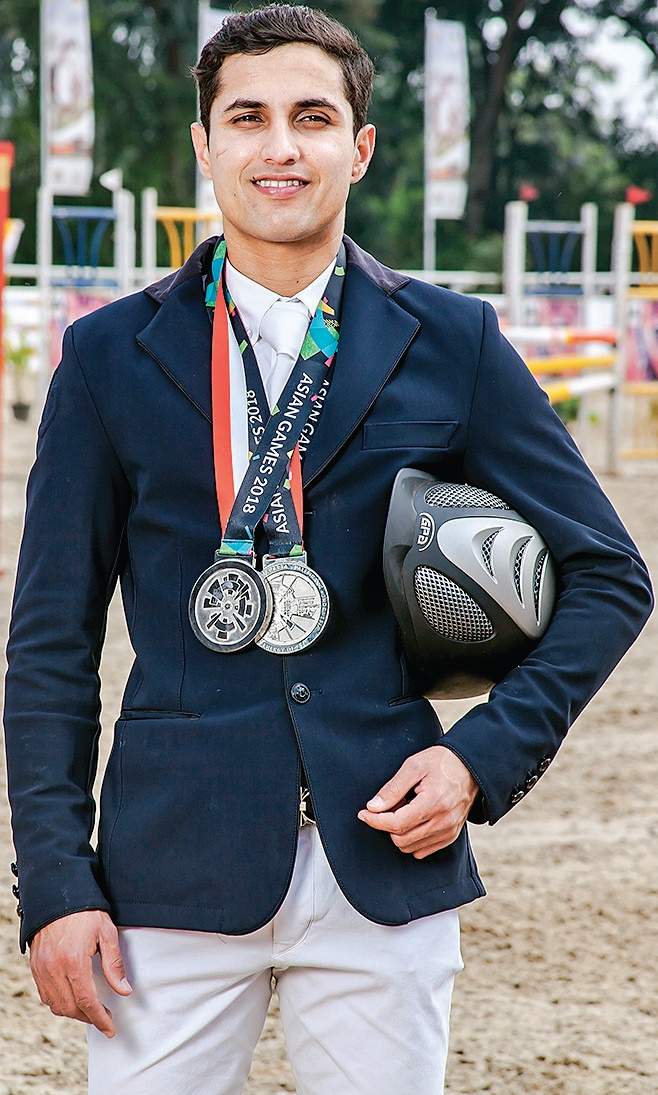
‘It’s a true honour,’ says equestrian Fouaad Mirza about Arjuna recognition

Bengaluru, KARNATAKA :

The award will be conferred on him by the President of India on August 29

In 2018, Mirza won two silver medals at the Asian Games in Jakarta

Bengaluru :

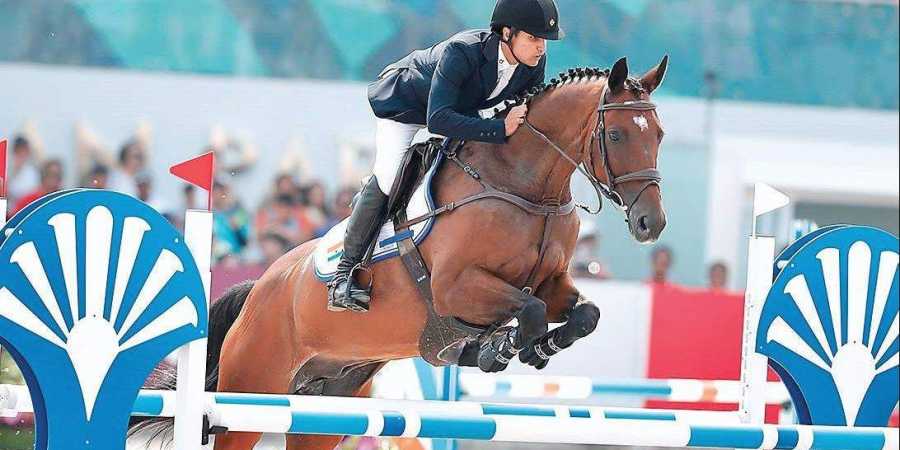
Bengaluru’s Fouaad Mirza is currently on cloud nine. After having brought laurels to the country with two silver medals in the 2018 Asian Games, the equestrian has now made it to the list of Arjuna awardees this year. The award will be conferred on him by the President of India on August 29. Speaking to CE, the 27-year-old expressed his elation, saying, “I did not believe it at first, it took some time for me to wrap my head around it. This is a true honour.” A dedicated sportsman, Mirza, who is in Germany, said his current focus is on training but upon returning to the country, his focus will be on the award.

FouaadMirza02MPOs21aug2019

In 2018, Mirza ended the country’s 36-year long wait for an equestrian win by bagging two silver medals at the Asian Games in Jakarta. “A lot of hard work went into achieving this feat. One has to be physically prepared, especially for a lot of hours on the saddle and in training. We started training for the Asian Games a year in advance in order to ensure smooth execution,” he recounted.

Taking us back to where it all began, Mirza recalled his childhood as the time when things began to take shape. An avid animal lover, Mirza would spend ample time with dogs, cats and other four-legged creatures. His father, Dr Hasneyn Mirza, who is a veterinarian and specialises in horses, had a great impact on him. At the age of five, Mirza started to ride at The Embassy Riding School as a hobby but little did he know that this hobby would lead to a competitive calling.

The biggest difference over the years, however, has been the upgrade in the infrastructure of training facilities and on the young  talent in the field.Talking about his next big challenge, Mirza says he has blinkers on and is focused on the 2020 Tokyo Olympics, where he aims to qualify and represent the country.

source: http://www.newindianexpress.com / The New Indian Express / Home> Cities> Bengaluru / by Muneef Khan / Express News Service / August 20th, 2019