All posts by mpositiveone@gmail.com

List of Padma awardees — 2019

NEW DELHI :

PadmaAwardeesMPOs30jan2019

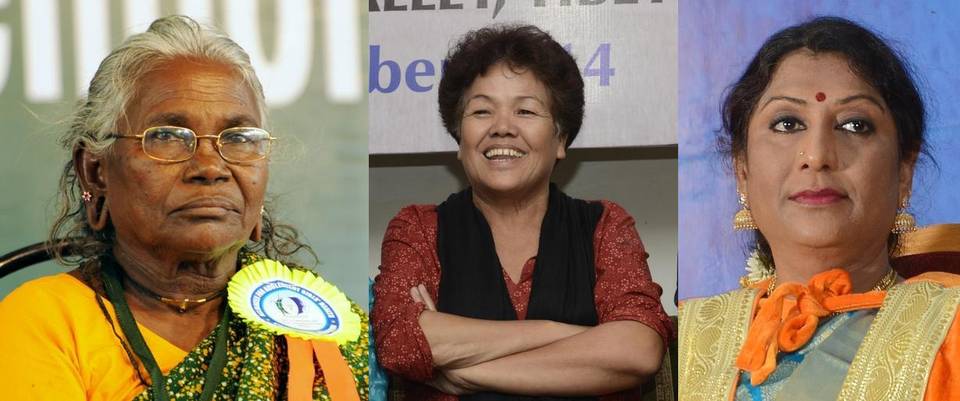
21 of the awardees are women and the list also includes 11 persons from the category of foreigners/NRI/PIO/OCI, 3 posthumous awardees and 1 transgender person.

Padma Awards — one of the highest civilian Awards of the country, are conferred in three categories, namely, Padma Vibhushan, Padma Bhushan and Padma Shri. The Awards are given in various disciplines/ fields of activities, viz. art, social work, public affairs, science and engineering, trade and industry, medicine, literature and education, sports, civil service, etc. ‘Padma Vibhushan’ is awarded for exceptional and distinguished service; ‘Padma Bhushan’ for distinguished service of high order and ‘Padma Shri’ for distinguished service in any field. The awards are announced on the occasion of Republic Day every year.

These awards are conferred by the President of India at ceremonial functions which are held at Rashtrapati Bhawan usually around March/ April every year. This year the President of India has approved conferment of 112 Padma Awards including one duo case (in a duo case, the Award is counted as one) as per list below. The list comprises 4 Padma Vibhushan, 14 Padma Bhushan and 94 Padma Shri Awards.  21 of the awardees are women and the list also includes 11 persons from the category of foreigners/NRI/PIO/OCI, 3 posthumous awardees and 1 transgender person.

Bharat Ratna (3)

1. Nanaji Deshmukh (posthumous)

2. Dr. Bhupen Hazarika (posthumous)

3. Pranab Mukherjee

Padma Vibhushan (4)

1. Ms. Teejan Bai — Art-Vocals-Folk — Chhattisgarh

2. Shri Ismail Omar Guelleh (Foreigner) —  Public Affairs — Djibouti

3. Shri Anilkumar Manibhai Naik — Trade & Industry-Infrastructure — Maharashtra

4. Shri Balwant Moreshwar Purandare — Art-Acting-Theatre — Maharashtra

Padma Bhushan (14)

1. Shri John Chambers (Foreigner) — Trade & Industry-Technology — USA

2. Shri Sukhdev Singh Dhindsa — Public Affairs — Punjab

3. Shri Pravin Gordhan  (Foreigner) — Public Affairs — South Africa

4. Shri Mahashay Dharam Pal Gulati  — Trade & Industry-Food Processing — Delhi

5. Shri Darshan Lal Jain — Social Work — Haryana

6. Shri Ashok Laxmanrao Kukade — Medicine-Affordable Healthcare — Maharashtra

7. Shri Kariya Munda — Public Affairs — Jharkhand

8. Shri Budhaditya Mukherjee — Art-Music-Sitar — West Bengal

9. Shri Mohanlal Viswanathan Nair  — Art-Acting-Film  — Kerala

10. Shri S Nambi Narayan — Science & Engineering-Space — Kerala

11. Shri Kuldip Nayar (Posthumous) — Literature & Education (Journalism) — Delhi

12. Ms. Bachendri Pal  — Sports-Mountaineering —  Uttarakhand

13.  Shri V K Shunglu  — Civil Service —  Delhi

14. Shri Hukumdev Narayan Yadav  — Public Affairs — Bihar

Padma Shri (94)

1. Shri Rajeshwar Acharya — Art-Vocal-Hindustani — Uttar Pradesh

2. Shri bangaru Adigalar — Others-spiritualism — Tamil Nadu

3. Shri Illias Ali — Medicine-Surgery — Assam

4. Shri Manoj Bajpayee — Art-Acting-Films — Maharashtra

5. Shri Uddhab Kumar Bharali — Science & Engineering-Grassroots Innovation — Assam

6. Shri Omesh Kumar Bharti — Medicine-Rabies — Himachal Pradesh

7. Shri Pritam Bhartwan — Art-Vocals-Folk — Uttarakhand

8. Shri Jyoti Bhatt — Art-Painting — Gujarat

9. Shri Dilip Chakravarty — Others-Archaeology — Delhi

10. Shri Mammen Chandy — Medicine-Hematology — West Bengal

11. Shri Swapan Chaudhuri — Art-Music-Tabla — West Bengal

12. Shri Kanwal Singh Chauhan — Others-Agriculture — Haryana

13. Shri Sunil Chhetri — Sports-Football — Telangana

14. Shri Dinyar Contractor — Art-Acting-Theatre — Maharashtra

15. Ms. Muktaben Pankajkumar Dagli — Social Work-Divyang Welfare — Gujarat

16. Shri Babulal Dahiya — Others-Agriculture — Madhya Pradesh

17. Shri Thanga Darlong — Art-Music-Flute — Tripura

18. Shri Prabhu Deva — Art-Dance — Karnataka

19. Ms. Rajkumari Devi — Others-Agriculture — Bihar

20. Ms. Bhagirathi Devi — Public Affairs — Bihar

21. Shri Baldev Singh Dhillon — Science & EngineeringAgriculture — Punjab

22. Ms. Harika Dronavalli — Sports-Chess — Andhra Pradesh

23. Shri Joravarsinh Jadav — Art – Dance (folk)  — Gujarat

24. Ms. Godawari Dutta — Art-Painting — Bihar

25. Shri Gautam Gambhir — Sports-Cricket — Delhi

26. Ms. Draupadi Ghimiray — Social Work-Divyang Welfare — Sikkim

27. Ms. Rohini Godbole — Science & Engineering-Nuclear — Karnataka

28. Shri Sandeep Guleria — Medicine-Surgery — Delhi

29. Shri Pratap Singh Hardia — Medicine-Ophthmology — Madhya Pradesh

30. Shri Bulu Imam — Social Work-Culture — Jharkhand

31. Ms. Friederike Irina (Foreigner) — Social Work-Animal Welfare — Germany

32. Shri Joravarsinh Jadav — Art-Dance Folk — Gujarat

33. Shri S Jaishankar — Civil Service — Delhi

34. Shri Narsingh Dev Jamwal — Literature & Education — Jammu & Kashmir

35. Shri Fayaz Ahmad Jan — Art-Craft-Papier Mache — Jammu & Kashmir

36. Shri K G Jayan — Art-Music-Bhakti — Kerala

37. Shri Subhash Kak (Foreigner) — Science & Engineering-Technology — USA

38. Shri Sharath Kamal — Sports-Table Tennis — Tamil Nadu

39. Shri Rajani Kant — Social Work — Uttar Pradesh

40. Shri Sudam Kate — Medicine-Sickle Cell — Maharashtra

41. Shri Waman Kendre — Art-Acting-Theatre — Maharashtra

42. Shri Kader Khan (Posthumous-Foreigner) — Art-Acting-Films — Canada

43. Shri Abdul Gafur Khatri — Art-Painting — Gujarat

44. Shri Ravindra Kolhe (Duo)* — Medicine-Affordable Healthcare — Maharashtra

Ms. Smita Kolhe (Duo)* — Medicine-Affordable Healthcare — Maharashtra

45. Ms. Bombayla Devi Laishram — Sports-Archery — Manipur

46. Shri Kailash Madbaiya — Literature & Education — Madhya Pradesh

47. Shri Ramesh Babaji Maharaj — Social Work-Animal Welfare — Uttar Pradesh

48. Shri Vallabhbhai Vasrambhai Marvaniya — Others-Agriculture — Gujarat

49. Ms. Gita Mehta (Foreigner) — Literature & Education — USA

50. Shri Shadab Mohammad — Medicine-Dentistry — Uttar Pradesh

51. Shri K K Muhammed — Others-Archaeology — Kerala

52. Shri Shyama Prasad Mukherjee — Medicine-Affordable Healthcare — Jharkhand

53. Shri Daitari Naik — Social Work — Odisha

54. Shri Shankar Mahadevan Narayan — Art-Vocals-Films — Maharashtra

55. Shri Shantanu Narayen (Foreigner) — Trade & Industry-Technology — USA

56. Nartaki Natraj — Art-Dance-Bharatnatyam — Tamil Nadu

57. Shri Tsering Norboo — Medicine-Surgery — Jammu & Kashmir

58. Shri Anup Ranjan Pandey — Art-Music — Chhattisgarh

59. Shri Jagdish Prasad Parikh — Others-Agriculture — Rajasthan

60. Shri Ganpatbhai Patel (Foreigner) — Literature & Education — USA

61. Shri Bimal Patel —  Others-Architecture — Gujarat

62. Shri Hukumchand Patidar — Others-Agriculture — Rajasthan

63. Ms. Madurai Chinna Pillai — Social Work-Microfinance — Tamil Nadu

64. Ms. Tao Porchon-Lynch (Foreigner) — Others-Yoga — USA

65. Ms. Kamala Pujhari — Others-Agriculture — Odisha

66. Shri Bajrang Punia — Sports-Wrestling — Haryana

67. Shri Jagat Ram — Medicine-Ophthalmology — Chandigarh

68. Shri R V Ramani — Medicine-Ophthalmology — Tamil Nadu

69. Shri Devarapalli Prakash Rao — Social Work-Affordable Education — Odisha

70. Shri Anup Sah — Art-Photography — Uttarakhand

71. Ms. Milena Salvini (Foreigner) — Art-Dance-Kathakali — France

72. Shri Nagindas Sanghavi — Literature & Education-Journalism — Maharashtra

73. Shri Sirivennela Seetharama Sastry — Art-Lyrics — Telangana

74. Shri Shabbir Sayyad — Social Work-Animal Welfare — Maharashtra

75. Shri Mahesh Sharma — Social Work-Tribal Welfare — Madhya Pradesh

76. Shri Mohammad Hanif Khan Shastri — Literature & Education — Delhi

77. Shri Brijesh Kumar Shukla — Literature & Education — Uttar Pradesh

78. Shri Narendra Singh — Others-Animal Husbandry — Haryana

79. Ms. Prashanti Singh — Sports-Basketball — Uttar Pradesh

80. Shri Sultan Singh — Others-Animal Husbandry — Haryana

81. Shri Jyoti Kumar Sinha — Social Work-Affordable Education — Bihar

82. Shri Anandan Sivamani — Art-Music — Tamil Nadu

83. Ms. Sharada Srinivasan — Others-Archaeology — Karnataka

84. Shri Devendra Swarup (Posthumous) — Literature & Education-Journalism — Uttar Pradesh

85. Shri Ajay Thakur — Sports-Kabaddi — Himachal Pradesh

86. Shri Rajeev Tharanath — Art-Music-Sarod — Karnataka

87. Ms. Saalumarada Thimmakka — Social Work-Environment — Karnataka

88. Ms. Jamuna Tudu — Social Work-Environment — Jharkhand

89. Shri Bharat Bhushan Tyagi — Others-Agriculture — Uttar Pradesh

90. Shri Ramaswami Venkataswami — Medicine-Surgery — Tamil Nadu

91. Shri Ram Saran Verma — Others-Agriculture — Uttar Pradesh

92. Shri Swami Vishudhananda — Others-Spiritualism — Kerala

93. Shri Hiralal Yadav — Art-Vocals-Folk — Uttar Pradesh

94. Shri Venkateswara Rao Yadlapalli — Others-Agriculture — Andhra Pradesh

* indicates duo case. (counted as one award)

In the earlier version of this article, a Padma Shri awardee name was repeated. It has been corrected now.

source: http://www.thehindu.com  / The Hindu / Home> News> National / by The Hindu Net Desk / January 25th, 2019
Justice Nazeer dissents: Four key questions, larger bench is needed in Ayodhya case

Beluvai (near Moodbidri) KARNATAKA / NEW DELHI  :

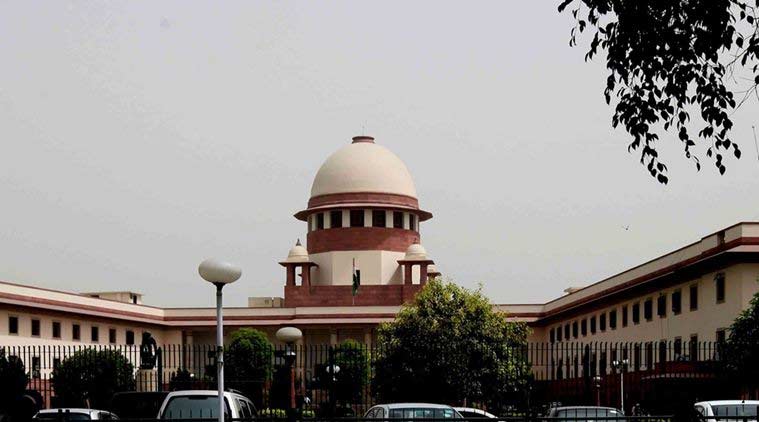
Justice Nazeer said that considering the “Constitutional importance” and “significance” of the issue, the Ram Janmabhoomi land dispute case should be referred to a larger bench.

The majority verdict by other members of the bench, comprising Chief Justice Dipak Misra and Justice Ashok Bhushan, said that this observation was made in the context of land acquisition.

The observation in the 1994 Ismail Faruqui case that a mosque is not an essential part of Islam and namaz by Muslims can be offered anywhere, “even in open” was arrived at “without undertaking a comprehensive examination,” Supreme Court judge Justice S Abdul Nazeer said Thursday.

The majority verdict by other members of the bench, comprising Chief Justice Dipak Misra and Justice Ashok Bhushan, said that this observation was made in the context of land acquisition.

Disagreeing with this in his 42-page dissenting judgment, Justice Nazeer said that considering the “Constitutional importance” and “significance” of the issue, the Ram Janmabhoomi land dispute case should be referred to a larger bench.

Justice Nazeer referred to the Srirur Mutt case which had observed that “what constitutes the essential part of a religion is primarily to be ascertained with reference to the doctrines of that religion itself”. Ismail Faruqui needs to be brought in line with the “authoritative pronouncements in Shirur Mutt,” he said.

Justice Nazeer posed four key questions.

First, whether in the light of Shirur Mutt, “an essential practice can be decided without a detailed examination of the beliefs, tenets and practice of the faith in question” ; second, whether the test for determining the essential practice is both essentiality and integrality; third, does Article 25 (Freedom of conscience, practice and propagation of religion), “only protect belief and practices of particular significance of a faith or all practices regarded by the faith as essential” ; fourth, do Articles 15 (prohibition of discrimination on grounds of religion, race, caste, sex or place of birth), 25 and 26 (freedom to manage religious affairs) read with Article 14 (right to equality) “allow the comparative significance of faiths to be undertaken”.

Justice Nazeer also referred to a string of rulings on similar issues that have been referred to a larger bench: a three-judge bench of the SC has referred the matter relating to polygamy including Nikah Halala, Nikha Mutah, and Nikah Misya to a Constitution Bench; a two-judge Bench had has referred the matter in relation to the policy decision permitting Ram Leela and Puja once in a year in public parks to a Constitution Bench; and, most recently, a three-judge bench considering the question relating to banning the practice of Female Genital Mutilation (FGM) has referred the matter to a larger bench.

The issue of referring the observation of 1994 verdict had cropped up when the three-judge bench headed by the CJI was hearing the batch of appeals filed against the Allahabad High Court’s 2010 verdict by which the disputed land on the Ram Janmabhoomi-Babri Masjid area was divided into three parts.

Justice Nazeer said that this 2010 verdict has been “expressly and inherently” affected by the questionable observations made in Ismail Faruqui case.

The issue of referring the observation of 1994 verdict had cropped up when the three-judge bench headed by the CJI was hearing the batch of appeals filed against the Allahabad High Court’s 2010 verdict by which the disputed land on the Ram Janmabhoomi-Babri Masjid area was divided into three parts.

A three-judge bench of the high court, in a 2:1 majority ruling of 2010, had ordered that the 2.77 acres be partitioned equally among three parties — the Sunni Waqf Board, the Nirmohi Akhara and Ram Lalla, the deity.

source: http://www.indianexpress.com / The Indian Express / Home> India / by Kaunain Sheriff M / New Delhi / September 28th, 2018

Shadab Hussain, son of a tailor: CA exam rank 1, in attempt number 1

Kota, RAJASTHAN :

Shadab Hussain: All India Rank 1 in the CA exam in his very first attempt. (Picture: Facebook)

Shadab Hussain, a resident of Rajasthan’s Kota is this year’s CA exam topper. What makes his feat remarkable is that he topped the exam in his very first attempt, and the fact that his parents were themselves not highly educated.

“Dream comes true…” was the simple message Hussain posted on Facebook with a screenshot of his results page on the website of the Institute of Chartered Accountants of India (ICAI), which displayed his singular rank in a most non-fussy manner. He scored 597 on 800, a score of 74.63 percent.

Hussain’s is a story that has the potential to inspire. His father is a tailor who has completed his Class 10, and his mother is a school dropout, and they did their best to ensure that there was little left wanting when it came to his education, reported The Indian Express.

“I studied day-and-night to earn a job so that my parents do not have to bother about their old age. I thought of Chartered Accountancy (CA) to be a niche profession where one can learn throughout their life. After due consideration and research I set my mind to become a CA,” Hussain was quoted as saying.

Hussain’s story caught the attention of Congress chief Rahul Gandhi, who greeted the 23-year-old on Facebook. “Congratulations, Shadab! I feel very proud of you. I extend my best wishes to you for the journey ahead,” read Rahul’s message.

Hussain said he had prepared hard for the exam and had reduced the number of hours he would spend in preparations as the exam neared. He also advised other exam-takers to set aside some time every day to introspect and take stock of their actions.

Speaking further about the method he used in the exam, Hussain said he first identified a handful of questions that would take him over the threshold needed to pass the exam and solved them first. Once that was done, he set about answering the other questions to raise his score.

source: http://www.dnaindia.com / DNA / Home> India / by DNA Web Team / January 24th, 2019

Meet Pandit Gulam Dastagir- A Muslim scholar with passion for Sanskrit

Chikhala Village (Solapur District) / Mumbai ,  MAHARASHTRA :

Mumbai :

In downtown Worli, it is common to hear the strange greeting of ‘Assalamu-Alaykum, Guruji’ whenever an 80-year-old Muslim man steps out of his modest home.

He is none other than renowned Sanskrit scholar Pandit Gulam Dastagir, who over six decades has impressed the Shankaracharyas, late prime minister Indira Gandhi, RSS leaders and Islamic scholars, all with equal elan.

SanskritMPOs30jan2019

Armed with a deep knowledge of both Islam and Sanskrit, Pandit Dastagir can speak with authority on any religious topic — and earn their unabashed admiration.

Born in Chikhali village in Solapur district, Pandit Dastagir completed his schooling before joining a government Sanskrit institution.

“I was the only Muslim student in a class of around four dozen Brahmins. My Brahmin Guruji developed a special liking for me and encouraged me. I acquired my entire Sanskrit knowledge of the scriptures, Vedas and other texts there,” Pandit Dastagir told IANS.

Around mid-1950s, he shifted to Mumbai and joined the Maratha Mandir Sansthan’s Marathi-medium Worli High School as a Sanskrit teacher for all classes.

Two decades later, to comply with professional requirements, he appeared directly for a Master’s degree in Sanskrit from Mysore University. After the Emergency, when the Janata Party ruled India, Pandit Dastagir was suddenly targeted. “They suspected I was a namesake Muslim propagating the RSS and Jana Sangh ideology through Sanskrit. It was only after a long investigation that they were proved wrong,” the man chuckled.

When Indira Gandhi returned to power in 1980, she summoned him and was surprised to discover that Pandit Dastagir was actually a ‘Syedvanshi’, or belonging to a clan considered the direct descendents of Prophet Mohammed.

“She met me several times and appreciated my knowledge and love for Sanskrit. In 1982, she told the education ministry to appoint me as a ‘Rashtriya Sanskrit Pracharak’,” Pandit Dastagir said.

When baffled officials asked Gandhi how should his duties be classified, she reportedly shot back: “He will teach us what needs to be done. Let him function independently.”

For two years, he toured India extensively and propagated Sanskrit in government and private institutions. He quit the post after Gandhi’s assassination in 1984.

“I acquired MA in Sanskrit only in 1987 when I was around 50 years old although I was proficient in the language long before.”

Since his retirement, Pandit Dastagir lectures on the similarities between Islam and Hinduism with reference to various aspects of one of the world’s oldest and richest languages, Sanskrit.

“Sanskrit is not only for Brahmins. But this perception made the masses reluctant to study it. I create awareness about Sanskrit all over India among different castes and religions,” he said.

Pandit Dastagir explained that Hinduism does not recognize ‘conversions’ or the caste system. “The current craze for ‘conversions’ has no basis in Hindu scriptures. It is not recognized. At best, you can change a person’s name, not his soul from the religion of his/her birth,” he said.

An old darling of the Rashtriya Swayamsewak Sangh (RSS), Pandit Dastagir credits the group with giving him full encouragement to pursue his vocation without having to change his religion.

He feels the RSS was not against any religion. “But if anybody threatens Hinduism, they will hit back, irrespective of the opponent’s religious beliefs,” Pandit Dastagir said.

He has also never encountered objections from fellow Muslims over his passion for Sanskrit. “Comparative study of different religions makes you more reasonable. I am not a fanatic, just an ordinary Muslim.”

His love for Sanskrit has not made him lose Islamic identity. He prays daily at the mosque. “I have built up a huge library of thousands of books on Sanskrit and Islam which I study and propagate,” Pandit Dastagir said.

He laments that there are many other Muslim Sanskrit scholars in the country but financial constraints prevent them from propagating the ancient Indian language.

Pandit Dastagir’s wife Vahida is a supporting housewife. Their son Badiujjama is a Sanskrit scholar but runs a shop, elder daughter Gyasunissa Shaikh runs a Sanskrit research centre in Solapur, and their other daughter Kamrunnisa Patil never pursued her father’s passion.

IANS

source: http://www.oneindia.com / One India / Home> News> Feature / by IANS / December 27th, 2014

Why the Meo Muslims in Mewat remember Mahatma Gandhi in December every year

Ghasera Village (Mewat) , HARYANA  :

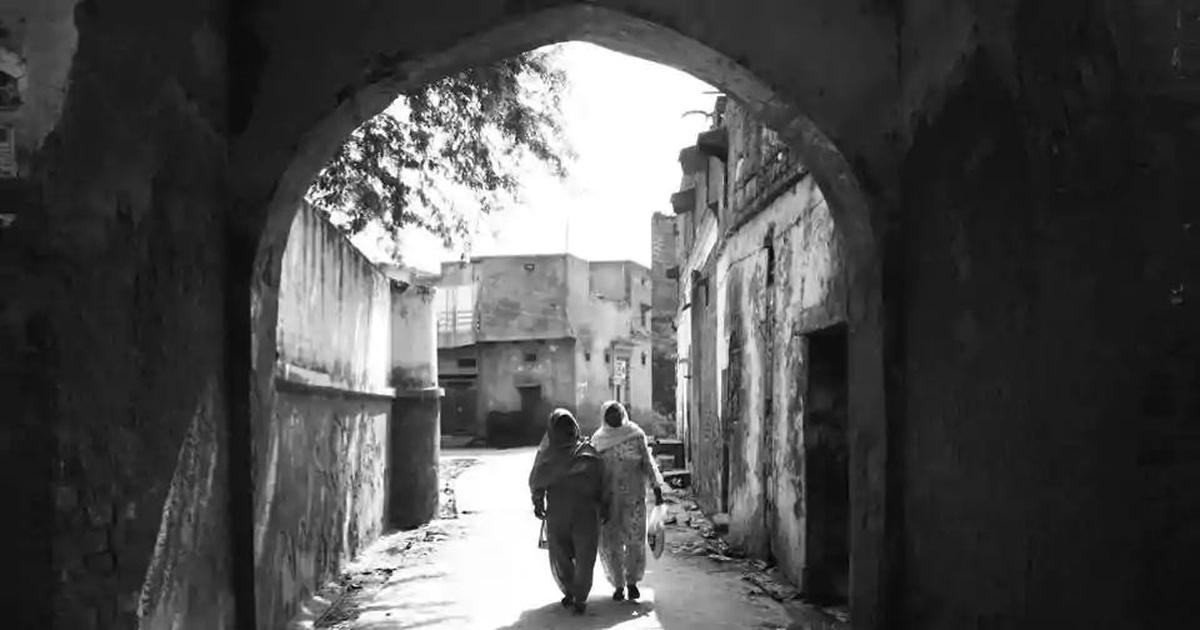
In 1947, Gandhi visited a village in the region to urge the Muslims living there not to leave the land of their forefathers for Pakistan.

One of Ghasera fort's four entrance gates – and the only one standing – in Haryana's Ghasera village. | HT
One of Ghasera fort’s four entrance gates – and the only one standing – in Haryana’s Ghasera village. | HT

Every December 19 since 2000, Meo Muslims in Haryana have been commemorating Mahatma Gandhi’s visit to Ghasera village in Mewat district as Mewat Diwas.

On this day, the Meos, who have long been the target of a campaign of communal violence unleashed by Hindutva groups, gather at Ghasera village to recall how Gandhi had called the Meos “Iss desh ke reed ke haddi” or the backbone of India.

The Meos are a large community found in the Mewat region, which is spread across the states of Uttar Pradesh, Haryana and Rajasthan. They profess Islam but also follow several Hindus customs.

During his visit, Gandhi had assured the community that they would not be forced to leave India. He also asked those who wanted to leave to stay on in the land of their forefathers. A month later, Gandhi was assassinated in Delhi

Gandhi’s assassination came as a blow to the Meos. “The Meos who had been convinced to stay once again started feeling they would have to leave,” said local historian Siddique Ahmad, who belongs to the Meo community and has written extensively about Mewat’s connection to Gandhi. “The women of Mewat used to sing a song – ‘Bharosa utth gaya Mevan ka, goli lagee hai Gandhiji kay chathee beech.’” The Meos have lost their trust, now that a bullet has pierced Gandhiji’s chest.

At the village, now sometimes referred to as Gandhigram Ghasera, Deen Mohammed, a key organiser of Mewat Diwas explains how the commemmoration began. “We felt the need to commemorate this occasion every year because our children must know our past,” he said. “There are people who call Mewat mini-Pakistan and us Pakistanis, but try as they may, the truth is that this is our land, we have shed blood for it and Gandhiji was with us in this fight. The world should be reminded of that.”

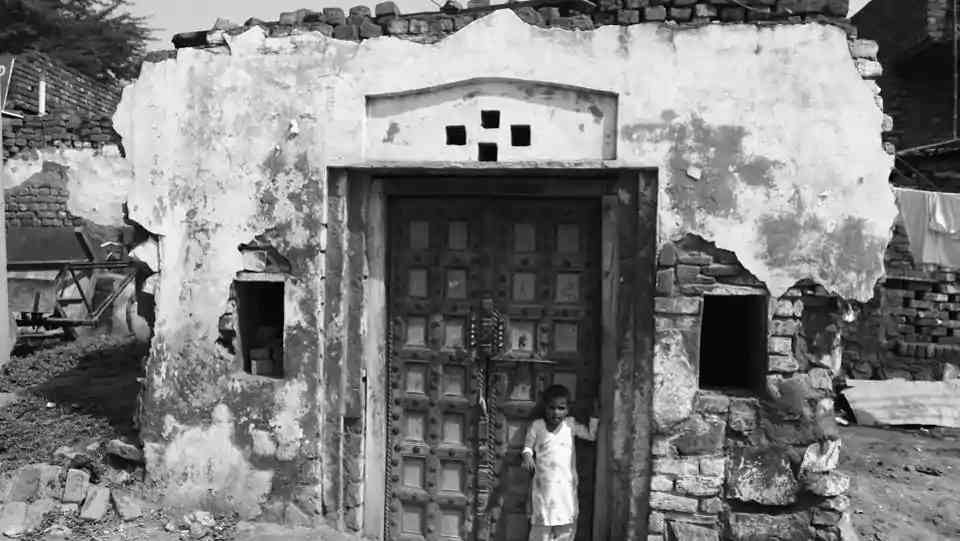
Haryana's Ghasera village. (Photo: HT).
Haryana’s Ghasera village. (Photo: HT).

‘Ethnic cleansing’

“The Meos believe that one of the reasons for Gandhi’s assassination was that he managed to ensure that a large population of Muslims residing near Delhi was stopped from leaving,” said Ahmad, sitting in his study in Banarsi village in Mewat district. “This angered men like [Gandhi’s assassin Nathuram] Godse.”

Ahmad conceded that there were others reasons for Gandhi’s assassination such as his insistence that Pakistan be paid the arrears promised to it under the terms of the division of assets and liabilities between India and Pakistan, but insisted that his visit to Mewat was also a reason.

To buttress his argument, he cited an oft-repeated but never confirmed story that the pistol involved in the assassination was supplied by the Alwar royal family, which had once ruled over parts of Mewat region.

As Ahmad related the story of how the Meos were affected by Partition, the reasons for their respect for Gandhi and their distrust of the princely families of Alwar and Bharatpur became clear. (Both Alwar and Bharatpur lie in present-day Rajasthan.) In 1933, after the royal family of Alwar imposed heavy taxes, the Meos launched a successful agitation that led to the British deposing the Alwar king and taking over the administration of the state.

“The king of Alwar was already angry with the Meo farmers for an agitation they had led against him and one that got him dethroned so he already had great animosity against the Meo,” said Ahmad. “The Raja of Bharatpur wanted to create a Jatistan that would stretch from Nuh in Haryana to Bharatpur.”

Ahmad’s accounts of the violence during Partition are backed by historians like Shail Mayaram who have worked extensively on the history of the region. Mayaram noted in a 2000 article :

“[In 1947] the Meos are subject to one of the first exercises of ethnic cleansing. This is euphemistically (and literally) called safaya (to clean). Thirty thousand Meos are killed in the princely state of Bharatpur alone. And this is an official figure. No figures are available for the numbers killed and displaced in Alwar. But the total Meo population in the two princely states is nearly 200,000. Overnight, the Meos are slaughtered or evicted by multi-caste mobs referred to as dhars. Their villages are razed to the ground. Only those allowed to stay have been subject to shuddhi (so-called purification, in fact, a euphemism for a conversion rite). The violence is hardly spontaneous. It is completely organised by the princely states and orchestrated by the organisations of what are today referred to as the ‘Hindu Right’. Certain national level leaders belonging to the Congress are also among its supporters/participants.”

Those who survived the violence fled to camps that were mushrooming across Nuh, Rewari and Sohna, which were then in Punjab. These were “waiting camps” where people would live till the time they were made to cross over to Pakistan. “Everyone wanted the Meos to go to Pakistan,” said Ahmad. “The rulers of Alwar and Bharatpur, of course, the Hindu Mahasabha, every right-wing Hindu organisation, but even the Congress.”

The land of their forefathers

That the Meos resisted the pressures to leave in the midst of such madness speaks of their love for their land. Ahmad pointed to a record of a famous panchayat held at the time, where community leaders declared that the Meos would not leave their homeland.

According to him the idea to ask Gandhi to intervene initially came when Abdul Hai, the secretary of the All India Mev Panchayat, spoke to the Communist leader PC Joshi. Joshi is believed to have said that only Gandhi could bring peace. Led by the most respected and cherished leader of the Meos, Chaudhary Yasin Khan, a delegation met Gandhi on September 20, 1947, at Birla House in Delhi. “The Meos told Gandhiji that we would prefer to die than go to Pakistan,” said Ahmad.

In the ballads sung by the Meo mirasins (folk singers), Gandhi is said to have ended that meeting with a statement that “he too would prefer to die with those who never want to die in their motherland and were unwilling to leave her”.

Gandhi may well have been killed for expressing sentiments such as this. But the Meos refused to leave. It is a battle they still fight against the intellectual descendants of those who unleashed the violence against the community during Partition. One of the ways they resist is by annually invoking the memory of Gandhi and the promise he made to them.

The author was supported by Karwan-e-Mohabbat fellowship for this article.

source: http://www.scroll.in / Scroll.in / Home> History Revisited / by Radhika Bordia / January 30th, 2019

3,000 books in top honcho’s library

Bengaluru, KARNATAKA / Silicon Valley, USA  :

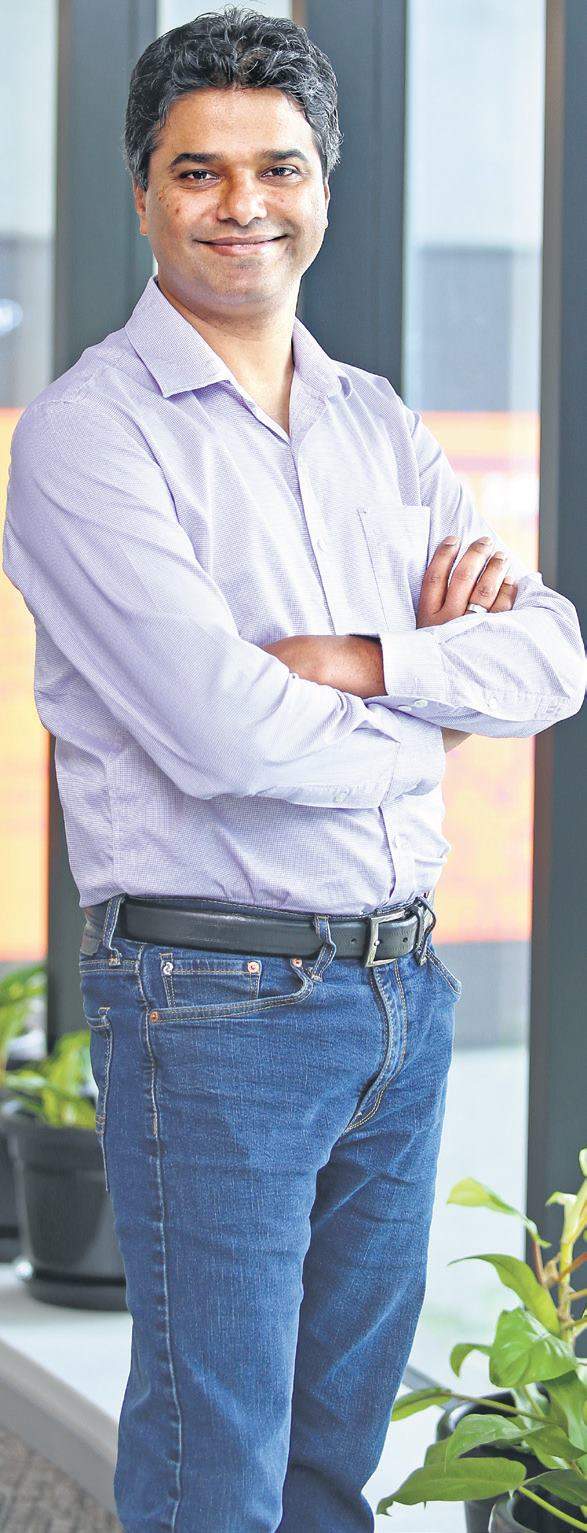
As senior vice-president of SAP, V R Ferose’s job has taken him to as many as 40 countries.

Ferose01MPOs30jan2019

Bengaluru :

As senior vice-president of SAP, V R Ferose’s job has taken him to as many as 40 countries. With back-to-back meetings and tight schedules, Ferose rarely has had any time to explore the places. But the corporate honcho has found a unique way of understanding cultures: Visiting bookstores. In fact, he even planned an entire vacation to visit the world’s largest independent bookstore – Powell’s Bookstore in Portland, USA.

VR Ferose
VR Ferose

As a child, Ferose read magazines such as Reader’s Digest and comics, but his reading habit didn’t really take off until college. “My wife Deepali was a voracious reader, and gifted me Eric Segal’s The Class. That is when I got hooked to reading,” he says.

Today, he has more than 3,000 books in his collection, but Ferose reveals that he doesn’t have a particular way of organising these books. “Currently I am cataloguing my 100 rarest books.

I have always wanted to organise my books properly, but never found the time. Also, I find there is fun in randomness and the hunt for finding a book is a part of the experience,” he says.People may call him crazy for his quirky hobby, but his wife has always been supportive. To an extent. He explains: “I have no more place in my home or office. Sometimes, my wife gets frustrated when books pile up in our wardrobes.”

So in order to strike a balance, Ferose does what most booklovers would find hard to do: “I have started giving away books – every time I buy a book, I give away one!” says the senior corporate professional.
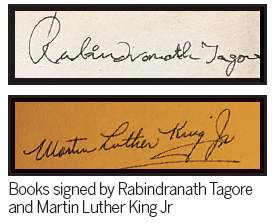
On a visit to the Nobel museum in Stockholm, he found that every chair in the cafeteria was signed by a Nobel Laureate. This then sparked off another idea: to collect books signed by Nobel Laureates.

Over a decade, Ferose managed to expand his collection of such books to 67. This collection includes Geetanjali signed by Tagore, My Experiments with Truth signed by Gandhi, Effects And Self Fertilization In The Vegetable Kingdom signed by Darwin, Where Do We Go From Here signed by Martin Luther King and Profiles In Courage signed by John F Kennedy.

Ferose03MPOs30jan2019

His favourite, however, is Man’s Search for Meaning by Victor Franklyn. “It was hard to get a signed book by him, since he rarely signed books. Getting this copy from a book dealer was a high point,” he explains.

His favourite bookstores are all over the world, from Mystery Pier Books in LA (where every book is a true first edition) to El Ateneo in Buenos Aires (considered to be the most beautiful bookstore in the world) to Bookworm in Bengaluru. Collecting books, however, isn’t just a hobby for Ferose. “It’s also about focus and constant learning. A hobby allows me to stand out in the crowd and it’s something I lean on in good times and bad. As they say, books are uniquely portable magic,” he says.

source: http://www.newindianexpress.com / The New Indian Express / Home> Cities> Bengaluru / by Simran Ahuja / Express News Service / January 08th, 2019

‘Present Kottai Ameer communal harmony award’

Coimbatore, TAMIL NADU :

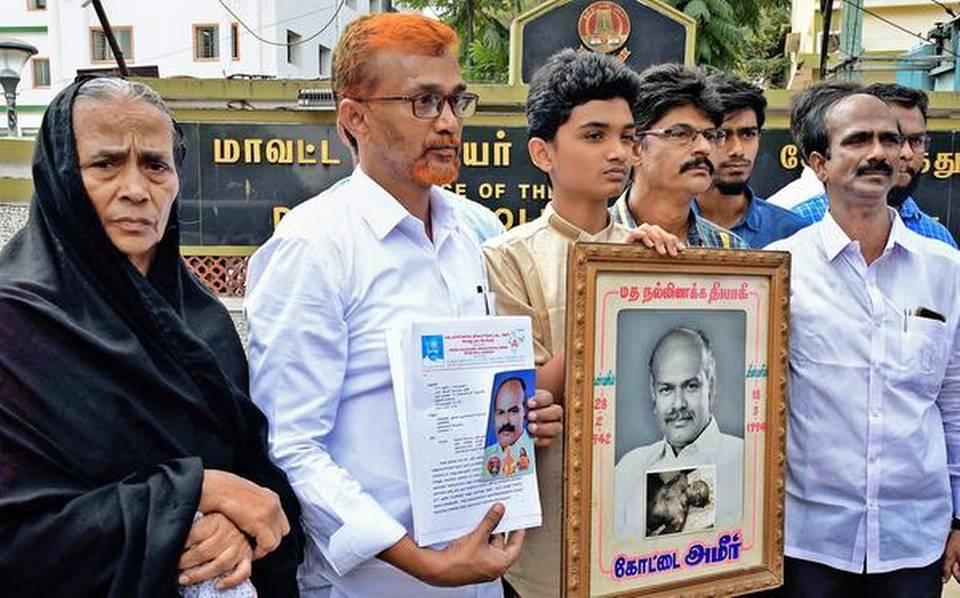
The family members of Kottai Ameer at the Collectorate in the city on Monday. | Photo Credit: S_SIVA SARAVANAN

The family of Kottai Ameer, in whose name the State Government presents a communal harmony award ever year on Republic Day, has called for continuing the tradition. In a petition submitted at the weekly grievances redress meeting here on Monday, Kottai Ameer’s son C.V.A. Jaleel said though the government gave away the Uthamar Gandhi Medal, Aringar Anna Medal and other awards this Republic Day, as it does customarily, it did not present the Kottai Ameer award.

The government’s failure to do so had caused consternation among Ameer’s family members and those who worked for promoting communal harmony.

To continue the tradition, the government must constitute a committee at least six months prior to Republic Day to identify the right candidate and continue presenting the award without fail.

This year, to make up for the failure, the government must confer the award on an eligible person on March 18, which was Kottai Ameer’s 25th death anniversary, Mr. Jaleel demanded.

source: http://www.thehindu.com / The Hindu / Home> News> Cities> Coimbatore / by Special Correspondent / Coimbatore – January 29th, 2019

Interview with Arshia Khan from University of Minnesota Duluth

Hyderabad, TELANGANA / Minnesota, U.S.A :

Dr. Arshia Khan interview at SAI Conference

source: http://www.youtube.com

Dr. Arshia Khan Ph.D, Associate Professor, Department of Computer Science, Swenson College of Science & Engineering, University of Minnesota Duluth, USA

Website :

http://www.d.umn.edu/~akhan

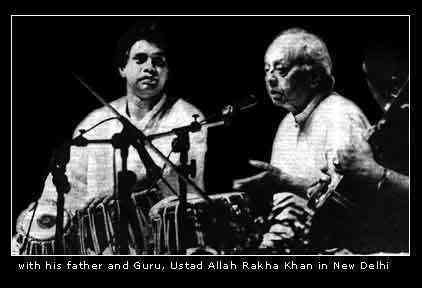
‘He was ahead of his time’: Fazal Qureshi on the genius of his father, tabla maestro Ustad Allarakha

Phagwal, JAMMU & KASHMIR / Mumbai, MAHARASHTRA :

In the centenary year of Allarakha’s birth, his son talks about their music school and carrying forward an immense legacy.

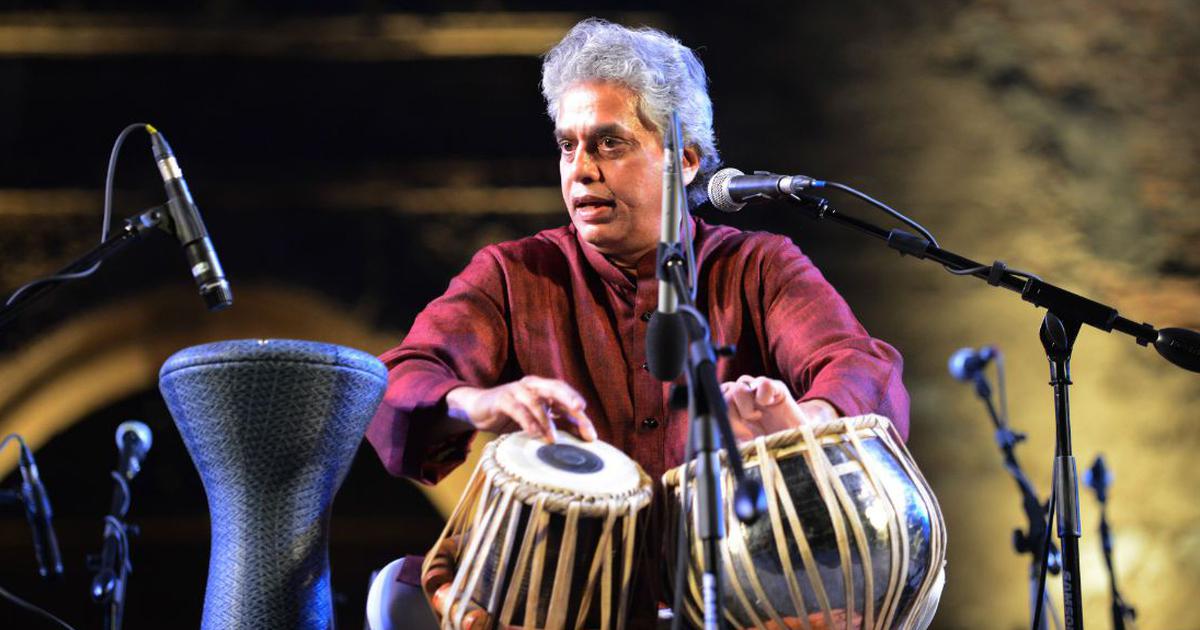
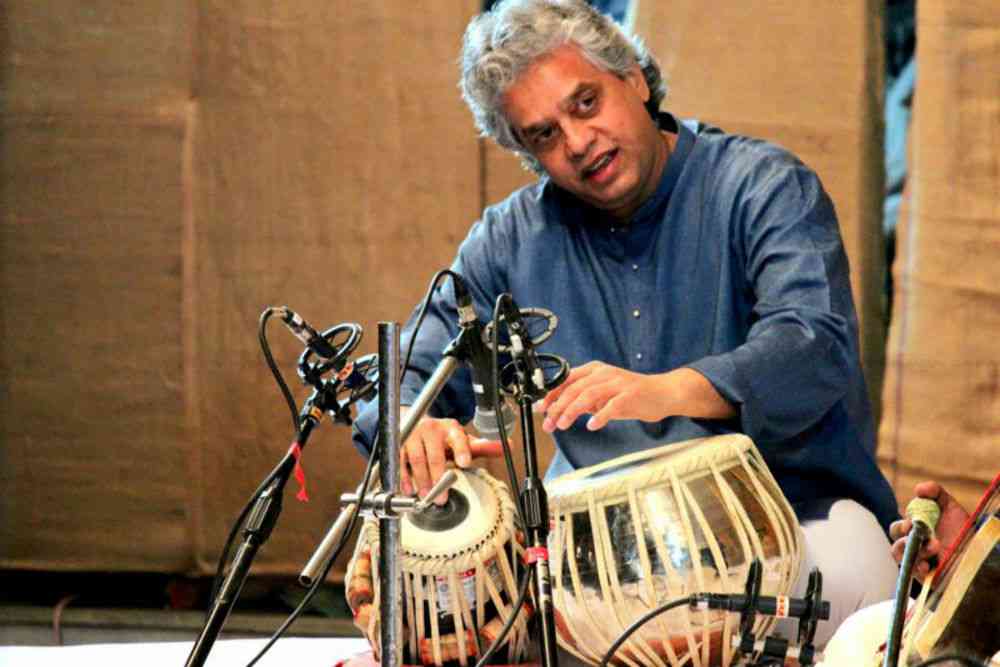
Fazal Qureshi | Sam Panthaky/ AFP

This year marks the 100th birth anniversary of arguably one of the greatest tabla players of all time – Ustad Allarakha. Born on April 29, 1919, in Phagwal, Jammu and Kashmir, Allarakha’s passion for music and talent came to the fore when he was only 12. During his many successful decades on the stage, he accompanied several of India’s most proficient musicians. His jugalbandi with sitar maestro Pandit Ravi Shankar is perhaps what he is most remembered for.

Allarakha was also a singer who composed music – under the family name AR Qureshi – for close to 40 films. He spent several years teaching in America and Mumbai, where he started the Ustad Allarakha Institute of Music in 1985.

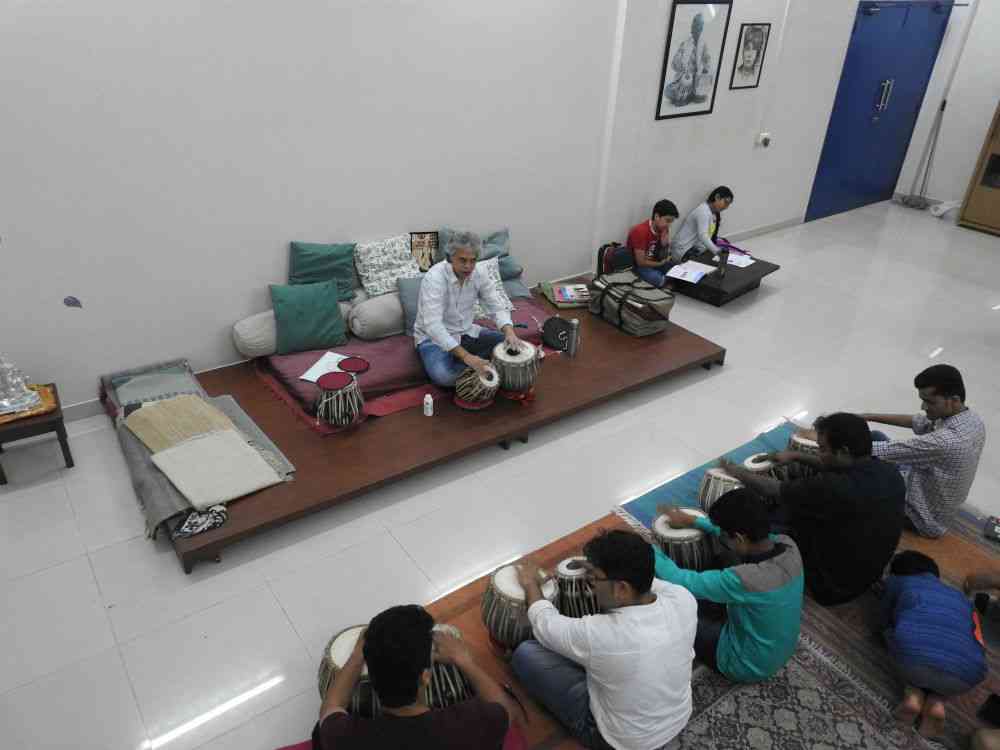
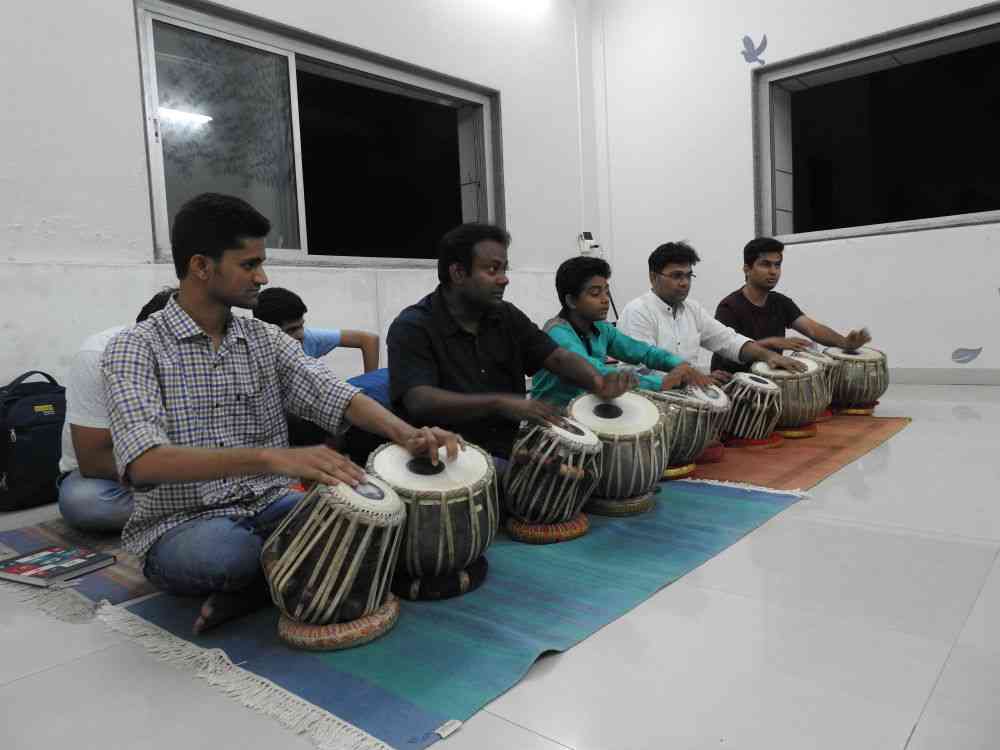
His son Fazal Qureshi, an accomplished tabla player in his own right, now runs the institute. Classes are held in a large room in the Gala Building within the Mahatma Gandhi Memorial Swimming Pool complex in Shivaji Park. I remembered the institute from having shot a scene there for a documentary film I was making on Guru Dutt in 1989.

I returned to it last December. After nearly an hour of listening to the exhilarating sounds of several tablas being played together under the guidance of Qureshi, I sat down to speak with him. During a long, freewheeling conversation, he spoke about the institute’s origins, his father’s teaching style, what prompted him to take up the tabla, his memories of his father and what makes classical music a draw for youngsters today.

Fazal Qureshi with students at the institute. Photo credit: Sanket Washikar.

How did the institute come about?
My father knew DM Sukthankar and S Tinaikar, both music lovers and commissioners at the Brihanmumbai Municipal Corporation [then called the Bombay Municipal Corporation]. Tinaikar’s son Mahesh played the guitar and was in a band called Indus Creed. Zubin Balaporia and I played in the band too. Back in those days, Abbaji said, “Mujhe sikhana hai, kuchh karna chhahiye aap logon ko (I would like to teach the tabla, you both must help me)”. So Sukhtankar and Tinaikar managed to allot a room for Abbaji in the building over there.

The deputy municipal commissioner, GR Khairnar, was a strict and upright person – he had, at the time, demolished many illegal structures in Mumbai. He lived in the house just behind the building where we were, and he used to come and listen to my father and his students. Later we moved to this classroom.

Did your father have many students?
Yes, and for many years. Previously they would come to our home in Shimla House. At one point, my father had decided he wanted to dedicate most of his time to teaching. There were many students who wanted to learn from him, and having a classroom was a boon. [Even if he] wasn’t feeling well, he would say, “No, no, I have to go. The students are coming there.” He enjoyed teaching and because of that his students enjoyed learning.

Your father was taught in a one-to-one relationship with his guru. How did he or you find teaching to a group?
I teach about seven to 10 students at a time and I manage to concentrate on each one of them. They are at different levels, and so they are divided into sub-groups. That is exactly how my father used to teach.

[Let me tell you about how] I learned from my father. [Back then] he was so busy – he was travelling and [performing at] concerts. When he would come home, he’d just sit and practise. I would sit in front of him and play whatever he was playing. There was no question of being the student – whatever he played, I played.

You were mirroring him? Learning by imitation?
Yes, by imitation. There was no time to write the bols down. I had to learn them by heart. And properly, because the next time Abbaji was home after a tour, or the day after a concert, he would ask me to play whatever he had played. I did not always get the kaidas right, so I would [listen to] a recording of a concert in which he played that particular kaida, and study the variations. That helped me reproduce it. He would be impressed and would say, “Seekh gaya bacha. (You have got it.)”

Fazal Qureshi / Facebook.

And how old were you at the time?
About 15. I started pretty late. There’s a story behind that. There was a documentary made on my father in the 1970s by the Films Division in which you can see me playing the tabla with Taufiq [Fazal Qureshi’s younger brother]. We were just kids. After that I didn’t touch the tabla.

Abbaji used to tour America and also taught there, so some of his students would come to study here. There was a 16-year-old boy called Peter Peringer who came all the way from America to experience Indian culture. He was my father’s student and was very good. He stayed with us in Shimla House, and used to practise the whole day. I would go to school in the morning and when I’d come home, he would still be practising. I would take the tabla, sit in front of him, and play whatever he was playing, just as fast as him. Peter would say, “I practise this thing the whole day, and he just comes, picks up the tabla and plays the same thing, and as fast as me. How is that possible?” He recounted this incident to his friends in America who later told me about it.

But how did you do it?
I don’t know. The Peter incident was before my father had started teaching me. For me, it was something [that came] naturally. I was a little boy. I recently saw a video of a three-year-old playing the drums in an orchestra. A three-year old – now what does he know? But he plays as if he does.

Peter inspired me. I thought, look at this guy: he’s come all the way from America. And he’s just 16. He used to recite the bols so well. Zakir bhai [Zakir Hussain, Fazal Qureshi’s older brother] used to teach him too. He would take Peter to all his concerts and ask him to recite. Everyone was fascinated by his recitation: here’s this American who could recite almost like my father. He was so good. Sadly, Peter is no more.

Do you think there are more students today than when your father was teaching?
Of course. It’s [cyclical] – you come, you learn for a few years, and then you go because you’re already at a certain level and you want to perform on stage. Some of Abbaji’s students are now performing, including Yogesh Shamshir, Aditya Kalyanpur and Anuradha Pal. Then comes the next batch and the next. Many of Abbaji’s students are in America, and many of my students have established themselves as teachers and performers.

Students at the institute. Photo credit: Sanket Washikar.

How many classes do you have in a week?
We have about 40-50 students in circulation. I don’t call all the students at the same time – we give them specific days. We have classes from Tuesday to Saturday. If I miss a lesson because I am on tour, then I take the class on a Sunday. I want every student to come at least twice a week. Our fee is Rs 700 a month. It’s nominal because we want people to learn the tabla [irrespective of whether they are] rich or poor. I have a blind student who comes from beyond Thane. His grandfather brings him here. I teach him by reciting the bols. He’s got very good hearing, and could play even before we met, [though] he wasn’t taught.

Can we say your teaching belongs to a certain gharana?
For the newcomers, it’s basic training like how to use the right and left hand. I have watched and learned that from Abbaji. There are a lot of students who already have some facility in hand movements.

I am not strict about sticking to one gharana – when I teach a certain bol, [in] the way my father taught me, I want them to play in that style/gharana. But some students come to me [after] having been taught in a different gharana, so I don’t really change their hand. I cannot, because that would be starting from scratch. Over a period of time the students realise there’s a certain way they need to play, so they change by themselves. I don’t have to tell them. Nowadays they can watch videos on YouTube, and observe the way bols are played by Abbaji, Zakir bhai or Fazal bhai.

How long do you think it takes for a student to perform on stage?
I can’t say, [but] I can give you my example. I started learning when I was around 14 or 15 and by the time I was 18, I was performing on stage. That’s not very much in terms of years, but remember, I was brought up in a musical atmosphere.

If I were to generalise, I’d say you need to learn for at least five or six years. You’ve got to get into the groove. A music school doesn’t teach you how to perform. You have to get out there. It’s like studying for an MBA – but then how do you apply what you’ve learned? You have to work in an office [and] learn the ropes, as they say.

A person must know how to apply their knowledge. Many of my students send me videos of their performances. I watch them and say, “Okay, here there was no need for you to play this or you played a little too long. It was not required.”

When you’re performing on stage, it’s [all about] teamwork. There is the instrumentalist and the tabla player, and together they [put up a] good performance. It’s not two performances happening at the same time – it’s one performance. You have to be in sync with each other. This is the attitude I want to instil in my students.

What is the most difficult thing about teaching the tabla?
I’m finding my way. Abbaji had his own thought process or philosophy behind the creation of a new composition, and that applied to when he was performing a kaida or rela. I am following his system because I used to ask myself how he created those variations. Analysis is important, and because of that I am able to add my variations to his compositions – I follow the same patterns.

It’s a way of thinking that’s passed on, and I’m trying to pass that philosophy to my students: I’m teaching you a variation, see how it’s created, see how you can develop it. From one variation another emerges. It’s like a chain. You need to understand how the chain is built and only then will you understand the composition. Create your own stuff later.

Does it surprise you that young people are still drawn to learning classical music in today’s fast-paced life?
No – in fact, I see more students now than earlier. If you go to a Zakir Hussain concert, you’ll see many young people in the audience.

It’s [about] that one personality who brings in the audience. In the ’70s, it was Ravi Shankar. Everyone wanted to learn the sitar because of Raviji – that he had played with The Beatles [was a big draw]. Then there was Ustad Ali Akbar Khan saab, who was a big name in sarod. Everyone wanted to learn the sarod. The santoor and the flute became popular thanks to Pandit Shivkumar Sharma and Pandit Hariprasad Chaurasia. They made a good team with Zakir bhai. When they were on the stage, people went gaga over them. The tabla was already popular and with Zakir bhai, it has become even more popular.

The musician makes an instrument popular. That’s why the Rudra veena or the Saraswati veena are not very popular. It is because we don’t have a personality associated with these instruments. Why is the mandolin popular? It’s thanks to U Srinivas who was a great mandolin player. The mandolin is not even an Indian instrument, it’s a western instrument. The violin is not an Indian instrument either but it’s popular because of the personalities of the musicians who play the violin in the South as well as the North.

Pandit Ravi Shankar and Ustad Allarakha/YouTube.

This year marks your father’s 100th birth anniversary. How would you like him to be remembered?
My father was way ahead of his time. And a lot of people would agree with me. While everyone performed straightforward taals, he was creating new compositions in different rhythm cycles – he played six and a half, seven and a half, things the others were not doing. He was very innovative.

Abbaji was one of the first tabla players to accompany South Indian musicians, international drummers and classical violinists from the West. He was the first tabla player to compose film music. In later years, other classical musicians starting composing for the movies, including Ravi Shankar, Ustad Ali Akbar Khan and Ustad Vilayat Khan. Abbaji was a very open-minded musician. Despite being a traditionalist at heart, he was doing all this other stuff which was not connected to the tabla. In the 1940s, he was even employed as a vocalist with the All India Radio.

I’d like people to remember him as an all-round musician. He was a tremendous film composer. That’s one of the reasons why we created The Journey Continues, a musical tribute for my father with actor-storyteller Danish Hussain. It showcased Abbaji’s many talents.

What do you remember of him as a father?
He was a very calm and relaxed person who did not lose his temper. Taufiq and I were closer to each other in age. Zakir bhai was older. Abbaji never scolded us, [even though] we kids were up to all kinds of mischief, running amok around the house. He never scolded us. My mother would go crazy, but he would sit calmly – and let us do whatever we wanted. He had a lot of aspirations for Zakir bhai because he was the first son born in the family. It was not just Abbaji – most people around him shared his feelings. “Bhai, Ustad Allarakha ka ladka hai, pehla ladka hai, yeh to bajayega hi. (After all, he’s Ustad Allarakha’s eldest son, he is bound to play the tabla).”

Was your father an affectionate man?
He was very affectionate. And unbiased. If I was sitting among his students and practicing, he would not pay me more attention just because I was his son. He was very impartial. For him, talent was important – if you’re good, no matter who you are, rich or poor, I’ll teach you more.

Fazal Qureshi / Facebook.

What if a student is no good? What do you do?
I have to tell them – look, this is not happening, try something else. I don’t want them to waste their time or mine. If I want to be a professional musician and I am not good enough, I should realise it myself. Just because your father is in that profession, you don’t have to follow him.

When it comes to my relationship with the students, I’d like them to treat me as a friend, they should feel free to talk to me. They can ask me questions. I prefer a relaxed atmosphere – hierarchy shouldn’t exist.

How did your father deal with his students?
The older generation were very direct in telling people if they were going wrong. He used to sit in the audience and if his student was making a mistake, he would say out loud: “Arre, kya kar rahe ho? (What do you think you’re doing?)

Abbaji was outspoken. He used to think if you have something to say about someone, say it to their face, don’t talk behind their back. That’s how many great musicians were in those days.

source: http://www.scroll.in / Scroll.in / Home> Magazine> Interview / by Nasreen Munni Kabir / January 12th, 2019

HC judge elevated to Supreme court

Beluvai (near Moodbidri) / Bengaluru, KARNATAKA :

It was a proud moment for the Karnataka High Court as two of its judges were elevated to the Supreme Court.

Bengaluru :

It was a proud moment for the Karnataka High Court as two of its judges were elevated to the Supreme Court. In a rare instance, one of the judges has been elevated even before becoming the chief justice of a high court.

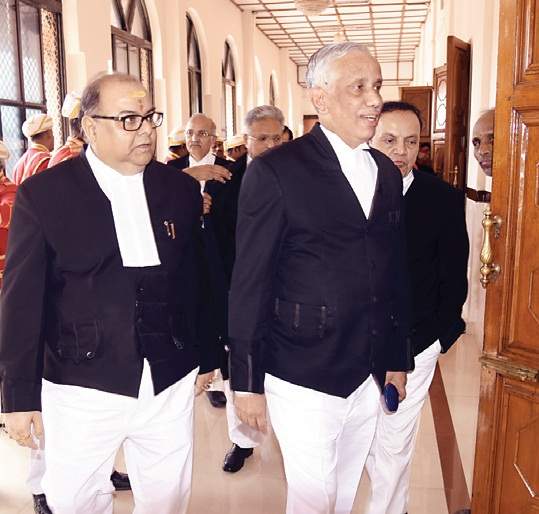
Chief Justice Subhro Kamal Mukherjee, Justice S Abdul Nazeer (right) after a farewell programme at the High Court on Thursday | Vinod Kumar T

The elevated judges are Justice S Abdul Nazeer from the Karnataka High Court and Justice Mohan M Shantanagoudar, who was recently transferred from Karnataka High Court as chief justice of Kerala High Court. They will be sworn in as judges of the Supreme Court on Friday. Both the Judges will have a six-year tenure in the apex court.
Justice Nazeer is perhaps the third judge elevated directly to apex court before becoming the chief justice of a high court.
Earlier, Justice S Rajendra Babu, former Chief Justice of India and Justice N Venkatachala, former Lokayukta were elevated directly as judges of the Supreme Court from the Karnataka High Court.
“I have become emotional.. the reason is my elevation to the apex court and also heading towards Delhi, leaving all the legal fraternity of the state. The real power of courts lie in the trust and confidence reposed by the people and the power vested with them to decide or punish the guilty. Continuing efforts are needed by the bar and bench to keep the faith of people in judiciary,” Justice Nazeer said, while thanking his mother for “raising him to this level despite poverty.”
A warm farewell was given to Justice Nazeer by both the Bar and bench on Thursday. His elevation was described as a proud moment for the Karnataka High Court by those who were on the dais as well as those who were in attendance.

source: http://www.newindianexpress.com / The New Indian Express / Home> Cities> Bengaluru / by Express News Service / February 17th, 2017