All posts by mpositiveone@gmail.com

The progressive princess of Hyderabad

Hyderabad :

Princess Durru Shehvar

Princess Durru Shehvar ushered modernity into Nizam’s household

The name of Durru Shehvar, the elder daughter-in-law of the Nizam of Hyderabad ,  Mir Osman Ali Khan, is remembered for the social and philanthropic work she so zealously engaged in Hyderabad. Born in Turkey, brought up in France but married to the son of the world’s richest man, the Nizam of Hyderabad, Princess Durru Shehvar chose to spend her last years in London. She brought modernity to the Nizam’s household and worked for the upliftment of women in Hyderabad.

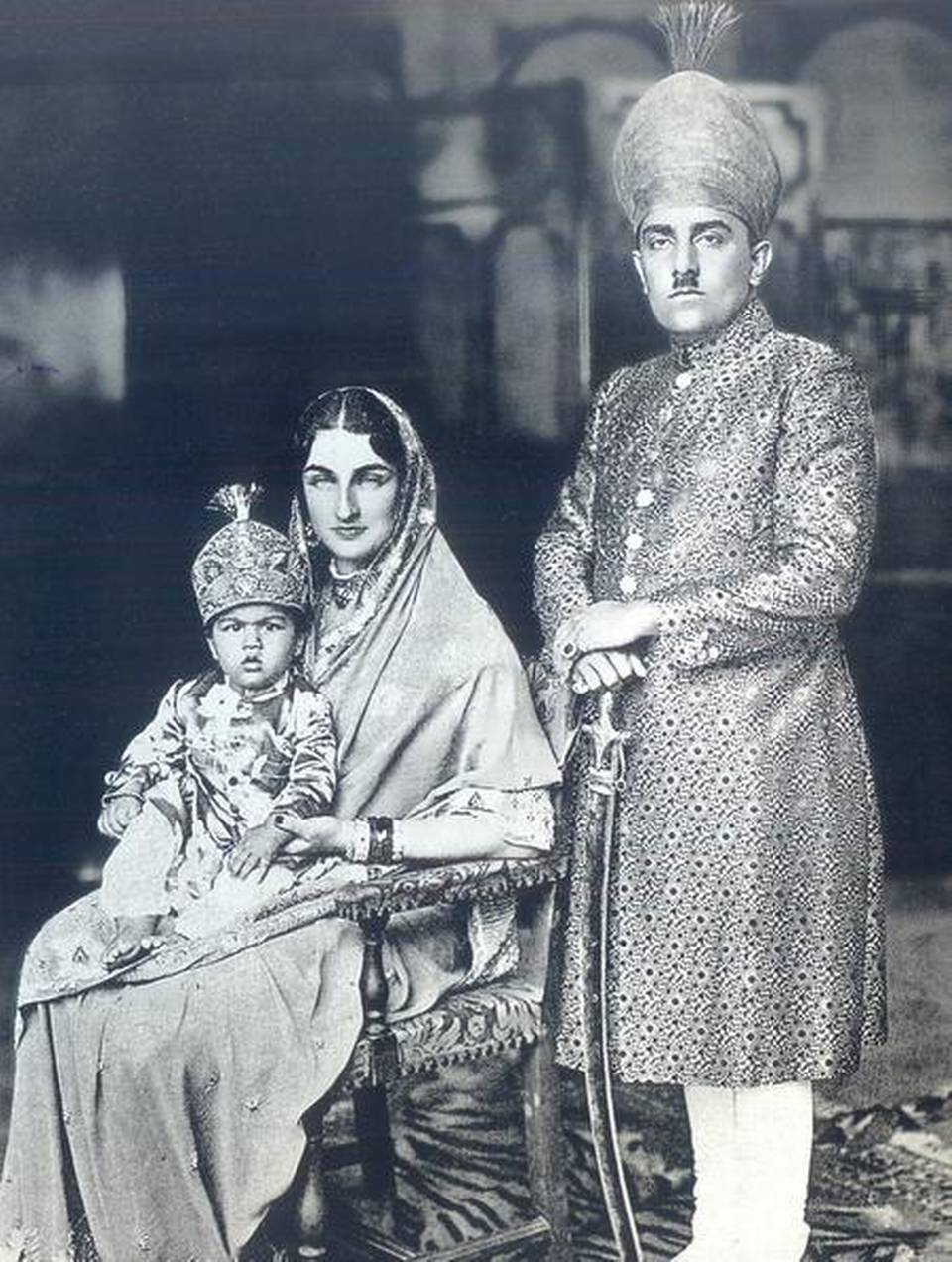
Her marriage with prince Azam Jah Bahadur, the elder son of the seventh Nizam, Mir Osman Ali Khan, resulted in the union of two illustrious Muslim families, the Turkish Caliphate and the Asaf Jahis of Hyderabad. Durru Shehvar, the only daughter of Abdul Majjid II, the Caliph of Turkey was born in 1914 and brought up with modern education, training in martial arts and was intended to succeed her father.

Nizam and the exiled Caliph

In March 1924 after Turkey became a Republic, the Caliphate was abolished and the royal family expelled. Abdul Majjid and his family settled in Nice, a southern French Mediterranean port city. The British Red Cresent Society friendly with the deposed ruler appealed to Muslim rulers around the world to come to the aid of the impoverished Caliph. Persuaded by Maulana Shaukath Ali and his brother, Maulana Mohammad Ali, Nizam Mir Osman Ali Khan decided to send a life-time monthly pension of 300 pounds to the deposed Caliph, and allowances to several individuals in the family.

When Durru Shehvar, came of age, she was sought in marriage by several Muslim Royals including the Shah of Persia and the King of Egypt for their heirs. Shaukat Ali prevailed on the Nizam to send a proposal to the Caliph asking for Darru Shever’s hand for his elder son, Prince Azam Jah. The deposed Caliph could hardly reject the offer from his benefactor.

But it was not that easy; the Mehr (the bride money) of 50,000 pounds that the Caliph demanded for his daughter was “too big”, the Nizam felt. But with the intervention of Shaukath Ali, the Caliph proposed to offer for the same Mehr, the hand of his brother’s daughterNiloufer, for the Nizam’s younger son, Prince Mauzam Jah. The Nizam readily agreed and sent his two sons to France.

The marriage of Princess Durru Shehvar with Prince Azam Jah, along with that of Prince Mauzam and Niloufer took place in Nice, in France, on 12 November, 1931, in a simple ceremony attended by only a simple affair with only the members of Sultan’s family at Nice, a few Turkish nobles and friends as well as representatives of the Nizam — Sir Akbar Hydari and Nawab Mehdi Yar Jung, who happened to be in Europe at that time to attend the Round Table Conference. The Khalifa himself performed the ceremonies. All the offices and educational institutions in the Nizam’s dominions were given a holiday on the day.
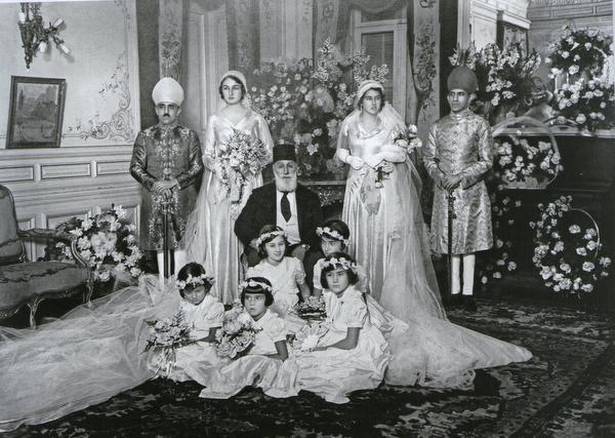
A photograph of the princess and her family

Meeting the Mahatma

After a month of festivities in Nice, the Princes with their concerts set sail from Venice to India on December 12, 1931. The ship they were travelling in also contained a star co-passenger, Mahatma Gandhi, who was returning after attending the Second Round Table conference in London. Shaukat Ali, who was accompanying him, having known Gandhi’s sympathy for the exiled Caliph for whose restoration, he pleaded during his non-cooperation struggle, arranged a meeting of the young Hyderabadi Royals with Gandhi on the board of the ship.

However, there was a hitch Gandhi who was traveling in III class would not step into Ist. class where the young couples stayed; nor would the Hyderabad Princes be willing to go to III class where Gandhi stayed. Shoukath Ali, worked out a compromise and the meeting of Gandhi and the newly weds took place in a lounge in the II class.

Active in Hyderabad

In Hyderabad, Durru Shehvar soon identified herself with the people . With a great passion for providing health care and education for common people, she set up a general and children’s hospital in Purani Haveli, which still runs in her name. A Junior College for girls in Yakutpura, Bagh-e-Jahanara, is also run on the funds she provided. She inaugurated the Ajmal Khan Tibbiya College Hospital in Aligarh Muslim University (AMU) . The Nizam called her his precious Jewel (Nagina) and encouraged her to participate actively in Hyderabad’s social life. The proud father -in -lawloved to point out how Durru Shehvar was taller than his son. In the company of her friend Rani Kumudini Devi, she rode horses, drove cars and played Tennis. With her beauty and charm, etiquette and dress sense, she transformed Hyderabad’s social circuit.

Durru Shehvar also laid the foundation stone of the Begumpet Airport building in 1936. Until then a small strip at Hakimpet served as the airport for Hyderabad. She ensured her sons, Prince Mukarram Jah and Prince Muffakam Jah, received the best possible western education in Europe and married Turkish brides, as she desired. Mukarram studied in Eton, where India’s first prime minister, Jawaharlal Nehru had earlier studied. Years later, Mukarram, declared heir to Hyderabad throne, at the suggestion of his grandfather, Mir Osman Ali Khan, served as Honorary Aid De Camp (ADC) to Prime MinisterNehru!

Durru Shehvar was fluent in French, English, Turkish and Urdu and even contributed articles to French magazines. She believed that women should earn their own living and worked hard to remove the practice of purdah. However, there was a great gulf between the Princess and the Prince, Azam Jah and their marriage fell apart within few years. It is an irony that when she was born, her father, the Caliph was the head of all the Muslims in the world; but was overthrown and sent away in exile. After her marriage, Hyderabad state was abolished and integrated with the Indian Union in 1948. She faced fame and power as well as adversary, displacement and agony, all with equanimity, and won the hearts of the people in Hyderabad, where she spent most of her adult life.

Princess Durru Shehvar, after shifting permanently to London, frequented the city. Her last visit to the city was in 2004, two years before she passed away in London at the age of 92. With her death, ended a glorious chapter of Hyderabad.

source: http://www.thehindu.com / The Hindu / Home> Society> History & Culture – Nizam Matters / by KSS Seshan / October 30th, 2018
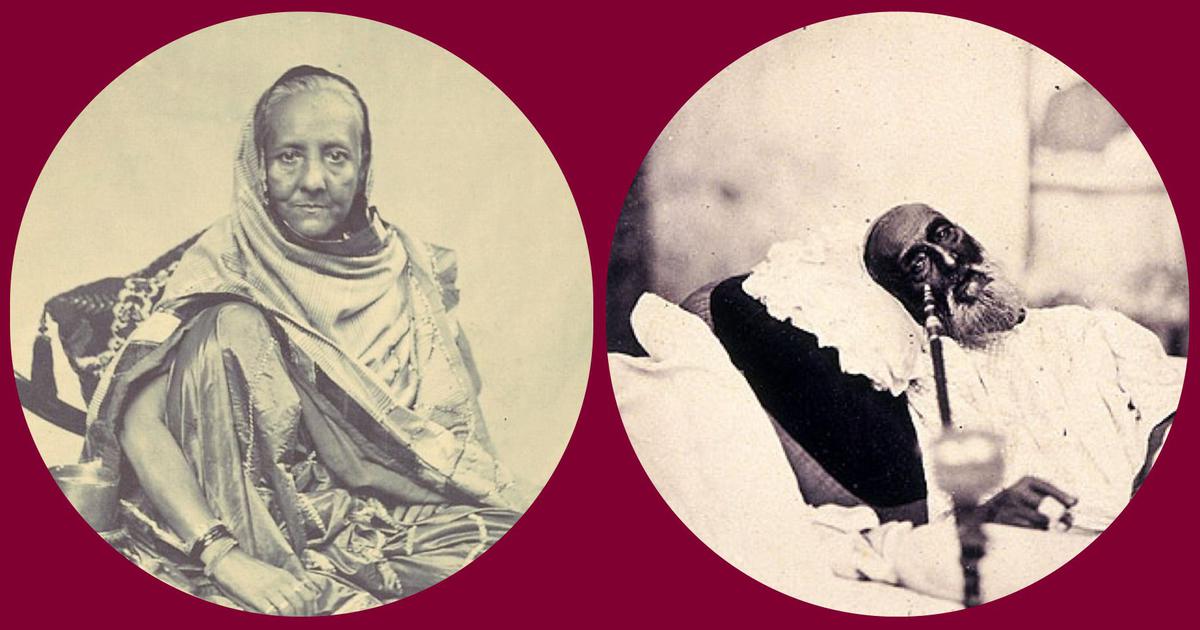
How Bahadur Shah Zafar’s daughter had to flee from Delhi after he lost his empire

INDIA :

A translation of one of the many stories collected by Khwaja Hasan Nizami about the survivors of the Mughal emperor’s family.

BahadurShahMPOs01nov2018

Khwaja Hasan Nizami wrote numerous books on the events that unfolded in 1857, all based on eyewitness accounts of the survivors. Begamat ke Aansu: Tears of the Begums are stories collected by Khwaja Hasan Nizami from the survivors of the Mughal family after the fall of Delhi in September 1857, when they had to flee from the Red Fort. Begamat ke Aansu was originally published in 1922 and has been reprinted many times since. This story is one of the accounts from Begamat ke Aansu. It describes Kulsum Zamani Begum’s escape from the Red Fort.

This is the true story of a female dervish who suffered through the travails of life. Her name was Kulsum Zamani Begum, and she was the pampered daughter of Delhi’s last emperor, Abu Zafar Bahadur Shah. Although she died a few years ago, I have heard her story from her own mouth many times. She was a sincere devotee of Mehboob-e-Ilahi Khwaja Nizamuddin Auliya and was so attached to his dargah that she would often come there. I would talk to her there and listen to her tragic tale. Whatever I have written down has been told to me either by her or her daughter, Zainab Zamani Begum, who is still alive and lives in Pandit ka Kucha.

Her story is narrated below in her own words:

“The night my Babajan lost his empire and the end was near, there was a tumult in Lal Qila. The very walls seemed to be weeping.

“The pearly white marble palaces had been blackened by soot from the gunfire and cannon shots in the past four months. No one had eaten for a day and a half. Zainab, my daughter, was a year-and-a-half old and crying for milk. Neither I nor any of the foster mothers were lactating because of the hunger and trouble all around us. We sat disconsolately when Hazrat Zill-e-Subhani’s special khwaja sara came to call us. It was midnight and the pin-drop silence was broken by intermittent cannon shots. We were terrified, but since Zill-e-Subhani had called us, we immediately left our palace and presented ourselves before him.

“Huzur sat on his prayer mat with a rosary in his hands. I stood before him and presented three salutations. Huzur called me close to him with great affection and said, ‘Kulsum, I entrust you to the care of Khuda. If fate permits, we will meet again. Go away immediately with your husband. I am also leaving. I don’t want to separate myself from my beloved children at this stage, but I don’t want to embroil you in my problems. If you are with me, destruction is certain. Maybe if you are alone, God will open a path of escape for you.’

“He raised his shaking hands in prayer and cried out to Allah, ‘Dear god, I entrust this orphan girl into your care. Brought up in magnificent palaces, they now venture into the wilderness and desolate jungles. They have no friends or protectors. Please protect the honour of these princesses of the Timurid dynasty. Preserve their honour. The entire Hindu and Muslim population of Hindustan are my children and trouble surrounds them all. Don’t let them suffer because of my actions. Give them relief from all troubles.’ With that, he patted my head, embraced Zainab, gave a few jewels to my husband Mirza Ziauddin, and sent us off along with Nur Mahal Saheba, who was Huzur’s begum.

“We left the Qila before dawn. My husband, Mirza Ziauddin, and the Badshah’s brother-in-law, Mirza Umar Sultan, accompanied the three women: myself and two other ladies, Nawab Nur Mahal and Hafiza Sultan, whose daughter was married to one of the emperor’s sons.

“When we climbed into our bullock cart, it was dawn. Only the morning star still twinkled in the sky, and all the other stars had vanished. We cast a last glance at the royal palace. We wept and yearned for what had once been our happy abode. Nawab Nur Mahal’s lashes were laden with tears and the morning star was reflected in them.

“We left the Lal Qila forever and reached Kurali village, where we rested for a while in the house of our cart driver. We were given bajra roti and some buttermilk. We were so hungry that the food tasted better than biryani and mutanjan.

“That night was spent peacefully, but the next day jats and gujjars from nearby areas came to loot Kurali. They were accompanied by hundreds of women who encircled us like witches. They took away all our jewellery and clothes. While these coarse women snatched the jewellery off our necks, we got a whiff of their breath which smelt so foul that we felt nauseous. After this, we didn’t even have enough money to buy ourselves our next meal. We didn’t know what was in store for us now.

“Zainab began to howl with hunger. A zamindar was passing by and I cried out, ‘Bhai, please give some water to this baby.’ The blessed man brought some water in an earthen cup and said, ‘From today, you are my sister and I’m your brother.’

“He was a well-to-do person from Kurali, and his name was Basti. He brought his cart and said he would take us wherever we wanted to go. We asked him to take us to Ijara, where Mir Faiz Ali, who was the shahi hakim and a long association with our family, lived. But when we reached Ijara, Mir Faiz Ali was extremely discourteous and refused to shelter us. ‘I am not going to destroy my house by giving you shelter,’ he told us.

“We were heartbroken and didn’t know what to do. Penniless and homeless, we were scared of the British forces chasing after us. Those who were eager to follow every glance of our eyes and obey even our slightest gestures had now turned away from us.

“And then there was Basti, who didn’t leave our side and fulfilled his covenant of calling me his sister. We left Ijara and set our destination as Hyderabad.”

Kulsum Zamani Begum eventually reached Hyderabad with her family and lived there for some time. For some time her husband made a living by making and selling calligraphic pieces and teaching the Quran but as the British influence spread to Hyderabad and they lived in fear of being arrested they were more or less housebound. Whatever jewellery had escaped loot on the way to Hyderabad had been sold off.

The son of Bahadur Shah Zafar’s spiritual master Kale Miyan Saheb Chisti Nizami Fakhri, heard of their plight and arranged finances for them. They left for Mecca to make the Hajj pilgrimage. Basti, who had stood by them like a rock, was sent home from Bombay with whatever reward they afford for his invaluable services.

“Aboard the ship, whoever heard that we were the Shah-e-Hind’s family was eager to meet us. We were all dressed in the clothes of dervishes. One Hindu, who owned a shop in Aden and had no idea who we were, asked us which sect of fakirs we belonged to. The question inflamed our wounded hearts. I replied, ‘We are the disciples of the Mazloom Shah Guru. He was our father and our guru. Sinners have snatched away his crown and separated us from him and exiled us into the wilderness. Now he longs for us, while we are restless and yearn for a glimpse of his face. That is the truth of our faqeeri.’

“The Hindu began to cry when he heard our story and said to us, ‘Bahadur Shah was our father and guru but what could we do? It was Lord Ram’s will, and an innocent man was destroyed.’”

They lived in Mecca for several years before returning to Delhi.

“When we came back, the British government took pity on us and fixed a sum of ten rupees per month for us. I laughed at this pension. They had taken away my father’s empire and offered us ten rupees as compensation.

“But then I remembered, this land belongs to god and he gives it to whoever he wants and takes it as he pleases. Man can do nothing about that.”

BahadurShah02MPOs01nov2018

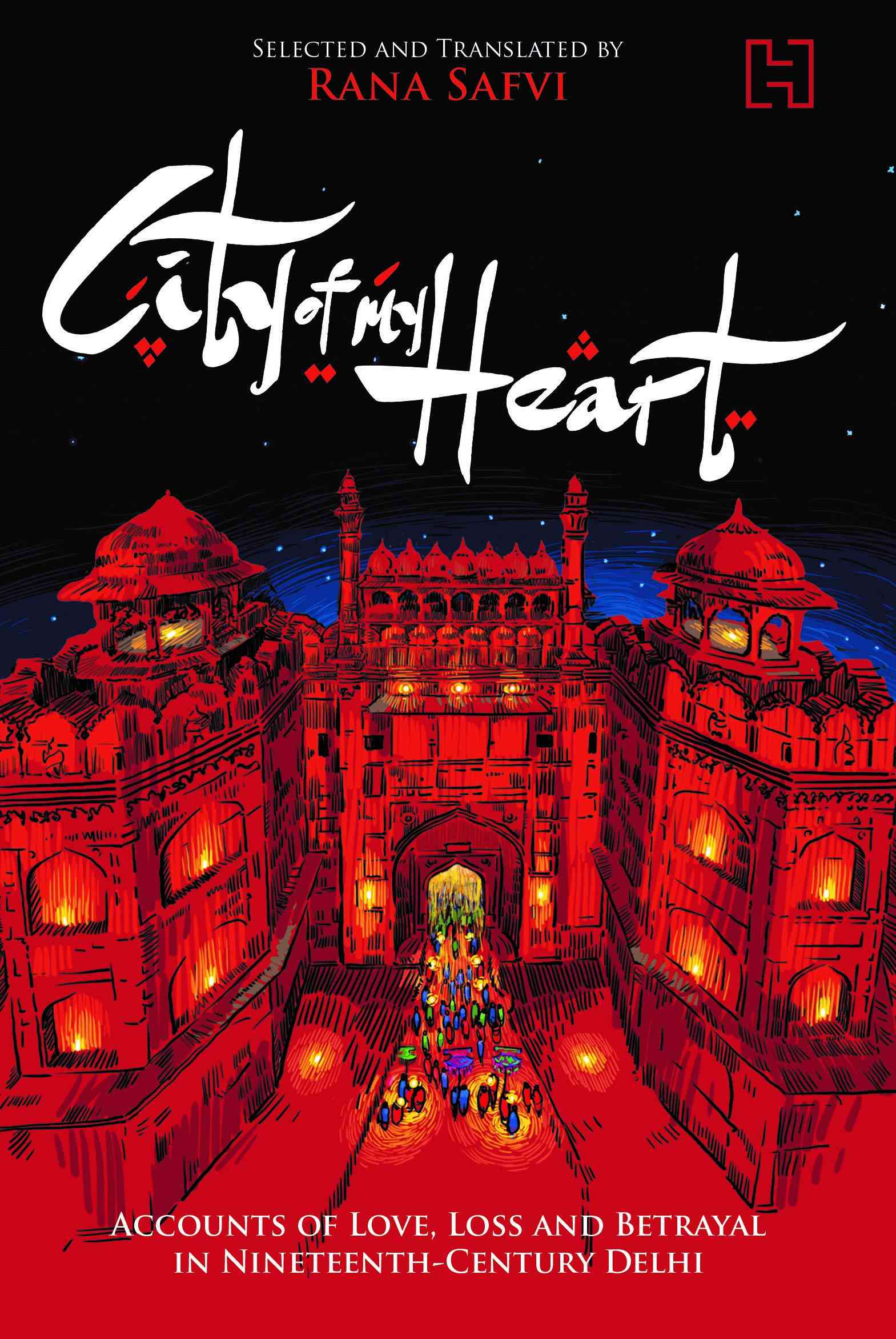
Excerpted with permission from City Of My Heart: Accounts Of Love, Loss And Betrayal In Nineteenth-Century Delhi, Selected and Translated by Rana Safvi, Hachette India.

source: http://www.scroll.in / Scroll.in / Home> Book Excerpt / by Khwaja Hasan Nizami & Rana Safvi / November 01st, 2018

Hockey: Asian Hockey Federation honours OHA veteran

OMAN :

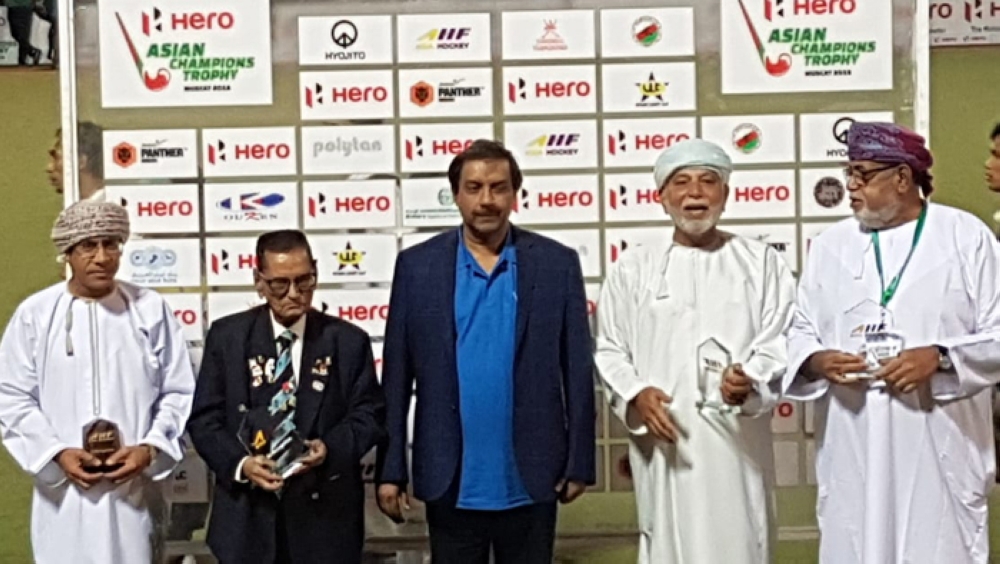
CEO of Asian Hockey Federation, Dato Tayyab Ikram aong with OHA veterans Eng. Dawood Al Raisi, SAS Naqvi, Mohammed Shambeh Al Raisi and Abdul Rahman Al Raisi.Supplied Photo

Muscat :

In recognition of their excellent contribution towards the development of hockey in the Sultanate of Oman, Dato Tayyab Ikram, CEO of Asian Hockey Federation (AHF) and member of Federation of International Hockey (FIH), in rare and unique gesture, presented mementos on behalf of the AHF to Eng. Dawood Al Raisi, SAS Naqvi, Mohammed Shambeh Al Raisi and Abdul Rahman Al Raisi.

Eng. Dawood Ahmed Al Raisi a former chairman of Oman Hockey Association and vice-president of Asian Hockey Federation, and a member of the Federation of International Hockey Umpiring Committee, represented Oman National Hockey team, as well as the Moscow University team in hockey. He was a student of Al Saidia School, Muscat, which is considered as the nursery of talented hockey players in Oman.

In 1982, Eng Dawood was deputed by Abdullah Hamed Al Ali, then director general of youth affairs to negotiate with the Indian Hockey Federation (IHF) to appoint a hockey coaches, as Oman had decided to participate in the 1982 Asian Games at New Delhi.

Eng Dawood signed an agreement with the Late K. L Passi, then secretary of the IHF to deputise S. A. S. Naqvi as coach and Joe Antic as assistant coach for Oman National Hockey team, the rest is history.

Oman participated in 1982 Asian Games in hockey at New Delhi and awarded the Fair Play Trophy apart from being placed sixth out of 12 teams.

Oman was the first country from GCC to participate in Asian Games hockey. Eng Dawood Ahmed Al Raisi was the head of Oman delegation for the 1982 Asian Games. Eng Dawood is now fondly regarded as the father of hockey in the Sultanate of Oman. He represented Al Ahli Sidab in hockey for several years.

In 1982, Saiyed Ali Sibtain Naqvi popularly known as SAS Naqvi was assigned as the first official National Hockey Coach of Oman by Indian Hockey Federation for a two years along with Olympian Joe Antic (1960 Rome Olympics) as his assistant coach.

The Oman Olympic Committee through which Games participation is ensured was not formed till 1982. Sheikh Fahad Al Sabha, then president of Asian Games Federation (now Olympic Council of Asia) granted recognition to Oman Olympic Committee (OOC) which made it possible for Oman to participate in International Games.

In 1983, Dr Hammad Hamed Al Ghafri was appointed by Royal Decree by His Majesty Sultan Qaboos bin Said as the president of Oman Olympic Committee.

A new head office of the Oman Olympic Committee was established with assistance of SAS Naqvi who was nominated as Technical Advisor.

SAS Naqvi had qualified from National Institute of Sports, Patiala, India in1976 and begun his playing career in 1947 until 1972 when he started coaching and umpiring.

SAS Naqvi was the coach of the Indian team at the 1973 World Cup training camp at NIS Patiala. In 1978, he was nominated as the coach of 1978 Indian women’s team for the World Cup at Madrid, Spain. In 1979 he had been appointed as coach of Indian women’s team for the pre-Olympics at Moscow.

From 1979 to 1982 he coached the Bombay XI, Bombay Customs, Punjab Sports Club, Western Railways, Air India, Teksons Sports, Maharashtra State Police and Don Bosco School.

SAS Naqvi accompanied the Oman delegation to the Asian Games in 1982 in Delhi, then again in 1986 at Seoul, 1990 at Beijing, 1994 at Hiroshima and 1998 at Bangkok.

He was also part of the Oman delegation to the Olympic Games in 1988 which was held in Seoul, then to Barcelona in 1992, at Atlanta in 1996 and in 2000 to Sydney, Australia.

SAS Naqvi has served as a Sports Consultant to OHA and FMEC for the last 15 years. Recently he established the Sports Museum in Muscat, Sultanate of Oman.

Mohammed Shambeh Al Raisi is one of the senior most hockey players of Oman and is a former treasurer of Oman Hockey Association. He has also been a member Asian Hockey Federation and a committee member of the International Hockey Federation (FIH). Mohammed Shambeh, a former chairman of the Oman Veteran’s Hockey Committee had represented Al Ahli Sidab in hockey for several years.

Abdul Rehman Al Raisi is also a former international hockey player and an International Hockey Umpire of Oman, he has been promoting the game for several years now in Oman. Khalid Al Raisi, his son, is an assistant coach of the Oman National Team while Marwan Al |Raisi is a prominent member of the Oman National Team.

source: http://www.timesofoman.com / Times of Oman / Home> Sports> Hockey / by Times News Service / October 30th, 2018

The Pathan who saved Pathra’s temples

Pathra, Midnapore District, WEST BENGAL :

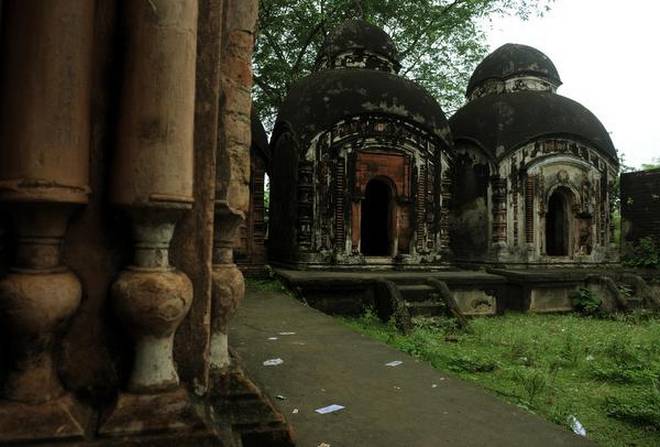
Pathra’s ancient temples | Photo Credit: Ashok Nath Dey

Today, 19 of the 34 temples in Pathra in West Bengal have been restored to their former glory

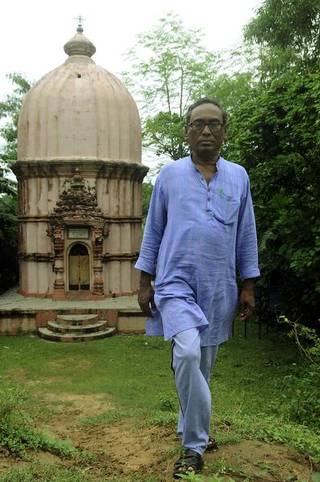
“Bash on.” That’s probably what Yeasin Pathan says to himself when he wakes up every morning. You just can’t miss his never-say-die attitude when you meet the frail 66-year-old. How else do you explain the grit of a Class IX dropout, and a devout Muslim, who has been crusading for the conservation of 34 temples for the last 42 years?

Pathan has been in love with Hindu temples ever since he was a child. Looked upon with suspicion by both Hindus and Muslims for this long love affair, Pathan is today inured to the jibes, threats and hurdles.

The story begins when Pathan was a child. Captivated by the terracotta temples he chanced upon in Pathra, a village close to his own, in Midnapore district of West Bengal,  their dilapidated condition set him thinking. And by the time he was 17, he had kick-started his ‘save the temples’ mission. This was in 1971. He had no archaeology or history degree to show on his CV, but Pathan realised the temples were “part of our heritage, and people should be prevented from walking away with bits of it.”

Garnering support

To start with, Pathan got the villagers together, Hindus, Muslims and Adivasis. He told the people of Pathra it was in their hands to preserve their heritage for posterity. As expected, Pathan found himself up against opposition. People from his community were enraged he was advocating the preservation of structures where idols are worshipped. “The Hindus of the area were miffed too, because I prevented them from stealing the bricks off the temples and selling them,” he says, smiling.

Statues for sale

Even the descendants of the zamindars who had built the structures were trying to make money by selling carvings and statues. Pathan was, clearly, surrounded by a ring of fire. That’s when innate wisdom told him he must give the locals a vision to aspire for: that if Pathra became a tourist destination, “the village and its adjoining areas would get roads, electricity, water, and business.” The semblance of a truce followed.

Under his leadership the local community set about first clearing the wild growth of weeds around the monuments. Then, Pathan mobilised rallies at the district headquarters in Midnapore to demand funds. There were scuffles, and he would rush to Midnapore to bring the police to Pathra.

Yeasin Pathan | Photo Credit: Ashok Nath Dey

But his efforts began to bear fruit.

Money started trickling in; IIT Kharagpur stepped in to help with the conservation. Pathan set up an NGO, Pathra Archaeological Preservation Committee, which, apart from its core agenda, also became a forum for communal harmony. The then Planning Commission Deputy Chairperson, Pranab Mukherjee, sanctioned ₹20 lakh for Pathra. The biggest victory for Pathan was when the Archaeological Survey of India (ASI) took over restoration work in 2003.

Guide for tourists

Meanwhile, Pathan realised he needed a steady source of income. He now had a wife and four children. To make ends meet, in 1974 he became an attendant in a school in Hatiholka, his village. He also worked as a stringer for newspapers, and when curious tourists visited Pathra, Pathan became their guide. But he never wavered in his mission to conserve the temples.

Although Pathra’s residents acknowledged his pioneering work over the years, he has faced testing times. Gasping for breath ( he has two blockages in his heart), he recounts how he had to go into hiding after the Babri Masjid demolition in 1992. “Muslims wanted to lynch me for protecting temples while Hindus were breaking mosques.”

Only one guard

Today, 19 of the 34 temples in Pathra have been restored to their former glory. All under the eagle eye of Pathan, who says ruefully: “Such a big area, and only one guard to protect it.” Some 9.5 acres around the temples are being beautified by ASI. Pathan’s new fight is to get 70 farmers their compensation for the land they had to give up around the temple.

“You know how it is… unless we make a noise, the state will take its own sweet time,” he says.

Dressed in a cotton shirt, trousers and chappals, the bespectacled Pathan retired from his school job in 2012, and gets a pension of ₹9,600 per month. His family wants him to take it easy now. The years of travel, the erratic sleep and irregular meals, have all taken a toll on his health. He can’t afford treatment for his heart and kidneys.

“Stay at home; rest, they say. But if I stop now, all those years of fighting will go down the drain. Now is when everything should fall into place,” says a tired but eternally optimistic Pathan.

Professional procrastinator and looker out of window, the writer works at O.P. Jindal University.

source: http://www.thehindu.com / The Hindu / Home> Society> Rubric / by Priya Kannungo / October 27th, 2018

12-year-old girl to appear in Class 10 Bengal board exam

Howrah District, WEST BENGAL :

MaadhyamikMPOs29oct2018

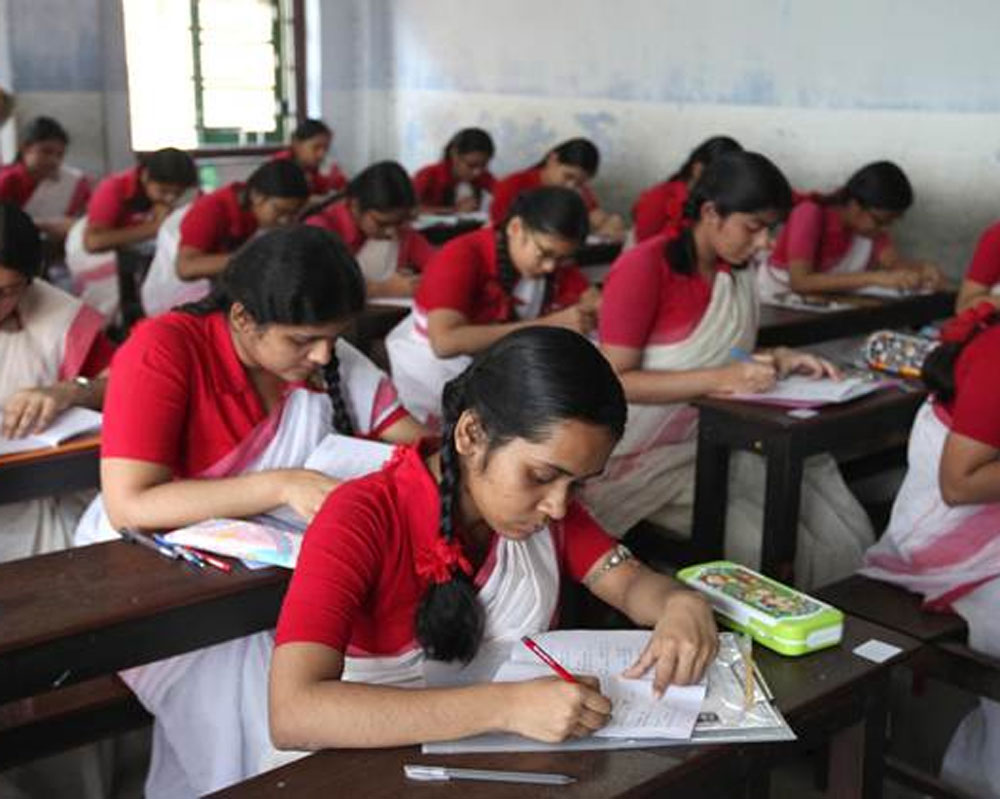
The West Bengal Board of Secondary Education (WBBSE) has allowed a 12-year-old girl — who never enrolled in school, and instead, studied at home — to sit for the Madhyamik Examination 2019 as an external candidate.

WBBSE president Kalyanmoy Ganguly said Saifa Khatun qualified the eligibility test conducted by the WBBSE for external candidates in August, and her case was “unprecedented” in the history of Madhyamik Examination (Class 10 board examination) in the past two decades.

The minimum age to appear in the examination is 14, Ganguly said.

Khatun, who hails from Howrah district, secured 52 per cent marks in the eligibility test, results of which were announced on October 11.

Another board official said the girl’s father Mohammed Ainul had moved the WBBSE to allow her to sit for the Madhyamik Examination 2019.

The last such instance of an external candidate appearing in the board examination before the minimum age was in the early 90s, the official said.

source: http://www.dailypioneer.com / The Pioneer / Home> Trending News / PTI / Kolkata, October 27th, 2018

A monument of generosity

Lucknow, UTTAR PRADESH / NEW  DELHI  :

BadaImambaraMPOs28oct2018

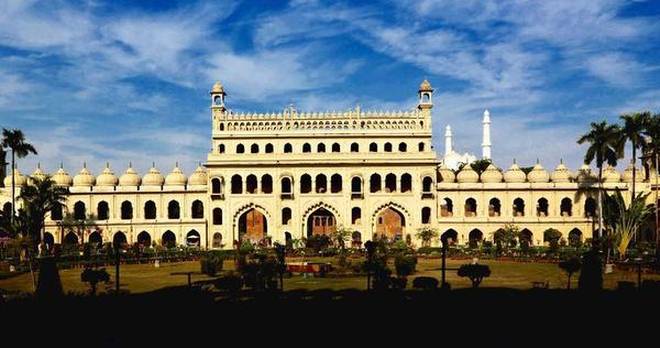
In the Bara Imambara which was built to employ people struck by a famine in 1784

I grew up in Lucknow amidst magnificent Nawabi architecture, in the syncretic and gentle culture of Awadh. It was a way of life where others were given more importance over the self. “Pehle aap (you first)” was a commonly used phrase while speaking. It is always a pleasure to return to the city that is said have once been ruled by Lakshman; where excavations show a continuous settlement dating from the first millennium BCE through the early Gupta, medieval and modern periods.

In 1732, Mughal emperor Muhammad Shah appointed Saadat Khan Burhan-ul-Mulk as the governor of Awadh. With Faizabad as his capital, Burhan-ul-Mulk was first in the line of rulers, known as the Nawabs of Awadh, whose contribution to Indian culture and history is invaluable. Asaf-ud-Daula, the fourth Nawab of Awadh, shifted the capital from Faizabad to Lucknow, and from 1775 to 1856, Lucknow was built by the Nawabs as a unique architectural city with a syncretic culture.

Features of Nawabi architecture

The geography of Lucknow meant that stone and marble, the main features of Mughal architecture, had to give way to lakhauri brick-and-lime plaster buildings. The main features of Nawabi architecture were bulbous domes, vaulted halls, chhatris and double arches, with the inner one pointed and the outer one foliated, but the main improvisation given the resources and the unavailability of stone was the beautiful stucco ornamentation on buildings along with plaster decoration in the interior. The stucco work gave a deep relief even on flat walls, but unfortunately, much of it has been lost in repairs and whitewashing. The variety of motifs ranging from floral designs, false arches and false domes that produce an exceptional surface articulation of walls, columns and ceilings remain for us to marvel at.

Many stunning religious and secular buildings were constructed, but as the Nawabs were Shia, magnificent imambaras were their special contribution to architecture. An imambara is the place where congregational assemblies are held to commemorate the sacrifices of Imam Hussain, the grandson of Prophet Muhammad who was martyred along with friends and male members of his family in the Battle of Karbala by Yezid, the ruler of Syria.

Of these buildings, nothing is grander than the Bara Imambara, built as a relief measure for a populace stricken by famine in 1784. Construction continued till the famine ended. It was a hard time for all, including the elite. To ensure that they were not embarrassed to be seen working for daily wages, it is said that payment was made at night. This gave rise to the saying, “Jisse na de Maula, use de Asaf-ud-Daula (he who doesn’t receive from Allah is provided for by Asaf-ud-Daula)”.

Nawab Asaf-ud-daula (1775-1797 CE) chose Kifayatullah as the main architect. The place chosen had the hut of an old woman, Laso Saquum, in which she kept a small tazia, a replica of the shrine of Imam Hussain. She was reluctant to give her land but when Asaf-ud-daula promised to keep her tazia in the imambara, she gave the land for free. The tazia is kept there even today. The architect only asked for land for his burial as fees. He is buried, along with Asaf-ud-Daula, in the central hall of the imambara.

Inside the Imambara

One can enter it through one of the two three-arched gateways separated by a grassy forecourt. Once you enter the second gateway, the sheer size and magnificence of the Bara Imambara affects you. On the left is the exquisite seven-level Shahi Baoli (stepwell), initially dug as a well during construction. As it was a perennial source of water, it was built as a guesthouse later. On the right is the Asafi mosque on a raised plinth flanked by minarets with an impressive flight of steps. It faces Mecca.

The main hall with its vaulted roof is one of the largest of its kind in the world. It is unsupported: no column, pillars, wood or iron was used here. Its unique architectural design gave birth to the famous bhool bhulaiyya, which is above the hall and came about unintentionally to support the weight of the building. This is a labyrinth of more than 1,000 passageways and 489 identical doorways. It is among the few existing mazes in the world. Its acoustics are such that a match being struck on the other side of the hall can be heard. I like exploring it but always with a guide. After all, one must live to explore another day!

source: http://www.thehindu.com / The Hindu / Home> Opinion> Columns> Where Stones Speak / by Rana Safvi / October 28th, 2018

Ateeqa Bano And Her Collected Pieces Of History | #IndianWomenInHistory

Sophore, Srinagar , JAMMU &KASHMIR :

AteeqaFPMPOs27oct2018

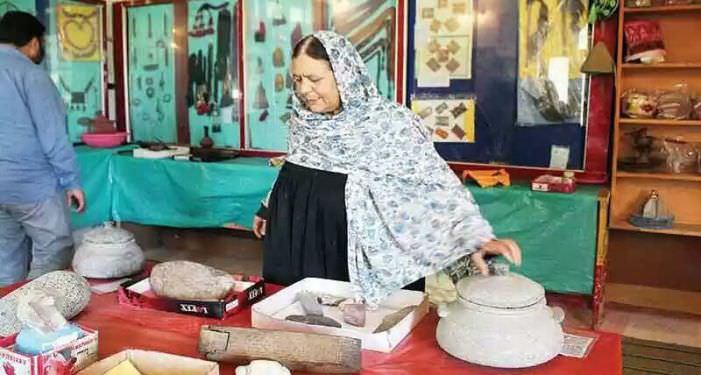
In the summer of 2014, as I walked past colourful stalls at Srinagar’s exhibition ground, the quiet and less colourful one in a corner caught my attention. Its tables were decorated with vintage Kashmiri crafts, coins, and manuscripts. The stall belonged to Meeras Mahal, a privately run museum.

Image Credit: Meeras Mahal Blog

As I and a fellow acquaintance went closer, we were warmly welcomed by an elderly woman. She made us sit and introduced herself humbly. “Ateeqa Bano, founder of Meeras Mahal,” she said. She walked us through the collection and told us stories about her journeys to get each of these artefacts.

Ateeqa’s narration clearly revealed her love for her collection. She also learnt that my friend had preserved a handwritten Quran at his place. She took his contact and invited us to her museum at Sopore, nearly 52 km from Srinagar.

Weeks later, she appeared at his doorstep with a hope to acquire the handwritten Quran. She was unable to strike a deal here but she never gave up on her other pursuits. Her failure here demonstrates how difficult the curation of items was.

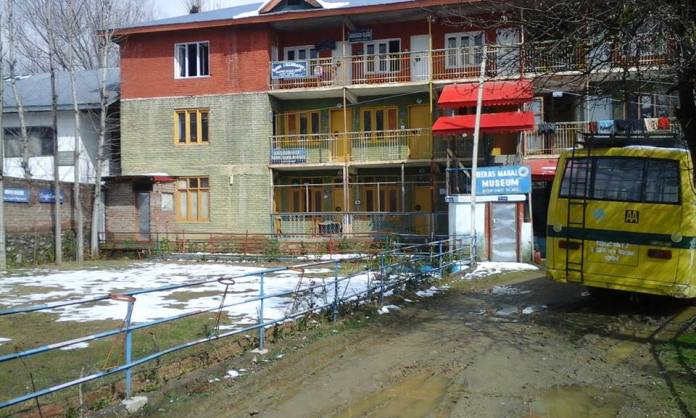
The journey of forming a museum took a shape after Ateeqa’s retirement from government services in 1998. 2001 onwards when the museum was set up, it meant everything. It was initially set up in a small room in BEd college at Noorbagh in Sopore and later shifted in 2008 it to present building, all run and maintained by her expenses.

AteeqaMPOs27oct2018

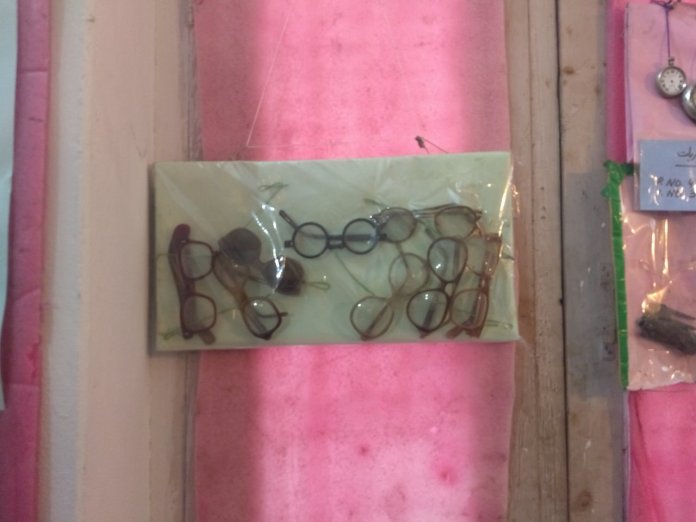
She would convince people to donate things to them and when the days weren’t all sunny, she would offer something in return. The goods would then be indexed and preserved.

Ateeqa’s looks resembled that of an ordinary Kashmiri woman but her hard-work and foresight went way beyond. I was never lucky enough to hear her story from her but even months after her death, the museum and the collection are reminiscent of her.

A corner in photo gallery contains collage pictures of famous women from Kashmir or who are in some ways associated with Kashmir. The wall, very diligently, compels one to think about the women from Kashmir who always remain unrecognized and unacknowledged and teaches us something that most other museums or schools don’t.

Her compassion for women’s rights was also revealed to me through the caretaker of the museum who said that Ateeqa had given her space to live close to the museum along with her children after she had been ousted by her in-laws. She recalls her days with Ateeqa Bano as a golden phase that she would never forget.

Ateeqa02MPOs27oct2018

Ateeqa Bano chose an unorthodox way of life. After her father’s death, she decided to live forever with her mother and never marry. The decision to not marry is still a rebellious one in Kashmiri society and for her to make this choice decades back must have invited criticism from all. Apparently, she never budged and continued doing what she loved doing the most – her work.

From Sopore in the North to Shopian in the South to every district in Kashmir, Ateeqa travelled to collect things that represented Kashmir in many ways. She would travel for days and nights to obtain seemingly mundane goods and preserve them as a way to preserve the past for forthcoming generations.

The travels were not always easy. “At times, she would walk for miles altogether and ride a horse too when roads were not motorable,” says Maryam Masoodi, wife of her nephew. At times, she would be dissuaded by family, considering the effort it required. Maryam remembers how she would tiptoe inside the house in evenings when she got back home late from her work, fearing reproval from the family members.

On one occasion when Maryam accompanied her to her house in Kupwara, she went to rooftops to look for collectables. Maryam and others at the museum were fascinated and realized that no one else could have done it.

Image Credit: Kashmir Life

Today, at the museum, the caretakers refer to visitors as guests and regale them with stories of Ateeqa Bano. Before her death, she would spend days here. She had also built a blueprint to develop the museum on modern lines. However, because of her illness, she couldn’t accomplish this task. Her nephews are very keen to make her dream come true while she rests in her grave in the lawns of the museum.

source: http://www.feminisminindia.com / Feminism In India – FII / Home> History / by Arshie Qureshi / December 27th, 2018

Meet Shahnaz Habib, whose debut translation has won the Rs 25-lakh JCB Prize for Literature

KERALA / Brooklyn, New York, U.S.A :

Before and after: What translating Benyamin’s ‘Jasmine Days’ involved, and what it means after winning the prize

ShahnazMPOs27oct2018

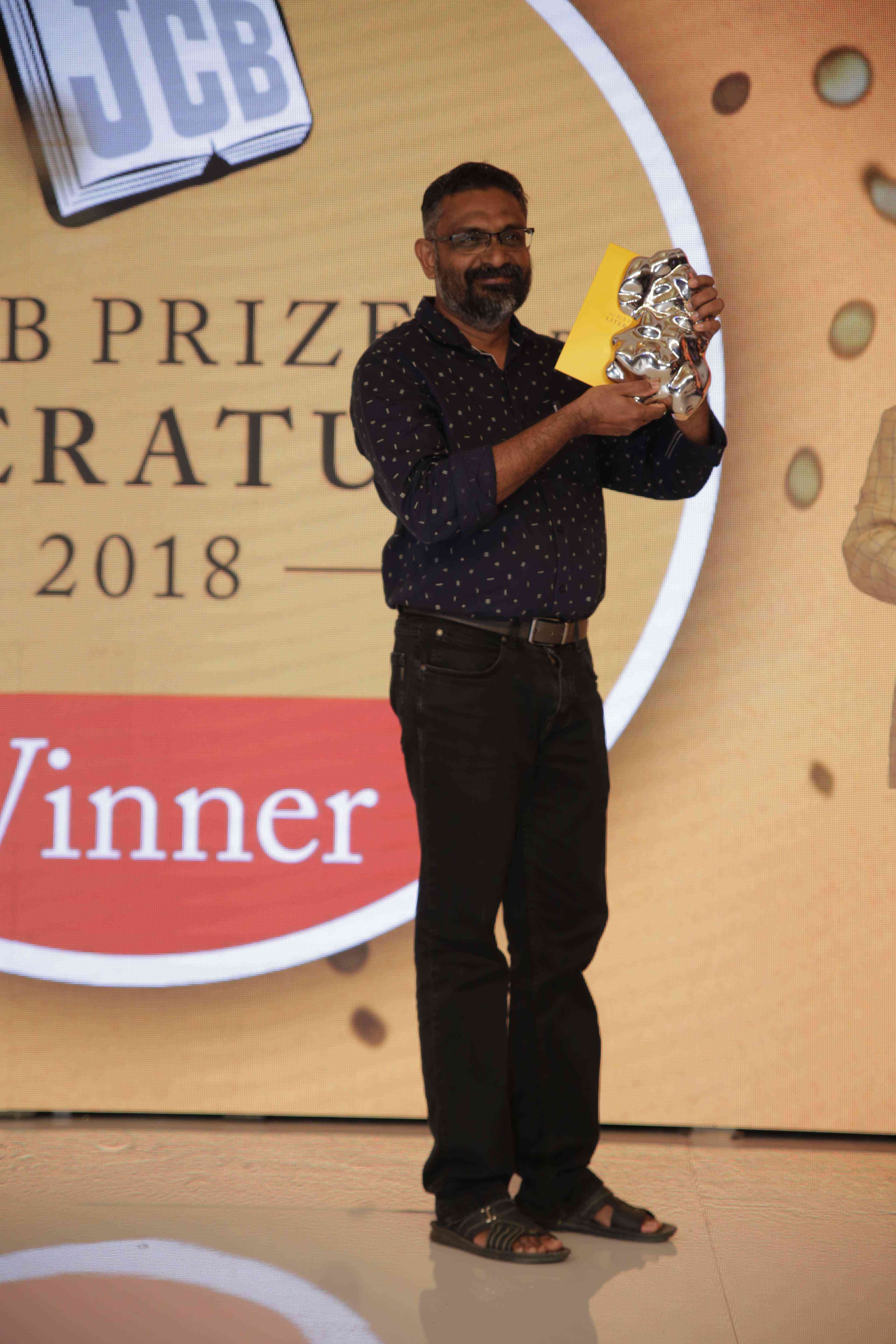
Shahnaz Habib has hit the proverbial jackpot at the very beginning of her career as a literary translator. Her debut translation, of Benyamin’s Jasmine Days, has won the Rs 25-lakh JCB Prize for Literature in its inaugural year. Habib, who has also translated Al-Arabian Novel Factory,the companion piece to Jasmine Days, has picked up Rs 5 lakh for the winning translation.

Habib wrote recently about the experience of being a first-time literary translator for a novelist whose previous work is highly respected – Benyamin’s Goat Days, for instance, shot to fame in 2012 – and about being a woman in what is still a male-dominated literary culture. She spoke to Scroll.in thereafter in two instalments – before and after winning the JCB Prize – about what drew her to the novel, her procrastinating habits, the differences between Malayalam and English, the migrations that aren’t covered enough, the fears of a first-time translator, and the Agatha Christie-inspired novel she’s currently writing. Excerpts from the interview:

What does Jasmine Days winning the JCB Prize mean to you?
So, to state the obvious, I am super thrilled. And I feel especially happy for Benyamin, who deserves this recognition so much. Jasmine Days is about a young woman who writes a book without knowing that she is writing a book and I feel a bit like she must have when she realised how much her words resonated with people outside her life.

But…there’s also this feeling of strangeness. I think most of us who work with words are so steeled for rejection and killing your darlings that it feels bizarre to win something! It’s also a win for translation in general and that makes me hopeful as a translator and excited as a reader of translations.

What would some of your suggestions be to other literary prizes when it comes to translations (and other forms of writing that they may be neglecting)?
Prizes are wonderful, but I wish we had more grants to encourage all kinds of writing and translation. By that, I mean support for writers and translators and poets so that they can set aside the time to work on projects before they are published. So much energy and struggle goes into the writing process itself and a writing grant can help a writer be more adventurous, take on a translation project that might be financially unfeasible, write essays that may not have mainstream appeal. And we need this now, more than ever.

In a recent essay for Scroll.in, you wrote about the distance between intended meanings and actual meanings – a father in Jasmine Days accidentally gifts his daughter a Christmas card on her birthday. Can you talk to us a little more about this distance? Particularly as it applies to translation within our daily lives?
In India, where many of us negotiate multiple languages daily – one language for work, another at home, a third on the street – we are much more involved in translation on a daily basis than in more linguistically homogeneous places. But even beyond that, at the risk of sounding esoteric, there’s a way in which translation is inherent in all communication. Even when there isn’t a language gap, there might be other gaps – the very different experiences of various generations, genders, sexual orientations, social classes, religions. Brothers and sisters growing up in the same family might need “translation” because their experiences are completely different. Sometimes the gaps come up suddenly in places where we don’t expect them and the friction between the intimacy of the relationship and the gap can be especially painful – that’s what the father and daughter in Jasmine Days find out.

What drew you to Jasmine Days?
I was very intrigued by the narrator – this feisty, funny, talkative young woman who manages to hold her own and even be subversive while living in a household ruled by men. I was also very drawn to the City, the unnamed West Asian city where the novel takes place. Like most Malayalis, I have family in the Gulf states and have always been curious about the many dimensions of migrant life there, how the different diasporas interact with each other, the question of how much you can belong. There is such a great body of American immigrant narratives, but I don’t think we have enough stories about these other migrations.

What are some of your first steps when you begin a translation project?
I light a white candle and wear all white clothes…just kidding! I begin by reading the book, usually way too close to the deadline, making margin notes on tricky passages or words that I don’t understand fully. I love reading the printed version but when I begin the page-by-page translation process, I also try to source a digital copy of the book manuscript because I find it easier to toggle between two documents on my laptop (as opposed to switching between book and laptop).

As a translator, how do you approach the cultural nuances in a story like Jasmine Days? Sunni and Shia Muslim identities, gender, the reality of being an immigrant in the Gulf. Did you draw on your own knowledge of friends and others in the Gulf when you went about choosing a specific word, phrase, dialogue in English?

I didn’t really encounter any dilemmas around the cultural nuances of Sunni and Shia Muslim identities, gender, the reality of being an immigrant in the Gulf – because I am following Benyamin’s lead with all that. I am not reinterpreting the story he wrote in any way. As for choosing specific words or pieces of dialogue, what helped me most was thinking of the young women I know and how they find their identity and power while surrounded by people who want to keep them sheltered.

Jasmine Days is your first foray into literary translation. Were you concerned about how it would be received?
Definitely. At some point during the translation, I was reading Helen Weinzweig’s Basic Black with Pearls, and the protagonist is on an airplane feeling claustrophobic and says, “I am prepared for disaster in two languages.” I felt an immediate recognition! In all fairness, I had very supportive and reassuring editors, so I didn’t worry too much. But if I know Malayalis, I am sure there are at least a few who have made notes in the margins and who will corner me next time I am in Kerala to tell me how I could have done a better job!

Benyamin with the JCB Prize for 'Jasmine Days'
Benyamin with the JCB Prize for ‘Jasmine Days’

Can you talk to us a little about the process of building a bridge between Malayalam and English? What is the relationship between the two languages like?
Beyond the power structures, there are also linguistic structures. Malayalam is agglutinative, so you can have long sentences packed with ideas, whereas in English those long sentences would be awkward and unwieldy. But English also has more words – it has had the opportunity to shop for words in a way that Malayalam has not. There were also some concepts that just didn’t travel well in a literal translation. I’ll give you an example – in Jasmine Days, during the protests, a Malayali man on social media says something that literally translates as “We are people who take care of ourselves, so we are safe.” In Malayalam, he is criticising his fellow Malayalis. The speaker is making a point about the innate selfishness of the Malayali who will look out for himself. The implication is that we take care of ourselves, instead of taking care of others. In English, what was a slightly melancholy, reproachful sentence actually ends up sounding like a compliment or a boast – we are an independent people, we are good at dealing with problems, we are safe. Ironically, this gap in the meaning indicates the community-centredness of a culture where taking care of ourselves first is a small crime. So, I translated it as: “We know how to look out for ourselves.”

Who are some of the translators whose work you admire?
Too many to name – especially since we read so many books without even realising they are translated. As someone who cannot write poetry but wishes she could, I am especially intrigued by Elizabeth Bishop, whose poetry owes much to her translation from multiple languages. Right now, I am loving reading Don’t Want Caste: Malayalam Stories by Dalit Writers, edited by MR Renukumar and translated by Abhirami Girija Sriram and N Ravi Shanker.

Are there texts on translation that have stayed with you?
My favourite text on translation right now is The Ben Vaughn Quintet’s Piece de Resistance song.

The translator Jessica Moore wrote about how she wrote a book of poems as she translated a poetic novel using “translated phrases as leaping-off points for my own pieces.” Does that happen to you, that as you translate you find yourself devising a new piece of writing?
Not yet. I am only two books deep into translation, so I don’t have that kind of bandwidth yet.

What are you currently working on?
A novel. There’s this Indian cook on an archaeological dig in Agatha Christie’s Murder in Mesopotamia. I have been thinking about how he got there, and it is turning into a novel.

source: http://www.scroll.in / Scroll.in / Home> Meet the Translator / by Urvashi Bahagunu / October 27th, 2018

Uncommon gesture: Minister tips cook Rs. 25k, trip to Umrah

KARNATAKA :

Image Courtesy: The News Minute

Mangaluru :

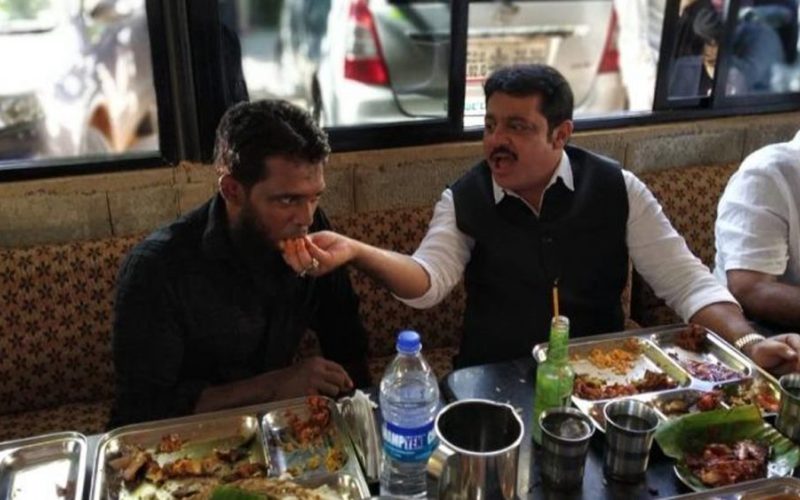
Impressed by the culinary skills of a Mangaluru cook, Karnataka minister gifts a cash of 25,000 as a tip and a pilgrimage to holy Makkah to perform Umrah.

According to reports, the Minister for Food and Civil Supplies BZ Zameer Ahmed Khan on Thursday (October 18) was in the coastal district for an official review meeting.

He went to ‘Fish Market,’ a seafood restaurant in Lower Bendoor for lunch along with the President of Wakf Committee UK Monu, Former MLA Mohiuddin Bawa and UT Iftikhar Ali, brother of minister UT Khader.

Haneef Mohammed, the 48-year-old chef and co-owner of the restaurants served the minister the local delicacies such as stuffed Pomfret and Green Tawa Pomfret along with rice preparations.

Such was the flavour and aroma of the sumptuous meal that the minister made the cook sit next to him, fed him a mouthful from his own plate.

“As I entered, the minister greeted me warmly. He made me sit next to him, fed me a mouthful of food and told me that he had never eaten such an appetising course of fish,” said the father of six, reported TNM.

Post lunch, he promptly handed over a hefty tip of Rs 25,000 to Haneef with a promised that he would pay for his Umrah (Islamic pilgrimage) as well.

Haneef, who has been a chef for the last 18 years, serving fish as his speciality said he never come across by such benevolent offer.

He distributed Rs 25,000 out of the tip to all the employees at his restaurant.

The legislator, who holds the post of Minority Welfare alongside the portfolio of Hajj and Wakf, famed for his generosity.

source:  http://www.siasat.com / The Siasat Daily / Home> Bangalore> Featured News> News> Top Stories / by Safoora / October 23rd, 2018

Another historical for Kannada

KARNATAKA :

MahmoudGawanMPOs26ocy2018

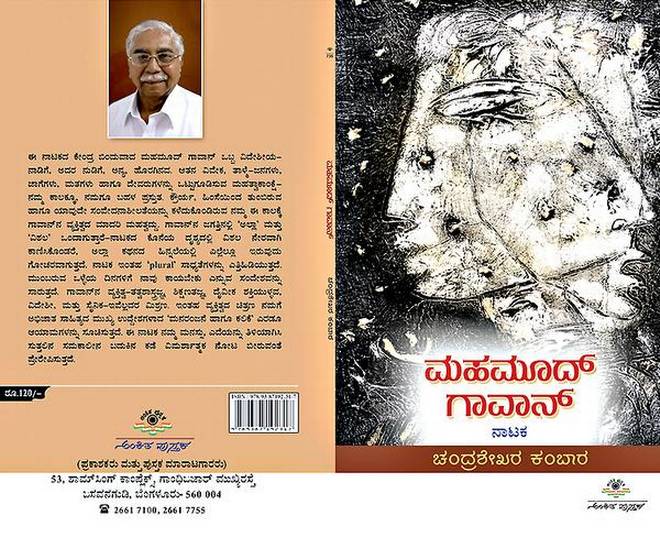
Chandrashekhar Kambar’s new historical play, Mahmoud Gawan, based on the life of the merchant who arrived in Bidar and later became the Prime Minister of the Bahmani Sultanate, will be released on Sunday

The word “global” is something that we come across not infrequently in literary discussions in recent times. It seems to be used in a very complimentary manner too. When we study it more closely, we see its multiple uses, ranging from the highly complimentary to the particularly disturbing connotations (especially, in the political and economic aspects of the so-called “globalization” phenomenon). Depending on the context, the philosophy implied in this use is vastly interesting.

In this context, dipping into pardonable autobiography, I must confess that my early acquaintance with the kind of writings I found in Chandrasekhar Kambar (this was back in 1964) was very new to my navya taste-buds of those days. This was around the time he wrote Helatini Kela . But, by the time Jokumaraswami arrived, I had begun to sense the fascinating spread of his literary intentions. The play seemed to insist on a message of passion (closely related to sexuality, the body, as well as the body politic!). The legitimacy of this passion was far more powerful than any petty legal correctness, or any mundane understanding of what constitutes the “moral” in our society. I was of course reminded of Lawrence. Kambar was utilizing passion as a powerful motive-free force, and constantly pushing at obstructions in its way. I became an avid follower of Kambar’s growth as a writer. His use of “sexuality” as a central and powerful theme and his struggle out of its grasp.

The latter part of his career witnesses an attempt to cover areas of creativity which could not be accommodated inside the constrictions of this strong force (note, however, a sliver of this sexuality is noticeable even in his latest play,Mahmoud Gawan ). I would assert that it is this constant and consistent presence which turns all of Kambar’s writing into his legitimate oeuvre.

Here was a writer, who, on the one hand was close to the North Karnataka folk and at the same time could engage the political and the modern predicament of our lives. You see this everywhere beginning from Helatini Kela , Rishyashringa , or Jokumaraswamy to the recent works like Shikharasoorya , Shivana Dangura orMahmoud Gawan . I would like to go back to what I began with, the idea of the “global” in relation to Kambar’s works. In what sense is Kambar global? It is true that at least in one of the recent novels globalisation and neo-colonialism figure predominantly (in Shivana Dangura ).

Could we try to identify an effort, more indirect, and subtler perhaps, to highlight an earlier moment in history, a moment that marked the international and inter-cultural ferment that characterised North Karnataka in his play, Mahmoud Gawan ? Interestingly, the choice of language in Gawan is not the kind of North Karnataka folk that Kambar worked with in say Helatini Kela or Jokumaraswami. I would describe the language of Gawan as Kambar’s idea of “neutral” Kannada, a conscious avoidance of the folk dialect. Again, look at the choice of the central figure in this play, Gawan. Hee is a foreigner, a non-Kannada person. He enters the world of Bahamani politics in the North Karnataka of fourteenth and fifteenth centuries. All these, I would venture to suggest, point towards a movement, a possibility, beyond the strictly local and Kannada contexts. In other words, Kambar is found testing his talent in handling something beyond what could be identified as exclusively Kannada, Karnataka. The significance of this kind of language use is for Kambar like playing a field without his arch-player—the folk tongue! Does he succeed in working this language, playing in this new field? Perhaps in a manner that is different from say Jokumaraswamy , where he is using sexual passion in order to design and project the drama experience, he is trying to move into other spaces in which his choice of an “other” Kannada could function adequately. This kind of language lends itself more easily to translation across other linguistic contexts. The absence of localism in itself is a strong pointer towards achieving such a global presence.

Could we simply say perhaps that Kambar moved from passion to politics—apparently, it seems so. This also begs the question, why? It is my opinion that an author like Kambar, a writer of immense literary imagination, constantly feels the need to move out of his familiar area of creativity and attempts to work in other new areas. As a result, politics becomes the main driving force in a play like Gawan . Overall, he succeeds in creating a layered experience of such historical and political play-fields. In Gawan , you see an extension of the literary Kambar, of Kambar’s entire literary oeuvre. And to say that is to acknowledge a serious happening in contemporary Kannada literature.

Finally, I invite my reader to look at Mahmoud Gawan, the protagonist. Here is a foreigner, theoretically foreign to the land and its language. His wisdom and his calming presence, his overarching ambition to unite people, places, religions, and gods—these are things crucially and painfully relevant to us and our times, times of cruelty and abhorrent insensitivity. In times where you see the cream of the population failing to respond to the degradation of all that is human, all that is noble and valuable in human experience.

In Gawan’s cosmos, Allah and Vitthala still fuse brilliantly—one as the implied presence and the latter as the explicit presence in the final scene. The play moves towards a certain sense of legitimization of this conclusion, the hope of better times to come. In a way, the encompassing presence of Gawan—the philosopher, educator, the saint, foreigner, and a soldier—should take us back to the classical idea of the function of literature, what literature should do—“to educate and entertain.” A closer look at the play would also perhaps clear our hearts and minds, making us look around at our own times with a sharply critical eye.

(Mahmoud Gawan by Chandrashekhar Kambar will be released on October 28 at 10. 30 a.m., Indian Institute of World Culture, B.P. Wadia Road, Bangalore).

(The author is a critic and musician of repute)

source: http://www.thehindu.com / The Hindu / Home> Features> Friday Review / by Dr. Rajeev Taranth / October 26th, 2018