Arshad Shaikh digs into some amazing facts about the Mewat region in the Indian state of Haryana, which was recently in the news for the wrong reasons. Meo-Muslims have been targeted by cow-vigilantes and anti-social elements. Communal violence rocked the region last week. Six people lost their lives, scores were seriously injured, thousands were arrested and many houses were controversially demolished. The Hindu-Muslim violence in the Mewat region was extensively covered by the media, however, not many know about some of the amazing facts of this region and how it is emblematic of the denial and deprivation that Muslims have suffered in post-Independence India.
Mewat (now officially re-named as Nuh) is a Muslim-majority district in the state of Haryana. The Mewat district was established in 2005, through the incorporation of regions from Gurgaon district and the Hathin Block of Faridabad district.
Nonetheless, in 2008, the Hathin sub-division underwent restructuring with the formation of Palwal district. In 2016, Mewat district’s name was changed to Nuh, given that Mewat represents a cultural area that extends across Haryana, Rajasthan, and Uttar Pradesh states. Mewat (Nuh) is located in the southern part of Haryana. It is one of the 22 districts of Haryana.
The region is bordered by the Aravalli Range to the north, the Gurgaon district to the northeast, the Alwar district of Rajasthan to the south, the Bharatpur district of Rajasthan to the southwest, and the Palwal district of Haryana to the west.
The following Table compares the district of Mewat (now known as Nuh) with the entire state of Haryana:
Variable
Haryana
Nuh district
Comparison
Area
44,212 sq km (17,070 sq miles)
1,860 sq km (720 sq miles)
4.2% of the state
Population
25,351,462
1,089,263
4.2% of the state
% of Rural population
65.12%
95.36%
Shows the degree of neglect by successive governments
% of Urban population
34.88%
4.64%
Sex ratio (number of females per 1000 males)
926/1000
907/1000
19 less than state sex ratio (this is surprising, given that Mewat is a Muslim-majority district and Islam strictly prohibits any preference for male children)
Literacy
75.55%
54.08%
21% behind the state, again highlights a problem that poses a challenge to both the government and the community
Hindu versus Muslim population
Hindu (87.46%)Muslim (7.06%)
Hindu (20.3%) Muslim (79.2%)
Mewat is one of the few districts in India with a Muslim population close to 80%
Legislature: Mewat has three Haryana Vidhan Sabha constituencies: Nuh, Ferozepur Jhirka and Punhana. All three are parts of the Gurgaon Lok Sabha constituency.
Roads: There are currently 5 national highways in the Mewat region of Haryana. The Delhi Mumbai Expressway will pass through the Mewat region. This expressway will connect Delhi and Mumbai via Manesar, Gurugram, Sohna, Nuh, and Palwal.
History: Mewat was once a princely state, ruled by the Meo Rajputs. The Meos are a Muslim Rajput tribe who are believed to have migrated to the region from Rajasthan in the 12th century. In the 16th century, Mewat was conquered by the Mughal Empire. The Mughals ruled Mewat for over 300 years, until the decline of the Mughal Empire in the 18th century.
In the 18th century, Mewat was conquered by the Maratha Empire. The Marathas ruled Mewat for about 50 years, until the British East India Company conquered Mewat in 1803. The British ruled Mewat until Indian Independence in 1947. After Independence, Mewat became a part of the state of Haryana.
Here are some not-so-well-known facts and “figures” from the Mewat region in India:
Raja Hasan Khan Mewati, a Khanzada Rajput ruler, held dominion over Mewat as a Muslim leader. He succeeded his father, Raja Alawal Khan, in a dynasty that had governed the Mewat State for approximately two centuries. He undertook the reconstruction of the Alwar Fort during the 15th century. In a significant historical event, he allied himself with 5,000 compatriots from the Rajput Confederation and participated in the Battle of Khanwa. Tragically, he met his demise on the battlefield, confronting the Mughal forces commanded by Babur.
Firuz Khan Mewati was a Mughal commander who served under the emperor Bahadur Shah I. He was born in Mewat in the 17th century and is known for his bravery and military prowess. He was also a skilled diplomat and administrator.
The Tablighi Jamaat was established in 1926 by Maulana Muhammad Ilyas al-Kandhlawi, in the Mewat region. According to community historian Siddique Ahmed Meo (as reported in the Hindustan Times) – “People from Mewat would travel to Delhi for work and halt for lunch near the masjid in Nizamuddin, before proceeding ahead with the journey. Maulana Ilyas took notice of the labourers and enquired about them one day. Through conversations with the Meos, he realised that while they were Muslims, they did not have a good understanding of Islamic practices.
“Driven by his interactions with Meos in Nizamuddin, Maulana Ilyas visited Ferozepur Namak in Mewat for the first time in 1925. He started surveying the region and over subsequent visits, he came to the understanding that Meo-Muslims needed to be introduced to Islamic practices and brought back into the fold. A panchayat was called in Nuh and a charter consisting of names of 103 people was shared. Some 31 proposals aimed at laying the groundwork for the Jamaat were passed in that panchayat. Finally, in 1926, the Jamaat started undertaking trips to reach out to people and spread the message of Islam.”
The Mewati Gharana is a Hindustani classical music tradition that was founded in the late 19th century by Ustad Ghagge Nazir Khan. The gharana is named after the Mewat region of India, where Ustad Ghagge Nazir Khan was born and raised. The Mewati Gharana is known for its emphasis on purity of tone, intricate taans, and expressive singing.
The gharana also has a unique style of khayal singing, which is characterised by its use of subtle ornamentation and its focus on the emotional content of the lyrics. Some of the most famous vocalists of the Mewati Gharana include Pandit Jasraj, Pandit Maniram, and Pandit Pratapnarayan. Pandit Jasraj is considered one of the greatest khayal singers of all time, and he helped to popularise the Mewati Gharana around the world.
Mewati Martial Art is a traditional martial art that originated in the Mewat region of India. It is a combination of wrestling, boxing, and stick fighting. Mewati martial arts are known for its emphasis on self-defence and its focus on using the opponent’s strength against them. Mewati martial art was further developed in the 17th century, when the Mewat region was ruled by the Mughals. This led to a fusion of Mewati martial arts with Mughal martial arts, which resulted in the development of the modern form of Mewati martial arts.
source: http://www.radiancenews.com / Radiance News / Home> Amazing Facts / by Arshad Shaikh / Radiance News Bureau / September 01st, 2023
The wider Indian audience, including many women in the 21st century believe that this is the most emancipated age of women and the women who proceeded them from centuries gone by were powerless dolls dressed in finery and painted and wooed by the men of the ancient and medieval world.
Compared to most countries of the world, India has had a longer and a more complex story, where the fortunes of women advanced and regressed from time to time. India is the only country of the time where a Muslim woman was chosen by her father to be the heir of his throne, we are ofcourse referring to Razia Sultan and her father Iltutmish of the Delhi Sultanate period in the 13th century.
After Razia and into the Mughal period, we increasingly see the growing power of the Mughal women which was not just limited to women of the royal family. Many icons of Delhi, some of which are even part of the UNESCO World Heritage Sites have been built by women for their husbands.
Bega Begum was the senior wife of Emperor Humayun, who got his incredible mausoleum built. Similarly Fatehpuri Begum was one of the wives of Emperor Shah Jahan and she has left us with the iconic Fatehpuri Mosque situated at the heart of Chandani Chowk.
Born in 1617, Roshanara Begum was a Mughal princess and the second daughter of Emperor Shah Jahan and his wife, Mumtaz Mahal. Roshanara was a brilliant woman and a talented poet. She was a partisan of her younger brother Aurangzeb and supported him during the war of succession which took place after Shah Jahan’s illness in 1657. After Aurnagzeb’s accession to the throne in 1658, Roshanara was given the title of Padshah Begum by her brother and became the First Lady of the Mughal Empire. She became a powerful political figure.
Roshanara’s rise to power began when she successfully foiled a plot by her father and Dara Shikoh to kill Aurangzeb. According to history, Shah Jahan sent a letter of invitation to Aurangzeb to visit Delhi, in order to peacefully resolve the family crisis. In truth, however, Shah Jahan planned to capture, imprison and kill Aurangazeb in prison as he viewed his third son as a serious threat to the throne. When Roshanara got wind of her father’s plots, she sent a messenger to Aurangzeb, outlining their father’s true intentions, and warning Aurangazeb to stay away from Delhi.
Aurangazeb was extremely grateful to Roshanara for her timely warning. When the war of succession was resolved in favour of Aurangzeb, she quickly became a very powerful and effective figure at court. Fearing that Dara Shikoh would kill her for her role in the war of succession if he ever returned to power, Roshanara insisted that Aurangazeb order Dara’s execution. Legend has it that Dara was bound in chains, paraded around Chandni Chowk and beheaded. Roshanara then had his bloody head wrapped in a golden turban, packaged neatly and sent to her father as a gift from Aurangzeb and her. Shah Jahan, who opened the package just as he was sitting down to dinner, was so distressed by the sight of his favorite son’s head that he fell unconscious to the floor. He remained in a stupor for many days after the incident.
Eventually, however, Roshanara and Aurangzeb fell out with each other. Mughal princesses were obliged to remain single since the time of Akbar so their offspring would not make a challenge for the throne. Roshanara was rumoured to have taken on lovers, which was not viewed well by Aurangzeb.
After her fall from grace, she chose to leave the court at the Red Fort and built for herself the Roshanara Bagh complex which is about six kilometres from the Red Fort. She was a lover of the arts and music and didn’t prefer the austere lifestyle promoted by Aurangzeb. This is proven by the fact that when one visits Roshanara Bagh the remaining building itself is built in a very romantic style, a Baradari (open on all sides) built surrounded by a pool of water apart from the canals and gardens surrounding it.
Even within the Baradari the main motif for decorations seems to be nature, one can see remnants of blooms on every wall, arch and even the capitals of the slender pillars. The fades blue, green and red colours gives us an idea as to how brilliant and bright the designs were when Roshanara herself was in residence.
The main gate of entry into the gardens still has mosaics left on its upper parts, which show that a bright hue of yellow was used apart from the blue, green and red. One can imagine, how this gate shone in the brilliance of the sun with such a colour combination.
The brief history that has remained about the life of Roshanara Begum shows us what a woman she was and more importantly how open Mughal society was at least for the women of the royal household and nobility.
The fact that she was capable enough to understand the intrigues of Shah Jahan along with Dara Shikoh in order to get Aurangzeb eliminated shows us that she had a perfect understanding of such matters and how to play a role in it.
Her warning to Aurangzeb guaranteed her power when he acceded to the throne and in return she became the most powerful woman in the Mughal Empire. The fact that such a rank existed in the first place showcases how Mughal princesses were considered an integral part in the proper functioning of the State.
She had her own sources of income which no doubt increased after she was bestowed with the rank of Padsha Begum. The fact that she bought land, had a beautiful and very extensive garden complex built for herself and lived a life of luxury shows to us that she was a highly educated woman understanding the complexities of titles, deeds, interests, savings etc.
She even had the power to decide where she wanted to be buried. She didn’t choose a pious cemetery but rather had herself buried within the Baradari of her beautiful gardens, the gardens which we still get to enjoy after more than three centuries of her passing and have made her name immortal in annals of time.
source: http://www.thewomb.in / The Womb / Home> Blog> Entertainment> Lifestyle / by Barun Ghosh / October 29th, 2020
Marathi actor Kiran Mane has sparked widespread discussion with a social media post highlighting an overlooked aspect of history—the compassion of Mughal emperor Aurangzeb’s daughter, Zeenat-un-Nissa, towards Chhatrapati Shahu Maharaj.
Mane revealed that Zeenat-un-Nissa played a crucial role in raising Shahu Maharaj and ensuring the well-being of his mother, Maharani Yesubai, during their captivity, reported the INN.
According to Mane, after Chhatrapati Sambhaji Maharaj was executed, his five-year-old son, Shahu Maharaj, was taken prisoner by the Mughals. Despite the captivity, Zeenat-un-Nissa treated Shahu Maharaj like her own son and cared for Maharani Yesubai as a sister. This humane side of Aurangzeb’s daughter, often ignored in historical narratives, is now being recognized through Mane’s revelations.
Mane further shared that, in gratitude for her kindness, Shahu Maharaj later constructed the historic Begum Mosque in Satara, naming it after Zeenat-un-Nissa. The mosque stands as a testament to her generosity and the bond that transcended political hostilities.
His post has ignited debate on social media, with many expressing surprise at this lesser-known chapter of history. Mane also criticized historians who have misrepresented Zeenat-un-Nissa’s role, urging people to acknowledge historical truths backed by evidence.
Zeenat-un-Nissa was known for her compassion toward the poor and underprivileged, which even influenced her father, Aurangzeb, to grant her the title of Padshahi Begum. Her charitable works and humane nature set her apart, making her an inspiring figure in an era marked by conflicts.
At the time of Chhatrapati Sambhaji’s death, Shahu Maharaj was still a child, and his mother was held captive. Despite the circumstances, Zeenat-un-Nissa’s care left a lasting impact, prompting Shahu Maharaj to honor her memory through the construction of Begum Mosque, which still stands in Satara today.
source: http://www.radiancenews.com / Radiance News / Home> Latest News> Report / by Radiance News Bureau / March 09th, 2025
Bandipora District / Hazratbal (Srinagar), JAMMU & KASHMIR :
Has 20 patents in his name, winner of 5 medals
Innovation is the process of turning ideas into manufacturer and marketable form and this maxim has been proven by M-Tech degree holder Jahangir Arshid of North Kashmir’s Bandipora district.
He has over 20 patents in his name, out of which five of them have won him gold medals. Jahangir, 27, is currently pursuing Artificial Intelligence and Machine Learning (AIML) at the University of Texas in the United States, and runs an institution called “Kashmir Innovates”, popularly known as KASHOVATIC, in Hazratbal, Srinagar.
Presently, he is working on a unique patent like “Spoon” that would check the concentration of salt in any dish that our womenfolk prepare in their kitchens.
The idea to determine the reading of salt in units was evolved after students often complained of not getting the taste of salt in their meals. Jahangir has six students of 9th to 12th standards assisting him at his Bandipora workshop, besides continuing with their learning.
Giving a reason for taking up the “Spoon” project, Jahangir said that, “In the dishes that our sisters and mothers prepare, the salt content either remains low or more. This encouraged students to create an electric device which will check the concentration of salt on the basics of 10th-level science, which teaches us the basis of conductivity and resistance.” Jahangir further said, “Spoon will show the reading of units of salt when it is put in the utensil containing the meal to be prepared and accordingly the quantity of salt can be added.” Describing it as a prototype, Jahangir said companies that accept it can take it and redesign it as per their requirement before marketing it.
“Presently, it works in battery mode and we are trying to make it battery less so that there is no need to charge it time and again,” Jahangir said, adding that it would take the boys at least two more months to reach perfection.
“We will make it on “Speck Effect”, which reacts to temperature and generates voltage and, when one dips the spoon in any hot dish, it will automatically show the content of salt,” Jahangir, adding, “We will change to super capacitor charge for it to run and work on its own.”
Jahangir said that “Spoon” will not only solve kitchen problems, but also help hypertensive people decide how much salt they should take.
He said that Adnan Farooq, Tabish Mushtaq, Tabasum Manzoor, Amaan, Seerat Jan and Zainab-un-nisa are presently on the job to take “Project Spoon” to its logical conclusion.
Jahangir’s first unique innovation was a “Baby Peace and Foretelling Device”, a diaper-shaped item meant for children and paralytic patients, giving advance signals about a baby or a paralytic patient about to go for a “Peep”. He said a nurse or attendant would get a message in advance when a patient wants to go for a “peep” and accordingly she can move the latter to the washroom.
Different companies from Japan, including Unicharm and Unitear, have shown interest after seeing our patents. “We have signed a Memorandum of Understanding (MoU) with them and are in constant touch rather than being in queue for medical research. Recently, we received an email stating that ‘we found your technology unique throughout the globe,’” said Jahangir.
“With the encouragement from Japanese companies, we have started a chain of innovations and presently we are working on more than 20 patents,” he added.
“Five of these patents are of international level and have won me four gold and one silver medal. We have also won the Medal of Honor from the Association of European Innovators, which are being run by the Republic of Serbia and the Republic of Portugal,” Jahangir said
Gold medals have been won for the baby peace and foretelling device, self-cleaning utensils, brain interface for specially-abled persons and hardware automation system for examinations. The patent for stabilisation and transformation frequency control won a silver medal.
“After achieving success, we started a patent institution where we teach our students how to make these patents and how to apply basic science to remove the problems of common people,” Jahangir said.
“The motive of KASHOVATIC is to develop an innovative culture and scientific temperament in the Kashmir Valley which would help students of 9th and 10th standards to differentiate and find out what is piquant in society and attracts them in a big way. Developing a scientific temperament and attitude will encourage them to innovate, take responsibility and help society deal with its many problems,” he added.
More than 150 students have given us innovations through “KASHOVATICS”. “Recently, we got approval from the Association for Information Communication Technology (AICT),” he said, adding that “our institute is running successfully and our efforts are bearing fruit, as there is a lot of exposure in Srinagar.”
He said that under the National Education Policy (NEP) 2022, the promotion of innovative products needs enhancement of structure and development so that innovators can bring about a revolution in society. Jahangir further said that engineers who have completed their studies have great potential and could be great innovators in society.
“Not only engineers, but every student could be an innovator, but the need of the hour is to look at problems in a way that we can give solutions and that kind of thinking can make us innovators. Only innovation could take us forward in this world,” he concludes.
source: http://www.brighterkashmir.com / Brighter Kashmir / Home / by Qaisar Ahmad / March 10th, 2022
Ajar Village (Bandipora District), JAMMU & KASHMIR :
Bandipora :
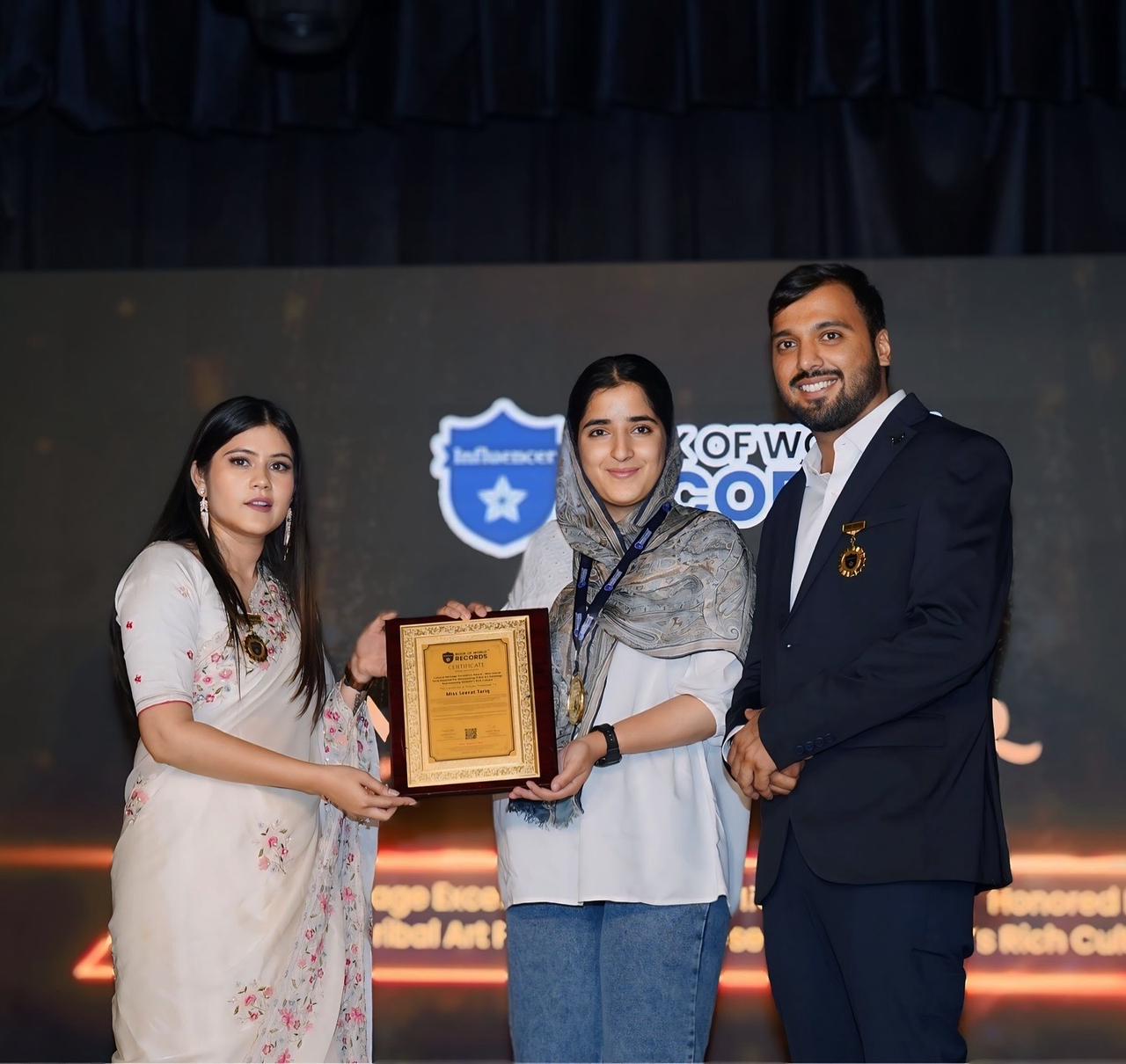
In rural corners of Kashmir, where girls are struggling to support and their success is rarely celebrated, a young girl from Bandipora has let her paintbrush speak louder than words and became an inspiration for many by becoming first Kashmiri women to achieve Gold in Influencer Book of World Records.
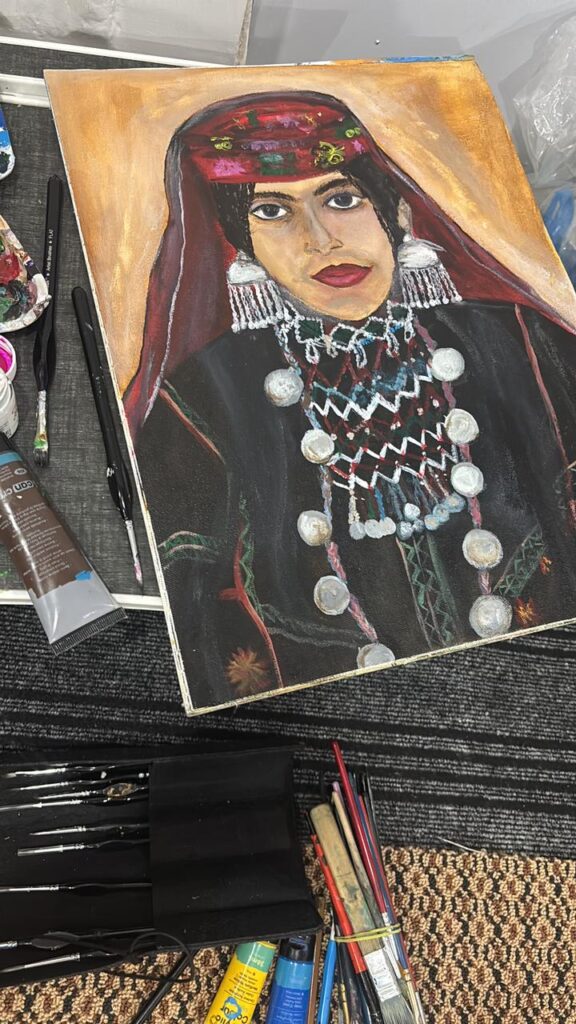
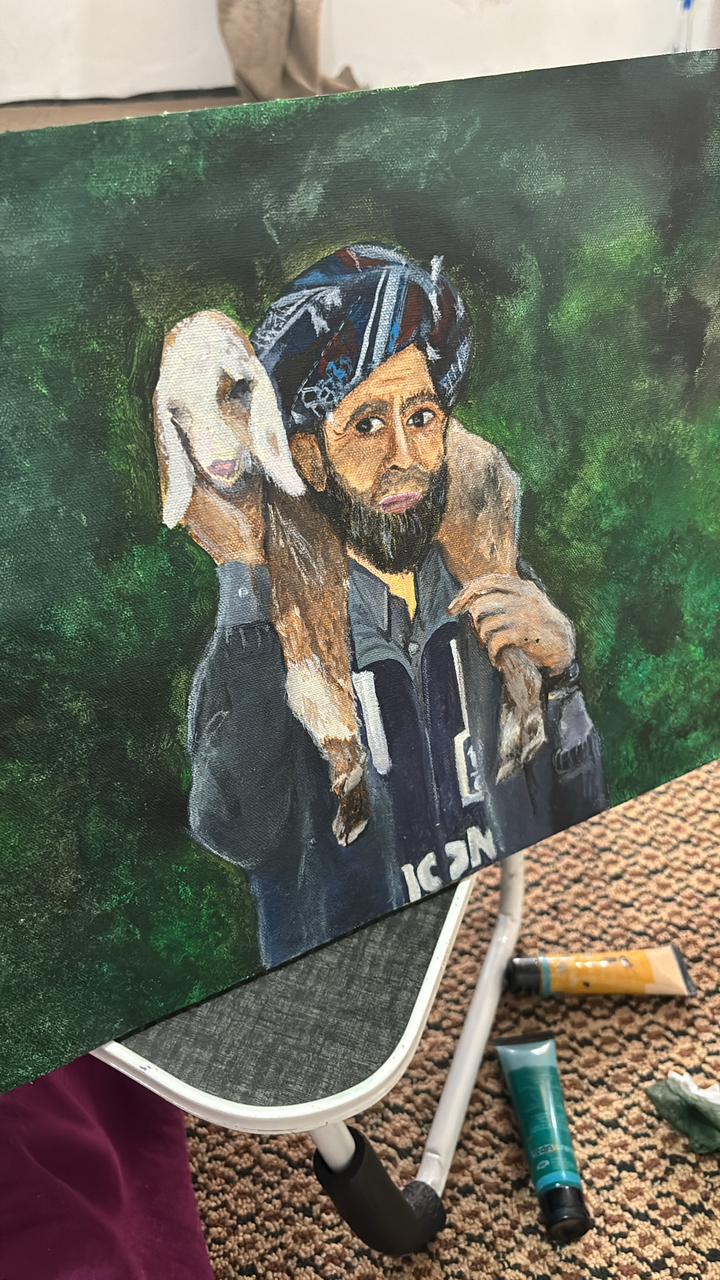
Seerat Tariq, 19-year-old stroked in tradition and imagination, has become the first Kashmiri girl to receive a gold medal and etch her name in the Influencer Book of World Records through her mastery of tribal art painting.
Born in the quiet village of Ajar in North Kashmir’s Bandipora district, Seerat has proved that girls are not less than boys. She has achieved a feat which many boys and girls wish to achieve in their lives.
Speaking with the Kashmir Despatch, Seerat said that she was passionate about drawing and painting since childhood. “When everyone was inside their homes during the Covid-19, I used to utilize my time in painting and create imagery painting which helped me to polish my skills.”
Her recent paintings which highlighted tribal life in Kashmir have helped her to enter her name in the influencer book of records.
She received her award on August 17 in ceremony for International book of influencer records Jaipur Rajasthan.
Her paintings are not only about art, it also highlights crucial issues about climate change, drug addiction among youths and importance of keeping the environment clean.
“Everyone was saying art is not enough to build a future. Fewer people consider this a profession in future, especially if a girl is doing it. Everyone used to demoticate me but my mother stands beside me which gives me hope and helps me to achieve this feat,” Seerat told Kashmir Despatch.
Seerat earlier made a record of making 104 paintings in a single day and entered her name in Asia Book of Records, followed by India Star Passion Award for art and creativity. Each milestone of hard work carried her closer to the global stage.
“Art can communicate more than words, it is the way which attracts the soul. I hope my paintings can bring a social change in our society.”
After achieving this feat, Seerat is preparing for the Genius Book of records and wants to highlight the Kashmiri tradition and beauty on the global stage.
Seerat urges other youths not to involve themselves in evil things. “Identify your hidden talent and use your skill to polish that talent and come on forefront and be the responsible member of the society, serve your society and be a change maker.”
source: http://www.kashmirdespatch.com / Kashmir Despatch / Home> Business / by Seerat Un Nisa / September 01st, 2025
Four Indian Muslim women creatives talk about how they discovered what they love.
Art lets us see ourselves in other people. It opens windows so we don’t get lost in the darkness, and reminds us that we’re never alone.
I believe that every person who thinks creatively is an artist. Whether you’re an entrepreneur or a scientist, you are a creative person if you’re finding new ways to tell stories and experience the world. When we spend time with art, we start to see things differently. When we listen to other people’s stories, we begin to connect to them and also understand more about ourselves.
Today, on the occasion of Muslim Women’s Day, we are presented with a special opportunity to pass the mic and celebrate Muslim women in a world that has historically overlooked them. When I founded the trend report and online community Unapologetically Muslim back in 2017, there was an important cultural shift happening. Donald Trump had issued an immigration ban preventing Muslims from entering the United States, and people were showing vocal support for Muslims, but their identity was also being typecast and commodified. Their stories were being told for them.
In response, I created a platform for Muslim women to tell their own stories. Over the last six years, I have interviewed over 130 women from all over the world and shared their stories on Instagram. I’m not Muslim myself but wanted to find a way to show solidarity. It’s been incredible to speak to women about their creative journeys and their dreams for the future. We have so much to learn from each other.
This year, for Muslim Women’s Day, I interviewed four Indian Muslim women creatives about how they discovered what they love. I hope their words give you some inspiration, and I hope that you take the opportunity to celebrate the Muslim women in your life.
Ruha Shadab, founder of LedBy Foundation
I was born in Saudi Arabia and moved to Noida when I was eight years old. I was a very quiet child but remember speaking about social impact as a six-year-old. At dinner, an uncle asked me what I wished for when I grew up, and I said world peace. He laughed at me, which I thought was amusing because I was being very honest about what I wanted.
I would eventually go on to create the LedBy Foundation, a leadership incubator for Indian Muslim women. I truly believe that the education and employment of women is one of the most pressing issues we’re facing in India. I hope that every Indian gets the opportunities, support and encouragement to achieve their professional dreams. At LedBy, we focus on helping Muslim women with the hope that it will have a positive externality. We’re giving them the support they need to reach top positions in 10-20 years as they climb the corporate ladder.
During our graduation ceremony last year, we invited parents and family members to speak. One father said, ‘This is the first time I’m speaking on a public platform. LedBy is empowering Ayesha and now Ayesha is empowering me.’ It’s beautiful that our work can have an upstream effect towards parents. The impact is not just at the individual level, but at the family level. Change is already coming and I believe that LedBy is expediting it.
Sana Khan, co-founder of Bombay Closet Cleanse and pole dancer
Growing up in a very conservative family, I was never able to wear what I wanted to. I was pretty shy and underconfident because I wasn’t exposed to a lot. I used to go to tuitions wearing salwar kameez while my friends would wear shorts. I’ve changed outfits in cabs and corners under my building. I had to fight really hard for what I wanted to wear.
After I got married, I became a compulsive shopper and would buy things I didn’t need. I wanted to have everything that I didn’t get to wear as a teenager. I was on this spree of buying, buying, buying. It became my identity.
At some point, I organised a charity garage sale at my home where about 100 people turned up. I received so much love and warmth from this community and we raised INR 15,000 for the Salvation Army. It was really heartwarming to see the response, so my sister Alfiya and I started a thrift store called Bombay Closet Cleanse. At first, it was just about making space in my closet. Then, slowly, I learned a lot and became very passionate about sustainability.
At the same time, I was at a very low point in my life. I saw burlesque dancers perform in Melbourne and was inspired by their confidence and body positivity. I’ve always gravitated towards sensual dance forms because they make me feel powerful in a way that I didn’t as a child. When I came back to Bombay, I signed up for pole classes and started doing therapy. They worked like magic for my confidence.
I have a pole in my house and I only perform for myself. It’s something that I absolutely love doing and it’s helped heal my childhood trauma. I’ve fought for it so hard that now, everyone has accepted it.
Sabika Abbas Naqvi, poet and activist
I come from a legacy of care and love. I grew up in a mosque compound in Lucknow with lots of love and appreciation. I was the quiet one and loved books. I had a record of finishing a book a day.
I started writing poetry when I was four years old. I would go upstairs and scribble things and I would come back and people would read it. From the balcony of the masjid, older people would ask me to read what I had written. At that time, I would call my poetry gibberish, but that was the beginning.
I’m Shia Muslim so I come from a huge cultural context of mourning and the noha and marsiya poetry that comes out of it. I had no idea what spoken poetry was, but the performance of that poetry really inspired me and became a tool I used to question everything around me. Now, for me, there is no other way to do poetry.
My poems are questions that I wanted to ask everyone around me, and they are also answers to questions that I was asked. It’s an all-inclusive theatre of words. It’s not a piece of literature; it’s an experience, and the performance comes with it. It’s not just the words that have to be said, but the way in which the words have to be said: which word is lightly put forward and which word is put forward with tenderness or anger.
The purpose of this poetry is my lifelong mission. I write poems that are multilingual so that more people can understand them. My poetry must and should be read on the streets in protest and if it is not, then it is a failure of mine. If people can spread hatred on the streets, why can’t I spread love?
Nuzha Ebrahim, chef and owner of Kuckeliku Breakfast House and The Fromagerie
I’ve always been entrepreneurial. Growing up, I tried to use any bit of talent to create things I could sell. In second or third grade, someone gifted me a pottery kit and I went around my building trying to sell misshapen pots to people. In high school, I started painting white Bata canvas shoes and T-shirts and selling them to people. There’s still a Facebook group somewhere. That’s how I made my pocket money and it helped shape what I’m doing now.
I tried to pursue art but it was one of those things where if I did it for money, I would start to hate it and couldn’t stick to it. Retrospectively, I realised that cooking was the one thing I hadn’t quit. It’s one of those things that I just don’t get bored of. Twelve years later, I’m still doing it.
My dad’s side of the family is in the restaurant business. My granddad set up his first restaurant 35-40 years ago so I grew up in that culture, but my parents didn’t really consider that I would take this forward until later in life. They assumed that this was one of the many hobbies I would quit, so I don’t think anyone was taking it seriously.
Cooking is like jazz; you keep riffing and creating something new out of the same ingredients that you have, and that’s really fun for me. When I cook for myself, it’s always about throwing things together and it’s kind of awful because I can never make the same dish twice. If I make something and I really love it, I can never do it again, because I never write things down.
In the restaurant business, every day is a different challenge. I have a grilled cheese business called The Fromagerie and a restaurant called Kuckeliku Breakfast House. There’s never monotony, so it’s always fun. Right now, it’s keeping me quite fulfilled.
source: http://www.vogue.in / Vogue India / Home> Culture / by Nayantara Dutta / March 27th, 2023
From humble beginnings in Moradabad to restoring historic monuments, manuscripts, and paintings, Maimunah Nargis blends traditional techniques with eco-friendly materials
New Delhi :
Art conservation is a field that not only preserves history but also connects generations to their cultural roots. Among the pioneers in this domain is Maimunah Nargis, India’s first Muslim woman art conservator. Her journey is a testament to passion, determination, and resilience, transforming scattered fragments of history into living heritage.
From childhood, Maimunah nurtured an interest in fine arts, which later became both her profession and life’s calling. After completing her schooling, she enrolled in Fine Arts at Aligarh Muslim University (AMU), but facing challenges in gaining admission to the MFA programme, she opted for a one-year diploma in Museology, a decision that became a turning point in her life. This course took her to New Delhi’s National Museum, where a three-month internship allowed her to experience history beyond books, touching and restoring priceless artefacts firsthand.
In 2002, Maimunah began her career as a curator at Jaigarh Fort in Jaipur, gradually establishing herself in the field of art conservation despite societal and professional hurdles. Wearing a hijab, she often faced doubts from clients, who would sometimes withdraw projects even after they had been approved. Reflecting on these challenges, she said, “This was a lesson for me, not a loss.”
Despite taunts when she left AMU for Delhi, her parents’ unwavering support gave her the courage to pursue her dreams, and her mother even accompanied her to the exam centre, demonstrating faith in her daughter’s ambitions.
Over the years, Maimunah has undertaken numerous landmark projects. She rebuilt the 400-year-old wooden chariot of the Lodwar Jain temple in Jaisalmer, which had been destroyed by termites, using traditional materials without the help of a carpenter. She reassembled broken statues from the 6th to 13th centuries in Akbar’s Fort, Ajmer, ensuring the joints remained invisible. She restored a 400-year-old Sanskrit manuscript in gold and ink at Kota Museum, and meticulously conserved the painted ceilings of 11 rooms in Garh Palace, Jhalawar, preserving three of them without removing a single piece or causing any damage.
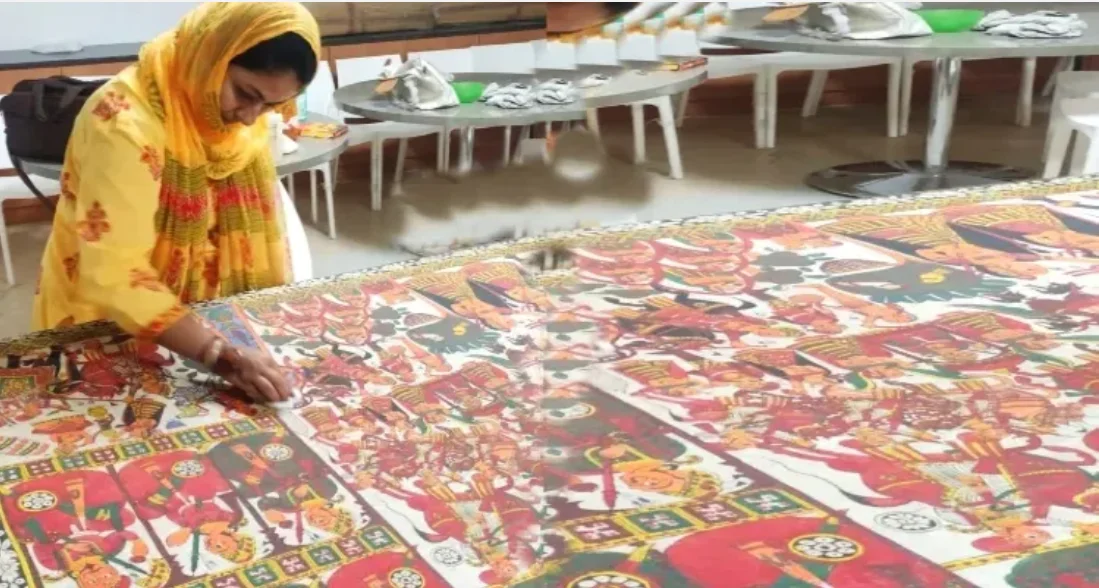
Her work has also reached modern spaces such as Jaipur and Mumbai airports, where she restored a 5,000-square-foot canvas painting on Maratha history, and at Rashtrapati Bhavan, she preserved historic pictures on wooden doors. At the National Museum, she safeguarded historical books including Baburnama, Akbarnama, Shahjahanama, and Jahangirnama, and brought decayed artworks and royal garments back to life.
Maimunah’s approach to conservation goes hand in hand with her respect for the environment. She has often highlighted that cement lasts only 30 years, whereas traditional Indian plaster made of red clay and lime, being both eco-friendly and cost-effective, could endure for thousands of years. She applied these methods while constructing a building in Dehradun on the site of a 400-year-old mansion and a modern farmhouse in Gurgaon.
Her dedication has earned her three national and 28 state awards, as well as recognition from institutions such as Kurukshetra and Jammu University. Her dreams include building a heritage resort in Madhya Pradesh using traditional materials and restoring a 500-year-old temple in Mathura, aiming to help India rediscover its cultural roots and architectural heritage.
Hailing from Bhajoi in Moradabad, Uttar Pradesh, Maimunah grew up in a simple household but with ambitious dreams. Her father, a UP Police officer, always encouraged her, fostering the confidence to pursue an unconventional career path. Today, she resides in Jaipur, remaining hands-on in her work, kneading lime and plastering walls herself. She proudly states, “I am the only Shia Muslim woman art conservator in the country, and this is my identity.” Maimunah Nargis’s life story demonstrates that with passion, courage, and perseverance, a woman can overcome societal barriers, make history, and inspire generations. She has become more than a name; she is a symbol of culture, dedication, and empowerment.
source: http://www.clarionindia.net / Clarion India / Home> Editor’s Pick> Indian Muslim / by Clarion India / September 21st, 2025
Jamiat Ulema-e-Hind’s Relief Center sent thirty trucks of humanitarian aid worth five million rupees to flood-affected Punjab districts.
A convoy of thirty trucks full of humanitarian aid of approximately five million rupees was sent by the Jamiat Ulema-e-Hind’s Relief Center to the districts affected by flood in Punjab.
The aid sent under the leadership of Jamiat Ulema-e-Hind president Maulana Mahmood Madani will reach areas like Sultanpur Lodhi, Kapoor Thala, Anjala, Gurdaspur, Ferozepur, Ludhiana among others.
The convoy was led by Maulana Muhammad Yahya Karimi who is Nazim-e-Ala of Haryana.
During the convoy’s departure, members of Jamiat, ministers of the Punjab government, many activists and members of Sikh community were also present.
The local Sikh community praised jamait for its effort to send aid and bring relief to hundreds of families.
The Jamiat asserted that it believes that it is its duty to serve people regardless of religion and nation. It reaffirmed that the whole world is like a family of Allah and the best person is the one who serves everyone.
Maulana Madani stated, “We do all of this for the sake of Allah — to please him. We stand with our sikh brothers who are well known for serving humanity and we believe Allah sends help to those who help others around them.”
source: http://www.muslimmirror.com / Muslim Mirror / Home> India> Indian Muslim / by Muslim Mirror Network / September 23rd, 2025
A meeting of minds: Riyaz Shaik with Yaqeen Sikander, Research Scholar in Clinical Psychology at Ibn Haldun University, Istanbul – exchanging ideas on mental health and human resilience.
In the heart of Istanbul, where East meets West, a young Kashmiri psychologist has been quietly shaping the future of mental health. Yaqeen Sikander, a PhD candidate in Clinical Psychology at Ibn Haldun University, is not just a therapist; he is a bridge between cultures, faiths, and healing traditions.
The Journey of a Psychologist
Born in Kashmir and trained across continents, Sikander has dedicated his career to exploring the intersections of science, psychology, and spirituality. His work spans clinical therapy, psychometric testing, disaster psychology, and Islamic integrated psychotherapy.
“Healing is not just about the mind; it’s about restoring meaning, faith, and hope,” he often tells his students and clients.
Healing Amidst Disaster
When the devastating 2023 earthquakes struck Türkiye, Sikander rushed into the disaster zones of Adıyaman.
He offered psychological first aid to survivors.
Designed relaxation posters for children in refugee camps.
Guided families through grief and trauma recovery.
His reflections were later published in TRT World, where he described meeting a young man who had lost 229 members of his extended family – a haunting reminder of the depth of human suffering, and the urgent need for psychological care in crises.
Teaching & Workshops
In September 2024, Bengaluru, India hosted a 5-day workshop led by Sikander on Traditional Islamically Integrated Psychotherapy (TIIP).
The event brought together psychiatrists, counsellors, and students from across India, eager to learn how faith and therapy can complement each other in healing.
A New Face of Global Psychology
Certified TIIP practitioner
Advocate for refugee mental health
Trainer in self-care and stress management
Speaker in international forums on trauma psychology
From Kashmir to Istanbul, from classrooms to crisis zones, Sikander has become a global voice for compassionate psychology.
Special Note
“It was a pleasure meeting Mr. Yaqeen Sikander, Research Scholar in Clinical Psychology at Ibn Haldun University, Istanbul. His insightful sessions on mental health were highly beneficial and inspiring. Wishing him continued success and barakah in his academic and professional journey. May Allah SWT bless his efforts, Ameen.”
The Special Edition of Spot News Vijayawada celebrated Yaqeen Sikander not only as a scholar but also as a humanitarian – an individual proving that psychology is not confined to textbooks but is lived, felt, and shared in the deepest struggles of human life.
“Minds can heal. Nations can rise again. But it begins with care,” says Sikander.
source: http://www.radiancenews.com / Radiance News / Home> Features> Focus / by Radiance Special Correspondent / Radiance News Bureau / September 23rd, 2025
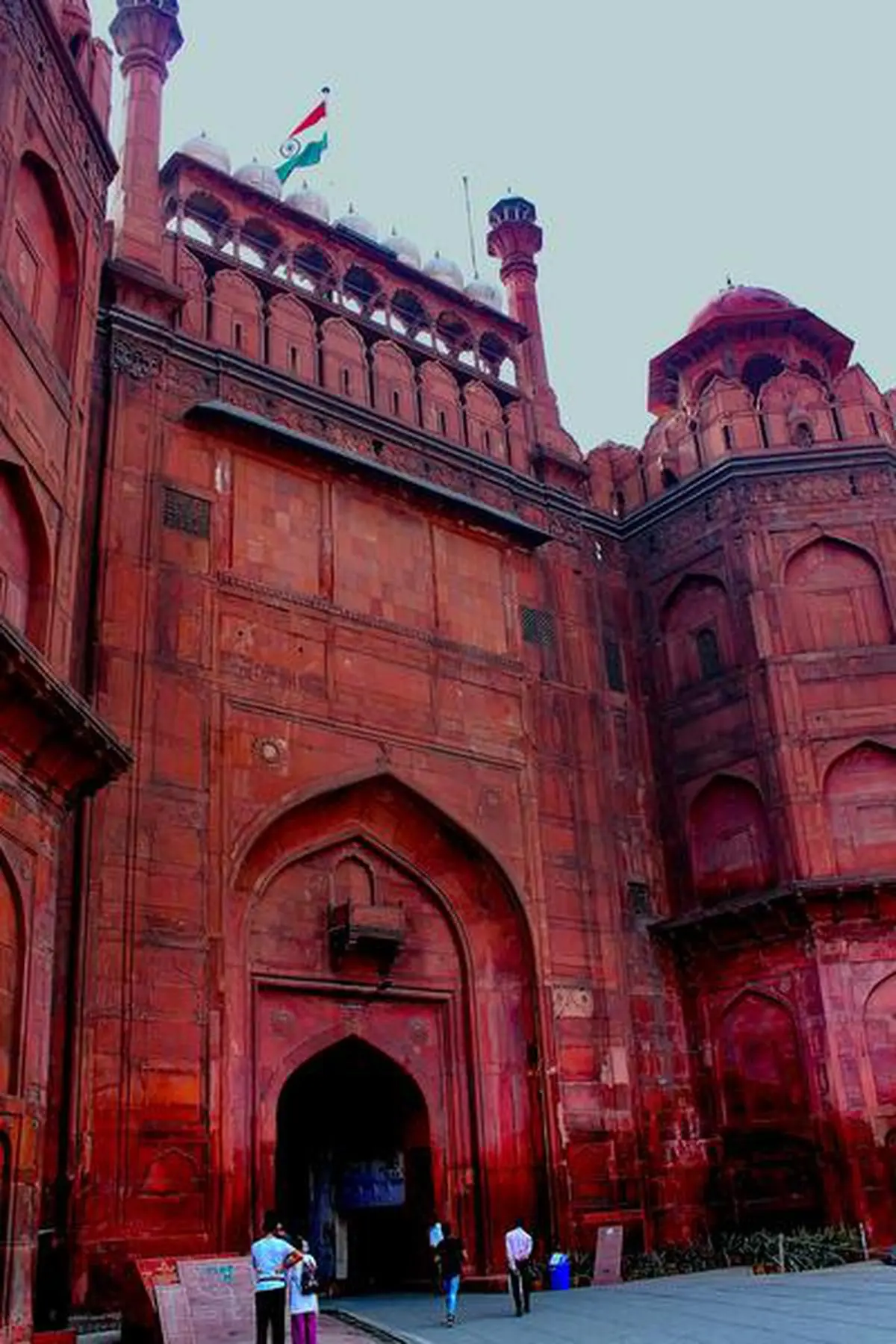
The Lahori Gate of the Red Fort that the Mughal emperor Shah Jahan built in Shahjahanabad, the new capital city he moved to from Agra in 1638, which is now know as Old Delhi.
ON the eastern edge of Delhi along the banks of the Yamuna river, which has shifted its course considerably today, and adjacent to the older Salimgarh Fort is situated the Lal Qila, or the Red Fort, one of the most iconic representations of India’s Independence Day celebrations. Declared a World Heritage Site in 2007, it was built by the fifth Mughal emperor Shah Jahan (regnal years 1628-1658) as the citadel of his new capital city, Shahjahanabad (literally the abode of Shah Jahan). Known by different names at different points of time such as Qila-i-Mubarak (the Fortunate Citadel), Qila-i-Shahjahanabad or Qila-i-Mualla (the Exalted Fort), the Red Fort represents the pinnacle of Mughal palace-fort building activity.
Shah Jahan constructed Shahjahanabad after he changed his capital from Agra to Delhi in 1638. The French traveller Francois Bernier said the scorching heat of Agra forced the emperor to look for a new capital. But there were clearly other deeper reasons. Delhi’s geographical location was more strategic for the control of the empire. Further, as the author of the 19th century biographical work Maasir al-Umara said: “Exalted sultans always had it in mind to cause the world to remember [them] by a permanent monument.” Agra had by then become a little too small for Shah Jahan’s grand and ambitious building plans. Overbuilding and encroachments had led to huge congestion in a city getting progressively eroded by the Yamuna. There had also been incidents of people getting killed/injured during processions/festivals. In 1639, Shah Jahan instructed his architects, engineers and astrologers to select a new site in a mild climate somewhere between Agra and Lahore.
The choice of Delhi was facilitated by many factors. It had been the capital and a centre of Muslim rule since the times of Qutbuddin Aibak until around 1506 when the Afghan ruler Sikandar Lodi (regnal years 1489-1517) shifted his capital to Agra. Later, Shah Jahan’s grandfather, the Mughal emperor Humayun, laid the foundations for a new capital called Dinpanah in the modern Purana Qila /Old Fort area. Delhi had also been an important religious-spiritual and pilgrimage centre housing tombs and graves of several holy men, including Nizamuddin Auliya, Qutbuddin Bakhtiyar Kaki and Nasiruddin Chirag Dehlavi. Hakim Maharat Khan Isfahani, writing in the early 18th century, says: “It was always the dar al mulk [seat of empire] of the great sultans and the centre of the circle of Islam [ markaz-i dairah Islam ].” The historian Swapna Liddle argues that the specific spot—the right bank of the Yamuna and south of the Salimgarh Fort, which Islam Shah Suri built in 1546—is regarded as auspicious in Hindu mythology. It was believed to have been blessed by Vishnu as a place where knowledge of the Vedas could be had by just taking a dip in the waters. It was called Nigambodhak , meaning that which makes known the knowledge of the Vedas. Nigambodh Ghat continues to be regarded as a holy site by Hindus.
Scholars have suggested various models to comprehend the city. The historian Stephen Blake argues that like many other capital cities, such as Istanbul, Isfahan (Persia), Tokyo and Peking, Shahjahanabad was also the “exemplar” of the sovereign city model—the “capital of the patrimonial-bureaucratic empire”, a type of state that characterised Asian empires from about 1400 to 1750. Others, such as E. Ehlers and Thomas Krafft, have characterised Shahjahanabad as an “imperial Islamic city”. An important factor to bear in mind is the way the Mughals, or for that matter even Hindus, viewed capital cities. The capital was an axis mundi —or the centre of the earth where the celestial and the mundane intersected. In the words of Muhammad Salih, an official historian of Shah Jahan’s reign: “Its four walls… enclosed the centre of the earth [ markaz-i khak ].” While the nature of the city continues to be debated, there is no doubt that it was one of the finest imperial capitals of the time. It had all the features of a great Mughal city: a palace-fort, enclosure walls, streets with squares, bazaars, mosques, gardens, imperial buildings, commercial neighbourhoods and industrial establishments, some within the palace-fort complex and some outside it.
On April 29, 1639, at a time determined by imperial astrologers, the subahdar (governor) of Delhi ordered the architects Ustad Ahmad and Ustad Hamid to begin the excavations for the new capital. After nine years, on April 19, 1648, Shah Jahan entered the Daulatkhana-i-Khas / Diwan-i-Khas (Hall of Special Audience) through the gate fronting the river.
The palace-fort was built at a cost of around one crore rupees, half of which was spent on the construction of the palaces within. It occupied the north-eastern edge of the new imperial city. Later, Shah Jahan also constructed a wall around the city, which Bernier found to be inadequate. The wall was punctuated by towers, bastions, gates and entryways. Of its 14 major gates, the important ones are the Mori, Lahori, Ajmeri, Turkomani, Kashmiri and Akbarabadi (later known as the Delhi Gate) Gates.
Fort wall and entrances The palace-fort complex together with the Salimgarh Fort occupies an area of 121 acres (one acre is 0.4 hectare). It is an irregular octagon with its two longer sides in the east and west. According to the art historian Percy Brown, most of it was laid out in squares and there was hardly an oblique line or curve in the entire scheme. The riverfront section contained important royal buildings. A water channel, called Nahar-i-behisht (Stream of Paradise), ran through these buildings. The fort complex was surrounded on three sides by a moat and by the Yamuna on the eastern side. The wall on the north-eastern side borders the Salimgarh Fort, which served as a prison during Mughal times. The wall of the palace-fort covers a perimeter of 2.41 kilometres. Along the river, it is 18 metres high and on the other sides it is 33.5 m high. The wall was built of red sandstone (hence the name Red Fort) brought upstream on the Yamuna from Fatehpur Sikri.
The archaeologist Y.D. Sharma pointed out that there were five grand entrance gates to the fort, only two of which are still in use: the imposing three-storey Lahori (facing the direction of Lahore) Gate and the Delhi Gate (facing Delhi). The latter, which Shah Jahan used to go to Jama Masjid, is similar in layout and appearance to the Lahori but is notable for the two life-sized stone elephants on either side of it. Aurangzeb, Shah Jahan’s son and successor, demolished the elephants, but the British Viceroy Lord Curzon had them restored in 1903. Lying under the Musamman Burj , the riverfronting octagonal tower, was a third gate that the emperor used as a private entrance.
The bazaars The fort was characterised by rectangular buildings laid out in a symmetrical arrangement with intersecting thoroughfares. There were two principal streets/thoroughfares, which also served as bazaars. They emanated from within the fort-palace but went beyond to the city. They intersected at right angles in the courtyard outside the Naqqar Khana (Drum House). The principal imperial street, running from east to west, began at the Rang Mahal (Palace of Colour) and ran through the Lahori Gate of the fort to Fatehpuri Masjid. This street was divided into three bazaars separated by two squares. The first, lying between the Lahori Gate and the chowk (square) of the Kotwali Chabutra (City Magistrate’s Platform), was called Urdu Bazar (Bazaar of the Royal Camp). The second part, commissioned by Shah Jahan’s daughter Jahanara Begum, extended from Kotwali Chabutra to the octagonal Chandni Chowk (Silver Square) and was called Ashrafi Bazar (Moneychangers’ Market) or Jauhari Bazar (Jewellers’ Bazaar). It had a hammam (bathhouse), a sarai (inn) and a garden (Bagh Sahibabad) near it. The final section, from Chandni Chowk to Fatehpuri Masjid, was called Fatehpuri Bazar . The Nahar-i-behisht , bordered by trees, ran down the middle of the bazaars.
The second street, in the north-south direction, stretched from the Akbarabadi Gate of the fort to the Akbarabadi Gate of the city and had a market that later came to be known as the Faiz Bazar (Bazaar of Plenty). As in the case of the first street, a stream from the Nahar-i-behisht ran down the middle of this bazaar. There was also a bazaar, a small one, that connected Jama Masjid and the palace-fort and it was inhabited by dancing girls, medicine men, jugglers, storytellers and astrologers.
The Lahori Gate remains the main public entrance to the palace-fort. The pointed arched entrance has kangura s (ornamental merlons) on the parapet and a row of dwarf chhatri s (canopy), each with a small marble dome. It is flanked by octagonal towers with sandstone domes and marble finials. Since 1947, Prime Ministers have made Independence Day speeches from the ramparts adjacent to this gate. Aurangzeb added barbicans to the Delhi and Lahori Gates and made the former the headquarters of the qiladar (fort commander). When Shah Jahan was imprisoned by Aurangzeb, he apparently wrote to his son from Agra saying: “You have made the fort a bride, and set a veil before her face.” The historian Percival Spear points out that Aurangzeb built the great wall in front of the Lahori Gate to save nobles the trouble of having to bow constantly as they walked the length of Chandni Chowk , which court etiquette required them to do when they were in the view of the emperor. Blake, however, says the wall was built to strengthen the outworks of the structure.
After entering the Lahori Gate, one comes to a vaulted arcade, or a covered bazaar ( Bazaar-i-Mussaqaf ). Blake says that establishing roofed bazaars was a common practice in Iran and West Asia but was unusual in India. This was a double-storey structure with arcaded shops at both levels, and there were shops on sides of the street too. Here, merchants of Delhi sold their goods to the nobles. In the middle of the bazaar is an octagonal court known as Chhatta Chowk with an open roof to allow in air and light. Going past the covered bazaar, one reaches the three-storey sandstone pavilion Naubat Khana (Music Gallery), or Naqqar Khana , where once ceremonial music was played five times a day and from where the arrival of the emperor and other dignitaries was announced. The Indian War Memorial Museum now occupies its upper storey. Between Naqqar Khana and Chhatta Chowk is an open square forecourt ( Jilau Khana ) on the sides of which were small rooms for officials connected with the daily guard. It is in the Jilau Khana that the people attending daily audience, ministers, bureaucrats, amirs and others waited. Only the princes could go beyond this point on their horses; all others had to dismount here.
The Naqqar Khana led to the rectangular Diwan-i-Aam (Hall of Public Audience) open on three sides with a courtyard in front. It is an arcaded structure consisting of nine engrailed arches supported by double columns made of sandstone. It has 27 bays, and the ceiling and the columns were originally decorated with gilded stucco work and hung with heavy curtains. Set against the centre of the eastern wall is a marble canopy known as the Nashiman-i-Zill-i-Ilahi (Seat of the Shadow of God). This canopy with fluted/baluster columns, inlays of precious stones and a Bengal-styled roof once stood over the emperor’s throne. Here he sat and listened to complaints and suggestions from the general populace and deliberated upon routine military, administrative and financial matters. A railing separated him and the common people. Below the throne was a marble dais decorated with semi-precious stones to be used by the wazir (prime minister). The wall behind the throne was ornamented with beautiful panels of pietra dura work, said to have been executed by the Florentine artist Austin de Bordeaux. The panel has beautiful flowers along with birds and animals. It also has a representation of the Greek god Orpheus playing the flute to animals, including a hare, a leopard and a lion. The art historian Ebba Koch says this symbolised the ideal rule of Shah Jahan “whose justice would make the lion lie down with the lamb and, in the human world, free the oppressed from their oppressors”.
The Diwan-i-Aam was sometimes used for state functions, and the courtyard behind it leads to the imperial apartments. In order from north to south, they are Mumtaz Mahal , Rang Mahal , Khas Mahal , Diwan-i-Khas , the hammam and Hira Mahal . Built along the Yamuna, these palaces now overlook the traffic-heavy Mahatma Gandhi Road. The eastern ramparts are flanked by two towers, Asad Burj (Lion Tower) and Shah Burj (Emperor’s Tower) respectively, on the south and north ends. Raised on a common marble platform, these were mostly open marble pavilions with perforated screens, inlaid with precious stones and decorated with moulded plaster and paintings. They had walled courtyards on the western side to give them privacy from the rest of the palace. The Nahar-i-behisht brought water from the river by way of a marble ramp that led into a lotus-shaped pool in the north-eastern building. From here, it filled the royal baths, ran through the Diwan-i-Khas and the emperor’s private chambers and beneath the marble trellis screen that carried the carving of the Mizan-i-Insaf (Scales of Justice), through the section reserved for the royal women.
Behind the Diwan-i-Aam and separated by a court is the Rang Mahal , a huge hall whose name is derived from its painted interior. It had a facade of five engrailed arches set on piers. The ceiling was originally built of silver and, in the words of Muhammad Salih, was “gilded and ornamented with golden flowers”. The central hall was divided into 15 bays formed by intersecting arches. The structure had two vaulted chambers on either end that were adorned with wedges of mirrors embedded in the ceiling. These apartments are popularly called Shish Mahal (House of Mirrors) because of the effect they produced.
Beyond this is the Mumtaz Mahal (Distinguished Palace), a building that now houses the Fort Archaeological Museum. It had a brightly coloured ceiling inlaid with gold and at four corners were reed houses ( khas khanas ). There was a large garden with a pool and a marble basin between this palace and the Diwan-i-Aam . Between the Mumtaz Mahal and the Asad Burj were living quarters for women of the imperial household. Small gardens laid around central pools dotted the courtyard.
Emperor’s living quarters Immediately north of the RangMahal were the emperor’s living quarters called the Khas Mahal (Special Palace). This composite palace consisted of three segments: a beautifully carved marble building inlaid with precious stones called the Aramgah or Khwabgah (Place of Sleep) flanked by the Tasbih Khana (Chamber for counting beads for private prayers) and the Tosha Khana (Robe Chamber). The Tasbih Khana was a set of three rooms facing the Diwan-i-Khas . This was separated from the central Khwabgah by a marble screen containing a representation of the Mizan-i-Insaf suspended over a crescent amidst stars and clouds. The Tosha Khana , also known as the Baithak (Meeting Hall), faced the Rang Mahal and had painted walls and ceiling and a perforated screen. The Musamman Burj , with its beautifully painted interior, protruded from the eastern wall of the Aramgah . It served as a place for the Jharoka Darshan (Balcony of Audience)—a practice borrowed from Hindus whereby the emperor appeared before his subjects every morning. In 1808, Akbar Shah II added a small balcony to this burj . It was from this balcony that King George V and Queen Mary appeared before the people of Delhi during the Durbar of 1911.
To the east of the Diwan-i-Aam and along the riverfront is the Diwan-i-Khas . The location of this hall, deep within the living quarters of the imperial family, indicated its special, private character. This rectangular chamber was a place for exclusive and private audience. Built of pure white marble, it was one of the most elegant buildings in the palace-fort. Its roof has pillared umbrellas at the corners. The chamber has engrailed or scalloped arches resting on a set of 32 piers with square shafts. The lower walls were studded with agate, pearl and other precious stones while the upper portion had fruits and flowers painted in colourful and intricate designs. Takht-i-Taus , the famous peacock throne with the Koh-i-Noor diamond embedded in its canopy once stood in the centre of the room on a wide marble platform. The Nahar-i-behisht flowed right through the middle of the hall, adding to the beauty of the place. The Diwan-i-Khas inspired the poet Amir Khusrau (1235-1325) so much that he left a quote in the building wall: “If there be a paradise on the earth, it is this, it is this, it is this.”
North of the Diwan-i-Khas lay the hammam , which was a three-storey structure built of marble. While one storey was used as a dressing room, the other two were for hot and cold water baths respectively. It was decorated with mosaic and pieces of glass and nicely painted. At the north-eastern corner of the palace-fort and along the riverfront, lay the Shah Burj .
North of the Diwan-i-Khas was the marble Moti Masjid (Pearl Mosque) built around 1659 for exclusive private use. This is the only building that Aurangzeb erected within the palace-fort and is now closed to the public. The northern sector of the imperial quarters was occupied by the gardens, primarily the Hayat Baksh Bagh (Life Bestowing Garden) and Mahtab Bagh (Moonlight Garden). The Hayat Baksh Bagh was a paradise garden with tanks, fountains, tunnels, pavilions and all the other structures typical of such gardens in the West Asian countries. It had a rectangular pool in the centre beside which stood an open summerhouse ( barahdari ). At the north and south ends of this garden stood two identical pavilions named after the monsoon months of the Hindu calendar: Sawan (fourth month) and Bhadaun (fifth month).
After Shah Jahan The fortunes of the fort started disintegrating after the death of Aurangzeb, a period that witnessed battles for succession, dissensions within the royalty, the rise of ambitious nobles, invasions from abroad and natural calamities. The palace-fort was a centre for artistic and cultural performances during some periods. Muhammad Shah, one of the later Mughals, patronised Urdu, Qawwali and music, particularly khyal . Paintings of Holi celebrations during his period are well known.
In 1739, Nadir Shah, the Turk ruler of Iran, crossed over Afghanistan and Punjab and defeated the Mughals at Karnal. In the subsequent display of power, his name was proclaimed as the sovereign in the khutba read in the mosques in Shahjahanabad. He also got Muhammad Shah to receive him at the fort where he symbolically returned the throne to the defeated emperor. On March 22, 1739, infuriated by attacks on his army, Nadir Shah ordered a massacre of citizens of Delhi and witnessed the barbarity sitting on the roof of Sunehri Masjid near Chandni Chowk . He also plundered the fort and the city and carried away a booty with an estimated value of 700 million rupees, including the Peacock Throne and the Koh-i-Noor .
The destroyed city and plundered empire was further weakened by the raids of the Marathas, the Sikhs, the Jats, the Gurjars, the Rohillas and the Afghans around the mid to later 19th century.
The historians Percival Spear and Amar Farooqui argue that the Mughal Empire as an imperial raj or a political entity ceased to exist in the 1750s. But the “imperial” aspect of the emperor and his distinctive social status as the foremost resident of Delhi ensured that his position remained central to the identity of the city even after British occupation. In 1803, Lord Lake defeated the Marathas near Patparganj and gained control of the Ganga-Yamuna plains and the Delhi-Agra region. The city became a part of the North-Western Provinces and was governed from Agra. A British Resident was stationed in Delhi. He started functioning from an office at Dara Shukoh’s Library on the right bank of the Yamuna close to the imperial palace.
Rebellion of 1857 The early decades of the 20th century, sometimes described as the “English Peace”, were also the period of the “Delhi Renaissance”, which was characterised by literary greats such as Ghalib, Momim, and Zauq; the intellectual endeavours of the faculty at the Delhi College and its English institute; and the coming of printing presses and newspapers. This was disrupted by one of the most serious challenges to the British colonial rule, the Rebellion of 1857.
The year 1857 witnessed armed revolts in parts of central and northern India, leading to a loss of British control over these regions. It began with a mutiny of sepoys but acquired a civil and popular character in parts of Upper India. The historian Eric Stokes says that the rebel sepoys showed a “centripetal impulse to congregate at Delhi”. The Red Fort thus emerged as a focus centre for the rebellion. Under pressure from the rebels and princes, the reluctant 82-year-old Mughal emperor, Bahadur Shah Zafar, became the titular leader of the rebellion, while Prince Mirza Mughal (commander-in-chief) and Jiwan Bakht ( wazir ), along with other princes and nobles, exercised the real power.
The palace-fort soon became the seat of new power and Bahadur Shah a symbol of the rebellion. There were attacks on Europeans, Christians and those connected with the British government. The British army waited for reinforcements from Ambala. Once the army started gaining control of the city, it went on an offensive against both Hindus and Muslims. The population of the city was driven out and took shelter around the Qutb and the Nizamuddin and could only re-enter the city the following year. Mosques were taken over. After September, the British forces unleashed a reign of terror that saw indiscriminate shootings, courts martial and summary hangings.
Bahadur Shah had escaped via the Yamuna and taken refuge in Humayun’s tomb. He was arrested along with three princes who were killed on the way back near the Delhi Gate by Major William Hodson. Bahadur Shah returned to the Red Fort as a prisoner of the British, was tried in the Diwan-i-Khas in 1858 and exiled to Rangoon, Burma (now Yangon, Myanmar), on October 7.
The fort complex also incurred the wrath of British officials. More than two-thirds of the inner structures were destroyed. Henceforth, the palace was to be used as quarters for the British garrison and the famed Diwan-i-Aam as a hospital. The buildings south of the Diwan-i-Khas were found to be “of little architectural interest” and were declared suitable for troops. Most of the jewels, precious stones and artworks of the Red Fort had been looted and stolen during Nadir Shah’s invasion and after the “Great Indian Rebellion” was suppressed. Several existing Mughal structures were demolished, including the harem courts and gardens to the west of Rang Mahal and the royal storerooms and kitchen to the north of Diwan-i-Aam and the Mahtab Bagh . British buildings such as army barracks, hospitals, bungalows, administrative buildings, sheds and godowns became a part of the palace-fort complex.
The rebellion ended the rule of the East India Company, and an Act passed in the British Parliament in August 1858 made Queen Victoria the sovereign head of British India. The office of Secretary of State was created to rule India. The new power dynamics were sought be cemented through imperial durbars held in 1877, 1903 and 1911. The author Pran Nevile says this was in keeping with the Indian tradition of the durbar, which celebrated the coronation of a new ruler to mark his/her sovereignty over his/her subjects. The third durbar also saw a surprise announcement from King George V of the transfer of the capital from Calcutta (now Kolkata) to Delhi. The next few decades were spent on building the last imperial city, New Delhi, also known as Lutyen’s Delhi.
The Red Fort became visible again in the years preceding Independence. The chambers within the baoli , or stepwell, believed to predate the Red Fort, were converted into a prison. It housed Colonel Shah Nawaz Khan, Colonel Prem Kumar Sahgal, and Colonel Gurbaksh Singh Dhillon during the Indian National Army (INA), or Azad Hind Fauj, trials in 1945-46. The massive nationwide campaign for their release reinforced the public perception of the former Mughal palace as the symbol of anti-colonial resistance. On August 16, 1947, Jawaharlal Nehru, the first Prime Minister of India, raised the Indian national flag above the Lahori Gate. Farooqui says that the act of replacing the British flag with India’s national flag—a day after the swearing-in of the first Cabinet—amounted to reclaiming this contested site for the nation.
After Independence, the Red Fort witnessed a few changes but continued to be used as a military cantonment. A large part of the palace-fort remained under the control of the Indian Army until 2004 when it was handed over to the Archaeological Survey of India for restoration.
Shashank Shekhar Sinha has taught history in undergraduate colleges at the University of Delhi. He does independent research on tribes, gender, violence, culture and heritage .
source: http://www.frontline.thehindu.com / Frontline / Home> Arts & Culture> Heritage> Agra Fort / by Shashank Shekhar Sinha / January 30th, 2019