All posts by mpositiveone@gmail.com

The magic of Suraiya

PUNJAB / Mumbai (MAHARASHTRA) :

When Nawab F K Sherwani’s daughter got married, his friend the Chawalwala Nawab invited Suraiya to sing, and despite fever, one could make it to the wedding of Farhana Begum, holding on to mother’s hand. That was in the 1940s, when one was fortunate to hear the legendary singer in her prime and also see the courtesans dance the night away. That function is a fading memory now but not the screening of Anmol Ghadi, held two years later in Jaipur in a predominantly Muslim locality by Danyal Sahib. He put up the screen against the City mohalla wall, and it being a summer evening, people spread their cots to hear and see Suraiya, along with Noor Jahan, the senior of the two reigning screen beauties.

Suraiya had become a magical name by then and everybody was talking about her golden voice that could sway not only the music-loving rajas and nawabs but also the hoi polloi. “Iski zaban mein mithas hai (There’s sweetness in her voice),” commented 80-year-old Keti Baba, the ex-gardener of a nawab’s compound. Jajja Bua agreed with him as she munched her favourite bida ofpaanunder the neem tree, where she sat on a stringed cot, near the beautiful dulhan, Bilqis, while Khaleda Behn spoke or a fanciful musical duet between Saighal and Munawar Sultana. Each scene of the film drew remarks galore, and sometimes when the scenes got hetic.

Master Sahib tried to interpret them to those who kept getting puzzled by the sequence of events. Munni Bua found it difficult to control her son Karim who, like any mischievous schoolboy, kept fidgeting with his mother’s sari or tried to pull his sister’s hair. He, however, began to concentrate on the film when the fighting scene commenced. In those days films did not have “dhishum-dhishum” stuff. Here was a fight with a knife until the Pehalwan sprang up and wrested it from the villain’s hand. When the film ended people picked up their cots and went home, but they kept talking about Suraiya and Noor Jahan for a week after that, with comments on Suraiya’s dominating Nani.

More than 50 years later one had a chance to see the legendary actress again, when she came to receive the Sahitya Akademi award in 1998. That was a glimpse of a much mellowed Suraiya. But she still looked pretty though approaching 70. The wrinkles were hidden under a lavishly rouged face, the hair had been dyed, except for a straying grey one here and there, but the almond eyes were still sparkling and full of life. She conversed in a low voice and declined to sing, saying she had left “mosiqui years ago”.

Someone mentioned Dev Anand but she ignored the comment, and preferred to change the topic by remarking that it was getting late and she had to go back, the reference probably being to her Marine Drive residence, where she led the life of a recluse. What an evening of old memories it was!

Nawab Faiyaz Khan was long dead, so also his eldest daughter and her husband, S K Sherwani. The Chawalwala Nawab did not die a natural death: he had shot his begum in a fit of anger in the 1950s and was hanged on the clinching evidence of his only son.

Suraiya did not speak much about Noor Jahan (nor of Lata Mangeshkar) but from the little she said it was evident that she held her in high esteem. They were both from undivided Punjab ~ Noor Jahan from Kasur (which was to become such an issue during the Indo-Pak war of 1972) and Suraiyu from Lahore, where her uncle Zahoor, the ace villain or the silver screen in the 1930s and 40s was able to win her parents’ approval to become a child actor.

Although Suraiya did not speak about Dev Anand that December day, one still remembers the Latka (limerick): “Chhayi bahar hai / Jiya beqarar hai / Aaja mere Dev Anand,Suraiya bemar hai”. And when one reminisces of Suraiya can Noor Jahan be forgotten? When she came to India in 1980s, 35 years after leaving for Pakistan along with her husband Shauqat Hussain, one had a chance to see her at close quarters. Her name was later linked with cricketer Nazar Mohammad and then General Yahya Khan in a big scandal.

The glamour-girl of yesteryear, despite her many engagements in Delhi, found the time to visit the dargah of Hazrat Qutubuddin Bakhtiar Kaki and the shrine of Hazrat Nizamuddin Aulia. Tradition has it that one should visit Hazrat Qutubuddin’s mazar first and other shrines afterwards. Even Khwaja Moinuddin Chishti had ordained that the devotee must first pay respects to Qutub Sahib and then come to his dargah.

So Noor Jahan, accompanied by her pretty daughter, Hina and her husband, Haroon Butt, went to this mazar first. At Nizamuddin’s Dargah Noor Jahan offered a chadar and stood praying with palms open for blessings amid the aroma of joss-sticks. Perhaps the Malika-e-Tarannum prayed that her voice remain ever redolent. Or she sought the saint’s benediction on Hina and her husband ~ health, wealth and happiness. As per tradition, the actress left for Ajmer on a Friday to seek the blessings of the greatest Muslim saint of the East, without a visit to whose shrine no trip to India is complete for the true devotee.

Noor Jahan’s golden voice still resounds in the mind “in jocund or in pensive mood” ~ “Awaaj de kahan hai”, interspersed with Suraiya’s “Nuqta chin hain ghame-e-dil”, which brought out the very soul of Ghalib on her honeyed tongue. Suraiya’s last visit to Jaipur was at the initiative of music composer Naushad, who belonged to this city before making it big in Bombay. At his behest, she was the guest of the niece of the novelist lsmat Chughtai and spent a whole day at her house.

Among those who attended an evening of songs by her was Khalil Mian of Bagh Chaurniwala, a great lover of music and a friend of Nawab Faiyaz Khan. As the trees swayed in the breeze blowing from the hills surrounding the city, Suraiya too swayed in rhythm ~ and the audience with her. When she departed by the night train many of her admirers wondered whether they would hear the legend sing again in a live performance. Her death years later naturally left Jaipur sadder. That Dev Anand couldn’t marry Suraiya because of opposition by her Nani is one of tragedies of filmdom, which finds a parallel in the case or Dilip Kumar and Madhubala, whose father was opposed to their wedding proposal.

Nevertheless, Dev continued to have a soft corner for his old flame and when her favourite actor Gregory Peck made a brief stopover in Bombay, he took him to her house. It was near midnight and Suraiya was fast asleep. He woke her up to give her probably the biggest surprise of her life. Dev had eventually married Kalpana Kartik and Dilip for Sara Banu as the next best thing in their lives. But the way their marriages lasted shows that the same would have been the case had Suraiya and Madhubala become their respective wives.

Even after Suraiya passed away, a red rose was always found on her grave in the Mumbai kabristan. It was a tribute by the lover of her youthful days. All this comes to mind when one relaxes before the TV in the evening for a sundowner while one of Ghalib’s ghazals is being sung. It reminds one of Suraiya’s faultless rendition of the poet’s master-piece, “Nukta chin hain,gham-e-dil/Baath bane na bane”.

In the life of the actress the “Baath” that did not materialize was the affair with her heart throb Dev Anand of the romantic Gregory Peck type hairpuff! So that long past evening with Suraiya still extends up to now.

source: http://www.thestatesman.com / The Statesman / Home> Features / by RV Smith / New Delhi / August 25th, 2017
This professor’s Unani medicine for diabetes is all set for clinical trials

Aligarh, UTTAR PRADESH :

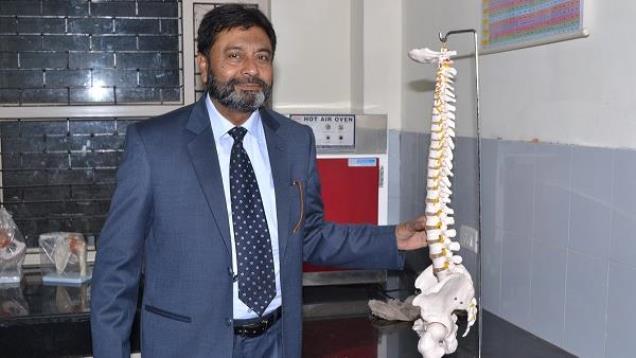
Professor Naeem Ahmad Khan

Four years back, Naeem Ahmad Khan,  professor  at faculty of Unani Medicine, Ajmal Khan Tibbiya College, Aligarh Muslim University, set a goal for himself– he wanted to find a cure for diabetes.

It was possible only if he could regenerate the primary function of beta islet cells of the pancreas to store and release insulin.

Four years on, he claims to have succeeded in his mission. He has developed a medicine that, he says, will not only improve the function of pancreatic cells, but also protect them. Besides, it will regenerate beta islet cells and improve their health by giving them required nutrition.

“My medicine will regenerate the natural process of the pancreas. This medicine will help diabetic respond to fluctuations in blood glucose concentrations quickly by releasing stored insulin,” says Dr Khan.

He believes that the medicine, if clears clinical trials, will be a better alternative to the existing drugs. “Modern diabetic medicines stimulate beta cells to produce and release more insulin. If a person develops diabetes at a younger age, these medicines stop working after a few years. Then the alternative before the patient is to take insulin supplement, which is an expensive as well as painful treatment,” he says.

The clinical trial  of the medicine, he believes,  will help standardise traditional medicine system in India and bring it at par with modern medicine

“Apart from  restoring the normal functioning of beta cells, I believe that this medicine will also bring down the number of pancreatitis cases in diabetes,” he says.
Khan says that his medicine has already been tested on animals and has gone through the  necessary toxicological studies to rule out any heavy metal impurities and other toxic effects. It has been passed by the Government of India’s Institutional Ethical Committee, he adds.

The drug will soon be tested clinically before it is available in the market. “We will study it in a controlled environment where we will monitor its effect on diabetes in non- insulin dependent patients.  We will also compare it with other existing popular modern drugs,” says Khan.

The clinical trial  of the medicine, he believes,  will help standardise traditional medicine system in India and bring it at par with modern medicine. “Evidence-based traditional medicine is the need of the hour. We need to exploit their potential to help people deal with various lifestyle diseases,” he says.

Khan says that this medicine has been developed from eight different medicinal plants, some of which were used by ancient Unani practitioners. “These medicines are as scientific as allopathic drugs. We need to validate their worth and that’s what I have been trying to do all these years, ” he says.

source: http://www.healthpost.in / Healthpost.in / Home / by HP Correspondent / Saturday – January 28th, 2017

When Ustad Rashid Khan mesmerised Hyderabad

KOLKATA, WEST BENGAL :

UstadRashidKhanMPOs26aug2017

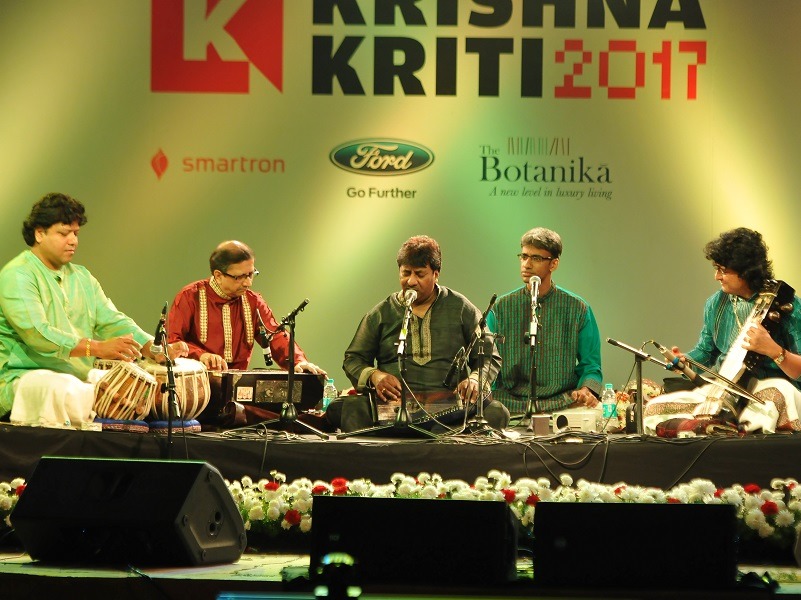
The moment the scion of the Rampur-Seheswan gharana Ustad Rashid Khan stepped on stage, it felt like magic was infused at Rock Heights on Saturday evening.

The maestro of Hindustani classical music began the performance with the aalap of raag Yaman. Exploring every note of the intricate ragas, his sonorous rich timbre, lulled the audience into a musical bliss. The slow elaboration of vilambit khayal, the relaxed vistaars, passionate flourishes, and masterful taankaris defined the prowess of the Ustad. The second rendition, a composition in the beautiful ratrikalin raag Desh, enthralled the audience with meends rom madhyam to rishabh via gandhar that defines the raag.

Rashid then swung into the poignant Yaad Piya Ki Aaye, the famous thumri by Ustad Bade Ghulam Ali Khan piece much to the delight of the rasikas present there.

“Will he sing Aayoge Jab Tum Saajna? I will be so heart-broken if he does not sing the song,” whispered a member of the audience. So when he concluded his concert with his famous Bollywood number, the crowd broke into a thundering applause.

When we caught up with the singer backstage to ask him if he had deliberately saved the song for the last, he said, “It’s good that people like it. The song is actually a thumri. Achhi baat hai ki usmein maine kuch aalag kiya hai. There are many thumris as good as Aaoge Jab Tum Sajna, if they are incorporated in films, they will become as popular as this score.”

The exponent of the Rampur-Sahaswan gharana, who is a father to Suha, Shaona and Armaan is proud about the fact that his daughters will carry forward his legacy .

“Girls in our family never sang in public. But when they decided to become singers and pursue a career in singing, I gave them my whole-hearted support. Zamana change ho raha hai. I believe in their happiness more than tradition. I wanted them to live their dreams,” he says, signing off.

source: http://www.timesofindia.indiatimes.com / The Times of India / News> City News> Hyderabad News / by Papri Paul / January 11th, 2017

Prof. Mahdi Hasan – The Man who put Lucknow on Medicinal Map

Lucknow, UTTAR PRADESH :

ProfMahdiHassanMPOs26aug2017

Prof. Mahdi Hasan was born on March 21, 1936 in a village Gadayan, Akbarpur (then in Faizabad, now in Ambedkar Nagar), in UP.

His father, Jawad Husain, was Tehsildar, posted at that time at Tehsil Mohanlalganj of the District Lucknow, and his mother was Tayyabunnisa Begun. Hasan’s father died when Hasan was four years old, and his mother, being ill, was unable to care for him. His brothers late Bakhshish Husain, a police officer, and Syed Ghulam Husain, an IAS officer, subsequently raised him.

However, this did not deter him from pursuing his life with zeal and devotion to his studies and dedication for sports. He used to study at night in the light of a kerosene lamp and play during the day in the fields of the village. He excelled in studies and was appreciated for his sporting prowess. His father wanted him to be a doctor. He himself wanted to be a teacher. Finally he became both, and a sportsman too in the bargain.

In 1950, Hasan enrolled in the Christian College at Lucknow, where he did his Intermediate. Thereafter he did his B.Sc. I year from Lucknow University and in 1952 he was selected in M.B.B.S. at King George Medical College.

After graduation, he joined the Department of Anatomy as a Demonstrator in the year 1958 and worked till early 1963. He did his post graduation in Anatomy from KGMC. Thereafter, he moved to the J.N. Medical College, Aligarh Muslim University, Aligarh, where he would spend the bulk of his career.

It was in 1958 that he got married to Abida Kazim, who was an MA in Urdu, a rare achievement at that time for a woman from a Muslim family.

His persistent endeavour was to pursue basic medical research and his main thrust was to study problems of national relevance, such as environmental pollution, pesticide and metal neurotoxicity and brain aging. His commitment and dedication to acquire and disseminate knowledge can also be judged from the fact that during the last 6 months of his life, when he was very seriously ill, he worked earnestly to complete a book on Treacher Collins Syndrome.

He would sit for long hours with swollen legs kept on stool writing the book, which he completed in December 2012, a month before his death. Fortunately, the book was published a few days before his death when he was in the intensive care unit.

Dr. Hasan, all through his illustrious academic career spanning around 55 years (1958–2013), fought a relentless battle and succeeded in giving a completely new orientation to the teaching of anatomy.

He has to his credit about five books, seven book chapters, 125 research papers in indexed journals. His research work has earned him over 600 citations including those in the prestigious Nature, Gray’s Anatomy, and NIOSH and in 38 other reference works. He was indeed a man of parts, combines excellent teaching and research capabilities with societal concerns and social commitments.

Hasan spent many years trying to establish a Brain Research facility at Aligarh.

With assistance from the German government, he succeeded in 1980 with the establishment of the first Interdisciplinary Brain Research Centre.

He has been an internationally renowned anatomist, a pioneering brain researcher and a reputed national expert of medical education and have been rewarded with a no. of awards.

A few to name are Dr. S.S. Misra Medal of National Academy of Medical Sciences (India), Dr. Dharam Narayan Gold Medal of the Anatomical Society of India (1977), Ati Vishisht Chikitsa Medal of College of Chest Physicians of India (1995), Sushruta Award of World Academy of Integrated Medicine (WAIM) 2002, Dr. Bachawat Life-Time Achievement Award of Indian Academy of Neurosciences (2004) and Dr. Tirumurti Award of Indian National Science Academy (2010).

Professor Hasan was a person who had utmost devotion, dedication and determination in acquiring, creating and disseminating knowledge. Seldom does one find a nucleus around which an institution is build, but it goes to the credit of Professor Mahdi Hasan that at least three premier medical institutions of North India will always fondly cherish his memory.

KGMC will always remember him as its illustrious student and teacher; Jawaharlal Nehru Medical College, Aligarh will always remember him as an excellent, dedicated and devoted teacher; and Era’s Lucknow Medical College, Lucknow (a medical institution founded around him) will find it difficult to overlook its founder Director-Principal and Trustee. Alas!

This renowned medical teacher breathed his last on 12 January 2013 after fighting a relentless battle against cancer of the prostrate. He had been at Imambara Gufran Ma’ab sahib. His wife, Mrs Abida Mahdi died soon after on 24 February 2013.

Many Firsts In India To The Credit Of Mahdi Hasan

  1. First in India to have obtained M.S. with Honours in Anatomy.
  2. First Anatomist of the Country to be selected by Govt. of India for German Academic Exchange Fellowship (DAAD) in 1965.
  3. First Anatomist of India to have learnt electron microscopy and published a large number of research papers using this technique from 1966 onwards.
  4. First and only Indian Anatomist to be chosen a Fellow of Alexander von-Humboldt Foundation (Germany).
  5. First to publish a new “in vivo” method of staining zinc (Experientia Switzerland) 1977.
  6. First Indian Anatomist to have earned both Ph.D. and D.Sc.
  7. First and only Indian Anatomist to be conferred both the Hari Om Ashram Alembic Award (1978) and Dr. B.C. Roy National Award (1991-92).
  8. First to establish an Interdisciplinary Brain Research Centre in India (1977).
  9. First Indian Anatomist to be appointed an Adviser in Neurotoxicology by WHO (Geneva).
  10. First Indian Anatomist who presided over the First Afro- Asian Oceana Congress of Anatomists organized by AIIMS, in September 1988 at Hotel Ashok, New Delhi.
  11. First and only Indian Anatomist to be appointed a member of the Governing Body of ICMR.
  12. First and only Indian Anatomist to be appointed chairman of the Medical Committee of the Indian Red Cross.
  13. First Indian Anatomist to be elected a Fellow of the Indian National Science Academy (INSA) and also its Senior Scientist.
  14. First in India whose academic and social contributions comprise the main theme of a Malayalam Short Story “Jeevacchavangal” (Living Cadaver) by Punathil Kunjabdullah in 1972 (translated into Hindi, Urdu, English, French and Russian language) and won the gyanpeeth puraskar for the same.
  15. First Anatomist in recognition of whose meritorious contributions to clinical anatomy, a Gold Medal Award was instituted by the Anatomical Society of India in 1990 (continues till date).
  16. First and only Indian Anatomist to be awarded Padma Shri by Government of India.

Positions held :

  • Demonstrator in Anatomy, King George’s Medical College, Lucknow (06.11.1958 to 30.04.1963)
  • Lecturer in Anatomy, King George’s Medical College, (01.05.1963 to 17.10.1963)
  • Reader in Anatomy, Jawaharlal Nehru Medical College, AMU, Aligarh (18.10.1963 to 31.03.1972)
  • Professor of Anatomy, Jawaharlal Nehru Medical College, AMU, Aligarh (1972-1996)
  • Director, Interdisciplinary Brain Research Centre, JNMC, AMU, Aligarh (1980-1993)
  • Medical Superintendent JNMCH, AMU, Aligarh (1983- 1985)
  • Principal and Chief Medical Superintendent, JNMC, AMU, Aligarh (1984-1987)
  • Dean Students Welfare, AMU, Aligarh (1988-1989) Dean, Faculty of Medicine, JNMC, Aligarh (1991-1993)
  • Guest Faculty, Department of Anatomy, KG Medical College, Lucknow University (1997-1999)
  • Emeritus Medical Scientist ICMR, New Delhi INSA Senior Scientist (2003-2006)
    (1998-2001)
  • Member of NAAC (National and Accreditation Council of Govt. of India) Feb 2010
  • INSA Hon. Scientist, Dept. Of Anatomy, CSM Medical University,Lucknow (2006-2011)

President of :

  • Indian Academy of Neurosciences -1986
  • First Afro-Asian Oceana Congress of Anatomists held at Hotel Ashoka, organized by All India Institute of Medical Sciences, New Delhi -1988
  • Association of Gerontology-India -1992 -Anatomical Society of India.

Fellow of :

  • National Academy of Medical Science (India) [FAMS] -Indian National Science Academy [FNA]
  • National Academy of Sciences, India [FNAS]

Writer a is student, an aspiring painter & calligrapher

source: http://www.lucknowobserver.com / Lucknow Observer / Home> Others / by  Akansha / January 26th, 2015 – / The Lucknow Observer, Vol.1, Issue 10 / January 05th, 2015

27-year-old Yasmeen Khan appointed as judge in Rajasthan

Sujangarh District, RAJASTHAN :

Jaipur :

27-year-old Yasmeen Khan, belonging to Sujangarh district  is the youngest female judge appointed in Rajasthan.

The Muslim girl, becomes the youngest in her category to clear the Rajasthan Judicial Services Exams and being appointed as a judicial magistrate. She obtained the 58th rank in the statewide held exams. This was the first attempt she gave to the highly-competitive examination.

Yasmeen had earlier won a gold medal in the LLB which she cleared in 2013. The law graduate has also made a name for herself in state-level sports. She has actively participated in Badminton, Singing and Beauty contests. Her father is employed in the Kendriya Vidyalaya of Bikaner.

“My success is a message to a section of the society. Those who believe that daughters are weak and end up being a burden on parents should now changed their mindset,” she was quoted as saying by Rajasthan Patrika.

Her selection is also seen as a major boost for girls hailing from the Muslim community. Yasmeen’s story has tuned into a source of inspiration for people living in Sujangarh district.

source: http://www.india.com / India.com / Home> News> India / by India.com news desk / January 17th, 2016

This Woman Was a Pavement Dweller, Today She Runs a Sanitary Pad Manufacturing Unit!

Mumbai, MAHARASHTRA :

With low levels of formal employment in slum communities, Myna employs women and trains them to be entrepreneurs who run franchisee businesses for women’s products.

In 2008 when the jhopadpattis on the pavements of Sewri were demolished, Parveen Sheikh sat by the footpath with her friend Kanta Nada mourning her lost home.
Out of 680 homes, according the 1995 election rules, only 280 homes were rehabilitated — Parveen’s home was not on the list. The BMC assured the angered pavement dwellers to not lose hope, it was just the first phase of rehabilitation.

A 12-year-old boy ran to Parveen and said, “Aunty, they have come with weapons to kill you, run away.”

Myna01MPOs26aug2017

Running at a distance towards her was a crowd of people with every weapon she had possibly seen— knives, bamboos, sticks alike, bloodthirsty for a certain Mahila Milan leader responsible for their lost homes. Zia bhai, one of Parveen’s neighbour rushed with his wife’s burqa, she donned it and hid in the blue water drum in a neighbour’s movers and packers truck.

She remembers staying in hiding with her family for a month in a room in Mankhurd. A few days later, the same phone calls made their way back again. This time apologizing for their misunderstanding. Parveen Sheikh had had enough, she would give up social work. But she realised, it was perhaps their homelessness that led to their reckless actions. She crusaded for their rehabilitation again. Within a week after that, 122 more homes were passed and people thanked the same Mahila Milan leader again.

Who is Parveen Sheikh?

Myna02MPOs26aug2017

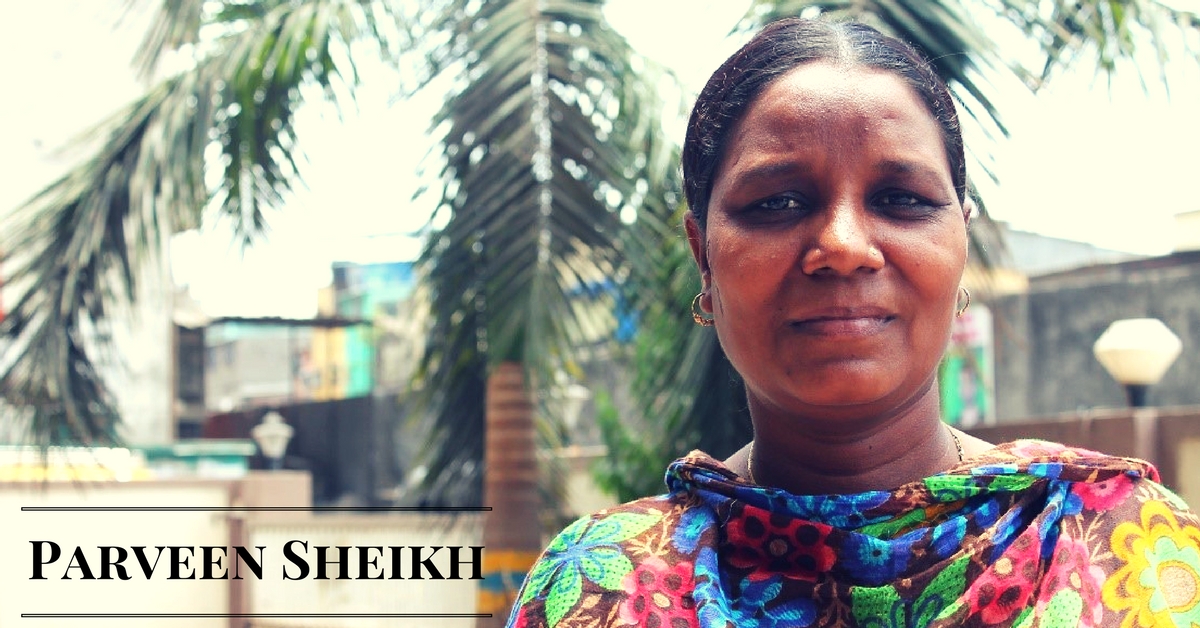
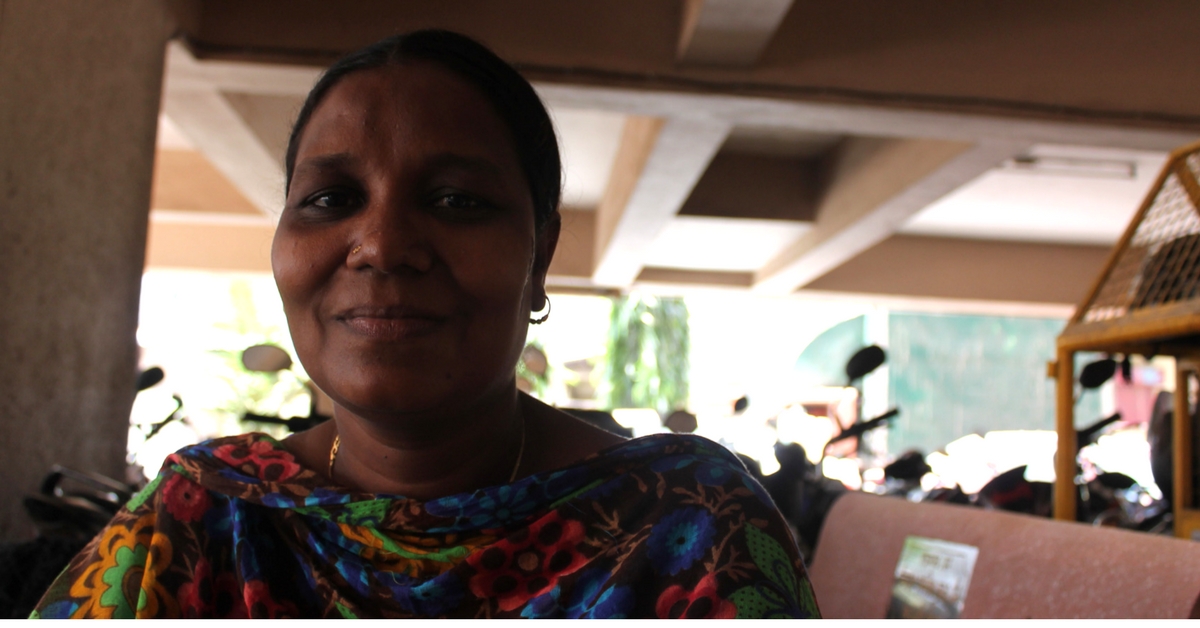
Parveen Sheikh, 48, member of Mahila Milan and NSDF (National Slum Dwellers Federation) for the past 20 years, was born on the footpath and lived most of her life on it. To be homeless plus a woman was nothing short of daunting. Everything she ate was measured to avoid the embarrassment of open defecating on the Sewri railway tracks.

“Sitting near the tracks was frightening because trains would pass regularly. And going in the night was unsafe for the fear of physical or sexual assault,” she recalls.

“So, when I opened the door to my new home in Govandi, I did not look left or right. The first thing I saw was the toilet. And the realisation that I owned this toilet and I could use it as many times as I wanted was empowering. My food intake no longer needed measurement,” she smiles.

”  Recalling the days she spent as a pavement dweller in Sewri, she says, “When we went to banks earlier, they would ask for residential proof and a guarantor who had an account in that bank. We did not have a roof over our head, where would we get residential proof from? In 2007, I connected to Mahila Milan, a saving unit where savings started from smaller amounts like Rs 5 and we did not need a guarantor. That one decision changed my life beyond words.  ”

Started in 1986, Mahila Milan is a decentralised network of poor women’s collectives that manage credit and savings activities in their communities. It currently operates as a savings co-operative for women slum dwellers across Mumbai. From micro door-to- door savings of less than Rs 5 per day in the 90s to the current day scenario, Mahila Milan today has become a self-sufficient unit of saving women.

Myna Mahila Foundation

Myna03MPOs26aug2017

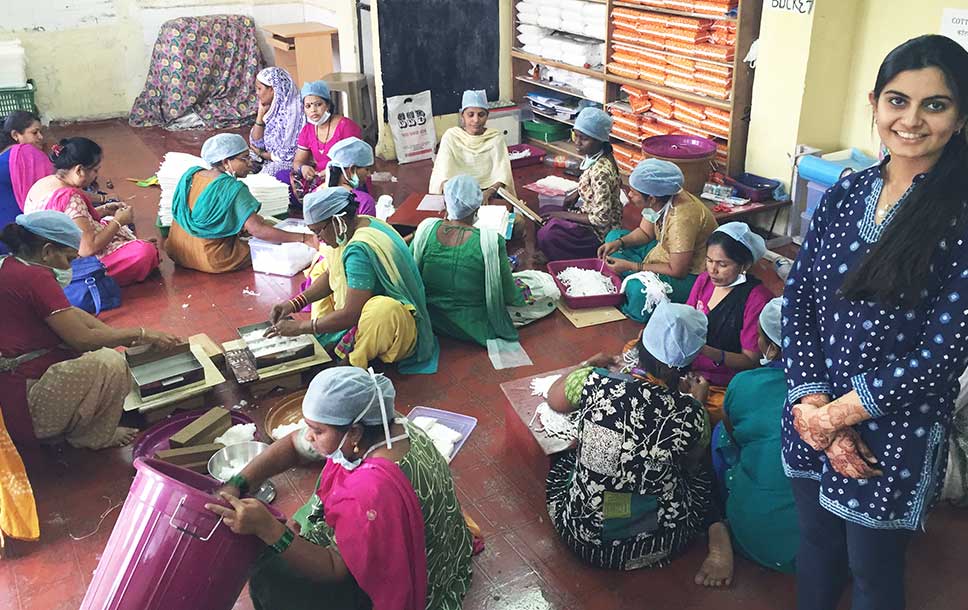
Today, Parveen heads the Mahila Milan Sanghatan at Govandi, and also runs a local sanitary pad manufacturing unit under the Myna Mahila Foundation that works in association with Mahila Milan. With low levels of formal employment in slum communities, especially among young women, Myna employs women and trains them to be entrepreneurs who can run franchisee businesses for women’s products.

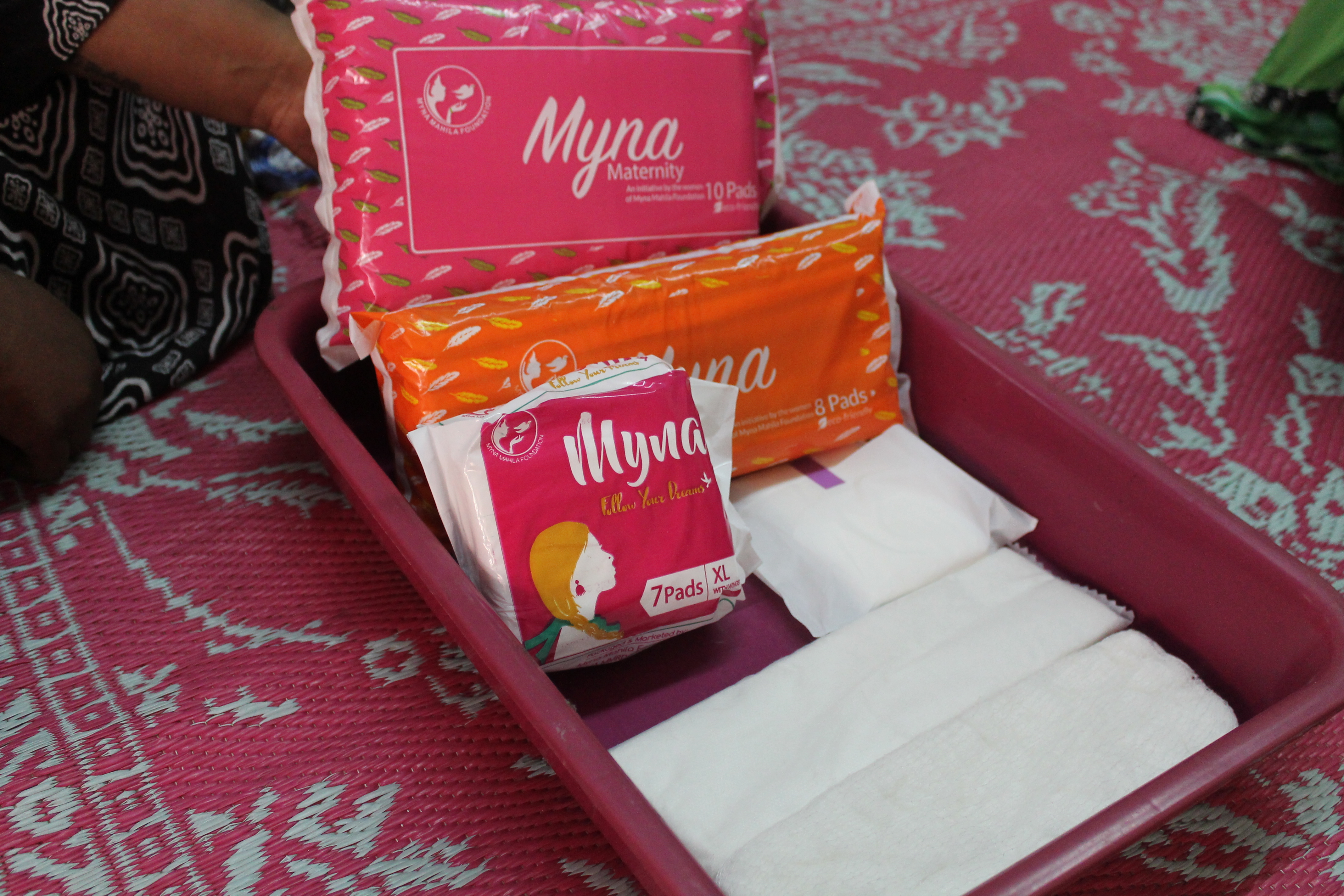
They make sanitary products, such as sanitary and maternity pads to improve women’s health, at subsidized costs.

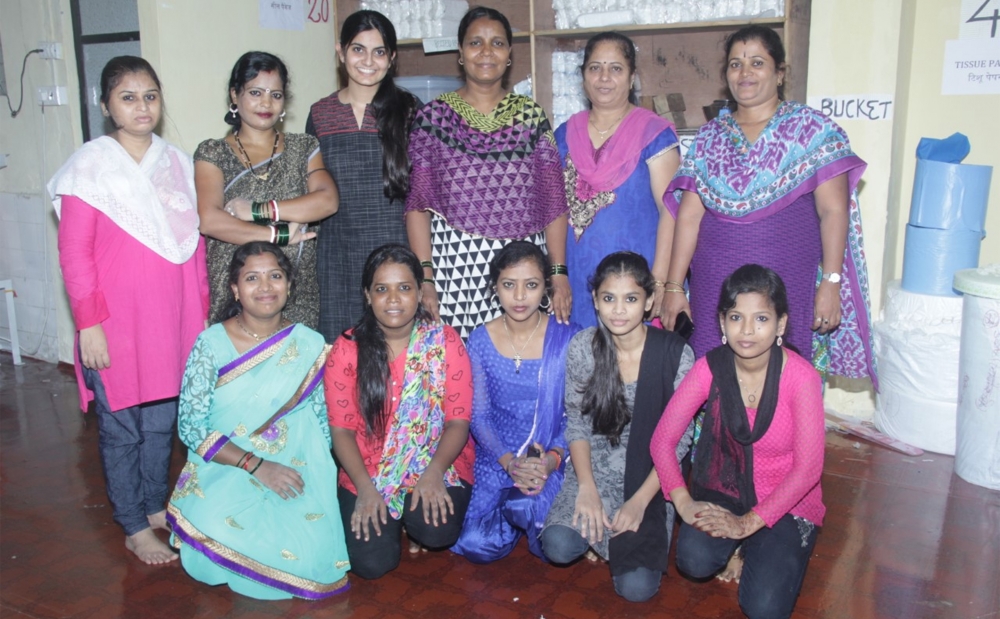
Women sell the pads door-to-door, in public toilets, balwadis, clinics and local NGOs, to other women who are bound by the societal taboo of leaving their homes to purchase sanitary pads. The company was established in June 2015 by Suhani Jalota and is run by Parveen with two other highly experienced women from the slums of Mumbai, Meena Ramani and Malati Ambre.

“  We started with a mere group of five women, today we have 20 women working with Myna. The road was rocky at the start, it almost took a month to train women to master the entire process of making a pad. We ourselves used to be shy about the kind of product we were making and promoting. Suhani spoke to us about how this was a natural process that we shouldn’t be ashamed of discussing. We felt empowered understanding the importance of menstruation to a woman’s fertility. Today when we have meetings, and there are men, we speak to them about it and encourage them to take sanitary products home,” says Malati Ambre  .”

Myna runs a factory in a slum redeveloped colony in Shivaji Nagar to provide employment to local women to make low-cost, high quality sanitary products that can be used locally.

Myna04MPOs26aug2017

“Our central aim was to create awareness about menstrual hygiene and encourage women to discard their old practices of using cloth and use sanitary pads instead. We never wanted to make a luxury product or collaborate with a brand name. The idea was clear, we wanted a simple and basic product –– made by women, for women and sold by women. We conducted extensive surveys and arrived at the result that 90% women in our slums used cloth. We spoke to experts and in turn showed women videos and conducted workshops to create awareness about the hazards of unhygienic menstrual practices,” shares Meena Ramani.

“ People were not ready to turn away from practices they had followed for generations. It took more than a year for our women to create that kind of awareness. When women went from door-to-door selling, people would turn their backs and mock them saying, “Aren’t you ashamed. Why are you selling this?” says Parveen.  “

Today 80% women are using pads. Donning goggles and patiyala suits, these women have trained their younger generations to ride the pink Myna auto rickshaw that is used for transportation too. They call it their ‘Myna sawaari.’

While Myna Pads are manufactured, and sold door to door to women, Myna Maternity pads are sold to local clinics and hospitals. “From the day we started till date, the cost of one packet of Myna, which consists of 8 pieces, is Rs. 25. While leading branded pads weigh 6-7 grams per piece, our pad weighs 11 grams,” she adds.

While Bombay Hospital is one of their most loyal customers with a prescription of 500 maternity pad packets per month, KEM orders 350.

On an average, Myna Pads sell 9,000 to 10,000 packets per month.

Myna05MPOs26aug2017

With newer demands and increase in usage of sanitary pads and feedback from users, Myna has also started manufacturing sanitary pads with wings. While the packet is priced at Rs. 40, they sell 3 packets on a subsidized rate of Rs.100 in slums. The women engage the users in a complete demo of 3 to 4 minutes where instructions from opening the pad, to using and disposing of it are covered. The packets bear their contact numbers for home deliveries.

For families with five to six women and girl children, packets are loaned that can be repaid once financially viable.

Connect to Myna Mahila foundation here. Write to them at mynafoundation@gmail.com.
The low cost sanitary pads can be ordered on the following numbers:
+91 98-70-504589 / +91 98-70-661620

Like this story? Or have something to share?
Write to us: contact@thebetterindia.com

source:  http://www.thebetterindia.com / The Better India / Home> Lede> Mumbai> Sanitation / by Jovita Aranha / July 2017

Bhatkal: Winners of Best Exhibition 2015 announced

Bhatkal, KARNATAKA :

Bhatkal:

An inter-school and collegiate science, Trade & Commerce, Art & Literature, History and Culture & tradition exhibition-cum-competition for students was held at Best Academy recently.

The competition was held in many domains like, applied mathematics, applied physics, applied chemistry, environmental science, building science and arts. The students put up about 60 exhibits.

There were more than 25 number of working models on display as part of the exhibition. Among them was a model depicting a modern form of cement factory, Gas pipelines, telephone tower etc.

There was also a work experience exhibition which saw many students making useful items from waste at home.

As the organiser had divided exhibition in two parts i.e Science and general category (Trade & Commerce, Art & Literature, History and Culture & tradition).

The following members of Team won awards in the mentioned categories are below:

Science category Primary school: Mohammed Azhar, Mohammed Sareeth and Mohammed Zakwan from Anjuman Noor Primary School  won the First prize, while their school-mates Abdul Munim, Mohammed Madani, Mohammed Suhail and Nafila Tonse, Sara SM, Simra SM won second and third place respectively in the Science category.

Science category High school: Danish Maldar, Mohammed Shamveel, Arsalan of Anjuman Boys High School won first place, while Mamata g Kanchugar, Karthik, Pavan P Hebbar of The New English School bagged second place and Mohammed Afzal Dafedar and Syed Ayaaz Maliki of Islamia Anglo Urdu High School, Bhatkal won third prize in Science category.

Science Category College School: Kashif Khan and Mohammed Atif Khan of Anjuman Institute of Management and Technology Bhatkal bagged first place, while Nazeef Maneger from Anjuman Degree College and PG center Bhatkal won second place and third place was bagged by two college, Beena Vaidya Pre-University College (Hajira Tahreem and Meghana Naik) and Anjuman Degree College (Nagesh Prabhu, Nagaraj Hegde and Damodar Gond).

General Category School Level (Trade & Commerce, Art & Literature, History and Culture & tradition): Thameena Abeer, Ameena Farzeen and Khatija Marwa of Anjuman Girls High School, Bhatkal won first place.

General Category College Level (Trade & Commerce, Art & Literature, History and Culture & tradition): Adeeba Abdul Jaleel Ruknuddin, Yosha Matta and Aliya Kola of Best Academy bagged first place while Mohammed Sufiyan of Anjuman Pre-University College, Bhatkal and Abdul Muqsit, Abaan Musba and Saubaan Sada of Anjuman Institute of Management and Computer Application, Bhatkal won third place in General Category respectively.

Fruit and Vegetable Carving contest: Firdous Aliya, Nasuha Tahseen and Salifa of Best Academy won title in School category, while Suwaiba Sada, Aysha Zulain and Zaima Saniya of Anjuman Institute of Management and Computer Application, Bhatkal bagged first place in College category.

Table Decoration contest : Karshan, Fathima Nujba and Gule-e-Simran of Anjuman Degree College for Women, Bhatkal won 1st prize, Aysha Eifa Kola, Nuha SP and Afiya Damudi of Best Academy, Bhatkal and Lubaina SM, Zainab Shima and Umme Rumaan of Anjuman College for Women, Bhatkal won 2nd and 3rd prize respectively.

On the occasion, a student of Bhatkal Women center , Aysha Zikra Shabandri displayed her Paintings which express emotions on canvass.

The event was successfully organised with discipline manner.

Best Academy’s Principal Javeed Hussain Armar, Headmistress Ruman SIddiqua,Staff co-rdinators Waqas Barmawar, Imran Muallim, Shadab Beary, Students co-ordinators’ Musab Ahmed Abida, Abaan Damda, Siddique Sada and many others were present.

source: http://www.sahilonline.org / Sahil Online / Home> Coastal News / by Mubashir Hallare / Tuesday – January 27th, 2015

Irfan & Yusuf Pathan to Train Two J&K Youngsters

Noida, UTTAR PRADESH / Vadodara, GUJARAT :

PathansMPOs28aug2017

The Cricket Academy of Pathans (CAP), a coaching institute of Indian cricketers Irfan Pathan and his brother Yusuf Pathan, who have collaborated with the Indian Army, has sponsored two youngsters from Jammu & Kashmir to train in their Noida-based academy.

Danish Qadeer (18 years) and Shahrukh Husssein (20 years) were selected in the trials conducted by the Indian Army in Kupwara district.

“Kids were selected by the Indian army for which they had conducted trials at Kupwara district of J&K. Out of 100 cricket enthusiasts, two were selected by the Indian Army for training under CAP,” Irfan said.

When asked about the youngsters’ future, Irfan said: “These kids have just enrolled in the academy. They would be going through the preliminary module of CAP and after completing the preliminary module they would advance to the other levels of CAP modules.”

Irfan also praised the Army for the move and said they will always support and promote the game.

“We are always there to support and promote cricket. It is a very noble move by the Indian Army to support these kids,” he said.

source: http://www.news18.com / News18.com / Home> News / by IANS / August 22nd, 2017

City girls who beat odds to crack PCS-J

Lucknow, UTTAR PRADESH :

Lucknow:

Lucknow’s Anshu Shukla bagged the first rank in PCS-J 2015, while Tahreem Khan and Shabeena Khan secured 4th and 10th ranks, respectively.

Tahreem cracked the examination in her first attempt and for Shabeena success came in the third attempt.

A law graduate from Dr Ram Manohar Lohiya National Law University, Lucknow, 24-year-old Tahreem declined her job offer to get into judicial services. “I got judicial clerkship in the Supreme Court but decided not to join. But I didn’t expect such a high rank,” she said. She comes from a judicial background. Her father Aftab Alam Khan is presently the registrar, UP State Information Commission.

For 31-year-old Shabeena who lost her father in 2012, the journey was not easy. “After his death, I started giving tuitions to support my family. I always wanted to get into judiciary so I prepared for many years hoping that one day I will succeed,” said Shabeena.

She is working currently as an excise inspector posted in Faizabad.

source: http://www.timesofindia.indiatimes.com / The Times of India / News> News Home> City> Lucknow / TNN / August 07th, 2016

14-year-old Hyderabad girl is battling patriarchy with a Wushu sword

Hyderabad, TELANGANA :

FareehaMPOs26aug2017

Fourteen-year-old Fareeha Tafim grew up with a lot of dreams. However, for the girl born in a conservative Muslim household, having dreams meant building castles in the air. But Fareeha’s story deserves to be written as it is about defying all norms with sheer determination and going at patriarchy with a Wushu sword.

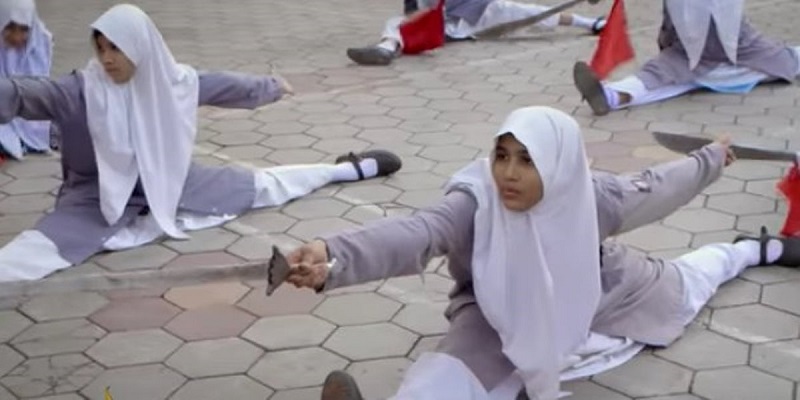
Fareeha is from Hyderabad and studies in a Muslim faith-based school. Fortunately, her school is progressive and wants its students to be independent. Wushu, a form of martial arts that originated in China in the 1940s, was brought to the school to teach self-defense to the girls to protect themselves from the gender-based violence that is constantly on the rise.

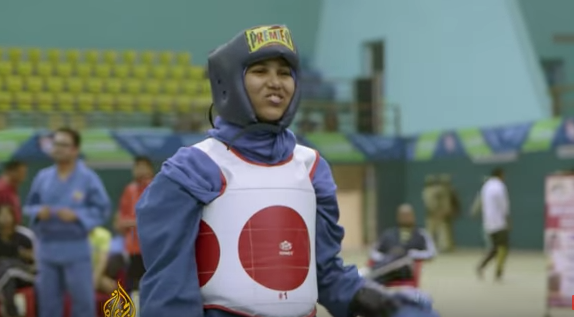
After learning it for three years, Fareeha got very good at it and there was hardly anyone in the state who could beat her. She eventually went on to become the state champion in 2016.

Despite covering herself with a veil every time she does Wushu, for Fareeha Wushu-ing is the ultimate form of liberation. After winning the state championship, Fareeha and her friend Summaiya got selected for the seventh National Martial Arts Championship.

It was one thing to learn Wushu as self-defense and fight girls in the school, but neither her family nor her community approved of her travelling all the way to Assam for the national championship. Her mother believed that by doing this Fareeha would bring dishonour to the family. Following are her words:

If you show your face you will be called shameless, because you will be performing in front of thousands of people.

Fareeha02MPOs26aug2017

Though the entire family was against her, it was her father who supported her vehemently. He was an illiterate who grew up living on the streets; hence, he wanted his child to have a chance at anything that could make her independent irrespective of her gender. With him by her side, the rest of the family had to eventually give in, albeit halfheartedly.

Fareeha was travelling thousands of miles for the first time and it was her first trip without her parents. Added to that was the fear of a new place for she was still a child. But she realised it was now or never and fought the finals with all that she had and came home as the winner of the national championship.

Her story doesn’t just end there. Against all odds, she wants to become a police officer so that she can protect young girls like her.

Jayisha Patel, a London based filmmaker made a documentary on Fareeha’s struggles titled India’s Wushu Warrior Girl for Al Jazeera.

In an interview with Huffington Post regarding what motivated her to take Fareeha’s story, Jayisha said,

It is an important issue. What struck me was that for her age, she was very forward thinking. Also the conservative community she lives in and to have that sort of for thinking and the determination is absolutely amazing.


source: http://www.yourstory.com / Your Story.com / Home > Her Story / Think Change India / August 22nd, 2017