All posts by mpositiveone@gmail.com

Obituary – A Teacher of Teachers passes on

Gadayan, Akbarpur (earlier Faizabad (now) Ambedkar Nagar)  – Lucknow, UTTAR PRADESH :

Mahdi Hasan   (21 March 1936–12 January 2013)

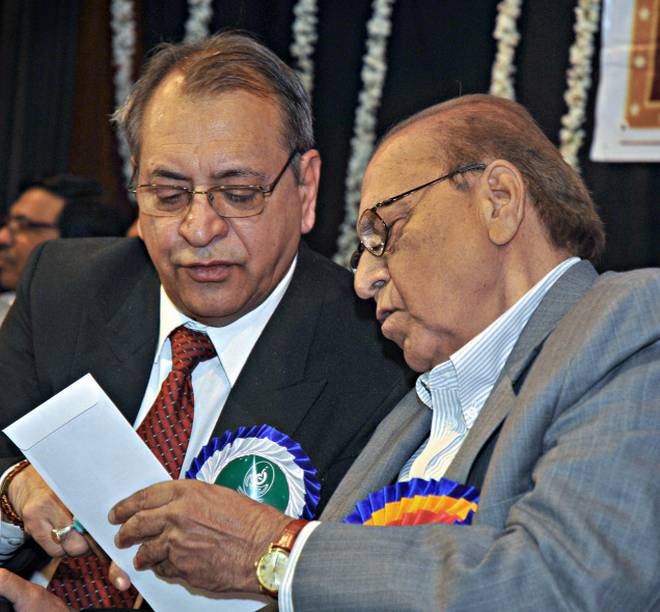
Professor Mahdi Hasan (born in Gadayan village, Akbarpur, then in Faizabad, now Ambedkar Nagar, Uttar Pradesh) was Senior Honorary Scientist of the Indian National Science Academy; Honorary Professor, King George’s Medical University, Lucknow; and formerly Principal and Chief Medical Superintendent (1983– 87), Dean (1991–93) and Head of the Department of Anatomy, Jawaharlal Nehru Medical College, Aligarh. He was an internationally renowned anatomist, a pioneering brain researcher and a reputed national expert of medical education. He had many firsts to his credit: he was the first in India to have obtained an MS with honours in anatomy; the first anatomist to be selected by the Government of India for the German Academic Exchange Fellowship (DAAD) in 1965; the only Indian anatomist to be chosen Fellow of Alexander von-Humboldt Foundation (Germany); the first Indian anatomist to be elected Fellow of the Indian National Science Academy (FNA) and to be awarded the Padma Shri. Professor Hasan’s initial education was in Akbarpur (Faizabad). Life in Akbarpur was rather tough in those pre-Independence days as he had already lost his father when he was 4 years old and had been separated from his mother who was ill. However, this did not deter him from pursuing his life with zeal and devotion to his studies and dedication for sports. He used to study at night in the light of a kerosene lamp and play during the day in the fields of the village. He excelled in studies and was appreciated for his sporting prowess.

Professor Hasan did his Intermediate from Christian College, Lucknow and BSc I year from Lucknow University. In 1953, he was selected for MBBS at King George’s Medical College (KGMC), Lucknow. After graduation, Professor B.N. Sinha (then Head of Orthopaedics and also ex-president, Medical Council of India) persuaded him to join the Department of Orthopaedics. However, within a week of joining he went to Professor Sinha and told him that he wanted to teach and in this branch he would seldom get a chance to do so. Professor Sinha took him to his friend Professor Dharam Narain (Department of Anatomy). Dr Hasan joined the anatomy department as a demonstrator in 1958. The same year he got married to Abida Kazim, who was an MA in Urdu, a rare achievement at that time for a woman from a Muslim family. In 1962, he did his MS in anatomy with honours, and after briefly working as a lecturer at KGMC, Lucknow, in 1963 he moved to Aligarh as a Reader in anatomy. Continuing his pursuit of knowledge, he went to Germany in 1965. He not only learnt electron microscopy and worked on ageing with the renowned Professor (Dr) Paul Glees at the University of Gottingen, but also got an opportunity to learn German. Very few people know that he was an external examiner of the German language at Jawaharlal Nehru University, New Delhi and Aligarh Muslim University, Aligarh for almost 17 years. Although in 1972 he was offered the citizenship of Germany, he politely declined and came back to India and established India’s first Interdisciplinary Brain Research Centre (IBRC) at Aligarh in 1980.

His persistent endeavour was to pursue basic medical research and his main thrust was to study problems of national relevance, such as environmental pollution, pesticide and metal neurotoxicity and brain ageing. His commitment and dedication to acquire and disseminate knowledge can also be judged from the fact that during the last 6 months of his life, when he was very seriously ill, he worked earnestly to complete a book on Treacher Collins Syndrome. He would sit for long hours with swollen legs kept on a stool writing the book, which he completed in December 2012, a month before his death. Fortunately, the book was published a few days before his death when he was in the intensive care unit. Dr Hasan, all through his illustrious academic career spanning around 55 years (1958–2013), fought a relentless battle and succeeded in giving a completely new orientation to the teaching of anatomy. Thousands of his former students, practising modern medicine around the globe, not only adored him but also respected his genius. Hundreds of them are professors/consultants in various specialties of medicine and surgery in India and abroad. His passion for teaching did not dip even after retirement. He continued to teach and do research and write for grants. He could take classes anywhere—even in corridors. Once at Aligarh Muslim University, a student asked him for time to seek some clarifications. Then and there on the street, using a bicycle seat as support for pen and paper, he spent over two hours explaining the matter to the student under street light.

Professor Hasan was a person who had utmost devotion, dedication and determination in acquiring, creating and disseminating knowledge. Seldom does one find a nucleus around which an institution is build, but it goes to the credit of Professor Mahdi Hasan that at least three premier medical institutions of North India will always fondly cherish his memory. KGMC will always remember him as its illustrious student and teacher; Jawaharlal Nehru Medical College, Aligarh will always remember him as an excellent, dedicated and devoted teacher; and Era’s Lucknow Medical College, Lucknow (a medical institution founded around him) will find it difficult to overlook its founder Director-Principal and Trustee.

Alas! This renowned medical teacher breathed his last at 6 p.m. on 12 January 2013 after fighting a relentless battle against cancer of the prostrate. His wife, Mrs Abida Mahdi died soon after on 24 February 2013.

ABBAS ALI MAHDI*

Department of Biochemistry,  King George’s Medical University ,Lucknow, Uttar Pradesh abbasalimahdi@gmail.com

source: http://www.archive.nmji.in / Archives – The National Medical Journal of India / Vol. No.26, No.2, 2013 / by Abbas Ali Mahdi
‘To have my son captain England in India. It couldn’t get any better’

Chennai, TAMIL NADU / UNITED KINGDOM : 

AT HOME in Madras, Joe Hussain was very keen on the tour. He was a great Fred Trueman fan. He waited by the nets and asked one of the bowlers: “Is Mr Trueman here?” The great Fred had declined this particular passage to India. “Who’s Mr Trueman?” the other bowler sneered.

That memory may seem another world, another lifetime away for the smokey-haired 61-year-old who now presides over the bat-on-ball echoes of the Ilford Cricket School tucked proudly, if a touch shabbily, round the back of Beehive Lane just off the A12. But Joe Hussain has reasons for that pride.

And not just because his son, Nasser, is having a net and Joe’s young hopefuls are queuing up to bowl at the England captain.

“Cricket is so important in India,” he says. “Hockey used to be the number one sport but cricket has overtaken it by miles. Now it’s like a religion. But cricket fans are very knowledgeable and very welcoming. It’s like here,” he says, looking round the obviously mixed ethnic group on Thursday afternoon, “it brings people together.”

Cricket has been important to Joe. He scored a hundred for Madras University against Hyderabad before he came to England in 1960. Over here it helped him meet his wife, Shireen, at an Ilford game and when the couple returned to India for 10 years, cricketing memories of Joe batting for Madras at the Chepauk Stadium were among the early inspirations for the young Nasser Hussain.

“I didn’t want to over-push the boys,” says Joe, whose daughter, Benazir, trained at the Royal Ballet and is now a principal ballerina in Perth, Australia. “But cricket has been something of a passport. When Nasser had already got a maths scholarship to Forest School, our elder boy, Mel, went and scored a hundred against their first XI and Mr Foxall, the headmaster, came up at tea and said: “We must find a way to get him here too.”

All four siblings are now successes in their own field, but with cricket so ingrained in Hussain senior, it was with real angst that he faced the possible cancellation of a tour to his homeland following an England team captained by his son. “It was something quite unbelievable for me,” says Joe with a smile of the purest, most wistful paternal pleasure playing around his lips. “To have my son captain England in India. It couldn’t get any better.”

Then came September 11 and all that has followed. Joe, like everyone else, furrows his brow at the memory. “Of course the world has changed,” he says, “and no one should ever forget what happened. But life must go on. All my friends are ringing up from India saying, `Are they coming? Please tell them how welcome they will be.’ I think we just have to go. I just hope that the security arrangements are not so tight that they can’t go out and see what a wonderful country India is.”

“Besides,” he adds as the conversation is momentarily silenced by a particularly loud report from Nasser’s bat as he takes the gun to the bowling machine in the net over to the right of us, “it will be such a challenge for the lads. To bowl against Tendulkar, to bat against Kumble and Harbhajan Singh in their own country is a terrific test. No one here can imagine how big Tendulkar is in India. Far bigger than Beckham or any sportsman is over here. He and the others aren’t just stars, they’re like gods.”

Discussion of such celestial beings is delaying attendance on younger earthlings. Tom Yallop and Ricky Royds have already played for South of England Under-14s, Varun Chopra has been to an England Under-15 training course at Old Trafford and a local paper cutting on the noticeboard pictures him receiving his award as Ilford young player of the year from Nasser himself.

All three live locally, all three can see the natural progression from this elderly three-net hall to the great cricket arenas of the globe, which has already been made by the likes of Graham Gooch, John Lever, Nasser Hussain and now young James Foster.

“I took over here in 1990,” says Joe. “By then Nasser was already on his way and I promised myself I would produce another Test player. James Foster is just 21 and he’s going on the tour. I’m so proud of him.”

When Foster had that much publicised spat with Andy Flower in Zimbabwe a month ago, it was Joe who got on the phone to keep his spirits up. He would do just the same for any of the three, or indeed for the scores of boys and, more recently, girls who follow this ageing, Indian, chain- smoking Pied Piper to put cricket in their dreams. Cricket’s new money finds its way to many places infinitely less deserving than this old hall, where the outer wrapping is at so much variance to the gleaming spirit within.

On winter weekends the place is heaving, as indoor tournaments take their turn. For a while the kids were predominantly Asian, but Joe has noticed more white children coming to cricket as football’s intensity squeezes too much of the fun out of the game. But another crack from the far net reminds you that colour has nothing to do with it, and how proud we are to have England captained by an Englishman called Nasser Hussain.

So far Tom Yallop has been on tour to Taunton, Ricky Royds has been to Folkestone and Varun Chopra has done best with a school trip to Barbados.

“It was great,” says Varun, already pushing six feet at just 14 and restlessly flicking the ball around his wrist as he readied himself to bowl. “I didn’t score a lot of runs but I got among the wickets and when our keeper was injured, I had to do that too,” he said.

In truth, the three kids are not hanging too heavily on Joe’s words this afternoon. They want the chance to bowl at their hero. One day they, too, will hope to tour India and other foreign parts. In cricket it was ever thus.

Long may it remain.

source: http://www.telegraph.co.uk  / The Telegraph / Home> Sport> Cricket / by Brough Scott / November 10th, 2001

Kodagu tops in implementation of podi file clearance, says minister

Kodagu, KARNATAKA :

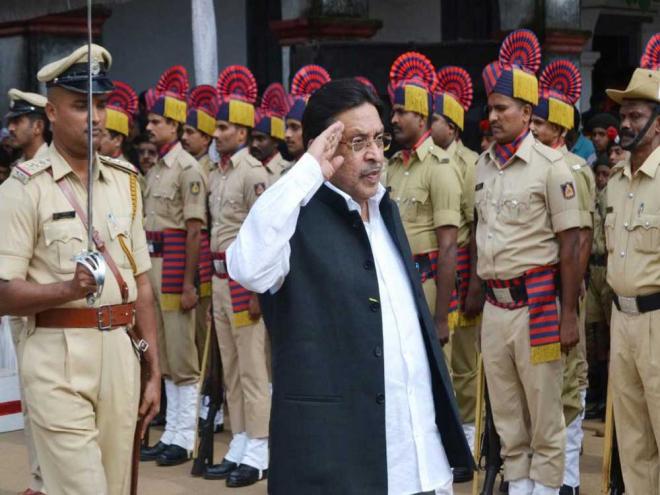
District In-charge Minister M R Seetharam receives guard of honour at the 71st Independence Day celebrations at Old Fort premises in Madikeri on Tuesday. Dh photo

District In-charge Minister M R Seetharam said that Kodagu district tops in the implementation of podi file clearance programme. Under the scheme, the officials have identified the exact boundary lines of land belonging to farmers and recorded them in relevant documents by awarding a new pahani in 115 villages of the district, for free of cost, he said.

Delivering the Independence Day address at the Old Fort premises in Madikeri on Tuesday, he said that 5,338 persons have benefited from the podi file-clearance programme of the government. This will be extended to all the villages in the district.

The minister said the concept of social justice and farsightedness is the guiding force behind the functioning of the State government. “We have to walk on the path laid down by our forefathers. By understanding the concept of freedom, we have to strive for the development of the country by shunning the differences,” he said.

Stating that the state government has taken up development works in the district in the last four-and-a-half years, Seetharam said that displaced Diddalli tribals have been rehabilitated near Kushalnagar. The title deeds will be distributed to them shortly. The department of Science and Technology will builtsub-regional science centre at the district headquarters at a cost of Rs 4 crore. It has been proposed to set up a mini planetarium, at a cost of Rs 5.75 crore in the district, he said.

Further, he said that Rs 50 crore has been released for repair of rural roads in the district. Under Kodagu package, 122 works will be taken up. A sum of Rs 38 crore has been released for the development of state highway and district roads.

He said the work on zilla panchayat administrative building is in progress and is likely to be completed by next June. In the backdrop of drought, the state government has waived Rs 151 crore loans borrowed by 34,000 farmers in the district.

SPC, Seva Dal, NCC, Scouts, Guides, students of General Thimmaiah School, Kodagu Vidyalaya, Rajeshwari Government PU College, GMP School, St Michael Convent, St Joseph Convent students took part in the march past. The students of St Joseph School, St Michael School, Rajeshwari School and Kendriya Vidyalaya presented cultural programmes.

P M Shailaja, Mohammed Rafeeq and M B Muneer, who have been selected for Jeevarakshaka Award were felicitated on the occasion.

Students collapse

Unable to bear the heat, two students collapsed during the march past. The students were given first-aid.

source: http://www.deccanherald.com / Deccan Herald / Home> District / DH News Service, Madikeri / August 16th, 2017

Sahitya Academy Award winner Ameer writes on Urdu poetry

NEW DELHI :

Urdu poetry has always been very special, writes Ameer Imaam.

Though all the poetries of world are special in a way for poetry is the mother of the fine arts, but despite that Urdu poetry has some features that make it unique among the world literature.

We find a glittering galaxy of literary personalities in Persian and English literature too and the names like Wordsworth Keats, Hafiz and Urfi are the never ending traditions and stand as the ever lasting impressions on the world literature but I couldn’t come across the any name of these languages, make me correct if I am wrong, that can be mentioned as the poet of present age. By this day, to the best of my knowledge, English poetry is synonymous with the literary stalwarts like Wordsworth Keats etc. Same is true with Persian poetry but this is not the case with Urdu. There was a time when Urdu poetry was meant to be Ghalib, Zauq, Anees etc. There is a time when Urdu poetry is meant to be Iftiqar Arif, Saqi Fatuqi, Jon Alia, Itfan Siddiqui and Farhat Ehsas. The urdu poetry is growing and has not been exhausted by it’s literary immortals, but these legends seem paving the way for the upcoming generations .

This walk of literature has another unique feature that is Mushira, a gathering where poets are supposed to recite their poetries for the audience. In these gathering, the poetry gets connected with every soul, who is present there in a different way. But this very speciality of mushaira gives birth to a problem. Some poets start coming with some extra efforts to maintain this connection. Most of the time these extra efforts appear a desperate attempt to camouflage the week ness of the works that turn mushaira into a sort of political rally and hooliganism.

Mushaira had not been like it since ever. All the big guns of literature of classical era shot to fame through mushairas and in those days it was the only bridge between a poet and the masses. There was a time when the reader was a listener first. So what we’re the circumstances that drove mushaira to this slogan raising, face making and,,,”the raised up hands should be there to the last row if you really appreciate it” sort of begging. To answer this question is not easy but it is not tough as well. This question too is standing in the que of the questions that have been demanding their answers since partition. The Exodus that was not of the people but was of the culture as well. The feudalism breathed it’s last and gave way to the industrialization.

Despite various demerits, feudalism was not the demerits only and was with some shiny patches like the dark ones of industrialization. Feudalism was stagnation, old fashioned, obsolete but a system of values and it could be anything but business. Industrialization was a flow, modernity, need of the hour but a business and it could be everything but a system of values and commitment.

JavedAkhtarMPOs01aug2017

The industrialization established the new monies of society and it changed not only the political but cultural scenario as well. He who pays the piper calls the tunes and with the new class of payers came a new class of pipers. The mushaira became a business and business is about making quick money only. Mushaira took a turn in that direction and the pipers were about not only making quick money but quick fame too. The post independent era was dotted with a series of communal riots and mushaira of that time exploited the situation quickly and became a wailing wall for a particular community. Though it kept masquerading so but it was no more an intellectual venture. It turned to be sensational and poetry, if it was poetry, based upon double meaning jokes, got a way to the podium. This melee left the pure literary poets like Mohd Alvi, Zeb Ghori and Musawwir Sabzwari far behind and they all we’re shrunk and cocoon to some journals and the collections of their poetry. They braved the boastful declaration of Bashiir Badr with silence when the later announced

Kaaghaz me dab ke mar gaye keedey kitab ke
Dewana bin parhey likhey mashhuur ho gaya

The book worms met a bookish, crushed between the paper death,
While a careless wanderer shot to fame without exploring the books.

Partition divided the Indian Urdu poetry into two sections. The one was for the audience and the other was for the readers.

But like every thing this mushaira too reached it’s saturation point and a new mushaira started itself stretching up to it’s height. A mushira that was different from the mushaira of last thirty to forty years.

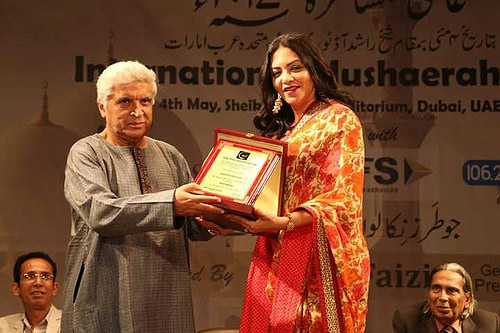
Rekhta came as a whiff of fresh air. But there were some individual attempts too. The mushaira that has annually been organized by Tariq Faizi under the banner of Urdu Press Club falls into this category. It provides a platform to the poets who are known enough and the poets who are ascending the ladder of fame step by step. In this mushaira both the sections are supposed to come with quality poetry and they do. Javed Akhtar can compose Dard e disco for Shahrukh Khan but here he appears as the true grandson of legendary Muztar Khairabadi with his couplet

Woh shakl pighli to har shai me ghul gayi jaise
Ajeeb baat hui hai use bhulaney me.

Having melted down that face has mingled with everything here,,
Strange is the process of forgetting him.

Shariq Kaifi belongs to the city where once an ear ring was lost. He is a critically acclaimed poet and his collection of poetry, apney tamashey ka ticket, should be taken as an addition to the Urdu nazm but both the mushaira and the discussed poet had long been alluding to each other for in traditional mushairas there was no space for him or he couldn’t see any scope for his poetry there. Such a pleasant surprise it was to find him on the podium of Dubai Mushaira after his appearance in Jashn e rekhta. Two other invites were Kashif Husain Ghaiir and Zulfiqar Adil from Pakistan whom I happened to meet first in the Mushaira of Pakistan Arts Council Karachi. Kashif bhai, quite an introvert person, gave me his collection of poetry and what a fine poetry it was. The same was true with Zulfiqar Adil, another accomplished poet from the same land. Besides being an exceptional poet kashif bhai proved himself exception in another way for he appeared one of the few poets who could listen the poetry of others without reciting a single couplet of him. One of his couplet goes on like,,

Ham aise log zyada jia nahi kartey
Hamarey baad hamara zamana aata hai.

The people like us are bound to early death,
Our age dawns after our departures.

The couplet shows the agony of these cornered poets. We should be happy that he ,with his contemporaries, is witnessing his age dawning through his own eyes.

Once someone asked me about the challenges of young generation. I replied that being young in the literature is the biggest challenge before the young generation. The vultures hover upon the dead bodies, and if you are alive, you have to be a toothless, grey haired, or bald headed poet to win some recognition here. But the air is blowing in a changed direction and I am happy that it is going to prove me wrong soon. Vipul Kumar got a chance to be on the stage with the great stalwarts like Sahar Ansari. The young Turks like Abhishek Shukla and Muiid Rashidi too were introduced to the literary world on the same podium before.

The pure literary poets like Azhar Faragh, Anwar Shauur, Liaqat Ali Asim .Irfan Izhar .Ambreen Haseeb Amber and Farhat Ehsas have not only been invited here time to time but have been applauded as well.

Yes we are living in a changing world. Congratulations Tariq!

(The writer is Sahitya Academy Award winner)

source: http://www.okhlatimes.com / Okhla Times / Home> Local / by Okhla Times / August 01st, 2017

This Indian Muslim will fast to protect cows

Kudbay Village (Nakhtrana Taluka), Kutch , GUJARAT :

Jabbar Jat
Jabbar Jat

 Jabbar is a cattle-breeder and owns 16 cows and nine buffaloes. And he loves them.

In the last three years since the BJP government came to power, according to one estimate, 90 lynching incidents have taken place because of alleged beef dealing and cow slaughter. Quite often there has been severe beatings for even transporting cattle. The cause of the cow is seen as dividing communities, especially Hindus and Muslims.

And Jabbar Jat, 27, a Muslim from Kudbay village of Nakhtrana taluka in Kutch, in a great reversal of roles, is at the forefront of a movement to protect cows, reports the Times of India.

Jabbar is a cattle-breeder and owns 16 cows and nine buffaloes. And he loves them. So much so, last week he wrote a letter to the district collector, suggesting each district in Kutch should allocate grazing land for cattle.

To reinforce his demands Jabbar would be going on a fast for 48 hours, beginning July 20 at the Kutch district collectorate.

Jabbar says it is not enough that the government make noises about cattle protection. To become proactive in this matter, he suggests that the administration could begin allotting two buffaloes to each farmer. He also says the state government should bear 50 per cent cost of each gaushala (cow shelter) and it must buy back fertiliser made of cow urine and cow dung from the farmers. These measures, he believes, would be far more effective than just saying cow is sacred.

“In the last two to three years, cow has become a tool to spread hatred, which is hitting the business. Besides, no gau rakshak (cow vigilante) himself rears a cow and merely indulges in hooliganism in the name of cow protection. So, I decided to take up the cause. I would like to tell gau rakshaks that let us sit together for the cause of the cow because killing in the name of cow will lead us to a barbaric society, which will never serve the true purpose,” he was quoted as saying by the newspaper.

The local cow protectors, though a little flummoxed, are in support of Jabbar’s views. Jabbar has invited people from all communities to join him for the fast.

In response, Vallabh Kathiria, chairman of Gujarat State Cow Welfare Board said: “The state government will make efforts to increase economic viability of cows so that people will not let their bovines loose in the city. Once they start earning more from cow dung and cow urine, they will keep their cows at home instead of letting them stray on the roads.”

source:  http://www.khaleejtimes.com / Khaleej Times / Home> International> India / by C.P. Surendran, New Delhi / July 17th, 2017

College that put poor Muslim girls in science labs turns 50

Mumbai, MAHARASHTRA :

The institution located near Nagpada in central Mumbai, has shaped four generations of Muslims

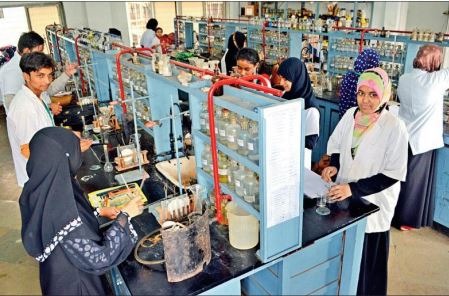
The first thing that strikes you after entering the arched gate of Maharashtra College of Arts, Science and Commerce is its happy ambience. Groups of girls, many of them in hijab, and boys animatedly chat at the ground floor hall while the seven-storey building’s two lifts are constantly busy. The well-stocked library is occupied. So are its several labs. In a nutshell, vibrancy oozes out of its every pore. So how is Maharashtra College different from so many educational institutions in the city? The difference lies in its location. In the vicinity of Kamathipura, the red-light area, and near Nagpada, the heart of Muslim neighbourhoods in the city, Maharashtra College at Central Mumbai has shaped the fortunes of four generations of Muslims, especially girls, in the area.

Started in 1968, the college will soon kick off its golden jubilee celebrations and has lined up a series of programmes aimed at debating how to further empower the locality’s youths educationally.

“But for this college, thousands in the area would have dropped out after 10th Std. Conservative parents were reluctant to send their daughters to colleges in south Mumbai and this college came as a godsend,” recalls businessman and community leader Ghulam Peshimam who graduated from here in the 1970s.

It was the sheer need of a college in the Muslim-dominated area that made its founding fathers move with a missionary zeal. Educationist and philanthropist Mohammed Ali Mitha, who had founded a series of schools, led the initiative to set up a college in the locality which had none before it. Muslim-managed colleges like Burhani and Akbar Peerbhoy came later. Mitha one day landed up at then urban development minister and Islamic scholar Dr Rafiq Zakaria’s office. “Zakaria sahab was initially reluctant to come on board but couldn’t say no once Mitha assured him of finding funds and also offered him to become the life-time president of Khairul Islam Higher Education Society which runs the college,” says septuagenarian Haji N Kalaniya, who studied and retired as a teacher from here before he was inducted as the society’s general secretary.

Kalaniya recalls that once he accompanied Mitha to Haji Ali Dargah where they saw a wealthy Good Samaritan handing out Rs 100 note to each of the beggars assembled there. “Mitha stood in the queue and asked me too to stand behind him. The Rs 200 that we received went to the college funds,” laughs Kalaniya.

Started with just 100 students, Kalania adds that many students had to be coaxed and virtually “lifted” from homes to join the college as the working class in Madanpura, Nagpada and Bhendi Bazaar then gave little importance to higher education. Today the college, its principal Dr Sirajuddin H Chougle proudly informs, has over 3,700 students in various courses, including PG and PhD, IT and journalism. It caters to mostly students from deprived families, wards of daily wagers, taxi drivers, factory workers. “Once while travelling in a taxi the driver told me that his three daughters had graduated from here. I was touched to hear that,” says M Z Shahid, who teaches political science here. “If it was not this college I don’t think I would have become a boxer,” says Hijabclad Shaikh Afifa, the college’s only woman boxer. Besides, the list of sportspersons it has produced is long: Shahid Qureishi and Zafar Ansari (basketball), Khalid Khan (boxing), Nadeem Khan (football)—to name a few.

If Mumbai has been a crucible of many Urdu poets and writers, Maharashtra College must share the credit. It is here that Urdu poets like Abduallah Kamal, Irteza Nishat, Shamim Abbas and Obaid Azam Azmi honed their skills.

“I once heard celebrated poet Faiz Ahmed Faiz here reciting his famous revolutionary poem which spoke of man’s urge for emancipation. The college has kept the city’s literary lamp alive,” says Urdu Markaz’s director Zubair Azmi. As it enters its 50thyear, the city expects the college to earn more laurels in future.

source: http://www.timesofindia.indiatimes.com / The Times of India / News> City News> Mumbai News> Schools & Colleges / by Mohammed Wajihuddin, TNN / July 30th, 2017

Abhishek Dhudasiya won Men’s Graded ‘A’ Division Title in Bangalore Open Tenpin Bowling Championships

Bengaluru, KARNATAKA :

SalmanKhanMPOs30jul2017

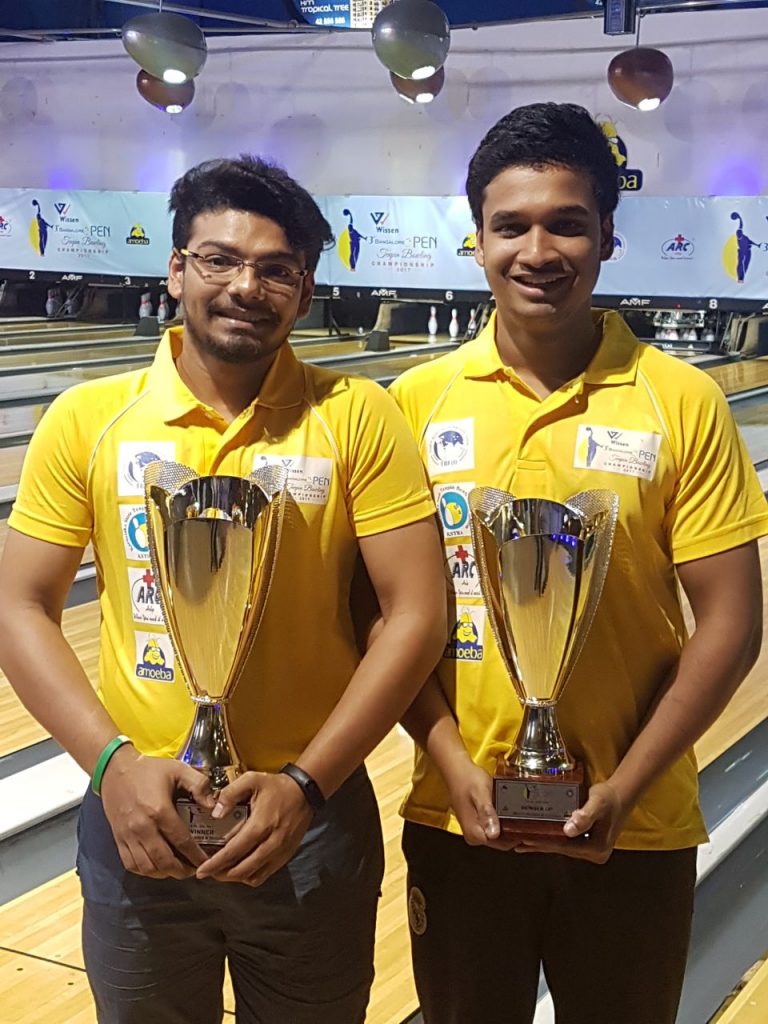
Abhishek Dhudasiya of Tamil Nadu won the Men’s Graded ‘A’ Division Title at the Wissen 3rd Bangalore Open Tenpin Bowling Championships – 2017 being held at the Amoeba Bowling Center, Church Street, Bangalore.

 
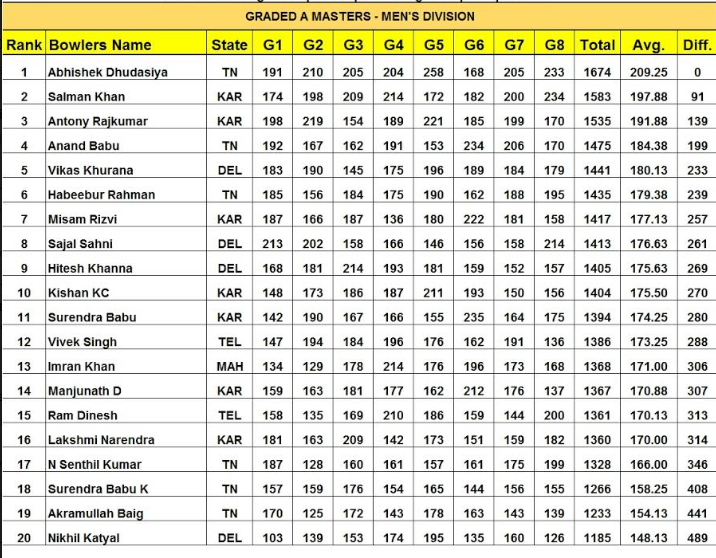
In the Masters Round, held this morning, where Top 20 bowlers bowled 8 games block to decide the winner based on total pinfall. Abhishek bowled quite consistently, scoring 6 games above 200 and ending up with total pinfall of 1674 and an impressive average of 209.25.

Sports India Live Staff | Sports India Live

The 22-year-old Abhishek finished 91 pins ahead of Salman Khan of Karnataka who finished 2nd with total pinfall of 1583. Former International Antony Rajkumar (1535) of Karnataka finished 3rd.

 
In the Masters Round of Open Division, out of 16 bowlers who made the Cut, 8 bowlers are from Karnataka. Vijay Punjabi of Karnataka is injured and in his place, 1st Reserve Surendra Babu from TamilNadu will play this evening.

 
All 16 bowlers will bowl 8 games this evening and 8 games tomorrow morning. Top 4 bowlers, based on cumulative pinfall of 16 games will move to the Knock-Out Stepladder round. The Finals will be held at 5 pm tomorrow.

source: http://www.sportsindialive.con / Sports India Live / Home> Bowling / by Sports Ind ia Live Staff / July 28th, 2017

Maulana Mazharul Haque: A forgotten leader of Bihar

Bihar, PATNA :

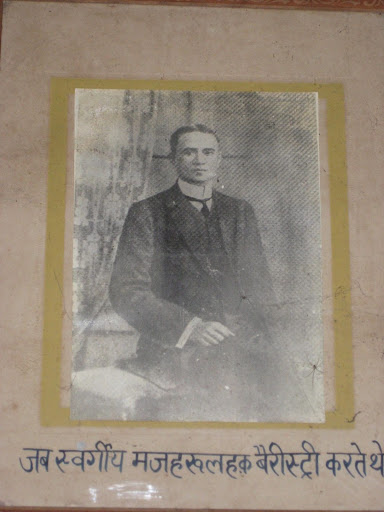
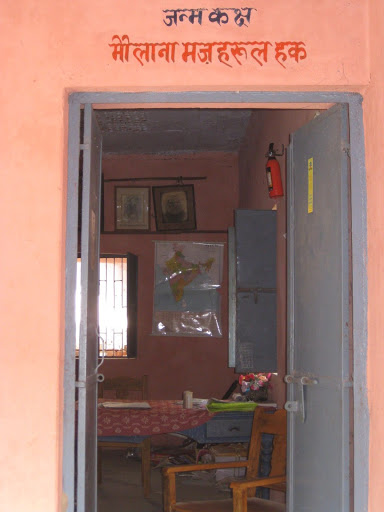
Maulana Mazharul Haque, the man who was a firm believer in complete Independence being “the birthright of every Nation”, has his birth place in office of a government run school that doubles as food storage.

Maulana Mazharul Haque was born to a rich landlord, Sheikh Ahmedullah, in Bahpura, Thana Bihta of Patna district on December 22nd, 1866. His primary education was at home by Maulvi Sajjad Hussain, but he passed his matriculation from the Patna Collegiate in 1886. He joined Canning College in Lucknow for higher studies but same year left for England to pursue a course in Law. He started legal practice in Patna after his return from England in 1891.

MazharulHaque01MPOs29jul2017

He made a significant contribution to relief efforts launched during the famine in Saran district of Bihar in 1897. Maulana Mazharul Haque’s public life actually commenced with the creation of the Bihar Provincial Conference, a move he supported as he believed in the need for the constitution of Bihar as a separate province.

In 1906 Maulana was elected Vice Chairman of Bihar Congress Committee. Mazharul Haque helped organize the Home Rule Movement in Bihar and was its President in 1916. He actively participated in the Champaran Satyagraha for which he was sentenced to 3 months imprisonment.

Subsequently, when the Non Cooperation and Khilafat Movements were launched, Mazharul Haque gave up his lucrative legal practice and his elected post as member of the Imperial Legislative Council and turned all his efforts to the freedom struggle. By now, he was a firm believer in complete Independence being “the birthright of every Nation”.

Mazharul Haque was also a fervent believer in democratic decentralization and he organized the Panchayats in Saran district towards meeting this vision. He also made many requests for better educational facilities in Bihar, especially for free and compulsory primary education.

Maulana Mazharul Haque actively participated in anti-purdah movement launched in Bihar in response to the Non-Cooperation Movement of 1920. Mahatma Gandhi sought to bring women also into mainstream politics, to strengthen the resistance against British rule as well as empower them to play a more active role in society. The purdah system espoused by Muslim and many Hindu families, especially in Bihar, meant that women remained behind men in all spheres of life.

MazharulHaque02MPOs29jul2017

In 1919, he gave up and burnt his western attire to adopt traditional Muslim attire. He was given title of “Desh Bhushan Faqir Mazharul Haque”.

1920, he donated his 16 bigha land on Patna- Danapur road for Sadaqat Ashram and Vidya Peeth which served as college for students who left government colleges in response to Non-Cooperation Movement. Sadaqat Ashram played important role in Independence movement in Bihar.

Maulana also launched his weekly magazine “The Motherland” from Sadaqat Ashram. He also jailed for his articles in this magazine. Sadaqat Ashram continues to serve as headquarters of Bihar Congress. But it is a tragedy that even Congress do not remember the person who has given so much to the party. Till few years back, even Maulana picture was now where to be seen in the ashram.

Maulana was firm believer of Hindu-Muslim unity. His famous quote sums up his conviction, “Wheather we are Hindu or Musalmaan we are in the same boat, we must sail or sink together”.

When in London, Maulana established Anjuman Islamia. This brought Indians of various religion, region and sects under one umbrella. This was also place to discuss about India’s problem. Mahatma Gandhi first met Maulana Mazharul Haque in Anjuman Islamia, London.

Person who gave everything for the country has not got due recognition. Maulana donated the house where he was born, to start Madrasa and middle school within same compound in 1926. Idea behind establishing both in one campus was to promote communal harmony.

MazharulHaque03MPOs29jul2017

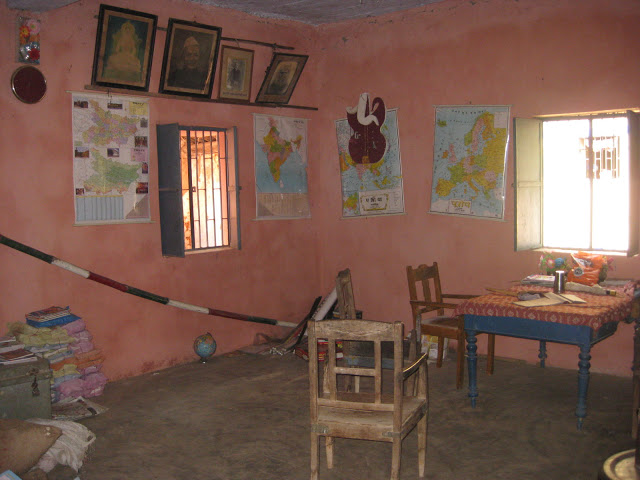
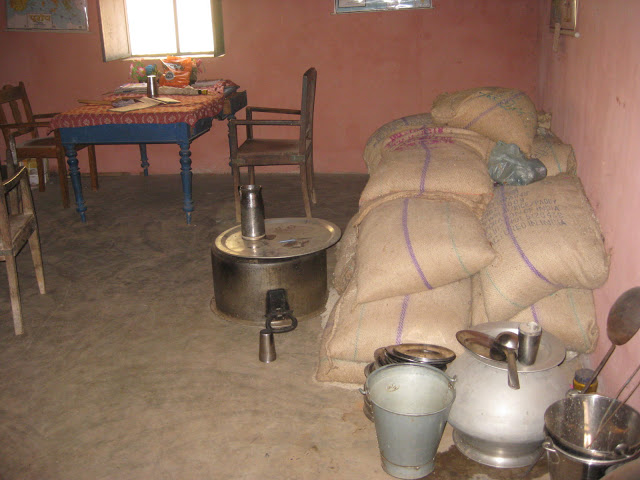
Now the very place where he was born is a principal office of government middle school. On the entrance door of principal office, a line is written in Hindi “Janam Kachh Maulana Mazharul ”(Birth place of Maulana Mazharul Haque). If you enter in the office apart from a picture of Maulana Mazharul Haque along side Dr. Rajender Prasad picture will not give any indication of place being birthplace of a person of such stature. Principal office house the ration for mid day meal scheme for the school apart from general school office stuff.

MazharulHaque04MPOs29jul2017

But this is an improvement from before. Before this school structure was build in 2004, place he was born was used as a toiler for villagers after original structure fell down. Because of the effort for few locals, this place was cleaned up and school building was build and place was marked as birth place.

MazharulHaque05MPOs29jul2017

On December 22nd politicians do come to shower words of praise on Maualana’s contributions but the pity condition of place has not moved anyone. Their promise has remained promise till date.

While talking to TwoCircles.net, Md. Yusuf Khushidi, former HOD Urdu department, Patna University said, “Locals have been demanding to build Library or Technical Institute in that place to commemorate but so far nothing has materialised.”

Yusuf Khhurshidi who belongs to Bahpura added, it is unfortunate that for a person, who sacrificed every thing for the country has been forgotten so fast. Maulana foresightedness can be judged by the fact that Maulana had emphasized on the communal harmony, democratic decentralization and education right from early stage of his life. Maulana was also in the forefront in establishing Bihar state which was carved out of Bengal.

Echoing Yusuf Khurshidi sentiments, Dananjay Yadav also demanded a memorial should be built for the one of the tallest visionary leader of Bihar.

Maulana’s family is living a struggling life in obscurity. It is disheartening to see family of a person who sacrificed everything from career to wealth for the sake of county is left high and dry.

Next birthday of Maulana Mazharul Haque is a month away. I am sure VIPs will be lining up to pay respect especially in election year. Few fascinating speeches will be delivered and few promises will be made. Politicians are known to have short term memory. So those promises will be forgotten sooner than later.

People in India too have selective memory, only very few are remembered for their part in freedom struggle and rests are still struggling to get freedom from obscurity.

source: http://www.twocircles.net / TwoCircles.net / Home> Indian Muslim / by M. Zajam, TwoCirlces.net / November 20th, 2009

Mangaluru : While on this bus , learn how to file IT returns

Mangaluru, KARNATAKA :

Ibrahim Thabreez, 23, has equipped his bus with WiFi and offers free tax consultation

Owner of a private bus in Mangaluru encourages people to file IT returns by offering information and free consultation

After offering free Wi-Fi services on a private city bus, a Golden Line bus that runs between Mangaluru city (State Bank of India Bus Stand) and Hoo Hakuvakallu near Konaje will offer free consultancy services on several issues such as GST, linking PAN with Aadhaar, filing IT returns and how to go about it.

Ibrahim Thabreez, a 23-year-old MBA graduate working as an export executive at Sharief Marine Product Private Limited decided to spread awareness on the subject. Thabreez‘s family is into transport business and they own about three city buses.

Speaking to Bangalore Mirror, Thabreez said, “People panic when they hear the word tax. Now, with GST, the panic has only increased. I am campaigning so that people come forward and file their returns. I explain to them the benefits of filing returns and how to go about it. For this, I have pasted posters inside the bus. I thought this is the right time to spread awareness as there are few days left to file returns for the last financial year. I addition, I am helping people with getting a PAN card, as well as linking it to their Aadhaar cards and bank accounts,” he said.

The non-salaried class often try to avoid filing returns. “I have provided my mobile number on the posters on the bus. While I guide them for free, in case they want me to take it further and get them a PAN card, I will do so only by charging a fee prescribed by the government. Regarding IT returns, I can guide them on the taxable amount and how to go about filing e-returns. In case they insist that I file it for them, I can provide the services at my office at a reasonable fee,” he said.

When JIOFi was launched earlier this year, Thabreez saw to it that a device was placed inside the bus so that people could use WiFi for free. Though the free offer has ended, they use upto 5 GB data in the bus every day.

source: http://www.bangaloremirror.indiatimes.com / Bangalore Mirror / Home> News> State / by Deepthi Sanjiv, Bangalore Mirror Bureau / July 27th, 2017

Remembering the life and works of Akhtarul Iman

Quila, Dist. Garhwal, UTTARAKHAND (formerly Uttar Pradesh)  / Mumbai (MAHARASHTRA) :

Janab Khaleel Mamoon and Gopchand Narang at the inauguration of All India Seminar on Life and Works of Eminent Urdu Poet Akhtarul Iman in Bangalore, on 22, January, 2012. Photo:V Sreenivasa Murthy

On Sunday, Urdu aficionados across the city came together to remember, discuss and delve into the nuances of the life and works of noted Urdu poet and award-winning screenwriter in Hindi cinema Akhtarul Iman.

Though Iman was recognised as among the important faces of modern Urdu poetry after he was awarded the Sahitya Akademi Award in 1962, there has been little discourse, or few seminars held on him, said academic Gopichand Narang at a daylong seminar organised by the All-India Urdu Manch and Sahitya Akademi.

Dr. Narang, professor emeritus at the Hyderabad Central University, spoke about several facets of the Iman’s life and his poetry, alluding them to a “jigsaw puzzle”. Having been recognised by the Urdu community only after he was conferred the Sahitya Akademi award for Yaadein, Dr. Narang said that Iman’s works needed to be revisited.

“It was only after the award that everyone started reading him, and his name was taken with the likes of Meeraji and N.M. Rashid,” he said. He was fiercely independent, and though he was writing for Bollywood for his “source of livelihood”, he was always “an outsider” to Hindi cinema. He said Iman neither compromised on his ‘shayari’ nor ‘films’.

Screenplays

Iman wrote several award-winning screenplays, including for classics such as WaqtDharmputraKanoonPatthar Ke Sanam and Gumrah. However, he did not write lyrics for film songs unlike many of his Urdu poet contemporaries, Dr. Narang pointed out.

‘Jigsaw puzzle’

On the “jigsaw puzzle” that he compares the poet’s persona to, Dr. Narang said Iman’s writing was multifaceted. While, on the one hand, his poetry reflected a sense of longing for human values, relationships and innocence that a migrant would feel in a metropolis like Mumbai (Iman himself migrated to Bombay from Uttar Pradesh), it also dealt with weighty socio-political issues such as corruption, poverty and injustice, he said.

“A facet of his writing can be compared to R.K. Laxman’s ‘common man’ who observes all that is wrong around him, all that is commercialised, and the erosion of human values,” Dr. Narang explained. While Iman did refer to and appreciate revolutionary poet Faiz Ahmed Faiz, he was not among the activists, he added. “Some are activists, and then there are others who simply use the power of their pen.”

No ghazals

Several papers discussing the works of Iman were presented at the seminar. Khaleel Mamoon, former chairman of the Karnataka Urdu Academy, said Iman would be remembered for his strong individualism. “He never wrote ghazals as he felt that the form does not permit expression of original ideas and concept. He also believed that ghazals as a form had already reached its zenith by the time of Mirza Ghalib… so kept himself away from the tradition of ghazals.”

source: http://www.thehindu.com / The Hindu / Home> News> States> Karnataka / by Staff Reporter / Bangalore – January 23rd, 2012