All posts by mpositiveone@gmail.com

In tribute to Kalam, NASA names new species after him


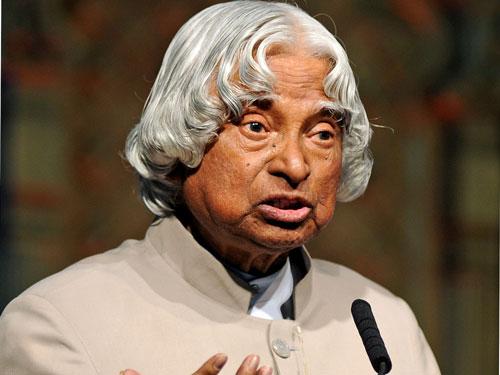
Kalam had his early training at NASA in 1963 before he set up India's first rocket-launching facility in the fishing village of Thumba in Kerala. DH Photo
Kalam had his early training at NASA in 1963 before he set up India’s first rocket-launching facility in the fishing village of Thumba in Kerala. DH Photo

In great news for India, scientists at NASA have named a new organism discovered by them after the much-loved A P J Abdul Kalam.

Till date, the new organism — a form of a bacteria — has been found only on the International Space Station (ISS) and has not been found on earth!

Researchers at the Jet Propulsion Laboratory (JPL), the foremost lab of NASA for work on inter-planetary travel, discovered the new bacteria on the filters of the International Space Station (ISS) and named it Solibacillus kalamii to honour the late president, who was a renowned aerospace scientist.

Kalam had his early training at NASA in 1963 before he set up India’s first rocket-launching facility in the fishing village of Thumba in Kerala.

“The name of the bacterium is Solibacillus kalamii, the species name is after Dr Abdul Kalam and genus name is Solibacillus which is a spore forming bacteria,” said Dr Kasthuri Venkateswaran, senior research scientist, Biotechnology and Planetary Protection Group at JPL.

The filter on which the new bug was found remained on board the ISS for 40 months. Called a high-efficiency particulate arrestance filter or HEPA filter, this part is the routine housekeeping and cleaning system on board the international space station.

This filter was later analysed at JPL and only this year did Venkateswaran publish his discovery in the International Journal of Systematic and Evolutionary Microbiology.

According to Venkateswaran, even as it orbits the earth some 400 kilometres above, the ISS is home to many types of bacteria and fungi which co-inhabit the station with the astronauts who live and work on the station.

Venkateswaran said even though Solibacillus kalamii has never been found on earth till date, it is really not an extra-terrestrial life form or ET.

“I am reasonably sure it has hitch hiked to the space station on board some cargo and then survived the hostile conditions of space,” explained Venkateswaran.

Naming the new microbe after Kalam was natural to Venkateswaran and his team.

“Being a fellow Tamilian, I am aware of the huge contributions by Dr. Kalam,” he said.
New bacteria are usually named after famous scientists.

Venkateswaran is part of a team which is asking that eternal question “are we alone in the universe?”

Towards that, his responsibilities include monitoring the bug levels on the ISS and he also has to ensure that all spacecraft that fly to other planets are free of terrestrial bugs.

One of his big jobs was to ensure that NASA’s Mars Curiosity rover — the massive car-sized almost 1000 kg buggy — was totally sterile when it left earth.

By international law, this extreme hygiene is required else other planets could get contaminated by bugs that reach the Martian or other planets hidden on human satellites.

Today the ISS is the size of a football field and its construction started with a launch in 1998 and as of now it is the largest human-made object orbiting the earth.

Weighing about 419 tonnes, it can house a maximum of six astronauts and has costs roughly USD 150 billion.

Till date, 227 astronauts have flown to the space station. This makes the space station actually a very dirty place and maintaining hygiene is critical so that humans can live on it with ease.

On the space station all the air and water is recycled, being a completely closed environment there is a rapid build- up of moulds and bacteria on the station.

These not only have to be cleaned but monitored to ensure that they do not corrode the walls of the space station and do not turn hazardous to the astronauts.

Venkateswaran’s main job is to monitor the environment of the space station so that harmful bugs do not proliferate.

He heads the ‘Microbial Observatory’ on the ISS projects to measure microorganisms associated with compartments owned by the US.

According to NASA, he also directs several research and development tasks for the JPL – Mars Program Office, which enables the cleaning, sterilisation, and validation of spacecraft components.

He directs several NASA competitive awards on the microbial monitoring of spacecraft and associated environments for the Exploration System Mission Directorate, closed habitats like ISS or its earth analogues for the Human Exploration and Operation Mission Directorate.

But is the new bug of some use.

“These spore formers tend to withstand high radiation and also produce some useful compounds protein wise which will be helpful for biotechnology applications,” Venkateswaran said.

His team has not characterised the bacteria fully but he hints that the new bug could be a key source for chemicals that can help protect against radiation damage.

source: http://www.deccanherald.com / Deccan Herald / Home / Press Trust of India, Los Angeles / May 21st, 2017
Life after violence

xxxxxxxxxx

BookMPOs21may2017

An oral history of marginalised Muslim women’s narratives

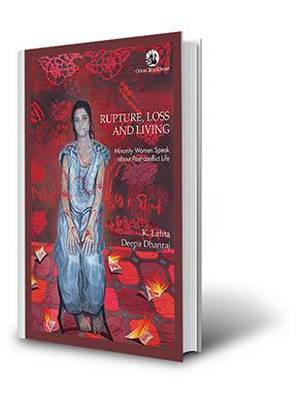
How does violence, communal or otherwise, impact ordinary people? What happens after the conflict, when the spotlight shifts elsewhere? How do victims pick up the pieces? Now direct all these questions at marginalised groups, especially poorer women, who anyways live in areas of darkness. What could have been their experience? Between 2006 and 2009 — after some of the worst communal clashes our country had seen — a scholar and a film-maker/researcher decided to investigate. Working with local researchers and activists in Mumbai, Hyderabad, and several cities of Gujarat, they began gathering stories from women survivors of collective violence.

K. Lalita and Deepa Dhanraj’s account is deeply disturbing, and this book of oral history is an important one on the narratives of marginalised Muslim women. As they write in the introduction, Lalita and Dhanraj documented life histories of 75 Muslim women survivors of communal violence, and present the stories of 19 of them divided into four thematic sections: I Began to See the World for What it is, Loss and Trauma, Negotiating Survival and Livelihood, and Claiming Accountability, Seeking Justice. Without going into issues like Muslim personal law, Islam, politics or the question of Muslim identity, the writers draw out experiences of violence these women had, “whether instigated or abetted by the state, communal, sexual, domestic or structural….”

For many of these women, “rupture manifested as complete displacement — physical, economic, domestic and emotional” — and they still live in a state of anguish, the experience too much to bear. For others “the loss of vatan (homeland)” is also the “loss of … community,” the loss of a sense of belonging to your birthplace. Add to this impoverishment, loss of income and identity — we hear of a woman in Mumbai who tells us her husband, a carpenter, lost his tools during a riot. Unable to invest in a new set, he became unemployed and depressed, and never recovered.

The stories of ordinary lives — their pain at losing their joy — stay with you. Just like Nobel Prize-winning writer Svetlana Alexievich’s oral history of the demise of communism, Second-Hand Time, where she recorded the voices of men and women rarely given an opportunity to speak. They didn’t speak of lofty ideals or politics, but of their daily lives, their joy and pain.

www.thehindu.com / The Hindu / Home> Books> Reviews / by Sudipta Datta / May 21st, 2017

IIT-H develops biodegradable nano-particles to treat cancer

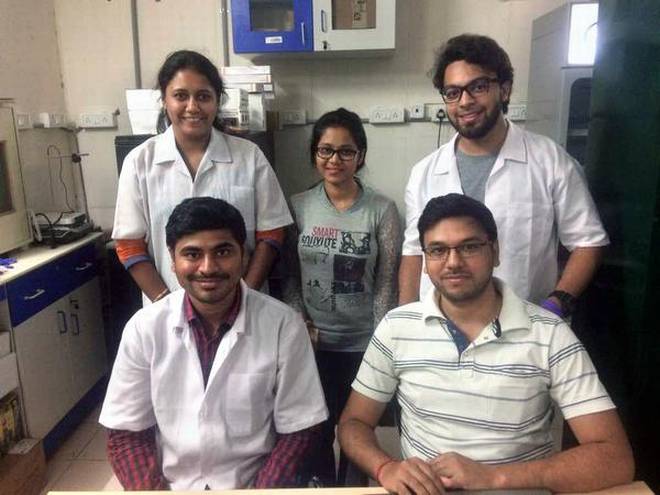
Some of the members of the IIT-H team working to make cancer treatment better, on the institute’s campus in Hyderabad. | Photo Credit: Mohd Arif;Mohd Arif

Team working on finding alternative to chemotherapy

The Indian Institute of Technology-Hyderabad (IIT-H) has developed biodegradable non-particles that could be instrumental in treating cancer.

A team led by assistant professor Aravind Kumar Rengan has been working on finding alternative ways to chemotherapy and radiotherapy for cancer treatment to minimise side-effects caused by these therapies. He designed a novel nano system which kills the cancer cells by photothermal therapy.

The group is currently working on making more cost-effective nano particles for photothermal therapy, integrating these particles with cancer specific drugs to have an enhanced effect in killing cancer.

The team members involved in the research are Tejaswini Appidi, Syed Basseruddin, Deepak Bharadwaj, Anil Jogdand, Sushma, Anula — all Ph.D. scholars; junior research fellow Rama Singh, and postdoctoral fellow Surya Prakash Singh.

Photo thermal therapy is a treatment procedure where light (photo) energy is supplied by means of an external laser to nano particles which absorbs this energy and converts it to heat (thermal) energy. This heat generated by irradiation of laser would increase temperature within the tumour and result in the death of cancer cells.

No side-effects

The important aspects of the research is that the treatment procedure has no side-effects, since the nano particles would be accumulated in the tumour region, and also the irradiation is specific to particles, which means the heat is generated only within the tumour and not elsewhere in the body.

Also, the laser used to provide light energy would not harm the healthy cells around the tumour region as these healthy cells would not absorb this light energy as they remain transparent to this irradiation.

The nano particulate system is very unique in its own way. The particles, after generating the heat required to kill the cancer cells, will degrade inside the body and further breakdown into much smaller particles which will be excreted from the body.

“This procedure had very good results in experiments carried out in mice, and is expected to show the same in humans too. This treatment is now under clinical trials and once the trials are completed, this would be available as an alternative treatment procedure to cancer,” Dr. Rengan told The Hindu.

Dr. Rengan was recently awarded the prestigious INSA award in the young scientist category for his outstanding research in treatment of cancer by photothermal therapy using biodegradable particles.

source: http://www.thehindu.com / The Hindu / Home> News> Cities> Hyderabad / by R. Avadhani / May 19th, 2017

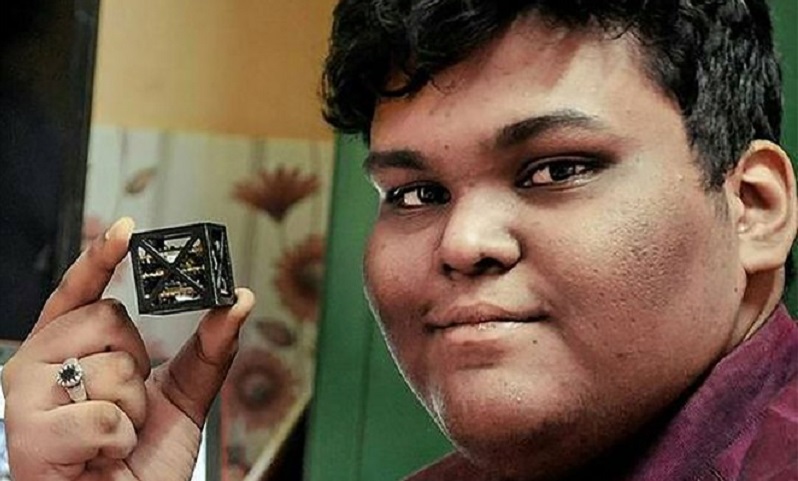
Meet the 18-year-old from Tamil Nadu who designed the world’s lightest satellite

PallaPatti,  TAMIL NADU :

On June 21 this year, history will be made with the launch of the world’s smallest ever satellite — KalamSat. The launch will also hold special significance for India, with 18-year-old Rifath Sharook, a native of Tamil Nadu, being the brains behind the satellite. This will be the first time an Indian student’s experiment will be operated by NASA.

18-year-old Rifath Sharook; Source- New York Post

Hailing from the Tamil Nadu town of Pallapatti, Sharook has truly achieved something special with the KalamSat. The satellite will be launched by the US-based National Aeronautics and Space Administration (NASA), and weighs only 64 grams. Named after India’s former President and nuclear scientist A.P.J. Abdul Kalam, the satellite is slated to be launched from a NASA facility in Wallops Island.

Of cows, compassion and communal comity

Jodhpur, RAJASTHAN :

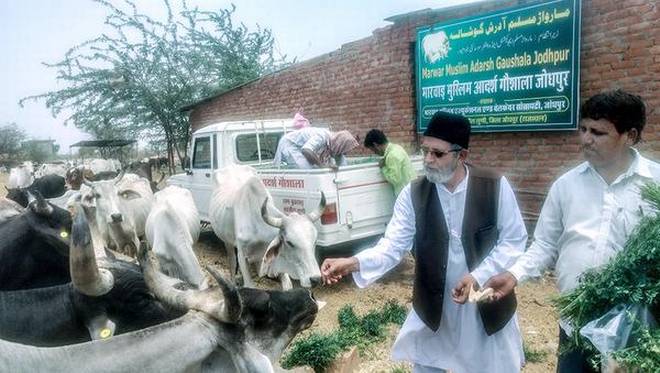
MMEWS general secretary Mohammed Atique with the cows at the gaushala

A cattle shelter run by a Jodhpur-based Muslim educational and welfare society earns goodwill

Even as cow vigilante groups in the northern States are targeting people on the mere suspicion of eating beef or smuggling cattle, an adarsh gaushala (model cow shelter) established by a Muslim institution in Jodhpur is taking care of old and sick cows. It is also assisting dairy farmers in a dozen surrounding villages in looking after their animals, and earning goodwill for promoting communal amity.

Launched in 2004 by Jodhpur-based Marwar Muslim Educational and Welfare Society (MMEWS), the initiative has won mass appreciation, with hundreds of people handing over cows and bulls to the shelter.

Old, weak, sick, abandoned, and neglected cows are given priority at the sprawling gaushala located in Bujhawad village off the Jodhpur-Barmer highway, 12km from Jodhpur. The shelter claims to be the first gaushala to be wholly owned and managed by the Muslim community.

Situated on a large piece of land without any boundary wall, the shelter is currently home to 217 bovines tagged by the State government’s Animal Husbandry Department.

The shelter’s full-time caretaker Hakim Khan and his wife Allahrakhi are in charge of the bovines’ welfare. Dogs and wild animals intruding into the shelter is a major concern, but Mr. Khan says the job is worth it. “We are glad to receive appreciation from the majority community, which sees the gaushala as an enterprise promoting communal harmony,” he said.

A trained team brings the cows, mostly from nearby villages, to the gaushala in a specially-designed vehicle. The MMEWS currently spends a little over ₹1 lakh a month on the animals. It is planning to double the shelter’s capacity by taking over a part of the 56 acres of land allotted for the construction of the Maulana Azad University, the society’s general secretary, Mohammed Atique, told The Hindu.

“When we started the gaushala, some fringe elements objected to Muslims operating the shelter,” Mr. Atique said. “But over the years, the shelter has won people’s admiration and generated immense goodwill as villagers appreciate the selfless work.”

Most of the bovines in the shelter have come from villages such as Doli, Gangana, Bhandu, Narnadi, Khudala, Jhanwar and Rohila Kalan. The shelter also employs a team of veterinarians who not only attend to the animals but also visit the nearby villages to assist dairy farmers in taking care of their cattle. Filling gaps in the government’s veterinary infrastructure, the team runs vaccination and treatment camps for stray cows in the villages. “A mobile van visits these villages to treat cows, goats and buffaloes free of cost,” Mr. Atique said.

source: http://www.thehindu.com / The Hindu / Home> News> States> Other States / by Mohammed Iqbal / Jodhpur – May 21st, 2017

Anas sets a new National mark

KERALA :

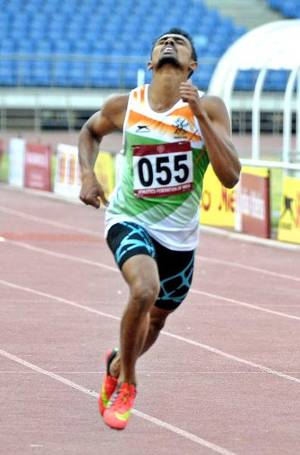
Peerless: Muhammed Anas proved he is the master of the one-lap race in the country, by winning in a record time on Monday.

New Delhi :

The 400m specialist qualifies for the World Championship

Muhammed Anas qualified for the World Championship in style by breaking his own National record with a time of 45.32 seconds in the men’s 400 metres in the third Indian Grand Prix athletics meet at the Nehru Stadium here on Monday.

The 22-year-old beat Arokia Rajiv by one second, as he erased his mark of 45.40 set in Poland last year, a time that helped him qualify for the Rio Olympics.

Like everyone, Anas was surprised by the time and record. He said that the hard work for the past few months back home in Kerala had helped him tune nicely. It is a nice progression in preparation for the Federation Cup and the Asian Championship scheduled over the next two months, before the World Championship in August in London.

It was also not exactly a surprise as Anas had clocked 45.69 in the Asian Grand Prix in Chinese Taipei, after having missed the first two meets in China owing to visa issues. He had clocked 45.89 in the first Indian Grand Prix in Patiala and had skipped the second in Delhi on May 11.

Jisna Mathew, a trainee of P.T. Usha, beat favourite M.R. Poovamma by eight-hundredth of a second with a time of 52.65 in the women’s race. The World Championship qualification standard of 52.10 was too stiff for her.

While Husandeep Singh of Chandigarh won the men’s 100 metres in 10.69 seconds, Dutee Chand could not work up any magic while beating Merlin Joseph with a time of 11.30 seconds in the women’s race.

In the absence of World junior champion Neeraj Chopra, Davinder Singh asserted his ability once again, after having clinched his sport for World Championship in Patiala, by winning the men’s javelin with a 81.53 metres in his fifth throw.

The results: Men: 100m: 1. Husandeep Singh 10.69s, 2. Safikul Mondal 10.76, 3. Mohammed Sadath 10.82. 400m: 1. Muhammad Anas 45.32 (NR, old: 45.40), 2. Arokia Rajiv 46.32, 3. Sachin Roby 47.18. 800m: 1. Ajay Saroj 1:52.91, 2. Arun Kumar 1:53.52, 3. Shashi Singh 1:54.21. 5000m: 1. Md. Yunus 14:50.93, 2. Man Singh 14:51.12, 3. Kalidas Hirve 14:51.76. 110m hurdles: 1. Akhil 14.44, 2. T. Balamurugan 14.58, 3. D. Sreekanth 14.82.

Long jump: 1. M. Sreeshankar 7.65m, 2. M. Silambarasan 7.42, 3. S.P. Laxman 7.33. Triple jump: 1. Arpinder Singh 16.23, 2. Rakesh Babu 15.09. Discus: 1. Baljinder Singh 53.03, 2. Parshant Mori 52.07, 3. Praveen Kumar Nehra 47.52. Shot put: 1. Jasdeep Singh 18.41, 2. Jaspal Singh 16.33. Javelin throw: 1. Davinder Singh Kang 81.53, 2. Vipin Kasana 77.08, 3. Shivpal Singh 74.98.

Women: 100m: 1. Dutee Chand 11.30s, 2. Merlin Joseph 11.72, 3. Himashree Roy 11.95. 400m: 1. Jisna Mathew 52.65, 2. M.R. Poovamma 52.73, 3. Debashree Mazumdar 53.69. 100m hurdles: 1. Purnima Hembram 13.79, 2. Liksy Joseph 14.69, 3. Niksy Joseph 14.83. Long jump: 1. Anjali Sahani 5.11, 2. Shiksha Singh 4.19. Discus: 1. M. Karuniya 41.06, 2. Sonal Goyal 37.97. Javelin throw: 1. Annu Rani 5.41, 2. K. Rashmi 50.65, 3. Priyanka 46.69.

source: http://www.thehindu.com / The Hindu / Home> Sports> Athletics / Kamesh Srinivasan / New Delhi – May 15th, 2017

Rozina Sheikh, whose mother works as a tailor, scores 97 percentile rank in Class 12; aspires to become a doctor

Vatva Village (Ahmedabad) , GUJARAT :

Ahmedabad:

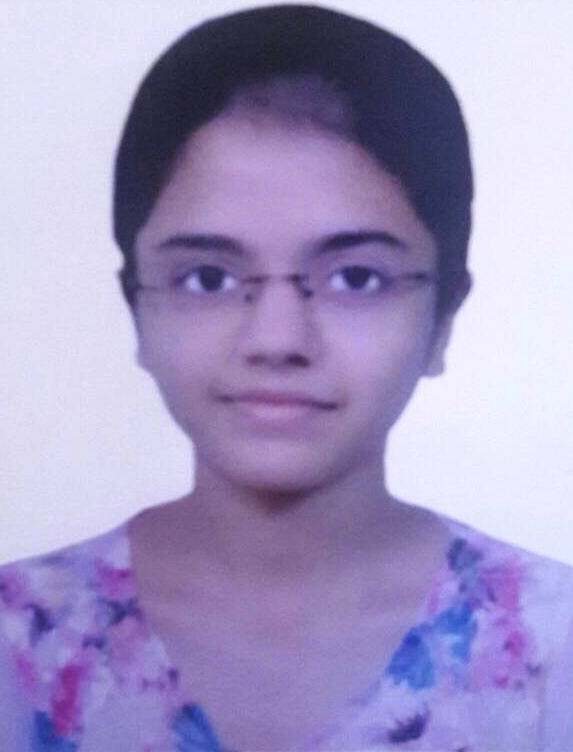
On the morning of Thursday, May 11, Rozina Razil Shaikh, 17 along with her two brothers and mother were glued to the internet to check her Gujarat class 12 science stream result. Within moments, the family had a lot to celebrate.

Rozina Razil Shaikh
Rozina Razil Shaikh

Rozina had scored 97.07 percentile in the Science Stream.

The Shaikhs live in Vatva village of Ahmedabad in Gujarat. Their house has since been flooded with people visiting them to congratulate the feat achieved by Rozina.

“I am feeling quite good and relaxed after the result. I wanted to score good and I scored well,” Rozina told TwoCircles.net .

Her percentile rank in science theory is 99.36 and percentile rank in overall theory is 96.74, whereas the overall percentile is 97.07.

Rozina’s father, a doctor by profession, died in a car accident in 2010.

After her father’s death, the family of four is being supported by her mother, Maqsuda Shaikh, who works as a tailor and earns about Rs 5,000 a month.

Rozina02MPOs16may2017

“The income of my mother barely supports our expenses. I had applied for scholarship after finishing my 10th and I did get one from a Baroda-based charitable trust which gave me 18000 per year to study. It covered my school fee and books expenses,” said Rozina. The 17 year old girl was dedicated to score well and pursue her dream of becoming a doctor like her father.

“11th and 12th are very crucial from the perspective of getting into a medicine career. For these two years, I studied 8-10 hours every day apart from lectures at school. My mother and brothers have been continuously supporting me,” says Rozina.

The girl’s mother is more than happy and says that she was determined to get her children educated, at any cost. She works as a tailor to support her children’s and sometime a few relatives also extend help.

“Mai bohut khush hui beti ka result sunke.Paise ki dikkat thi ghar main magar bache bhi aqalmand the ki paisa khali padahi ke lie mangte the (I felt very happy about my daughters result. There is financial problem, but my kids were quite wise that they asked money only for studies),” Maqsuda Shaikh told TCN.

“Inke walid bhi khete the ki bacho ko padhana hai, ye nhi ki ladki hai toh nahi padhani hai.Unka ek hi arman tha ki bachoo ko achi taleem deni hai.Aur humne bhi himmat nhi hari (Their father was also determined to get them good education and not like others, who think that girls shouldn’t be provided with education. He had only one dream that his children should be good and well educated and we also didn’t lost the hope),” she added.

Rozina appeared in National Eligibility and Entrance Test (NEET) on May 7 and she is hopeful that she will go through it.

“I can only pursue MBBS if I get seat in a government college and fee. If not, then I will opt for pharmacy because we don’t have money to pay the fee of private MBBS colleges,” she says.

Those who wish to help the girl pursue her dream of becoming a doctor can contact the family at +919924379287

source:  http://www.twocircles.net / Two Circles.net / Home> Indian Muslim> Lead Story / by Raqib Hameed Naid, TwoCircles.net / May 14th, 2017

Showing the way

NEW DELHI :

RoshanaraMPOs14may2017

Roshanara Khan from Nizamuddin Basti is all set to tell her story of struggle in the US before a distinguished audience for the benefit of other girls like her

What strikes about 19-year-old Roshanara Khan is her confidence and clarity of vision. The struggles of her life has suffused her with a fighting spirit but not desperation. The self-belief becomes evident when she says, “I will do it. I can handle it. It is my story. I have to narrate that and how difficult can it be,” says Roshanara. As we write this, the young spark, is en route to the US for an annual fundraising event by NGO, Room to Read, in the US. Representing India, Roshanara will give a speech at the Gala Dinner in New York and Washington DC on May 11 and 15. Navtej Sarna, India’s ambassador to the United States will be the special guest at the event. The money generated will be utilised for life skills training and mentoring of girls.

But this isn’t a first for Roshanara. She has travelled to the UK, Zurich and Switzerland earlier to share her compelling story. A story that must be shared. Living in the slums of Nizamuddin Basti, her father, a rickshaw puller at times, couldn’t even give her and four siblings three meals a day. “On top of that, he used to gamble. And then one day, my parents fixed my marriage. I was only 15. I refused. I told my mother, I don’t want to be helpless like her, dependent on someone else for every penny, struggling to raise kids, falling sick every now and then because of early marriage and motherhood. They understood my point but due to the societal pressure, they went ahead and fixed it. I kept refusing but they wouldn’t get convinced but finally, they gave in,” recalls Roshanara.

Gathering courage

But how did she gather courage in such dire circumstances? Without any support, how did she avert marriage and follow a different path? Through her school, Roshanara was able to connect with Room to Read, an NGO working towards literacy and girls education. “I have been associated with their Girls’ Education Program for a long time and my mentor there guided me through this. I discussed my problems with her and she told me how to handle it. She gave me lot of strength.” She says, the life skills she acquired at the sessions held by teachers at Room to Read, helped her immensely. “I learnt how important it is to say what you feel. You have to express yourself,” said Roshanara at the press conference held at Indian Women’s Press Corps.

At the press conference, a five minute film on the young girl made by Room to Read was also screened. It will be shown in the US as well.

Though not fluent in English, she will deliver her speech in English. The young girl shows no sign of anxiety. “We have only helped her but every word is hers. She has decided how her story needs to be told. Even the decision to use the word change or or transform was taken by her,” said Randeep Kaur, Programme Director, GEP, Room To Read.

The NGO tracks the girls’ education programme graduates for three years and seeing the commitment and strength of Roshanara, the outfit chose zoned in on her for the job.

Working at a doctor’s clinic and alongside pursuing a bachelor’s degree from Jamia Millia Islamia, Roshanara is attracted to the world of computers. “I love computers and want to make a career out of it.”

source:  http://www.thehindu.com / The Hindu / Home> Society / by Shailaja Tripathi / May 11th, 2017

Mohammad Nazim re-entry in Saath Nibhaana Saathiya works magic

Malerkotla, PUNJAB / Mumbai, MAHARASHTRA :

MohammedNazimMPOs16may2017

Mohammed Nazim charmed his fans by portraying the lead character of
Ahem Modi in Saath Nibhaana Saathiya for six long years and gathered a legion of fans in the process. It was because his following that the actor was asked to return merely three months after he quit the show.

When asked whether it was the fans love which wad responsible for his re-entry, Nazim agrees and says, “Yes my fan following is huge because of my character Ahem. It’s because of my fans that I am back in the show. I got to know that they had stopped watching the show after I quit,”.

Well, now the admirers of Nazim have a lot to look forward to as his new avatar in the show is quite interesting.

Reveals Nazim, “My character is quite special on the show. He is a young guy called Jaggi who is a stylish tapori. He’s a Punjabi guy who is very mischievous and just full of life.”

Ahem, is quite casual about making the re-entry, and refuses to get emotional about returning to the show. He says, “Why would I miss the show? It was going on and people were watching the show. I was busy with shooting for my movie Big Daddy. We’ve wrapped shooting for that and its being edited.”

Nazim re-entry has increased the TRP too of the show.
Well, we hope Nazim has a great innings in this new avatar as well.

source: http://www.timesofindia.indiatimes.com / The Times of India / News Home> TV> News> Hindi / TNN / September 09th, 2016

A walk through the ruins of 1857

NEW DELHI :

https://www.youtube.com/watch?v=pxlGJfLOoEU

May 11, 1857. Mughal Emperor Bahadur Shah Zafar was fishing in the Yamuna in the morning when he was told about some disturbance breaking out in the city. He rushed back into the fort.

Sowars of the 3rd Bengal Native Cavalry, after mutinying at Meerut the previous day, had reached Delhi after riding overnight. The Revolt of 1857 was at Delhi’s doorstep. And the octogenarian head of the house of Timur, given to poetry and not soldiering, was thrust into the command of an epic struggle that was not just political but also cultural: one that would change Delhi and India forever.

On May 5, TOI approached India’s foremost military historian, Squadron Leader Rana T S Chhina (Retd) of USI-CAFHR, to walk us through the landmarks of the Revolt in Delhi: the ruins, the battlefields, the memorials. The trigger for it was obvious: it’s the 160th anniversary of the Revolt, which people variously refer to as the Indian Mutiny, Sepoy Mutiny, and First War of Indian Independence, depending on which side of the ideological or cultural spectrum they are located.

We, along with a delegation from the British High Commission, assembled outside DU vice-chancellor’s residence, facing the road to Flagstaff Tower. It was a hot May morning, like the one that troubled Jim Corbett when he hunted down the Mohan man-eater. But we endured it as we were hunting for history.

In 1857, the rebel troops started killing Christians, both white and brown, once they were in the city. Europeans who managed to escape flocked towards Flagstaff Tower—our first stop.

One just has to peek inside to imagine how in this rat hole of sorts, scores of people— many of them women and children—huddled together in the searing heat, waiting for help to arrive from Meerut.

We turned left from the Flagstaff Tower into Bonta Park. A little ahead, we arrived at a 19th-century guard house, one of the two that still exist and which would have had an Indian picket when the Revolt began—Delhi was garrisoned by the 38th, 54th and 74th Bengal Native Infantry regiments.

By early June, however, the British reinforcements came and a counterattack began. Flagstaff Tower had a rebel battery by then, which rained down fire and hell on the approaching Anglo-Indian troops. “Despite the bitter animosity that existed then between the British and the rebels, the British officers were appreciative of the gunnery of the rebels. Indian guns were serviced very well, and the English noted that an Indian gunner would rather die defending his gun than give it up,” Chhina said.

Some English officers also heaped praise on the rebels for orderly retreat under fire and took pride in training the men well.

The Tower was taken and it became the left flank of the British position on the Ridge; the centre of the position became the Mosque Picket, our next halt. It’s actually the Chauburja Masjid or the four-domed mosque built by Sultan Ferozeshah Tughlaq in the 14th century. Chhina showed us how it appeared to European photographer Felice Beato in 1858 while we tried to capture the mosque from the same angle as Beato did. Only one dome exists now—a sorry testament to the conservation story of modern India.

Next we went to a palace of Ferozeshah Tughlaq, which is now called Pir Ghaib but may have been the Kushk-i-Jahanuma or Kushk-i-Shikar, a hunting lodge of the Delhi sultan. Even Tamerlane may have visited it. In 1857, this was the scene of bitter fighting between rebel troops and British-led troops. The baoli right next to it is a wonder in itself with flights of stairs on all sides. English troops back in 1857 reported seeing a step well with several leafy trees near Hindu Rao’s house. Only the stumps of some of those trees remain today.

Hindu Rao’s house was the next halt. In June 1857, it was held by the Sirmoor battalion of the Gurkhas (later 2nd Gurkha Rifles, Indian Army and now Royal Gurkha Rifles, British Army), supported by Queen Victoria’s Own Corps of Guides (now split as 2 Frontier Force and Guides Cavalry, Pakistan Army) and other British units.

On September 14, the British stormed Delhi with their full might. The Siege of Delhi ended amid mind-numbing carnage. “Passions were excited on both sides. And it was Delhi that suffered.” Chhina said.

As one contemporary observer noted, Delhi became a “ghost city” with abandoned homes and bloated corpses lying all over.

Our final stop was the Mutiny Memorial on the Ridge, now called Ajitgarh or Fatehgarh. Today, it’s a nationalised memorial to both Indians and the English killed during the Siege of Delhi.

“Something must be done to make these places more familiar to tourists. And these must be preserved,” said Lieutenant Colonel Simon de Labilliere, the military adviser at the high commission.

source: http://www.timesofindia.indiatimes.com / The Times of India / Home> News> City News> Delhi News / by Manimugdha S Sharma / TNN / May 12th, 2017