This Documentary Film is based on Aligarh Muslim University and it’s great Alumnus, one such; Dr. Frank F. Islam.
Directed by: Neelofer Shama
source: http://www.youtube.com
This Documentary Film is based on Aligarh Muslim University and it’s great Alumnus, one such; Dr. Frank F. Islam.
Directed by: Neelofer Shama
source: http://www.youtube.com
Meerut, UTTAR PRADESH / NEW DELHI :
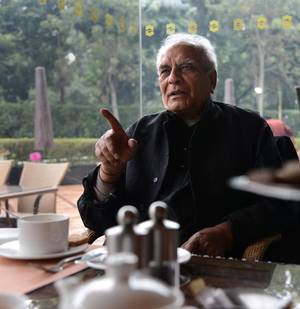
With the passing away of Ustad Hashmat Ali Khan (February 3, 1932-April 22, 2017), Indian classical music has lost not only a great tabla maestro but also a generous teacher. In a world where people are stingy about passing trade secrets, the Khalifa (head) of the Ajrara gharana of tabla used to say, knowledge grows by sharing. In the words of Pandit Suresh Talwalkar, “Ustad Hashmat Ali Khan was a wonderfully warm man, with a great sense of humour and extremely polished courtly manners of a bygone age, and most of all, the finest teacher one could have.”
A 7th generation musician, the Ustad belonged to the family that despite playing a type of tabla so close to the original Delhi gharana of tabla, was able to maintain its distinct “baaj”.Born in Meerut, his grandfather Ustad Mohammed Shafi Khan was one of the navaratnas of the Maharaja of Baroda. When he was about eight, his grandfather took him to Baroda, and that is where he received his taleem. Once India gained independence, the princely states dissolved, the young Hashmat returned to Meerut where his father put him under the tutelage of Ustad Niazu Khan.At a very young age, he started teaching at New Delhi’s Bhartiya Kala Kendra. Part of the greatness of the maestro was his extremely intellectually open mind – he was always analysing the music style of others and was quick to praise. He incorporated many pleasing elements from other styles in his playing, but with a seamlessness that was envied by his fellow musicians. Talwalkar says, “He was able to embellish his playing very well; even though his own gharana Ajrara was so beautiful, yet he was able to add to it. He was also a very good human being, and extremely learned.”
Pandit Kumar Bose evinces his sorrow at the death of the Ustad, whom he describes as “bahut guni, and iss umar mein bhi, itne tayyar… He was a very fun loving and good natured man.” He added, as a tabla exponent he had researched and added to his gharana’s baaj with great finesse, and he hoped “that his son Akram keeps his music alive.”
Cosmopolitan outlook
Khan was also a very well travelled and cosmopolitan man; he had lived abroad in many countries including Russia, Mauritius, Guyana, Fiji and Australia for years, where he had been sent by the ICCR to teach. He has several students there. His wide travels had given him an urbanity not found in many musicians of his generation. One can recall anecdotes he would relate about an older generation of musicians. With an appropriate pause before the punchline, the subtle embellishments to the main story – Khan sahib was indeed extremely entertaining. There was always a compassion even while talking about musical frailties in others.
Indeed, this much loved musician will be missed; yet the legacy he leaves behind with his numerous disciples, including his musical inheritor, Ustad Akram Khan, and his grandsons, will remain.
source: http://www.thehindu.com / The Hindu / Home> Entertainment> Music / by Shailaja Khanna / April 24th, 2017
NEW DELHI :
New Delhi:
Akbarali A. Heptulla, noted manpower consultant and husband of Rajya Sabha MP Najma Heptulla, passed away on Tuesday.
Mr. Heptulla (75) complained of stomach ache around 2 a.m. and was rushed to the All-India Institute of Medical Sciences here, where doctors declared him brought dead.
Described by close friends as “the man behind the successful woman,” Mr. Heptulla is survived by three daughters. The burial will take place on Friday.
Mr. Heptulla, who held a licence to import newsprint from Russia, was among those instrumental in the establishment of the newspaper Patriot in the 1960s. — PTI
source: http://www.thehindu.com / The Hindu / Home> National / September 05th, 2007
UTTAR PRADESH / NEW DELHI :

Theatre actor Major Mohammed Ali Shah turned a motivational speaker for a session ‘Disruppt’ held in Hyderabad
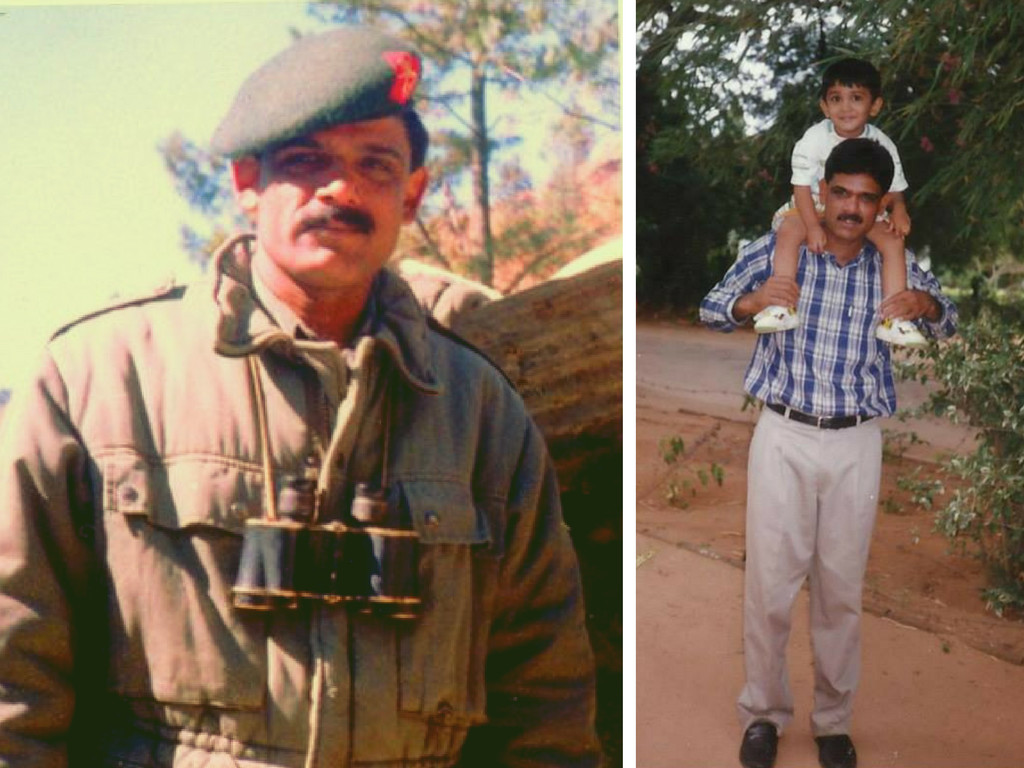
If diverse experiences are what people seek from life, Major Mohammed Ali Shah has had plenty of those. The son of Lt. Gen. Zameer Uddin Shah (vice-chancellor of the Aligarh Muslim University and brother of actor Naseruddin Shah) wanted to be an actor since childhood, dabbled with a lot of career options before he chose the stage.
After a stint with a call centre when the IT boom was on, he was selected for a Short Service Commission posting — he was a young lieutenant deployed at Jammu and Kashmir,LOC — and then he did an executive programme in Marketing at IIM-Calcutta and switched over to a corporate career.
Yet Shah left it all to pursue a career in theatre and films. Now, in his latest avatar, he has turned a motivational speaker, addressing in a session in the city for a platform Disruppt, that seeks to help people overcome issues in their personal and professional lives.
“Surprisingly, Hyderabad was a place where I had tried for acting opportunities several years ago but things didn’t work out. Destiny brings me back to the same place now. The Disruppt session here even had a few people writing handwritten letters to me. That, in times where people don’t take time to send Whatsapp messages. I had suffered a lot of setbacks in life, so if I can contribute to people’s wellbeing by narrating my personal experiences, why not,” says Shah asks.
Amid all the professional churn, there haven’t been any regrets. “In my corporate life, I was paid well, there was no risk or adventure and I was even growing, getting promoted each year. When I looked back at satisfaction, things weren’t falling in place. I quit it one day to pursue my ambitions in the city of dreams, Mumbai. There was initial regret, but I gathered courage soon enough, my parents and my wife stood by me,” Shah states.
This phase also made him a nuanced actor. His army stint was crucial in landing him roles in Haider, Bajrangi Bhaijaan and the Malayalam film titled The Ruffian. Post two unsuccessful attempts to get into NSD (which was once his long-time goal), life came full circle when he worked with Tom Alter and Saif Haider Hasan.
Hasan even went on to produce his theatre series ‘The Major Actor’s Assorted Monologues’ that had shows at Kuwait, UK, Mumbai and Delhi. “Besides, my army stint had me equipped at everything from polo to rock climbing to martial arts and paragliding, mostly the Short Service Commission stint taught me to be a thorough gentleman. If I’m happy about one thing in life, it’s about taking no help from my family, be it from my sister (a social activist), father or uncle,” he says.
He’ll be next seen in Tigmanshu Dhulia’s Yaara (also stars Vidyut Jamwal and Shruti Haasan) and an untitled film where he plays a Punjabi.
source: http://www.thehindu.com / The Hindu / Home> Entertainment> Theatre / by Srivathsan Nadadhur / April 29th, 2017
NEW DELHI :
New Delhi:
This was just a dream until some years back. The presence of Muslims in such top layer entrance tests like IIT-JEE was just negligible. The successful Muslim candidates could be counted on fingers. This year, around 400 Muslim candidates from across the country have cracked IIT-JEE. This could be a record.
A total of 24,112 students have secured ranks in various categories in IIT-JEE 2012. Muslims are 391. According to JEE Chairman GD Reddy, only 19,426 of the successful candidates have been shortlisted for counseling for admission to 9,647 seats in the IITs and other institutes. Fortunately, Muslim candidates have got ranks within 19,000 – 188 have got ranks within 10,000 — it means all will get chance to face counseling. The highest ranker among Muslims is Mohammad Hafeezul Rahman (Rank 159) and the lowest among Muslims is Shoaib Khan (Rank 18408).
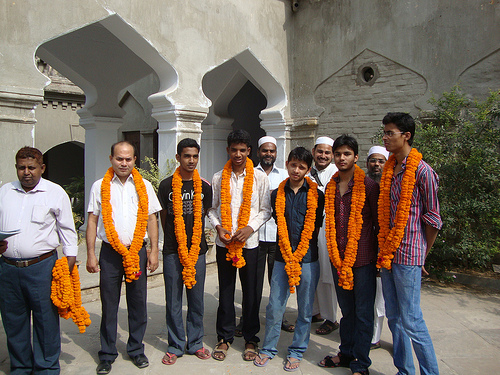
The greater presence of Muslims in IIT-JEE could be attributed to some minority-focused coaching centres established in last five years, the foundation of which was laid by Rahmani-30. Set up in 2008, the Patna-based free residential coaching centre of Rahmani Foundation, under the patronship of Maulana Mohammad Wali Rahmani, has been sending its candidates to IIT-JEE since 2009 and every year it has got results.
Only this year, a total of 16 students of Rahmani-30 have cracked IIT-JEE. Seven of them were of the current batch that ended in March 2012 while six from the last two batches of 2010 and 2011 – they had not got success in previous attempt but succeeded this year. Besides, 3 Muslim students of Bangalore centre of Rahmani 30 have also qualified this year.
More than 5.6 lakh students had appeared for the IIT-JEE on April 8, 2012 for admission to nearly 9,600 undergraduate seats in the 15 IITs and other institutions.
IITs in India
IIT-Bhubaneshwar
IIT-Bombay
IIT-Delhi
IIT-Gandhinagar
IIT-Guwahati
IIT-Hyderabad
IIT-Indore
IIT-Kanpur
IIT-Kharagpur
IIT-Madras
IIT-Mandi
IIT-Patna
IIT-Rajasthan
IIT-Roorkee
IIT-Ropar
| Rank | Name | Category | Registration No. | |
| 159 | MOHAMMAD HAFEEZUL RAHMAN | OBCM | 6037448 | |
| 289 | JASEEM UMAR M | OBC | 6112333 | |
| 406 | SHEHZAD HATHI | GE | 1002007 | |
| 524 | PARVEZSH AHAMED HMS | OBC | 6137244 | |
| 560 | SHAFEEQUL ISLAM | GE | 2147412 | |
| 675 | NASIRUDDIN AHMAD | GE | 2054364 | |
| 840 | MOHAMED FASIL C P | OBC | 6110005 | |
| 858 | MOHAMMAD OSAMA | GE | 2146595 | |
| 870 | SHAIK KHAJA MOHIDDIN | OBCM | 6003074 | |
| 872 | KAZI SAIF RAHAMAN | GE | 1051186 | |
| 920 | SOHAIL AHASAN | GE | 5141033 | |
| 999 | ASIF AHMED SARDAR | GE | 5130180 | |
| 1128 | NAJMI HAMZA ISMAIL | OBCM | 1025213 | |
| 1208 | GHULAM AHMED ANSARI | OBC | 6027044 | |
| 1245 | AMEER HAMZA | OBCM | 5006275 | |
| 1428 | MURTUZA RAJA | GE | 2104088 | |
| 1437 | BASHAMAKH YAZEED | GE | 3070042 | |
| 1438 | HUSSAIN BOHRA | GE | 2099383 | |
| 1753 | INZAMAMUL HAQUE | OBCM | 2039366 | |
| 1772 | ABDUL AZIZ | GE | 5139304 | |
| 1816 | MOHD SAOOD SHAKEEL | OBCM | 2068412 | |
| 1874 | ADIL REZA | OBCM | 4099681 | |
| 1891 | SHAIK AZHAR MADAR | OBCM | 6073297 | |
| 1934 | MD DANISH KALIM | GE | 1079150 | |
| 1994 | SHAIK ABDUL AKRAM | OBCM | 6076203 | |
| 2149 | ZAHID SHARIEF | GE | 7012132 | |
| 2191 | ABUZAR GAFFARI | GE | 2106044 | |
| 2209 | IQBAL | OBC | 7021256 | |
| 2238 | ABID HAQUE | GE | 2052109 | |
| 2257 | SAFDAR AHMAD WANI | GE | 2097117 | |
| 2336 | KHAN UZAIR SUHAIL | GE | 1055304 | |
| 2376 | MD NADEEM AKHTAR | OBCM | 3122087 | |
| 2379 | NABEEL AHMAD KANGOO | GE | 2091362 | |
| 2452 | MD ENAYAT ULLAH | GE | 7096120 | |
| 2580 | HAMMAD ABDULLAH AYYUBI | GE |
source: http://www.twocircles.net / Two Circles.net / Home> India News> Indian Muslim / by TCN Staff Reporter / May 23rd, 2012
Jeddah , SAUDI ARABIA :
Mysuru, KARNATAKA :
Bugrasi (Bulandshahr), UTTAR PRADESH :
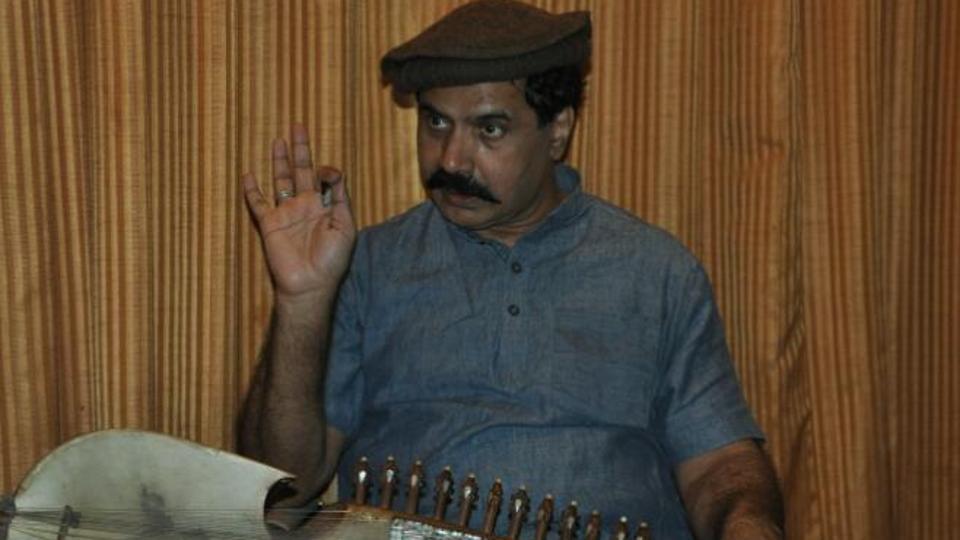
Music transcends borders and captivates hearts. Going by this maxim, India’s noted rabab exponent Gulfam Ahmad Khan, 61, is a winner all the way, from India to Afghanistan.
Khan, who played the Afghan rabab at Sankatmochan Sangeet Samaroh here late Saturday night and left the audience spellbound, has become India’s ambassador of goodwill of sorts in Afghanistan.
In Afghanistan, he teaches locals the rudiments of playing the lute-shaped musical instrument which is quite akin to the sarod.
Khan, who divides his time between New Delhi and Kabul, has taught 250 Afghan nationals and 50 more are under his tutelage. His skill has earned him enormous respect in Afghanistan where people call him Ustad.
In particular, he wants to popularise the Dhrupadi rabab (Narad veena), an Indian variety of the instrument, across Afghanistan and in other parts of the world.
Khan wishes for Prime Minister Narendra Modi to take the initiative to popularise the Indian rabab.
“Dhrupadi rabab is a completely classical instrument. It produces spiritual tunes. The Afghan rabab is for fast tunes. The Indian rabab needs promotion and preservation. If the centre makes a little effort, it may become a highly popular instrument in Afghanistan,” Khan told HT.
Khan , who is in Varanasi on a four-day tour, will leave for New Delhi on Monday.
Born in Bugrasi, a town in Bulandshahar, he started playing the rabab with his father Ishtiyaque Khan who had mastery over both rabab and sarod. He gave his first performance at the age of nine in Gurudaspur.
After putting in hours of riyaaz (practice), he honed his skills.
A few years later, he performed in Ahmedabad and did not have to look back thereafter.
He took a break for a few years in the late 198os when there were no connoisseurs of the great art. During this period, he played the sarod, only to return to the rabab in the 1990s.
Starting a fresh innings, he gave a few public performances and wrote the popular number ‘Gata jaaye mast kalandar, Allah teri shan, Maula teri shan’, composing the music on the rabab.
The song made him popular across Punjab.
When he visited his daughter and son-in-law in Afghanistan, he played the rabab and impressed the locals there. Many of them insisted on learning to play the rabab from him. He did not refuse.
As his renown reached the Indian embassy in Afghanistan, senior officials invited him to hold classes on the rabab to the Afghan people. Shedding his initial reluctance, he eventually accepted the offer.
He remained in Afghanistan between 2009 and 2014, training many locals. He also learned some local songs.
“Over 250 Afghans learned to play the rabab in my classes. Some of them are professional rabab players. Around 50 Afghans still take tips from me,” he said.
“Performing at the Sankatmochan Hanuman Temple is a spiritual experience. The audience enjoyed my performance. I will keep coming here. Banaras is a great city and its culture is really fabulous,” he told HT.
After putting in hours of riyaaz (practice), he honed his skills.
A few years later, he performed in Ahmedabad and did not have to look back thereafter.
He took a break for a few years in the late 198os when there were no connoisseurs of the great art. During this period, he played the sarod, only to return to the rabab in the 1990s.
Starting a fresh innings, he gave a few public performances and wrote the popular number ‘Gata jaaye mast kalandar, Allah teri shan, Maula teri shan’, composing the music on the rabab.
The song made him popular across Punjab.
When he visited his daughter and son-in-law in Afghanistan, he played the rabab and impressed the locals there. Many of them insisted on learning to play the rabab from him. He did not refuse.
As his renown reached the Indian embassy in Afghanistan, senior officials invited him to hold classes on the rabab to the Afghan people. Shedding his initial reluctance, he eventually accepted the offer.
He remained in Afghanistan between 2009 and 2014, training many locals. He also learned some local songs.
“Over 250 Afghans learned to play the rabab in my classes. Some of them are professional rabab players. Around 50 Afghans still take tips from me,” he said.
“Performing at the Sankatmochan Hanuman Temple is a spiritual experience. The audience enjoyed my performance. I will keep coming here. Banaras is a great city and its culture is really fabulous,” he told HT.
source: http://www.hindustantimes.com / Hindustan Times / Home> Cities> Lucknow / by Sudhir Kumar, Varanasi, Hindustan Times / April 17th, 2017
Srinagar, JAMMU & KASHMIR :
Srinagar
Hyderabad, TELANGANA :
Starts academy for players between ages three and eight.
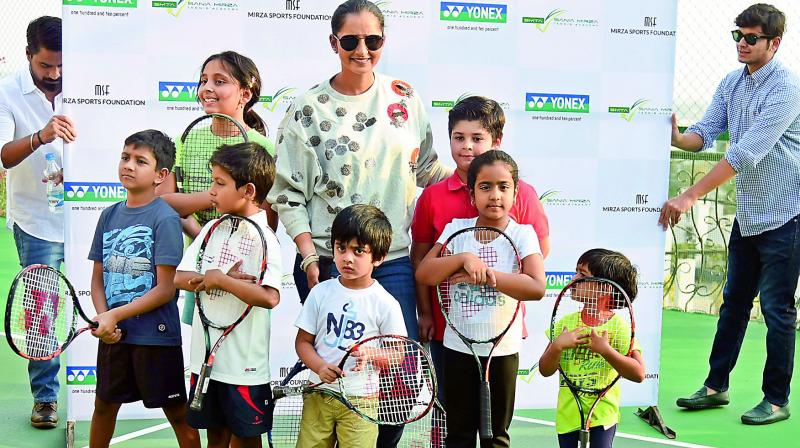
Hyderabad:
Tennis ace Sania Mirza on Monday launched the Sania Mirza Tennis Academy’s Grassroot Level wing for players between the ages of three and eight, next to her home in Jubilee Hills here.
The idea was to introduce budding players to tennis, she said. “As a tennis player I’ve had lot of difficulties coming to know what to do and where to go as a child and knowing how much to practise,” Sania said.
“It is actually my mother and her friend’s idea and obviously the Mirza family supports it. Tennis today is too competitive and you have to start when you are three or four years old,” Sania explained. “The professionals, the biggest of champions, have always started at the ages of 4, 5 and 6,” she added.
“We are still waiting for the next Sania, the next Mahesh (Bhupathi) and Leanders (Paes) to come and this is just a small way of contributing to it,” she said adding “It is right next to my house and I will obviously give some time as well.
“The concept is to get as many kids as possible to the academy where we are going to play with soft, colourful balls to make it attractive and easier for them,” Sania said, adding, “At that age, I don’t think they’d understand the concept of forehand or backhand. It is more about fun, enjoyment. You have to get them to try and love the game first before they want to actually make it their profession.”
source: http://www.deccanchronicle.com / Deccan Chronicle / Home> Sports> Tennis / February 07th, 2017