All posts by mpositiveone@gmail.com

Renowned freedom fighter and veteran journalist M Rasheed passes away

KERALA :

Kozhikode :

Renowned freedom fighter, writer and veteran journalist M Rasheed passed away in Salem on Friday. He had his last breath following a cardiac arrest at his daughter’s residence in Salem on Friday morning. An active participant in the Quit India Movement in 1942, he was also jailed during the freedom struggle.

Son of eminent freedom fighter E Moidu Moulavi, Rasheed was taken to the custody while he was high school student. He was one of the founding members of the Revolutionary Socialist Party and the editor of the party’s mouthpiece Sakhav.

The veteran journalist was a regular column writer in Malayalam dailies and was author of some books.

He will be laid to rest at Ponnani on Saturday morning.

source: http://www.newindianexpress.com / The New Indian Express / Home> Nation / by Express News Service / January 06th, 2017

Istafa Husain Ansari brought handloom industry to forefront

Gorakhpur, UTTAR PRADESH :

There is no denying to the fact that 1970-1980 was the best decade for a Bunkar (weaver) of Uttar Pradesh. This period can be identified as the golden era for the handloom industry and the person responsible for this was no other than late Istafa Husain Ansari of Gorakhpur. I am fortunate to be one of his grandsons.

Istafa Husain Ansari (1914-1987) was the third child of Sheikh Murtaza Husain- a Zamindar and a successful businessman, along with a prominent political leader of Gorakhpur. From the very beginning he had nationalist leaning. His initial education was in Gorakhpur and for the higher education he attended Lucknow University, from where he completed his M.Sc. and LLB. During those days the political environment in Lucknow was stirring, and there he worked along with stalwarts Dr. Shankar Dayal Sharma and K Raghurammaiyya, who were prominent student leaders of that time. At an early age he got married to Amina Khatoon, daughter of a prominent businessman of Gorakhpur, Mian Rahmatullah. One of his brothers-in-law, Niamatullah Ansari participated in the freedom struggle, and was later elected as a MLA from Gorakhpur.

IstafaHusainMPOsJan052017

After completing his education in Lucknow, he went back to Gorakhpur to practice law in Gorakhpur Civil Court. He was interested in the issues related to small farmers, peasants and the marginalized sections of the society. His contact with Professor Shibban Lal Saxena, who was an influential Congress leader of that time, brought him closer to Maharajganj and Pharenda, from where he started his formal political career by getting elected as the Gram Pradhan of Bhelumpur, which was also known as Karmaura. In 1952, for the first assembly election after independence, he won the Gorakhpur seat on a Congress ticket. He won by a big majority and then again by a bigger majority in 1957.

He was elevated to the position of Parliamentary Secretary for Education, Home and Information, when Sampoorna Nand became the Chief Minister of Uttar Pradesh. Then in 1966 and in 1972, he was elected as a Member of the Legislative Council in Uttar Pradesh Vidhan Parishad. In November 1973, when Chief Minister Hemvati Nandan Bahuguna, formed his eleven member’s cabinet, he was assigned as a Cabinet Minister in-charge of the small scale industries. He saw the deterioration in the politics climate and declined to be a part of that. His refusal to subscribe to the kind of politics brought in by Sanjay Gandhi curtailed his political career, because he could not do the Jee-Hazoori (sycophancy) that became the norm for success those days.

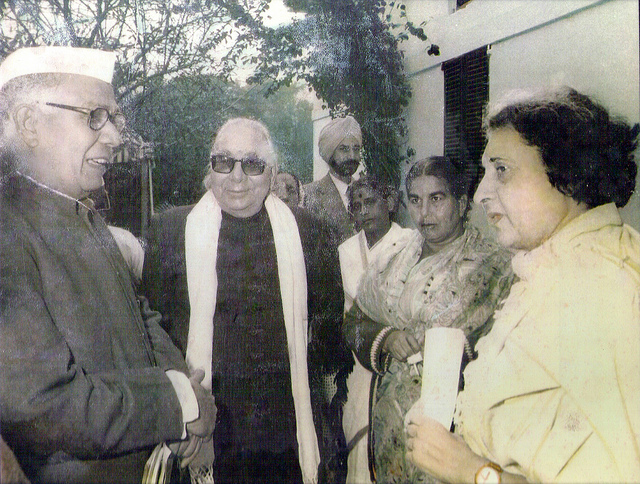
The success story of his life can be gauged by his contribution to the handloom as well as other cottage industries. He battled tirelessly for uplifting the weaker sections of the society. He fought relentlessly for the cause of the weavers and led an agitation against the ruling congress party, of which he was an active member, without fearing for the consequences and his own political future. As a result of the struggle, all his demands were met, and for the first time the woes of the handloom industry caught the attention of the policy makers. As a result, in 1970s when Prime Minister Indira Gandhi formulated her twenty point development program, challenges facing the handloom industry were also included in it. Then came the golden period of the handloom industry where infra-structure was developed to provide the raw material as well as avenues were opened to find markets for the finished product.

Apart from political appointments, he was also a member of the Aligarh Muslim University and Agra University courts. Locally in Gorakhpur, he was in the Executive Committee of Gorakhpur University, and was the founder member of Madan Mohan Malviya Engineering College. For life, he was the President of the school named after his father, Sheikh Murtaza Husain Memorial Higher Secondary School. During the time of his death in 1987, he was the member of Uttar Pradesh Minorities Commission.

It is not out of place to mention that in spite of being in public life for about five decades he maintained an unblemished record. His eldest son, Ashfaq Husain ventured into politics, and was elected to the Lok Sabha from Maharajganj. It is not out of place to mention that he was a great advocate for education and encouraged his descendants for quality education. As a result, today all twenty-two of his grandchildren are either engineers or have achieved post graduate degrees.

(The author is a Nuclear Engineer and was in the United States for long, but presently is in India. Can be contacted at www.tanvirsalim.com.)

source: http://www.twocircles.net / TwoCircles.net / Home / by Tanvir Salim / October 26th, 2013

Kiosk on wheels helps persons with disabilities turn entrepreneurs

Bengaluru, KARNATAKA :

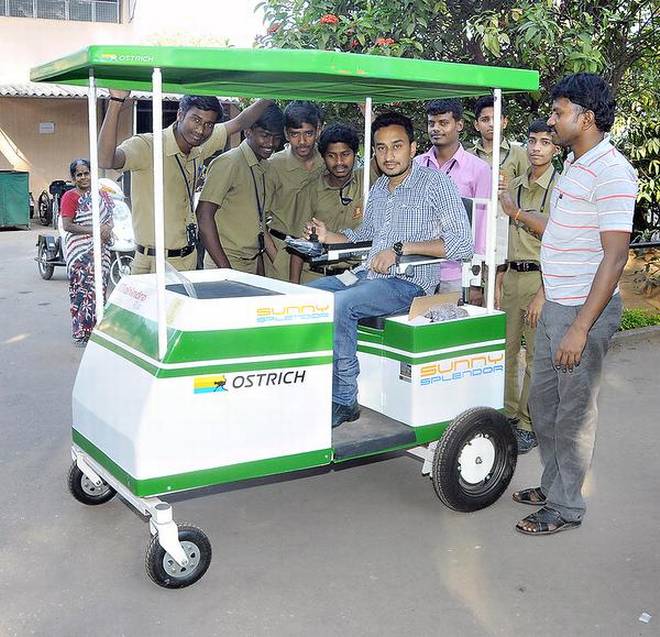
The battery-operated kiosk, Sunny Splendor, is a boon to persons with disabilities. —Photo: Sampath Kumar G.P. | Photo Credit: G_P_Sampath Kumar

Three years ago, Umesh, a lorry driver, lost his legs in a road accident. To make ends meet, he decided to sell tea on a two-wheeler, but the new venture threw up many challenges.

Dejected but not defeated, he approached an automobile firm for help. The firm, along with a wheelchair manufacturer, came up with a design for a disabled-friendly mobile kiosk to help people with disabilities earn a livelihood as part of a CSR initiative. The company approached the Association of People with Disabilities (APD), which funded the project. By 2015-end, Umesh had a prototype of the mobile kiosk.

APD rolled out three such mobile kiosks in the city in December last year to enable people with locomotive impairment and cerebral palsy start a business. The kiosk or electric vehicle named Sunny Splendor can also be charged on solar power.

Calling it ‘office on wheels’, C.N. Gopinath, executive board member of APD, said: “It plays a pivotal role in creating a perfect livelihood option for the physically challenged, who at times are constrained by financial circumstances and lack of qualification.”

Mansoor Ahmed, one of the fund raisers of the project, said the kiosk is environment and disabled-friendly. “We replaced the steering wheel with a joystick and the tires have increased brake efficiency”.

“I want to start a cosmetics and beverages business and my target audience comprises those working in tech parks. With this vehicle, I can commute to different tech parks,” said Basheer Ahmed, who is affected by polio. For Mahesh, who has been repairing mobile phones from home, the vehicle will help him broaden his customer base. “I want to run the business outside a government office. I am also planning to buy a typewriter, so I can help officials in their work”.

Four kiosks in Bengaluru

There are four such kiosks in Bengaluru. Beneficiaries can approach APD if they wish to become entrepreneurs, and have to go through a selection process before they can get their own mobile kiosk.

APD charges 10 per cent of the ₹1 lakh that costs to make a unit. “We believe they have the right to stake a claim in our ventures. This would not be possible if we operated on a charity model, which is is why we accept 10 per cent monetary contribution from them, though we do not insist this from those who cannot afford,” Mr. Mansoor Ahmed added.

source: http://www.thehindu.com / The Hindu / Home> News> States> Karnataka / by Shilpa Ramaswamy / Bengaluru – January 03rd, 2016

An intrinsic crafter of bidriware

Bidar, KARNATAKA :

bidriwarempos03jan2016

From a one-room house in Bidar old city to the Republic Day parade on Rajpath in New Delhi, it has been a long journey for bidri artisan Shah Rashid Ahmed Quadri.

The artisan, who was part of the bidriware tableau at the parade, was once advised by his father to quit the profession as there was no money in it. However, he did not quit because he liked hitting metals with chisels and a hammer.

Born on June 5, 1955, Shah Rashid Ahmed Quadri hails from a family of bidri artisans. As a result, Quadri got exposed to this craft from a young age and was trained under his father, Shah Mustafa Quadri. “I was forced to get involved in this craft to support my father, who was the only earning member in our family,” says Quadri. Initially, his father was not keen on him joining the shop as he felt the profession was not remunerative. He received a lot of encouragement when he began doing the craft and improved upon his father’s traditional designs. After a long period of training, he started working independently in 1970 and introduced various unique patterns.

Quadri has experimented with various bidriware techniques and patterns in his work. He introduced phooljhadi design and reintroduced sheet-work, an old technique that was used by court artists in the Bahmani Empire. Additionally, he is also an expert in wire and sheet-work inlaying.

Quadri has also trained several people in bidriware. Around 80 youngsters and many women have benefited by the training. Shaheda Begum, who has been working under him for the past two decades, is one such woman and has become an expert in sheet technique. He has also hosted various training programmes, where he taught bidri art. Some of the programmes he taught are organised as an apprenticeship training scheme.

Ample recognition
Quadri received several awards for his work including the Karnataka State award in 1984, a national award in 1988, district Rajyotsava award in 1996, Great Indian Achievers Award in 2004, and the Swarna Karnataka Rajyaotsava Award in 2006. Recently, he was honoured with Shilpa Guru award. The award is given in recognition of excellent craftsmanship, product excellence and for being instrumental in the continuance of crafts as a vital part of traditional heritage.

He exhibited his works in several countries and gave live demonstrations as well. These included the Science Festival of India that was held at The Museum of Science in Boston, USA in 1987 and a live demonstration in Holland in 1992. Bidri Art was selected to represent Karnataka at the Rajpath in New Delhi on Republic Day in 2011. Quadri, along with his team, took seat on the tableau with his work and gave a live demonstration. The Karnataka tableau was awarded second prize that year.

Apart from being a professional artisan and inspiring many others to continue the legacy, Quadri has also served as a member of Karnataka State Award selection committee in 1998.

He can be contacted on 9880690669 or at craft@gmail.com

source: http://www.deccanherald.com / Deccan Herald / Home> Supplements> Spectrum / by Rehaman Patel / January 03rd, 2017

Dawoodi Bohras initiate community welfare project

Mumbai, MAHARASHTRA :

dawoodibohrampos02jan2017

Thousands of Dawoodi Bohras are carrying out welfare programmes in more than 200 towns and cities spread across four states as part of a project to improve living condition of the poor members of the community.

The volunteers, drawn from various sections of the religious group and some of them from abroad, have fanned out in Gujarat, Maharashtra, Rajasthan and Madhya Pradesh, where they are helping the underprivileged community members in healthcare, housing and other areas.

They are building, repairing or cleaning homes, running vaccination and medical programmes as part of a five- day long project in the four States. The volunteers are working towards providing sustainable opportunities to families that are in need of help, according to a release issued by the community.

An infrastructure and administrative system to manage the organisation and funding of this fostership project was running for some weeks in preparation of the welfare activities that began on December 29 and will end on Monday.

The drive follows two-year-long travels of the community head, Syedna Mufaddal Saifuddin, who visited areas where members of the religious sect reside, it said.

“Some years back, his predecessor had initiated a programme to end food poverty which has now flourished into a common kitchen concept that provides a freshly cooked hot meal every day to every household of Dawoodi Bohras, rich or poor, wherever in the world they happen to live,” a community spokesperson said.

The community has now resolved to improve living conditions of the poor, he said.

“A team of about 4,140 members, including students, intellectuals, administrators, professionals and businessmen, have joined hands to look into every need of the community – from housing and clothing to childrens education and vaccinations, to help to achieve a minimum standard of living,” he said.

source: http://www.afternoonvoice.com / AfternoonVoice / Home> City News> Mumbai / Afternoon Voice – January 02nd, 2017

Noushad proves age is just a number; set to debut for Kerala at 32

KERALA :

Noushad K
Noushad K

Thiruvananthapuram :

When the Kerala team for the 71st Santosh Trophy national football championships was announced on Friday, one player who caught the eye was Noushad K. Of the 11 new faces in the squad, he is in line to finally make his senior state debut soon — at the age of 32!

For ardent followers of the game, it will come as a mystery as to why the astute defender from Naduvattam in Kozhikode has never played for the state team despite him being a time-tested stalwart in India’s domestic football circuit.

Noushad first caught attention as a spirited right-back for Viva Kerala FC in the I-League 2009-10. The following season, the defender made the switch to Kolkata’s Prayag United SC and his stock has been on the rise ever since at the Mecca of Indian football.

In Kolkata, Noushad also represented Chirag United, Mohammedan SC and Bhawanipore FC who he captained ever since the Federation Cup 2014 held in Manjeri before leaving them for Kerala after the conclusion of this year’s Calcutta Football League.

“To be very honest, playing for Kerala was the only thing in my mind when deciding to leave Kolkata this year. I did not think twice when coach Bino George who I know for long asked me to come and play for Baselius College, Kottayam,” Noushad said on Saturday.

Noushad, who now plays at centre back, was once before called up to the Kerala camp in 2013 but did not make the final squad. “I don’t know why I was overlooked, but I feel that I was in the best days of my career, back then,” he said.

“That does not mean I cannot do a job now. I leave it to pundits and fans to judge how good I still am,” he said. Noushad with vice-captain Firos Kalathingal are the seniormost players in the young squad and will be expected to inspire and lead the group.

“All the players are focused on the job. Coach V P Shaji and his staff have done a great job, but it is now our responsibility as players to produce results on the field,” said Noushad, who is known as ‘Bapu’ among friends. He feels that home advantage and spectators can play a role in the team’s fortunes.

“The frenzy of Indian Super League is still fresh. Though we are not Kerala Blasters, we still represent Kerala and I think there will be spectators coming from all over Kerala to cheer us at Kozhikode,” said Noushad. Kerala will open their south zone campaign against Puducherry at the EMS Corporation Stadium on January 5.

source: http://www.newindianexpress.com / The New Indian Express / Home> Sport> Football / by Adwaidh Rajan / Express News Service / January 02nd, 2017

Malayali becomes Major General of Kyrgyzstan

Calicut, KERALA / KINGDOM OF SAUDI ARABIA / KYRGYZSTAN :

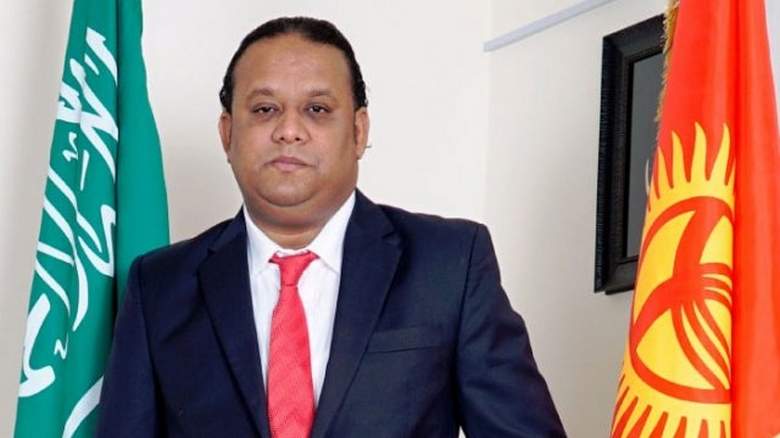
Shaik Rafik Mohammed, Chairman of Gammon Group / image credit: Twitter

The Saudi-based entrepreneur of Indian origin, was invited by the Kyrgystan Government to take up the prestigious military position in view of his earlier contribution to the country.

From among more than two million Keralite expatriates present across the world, a notable name is Shaikh Rafik Mohammed, who has now assumed a top position in the defense department of Kyrgyzstan, a Central Asian state of the former Soviet Union.

Shaikh Rafik Mohammed, Chairman, Gammon Group (UAE and Saudi Arabia), has been appointed Major General by Ali Mirza, Defence Minister of  Kyrgyzstan, at an official ceremony held in the Central Asian country, Omar Abu Baker, media advisor of Rafik, told Khaleej Times.

It is a rare military position occupied by an overseas Keralite, he said on behalf of Rafik, adding that the Keralite holds Kyrgyzstan nationality conferred by its former President, Kurmanbek Saliyevich Bakiyev, whom he casually met in his 20s while working in Iran. He was conferred the military leadership at a function held in the Kyrgyzstan military head office, his representative told Khaleej Times.

The Saudi-based entrepreneur of Indian origin, whose family resides in Dubai, was invited by the Kyrgystan Government to take up the prestigious military position in view of his earlier contribution to the country.

The inspiring story of the Keralite expatriate who migrated from Calicut Kerala before completing his fifth-grade schooling culminated in his recent appointment as Major General of Kyrgyzstan. While there are scores of successful of business tycoons in the region, this could well be the first time a Malayali has occupying top military leadership of a foreign country.

Mohammed Rafik earlier worked as an advisor to the former Kyrgyzstan President Kurmanbek Saliyevich Bakiyev (2005-1010) whom he met in Iran where the young Indian entrepreneur was developing a major steel plant.

After selling the successful project to the Iranian Government, Rafik went to Kyrgystan and presented a similar project to Kurmanbek, then a governor who was preparing to contest presidential elections.

Kurmanbek promised to green-light the project if he won the election. After he got elected, the new president appointed young Rafik as his chief advisor – a milestone in his career in his mid-twenties. He remained president for two terms and Rafik developed wide network of friends in the Central Asian republic, which has witnessed a rapid flow of foreign investment and reversal of socialist mode of development to a capitalist mode of production.

As an economic diplomat, Rafik could play a key role in attracting foreign investment from many countries to the young nation by suggesting easy tax regimes that kept away foreign investors till then.  From there, he was invited by Saudi Arabia to develop some projects on the free zone model of Dubai. Kyrgyzstan in the Central Asian region maintains close economic, political and strategic relationship with the Gulf region, especially Saudi Arabia. Kyrgyzstan is also a member of the Jeddah-based Organisation of Islamic Countries (OIC).

Gammon Group has a strong presence in emerging markets such as Asia, Middle East, Europe and North Africa. The diversified group is present in several areas, including infrastructure management and petrochemicals. According to the group’s website, it employs 200,000 employees in 28 countries.

“Rafik had left Kerala at a young age and he could complete only his primary school education. He went to Mumbai where the young man learnt all the tricks of business and from there to the Middle East. He has worked in the UAE, Iran, Saudi Arabia and Kyrgyzstan,” his media advisor added.

source: http://www.khaleejtimes.com / Khaleej Times / Home> News> General / by VM Satheesh, Dubai / December 31st, 2016

‘Resistance is a form of justice’

NEW DELHI :

Drawn into the struggle and trauma of families in conflict-torn Sri Lanka and Kashmir, filmmaker Iffat Fatima says she became a part of it through a process of osmosis

Iffat Fatima an independent filmmaker from Delhi, went to Sri Lanka in 2000 to research a fellowship project on Education and Identity. In the years that followed, she worked at a television channel, Young Asian Television. In 2005, Iffat made a documentary film on conflict in Sri Lanka and what it had done to the lives of people – The Other Side of War and Peace. When she met Parveena Ahanger, the chairperson of the Association of the Parents of Disappeared Persons (APDP) in 2006, the urge to make a film on Kashmir’s disappeared was strong. After nine years of travel and research, Iffat made Khoon Diy Bharav, which has moved viewers in all its screenings.

hindulitforlifempos031dec2016


A guest at The Hindu’s festival of literature, Lit for Life, in Chennai in January 2017, Iffat answers a few questions:

Can you please tell us about the Association of Parents of Disappeared Persons (APDP)?

In 1994, with the support of legal professionals and human rights activists, the families of the victims of Enforced Involuntary Disappearances (EID) in Jammu and Kashmir organised themselves into a collective: The Association of Parents of Disappeared Persons (APDP). Over the years APDP has become a movement – an important space for a continuous engagement on issues of justice and accountability. Drawing attention to the trauma of the families engaged in a gruelling struggle against the Indian security establishment, APDP has succeeded not only in breaking the silence over the issue of enforced disappearances in Kashmir, but has also sustained and kept alive a public discourse on resistance and what it means to resist against all odds. APDP, in the very act of its being, poses a challenge to the official discourse of erasure that is being systematically imposed in the public domain in Kashmir.

Your film Khoon Diy Bharav was made over a period of nine years? Can you speak about the work that went into the film? It must have been extremely traumatic for you — living the horrific stories all over again. How did you manage to sail through it? Can you narrate some of these incidents?

I was, in a sense, introduced to the trauma and the grief of the families of the disappeared through the making of my film, Lanka – the other Side of War and Peace. In 2006, almost a year after I finished the film I began working on the issue of enforced disappearances in Kashmir. I had been in touch with Parveena Ahangar whose son became a victim of enforced disappearance in 1990. Parveena had been largely instrumental in bringing the families together under the banner of APDP. She became my constant companion and I travelled all over the valley with her, meeting the families. I was drawn into the struggle, the continuous trauma, the continuous torture the families were going through. Through a process of osmosis, I internalised their struggle and became part of it. I cried and laughed with them, carrying a camera and recording their struggle became an organic process. I was not thinking of the end product.

Through these many years, 2006 to 2010, the movement for azaadi in Kashmir was also going through a tumultuous period. People were coming out into the streets in thousands, young boys were being killed. Resistance was acquiring a new form and people were expressing their agency, reclaiming the movement, so to say ‘snatching it away from the gun’. The affected families kept using the term “Khoon Diy Baarav” which eventually became the title of the film. What they were implying is that blood has flown, it has congealed and sedimented into memory and transformed into resistance. So resistance is a form of justice, while there is no hope of justice from the Indian state. After 2010, I felt I had to come to grips with my material and give it a tangible form. I had more than a 100 hours of material. The editing process was long and agonizing, I made several cuts. Friends were very supportive and their suggestions and feedback was very valuable in shaping the final film.

Army, in Kashmir, is above law so to say. How did they react to your film? I have read of the demonstrations held in certain campuses during the screening of your film.

“If there is a rule of law, why are the armed forces exempt from it?” is a question that Parveena poses in the film several times. This is a challenge that many people find difficult to confront, especially in the current atmosphere of hyper-nationalism in India. They would rather not see it. But I must say that I have extensively screened the film in India and most audiences have been moved by the film and have responded in a very humane way. I get a sense that it reaches out to people rather than raising their hackles.

You have been arrested several times. Can you speak about it?

I haven’t been seriously arrested but have been apprehended several times. Majority of people in Kashmir have experienced that and most certainly anybody roaming around the streets with a camera has to be prepared for it. It is very disconcerting and rather scary, I must admit. But maybe part of being a filmmaker or a journalist is to learn to negotiate and work around these difficult situations. As a director there is also the added responsibility of the crew and the expensive equipment. I think being a woman might have some advantages as you are seen to be less of a threat. It is important to be cautious and to create a certain safety network.

Over 8000 men have disappeared in Kashmir. How are the women coping? Have they reshaped their lives?

The disappeared are all men and the women are left behind to cope. They don’t have a choice, many of them have children, they have to survive and carry on with their lives and are doing that very courageously. They have brought up their children, done their best for them. The women and the families are supportive of each other and APDP is there for them. However, it has taken a big toll, most of them have health problems — physical as well as psychological. There are some women who have remarried and moved on with their lives, but those with children largely have chosen to stay single. Keeping alive the memory of the disappeared is very important, in fact it keeps them going.

Your film about Sri Lanka also explores memory and violence. Do these two experiences – Sri Lanka and Kashmir — have any similarity?

In both cases- Sri Lanka and Kashmir- the conflict has been protracted and the state has used brute military power to repress people’s aspirations and political demands leading to a cycle of violence.

It is inevitable; brute military power can only lead to a shattered social fabric with deep wounds and scars. The state seems to be impervious to that. It doesn’t care.

source:  http://www.thehindu.com / The Hindu / Home> Entertainment> Movies / by Deepa Ganesh / December 29th, 2016
Aamir’s Dangal remonetises the box office

Analysts expect the movie to become one of the top grossers

dangalmpos28dec2016

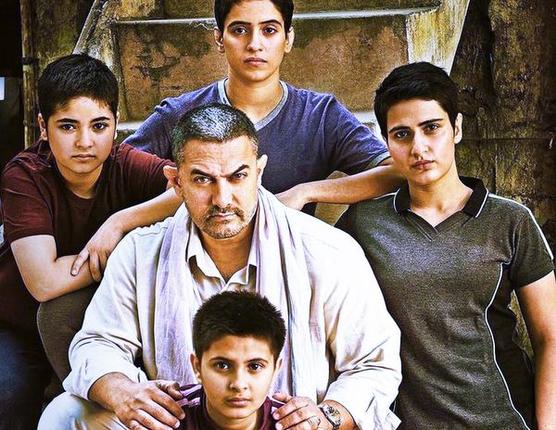
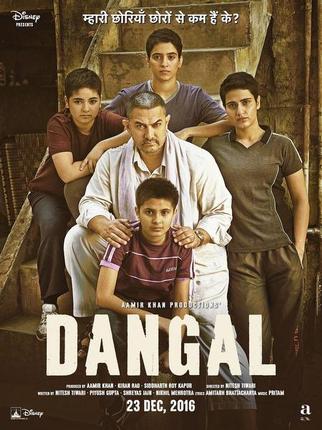
Aamir Khan’s Dangal, which opened on Friday, has come as a boon for cinemas in the era of demonetisation. Analysts and multiplexes believe the movie could notch up ₹100 crore in the opening weekend itself and become one of the top grossers.

The movie, from the studios of Disney Pictures, UTV Motion Pictures and Aamir Khan Productions, has been released across 4,300 screens in India and about 1,000 screens internationally.

Trade analyst Komal Nahata said the movie will appeal to both the masses and the classes as well the urban and the rural consumers.

“It is expected to see historic box-office collections on the opening day. Going by early indications, the movie is also expected to see record lifetime collections,” he added.

According to some analysts, a reason could be that the film is based on a popular sport, wrestling. Besides, earlier this year, the audience had given a thumbs-up to Salman Khan’s Sultan, also based on the same sport. Known to set new records at the box office, the last Aamir Khan-starrer, PK, had raked in an estimated ₹331 crore, becoming the highest grossing bollywood film.

dangalpostermpos28dec2016

PV Sunil, CEO and Director, Carnival Cinemas, said, “Dangal is a boon to the film exhibition industry, especially in the current economic conditions. Our first-day occupancy of around 50 per cent in the matinee shows seems very promising and hints towards a big domestic weekend collection of the film.”

Ticketing platform BookMyShow said it has already hit its fastest one million ticket milestone for a movie with Dangal clocking sales of over ₹20 crore.

Devang Sampat, Director – Strategic Initiatives, Cinépolis India added, “The movie is expected to see a long run at the box office as it is benefiting from a strong word of mouth.”

Tinku Singh, Group President & Chief Strategy Officer SRS Group, said: “Since demonetisation, we have seen a drop in ticket sales at our cinemas, especially in tier-2 cities. But with Dangal, we are seeing average occupancies of 60-65 per cent on the first day.”

The film has brand association tie-ups with Bournvita, Vivel and Nissan Datsun.

source: http://www.thehindubusinessline.com / The Business Line / Home> Variety / by Meenakshi Verma Ambwani / December 23rd, 2016

Mumbai lawyer Afroz Shah to receive top UN environment award for Versova Beach clean-up

Mumbai, MAHARASHTRA :

_________________________________________________________________

Highlights :

  1. Shah and his 84-year-old neighbour Harbansh Mathur had started manually cleaning Versova Beach in 2015.
  2. The clean-up grew into a massive volunteer movement that saw 4,000 tons of garbage being picked up.
  3. UNEP has hailed the movement as an example of the key role of citizen action in protecting the environment
  4. ______________________________________________________________


AfrozShahMPOs31dec2016

New Delhi :

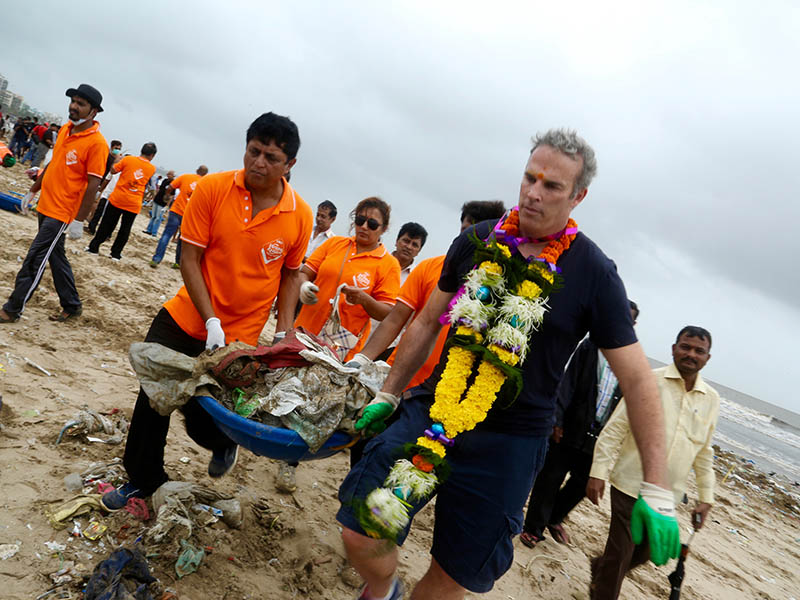
The largest beach clean-up in the world would be a reward in itself. But for spearheading it, Mumbai-based lawyer Afroz Shah has been named as one of winners of the top environmental honour of the United Nations. Shah will be among those bestowed with the Champions of the Earth award for leading the clean-up of Mumbai’s  Versova Beach.

Shah will receive the award under the ‘Action and Inspiration’ category for kick-starting a volunteer campaign to pick up, by hand, all the plastic bags, cement sacks, glass bottles, pieces of clothing, and shoes, that covered the entire 2.5-km stretch of the Versova Beach, even rising many feet high in some places.

The movement grew and grew over the past year and picked up a whopping 4,000 tons of garbage.

“Shah’s efforts, and the hundreds of volunteers he’s inspired, is a wonderful example of citizen action and reminds the rest of the world that even the most ambitious, global agreements are only as good as the individual action and determination that brings them to life. His outstanding leadership is drawing global attention to the devastating impacts of marine litter,” said United Nations Environment Project (UNEP) chief Erik Solheim, who had joined Shah in the clean-up for a day in October.

AfrozShah02MPOs31dec2016

Lewis Pugh, the United Nations Patron of the Oceans, too, congratulated Shah in a twitter. “So delighted that Afroz Shah has won the UN’s highest award for his incredible efforts to clean Mumbai’s beaches!!” he tweeted.

Pugh has for long hailed the Versova clean-up as the ‘largest beach clean-up in history’. He had made it a point to visit Mumbai and take part in the clean-up in July.

AfrozShah04MPOs31dec2016

“This award is in honour of the hundreds of volunteers who have joined me over the past year to clean up our beach and ocean. I am an ocean lover and feel that we owe a duty to our ocean to make it free of plastic,” said Shah as part of the announcement on the UNEP website.

“I just hope this is the beginning for coastal communities across India and the world – we have to win the fight against marine dumping and that involves getting our hands dirty. We humans need to reignite our bond with the ocean and we don’t have to wait for anybody else to help us do that,” he added.

Shah and his 84-year-old neighbour,  Harbansh Mathur, had started picking up garbage off the beach in July 2015. This grew into a movement, with a rising number of volunteers, outliving Mathur.

source: http://www.timesofindia.indiatimes.com / The Times of India / News> India News / TNN / December 03rd, 2016