All posts by mpositiveone@gmail.com

Time, Tide wait for Mum

Udupi, KARNATAKA / Ahmedabad, GUJARAT :

WhatsApp group helps 60-year-old woman unite with her family after 3 years
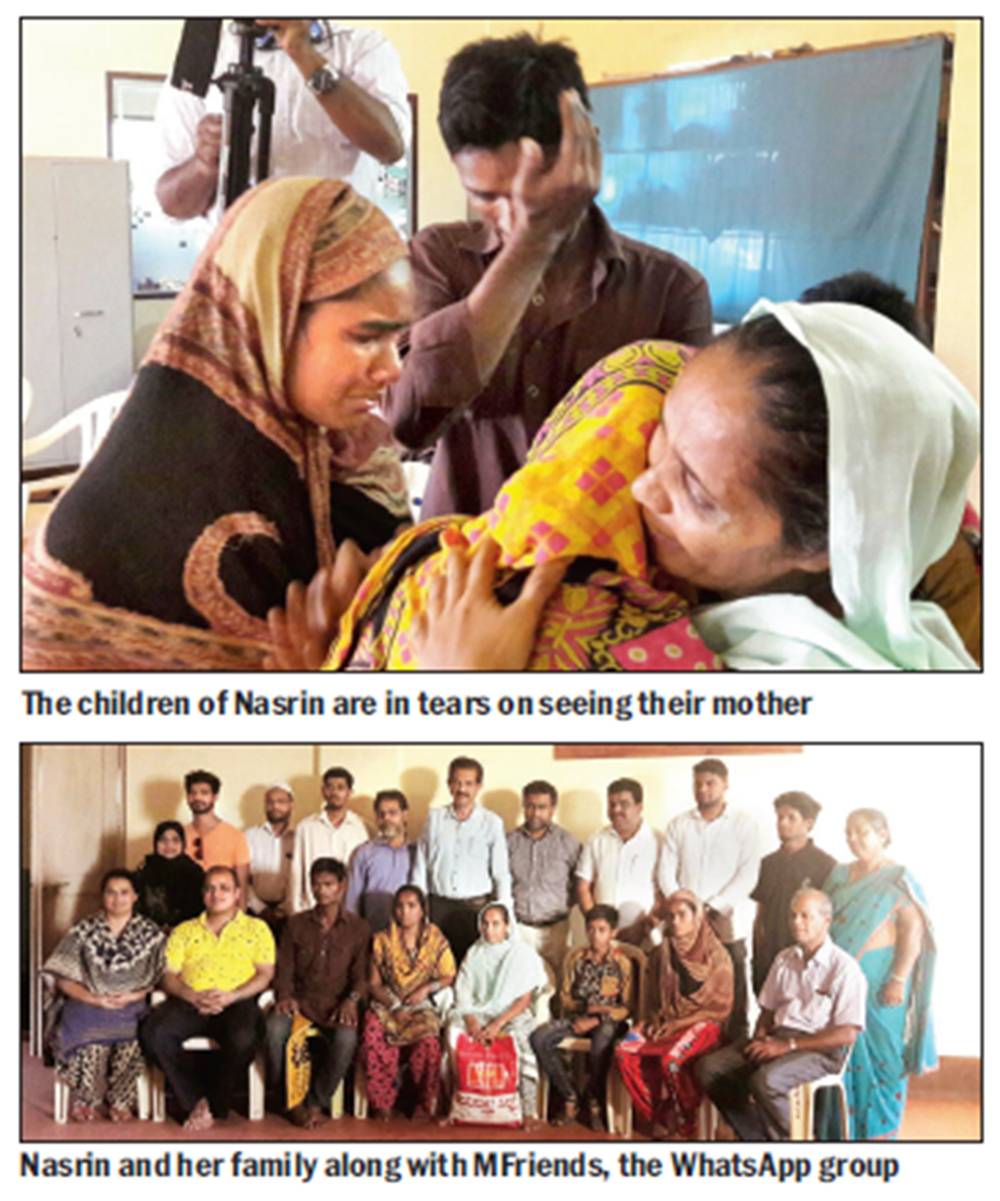
nasrinmpos21dec2016

When Nasrin Banu Mulla aka Rukiya, a 60-year-old woman left her home Navabs Chawl, Danilimda (Ganesh Nagar) in Ahmedabad to meet her daughter Muneera in Surat, little did she know that this journey would take her almost three-and-a-half years to reach Muneera’s house that was just 270 km away.

Nasrin accidentally landed in Mumbai and from there reached Udupi to start living at the Kalmadi bus stand near Malpe. Speaking to Bangalore Mirror, Rasheed Vittal who played an important role in uniting Nasrin with her family, said, “The lady was lucky because she was taken to Vishwasada Mane, a home for destitutes run by Sunil and his wife Elizabeth in Shankarapura of Udupi. She was then mentally disturbed for which she is being treated,” he said.

As her health improved, she began thinking of her children and grandchildren. On seeing children around, she would tell everyone that her grandchildren resembled them. However, she was helpless because she was illiterate and could not recollect her residential address in Ahmedabad. She did not have an address nor a telephone number for people to even help her. Totally unaware about what to do, she spent almost three years and three months in the ashram. She had a feeling that she would never meet her near and dear ones. The ashram staff too made all attempts to find her address, but failed.

She was fortunate to meet Siraj, a resident of Krishnapur working in Saudi Arabia, on December 10. Siraj Krishnapura was on a holiday and had taken his mother to a private hospital in Mukka for treatment. During the same time, the inmates of the destitute home had been to the hospital for a checkup. Nasrin who had covered her head with a shawl caught Siraj’s attention. He approached her and she told him in a Hindi mixed with Bengali about how she was travelling to her daughter Muneera’s house in Surat but accidentally landed in Udupi. She requested Siraj to provide her with a copy of the Quran. He provided her with a mat so that she could perform Namaz and shared this experience on a WhatsApp group, MFriends, with a message that he would be returning back to the Gulf as his holidays were ending and it would be great if someone from the group helped in uniting this lady with her family.

Rasheed, who is also the founder of MFriends, said, “On December 15, we decided to take up the cause of Rukiya. I immediately contacted the orphanage head and collected more details of the woman. Along with her photo and contact numbers of the president of MFriends Haneef Haji Golthamajalu, we shared the post on social media. We then contacted Shantaram Rao, a Mangalurean social worker settled in Ahmedabad for help. Shantaram took the initiative further and saw that the post got maximum reach including mosques as well as Muslim organisations. Several newspapers in Ahmedabad reported the same. We then created a WhatsApp group called Operation Rukiya. The message spread in several Muslim dominated areas of Ahmedabad.”

Within two days, Dilavar called Rasheed Vittal claiming that Nasrin was his mother. He told them that his family had made every attempt to search for her but to no avail. After uniting the family, Rasheed said, “It was a heart touching moment to see a mother unite with her family. They all had tears in their eyes.” Nasrin is widowed and four of her five daughters are married.

source: http://www.bangaloremirror.com / Bangalore Mirror / Home> News> State / by Deepthi Sanjiv, Bangalore Mirror Bureau / December 21st, 2016
 

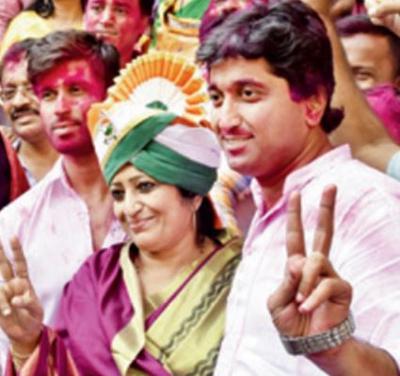
Rosaiah releases compilation of speeches of Shabbir

Hyderabad, TELANGANA :

Hyderabad  :

A transparent governance was the only factor that would drive all-round development of the State, said Leader of Opposition in the Telangana Legislative Council Mohammed Ali Shabbir.

He was speaking after a book — actually a compilation of Mr. Shabbir Ali’s speeches delivered in the House — was released by former Governor of Tamil Nadu K. Rosaiah, who said it would be a record of proceedings that could be referred in future. The former Chief Minister of erstwhile Andhra Pradesh also recalled his association with the Council that lasted over 22 years.

Mr. Shabbir Ali wanted democratic traditions in elected Houses to be preserved and said his own journey of two years in the Council of Telangana State was more dynamic and meaningful in serving the cause of the poor and downtrodden. In his second innings as Leader of Opposition, he said he was in a position to advise the TRS Government in welfare measures.

Presiding over the meeting, Chairman of the Telangana Council K. Swami Goud said it was new tradition of book release at Council initiated by Mr. Shabbir. The tradition should continue for a healthy democracy.

Leader of Opposition in the Telangana Assembly K. Jana Reddy, former Union Minister S. Jaipal Reddy, TPCC president N. Uttam Kumar Reddy, Telangana’s Irrigation and Legislative Affairs Minister T. Harish Rao and a host of others, said the book contained valuation information on various subjects and that it would be helpful to future generations.

source:  http://www.thehindu.com / The Hindu / Home> News> Cities> Hyderabad / by Special Correspondent / December 19th, 2016

The road less taken

GUJARAT / SINGAPORE :

Away from its cookie-cutter malls, Singapore’s Kampong Glam district is a different universe – a delightful cultural mix.

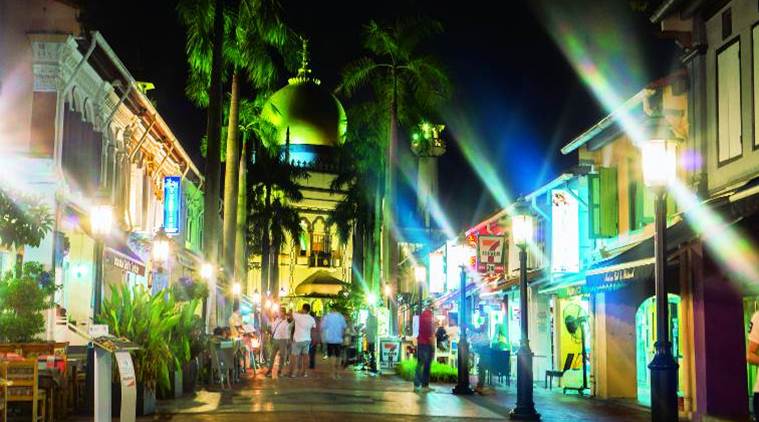
Melting pot: The streets of Kampong Glam

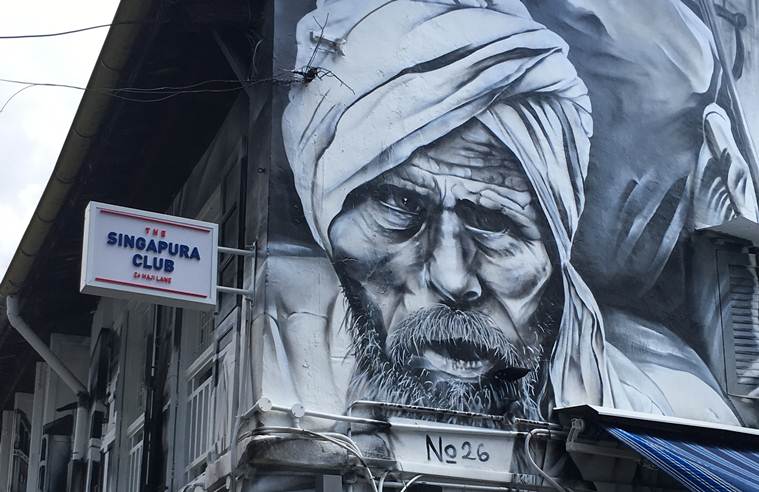
At Haji Lane, in Kampong Glam, one of Singapore’s most atmospheric districts, vibrant graffiti art — African tribal figures, surreal motifs, arresting visages — stares back at me. The psychedelic surfaces on the walls appear gilded in the afternoon sun. Embedded within the walls are colourful windows of pre-war shop houses that occasionally fling open to reveal the owner’s face. The picturesque lane is a photographer’s delight and I click a dozen photos a minute. Nobody seems to mind. People stand and talk in doorways of shops brimming with cult labels and vintage clothing. Hookah bars and cafes spill on to the sidewalk. This is a universe away from Singapore’s crowded, cookie-cutter malls.

“Haji Lane is named after the Haj, the pilgrimage undertaken by Muslims to Mecca and Medina,” says my guide Naseem Huseini, a second-generation Gujarati-Singaporean, as I move around, entranced by my new geography. “It provided accommodation for poor Malay families and lodging for pilgrims.” Today, reasonable rents and a prime location have turned the lane into a hub for upcoming designers and artists, the concept very similar to Delhi’s Hauz Khas Village. I peer through the shops’ doorways and spot artists at work — sculpting, etching, painting and tailoring. The narrowness of the shops’ facades is beguiling though. For as I peep in, I find them stretching way, way beyond. Naseem explains that the shops were built so because in the ’60s and ’70s, the government taxed property owners on the number of windows the houses had!


The graffiti-laden walls at Haji Lane

At the end of Haji Lane, we are swamped by the cheerful chaos of central Kampong Glam dominated by shops catering to the Malay/Muslim community: frame makers, tombstone carvers, textile wholesalers, spice traders, perfumers, Muslim food caterers, and retailers of gemstones, and religious paraphernalia. The Indonesian batik textiles and Muslim prayer carpet shops have been here for almost a century.

Kampong Glam, or KG, as it’s popularly called, is named after the gelam tree whose bark was used by the Orang Laut Malays (the indigenous sea nomads and gypsies of Singapore) to make awnings and sails. “The tree’s timber went into making boats or was used as firewood. Its fruit was ground and used as a spice and its leaves boiled to relieve rheumatism and cramps,” says Naseem.

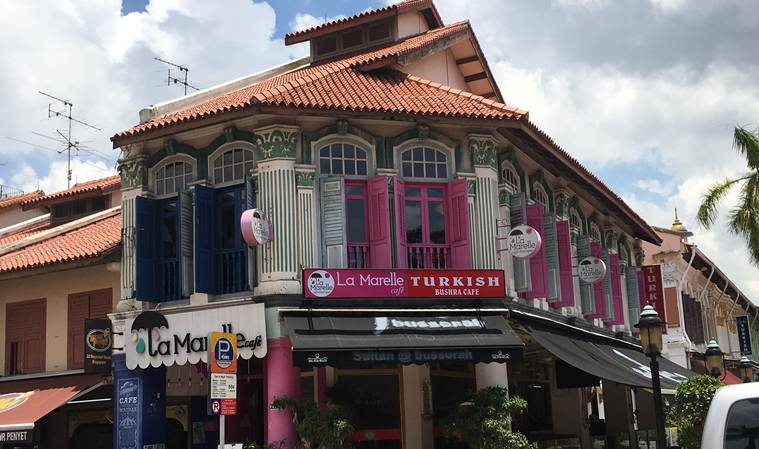
History whispers from every corner of KG. And its streets have evocative monikers — Bussorah, Baghdad, Kandahar. Earlier, many of them were synonymous with specific trades. For instance, North Bridge Road housed tailors and Chinese-run goldsmith shops, Sultan Gate was dominated by stone masons and blacksmiths, while Bussorah Street hosted centres for pilgrimage services.

The exterior of Alaturka restaurant.

“In the early days,” elaborates Naseem, “KG was the exclusive preserve of Sultan Hussein and his family, and the rich Malay and Arab merchants. Later, the Bugis, Javanese and the Chinese also arrived. These people set up kampongs or villages, and built shop houses to expand their businesses.” The kampongs were row wooden houses with steep roofs of corrugated iron or thatch, gathered around a communal centre. Today, these structures stand demolished in the quest for modernisation.

While trying to negotiate KG’s uneven sidewalks, my eyes are constantly drawn to its architectural wonders. The Istana Kampong Glam, the Sultan’s palace, impresses with its exquisiteness. The golden dome and exquisite minarets of the Sultan Mosque — Singapore’s most important mosque and the pivot around which KG seems to flow — seem to scrape the sky.

KG’s street life unspools more engaging sights. We bump into Muslim men in lungis and white skull caps and abaya-clad women, who appear incongruous in Singapore’s landscape, where fashion-forward men in dapper suits and ladies in skyscraper-heels rule. In Bussorah Street, we’re engulfed by shops selling Indonesian batiks, leather bags, Persian carpets, kebaya dresses and handmade perfumes. A cluster of old stores in the shadow of Sultan Mosque sell traditional textiles, carpets and perfumes.

Partially to escape the catatonic heat, we stride into a cool, inviting wood-panelled shop chock-full of hundreds of glittering vials of custom-made perfumes. This is the iconic Jamal Kazura Aromatics, one of Singapore’s oldest perfumeries. A family-run business since 1933, the shop stocks readymade scents as well as fragrances customised from pure essential oils. There are massage oils, scented body soaps and shower creams too. The shop’s cut-glass perfume bottles are as intriguing as the scents. Kazura, the store owner, explains that his shop does double duty as his workshop. Like a modern-day alchemist, he creates scents from hundreds of ingredients sourced from around the world. We spot bits of sandalwood from India jostling for space with frankincense from Africa, myrrh from the Middle East, patchouli from Indonesia and lavender from France.

Kazura adds that when his grandfather, an Indian Muslim, arrived in Singapore in 1933, he started the business and expanded it later to Malaysia and India. “Blending perfumes is as much an art as a science,” he says. “Perfumers have to rigorously train their noses to distinguish between different scents. The provenance of perfumes is in ancient Egypt and Mesopotamia, and they still play a vital role in the Arab world. A good fragrance takes one closer to Allah,” he adds philosophically.

From Arab Street, we amble into Baghdad Street. “Would you like to try teh?” Naseem asks me, two hours into our walk. What’s that? I ask her. In response, the lady steers me to a hole-in-the-wall kiosk located at the junction of Bussorah and Baghdad Street. Here, an elderly white bearded gentleman is making tea at a stall ironically named “No Name Teh Sarabat” stall! Ahmed (65) has been selling Malaysian “pulled tea” for 40-odd years at this very spot and is quite a cult figure. His shop is abuzz with old Malay men sipping fragrant tea available in two flavours — teh tarik infused with rose essence and teh alia (ginger tea). The beverage is cheap. For a Singapore dollar and five cents, we’re soon cupping our hands around a mug full of a brew of black tea, milk and sugar. Ahmed explains that the technique of “tariking” (the process of ‘pulling’ tea from one cup to another) isn’t just a show, but actually makes the tea (teh) taste more delicious.

Food is an omnipresent motif in KG. Hip gelaterias, bistros and cafes pepper its warren landscape. Street after street resonates with the bustle of chairs and conversation, and the clatter of plates and glasses. Iranian, Lebanese, Turkish, Middle-eastern, Indonesian, Thai and Chinese, the repertoire is eclectic. There’s nasi padang (steamed rice served with various dishes) and Malay kuih (cakes), Middle Eastern falafels, sushi/sashimi, Lebanese meats and even quesadillas. At Alaturka, an award-winning Turkish restaurant, our taste buds are tantalised by succulent kebabs, soft pita bread and piquant dips glistening with unctuous olive oil. There’s mint-cinnamon tea to wash it all down with. As I stride out of KG, I feel I’ve learnt a thing or two about Singapore’s rich cultural heritage as well as the vital message it delivers — that plurality and diversity can thrive only in the soil of tolerance and inclusiveness.

source: http://www.indianexpress.com / The Indian Express / Home> Lifestyle> Destinations of the Week / by Neeta Lal / December 18th, 2016

Author Yasmeen Premji in City

KARNATAKA :

yasminpremjimpos21dec2016

Mysuru :

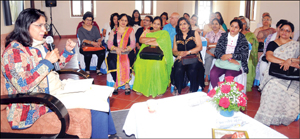
International Books, Arts and Cultural Society, Mysuru, had organised an interaction with Yasmeen Premji, author, philanthropist and architect, at a function held at Wind Chimes in Nazarbad here this morning to commemorate the first anniversary of its English Book Club.

Yasmeen Premji, who is also the Director of Azim Premji Foundation, interacted with the members of the Club on her novel ‘Days of Gold and Sepia’ based on the life of Laljee Lakha, an orphan who rose from a humble family in Kutch to amass a fortune as Bombay’s cotton king in pre-independence era.

English Book Club Founder- President Shubha Sanjay Urs, Club In-Charge Yogini and others were present.

source: http://www.starofmysore.com / Star of Mysore / Home> General News / December 15th, 2016

Haunting notes from the Sitargalli of Miraj

Miraj (Sangli District) , MAHARASHTRA :

A peek into the lives of the luthiers of Maharashtra and their bygone glory

sitarmpos17dec2016

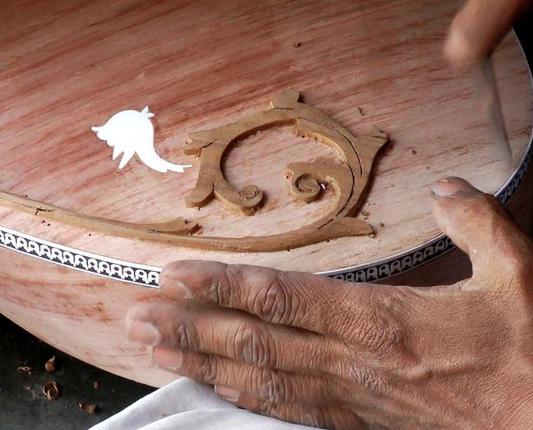
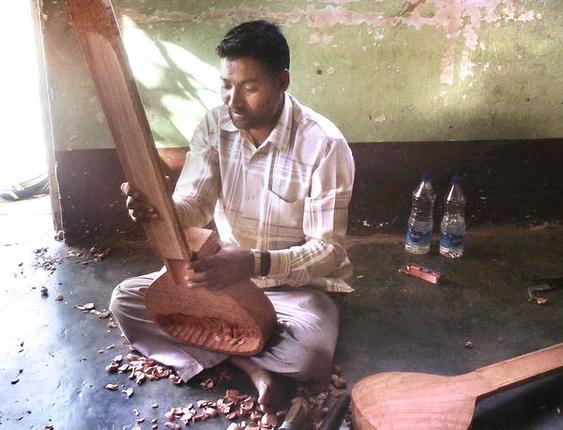
Around 40 km from the bustling city of sugar lords, Kolhapur, sits the small town of Miraj. We drive through crowded by-lanes, where you can relive age-old stories of a traditional craft that has its roots in this erstwhile royal city. The craftsmanship is something of a gharana in itself — with successive generations of families engaged in creating beautiful stringed instruments, such as the sitar, tanpura and the swarmandal over centuries.

Fading melody A sitar-maker of Miraj

Entering one of the workshops of the sitar-makers in a bylane, we meet the gifted Naeem, Imtiaz and Zuber, strangely all with the last names ‘Sitarmaker’, a proud heritage which binds the close-knit community that can trace its family tree to a single ancestor. Their pride, however, seems to be diminishing by the day. These artisans, once the uncrowned kings of the music trade, are now struggling to survive. They say, half in jest, “We are good at two things — making sitars and living from hand to mouth”.

There was a time when these luthiers were paid handsomely and even commissioned by Mughal emperors down the ages to make their uniquely resonant instruments. Their flourishing trade had developed into an entire lane of luthiers, stretching from one part of the town to the other. It is called Sitargalli, meaning the lane where sitars are made.

Waning interest

Artisans at every shop we pass are trying to make a desperate pitch about their instruments. They even go to the extent of downplaying the quality of wares in the neighbouring shop. “Their art is not pure. They separated from the family for business and now want financial gratification from it,” they say. One such family member, Imtiaz, does not speak much. In his dingy shop lie incomplete wooden frames of sitars. Some completed but unsold sitars are visible under a dusty, mouldy cloth.

Imtiaz invites us to his home far away from the main town. On the border between Kolhapur and Miraj lies his house, an abode of legendary sitar-makers for over a century. Stretches of farmland in three directions behind his house lend it a false image of prosperity. Asked how much of the land he owns, Imtiaz politely replies, “ Hum toh rehte bhi border pe hai. Na ghar ke na ghaat ke .” (Even the house we live in is on the border between the two towns. We are neither here nor there).

The family greets us with piping hot cups of tea and biscuits. But the mood turns sombre when Imtiaz begins to speak, “Nowadays people want to play guitars and we don’t know how to make them. What they don’t realise is that the guitar is a foreign instrument. To make and buy foreign instruments in India is like sounding the death knell for our own instrument makers.”

Imtiaz recalls, “We used to live in a mansion. My father would tell me that his grandfather taught all of them how to make sitars. They would play together, eat together and live happily. But after a few years, when business slowed down, families were pitted against each other. Brothers competed to earn money; this killed the trade. Luthiers came to Miraj, learned the craft and left… started their businesses elsewhere. It is just here that they don’t want to keep the business within the family. This infighting only adds to the misery.”

Exacting riyaaz

His father, Abdul Majid, who has been making sitars for six generations, is hard at work finishing a sitar. He says, “Very few people want to put in the hard work and effort to learn the sitar. It is not easy. Your fingers bleed in the beginning. They get calloused. They hurt from the playing. It is not easy to sit with a straight spine for three hours, on the floor, for every riyaaz (practice) session. Very few have the determination to go on. If playing needs so much effort, can you imagine how much is needed to make the instrument?”

Zuber, their cousin, speaks of how he almost drove a chisel into his foot while hollowing a plank for a sitar. Gazing at the children of the family, Imtiaz wonders, “I don’t know whether these children will ever understand the power of the art that they hold in their hands. They will be the eighth generation in this lineage, should they choose to stay with the trade.”

The family has started farming because it cannot afford to wait for sitar orders. “For sustenance, we have leased some land and are growing vegetables. Most of them we sell and use the leftovers at home. We are lucky that we get to eat fresh from the farm.”

Solid guarantee

As we’re leaving, Imtiaz gives us one final sales pitch that is too hard to ignore. “We will make the best instruments you need and, if you don’t like them, I will personally carry them back to my workshop. My trade is not agriculture, it is these instruments.”

(To sustain their trade, Bajaao has offered the luthiers a fair trade deal. In an industry that is rife with duplicity and fraudulent dealings, the company offers a hundred per cent guarantee on the quality and longevity of an instrument made according to the flawless Miraj tradition.)

The writer is CEO of Bajaao and recently visited the famous town of luthiers.

source: http://www.thehindubusinessline.com / Business Line / Home / by Suman Singh / print edition December 17th, 2016

Story-Telling

Mysuru, KARNATAKA :
Kalasuruchi has organised a story-telling by Ayesha Karim, Retd. Bank Officer, Canara Bank, Mysuru, at Suruchi Rangamane, 476, Chitrabhanu Road, Kuvempunagar, on Dec. 17 from 4.30 pm to 5.30 pm

For details, contact Ph: 0821-2541795 or Mob: 92435-81097, according to a press release.

source: http://www.starofmysore.com / Star of Mysore / Home> In Brief / December 16th, 2016


Woman who defied clerics is now mayor of Kolhapur

Kolhapur, MAHARASHTRA :

Hasina Faras, 61, has become the first Muslim woman to bag the post of Mayor in Kolhapur

____________________________________________________

HIGHLIGHTS

  1. Despite a fatwa issued by a local Muslim cleric body last year warning Muslim women to not contest the municipal elections, 19 women had filed for candidacy.
  2. Five women were elected as corporators including the newly elected mayor of Kolhapur, Hasina Faras
  3. ________________________________________________


Kolhapur :

When Hasina Faras wanted to contest the Kolhapur Municipal Corporation (KMC) polls last year, she was warned by a local body of 40-50 clerics that it was un-Islamic to do so. In fact, the clerics of the Majlis-e-Shoora-Ulama-e-Shahar had then issued a fatwa to all Muslim women not to stand for polls.

However, 19 Muslim women defied the fatwa and contested. Five of them, including Faras, were elected as corporators. A year down the line, 61-year-old Faras has become the first Muslim woman to bag the post of mayor in Kolhapur.

Political twists and turns and challenges are not new to Faras, whose family has been associated with the NCP. The religious challenge had posed a new hurdle, but she said support from her family and members of the community helped her face it.

“The fatwa went against the democratic values of the country. Kolhapur has the great legacy of  Chhatrapati Shahu Maharaj. We did not pay attention to the fatwa and contested the elections. Society has changed and we have to accept the changes. Muslim women have entered every sphere of life. I will stand against extrajudicial elements in future too if similar fatwas are issued,” Faras told TOI on Wednesday.

With 50% reservation for women in the local civic bodies, the 81-member KMC House has 42 women corporators belonging to all major political parties. The mayor’s post is to be rotated between NCP and Congress after an agreement was worked out between the two ruling alliance partners last year. However, with the opposition fielding a candidate, polls were necessitated this year.

source: http://www.timeofindia.indiatimes.com / The Times of India / News> City News> Kolhapur News / by Shekhar Paigude / December 15th, 2016

Four women achievers selected for Press Club award

Mangaluru ,  KARNATAKA :

Renita Lobo, Shamitha Rao, Sameera K and Fouzia B S have been selected for the second Mangaluru Press Club Award 2016.

Renita and Shamitha, both residents of Mangaluru, began an ambitious journey two decades ago to provide quality education to the underprivileged. Sameera and Fouzia, who are residents of Kadaba, on the other hand, started a school for dropouts.

A committee led by Hampi Kannada University former vice chancellor Prof B A Viveka Rai, renowned theatre director Sadananda Suvarna and School of Social Work Roshni Nilaya retired professor Rita Noronha selected the four awardees.

The award will be presented at Mangaluru Press Club Day celebrations at Scouts Bhavan in Lalbagh on December 18. District In-charge Minister B Ramanath Rai will present the award. The award carries a cash prize of Rs 10,001, a citation and a memento.

Renita and Shamitha

The journey of Renita and Shamitha began in 1995, after they completed their graduation in a college in Mangaluru and took up a teaching job in a school in Ramanagar. When the school closed down, they shifted to Siddapur to teach the students of LKG and 1st Standard at one of the schools there.

As they were paid a meagre Rs 500 a month as salary, they decided to quit their job, when local residents requested them to open a school in a remote area. Subsequently, a makeshift school was opened in 1998, with 12 students.

From then onwards, there was no looking back. In 2002, they purchased their own land and constructed a building with four rooms. Each room had two classrooms with partitions. Now, they could handle eight classes simultaneously.

By the time they started Class 7, the school’s overall strength had increased to 200 students, with 14 students enrolling in Class 7.

“Although we added a class every year, we stopped at Class 7 as we felt that high school was not our cup of tea. However, when we informed the Bishop about our inability to start a high school, he referred us to Sr Maria Goretti of SRA congregation, who donated Rs 4.9 lakh and motivated us to start high school,” recalls Renita.

Although they could manage the infrastructure, they had the Herculean task of getting the required number of 40 students to start Class 8.

“As there were only 14 students in 7th Standard, touching the 40 mark looked impossible. We decided to go from door-to-door in all the surrounding villages and
we managed to cross the magical mark of 40 with 41 students getting the admission
to 8th standard,” reveals Shamitha.

As most of the parents were not formally educated and the students were poor in English, Renita and Shamitha conducted special classes in English during the summer holidays. They also took various other steps like special classes to improve their academic performance.

“When Karthik Ranjan from the first batch of SSLC students scored 606 and became the 2nd topper in Kundapur taluk, we were on cloud nine,” they recall fondly.

The achievement of the first batch of students carved a niche for the school, which was unheard of till then. Quite interestingly, the school has registered 100% results every year, since its inception. Apart from academics, the school also offers training in karate, Bharatanatyam, music, activities like Ayurdhama (growing medicinal plants), eco club and science club.

Fearing that the students may discontinue their studies after SSLC, they began the Pre-university College programme when the first batch was out in 2009. Initially, Chemistry, Electronics and Computer Science were offered; Biology was added in 2010 and Statistics in 2014. The duo’s hardwork has paid dividends in the form of students taking up higher education.

Now, with 1,050 students and 60 teaching and non-teaching staff, the school stands tall, reflecting the dedicated efforts of two young girls to make education accessible to the children of uneducated parents in a remote village, which lacks basic facility even to this day.

Sameera and Fouzia

Sameera K and Fouzia B S, became ray of hope in the life of underprivileged after they set up a college in Kadaba about 70 kilometres from Mangaluru in 2013, named AIM’s first grade college.

Sameera from Kadaba completed her post-graduation in Political Science in 2012, while Fouzia, from Athoor, and a year senior, completed her post-graduation in Kannada.

The duo became friends when they stayed at the hostel for minority students at Deralakkate near the University. It was here that they would have long discussions about the need to set up an educational institution.

Initially, it was Sundar Gowda Mandekar who gave the girls a building on rent to start a school. As a first step, they set up AMS school named after the initials of their parents in 2012. This was a school mainly for SSLC and PUC dropouts. The same year, they applied for affiliation to the Mangalore University and went on to start AIM’s College for BA and BCom, but continued with their school for dropouts. There are a total of 180 students, both boys and girls, including SSLC and PU dropouts.

“Our target is poor students and we see to it that they get the best education. There are tie-ups with various organisations and associations for scholarships and other benefits. Regular counselling is given to the parents too,” Fouzia said and added that they impart vocational training courses for homemakers.

Stating that there are many auto drivers keen on completing SSLC, she said that while there is a regular batch for dropouts, for those who cannot attend regular classes, they conduct weekend classes.

source: http://www.deccanherald.com / Deccan Herald / Home> District / DHNS – Mangaluru, December 14th, 2016

Scientists name new spider after Harry Potter character

Shivamogga, KARNATAKA :

Bengaluru :

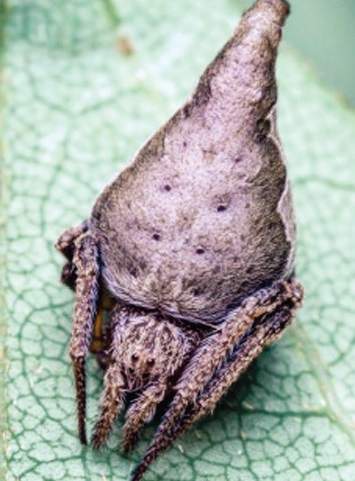
For any hardcore Harry Potter fan, the Sorting Hat, and the medieval wizard Godric Gryffindor is basic knowledge. Three entomologists, who stumbled upon a new species of spider have decided to pay tribute to the character by naming it after him. Though the arachnid bears resemblance to the ‘Sorting Hat’ of Hogwarts School of Witchcraft and Wizardry, it would be hard to spot it if you are trekking in the Western Ghats.

spiderbf13dec2016

Eriovixia gryffindori, is the new spider species discovered, details of which was published in the recent edition of Indian Journal of Arachnology.
The discovery of the arachnid was made at ‘Kans’ forestland of Central Western Ghats at Hosanagara taluk of Shivamogga district, by Javed Ahmed, Rajashree Khalap and Sumukha J N.

While Javed and Rajashree hail from Mumbai, Sumukha is from Shivamogga.

Describing the etymology of the spider, the scientists write that naming it after Gryffindor – after whom one of the four houses in Hogwarts School of Witchcraft and Wizardry is named and who once owned the Sorting Hat – was, “An ode from the authors, for magic lost, and found, in an effort to draw attention to the fascinating, but oft overlooked world of invertebrates, and their secret lives.”
Prior to it, they express their fondness of J K Rowling, author of the Harry Potter series as a ‘wordsmith extraordinaire’.
“This uniquely shaped spider derives its name from the fabulous, sentient magical artifact, the sorting hat, owned by the (fictitious) medieval wizard Godric Gryffindor, one of the four founders of Hogwarts School of Witchcraft and Wizardry, and stemming from the powerful imagination of Ms. J K Rowling….” they wrote.

While the team found a female specimen of the Gryffindor spider, they are yet to describe the holotype of a typical male of the species. The paper notes that the particular species of spider is known to be distributed only from Shivamogga district, as of now.
The spider mimics dry foliage, making it ideal for it to reside almost undetected on the forest floor.

source: http://www.newindianexpress.com / The New Indian Express / Home> Cities> Bengaluru / by Express News Service / December 13th, 2016

Realtor Razack to open Bengaluru’s first Museum of Indian Paper Money

Bengaluru, KARNATAKA :

In 1913, Maharaja Krishna Raja Wadiyar IV appointed William Clarence Rose as the first chief manager of the Bank of Mysore. Whilst in office, Rose collected all British India banknotes of denominations five, ten, fifty and one hundred in a series. When he retired in 1925, he received a wax-paper scroll rolled into a carved silver sheath, mounted on a teak base. Everything was made from melted silver coinage issued by the Raj.

Rose passed all this onto his daughter Vera Katherine Maud Collins, who bequeathed it to her grandson Simon Collins.The latter remembers how the “gift was kept in a 1937 coronation stamp album“ and was passed on two months before his grandmother’s death in 1982. This legacy -along with other historical nuggets -is finding its way back to the city .

The collection will be housed in a museum of Indian currency, expected to come up in Bengaluru next year.

The project is the brainchild of realtor and currency collector Rezwan Razack, who has been collecting Indian paper money since 1971. Spread across 4,000 square feet and located off Brunton Road, the museum is expected to be open to the public in the latter half of 2017. “The intention of setting up the Museum of Indian Paper Money is to display all that there is in my collection. It is to create awareness about our history and our journey so far as a nation, through our currency ,“ says Razack,  who is the managing director of city-based Prestige Estates Projects and chairman of the International Banknotes Society’s India chapter.

Among the world’s most prolific collectors of rare currencies, Razack has preserved bills dating back to early 1770s.These include the uni-face (onesided) notes first launched by the government of India, portrait notes of King George V & VI, cash coupons of princely states, Indian notes issued in Pakistan and Burma, special issues made for the Persian Gulf and Haj Pilgrims and all variants of Indian notes -from the Independence era till the latest demonetisation exercise.

E a ch n o t e links us to the way of life in the past and unearths lesser-known stories of our city and country, believes Razack. For instance, on display will be 100-odd Prisoner of War coupons issued by the British. “There were eight camps across India, including Bengaluru, which issued bills from one anna to ten rupees,“ he says.

The museum will comprise of interactive displays, historic facts and trivia, along with stories and essays written by Razack from his own journey and experience as a collector.Architects are working on the blueprint of the museum and estimates should be drawn up by the end of the year, Razack informs.

source:  http://www.economictimes.indiatimes.com / The Economic Times / Home> ET Home> Magazines> Panache / by Divya Shekhar, ET Bureau / November 24th, 2016