When the chief minister Akhilesh Yadav felicitated eminent persons of different fields with Yash Bharati Award and announced a monthly pension ofRs. 50000 to the recipients in Lucknow on Monday, the kin of 115-year-old member of Subhash Chandra Bose’s Indian National Army (INA) Nizamuddin in Azamgarh district were upset over government’s apathy to recognize contribution of the centenarian war veteran.
“Not to speak of any award or pension, there is not even a ‘cheering smile’ from government side to this living legend of INA,” Nizamuddin’s son Akram Sheikh told to TOI.
“Is the service of my father, who had faced enemy’s bullet on his body to save Netaji’s life in the jungles of Burma (now Myanmar), worthless for the government machinery,” wondered Akram adding that no political leader except Prime Minister Narendra Modi appreciated his father publically. During his Lok Sabha election rally in Varanasi in May 2014 Modi had publicly greeted Nizamuddin and touched his feet.
“My father needs nothing, but only a warm call of ‘Jai Hind’ when the chief minister along with SP supremo Mulayan Singh Yadav will be at Sathiaon in Azamgarh, just about 6km away from our place, on Tuesday to attend a programme,” said Akram. He said that his father used to tell the wartime stories. Once when the INA troop was in the forests of Burma Nizamuddin spotted an enemy soldier targeting Bose. He shielded Bose and faced the bullet on his back. Laxmi Sehgal had removed three bullets from his body.
Nizamuddin, a resident of Dhakwa village in Azamgarh district, claims to be the close aide of Bose. He served as his body guard cum driver during INA tenure.
The only documentary proof to show his association with INA is the repatriation certificate issued in favour of Nizamuddin by one Swami (full name SV Swami), the chairman of Relief and Repatriation Council, Ex. Azad Hind Fauj and Allied Organisation, Rangoon. It is a certificate having information about him and a pledge for the nation with a seal of AH Fauj & Allied Organisation, Burma.
Nizamuddin is not ready to accept that Bose died in air crash in 1945, as he claimed that he had dropped his master on the banks of river Sitangpur near the Burma-Thailand border about three-four months after the said air crash. He strongly believed that Bose lived in Faizabad in the guise of Gumnami Baba, and he also claimed that the German make binocular found in the box of Gumnami Baba belonged to INA.
source: http://www.timesofindia.indiatimes.com / The Times of India / News Home> City> Varanasi / by Binay Singh / TNN / March 21st, 2016
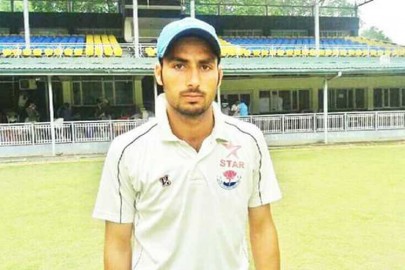
“If I die and go to heaven, I’ll put the name of Star Eleven on golden star, So that angels can see, How much Star Eleven means to me,” read a Facebook post from Nayeem Bhat.
He wrote it in 2014. Now, that ‘if’ is a reality. Nayeem is dead. He won’t represent Star Eleven – a cricket club in north Kashmir’s Handwara town – any more. His all-round brilliance is history. A bullet has silenced the face of cricket in Handwara forever.
Nayeem, a 21-year-old allrounder, had a dream. A cricketing one. Make it big in the sport. Play with the best. Play for Jammu & Kashmir. Maybe, someday, play for India. Like many youngsters in this part of the world, his room was dotted with the posters of cricket stars. Virat Kohli and Parveez Rasool, now team-mates at Royal Challengers Bangalore, featured prominently.
Nayeem played the sport with passion, doing everything to improve his game. He didn’t hesitate to travel 60 kilometres to Srinagar, the state’s cricket capital, to rub shoulders with the who’s who of Kashmir cricket. The men that matter acknowledged his talent. Kashmir Gymkhana, one of the premier clubs affiliated with the Jammu and Kashmir Cricket Association, recruited him to play for them. One small step towards realising his ambition. But his journey had a terrible end. A dream to be weaved with bat and ball was shattered by a bullet – another instance of cricket and conflict being intertwined in Kashmir.
Nayeem’s death has left the cricketing community in Kashmir in a state of mourning, for his team-mates and coaches believed he had all the ingredients to be a ‘perfect allrounder’. Nayeem, his coaches said, had a repeatable action and his height gave him lift off the deck at pace decent enough to trouble the batsmen. He was also good enough as a batsman to play in the middle order for the teams he represented during his short career.
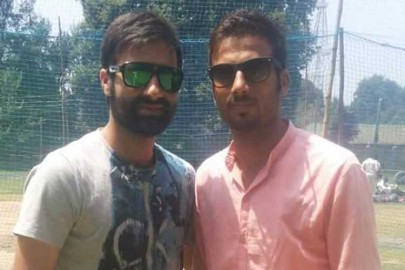
Nayeem’s cricketing journey coincided with that of Akeel Ahmad, his childhood friend and an Under-19 player for J&K. For Akeel, Nayeem was a rival on the cricket field, but best buddy off it. The duo was on a mission: to make otherwise neglected Handwara part of the cricketing landscape.
Nayeem and Akeel were together just half an hour before they were separated forever. Before the fateful moment, they were busy doing what they often did when not playing cricket: photography. Done with their session, Akeel said, they went to the market. Suddenly, an assembly of protesters caught their attention.
Nayeem was called by his brother, a journalist, asking for a camera. “I left the spot and after sometime got to know Nayeem was hit by a bullet,” said Akeel. “I couldn’t believe it.”
Akeel told Wisden India that he was in awe of Nayeem’s work ethic and passion. “Nayeem would play for Star Eleven, and I played for Handwara Cricket Club. We used to play against each other very often. Nayeem was someone I have known closely. He was my fiercest rival on the field, but we were buddies off it,” he said.
“We would discuss cricket more often than not. He wanted to improve all the time. He had his eyes on top-flight cricket. He was very keen on his fitness, and would train hard. I am shattered by his death. I don’t know how to cope with his loss. This is a huge loss to cricket, and Handwara town in particular. He was trying his best to give our town a cricketing name.”
Nayeem’s coaches remember him as someone who didn’t hesitate to ask questions about his game. Manzoor Ahmad Dar, coach of Kashmir Gymkhana Club, was impressed with what he saw of his young charge. “Nayeem was a very humble and down-to-earth cricketer and he took his game seriously,” Dar told a daily. “Nayeem was a dedicated cricketer and would come all the way to Srinagar from Handwara to practice and train. He had skill and the temperament to improve all the time. We are in complete shock over his death.”
Nayeem’s death has social networking sites abuzz, with Kashmiris expressing their sorrow and sadness.
The young allrounder had a brush with franchise-based Twenty20 cricket, playing two seasons for Srinagar’s Pride Riders in the Downtown Champions League. Mubashir Hassan, a coach licensed by the Board of Control for Cricket in India, is a mentor of the team. Hassan is understandably devastated by the death of his talented ward, who called him often for tips. Nayeem wouldn’t mind calling him on his phone for tips, remembered Hassan.
“Nayeem had a bright future and promising career ahead,” he told Wisden India. “He was a keen learner and I had high hopes of him. He had that hunger and passion that impressed one and all. This will have a huge impact on the players who have played with and against Nayeem. They will be mentally scarred, and it will take them some time to come out of it.”
His parents used to call him Gavaskar, while some of his friends compared him to Martin Guptill, the New Zealand opener. On Tuesday (April 12), a bullet claimed Star Eleven’s brightest star. Hopefully, the angels will realise what his local side and the game of cricket meant to Nayeem.
Waheed Mirza is a journalist in Srinagar. He tweets @mirzawaheedz.
source: http://www.wisdenindia.com / Wisden India / Home / by Waheed Mirza / April 15th, 2016
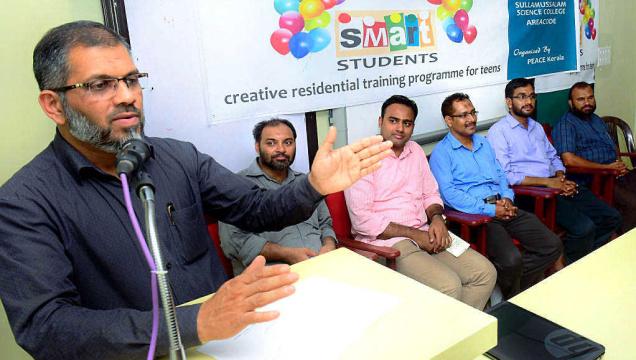
Career Enhancement:Calicut University Vice Chancellor K. Mohammed Basheer inaugurating a residential camp under the banner of the Programme on Education and Career Enhancement (PEACE) at Sullamussalam Science College, Areekode, on Thrusday.
Malappuram, Kerala :
Ithihadu Shubbanil Mujahideen launches residential camp for students
The Ithihadu Shubbanil Mujahideen (ISM) launched a creative learning camp for students at Sullamussalam Science College, Areekode, on Thursday.
Calicut University Vice Chancellor K. Mohammed Basheer inaugurated the residential camp held under the banner of the Programme on Education and Career Enhancement (PEACE).
Dr. Basheer called upon the students to proceed to their objective with determination and enthusiasm. ISM State vice president Labeed Areekode presided over the function.
Camp director Mansoor Othayi, Social Security Mission liaison officer P.V. Ahmed Saju, Kerala Nadvathul Mujahideen vice president N.V. Abdurahman, PEACE chief executive officer Fukkar Ali, ISM leaders Ismail Kariyad, Shakkir Babu Kuniyil, Naseer Cheruvadi, Afsal Madavur, and Yunus Chengara spoke.
source: http://www.thehindu.com / The Hindu / Home> National> Kerala / by Staff Reporter / Malappuram – April 16th, 2016
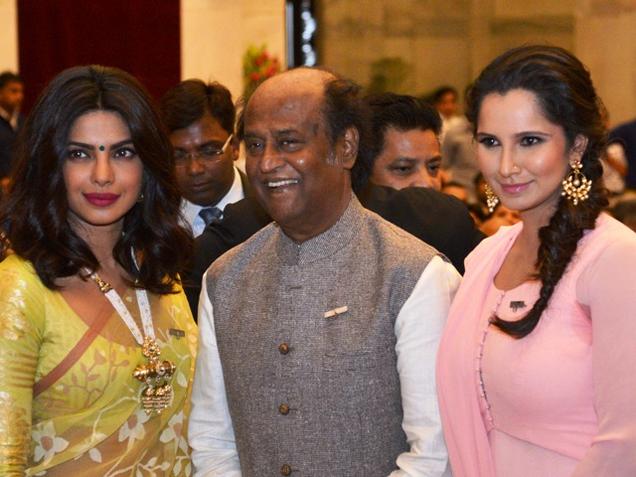
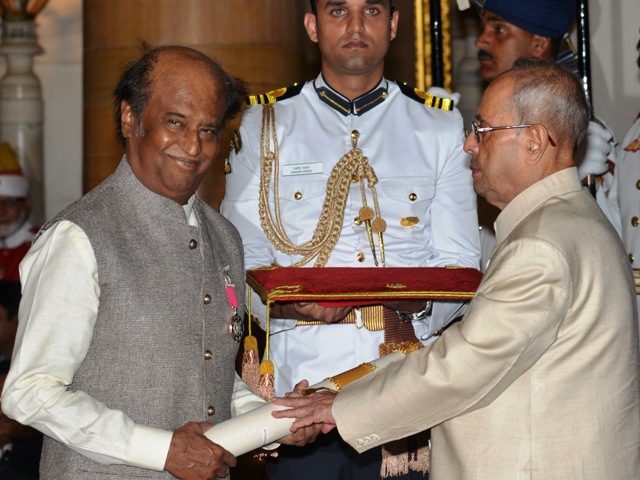
Actor Rajinikanth flanked by Bollywood actor Priyanka Chopra and Tennis player Sania Mirza, who were the recipients of the Padma Vibhushan, Padma Shri and Padma Bhushan Awards respectively during the Civil Investiture Ceremony at the Rashtrapati Bhavan in New Delhi on April 12,2016. Photo : R. V. Moorthy
56 eminent persons were honoured with Padma awards on Tuesday.
Superstar Rajinikanth, tennis icon Sania Mirza, former U.S. Ambassador Robert D Blackwill and actor Priyanka Chopra were among the 56 eminent persons who were honoured with Padma awards on Tuesday.
Former DRDO chief V K Aatre, chief editor of Telugu daily Eenadu Ramoji Rao, philanthropist and educationist Indu Jain, chairman of Maruti Suzuki India R C Bhargava, singer Udit Narayan, eminent lawyer Ujjwal Nikam were also honoured with the Padma awards by President Pranab Mukherjee at the Civil Investiture Ceremony held at the Rashtrapati Bhavan.
Rajinikanth, Aatre, Rao, renowned vocalist Girija Devi, chairperson of Cancer Institute, Chennai V Shanta were given Padma Vibhushan. Looking dapper in a beige churidar kurta teamed with a grey Nehru jacket, Rajinikanth was accompanied by his wife Latha Rajinikanth.
New Delhi, 12/04/2016: President Pranab Mukherjee presenting the Padma Vibhushan Award to South Indian Film Actor Rajinikanth during the Civil Investiture Ceremony at the Rashtrapati Bhavan in New Delhi on April 12,2016. Photo : R. V. Moorthy
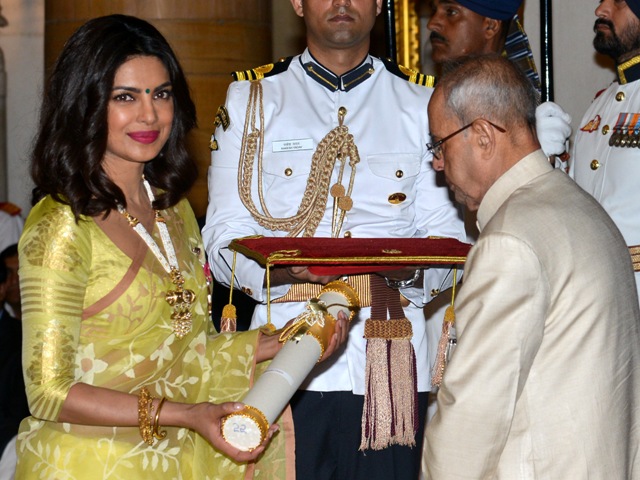
Priyanka Chopra, who was awarded the Padma Shri, especially flew down to India from her “Baywatch” shoot in Los Angeles to receive the honour.
“This is the best award I have ever received. Thank you so much. I am grateful,” she told reporters here.
The “Jai Gangajaal” star looked elegant in a lemon yellow saree as she received the honour.
New Delhi, 12/04/2016: President Pranab Mukherjee presenting the Padma Shri Award to Film Actress Priyanka Chopra during the Civil Investiture Ceremony at the Rashtrapati Bhavan in New Delhi on April 12,2016. Photo : R. V. Moorth
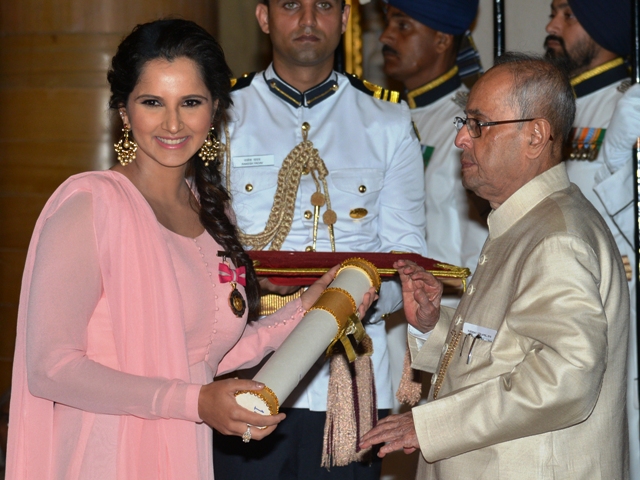
Sania Mirza, who was awarded the Padma Bhushan, is the fourth Indian tennis player to receive the Padma Bhushan. Vijay Amritraj, Ramanathan Krishnan and doubles legend Leander Paes had earlier been honoured with both Padma Shri and Padma Bhushan. Sania was conferred with Padma Shri in 2006.
New Delhi, 12/04/2016: President Pranab Mukherjee presenting the Padma Bhushan Award to Tennis Player Sania Mirza during the Civil Investiture Ceremony at the Rashtrapati Bhavan in New Delhi on April 12,2016. Photo : R. V. Moorthy
“Humbled. Honoured. And truly thankful .. #PadmaBhushan,” Sania tweeted later.
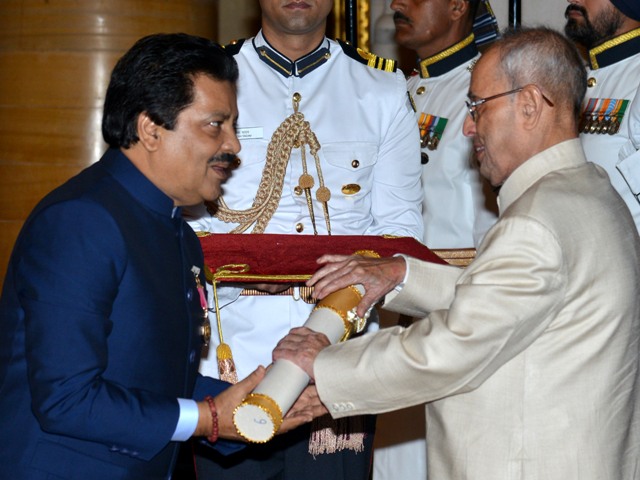
Bhargava, Jain, Blackwill, Narayan, Manipuri playwright Heisnam Kanhailal, noted Telugu and Hindi litterateur Yarlagadda Lakshmi Prasad, teacher of Vedanta Dayananda Saraswati (posthumous), leading sculptor Ram Vanji Sutar, Indologist N S Ramanuja Tatacharya and International head of Chinmaya Mission Swami Tejomayananda were honoured with Padma Bhushan.
New Delhi, 12/04/2016: President Pranab Mukherjee presenting the Padma Bhushan Award to Playback Singer Udit Narayan Jha during the Civil Investiture Ceremony at the Rashtrapati Bhavan in New Delhi on April 12,2016. Photo : R. V. Moorthy
Nikam, former President of Editors Guild of India Dhirendra Nath Bezboruah, renowned novelist from Karnataka S L Bhyrappa, Puducherry-based social worker Madeleine Herman de Blic, president of Bodo Sahitya Sabha Kameswar Brahma were among the 40 eminent persons who were given the Padma Shri.
source: http://www.thehindu.com / The Hindu / Home> News> PTI – IANS / New Delhi – April 12th, 2016
For the rest of Vizag, Mubarak Colony in Yendada can be easily reckoned as a model colony. The highly prosperous residents belonging to the Dawoodi Bohra community did not wait for the Greater Visakhapatnam Municipal Colony (GVMC) to provide them with pucca roads and proper drainage system, but did it themselves by spending lakhs of rupees. Every house has a green area or kitchen garden as well as rainwater harvesting facility. They have strictly implemented Swachh Bharat, education for girl children and ensure that there is no wastage of food.
What’s more, they have a unique hygienic centralised kitchen in their mosque that delivers food to every household six days a week. This arrangement is mainly to eliminate inequality between the rich and the not-so-rich and to promote women empowerment, so that women get adequate time for their creative pursuits rather than staying confined to the kitchen. The women are also allowed inside the mosque to offer namaz.
On two-acre land in Yendada, around 115 Shia families comprising a population of about 400 have been residing since almost a decade. Apart from these, in various other parts of the city, another 65-70 families are spread out but the majority dwells in Mubarak Colony. This business community had migrated to the Port City from Gujarat in the late 1970s and speak Lisan-ud Dawat, a language somewhat similar to Gujarati. “In whichever country we reside, we consider it our responsibility to support the government in the economic progress and overall advancement of the nation. We don’t have a single unemployed member in our community. Rather we provide employment opportunities to others. In Vizag, most of us deal with hardware and industrial supply,” said Adnan Sabuwala, president of JCI Visakha Valley and a member of the community.
“Though GVMC sanitary staff clears the garbage, all the members have taken care to clean our colony once a month and ensure that it’s kept clean and green with plants and gardens around. Although we lack a proper approach road, we had laid the roads of our colony by spending Rs 5 lakh when our spiritual leader had visited us. We have an active anjuman-e-badri or committee organisation that looks into the accounts and logistics and most members are connected through WhatsApp,” added Md Fakhruddin, a member of the Mubarak Colony Welfare Society.
Explaining the concept of the centralised well-maintained kitchen, Abbasbhai Sabuwala, said, “Under this scheme, lunch is daily cooked in the mosque kitchen and supplied at 12 noon in tiffin carriers meant for every Bohra family in the colony as well as in the city. There’s also an App which can be utilised by the families to inform before hand if they are going outside and wouldn’t require lunch, thus food wastage is prevented. This kitchen also caters to the families during Eid or other festivals and occasions like marriage and birthdays. Usually once a year, the members financially contribute towards the daily kitchen expenses. The concept is to ensure economic and gender equality and give the women time for their creative pursuits.”
Though they have a hi-tech madrassa adjacent to the Mohammadi Masjid, almost all children commute to the top English medium schools in the city by school bus or private cars. Needless to say, every house in the colony are like picture-postcard bungalows and has lawns and gardens as well as well-decorated rooms.
“A couple of posh multi-storied apartments have also sprung up in the colony, equipped with swimming pool, gymnasium and a tiny pond for ducks to add to the beauty. Credit for the interior decoration goes to the women in the families, who also display their creativity in other areas such as mehendi designs, cookery, embroidery and all sorts of needlework and art works, making designer rida (the traditional garment wore by the women) and topis (caps) for men and musical programmes like madeh,” said Yusuf Nandarbarwala, a resident of the colony.
“Even though we have respite from cooking six days a week due to our centralised kitchen concept, we still like to experiment with cuisines and on Sundays we usually prepare something at home. We also participate in cookery competitions. Karri chawal, dal chawal palidu, kharak ka halwa (dry dates halwa), biryani and walnut desserts are some of the special dishes of our community,” said Tasneen Yusuf, a winner of various competitions.
source: http://www.timesofindia.indiatimes.com / The Times of India / News Home> City> Visakhapatnam / Sulogna Mehta / TNN / April 15th, 2016
The World Consumer Day was celebrated recently in Madikeri under the joint auspices of Kodagu district administration, Food and Civil Supplies Department and Kodagu District Consumer Forum.
MirAnisAhmed, DCofKodagu, inaugurated and V.A. Patil, President, Kodagu District Consumer Forum, presided over the programme which was attended by more than 150 people.
C.V. Nagaraj, retired Senior Chemist, Regional Agmark Laboratory, Bengaluru, demonstrated simple tests to detect adulteration in various food items. He also spoke about the harmful effects of various types of adulteration and on the laws that exist in India against food adulteration.
Associations interested in arranging such lecture-demos can contact C.V. Nagaraj ( 2521640, 9945651990).
CULTURAL FEST
The Department of Tourism and Hospitality Management, Pooja Bhagavat Memorial Mahajana Education Centre, has organised an inter-collegiate cultural festival on April 12 and 13. For registration contact festival convener Paul Iruthayaraj on 9739824423, Faculty coordinators Gunarekha B.S. on 9480438394 or Priyadarshan Bhat on 8867204780.
source: http://www.thehindu.com / The Hindu / Home> National> Karnataka / Mysuru – April 11th, 2016
More than 6,000 specimens at the 105-year-old herbarium in the Institute of Forest Genetics and Tree Breeding (IFGTB) can now be accessed by the click of a mouse, as the institute plans to digitise it.
The digitisation will help preserve the fragile specimens, prone to damage due to constant physical handling.
The Fischer Herbarium, which was started in the year 1911 on the Forest Campus in R S Puram, was created as a repository to house the many collections made by British forest officer Cecil Ernest Claude Fischer. He had an extensive collection of specimens from the Nilgiris, Palanis, Coimbatore forest divisions, Seshachalam Hills and Ganjam District of Andhra Pradesh. The herbarium also houses century old collections by forest officers,T F Bourdillon and M Rama Rao from the Travancore presidency. The herbarium was brought under IFGTB’s control in 1988.
The herbarium, considered a national repository by the National Biodiversity Authority (NBA), contains 2,954 species, 254 families of plants and 1,257 genera, some of them as rare as the one by forest officer J R Drummond in 1879.
“The herbarium is visited by a lot of taxonomists and botanists. So, when they discover a unique species but have heard of similar looking species being present in a herbarium in another part of the country or world, they often have to physically visit the herbarium to cross check the facts,” said IFGTB director R S Prashanth. “But now they can cross-check with the image and data available online,” he said.
The digital herbarium, which can be accessed through the website www.frcherbarium.org, currently contains 6,231 of the total 23,000 specimens available with the IFGTB. “This digitisation was done by former librarian at the Kerala Forest and Research Institute K H Hussain,” said the head of the biodiversity division at IFGTB C Kunhikannan about the project which cost Rs 6 lakh.
“The website has uploaded the herbarium’s sheets and allows people to zoom into the image to take a closer look at the specimen and the officer’s own writings,” said Hussain. “We will be shortly applying for more funds to digitize the rest of the herbarium’s data,” said the director. The institute, however, admitted that they were yet to review all the data on the website and eliminate spelling errors that might have occurred since the data entry personnel were not taxonomists.
source: http://www.timesofindia.indiatimes.com / The Times of India / News Home> City> Coimbatore / TNN / April 13th, 2016
The ancient site of the Madan Kamdev temple was once preserved by a Muslim. The fact that this has been forgotten is a sign of a larger erasure that we should be concerned about.
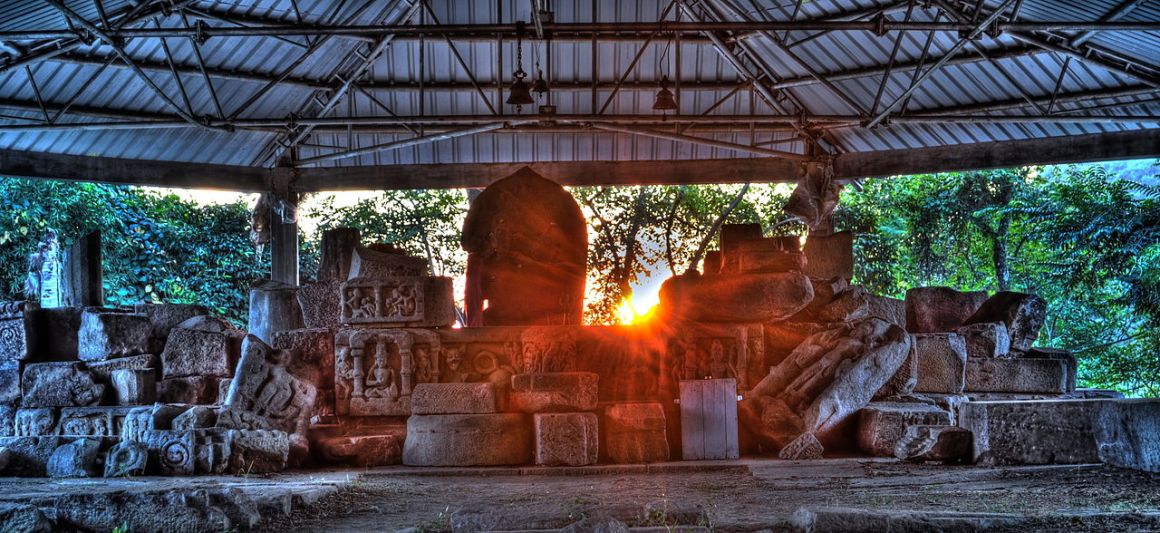
Madan Kamdev in Assam. Credit: Wikimedia Commons/Arup Malakar.
Over a century ago, the incisive colonial historian Edward Gait, who compiled the first compendium of history in modern Assam lamented the fact that “…there is probably no part of India regarding whose past less is generally known. In the histories of India, as a whole, Assam is barely mentioned, and only ten lines are devoted to its annals in the historical portion of Hunter’s Indian Empire.”
Despite the passage of a hundred years, Gait’s observations on the narrativisation of Assam in popular Indian historiography remain true as ever. Timothy Garton Ash writes that recorded history is a history of memories. And when memories are being deliberated upon, can forgetting be far away? The act of peeking into the silences of historical narratives that have developed over centuries in Assam, or anywhere else in the world, becomes a crucial intervention.
Some such silences are palpably becoming more visible in the culturescape of poll-oriented Assam. The state has often been termed as ‘Sankardev-Azaan Ore Dexh’ – the land of Sankardev and Azaan Fakir, two religious and cultural saints of medieval Assam responsible for altering its socio-religious landscape. Srimanta Sankardev inspired the Bhakti movement, while Azaan Fakir established Sufi Islam here. Renowned Assamese geographer and social scientist Mohammed Taher observed that the syncretic relationship between Sankardev’s Vaishnavite religious traditions and Azan Fakir’s Sufi Islam was one of the main reasons that Muslims became a part of Assamese society.
These syncretic traditions have been an intrinsic part of Assamese society, including its political and cultural milieus. They are also reflected in the case of Ismail Siddiqui, one of the main commanders of the great Ahom general Lachit Barphukan. Siddiqui defeated the Mughal Army led by Raja Ram Singh in the historic Battle of Saraighat in the 17thCentury. For his bravado, Siddiqui was given the honorific Bagh Hazarika, or the Tiger commanding a thousand soldiers.
Religious sites have also been a significant marker of this syncretism. There have been many instances where Hindu religious sites have been taken care of by Muslims for years and Muslim sites have had been under the care of Hindus. In fact, Azan Fakir who ventured into Assam around 1636 AD, was known to have married a high-status Ahom woman. His dargah was constructed by the Ahom King Swargadeo Churamfa as an act of penance, at Saraguri Chapori in Sivasagar District close to the Ahom capital.
Madan Kamdev
There are many such stories across the Brahmaputra valley in Assam, and one of them is found in the history of the ancient temple site Madan Kamdev, the mythical place where Kamdev supposedly resurrected himself after being burnt to ashes by Shiva. These magnificent ruins lie 40 kilometres outside Guwahati.
Though the site has been dated to the 11-12th century CE, new scholarship suggests that the place may have been even older. Construction may have started with the ruler Vanamalavarmadeva of the Salasthambha dynasty in the 9th century, and continued by the succeeding Pala dynasty up to the 12th century.
The site is the capital of ancient Assam, which was known as Kamrupanagara. Even today, one of the major districts in Assam which encompasses this area is known as Kamrup, and those staying in this district in Lower Assam are generally referred to as Kamrupiyas.
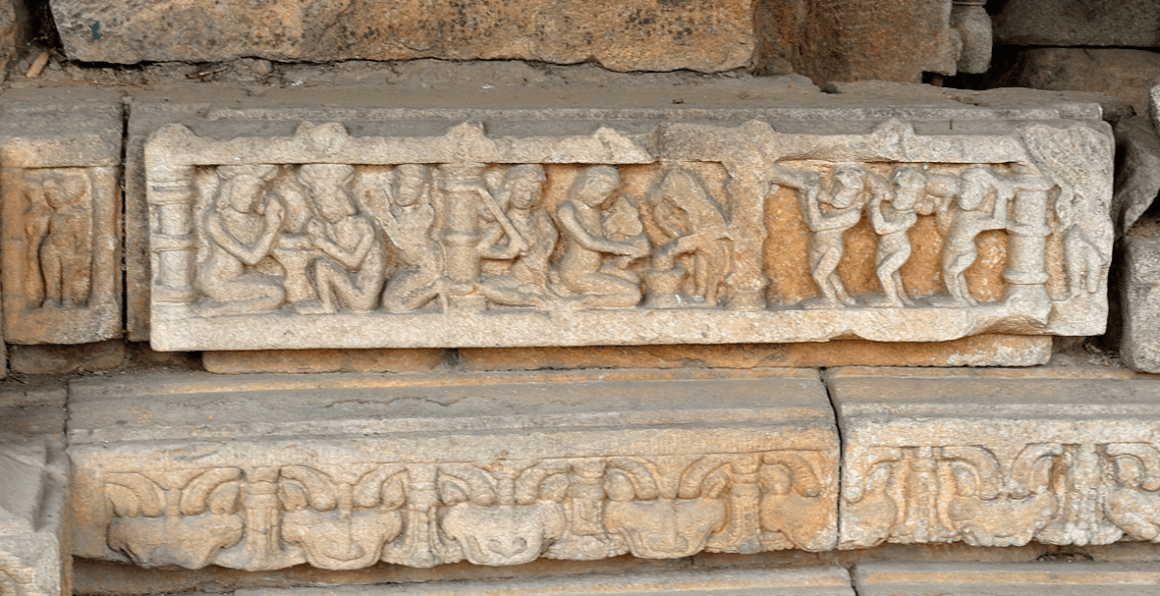
Though the temple is dedicated to Uma-Maheshwar, the site of Madan Kamdev has often been referred to as the Khajuraho of the east due to the numerous erotic sculptures dotting the expansive landscape. Madan Kamdev finds mention in the important 10th century Hindu text, Kalika Purana and in the 16th century Tantric text from Assam, Yogini Tantra. However, this stone temple stretching to around half a km was subsequently destroyed by various earthquakes over the centuries, starting with the earthquake of 1548 CE.
Sculpture at Madan Kamdev temple. Credit: Travelling Slacker/Flickr CC 2.0
The ruins of Madan Kamdev were first excavated in 1855 by the colonial military officer, Captain Dalton. But not much information is available on the kind of preservation or conservation efforts that were undertaken post this discovery. However, records do show that a Muslim land official of the colonial administration, Niyamat Ali Mondol, took the responsibility of preserving this ancient temple. Niyamat Ali belonged to the nearby Piyolikhata Village, around 2 kms from the temple site. He was given the title ‘Mondol’ by the British administration, which meant that he measured land in order to calculate revenue for the colonial administration, and also arbitrated land disputes.
Very little is known or written about Niyamat Ali Mondol, but what is significant is that he became the first doloi or chief administrative officer of Madan Kamdev for 10 years, starting in 1901. The upkeep of Madan Kamdev, as with a lot of similar temple sites was administered by a committee made of locals till either the Government of India or the Assam government or the Archaeological Survey of India (ASI) took over the responsibilities of conservation and restoration. It was only as recently as 1977 that the directorate of archaeology in Assam officially took over the responsibility of the upkeep of this ancient site.
Mondol’s role
When the temple faced a severe scarcity of funds, Mondol paid its khazna or land tax in his individual capacity for about four years. With such a history, one would expect the temple to hold information or the villages around the temple to offer some narratives, oral or otherwise. However, as Garton-Ash writes, ‘…writing history is nothing less than an infinity of individual memories of any person or event’. One can definitely discern a new form of historiography in the making – one that is complicit in the erasure of certain persons or events or even the linear chronological history of a tangible space. The ASI museum at the site of the temple does not offer any narrative on who discovered the site, how was it maintained, and who was associated with the site in modern history.
Mondol’s descendants who still live close to Madan Kamdev feel that there is an effort to do away with this part of the history of the temple, and in the history of Assam in general. ‘In the early 1990s, the temple officials including the thendoloi came to our house and took away the only surviving portrait that we had of Mondol, as they wanted to honour his efforts and install the portrait at the temple office,’ says his grandson, 86-year-old Bhola Chowdhury. ‘But the portrait went missing after a few years. We have tried locating it as that was our only tangible memory of him, but unfortunately we have no trace of it,’ he rues.
Kamal Nayan Patowary, an assistant professor of history whose doctoral thesis was on Madan Kamdev, offers an interesting anecdote on Mondol: ‘The locals did tell me about a person called Mondol who was the first doloi of this temple. But apparently, there was some issue with the locals and he was removed from the post of doloi soon (after). Hence, in anger, he took a tamrapatra or copper inscription from the temple, and threw it into a pond. According to the locals, the history of the temple has thus been lost. I did try to excavate the inscription during my doctoral research, and even employed divers to search in the pond, but it was a futile exercise.’
This narrative is however confounded by the fact that Mondol’s son, Chand Mohammed Chowdhury Kamrupi himself was part of the temple committee for about five years after the death of his father. Chowdhury was also part of the temple committees of other ancient temples in the region such as Goreswar, Pingleswar, and the 200-year-old Patrapur mosque. He was a prominent citizen of the region, who was bestowed the title Kamrupi by the locals because of his avowedly secular nature and love of the land. Kamrupi was also a well-known political figure, as well as a published writer and poet. He authored the book Vivaah Chitra in 1936, and also had his essay Purdah published in the journal Chetana which was edited by Ambika Giri Rai Chowdhury, popularly known as Assam Kesari.
Forgetting
In the temple precinct, there is also a palpable reluctance by the current trustees to talk about the modern history of Madan Kamdev. There is no awareness of the histories or narratives associated with sites such as these among devotees, or even in the villages nearby. Historian Will Pooley exhorts us to engage with the absent narratives and corroborate the voices that are heard.
In 2016, the state is facing elections which many term as a game-changer in the political landscape of Assam. Perhaps this is also a historical moment to critically examine the larger absences that are being created. It is a narrative or an absent presence that seems to haunt the Khilonjia or local Muslim community of Assam, which has always identified itself with its ethnic rather than religious identity.
History and memory are always interlinked. Changing memories involve the process of what Garton Ash has called ‘slow fading or forgetting.’ Whether this forgetting can be contained and lost memories retrieved is a question that the Assamese community as a whole may want to ponder upon this year.
The author is a PhD research scholar at the School of Arts and Aesthetics, Jawaharlal Nehru University.
source: http://www.thewire.in / The Wire / Home> Communities> by Shaheen Ahmed / April 10th, 2016
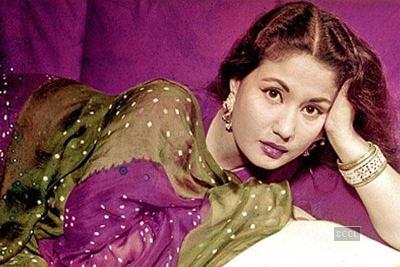
Iconic Bollywood actress Meena Kumari’s original publicity material and memorabilia, including paintings and portraits of her films, will be on the display at the Womanhood Festival here.
At the event, paintings of 1972 ‘Pakeezah’ and the 1953 classic ‘Daera’, co-starring Nasir Khan will be showcased. Portraits of Dilip Kumar-Meena Kumari starrer ‘Kohinoor’ and ‘Benazir’, co-starring Ashok Kumar and Shashi Kapoor, will be on the display at an event scheduled tomorrow at Osianama Liberty as part of the ongoing festival. Besides, posters of ‘Meena Kumari ki Amar Kahani’, ‘Phool Aur Pathar’ and images of ‘Sahib Bibi Aur Ghulam’ will also be featured.
The actress’ films like ‘Pakeezah’, ‘Parineeta’ and ‘Daayra’ will also be screened at the event. “She is a true icon for Womanhood & Cinema, absorbing all, breaking all, in the search to be herself… Along with Nargis and Madhubala, she represents the feminine iconicity just as ‘Mother India’, ‘Mughal-E-Azam’ and ”Pakeezah’ represents a different trinity of Indian cinema,”Neville Tuli, chairman, Osian’s Group said in a statement. Meena Kumari aka Mahjabeen Bano, starred in over 90 films in her career spanning nearly 30 years.
Listen to the songs of Meena Kumari on gaana.com
http://gaana.com/album/meena-kumari-hits
WATCH: Chalte Chalte Yunhi Koi Mil Gaya Tha – Meena Kumari – Pakeezah – Ghulam Mohammed – Old Hindi Song
Did you know that the mother of prominent Bollywood actor ‘tragedy queen’ Meena Kumari had a Lucknow connection?
When her mother Ikbal Bano was a young woman, she left her hometown Kolkata and came to Lucknow with her mother in the 1920s to explore a career in the arts. Meena, though, never visited Lucknow.
Bano had come to Lucknow following her connection with Rabindranath Tagore’s family. She worked as a dancer here for some time before moving to Mumbai to try her luck in Bollywood. There she met Ali Baksh, a harmonium player, whom she married. Their daughter Meena Kumari is a name we know well.
Several such lesser known facts about the life and journey of Hindi cinema’s enduring actress Meena Kumari will be shown in a play called ‘Adhoore Khwaab’, to be staged in the city on Monday. Over 40 trained actors will portray various tangents of her life in an 80-minute show organized as part of the 27th International Literary Festival by the Hindi Urdu Sahitya Award Committee.
SN Lal, the writer of the play, said, “In this play, we have tried to bring to light a different side of her charismatic personality. For the first time, we have incorporated one of the verses of matam (mourning during Moharram) penned by her in a play,” explained Lal.
Despite being one of the most popular names in cinema, Meena faced several hardships, he added.
The last scene of the play has been kept identical to real incidents of her life. “While shooting a song for Pakeezah, she had fallen ill and after that, never returned to movies or shooting. She died following the long illness. We have tried to recreate those moments on stage,” said Middat Khan, the director of the play.
source: http://www.timesofindia.indiatimes.com / The Times of India / News Home> City> Lucknow / Vidita Chandra / TNN / April 11th, 2016