All posts by mpositiveone@gmail.com

Sania seals historic Wimbledon crown with Hingis

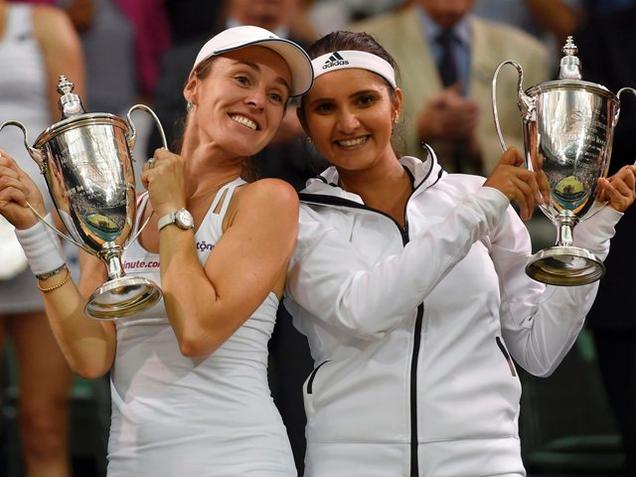
Martina Hingis and Sania Mirza pose with their trophies after winning their Women’s Doubles Final match / Reuters

Sania had come close to winning a women’s doubles Major in 2011 when she reached the French Open final with Elena Vesnina but ended up runners-up.

India’s tennis queen Sania Mirza today created history by becoming the first female player from the country to win a women’s doubles Grand Slam trophy as she clinched the Wimbledon title with Swiss partner Martina Hingis.

More than a decade after turning Pro, 28-year-old Sania laid hands on her first women’s doubles Major title when she and Hingis battled past second seed Russian team of Ekaterina Makarova and Elena Vesnina 5-7 7-6(4) 7-5 in a thrilling final.

In an interesting coincidence it was at these very historic courts that Sania had won women’s doubles junior Wimbledon championship with Russian partner Alisa Kleybanova in 2003.

Sania had come close to winning a women’s doubles Major in 2011 when she reached the French Open final with Elena Vesnina but ended up runners-up.

Already having a long list of firsts, Sania had become India’s first woman player to win a Grand Slam when she won the Australian Open with compatriot Mahesh Bhupathi in 2009.

She later added French Open (2012 with Bhupathi) and US Open (2014 with Bruno Soares) to her mixed doubles collection.

It was a remarkable turn around for the top seeds as they were trailing 2-5 in the deciding set but made a stunning comeback to reel off five straight games to clinch the issue.

Vesnina was all fired up and her smashing volleys at the net put Sania and Hingis in a lot of trouble. The Russian was left distraught as she played out of her skin.

It was third time in recent times that Sania and Hingis played the two Russians in finals — Indian Wells and Miami — and asserted their supremacy again.

Sania was broken in the very first game of the match when Vesnina hit a volley winner from the net but the top seeds immediately broke Vesnina to avoid falling behind. It was a remarkable lob from Hingis that gave them two break chances and they converted the second.

Sania and Hingis put tremendous pressure on the their rivals but the two Russians responded well and it was 5-5.

Hingis was broken in the 11th game at love after a terrific rally of powerful ground strokes from left-handed Makarova. Vesnina pounced on one return from the Swiss and hammered the volley winner close to the body of Sania.

Makarova served for the set and it was Vesnina’s smart play at the net that sealed them the opening set.

It was the first set that Sania and Hingis had dropped in this tournament.

source: http://www.thehindu.com / The Hindu / Home> Sport / by PTI / London – July 12th, 2015

Joy of Anas’ Family Knows No Bounds

Kozhikode : 

Back home at Kondotty, Sulaikha M P could hardly contain her happiness as husband Anas Edathodika ended up on Delhi Dynamo’s roaster for `41 lakh at the 2015 Indian Super League (ISL) players auction in Mumbai on Friday. “I am really happy for my husband. It is truly a wonderful moment for the entire family. We have not celebrated the news, but there is immense joy and happiness in family. Anas’ parents are equally happy,” Sulaikha told Express.

Not a big fan of football, Sulaikha, who married the Dynamo’s midfielder four years ago, could not really comprehend the magnitude of his feat, but believes Anas has done something that makes the entire state proud.

“I don’t watch much of football. Neither do my parents. But we all are just happy for him. We know he loves football more than anything else. No one in the family has believed he would reach this far,” she says.

Meanwhile, his father Muhammed Kutty says his son loved football so much that he worked so hard to become a footballer. “His life was just dedicated to football. He is reaping the result of his efforts,” says his father.

“I haven’t seen him play much. But I never missed a chance when I get one. There were times I even cautioned him against playing for fear of getting injured. I have seen him injured many a time. That is the only time we have had anything against him playing,” says Muhammed. His mother Khadeeja does not know football, but is glad that something good has happened to her son. “This will give him a lot of money, a security in life. Any mother seeing her child growing in career will be happy. So am I,” says Khadeeja.

source: http://www.newindianexpress.com / The New Indian Express / Home> States> Kerala / July 11th, 2015

HISTORY OF FOOD – Arab flavours from 7th century still sparkle in the Muslim cuisine in Malabar

In the northern districts of Kerala, the menu still carries legacies of the merchant traders who visited the region centuries ago.
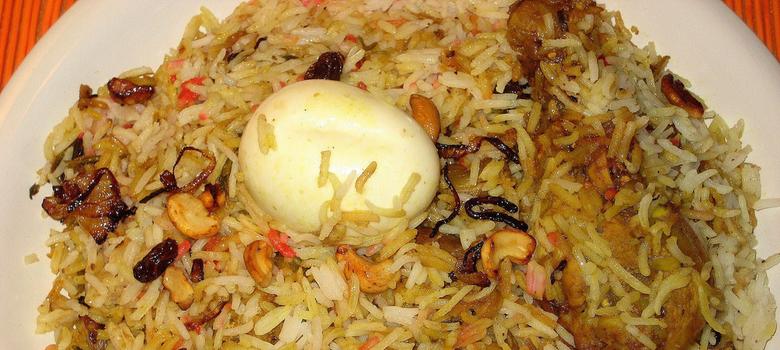
BiriyaniMPOs11jul2015

As lakhs of Muslims break their Ramzan fast with iftaar meals across India, there’s one region where the menu is strikingly distinct from that in the rest of the country. The Muslim community in Malabar, in the northern districts of Kerala, boasts of a unique cuisine that even today shows telltale signs of Arab influence carried across time.

Ask for a Sulaymani in any tea shop in Malabar, stretching from Kozhikode to Kasargod, and you’ll get sweet black tea with lemon. The name is believed to have been lent to this simple drink by the Sulaymani Bohras (Sulaymanis), a Musta’lī Ismaili community from Saudi Arabia and Yemen.

Step into the dining room of any traditional Mappilla (Muslim) home in Malabar at meal times and chances are that you’ll be enticed by the rich and inviting aroma of mandi, a distant cousin of the biryani. Said to be the traditional dish of Hadhramaut and Sana’a areas in Yemen, the mandi among the relatively unknown delicacies found on Malabar dining tables.

A mixture of rice, spices and chicken or lamb, the mandi is made in an oven in the ground tiled with clay bricks. The rice, spices and water are cooked in this oven, while wood coals are placed on top to make sure that steam doesn’t escape. The coal is also used to add the extra smokey flavour to the meat which too is cooked in this oven. Care is taken to use the meat of a young goat, which is tenderer than regular mutton.

“This dish is little known outside Kerala but it is an extraordinarily popular item in Malabar,” said Muhammed Seedi, managing director of the Whitehouse group of restaurants, which has the dish on its menu. “It has to be cooked for at least two and a half hours for the flavours to seep in.”

Mandi is said to be a corruption of the Arabic word “nada”, which means “dew”. The name is an allusion to the tenderness of the meat.

Adapted with local ingredients

“The influence is not just limited to Yemen,” said Ammini Ramachandran, Texas-based author and food writer. “Alissa, a wheat, meat and cinnamon porridge, is similar to harisa, a recipe preserved over centuries by the people of the Middle East. Recipes for this dish are found in 10th century Baghdadi cookbooks Annals of the Caliph’s KitchenSufi Cuisine as well as in the Iraqi cookbookDelights from the Garden of Eden. In medieval Baghdad, it was called ‘hareesi’. Even today, the dish is served in Turkey, [where] it goes by the name ‘herise’, while in Lebanon it’s called ‘ hreessey’.”

She added: “The cuisine was adapted with local ingredients. Take for example ‘ari pathiri’, a thin chapati made out of rice flour. Rice being the staple grain in the region, breads and rotis were alien to the local food habits. The women innovated what they had in hand and made bread with rice powder for their Arabian paramours, who were used to a bread-based diet.”

Even the Malabar biryani, one of the key stars of any iftaar table, has a distinct Arabian touch. The rice and the meat are cooked separately and then layered and cooked. “Biriyani ustads”, who specialise in making this dish, are hired to cook it for weddings, special occasions and iftaars. Other dishes, meanwhile, are rustled up by the “pandaaris”, who hold the position of executive chefs.

“The Mappilas were extremely hospitable people, and would share their food with everyone in the neighbourhood,” said Sumesh Govind, managing director of Kozhikode-based Paragon Group of Hotels. “Subsequently, Malabar biryani became a staple in Hindu Thiyya homes as well, especially in the Thalasserry area. So much so that it’s also called Thalasserry biriyani.”

Malabar or Thalasserry biriyani is served with date pickle, raita and coconut chammanthi (chutney), again a fusion of West Asia and Kerala.

Influenced over the ages

Local produce such as mussels have also found their way onto iftaar tables. Ari kadukka, or rice-coated mussels, are among the favourites.

Another iftaar speciality said to have roots in West Asia is the dessert – muttamala or necklace of eggs. Thin filaments of egg yolk are cooked in sweet sugar syrup served over Pinnanathappam, steam-cooked cardamom-scented egg white pudding.

The influence of the Arabs lingers on in this and many other Malabar Mappila dishes.

Muslims or Mappilas tended to congregate more in the Malabar region because of the patronage from the local leaders. Subsequently, Malabar Mappila culture and cuisine came to have an identity of its own.

“The area we know as Kerala today was trading with merchants from West Asia from pre- Mohammedian times,” noted Dr K Gopalankutty, retired head of the history department at the University of Calicut. “After the Roman Empire collapsed, traders from Assyria, Babylon and Egypt as well as the Phoenicians and Arabs dominated this market, some even eventually mingling and marrying into the local population.”

By the 7th century, Muslim traders visited the southern coast of Malabar and shared their culture as they sold their wares.

Well before Abu Fazl wrote about how dozens of master cooks whipped up delicacies for the imperial Mughal kitchens of Akbar in his Ain-i-Akbari, the south western coast of India was already breaking fasts with culinary delights based on recipes brought across the seas from West Asia.

Over 2,000 years after they sailed to southern India, the legacy of these peaceful traders of West Asia continues to live on in the cuisine of Malabar.

We welcome your comments at letters@scroll.in
source: http://www.scroll.in / Scroll.in / Home> History of Food / by Supriya Unni Nair / Friday – July 10th, 2015
Chhota Imambada conservation work not as per norms: ASI

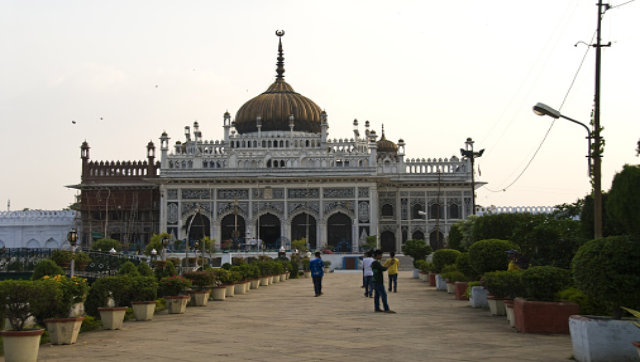
The Archaeological Survey of India (ASI) on Thursday raised a question mark on the authenticity of the ongoing preservation work being carried out by Hussainabad Allied Trust (HAT) at Chhota Imambada and demanded an immediate halt. (Getty image)

The Archaeological Survey of India (ASI) on Thursday raised a question mark on the authenticity of the ongoing preservation work being carried out by Hussainabad Allied Trust (HAT) at Chhota Imambada and demanded an immediate halt.

The ASI has also objected to the ongoing construction work at the Picture Gallery and has approached its headquarters to intervene. It said construction at the Picture Gallery was sheer violation of the Ancient Monument and Archaeological Sites and Remains (Amendment and Validation) Act 2010 that prohibited any construction within and near the protected monument.

The ASI’s move came after a short survey that it carried out a couple of weeks back to check the authenticity of the ongoing construction work at Chhota Imambada, and architectural marvel built by Nawab Mohammad Ali Shah in 1838.

“The officers were aghast at the way preservation work was being carried out at Chhota Imambada, as it was totally against the norms,” an ASI officer said.

Instead of using mortar, lime and surkhi, the ideal material for preservation work, the officer said the labourers were found using cement. “In those days mortar, lime and surkhi were generally used as binding material for the monuments. But using cement in place amounts to a crime and it will ruin the monument,” the officer who inspected the Imambada said.

He said technically, the same material (as used earlier in the monument) should be used for preservation work. Use of cement would ruin the entire edifice.

The style of preservation was another thing that the officers found highly objectionable and said it was totally against the preservation norms. “Old monuments like Imambada only need to be conserved. But in this case, the labourers were found breaking the plaster and applying a fresh one, using cement,” the officer said.

One had no right to spoil the originality of the structure, the officer said. Be it on the left side of Chhota Imambada or the right side of the main entrance gate, at all the places, the labourers were breaking the original plaster that bore the Quranic verses, calligraphy and aesthetic artwork, he said.  They were re-plastering with the same kind of designs. “This way there will be nothing original left. Besides, they are also minimising the scope for any future restoration work that is not at all possible after using cement,” he added.

The ASI also raised an objection over the illegal construction of toilets at the ASI-protected Picture Gallery. “It was found that the toilets were being constructed at the Picture Gallery. It is a protected monument and any construction is illegal,” said NK Pathak, superintending archaeologist, ASI.

Pathak said in this context, a letter had been written to the district magistrate and also to the ASI headquarters.

source: http://www.hindustantimes.com / Hindustan Times / Home> Cities / by Oliver Fredrick, Hindustan Times, Lucknow / June 13th, 2015

Sania Mirza enters maiden Wimbledon final

SaniaMPOs10jul2015

Indian tennis ace Sania Mirza entered her maiden final at the prestigious Wimbledon with Swiss partner Martina Hingis by earning a straight sets victory in the women’s doubles semifinals at the All England Club here on Friday.
The top seeds needed only 56 minutes to overcome American fifth seeds Raquel Kops-Jones and Abigail Spears 6-1, 6-2 in their semifinal match on No.1 Court to enter the summit clash.
This is Sania’s first final here across all formats in seniors though she had won the girls’ doubles title here 12 years ago with Russian Alisa Kleybanova. Martina, on the other hand, has two doubles (1996, 1998) and one singles title (1997) to her credit that she won at the lone grass court Major.

Though the World No.1 Indian has three mixed doubles Grand Slam titles, she is yet to win the top prize in women’s doubles. The only time she reached a Major final in the category was at the 2011 French Open.

The top seeds totally dominated both the sets.
In the first one, they broke their opponents twice out of four opportunities which was more than enough to seal the set in their favour. Though they gave three breakpoint chances to Raquel and Abigail, they managed to save all three. Also, they dominated by taking 30 of the 46 points played in the set.

The fifth seeds were already rattled by now which led to double fault thrice at crucial moments in the second set. Sania and Martina got two chances to break Raquel and Abigail and utilised both perfectly to clinch the set and match. They were so clinical that they did not even give a breakpoint opportunity to their opponents.

The world’s two highest ranked players will next take on the winners of the match between Russian second seeds Ekaterina Makarova and Elena Vesnina and Hungarian-French fourth seeds Timea Babos and Kristina Mladenovic.

Earlier in the day, another Indian Sumit Nagal, partnering Vietnam’s Nam Hoang Ly, earned a straight sets victory to enter the boys’s doubles semifinals.

The eighth seeds needed only 53 minutes to defeat Japanese combination of Yusuke Takahashi and Jumpei Yamasaki 6-2, 6-3 on Court 6. Nagal and Ly will next take on Serbian-Norwegian pair of Miomir Kecmanovic and Casper Ruud for a place in the final.

source: http://www.deccanherald.com / Deccan Herald / Home> Sports / IANS – Wimbledon,  July 10th, 2015

Girl group on mission to revive forgotten art forms

Lucknow :

When engineer Ashrya Srivastava sat talking art with her childhood friend Meenakshi Srivastava, an MA student at Lucknow University’s Arts College, both the 23-year-olds were shocked to find that 63 Indian art forms were on the verge of death. Determined to revive and propagate them, the two roped in friends from different fields. Dr Anitya Srivastava (24), who had just finished her MBBS and commerce graduate Naghma Parveen (21), joined the cause.

The four young girls have now formed a group called ‘San Rachna’ and are organising an Indus Valley inspired ‘galiyara’ (art aisle) on July 8, at Dr Ram Manohar Lohia Park to bring art forms other than just the popular Madhubani to the city’s notice.

“Starting with awareness, we will move on to conservation and lastly the revival of these indigenous art forms, since there are only a handful of people practicing them,” shares Anitya.

“Art forms like Kohvar and Sohrai were practiced by tribes from Chhattisgarh and focused on women issues. They are now almost defunct, since the tribe itself is slipping into extinction. The Basholi and Guler paintings, primarily from the mountains with a hint of Mughal and Rajasthani influence, are also dying. There are scores of such arts that will fade into oblivion, if people are not made aware of their existence and urged to follow them,” she says.

Ashrya recalls, “Two years ago, I was pursuing engineering in Allahabad when a foreigner at the Kumbh Mela asked me where ‘my’ indigenous Indian art form was amid all the western abstract art that had taken centre stage at the mela. He had a point, we had lost track of our cultural heritage.”

The girls have been managing all the funds themselves for the upcoming live demonstration of art and culture under ‘Ek Shaam’.

“We have done it all on our own, from designing the logo to preparing everything. We have put in all our internship stipends for this traditional galiyara setup, which will have painting, pottery, music and dance, all orchestrated by students. It has all been possible under the guidance of senior artist Asha Srivastava,” said Ashrya.

After three months of six hours of intense research daily on the history of art, the girls are now all set to revive indigenous art forms of India.

“As we sat studying our cultural heritage, we came to know why particular colours are used, what season and area they depict, and the various arts forms practiced and styles used, both in art and dress codes. It was all new and interesting information and we wish to bring out from within the yellowing pages of old books,” say the two girls.

source: http://www.timesofindia.indiatimes.com / The Times of India /Home> City> Lucknow / by Yusra Husain, TNN / July 07th, 2015

Encouraging women to become entrepreneurs

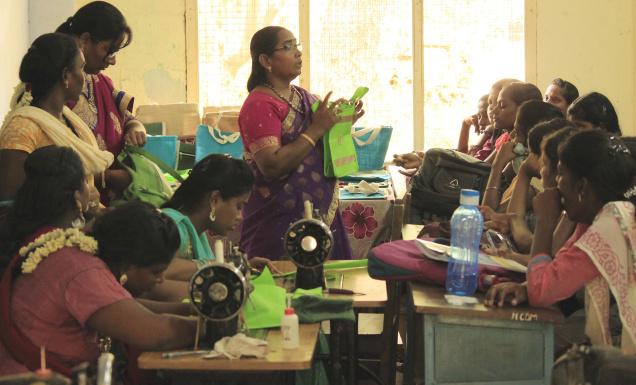
Jute making workshop at Queens Mary's College in the city. Photo: Paul Joshua
Jute making workshop at Queens Mary’s College in the city. Photo: Paul Joshua

Dhanalaxmi teaches jute-bag making and helps student start their own businesses

Over 100 students of Queen Mary’s College learnt the nuances of jute bag-making from Dhanalaxmi, who has been encouraging woman to become entrepreneurs. The owner of IVERS Bags, Dhanalaxmi has been in this business for the past 11years. Five years ago, she started helping others start their own businesses. She has been training self-help groups and NGOs in making and marketing jute bags and jewellery.

“A few years ago, when the IT scene was bad, one couple from the IT industry approached me, asking me to train them in the art. Today, they run a successful jute business,” she said.

In the session conducted at the college, students from corporate secretaryship, sociology, zoology and B.Com departments walked away with certificates presented by Akathar Begum, principal, on successful completion of the workshop.

“These are the bags we have made. Dhanalaxmi ma’am also gave us a kit box with materials to try more designs at home,” said a student showing off a table full of sling bags, pencil pouches and tambulam bags made by her.

Dhanalaxmi is ready to conduct training for groups and individuals . “This is an eco-friendly product and helps reduce the use of plastic. People should make a switch to jute product.”

Dhanalaxmi can be contacted at 92831 35238/98405 33611.

source: http://www.thehindu.com / The Hindu / Home> Features> Downtown / by Flavia Plaidus / Chennai – July 04th, 2015

1st woman to undergo bypass in India enters 40th yr after surgery

Chennai :

On April 23, 1976, when Daisy D’Costa was wheeled into the operation theatre she didn’t know she would be the first woman in the country to undergo a bypass surgery. “No one told me. I just vaguely recall someone in surgical scrubs telling my husband, ‘She will live’,” said the octogenarian, 39 years later.

While Daisy was being prepared for the surgery, the mood in the operation theatre was equally tense as the team was about to wield the scalpel for a procedure they had done just once before. “The facilities back then were nothing like what we have now. We had no cath lab (examination room with diagnostic imaging equipment), no cardiologist or cardio-anesthetist. No one in the team had done a bypass surgery before,” said Dr K M Cherian, the doctor in the surgical scrubs who assured Daisy’s husband.

Daisy had been brought to the Railway Hospital in Perambur the previous evening with total blockage in an artery. “I had skipped going to the cinema with my husband as I was really tired. All of a sudden, I couldn’t breathe normally and I felt a tightness in my chest. My son, who was at home, rushed me to the nearest hospital,” recalled Daisy. “The doctors managed to resuscitate me. In my haze, I heard someone say, ‘We need to cut her open’, and I blacked out again.”

Daisy needed a coronary artery bypass surgery. The procedure entailed restoring the blood flow to the heart muscle by diverting the blood around the blocked section by using a harvested vein from the leg. Although the first such surgery was performed in the US in the 60′s, the concept was new in India. In June 1975, Kajah Mohideen, a 42-year-old engineer from Integral Coach Factory, became the first in the country to undergo the surgery.

“The procedure on Daisy was no different from Kajah’s, but Daisy’s veins in her legs were thinner and harder to reach because of the fat. Besides that, we followed the same process. I still remember every conversation and the mood in the theatre,” says Dr Cherian, who had also operated on Kajah. “We didn’t even have a process of magnifying the blood vessels, which is mandatory now. I used my eyes to find the vessels that are 1.5 to 2mm. I was young back then,” said Dr Cherian, chuckling. The procedure took a little more than three hours.

Daisy woke up to find shutterbugs queuing to interview her. “That’s when I realised I was the first woman,” she said, smiling and showing a sepia-tinted newspaper showing a younger version of her. Although through the years she has had minor chest problems, she didn’t have to go under the scalpel again.

source: http://www.timesofindia.indiatimes.com / The Times of India / Home> City> Chennai / by Ekatha Ann John, TNN / July 09th, 2015

Living memories and a father’s voice

MUSIC – Payel Sengupta

Pride, aristocracy and tradition: these components of Indian classical music are synonymous with a gharana known as the Agra Gharana. This gharana reached its zenith during the reign, as it were, of the illustrious maestro, Ustad Faiyaz Khan. He had an unparalleled, unique style of singing. The flow of the Agra Gharana had developed a new stream with the blending of another prestigious gharana, Atrauli (especially a gharana of Jaipur).

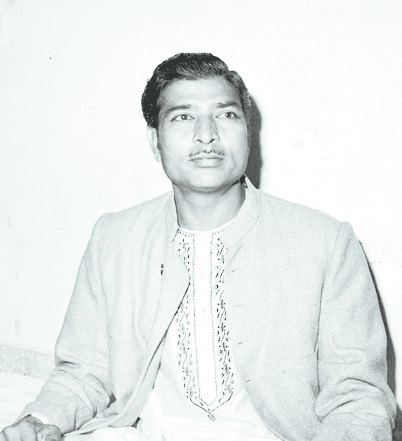
Sharafat Hussain Khan

Ustad Sharafat Hussain Khan, a practitioner of the Atrauli Gharana, was adopted by Ustad Faiyaz Khan at the tender age of eight, and was introduced to the Agra Gharana. The young Sharafat surprised the musical doyen with his voice. But he was only twenty when his mentor died. In the meantime, Sharafat started gaining a reputation as the promising vocalist. After the death of his beloved mentor, Sharafat took his training from Ustad Ata Hussain Khan of the Atrauli Gharan and Vilayat Hussain Khan of the Agra lineage.

That was the post-Independence era of Indian classical music; the arena of classical music was being dominated by names like Bade Ghulam Ali Khan, Roshan Ara Begum, Ustad Nissar Hussain Khan, Ghulam Mustafa Khan and D.V. Paluskar. But Sharafat became the busiest artist at that time for his distinctive potential. The priceless compositions ( bandishes) of the Agra Gharana found a new life in the voice of Sharafat Hussain Khan. His sudden demise was undoubtedly a blow to the glory of the Agra and the Atrauli gharanas. Probably to revive these incomplete, lost memories of Sharafat’s singing, his disciple, Vidushi Purnima Sen, organized a programme in commemoration of her guru’s death anniversary, where the principal attraction was the vocal recital by Sharafat’s son, Shaukat Hussain Khan. But before Shaukat’s performance, the programme commenced with a sitar recital by Agnibha Banerjee. He enchanted the listeners with his simple and sweet alaap, jor and jhala in Poorvi and gats in Shyam Kalyan.

Shaukat commenced his performance with the Raga Shudhha Kalyan. The Agra Gharana has a distinguished feature in which the alaap is sung in an elaborate, vast manner, with the variation of vistaars like Dhrupad and Dhamar. Maintaining this tradition, the artist presented a long alaap and overwhelmed the audience. His touches on a specific note from one octave to another without interruption were especially attractive. His smooth, generous rendition completed a circle of varied moods. The drut kheyal also became interesting for the ornamented taans and vistaars in the antara.

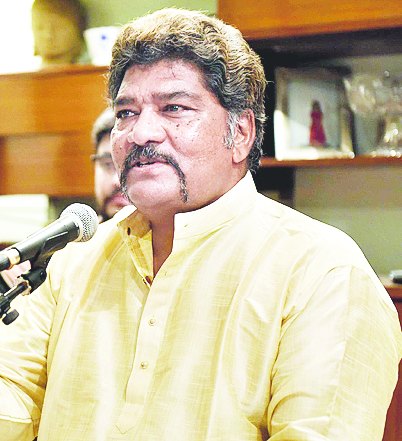
Shaukat Hussain Khan

Shaukat’s next presentation was the Raga Yogkaus. Like the previous performance, the artist again presented an elongatedalaap which brought out the soul and beauty of this particular raga. He made an exceptional utilization of pancham which increased the charm. Shaukat is blessed with a wonderful, generous voice, and has an expert dominance over every octave, which is a very special attribute of his gharana. The munificent gift of his voice brought his ancestor’s memory alive. The kheyals on Yogkaus were a typical, attractive presentation of the Agra Gharana.

Suhaag Sugrai is a very special raga of the Agra Gharana. Shaukat performed this raga with the greatest supremacy. The most enjoyable part was the briefkheyal which was embellished with small vistaars and smart, forceful taans. After a beautiful aochaar, he sang a famous bandish of his gharana, “Gha Gha Ghana Ghana” in the Raga Surmalhaar, which reminded the audience of his father. He made a proper tuning to this composition, which was followed by the Raga Megh. Shaukat’s mighty voice helped in the full bloom of the raga, and the compositions like ” Garaje Ghata Ghana Ghor” and especially the drut bandish, ” Dhume Dhame Aawe“, were able to create an atmosphere of thunderstorms on that sultry summer evening. A robust masculinity is a hidden beauty of the gayaki of the Agra Gharana, and Shaukat Hussain Khan perfectly fits this category. He skilfully shifted to a soulful ambience from the storm and started singing a prominent tappa, “Miyan Bejanewale” based on the Raga Kafi, which portrayed not only the musical prowess of the artist, but also drew up the light of nostalgia. He sang a brief kafi tarana in a cheerful manner. Shaukat concluded with a popular dadra of his ‘Ghar’, ” Banao Batiyan“, which reflected an essence of the golden period of Indian classical music. He touched every note carefully with a mellifluous style. Shaukat was perfectly accompanied by Sujit Saha on the tabla.

Shaukat shared some personal feelings with the audience which included some memories of his father. According to him, Sharafat Hussain Khan used to practise only Bhairav and Yaman, but always sang the tough and rare ragas like Patmanjari, Jhinjhoti and Dhaneshree while performing on stage. He never refused the requests of his listeners. It seemed that his son probably got the same training in the ragas, because he seemed to fulfil the wish lists of his listeners. Perhaps there could have been no better way to commemorate his father’s death anniversary.

source: http://www.telegraphindia.com / The Telegraph, Calcutta, India / Front Page> Opinion> Story / by Payel Sengupta / Saturday – May 23rd, 2015

145 yrs of Hazrat Ali taboot in Lucknow

Lucknow :

Considered the seat of azadari (practices related to mourning the death of Imam Hussain and his family), Lucknow this year completes 145 years of carrying out the taboot (coffin) of Hazrat Ali on the 21st Ramzan, falling this year on Thursday.

As per Shia belief, Ibne Muljim struck Hazrat Ali with a poisoned sword as the latter was offering morning prayers at a masjid in Iraq on 19th Ramzan. After battling for his life, Hazrat Ali succumbed to injuries on 21st Ramzan.

On this day, Shia Muslims observe martyrdom anniversary of Hazrat Ali (son-in-law of Prophet Mohammad) by holding grand majlis and mourning processions, a tradition started by Syed Hasan Mirza from his house in Moulviganj in 1870 and within a decade, it became so popular organizers had to shift to a spacious place.

The procession now starts from Najaf Rauza (Rustamnagar) and culminates at Karbala Talkatora. By the time the procession reaches Haiderganj it is broad daylight and the coffin is covered with a century-old piece of black cloth brought by Hasan Mirza when he visited Najaf (Iraq). Due to this, it is popularly known as Hasan Mirza taboot. A majlis is also organised where Maulana Meesam Qasim Jerveli recites the Hadees.

General Secretary of the anjuman (committee) that prepares the coffin and fourth generation of Hasan Mirza, Syed Mukhtar Hussain Zaidi, said, “Except for the period from 1978 to 1998, when azadari was stopped in Lucknow, the procession has been taken out every single year.”

source: http://www.timesofindia.indiatimes.com / The Times of India / Home> City> Lucknow / by Uzma Talha, TNN / July 09th, 2015