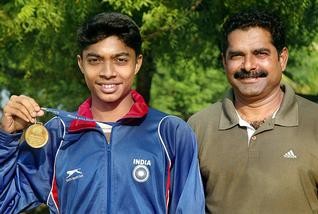
City budding Tennis player Mustafa M. Raja won U-9 Tennis Tournament for Boys organised by Archana Tennis Academy, Sarjapur Road branch, Bengaluru, yesterday.
Mustafa registered wins in six rounds and emerged as the winner among 64 players. In the finals he defeated Jason.
He is a student of Excel Public School and trains at the Nagaraja Tennis academy at SJCE campus.
Mustafa Raja is son of Murtuza Raja and Farida Raja.
source: http://www.starofmysore.com / Star of Mysore / Home> Sports News / Monday – July 20th, 2015
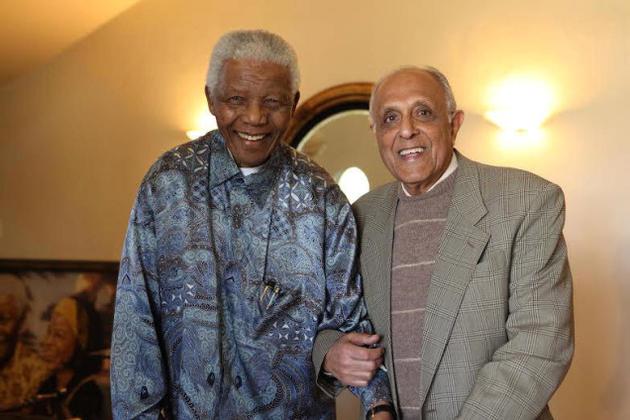
Special Camaraderie: “Throughout, Mandela retained hope, confident that sooner or later, the battle for equality would will be won.” Picture shows Nelson Mandela and Ahmed Kathrada. / by Special Arrangement / The Hindu
Ahmed Kathrada, who was on Robben Island with Nelson Mandela, recalls his famous co-prisoner’s eternal optimism.
As the world celebrated Nelson Mandela International Day on July 18 — Mandela’s birth anniversary — the air of mystery surrounding his long years of imprisonment is slowly being lifted. Mandela once called his time in prison “a long holiday”, a picture belying a life of denial and discrimination. For 10 years, Mandela was denied bread, his food was rationed, and he had to wear a humiliating uniform. Yet, according to new accounts of his time at Robben Island, where he spent 18 years in detention, Mandela was a picture of positivity.
Ahmed Kathrada was his fellow prisoner for 26 years. Prisoners with brown skin, many of whom were of Indian descent, were given preferential treatment over black prisoners. For instance, they wore trousers, while Mandela was only permitted to wear shorts. Yet, there was a sense of common cause and camaraderie. Mr. Kathrada and other prisoners would happily share their bread with Mandela and rejoiced when, three years into detention, Mandela was allowed to wear trousers. Throughout, Mandela retained hope, confident that sooner or later the battle for equality would be won.
These and other moments of joy and companionship were shared by Mr. Kathrada in a telephonic conversation with The Hindu. Mr. Kathrada also spoke of his latest book Triumph of the Human Spirit, in which he has written about his 300 visits to Robben Island as a tour guide since his release in 1990.
He is also updating his book No Bread for Nelson Mandela. “I am writing about our prison days. I was there for 26 years, Mandela for 27. I know him from 1962,” he says.
Mr. Kathrada, whose ancestors hailed from Surat, says Mandela’s personality came to the fore when hostilities were at their peak. “Mandela remained optimistic all along. When the Defiance Campaign and other movements of boycott were launched, it was with the sense that they would be successful. One does not expect immediate results. Success takes time. As an Indian you would know freedom cannot be attained in a matter of a year or two. We took heart and inspiration from the Indian struggle,” he says. “We understood that the protest had to be continuous. In South Africa, the Defiance Campaign helped in rousing public opinion. For instance, before the campaign, African National Congress had 5,000 members but following the campaign the numbers rose to over 1,00,000 members.”
Mr. Kathrada and others were arrested in July 1963 in Rivonia, Johannesburg, after which the famous Rivonia Trial began in October that year. The accused were charged with sabotage and attempts to overthrow the government by violent means. The trial ended a year later, after which Mr. Kathrada was sentenced to life imprisonment along with Mandela, Walter Sisulu, Govan Mbeki, Andrew Mlangeni, Billy Nair and others.
“For 26 years, eight of us of were together. We were sentenced to life imprisonment. When we reached the prison, Mandela was already there. As we interacted, I realised that he was a natural leader of leaders. He had already emerged as a force to reckon with in the early 60s,” he says. In the Defiance Campaign, whose aim was to get rid of six unjust laws, Mandela was the chief leader, Mr. Kathrada explains. “Thousands of volunteers were taken prisoners. It made no difference to the Apartheid government. In a prison trial, most were found not guilty. The case went to the Supreme Court. Mandela went underground and continued his political work. He was arrested in 1962 on a tour of African countries and England for mobilising support for our struggle. He continued his work underground for a year, got solidarity and financial support in England.”
Mr. Kathrada reveals that when all the important leaders were in jail in South Africa, the African National Congress policy was to continue the struggle with the support of the world, especially India and other countries. “The aim was to force the government to come to the negotiating table. Mandela started talking to the government from prison. One of his demands was to release all political prisoners, legalise the urban spots, and allow exiles to come back. The government acceded to all the requests. The ANC was allowed to function. It was in the 60s and was a big moment for us back then.”
Looking to India
Mandela and other leaders drew inspiration from India’s non-violent path to freedom, he says. “The enemy does not concede anything in a hurry. Our struggle took a long time. Contrary to what many people believed, we had a peaceful transition from apartheid to democracy.”
Mr. Kathrada left school when he was 17 to join the Transvaal Passive Resistance Council to work against the Asiatic Land Tenure and Indian Representation Act, which was popularly called the Ghetto Act. The Act, like many piecemeal concessions given by the British to Indians during the freedom movement, sought to give Indians limited political representation and defined the areas where Indians could live, trade, and own land. It was during the phase of increasing association between the African Congress and the Indian Congress that Mandela became close to Indian leaders.
Mr. Kathrada is hopeful that the path shown by Mandela is the one that South Africa will follow in the years to come. “We are only 20 years old as a democracy, but we have made considerable progress. Most of the children are now in schools; clinics and hospitals have been established. Electricity and sanitation have reached a majority of the population. Yes, challenges remain: we have hunger and poverty. But at the level of ideology, yes, it has percolated down to everybody.”
ziya.salam@thehindu.co.in
source: http://www.thehindu.com / The Hindu / Home> Opinion> Comment / by Zia Us Salam / July 21st, 2015
The President of All India Milli Council Mysuru, Hazarath Moulana Mohammed Zakaulla Siddiqi has urged the Muslim brethren to celebrate Ramzan peacefully.
Hazarath Moulana Mohammed Zakaulla Siddiqi speaking to SOM said that during the holy month, Muslim brethren fast and offer prayers for peace and well being of everyone and added that donation of 2.5 percent of the total earnings in a year is given to the poor and urged the Muslim brethren to donate 2 kg wheat or its cost to the poor before offering prayers at the Eidgha Maidan on the day of Ramzan.
In his message, Hazarath Moulana Mohammed Zakaulla Siddiqi urged the Muslim brethren to live as per the Shariath of the Prophet, live peacefully, spread the message of peace and harmony and walk in the way which the Holy Quran has showed.
Moon Committee to meet today : Meanwhile, a meeting of the Mysore District Hilal (Moon) Committee, has been convened at the office of the District Waqf Advisory Committee, Muslim Boys’ Orphanage Campus, New Sayyaji Rao Road, Mysuru, today, after Namaz-E-Maghrib at 7pm to sight the Eidul Fitar (Ramzan Festival) Moon and to declare the celebration of Eid. The Public is requested to contact the Hilal Committee personally or the telephone numbers mentioned below to inform the sighting of moon to the Committee with sufficient witnesses or to get the information regarding sighting of Moon according to the press release from Ariff A. Mehkri, Chairman, Mysore District Wakf Advisory Committee who is also the Convenor of the Mysore District Hilal (Moon) Committee.
For details contact Ph: 0821-2423520, Mob: 94498-18786, 98869-69882.
source: http://www.starofmysore.com / Star of Mysore / Home> General News / Friday – July 17th, 2015
This is not the first appearance for Nihar Ameen and his swimmers at the Rashtrapati Bhawan for the Arjuna Award ceremony. But, this year is a bit more special for the 49-year-old coach who has been guiding Indian hopefuls for over a decade as two of his wards -Virdhawal Khande and Prasanta Karmakar – will be honoured on Monday at the Arjuna ceremony.
Ameen, who will be present for the felicitation, is delighted but says it’s a work in progress. “It’s an amazing feeling to be there and meet the President. Last time it was Abdul Kalam. The moment validates all the struggle and hard work we’ve done over the years,” Ameen told TOI on Sunday. “It especially means a lot as medals are won against all odds,” he added.
Khade ended a 24-year-old draught by winning a bronze at the Guangzhou Asian Games, while Karmakar created history with his bronze medals at 2010 Commonwealth Games and the Asiad in the disabled category.
Ameen, one of India’s best-known swimming guru, works like a one-man army. Besides being a coach, he also acts as manager and dietician to his pupils. He plans training sessions and arranges physiotherapy support for the swimmers. His passion for the job has seen him spend almost three decades as a coach.
Sandeep Sejwal and Khade, the first Indian swimmers to break into the top-100 of world rankings, have both had stints under him.However, Ameen’s foray into coaching was more due to a sudden family need than any planning. He had to turn coach when younger sister, Shanaz Shacoor, needed one after the 1982 Asian games. “I was just 20 and it was a panic situation for me. I was not sure if I could deliver,” he recalled. “Shanaz was the big talent in the family. I had to take over her coaching after the Asian Games. It was very difficult as I was not a trained coach,” he added.
But since then, there has been no looking back for the Ameen who has a Level 5 certification in coaching from the American Swim Coaches Association, a peak of sorts for swimming coaches. But Ameen recalled the struggle he had to wage in the early days. He was helped along by the workout diary maintained by Shanaz and some coaching tips from the German coach Bernd Johnke, who was assisting the Indian team ahead of the 1982 Asiad. “I used to observe Johnke and picked some tips from him that helped. And we started training at a public pool with no lanes,” he said.
Ameen runs his Dolphin Swim Team in a school at the outskirts of Bangalore. His wards won 46 medals at the recent junior Nationals in Bhopal , the latest affirmation of his worth.
India has never won a medal at the Olympics and there is no silver lining in the cloud either. However, Ameen wants to stay positive, saying Indian swimmers have the talent and can produce better results at the international level if the government provides adequate facilities. “Appropriate budget and proper support staff can take things to a different level,” he asserts.
source: http://www.timesofindia.indiatimes.com / The Times of India / Home> Sports> More Sports> Others / by Ritu Sejwal, TNN / August 29th, 2011
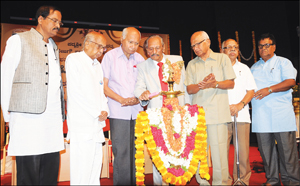
Noted writer Dr. K.S. Nisar Ahmed is seen lighting the lamp to inaugurate the Seminar on ‘Nadoja Dejagow – Baduku mattu Baraha’ at Kalamandira this morning as (from left) retired VC of Sanskrit University Prof. Mallepuram G. Venkatesh; Senior researcher Dr. Chidananda Murthy; littérateur Dr. C.P. Krishnakumar; Retired Director, Kuvempu Institute for Studies (KIKS) in Kannada Dr. D.K. Rajendra; Legal expert Dr. C.K.N. Raja and Kadamba Rangavedike president Rajashekar Kadamba look on.
Mysuru :
Kalamandira on Hunsur Road in city, which was the venue for conduct of a seminar on ‘Nadoja Dejagow – Baduku mattu Baraha’ this morning, turned into a venue for hundreds of littérateurs from across the State to fall to the feet of former Vice-Chancellor of University of Mysore Nadoja Prof. Dejagow, who is on the threshold of turning a centenarian, to seek his blessings.
Inaugurating the seminar, noted writer Nadoja Dr. K.S. Nisar Ahmed described Prof. Dejagow as the best of those who studied under Kuvempu and lauded Dejagow for the simplicity in his language in his works which amount to nearly 290 and over 40 on Kuvempu alone.
Stating that Prof. Dejagow was one of the few, who fought relentlessly for Kannada even after retirement, Dr. Nisar Ahmed added that Dejagow was a fighter to the core when it came to struggle for Kannada.
Describing Prof. Dejagow, who mastered the art of writing quality works, as an encyclopedia on Kuvempu, Dr. Nisar Ahmed stressed on the need for functioning of the Centre of Excellence for Study in Classical Kannada at Manasagangotri.
Retired Director, Kuvempu Institute for Studies (KIKS) in Kannada Dr. D.K. Rajendra, presided.
Senior researcher Dr. Chidananda Murthy spoke on ‘Kannada Horatagararagi Dejagow,’ retired VC of Sanskrit University Prof. Mallepuram G. Venkatesh spoke on ‘Sahitiyagi Dejagow,’ Legal expert Dr. C.K.N. Raja spoke on ‘Shikshana Tagnaragi Dejagow’ and littérateur Dr. C.P. Krishnakumar (CPK) spoke on ‘Adalithagararagi Dejagow.’
MLAs Vasu and G.T. Devegowda, former KEA Chairman R. Raghu and hundreds of littérateurs including admirers of Prof. Dejagow were among those present.
source: http://www.starofmysore.com / Star of Mysore / Home> General News / Sunday – July 12th, 2015
We interview S.N. Mohammed Salahuddin, a young Triple Jump athlete from Tamil Nadu. He is the son of Mr. K.S. Mohammed Nizamuddin (1991 Colombo South Asian Games Triple Jump Gold medalist), and recently represented India at the Gwangju World University Games:-
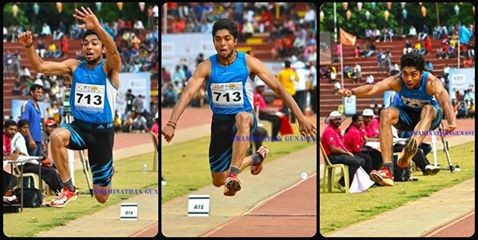
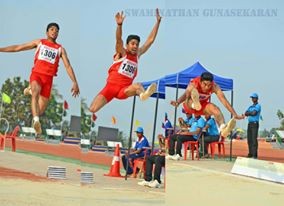
Triple jumper S.N. Mohammed Salahuddin with his father and coach K.S. Mohammed Nizamuddin
1. Congratulations for your performance at the Universiade (World University Games), held at Gwangju, South Korea. How special is your feeling? How was your experience there, during the games?
A: I feel very happy about getting the chance to participate in the World University Games, which is one of the most important world-level tournaments. I feel I’ve started touching my achievements list, by this. And I acquired very good experience there, as I watched how the champions get trained over for the events and I’ve got an idea about what I must have to go through, to do something big next time. 2. Why did you choose athletics as your aim in life?
Ans:- My first active participation in the sports was at my school Sports Day, and I bagged some prizes initially. Once during the 8th standard, I was chosen for a meet, but was removed from it on the final day and told that I should improve my performance.
My parents, who were present there to watch me run were disappointed, came up to me and asked what had taken place. My father reassured me and suggested that I should start specialized training from the next day. So that was my start as a determined athlete. 3. Your father, Mr. K.S. Mohammed Nizamuddin, won the gold medal at the 1991 Colombo SAF Games for the nation. Did you want to become an athlete yourself or were you inspired by him?
Ans:- It’s not really like that, it all started after that mentioned incident took place, I took athletics seriously and achieved more and more. It’s good to be an achiever, and I went to achieve a lot, and that’s what made me into the game. Athletics is a game which requires only my effort – it’s not a team game, like cricket or football. So, I like it to win with the help of my own effort. Apart from my dad, Jonathan David Edwards, the triple jump World record holder, from Great Britain, inspired me a lot. He is awesome!
4. How old were you when you first developed an interest in athletics? How has your journey been till now?
Ans:- I started developing an interest in this sport at the age of 14. The journey till now is going quite good, but it has been hard in parts. The life of an athlete is very hard. There are some injuries, pains and similar sort of things, but an achievement can fade these instantly as well. I hope it gets better by the Olympic Games. 5. How did you feel when you realised you had broken your father’s record of 14.89 m (which he set in 1987) at the Nehru Stadium, in 2011?
Ans:- Ah, it’s a good question (smiles). Actually, during 2010, I read about my father’s record in a book, and imagined I would break it. I was confident that I’d make it by next year. I kept telling my dad to watch for my name to replace his. After I broke the record in 2011, I was very excited and proud, because the record stood for 24 years – a long time. He was extremely proud to know it was I who had broken his record. I also wanted to make him happy, and I was successful in doing so.
Salahuddin doing the triple jump
6. In a country obsessed very much with cricket and football, how difficult it is to claim a name in athletics?
A:- In India, people give too much importance to cricket, and the authorities spend a lot of money on it, but they don’t do the same for the sake of athletics. Just twenty countries in the world take part in cricket, but more than 200 countries participate in athletics, so it’s one of toughest sports in the world. If people show some interest and provide encouragement in the field of athletics, India can bag many gold medals in the coming Olympics. 7. So how do you manage both academics and athletics together?
A:- Academics are not at all a problem for me. Both my school teachers and college teachers support me a lot, and I always manage to get more than 60% marks in the exams, so it’s not difficult for me to handle both at the same time. 8. How does your educational institutes help you building you as a sportsman?
Ans:- My educational institutes are easy with me, and they support me a lot. They provide me enough time to train hard for the sports, and so balancing between studies and games is not hard for me. 9. Are you preparing hard for the 2016 Olympic Games?
Ans:- I’m currently not aiming for the 2016 Olympics in Rio, but I’m training hard with the aim of representing India in the 2020 Olympics as well as in the 2024 Olympics from now on. 10. Apart from athletics, which other sports do you like to play and watch? Who is your favourite in that sport?
Ans:- I’m mad about football. Cristiano Ronaldo and Frank Lampard are my favourite footballers. 11. What is your message for the young athletes of India who are hesitating to pursue sport as a career?
A:- Believe in hard work. Hard work can gift you achievements a bit late, but it can take you to new heights. Always be disciplined. And those who hesitate, should have an intense interest in the sport. Guys who have no interest in a particular sport, yet they are playing it, will not achieve success in it. Love for the sport helps a sportsman achieve a lot.
We also had Mr. K.S. Mohammed Nizamuddin (1991 Colombo SAF Games Triple Jump Gold medalist), say a few words about his son, Salahuddin:-
“It’s great to see that Salahuddin was selected to represent India in the World University Games, where he’d definitely gain a great experience. This is the fourth international competition he participated in, till date. His performance was quite satisfying in it, but still he would have done better as per my coaching view. He will certainly become an outstanding Triple jumper in the international field in coming years.”
Thank you Mr. Salahuddin, for giving his precious time for the interview session. We hope he wins many medals for India in future and make our country proud. We would like to see more Salahuddins emerging and making our country proud in Athletics. All the best for his future.
source: http://www.sportskeeda.com / SportsKeeda.com / Home> SK Athletics> World University Games> Interview / by Resham Das / July 14th, 2015
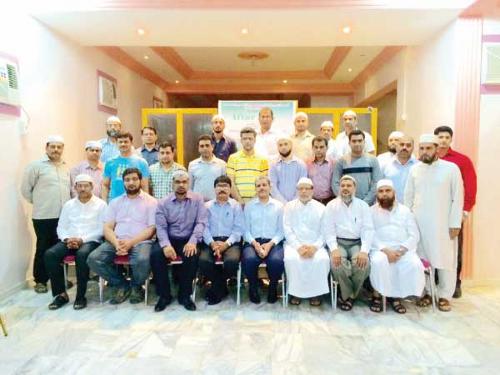
KBN Engineering College Gulbarga Alumni hosted an iftar program at a local restaurant here.
Syed Mohiuddin, general secretary of the alumni, welcomed all the members and guests and also highlighted the aims and objectives of the alumni.
President of Alumni Syed Nasir Khursheed while addressing the audience explained the system of functioning of the alumni and the achievements of the group. He mentioned the course conducted by alumni, Primavera P6 and lecture on QA/ QC which was very useful for members.
Treasurer of the forum, Saleh Bin Ali appealed to the members to come forward and strengthen the alumni as this is a platform of technocrats who have the opportunity to help other fellow engineers for upgradation and getting jobs.
Ahmed Ali Soofi, senior member of the alumni, appreciated the tasks carried out by the executive committee and advised other members to help the executive committee in working more effectively.
PR coordinator of the alumni Ismail Zubair said it is the responsibility of all the members to be connected with the alumni and play a vital role by providing services in line with their capabilities.
Joint coordinator Imdad Ali introduced the new members, while the vote of thanks wa delivered by chief coordinator Mohammed Yahiya. — SG
source: http://www.saudigazette.com.sa / Saudi Gazette / Home> Kingdom / Jeddah – Wednesday – July 15th, 2015
Dr. Mohammed Aleem, third Secretary, Information and Labor, Embassy of India here said that many Indian expatriates still needs to correct their legal status in the Kingdom and many of them are seeking the help of embassy to correct their status.
Officials are trying to solve these new cases visiting the embassy almost every day for rectification. He appealed the Indian expatriates to help the fellow countrymen by properly guiding them.
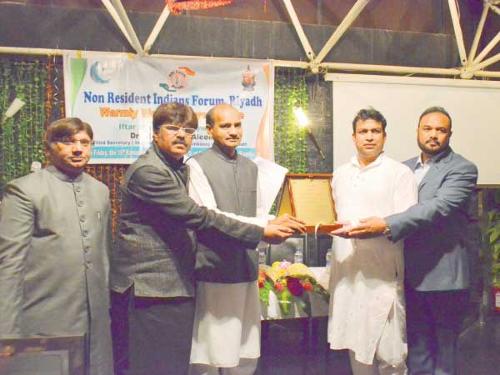
Dr. Aleem who completed his tenure in Riyadh has been transferred to Qatar and will be leaving soon. Non-resident Indians Forum, Riyadh (NRIF) organized an Iftar in his honor at a local restaurant here.
Aleem thanked the NRIF members for organizing the impressive farewell function. Dr. Hifzur Rahman, second secretary at the Embassy here, was the chief guest.
The NRIF, formed recently, organized its first function inviting more than 150 Indians for Iftar. NRIF President Syed Akram Mohiuddin said in his welcome address that there are many issues which are not being dealt by other associations and we will try our best to sort out these issues pertaining fellow Indians.
Akram appreciated Dr. Aleem for is relentless efforts and services for the Indian community in Saudi Arabia.
Dr. Sayeed Mohiuddin, vice president education, highlighted the aims and objectives of the organization and said this organization will work in a true democratic way and the office bearers will be elected every year. Sayeed outlined the coming events of NRIF, which includes a cricket match between Riyadh and Jeddah, The Third Youm Al Watani Cup Cricket Tournament, and many other events.
The event started by the recitation from the verses of Holy Qur’an by Hafiz Zakir Hussain.
The following team has been elected: Syed Akram Mohiuddin – president; Syed Aftab Ali Nizami – vice president (cultural affairs); Dr. Sayeed Mohiuddin – vice president (education); Dr. Abdul Sattar Gayas – vice president (health and sports) and Abdus Subhan – vice president (administration), Javed Ali – general secretary; Abdul Majeed – joint secretary and Mohammed Kaleem – treasurer.
Its core committee members include Dr. Anwar Khursheed, Ghulam Mohammed Jaweed, Mohammed Salahuddin, Shakeel Mah, Nooruddin Jahangeer, Mir Hussain Ali Khan and Taquiuddin Mir. Javed Ali, general secretary, conducted the proceedings and Taqiuddin Mir proposed vote of thanks.
source: http://www.saudigazette.com.sa / Saudi Gazette / Home> Kingdom / by Mir Mohsin Ali / Tuesday – July 14th, 2015
A mighty fracas is raging between the descendants of Nawab Wajid Ali Shah in Calcutta and an Iranian woman who claims to be married to a scion of the Awadhi family. Hemchhaya De investigates the rumpus
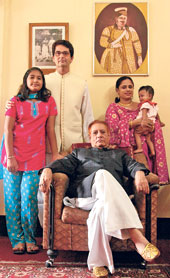
REGAL ROOTS: Shahebzade Wasif Mirza and his family pose before the portrait of Nawab Wajid Ali Shah;
A king-size portrait of Nawab Wajid Ali Shah will catch your eye the moment you step into the grand, old living room of Wasif Manzil on Talbagan Lane in Calcutta. “That’s my ancestor,” says Shahebzade Wasif Mirza, a dignified septuagenarian, pointing at the portrait — the pièce de resistance in a room bristling with Awadhi heirlooms.
“Satyajit Ray once asked me, ‘Why did the Nawab choose to move to Bengal after his kingdom was annexed?’ At that time, he had just made a film calledShatranj Ke Khiladi,” recalls the patriarch, a registered descendant of Wajid Ali Shah (1822-1887). “I told Ray that perhaps the Nawab felt he would get the respect he deserved only in Bengal.”
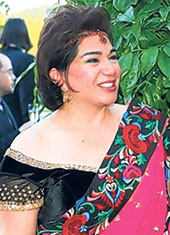
For Shahebzade Mirza, it’s a matter of family honour that he takes on what he calls “pretenders” to the Awadh legacy. In recent months, he has been fighting a fierce battle against Fay Ary, an Iranian woman who divides her time between Monaco, Paris and Dubai, and claims to have married a direct descendant of Nawab Wajid Ali Shah and his second wife Ronakara Begum.
Fay Ary
But she refuses to disclose her late husband’s name for “fear of being drawn into family feuds.” Ary also wishes to do something for the underprivileged in India through her charity organisation, Royal Awadh Cultural and Heritage Foundation (RACH).
“All this sounds very nice. But she calls herself Her Royal Highness Princess Jehan Ara Fay Ary. I have the complete family tree and she figures nowhere. I’d like to know where her imaginary kingdom is located,” says Mirza. In a recent letter to the French ambassador to India, Jerome Bonnafont, he complained against Ary and RACH. “Our objection is to the use of our family’s name …for large monetary gains,” wrote Mirza.
Fay held a charity auction in Paris this May where her “personal collection of jewellery” went under the hammer. “We don’t know what she auctioned as her Awadhi legacy. And we don’t know where the proceeds are going,” says Ibrahim Ali Khan, a descendant of a 19th century Awadhi vizier, who heads the Royal Family of Awadh Foundation in Lucknow.
It all began a couple of years ago when Nawab Jafar Mir Abdullah — who reportedly claimed to be the Awadh rulers’ “direct descendant” — came under media glare. Abdullah, who’s on the RACH advisory committee, was accused of faking his nawabiheritage and arranging Awadhi banquets for foreign tourists in collusion with “unscrupulous” travel operators in Lucknow. It was also alleged that he charged tourists hundreds of dollars for banquets and mujras (dances) at his Lucknow home. His partner in this enterprise is said to be Prateek Hira, who heads a tour operating agency called Tornos India and is also associated with RACH.
Hira maintains that Khan and others have launched a malicious campaign to defame Ary, Abdullah and his agency. “Abdullah is well respected in Lucknow,” says Hira.
■ Shahebzade Wasif Mirza, descendant of Nawab Wajid Ali Shah (1822-1887) of Awadh (Oudh).
■ Fay Ary, an Iranian who claims to have married a direct descendant of Wajid Ali Shah and his second wife Ronakara Begum. Ary runs a charity, Royal Awadh Cultural and Heritage Foundation (RACH).
■ Ibrahim Ali Khan, a descendant of a 19th century Awadhi vizier, who heads the Awadh Royal Family Foundation in Lucknow. Does not support Ary.
■ Jafar Mir Abdullah, who is described as Wajid Ali Shah’s direct descendant and is on the RACH advisory committee.
■ Prateek Hira, who heads a tour operating agency called Tornos India and is associated with RACH.
Fay Ary gained some publicity in Lucknow around this time after announcing her charity projects. “She wants to do something for the poor — like arranging cleanliness drives in various Indian cities and providing slum dwellers with clean drinking water. She sought my help to implement the projects,” says Hira.
Ibrahim Ali Khan and others tried to blow the lid off what they called a “nexus” between Abdullah, Hira and Ary last year. “The issue was almost dying down when a freelance journalist from Delhi wrote to Hira and threatened action against his activities. He wrote to me as well,” says Khan.
Fay didn’t take it lying down. In an email dated June 29 this year, she wrote to her friends in Lucknow, Dubai and Paris, “A very nasty activity is being undertaken …(by a journalist)… for want of some money to sustain himself …ignore this man who keeps changing his name to fool people.”
Speaking from Paris, Ary expresses her “anguish and disappointment” over the “concerted efforts to pull down RACH.” “I claim nothing from the Indian government or from the Awadh families. I auctioned my own jewellery in Paris. I am hankering after no title. All I wanted to say to these people was that I had the resources to do some good work in India,” says Ary.
She wants to start her “slum cleanliness drive projects” in early October. She will also host a gala event in Dubai this November to seek support for her charity work. “People who claim to be true nawabs in India should stop bickering and do something for their country.
There seems to be another point of clash between Ary and Shahebzade Mirza. Ary told the media last year that she would renovate Nawab Wajid Ali Shah’s mother’s grave in the Père Lachaise cemetery in Paris. The Nawab’s mother, Aliya Begum, went to England to plead with Queen Victoria for returning Awadh to her son. On her way back, she fell ill and died in Paris in 1856 and was buried in Père Lachaise. Ary wants to project her grave as a site of historical significance.
The Shahebzade Mirza family, on the other hand, wants to rectify an inscription near the grave which says that her son Wajid Ali Shah was killed by British forces in 1856. “The Nawab died of natural causes in 1887. We have written to the French consulate in Calcutta to do something about it,” says Mirza. A spokesperson from the French consulate, who prefers not to be identified, confirmed receiving the letter.
“I accompanied Fay to the Paris cemetery this year. She is planning a renovation,” says Abdullah, the controversial ‘nawab’ who refutes all allegations against himself. “She doesn’t lay any claim to the Awadh royalty. She is herself related to Farah Diba Pahalvi, the queen of the last Shah of Iran who ruled till 1979.”
Abdullah also goes on to say that he will go on hosting banquets for tourists in order to interact with people and entertain them. “I tour the world and get invited by top officials. I will also continue to be part of RACH and the commendable work it does,” says Abdullah. “I never claimed to be a descendant of Wajid Ali.”
Agrees Rosie Llewellyn-Jones, a British scholar who’s writing a biography of Wajid Ali Shah. “Abdullah does not really claim descent from Wajid Ali Shah, but from Nawab Mohammed Ali Shah, who ruled Awadh from 1837 to 1842,” she says. She adds that it’s important to remember that “Wajid Ali Shah’s descendants are not the only descendants of the royal family of Awadh.”
“Each Nawab, from the time of Asaf-ud-daula (1775 to 1797), had a number of wives, and inevitably, a large number of children and grandchildren. These people are also descendants of the Awadh royal family. On Wajid Ali Shah’s death he left about 45 sons, and a larger number of daughters, and the descendants of these sons and daughters can obviously claim direct descent from him.” On Ary, she says that unless she is prepared to reveal her husband’s name “we can’t really check out her claim.”
Indian historian Ravi Bhatt, who penned a book called The Life and Times of the Nawabs of Lucknow, begs to differ. “Just as Nagpur is famous for oranges and Benaras for silk, Lucknow is known for its nawabs,” says Bhatt. “Every Tom, Dick or Harry calls himself a nawab these days. But let me tell you there is no descendant of the Awadh royal family in Lucknow now,” says Bhatt.
Meanwhile, Shahebzade Mirza is gearing up for the next round of battle. “We hope the French government will act on our complaint against Ary. The war is far from over.”
source: http://www.telegraphindia.com / The Telegraph, Calcutta,India / Front Page> 7 Days> Story / Sunday – August 23rd, 2009
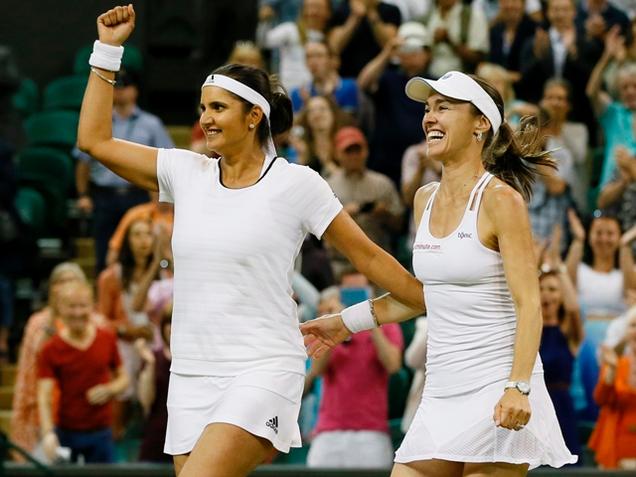
Martina Hingis (R) and Sania Mirza celebrate winning the Wimbledon women’s doubles final, in London on Saturday.
President Pranab Mukherjee and Prime Minister Narendra Modi on Sunday congratulated Sania Mirza for becoming the first Indian to win the Wimbledon women’s doubles title with her Swiss partner Martina Hingis.
“Well played Martina Hingis and Sania Mirza. You played wonderful tennis and registered a fantastic win at Wimbledon. We are proud and very happy,” Mr. Modi said in a statement.
“Hearty congratulations @MirzaSania @mhingis on winning women’s doubles in Wimbledon, @MirzaSania’s achievement will inspire youth of India,” Mr. Mukherjee tweeted.
“Many congratulations to @MirzaSania for winning the @Wimbledon doubles title. An incredibly well played match,” Sports Minister Sarbananda Sonowal tweeted.
source: http://www.thehindu.com / The Hindu / Home> National / by PTI / New Delhi – July 12th, 2015