All posts by mpositiveone@gmail.com

All-Women Police Station Opened in Howrah

An all-women police station was today opened in Howrah (rural) district.

The police station was inaugurated by state correctional home minister Hyder Azid Safi at the Uluberia police station.

Parliamentry secretaries and MLAs Nirmal Majhi and Pulok Roy alongwith DIS Subroto Mitra was present on the occasion.

source: http://www.outlookindia.com / Outlook / Home> Howrah / March 16th, 2015

Altaf makes a comeback

The singer will now be seen in a new album 

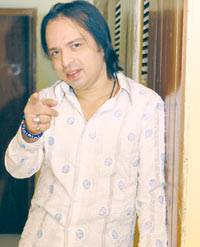
Altaf Raja (TOI photo)

When Altaf Raja sings, nothing can dilute the enthusiasm level of the audience, which transcends into a completely different zone altogether. Yes this is the magic of the Qawwali singer, who became a household name after his album Tum to Thehre Pardesi was released in 1993 and since then he has never looked back.

The singer will now be seen in a new album, which is scheduled to be released in January. The singer is also working on another music album in which he will be seen with Preeti Jhangiani.

Ask him to comment on his feelings about the city and Altaf waxes eloquent, “Nagpur is my place of birth and today, when I see the place after three years (since my last visit), it has undergone tremendous changes in terms of wider roads and tall buildings.

Nagpur will always remain close to my heart as it was here at the dargah of Tajuddin Baba that my mother sought diving blessings for my well-being and today I owe my success to this place. I am certainly not a pardesi to Nagpur.”

His first album also had a strong Nagpur connect. As Altaf says, “The mukhra of the song Tum to Thehre Pardesi was composed by a Nagpur-based poet Zahir Alam and it went on to become one of the favourite songs of those, who had been deceived at any point in life.”

Talking about his struggling phase Raja says, “My parents were also artistes, who wandered from place to place to earn their livelihood and that motivated and challenged me to pursue a career in music and carve a niche for myself.” The singer adds that during the initial days he did riyaz for almost five hours but at this point of time he can only spare about two hours for his riyaz everyday.

When asked out of all the songs he has sung so far, which one is really quite close to his heart, Altaf says, “I have sung so many songs, that selecting one will not only be difficult, but also unfair.”

source: http://www.timesofindia.indiatimes.com / The Times of India / Home> Entertainment> Hindi> Bollywood / TNN / ocotober 30th, 2007

Watch: The hit singer of ’90s is back, Altaf Raja croons for Hunterrr

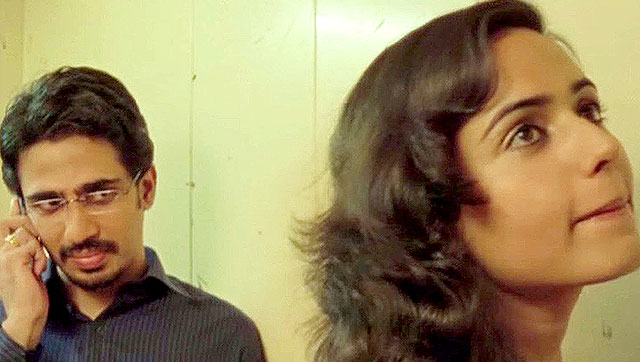
A still from Hunterrr

It’s yesterday once again. After crooning for a series of chartbusters in the ’90s, hit singer Altaf Raja is back once again, and how. Raja has lent his voice to a song in the upcoming film Hunterrr, and the number is already topping popularity charts.

The song, called Dil Lagaana, is also used to disclose the film’s plot: Hunterrr is about a sex-addict named Mandar Ponkshe (played by Gulshan Devaiah). Written by Khamosh Shah, Dil Lagaana features Altaf Raja and Gulshan Devaiah in an autorickshaw.

Raja, also known for his qawwalis such as Tum toh thehre pardesi and Tumse kitna pyaar hai, recently lent his voice for a promotional song in Emraan Hashmi’s Ghanchakkar also.

Directed by Harshvardhan Kulkarni, the film also stars Radhika Apte in a pivotal role.

Hunterr is scheduled to hit the screens on March 20, 2015.

source: http://www.hindustantimes.com / Hindustan Times / Home> Entertainment / Hindustan Times,  New Delhi / March 16th, 2015

Aamir Edresy conferred with “Huzur Mujahid-E-Millat Award”

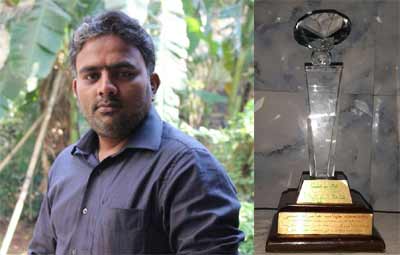
Aamir heads Association of Muslim Professionals, a Mumbai-based NGO with members from all over India, its Facebook group has more than 44 thousand members.

AamirMPOs17mar2015 

The award was given in an Annual Conference named after renowned Sufi Buzurg and Freedom Fighter Hazrat Maulana Shah Habibur Rahman (Commonly known as Mujahid -e- Millat for his contributions for community) at Handiwali Masjid, Saifee Jubilee Street, Bhendi Bazar, Mumbai.

This recognises Aamir Edresy’s continous efforts for Educational and Economical Empowerment of Muslim Community all over India through different projects of AMP. The award was given by the hands of Hazrat Maulana Syed Khalid Ashraf Saheb.

Maulana Ejaz Kashmiri, Maulana Anees Ashrafi, Amin Patel (MLA), Amin Parikh, Haji Ameen, Irshad Lakdawala, more than 100 clerics from all over Mumbai and huge crowd was present in the conference.

AMP Facebook Group: http://www.facebook.com/groups/ampindia.786/  Website: www.ampindia.org

source: http://www.milligazette.com / The Milli Gazette / Home> Online News> Community News / March 17th, 2015


ASI-protected 14th century tomb gets a whitewash

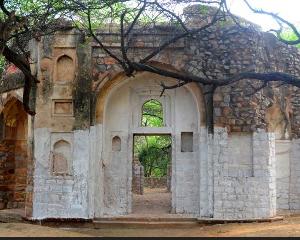
Defaced- Tomb of Khan Shahid, located inside the Mehrauli Archaeological Park. (TOI photo by Rajesh Mehta)

New Delhi  :

A 14th century monument, Tomb of Khan Shahid, located inside the Mehrauli Archaeological Park was defaced and whitewashed some days ago. The monument, protected by the Archaeological Survey of India, used to be brown in colour. Now it has been painted white. Other smaller monuments in the park have also been encroached upon.

“This monument was notified as ‘protected’ in 2008-09,” said an official with INTACH.

Khan Shahid was the son of Ghiyas-ud-din Balban, the ninth Sultan of the Mamluk dynasty during the Delhi Sultanat period. There are around 60 monuments in the Mehrauli Park, spread over 200 acres. The park’s land is owned by Delhi Development Authority but officials say their responsibility is only to maintain the park. “These monuments are ASI’s responsibility, not ours,” a DDA spokesperson said.

ASI officials were not aware of the monument’s status. “We don’t know whether ASI, Delhi Wakf Board or DDA is responsible for it,” said Deepak Bhardwaj, a surveyor with ASI Delhi.

The tomb could well become a cause of contention between different institutions. As per ASI, DDA is the land-owning agency and even outside the park DDA boards have been put up. However, on the freshly white-painted walls, one could see Delhi Wakf Board written in black.

“We didn’t send any painter to this site. But if it is Delhi Wakf Board property then we have the right over it and repair work can be carried out,” said Rana Siddique, chairperson, Delhi Wakf Board.

The tomb is supported on 12 Delhi quartzite columns and is covered with a vaulted roof of brick and plaster. The enclosure measures 4.85m by 3.85m. Hidden by thick vegetation, it isn’t easily accessible. It is easy to miss the turn leading to the tomb as the small plants market on Anuvrat Marg has encroached upon the pavements and the road leading to it.

The structure had undergone conservation work in 1998 as a part of the INTACH Delhi Chapter under the project on 20 monuments within the area. The columns have engraved capitals and the ceiling has inscriptions, geometric and floral motifs in plaster. All this is now hidden under the white coat of paint. Even the tomb is in shambles and needs immediate repair.

“Last week it came to our notice that the tomb and other small monuments in the enclosure are all painted white. It isn’t even maintained well,” the INTACH official said.

There is a mosque and a graveyard in the same compound. One could see people drying clothes on the roof of another small monument next to the mosque. Some people also live inside the mosque. “We are living here for some years now,” said one of them. The encroachers confirmed that last week two painters came and daubed it in white.

source: http://www.timesofindia.indiatimes.com / The Times of India / Home> City> Delhi / by Maria Akram, TNN / March 17th, 2015

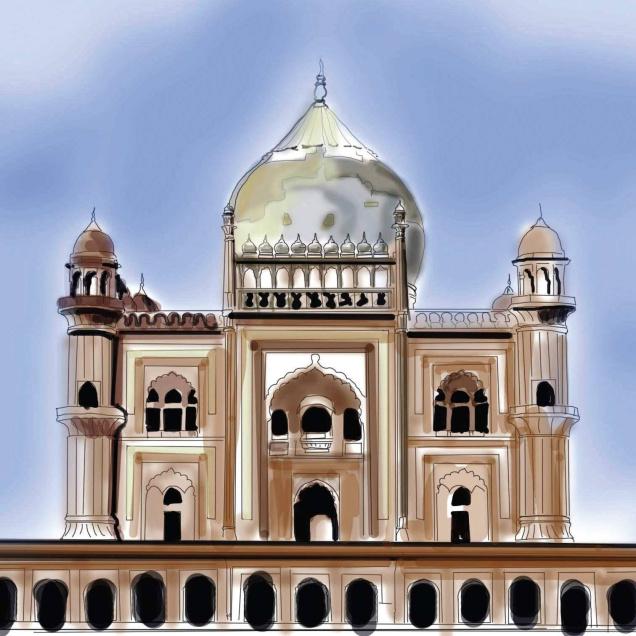
DOWN MEMORY LANE – Talk about a tomb

SafdarJungMPOs16mar2015

Nawab Safdarjang’s tomb used to be a place of halt for the Tazia procession from the Walled City before it ended at the Karbala in present-day Jorbagh

Many have admired Safdarjang Tomb as the last flickering lamp of Mughal architecture but it was left to Dulcie Hamilton, a passing-by travel writer from Melbourne, to remark that it was like “an inverted lotus, just the opposite of the latter-day Baha’i Lotus Temple” (in an age when the Lotus symbol is politically abloom). Both the structures incidentally have an Iranian link as the founders of the Baha’i faith, the “Bab” and Bahaullah belonged to Iran while Nawab Safdarjang also had Iranian antecedents. For this reason, his last resting place occupied pride of place in Jorbagh, the Shia cemetery that extended up to it at one time and was second in importance only to the (Hazrat Ali) Qadam Sharif shrine set up by Qudsia Begum, the wife of Mohammad Shah in the 18th Century. Safdarjang was the Vazir at her husband’s court and later that of her son. It should be no surprise, therefore, that the tomb took pride of place during the Moharrum mourning for Imam Hussain.

The tazia processions that came from the Walled City made their first halt at the palace of Mahabat Khan, behind his contemporary Abdun Nabi’s masjid in the present ITO area and the next one at Safdarjang’s Tomb before finally ending at the Karbala. Mahabat Khan’s mahal does not exist now but his grave is there in Jorbagh.

Another interesting fact that few know about is that Safdarjang’s first Urs or death anniversary saw many Shia divines arriving in Delhi from Oudh and surprisingly enough, a qawwali was also held at the behest of his son and successor, Nawab Shujauddaulah who was reputed to have the longest moustaches in the Mughal empire. He aided Ahmed Shah Abdali in the third Battle of Panipat in which the Maratha confederacy led by the imperious Sadashiv Rao “Bhau” lost. After that Shujauddaulah’s clout in the Mughal durbar increased with the arrival in Delhi from Allahabad of Shah Alam (designated emperor by Abdali).

Safdarjang’s mausoleum, designed on the pattern of Humayun’s Tomb, is a poor imitation. The three-storey tomb in fawn-coloured stone also bears a faint resemblance to Akbar’s mausoleum at Sikandra, but lacks the magnificence of the latter. Even so it is an interesting monument, situated amidst a garden of 300 square yards, and enclosed by a wall at the corners of which stand octagonal towers and a central dome, rising above a 16-sided drum.

Arcaded pavilions, named Moti Mahal, Badshah Prasad and Jangli Mahal, have been, constructed on the northern, southern and eastern sides, like the pavilions in the outer quadrangle of the Taj. It is believed that these were meant for the accommodation of nobles who visited the mausoleum. The tomb has a carved cenotaph in the central chamber within which is another chamber containing two unmarked graves, both with earthen mounds above them. In it lie buried Mirza Muquin, Abul Mansoor Khan Safdarjang, and his wife Banu Begum. The monument was built by Shujauddaulah at a cost of Rs.3 lakhs with a lot of marble and other material being pinched from the mausoleum of the Khan-e-Khanan and other Mughal buildings.

Safdarjang was the head of the Shia Irani Party at the court of Ahmed Shah (1748-1754). His opponents were the leaders of the Sunni Turani party headed by Imtiaz-uddaulah and Imadad-ul-Mulk. Safdarjang, who had succeeded Burhan-ul-Mulk as Nawab of Oudh, died at Faizabad in 1754 and his body was brought to Delhi, for though he had to leave the Mughal court in disgrace after trying to play kingmaker, he nevertheless pined for his days of grandeur in the Capital and desired to be laid to rest there. His mausoleum has a mix of Mughal, Rajput, Iranian and Egyptian architectural patterns jostling for space.

Even so, it attracts a lot of tourists but these days, the water channels – a notable feature – are dry which is a turn-off. The renovation work has been done only on some portions with others are still badly in need of repairs. When one visited the tomb recently under overcast skies, one wondered if yesteryear music ‘mehfils’ could be revived and tazia processions made to converge on it either at Moharrum or Chhelum for the halim dish break that used to replenish the fatigued ‘Akharas’ or sword and lathi-wielding squads in the past. One thing that Safdarjang couldn’t have dreamt about is that 261 years after death his memory would be enshrined not only in the Maqbara but also in the airport, road, hospital and enclave named after him by a generous posterity which only has a nodding acquaintanceship with him.

The author is a veteran chronicler of Delhi.

source: http://www.thehindu.com / The Hindu / Home> Features> MetroPlus / by R.V. Smith / March 15th, 2015

Abhiram bags Pin Strikerz Bowling Championship

Local resident Mr. Abhiram clinched the singles title in the Pin Strikerz Bowling Championship held here on March 8 and 9. Mr. Vivek from Hyderabad and Mr. Pasha from Vijayawada bagged the second and third places respectively.

In the doubles category, the team of Mr. Abdullah and Mr. Vamsi from Vijayawada won the championship, while another local team of Mr. Pasha and Mr. Dilip Jain from the city bagged the second place.

In all, 32 participants from different parts of Andhra Pradesh and Telangana States participated in the two-day championship.

Andhra Pradesh Ten Pin Bowling Association general secretary Smitha Chowdhary was chief guest for the prize distribution ceremony. P.S. Charan, general manager Planet Fun and Praveen Tungala, president Pin Strikerz Group, distributed the trophies, said a press release.

In the doubles category, the team of Mr. Abdullah and Mr. Vamsi from Vijayawada won the championship

source:http://www.thehindu.com / The Hindu / Home> News> Cities> Vijayawada / by Special Correspondent / Vijayawada – March 10th, 2015

Strands of belonging

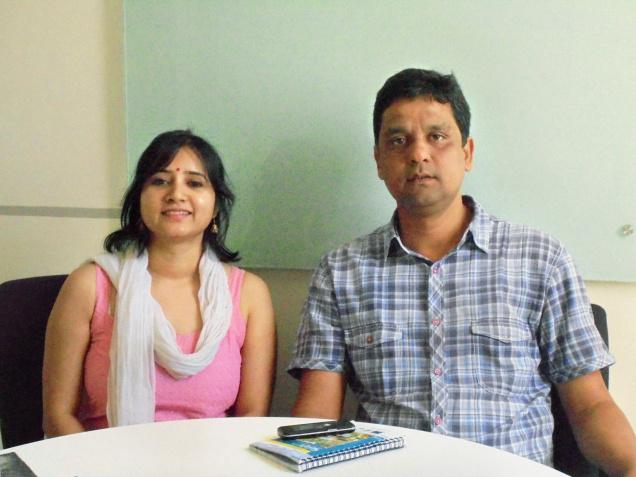
Malini Bhattacharjee and Nazrul Haque

In a research paper presented at Jamia Millia Islamia, academics Nazrul Haque and Malini Bhattacharjee highlight why Assamese Muslims are now asserting their ethnic identity alongside their religious identity

The ethnic violence in Bodo Territorial Council areas of Assam has been in the news for some years. Particularly bloody and recurring has been the conflict between the Bodos and the largely Bengali-speaking Muslims, leading to many from both the communities living in uncertainty and fear in camps for some time now. The accusations of the Bodos against the Muslims as illegal immigrants from Bangladesh who occupied their fallow land — and therefore ‘outsiders’— have been at the core of the conflict.

Not just in the Bodo areas but across Assam, the fight against illegal immigration from Bangladesh has been long, and at times bloody. A porous international border, unfulfilled promises of the Assam Accord and both State and National parties perennially playing vote bank politics, have contributed to the protracted problem. The emergence of the All India United Democratic Front (AIUDF) — on largely religious lines — has added to the complexities.

In this din, a critical voice seems to have gone unheard — that of the Assamese Muslims, locally called Goria, Moria or Desi. Many political and religious groups, time and again, have tried tying them to the Bengali-speaking Muslims highlighting their religious identity. However, lately, the community is seen to be asserting its ethnic identity as equally important as its religious identity, thus situating them in a peculiar position in the politically charged and religiously polarised milieu of the State.

The complexities of the topic got rare attention at a recent conference in New Delhi on the North East. Nazrul Haque and Malini Bhattacharjee, from Bangalore’s Azim Premji University, presented a paper — Identities in Quandary: The Complex Narrative of ‘Assamese Muslims’ — at “Reimagining the North East: Narratives, Networks and Negotiations”, hosted by Jamia Millia Islamia’s Centre for the North East. The research paper stood out for throwing light on an important slice of Assam history, often overlooked.

Haque and Bhattacharjee expounded on the advent of Islam in Assam through the invading Muslim armies since the 13th Century; their defeated soldiers taken captive by the Ahom kings creating, first, the Gorias, and later the Morias in the mid-16th Century. While Desis are people from the Koch and Nath communities converted to Islam, they highlight that many others became Muslims in Assam at the call of the Sufi saint Azan Fakir in mid-17th Century.

The Bengali-speaking Muslims, the paper points out, emigrated from erstwhile East Bengal to Assam during the British rule from 1826 to 1947. It “reached its peak during 1971 with the creation of Bangladesh”, leading the 1971 Census to record a 34.98 per cent increase in Assam’s population from the 1961 Census. However, Assamese language and local culture continued to be the binding force for the rest of the communities across religions.

In this interview, the duo states that language being the defining factor of the 1980s Assam Students’ Movement against illegal immigration, Assamese Muslims took part in it but “later became suspicious in an increasingly communal environment.”

Excerpts from the interview:

What attracted both of you to the topic? How long you have been researching on it?

Haque: We both are from Assam and have grown up witnessing the syncretic nature of our local culture (irrespective of religion and in spite of it) and also the changing narratives of that ethnic bonding. For the last few years, we could also sense a tension among indigenous Muslims of Assam and the various reasons for that — rise of global Islam, increasing religious intolerance in India, demand of democracy and politics, controversy surrounding the issue of ‘immigration’, etc. That made us interested in the topic as this case study speaks to a very important and global phenomenon. We did our first field interviews last November.

What is the size of their population?

Haque: There are no government figures, for obvious reasons. However, organisations like All Assam Goria, Moria, Desi Jatiya Parishad quote a number of around 30 lakhs. Some academics point out that in 1901, there were 2,48,842 Muslims in the Brahmaputra valley. The count, as per 1951 Census, was 19,81,859 (15 lakh were estimated to be of East Bengal origin).

In this identity war of ethnicity versus religion, how much are Assamese Muslims under pressure to side with religion? How much of it is political pressure?

Haque: The force of religion is quite powerful, as almost everyone we interviewed had admitted. There are changes in important social ceremonies, food habits, folk music, literature, the way people dress and conduct their daily life. There are political pressures too and more so because of the rise of the BJP and AIUDF in Assam politics, almost simultaneously.

How representative of the community are organisations like AAGMDJP?

Haque: It seems there are too many contradictions even within organisations ‘representing’ indigenous Muslims of Assam. Who are ‘indigenous’ and who are not? However, one fact is important — of all such bodies, AAGMDJP is the only one well accepted by all other ethnic organisations (Tai Ahom Students Union, Ahom Royal Society, Moran Students Union, Motok Students Union, Dimasa Students Union, Sonowal Kachari Parishad, All Bodo Students Union) and for some years, they are almost working together. That was evident in some public meetings we attended.

How much have Assamese Muslims suffered in the Bodo-Muslim violence? How strong is the tendency to club them with Bengali-speaking Muslims because of religion?

Bhattacharjee: There are many layers to this question and they are complex. One thing is distinct — the Bodoland violence was not (only) because of religion. Even now, the stands taken by various groups (including the BJP, the RSS or Hindu Yuva Chatra Parishad) are clear and publicly so — that one can’t club all Muslims in Assam under one religious umbrella. However, interests representing people from East Bengal origin (even Na Asomiyas) definitely try to make it a Hindu-Muslim issue and our sense is that so do intellectuals who don’t have first-hand knowledge of the region.

source: http://www.thehindu.com / The Hindu / Home> Features> MetroPlus / by Sangeeta Barooah Pisharoty / March 11th, 2015

How he built a biryani empire

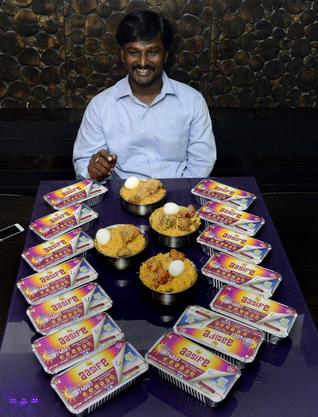
Y. Aasife Ahmed, managing director of Aasife Biryani. Photo: M. Vedhan / The Hindu

From a pushcart to a chain of plush restaurants…the author gets a whiff of Y. Aasife Ahmed’s success

Y. Aasife Ahmed was not much for bookish learning. “I knew what I was passionate about, and I set about pursuing my dream,” he says. And so at 18, he apprenticed with a biryani cook and later started his own wedding catering business.

Even then, he had his eye set on something much bigger, something he hardly dared to dream of, but he set about working towards it anyway.

What started with five kg of biryani on a thallu vandi (pushcart) on Butt Road in St. Thomas Mount 15 years ago has now grown to 500 kg of biryani per day, served out of four Aasife Biryani Centre outlets all around the city, the latest one being on Anna Salai.

“From the pushcart we moved to a hole-in-the-wall. We still serve take away from that shop. We then expanded across the road,” says Aasife, seated in the well-appointed lobby of the Alandur branch one evening.

I tell him I have fond memories of cycling down the road on my pink Ladybird to pick up biryani and kothu barotta for lunch.

His face lights up as he says, “You must have seen me there then; I was always behind the counter! It is good to meet old customers. In fact, there is one person who has been a regular from the beginning, and he still dines at our outlet frequently. It is the most satisfying feeling.”

While the shop was established as Aasife and Brothers, they have now parted ways. “My two brothers have diversified into other businesses. They do not share the same love for biryani or the potential I see here,” he shrugs, gesturing to the restaurant filled with chattering diners and customers waiting for their take-away orders.

He has hired the same architect and design firm to work on all his upcoming restaurants. They open in Kilpauk this month and in Nungambakkam the next.

But his pet project is the one on OMR. The 39-year-old’s soft-spoken and calm demeanour is replaced by a palpable excitement when he talks about it: “We have five floors, each with a different concept. The kitchen will take up an entire floor, and another will have a floating restaurant. There will also be a large play area for children. I want it to be the biggest restaurant in the country when we launch in May or June this year.”

Aasife’s mantra for both his cooking and his business is quality. “The ingredients should be of the best quality; even if one ingredient is not good, it will ruin the taste. Also, diners want to see a well-maintained restaurant. They care about the ambience, and so my staff are trained to ensure that every nook and corner is cleaned throughout the day. I am lucky to have such a great team of managers who know exactly what my expectations are and carry it out to perfection,” he says.

It is a good thing his favourite food is biryani, mutton in particular, and although he does not cook as much as he used to when he started the business, he does several taste tests a day.

“I go to the gym for an hour every morning. After that I visit the centralised kitchen in Guindy, and each of the outlets. I ask for whatever negative feedback has been received, and we set about rectifying them as quickly as possible,” he says.

Walking around the Anna Salai branch just before opening time on a weekday afternoon, Aasife draws my attention to the wall.

“Our speciality is that we use wood fire to make our biryani. As a tribute to that, we cut up our firewood logs and incorporated that into our decor,” he says proudly, running a hand over the now varnished wood.

“Although this is the newest branch, I feel like I have arrived on the scene with this restaurant. It is just the beginning for me.”

Apart from biryani, Aasife’s other love is cars. “Right now, I drive an Elantra. I would love to get some of the best and fastest cars available,” he says with a grin. But those can wait: right now, his plan is to take over the Chennai biryani market by 2016.

He does, of course, talk of his three children — a girl and two boys — with a lot of tenderness.

“I hope that one day they will take over what I have started here. I want this to be my legacy to them. Although it is my passion, I am doing this for their future as well.”

source: http://www.thehindu.com / The Hindu / Home> Features> MetroPlus / by Susanna Myrtle Lazarus / March 08th, 2015

From Bean to Cup

The Coffee Board of India serves as the friend, philosopher and guide to the coffee sector in the country covering the entire value chain

CoffeeBeansKF12mar2015

The saga of Indian coffee began on a humble note, with planting of ‘Seven seeds’ of ‘Mocha’ during 1600 AD by the legendary holy saint Baba Budan, in the courtyard of his hermitage on ‘Baba Budan Giris’ in Karnataka. For quite a considerable period, the plants remained as a garden curiosity and spread slowly as back yard plantings. It was during 18th century that the commercial plantations of coffee were started, thanks to the success of British entrepreneurs in conquering the hostile forest terrain in south India. Since then, Indian coffee industry has made rapid strides and earned a distinct identity in the coffee map of the world.

The Coffee Board

During 1940s, the coffee industry in India was in a desperate state due to the World War II resulting in very low prices and ravages of pests and diseases. At this time, the Government of India established the Coffee Board through a constitutional act – Coffee Act VII of 1942 – under the administrative control of the ministry of commerce and industry. The Board comprises 33 members including the chairman, who is the chief executive and appointed by the Government of India. The remaining 32 members represent the various interests such as coffee growing industry, coffee trade interests, curing establishments, interests of labour and consumers, representatives of governments of the principal coffee growing states and members of Parliament.

After pooling was discontinued in 1996, Coffee Board serves as the friend, philosopher and guide to the coffee sector covering the entire value chain. The core activities are primarily directed towards research & development, transfer of technology, quality improvement, extending development support to growing sector, promotion of coffee in export and domestic markets. The activities of the Board are broadly aimed at (i) enhancement of production, productivity and quality; (ii) export promotion for achieving higher value returns for Indian coffee and (iii) supporting development of the domestic market.

Research and Export Promotion

Organised research in coffee was initiated during 1925 by the erstwhile Mysore Government by setting up the Mysore Coffee Experiment Station near Balehonnur in Chikmagalur district. After formation of the Coffee Board, the research station was brought under its administrative control. Presently the Research Department of the Board with its headquarters at the Central Coffee Research Institute and five regional stations has a sanctioned strength of 113 scientific personnel and is involved in development of improved varieties with tolerance to major pests and diseases and standardisation of technology for improving production, productivity and quality.
CoffeeAreasKF12mar2015

After liberalisation in 1996, the marketing functions were deregulated. The Coffee Board plays the role of facilitator and promoter of Indian coffee exports. However, registration of exporters is the responsibility of the Coffee Board. Under the Export Promotion scheme, exports of value added coffees in retail packs and export of coffee to high value far-off destinations are incentivised to offset the transaction costs to some extent and enable the Indian exporters to be competitive in the export market. These incentives provide opportunities to expand the footprint of Indian Coffee in higher value destinations like USA, Japan, Canada, Australia, New Zealand, etc on one hand and reinforcing presence in traditional markets i.e., European Union/ Russia and CIS etc.

Besides, the Board regularly participates in leading coffee trade shows/ exhibitions held in major consuming countries to promote awareness about quality of Indian coffee to the overseas roasters, traders and consumers. The Board also conducts Flavour of India – The Fine Cup competitions to select fine coffees and expose them to the export market. It also promotes coffee consumption in the country through 12 India Coffee Houses located in major cities across the country.

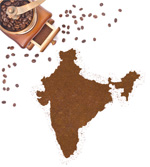
In India, coffee is traditionally grown in the Western Ghats spread over Karnataka, Kerala and Tamil Nadu. Coffee cultivation is also being expanding rapidly in the nontraditional areas of Andhra Pradesh and Odisha as well as in the North East states. Coffee is predominantly an export oriented commodity and 65 per cent to 70per cent of coffee produced in the country is exported while the rest is consumed within the country. Indian coffee industry earns a foreign exchange to the tune of about Rs 4000 crore. In the international market, Indian coffees earn a high premium, particularly Indian Robusta which is highly preferred for its good blending quality. Arabica Coffee from India is also well received in the international market.

Arabica is a mild coffee, but the beans being more aromatic, it has higher market value compared to Robusta beans. On the other hand Robusta has more strength and is, therefore, used in making various blends. India is the only country that grows all of its coffee under shade. Typically mild and not too acidic, these coffees possess an exotic full-bodied taste and a fine aroma.

India cultivates all of its coffee under a well-defined two-tier mixed shade canopy, comprising evergreen leguminous trees. Nearly 50 different types of shade trees are found in coffee plantations. Shade trees prevent soil erosion on a sloping terrain; they enrich the soil by recycling nutrients from deeper layers, protect the coffee plant from seasonal fluctuations in temperature, and play host to diverse flora and fauna.

Coffee plantations in India are essential spice worlds too: a wide variety of spices and fruit crops like pepper, cardamom, vanilla, orange and banana grow alongside coffee plants.

Training courses in coffee culture and management

The Central Coffee Research Institute, popularly known as CCRI, has grown as an internationally recognised, state-of-the-art research centre for carrying out research on all aspects of coffee cultivation. CCRI is committed to introducing emerging technologies and sustainable package of practices to benefit the coffee farmers. It plays an important role in the development and growth of the coffee agricultural sector. CCRI has 133 dedicated scientists working for the development of newer technologies in close association with a number of international institutes, reputed national institutes and pure science and agricultural universities.

The CCRI, apart from the development of new technologies, is involved in imparting training on scientific coffee cultivation to the benefit of all the stakeholders since 1953. The institute is recognised as an international centre of excellence for training in coffee culture by the FAO, Rome. Candidates from several coffee growing countries are being sponsored for these training programmers by the world organisations like UNDP, FAO or by their respective countries.

CHART

Coffee regions of India

Anamalais (Tamil Nadu): Wildlife sanctuaries in this region are the abode of spotted leopards,while the plantations are home to fine, high-grown Arabicas, including the exotic Kents.

Araku valley (Andhra Pradesh):
 Home to colourful parrots, it is not unusual to see a flock of chattering red and green birds, darting through trees in this scenic valley.

Bababudangiris (Karnataka): Bababudan brought seven ‘magical’ beans from Yemen and planted them in the lofty hills of this region. Deer is often spotted, grazing alongside plantations abundant with full-bodied Arabicas.

Biligiris (Karnataka/Tamil Nadu):
 Besides full-bodied Arabicas, this region is noted for the sambar – the largest Indian deer with huge antlers.

Brahmaputra: The mighty Brahmaputra which flows through the North Eastern states is the lifeline of this region which is home to the one-horned rhinoceros. This sturdy animal is found in large numbers at the Kaziranga National Park in eastern Assam.

Chikmagalur (Karnataka): Chikmagalur’s forests and wildlife sanctuaries are abundant with beautiful peacocks, India’s national bird. The peacock loves to show off its colourful feathers, especially during its elaborate courtship dance.

Coorg (Karnataka):
 Lush coffee plantations are bustling with honeybees which yield the delicious Coorg Honey, collected by nimble-footed tribals

Manjarabad (Karnataka): Gentle sloping terrain with small streams and coffee plants provide a natural habitat for the jungle fowl. This yellow-headed bird with a red comb and multi-coloured plumage is generally seen in pairs, close to the coffee plantations.

Nilgiris (Tamil Nadu): The plantations are home to fine, high-grown Arabicas, including the exotic Kents.

Pulneys (Tamil Nadu): A well-known feature of this region is the bright, bluebell-like Kurinji flower that makes a dramatic appearance, once in 12 years. The high-grown Arabicas however, are a predominant sight, year after year.

Sheveroys (Tamil Nadu): 
The magnificent Gaur or Indian bison is an embodiment of vigour and strength, much like the boldsized Arabicas grown here. This massive animal with its huge head and sturdy limbs grazes on the lower hill tracts of this picturesque region.

Travancore (Kerala): The national flower of India, the lotus symbolises purity and beauty. These bright, fragrant flowers with floating leaves and long stems, grow in shallow waters in this region noted for its Arabicas and Robustas.

Wayanad (Kerala):
 Wayanad is home to the Indian tiger, India’s national animal – a symbol of valour and courage.

source: http://www.financialexpress.com / Financial Express / Food & Hospitality World / Home> Cover Story / March 05th, 2015