by Prof. M.I.K. Durrani
Pyar Kiya toh darna kya: The above line which I had quoted in the concluding paragraph of my article ‘Of Conjugal Conundrum’ published in Star of Mysore on 31.8.2014, is from one of the most memorable Bollywood songs of all times. A line like that comes quite handy to all those who are young at heart and more so when they are in love and where there seems to be no way out but to elope. In the eighteenth century England there was only one option for the run-away couples. They had to go to Gretna Green, a Scottish village on the English border where marriage laws were easier to comply with and there the lovers would be united, without let or hindrance, in holy matrimony. However, certain restrictions were introduced in the year 1856 on account of which the ever resourceful and indefatigable lovers would perforce find other ways and places to serve their purpose.
In our own country, however, lovers can find Gretna Greens in every nook and corner where they can tie the knot. Then, after having surmounted all the obstacles, they can boldly trumpet to the whole world:
Pyar kiya koyee chori nahi ki
Chhup chhup aahain bharna kya
Jab pyar kiya to darna kya.
[We have only loved
And not indulged in any theft.
Why should we keep-on
sighing in private;
Why should we fear
having fallen in love.]
And singing of this song is not the monopoly of any particular group. It is the greatest leveller since it belongs to all, irrespective of caste, community or even nationality but, the only sine qua non is that it should be a triumph of love over the antagonistic elements.
Thanks to Bollywood movies which have played a major role in popularising Urdu poetry among the younger generations who have not only a smattering of Urdu language but also desire to know more about it. My readers will surely be surprised to know how even some foreigners have been able to speak in Hindi and Urdu on account of the magic of Bollywood films.
In the year 2007, one day while I was having my post prandial nap, I was woken up by the singing of my land-line phone. The caller was a lady wanting to know the directions to my house as she wished to meet me. I gave her my address in detail along with the unmissable landmarks. Soon after I found an Iranian maid at my threshold with a sweet smile written all over her face. She told me in fractured English that an acquaintance of hers in Iran, one Shaheryar (who had once attended my English classes during his sojourn in Mysore) had advised her to seek my assistance in improving her English. And having joined a pharmacy college in Mysore, Aasma, the young Iranian lady desired to have regular tuitions in the language.
Initially she spoke to me in broken English and then followed, to my surprise, a pidgin of Hindusthani and Englishtani which finally blossomed into a filmistani Hindi and Urdu. She spoke in such a wonderfully mellifluous voice that I asked the chirpy Iranian whence she had picked up the language of the Nawabs of Lucknow and she coyly replied that she had been an addict to Bollywood movies which she would watch at home over and over again, would repeat the dialogues of the film and hum the songs too. And since there used to be a lot of Persian words in those movies, it made her learning much easier. And that narration spoke volumes for the popularity of Indian films in foreign lands like Russia where Raj Kapoor’s ‘Awara’ had become such a super hit that every movie-goer there started singing ‘Awara hoon,’ of course without understanding its connotation.
Some old Indian films do possess that incredible charm of transporting us into a world that rivals the Arabian Nights in its charm. Just try to remember Meena Kumari in Pakeeza (of 1971) or Rekha singing the ghazals in the eponymous Umraojan (of 1981). And how can anyone forget Vyjayanthimala or Madhuri giving sterling performances as Chandramukhi, the courtesan in the two versions of Devdas. And how can Chandramukhi be Chandramukhi without her mujrahs.
In this connection another scene comes back to my mind from Muqaddar Ka Sikandar in which the incomparable Amitabh Bachchan visits the Kotha of the tawaif played by Rekha and as she sings the song Salam-e-Ishq (salutation of love), he takes it over from her with the voice of Kishore Kumar and steals the show from under the very nose of the temptress. What a unique situation it is where a young man wins hands down competing with a professional Kothewali. Long live the power of music ! If you, my dear reader, belong to the internet savvy generation, you may as well watch those mujrahs on YouTube, which are just a click or swipe away and thereby derive maximum pleasure from Lata Mangeshkar and Asha Bhosle rendered playback songs. And by watching those videos, it is guaranteed that for the time being you will be in seventh heaven. And if it were to be a live performance, your reaction at the end would be just amazement and then you would ask yourself, “was it a vision or a waking dream; fled is that music — do
I wake or sleep?”
And finally when you do wake up completely from the trance and feel your feet on the terra firma you would like to know what it was that had so much enthralled you and then you may perhaps try to revisit the sorceress for an encore.
Such alluring performances are actually a form of dance, usually classical Kathak, performed by tawaifs (courtesans) to entertain their patrons. It used to be the most popular form of dance-cum-song presentation during the Moghal era and has continued to be so, even to this day particularly among the Urdu buffs, of some of the North Indian cities, who have a craze for Urdu poetry. Almost every other city in the northern plains of India has its own Kothas where the tawaifs entertain their customers in which they sing songs written by famous poets. And sometimes they are invited by the aristocracy to perform in their palatial residences whenever there is any special celebration. And usually the favourites of the singers and their patrons are Urdu Gazals written by poets like Bahadur Shah Zafar, the last Moghal and his contemporary poets and this particular form of poetry has always been the favourite of the Urdu enthusiasts. And since then we have had innumerable poets whose songs of love, particularly ghazals, have been exploited to the maximum.
Urdu, as we know happens to be one of the major languages of the sub-continent. The word Urdu itself is derived from the Turkish word Ordu, meaning army (or camp) and the same Turkish word has given us the English horde. According to the Indian history, the Moghal army used to have soldiers from Turkey, Iran, Afghanistan and India. While living together in camps and interacting with one another, the soldiers borrowed words from different languages which were being spoken by their brethren and thus there evolved a language which was initially referred to as Zaban-e-Urdu or language of the camp, which in the long run came to be known as Urdu. Quite a large number of words are from Persian language since it happened to be the language of the rulers. Even with regard to Urdu poetry, the model was mostly the Persian ghazal. There are other forms of poetry too but the most popular one is ghazal.
Syed Masood Hasan Rizvi Adeeb in his monumental work Hamari Sha-airy (our poetry) says that the literal meaning of ghazal is talking about women (and not conversing with women), expressing one’s love for them and to die for them. It is, however, a lyric in which themes of love predominate, either of earthly love or of the mystic love of the worshipper for the Divine Beloved. But many ghazals include lines on the themes which have no conceivable connection with love. However, the only thing which gives unity to the poem is its form and that form is governed by strict rules. It should contain at least five shairs (couplets) but the poet is at liberty to write as many as he needs. As a rule, each couplet must express a complete or independent thought though it is permissible within the ghazal to connect several of the couplets but the rhyme should be strictly observed. The rhyme is always the double one (though this isn’t obligatory).
[To be continued]
source: http://www.starofmysore.com / Star of Mysore / Home> Feature Articles / Tuesday , November 11th, 2014
RECOLLECTIONS…: OF SOME URDU POETS — 2
By Prof. M.I.K Durrani
[Continued from yesterday]
The two rhymes are known as Qafia and Raddeef which are usually translated into English as Rhyme and End Rhyme. For a better understanding of the technique, let us examine the following couplet from Sir Mohammed Iqbal’s following poem:
1. Sare Jahan se acha Hindustan hamara
Ham bulbulain hain uski woh gulsitan hamara
[In this wide wide world, our India is the best,
We are its nightingales and it’s our garden].
The words Hindustan and gulistan are qafias (rhymes) and hamara is the raddeef (end rhyme). The raddeef should remain unchanged at the end of every second line of each couplet but since the above couplet is the mathla (the first couplet of the poem) both the lines (misrahs) have the end rhyme. The couplets which follow the mathla will be having the rhyme and the end rhyme only in the second line (or second misrah) of the succeeding couplets.
The next couplet of the poem reads as hereunder:
2. Parbath woh sab se ooncha,
Hamsaya aasman ka,
Woh santaree hamara
Woh pasban hamara
[The mountain, that is the tallest, is the neighbour of the sky,
It’s our sentry and it’s our guardian.]
The third couplet goes like this:
3. Mazhab nahi sikhata aapas may bair rakhna,
Hindi hain hum watan hai,
Hindustan hamara.
[Religion doesn’t teach us to be hostile towards one another
Indians are we all and India is our motherland].
Emulating this technique, Shaers (poets) write the shairs (couplets) and recite them in mushaeras (poets’ meet) for the delectation of the knowledgeable audience. Before starting the recitation of the poem, the poet says, “Mathla (the first couplet) hazir hai” (meaning: I present) and the audience say “Irshaad” (please recite). After the recitation of each couplet, the audience applauds that poet by exclaiming, ‘Wah, Wah!’ (meaning: bravo, bravo) and sometimes they say “mukarar” (asking for an encore). Usually, these ghazals might have been written in the past (or specially for the present occasion) but each ghazal will be according to the poet’s own choice of the metre and his own selected rhymes and end rhymes and it is likely that they might have been recited previously in other mushaeras also.
In the case of special mushaeras, the organisers invite poets to write ghazals on the basis of a sample misra (line) which is given along with the raddeef (end rhyme) and three or four suggested qafias (rhyming words). So the sample misra or line which is given is called ‘misra-e-tarah’ and the mushaera is called ‘Tarhi mushaera’. The poets who participate in such poetic expositions know that there will be keen competition among the shaers (the poets) therefore they try to outdo one another not only in the composition but also in the recitation of their lines. Mushaeras in the present times are held in metropolitan areas throughout the world because of cultural influence of South Asian diaspora and they are well attended as we watch them on the internet.
Such mushairas were very popular during the 19th century in India. Even the last Moghul emperor Bahadur Shah whose pen name (Takhallus) was Zafar used to have such conclaves in his Palace at regular intervals.
Once when the emperor was in a soiree along with the participating poets, there came to meet him a person who was a total stranger to the rest of the assembly. After saluting the King, the stranger went very close to him and said something in an undertone and the others could not hear the same. When finally he departed, some of the inquisitive courtiers wanted to know what for that man had sought the audience. Bahadur Shah said, “Apni khushi na aaye, na apni kushi chale.” (He neither came here nor left of his own accord). At the completion of the reply, Bahadur Shah himself was so thrilled with that spontaneous overflow of the misra that he desired his preceptor Zauq (full name, Shaik Mohammed Ibrahim) to form a couplet with it and the royal tutor extemporised in very energetic fashion the following lines:
“Layi hayath aaye qaza lay chali chali”
[We came here because Life brought us here; We left here because Death bore us back]
Apni khushi na aaye, na apni khushi chale
And thus Zauq got a mathla for his ghazal which he completed later by adding the following couplets. (Note the rhymes and the end rhymes):
(2a) Behthar toh hai yahi kay na duniya say dil lage;
[Better it is that the heart is not bound to the world]
(2b) Par kya karen jo kaam na bay dil lagi chale
[But what if we cannot do without some interest in it]
(3a) Duniya nay kiska rah-e-fana may dia hai saath
[On the path of mortality to whom hath the world ever offered comradeship]
(3b) Tum bhi chale chalo yunhi
Jab thak chali chale
[Avail thyself therefore, of its company, as long as it chooses to offer thee its company].
(4a) Jathay hava-e-shouq may hain is chaman say zauq
[Zauq, we are leaving the garden of this world full of passionate longings]
(4b) Apni bala say baad-e-saba ab kabi chale
[It does not bother us whether the morning breeze blows or not].
In the last couplet of the above ghazal, which is called the maqtha, the poet has used his pen name (Taqallus), Zauq as per the traditional practice of gazal writers.
Bahadur Shah, the last Moghul himself was a poet of great repute. The couplet noted below speaks volumes about his piety:
a) Zafar aadmi usko na janiye
Ho woh kaisa hi saheb fahem o zaka
[O Zafar, consider not that man as a human being, however much intelligence and acumen he may possess]
b) Jeesay aish may yaad khuda na rahi,
Jeesay thaish may khauf-e-khuda na ho.
[Who in his joyous celebration may forget to remember God and who in his rage has no fear of God].
And this was the man who was made a prisoner by the Britishers after the revolt of 1857 and on the Navroz (the new year’s day) they sent him gifts consisting of two covered hollow dishes which contained the severed heads of his two sons. Later, he was sent to Yangon (Rangoon) where he was kept as a prisoner till his death and was buried there. In one of his couplets he says :
a) Kithna hai badnaseeb Zafar dafan kay liye
[How unfortunate is Zafar that for his burial]
b) Doh gaz zameen bhi na mily koo-e-yaar may
[Not even two yards of land were to be had in the land of his beloved].
And those were the times in which lived the greatest of them all, Mirza Asadulla Khan whom we know and remember by his pen name Ghalib (the dominant one). He is considered to be the most influential poet of the Urdu language. We are constantly reminded by the knowledgeable that poets are born and orators are made. And Ghalib was one who started writing poetry from his boyhood days. Alexander Pope (1688-1744), the great satirist of the 18th century England, in one of his poems talking about his own childhood ability to write poetry says, “I lisped in numbers for the numbers came.” Perhaps Ghalib too had that divine spark which enabled him to write poetry at the tender age of twelve. He was essentially a self-educated man though he was introduced to Persian literature, mythology and history by Hormuz (Abdus Samad), a Zorastrian convert who stayed with him for two years.
Initially, Ghalib’s poetry was in the style of Bedil, an Iranian poet and it was considered to be quite obscure but it was caviare to the multitude. His critics derided him by saying, “If you alone understand your verses and no one else does, you have not achieved much. What is praiseworthy is that others should understand what you say but your writing can be understood only by you and God.”
In this context, it will be relevant to mention almost a similar situation in the life of Robert Browning (1812-1889), a contemporary of Alfred Tennyson. Browning is considered to be a poet of robust optimism but occasionally his verses would be too ambiguous and sometimes bordering on obscurity. Once a lady accosted him in a party with these words: “Mr. Browning, would you kindly explain to me the meaning of these lines penned by you?” She repeated the lines. Browning ruminated for a while and then said, “Madam, when I wrote those lines their meaning was known only to two, me and my God but now, I am sorry, I don’t know it, perhaps the other party alone knows what it means.”
But Ghalib would say, “I don’t write expecting praise or reward and if there is no meaning in my verses it doesn’t matter much.” On another occasion he said:
a) Ya rab woh na samjeh hain
Na samjehnge meri baat
b) Dey aur dil unko jo na dey mujh ko zaban aur
[Oh God, they don’t understand nor will they understand what I say. Give them a feeling heart if you can’t give me a different tongue].
However, very soon on the advice of his friends and well-wishers he started writing in simpler language. He allowed his friends to delete the obscure ones from his collection which was published when he was just twenty one. Before Ghalib, the ghazal used to be primarily an expression of anguished love but Ghalib expressed philosophy, the travails and mystery of life and wrote ghazals on many other subjects vastly expanding the scope of ghazals. And as time passed on, he became the most popular poet of his times and his admirers keep on increasing with each passing day.
[To be continued]
source: http://www.starofmysore.com / Star of Mysore / Home> Feature Articles / Wednesday , November 12th, 2014
RECOLLECTIONS…: OF SOME URDU POETS-3
By Prof. M.I.K Durrani
[Continued from yesterday]
In Ghalib’s memory, his residence at Gali Khasim Jan in Ballimaran, Old Delhi, has been officially declared a heritage site and under the aegis of Ghalib Academy, New Delhi, Ghalib Museum near the tomb of Saint Nizamuddin in New Delhi was established in 1969.
Though it happened twenty-two years after India got her independence, we should be thankful for such little mercies. After all, as they say, something is better than nothing and, of course, it is better late than never. However, those who wish to know more about Ghalib the Poet and Ghalib the Man should view Gulzar’s biopic Mirza Ghalib which is available on YouTube.
Before concluding this essay, I feel that though our own city has contributed to the history of Urdu literature by producing some of the best literati, let me not commit the unpardonable sin of forgetting two of the great men of letters whom I had the good fortune of knowing. One of them was Shah Abul Hasan Adeeb (Adeeb, being his pen name) originally from Silgutta, a village in Kolar district. This literary giant lived in my boyhood days in my neighbourhood. His second son late Bashirul Hasan was my school-mate at Maharaja’s High School. I used to go to my friend’s house on Sundays. Occasionally, I would chance upon the Adeeb and would be completely unnerved by his formidable persona and would immediately scoot.
Adeeb had great mastery over all the three oriental languages, namely, Arabic, Persian and Urdu. He knew by heart hundreds of couplets from all the three languages. It seemed as though his whole life was dedicated to learning, teaching and writing. During 1922-26, he was a student of Moulvi class in Oriental College, Lahore. He also used to attend the mushairas there. Once he attended a mushaera when Dr. Mohammed Iqbal was presiding over the poets’ meet. When Adeeb’s name was called out to recite his ghazal, the audience started booing him since he looked more like a South Indian with his dark complexion. Perhaps, at that very moment, Dr. Iqbal was reminded of S.T. Coleridge’s poem Kubla Khan in which a poet has been described thus:
Beware! Beware!
His flashing eyes, his floating hair!
Weave a circle round him thrice,
And close your eyes with holy dread
For he on honeydew hath fed
And drank the milk of Paradise.
And Dr. Iqbal as the President of the evening’s function ruled that the poet from South India should be heard. And as Adeeb started reciting his couplets, spontaneous Wah Wah greeted every couplet of his and finally he got an award in the form of a medal for the presentation of the best ghazal. This is a point at which one writes Lo and behold! One is made to wonder how a young man supposed to be from a non-speaking Urdu area could carry the day even at his nascent stage from among a group of stalwarts. Certainly, he was destined to conquer many more Mt. Everests of Urdu literature.
Much later for his literary achievements recognition came from no less a person than the then ruler of Mysore Nalwadi Krishnaraj Wadiyar and the Urdu knowing Maharaja conferred upon him the coveted title Adeebul Mulk (the litterateur of the nation). Adeeb passed away in the year 1962 but during his life time he wrote more than a hundred books. His oeuvre included poetry, prose and text-books for various classes. Above all, a very large number of his pupils had learnt a lot from him about grammar and prosody. Furthermore, the love for literature seems to be a quality which all his sons have inherited from him. Adeeb himself had worked as a lecturer in Urdu at Maharaja’s College, Mysore and also at Teachers Training College for the Moulvi classes. After him, his eldest son Sirajul Hasan also served as a lecturer and then as a Reader in Urdu at Maharaja’s College, Mysore. And now Prof. Masood Siraj, son of Sirajul Hasan and grandson of Shah Abul Hasan, in keeping with his family tradition, is the Head of the Urdu Department at Manasagangotri. Perhaps in the annals of University of Mysore, it is a rare phenomenon where three generations have served the Department of Urdu in succession with a short interregnum. The credit should go to the paterfamilias who inculcated that love for literature among his progeney. May his soul rest in peace and let others also emulate his example. Amen.
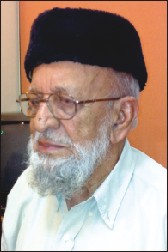
But what would one say about the achievements of an individual who from his birth onwards had “to suffer the slings and arrows of outrageous fortune” one after another but knew just one thing and that was to surrender to the will of God and showing thereby a patience which may remind us of the Biblical character of Job in whose case suffering without a murmer was his badge. The person referred to here is one Syed Abdul Razak, who initially shortened his name by writing S.A. Razak and later adopted the pen name Razak Afsar which today is well-known among the lovers of Urdu poetry as a reputed Urdu poet whose poems have been published in most of the Urdu literary magazines and Journals of our country as well as those of other countries wherever the Urdu knowing diaspora of the sub-continent are settled.
Born in the city of Mysore in 1928 to one Syed Abdul Rehman, a cloth merchant, the toddler lost his mother when he was just two-years-old and before he could complete his fourth year, his father also passed away. Then his mother’s uncle-in-law Abdul Rahim Khan, a coffee-planter, took him under his care. His maternal grand-mother, wife of Abdul Rahim Khan, having no children of her own, was happy to adopt Razak and his younger brother, but unfortunately his younger brother died quite early. When Abdul Rahim Khan’s first wife died, he married again and by his second wife he had two sons and three daughters but his love for his foster son remained constant.
As Razak grew up, he had to give up his studies on account of his business activities. Though he was a high school drop-out, he was very fond of books and that’s how he was self-educated and that’s how his innate abilities and capacities brought out his talent for writing poetry. As his foster father died quite soon, the young poet in-the- making had to shoulder the responsibility of the entire family. But one tragedy followed another and in the year 1988, he lost his wife and then due to some eye problem, his eye sight was affected and rendered him totally blind. Circumstances forced him to lead the life of a recluse. Like John Milton, he wondered what he should do with that talent, God given gift, which was death to hide, lying dormant in him almost useless. It was then that with some of the birds of the same feather he founded a Literary Club which used to have its monthly meeting where his talent was further honed. So he started writing poems including ghazals initially but later other forms of Urdu poetry also flowed from his indefatigable pen. So he thought that:
Death closes all but something ere the end,
Some work of noble note may yet be done.
Thus started a literary career that has stood him in good stead. Perhaps the happiness of all lives is a busy solitude and that solitude helped him to face the ordeals of life with greatest fortitude and has helped him to produce one book after another.
From 1982 up to 2011, Razak published seven volumes of Urdu poems which had formerly appeared in weekly editions of newspapers and in some of the special numbers of various magazines and journals of this vast country. In addition to ghazals, he has also written several poems under different headings like Eid, Moharram, Prophet’s Birthday, Dussehra, Deepavali, Holi, Republic Day etc.
Among the seven books Razak has published up to now, there is one book which stands out for its uniqueness. It is entitled Harf-e-Abdeeda (tearful tributes) which is a collection of elegies in which tributes are paid to well-known poets, litterateurs, scholars, statesmen and other famous men and his own relatives along with each one’s photograph.
It is quite a voluminous one, spread over three hundred pages, in memory of about two hundred revered and loved ones who passed away during the span of fifty years (from 1951 to 2004). Furthermore, with every elegy, the readers will come across a chronogram — a phrase in the sad poem of which each letter has a number and when those numbers are added, the precise year of the death of the lamented person is revealed. It is really a hard job to reach the desired figure but some poets have mastered the art so very well that it is almost a child’s play for them and Razak Afsar is one such master. But of late, such chronogrammatical verses have become so out-dated that the word chronogram itself has become archaic and most of the present day English dictionaries have deleted it. However, Razak Afsar seems to be very fond of using it.
Among the lamented persons, we find names like those of Pope John Paul — Cardinal Albino Luciani, Indira Gandhi, Imam Khomeini of Iran, Rajiv Gandhi, Princess Diana, Mother Teresa and several famous Urdu poets. But one noteworthy quality is that in almost every case, it is heartfelt genuine sorrow which the poet has experienced while remembering the virtues of those who are no more with us now but have left an indelible impression on the mind of one and all. A book like this will serve as a book of reference to all those who are interested in knowing the essential facts concerning each of the celebrated figures. Razak deserves all the encomia for giving us in a nutshell sufficient information to whet our curiosity to know more about the listed figures of great reputation.
At this point, it will certainly be unfair on my part if I don’t give due credit to his cousin Rafeeq Arif’s personal dedication and service on account of which all the output of Razak Afsar saw the light of the day. He has been responsible for compiling all his works, copying them, proof-reading and getting them published. Razak Afsar has been the adopted son of Rafeeq’s father and only his cousin but the service he has rendered shows that even one’s own brother wouldn’t have so volunteered to be the right-hand man of the sight-denied poet. Arif, by helping his cousin in all possible ways, hasn’t only received his cousin’s blessings but has also succeeded in becoming a poet in his own right and has published one volume of poetry which is hoped will be the harbinger of many more to follow. So be it.
[Concluded]
source: http://www.starofmysore.com / Star of Mysore / Home> Feature Articles / Thursday , November 13th, 2014