All posts by mpositiveone@gmail.com

Under his broad brood, swifts ready to fledge

With little expertise, wildlife expert Saleem is trying to give them a new lease of life

The city wildlife team is facing an unusual challenge. They have to pull off what is considered a one-in-a-thousand rescue and rehabilitation of young house swifts (Apus nipalensis), which experts term is a touch-and-go situation.

Despite lack of expertise in rehabilitating the house swifts, which are very delicate, the six young ones are being cared for round the clock with great diligence by wildlife rehabilitator Saleem Hameed.

The birds were rescued from the HAL campus on Friday. At present, Saleem feeds them 24 times in 12 hours, once every half an hour.

This is what Saleem said:

“They were eight birds when they came here. They were rescued after a fall from a hangar. The good thing is, they were rescued along with the nest. Sadly, two died soon, but six are alive.

”They are very difficult birds to raise. With a high rate of metabolism, they have to be hand-fed every half an hour and they need attention round the clock at least till they fledge. The feeding starts at 7 in the morning. They are fed an insect diet, Mazuri, shipped down from the US. They are responding well. They need great care and attention, predominantly between 7 am and 7 pm.

”Unlike most birds, these are very sociable and live in huge colonies. In most birds, we find the territorial fight and new ones are not easily accepted. But here, they are accepted soon as they are sociable. As nothing much is known about swifts, we hope these birds which are roughly about 3-4 weeks-old would take a week or two to fledge. Some birds fledge within a month. Sparrows fledge within 14-15 days.

”An interesting thing is that one of them, probably the oldest of the lot, has already started jumping and is trying to fly. He jumps about 2-3 feet. As they fledge, they have to be launched into air to ensure they can join other swifts that are in a colony.”

source: http://www.bangaloremirror.com / Bangalore Mirror / Home> Bangalore> Others / by  Chetan R,  Bangalore Mirror Bureau / March 27th, 2014

Indian scientist gets Order of Merit from German government

Hyderabad :

Eminent Indian scientist Prof Seyed E Hasnain has bagged the Cross of the Order of Merit of the Republic of Germany. He served as the founder-director of Centre for DNA Fingerprinting and Diagnostics (CDFD) and vice-chancellor of University of Hyderabad.

The award has conferred on Prof Hasnain in recognition of his contribution to Indo-German relations. The Order of Merit of the Federal Republic of Germany was instituted in 1951 by Federal President Theodor Heuss. It is the only honour that is awarded in all fields of endeavour and is the highest tribute the Federal Republic of Germany can pay to individuals for services to the nation.

German Ambassador to India, H E Michael Steiner, conferred the prestigious ‘Bundesverdienstkreuz’ on Prof. Seyed Hasnain at the German Embassy in India, says a statement from the University of Hyderabad on Thursday. Prof. Hasnain is a renowned microbiologist especially acclaimed for his path-breaking research on tuberculosis. He paved the way for the office of the German Research Foundation in India, which is one of the key forums for scientific cooperation between Germany and India. During his stay at the Robert Koch-Institute in Berlin and the University of Wurzburg, he produced remarkable research results in microbiology.

Prof. Hasnain has almost all major Indian Science Awards to his credit: GD Birla Award, Shanti Swarup Bhatnagar Prize, FICCI Award, J.C. Bose National Fellow Award, Ranbaxy Research Award, Goyal Award, Bhasin Award and several others. He is the first Indian elected member of the German National Academy of Sciences Leopoldina and one of the youngest to be elected Fellow of TWAS, Trieste, Italy. Internationally, Prof. Hasnain is a recipient of the prestigious Humboldt Research Prize, awarded by the Alexander-von-Humboldt Foundation, Germany; as well as the very exclusive Robert Koch Fellowship, of the Robert Koch Institute, Berlin.

source: http://www.timesofindia.indiatimes.com / The Times of India / Home> City> Hyderabad / by Syed Akbar, TNN / March 13th, 2014

Britain’s Royal Mail releases stamp on Noor Inayat Khan

Britain’s Royal Mail Monday issued a postage stamp of Noor Inayat Khan, the World War II heroine, who was a descendant of Tipu Sultan, the remarkable 19th century ruler of Mysore kingdom.

The stamp – part of a set of 10 stamps in their ‘Remarkable Lives’ series — honours Noor on her centenary year of birth. Others honoured in the set include actor Sir Alec Guinness and the poet Dylan Thomas.

“I am delighted that Royal Mail has commemorated Noor with a stamp,” said Shrabani Basu, author of “Spy Princess, The Life of Noor Inayat Khan”, and the chair of the Noor Inayat Khan Memorial Trust. “It will ensure that her sacrifice and bravery will not be forgotten. ”

Basu campaigned for a memorial for Noor which was unveiled in November 2012 by Princess Anne.

Noor Inayat Khan was born in Moscow in January 1914 to an Indian father, Hazrat Inayat Khan, and an American mother, Ora Ray Baker. The couple had met in the Ramakrishna Mission ashram in America. Hazrat Inayat Khan was a Sufi preacher and musician and travelled the world taking Sufism to the West.

Noor was brought up in Paris and the family moved to London when the city was occupied by the Germans in 1940 during the Second World War. In London, Noor joined the Women’s Auxiliary Air Force and was later recruited for the Special Operations Executive, a secret organisation started by Prime Minister Winston Churchill.

She was the first woman radio operator to be flown undercover to Paris and worked from there for three months under the code name Madeleine. However she was betrayed, arrested and finally executed in Dachau Concentration Camp in Germany. Though she was tortured and interrogated, she revealed nothing, not even her real name. Her last word as they shot her was “Liberte”! She was only 30.

Noor was posthumously awarded the highest honour, the George Cross, by Britain. France awarded her the Croix de Guerre.

In 2006, President Pranab Mukherjee, then the defence minister of India, paid an official visit to Noor’s family house outside Paris and described her bravery and sacrifice as “inspirational”.

source: http://www.mea.gov.in / Ministry of External Affairs, Government of India / Home> Media Centre> Articles> Articles in Foreign Media / Malaysia Sun / March 25th, 2014

Your STATION has arrived

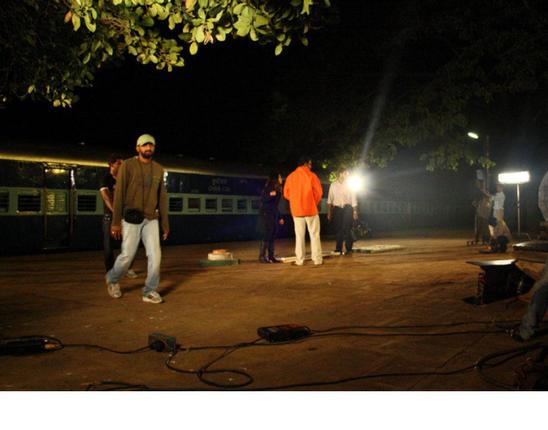
Drumming up interestSaad Khan; on the film set, at a railway station (left) / photo: BHagya Prakash K. / The Hindu

Bangalore boy Saad Khan’s Hindi thriller Station, features city locations, cast and crew. He has also given a new meaning to ‘direct marketing’, thinks BHUMIKA K. as he goes to malls to talk to possible audiences

A director uses his gift of the gab to market his Indie film — he stands in a mall talking to passersby, telling them about his film and urging them to watch it. “I’ve been doing this for the last three days and I must have met about 300 people already. About 20 of them bought their ticket online, standing with me, from their phones!,” says filmmaker Saad Khan. That, now, is his station in life.

Khan’s debut feature film Station , which he claims is the first Hindi movie to come out of Bangalore, releases this Friday with the PVR Director’s Rare label attached to it. Khan expresses the same fears and apprehensions any independent filmmaker today, disadvantaged in the sea of marketing gimmicks that bigger films with A-list stars have. “It’s harrowing, seeing independent films being taken off screens because there are only 10 or 15 people at each show,” says the Bangalore-boy. “Mine is an independent film. We don’t have stars, we don’t have Sunny Leone. I think in my next film, I will have six item numbers…the audience is conditioned to having known faces bring them to a film,” he says evidently frustrated.

A mechanical engineer from M.S. Ramaiah College and with no film background, Khan studied filmmaking in the U.S.A. His short film Another Kind of Black was screened at the 2008 Cannes short film category. While still in college here in India, he got interested in theatre, and wrote and directed plays.

He returned from America to land the enviable position of associate director with Bollywood’s Ashutosh Gowariker on Khelein Hum Jee Jaan Se . When he came home to Bangalore on a break, everyone he spoke to, kept telling him about the vast talent pool in Bangalore. He never returned to Mumbai, and instead decided to set up CenterStage in 2011 that started off holding film acting workshops. Today they’ve expanded to create, among other things, the improvisational comedy show, The Improv.

Station has been long in the making — the cast of the film is drawn from CenterStage, with the training module for the actors starting in 2011. “Every actor in my film has done theatre. Many of them have acted in commercials. We in fact did elaborate rehearsals before the shoot,” says Saad. The film took almost two years to make.

The film, a Hindi thriller, centres around three psychotic assassins at a waiting room in a deserted railway station. “I love the psychology of a criminal’s perspective…the unravelling of the plot is as enjoyable. We had three editors on board and did nearly 40 cuts so that the narrative won’t be slack,” says Saad. “My actors didn’t shave or bathe for days to get the feel of their character right. They walked empty roads at night, sat at small local bars to observe people around them…they came to rehearsal in a dark state of mind.” He chose to make the film in Hindi “because the film’s visual language and narrative could be driven by it. I didn’t think three assassins could talk English, and I don’t speak Kannada fluently. Moreover Hindi appeals to most of the movie-going audience.” None of his actors spoke Hindi fluently either so they were language coached before dubbing for themselves!

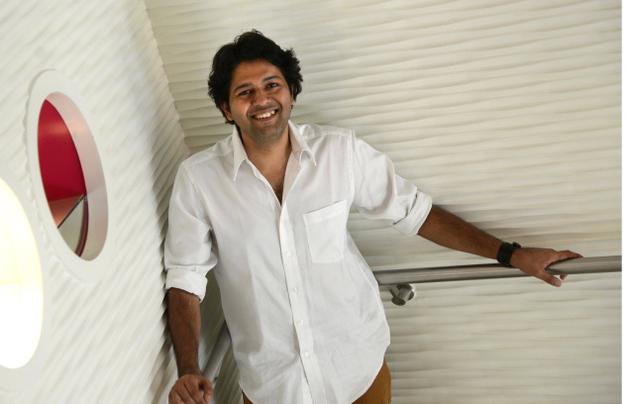
ActorsSaadKhanMPos26mar2014

On board Station are actors Siddhanth K. Sundar, model Sameer Kevin Roy, Hardik Sha an actor who’s also the co-producer, and produced by venture capitalist Sumit Ghosh. The film also has a 19-year-old associate producer Neal Bafna, a student of Christ University, who dealt with the everyday logistics of payment of the crew etc. The director however won’t disclose at which railway station they shot. Neither will he reveal the budget.

The film was shot at various locations in Bangalore including Bull Temple Road, Frazer Town, V.V. Puram, Rajajinagar “and wherever the Metro construction is taking place” says Saad.

Bangalore is a place with a heart, he says, recalling how on one of the nights, when the shoot went well into 3 a.m., and they were all craving tea. “We didn’t have caterers because that would be an additional cost. All we would have at that time of the shoot would be chai and biscuit. So a kind lady in the neighbourhood where we shot made us tea at that hour in the morning!”

Station releases March 28 in PVR in Bangalore, Mumbai, Hyderabad, Delhi, Pune, Kolkata, Ranchi, and Ahmedabad.

source: http://www.thehindu.com / The Hindu / Home> Features> MetroPlus / by Bhumika K / March 26th, 2014

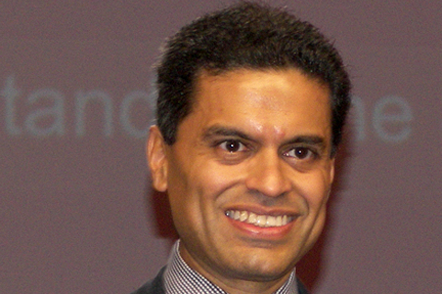
Fareed Zakaria : Acclaimed Journalist

FareedZakariaMPos26mar2014

Fareed Zakaria is a prominent Indian-American journalist and author.

Early life
Zakaria was born in Mumbai on the 20th of January  1964 to parents Rafiq Zakaria, a politician and  Islamic scholar, and Fatima Zakaria, who was the editor of the Sunday Times of India at that time. In his younger days, he was enrolled in Mumbai’s Cathedral and John Connon School.

Zakarai also enrolled into Yale University, where he participated actively in numerous unions and societies. He was the President of the Yale Political Union, the editor-in-chief of the Yale Political Monthly, and a member of the Scroll and Key society and Party of the Right.

Zakarai graduated from Yale University with Bachelor in Arts. In 1993, he also obtained a P.hD from Harvard University in Political Science.

Career
At the young age of 28, Zakaria became the managing editor of Foreign Affairs magazine. He held this post for 8 years, before he became the editor of Newsweek International in 2000. During his stint at Newsweek, he wrote his award winning article, Why They Hate Us, which appeared as a headline story on the cover of the October 2001 issue.

Since 2008, Zakaria has also been hosting Fareed Zakaria GPS, which airs worldwide on CNN. He has interviewed numerous high profile leaders and personalities on his show like Barack Obama, King Abdullah II, Dmitry Medvedev, Muammar Gaddafi and the Dalai Lama.

Fareed Zakaria GPS is broadcasted in approximately 200 million homes across the globe and received an Emmy nomination in its first year.

Zakaria has written best-selling books like From Wealth to Power: The Unusual Origins of America’s World RoleThe Future of Freedom, and The Post-American World. He was also the co-editor of The American Encounter: The United States and the Making of the Modern World.

Awards
The Anti-Defamation League awarded Zakaria with a Hubert H. Humphrey First Amendment Freedoms Prize in 2005. However, he returned the award to the ADL as a sign of protest after the organisation opposed the building of an Islamic centre  two blocks away from Ground Zero.

In 2010, Zakaria received the the Padma Bhushan, the third highest civilian award in the Republic of India, by the Government of India. In the same year, he was named as one of the top 100 global thinkers by Foreign Policy. Zakaria also received a National Magazine Award that year.

Personal life
Zakaria is married to Paula Throckmorton Zakaria, with whom he has one son, Omar and two daughters, Lila and Sofia. Zakaria, a naturalised American citizen, lives with his family in New York.

This biography will be updated regularly.

References

Fareed Zakaria Website

source: http://www.southasiandiaspora.org / Home> Author, People / by Jaclyn / August 02nd, 2012

Rare View Mirror

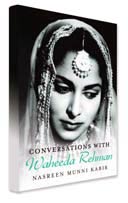
Sharla Bazliel reviews conversation with Waheeda Rehman by Nasreen Munni Kabir.

Her name means “the unique one” and few actors have had a career, and life, quite like Waheeda Rehman. From being discovered by Guru Dutt by sheer accident at the age of 17 to becoming a successful star in Bollywood, to giving it all up one day and moving-toddlers in tow-to a derelict farm on the outskirts of Bangalore with husband, sometime actor Shashi Rekhi, Rehman has done it all. In Conversations With Waheeda Rehman, the actor tells the entire story in her own words, with insightful prompts by filmmaker and writer Nasreen Munni Kabir that prevent the book from turning into a rambling mess.
Conversation with Waheeda Rehman by Nasreen Munni Kabir


Rehman speaks with honesty and humour and Conversations is filled with interesting anecdotes about her experience of working with artistes such as Satyajit Ray (who first brought up the subject of wanting to make Guide), Raj Kapoor, Dev Anand (who was perpetually late), her friendship with stars such as Nargis, Sunil Dutt and Nanda and her adventures living off the land. Bollywood buffs and collectors of film trivia can look forward to her insights into the craft of filmmaking and an entertaining behind-the-scenes look at the making of some of the key films in Indian cinema.

Although her personal story is fascinating, the heart of the book lies in a few pages about Guru Dutt. With her natural talent and  haunting beauty, Rehman brought to life some of Indian cinema’s most iconic characters-Gulaabo, Shanti and Rosie-but no story about the actor is considered complete without reference to the doomed director who committed suicide in 1964. Although Rehman acknowledges this curiosity, her answers sixty years later remain shrouded in layers.

Excerpts
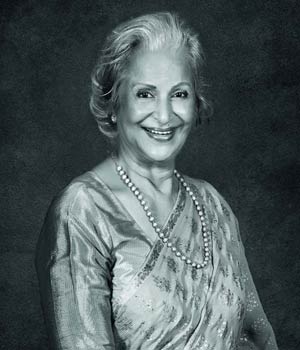
Waheeda Rehman. / Pic by Rohit Chawla
Guruduttji was sitting in a distributor’s office (in Hyderabad) when they heard a commotion outside. Guruduttji asked him if there was some trouble on the street and he was told the stars of a popular Telugu film were passing by and excited fans were making the commotion. The distributor then added: ‘A new girl has performed a song in the film. It has caused a sensation. When the stars go on to the stage, the audience demands to see this young girl. Her name is Waheeda Rehman.’ Guruduttji was surprised: ‘Waheeda Rehman? That’s a Muslim name. Does she speak Urdu?’ ‘I hear she also speaks Telugu and Tamil.’… That’s when Guruduttji told the distributor he would like to meet me because he was looking for new actors to cast in his next production. The distributor then called Mr Prasad to set up a meeting. Mr Prasad had not heard of Guruduttji. Very few people in the south had heard of him in the mid-fifties. I think there weren’t many film magazines at the time and in any case no one in my family read them, so we were unaware of his name. The distributor explained to Mr Prasad that his friend was a well-known Bombay director and had made a number of successful films. Then Mr Prasad called my mother and told us that Guruduttji wanted to meet me. My mother and I made our way to the distributor’s office the next day. I think the meeting lasted about half an hour. Guruduttji hardly spoke. He asked us a few questions in Hindi: Such as where we were from. That was it.
We went back to the hotel where we were staying. When Mr Prasad asked about the meeting, my mother commented that Guruduttji said very little. Mr Prasad said some people were just made like that. We returned home to Madras a few days later.

He hadn’t seen the film. He had no idea what I looked like on camera. He heard my name and asked to meet me without having seen me at all. There was no reason why the distributor had to mention me in the first place. So how could I not believe it was destiny?
After our first meeting in Hyderabad, three months went by and then someone came to see us at our home in Madras. He said he was from Bombay. I think he was a film distributor. He said he had come on behalf of the director whom we had met in Hyderabad. Of course, by that time, we had even forgotten Guruduttji’s name, to which our visitor said: ‘Well, Guru Dutt has asked me to take you to Bombay. He wants to sign you.’ My mother was most surprised and decided to discuss the idea with her friends. They advised her to say Bismillah and go. She was very reluctant. Bombay was like a foreign country to us. As usual she asked Mr Prasad for his advice and he said: ‘Go, Mrs Rehman. There’s no harm if she works in Bombay, but remember she is not a slave. Don’t agree to all their demands. If you don’t agree to something, say it. If you don’t like living there, come back. Just don’t get intimidated.’ So the three of us-my mother, a family friend who was called Mr Lingam and I-landed in Bombay at the end of 1955. We stayed at the Ritz Hotel in Churchgate.
*************
It was finally agreed at the next meeting that I could keep my own name. They asked my mother to go ahead and sign the contract… as I was under eighteen. Just before she could put pen to paper, I said: ‘I’d like to add something to the contract.’ (Director) Raj Khosla was surprised: ‘Newcomers don’t usually make demands. Just sign.’ Guruduttji kept silent. Then I told them if I did not like any costumes, I would not wear them. Guruduttji sat up. Then he said in his quiet voice: ‘I don’t make films of that kind. Have you seen any of my films?’

‘No.’
‘All right. Mr & Mrs ’55 is running in town. Go and see it. We’ll talk about the costumes later.’
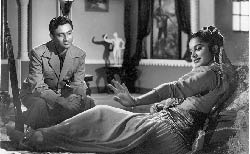
A shot from Waheeda Rehman's first hindi film C.I.D., with Dev Anand
A shot from Waheeda Rehman’s first hindi film C.I.D., with Dev Anand
We were given cinema tickets and we went to see Mr & Mrs ’55. The following day we returned to the office. We said there was nothing wrong with the costumes…But I said I still wanted the clause about costumes added. Raj Khosla looked at Guruduttji and said: ‘This is amazing, Guru. You’re listening to this girl and not saying anything. The choice of costumes depends on the scene and not on the actress.’ I can’t believe I was so outspoken, but I insisted: ‘When I am older, I might decide to wear a swimsuit. I won’t now because I am very shy.’ Raj Khosla retorted: ‘If you’re so shy, why do you want to work in films?’ I said calmly: ‘I haven’t come here of my own accord. You called us.’ No decision was made. We were driven back to the Ritz Hotel. The next day we went back to the office. The clause about my costumes was added and my mother signed my three-year contract with Guru Dutt Films.


*****************

Everyone makes films that don’t work. His sister Lalli [the artist Lalitha Lajmi] told me once that Guruduttji suffered from depression. In the last years of his life he was very confused. We could all see that. He was unhappy. But no one realised just how depressed he was. He started a film called Raaz in which I starred opposite Sunil Dutt… I shot many good scenes, but Guruduttji shelved the film. When we asked why, he said: ‘Nahin jam raha hai.’ [It isnt working.] Then he started Gauri with Geeta (his wife) who wanted to act. He shelved that too.

My husband suffered from depression as well and we didn’t realise it. He started losing interest in everything. He didn’t want to meet people and basically didnt feel like doing anything. In the same way, no one knew how Guruduttji was really feeling.

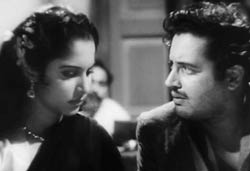
Waheeda Rehman with Guru Dutt in Pyaasa
His death was a mystery-no one knew for sure whether it was a suicide or an accident-there was much curiosity. His death was such a shock to us all. He was only thirty-nine. He was young. The question everyone asked was: ‘Why did he have to die like that?’ None of my film colleagues have ever asked me personal question about our relationship. It was always other people and the press who were curious, and still are, almost sixty years later. I know we are public figures, but I strongly believe my private life should remain private. What ultimately matters and concerns the world is the work we leave behind.
To read more, get your copy of India Today here.

source: http://www.indiatoday.intoday.in / IndiaToday.in / Home> Archives> Leisure / by Sharla Bazliel / March 21st, 2014

India-born British ‘curry queen’ hunts for new backers

London :

An India-born British ‘curry queen’ who made her name supplying ready-made Indian meals to supermarkets and pubs in the UK is looking for new backers for her food empire.

Perween Warsi, who moved to the UK from India in the 1970s, wants to expand her S&A Foods firm with an injection of fresh funds.

Advisers from PriceWaterhouseCoopers firm have been hired to lead the search for the company, she set up nearly 30 years ago, from her kitchen, according to the Sunday Times.

The Derby-based caterer, which has 600 staff, makes Indian curry dishes for UK supermarkets including the chain Asda, its biggest customer.

Sales last year were 51 million pounds with pre-tax profits of almost £700,000.

Warsi was famously inspired to start the company after being appalled by the quality of a samosa she had bought from a supermarket.

She founded S&A Foods in 1986 by supplying her local Indian takeaway and the following year had her big break after persuading several large grocery chains to include her food in a series of taste tests.

Warsi was producing the curries from home but, after beating several established food manufacturers in the tests, was persuaded to open a factory.

She was honoured with a Commander of the Order of the British Empire (CBE) in 2002.

S&A Foods confirmed it was “seeking partners” to fund future expansion and new production facilities.

source: http://www.timesofindia.indiatimes.com / The Times of India / Home> NRI> Other News / by PTI / March 09th, 2014

Turkish delights

A cold mezze platter. / Photo: K. Ramesh Babu / The Hindu

The Turkish food festival at Park Hyatt offers a lot more than the staple doner kebab

The connection between Hyderabad and Turkey goes back a few centuries; Alauddin Khilji of the Khilji dynasty which ruled the state in the 14th century was of Turkic origin, Sultan Quli Qutb Shah who founded the Qutb Shahi dynasty too was of the same ethnicity, Princess Durre Shehvar, wife of Azam Jah, the eldest son of the seventh Nizam of Hyderabad is the daughter of the last Caliph of Turkey and more recently, Princess Esra, wife of Prince Mukarram Jah too hails from the country.

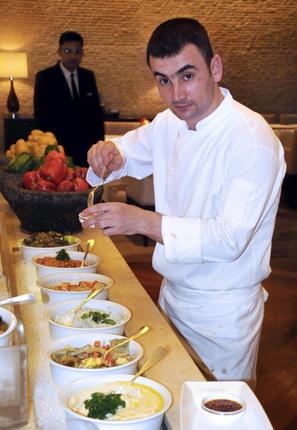
Surprisingly, while Hyderabad still retains much of the Mughlai and Iranian influence when it comes to culinary matters, Turkish food still remains quite different in flavour, ingredients and in technique. Moreover, while Mediterranean food is quite popular in the city, the fare is restricted to Lebanese, Greek and Italian, with the latter being present in almost every restaurant. So we head, all excited, to the Turkish food festival at The Dining Room in Park Hyatt with Turkish chef Turgut Tonbol from the Grand Hyatt in Istanbul. We sit down with the chef, who hails from Bolu, a province which he informs us is a region known for its contribution to Turkish culinary heritage.

“Turkish food mainly consists of the cold mezze and grilled or boiled meat,” he informs us, “but we also have a lot of broad beans, chickpeas and lots of soups in the diet.” Hyderabadis are no strangers to the cold mezze platter which has become a staple in many multi-cuisine and continental restaurants but the platter offered by Chef Tonbol has more than the usual Hummus and Tzatziki. The most interesting of these is the vine leaves, stuffed with rice, nuts and spices doused in olive oil. The platter also contains a simple preparation with broad beans and a mild chilli sauce. The freshly baked pita bread goes well with all or any of these accompaniments.

The cold mezze includes mainly vegetarian dishes. “In Turkey, we don’t have meat for mezze. It is only vegetables,” points out Chef Tonbol who says that the festival includes at least one dish from all the different culinary traditions in Turkey.

Chef Turgut Tonbol./  Photo: K. Ramesh Babu / The  Hindu
Chef Turgut Tonbol./ Photo: K. Ramesh Babu / The Hindu

Ask Chef Tonbol what his favourite dish of the afternoon is and he doesn’t think too much before naming the Shrimp Guvec, a mild stew spiced with chilli and herbs. He also suggests the Chicken Sheesh, a grilled meat dish very similar to our own kebabs, except it is marinated with a special Turkish red chilli, a milder version of the Indian chilli. “It is more similar to Kashmiri chilli which is bright in colour but less spicy in taste,” he informs adding jokingly that to eat Indian food, you “must be a strong man” to be able to take the level of spice. “The Yayla soup, a yoghurt based soup with mint, rice and egg is also a uniquely Turkish dish and a must try.”

Desserts include the favourite Baklava, a Turkish rice pudding and Turkish pumpkin, a simple but fresh and tasty dessert of sweetened pumpkin and cream cheese. But whatever you may pick for the main course, Chef Tonbol advises that you don’t leave without savouring the Turkish coffee accompanied by Turkish delights. The strong black coffee is a must after a meal, “for the gossip sessions”.

source: http://www.thehindu.com / The Hindu / Home> Features> MetroPlus> Food / by Zeenab Aneez / Hyderabad – March 13th, 2014

Hyderabad, The City Of Wings As Well

“See the skies from the air on Fridays at 2 pm for `10.” Amused? This was on a famous poster of the Deccan Airways of the circa 1950’s Hyderabad. Walk into the ‘History of Civil Aviation in India’ stall at the India Aviation 2014 at Begumpet airport and you will possibly stumble upon such fascinating records, be it aviation stamps or airline schedules, of a glorious past of aviation in Hyderabad and the country.

Deccan Airways, as the company owned by the Nizam of Hyderabad was called in 1945, had chartered flights to as far as Quetta and Rangoon, and were also the first one’s to start the Haj chartered fleet from the country in 1948.

“Hyderabad had a regular air-strip even back in 1932 at Habshiguda. PM Reddy and Babar Mirza of Aero Club of Hyderabad used to regularly fly from here. In 1934, it became Hyderabad State Aero Club and started operating from Begumpet airport, which is presently one of the oldest airports in the country,” says P Anuradha Reddy, who is the author of ‘Aviation of Hyderabad State’.

According to her, PM Reddy and Babar Mirza, both of Hyderabad, were among the firsts in the country to complete their flying training in England and obtain licenses.

Hyderabad was also the first princely state to have a coordinated transport system in place. Speaking about the fleet of flights procured by the Nizam, she says that at the start of World War-II, Royal Airforce of the UK took over the Hyderabad State Aero Club to convert it into the first Elementary Flying Training School.

“After the World War-II, Dakota DC-3 aircrafts used by the US Air Force were lying out of use at Assam. It was considered no good and were being given away for throw away prices. Hyderabad state bought 21 of them and flew them down here, worked on them and later the same aircrafts became the backbone of civil aviation in India,” she informs.

The Hyderabad state had five airfields with concrete runways in Aurangabad, Warangal, Bidar, Hakimpet and Begumpet. Photographs of Hyderabad’s first licensed pilots Capt PMM Reddy and Capt PN Reddy, first trained woman pilot Aban Peston Chenoy who passed away two years ago, and some of the earliest forms of trainer and chartered aircrafts are featured in the gallery.

Surprisingly, the Nizam of Hyderabad took his first flight only in 1951 in the capacity of Rajpramukh. Quoting Captain PM Reddy, who was also Anuradha Reddy’s father-in-law, she says that the Nizam was never really interested in flying and had his own worries.

“So finally, he took a test flight around Hyderabad city. He was as excited as a child to see his own King Koti palace. And he asked if others also can see his palace from the air. Getting an answer in the affirmative, he imposed a flying restriction on top of his palace,” she says.

So how did the Deccan Airways become the backbone of civil aviation? Unlike the other flight companies, the Deccan Airways enjoyed a much wider coverage, operating from Madras-Hyderabad-Nagpur-Bhopal-Gwalior-Delhi and Bangalore. Hyderabad also had the Night Air Mail Service, something akin to the present day Speed-Post.

“Passengers and mails were carried from Chennai, Bombay, Calcutta, Delhi and Hyderabad and interchanged at Nagpur, which was a major hub. Even newspapers were airlifted to their destinations. In fact, the Indian Express was the first news publication to be delivered via air, it was taken from Chennai to Delhi on the same day through Deccan Airways,” she adds. The world’s first aerial post also took place in Allahabad in February 1911. A humber sommer biplane that flew to Naini five miles away in 13 minutes carrying 6500 letters and cards was the first aerial post.

To pay true and fitting tribute to the city’s aviation history, she suggests a civil aviation museum. “There is so much to offer about Hyderabad’s aviation history. The oldest terminal at Begumpet airport, which isn’t in use, could be turned into a museum to protect the legacy,” she opines.

Titbits of aviation’s history

The Nizam’s Government owned 71 per cent of Deccan Airways and the remaining was held by Tata Sons and others. Launched with three aircrafts, it went on to have a fleet of 13 Dakotas by the early 1950s. It merged with Indian Airlines in 1953

When the seventh Nizam Mir Osman Ali Khan took a test flight in 1951, he was initially excited to see his King Koti Palace from the air. However, paranoia set in soon after and he imposed a no-fly zone over his residence

Deccan Airways had chartered flights to as far as Quetta and Rangoon. It was also the first to start the Haj chartered fleet from Indian in 1948

Hyderabad based Deccan Airways was of the one of the premier airlines of the country, operating on Madras-Hyderabad-Nagpur- Bhopal-Gwalior-Delhi, Hyderabad-Bombay and Hyderabad-Bangalore sectors. Though founded in September 1945, the first flight took off on May 25 the following year.

source: http://www.newindianexpress.com / The New Indian Express / Home> Cities> Hyderabad / by Rahul V. Pisharody / Hyderabad – March 15th, 2014
The world in an album

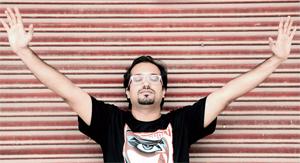
DJHamzaMPos24mar2014

DJ Hamza, who has travelled and lived in three different continents shares his experience in the form an his first full length album Gitano 

If you had to sum up over three decades of your life, more than half of which you spent travelling and residing in foreign countries, how would you? Some would probably write a novel, some short stories of selected experiences from here and there and for others a photo book would seem apt. But, 32-year-old DJ Hamza who grew up in Delhi (though his family is from Hyderabad and Mumbai) has travelled and lived around in South Asia, Europe and North America, summed up his story in a ten-song album called Gitano. Gitano means Gypsy in Spanish, which is what Hamza considers himself, having lived in Paris, Boston, New York among many other places.

The ten track album is more than just progressions, scratches and mixes unlike other DJ’s albums. Gitano in all true sense is an offering of new sounds and fabulous fusion. For a DJ to be incorporating elements from Latin, Celtic, Flamenco with house music as a base is something new. For him, electronic sounds are just one aspect of dance music. “Organic sounds are in fact as important as they bring out the primal instinct in us that makes us connect with our core,” he reckons. “The two always have to be in balance in order to reach out to all our sensory points in our bodies. You can always have a completely synthetic sounding track but then there is no soul in it and something having a completely organic track does not give you that punch and thump to drive you to dance.”

It took eight months for Hamza to work on the album. A challenge for sure, he first got the ten ideas in place, then started building on them, later finishing them before finally mixing and mastering the tracks. Gitano is more than just an amalgamation of sounds. In it’s own way, it also describes each place that Hamza has been to. “The title track Gitano has flamenco influences with an underlying African melody as well, which I came across in Barcelona. I have been to Senegal and Mauritania and fell in love with the local music there. It was also interesting to see that the poorest continent in the world had the happiest music, which is something to think about,” says the DJ. From guitars sounds that represent New Orleans to Latin influenced New York house sounds the album has it all.

Hamza goes to the local place in any country where traditional music thrives and he looks at it from two angles — it has to be an essential part of the history of that particular place or it must be so advanced that it automatically fits into the future. Interestingly Hamza was studying to be an investment banker but came out as a music producer. He credits three people who taught him to work at the studio, on stage and as an artist — Danish pianist Niels lan Doky, Jasbir Jassi and Taz from Stereo Nation. His experience of working with many folk helped him.

He and Jassi shared their studio with a gangster rapper back in New York, who had been shot nine times (reminds us of 50 cent) and who even stole their TV. “We then sent one of our friends from the Gurudwara who had a long white beard to get the TV back from him and he had never seen a Sikh person before so he called the police thinking our friend was a Pakistani Ninja,” he says. Hamza plans on taking his music pan India, along with collaborating with local artistes thereby sparking off a new Indian house music scene in the already existing musical revolution.

Catch DJ Hamza live on March 29 at Loft 38

source: http://www.bangaloremirror.com / Bangalore Mirror / Home> Entertainment> Lounge / by Prashanth Vidyasagar, Bangalore Mirror Bureau / March 23rd, 2014 (print mar 24th, 2014)