All posts by mpositiveone@gmail.com

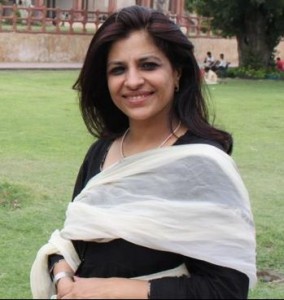
Shazia baaji an icon

Aruti Naya traces the journey of Shazia Ilmi from a middle class Muslim home to the electronic media

For Shazia Ilmi, Senior Anchor, Star TV, Chandigarh was a pleasant surprise, coming as she was after almost a decade. As she puts it, “The city compares favourably with any metro, it is amazing.”

In the city for the programme Match ke mujrim, for Star, which had to be hurriedly refocused because there were no mujrims! The audience was the students on the PU campus at Gandhi Bhavan, who went berserk after the cricket team’s win as Shazia talked to them after the match. “Each of them wanted the name of their department mentioned. Syed Kirmani and Bishan Singh Bedi who were on the live show could barely get a word in, says she.

Thirty-three-year-old Shazia has very good memories of the city because for this student of St. Bede’s, the city was a frequent stopover during the journey to the college in Shimla after the vacations. Shazia’s journey from a girl from a conservative Muslim family of Kanpur to a profession in the electronic media with a high visibility quotient was not easy. She had to persist and doggedly keep doing what she wanted to because no woman in her entire clan had ever worked. In fact, her mother still wears a burqa.

It was her father, the founder-editor of the oldest and largest-selling Urdu daily from Kanpur, Siyasat Jadid, who was her role model and Shazia always wanted to be a journalist. After schooling from St. Mary’s in Kanpur and Nainital and college from St. Bede’s, Shimla, it was mass communication from Jamia Millia Islamia and finally a diploma in broadcast journalism from University of Wales, Cardiff.

The youngest in a family of four brothers and two sisters, she was expected to marry comfortably and settle down or at best (since she was academically bright) become an IAS officer. But as she puts it, “When you have so many problems with the system, how can you become a part of it? Freedom is not economic alone, it is the freedom to make a choice and do what you want to from your heart.”

Five years hence Shazia sees herself in politics. Covering politics was very stimulating for her, especially elections in Bihar and Maharashtra. She travelled through the length and breadth of the states to get the views of people especially at the grassroots for the programme Maratha Express. She is also into programming, writing and production.

Shazia does not believe that “it is not a natural progression for an idealist to become a cynic. In fact, you can retain your idealism.” And she did not view marriage as a passport to a better life and even to happiness.

Icons who she looks up to, Kalpana Chawla and Kiran Bedi because, “They won respect for being action-oriented and decisive.”

Shazia is upbeat about the changes being wrought by the electronic media, it is changing the way the young are looking at themselves. The resonance of this changed perception echoes even in the bylanes of Chamnganj, Kanpur, when Rabia, who has never stepped out, tells her “Shazia baaji, please find out about Frankfinn, I want to become an airhostess,” At least, girls are thinking and dreaming.

In Kanpur Shazia baaji is an icon. Married to investment banker Sajid Mallik, half-Gujarati Muslim and half-Tamil Iyer, Shazia is emotionally dependent upon her extremely supportive husband. Shazia is not overtly religious but is into spirituality and meditation, still seeking answers. How does she distress, “I do not distress. Stress suits me fine and brings out the best in me.”

source: http://www.tribuneindia.com / The Tribune / Home> Lifestyle / Chandigarh – Sunday October 30th, 2005 
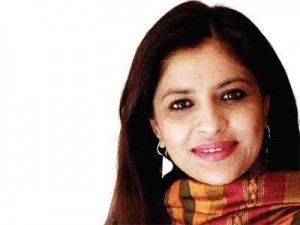
The Biography of Sazia Ilmi, a prominent Team Anna Member

Sazia Ilmi is a prominent member of Team Anna and one of the beautiful faces in the Indian Media. A Former Anchor in Star TV and  a noted  Journalist, she is now the urbane, Muslim, media-savvy face of Team Anna.

ShaziaIlmiMPos01apr2014

Born in 1970 to a middle class Muslim Family in Kanpur, she did her schooling from St. Mary’s in Kanpur and Nainital and college from St. Bede’s, Shimla.

Her Father was  the founder-editor of the oldest and largest-selling Urdu daily from Kanpur, Siyasat Jadid.

The youngest in a family of four brothers and two sisters, she was expected to marry comfortably and settle down or at best (since she was academically bright) become an IAS officer. But as she puts it, “When you have so many problems with the system, how can you become a part of it? Freedom is not economic alone, it is the freedom to make a choice and do what you want to from your heart.”

She is married to an investment banker Sajid Mallik, half-Gujarati Muslim and half-Tamil Iyer, Shazia is emotionally dependent upon her extremely supportive husband.  For her famous women like Kalpana Chawla and Kiran Bedi are source of Inspiration and possibly this is the reason she joined Team Anna.

ShaziaMPos01apr2014

She is the Media Face for Team Anna. Whether it is Press Briefing or Television Debates it is Sazia who plays a prominent role.  Being on TV is Ilmi’s core competence. She has done it for 15 years, as political correspondent and news anchor. Sometime in 2010, she contracted a condition prevalent among working journalists of a certain vintage—a crisis of purpose. “I was done with mouthing inanities night after night,” Ilmi says.

She also plays her familiarity with Delhi’s media and political class to Team Anna’s advantage. Many decision makers in TV newsrooms are friends, former colleagues, or were fellow beat reporters. “I understand how the system works. And I know the media well. I have seen all the power broking and the wheeling-dealing,” she says.

Recently she was  nominated to be part of a media contingent travelling with Prime Minister Manmohan Singh to Mexico and Brazil but the proposal was withdrawn amid opposition from her brother.

source: http://www.news.biharprabha.com / Bihar Prabha / Home> Nation / by BP Staff / August 02nd, 2012

Capturing beauty of historical monuments

Private collectors across the world possess Mohammed Ayaz-ud-Din’s photographs

Mohammed Ayaz-ud-Din

Gulbarga, Karnataka : 

The story of lensman Mohammed Ayaz-ud-Din hailing from a remote village in Gulbarga district is an example of how dogged perseverance can take a person to the pinnacle in his profession.

Mr. Ayaz-ud-Din, who was born in a middle class family in Gadikeshwar village of Chincholi taluk, is making waves in the world of photography. Many of his works are owned by private collectors across the world.

Mr. Ayaz-ud-Din completed his post-graduation in photography from the College of Visual Arts, Gulbarga. He has a passion for historical monuments, and his photographs of Khajuraho Temple, Bodhgaya, and Ajmer, and the monuments in North Karnataka have won him laurels not only in India, but also in countries such as the United Arab Emirates (UAE).

The prizes he has received include the All India Exhibition Best Photography Award in 1990; award in the PAC Salon Photography Competition: Best Photography Award during Mysore Dasara in 2000; Tasmiya Art House Best Photography Award; Best Photography Award in the Awantika Art Exhibition in New Delhi. Mr. Ayaz-ud-Din’s love for photography took him from the expansive deserts of Rajasthan to the Khajuraho Temple and fashion shows in Sharjah. Al Sayegh Graphic Company appointed him graphic designer and still photographer in Sharjah for a period of three years from 1991.

Mr. Ayaz-ud-Din helped Mexican researcher Nora Fisher for during her research work on the lives of Lambada women.

His private gallery, “Ayaz Art Gallery,” which will be the second of its kind in the Hyderabad-Karnataka region, is scheduled to be inaugurated next week. Mr. Ayaz-ud-Din has made documentaries on artists, including former Minister Ghorpade, J.S. Khanderao, and Mr. Patil, and also on the Khaja Bande Nawaz Darga and Sharanabasaveshwar Temple in Gulbarga city. He is the founder president of the National Graduate Art and Photography Association.

source: http://www.thehindu.com / The Hindu / Home> Karnataka – Gulbarga / by Special Correspondent / Wednesday – May 03rd, 2006

Historical monuments to receive a facelift

The works will be taken up under NKUSIP

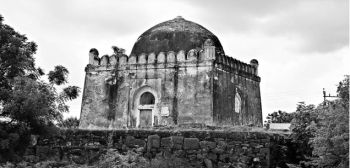
Majestic:  The tomb of Allaudin Hasan Gangu Bahamani, founder of the Bahamani dynasty, in Gulbarga will be one of the monuments to get a facelift.
Majestic: The tomb of Allaudin Hasan Gangu Bahamani, founder of the Bahamani dynasty, in Gulbarga will be one of the monuments to get a facelift.

Gulbaraga, Karnataka :

Some of the monuments in Gulbarga, which date back to the 14th century, are all set for a facelift under the Asian Development Bank (ADB)-assisted North Karnataka Urban Sector Investment Programme (NKUSIP).

Deputy Project Director of NKUSIP, G.M. Chowdhary, told The Hindu here on Thursday that it had been proposed to give a facelift to the three tombs of the founder of the Bahamani dynasty Allaudin Hasan Gangu Bahamani; Jamia Masjid, constructed on the model of the great mosque of Cordova in Spain inside the Gulbarga Fort; another masjid Sheikh Roza Minar; and Chor Gumbuz, an imposing vacant tomb on the outskirts of Gulbarga city. Also, a heritage track from the government museum to Hafth Gumbuz covering a distance of 1.8 km has been proposed.

Mr. Chowdhary said the total cost was estimated at Rs. 2.01 crore. The work would begin in July.

Proposals

As per the proposals, the approach road to tomb no. 1 of Allaudin Hasan Gangu Bahamani would be improved at a cost of Rs. 7.15 lakh along with restoration of the entrance and walkway from the main gate to tomb at a cost of Rs. 1.91 lakh; illumination and beautification of the outside of the tomb by providing solar lamps would cost Rs. 2.88 lakh. Besides, landscaping and drinking water facilities would be provided at a cost of Rs. 2.92 lakh.

Mr. Chowdhary said that at tomb no. 2, Rs. 6.15 lakh would be spent for improving the area around the tomb and illumination and beautification of the place. At tomb no. 3, Rs. 8.42 lakh would be spent on improving the approach road, entrance to the tomb, construction of compound wall, providing flooring in the tomb and seating arrangements around the tomb for visitors and illumination of the tomb. A sum of Rs. 12.35 lakh would be spent for improving facilities at the Jamia Masjid inside the fort. This included development of landscaping with walkways and seating arrangements at a cost of Rs. 7.37 lakh; providing drinking water facility at a cost of Rs. 2.1 lakh and illumination and beautification outside the masjid at a cost of Rs. 2.88 lakh. A sum of Rs. 1.3 crore would be spent on laying a heritage track of 1.8 km.

Besides, Rs. 3.64 lakh would be spent for improving facilities at Sheikh Roza Minar and Rs. 20.43 lakh on the Chor Gumbuz, one of the important landmarks in Gulbarga city. Also, Rs. 5.38 lakh would be spent for improving facilities at the government museum.

source: http://www.thehindu.com / The Hindu / Home> Karnataka – Gulbarga / by Special Correspondent / Saturday – June 04th, 2011

Lensman pays pictorial tribute to monuments

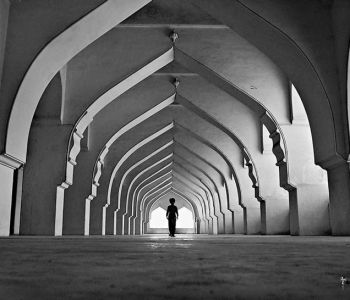
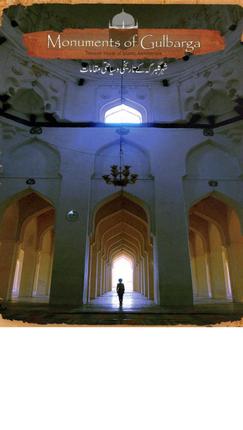
Many layers to it:The interiors of the Jama Masjid captured by photographer Mohammed Ayazuddin Patel and published in his book, ‘Monuments of Gulbarga: Treasure of Islamic Architecture'.
Many layers to it:The interiors of the Jama Masjid captured by photographer Mohammed Ayazuddin Patel and published in his book, ‘Monuments of Gulbarga: Treasure of Islamic Architecture’.

Gulbarga , Karnataka :

Mohammed Ayzuddin Patel, an eminent photographer, has come out with a pictorial tribute to the monuments in Gulbarga district in a book titled ‘Monuments of Gulbarga: Treasure of Islamic Architecture’.

The 96-page book has some rare photographs of the historic monuments in Gulbarga district. This is for the first time that a serious attempt had been made to bring out the breathtaking beauty of these heritage structures in the form of a book. This private initiative is supported by Qamarul Islam, Gulbarga North MLA.

The book was released by Union Minister for Tourism Subodh Kant Sahay during the Gulbarga Utsav on April 15.

One of the features of this book, printed on glossy paper, is the brief historic background of the monuments on each page. The book contains photographs of the crumbling yet imposing tomb of the founder of the Bahamani dynasty, Allauddin Hassan Gangu Bahamani, tucked away in a remote corner in Gulbarga city. This monument, under the control of the State Department of Archaeology and Museums, was a picture of neglect till Mr. Patel took it up with the authorities and the Archaeology Department started conservation work.

Another striking photograph is that of the historic Jama Masjid inside the Gulbarga Fort.

The imposing structure is shown before and after restoration. The book also contains photographs of the interiors of the masjid from different angles. The book also has photographs of the dargah of Hazrat Shaikh Sirajuddin Junaidi, who had come to Gulbarga even before the Bahamani kingdom was established.

The book contains rare photographs of the “mysterious” fort at Holkonda on the outskirts of Gulbarga city with many tombs inside it. The book has some rare photographs of the Nizams of Hyderabad and also the train used by them to visit Gulbarga in summer.

However, Mr. Patel says that only a few monuments have been printed in the book and hundreds of others hidden away from the public need to be brought to the limelight for conservation.

source: http://www.thehindu.com / The Hindu / Home> Karnataka-Gulbarga / by Special Correspondent / Sunday – May 01st, 2011

A story in pictures

BOOK Monuments of Gulbarga is a book that captures ancient art and architecture through photographs.

Gulbarga01-31mar2014

Domes, tombs, minars , forts, moats and off-course masjids . Are you thinking of Delhi? Why travel thousands of kilometres to experience the reminiscences of the sultanate? Prefer going to Gulbarga, a night’s journey from Bangalore. Instead, feel every bit of Gulbarga’s history by just turning the pages of a book. “Monuments of Gulbarga, Treasure House of Islamic Architecture”, a photo-book authored by Mr. Mohammed Ayazuddin Patel gives you this experience.

Gulbarga, now a district headquarters in northern Karnataka, was the capital city of Bahamani Sultanate for two centuries. It was at its zenith in the 15{+t}{+h}century and was home to hundreds of monuments. The Sultanate was founded by Bahaman Shah or Allauddin Hasan Gangu. He shifted the capital from Daulatabad in the present-day Maharashtra to Gulbarga and laid the foundation for a magnificent city. The other great kings of the dynasty were Mohammed Shah and Mujahid Shah.

Resembles Spain`s Mezquita

The book provides a pictorial account of the history of the Bahamani kingdom. Beginning with a nostalgic photo of a tomb of Allauddin Hasan Gangu Bahamani, the founder of the dynasty, the book vividly portrays the beautiful Gulbarga fort, its ramparts, fine arches and abutments. The Jama Masjid, built within the fort, resembles the Great Mosque of Cordova (Mezquita) in Spain with grand corridors and lofty entrance. Various pictures of Shahi Jama masjid in the book unfurl a tableau in front of the onlooker. This masjid located in Shahbazaar was constructed for the members of the royal family. ‘It has a unique architectural style of Mughals and the Persian style’, the book says.

The mausoleums of Mujahid Shah, Daud Shah, Ghiyat-al-din Shah, and Shams-al-din resemble that of Hasan Gangu. Unique is the Tomb of Feroz Shah, with intricate jalis and twin domes. The pictures of 800-year-old Holkonda fort capture the Islamic culture and the simplicity of Tughlaq style aptly. This fort houses an idgah and a Dargah of Hazarath Mohamad Mashaq Sahib, a Sufi saint believed to have come to Gulbarga at the request of Bahamani Sultans.

Gulbarga is famous for the tombs of Sufi saints and Pirs . Noted among them is Dargah of Khaja Bande Nawaz Gesudaraz, built by Mohammad Shah Bahamani. It has a Bijapuri arch built by Afzal Khan, army general of the Ailshahis. Other Sufi tombs being Dargah Khabullah Hussaini with beautiful paintings and calligraphy, Dargah Hazarath Kamal-e-Mujarrad and Dargah Hazarath Shaik Sirajuddin Junaidi.

Majestic, but dilapidated is the Ferozabad fort, built by Feroze Shah Bahamani. He was known for his flair for fine-arts and architecture. This fort, on the banks of Bheema river, encompasses a huge mosque, Tosha khana , and palacial buildings. In spite of its beauty and historical significance, this fort is ill-maintained. Arrays of dung cakes adorn the walls of the sepulchral edifices. Weed-infested mahals are on the verge of collapse due to vagaries of nature. Crumbling structures like Kanchini Mahal, once magnificent and awe-inspiring narrate a story of wanton negligence.

The Chor Gumbad with floral designs, Chand Bibi Gumbad or Kali Gumbad with exquisite Chajjas andJalis , Upli Gumbad – incomplete, yet beautiful, the utterly neglected tomb of Jaccha Bibi, the Siddi Ambar Gumbad with a rectangular porch, are only a few identified among tens of such monuments wailing for attention.

Water conservation

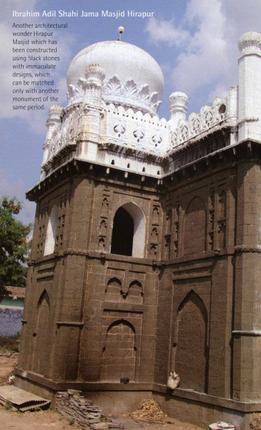
The photos of Hirapur form an interesting set. Hirapur, a suburb of Gulbarga has Ibrahim Adil Shahi Jama Masjid, built in black stone decorated with immaculate designs.

The town has wells, embedded with finely crafted staircases, jharokas and of all, ingenious technology of water conservation to avoid excessive evaporation in soaring temperatures. The wells are still seen as an evidence of splendour, but grossly uncared for.

Strewn inside the fort and atop the bastions are numerous canons, cast in brass and other alloys, weighing several tons, flaunting an intimidating appearance. Famous among these canons is Baragazi Toop atop the Burj in the fort.

Gulbarga is dotted with tombs and mausoleums lost in history, beckoning the curious eyes with their regality. This book displays a tableau of medieval Islamic culture and gives a splendid account of the forgotten monuments. The author also gives an account of Hindu and Jain monuments and pilgrim centres. Patel dedicates quite a bit to the revered Sharanabasaveshwara Temple, Sannati Chandralamba Temple, Ganagapura Dattatreya Temple, and Mallinatha Basadi at Malkhed, but, there is no reference to the nearly 700 year-old-shrine of the Madhwa saint Jayateertha on the banks of river Kagina at Malkhed, a major pilgrim centre.

BookGulbarga31mar2014

Patel, a national award winner, also records Aiwan-e-shahi, Osmania Intermediate College, MSK Mills established in 1884 by the Nizams. He is President of National Graduate Art and Photographers Association.

TAMRAPARNI R. RAGHAVENDRA

source: http://www.thehindu.com / The Hindu / Home> Features> Friday Review / by Tamraparni S. Raghavendra / March 28th, 2014

Religious history should be subjected to a scientific approach: Irfan Habib

Irfan Habib, Professor Emeritus at Aligarh Muslim University (AMU), is a doyen of historical research. Speaking with Eram Agha, Habib discussed challenges like religious fundamentalism facing researchers, the Wendy Doniger controversy — plus AAP and BJP in upcoming polls:

What are challenges in writing history, with fundamentalist forces ready to react?

Well, a primary challenge is the information one would like to have about the past is often missing, partly because historians of an earlier time had a different, more restricted view of history — documents regarding poor peoples’ concerns have not survived. Many matters of their interest were not recorded at all. The major problem for historians is how to fill such gaps.

On the other hand, since all kinds of influences are at work in societies, one cannot confine one’s attention to a locality or country alone — we have to relate the history of one country to others. For instance, we need to explore the relation between modern Indian history and the development of capitalism in Western Europe.

We cannot be like Subalterns who simply concentrate on local communities and forget the larger picture.

Can fundamentalist censorship be dismissed?

Well, religion has been a factor in historical change. Historians need to be careful and rational in assessing religious influences in history.

But it’s not possible to agree with Edward Said when he argues that persons outside any religion or culture cannot study that area. On the contrary, religious history should be subjected to a purely scientific approach — indeed, a refreshingly sceptical attitude towards religious texts might be more desirable than blind belief.

Wendy Doniger tried. Her book was pulped by its publishers. Your thoughts?

The publishers should not have surrendered in the manner they did. They should have waited for court orders before taking any such step.

You’re identified with AMU — what role should an identity-based university play today?

AMU is a university in a poor country, running with generous public financing — it’s important for AMU, as for any other university, to ensure that it offers modern scientific and secular teaching. All marks of identity must subordinate themselves to modern, democratic, secular values.

AMU was established to cater to Muslims but not exclusively for them, and not at the cost of proper education. In the 1950s and 60s, AMU was one of India’s advanced universities — today, partly due to the minority status campaign, it’s lost some of that repute. The religious atmosphere too has grown visibly with official support. That must put off others.

Upcoming polls are considered pivotal in India’s political history — your analysis?

Well, 10 years earlier, BJP was rejected — now, it’ll be interesting to see the reverse of the verdict of 2004. That seems to be the main thing this time.

Personally, for me, it’ll be sad if the Left does not recover.

Can AAP generate enthusiasm amongst Muslims?

The reaction of Muslims will not be different from others because AAP is appealing on an anti-corruption cause and thus securing support. Muslims are being addressed the same way as others.

But AAP will be tested on positive programmes — it has to frame an industrial and labour policy, rules on GM crops, land reforms, etc. Questions like these will arise soon.

A clean government is alright — but it should also be a good government.

source: http://www.timesofindia.indiatimes.com / The Times of India / Home> Opinion> Interview / by Eram Agha / March 31st, 2014

Osmania Medical College team wins Hyderabad round

UnionBankHF30mar2014


Hyderabad :  

A team from the Osmania Medical College pipped five other short-listed teams at the regional round of Cerebrations, The Hindu Business Line Corporate Quiz 2014, held here on Tuesday.

The winning duo, brothers Syed Murtuza Hashmi and Syed Mustafa Hashmi, first and fourth-year students at the medical college, took early lead and managed to retain it, with the team from Reckitt Benckiser coming a close second and Sai Constructions at the third place. Of the 20 teams that took part in the quiz, six were short-listed after they fielded a general elimination round of 25 questions.

source: http://www.thehindubusinessline.com / Business Line / Home> News  / The Hindu Bureau / Hyderabad – March 18th, 2014

Films: a profile of a young star Shan Mohammed

First shot, flashback:   A dark theatre. A child weeps bitterly as Amitabh Bachchan dies one of his heroic deaths.

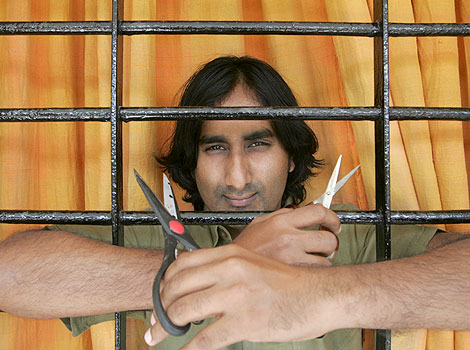
The first turning point came in 2000 when he got in to Pune’s Film and Television Institute of India (FTII) in the editing course.

Nothing unusual, one would say, even adults sob into their handkerchiefs when something tragic happens in films. But this was one of Shan Mohammed’s early brushes with his calling at an age when ‘A’ stood for both apple and  Amitabh.

Second shot, 24 years later, sometime in last month: A dark corridor in a three-storied apartment; a man with long locks and a baritone introduces himself as the editor of Abbas Tyrewallah’s forthcoming filmJaane Tu…Ya Jaane Naa.

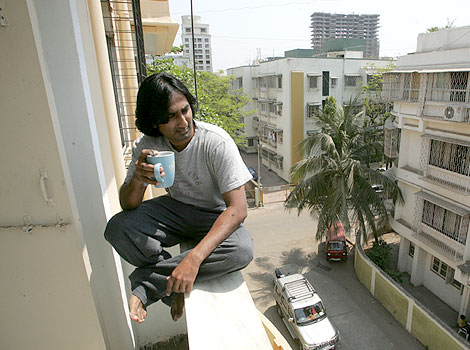
Meet Shan Mohammed, 29, a film editor who typifies the success of a rising tide of youngsters in the new Bollywood, more daring and professional than ever before.

It’s a successful Shan now in deep focus. But unlike his on-screen counterparts, he doesn’t flaunt his laurels. He embodies a segment of youth that has made it big in the flourishing Hindi film industry. Bollywood has become daring. It is experimenting with themes, narrative styles, cast as well as the look and colour of films. The gamble has paid off. Young people are in demand in every department of filmmaking: writing, direction, editing, acting, costumes, set design and special effects. 

“Cut it,” snapped Shan, the editor, visibly embarrassed. “This is my story, not a film script.”

Shan wanted his story to be told without the dramatic frills.

Jaane Tu…, an Aamir Khan production that launches the actor’s nephew Imran Khan was Shan’s first exposure to a mega-bucks project.

“I met Tyrewallah through Raghav Dar, a friend who is now assisting Sanjay Leela Bhansali,” said Shan. “When I read the script, I fell in love with it. I enjoyed working with the director. He is open to ideas and quite flexible.”

Shan didn’t exactly stumble into films. This commerce graduate had gone to Chennai for his articleship when he bumped into renowned cinematographer PC Sreeram at a photo exhibition. For a guy from the Bhilai steel township, filmmaking was a mystery. “Sreeram, upon knowing my interest in films, asked me to assist someone in Mumbai. I was clueless then; didn’t know what to do, whom to approach,” he said.

After coming to Mumbai, he started staying with a school friend whose grandfather had some connections in the film world. Soon Shan was working with Pankaj Advani on a series of 10-minute films titled Bheja Fryfor Channel V.

The first turning point came in 2000 when he got in to Pune’s Film and Television Institute of India (FTII) in the editing course. Those were the years when he saw the best of Indian and world cinema.

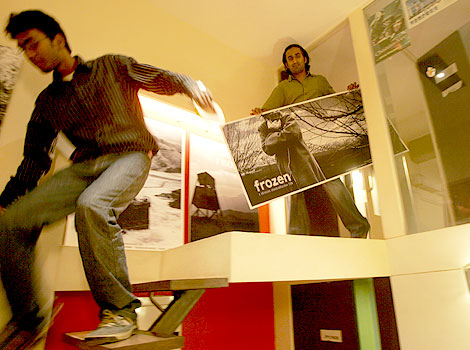
In his third year at FTII, Pune, Shaan made Frozen, a black-and-white feature film, by director Shivaji Chandra Bhushan. It was shot in Ladakh during winter.

“Even as an editing student I was trying to make forays into Bollywood,” Shan said. “I used to come to Mumbai to edit documentaries, which helped me pay my course fee.” He also got friendly with cinematographer Shankar Raman. During his second year at the film school, Raman introduced him to young filmmaker Sarthak Dasgupta, who was doing his first film called The Great Indian Butterfly. Shan edited this road movie that featured Sandhya Mridul and Aamir Bashir.

More documentaries followed, and finally in third year, Frozen happened. Frozen, a black-and-white feature film, by director Shivaji Chandra Bhushan, was shot in Ladakh during winter.

“It was a great learning experience. About 80 per cent of the film was reconstructed on the editing table. It went on to win five jury awards at various international festivals including Toronto, London and Los Angeles. In India, at the Osean Film Festival last year, it bagged the best jury award,” said Shan, beaming with pride. This year’s MAMI festival also has Frozen on its list.

Shan today commands a six-figure monthly salary, and people are willing to oblige. Tyrewallah has only good things to say: “What’s striking about him is his temperament. He will never lose his cool even when people around him are tearing their hair out. He is also extremely self-motivated and disciplined, and that makes a director’s job easy.”

The other vital thing that Tyrewallah probably doesn’t know is Shan’s ability to keep secrets. Even after coaxing him for a good 15 minutes, all that the editor would say about his next snip job was: “It’s a bilingual period film in Hindi and Tamil; shooting will begin some time in May.”

“Time for pack-up,” said Shan. He would want eight-hours sleep to wade through the rushes the following day.

source: http://www.hindustantimes.com / Hindustan Times / Home> India News> India / by Pratik Ghosh, Hindustan Times / Mumbai – March 13th, 2008

Quiet flows the romance

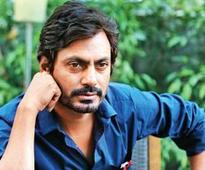
Nawazuddin Siddiqui speaks a subtler language of love than Bollywood is accustomed to, and is all the more effective for it.
Siddiqui’s on-screen romance is definitely of a different brand, but one that many of us can relate to

In the 2011 film Dekh Indian Circus, Nawazuddin Siddiqui played the role of a poor, deaf villager who is exploited by his employers. His kids are unhappy because he cannot afford to give them enough money to watch acircus show.

Then in one the most underplayed scenes, Siddiqui quietly seduces his wife played by Tannishtha Chatterjee. No words are spoken, no songs play and there certainly is no loud orchestral score that pushes the audience to sense the emotions being expressed on the scene.

It is unfortunate the Busan Festival Audience Award-winning film was not released in India. Or else no would have a doubt that Siddiqui (recently referred to as an ‘average’ actor) is one of the most romantic and seductive actors of our times.

In India’s new indie cinema, Siddiqui represents a different language of romance that is quietly spoken all the time, but rarely expressed in Bollywood films that continue to insist on loud proclamation of love through musical numbers (not that there is anything wrong with that).

Siddiqui is a rare actor who has appeared in so many indie films that festivals abroad seem flooded with his work. He had two films at the Cannes Film Festival in 2013 (Monsoon Shootout and The Lunchbox) and three in 2012 (Miss Lovely and Gangs of Wasseypur Part 1 and 2). I am certain no other Indian actor has had that kind of success at just one film festival.

Earlier this year in January, the Sundance and the Rotterdam Film Festivals played Liar’s Dicein the competition sections, where Siddiqui plays a drifter who goes on a road trip with a woman, her child and their goat.

Hardly any conversation takes place between Siddiqui and his co-star, Geetanjali Thapa. And there is never any romance expressed in the traditional sense. But as Siddiqui starts to care for Thapa’s Kamla and her daughter, an unspoken love starts to develop, something rarely shown in Indian cinema.

In moments like this I find Siddiqui to be a deeply romantic actor. There are similar touches in Siddiqui’s subplot in The Lunchbox. Everyone seems to remember the film for its heartbreaking romance between its lead actors – Irrfan Khan and Nimrat Kaur. But Siddiqui’s Shaikh – an orphan had eloped with the girl he is in love with. He madly cares for her, values the home that he has put together with her and will eventually marry her, and it will be the most important day of his life.

In a way The Lunchbox is the story about two colleagues – one who is young (Siddiqui), buzzing with energy, aspirations and ready to start a new life, and the other (Khan), who is facing the end of the purpose of his existence and sets out to look for the one last chance of hope.

Siddiqui, the actor does not need any introduction to those who watch Hindi films of all shades and budgets. He acted with Aamir Khan in Talaash and will be seen in Salman Khan’s Kick. And word is that he has replaced Farhan Akhtar in the Shah Rukh Khan film Raees. How many actors get a chance like this within a span of few years, while also continue to act in films such as Anwar Ka Ajab Kissa, directed by one of the most experimental directors of our times, Buddhadev Dasgupta?

But it is the understated romantic actor in Siddiqui who continues to charm us – the shy Faizal Khan of Gangs of Wasseypur,who suddenly grabs Mohsina’s (Huma Qureshi) hand and is scolded by her. Mohsina’s harsh words bring tears to his eyes, but then she offers him a suggestion. He can hold her hands, but he should seek her permission first.

Siddiqui had told me that the incident had actually happened to him and when he narrated it to Anurag Kashyap, the filmmaker decided to include it in his five-hour long magnum opus. Siddiqui’s on-screen romance is definitely of a different brand, but one that many of us can relate to. It speaks of matters of our hearts.

source: http://www.mumbaimirror.com / Mumbai Mirror / Home> Columns / Columnist Aseem Chhabra / March 23rd, 2014 (print BM March 28th, 2014)