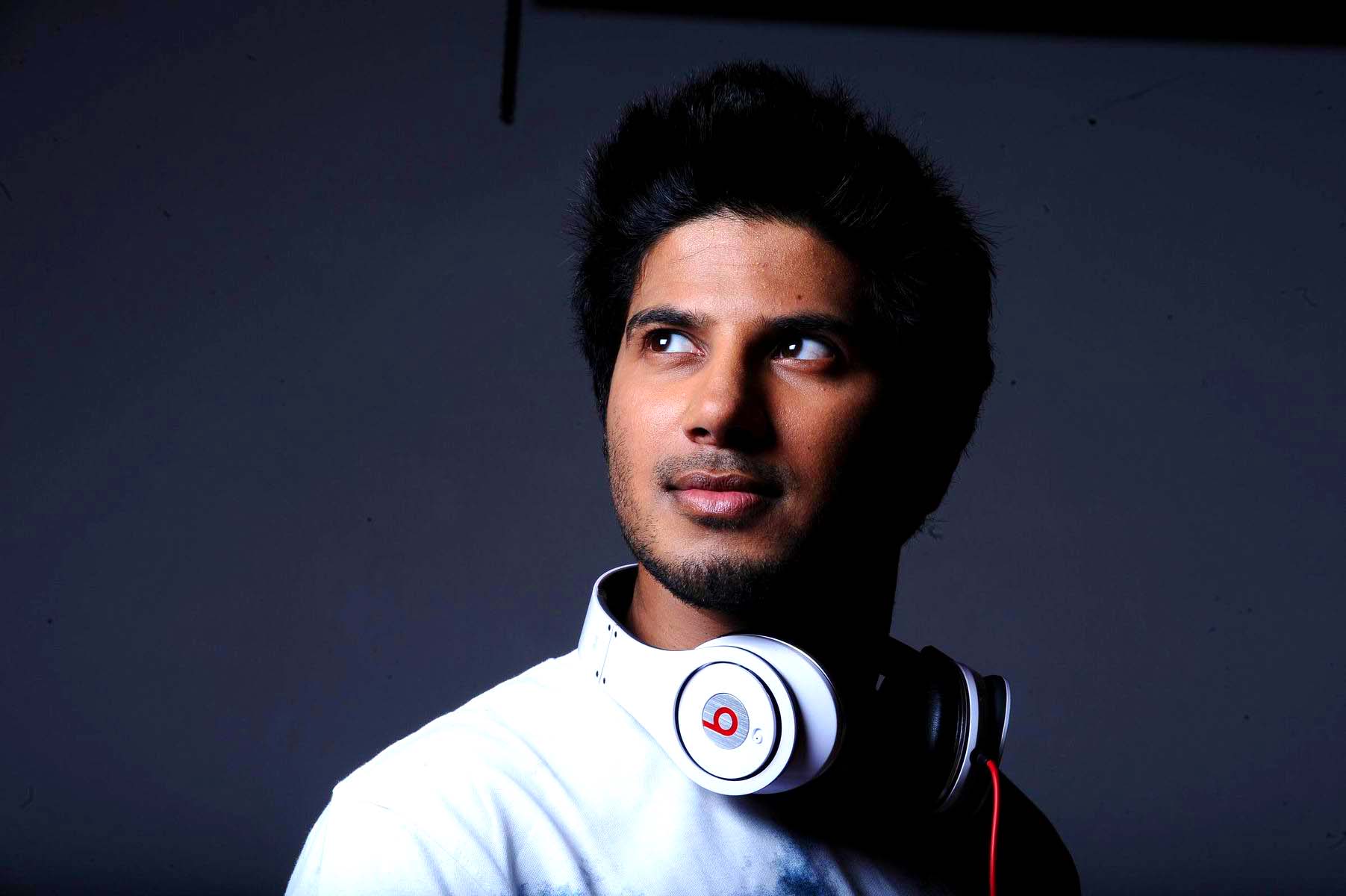
We had reported earlier that veteran filmmaker Kamal’s son Jenuse Mohamed is keen to step into his dad’s shoes and is all set to make an entry as filmmaker in Mollywood.
Now we hear that Jenuse has roped in Dulquer Salmaan to play the lead in his debut film. A romantic comedy set in Bangalore, work on the film will start in June. Jenuse has announced on hissocial networking page that the pre-production is going on in full swing.
“Dulquer’s character in my film is that of a budding feature writer in a leading newspaper, who aspires to be a cartoonist as well. The film is an out-and-out urban love story and will portray Dulquer in a yet-to-be-seen avatar. We are yet to finalise the title and the heroine, but are hoping to announce them in a week’s time,” says Jenuse, a graduate from London Film School who has assisted Aashiq Abu in 22 Female Kottayam, Lal Jose in Ayalum Njanum Thammil and his dad Kamal in the award-grosser, Celluloid.
“I am excited and petrified in equal measure and need all your prayers and support,” the debutant mentions in the post. Meanwhile, Dulquer has also announced that he is going to be a part of Lal Jose’s Vikramadityan and Ranjith’s Njan.
source: http://www.timesofindia.indiatimes.com / The Times of India / Home> Entertainment> Malayalam> Movies / by Deepa Soman, TNN / March 09th, 2014
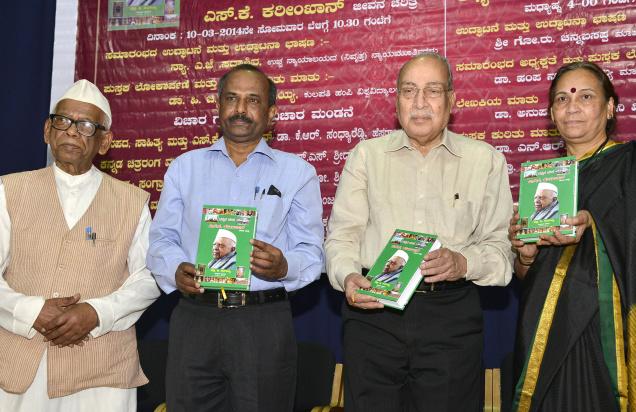
(From left) D. Boralingaiah, Vice-Chancellor, Kannada University, Hampi; A.J. Sadashiva, former judge, Karnataka High Court; and K.R. Sandhya Reddy, writer, releasing a book on Karim Khan in Bangalore on Monday. / Photo: K. Murali Kumar
‘Kannadada Santa Karim Khan Jeevana Charitre’ is written by the late D. Lingaiah
A biography on the late Kannada folk poet and scholar Karim Khan will provide an account of the entire 20th century, H.C. Boralingaiah, Vice-Chancellor, Kannada University, Hampi, has said.
He was speaking at the release of Karim Khan’s biography Kannadada SantaKarim Khan Jeevana Charitre at Kannada Sahitya Parishat on Monday.
Mr. Boralingaiah said the story of Karim Khan, a Gandhian, was also the story of the creative success of the Gandhian path before Independence.
“In an era of unbridled growth and development post-Independence, we have forgotten Gandhi and this book can be an excuse to introspect on the path we have taken,” he said.
Mr. Boralingaiah also recounted his interaction with Karim Khan when the two worked together at the Janapada Academy in the late 80s. “Despite the criticism he came under over his appointment to head the Academy at a ripe old age of 83, Karim Khan worked tirelessly for three years and did foundational work in the field of folk arts, along H. L. Nage Gowda, another scholar in the field,” Mr. Boralingaiah said.
A.J. Sadashiva, retired judge, Karnataka High Court, who inaugurated the function, said that in his limited interaction with him, Karim Khan came across as a polymath and a great humanitarian.
“He was a man who believed there was not much of a difference between man and God and if one strove hard, man could reach that holy state. His life was a journey in the direction,” he said.
The biography is written by the late D. Lingaiah. It is published by Godhooli publications.
source: http://www.thehindu.com / The Hindu / Home> News> National> Karnataka / by Staff Reporter / Bangalore – March 11th, 2014
With the growing interest in traditional and complementary systems of medicine across the globe, a facility located in Foundation for Revitalisation of Local Health Traditions (FRLHT) campus, Bangalore helps authenticate the identity of medicinal plants, especially in the form of a repository of the natural resources.
This centre named as Bio-cultural herbarium is a one-stop information related to plants and currently holds about 40,000 accessions pertaining to more than 3,200 medicinal plants collected from across various bio-geographic regions of the country. A unique feature of this herbarium is its easy accessibility both to the scientific community and the layman which has been achieved through linking the cultural information pertaining to vernacular names, local uses and classical uses of plants to the herbarium database.
The centre also has a repository of raw drugs collected directly from the botanical source and samples. The herbarium and raw drug repository is supported with an image library that currently possesses over 20,000 images. Dr Noorunnisa Begum, curator of the Herbarium says “Traditional knowledge of medicinal plants and their utilisation is increasingly being realised and put to use by modern medicine”.
The long term goal of the centre is to act as a vehicle to promote medicinal plant conservation and in turn help revive health care traditions.
source: http://www.deccanherald.com / Deccan Herald / Home> Supplements> Spectrum / by Manish Sharma / March 11th, 2014
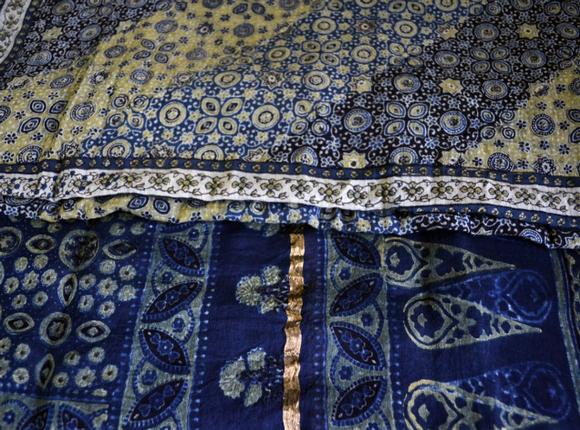
Abdul Jabbar Mohammed Khatri is not a name urban dwellers are familiar with, but many get to wear garments made from the natural-dyed, ajrakh-printed fabric that comes from his workspace in Dhamadka near Bhuj, Gujarat.
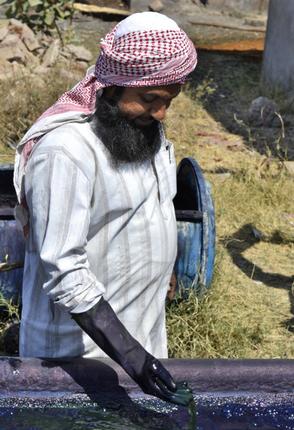
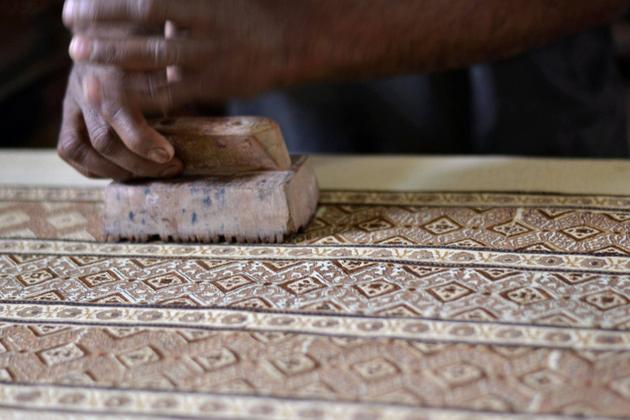
The ajrakh block printing process at Jabbar Khatri’s workshop in Dasada, near Bhuj / The Hindu
As one enters the muddy lane leading to his workshop, one can spot several metres of fabric, in different stages of dyeing and printing. The workshop has a large outdoor area where water from the borewell is filtered to rid its iron content, a boiling unit where fabric is treated several times during printing and dyeing and a printing room lined with tables and innumerable wooden blocks intricately carved with ajrakh patterns.
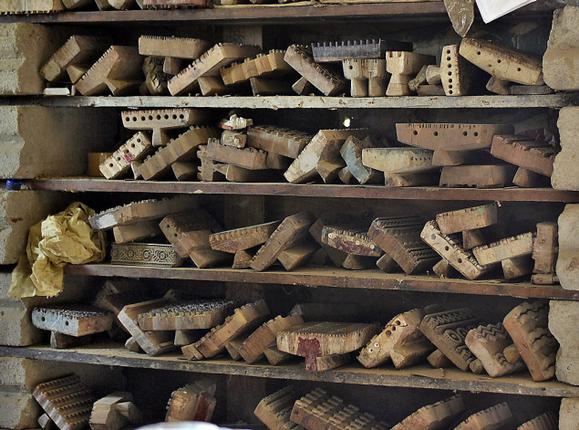
Stacks of ajrakh blocks at Jabbar Khatri’s workshop in Dasada, near Bhuj
A part of Khatri’s storehouse has stock that has to be sent to Fabindia. He’s a national-award winningajrakh printer and this is the 10th generation of a family of ajrakh printers that moved from Sind to Dhamadka. “Ajrakh requires running water and my forefathers moved here because of the river Saran, which dried up in 1987. Now we draw water from a depth of 200ft and it has more iron content,” he says.
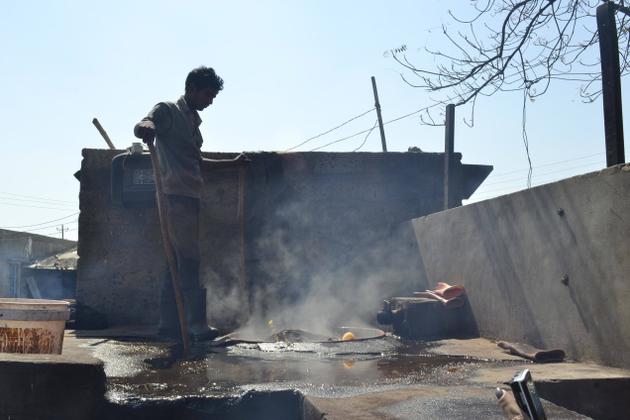
A staff member treats the printed and dyed fabric with boiling water at the ajrakh workshop of Jabbar Khatri in Dasada, near Bhuj
In the initial stage, an indigenous ‘harda’ root is used as a mordant for the fabric (pomegranate skin and acacia nut skin are the other mordants). The ‘harda’, says Khatri, can react with iron in the water and turn the fabric black. “We use a filtering unit that has a bed of sand, coal, small and large stones to filter the water; iron particles gather on top,” he explains.
The dye varies from alizarine, madder or indigo, according to the colour desired. A mixture of lime and gum is used as a resist dye to keep the white portions intact.
Ajrakh printed saris, dupattas and stoles are now a fashion statement. Khatri recalls that a few generations ago, those who reared animals were the primary customers buying lungis and towels. Double ajrakh or printing on both sides, now a niche domain, was done to make the fabric more useable. “If one is wearing a lungi that flutters in the desert wind, one wouldn’t want the inner side to be not colourful,” says Khatri. Double ajrakh requires precision and is done only by master craftsmen.
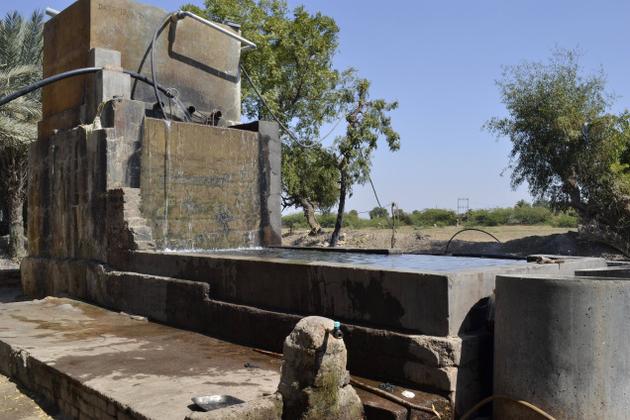
An indigenous water system used to wash fabrics at the ajrakh workshop of Jabbar Khatri
If naturally dyed ajrakh printed fabric comes at a premium, it is because of the work that goes into it. In Ajrakhpur village in Kutch, several craftstmen specialise in block prints. “Each tribe has specificpatterns of ajrakh and communities do not copy patterns,” smiles Khatri.
Jabbar Khatri will be demonstrating ajrakh block printing at the International Workshop on Natural Dyes organised by ANGROU in Hyderabad from March 5 to 7.
Weft, warp and a legacy
Visitors to Bhujodi village near Bhuj would be surprised by the number of award-winning weavers in the village. Among them is Vankar Shamji Vishram Valji, known as Shamji bhai, who will also be participating in the International Workshop on Natural Dyes in Hyderabad next week. He gives us an insight into the Bhujodi settlement and its new quake-resistant and weather-proof houses and looms and moves on to talk about indigenous wool from the sheep he uses for weaving shawls, throws and bedspreads. Shamji bhai’s family weaves a small number of shawls in chemical-dyed, acrylic wool for commercial purposes but the larger focus is on indigenous wool and kala (black) cotton that grows in the area and natural indigo for dyeing.
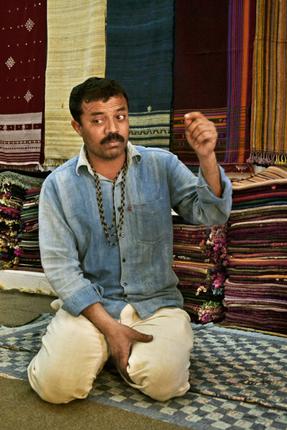
Vankar Shamji at his store in Bhujodi, Bhuj
“I get indigo from Auroville and Hyderabad,” he says, showing us his indigo vat, a 3.5ft clay pot placed partially within the ground. “We use excreta of goats at the base to maintain the temperature of the vat. Goats feed on salty leaves and hence their excreta does not attract ants,” he reasons. One of the vats he now uses has a four-year-old indigo dye that gets replenished after each dyeing process. Date, lime and water are added to the vat from time to time. “A vat can be used up to 20 years if it is in good condition. One has to use the vat each day,” he says. These vats, explains Shamji, are smaller than those used in Rajasthan to dye saris.
Shamji and his brothers work in spaces designed with an understanding of wind and sun direction so that they use minimum or no electricity. “We moved here from Rajasthan 10 generations ago, invited by members of Rabari community. The Rabaris are herders and their garments were the yardstick of their wealth,” he explains. Traditionally, Rabaris wore black and white while Ahirs (farmers) wore multicoloured garments. “The Rabaris wear black to mourn the death of one of their kings (the black shawls worn by Deepika Padukone in Ram Leela is an example) and the Ahirs, believed to be descendants of Lord Krishna, like colours,” adds Shamji.
Natural-dyed fabric with ajrakh block prints
Today, Shamji’s family weaves cotton and wool shawls, stoles and furnishings and has a clientele that extends beyond Gujarat. He shows us prized, award-winning weaves by him and his father, valued at more than Rs. 2 lakh each. “My dream is to open a gallery to showcase such pieces,” he says.
(The writer was in Kutch as part of a textile trail conducted by Jaypore-Breakaway Journeys).
source: http://www.thehindu.com / The Hindu / Home> Features> MetroPlus> Events / by Sangeetha Devi Dundoo / Hyderabad – Bhuj, February 27th, 2014
A group of enterprising women here has formed an all-woman political outfit – the Bharatiya Awam Party (Rashtriya). They want to “usher in change in the male-dominated political system”. Although the party will skip this year’s LS polls, it will field candidates in the next UP polls.
“We are working for women’s empowerment in all fields, including politics. Women make up half the country’s population, yet their representation on the national political spectrum is negligible,” Najma Parveen, president of the party that promises 10% quotas for men, says. So far over 35,000 women, mostly Muslims, have joined the party after it came into existence on January 23, 2013, Netaji Subhash Chandra Bose’s birth anniversary. The poll panel registered it this January 9.
“Since most women are not members of a party, they are indifferent to political ideologies. Their voting choices are dominated by men in their families. We want to make them politically aware,” party general secretary Nazneen Ansari said.
Both young women at the helm of affairs have Master’s degrees in conflict management and development from Banaras Hindu University. “We are getting overwhelming response and have received over 50,000 receipts for primary membership,” Parveen said.
Unlike other political parties, the membership process of this party is rigorous. According to the office-bearers, membership is granted only after strict verification of the aspirant’s voter identity card. Each member is provided with a registration number. A data bank with details such as address, assembly constituency, parliamentary constituency and voter ID number of the member is prepared.
“We have received over 50,000 receipts of primary membership. But so far about 35,000 sisters have been granted membership after verification,” they said.
These numbers clearly suggest that the party is holding command over a significant number of committed voters who might become a subject of envy by other political parties. However, that is yet to be seen.
source: http://www.timesofindia.indiatimes.com / The Times of India / Home> City> Varanasi / by Binay Singh, TNN / March 08th, 2014
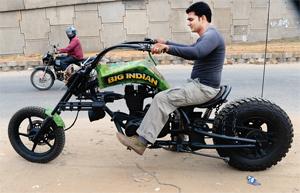
Zakir’s 10-feet long Captain America-style bikesports monster Trepador tyre; actor Upendra asked him if the bike can be used in one of his movies.
The bike sports a converted 500 cc Royal Enfield engine
If you find a monstrous 10-feet long bike zipping around the streets of Bangalore, ridden by a young lad, don’t mistake him for a ghost rider. It is actually 25-year-old interior designer Zakir Hussain Khan, who has passionately created this unique chopper bike which sports a converted 500 cc Royal Enfield engine.
Zakir Hussain, aka Zak as he’s popularly known among motorcycle enthusiasts, was inspired by the intriguing ‘Captain America’ chopper bikes in the West. Choppers are handcrafted or modified bikes. Captain America is the lead character in the counterculture 1960s movie Easy Rider, in which the two protagonists ride a chopper bike.
It took Zak three months to create this mean machine, which he calls the ‘Big Indian’. He now has Sandalwood bigwigs queuing up to feature this monster in their movies.
“Actually, I was test-riding the bike near actor Upendra’s house when his son saw the bike and called his father to check it out. He seemed quite impressed,” said Zak.
Uppi, known to wow his audience with his exuberant and larger-than-life characters, has even asked him if the bike can be used in one of his movies — this of course, after spending a few minutesinspecting the bike and its unusually big hind wheel.
The young designer, who invests most of his earnings from interior designing on modifying bikes, used the imported Maxxis Trepador tyre made by Taiwanese company Cheng Shin Rubber, doing business as Maxxis International, for the hind wheel. The tyre, made to be used on light trucks and SUVs, reportedly cost Zak a whopping Rs 60,000 to import from Germany. He thinks it gives the machine a mean look.
The bike cost him Rs 6.25 lakh to make from scratch. Another of its unique features is its silencer, which emits fire from its exhaust. This lone cost him a cool INR 1,50,000. Some of the characteristic features of this single-seater bike, now grabbing onlooker eyeballs, are its lengthened frame, extended forks, a skull for headlight, and Gatling-style (a forerunner of the modern machine gun) barrels, extending from one side of both the fork tubes.
Zak, always keen on wanting to make something different, started modifying cars and bikes since he was an 18-year-old. “I want to create another chopper bike which is 18-feet long,” said the ambitious Zak. And what is he going to do with this one? “I want to auction it after a few months,” he said.
source: http://www.bangaloremirror.com / Bangalore Mirror / Home> Bangalore> Others / by Nandini Kumar, Bangalore Mirror Bureau / March 08th, 2014
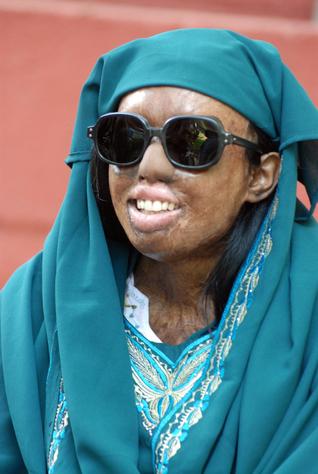
Haseena Hussain./ File photo: K.Gopinathan / The Hindu
We want society to be humane to us: acid attack victim
Earlier this week, Laxmi, a victim of acid attack, was awarded the International Women of Courage Award by U.S.’s First Lady Michelle Obama for successfully leading the campaign against acid attacks on women in India.
The story of Haseena Hussain of Bangalore, who fought a long battle after an acid attack in 1999, is as inspiring as Laxmi’s.
Ms. Haseena was attacked with acid in 1999 by Joseph Rodriguez, her former employer, as she had not responded to the marriage proposal and had refused to stay back in his firm. Today, almost 15 years later, Ms. Haseena is the sole breadwinner of her family of four comprising her father, mother and grandmother.
Choosing not to be bogged down by 35 surgeriesand loss of vision in both eyes, besides constant “stares” and comments from relatives and acquaintances, she now works in a government office. When asked if she was offered the job by the government, an irked Ms. Haseena says: “I got this job on my own. I cleared several rounds of tests after undergoing computer training.”
Ms. Haseena hates re-living what she calls “sob story” and says that she hopes every acid attack victim is able to fight the odds and become independent. “As I was educated, I was able to secure a job. But acid victims, particularly in rural areas, may find it difficult to be independent. Most acid attack victims lose their vision. If the government provides jobs, they can remain independent.”
She adds categorically that she needs no sympathy. “We only want society to behumane to us.”
Besides the discrimination she faced in society, her family had a tough time mobilising resources for her surgeries and other medical aid. “My father had to sell our house and his entire bank balance was empty as we had to spend Rs. 15 lakh on my medical expenses.” Though the Supreme Court had directed all States to pay acid attack victims Rs. 3 lakh towards medical treatment and for after care rehabilitation, Ms. Haseena says it is inadequate.
It was nine years after the attack of Ms. Haseena that the accused was finally convicted, even as she struggled every minute of those years. “There is a need to have a fast track court for trying cases related to acid attack victims,” she says.
source: http://www.thehindu.com / The Hindu / Home> News> Cities> Bangalore / by Tanu Kulkarni / Bangalore – March 07th, 2014
Kashmiri writer and journalist Basharat Peer has, after great struggle, got the smog of his painful past off his mind. Today, he admits, there is a clear sky above his head.
Sitting at a café in Delhi’s Khan Market, the 37-year-old revealed how a slice of his own life story made its way into Vishal Bhardwaj-directed movie, Haider , and his worthwhile journey from New York Times–India Ink to Bollywood.
In the middle of handling the desk at NYT and finishing his second book, Peer didn’t realise what was coming his way. One fine day, when he received an email from filmmaker Vishal Bhardwaj, he started taking films— Bollywood rather—seriously. The way the Indian film industry had traditionally represented Kashmir made him reluctant initially.
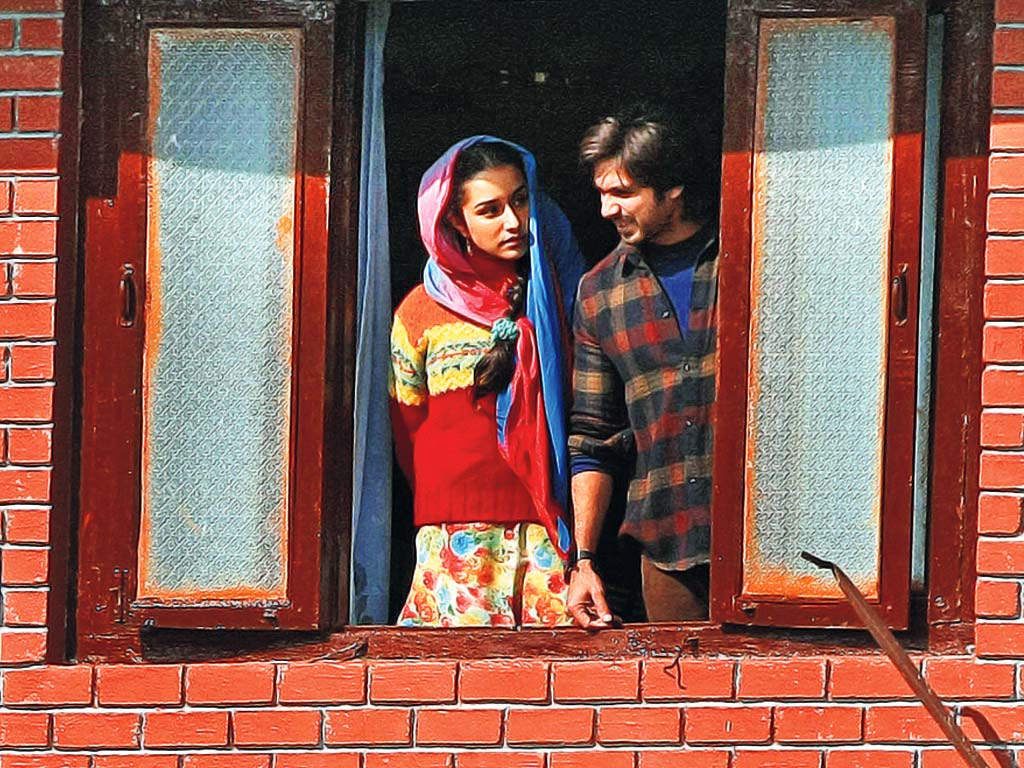
Shahid Kapoor in Kashmir on the sets of Vishal Bhardwaj’s next, Haider. The film is an adaptation of Hamlet.
The director had read Peer’s internationally acclaimed memoir, Curfewed Night, about growing up during the early years of anti-India rebellion in his homeland, Kashmir. After adapting Macbeth (Maqbool) and Othello (Omkara), Bhardwaj saw the Curfewed Night could be the source of the third part of the Shakespeare trilogy, Hamlet (Haider).
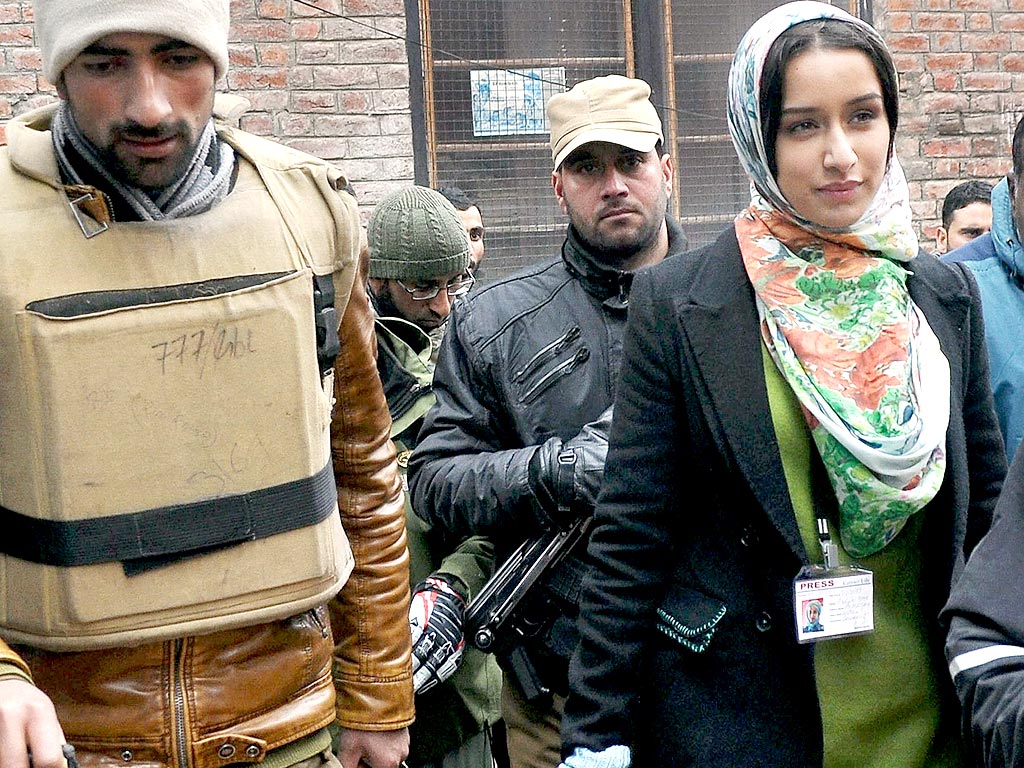
Shraddha Kapoor plays a press reporter in Haider.
After Vishal’s insistence, Peer went back to Hamlet, saying he read and never understood it better than this time.
“The moment Vishal mentioned Hamlet, I thought of one of the iconic lines from the play, which refers to the political and moral corruption and an unjust state of affairs in the setting of the play: Something is rotten in the state of Denmark. And I said, yes, of course you can set it in Kashmir,” said Peer, smiling and fingers fiddling with the tissue on the table.
He still remembers, sitting face to face with the director, his first reaction to the offer, “what?!”
“Vishal, then, gently pushed his case saying tum likh do. I hesitantly said I haven’t done it before,” Peer said. Basharat could relate to the play. He could find similar themes in his life— betrayal, abuse of power, justice, revenge and espionage. He had an image for each character in the play.
“Many political operators in Kashmir who have done terrible things to their own people and to others in pursuit of money and power came to my mind when I was thinking of Claudius, the villain of the play who murders his brother, King Hamlet, for the throne and to marry his wife Gertrude,” he said.
“It was like I understood Hamlet for the first time.” Only by transposing his world to the Shakespeare’s did the Bard’s real message reveal itself to Peer. “I called Vishal and said, listen, I have it. This is the story.”
Basharat always saw Bollywood from a distance. He also joked about how the famous dialogue from Sholay came to his mind every time somebody would talk about filmy lines. “Kitne aadmi thei,” he recalled, adding his wife also teased him about this once in a while.
A majority of Kashmiris believe Bollywood is a huge disappointment. They have a life beyond selling carpets and flowers on houseboats, said Peer.
Being a Kashmiri, and especially after having written a first-hand account of the conflict, Peer knew his approach had to be different so that the people of his troubled state are represented in a more responsible manner.
“This reminds me of the famous Merchant of Venice line: If you prick us, don’t we bleed; if you tickle us, don’t we laugh.”
Kashmiris are real people too, Peer insists. Haider is conscious of this fact.
“The film is an attempt to answer the stereotypical, jingoistic films Bollywood has made about Kashmir. Every character in the film is a Kashmiri—a doctor, a lawyer, teacher, a research scholar, a police officer. These are people who have agency and they’re not just victims.”
“It’s a story of their moral choices, their dilemmas, their courage, and their tragedies. I am hopeful that the film conveys a sense of what Kashmiris lived through, hoping there are images–never before shown in a Bollywood film—that will make the viewers think, ask questions.”
Talking about the controversial flag-hoisting scene in the movie which triggered protests in the valley, the author said, “Students weren’t protesting against Haider in particular. In general, they’re worried about how the state will be projected. Also, anyone who saw it from a distance wouldn’t know the context.”
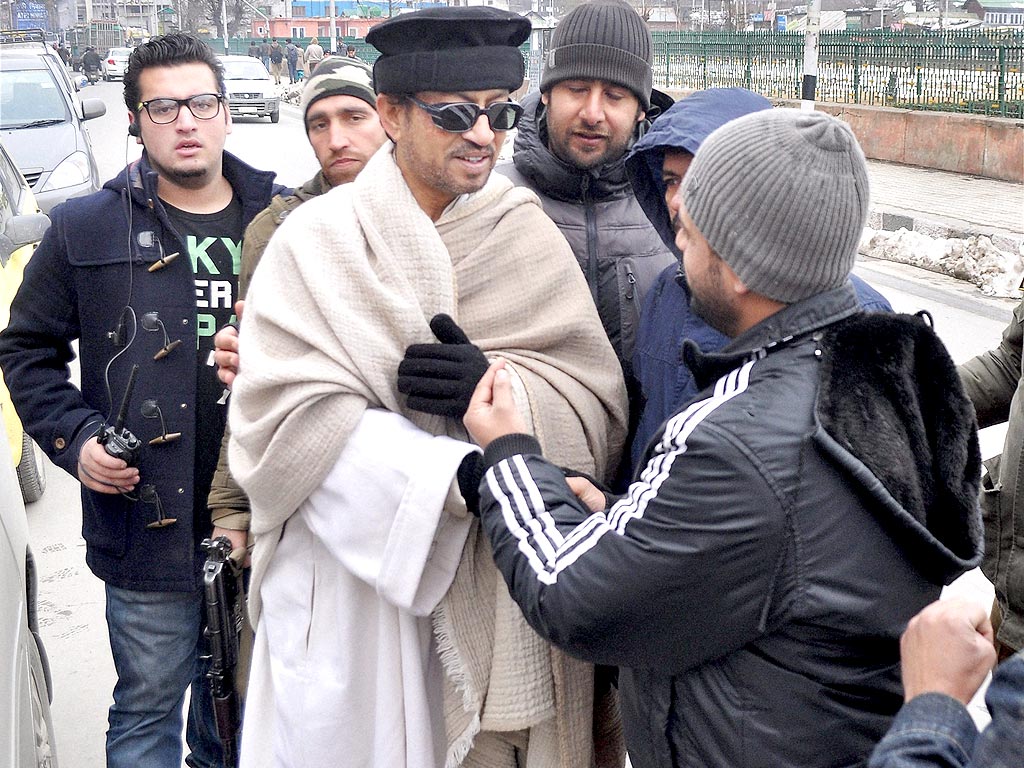
Haider stars Shahid Kapoor in the lead along with Shraddha, Irrfan and Tabu.
“Irrfan Khan had something great to say. He said ‘these incidents are nothing in comparison to what they have suffered in the past 25 years’. I think Kashmiris have been very generous to the film crew,” Peer said.
Peer, along with other Kashmiris, is looking forward to the film. He is over the moon, as ten events from Curfewed Night have been incorporated in the film. “I hope those scenes survive censor board scissors and people get to watch them,” he said.
Another interesting feature about the movie is Peer’s cameo appearance as what he likes to call a “pareshaan (anxious) Kashmiri”.
“Vishal said ‘arey yeh ek aam aadmi, ek pareshaan Kashmiri ka role hai, tum karlo. I said, haan, iski toh bahut practice hai,” he chuckled.
Basharat is playing a regular man who is scared of stepping out of his house, something which was very common in the nineties in Kashmir. People carried their addresses in pockets with little hope of returning home.
“I grew stubble, wore a pheran and I was sorted. It was a proud moment to share 30 seconds of my role with an actor like Irrfan Khan.”
On the writing front, Peer is satisfied with the new crop of Kashmiri writers and their take on the conflict, the most obvious and dominant issue in Kashmir to be written about.
“Be it Waheed Mirza, Siddharth Gigoo or Rahul Pandita—all of us have written just one book on Kashmir. This is just the beginning. We’re dealing with the first rush. There is a novel by Shahnaz Bashir forthcoming. Two brilliant young writers, Feroz Rather and Arif Ayaz Parrey, are working on collections of short stories. Malik Sajad, a very young graphic novelist and cartoonist, is working on a graphic novel.”
Basharat Peer is currently busy working on his second book, Shadow of the Broken Dome: India and Its Muslims.
The book requires him to travel across India to research on the contemporary Muslim life and politics.
“The book has traumatised my mind at the moment,” he joked.
source: http://www.hindustantimes.com / Hindustan Times / Home> Life & Style> Books / by Subuhi Parvez, Hindustan Times, New Delhi / March 08th, 2014
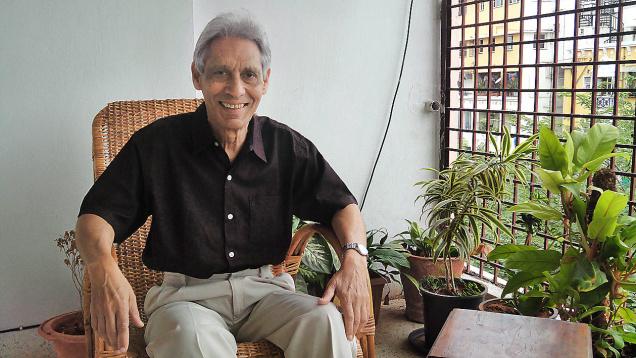
IN PURSUIT OF BALANCE Writer Ali Ansari / Photo: Zeenab Aneez / The Hindu
Ali Ansari’s first work of fiction takes the reader on Zarina’s journey which spans across countries and different belief systems
Unveiled, I show you my face. You, a man. I, a woman. Never the two can meet. But, we must talk. Woman to man.
These lines, penned by Zarina to Prophet Mohammed, in Ali Ansari’s debut work of fiction Dear Prophet will leave anyone curious, if not enthralled. Based on the life of a ‘liberated Muslim woman’, the novel follows the protagonist Zarina across borders in search of her son, Hamid who is on the run from both the American FBI and militant Islamic groups.
The story goes back and forth in time and space as Zarina recalls the events that led to Hamid’s disappearance. Sometimes frustrated, sometimes distraught but always introspective, in looking for Hamid, she finds herself embroiled in an internal struggle of belief and identity. As evident by the title, the narrative is formed by letters Zarina writes to the Prophet of her religion, Islam. Her letters act as soliloquies, giving the reader an intimate account of her journey and carrying the story forward. “I thought letters are a very personal tool of communication. Although the dialogue is one-sided, Zarina writes with the assumption that the Prophet understands her situation and predicaments,” explains Ali.
Was writing from the perspective of an Indian Muslim woman a tough task? “My feelings towards nature and my reaction to the brutality inflicted on it are more feminine, coming from the heart, not the mind. It came to me quite naturally,” says the engineer-turned-writer. Questioning man’s abusive relationship with the environment fostered by his materialistic lifestyle is only one of the key issues raised in the book. Starting from Zarina’s life in Hyderabad, through her marriage with Rashid and their subsequent divorce, to her decision to settle abroad, the book covers her struggles with marriage, motherhood, religion and, under the circumstances, Islamic terrorism.
Dear Prophet is autobiographical in parts. Like Zarina, Ali had left India when he was very young and moved to the United States for further studies and to work as a lecturer. Moving away from home, being exposed to a wholly different lifestyle had certainly triggered many questions in Ali’s mind. However, his need to find a deeper meaning in things has roots in his childhood in Hyderabad. Growing up in a home where he was exposed to Urdu classics and poetry, he became interested in Sufism, something he began to formally study only later, during his time abroad. Ali’s first book titled Sufism and Beyond, a look at Sufi thought in the light of Twentieth century science, is a result of this study. Ali is now based in Coimbatore and was in the city for a reading of the book held at Crossword.
The dialogue between Zarina and Hamid reflect Ali’s own questions about existentialism and religion. Rife with references to Sufism, Zen, Islam and even Native American mysticism, Zarina’s and Hamid’s story demands concentration and encourages introspection, achieving for the reader, albeit in a small way, what Zarina seeks to achieve — equanimity and mastery over one’s mind.
source: http://www.thehindu.com / The Hindu / Home> Books / by Zeenab Aneez / Hyderabad – October 08th, 2012
Blind tourists can now read the history of the Taj Mahal in the complex.
The Archaeological Survey of India (ASI) has provided a notice board in Braille script for their convenience.
Agra District Magistrate Manisha Trighatia unveiled the notice board, which some visually handicapped students and their teachers read — and expressed satisfaction.
N.K. Pathak, the superintending archaeologist of ASI’s Agra circle, said the facility will be a great relief to the sightless who had earlier to be told the history orally.
The board has been developed by Arushi, an NGO from Bhopal. It is both in Hindi and English.(IANS)