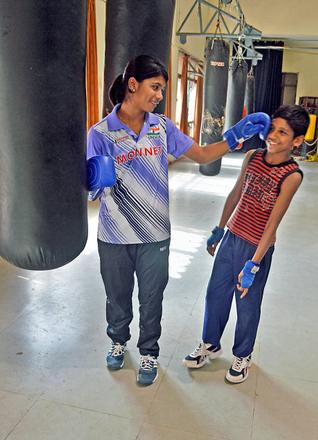
Nikhat Zareen, who won the silver medal in the recent World Youth women’s boxing championship, shares a lighter moment with the young Abdur Rehman at Lal Bahadur Stadium in Hyderabad. / -Photo: V.V. Subrahmanyam / The Hindu
12-year-old Abdul Rehman has won five gold, three silver and two silver in the School Games competitions
potential new star is rising from the boxing area in the city. Abdur Rehman (12) has caught the eye of the coaches and boxing connoisseurs with his natural movements while sparring with the punching bag.
The eighth standard student of St. Andrews School in Saidabad took to the sport watching the video tapes of Mohammad Ali and Mike Tyson has already made a mark at the national level having won five gold, three silver and two silver in the School Games competitions.
“I have rarely seen such a young boy with such lithe movements. Even some regular trainees in the seniors age group group can’t match him,” insists SAAP boxing coach Omkar Yadav.
He even impressed the likes of World Youth Boxing silver medallist Nikhat Zareen.
“He looks really good and appears to have so much of natural talent,” remarked Zareen after watching him in practise few days ago.
“I want to emulate Zareen,” says the shy Abdur Rehman, nicknamed Maaz. He will be soon competing in the Sub-junior nationals. Given the rich history of boxers from Hyderabad and with a dedicated coach in Omkar Yadav, this young boy could well bring laurels to the city.
source: http://www.thehindu.com / The Hindu / Home> News> Cities> Hyderabad / by V.V. Subrahmanyam / Hyderabad – October 16th, 2013
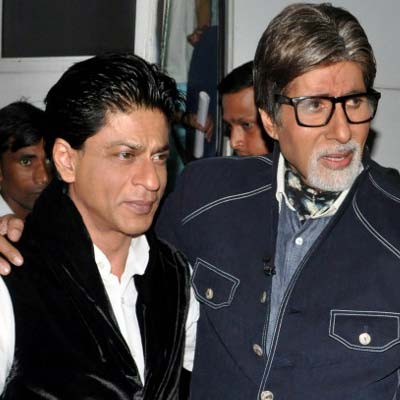
With divides like mainstream and parallel cinema, single screens and multiplexes, Indian cinema lives under a divide which is a deterrent to its own good, superstar Shah Rukh Khan said here Saturday, even as Amitabh Bachchan felt the need of the hour is to “blend in” to go global.
“Until we don’t inculcate a habit of collaborations, we won’t be able to inch towards global cinema,” Shah Rukh said at the Solutions Summit, a conclave organised by NDTV to celebrate 25 years of its existence.
The actor said it is important to be able to give to the world what it understands, in order to be accepted.
“If you want to be a part of global cinema, you have to tell what you want to tell, show the emotions which you want to show, but you have to put it in the way the world wants to see it,” he added.
Shah Rukh was joined on the panel with veterans like Amitabh Bachchan, Waheeda Rehman and Oscar-winning composer AR Rahman.
Rahman, who has created tunes for international projects like “Slumdog Millionaire” and “127 Hours”, says he finds himself in a situation when different things are expected from him in India and in foreign shores.
“I have been a victim of this. What is considered to be good here, is not good there…I have to switch between the two. However, there are some things which are common as well,” he said.
Amitabh, 71, who made his Hollywood debut with “The Great Gatsby” earlier this year, agreed with the fact that Indian cinema is unique, but added that we need to try and “blend in”.
“It is obvious that our cinema is unique. We need to blend with the west in order to be global,” he said.
Amitabh attributes this to the work of the current generation of actors and filmmakers, who are putting in efforts to make Indian cinema visible to the world.
“Shah Rukh Khan and Karan Johar are responsible in bringing commercial cinema to where it is now. The way they have marketed it has helped us a lot. I think that was a point when Indian cinema became global,” he added.
source: http://www.dnaindia.com / DNA / Home> Entertainment> Report / Place: New Delhi, Agency:IANS / Saturday – December 14th, 2013
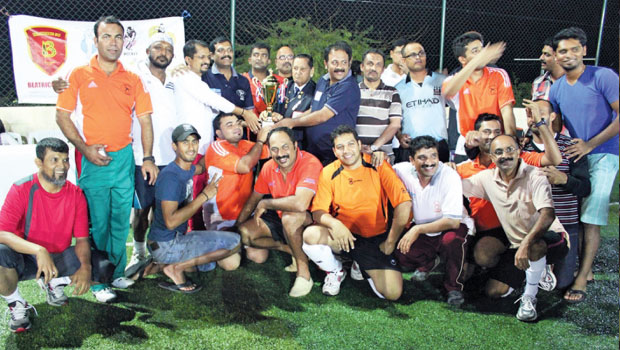
Winners Team Coorg pose for group photo after winning the final against Beatrice Dubai. – Supplied photo
Muscat:
Team Coorg lifted the Balan Master Memorial Trophy beating Beatrice Dubai 4-1 in the final. Organised by Beatrice Sports Club Muscat, the six-a-side hockey tournament was held at The Wave Stadium in the presence of former Indian hockey veteran S.A.S. Naqvi.
In an exciting final, Team Coorg showed their complete supremacy over Beatrice Dubai. Children’s football and family fun games were the sidelights of the final day.
Dr Mujeeb (Amana Polyclinic) delivered the keynote address. The tournament was organised in association with Team Coorg Muscat.
Former Oman national hockey coach K.K. Ponnacha and B. Kuttapa played an instrumental role in helping the Beatrice Sports Club Muscat to host the tournament with much fanfare.
During the concluding ceremony, the organisers of the tournament also honoured S.A.S. Naqvi, Mohammed Osama Rawat, K.K. Ponnacha and B. Kuttapa for their outstanding achievements in the field of sports.
Beatrice executive committee members Shahir, Dr Mujeeb, O.V. Feros, Feros. M, Said, Rasheed, Habib A.P.M and Zaheer thanked the audience for coming in large numbers to support the tournament.
Badr Shipping Company and Sixar Group were the sponsors.
source: http://www.timesofoman.com / Times of Oman / Home / by Times News Service / December 05th, 2013
A delegation of college students from South Mumbai called on Vice President Mohammad Hamid Ansari at his official residence here on Wednesday. Minister of State for Communications and Information Technology and Shipping Milind Deora was also present.
Interacting with the students, Ansari said such visits enable students to understand India’s rich cultural and historical heritage, and also it’s all round progress and development. He wished the students good success in their life.
Every year, a delegation of college students from South Mumbai visits Delhi to get first hand experience of the working of Parliament, and also to meet various dignitaries, including central ministers. (ANI)
source: http://www.siasat.com / The Siasat Daily / Home> Education and Career / Mumbai, Wednesday – December 11th, 2013
(Pervez Bari): “The time has come for the entire Muslim world to introspect and get awakened to revisit five centuries, from 750 to 1258 AD – which is often described as the Golden Age of Islamic science — the teaching and practice of medicine in Europe was heavily influenced by the works of Al-Razi (d. 925), Al-Zahrawi (d. 1013) and Ibn Sina (d. 1037) to reinvent Islam’s image of peace, human values and service to humanity through Quranic injunction and Prophet Muhammad’s (PBUH) sayings (Hadees).
The difference between non-Muslims and Muslims is only that of service to humanity by the latter on the directives of Quran”.
The above observation was made by Mr. K. Rahman Khan Union Minister of Minority Affairs, who was the chief guest, while delivering the inaugural address of the three-day International Conference on “Revisiting Abul Qasim Al-Zahrawi’s Legacy in Medicine and Surgery” here on Friday evening at the India Islamic Cultural Centre.
Rahman Khan lamented that whole of Islamic world today is in turmoil despite it is blessed with wealth at its hand but no research is being conducted to benefit mankind. He called upon Muslims, especially youth, to emulate Al-Zahrawi, who has been called father of modern medicine and surgery, not only in medical but all other fields to serve the mankind.
The New Delhi-based Institute of Objective Studies, (IOS), in collaboration with MESCO (Muslim Educational, Social and Cultural Organisation, Hyderabad), and Maulana Azad Education Foundation, Ministry of Minority Affairs, New Delhi is organizing the three-day international conference on to mark the 1000th death anniversary of the pioneer physician and surgeon and highlight his wide-ranging contributions to medicine and surgery. The co-sponsors of the event are India Islamic Cultural Centre, New Delhi, and PARAS HEALTHCARE.
Prof. Omar Hasan Kasule, Sr. Faculty of Medicine, King Fahad Medical City, Riyadh, KSA, in his presidential address said that Islamic medicine is not specific medical procedures or therapeutic agents used in a particular place or a particular time. Islamic medicine is universal, all-embracing, flexible, and allows for growth and development of various methods of investigation and treatment of diseases within the framework described above’. The conceptual clarification from this definition opened the door to Islamization of modern scientific medicine.
Prof. Kasule Islamic Health Care Industry provides a value-added to medical care, spirituality, ibadat-friendly hospital, and Islamic ambience. The Islamic approach provides holistic care. Unlike Islamic finance, it started with professional training at faculties of medicine. All have a stake in health only a few have a stake in banking, he added.
Meanwhile, Harish Chandra Singh Rawat, Union Minister of Water Resources, in his address said that he salutes the sense of dedication and sense of inequality in Islam which Al-Zahrawi followed to serve whole humanity and not Muslims alone.
Dr. Fakhruddin Mohammad, Organising Secretary & Hony. Secretary, MESCO, Hyderabad threw light on the introduction of the theme of the international conference aptly.
Dr. Ahmad Abdul Hai, MD & Chief Consultant, Hai Medicare & Research Institute, Patna, in his key-note address said: “Islam has made a very glorious contribution to the art of healing. The basic impetus and the inspiration for this Islamic medicine came from the Noble Quran and the teachings of the Holy Prophet which took medicine away from the realm of superstation & fantasy and gave it a rational footing. This was the basis of Islamic Medicine”.
Dr. Hai quoted Dr. Ahmad Al Kadi of USA who had said: “the treatment in question may be spiritual, physical, exercises, nutritional adjustment, pharmaceuticals preparation (natural or synthetic) surgical procedures, implants, use of modern diagnostic tools (MRI & PET Scan), radiation therapy or a combination of any of these modalities”.
This definition of Islamic medicine may come as a surprise for some of us who feel that Islamic medicine is something limited to the therapy practiced by the revered old Hakeem’s, or is rooted only in natural herbs or is limited to the direct health related teachings found in the Quran & Hadith, or some faith healing manoeuvres, he added.
He said that Islamic medicine includes all the modalities of modern medicine but yet differs from it because it is rooted in divine faith & ethics. It strives for excellence. It is comprehensive, paying attention to the body, the psyche and the soul. It takes into account not only the individual patient but also the society. It is universal, utilizing all useful resources and offering its services to all mankind.
Earlier, Dr. Fakhruddin said that Abul Qasim Khalaf ibn al-Abbas al-Zahrawi (940-1013), known as Albucasis in the West, devoted his entire life, in Madinat al-Zahra, near Cordoba, in Muslim Spain, to medical research and practice. He made an outstanding and original contribution to medicine, surgery, orthopaedics, gynaecology and obstetrics, pharmacology and dentistry. He has been described as the father of modern surgery.
At the outset Maulana Abdullah Tarique recitated verses from the Holy Qur’an. Prof. M. Afzal Wani, Professor of Law, GGS IP University, Delhi, welcomed the dignitaries, guests and delegates. The inaugural session of the International Conference will be webcast live on the link http://vectraimage.com/webcast/ios/. Dr. Mohammed Iftekharuddin, Director, MESCO, Hyderabad conducted the inaugural function with aplomb.
Meanwhile, after the Maghrib prayers a plenary session was held on the theme of Islamic ethos in al-Zahrawi’s contribution to medicine and surgery which is still going at the time of going to the press. The plenary session is chaired by Maulana Dr. Saeed Al Azami Al Nadwi, Chancellor, Integral University and Chief Editor, Al Baas Al Islami, Lucknow. Prof. Hakim Syed Zillur Rahman, Founder President, Ibn Sina Academy of Medical Medicine and Sciences, Aligarh is the Co-Chairman of the session. (pervezbari@eth.net)
source: http://www.siasat.com / The Siasat Daily / Home> India / by Pervez Bari pervezbari@eth.net / Friday – December 13th, 2013
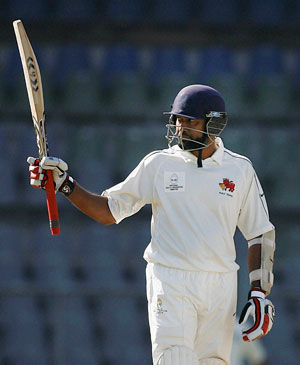
Wasim Jaffer joins an elite club of cricketers like Sachin Tendulkar, Sunil Gavaskar, Rahul Dravid, Dilip Vengsarkar, VVS Laxman and Mohd Azharuddin, who have record 50 or more hundreds at first class level.
Mumbai :
Seasoned opener Wasim Jaffer cracked his 50th century in first class cricket to rally champions Mumbai from a difficult situation on day one of their Ranji Trophy Group A clash against fellow-state rivals Vidarbha at the Wankhede Stadium in Mumbai on Thursday.
Jaffer remained unbeaten on 133 at stumps after batting right through the day and guiding the 40-time champions from a precarious 39 for 3 to a close of play first innings total of 254 for 8. With his 50th first-class hundred, Jaffer joined an elite list of seven other Indian cricketers – Sachin Tendulkar (81), Sunil Gavaskar (81), Rahul Dravid (68), Dilip Vengsarkar (55), VVS Laxman (55) and Mohammad Azharuddin (54) – who have 50-plus hundreds at this level.
The 35-year-old former India batsman showed immense patience and tenacity even as wickets fell from the other end. But for his 393-minute vigil, the hosts, who were asked to take first strike, would have folded up for a meager score.
There were only two significant partnerships for Mumbai, who were rocked by the initial three-wicket burst by medium pacer Sandeep Singh whose victims included South Africa-bound Ajinkya Rahane who was caught in the slip cordon for one run.
Jaffer, who faced 261 balls and struck 13 fours and a six to remain unconquered with tailender Vishal Dabholkar (0), put on 64 runs for the fourth wicket in 98 balls with Abhishek Nayar (27) before the latter was bowled round his legs by off spinner Akshay Wakhre who grabbed 2 for 65.
Later the opener added 58 in 111 balls with Shardul Thakur (26) who was one of three victims snapped up by Rajasthan-born Vidarbha left arm spinner Ravi Jangid.
It was Jaffer’s 34th hundred in Ranji Trophy and his tally of 50 hundreds in first class cricket includes five in Tests.
Vidarbha opted for the second new ball towards close after 87 overs but neither South Africa-bound Umesh Yadav, who went wicketless after six spells, nor Sandeep Singh could break through the ninth wicket stand which was worth 27 runs.
Yadav bowled six overs in his first spell and then was used in short bursts of three overs without success and the best bowler on view on a wicket that offered some bounce and movement was 32-year-old Sandeep who finished with 3 for 29.
Speaking to the reporters after the end of the day’s play, Jaffer said his team has recovered well now in a good position to call the shots.
“We are in a good position though we would have liked it to be something like 270-6. It was a good recovery,” he said.
Satisfied with his day’s rescue work, Jaffer said the team’s batsmen knew that the first session would be a tricky one with the ball seaming around a bit.
“It feels good to score a century. Someone had to stand there and make runs. Happy to have compiled my 50th first class hundred. The first session was very trying. We needed to hang around. There was not a big partnership at all but at the end of the day we are happy.
“They bowled well in the first session and the ball was seaming around and it was a very criticial period. We knew once we played out the first session the wicket will ease out.
“A few bad shots were played, but they will learn with time. The wicket was not doing much after the first session and at end of the day we have recovered well,” he emphasised.
Asked about whether Umesh Yadav’s pace has fallen a bit after his comeback from a serious back injury, Jaffer said it was the first time he had faced him and cannot make a comparison.
“He bowled all right. I have not played him before today and cannot compare,” he said.
“Sandeep bowled all right. He does not have pace but swings the ball and bowls to his strength,” he noted about Vidarbha’s most impressive bowler of the day.
Brief Scores: Mumbai 254 for 8 (Wasim Jaffer 133 not out; V Dabholkar 0 not out; Sandeep Singh 3 for 29, Ravi Jangid 3 for 48).
source: http://www.sports.ndtv.com / NDTV Sports / Sports Home> Cricket> News / by Press Trust of India / Thursday – November 28th, 2013
Rizwan Manji, an American actor of Indian origin, will be seen in Leonardo DiCaprio-starrer “The Wolf of Wall Street”.
The Outsourced actor plays the role of Khalil, a stockbroker in the firm of Jordan Belfort, portrayed by DiCaprio. Directed by Martin Scorsese, “The Wolf of Wall Street” also stars Margot Robbie and Matthew McConaughey, among others. Rizwan has also played small parts in Hollywood movies like The Guru and Transformers in the past, but this is the first time he has bagged a crucial role, said a statement.
The Wolf of Wall Street, distributed by MVP Entertainment and PVR Pictures, will release Dec 25. DiCaprio’s another film The Great Gatsby, which came out this year, saw Bollywood megastar Amitabh Bachchan in a small role yet interesting role.(IANS)
source: http://www.headlinesindia.mapsofindia.com / Headlines India / Home> Entertainment News> Hollywood / by IANS / December 11th, 2013
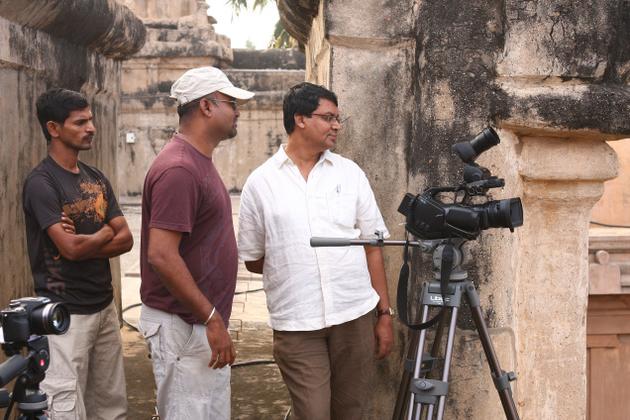
A journey within: The shooting of the documentary / by Special Arrangement / The Hindu
A documentarian sets out in search of his identity and comes up with the untold story of Tamil Muslims
“O Mankind! We created you from a single (pair) of a male and a female, and made you into nations and tribes, that ye may know each other…” Yaadhum, a documentary by the filmmaker Kombai S Anwar, opens with this quote from the Quran, and the image that follows is practically a counterpoint — the procession of Lord Ranganatha along the streets of Kombai, in the Theni district of Tamil Nadu, accompanied by traditional temple sounds from the nagaswaram and a large drum.
Then, as the procession passes the local mosque, we see the reason for this juxtaposition of word and picture: the investigation into the arrival of Islam in a place of Hindus and Tamils. In a voiceover, Anwar says, “While ‘who am I’ is never a question that bothered me during my growing-up years, it became quite important to me and to countless other Muslims, especially in these increasingly troubled times.” The documentary is labelled ‘A Tamil Muslim’s Journey In Search Of His Roots And Identity.’
Anwar told me that the idea for the film took shape from a paper he presented — Tamil Muslims: The Untold Story — at a national seminar. The paper was well received, and he was invited to give more talks on the subject. “After every presentation,” he said, “there would invariably be a few from the audience asking if a CD of the same material was available, so that they can pass it on to friends. With many such requests, and tired of the stereotyping of Muslims as well as the increasing polarisation, I thought I should make this the subject of a documentary film, so that it can reach a bigger audience.”
When he started about four years ago, he found it difficult to get funding, as Yaadhum was seen as a “religious project.” So he went ahead on his own, with money from his sister, a few friends, and his professional assignments in photography and filmmaking, which included a series of short films on the Big Temple at Thanjavur commissioned by the ASI.
Yaadhum, which loosely means “all” or “everything,” showcases the close relationship between Muslims and those from other communities. In one stretch in Madurai, we meet the Muslim family that has, for generations, been building the fence around the sacrificial pit in Puttu Koil, the site of one of the Thiruvilaiyadals of Lord Shiva. “These relationships have evolved into kinship in southern Tamil Nadu,” says Anwar, who found it difficult to get permission to shoot inside mosques and temples. To film the prayers at the Kombai mosque, for instance, he had to ask the jamaath leaders (office bearers of the mosque), who, in turn, asked the congregation during the Friday-afternoon Jumma prayer. Only after they agreed could Anwar go ahead. The officials at the temple, on the other hand, wanted some time to think about it; eventually they said he could go ahead. Later on, when they got to know him, they admitted that they were initially wary about a Muslim showing interest in the temple, so they checked with a friend from the CB-CID. Anwar told me, “It was my luck that the CB-CID asked them not to worry.”
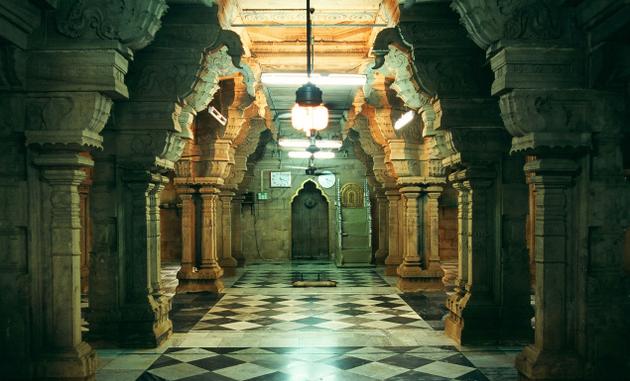
The Kilakarai Jumma Mosque / by Special Arrangement / The Hindu
It is precisely these rifts that the film intends to bridge, by showing how, once, these rifts didn’t exist at all. At the site of a dig near Kodungallur, a major port of the Chera kingdom, Prof. PJ Cherian, Director, Kerala Council for Historical Research, speaks of its “multi-cultural character 2000 years back”, and how “people belonging to different cultural groups, different belief systems, different practices, different traditions had an opportunity to come together and have interfaces. They all may have come here as traders. But you know trade doesn’t carry just goods. It brings in ideas, technology and new thinking… Multiple groups from the Mediterranean, from the Saudi Arabian region, from West Asia, from the Mesopotamian region, from the Indian Ocean rims, all were active here.”
This cultural overlap is found in Tamil Nadu too — say, in the Vaishnavite pilgrimage town of Alwar Thirunagari, where the mosque is built in the Dravidian architecture style. Dr. Raja Mohamad, Asst. Director of Museums (Retired), Govt. Museum, Chennai, says that there are no regulations with respect to Islamic architecture. “All that’s needed is a quiet place for prayer. And while building this space, the builders adopted the local architectural style.” Yaadhum is some sort of road movie, and Anwar’s stops along the way illuminate various aspects of Islam in the South and even Goa. He goes to Chola country, establishing the presence of Muslims through an inscription that refers to “Ahmed the Turk.” He goes to Kayalpattinam, which belonged to the Pandyas, and finds an almost 1000-year-old mosque to which additions have been made at different times. He narrates the history of the Tamil Muslims of Pulicat, most of whom are boat builders. He goes to Calicut, home of the Mapilla Muslims. Prof. MGS Narayanan, Director General, Centre for Heritage Studies, Dept. of Cultural Affairs, Govt. of Kerala, talks about a law which is supposed to have been passed by the Zamorin that at least one member of the fishermen families in Calicut must get converted to Islam so that there will be enough people to support naval warfare against the Portuguese who wanted to conquer Malabar in the 16th Century. (Hindus were generally reluctant to go to sea.)
We see venues, like Kottar in Nagercoil, where Tamil-Muslim literature flowered. The Arabic, Persian and Urdu influences introduced many new genres to Tamil literature — Kissa, Nama, Padaipor, and Munajaath. Among the most pleasant surprises of the film — and one that underscores the narrative crux of cultural osmosis — comes in these portions. We see a palm-leaf manuscript of Mihraj Maalai, poems written by Aali Pulavar in the 16th Century in memory of the ascent of the Prophet, and then we hear Isai Aruvi Seera Aboobacker sing these verses like a virutham (a free-style rendition, not set to a beat) in the Carnatic raga Kapi.
At the end of the film, Anwar says, “I am only halfway through my journey.” He still has many more miles to go and oceans to cross, this time in search of the Tamil Muslim Diaspora — but he has no more doubts about his roots. “I am a Tamil, a Muslim, and so many other things. In short, I am all of this —Yaadhum.”
source: http://www.thehindu.com / The Hindu / Home> Features> MetroPlus / by Baradwaj Ranjan / Chennai – November 29th, 2013
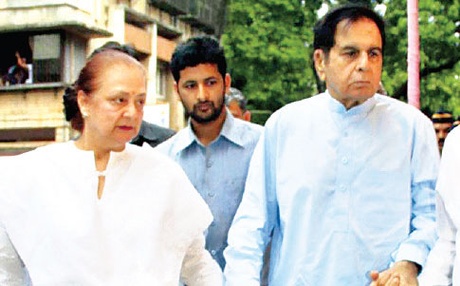
Described by Satyajit Ray as the ultimate method actor, Dilip Kumar stands tall as a polished performer though he retired from acting 15 years ago due to health reasons. (Publicity Material)
Dilip Kumar was not getting the right mood to shoot an intense scene prior to the climax in Footpath. Two days passed and director Zia Sarhadi was worried. He had to complete the film in time. Undecided about what he should do, the thespian went to Brabourne Stadium and concentrated on playing cricket.
Remembering the incident Dilip Kumar says, “I was totally involved in batting. After hitting a couple of boundaries I had a strange feeling within me. Putting an end to the game I came back to the pavilion. Then I called Zia Sarhadi directly and informed I was ready to shoot my scene that very day. Zia Sarhadi spent no time and organised the shooting at Ranjit Studio.”
Dilip Kumar broke down emoting, ‘Uth Bani Nashu Aa Gaya’ sans glycerin in his eyes. He was crying after the sad demise of his elder brother in Footpath. The shot was Okayed in one take proving Dilip Kumar was peerless in pathos.
Described by Satyajit Ray as the ultimate method actor, Dilip Kumar stands tall as a polished performer though he retired from acting 15 years ago due to health reasons. Till date he remains the actor most everyone – like Rajendra Kumar, Manoj Kumar, Amitabh Bachhan and Shahrukh Khan – has imitated. His piercing looks, highly medulative dialogue delivery balanced perfectly with his usage of the right palm makes him the acting icon whose assets have been dedication, intensity and versatility.
Dilip Kumar narrates an interesting anecdote, ”In Jogan, after Nargis leaves for her heavenly abode whilst praying, I was confused how to react. There were no dialogues. Director Kidar Sharma asked me to throw a stone in a pond, watch the water ripples and silently walk away. The shot created cinematic magic and it was the one with which the film ended.”
Dilip Kumar thinks highly of his late colleagues. He says, “We shared a mutual set of unspoken ethics and had a deep silent regard for each other. Raj Kapoor, Dev Anand and I slogged it to the top on basis of sheer merit and hard labour. We never went for unnecessary publicity.” According to him Amitabh Bachhan is the best star, actor in the past four decades and Sanjeev Kumar was an amazing actor who truly took over after Ashok Kumar, Motilal and Balraj Sahni, the gharana of natural subdued acting.
Andaz, Daag, Devdas and Gunga Jumna stand testimony of great acting abilities. When he was getting stereo typed in tragedy, Dilip Kumar opted for comedies and proved he was equally good at it. Explains Dilip Kumar, “I adopted for a natural design for my light hearted characters in Azad, Kohinoor, Leader and Ram Aur Shyam. They needed a great sense of timing. Whilst method requires rehearsals, preparations and efforts, comedy is spontaneous.”
The way he performed scenes with his heroines has also become classic. Dilip Kumar says, “I enjoyed best of relations with all of them. Kamini Kaushal, Meena Kumari, Nargis, Nimmi and Madhubala were highly gifted. So were Vyjayantimala, Waheeda Rehman and Rakhee. I fondly remember my histrionic interaction with late Smita Patil.
As I asked her, ‘Tum Vijay Ki Bahu Ho’, she conveyed an intense look of respect which spoke volumes. Smita was an accomplished actress.” Aye Mere Dil Kahin Aur Chal lipped by the thespian for Talat Mehmood is an immortal number. So are Shame Gham Ki Kasam, Suhana Safar and Nain Lar Gaye Re. Admits Dilip Kumar, “Talat understood the tragic lover in me too well. Rafi’s amazing versatility suited my songs of different moods. Mukesh also did true justice to songs. I lipped for him.”
source: http://www.newindianexpress.com / The New Indian Express / Home> Entertainment> Hindi / by Ranjan Das Gupta / Express Features / December 11th, 2013
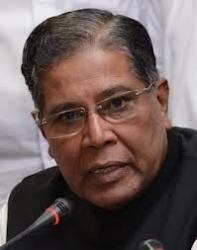
Abdul Khayum Khan, an IPS officer of the 1981 batch, has been appointed as Director General of the Andhra Pradesh Anti-Corruption Bureau (ACB).
Currently Vice-Chairman and Managing Director (VC&MD) of the Andhra Pradesh State Road Transport Corporation (APSRTC), he had also held additional charge as ACB Director General (DG) for the past few days, after the appointment of B. Prasada Rao as Andhra Pradesh’s Director General of Police.
In a minor exercise on Thursday, the government appointed Khan as the regular DG of the ACB and posted 1988 batch IPS officer J. Purnachandra Rao as VC&MD of APSRTC. Chief Secretary P. K. Mohanty issued an order to this effect on Thursday evening.
source: http://www.deccanchronicle.com / Deccan Chronicle / Home> News> Current Affairs / by Sijihaya / November 28th, 2013