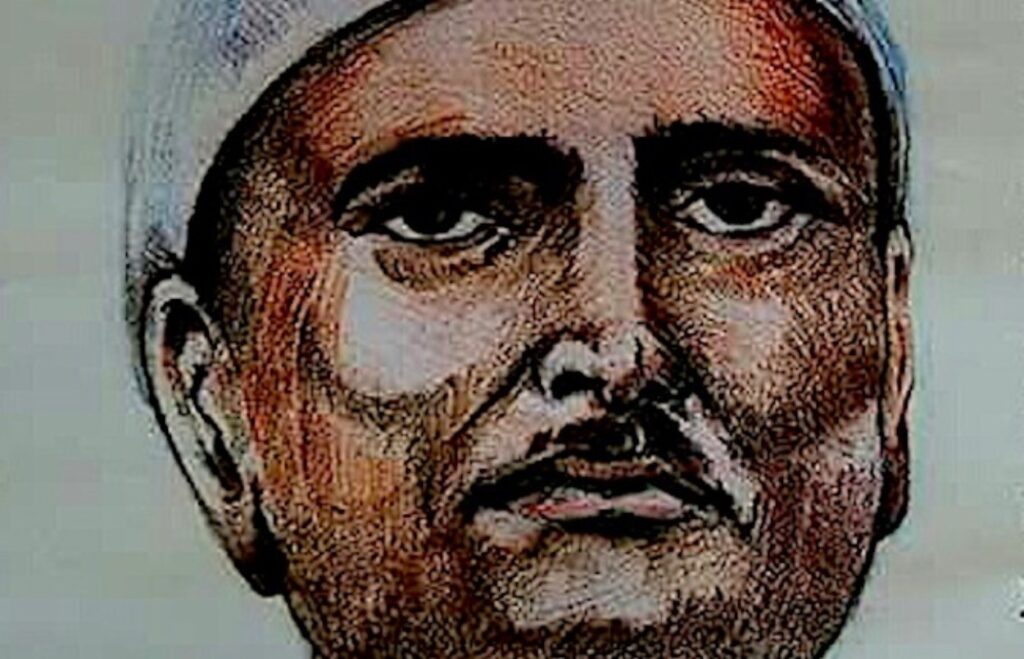
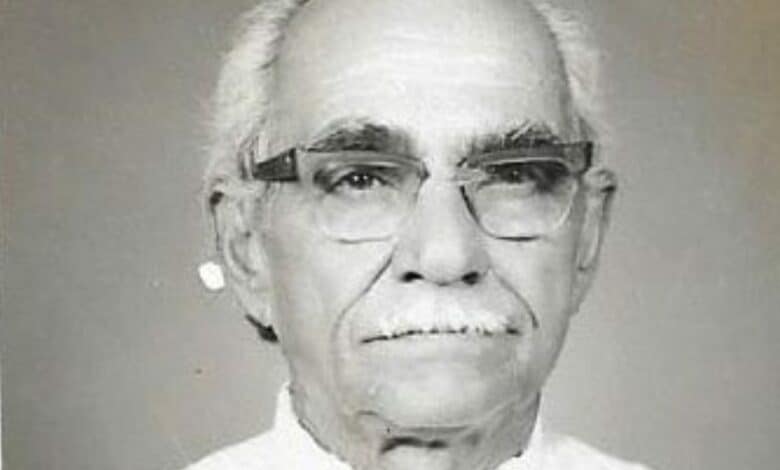
“Of men of this type who are known to have approached Mr. Gandhi with offers of assistance, the most prominent is Pir Muhammad.” W. H. Lewis, Sub Divisional Officer of Bettiah, wrote this in a report to the Commissioner of Muzaffarpur in 1917. The context was the famous Champaran Satyagraha which launched Mahatma Gandhi in Indian politics. The British officials believed that Pir Muhammad was the man who informed Gandhi about the plight of peasants in Champaran.
Who is Pir Muhammad?
I asked the question to a researcher when he told me about Pir Muhammad. I was heading a research team for planning a museum at Red Fort, Delhi. I had no idea about Pir Muhammad. After I got to know him and his contributions, we gave him a place in a gallery with Ganesh Shankar Vidyarthi, another nationalist journalist.
Lewis gives the answer to the above question in his report: “He is, I believe, a convert to Muhammadanism (Islam), and was a teacher in the Raj School. He was dismissed from his post for virulent attacks on local management published in or about 1915 in the press. He lives in Bettiah, and works as a press correspondent for the Partap, a paper which distinguished itself for its immoderate expressions on Champaran questions.”
Pir Muhammad, who used pen name Munis, was a regular contributor to the nationalist Hindi newspaper Pratap edited by great freedom fighter Ganesh Shankar Vidyarthi. Chamaparan had been a center of anti-colonial agitation since 1906 when Sheikh Gulab and Sital Ray organized peasants against the forced indigo plantations. Pir was a school teacher in Champaran with a flair for writing. In 1914, he started highlighting the atrocities of British officials on local peasants with his articles in the Pratap.
Pir’s articles popularised agitations in Champaran at a national level. Along with Raj Kumar Shukul, he played an instrumental role in bringing Gandhi to Champaran and starting a satyagraha. An intelligence report noted that Pir “is a man of no position, and no means, a dangerous man, is practically a Badmash”.
Lewis reports explains the important of Pir Munis. It says, “Pir Muhammad is the link between this Bettiah class of mostly educated and semi-educated men and the next class, i.e., the raiyats’ leaders.” In a society where raiyats (peasants) were mostly illiterate, their voices remained unheard by the educated class. Pir was an educated person but did not belong to the urban elite. His articles brought out the realities of village dwellers to the urban educated class. The urban educated, like Rajendra Prasad, further popularised the matter at a nationwide scale.
Pir before the visit of Gandhi, and after the visit as well, advised peasants who took up legal battle against the indigo planters. He used to sit at SDM and SDO’s courts to help any peasant who wanted to file a case against indigo planters. This is a reason why the Superintendent of Police called him “a very bitter man”.
Pir Munis played an important role in making Gandhi a national hero. After Champaran Satyagraha, he kept fighting for peasants’ rights, depressed classes, and promoting the Hindi language till his death in 1949.
source: http://www.awazthevoice.in / Awaz, The Voice / Home> Story / by Saquib Salim / August 18th, 2023
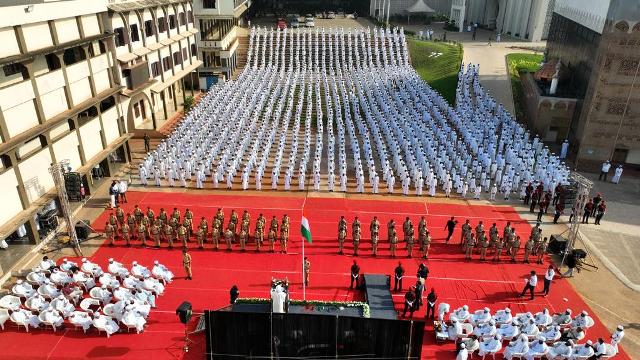
Students from 24 states celebrate the Independence Day at Markaze
Calicut:
Students from 24 states and six union territories came together in a grand ceremony at Markaz Karanthur to commemorate a significant event.
Sheikh Abubakr Ahmad, the founder Chancellor of Markaz and Grand Mufti of India, proudly raised the flag and delivered an inspiring address. He emphasized that every Indian deserves to relish the hard-earned freedom that has been secured through the united efforts of people from all walks of life, transcending barriers of caste, religion, and class.
Furthermore, Sheikh Abubakr Ahmad urged the nation to reflect upon the civil liberties and fundamental rights envisioned by the architects of our nation and enshrined in the constitution. After 76 years of independence, it is crucial for both citizens and leaders to assess the extent to which these principles are being upheld in the present day. He encouraged the students to pursue continuous learning and training, with the aim of elevating India’s reputation on the global stage.
Addressing the gathering, Markaz Director General C Muhammad Faizi conveyed an important message.
The students, under the guidance of Jamia Markaz Pro-Chancellor Dr Hussain Saquafi Chullikode, made a collective pledge to uphold these values.
The event featured a parade and captivating performances by various groups including the Markaz School Student Police Cadet, Scout, Junior Red Cross Society, NCC, and the Markaz School brigade team, adding to the festivities.
source: http://www.muslimmirror.com / Muslim Mirror / Home> Indian Muslims / by Muslim Mirror Desk / August 15th, 2023
The famous writer Kushwant Singh, once wrote: “Indian Freedom is written in Muslim blood, since their participation in the freedom struggle was much more, in proportion to their small percentage of the population.”
The story and history of India’s independence are written with the blood of Muslims. According to historical references, 65% of those who stood, fought and sacrificed against the British for India’s independence were Muslim freedom fighters, the hams live reported.
A large number of people from all religions and castes took part in the freedom struggle, undoubtedly. However, the struggles of many Muslim prominent personalities who also contributed to India’s freedom and even sacrificed everything including their lives are little known. Muslims have been at the forefront to oppose the British and stood shoulder to shoulder with people from other communities while fighting against them. Getting freedom was not easy, our ancestors had to go face a lot of struggles and difficulties to get us the freedom that we are enjoying now.
The First Call To Oppose British
In the 1750s, Nawab Siraj-ud-Daulah was the first awakened Indian ruler, who stood his ground against the British. He lost the Battle of Plassey in 1757 due to the betrayal of Mir Jafar (Commander of Nawab’s army). With this, Siraj-ud-Daulah’s reign marks the end of the last independent rule in India and the beginning of the East India company’s rule that was unabated for the next two hundred years.
First Freedom Struggle By Muslim Rulers
The first freedom struggle against the British was started by the rulers of Mysore Hyder Ali and his son, Tipu Sultan, during the 1780s and 90s. Both used the first iron-cased rockets and cannons effectively against the British invaders.
Tipu Sultan is considered to be one of India’s first freedom fighters for his fierce fight and brave against the East India Company. He resisted the conquest of the British in southern India and was reluctant to welcome them on his soil. He was the only Indian ruler who understood the dangers that the British posed to India, and fought four wars to oust them from the country.
The Unsung Heroines Of India’s Freedom Struggle
Begum Hazrat Mahal, the unsung heroin, played a very important role in India’s war of Independence. Being a woman, she led a rebellion against the British East India Company in 1857. She shot the British ruler, Sir Henry Lawrence and defeated the British army in a conclusive Battle at Chinhat in 1857.
In the great revolt of 1857, as many as 225 Muslim women sacrificed their lives in the uprising. These unsung Muslim women freedom fighters who have sloganeered, shed blood and given their lives for the country’s independence have now been forgotten to due biases.
A majority of freedom fighters did a nameless service to the nation and one such lesser-known name was Abadi Bano Begum (Bi Amma). Bi Amma was the first woman to address a political rally wearing an abaya. She took part in National freedom struggles, Khilafat Movement and propagated Hindu-Muslim unity. Following Mahatma Gandhi’s advice, Bi Amma played an. An important role in encouraging women to take part in the freedom movement. Further, she played a pivotal role in the Swadeshi movements.
In the book, Gandhi and the Ali Brothers: Biography of a Friendship by Rakhahari Chatterji, Maulana Mohammad Jouhar says, “Suffice it to say that, although she was practically illiterate, I have, in all experience, of men of all sorts of types, come across none that I could call wiser and certainly that was more truly godly and spiritual than our mother.”
Bi Amma was also the mother of Muhammad Ali Jauhar and Shaukat Ali popularly known as the Ali Brothers whom she raised on her own after her husband died when she was young.
Amjadi Begum, the wife of Muhammad Ali Jauhar and daughter-in-law of Bi Amma, is yet another Muslim women freedom fighter. Mahatma Gandhi also dedicated an article on her titled ‘A Brave Woman‘ where he admired her as a courageous wife of a courageous man.
At the age of 45, Asghari Begum, another forgotten Muslim woman, has also taken part in the 1857 revolt and challenged British rule in the present-day Uttar Pradesh. However, she was captured by the British in 1858 and burnt alive.
Habiba, a Muslim woman’s fought many battles against the British in Muzaffarnagar in 1857. However, she was captured and hanged along with 11 other female warriors at the age of 25.
The Great Revolt of 1857
During the Great Revolt of 1857, Hindus and Muslims under the leadership of the last Mughal emperor Bahadur Shah Zafar tried to oust the British from India. A majority of Hindu sepoys requested Zafar to lead them in the war of Independence. Although the Revolt failed due of several reasons, Muslims have always stood on the front line to oppose the British.
Former Prime Minister of India, Rajiv Gandhi during his visit to Bahadur Shah’s grave, wrote in the visitor’s book: “Although you (Bahadur Shah) do not have land in India, you have it here; your name is alive… I pay homage to the memory of the symbol and rallying point of India’s First War of Independence….”
Muslims came to India and ruled here for over 800 years but they did not steal anything from here as the British, the Dutch and the French did. By bringing plenty of knowledge in literature, architecture, judiciary, political structure, government body and management structure, which is still used in Indian management strategy, they helped India to progress into a unified and civilized nation.
Lighthouse of Rebellion
How many of us know that the organizer and leader of “First Indian freedom struggle” in 1857 was Moulavi Ahamadullah Shah. Known as the ‘Lighthouse of Rebellion’ in Awadh, he Faizabad free from British rule for almost one year, until his death at the hands of British agents on June 5, 1858.
“With being a practicing Muslim, he was also the epitome of religious unity and Ganga-Jamuna culture of Faizabad. In the revolt of 1857, royalties like Nana Sahib of Kanpur, Kunwar Singh of Arrah fought alongside Maulavi Ahmadullah Shah. Maulavi’s 22nd Infantry Regiment was commanded by Subedar Ghamandi Singh and Subedar Umrao Singh in the famous Battle of Chinhat,” according to researcher and historian Ram Shankar Tripathi.
The important role of Muslims in the uprising is the reason that the British government singled out the community for the worst revenge. From the Nawab, the King of Mysore, the last Mughal King, Princes, the landlords, the Ulemas, intellectuals, Urdu journalists, including common people, all members of the Muslim community have made great sacrifices for the freedom of India.
In the uprising of the 1857 revolt, thousands of ulema were slaughtered and the whole of Delhi was emptied of Muslims, according to excerpts from Syed Ubaidur Rahman’s book Biographical Encyclopedia of Indian Muslim Freedom Fighters. They were not even allowed to return to their homes and reclaim their properties.
First Journalist To Sacrifice His Life During The Great Revolt
Moulvi Muhammad Baqir, a scholar and activist of Indian independence activist was the first journalist to be executed following the rebellion in 1857. The editor of Urdu newspapers, Delhi Urdu Akhbar, was washed dead on 16th September 1857 for writing Nationalist articles, without even a trial.
Although India got independence on 15 August 1947, the foundation of the freedom struggle was laid before 1857. Since the time of the Revolt of 1857, which is considered to be the beginning of India’s freedom struggle, Muslim leadership has spearheaded the cause.
First Muslim To Be Hanged For Conspiring Against East India Company
At the age of 27 years, Shaheed Ashfaqulla Khan was the first Muslim to be hanged for conspiring against the British Raj. Khan was hanged to death on December 19, 1927. With this, he became a martyr and a legend among the people because of his love for the country and his unshakeable spirit.
Reshmi Rumal Tehreek (The Silk Movement)
Muslims not only took the lead in the uprising, but also stood in the front line in all other efforts to topple the British colonial regime in India.
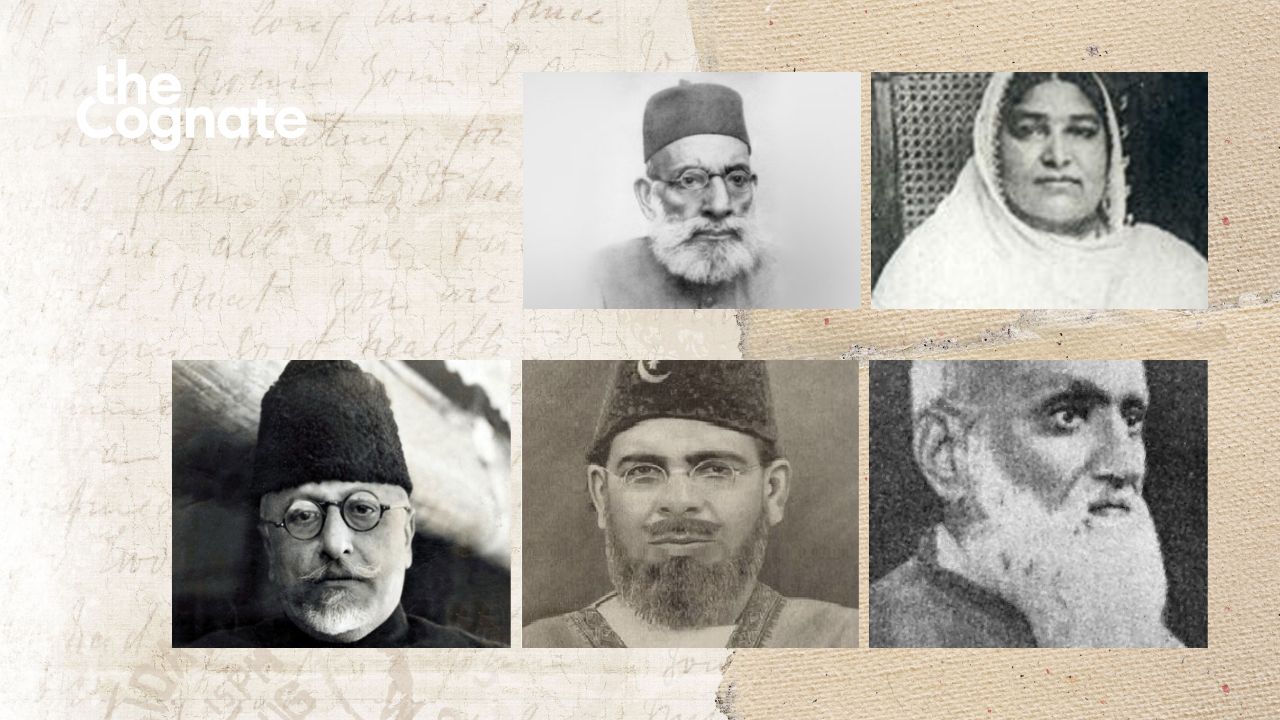
After the revolt of 1857, the Muslim leaders changed their strategy of resistance by setting up educational institutions across the country. Reshmi Rumal Tehreek or The Silk Letter Movement (1913-1920) was an initiative by Deobandi Leaders Maulana Mahmud Hasan and Maulana Ubaidullah Sindhi to topple the British Empire.
However, when British intelligence learned about it, hundreds of sympathizers of the initiative were arrested and put in prison for years without any trial. The top leaders including Maulana Mahmud Hasan and half a dozen of his followers were banished to Malta after a faux trial where they faced the worst hardship.
Role of Muslims in Congress’ anti-colonial struggle
Justice Abbas Tyabji, an Indian freedom fighter from Gujarat and associate of Mahatma Gandhi, was the first Muslim president of the Indian National Congress party. Justice Tyabji is also known for leading Salt Satyagraha following Gandhi’s arrest in 1930.
Another Congress president during the colonialism was Maulana Abul Kalam Azad, who is one of the chief Muslim leaders of the anti-colonial nationalist movement. He became the youngest President of the Indian National Congress in 1923 at the age of 35. He faced multiple imprisonments by the colonial state.
From Justice Tayabji to Maulana Abul Kalam Azad, there have been eight Muslim leaders who were in the Indian National Congress’s freedom movement. The other prominent Muslim leaders include, Muhammad Ali Jauhar, Shaukat Ali, Maulana Azad, Dr Mukhtar Ansari, Hakim Ajmal Khan, Maulana Mahmud Hasan and many others. They made every possible sacrifice for the cause of the end the colonial rule.
Frontier Gandhi
Khan Abdul Ghaffar Khan was a Pashtun independence activist who campaigned to end the rule of the British Raj in India. He founded the Khudai Khidmatgar resistance movement against British colonial rule in India. He was also known as Frontier Gandhi for his principles of non-violence and friendship with Gandhi. Khan worked towards the formation of a united, independent, secular India.
Muslim Man Coins “Jai Hind”
The patriotic slogan “Jai Hind” was initially coined by Zain-ul Abideen Hasan, but it was adopted by Netaji Subhash Chandra Bose. It is now used as a way of salutation throughout India. It means “Victory to India” in English.
The Creation Of the National Flag
For a majority of us, the current national flag was designed by Pingali Venkayya. However, it was a Muslim Lady Surayya Tyabji, who created the flag’s final look today.
Although we have recounted several names of the Muslims who have contributed to India’s freedom struggle, there are several thousands of them who fought on the streets against the British Raj.
source: http://www.thecongnate.com / The Cognate / Home> History / by Rabia Shireen / August 15th, 2022
In the freedom struggle, Muslim freedom fighters played a predominant role.
In the Indian freedom struggle, though, Muslim freedom fighters played a predominant role, right-wing organisations are trying to erase their history. In view of it, it is essential to know the important Muslim freedom fighters who fought for Indian Independence.
Indian freedom fighter and former aide of Subhash Chandra Bose Abid Hasan Safrani. (Photo: Siasat)
Abid Hasan Safrani
Abid Hasan Safrani, an Indian National Army (INA) soldier from Hyderabad is one of the unsung heroes of Hyderabad. He not only played role in India’s independence but also coined the slogan ‘Jai Hind’ which was later declared the salutation of the Indian Army and government employees.
Safrani was constantly with the INA fighting from Burma to Imphal in India.
After India attained freedom, then Prime Minister Pandit Jawahar Lal Nehru inducted him into the Indian Foreign Service (IFS). He was posted to several countries including Egypt, China, Switzerland, Iraq, Syria, Senegal and Denmark.
After retirement, Safrani settled at a farm in Shaikpet, Tolichowki. He passed away in 1984.
Maulana Abul Kalam Azad
Maulana Azad, a distinguished Islamic scholar, author, academician and a prominent freedom fighter, was elected as the youngest President of Indian National Congress aged 35, and later led the historic Khilafat Movement.
After Independence, Maulana Azad served as India’s first Education Minister for over 10 years, during which he laid the foundations for the country’s massive academic network. Acknowledging his contributions, his birthday – November 11 – is celebrated as National Education Day.
Siraj-Siraj-ud-Doulah
Siraj-Siraj-ud-Doulah, the Nawab of Bengal was the first Indian king to foresee the threat posed to the future of the country by the English East India Company which entered India in the name of trade but transgressed its limits. He took bold initiatives to thwart the company’s evil designs.
Mir Khasim Ali Khan
Mir Khasim Ali Khan was a warrior Nawab who fought against the East India Company till his end with the conviction that he could ensure safety for his kingdom and liberty and prosperity for his people only by driving the British out of India.
Hyder Ali
Hyder Ali, who is famously known as ‘the Napoleon of South India’ for his relentless fighting against the conspiracies of the East India Company and its henchmen and for checkmating the British ambitions of expansion in South India
Tipu Sultan
Tipu Sultan, the ‘Tiger of Mysore’, was a great visionary who exposed the expansionist designs of the British imperial forces and gave a clarion call to his fellow countrymen and native rulers to unite and fight against the East India Company.
Syed Mir Nisar Ali
The Wahabi movement enjoyed a special status in the history of revolt against British rule in India, and Titu Mir, whose real name was Syed Mir Nisar Ali, added militancy to it. It became the source of inspiration for several movements in the Struggle for Independence of India.
Haji Shariatullah
Haji Shariatullah, who militantly led the Farazi Movement that stood as a source of inspiration for several revolutionaries in the Indian Freedom Struggle
Ghulam Rasool Khan
Ghulam Rasool Khan, the Nawab of Kurnool in Andhra Pradesh, created terror among the officials of the East India Company.
Moulana Peer Ali Khan
Moulana Peer Ali Khan fought against the British military force declaring that sacrificing oneself in the cause of liberation of one’s motherland is a proof of one’s love for his country.
Moulvi Ahmadullah Shah Fyzabadi
Moulvi Ahmadullah Shah Fyzabadi created panic among the British camps. In the First War of Indian Independence of 1857, he fought against the forces of East India Company and registered several victories over them.
Sheikh Bikhari Saheb
Sheikh Bikhari Saheb raged against General Dalhousee’s ‘Doctrine of Lapse’ whose sole objective was to expand the British empire. He stood in support of the freedom loving native rulers and fought against the foreign rulers.
Azimullah Khan
Azimullah Khan was renowned as a strategist in the First War of Independence, 1857.
He retreated to the forests of Nepal along with Nana Saheb, Hazarat Mahal and others, when the First War of Independence had faced the situation of near defeat. Azimullah Khan passed away in October 1859, while making efforts to secure financial and military support to fight back against the British.
Mohammad Bakht Khan
Mohammad Bakht Khan provided leadership to the heroes and heroines of The First War of Independence of India of 1857 against the forces of the East India Company, by taking up the responsibility of Commander-in-Chief.
He streamlined the troops after his appointment as the Commander-in-Chief by the Mughal Emperor, Bahadur Shah Zafar.
Khan Bahadur Khan
Khan Bahadur Khan, the ruler of Rohilkhand, fought against the British to liberate the motherland.
Declining a very high official post offered by the East India Company, Khan Bahadur Khan revolted against the British at the age of 70. He declared Independence at Bareilly, the capital of Rohilkhand on 31 May, 1857.
Bahadur Shah Zafar
Bahadur Shah Zafar, the last Moghul Emperor, led the First War of Independence, which was recognized in history as the symbol of anger among the people of India against the British.
He breathed his last in jail on 7 November 1862.
Mohammad Sher Ali
Mohammad Sher Ali, an embodiment of anti-British spirit , was born in 1842 at Peshawar, presently in Pakistan. He was inspired by the Wahabi movement that arose against the British in his younger age. His family migrated to Ambala from Peshawar in 1863. He was sentenced to death on 2 April, 1868.
Begum Hazrat Mahal
Begum Hazrat Mahal was a prominent woman of the 1857 rebellion. There was a fierce battle between the Company troops and the Begum troops. When defeat became inevitable, Begum Hazrat Mahal retreated to the Nepal forests along with the co-revolutionary leaders like Nana Sahib Peshwa and others.
Begum Hazarath Mahal struggled for the independence of her state till her last breath. She passed away at Kathmandu of Nepal on 7 April 1879.
Moulvi Syed Allavuddin
Moulvi Syed Allavuddin was a spiritual leader. He used to exhort people of Nizam State, one of the strongest princely states of South India, to rebel against the British hegemony. He stood in the forefront of the direct fight against the British Government.
He was a native of Hyderabad, the capital of erstwhile Nizam princely state. Allavuddin intensified his rebellious activities soon after the First war of Independence of India was started in 1857.
British forces arrested and sent Moulvi Allavuddin to the cellular jail in Andaman on 28 June 1859. After leading a miserable life of 25 years as a prisoner, Moulvi Syed Allavuddin passed away in 1884.
On the occasion of Independence Day, all Indians need to pay tribute to all the freedom fighters who took part in the Indian freedom struggle.
source: http://www.siasat.com / The Siasat Daily / Home> News> India / by Sameer Khan / August 15th, 2023
Khan, who works as an engineering co-ordinator at an IT company in Dubai, purchased the ticket along with some of his colleagues and friends.
39-year-old Sakil Khan Sarwar Khan Photo: Big Ticket
Abu Dhabi:
A 39-year-old United Arab Emirates (UAE)-based Indian expatriate from Rajasthan, won the grand prize of Dirhams 15 million (Rs 33,83,29,693) in the Big Ticket Abu Dhabi weekly draw.
The winner Sakil Khan Sarwar Khan— bagged the prize after buying ticket number 191115 for the raffle draw number 254, which he had purchased online on July 25, on his birthday.
Khan, who works as an engineering coordinator at an IT company in Dubai, purchased the ticket along with some of his colleagues and friends. He will be splitting the cash prize among 15 people.
“Usually, I select raffle ticket numbers randomly. This time, though, I purchased the tickets on my birthday and really thought hard about the numbers I chose,” Khan told Big Ticket organisers.
He plans to clear his debts and start a business with the piece of his fortune.
Anyone who purchases a ticket for the upcoming live draw this month will have a chance to win Dirhams 20 million on September 3.
Customers will also be entered directly into the weekly electronic draw for a chance to be one of four winners to pocket Dirhams 100,000 (Rs 22,55,221) every week.
Big Ticket was established in 1992 with an initial first prize of Dirhams one million (Rs 2,25,53,420) and is one of the most popular monthly draws in the UAE.
Tickets can be purchased online through the Big Ticket website or by visiting the store counters at Abu Dhabi International Airport and Al Ain Airport.
source: http://www.siasat.com / The Siasat Daily / Home> News> Middle East / by Sakina Fatima / August 04th, 2023
Indian revolutionaries in Kabul where they announced a government in exile
On 24 April 1918, Ram Chandra was shot dead by Ram Singh in a courtroom in San Francisco, USA. A few moments later, a policeman shot Ram Singh. Who were these Indians? Ram Chandra and Ram Singh were the leaders of a revolutionary Ghadar Party in the USA. They were planning to wage a war against the British Empire with the help of the German government. Ram Singh suspected Chandra of being a traitor and thus he killed him on the last day of the trial.
Though Muslims and Sikhs were also accused of being part of the conspiracy, for some reason the case was famously called the Hindu German Conspiracy case. The German High Commissioner had allegedly provided the revolutionaries with money and arms.
Rabindranath Tagore was also featured in the charge sheet. It was accused that he took money from the revolutionaries in the USA and handed it over to the Japanese government to arrange for arms. It was the costliest court case ever argued in the USA till that time.
Indian revolutionaries had always used foreign territories to wage war against the British Empire. In 1845, Haji Imdadullah Muhajir Makki of Saharanpur went on the Haj with a plan to stay there. He wanted to teach at Makkah. Another Indian and his senior Maulana Ishaq met him in Makkah and asked him to return to India and wage a war against the English East India Company rule. Ishaq was one of the many Indian ulemas, who lived in Makkah and Medina to preach anti-colonialism among the pilgrims.
Imdadullah returned to India, planned a revolt in coordination with several leaders, and joined the War of Independence in 1857. He liberated Shamli for a few weeks before the English recaptured it. Thousands of his followers were killed in the battle and he moved to Makkah.
Imdadullah lived for 30 more years and used Makkah as a base to preach nationalism among Haj pilgrims from India and create links among different colonized nationalities.
Shyamji Krishna Varma, an Arya Samaj leader, established India House in London to train educated revolutionaries for the freedom struggle. V.D. Savarkar, Virendranath Chattopadhyay, Haider Raza, Ali Khan, Bipin Chandra Pal, and Acharya were a few prominent Indian revolutionaries trained at this hostel. They were given fellowships to study in England. Asaf Ali, who later argued the case of Bhagat Singh in court, was also associated with the India House. Savarkar’s book describing events of 1857 S inspired a generation of revolutionaries.
Madan Lal Dhingra was one of the most prominent revolutionaries from this house. He assassinated an English official after which the house had to be closed down. Savarkar was arrested and sent to Andamans. After that, these revolutionaries shifted bases to Berlin, Paris, etc.
Indians, especially Punjabis, living in the USA formed the Ghadar Party in 1913. Ghadar is a term used for the War of Independence of 1857. The party aimed to re-enact the scenario by making the Indian sepoys of the English army rebel.
The revolutionaries contacted Germany and Turkey for money and arms. A date doe revolt was fixed in India for the revolt. Hundreds of the revolutionaries came back to India in 1915, Rash Behari Bose, Jatin Bagha, and M N Roy were also working for the success of the plan. A traitor told the British about the plan. Hundreds of revolutionaries were caught and hanged in what came to be known as First Lahore Conspiracy. Kartar Singh Sarabha was one of the more famous among those hanged. Jatin Bagha was killed. Ras Behari Bose and M N Roy had to leave the country.
The Ghadar Party succeeded in causing a mutiny in Singapore. In February 1915, Indian soldiers killed English officers and captured the island country. It took two days and the help of the Russian and Japanese armies to recapture Singapore from the British. More than four dozen Indians were killed by a firing squad in a public execution. At least 40 of the killed soldiers were Muslims from Haryana.
Raja Mahendra Pratap was an Arya Samaj activist from Hathras. As the war started he travelled to Turkey and Germany where the Sultan and Kaiser respectively gave him letters of authority to form a provisional government of India at Kabul. He reached Afghanistan with a Ghadarite, Barkatullah, where Maulana Ubaidullah Sindhi, a Deobandi scholar, was waiting for them. A provisional government with Pratap as the President, Barkatullah as the PM, and Ubaidullah as the Home Minister was formed in Kabul.
A plan to raise an army was also chalked out. Maulana Mahmood Hasan, a Deobandi scholar, and Maulana Husain Ahmad Madani were coordinating the efforts from Makkah. Letters written on silk cloth were used to communicate which were uncovered by British intelligence. Maulana Mahmood and Madani were arrested from Makkah and sent to Malta as prisoners of war. Hundreds of others were also arrested in what came to be known as the Silk Letter Conspiracy.
The war had ended. M. N Roy, Andul Rab, and MPT Acharya established a military school in Tashkent in the USSR. It trained mostly Muslims who migrated to Afghanistan after a fatwa asked them to in 1915. The people trained here took part in major revolutionary activities in India later on. Mian Akbar Shah is well known for his role in the famous escape of Netaji Subhas Chandra Bose from Kolkata (Calcutta) to Peshawar. He is supposed to be the most important person to have planned and executed the escape in 1941.
Ubaidullah went to the USSR and traveled to several countries before settling at Makkah in the 1930s. He used it as a ground to preach like Maulana Ishaq and Imdadullah before him. In 1938 he returned to India and met Netaji Subhas Chandra Bose. He planned future armed action with Netaji and gave him several contacts with Japan and Germany. Japan already had his old comrades in Raja Mahendra Pratap and Rash Behari Bose.
Around the same time Sardar Ajit Singh, an uncle of Bhagat Singh, and Iqbal Shaidai organized an army in Italy. They had been active in foreign lands since the last World War.
The story of Netaji forming an army in Germany and later leading Azad Hind Fauj formed by Ras Behari Bose in Japan is well-known and needs no retelling.
source: http://www.awazthevoice.in / Awaz, The Voice / Home> Stories / by Saquib Salim / August 11th, 2023
There is no barrier of religion for love, compassion and humanity. Ayesha Banu of the city of Karkala is one such ray of hope for the destitute. She takes care of more than 75 homeless people.
Ayesha not only brings the homeless people to her own ashram but also feeds them and gives them medical treatment. She has people from Maharashtra, Assam and West Bengal residing in her home for the shelterless people. They are given a stomach full to eat, dress to wear and place to sleep.
Ayesha was working in a private hospital when she was young. Her family used to provide ambulance service. One day in a rare situation, Ayesha had to take an orphan young girl to her home as there was no one to take care of her. This came to the public’s knowledge and they started calling her to accommodate orphans known to them. Within no time, the house got filled with destitute. Now she has made a centre for orphans called Suraksha on her own land.
Ayesha spends her whole time in the service of these orphans. Some people give her donations. Rest she herself spends from her savings. Many organizations have recognized her service and have felicitated her in the past eight years. Ayesha has two daughters. She says that she will serve the orphans till her last breath.
Ayesha stands tall in today’s world of hate mongering and selfishness.
source: http://www.daijiworld.com / DaijiWorld.com / Home> Top Stories / by Daijiworld Media Network – Karkala (MS) / August 12th, 2023
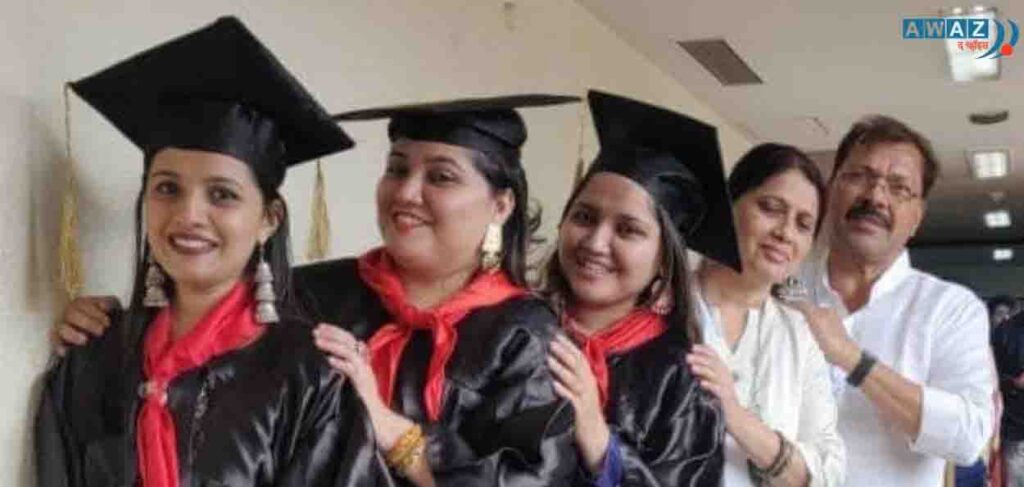
Aslam Bhai, his wife Sabia and their three doctor daughters : Aliya. Ayesha, Saddika
The monsoon session of the Maharashtra State Legislature is underway in Mumbai. The world has accepted the work of great scholar and social reformer Savitribai Jyotirao Phule, who laid the foundation of women’s education in India. The struggle of Savitribai and her husband Mahatma Phule for women’s education is extraordinary. Opposition MLAs in both Houses demanded that a case be registered against those who used indecent language against Savitribai and Mahatma Phule. lam
Aslam Bhai was ecstatic and top of the world.
“She is the second daughter in your family who has become a doctor, isn’t it?” Aslam Bhai said, “Apart from Aaliya, I also have twin daughters Ayesha and Siddika. Saddika has completed her BDS (Bachelor of Dentistry Science degree from Pune and is now working as a dentist.
Aaliya, the youngest of his daughters, he said, completed her MBBS degree with distinction in Gynecology and Obstetrics from Lokmanya Tilak Medical College, Mumbai. She did her post-graduation in psychiatry at KEM Medical College, Mumbai.
Aslam Bhai was speaking with pride and happiness. Alia’s future husband Dr. Imtiaz Kazi is also a doctor by profession and has done MS Ortho from KEM College.
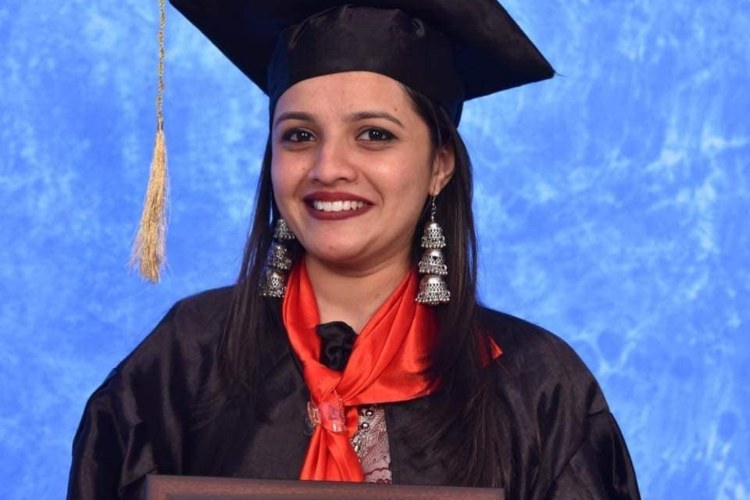
Aliya, Aslam Bhai’s third daughter
This will probably be the first incident of all three daughters of a middle-class family of Teli Muslim (traditional business of oil) community becoming doctors. Aslam Bhai looked very happy with the success of his three daughters. His wife Sabia also has a big contribution to this success.
Aslam Bhai’s dream of becoming a doctor himself could not be fulfilled due to poverty. Despite having a good knowledge of cricket and being proficient in the game, Aslam Bhai could not even become a cricketer due to financial reasons. But Aslam’s parents and Sabia Shaikh’s grandmother were modern-minded. He believed that girls should go for higher education. Due to this vision, all three girls of this Marathi Muslim family have become doctors setting an example for the community.
Education surely is the cure for most of the problems of Indian Muslims. Through quality professional skills and higher education, the family, community, and ultimately the country can be taken on the path of progress and Aslam Bhai and Sabiya have proved this. Of course, Ayesha, Siddika, and Alia have achieved this position after a lot of hard work.
Aslam Bhai’s parents are small farmers. His father Yunus Mian worked in a small company in Andheri, Mumbai. His mother, Kulsoom, used to sell fish while doing housework and contribute to the household expenses of the large family of four sons, two daughters, and a mother-in-law. On days the couple had to go without food but they never compromised with the education of their daughters. The boys completed their school and college studies, but Aslam could not become a doctor for financial reasons.
His father felt sorry for this till the end. Aslam Bhai took charge of his family by taking small and big contracts for construction works.
Aslam Bhai was married to Sabia, a girl from a cultured family in Andheri. They had three daughters – twins – Ayesha and Siddika and the youngest Aaliya. Despite the financial constraints, Aslam and Sabia dreamed of providing higher education to their daughters. The daughters also worked hard to fulfill the dreams of their parents.
The Sheikh family is proud of the Marathi soil here, the motherland of Palghar district. Aslam Bhai also got help from friends for the higher education of his three daughters. Aslam Bhai says that Hitendra Thakur, first mayor Rajiv Patil, Ajiv Patil, Milind Bhate, Ramesh Koti, Unmesh Kulkarni, and their family members helped him a lot.
All three girls wanted to become cricketers like their father. All three love cricket very much. He also knew that due to the economic condition, his father’s dream of becoming a doctor has been shattered. Seeing the trend of girls’ intelligence, Aslam Bhai and Sabia worked hard to make them doctors, and they succeeded. Now seven-eight girls in this area are pursuing medical studies and consider these three as their role models.
The girl learned and moved on. It is said that if a girl learns, she can improve her generation. In this context, the three doctor daughters of Aslam Bhai and Sabia Bhabhi have the potential to become role models in the Muslim community. A family from the Marathi Muslim Teli community showed how necessary and important women’s education is. This will be the first instance in the Muslim community of Maharashtra that all three daughters in the same family are doctors. That’s why society should express heartfelt gratitude towards this Sheikh family. Hats off to the entire family for their success!
After joining the Times Group in Mumbai, I came to know for the first time about the Teli Samaj, a part of the Muslim community. Rabad, Shahapur, Bhiwandi, Thane City, Palghar, Jawhar, Dahanu, Safale, Sonawe, Dahisar, Manor, Shirgaon, Tarapur Chinchani, Wada, Mathane, Vedhi, Kore, Edwan, Satpati, Mumbai suburb and city, as well as Vidarbha and Muslim Teli Samaj, is found in some areas of Marathwada. Earlier there was a Balutedari system in the village. This community used to do the business of extracting oil from oilseeds. Due to business, this society had the art of mixing with all the castes and religions of the village. Later, the mechanization of oil production took place. And the traditional oil business of this society was destroyed. As a result, people started looking for jobs in the service sector. Some became drivers of vehicles to transport passengers, many started a chicken and egg business, and some became butchers.
No person from the Muslim Teli community could reach the top of politics. That’s why the value of this society in politics is zero. According to OBC movement leader Shabbir Ansari, the Muslim Teli community is now entering higher education. Circumstances teach everything. The son of a rickshaw puller from the same community in Jalna district has become the youngest IAS in the Indian Administrative Service. So Mirza Abdul Karim Naqvi’s daughter Maryam has started 32 libraries for children through the Reading Culture Movement in Aurangabad. Ayesha, Siddika, and Aliya have taken this trend forward.
Islam is probably the first religion to recognize the independent existence of women and their identity. Islam gave many rights and privileges to women. But the self-styled protectors of patriarchal culture in the name of religion have denied these rights and created a different tradition. Muslim women have been given the right by religion to do business to earn money and maintain the family.
Prophet Hazrat Muhammad’s first wife Hazrat Khadija had her own business. She was one of the richest women in Mecca. After the establishment of Islam, she became the first female follower. And even after accepting Islam, his business continued. Other women of the society also followed this tradition. The first book on the Prophet descended in the Cave of Diamonds in Mecca on the 26th day of Ramazan. It only talked about reading and gaining knowledge. Allah gave the message to get knowledge. And this message applies to both men and women.
The author is a senior Journalist. The article was transcribed from Marathi by Sameer Skeikh
source: http://www.awazthevoice.in / Awaz, The Voice / Home> Story / by Awaz The Voice / by Sameer Maniar, Mumbai / August 09th, 2023
A journalist. A Telangana protagonist. A regular figure at protest meetings. A pensive figure at conferences. A concerned citizen whose heart beats for the poor. A secularist to the core. A force to reckon with. Sure.
That gives a word picture of Zaheeruddin Ali Khan, former Managing Editor, The Siasat. In his 62 years, he was more than just a friendly, smiling face. He epitomised the essence of selflessness and compassion. He touched many lives, particularly of Muslim boys and girls, struggling for quality education. In his later years he took on the mighty Wakf mafia and showed by example what protection and conservation really means. Quiet, firm, and unrelenting. His passing away has brought the curtains down on a multifaceted career.
As I sit down to pen a few words about my friend of 30 years, I am at a loss for words. Zaheer Bhai, as he was affectionately called, was so talented and versatile that it is impossible to describe all his traits. But suffice it is to concentrate on just one aspect: his love and care for the well-being of the community. More than a journalist he was a social worker – a true humanitarian. He espoused causes that are not essentially part of a newspaper job. He went the extra mile to help people, especially during times of strife. Zaheer sab was there to lend a hand, be it the Gujarat massacre, the Mumbai riots, or the Bihar floods. He raised money through the Siasat Millat Fund and mobilised resources to help the affected. He was always at the forefront, ready to ease pain and suffering. This compassionate trait earned him a special place in the hearts of people. His innate sense of empathy touched countless lives and brought a ray of hope to despairing souls.
Zaheer Sab’s philanthropy was not limited to just emergency situations. He was always ready to support the needy and destitute. People made a beeline to his office for all sorts of things. Some would come to him seeking a job, some for educational support, and few others for help in corrections to Aadhaar cards and things like that. He lent an ear to everyone patiently and did the best he could.
For him, education was the master key to success. He believed it to be the best investment one could make. And all through his life, he tried to open the doors of opportunities through education to the poor and underprivileged. Women empowerment was a cause dear to his heart. Realising the difficulty the community faced in marrying girls in view of rising dowry demand, Zaheer bhai came up with the idea of ‘Do-ba-do’ (face-to-face) programme. This unique programme helped many families find a suitable match for their daughters without having to run around.
Though I knew Zaheer bhai for a long time, I drew close to him after my retirement from The Hindu newspaper. He wanted me to write for Siasat.com, a news portal set up by him. After initial hesitation, I agreed. He interacted with me on a day-to-day basis discussing story ideas. Like many others, I was touched by his boundless energy and infectious smile. I met him at a book release programme at the P.S. Telugu University on Saturday evening. We chatted together. But I never knew that it would be our last meeting.
The love and respect commanded by Zaheer bhai was evident from the huge turnout of people at his funeral prayers at the Shahi Masjid on Tuesday morning. Rest in peace Zaheer bhai. Your efforts to transform lives will continue to have a ripple effect.
source: http://www.siasat.com / The Siasat Daily / Home> Featured News / by JS Ifthekhar / August 08th, 2023
Popular reality show ‘Patturumal’ completes 100 episodes.
The Mappilappattu reality show is gaining attention with the exceptional performances of its 15 contestants.
Judged by popular singers Anwar Sadath, Shabnam Riyas, and Sajala Salim, the show is hosted by Rameeja Mansoor.
Kickstarted by Kerala Minister Muhammed Riyas, the show has managed to keep up the spirit without any elimination to date.
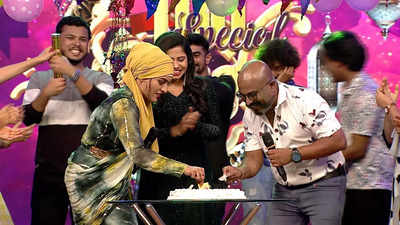
Popular Mappilappattu reality show, ”Patturumal’ has successfully completed the 100 episodes milestone. Hosted by Rameeja Mansoor, the twelfth season of the reality show features 15 singers from different walks of life.
Celebrating the 100 episodes victory, the team had a cake cutting on the floor. In the special episode, the team was seen having a blast too.
‘Patturumal’ is one of the much-loved shows on Malayalam TV. ..
After the successful 11 seasons, the show premiered its 12th season in March. Despite being a reality show, ‘Patturumal’ is widely accepted for being a platform for Mappilappattu talents. For the unversed, Mappilappattu is a genre of Muslim folklore music which is predominant in the Malabar region of Kerala.
Over the years, ‘Patturumal’ has contributed many talents to the music industry. Singers Rehna, Sajila Salim, Kannur Shafi, and others gained popularity with this reality show. Interestingly, the show also marked the TV debut of Star Magic host Lakshmi Nakshathra.
source: http://www.timesofindia.indiatimes.com / The Times of India / Home> News> TV> Malayalam / by etimes.in / July 25th, 2023