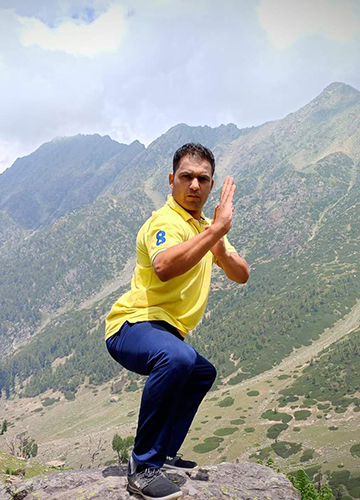
FAISAL ALI DAR watched Enter the Dragon when he was in class X. He was so enamoured by Bruce Lee that he started mimicking the martial arts master’s stunts. He persevered until he had perfected some of Lee’s on-screen moves. His friends and neighbours told him that his passion would bring him nothing. But he continued to pursue it with determination.
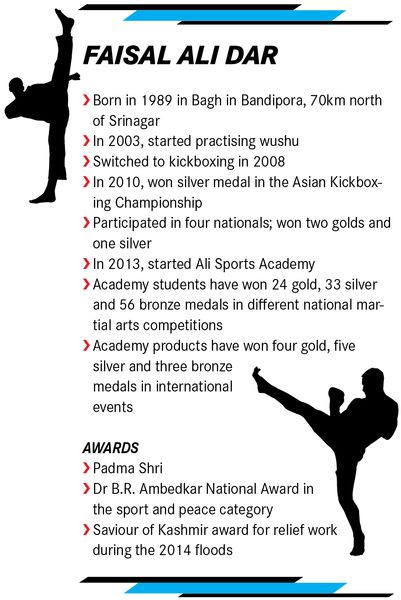
The journey that Dar embarked on in 2003, from a village boy to a martial arts trainer, motivational speaker and social worker, is a gripping tale of hard work, dedication and sacrifice. He started with wushu and switched to kickboxing in 2008. In 2010, he won silver medal in the Asian kickboxing championship. Initially, his efforts to woo youngsters to the sport did not evoke much response. “People thought it was a waste of time,”he said.
At his village of Bagh in Bandipora, 70km north of Srinagar, the lack of proper training and equipment impeded his efforts to establish himself as a kickboxer. “When I was training for kickboxing, I would use nylon slippers to practice punching with other kids, as I did not have money to buy pads and punchers,” he said. “I did not know the rules. I needed a coach and proper equipment which I could not afford.”
Things changed when coach Kuldeep Handoo—the first Dronacharya awardee from Jammu and Kashmir—took him under his wings. “He worked on my fitness and training and also taught me the rules of the game,’’ he said. “I worked as a labourer to save money to travel to Jammu for training.”
His family was supportive, but he did not want to burden them. “During the harvest, I would work in the orchards to load apples in trucks,” he said. The money was barely enough for his travel and stay, but he continued his training. He worked with building contractors to fund jerseys and equipment.
It was during this time that Dar realised the need for a training academy in Kashmir. “After participating in different tournaments, I realised that if our youngsters get proper training and support, they will make it big,” he said.
Dar participated in four nationals and won two golds and one silver. He called it quits in 2013 so that he could devote himself to coaching youngsters at his Ali Sports Academy, named after his late grandfather, Muhammad Ali.
There are 2,687 students registered in 17 clubs under the academy. Sixteen of them have participated in international championships, bagging four golds, five silvers and three bronzes in various events. “At the national level, 24 players have won gold, 33 silver and 56 bronze in different martial arts events,’’ he said.
The academy’s training programmes have been popular with girls. “One of our trainees, Abida Akhtar, won a silver in the 48kg category wushu championship in Malaysia in 2017,” said Dar.
The academy offers coaching at an annual fee of Rs50. “We have opened branches of our academy in eight districts now,” said Dar. “I believe athletes from Jammu and Kashmir, with proper training and physical fitness, can win Olympic medals.”
Dar took up another mission when he realised the depth of drug addiction in the valley. “We worked on de-addiction and then introduced them to sports so that they don’t return to drugs.” Dar and his volunteers played an active role in relief and rescue in the 2014 floods and during the Covid-19 pandemic. “During the pandemic, we mobilised our volunteers to distribute food and medicine to the people at their doorsteps.”
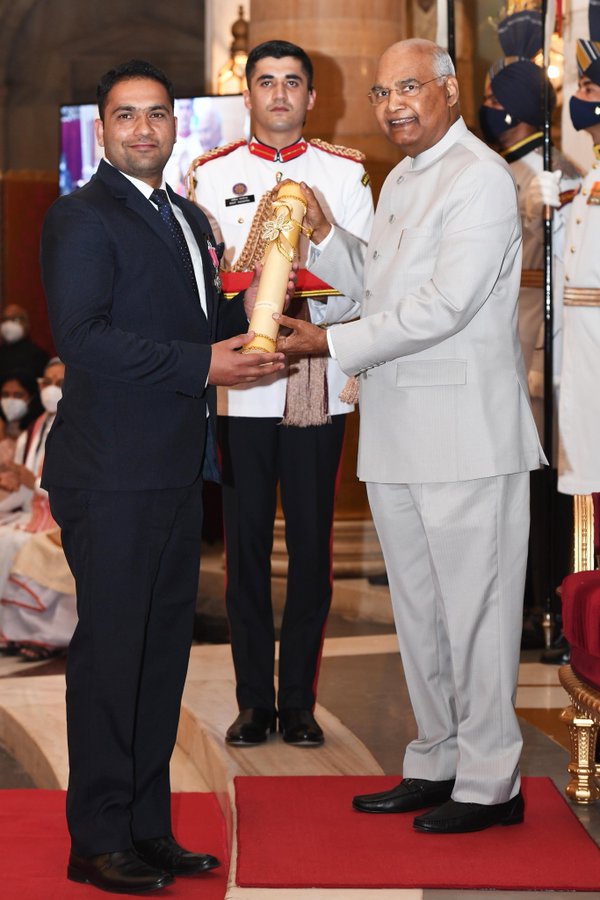
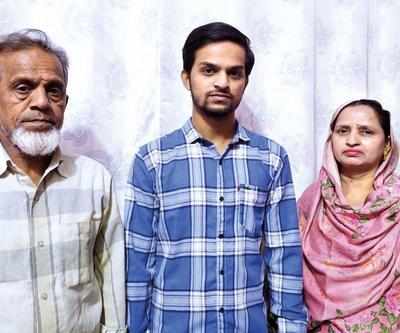
Dar has also been active in social projects like plantation drives, sanitation drives, blood donation camps, disaster management drives, female self-defence training camps, and women empowerment awareness campaigns. “We are honoured that he has been awarded Padma Shri,” said his father, Muhammad Shafi Dar.
pix @rashtrapatibhvn
Dar is the first Padma Award winner in sport from Jammu and Kashmir. “It is his hard work that has paid off,” said Arsalan Habib, a friend. “His contribution to the promotion of sports is exemplary.”
source: http://www.theweek.in / The Week / Home> The Week / by Tariq Bhat / additional pix edited @rashtrapatibhvn / February 13th, 2022
Each awardee will receive, a cash prize of Rs 51 thousand, a medal and a citation.
Srinagar:
The pace sensation of J&K Umran Malik is among the 10 sportspersons who were awarded the J&K Government Award in the field of Sports on the occasion of Republic Day 2023.
J&K Government announced awards in various fields on the eve of Republic Day 2023 which included Sports. This year 10 sportspersons who have excelled at various levels and brought laurels for J&K were awarded.
Umran Malik headlines the list which also includes Ayeera Chisti, Inshah Bashir, Ishan Pandita, Ankita Raina, Soham Kamotra, Rahul Jangral, Muskan Rana, Kritharti Kotwal and Mannat Choudhary.
Umran Malik climbed the ladder of success last year and went on to represent the Indian National Cricket team in T20 and ODI cricket. With his sheer raw pace, Umran Malik has mesmerized every cricket follower on the planet. He is currently the fastest-ever Indian pace bowler. Apart from the Indian National Cricket team, Umran Malik plays for Sunrisers Hyderabad in IPL.
Ayeera Chisti recently became the first female player from J&K to bag a medal in the World Junior Wushu Championship. She also won a medal in another International Wushu event held in Georgia.
Inshah Bashir is the International Wheelchair Basketball champion. Apart from Representing the Country at the International level, Inshah has also been captain of the J&K team. She received the National Award from President Droupadi Murmu in New Delhi last year. She had lost her ability to stand in 2009 due to an accident but continued to defy the odds by carrying on her sports activity on a wheelchair, making J&K proud.
Ishan Pandita is an International footballer who has roots in Kashmir. Born in New Delhi, Ishan has represented India at the International level and is playing for top clubs in Indian Super League. He has also played professional football in Spain.
Ankita Raina is an International Tennis star who has been playing top-level professional Tennis from last more than 10 years. She has been a regular in Grand Slam events. Apart from that Ankita has represented India at the International level as well as in the Olympics.
Having roots in Kashmir, Ankita since 2013, has regularly been the Indian number one in both singles and doubles.
Soham Kamotra is an International Chess player from Jammu who has bagged a couple of medals for India at the International level. Last year Soham bagged a gold medal in the Commonwealth Chess Championship in the Under-18 age category, held in Sri Lanka.
Earlier Soham had bagged a bronze medal in the Asian Under-18 event.
Rahul Jarngal is an accomplished mountaineer who has scaled Worlds Highest Peak Mount. Everest. Jarngal who hails from Hiranagar Jammu has also successfully climbed Mt. Kangchenjunga amoung many other peaks.
Rahul works as Executive Engineer Instrumentation in ONGC and has an accomplished record in sports and academics.
Muskan Rana is a top-level gymnastic player from Jammu who has been bringing laurels for J&K at various levels.
Muskan Rana was last year declared as Junior National Champion in the 26th Junior National Rhythmic Gymnastic Championships held at Bengaluru in Karnataka. Muskan Rana has won five medals including two gold, and three silver medals for J&K. She is considered one of the top talents in the Country.
Kritarthi Kotwal an accomplished Fencing player last year bagged the junior team bronze medal for India in the Commonwealth Fencing Championship held in London. Kotwal is a highly talented Fencer and has been winning medals for J&K on regular basis.
Mannat Choudhary who hails from R S Pura, Jammu is a Volleyball player who represented the Indian Volleyball team in AVC Cup Volleyball Championship in Thailand last year. Mannat is a top volleyball player of J&K who has also captained J&K junior teams at the National level.
Each awardee will receive, a cash prize of Rs 51 thousand, a medal and a citation.
source: http://www.greaterkashmir.com / Greater Kashmir / Home> Sports / by Abid Khan / January 27th, 2023
Kashmir’s unofficial poet laureate, he gave voice to the rich culture of a bitterly divided territory and helped give his mother tongue a distinct literary identity.
Rehman Rahi in 2007, after becoming the first Kashmiri to win India’s highest literary award.Credit…Sipra Das/The The India Today Group, via Getty Images
New Delhi:
Rehman Rahi, a celebrated Kashmiri poet who devoted his life to promoting and preserving the Kashmiri language and gave its poetry a distinct identity, died on Monday at his home in Srinagar, Kashmir’s biggest city. He was 97.
His son, Dr. Dildar Ahmad, confirmed the death.
Throughout his career as a writer and university professor, Mr. Rahi was committed to Kashmiri, a language he considered the source of Kashmiri identity and essential for preserving the ancient culture of a divided territory.
He published more than a dozen books of poetry and prose in Kashmiri and is credited with restoring the language spoken by more than six million people to the realm of literature, lifting it out of the shadow of Persian and Urdu, which once dominated the literary scene in Kashmir, a disputed territory that straddles India and Pakistan.
“He introduced intellectual richness, modern sensibility and accessibility to Kashmiri language and poetry,” Muhammad Amin Bhat, a Kashmiri television anchor and president of Adbee Markaz Kamraz, the region’s oldest literary organization, said in an interview this week. “Without a doubt, he was the greatest living poet of modern Kashmiri language.”
Over a career that spanned many decades, Mr. Rahi won dozens of awards, including the Padma Shri, India’s fourth-highest civilian honor, in 2000, and in 2007 the Jnanpith Award, India’s top literary prize, becoming the first Kashmiri to do so.
In 1961, he won a literary award from India’s National Academy of Letters, for his poetry anthology “Nawroz-i-Saba” or “Advent of the Spring Breeze,” (1958).
Like most Kashmiris, Mr. Rahi grew up speaking conversational Kashmiri, but the language had been removed from schools — the Indian government viewed it as subversive — and its formal speech had fallen into disuse.
In the 1950s, he attended a poetry reading in the village of Raithan in central Kashmir, where a Kashmiri poem was greeted with tremendous applause. Mr. Rahi then went onstage and read his work in Urdu, then the region’s official language.
“No one understood it,” he said in an interview with The New York Times last year. “That day I started learning Kashmiri.”
That was the beginning of his long love affair with the language, which he described in his 1966 poem “Hymn to a Language”:
O Kashmiri language! I swear by you, you are my awareness, my vision too the radiant ray of my perception the whirling violin of my conscience!
He also promoted Kashmiri in more concrete ways. He was one of the biggest supporters of a campaign to restore the language to schools, an effort that finally succeeded in 2000. He helped recruit teachers and scholars to teach Kashmiri and created a course to teach it to children.
More recently, his poems addressed the despair of the Kashmiri people living at the heart of a bitter and longstanding dispute between India and Pakistan.
One untitled poem reads:
It may not be possible to speak, what can we do? It may not be possible to bear burdens of the heart, what can we do? The flower may refuse to blossom but does it have the right? There is a fire burning in its bosom, what can we do?
Rehman Rahi was born Abdul Rehman Mir on May 6, 1925, into a poor Muslim family in the Wazpora area of the city of Srinagar.
His father, Ghulam Muhammad Mir, a day laborer, died when Rehman was 14; his mother, Rahat Begum, was a homemaker. After the death of his father, he was raised by a maternal uncle.
Rehman studied Persian at Sri Pratap College and English at Kashmir University, both in Srinagar, earning a master’s degree in each language. He started writing while in college, adopting the pen name Rehman Rahi.
He worked briefly as a clerk in the department of Public Works, earning just a few cents a month and sometimes traveling dozens of miles to northern Kashmir for his job.
He then joined a regional Urdu-language newspaper, Khidmat, as an opinion writer. In 1947, the Indian subcontinent was partitioned into India and Pakistan, leading to widespread violence between Muslims and Hindus and cleaving what had been the princely state of Kashmir.
For years, Mr. Rahi wrote about the pain and anguish that the upheaval had inflicted on millions of ordinary people and how it had shaped their experiences and encounters. He also started writing poetry.
In 1964, he joined the Persian department of Kashmir University as a lecturer, and in 1979 switched to the recently created Kashmiri department.
He married Zareena Mir, who died in 2019. Along with his son, Dr. Ahmad, Mr. Rahi is survived by two other sons, Dr. Javed Iqbal and Dr. Farhad Hussain; a daughter, Nighat Nowsheen; and five grandchildren.
He retired from the university in 1985.
Mr. Rahi was sometimes criticized for having failed to engage with the brutal conditions faced by many Kashmiris, who have been oppressed by both Indian security forces and Kashmiri militants fighting for independence from India.
While working for the newspaper Khidmat, he joined the Progressive Writer’s Association, which was affiliated with India’s Communist Party, and early in his career he had a reputation as a progressive poet.
But he later denounced Communism and became more guarded about his political thinking.
As Kashmir plunged deeper into turmoil after an insurgency began in 1989, Mr. Rahi’s poetry grew more somber, expressing anguish over the mounting violence, yet he continued to avoid addressing the politics around it. He saw literary modernism as a new framework for examining the human condition.
Abir Bazaz, a professor of Kashmiri literature at Ashoka University, outside of New Delhi, said Mr. Rahi’s reticence had been a valid response to the conflict.
“Rahi’s political silence, a refusal to take sides in the vicious cycles of insurgency and counterinsurgency in Kashmir, does offer a hope for a path beyond the violent binaries that have shaped the Kashmiri present,” Dr. Bazaz said.
He cited a poem Mr. Rahi wrote in 1995, at the height of the insurgency, seemingly justifying his detachment:
Looking at that state, I only desired madness and silence I was told your fate, dear, is madness and silence
But in the Times interview last year, looking back on his career, Mr. Rahi expressed regret, faulting himself and other poets for failing to sufficiently grapple with the difficult realities on the streets of his homeland.
“We stood with pen and paper on banks of a river filled with blood,” he said, “and chose not to see the pristine water had turned red.”
Sameer Yasir is a reporter for The New York Times. He joined The Times in 2020 and is based in New Delhi. @sameeryasir
source: http://www.nytimes.com / The New York Times / Home> Asia Pacific / by Sameer Yasir / January 11th, 2023
It was the time of Covid peak when vendors had to sell their stocks at throwaway prices and many lost jobs. A vegetable vendor and a spray painter, who saw their earnings plunge and struggled financially as the pandemic raged, were on cloud nine on Saturday, as their children have bagged Lucknow University’s prestigious Chancellor’s Bronze medal.
LU declared names of the 15 students who will be conferred medals at its convocation ceremony on November 26.
Mohd Aiyub Ahmad, son of a vegetable vendor, has bagged the bronze medal for being the best student in BSc final year while a spray painter’s daughter Iqra Rizwan Warsi of Karamat Husain Muslim Girls PG College bagged it for being the best student in BA final year.
The families of both Aiyub and Iqra went through deep financial struggles during the pandemic.
“My father Rasheed Ahmad is my biggest source of inspiration . Even after facing financial challenges during the two Covid waves, he made sure that I was never short of study material or internet pack. There was a time when no one was turning up at Chowk Mandi and he sold vegetables at throwaway price,” said Aiyub.
“The tough times we went through will continue to motivate me forever. I aim to pursue research in the field of electronics and make my parents proud one day,” he added.
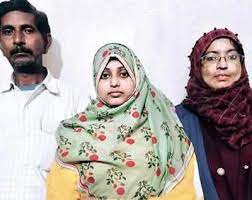
Sharing details of similar hardships, Iqra said, “My father Rizwan Warsi lost his work as a spray painter during the pandemic, but he didn’t give up. He started selling masks while my mother Tarannum began stitching masks and clothes to make sure the education of their four children continues.I aim to become an Urdu professor and will make my parents proud one day,” she said.
Meanwhile, the two chancellors’ silver medals awarded in diferent categories were bagged by MSc student Labvi Shukla. “I want to work for financially weak students who are forced to drop out due to poverty.
source: http://www.timesofindia.indiatimes.com / The Times of India / Home> News> City News> Lucknow News / by TNN / November 21st, 2021
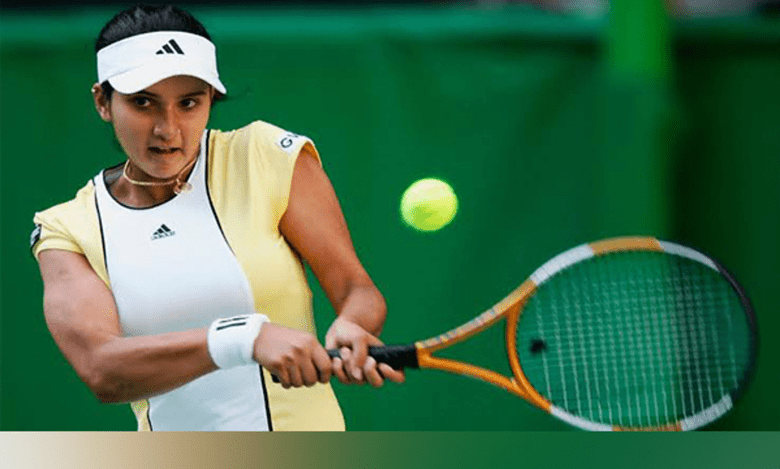
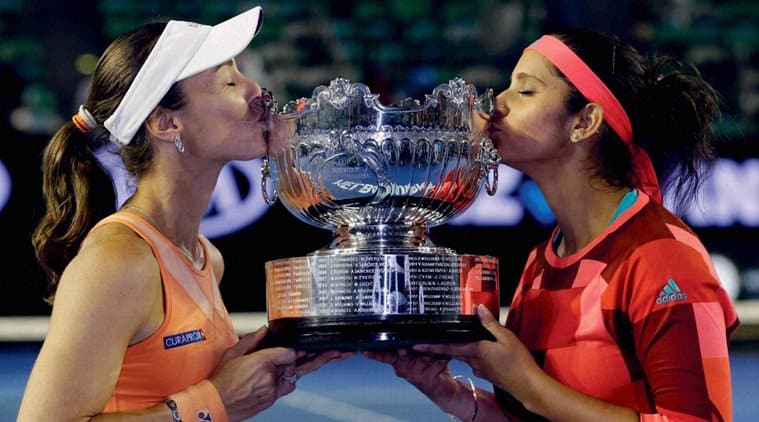
Sania Mirza is truly the first female tennis superstar from India.While Leander Paes led Indian tennis into the new millennium with his 1996 Atlanta Olympics bronze medal and several honours, tennis fans all around the nation yearned for a woman to represent the tricolour on the women’s court.Hyderabad-born, Sania Mirza gave the country just that.Here is a list of Sania Mirza’s Grand Slam titles, which helped her become India’s top female tennis player and a household name in the world of sports.
Source: Olympics Website
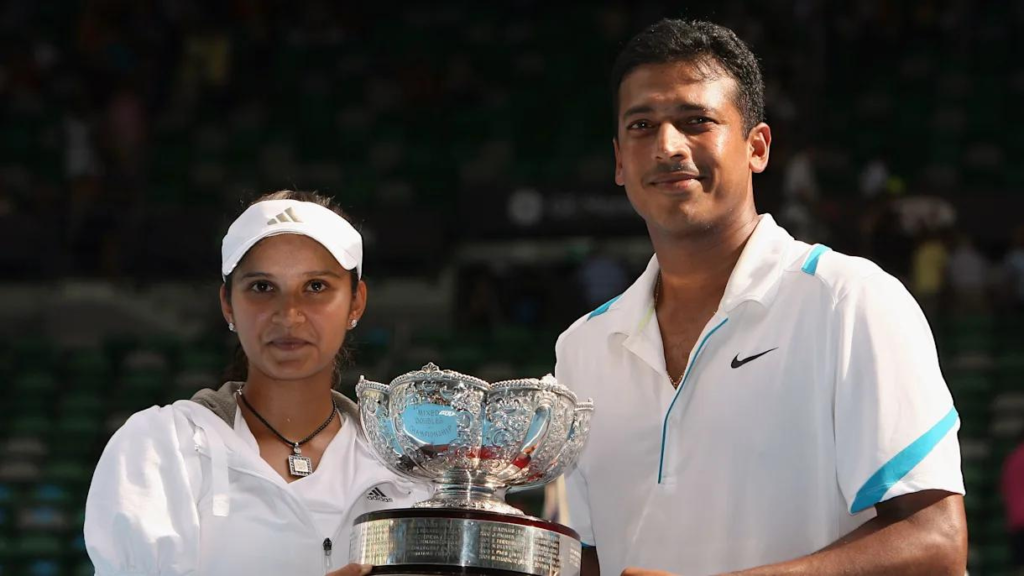
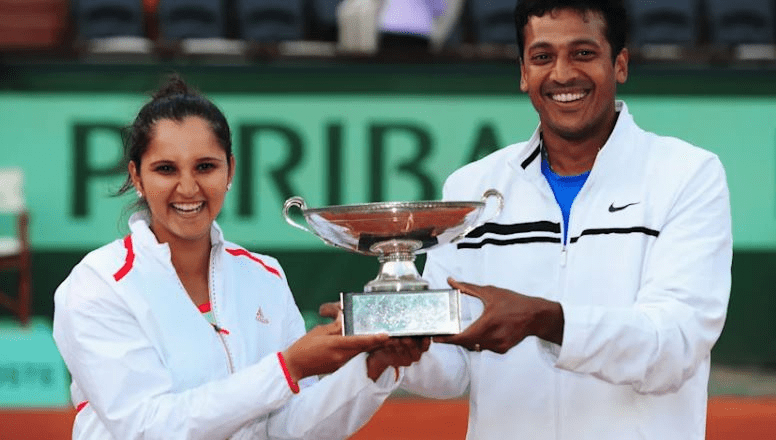
Australian Open 2009 mixed doubles
Her first victory came in 2009 when she teamed up with Mahesh Bhupathi to win the Australian Open mixed doubles championship.The pair was on a mission after falling short at the last hurdle at Melbourne Park the previous year and didn’t drop a set until making it to the quarterfinals.To win the title, the pair defeated Andy Ram of Israel and Nathalie Dechy of France 6-3, 6-1.
Source: Olympics Website
French Open 2012 mixed doubles
Three years later, the pair would team up once more to represent India with pride, this time on the revered clay of Roland Garros.Sania Mirza and Mahesh Bhupathi, who were the seventh seeds for the 2012 French Open, breezed through the competition.They won the title match 7-6, 6-1 against the Polish-Mexican team of Klaudia Jans-Ignacik and Santiago Gonzalez to win their second Grand Slam.
Source: Olympics Website
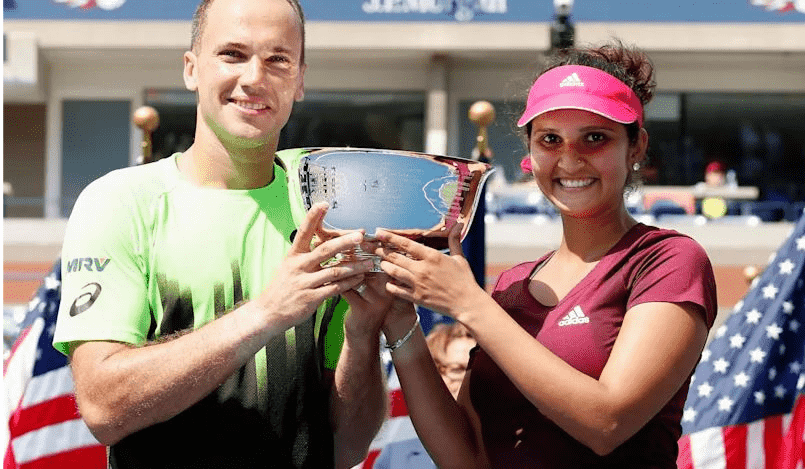
US Open 2014 mixed doubles
At the 2014 US Open, she teamed up with Brazilian player Bruno Soares to win her third mixed doubles championship at a Slam.The top-seeded pair lived up to their reputation by defeating Abigail Spears of the USA and Santiago Gonzalez of Mexico in the title bout, which required a tie-breaker.
Source: Instagram
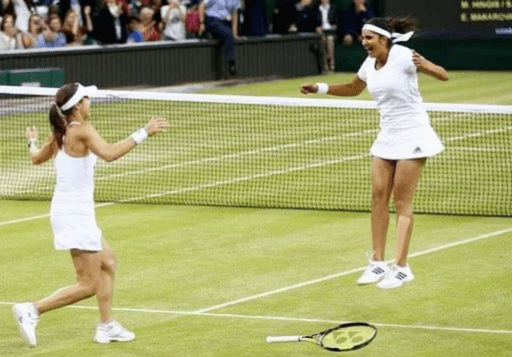
Wimbledon 2015 Women’s doubles
Sania Mirza and Martina Hingis partnered in 2015 and won three consecutive Grand Slam doubles championships. They won their 1st Grand Slam title at Wimbledon in 2015. Without dropping a set, the pair advanced to the championship match against Sania Mirza’s previous partner, the Russian team of Ekaterina Makarova and Elena Vesnina.Sania Mirza and Martina Hingis persevered to win a closely contested three-set match in the final.
Source: Twitter
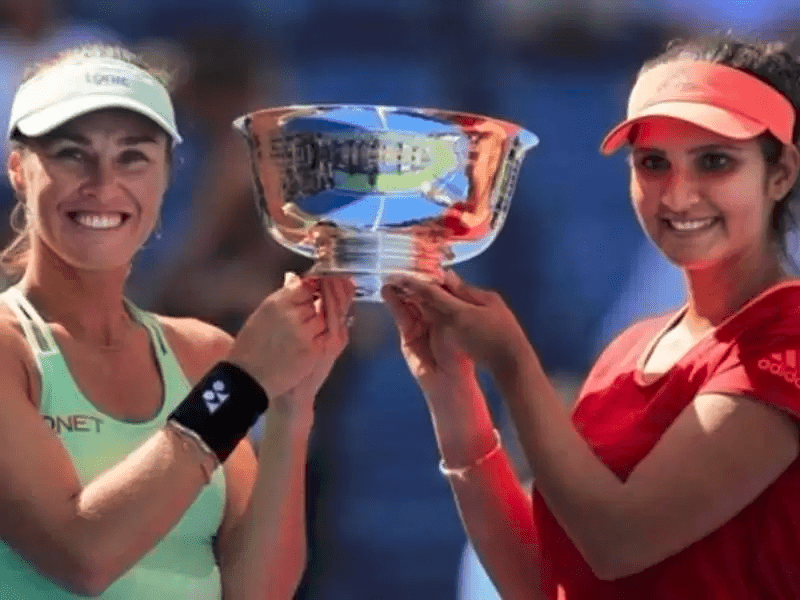
US Open 2015 Women’s doubles
The duo continued their rich vein of form and seemed almost unstoppable over the course of the next few months as they picked up the US Open 2015. Martina Hingis and Sania Mirza won their second Grand Slam doubles title together, defeating Casey Dellacqua and Yaroslava Shvedova in the final, 6–3, 6–3.
Source: Twitter
Australian Open 2016 Women’s doubles
In 2016, at the Australian Open, Sania Mirza captured her final Grand Slam. With Hingis, she had won three straight major championships.The top-seeded Indo-American team defeated Andrea Hlavackova and Lucie Hradecka of the Czech Republic 7(7)-6(1), 6-3, to claim the championship in Melbourne.
source: http://www.siasat.com / The Siasat Daily / Home> Photos / by Asian New International / posted by Abdul Rahman / January 28th, 2023
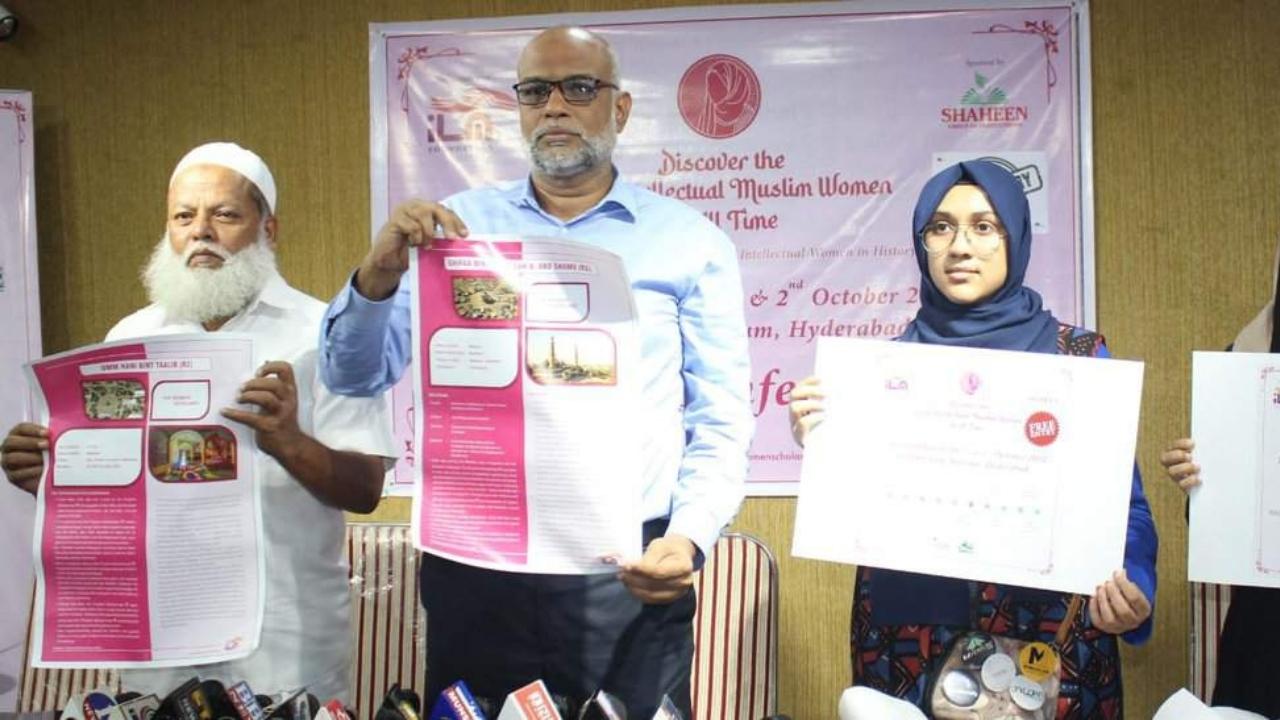
A two-day exhibition celebrating the achievements of Muslim women will be held at the Salar Jung Museum in Hyderabad on October 1 and 2 by the Intellectual Learning Methodologies (ILM) Foundation in association with the Shaheen Group of Educational Institutions, Islah and Asli Talbina.
The exhibition is aimed at educating the common man about the astounding accomplishments of Muslim women.
Achievements of 40 women in different fields will be showcased and details of their accomplishments will be explained through posters, Siasat.com quoted Dr Lateef of ILM Foundation as saying.
The exhibition will be inaugurated by Maulana Khalid Saifullah Rahmani, general secretary of the All India Muslim Personal Law Board.
According to a study of early Islamic history, took an active part in all walks of life. These women excelled as rulers, warriors, nurses, scholars, jurists, teachers, traders and companions of the Prophet (peace be upon him).
When Dr Lateef started working on the subject some one-and-half years ago he stumbled upon the names of nearly 10,000 women who had made immense contributions in their field.
Ayesha, the wife of the Prophet Muhammed, who made a huge contribution to the cause of Islam through her intelligence and scholarship is among some of the well-known names whose achievements will be showcased at the exhibition.
“Lives of early Muslim women represent exemplary models, transcending time and boundaries. And they are a great source of inspiration,” Dr Lateef told the website.
Organisers also plan to take the exhibition to several parts across the country after Hyderabad. Juveria Sabir and Zoha Ansari, working at the Edventure Park, a start-up incubator have been working relentlessly to showcase the exhibition on inspiring women achievers.
The two-day exhibition with a free entry will be held in Salar Jung Museum’s eastern block from 11 am to 5 pm.
source: http://www.thecognate.com / The Cognate / Home> News / by Rabia Shireen / September 27th, 2022
On the occasion of the 74th Republic Day, 91 persons were selected for Padma Shri awards under various categories across the country, including two persons from Jammu and Kashmir.
The names of Mohan Singh and Ghulam Mohammad Zaz were announced on the eve of Republic Day on Wednesday after the approval of Sadria Jamhoori.
Mohan Singh was honoured with the Padma Shri award for his valuable services in the field of literature and education, while Ghulam Muhammad Zaz, a resident of the Zaina Kadal area of Shahr-Khas, who has a unique distinction will be awarded in the field of art.
The Padma Shri Award is one of the highest civilian awards in the country which is given in three categories. These awards are presented by the President of India at a formal ceremony usually held at the Rashtrapati Bhavan in March or April every year.
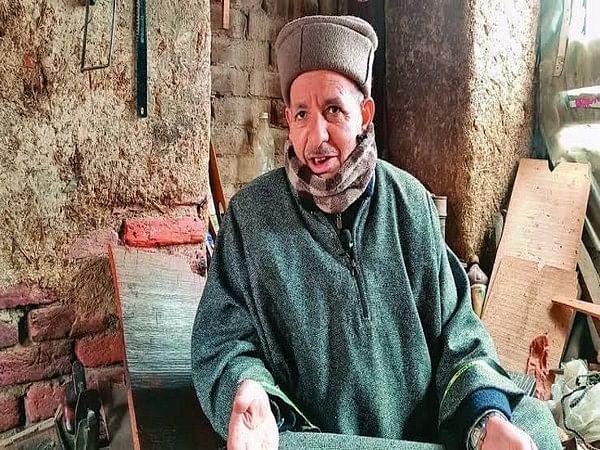
Ghulam Mohammad Zaz from Kashmir is the last artisan to make santoor in Kashmir. He has inherited this work from his family. Ghulam Muhammad Zaz is not only the eighth generation of his family but also the last artisan of the entire Kashmir who is a santoor maker.
Expressing his views on this occasion, Ghulam Muhammad Zaz expressed happiness and said that it is a happy thing to select him for this honour, but he was saddened by the fact that this honour was not given to anyone in his last eight generations. could be found
“It is very sad that this honour is being given, but the sadness is that this honour should have been given long ago,” he said.
He added that it is a matter of pride for me and the Kashmir Valley as our work and art is being appreciated at the national level.
It is to be remembered that Ghulam Muhammad Zaz is moving forward to make instruments used in classical or mystical music apart from the santoor. (ANI)
This report is auto-generated from ANI news service. ThePrint holds no responsibility for its content.
source: http://www.theprint.in / The Print / Home> India / by ANI / January 26th, 2023
We are celebrating the 811 annual Urs (death anniversary) according to the lunar calendar of Khwaja Gharib Nawaz of Ajmer who was born on February 1 1143 AD in Sijz, Sistan, Iran. He left the world on March 15, 1236 AD in Ajmer, Rajasthan. Since that time his disciples and followers have been celebrating his death anniversary as per the Sufi traditions.
The Sufi mystics celebrate the death and not birth as for them death means a reunion with Almighty Allah.
He was brought up in Khurasan, Iran, while his father Ghayasuddinn died when he was 15. He studied in Isfahan, Samarqand, and Bukhara, and went to Baghdad in search of a spiritual mentor. There, he met Hazrat Khawaja Usman Harooni. Thereafter, he went to visit the two holy cities of Mecca and Medina. Eventually, he came to Ajmer in India via Lahore where he lived for the rest of his life and became his resting place after death.
It’s a surprising truth that Muslim kings ruled for around 800 years over India and built many historical monuments such as the Taj Mahal, Red Fort, Humayun Tomb, and Qutub Minar, and yet none of them is alive in the hearts of people except in the history books. Unlike kings and rulers, Khwaja Gharib Nawaz won the hearts of millions of helpless, poor, weaker, and underprivileged people and seekers of truth. With divine mercy, he became Gharib Nawaz (supporter of the poor), though his original name is Moinuddin (helper of the religion).
He fulfilled Huqooq ullah (God’s rights) and Huqooqul ibad (human rights) equally and served the weak and poor, loved the unloved, and fed the hungry irrespective of caste, creed, gender, and religion. It was his outstanding service and love towards humanity that attracted people from across the society, unlike any rulers. They loved and followed this Sufi mystic and therefore he was called “Sultanul Hind”, the king of the Indian subcontinent. He then developed the Chishti Sufi order in this subcontinent and became the Sufi mystic with the highest following in the world.
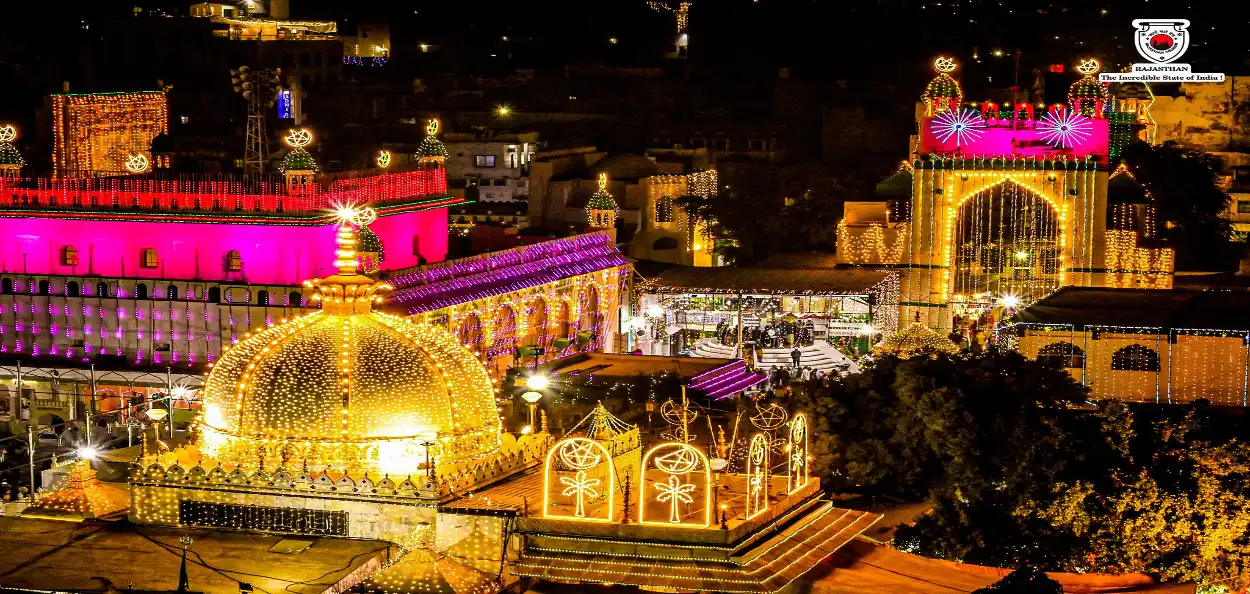
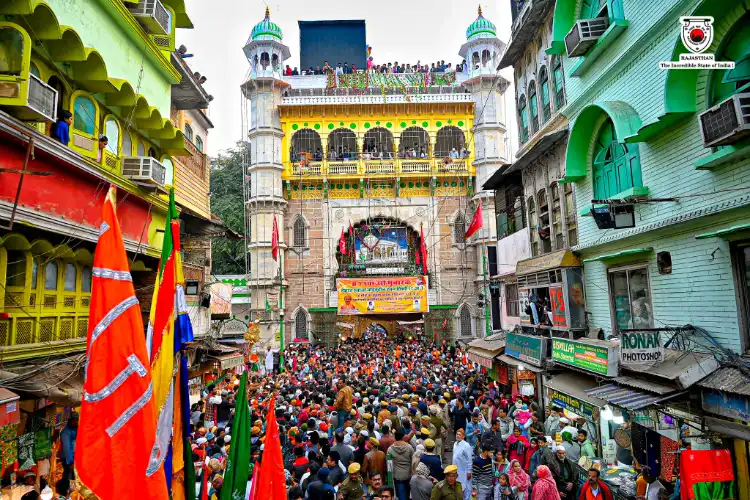
The scene outside the Ajmer Sharif dargah
The uniqueness of his Sufi order and his character was that he greatly impacted others with his pious character and selfless service and he accepted and accommodated the local traditions and made them part of his Sufi order.The message of universal fraternity, harmony, and brotherhood spread by the Sufis saints was so loud and inclusive that even after their union with God (Wisal-e-ilahi), their hospices remain abuzz with the people of all walks of life.
On top of all Indian shrines, the Dargah of Khwaja Moinuddin Chishti known as Daghah Khwaja Gharib Nawaz in the heart of Ajmer city surrounded by Tara Gadh hills is the shining example of love, harmony, unity, and fraternity.
Maulana Rumi beautifully talks about the human heart:
Ek dil behtar hazaran Ka’be ast
(One heart is far better than a thousand Ka’baas).
He further says (Translated version):
Bring your heart in your hand; your soothing is more important than a pilgrimage. A single heart is better than a thousand Ka’abas. The K’aba was built by Allah’s Khalil (friend) Prophet Hazrat Ibrahim (Abraham), while the heart, in contrast, was created and tested by the Almighty God Himself.
The great Sufi saint of India Khwaja Moinuddin Chishty who is also known as Gharib Nawaz of Ajmer often taught the people: love towards all and malice towards none. His disciples and successors held this message of their mentor by tooth and their hospices became the center for spreading universal love and affinity. His disciple Khwaja Nizamuddin Auliya of Delhi often recited the following couplets of Persian poet Abu Said Abul Khair:
“If people spread thorns in your path, you just put flowers in their way; otherwise the entire path would become thorny”.
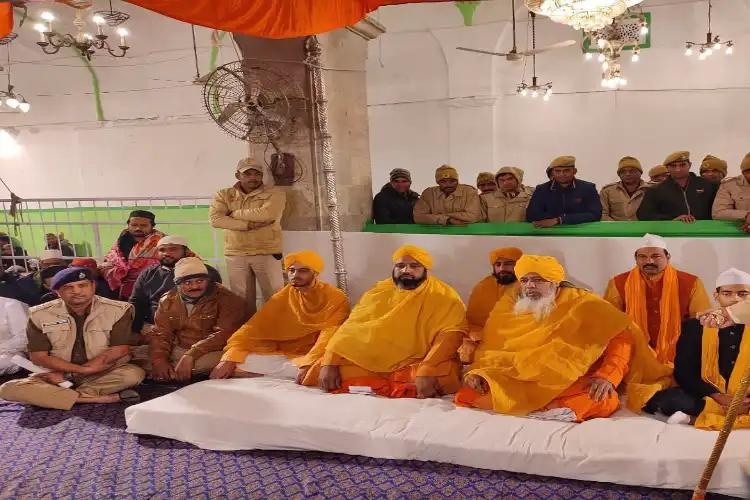
Sufi saints in a prayers at the Dargah during the Urs
Today, we Muslims in India must not forget what Khwaja Gharib Nawaz of Ajmer Sharif and Hazrat Nizamuddin Auliya of Delhi taught us.
The love, fraternity, and affection shown by the Sufi saints to the common people won their hearts, and their hospices (khanqahs were the center of love where people from all walks of life began to flock to seek succor for their miseries. These Sufi saints respected the local customs and culture to the extent that even many of them became vegetarian due to respect for their non-Muslim brothers. Khwaja Gharib Nawaz, Khawaja Nizamuddin Aulia, Sarmad Shaheed, Bu Ali Shah Qalandar, and many others had become pure vegetarians in respect of their non-Muslim brethren. Their philosophy was simple: live and let live; love and compassion to all, no hate or discrimination on the ground of caste, creed, culture, religion, and gender.
Chishty Sufis continued to adopting of local traditions. For instance in Delhi, Hazrat Amir Khusrau was the one who started celebrating Basant Panchami to make his mentor Nizamuddin Auliya happy. Since then, the Basant celebration is continuing on the premises of Dargah Hazrat Nizamuddin Auliya.
Being a Persian scholar and follower of a Sufi order, I came across the anthology of Sufi poets like, Rumi, Jami, Khusro, Shah Niaz be Niaz, Baba Bulle Shah, Shah Zaheen Taji, Bedam Shah Warsi in both Urdu and Persian languages. Their metaphysical and mystic poems were very impressive, moving, and touching. This has increased my curiosity to know more about it, I got a chance to attend a 3-day-long Sufi music concert in Delhi, organized by famous music composer and film director Muzaffar Ali with the title of Jahan-e-Khusrau in Humayun tomb. This concert is organized by him every year and attended by world-famous Sufi musicians and vocals from India, Pakistan, Afghanistan, Iran, Turkey, and many other countries. However, every year the well-known vocalist Abida Parveen of Pakistan steals the show.
As soon as she starts her melody in the most fascinating and moving voice, the people begin crying in their hearts. It seems as if she is on the direct hotline with the Almighty God. Though more than 2 decades have passed, I still remember the rhythm of her voice and her selection of poems from the anthologies of Amir Khausrau, Baba Bulle Shah, Shah Zaheen Taji, and Shah Niaz Bareilvi.
The following metaphysical mystic poems of Shah Niaz Barelvi recited by Abida Perveen attracted my special attention:
Yaar ko hum ne ja baja dekha, kahin zahir kahin chupa dekha…
I saw my beloved everywhere, somewhere apparent and somewhere hidden.
Kahin mumkin hua kahin wajib, Kahin fani kahin baqi dekha.
Somewhere He was merely a possibility and somewhere He was imperative. Somewhere I saw Him ephemeral, and somewhere I found him eternal.
Kahin wo badshah takht nashin, Kahin kasa liye gada dekha.
Somewhere, I saw Him a king sitting on His throne, and sometimes I saw Him mendicant with a begging bowl.
Kahin wo dar libas e mashooqan, Bar sare naz aur ada dekha.
Somewhere He was in the most beautiful attire, displaying His unique charm and attraction.
Kahin ashiq Niaz ki surat, Seena giryan to dil jala dekha.
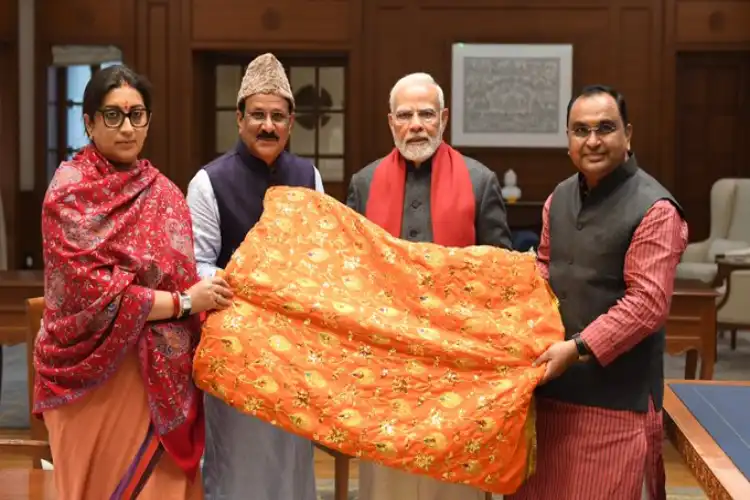
Prime Minister Narendra Modi handing over a Chadar for offering at the tomb of Moinuddin Chisty for the Urs
Somewhere He was like a lover Niaz, beating his chest and his heart was in flame.
This unique hymn of God almost mesmerized the entire audience. There was a pin-drop silence as the people felt that divine light is pervading from all sides. After hearing this fabulous hymn, I decided to pay my obeisance at his shrine built about 300 years ago in Bareilly.
Though he associated himself with both the Chishti and Qadri orders of the Sufis, he favoured the Chishty order in which the saints were encouraged to reach the maximum number of people whoever they may be. In the footsteps of his predecessors, he also followed the local customs and traditions to win the hearts of people from all creeds and castes. His main emphasis was to clean the heart instead of cleaning the apparent body and clothes.
The Chishty Sufi order was established in Indian Sub-Continent by Khwaja Gharib. It’s organised by Baba Fariduddin Ganj Shakar Pak Patan and it flourished to the highest level by Hazrat Nizamuddin Auliya of Delhi. The basic philosophy of Chishty Sufis is to love the unloved, welcome the ignorant, and serve the unserved. They united the human heart and lived in harmony by their nature of acceptance of others’ good things from local tradition and influenced others by their pious and selfless character. They said that whoever comes to us give them food and don’t ask about their religion. that’s the beauty behind flourishing their Sufi order even though it’s increasing day by day after 800 years. Khwaja Gharib Nawaz shrine is 5th largest gathering spiritual place in the world after the holy cities of Mecca and Medina in Saudia Arabia and Najaf and Karbala in Iraq..
Right from Khwaja Gharib Nawaz of Ajmer to Baba Farid Pak Patan, Nizamuddin Auliya Delhi, Sabir e pak in Peeran Kaliyar, Amir khusrau Dehlavi,
Sarmad Shaheed, Bande Nawaz Gesu Daraz in Gulbaga, Baba Tajuddin in Nagpur, Makhdoom Ashraf Jahangir Simnani in kichowcha and Alaul Haq Pandvi in Bengal, Shah Niaz in Bareilly and Haji Waris Ali shah in Dewa have their respective chains of Sufi shrines spread all over the Indian Sub-Continent. They continue to rule over millions of hearts through their unique philosophies of unconditional love and compassion. Anyone observes the impact of local traditions in their shrines’ rituals and amongst their followers.
Dr. Hafeezur Rahman is an author, Islamic scholar, TV host and the founder of Sufi Peace Foundation.
source:http://www.awazthevoice.in / Awaz, The Voice / Home / by Dr Hafeezur Rahman / posted by Aasha Khosa / January 29th, 2013
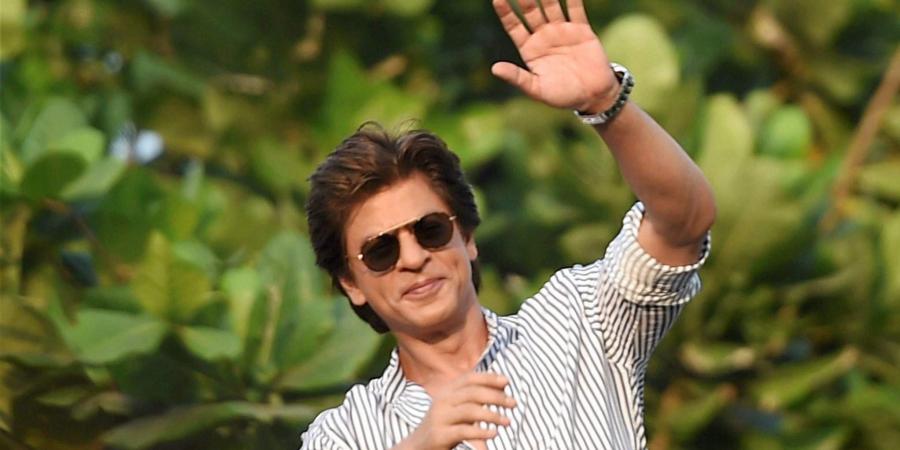
Bollywood superstar Shah Rukh Khan has become the only Indian to be named in an international list of 50 greatest actors of all time by a prominent British magazine.
The 57-year-old actor is included in Empire magazine’s list which also recognises Hollywood giants like Denzel Washington, Tom Hanks, Anthony Marlon Brando, Meryl Streep, Jack Nicholson and many others.
In the accompanying short profile, the magazine said Khan has a career that has now spanned four decades of “near unbroken hits, and a fanbase of pretty much billions”.
“You don’t do that without outrageous amounts of charisma and absolute mastery of your craft. Comfortable in almost every genre going, there’s pretty much nothing he can’t do,” it added.
From his extensive filmography, the publication highlighted Khan’s notable characters from four movies — Sanjay Leela Bhansali-directed “Devdas”, Karan Johar’s “My Name Is Khan” and “Kuch Kuch Hota Hai”, and “Swades”, directed by Ashutosh Gowarikar.
His dialogue from the 2012 movie “Jab Tak Hai Jaan” — “Zindagi toh har roz jaan leti hai… Bomb toh sirf ek baar lega” (Every day life kills us a little. A bomb will kill you only once) — has been recognised as the “iconic line” of his career.
“Jab Tak Hai Jaan” was filmmaker Yash Chopra’s swansong and featured Khan as an Indian Army Major named Samar Anand. The film also starred Katrina Kaif and Anushka Sharma.
The actor will be next seen in the actioner “Pathaan”, set to be released worldwide on January 25, 2023. Directed by Siddharth Anand, the movie also stars John Abraham and Deepika Padukone.
Khan will also star in two more movies — action-entertainer “Jawan” with filmmaker Atlee and the Rajkumar Hirani-directed “Dunki”.
“Jawan”, a pan-India project, is set to come out on June 2, 2023, while “Dunki”, also starring Taapsee Pannu, will release in December 2023.
source: http://www.varthabharati.in / Vartha Bharati / Home /December 20th, 2022
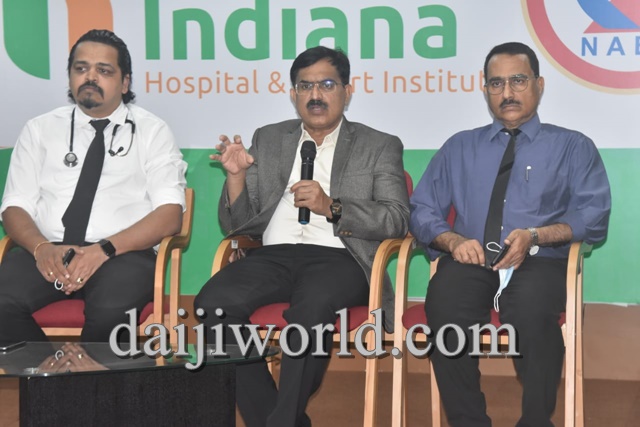
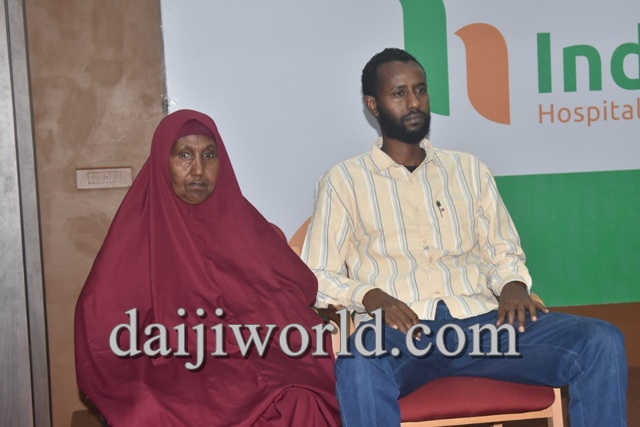
Indiana Hospital & Heart Institute, in yet another milestone, performed a minimally invasive procedure using a transcatheter technique on a Kenyan patient who was advised redo bypass surgery where she was first treated.
A 65-year-old lady from Kenya who had mitral valve disease had undergone bypass surgery and the valve was replaced in 2014 at a hospital in Ahmedabad. After a gap of 8 years, she had degeneration of the valve; in other words, the artificial valve started malfunctioning which resulted in heart failure. This condition was further worsened with respiratory issues and pulmonary hyper-tensions. When she came back to the same hospital in Ahmedabad, they advised to change the valve again, meaning repeating the surgery which was a risky affair.
The patient party came to know of Indiana Hospital and consulted Dr Yusuf Kumble who advised an alternative option of not undergoing any bypass surgery. He suggested that the valve can be changed without removing the old valve through an interventional technique and was very challenging. The entire procedure was completed within one hour successfully. “Valve in valve technique is one of the rare situations where the mitral valve is replaced without opening the heart. It is called trans catheter mitral valve replacement,” said Dr Yusuf Kumble cardiologist and managing director, Indiana Hospital.
Dr Yusuf Kumble and his doctors in Indiana Hospital did a fantastic job in one hour time. The patient was mobilized within 8 hours and was able to move out of ICU in 24 hours. The patient is ready for discharge after 5 days of hospitalisation.
It may be recalled that for the first time, TMVR was done in 2019 in Karnataka at Indiana Hospital, Karnataka. TMVR, also known as transcatheter mitral valve replacement, is a relatively recent technique of replacing the mitral valve in the heart without the need for conventional open-heart surgery.
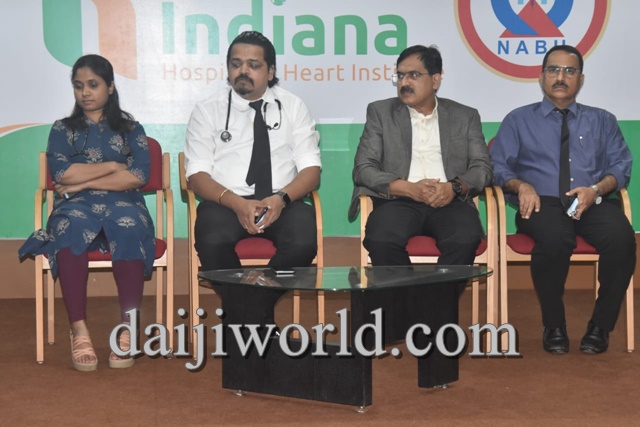
Dr Apoorva S, medical director, Dr Ali Kumble, chairman, Indiana Hospital, and Dr Sandhya Rani was also present.
source: http://www.daijiworld.com / Daijiworld.com / Home> Top Stories / by Media Release / January 10th, 2023