The Jammu & Kashmir Mountain Biking Association (JKMBA) Sunday felicitated cyclists Aabid Rashid Bhat and Nazir Ahmad Wani, members of JK Mountain Biking Association for successfully completing the Mountain Terrain Biking Expedition here at Nigeen.
The duo were felicitated for covering 440km distance, right from Srinagar to Leh while passing Fotu La and Namikla with an altitude of 14000ft in the said expedition.
Cyclists Bhat and Wani started their cycling journey on August 13 and finished the three days Srinagar-Leh Mountain biking expeditions by reaching Leh on 15 August earlier this year.
Aabid Rashid Bhat 45 hails from Malbagh, Naseem Bagh area in Srinagar city, Nazir Ahmad Wani 50 hails from Dana Mazar Safa Kadal in Srinagar.
In the “Felicitation Ceremony”, Rouf Tramboo President, Adventure Tour Operators of Kashmir (ATOK), and Er. Mushtaq Ahmad Wani gave away the mementos and prizes to the Riders at Nigeen.
Riyaz Wani, President of JKMBA told Rising Kashmir that a brief discussion was also held on the occasion for the development of mountain Terrain biking, the introduction of new MTB routes, and conducting a few more long-distance mountain biking expeditions in the valley.
Secretary JKMBA, Asif Bhat, informed on the occasion about previous MTB expeditions done Umer Nabi and Riyaz Wani Srinagar to Leh in year 2014, and Er. Mushtaq Wani, Er. Kaiser Abdullala, A R Bhat, and Jolley Jaleed completed Srinagar to Jammu in 2022.
On the occasion, Aabid, one of the riders shared all his experiences during the 440km long mountain biking expedition while as Nazir Ahmad Wani thanked the management of JK Mountain Biking Association for their support during the expedition and felicitations to both of them.
Secretary JKMBA, Asif Bhat, President JKMBA, Riyaz Wani, Zahid Iqbal, Yasir Makhdoomi, Dr Shuja ul Basher and 30 members of JKMBA were also present on the occasion.
source: http://www.risingkashmir.com / Rising Kashmir / Home / August 23rd, 2022
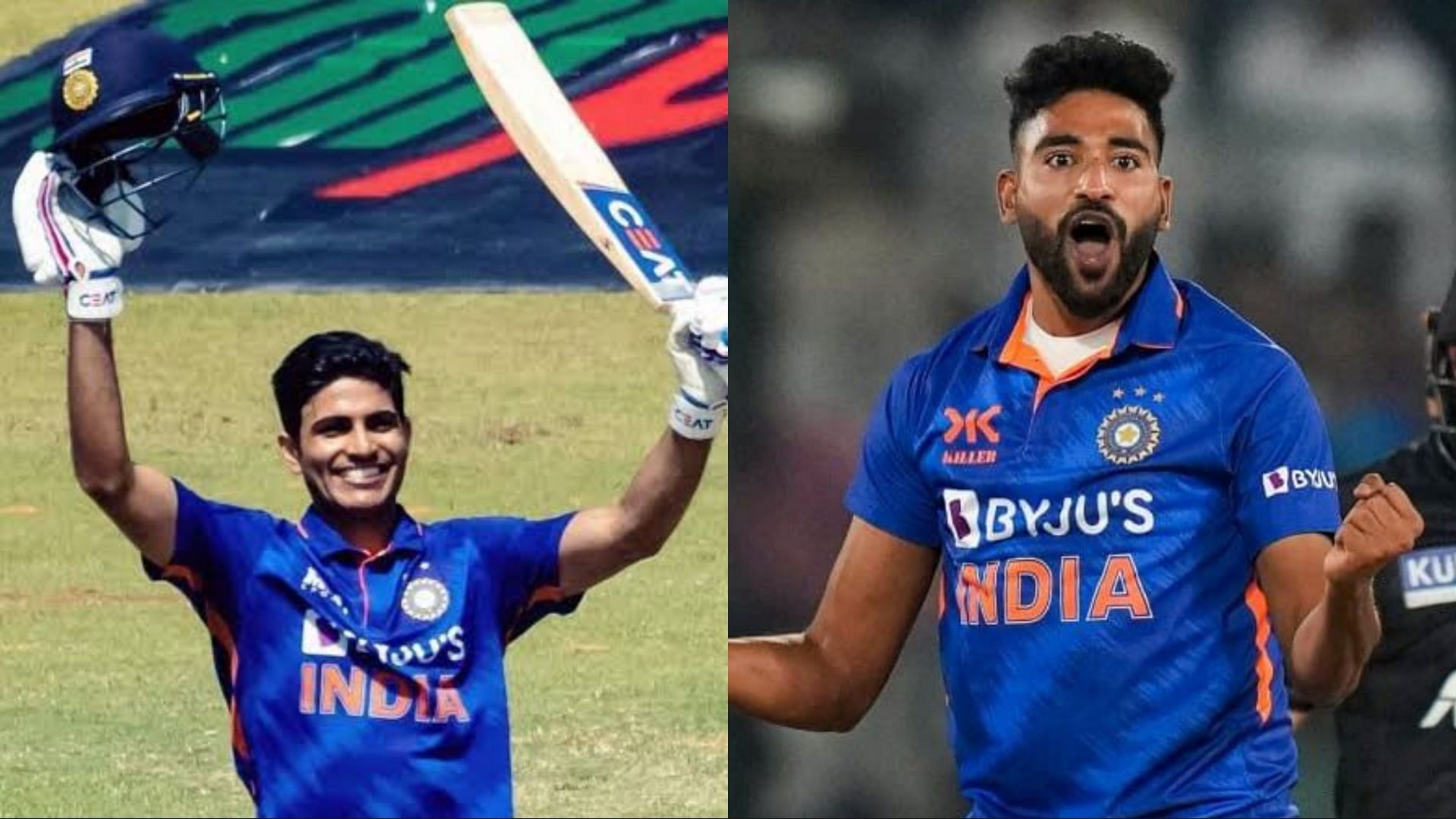
Shubman Gill (L) & Mohammed Siraj have gained big in the ICC Rankings
Mohammed Siraj has become the new world number one bowler in the ICC ODI Rankings. The Indian fast bowler replaced New Zealand’s Trent Boult at the top of the bowling charts thanks to his impressive performances in the 50-over format.
As far as Mohammed Siraj’s recent performances in ODI cricket are concerned, the right-arm fast bowler bagged 24 wickets in 15 matches last year. In 2023 so far, he has played five matches, scalping 14 wickets, including two four-wicket hauls. The 28-year-old achieved his best bowling figures of 4/32 in the third ODI against Sri Lanka on January 15.
Mohammed Siraj climbed to the third position in the rankings last week. He has now jumped ahead of Josh Hazlewood and Trent Boult to secure the top spot with 729 rating points to his name.
Trent Boult, who does not play ODI cricket these days for New Zealand, has slipped to the third spot with 708 rating points. Australia’s Josh Hazlewood is second in the rankings with 727 rating points.
The gap between Siraj and Hazlewood is of two points only. Interestingly, the two players will face off in the upcoming Border-Gavaskar Trophy and then play together for the Royal Challengers Bangalore in IPL 2023.
Mohammed Siraj was not the only Indian to gain big in ICC ODI rankings
New Zealand v India – 2nd ODI (Image: Getty)
Meanwhile, Shubman Gill has replaced Virat Kohli as the highest-ranked Indian batter in the ICC ODI Rankings. The young Indian opener aggregated 360 runs in three matches of the recently concluded series against New Zealand.
Gill now has 734 rating points to his name. He has moved from eighth to sixth position, overtaking Virat Kohli (727 rating points) and Steve Smith (719 rating points).
Indian captain Rohit Sharma has returned to the top 10 as well after scoring a ton against the Blackcaps. He is currently ninth with 719 rating points.
source: http://www.sportskeeda.com / SportsKeeda / Home> Cricket / by Vinay Chhabria / January 25th, 2023
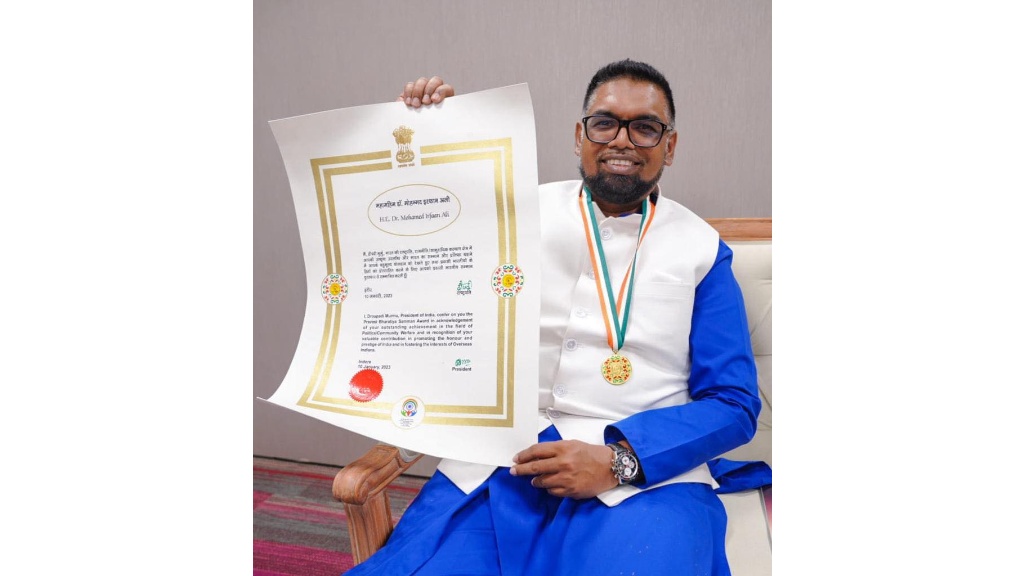
President Dr Mohammed Ifraan Ali receiving the Pravasi Bharatiya Samman Award from Indian President Droupadi Murmu.
Guyanese President Dr Mohamed Irfaan Ali was conferred today with the Pravasi Bharatiya Samman Award (PBSA).
The award is India’s highest honour for members of the Indian diaspora.
Indian President Droupadi Murmu presented Ali with the award at a special ceremony in Indore, India
President Dr Mohammed Ifraan Ali after receiving the Pravasi Bharatiya Samman Award. Photo: Office of the President
Ali, Trinidadian judge, Justice Frank Arthur Seepersad and Suriname’s Dr Dewanchandrebhose Sharman are the three Caribbean nationals of Indian origin, who were presented with the PBSA this year.
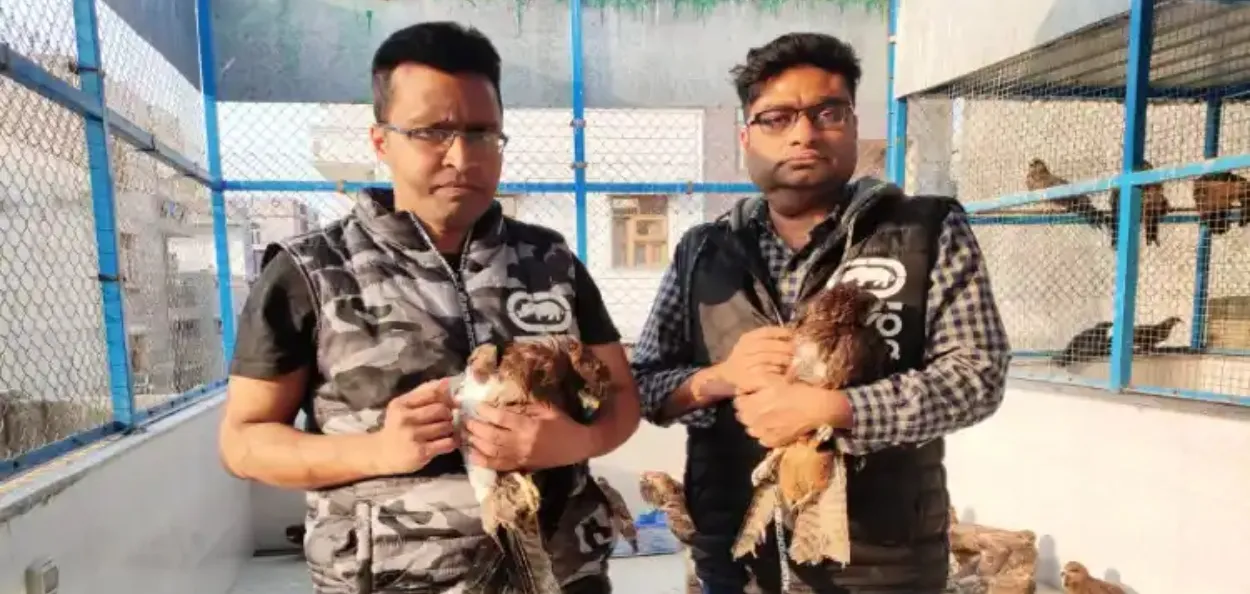
‘All That Breathes’ a Documentary feature film based on the lives of two brothers Mohammad Saud and Nadeem Shehzad of Delhi, who work out of their derelict basement in Delhi’s Wazirabad, to rescue and treat injured birds, especially the black kites, has made it to the Oscar nominations list.
‘All That Breathes’ made by Shaunak Sen has been nominated in the ‘Documentary Feature Film’ category against ‘All the Beauty and the Bloodshed’, ‘Fire Of Love,’ ‘A House made of Splinters,’ and ‘Navalny’.
Besides, the most- predicted and the much-celebrated music of ‘RRR’ also made it to the Oscars race. The magnum opus film’s energy-packed track ‘Naatu Naatu’ made it to the nominations this year in the ‘Original Song’ category.
After the Oscar nominations were announced, every Indian’s heart was pumped with pride and joy as we secured three nominations this year.
This lyrical composition of ‘Naatu Naatu’ by MM Keeravani, high energy rendition by singers Rahul Sipligunj and Kaala Bhairava, unique choreography by Prem Rakshith, and lyrics by Chandrabose are all the elements that make this ‘RRR’ mass anthem a perfect dance craze.
The song is competing against ‘Applause’ from the film ‘Tell It Like A Woman,’ ‘Hold My Hand’ from the movie ‘Top Gun: Maverick,’ ‘Lift me Up’ from ‘Black Panther: Wakanda Forever,’ and ‘This Is Life,’ from ‘Everything, Everywhere All At Once’.
Adding to the Indian list of nominations for Oscars 2023 is Kartiki Gonsalves’ ‘The Elephant Whisperers.”
‘The Elephant Whisperers’ has been nominated in the ‘Documentary Short Film Category’ against ‘Haul Out,’ ‘How Do You Measure A Year?’ ‘The Martha Mitchell Effect,’ and ‘Stranger At The Gate’.
The film’s plot revolves around a family who adopts two orphan baby elephants in Tamil Nadu’s Mudumalai Tiger Reserve.
The Oscars are going to be held on March 13 and while the wait is going to be quite a long one from now, the nominations have sure lifted the spirits of not just the crew and cast of the films mentioned above, but also of everyone who hopes to see an Indian movie bagging the prestigious award.
source: http://www.awazthevoice.in / Awaz, The Voice / Home / posted by Aasha Khosa, ATV / January 25th, 2023
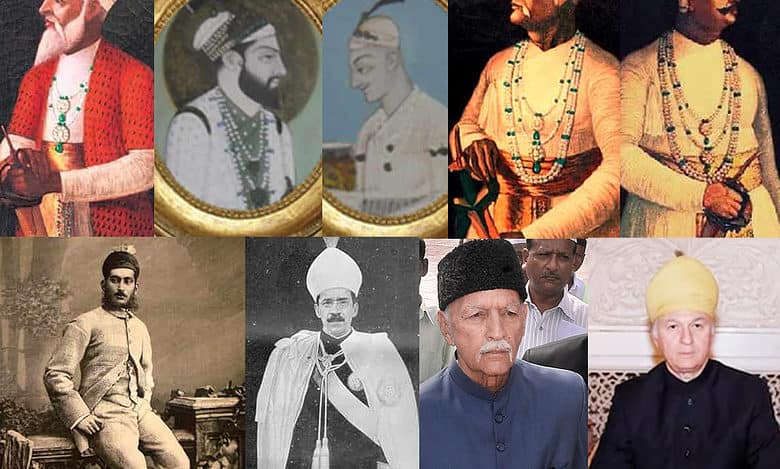
Ever since the death of Prince Mukarram Jah on 14th January 2023, who was considered the last and titular Nizam, Hyderabad’s Nizams, the rulers of the Asaf Jahi dynasty are in the news on every tabloid, newspaper and news channel. A lot is being debated about the Nizams from their lineage to titles to connections to inheritance.
Let us understand their lineage and the use of the title Nizam-ul-Mulk Asaf Jah. Basing my views on Henry George Briggs book The Nizam: His History and Relations with the British Empire published in 1861 and Roper Lethbridge’s book The Golden Book of India: A Genealogical and Biographical Dictionary of the Ruling Princes, Chiefs, Nobles, and Other Personages, Titled or Decorated, of the Indian Empire, with an appendix for Ceylon, published in 1893, when we look at the remote ancestry of the Nizams, their lineage is traced to two lines of descent.
The first line of descent is from Shaikh Shah Abudin Suharwardi, a lineal descendent of Caliph Abu Bakr, the father-in-law, of Prophet Muhammad. Shaikh Shah Abudin Suharwardi who lived in Persia was a contemporary of the Persian poet Sadi and finds reference in his thirteenth century poetic composition, Bostan, as his murshad or spiritual guide. It is believed that some of the immediate descendants of the shaikh settled in Turkey and also some of them travelled to Samarqand, and became ulema there. The popular ulema from this line were Khwaja Ismail, his son Khwaja Abid who later on was designated as Qazi and Shaikh-ul-Islam.
The second lineage of the Nizams of Hyderabad’s ancestry is traced to the family of Tartars and claim descent from Bahauddin who was the founder of the Naqshbandi Sufi silsilah. Most Naqshbandis prefix the word Khwaja to their names to imply an honourable position of a learned person. Bahauddin was a contemporary of the Turko-Mongol conqueror Timur and his descendent was Khwaja Abid who was the first from the family to visit India. He travelled from Samarqand to Delhi during Mughal emperor Shah Jahan’s reign. Whichever lineage is looked at, we see that Khwaja Abid ultimately travelled to India.
Khwaja Abid was given the title of Sadr-us-Sadr by the Mughal emperor Aurangzeb for his services rendered and was also made the Subedar of Multan. Soon, he was awarded more titles of Azeem Khan and Qillich Khan. Qillich also spelt as Kulij or Qulij in Turkish and Qillich in Persian denoted shamsher, a sword in both languages. Qillich Khan also led campaigns into Bijapur and Golconda during which he was injured badly on his right arm and eventually after battling for his life, he died. He was well-known for his military exploits and was buried at Attapur near Hyderabad in 1686.
Qillich Khan left behind a son, Mir Shahabuddin, born in 1644, who was also later employed by the Mughals. Like his father, he too exhibited exceptional bravery and was awarded by Aurangzeb with the title of Ghaziuddin as he was one of the greatest of the generals of Aurangzeb. For his military and administrative services rendered in the Deccan, he received another title Feroz Jung and Aurangzeb even referred to him as Ghaziuddin Bahadur Feroz Jung Farzand Arjumand meaning dear son.
When Aurangzeb died in 1707, Ghaziuddin was the subedar of Berar and Elichpur. The next Mughal successor, Bahadur Shah, made him the Subedar of Gujarat before the latter died in 1711. Ghaziuddin had married the daughter of Saadaullah Khan, a minister of Shah Jahan, in Delhi and a son had been born to them in 1671 who was named Mir Qamaruddin who came to be known in Deccan’s history as Asaf Jah I.
In 1699, Mir Qamaruddin had received the title of Chin Qilich Khan commanding the imperial troops at Bagul Kota.
He then became Faujdar of the Carnatak at Bijapur and also the Subedar of Bijapur. He was given one of Aurangzeb’s own horses on the battle field in one of the campaigns he led in the Deccan. He remained loyal to Prince Azam but eventually differences arose and they went separate ways. But under Bahadur Shah, he was again invited to the Mughal court and was conferred the Subedari of Oudh and Faujdari of Lucknow with the title Khan-e-Dowran, but soon he was disgusted with the politics at the court and retired by relinquishing all his appointments he was holding under the Mughals.
Next, when Farrukh Siyyar started contesting for the Mughal throne, Chin Qilich Khan was roped in once again and he started to fight on the side of Farrukh Siyyar. He was rewarded in 1713 by Farrukh Siyyar with the title of Nizam-ul-Mulk Asaf Jah and Viceroy of the Imperial Dominions in the Deccan and as Faujdar of Carnatak. He continued to fight against the Marathas for the Mughals. There were a series of rapid developments and conflict with the Syed brothers who had emerged as the king makers to the Mughal throne. This finally led to his independently laying the foundation of his own administration in the Deccan with the battle of Shaker Kheda near Aurangabad in 1724.
Asaf Jah had won battles east, west, north and south, dealt effectively with the kingmaker Syed brothers and successfully established his authority over a vast region that came to be called the Asaf Jahi or Asafiya state.
The title of Asaf Jah was named after the rank of Asaf who was supposed to be a minister of Solomon, the Hebrew king. The title of Asaf was not new; the Mughals had used it many a time earlier. The name Asaf was conferred in Mughal India on Nurjahan’s brother and Mumtaz Mahal’s father and in other instances. It was but natural that the Mughal titles were retained by the nobles of the Deccan. These titles were conferred in ascending order of Jung, Daula, Mulk, Umara or Jah. The British equivalent of Jah or Umara was the English Dukes and Marquesses, Mulk was equivalent to Earl, Daula was equivalent to Viscount, and Jung was like a baron. All the successors of the Nizams have the word Jah appended to their name. The only officer or Prime Minister on whom the title of Jah was conferred was Arastu Jah.
Until the Nizams started ruling independently of the Mughals in the Deccan, they were known as Subedars of the Deccan showing their allegiance to higher authority in Delhi. While the British referred to them out of respect as Nawabs of Hyderabad or Bundagan-e-alee meaning slaves of the highest rank.
Professor Salma Ahmed Farooqui is Director at the H.K.Sherwani Centre for Deccan Studies, Maulana Azad National Urdu University, Hyderabad.
source: http://www.siasat.com / The Siasat Daily / Home> Featured News / by Salma Ahmed Farooqui / January 23rd, 2023
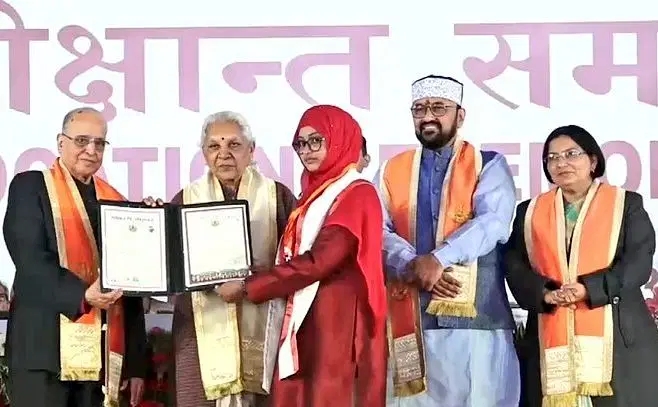
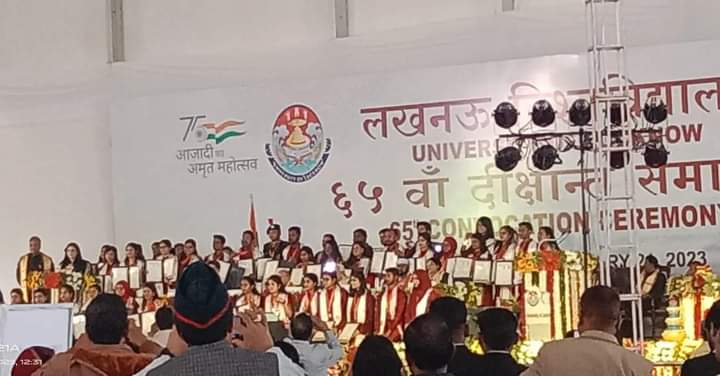
Iqra Rizwan Warsi won 3 Gold Medals at Lucknow University.
Iqra has been awarded Dr. Radha Kumud Mukherjee Gold Medal, Pandit Devi Sahay Mishra Gold Medal and Smt. Shyam Kumari Hukku Memorial Gold Medal. Iqra has secured 84.05 percent marks in BA.
Iqra has also been awarded the Best Student Award Bronze Medal in the year 2021.
Rizwan, the father of Iqra Rizwan Warsi was a painter who used to do spray painting earlier. He lost his job during Covid, when he started selling masks near hospitals. The expenses of the house go on with these earnings.
According to Iqra, mother Tarannum Warsi is a homemaker who always boosted morale.
Iqra said that “The financial condition of the house is not good. The situation was even more difficult during the Covid period. Mother used to stitch masks. My Father Rizwan used to sell them outside hospitals. Even now the situation has not changed much.”
We are four siblings, in which I am the eldest. Three siblings are younger than me. I am pursuing masters, my parents have supported me a lot. My Parents struggled in every way and studied and today i am gold medalist.
Iqra’s father said that, “I sell masks and sometimes other items by hawking to make arrangements for the livelihood of the children. Now the son has also started doing a private job, which earns him Rs 4,000 a month.” Somehow, two-time livelihood and children’s education fees are arranged.”
Translated from Hindi Webportal Themooknayak.com
source: http://www.thehindustangazette.com / The Hindustan Gazette / Home> News> Education / by Ayesha Mastoor / headline and text edited / January 25th, 2023
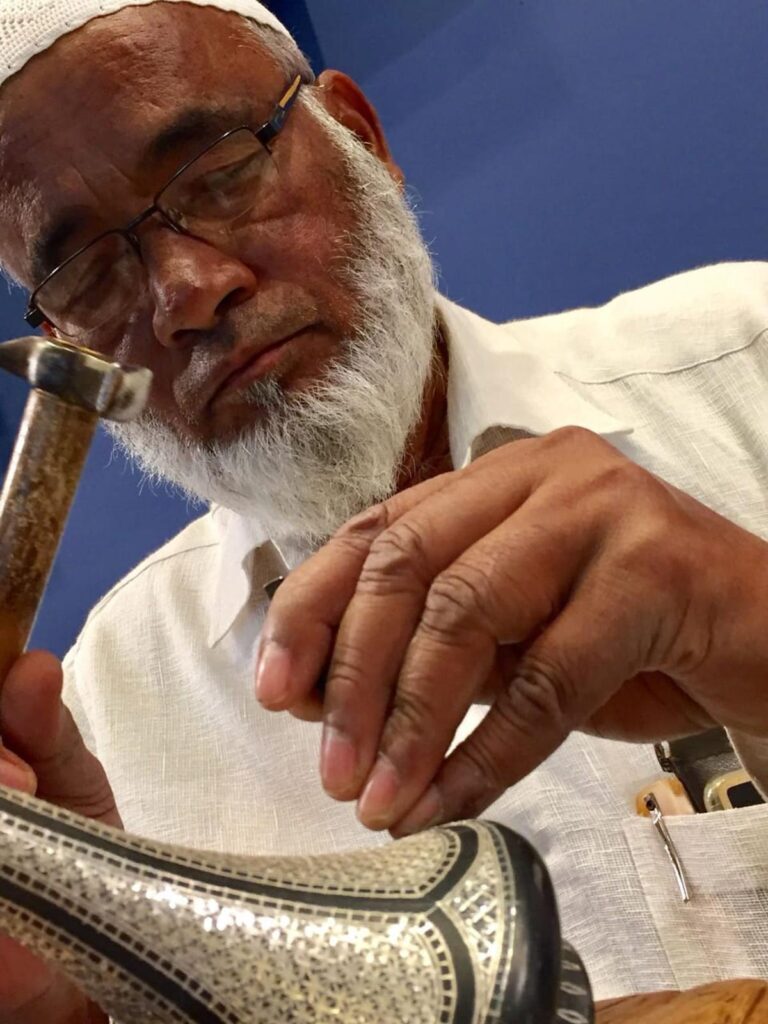
Shah Rashid Ahmed Khadri, a 67-year-old Bidri craftsperson from Bidar, is among the Padmashri Award winners this year.
He gained instant popularity when he sat working with his tools on the Karnataka Tableau at the Republic Day parade in 2011.
He has spent nearly five decades in the art that he learnt from his father Shah Mustafa Khadri, a master craftsman who was honoured by the Nizam of Hyderabad.
The Khadris were a family of limited means and Rashid could study only up to PU. His father, however, did not want him to be a Bidri craftsman as he felt they did not earn enough. He enrolled Rashid into English typewriting course. However, he began assisting his father who began losing eyesight due to old age.
He is a winner of Shilpa Guru Award, Rajyotsava Award and national award for handicrafts. He is a regular invitee to the Suraj Kund Mela, Dilli Haat and other exhibitions in India.
He has also served as a procurer for the Cauvery handicrafts museum in Bengaluru and a master trainee for various various craftsman training programmes of the Central and State governments.
His creations have been exhibited in the U.S., Europe, West Asia and Singapore.
He said that he had never expected this honour. “I miss my father today. I am sure he would have been happier than I am,” he said.
source: http://www.thehindu.com / The Hindu / Home> News> India> Karnataka / by The Hindu Bureau / January 25th, 2023
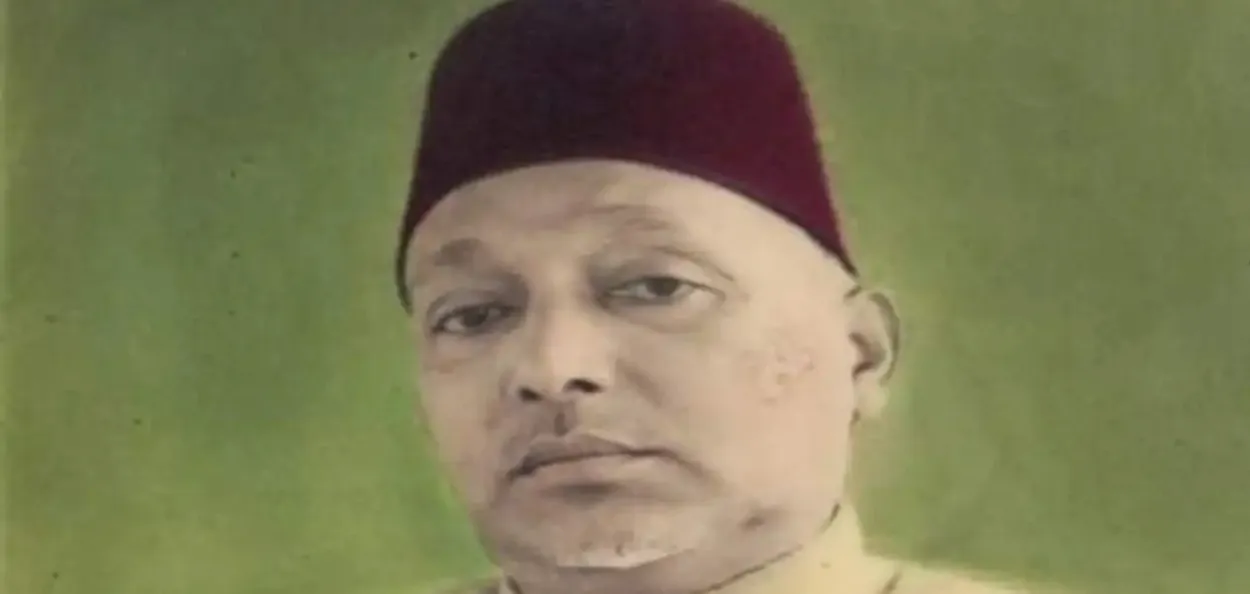
Sir Syed Muhammad Saadullah is one among the Indian Muslim leaders who made an immense contribution to shaping Independent India and yet remained unsung. He was the only Muslim among the members of the Drafting Committee for the Constitution of India, led by Dr. Babasahib Bhimrao Ambedkar.
Before shedding light on Saadullah’s role in the Constitution Drafting Committee, let us know about the Assembly that drafted the Constitution of India.
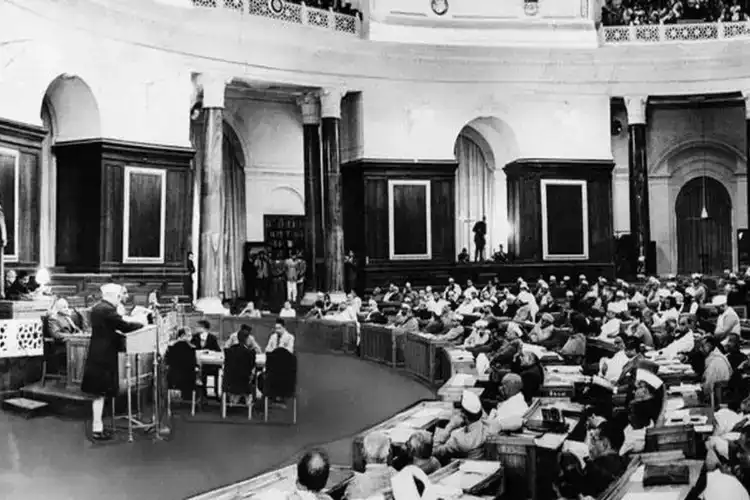
On December 9, 1946, the Constituent Assembly was formed. Its meeting was boycotted by the Muslim League. Soon after, on December 11, Dr. Rajendra Prasad was elected as its chairman. It had 389 members which were reduced to 299 after the partition.
On January 22. 1947 it adopted the Objectives Resolution unanimously. In the same year, the national flag was adopted on July 22, and Independence was achieved on August 15, 1947, with the partition of the country.
On 29 August 1947, a drafting committee was appointed with Dr. BR Ambedkar as its chairman. Other members of the committee were KM Munshi, Muhammad Saadullah, Aladi Krishna Swami Iyer, Gopala Swami Iyengar, N Madhav Rao, DP Khetan, and TT Krishnamachari.
On 22nd November 1949, the ‘Constitution of India’ was passed in the assembly and the last session of the Constituent Assembly was held on 24th January 1950. On 26th January 1950, the ‘Constitution of India’ came into effect after 2 years, 11 months, and 18 days.
The Constituent Assembly in session
Who was Sir Syed Muhammad Saadullah?
Sir Syed Muhammad Saadullah was a member of the draft committee but even before that, he was a well-known leader of India. He was the Prime Minister of Assam in British India. He was also Chairman of Guwahati Municipality and Minister of Education and Agriculture of Assam from 1924 to 1934. Saadullah was a highly educated jurist.
Syed Muhammad Saadullah was born on 21 May 1885 in Guwahati into a traditional Assamese Muslim family and died in 1955. He was educated at Cotton College, Guwahati, and Presidency College, Calcutta. After receiving higher education, he started practicing law in Guwahati and soon made his mark as a lawyer. He also practiced in the Calcutta High Court for some time. He became the Chairman of the Guwahati Municipality and was nominated as a member of the Legislative Council in Shillong.
Assam became a Chief Commissioner Province in April 1912. Saadullah participated enthusiastically in the Council’s deliberations and spoke freely on matters of interest to the people of Assam.
He soon became an important figure in the province of Assam. He established his identity as a lawyer after just a decade of struggle. In later days, he also practiced in the Calcutta High Court. Among his neighbours and contemporaries, were Fazlul Haque, Nawab Attaur Rahman, and Barrister. Khuda Bakhsh and Nawabzada AFM Abdul Ali.
He was also important in British India. He was knighted in the 1928 Birthday Honors and made a Knight Commander of the Order of the Indian Empire in the 1946 Birthday Honours.
In his political life, Syed Muhammad Saadullah was closely associated with the All-India Muslim League. He attended the 10th session of the League in Calcutta in December 1917 and served as a member of the committee that negotiated the Lucknow Pact between the Muslim League and the Congress.
In 1946, he participated in the demand for Pakistan and supported the inclusion of Assam in Pakistan. However, when Assam seceded from Pakistan at the time of partition, he remained in Assam. Similarly, as the Prime Minister of Assam, he contributed to the building of a modern Assam.
He was an able parliamentarian, an eloquent orator, an experienced administrator, and a moderate and liberal leader in ideology. Saadullah is regarded as one of the architects of modern Assam. As the head of the Assam government, he planned well and developed development plans. He took a special interest in the promotion of industries. He is said to have supported and encouraged the migration of peasants from Bengal to develop agriculture in Assam and to introduce jute cultivation. His critics accuse him of deliberately settling Bengali Muslims in Assam.
Muhammad Saadullah is also known for his generosity, honesty, and competence. He also worked for the tribal people of the North Eastern region and inducted a tribal leader JJM Nicholas Roy in his first cabinet. He was considered the best person because of his experience, ability, and honesty.
source: http://www.awazthevoice.in / Awaz, The Voice / Home / by Ghaus Siwani, New Delhi / posted by Aasha Khosa / January 26th, 2023
“Material culture is the history and philosophy of objects and the myriad relationships between people and things.” Bernard Herman, material culture scholar.
I have always had a fascination with old homes. I grew up in one – Abid Manzil in Aligarh, built in 1935. Well-known as the home of Aligarh Muslim University, the town in western Uttar Pradesh saw many Indian Muslims migrate there in the early 1900s from different parts of the erstwhile United Provinces. This included the Muslim zamindar elites who came from neighbouring principalities as well as working-class and middle-class families from eastern Uttar Pradesh. Many wanted to give their children the chance of a good education at the university. These people brought their cultures and histories with them, blending with the Islamic yet liberal intellectual philosophy propagated by AMU and spearheaded by its founder, Sir Syed Ahmed Khan. The homes of these people, mostly built in the 1930s, are evidence of this syncretic tradition.
On my most recent visit to Aligarh I realised that these pre-Partition houses were gradually disappearing. I met with some of the remaining families, who wanted to talk about the rich history of their homes, the culture and ways of life they embodied, and the measures they were currently taking to secure a future for their homes and themselves. This photo essay tells the story of these homes and the people who live in them.
Ibne Sahab was born in 1923. He lost his mother when he was just a month old and was raised by his father. Ibne Sahab’s childhood was spent in Chattari and he moved to Aligarh to pursue his formal education when he was 15 years old. He studied Persian and Psychology at Mohammedan Anglo Oriental College.
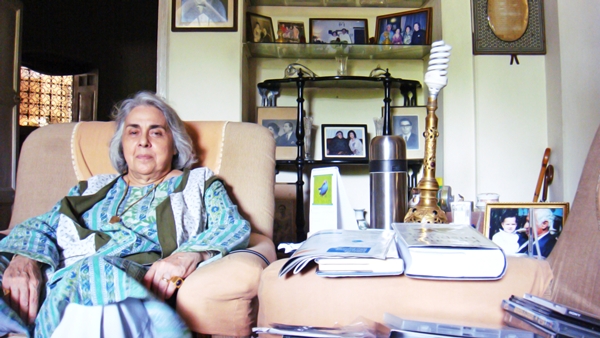
Sir Syed Ahmed Khan, the founder of Aligarh Muslim University (AMU) was Scheherazade Alim’s paternal great, great-grandfather. She spent her childhood in Aftab Manzil, named after her maternal great-grandfather Aftab Ahmed Khan, who built the house in 1904. Scheherazade Begum studied law at Oxford and became a barrister and has taught law at AMU. After two decades of living and working in Dubai, Scheherazade Begum and her husband Abdul Alim Khan returned to Aligarh and to Aftab Manzil in 1997, and have lived there since.
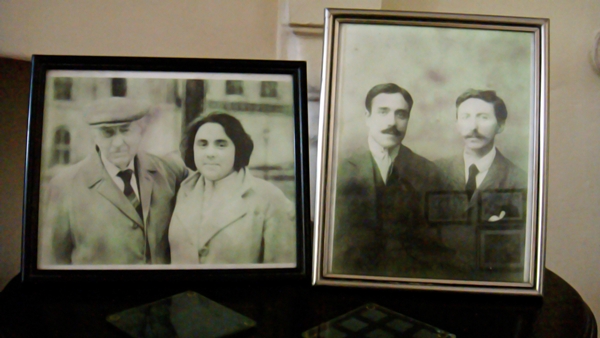
Aftab Manzil saw the comings and goings of influential men and women. One of them was E M Forster. Scheherazade Alim’s grandfather Sir Ross Masood was a close friend of the writer, who dedicated A Passage to India to him. Masood became the Vice Chancellor of AMU in 1929, a position he held for three years. The photograph on the right was taken in Italy in 1911. The photograph on the left shows Scheherazade Begum with Forster. It was taken in England in 1962. She herself cultivated a deep bond with the writer, calling him “Forster Chacha”.
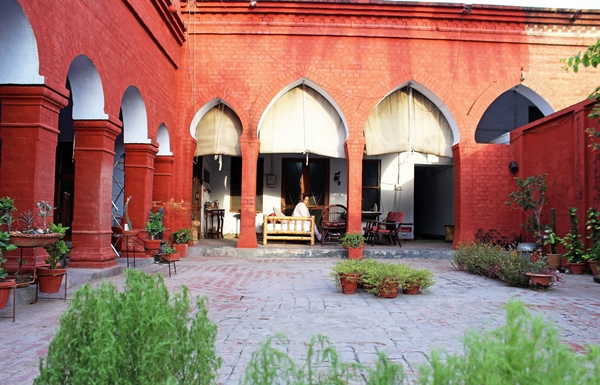
Aftab Manzil was built using bricks manufactured by Ford and MacDonald, the company responsible for supplying red bricks for the building of AMU. Other homes such as Habibullah Manzil were also constructed using surplus material from AMU. Courtyards like this, at Habibullah Manzil, are typical features in old homes. They are public spaces that allow family members to socialise, yet at the same time are private and separated from the outside world.
Professor Tariq Gilani, who lives in Habibullah Manzil, says that it is difficult to secure an old house, especially since there is no one, single uninterrupted wall, each room having several doors. David Lelyveld, in Aligarh’s First Generation, explains that this was the case “so that different sorts of people might come and go without crossing paths.” The architecture, therefore, reflected the norms of social interaction in the early 20th century.
These norms dictated that spaces within a household be separated on the basis of gender. Purdah was adhered to, especially among the elite. To enter the ladies’ quarter, or zenanah, male servants and visitors had to announce themselves first. In the case of Rahat Manzil’s haveli, non-related males would have entered through a zigzag corridor, preventing them from directly viewing the zenanah.
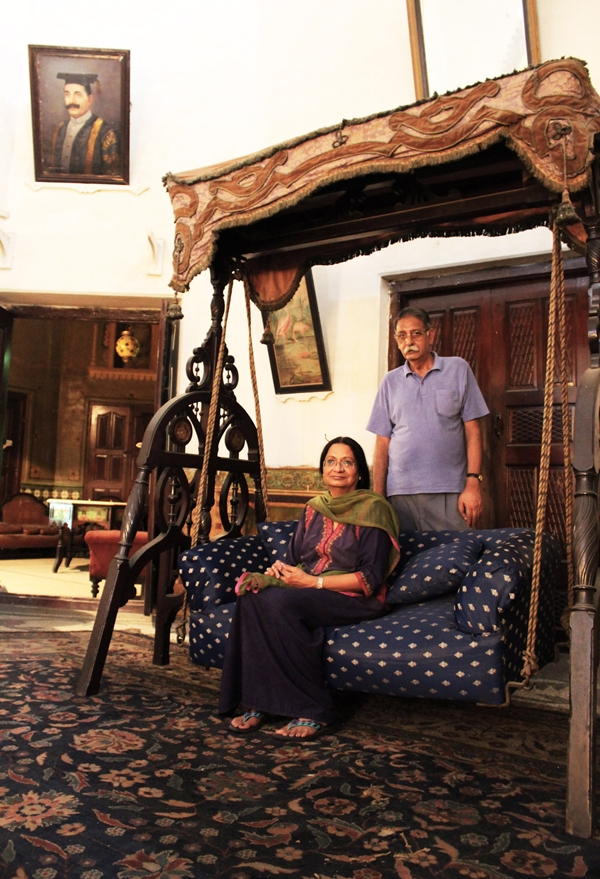
Farrukh Said Khan with his wife Faizana Said Khan in their formal living room in Rahat Manzil. Faizana Said Khan is the great, great-granddaughter of the Nawab of Jaipalguri. The swing is about ninety years old. The photograph of Ahmed Said Khan on the wall is from when he received an honorary doctorate from AMU. Farrukh Sahab recounts that his grandfather, Ahmed Said, was born in 1889. He was an orphan. His parents died in Saudi Arabia in the early 1890s. After the Sepoy Mutiny of 1857, Mahmud Ali was unwilling to stay under British rule. But when his son (Ahmed Said’s father) and daughter-in-law died, he had to return to take care of his grandson. Ahmed Said was eight years old when his grandfather passed away. He was sent to English House (AMU’s old guest house) by the British, who had taken control of Chhatari – Ahmed Said’s ancestral zamindari. When he turned 21, Ahmed Said was made the Nawab of Chhatari. He built Rahat Manzil in 1920 as a guesthouse to accommodate his family when they travelled to Aligarh from Chhatari.
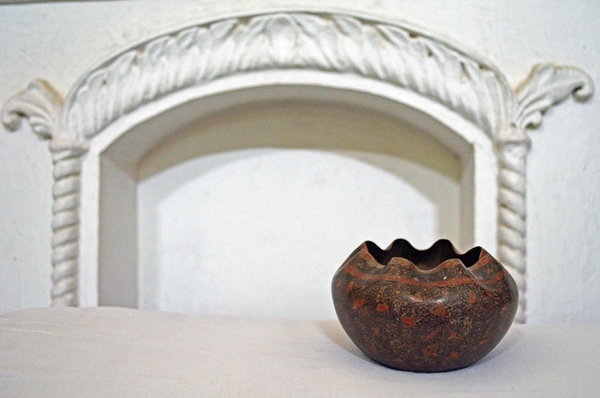
Raja Masudul Hasan, also known as the Raja of Asgharabad, supervised the building of Hasan Manzil. He was a keen collector, and according to Zafar Sahab (his son and current owner of Hasan Manzil), he bought this copper ashtray from Chinese traders who frequented Aligarh in the 1930s. He moved to Aligarh in 1925 from Asgharabad, where he was a zamindar, and died in 1954.
Over the years, the landscape of Aligarh has undergone dramatic changes. Where there were once independent bungalows and havelis surrounded by orchards, now stand three or four storey apartment buildings. Many more people have migrated to Aligarh in search of education or employment. This changed landscape, although inevitable and positive in some ways, has imposed stress upon those who live in old homes in Aligarh. Some are uncertain about what will happen to their homes after they are gone. Will their children come back and take charge of things or will their homes, like many others, be broken down and apartment buildings erected in their place?
People have coped with these challenges in different ways. Ibne Said Khan has transformed Rahat Manzil’s formal dining room into a museum dedicated to the life and career of his father, statesman Ahmed Said Khan. He says that one winter evening, after his father’s death in 1982, he saw that his servant was bringing bundles of old paper to feed the angethi (brazier). He asked the servant where he was getting these papers and discovered stacks of old documents and photographs in the storage area. He rescued these and set to work, chronologically organising documents and photographs that captured the breadth of his father’s work. With more than a hundred photographs and documents mounted in the main dining area, Ibne Sahab says that there are still many photographs and documents to be sorted and incorporated into this museum.
The Sherwanis of Muzammil Manzil have renovated a section of their house and transformed it into a school, which they run. Blossoms started in 2001 in a rented house and later shifted to Muzammil Manzil. What was once an aangan (courtyard) is now a school playground. The school has over 800 students.
The Sherwanis also maintain a library in one section of their house named after Syed Sherwani’s grandfather and the original owner of Muzammil Manzil – Nawab Muzammil Ullah Khan. The library started with 500 books but Sherwani Sahab’s father, Rahmatullah Khan Sherwani, expanded it over four decades. It now holds 16,000 books and 2400 rare manuscripts.
This door was hand painted by Rashid Sahab’s nephews. Like Zafar Sahab, Rashid Sahab says that the family has inculcated a sense of responsibility in the next generation to take care of Saman Zaar. For the future, he adds, “We should try to come back to this place and live together (as a family).”
~ Meher Ali is a freelance journalist from Aligarh. She is currently based in Ahmedabad.
source: http://www.himalmag.com / Himalmag, South Asia / Home> Culture> Photo Essay / by Meher Ali / December 19th, 2013
More than 650 students who received coaching in mathematics from Anees Kutty have been selected in NDA.
Donning a cap and beard and his typical smiling countenance Anees Kutty, popularly known as Bhaiya, makes mathematics a fun to learn.
He has the charm and skill to make even the most math-phobic persons fall in love with the subject. Anees Kutty is a well-known Mathematics teacher in Pune, Maharashtra.
He not only teaches mathematics but also guides his students to find the right stream of education and the college for further education. He informs their parents about various institutions and schools run by the government, such as Navodaya Vidyalaya, Sainik School, and R M C School, etc.
He has been counseling parents of his students to admit their wards in schools like this run by the government, for they can have a good future after studying in these.
He is sure that most of the students joining the Navodya Vidyalas end up getting well placed job, do well in life and hold high positions. The problem is that common people do not have complete knowledge of these institutions. Anees Kutty belongs to Kerala and has been living in Pune since long.
He explains, “When I was in Class X, I taught mathematics to my classmates for the first time on Teacher’s Day.From that day people started coming to me with unsolved mathematics questions.”
He started teaching maths in 1988. Anees Kutty feels that the objective of teaching mathematics in schools should be to develop the reasoning power of the students. “It is not right to just memorize the facts,” he says. Kutty plays the role of mentor, and career counselor for every student.
“I want today’s child to grow up to be a responsible citizen of India” For this, he encourages his students to take admission in National defence Academy ato become officers in the Indian Military. The NDA at Dehradun is a joint service academy of the Indian Armed Forces that trains cadets from all the three services, Army, Navy and Air Force. All the candidates are jointly trained for their respective service academies for pre-commissioning training.
Anees Kutty says that mathematics is a matter of understanding and practice. He has been teaching maths to children for the last 35 years and keep innovating ways to generate interests of students in the subject. He uses formulas lile Amar-Akbar-Anthony, Changu-Mangu, Mara-Mari, Jugalbandi, etc. to make learning mathematics fun. Children love his satta method, which means ‘shortcut to a problem’
His students do not call Anees Kutty as Sir, but as Bhaiya. And he always guides them like an elder brother. Anees Kutty’s methods of encouragement, training and explaining mathematics have helped a large number of children admission into the NDA. Apart from this, his students are providing their services in other places.
Math is all around he says, “The importance of mathematics has increased in today’s technology era. Children should come out of maths phobia and present their 100 percent. Be it Aryan More or Gaurav Jagtap or Aditi Kumar, with the help of Anees Kutty, he and many youths like him were successful in making their place in the NDA. Today he is doing his bit to serve his country.
source: http://www.awazthevoice.in / Awaz, The Voice / Home / by Shehtaj Khan, Pune / posted by Shaista Fatima, ATV / January 23rd, 2023