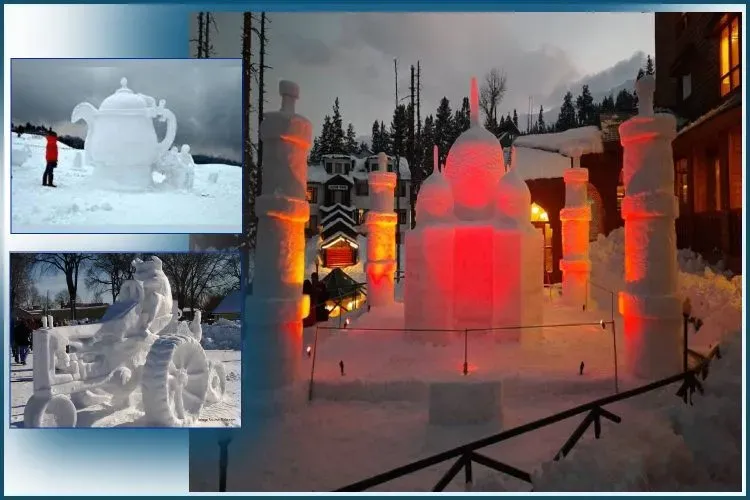
Three Kashmiri youths have been selected for the International Snow Sculpture Championship to be held in America on January 22. An official invitation from international ice sculpture organizer Breckenridge International invited the four participants to represent India in the competition in Colorado, USA.
Zahooruddin Lone from village Patan in Baramulla district, Irfan Latif Mir from a remote area of Kupwara district, Tasadeq Hussain Hijam from Magam village in Baramulla, and Mardul Upadhyay from Uttar Pradesh will be in the Indian ice sculpture team.
This will be the 32nd edition of the International Ice Sculpting Championship in Breckenridge, Colorado, USA. The organizing committee has a history of inviting artists from all over the world.
Team leader Zahooruddin Lone said.”This is an international competition that celebrates art, culture, and the ephemeral, beautiful nature of snow,” the invitation read. We are very pleased to have been selected for the International Snow Sculpture Championship to be held in Breckenridge, Colorado. We are grateful to the organizing committee for allowing us to participate in this championship.
Representing Team India is a huge achievement for us and we are very proud to be getting this opportunity from across Kashmir which will inspire many other youngsters here. They will try to participate in such international events and make Kashmir proud.
Zahooruddin Lone with his sculpture
Zahooruddin Lone popularly known as Zahoor Kashmiri has represented India twice in the International Snow Sculpture Championship, according to him snow is natural in Kashmir and it is easy for people to learn how to make snow sculptures.
According to Lone along with other professional ice sculptors Tasadeq Hussain from Budgam trains 20 students interested in making ice sculptures at the Government Degree College, Magam. He said that ice is an easy medium to work in.
Lone said that since the ice in Kashmir is natural and there is no stress of wastage, etc. The interested youth can take time to learn professional ice sculpting.
Hailing from the small village of Patan Singhpura in North Kashmir, Lone has done his Master’s in Fine Arts from Jamia Millia Islamia, New Delhi.He has gained experience in snow sculpting from ‘Snow Festa-2014’, organized by Apelner Event Management and J&K Tourism in Gulmarg followed by the International Snow Sculpting Championship.
He is the leader of a team of 35 professional snow sculptors from across India. Photos of snow sculptures created by young children soon after the recent snowfall have gone viral on social media, showing that the new generation is learning the art.
source: http://www.awazthevoice.in / Awaz, The Voice / Home / story by aasha@awazthevoice.in / January 17th, 2023
Heena clocked 38.57 seconds to improve on Karnataka sprinter Unnati Aiyyappa’s earlier national mark of 40.11 seconds.
pix: indianathletics.in
Rezoana Mallick Heena of West Bengal set U-16 national record in girls 300m race at the National Junior Athletics Champions here on Saturday. Heena clocked 38.57 seconds to improve on Karnataka sprinter Unnati Aiyyappa’s earlier national mark of 40.11 seconds set last year.
Uttar Pradesh high jumper Khyati Mathur was another athlete who broke a meet record, winning the girls U-18 event with a clearance of 1.79m to improve on M Jishna’s mark of 1.77m in Mangalagiri in 2019.
In the track events, Deepak Rohilla (Haryana) and Priya H Mohan (Karnataka) emerged the fastest in the Under-20 men and women’s 400m sprints. Deepak Rohilla won in 47.50 seconds while Priya Mohan was home in 53.94 seconds.
Odisha’s Lalu Prasad Bhoi and Dondapati Mruty Jayaram took the titles of the fastest men in the Under-20 and Under-18 sections, with timings of 10.71 seconds and 10.83 seconds respectively.
Bhawna (Haryana) and S Megha (Kerala) were the champions in the women’s Under-20 and Under-18 100m races.
source: http://www.thebridge.in / The Bridge / Home> Athletics / by PTI / pix edited: by indianathletics.in / November 13th, 2022
Popularly known as Frontier Gandhi, Badshah Khan, Bacha Khan and Fakhr-e-Afghan, his indomitable political spirit has found a place in all of his names.
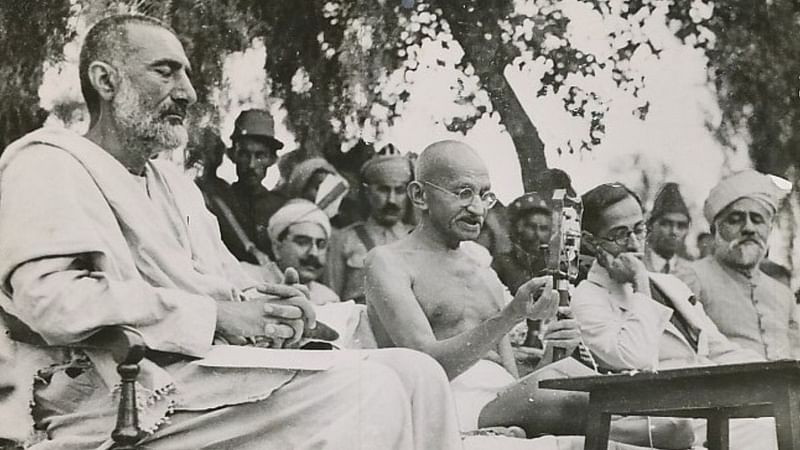
Khan Abdul Ghaffar Khan (L) with Gandhi at King Edward’s College, NWFP, in 1938 | Wikimedia commons
Buried under the historical violence of Pakistan’s tribal belt is a sliver of peace—and it is because of Khan Abdul Ghaffar Khan, a lifelong pacifist who mobilised Pathans against British colonialists in India. Popularly known as ‘Frontier Gandhi’, Badshah Khan, Bacha Khan and Fakhr-e-Afghan, his indomitable political spirit has found a place in all of his names, a reminder of peace, secularism and unity even 35 years after his death in January 1988.
Born into a wealthy Sunni Pashtun family in Pakistan’s Utmanzai in 1890, Khan hailed from the landowning Mohammadzai clan. He devoted his life and resources to upending poverty and promoting education and Hindu-Muslim harmony. But his biggest contribution to the Indian subcontinent, perhaps, came with the ‘Khudai Khidmatgar’, or Servants of God, movement in 1929—the beginning of mass mobilisation against an exploitative British Raj.
Khan’s innate ability to unite the masses non-violently turned him into a ‘powerhouse Muslim leader’ from the erstwhile North West Frontier Province (NWFP). Crackdowns, custodial violence and imprisonment only hardened his anti-colonial stance, laying the foundations for a spiritual resilience which is talked about to this day.
“It is my inmost conviction that Islam is amal, yakeen, muhabat – selfless service, faith, and love,” Khan had said. He had also urged Pathans to “arise and rebuild” their “fallen house.”
Powerhouse Pathan
While Khan’s life was fraught with hurdles and clashes with the colonial government, his political fervour refused to die. For instance, in 1921, he was asked to lead the Khilafat Committee in Peshawar as its president. During his tour of the province, he delivered speeches and emphasised the need to eliminate British imperialism in South Asia. He was subsequently jailed and tortured by the British for three years.
“When Abdul Ghaffar came out of jail in 1924, he was frail and worn-out in body, but his spirit was unvanquished. His blue eyes were proud of their suffering, determined and cold. The Pathans looked at Abdul Ghaffar with admiration; they had found their leader, thanks to the British,” writes documentary filmmaker Dinanath Gopal Tendulkar, in his book Abdul Ghaffar Khan: Faith is a Battle.
Khan led the Khudai Khidmatgar movement with the call to lay down arms and use civil resistance to challenge British rule. This massive movement involved 100,000 Pathans who took an oath to join the movement: “Since God needs no service, I promise to serve humanity in the name of God. I promise to refrain from violence and from taking revenge. I promise to forgive those who oppress me or treat me with cruelty. I promise to devote at least two hours a day to social work.”
Within a short time, they established a network in the province, particularly in neglected rural areas.
The leaders of the Khudai Khidmatgar movement put great emphasis on discipline. The volunteers were organised and drilled in a military fashion, given the ranks of generals, colonels, captains, etc. They even wore identical shirts in shades of brown or dark red. This move invited extensive propaganda from the British Indian government, which equated Khidmatgars to the Bolsheviks. But Khan never left his non-violent ideals.
“There is nothing surprising in a Muslim or a Pathan like me subscribing to the creed of non-violence. It is not a new creed,” Khan had once declared, as per his biographer Eknath Easwaran.
Friendship with Gandhi, relationship with Congress
Khan is also often remembered in history for his curious and close friendship with M.K. Gandhi. The link that connected the two has its roots in the 1919 Rowlatt Act. Khan stood up against the Act—which promoted indefinite imprisonment without a trial—and mobilised 50,000 people in Utmanzai to raise their voices in protest.
Scholars have differentiated how Khan and Gandhi approached their respective philosophies of non-violence. In popular discourse, it is often portrayed that Gandhi heavily inspired Khan’s ideals of non-violence. But J.S. Bright, a biographer of Khan, thinks differently.
Bright also said that in Gandhi’s case, his ideals received more publicity and that he should be called “Indian Khan” instead.
Khan never supported Partition
In December 1929, Ghaffar Khan and other prominent members of the Khudai Khidmatgar attended the Lahore Session of the Indian National Congress to raise awareness of the volatile situation in the NWFP.
Impressed with the Congress’s support, Khan endorsed the party’s programme of complete independence and non-payment of taxes and revenues.
But when it came to the issue of Partition, Khan felt “betrayed” by the Congress Working Committee. Owing to the violence and realpolitik, most Congress leaders agreed to the Partition plan laid out by British viceroy Louis Mountbatten, with the Congress Working Committee overwhelmingly ratifying it. Only four leaders held out – Gandhi, Khan, Ram Manohar Lohia and Jayaprakash Narayan.
“You have thrown us to the wolves,” Khan said in resentment, according to an article about his death published in Los Angeles Times.
The Pashtuns were only given the choice of going with India or Pakistan; independence was out of the question. Convinced that his participation in the decision-making referendum would lead to violence and bloodshed among Pathans, Khan and the Khudai Khidmatgars left the ball in the Muslim League’s court.
The NWFP eventually voted to join Pakistan, where Khan fought for a better deal for the frontier region and advocated for the province’s autonomy. For this, he spent years in prison.
After 17 years of isolation and imprisonment in Pakistan, Khan went on to live in Kabul in the mid-1970s.
He spent his last years in the Afghan city of Jalalabad, visiting India occasionally for medical treatment, mainly for arthritis. Khan died on 20 January 1988 of complications from a stroke while under house arrest in Peshawar and was laid to rest in Jalalabad.
(Edited by Zoya Bhatti)
source: http://www.theprint.in / The Print / Home> The Print Profile / by Shania Mathew / January 20th, 2023
Jamdahan Village (Jaunpur District), UTTAR PRADESH / London, U.K. :
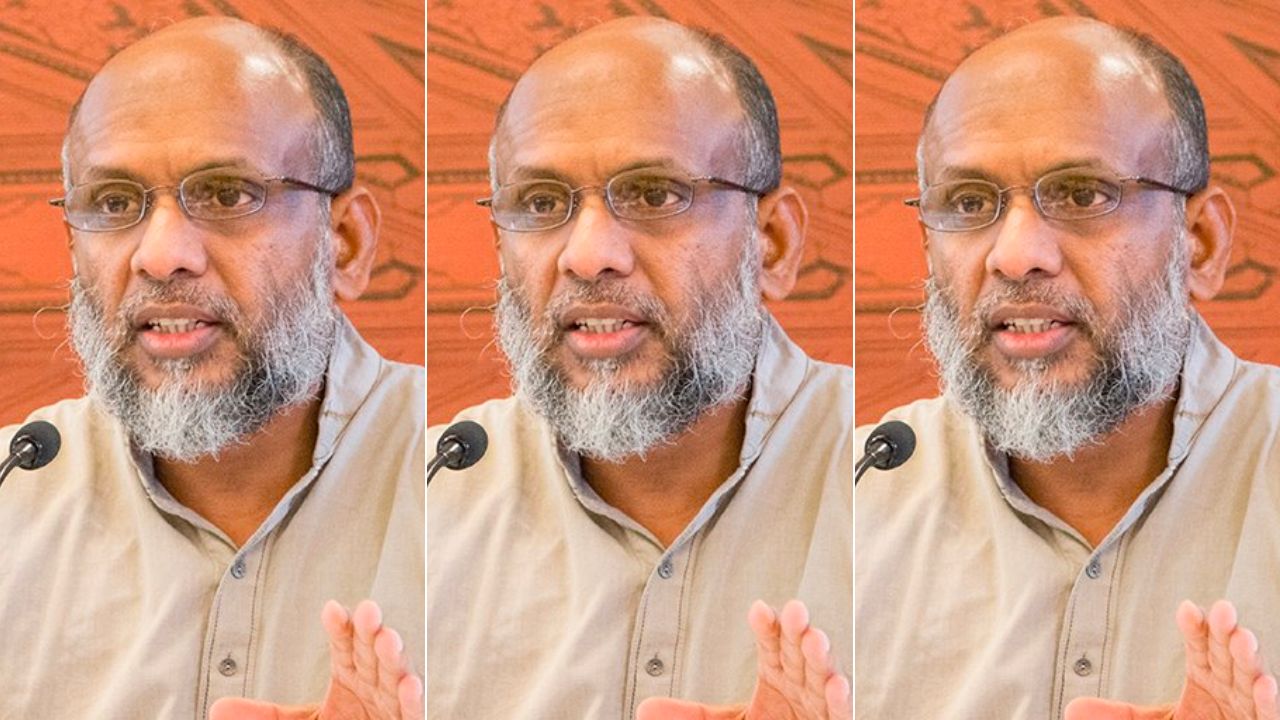
Mohammad Akram Nadwi is a renowned Islamic scholar, theologian, author and professor of Arabic and Islamic studies. He is known for his extensive knowledge of the Quran, Hadith, and Islamic law, as well as his ability to convey complex concepts in a clear and accessible manner.
Early Life and Education
Mohammad Akram Nadwi was born in India in 1963. He comes from a family with a long tradition of Islamic scholarship, and from a young age, he showed a strong interest in Islamic studies. He began his formal education by studying the Quran and Hadith under the guidance of local scholars and his father.
In 1975, Nadwi traveled to the city of Lucknow, India to study at the famous Nadwatul Ulama, an Islamic university and seminary. He studied under some of the most renowned scholars of his time, including Maulana Abul Hasan Ali Nadwi and Maulana Sayyid Abul Hasan Ali Hasani. He earned a degree in Islamic studies and later completed his PhD in Islamic theology from the University of Lucknow. Thereafter he was sent to England as Abul Hasan Ali Nadwi’s representative, becoming a Research Fellow at the Oxford Centre for Islamic Studies.
Personal Life
Mohammad Akram Nadwi is married and has children. He is known for leading a simple and humble lifestyle, and is dedicated to spreading the teachings of Islam to as many people as possible.
Career
After completing his studies in India, Nadwi began teaching at various universities and Islamic institutions in the United Kingdom, including the Oxford Centre for Islamic Studies and the Markfield Institute of Higher Education. He has also taught at universities in India and the United States.
In addition to his academic work, Nadwi is also a respected speaker and lecturer. He has delivered speeches and lectures at various conferences and events around the world, and is known for his ability to convey complex Islamic concepts in a clear and accessible manner.
Muhammad Akram Nadwi is also a founder of Al-Salam Institute, UK where he also serves as a principal. The Institute is dedicated to the traditional Islamic sciences and provide a platform for the authentic Islamic scholarship to be studied and transmitted.
Books
Mohammad Akram Nadwi is a prolific author, who has written several books and articles on various Islamic topics. Some of his most notable works include:
“Al-Muhaddithat: The Women Scholars in Islam” – This is a 43-volume biographical dictionary of female scholars of Hadith, and is considered one of the most comprehensive works on the subject. It is the first book of its kind in the Muslim world, and provides valuable insight into the role of women in the study and transmission of Islamic knowledge.
Madrasah Life: A Student’s Day at Nadwat al-‘Ulamā’
Al-Fiqh Al-Islāmī According to the Hanafi Madhab Rites of Purification, Prayers and Funerals Vol 1
Abū Ḥanīfah His Life, Legal Method & Legacy
Shaykh ‘Abū al-Ḥasan ‘Alī Nadwī: His Life & Works
Ibn Ḥazm on the Lawfulness of Women Attending Prayers in the Mosque
Journey to Andalus – Translated and edited by Dr. Abu Zayd.
Lessons Learned: Treasures from Nadwah’s Sages
Remembering Beautiful Days In Jerusalem
Foundation To Ḥadīth Science: A Primer on Understanding & Studying Hadith – Translated and edited by Dr. Abu Zayd.
He is also the subject of the best-selling book: If the Oceans Were Ink: An Unlikely Friendship and a Journey to the Heart of the Qur’an (2015).
Overall, Mohammad Akram Nadwi is a respected and influential Islamic scholar, known for his extensive knowledge of the Quran, Hadith, and Islamic law, as well as his ability to convey complex concepts in a clear and accessible manner. His work has helped to promote understanding and harmony within the Muslim community, and his lectures and writings continue to inspire and guide people on their spiritual journey.
source: http://www.thecognate.com / The Cognate / Home> Famous Muslims / by The Cognate News Desk / January 12th, 2023
The money given for cremations and burials are taken from Kaffoor’s own pockets.
Mohamed Kaffoor has helped cremate bodies of 18 people so far, none of whom were his kin | Express
Kanniyakumari:
Living is expensive; so is death. At times, mourning gets distracted by all the expenses that they are expected to bear. Even the dead are not spared the horrors of the materialistic world. With their hands and feet tied with threads of deception, nostrils blocked with tiny blobs of cotton, and the white shroud of perfection – death, at times, can appear more gentlemanly than the living. Getting ready with the assortment of items termed essentials could be painstakingly unkind.
Mohamed Kaffoor
For anybody else, it would be a weird response of judgmental stares and self-suggestive silent spells. Mohamed Kaffoor, however, is quick to answer: “Rs 4,500 for cremating Hindus and Rs 8,000 for the burial of Muslims and Christians.” The 62-year-old from Edalakudy is not a gravedigger, but his handbook is as brimming with the essentials as Liesel Meminger’s from Markus Zusak’s The Book Thief.
The only difference between Kaffoor and Liesel, apart from reality, is that the former stole no book, but he is penning the afterlives of many by just giving the dead a decent send off. Kaffoor is from Nagercoil city, who has helped with the burial of two deceased and cremation of bodies of 18 people so far, none of whom were his kin of any kind. He visits crematoriums and burial grounds and sponsors the dead in their final journey.
Kaffoor’s philanthropy does not don the smiling faces of dust-clad, shabby but happy children. Only silence follows with little or no claps, let alone acknowledgment.Born to a daily-wage labourer father, Kaffoor started working as a salesman at a medical store in the city after his pre-university course (PUC). After working with a company of pens in Kerala and touring Tamil Nadu for his work, Kaffoor flew down to Uganda to work in a shop. He, along with a friend, set up his own shop in the African country.
After making some money, Kaffoor returned to India and started living in Edalakudy serving as chairman of the trust hospital UGASEWA, which was formed by people working in Uganda. Following his expertise, Kaffoor became a coordinator and continues to serve as one. While his stint with social service for the living had begun earlier, it was not until three years ago that Kaffoor got into serving the dead as well. Kaffoor was contacted by an acquaintance of his to suggest financial help for the final rites of a young man who had recently died. Kaffoor reached Kanniyakumari government medical college hospital.
“His family had no money to even perform the last rites,” he tells TNIE. After rushing to the mortuary, Kaffoor found a young woman holding a child in her arms and an aged woman. “She said that her husband sustained them by stitching and repairing umbrellas on the roadside in Nagercoil,” he says, adding that the family lost its money treating him of a sickness and had barely anything left to conduct his last rites. So, following completion of formalities, Kaffoor took the body to the crematorium at Ozhugunaseri and gave Panner, the cremator, Rs 4,500. The family members were brought as well and the last rites conducted as per their wishes.
Kaffoor says that he also got a facility constructed at his native place for Muslims to cleanse the bodies of their deceased. Even during Covid-19 pandemic, his services were available.Similarly, Kaffoor has also performed last rites for the elderly from Good Samaritan Home for the Aged at Aasaripallam in Nagercoil. S. Basil Rajan, director of the home, tells TNIE, “We admitted the sick aged inmates of our homes at nearby Kanniyakumari government medical college hospital for treatment. If they died, the bodies were kept in the mortuary and Kaffoor would be informed. He came to the mortuary and took the bodies to perform last rites.”
The money given for cremations and burials are taken from Kaffoor’s own pockets. A Shahul Hammed, a 74-year-old retired bank employee, is Kaffoor’s only companion on this road. About Kaffoor, Hammed said, “Though he was not very rich, he helped many people during the time of Covid.” In fact, Kaffoor recalls that his wife found out through an appreciation post on Facebook and has been supportive since.
source: http://www.newindianexpress.com / The New Indian Express / Home> Good News / by M Abdul Rabi, Express News Service / January 22nd, 2023
As digital payment applications like PhonePe, Google Pay, PayTM, etc have become easy means of transaction across India, a young man from Assam has developed an online payment system and given it the name Assam Pay Commission.
The money transfer application developed by Mustafizur Rahman of Dalgaon in the Darang district has recently received the government’s approval and recognition. The app is registered with the Government of India’s ‘Bharat Bill Payment System’ and is also available in the Google Play Store.
Mustafizur Rahman, son of Zulfikar Ali and Jyosnara Begum, is currently a B-Voc IT undergraduate student at Kharupetia College. Mustafizur has been interested in technology since his childhood.
Mustafiur Rahman working on his computer
Mustafizur spends most of the day with his mobile and computer. He has already submitted his app for registration with India Start Up. He is also planning to register his innovation with Assam Start-Up.
Speaking with Awaz-The Voice, Mustafizur Rahman said: “I was thinking about making this app for a long time. I was also facing a lot of financial problems. But, I have been able to get involved in the app over the past 3 months. Just like PhonePe, Google Pay, and PayTM, people can recharge, transfer money, pay bills etc. Our Assam Pay app has all the features of the leading apps in trend. People don’t always get cashback when they recharge on other apps. But, in our app, they get the cashback for every transaction.”
He said, “I was always interested in mobiles and computers. I always used Google Pay, PhonePe, etc. Using these, I thought that many people use these apps. But there is no profit. So, I started working on my app. Those who have used our app are very happy. We take the problems faced by the users seriously and try to fix them as soon as possible. In our app there is a help link, click on it and you can call or message. If you tell us your problem, we will fix it.”
The logo of Mustafizur Rahman’s app
He adds he plans to add more features to Assam Pay app in the future. Like the way updates keep coming on other apps, Assam Pay users will also be able to get new features through new updates.
“I am working on another big project. I cannot reveal it right now. But a very nice service will be launched soon,” Mustafizur said about his plans.
source: http://www.awazthevoice.in / Awaaz, The Voice / Home> Youth / by awazthevoice.in / by Ariful Islam, Guwahati / January 21st, 2023
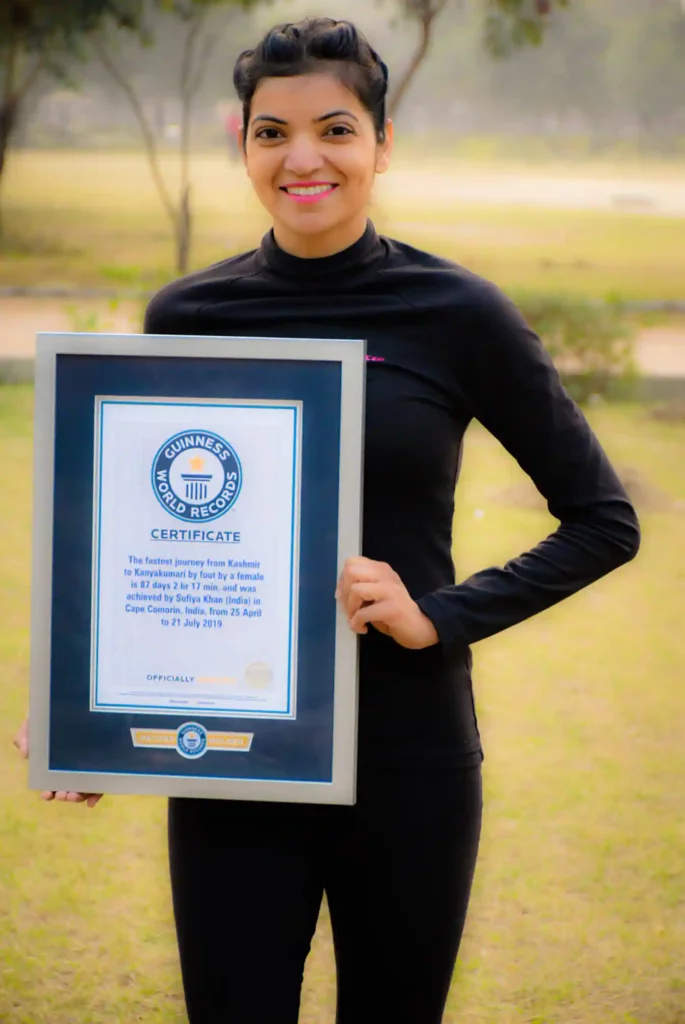
Sufiya Khan completed her first international expedition, ‘Run Across Qatar’ — 200 kilometer south to north in 30 hours and 34 minutes.
Ultramarathoner Sufiya Khan (Photo: Twitter)
Doha:
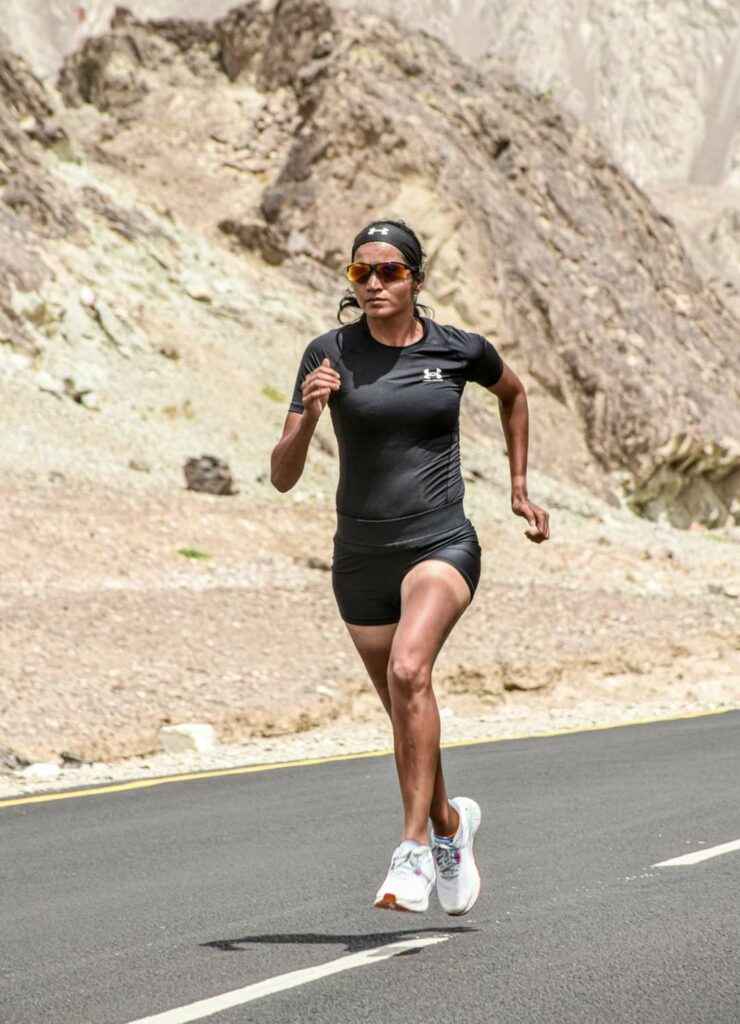
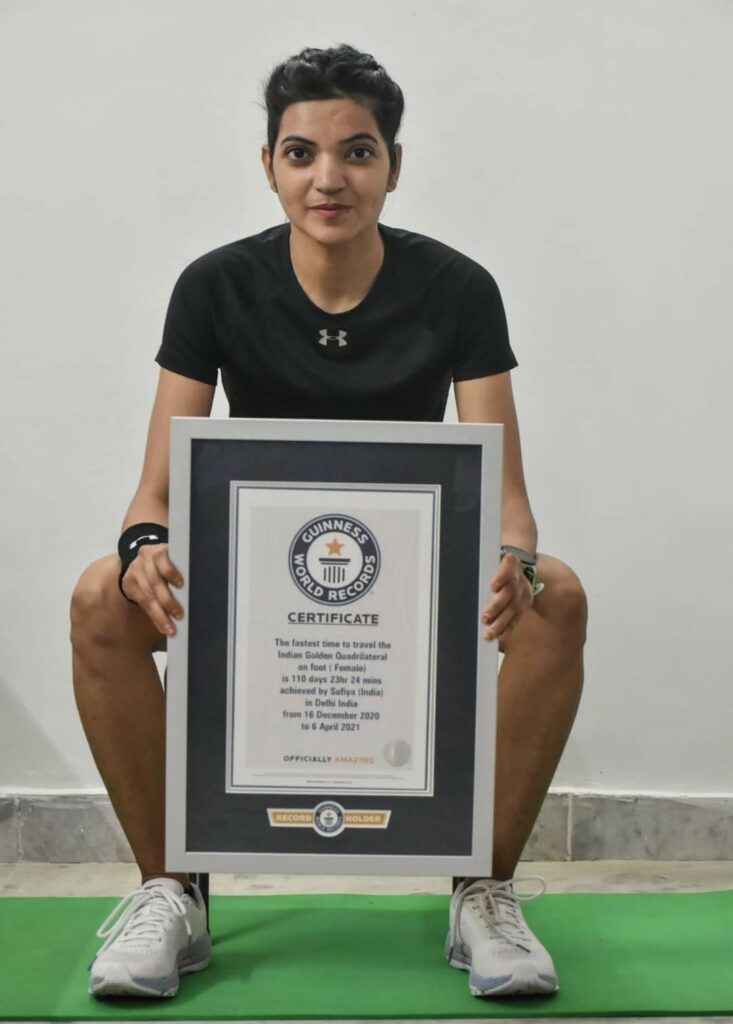
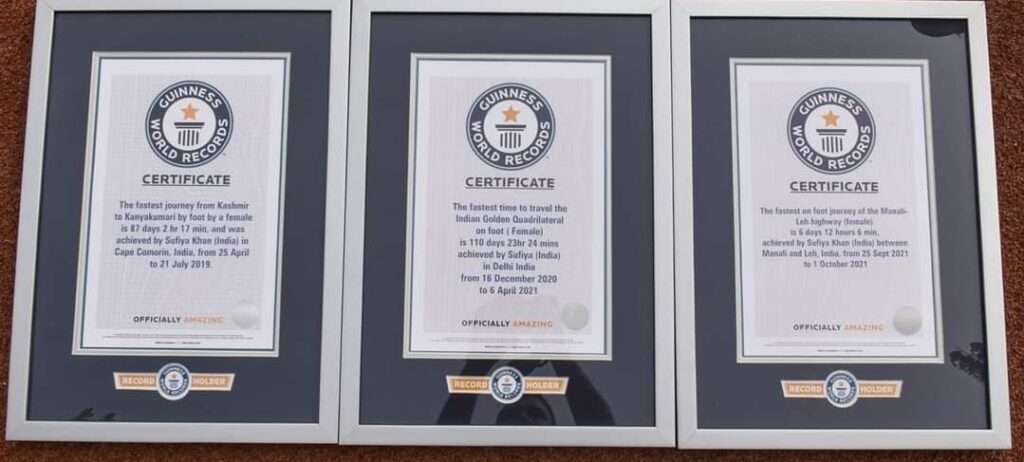
Indian ultramarathoner Sufiya Sufi Khan, a three-time Guinness World Record holder has achieved another feat as the fastest runner to run across Qatar.
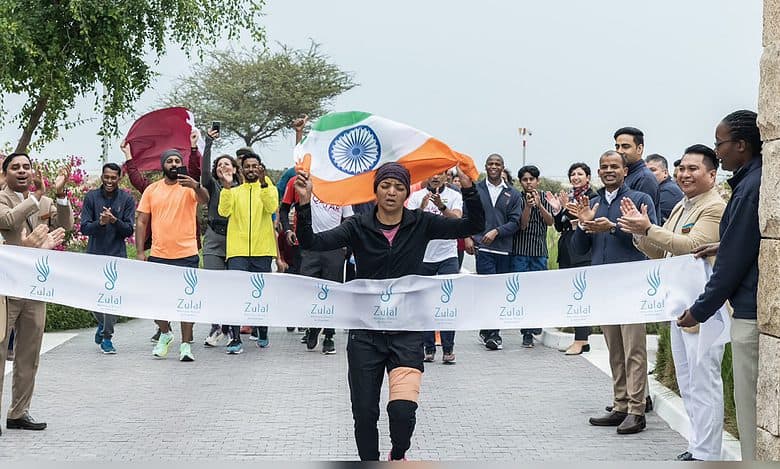
Sufiya Khan completed her first international expedition, ‘Run Across Qatar’ — 200 kilometres south to north in 30 hours and 34 minutes.
In a Fastest Known Time (FKT) Guinness World Record attempt, Sufi started her run from Abu Samra on Thursday, January 12, at 6 am and finished at Zulal Wellness Resort in Al Ruwais on Friday, January 13.
The Indian embassy in Doha congratulated Safiya Sufi Khan on her achievement.
Before starting the campaign, she met the Indian Ambassador to Qatar Deepak Mittal.
Sufi Khan tweeted, “Honored to meet The Indian Ambassador to Qatar H.E. DR. DEEPAK MITTAL at @IndEmbDoha before the run. Had a fruitful conversation about the Run, Fitness community in Qatar and India and got his blessings for the World record attempt. @MEAIndia @PMOIndia @narendramodi.”
About Sufiya Khan
An increasing number of people are leaving their 9 to 5 jobs today! In fact, most of them take a career break to do something completely outside the box. It may seem scary at first, but it could be one of the best decisions you’ve ever made! And today we have a brilliant example of a woman who quit her job and chose a completely different profession. Here meet Sufiya Khan.
Photo: Sufiya Khan/Facebook
37-year-old Sufiya Khan was born and raised in Ajmer, Rajasthan. She worked in the aviation industry for almost a decade, but the turning point in her life came when she decided to run her first half marathon in Delhi in 2017.
In 2018, Sufiya quit her airline job and started running as a way to unwind and relax. She participated in several marathons and races. In the year 2018, she broke a national record by running the Golden Triangle — 720 km — in 16 days.
In 2019, she set the record for the fastest time by a female runner in the “Kashmir to Kanyakumari” category and in April 2021, she became the fastest woman to run along “The Indian Golden Quadrilateral Road”.
Sufiya currently holds several world records and continues to explore what her body is capable of.
In 2021, she undertook the Tribute Run to salute the sacrifices of Kargil War Heroes.
Photo: Sufiya Khan/Facebook
source: http://www.siasat.com / The Siasat Daily / Home> News> India> Qatar / by Sakina Fatima / January 18th, 2023
A good archaeologist needs both research and writing skills. M.A. Qaiyum, who passed away on Thursday night, had these qualities in equal measure. But he wrote more than he excavated.
Archaeology holds the key to understanding who we are and where we come from. In that sense, Qaiyum had all the answers to who, what, where, when, how and why.
It wouldn’t be an exaggeration to say that he knew Hyderabad like the back of his hand. A walking encyclopaedia indeed as far as Hyderabad goes. Qaiyum also had thorough knowledge and wrote extensively about Mughal and Deccan history. No wonder he explained the initials of his name as: Mughal, Asafjahi and Qutb Shahi.
The noted archaeologist died at a hospital in Banjara Hills where he was admitted for fever and lung infection. He suffered a massive heart attack around 8.30 p.m on Thursday night. But doctors succeeded in reviving him through (CPR), Cardiopulmonary resuscitation procedure. After some time he suffered another attack and passed away. Two days ago when he was taken out from ICU, Qaiyum kept speaking in English to the surprise of the doctors and his family members. He spoke mostly about Hyderabad, its history and the Department of Archaeology. “He breathed his last peacefully with a smile on his face”, said his son, M.A. Basith.
Qaiyum was 76 and is survived by wife, two sons and a daughter. His funeral prayers were held at Masjid-e-Suffa, Janki Nagar and the mortal remains were laid to rest at the graveyard in First Lancer. Qaiyum joined the Department of Archaeology and Museums in 1965 as Assistant Director and retired in 2004 as Deputy Director. During his long service lasting 39 years he gained firsthand knowledge about the Qutb Shahi, Mughal and Asaf Jahi architecture along with historical background of those periods. He also had thorough knowledge about the Chalukyan, Kakatiyan and Buddhist monuments situated in the combined Andhra Pradesh.
With his death, the city has lost an important historian. A few months ago another great historian of Hyderabad, M.A. Nayeem, had passed away.
What was unique about Qaiyum was that he was not the run-of-the-mill archaeologist. Nor was he the typical nine-to-five officer. He went beyond the call of duty and engaged himself in delving into the past. As Deputy Director, Department of Archaeology and Museums, he researched and wrote extensively.
Even after retirement his passion for history and heritage did not wane. In fact he wrote two books – one on Charminar and another on Taj Mahal. His knowledge and experience came handy in identification and protection of sites of heritage and archaeological value. “Like all cities Hyderabad too is caught in a time-wrap,” he used to say and called for sustained efforts to retain its rich past.
Years after his retirement, the Archaeology Department took his services in preparing a database of all antiquities and archaeological findings in the State. Qaiyum helped in preparation of archaeological resources in terms of built heritage, sites and antiquities right from Badshahi Ashoorkhana to Makkah Masjid, Paigah Tombs, Hayat Bakshi Mosque, Monsieur Raymond Tomb and Gun Foundry.
Qaiyum had a sharp eye for artefacts. When everyone preferred to relax on Sundays, he would visit Charminar and its surroundings looking for rare objects and books. And he hit pay dirt every time he went out. Qaiyum has a good collection of historical books and rare objects. Once he stumbled upon a 450 year old copper coin minted during the time of Ibrahim Qutb Shah. Coins of the third Qutb Shahi ruler are not to be found even in the A.P. State Museum, which boasts of thousands of copper coins. And Qaiyum got it for a song on the Old City pavement.
Unlike other archaeologists, Qaiyum took pains to write about his findings. He is perhaps the only archaeologist who wrote a comprehensive book on Hyderabad’s famous icon, Charminar. The book –Charminar in Replica of Paradise – throws light on monuments all over the world which sport ‘minars’ to explain the concept of minarets. In this book Qaiyum also explains the magic of ‘four’ in Charminar. He explains in detail the geometric combinations and mathematical reasoning that went into the construction of Charminar. The number ‘char’ (four) and its multiples, according to him, figure in the design of the structure. He discovered at least 22 spots where the magic of four dazzles.
Such was his knowledge about the Hyderabad monuments that he was invariably deputed as a guide to conduct the VVIP’s visits to historical landmarks like Charminar, Golconda Fort and the royal mausoleums of Qutb Shahi kings. He had the privilege of showing the historical monuments to Queen Elizabeth in 1983, Prince Charles and Princesses Diana in 1992, Boris Johnson, then British Foreign Secretary, film star, Dilip Kumar, Turkish novelist and Nobel Prize winner, Orhan Pamuk.
Qaiyum had the knack of surprising foreign delegates by pointing out the historical connection of India and Hyderabad with their countries.
A voracious reader, Qaiyum authored five books in all. His first book “Hyderabad – Tab Aur Ab (Hyderabad – Then and Now) was published by the Siasat Daily. Then he came up with another book – Great Achievements of Turks in India. He also penned a comprehensive book on Charminar followed by Khas Mahal to Taj Mahal. This apart he published hundreds of research articles on Mughal and Hyderabad monuments.
In his death, Hyderabad has lost a great historian who immensely loved the city of his birth.
source: http://www.siasat.com / The Siasat Daily / Home> News> Hyderabad / by JS Ifthekhar / September 16th, 2022
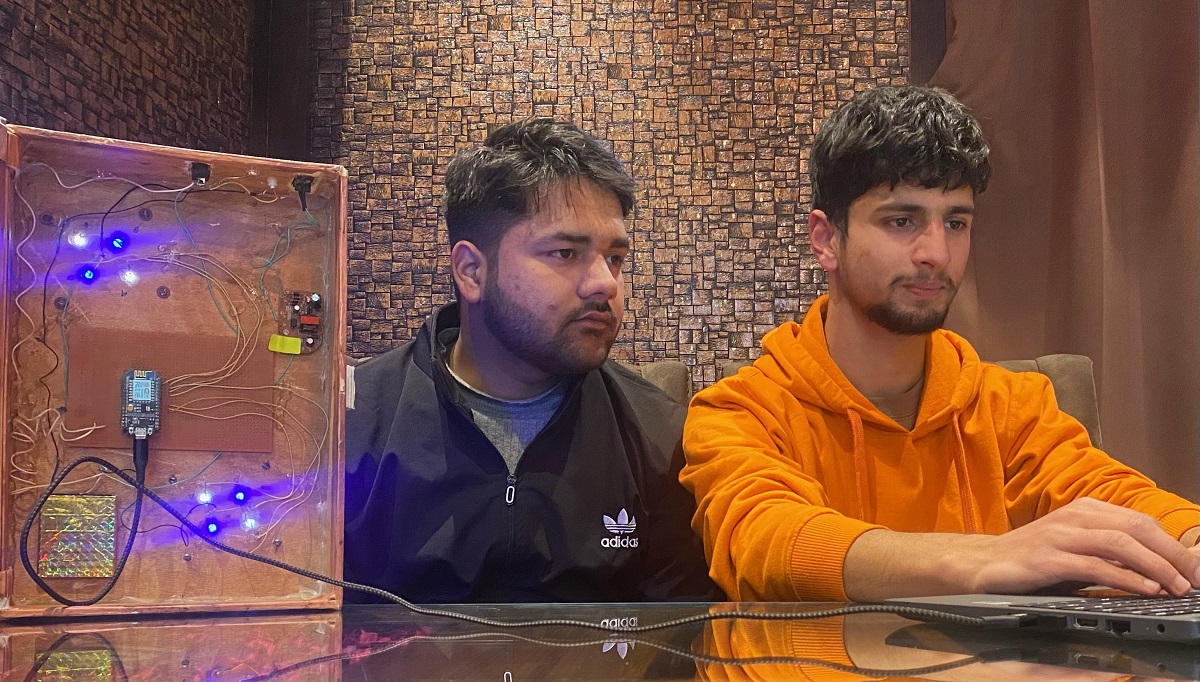
Kashmir’s Abid Fayaz and Danish Mushtaq, the class 12 students, have developed a model to make mathematics learning easy.
Their model resembles a wooden box with angles marked on it. It can be used as such and also online. In the latter mode, it has to be connected to a mobile phone application, which is further connected to a Wireless Local Area Network.
According to the Kashmir Life portal, the application provides a variety of options related to the properties of angles like corresponding angles, opposite angles, etc. The model works by highlighting the angles on the board when a user selects an option in the application.
This model will give students a better understanding of the properties of the angles, especially for middle and high school level students.
Abid Fayaz and Danish Mushtaq with their model (Image Courtesy: Kashmir Life)
Abid and Danish are students in 12th standard at the Boys Higher Secondary School, Zainakote with mathematics as the main subject.
“Since childhood, I struggled with mathematics and could never understand concepts like angles and triangles. However, in eighth grade, something changed and I began to enjoy the subject. I attribute this to my math teacher, who helped me understand the fundamentals of the subject so that by the time I reached class ten, I was more proficient than ever,” Abid Fayaz told Kashmir Life.
“Maths being a non-practical subject and triangles being the toughest chapter at the school level is the real reason why many students fear the subject. This is where the idea of model piqued in my mind,” he said.
Abid says he has always been inclined toward science and innovation.
It took the duo two years to make the final product and they are still working on improving its design.
“We shared the idea with our teachers at our school. They motivated us to participate in the science exhibition where we showcased the basic version of our model for the first time,” said Abid.
“Initially I started to use this model for teaching my cousins and the outcomes were good. This is where we decided to make it better and modify it as it can help the students to learn maths. Danish helped me equally throughout my journey.”
During an event of the Jammu and Kashmir State Council of Educational Research and Training (SCERT), the duo was appreciated by the Union Territory government for their efforts in creating this mathematical model. They also presented the model at DIET Srinagar where they were appreciated for their work.
source: http://www.awazthevoice.in / Awaz, The Voice / Home> Youth / by awazthevoice.in / January 19th, 2023
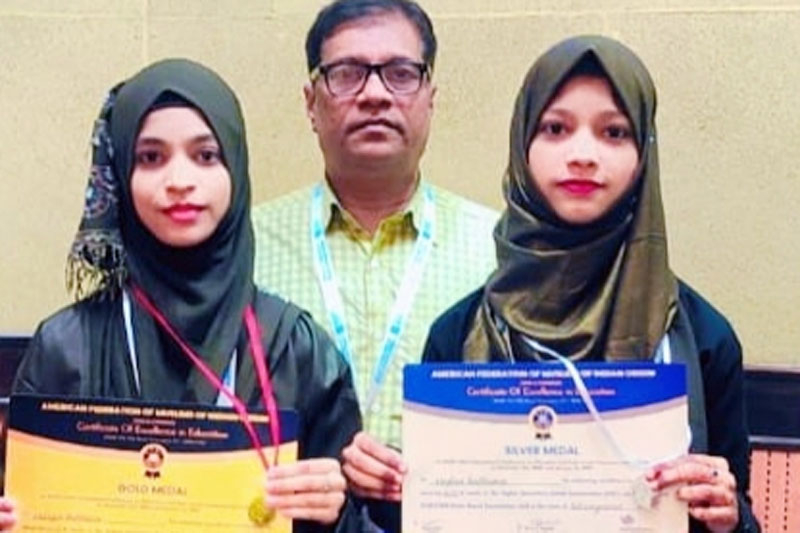
Two sisters of Telangana Minority Residential College in Uppal, Hyderabad, were awarded gold medals and silver medals in Delhi. Nargis Sultana daughter of Mohammed Abdul Saleem scored 95 per cent and was awarded gold medal while her sister Nafees Sultana scored 93 per cent in 12th grade and bagged a silver medal. Nargis wants to be a doctor and is preparing for NEET. Nafees is pursuing a bachelor’s degree in pharmacy in Telangana.
The awards were presented at the 32nd Convention of the American Federation of Muslims of Indian Origin (AFMI) in New Delhi.
Hyderabad: Two sisters of Telangana Minority Residential College in Uppal, Hyderabad, were awarded gold medals and silver medals in Delhi. Nargis Sultana daughter of Mohammed Abdul Saleem scored 95 per cent and was awarded gold medal while her sister Nafees Sultana scored 93 per cent in 12th grade and bagged a silver medal. Nargis wants to be a doctor and is preparing for NEET. Nafees is pursuing a bachelor’s degree in pharmacy in Telangana.
The awards were presented at the 32nd Convention of the American Federation of Muslims of Indian Origin (AFMI) in New Delhi.
Founded in Detroit, United States in 1989, AFMI recognises the country’s top student achievers. It has recognised over 4,000 students so far from over 400 districts in India.
source: http://www.munsifdaily.com / The Munsif Daily / Home> Education / by Rasia Hashmi / January 02nd, 2023
.webp)