Madhu’s father is a farmer and mother is a homemaker.
Both of them had been able to reach upto the interview round a few times in their previous attempts, yet missed making it to the final list by a few marks.
Bengaluru :
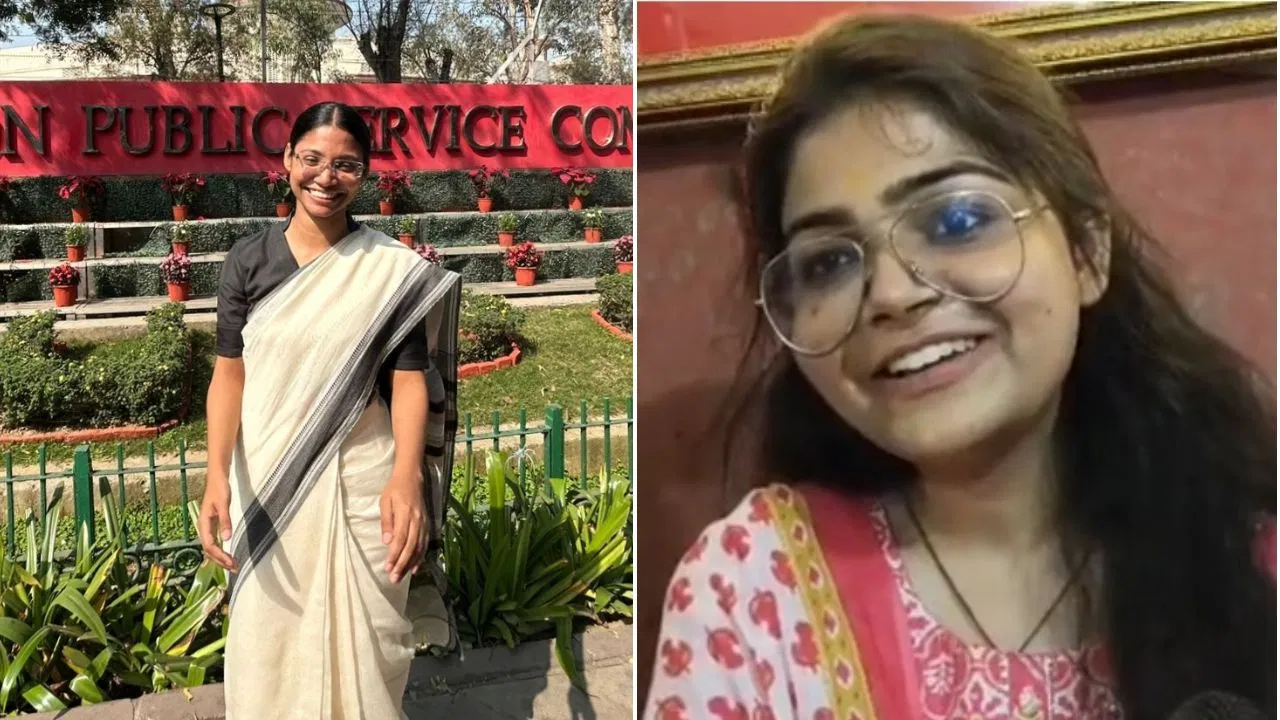
Two candidates from Kolar are among the 22 candidates from Karnataka who have cleared the UPSC Civil Service Examination (CSE) 2025. While A Madhu secured the 436th rank, Tousif Ulla Khan secured 741st rank at the national level. Both of them had been able to reach upto the interview round a few times in their previous attempts, yet missed making it to the final list by a few marks.
Tousif, a resident of Bangarpet, cleared the CSE in his fifth attempt. He said, “I was qualified for an interview in my fourth attempt in UPSC CSE 2024 but missed to be in the final list by one mark. But I kept up my hopes. I am happy to have cleared it in my fifth attempt, but I am not sure if I will be able to join the service as it depends on the allocation I receive for my rank.”
Tousif started preparing for the CSE in 2021, soon after his graduation, and he happened to land a job in the Council of Scientific and Industrial Research (CSIR) as an assistant section officer in Hyderabad last year.
“The job helped me sustain in this UPSC journey, as I was able to support myself, as well as my family, financially,” he said.
Madhu, who hails from Eragasandra village in Kolar, also hails from a humble background.
His father is a farmer and mother is a homemaker. He pursued his studies in government schools and colleges. “I have been able to qualify for an interview four times. Despite this, I failed in the prelims in 2023, and it was an eye opener for me. In my third attempt in 2024, I secured 544th rank and was allocated Indian Revenue Service. This year, I am hoping to get Indian Administrative Service with my rank as well as my OBC status,” he said.
source: http://www.newindianexpress.com / The New Indian Express / Home>Karnataka / by Rashmi Patil / March 08th, 2026
To address the shortage of blood for patients in hospitals across Dakshina Kannada district, the organisation Blood Donors Mangaluru (BDM) has formed a special task force committee. The team has been actively donating blood after Iftar every day during the month of Ramadan.
Whenever an urgent request for blood is circulated through WhatsApp groups, members of the task force immediately contact the concerned hospital and the patient’s relatives. After breaking their fast in the evening, they visit the blood banks and donate blood directly to help patients in need.
With the support of local organisations and volunteers, the BDM task force has collected around 150 units of blood within the first 15 days of Ramadan and supplied it to patients requiring urgent treatment, providing significant humanitarian support.
Generally, hospitals experience a shortage of blood during Ramadan. Although several blood donation camps were organised before the start of the fasting month, the number of donors was not sufficient to meet the demand.
During Ramadan, many Muslims refrain from donating blood while fasting, while people from other communities continue to donate. Dakshina Kannada has a large number of hospitals and also receives many patients from neighbouring districts, increasing the demand for blood.
To overcome the shortage, the BDM team led by founder-president Siddique Manjeshwar, president Nawaz Naringana, vice-president Ashraf Uppinangady, secretary Shahul Hameed Kashipatna, and direct blood donation coordinators Taufiq Kulai, Mansoor B C Road, and Salam Chombugudde has been actively organising direct blood donations.
The organisation has been conducting blood donation camps and various social service activities for the past 13 years across the state, country, and even abroad.
“Due to Ramadan fasting, college examinations, summer season, and an increase in the number of patients, hospitals are facing a shortage of blood. Therefore, we visit hospitals after Iftar and donate blood directly wherever it is urgently required,” said Siddique Manjeshwar, founder-president of Blood Donors Mangaluru.
“We have been prioritising blood donation for the past 13 years. Our aim is to help poor patients and those coming from other districts and states for treatment. We have formed an active team that immediately responds whenever blood is required,” said Nawaz Naringana, president of Blood Donors Mangaluru.
source: http://www.daijiworld.com / Daijiworld.com / Home> Karnataka / by Daijiworld Media Network – Mangaluru (NJC) / March 09th, 2026
Some victories are seen with the eyes, but Jaseela’s is one that truly fills the heart. Defying all odds and turning her personal challenge into an inspiration for differently-abled UPSC aspirants, visually impaired 30-year-old Jaseela Jannath P from Vadakara, Calicut, has secured the 397th rank in the UPSC Civil Services Examination.
This marks Jaseela’s fourth attempt at the exam. Her optional subject, Sociology, reflects her deep passion for social issues, honed through her M.A. in Social Work with a Women-Centred Practice specialisation from the Tata Institute of Social Sciences (TISS), Mumbai. Prior to focusing on her UPSC preparation, Jaseela worked as a Project Associate at Prajaahita Foundation in Kozhikode from July 2021 to March 2022, contributing to community development initiatives.
Jaseela credits much of her success to the one-year UPSC preparation journey covering Prelims, Mains, and interview guidance at Xylem IAS, where she joined the civil services batch in March 2025. Speaking about her learning approach, Jaseela relied on audio-based learning methods, voice-to-text tools, and peer-led discussions to navigate and master the vast syllabus.
“Blindness tested me, but it never defined me. With the right support, including personalised mentorship, innovative tech-aided learning modules, and a supportive community, I was able to crack it,” she said. Looking ahead, Jaseela aspires to serve and empower people facing challenges similar to her own.
Apart from her academic pursuits, she has also established herself as an eloquent public speaker and secured A grades in Mimicry, Vanchippattu (boat song), Folk Song, and Malayalam Recitation at school youth festivals.
Jaseela is the daughter of the late Kunhabdulla P and homemaker Sainaba.
Including Jaseela, a total of 29 students from Xylem IAS have secured ranks in the examination.
source: http://www.businessnewsthisweek.com / Business News This Week / Home> Education / by Neel Achary / March 06th, 2026
Ishita Sharma (right) and Ifra Shams Ansari (right)
The daughters of Uttar Pradesh achieved remarkable success in the UPSC 2025. Ifrah Shams Ansari of Bhadohi and Ishita Sharma of Gorakhpur brought honor to their state and families by securing high ranks. Their achievement has brought joy to their families.
Daughters from Bhadohi and Gorakhpur districts of Uttar Pradesh have brought glory to the state by passing the UPSC-2025 examination. Bhadohi’s daughter Ifra Shams Ansari achieved All India Rank (AIR) 24, while Gorakhpur’s daughter Ishita Sharma achieved AIR 26. Their success has brought joy to the entire district and family. Ifra Shams Ansari is set to become the district’s first IAS officer.
Ifra Shams Ansari, a resident of Rotahan village in the Chauri Bazaar area of Bhadohi city, has created history by securing an All India Rank of 24 in the prestigious Union Public Service Commission (UPSC-2025) examination. Her father, Shams Ansari, said he could not be happier during this holy month of Ramadan. He said the Indian Administrative Service (IAS) is one of the most prestigious and influential civil services in the country, and his daughter’s selection is a matter of pride for the entire family.
Ifra completed her primary education from Lucknow.
Her father, Shams Ansari, is in the carpet business. He said Ifra completed her primary education at La Martiniere Girls’ College in Lucknow. She then earned a Bachelor of Arts (Honors) in Economics from Lady Shri Ram College for Women in Delhi. She furthered her education by earning a Masters (M.A.) in Economics from the Delhi School of Economics.
Took coaching from RCA
To prepare for the Civil Services Examination, she took coaching from the Residential Coaching Academy (RCA) of Jamia Millia Islamia, after which she successfully cleared the UPSC Civil Services Examination. Her father, Shams Ansari, said that his daughter was inspired to take the exam by her classmate, Shruti Sharma, who had passed the UPSC Civil Services Examination two years earlier and is currently an IAS officer.
Learn where Ifra got her inspiration from.
Shruti Sharma’s success gave Ifra the confidence and inspiration that she too could reach this level. After discussions with her family, she began preparing for the Civil Services Examination. She secured a rank in her first attempt, but due to her relatively low rank, she re-took the exam and secured 24th rank in her second attempt. Shams Ansari further stated that his family always provides full support to children.
Gorakhpur’s daughter created history
Ifrah is the second of their children and is no less important to the family than a son. They said that their daughter has brought them the greatest joy during this holy month of Ramadan. The family wishes that she continues to serve the nation and society with excellence, and that Allah grants her continued success. Ishita Sharma, a resident of Raptinagar, Gorakhpur, is no less. She secured the 26th rank in the UPSC 2025 results in her fourth attempt.
Completed studies from Delhi University
After completing her B.Com and M.Com from Delhi University, Ishita chose commerce as her optional subject. She began preparing for the Civil Services exam while living at home. She made it to the interview stage on her third attempt, but was unsuccessful. However, Ishita secured the 26th rank in the UPSC exam on her fourth attempt. Ishita’s father, DK Sharma, is a bank manager, and her mother, Archana Sharma, is a homemaker.
Passed NET-JRF in the first attempt
Ishita passed the NET-JRF in her first attempt. It was only after that that she began preparing for the civil services. Ishita attributes her success to dedication, hard work, and commitment. She emphasized that choosing an optional subject for the civil services should be thoughtful. She gave full credit for her success to her elder brother. She stated that she would work to improve education while holding this position.
source: http://www.tv9hindi.com / TV9 Bharatvarsh / Home> Hindi News> State> Uttar Pradesh / by Rohit Gupta (Bhadohi) / Pradeep Tiwari (Gorakhpur) / translated from Hindi to English / March 07th, 2026
Angadipuram Village (Perinthalmann Taluk, Malappuram District), KERALA :
Fathima Shehza K has topped the ICAI CA Intermediate January 2026 exam the result of which has been declared on Sunday March 08, 2026.
CA Inter Topper January 2026:
Fathima Shehza K has topped the ICAI CA Intermediate January 2026 exam the result of which has been declared on Sunday March 08, 2026.
As per the results announced by Institute of Chartered Accountants of India (ICAI), Fathima Shehza K secured the All India Rank 2 (AIR 2) in the Chartered Accountancy (CA) Intermediate examination held in January 2026.
Fathima Shehza scored a percentage of 84 per cent with a score of 504 out of the total 600 marks. Fathima Shehza missed the Top Rank by just 4 marks which went to Kanhiya Lal.
Kanhiya Lal bagged 508 out of the total 600 marks and secured the All India Rank 1 (AIR 1) in CA Inter January 2026 exam.
Fathima Shehza is a resident of Perintalmann, Kerala whereas Kanhiya Lal hails from Ellenabad, Haryana.
Faridabad’s Vanya Bansal has secured the 3rd rank with 83 per cent and 498 marks.
Who is Fathima Shehza?
The CA Inter January 2026 Topper, Fathima Shehza is a resident of Angadipuram – a small village of Perintalmann Talka in the Muslim dominated Malappuram district of Kerala.
Fathima had earlier also topped the ICAI CA Foundation exam in January 2025. She had scored 356 marks in CA Foundation exam held for January 2025 session, and had emerged All Kerala Topper.
Talking to media after topping the CA Foundation Exam last year, Fathima had said her target was even higher. “Topping Kerala state is not my target. My dream is to secure the top rank at all India level”, she had said last year.
She is a student of Profinz College – also called Profinz Perinthalmanna, a prominent Commerce (CA, CMA, ACCA, CS) coaching institute in Perinthalmanna, Malappuram district.
After clearing CA Foundation and Intermediate exams, Fathima is is now eligible to start her articleship (practical training) while preparing for CA Final.
ICAI CA Intermediate Result January 2026
Institute of Chartered Accountants of India (ICAI) declared the CA Inter Jan 2026 result on Sunday March 8, 2026.
A total of 1,05,526 candidates had appeared in the CA Inter Jan 2026 Group 1 exams. Out of them, 14,733 candidates cleared the exam, registering a pass percentage of 13.96. CA Inter Group II exam saw a pass percentage of 15.54, with 10,798 candidates clearing the exam out of 69,477 who appeared.
ICAI conducts these exams twice a year, in January and July.
The CA Intermediate January 2026 examinations were conducted in multiple shifts across centres in India and abroad. As per the official schedule, Group I exams were held on January 6, 8 and 10, while Group II exams were conducted on January 15, 17 and 19, 2026.
Candidates who appeared for the exam can check their results on the official websites at icai.nic.in and icai.org.
source: http://www.ummid.com / Ummid.com / Home> Education & Career / by ummid.com news network / March 09th, 2026
As many as 38 candidates from the Residential Coaching Academy (RCA), Centre for Coaching and Career Planning, Jamia Millia Islamia (JMI) have cracked the UPSC Civil Services Examination 2025 the result of which was declared today i.e. Friday March 06, 2026.
UPSC CSE Result 2025:
As many as 38 candidates from the Residential Coaching Academy (RCA), Centre for Coaching and Career Planning, Jamia Millia Islamia (JMI) have cracked the UPSC Civil Services Examination 2025 the result of which was declared today i.e. Friday March 06, 2026.
Significantly, 04 candidates have secured positions within the top 50 ranks and shine at All India Ranks 7, 14, 24, and 29, becoming top performers from the Jamia Millia Islamia, New Delhi.
Among the 38 candidates from the Jamia RCA UPSC Coaching Centre who have successfully qualified in the examination, securing positions in various All India and Central Services, 15 are women candidates.
“This highlights the important role played by Jamia Millia Islamia in promoting equity and inclusivity within the ‘steel frame of India'”, the university said.
List of JMI RCA UPSC CSE 2025 Toppers
A R Rajah Mohaideen (7)
Surabhi Yadav (14)
Ifra Shams Ansari (24)
Nabiya Parvez (29)
Hassan Khan (95)
Navneet Kaur (111)
Sakshi Saxena (151)
Towseef Ahmad Ganai (254)
Anupriya Rai (258)
Ishita Sharma (268)
Md Ishteyaque Rahman (354)
Shadab Ali Khan (415)
Manmohan Tongaria (425)
Muhammed Swalah T A (429)
Abhishek Jayant (441)
Nazia Parween (478)
Kaali Prasad (516)
Gulfiza (535)
Namita Soni (547)
Hashmi Mohammad Umar (549)
Sharukh Khan (575)
Azeem Ahmad (588)
Saista Parwin (614)
Mohd Irfan Kayamkhani (646)
Mohsina Bano (648)
Ghulam Maya Din (663)
Danish Rabbani Khan (665)
Mohd Abuzar Ansari (671)
Muskan Verma (771)
Sneha Yadav (782)
Eslavath Sri Ram Harsha (823)
Ghulam Haider (832)
Pardhuman Seth (853)
Anshul Singh (873)
Vivek Kumar (882)
Lavanya Sp (891)
Borkar Suresh Liladharrao (912)
Md Shahid Raza Khan (955)
About JMI RCA
The Jamia Residential Coaching Academy is renowned in the field of coaching students for Civil Services exams. The academy provides free coaching and training to candidates from SC, ST, Women, and Minority communities who are preparing for the Civil Services Exams and other competitive examinations.
The Jamia RCA provides free coaching and training to the students with a structured learning environment, including a 24×7 library facility and an ecosystem that is one of the best in the country for aspirants of the Civil Services and other competitive examinations.
The academy has consistently given good results in the past, including the UPSC topper in the Civil Services Examination and other Central and State Services toppers. Since its inception, RCA has given more than 600 selections in Civil Services and other Central and State Services.
UPSC Civil Services Result 2025
The Union Public Service Commission or UPSC announced the Civil Services Final Results Friday March 06, 2026. The UPSC declared the list of the UPSC CSE Toppers 2025 based on the result of the written part of Civil Services Examination, 2025 held by the Union Public Service Commission in August, 2025 and the interviews for Personality Test held in December, 2025 – February, 2026.
As many as 53 Muslims have figured in the list of 958 candidates who emerged toppers in the Civil Services 2025 exams.
Anuj Agnihotri has secured All India Rank 1 (AIR 1), and is UPSC Civil Services 2025 All India Topper. Rajeshwari Suve M has bagged the All India Rank 2 (AIR2) and Akansh Dhull has secured the 3rd position (AIR3).
The toppers have been recommended for various Civil Services posts including Indian Administrative Service (IAS), Indian Foreign Service (IFS), Indian Police Service (IPS) and Central Services, Group ‘A’ and Group ‘B’.
Of the total 958 CSE Toppers 2025, 317 are General candidates, 104 EWS, 306 OBC, 158 SC, and 73 ST.
source: http://www.ummid.com / Ummid.com / Home> Education & Career / by ummid.com news network / March 06th, 2026
As many as 53 Muslims figured in the list of 958 candidates who emerged toppers in the Civil Services 2025 exams results of which was declared by the UPSC Friday March 06, 2026.
UPSC Civil Services Result 2025:
As many as 53 Muslims figured in the list of 958 candidates who emerged toppers in the Civil Services 2025 exams results of which was declared by the UPSC Friday March 06, 2026.
As many as 04 Muslims – A R Rajah Mohaideen, Ifra Shams Ansari, Nabiya Parvez and Hassan Khan, figured in the coveted list of Top 100.
The result of Muslims in the Civil Services 2025 exams has improved as compared to the last year when only 26 Muslims had made to the final list.
List of Muslim Toppers with Ranks
1. 7 – 0818306 – A R Rajah Mohaideen 2. 24 – 6409132 – Ifra Shams Ansari 3. 29 – 0806993 – Nabiya Parvez 4. 95 – 0807895 – Hassan Khan 5. 124 – 0323682 – Arfa Usmani 6. 135 – 0607625 – Khan Saima Seraj Ahmed 7. 157 – 0851961 – Wasim Ur Rahman 8. 253 – 0413785 – Sophia Siddiqui 9. 254 – 1801309 – Towseef Ahmad Ganaie 10. 307 – 0830255 – Mantasha 11. 321 – 5811575 – Asad Aqeel 12. 354 – 4116180 – Md Ishteyaque Rahman 13. 382 – 6315003 – Mohammed Ashmil Shah 14. 411 – 1201049 – Shahida Begum S 15. 415 – 0841896 – Shadab Ali Khan 16. 429 – 1412531 – Muhammed Swalah T A 17. 455 – 6303619 – Shoiab 18. 478 – 6408494 – Nazia Parween 19. 485 – 1210110 – Sheik Mohamed Habisudeen S 20. 497 – 1912530 – Sheik Mohamed Nishath M 21. 513 – 5404215 – Minhaj Shakeel 22. 535 – 2105608 – Gulfiza 23. 549 – 6418492 – Hashmi Mohammad Umar 24. 575 – 0864413 – Sharukh Khan 25. 576 – 1907730 – Asna Anwar 26. 581 – 1804448 – Muneeb Afzal Parrah 27. 588 – 6405397 – Azeem Ahmad 28. 614 – 6421470 – Saista Parwin 29. 625 – 8003085 – Noor Alam 30. 646 – 6408831 – Mohd Irfan Kayamkhani 31. 648 – 2602406 – Mohsina Bano 32. 663 – 3402501 – Ghulam Maya Din 33. 665 – 2626864 – Danish Rabbani Khan 34. 668 – 5803808 – Md Nayab Anjum 35. 671 – 6407027 – Mohd Abuzar Ansari 36. 678 – 1139935 – Insa Khan 37. 695 – 5703524 – Abdul Sufiyan K 38. 708 – 2402117 – Fairuz Fathima M 39. 713 – 1904976 – Mohamed Hashim K 40. 718 – 1902416 – Muhammed Suhail 41. 741 – 0328051 – Thousif Ulla Khan 42. 763 – 3403061 – Koh E Safa 43. 764 – 0619109 – Sana Azmi 44. 773 – 4002952 – Reshma M 45. 811 – 3409679 – Yassar Ahmed Bhatti 46. 832 – 3401291 – Ghulam Haider 47. 860 – 1913151 – Mohamed Shezin C P 48. 869 – 3402386 – Mohd Ajaz Ul Rehman 49. 886 – 1804050 – Azhar Asif Khan 50. 936 – 3409886 – Mohd Sarfraz Choudhary 51. 942 – 1224289 – Abdulla Afridh A 52. 955 – 8001862 – Md Shahid Raza Khan 53. 957 – 0869957 – Irfan Ahmed Lone 54 and 55. It now turned out that there are also “Jahana Sareen V P” – having roll number 5702338 and All India Rank 511, and Shiyad, having roll number 1907064 and rank 743, should also be included in the list.
(Disclaimer: The UPSC does not reveal the religious identity of candidates. The above list has been compiled based on the names of candidates as mentioned in the UPSC Main result released by the Commission. Few names are Muslim sounding but are also used by people belonging to more than one religion. Accrodingly, this list is not final. Also some names might have been missing from the list, or if included, they might not be necessarily a Muslim.
UPSC Civil Services Toppers
The UPSC declared the list of UPSC CSE Toppers based on the result of the written part of Civil Services Examination, 2025 held by the Union Public Service Commission in August, 2025 and the interviews for Personality Test held in December, 2025 – February, 2026.
Anuj Agnihotri has secured All India Rank 1 (AIR 1), and is UPSC Civil Services 2025 All India Topper. Rajeshwari Suve M has bagged the All India Rank 2 (AIR2) and Akansh Dhull has secured the 3rd position (AIR3).
The toppers have been recommended for various Civil Services posts including Indian Administrative Service (IAS), Indian Foreign Service (IFS), Indian Police Service (IPS) and Central Services, Group ‘A’ and Group ‘B’.
Of the total 958 CSE Toppers 2025, 317 are General candidates, 104 EWS, 306 OBC, 158 SC, and 73 ST.
Performance of Muslims in Civil Services Since 2009
In 2024, a total of 26 Muslims figured in the list of 1,009 candidates who emerged toppers in the Civil Services 2024 exams result of which was declared by the UPSC on April 22, 2025.
In 2023, a total of 1,016 candidates were recommended by the Union Public Service Commission for different Civil Services posts. Of them 51 were Muslims.
In 2022, a total number of 933 candidates were recommended for IAS, IPS, IFS, IRS and other civil services posts. Of them 30 were Muslims.
In 2021, a total of 685 were recommended in the UPSC Civil Services 2021 Merit List. Of them, 21 were Muslims. This was the worst performance of Muslim candidates in a decade.
On ther hand, a total of 31 Muslims had cracked the Civil Services Exam (CSE), also known as IAS exam, in 2020 when UPSC had recommended 761 candidates for the top CS posts.
In 2019, 42 Muslims had cracked the exam whereas in 2018 just 27 Muslims had made it to the final result.
The years 2016 and 2017 were the brightest period for Muslim candidates. In 2016, 52 Muslims figured in the list of successful candidates whereas in 2017 their tally was 50.
In 2015, 34 Muslims were among the 1,078 candidates recommended by the Union Public Service Commission (UPSC) whereas 38 Muslims were in the list of total 1,236 candidates in 2014.
In 2013, a total of 34 Muslims had cleared the exam, whereas in 2012, 30 Muslims were among the successful candidates, four of them were among top 100.
Similarly in 2012, 30 Muslims were among the successful candidates and in 2011, 31 Muslims were among the 920 selected for the civil services.
Likewise, in 2010 among the 875 successful candidates 21 were Muslims with Dr. Shah Faisal of Kashmir topping the exam at the national level.
In 2009, a total of 31 Muslims were in the list of 791 successful candidates.
source: http://www.ummid.com / Ummid.com / Home> Education & Career / by ummid.com news network / March 09th, 2026
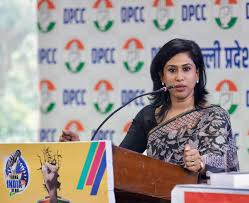
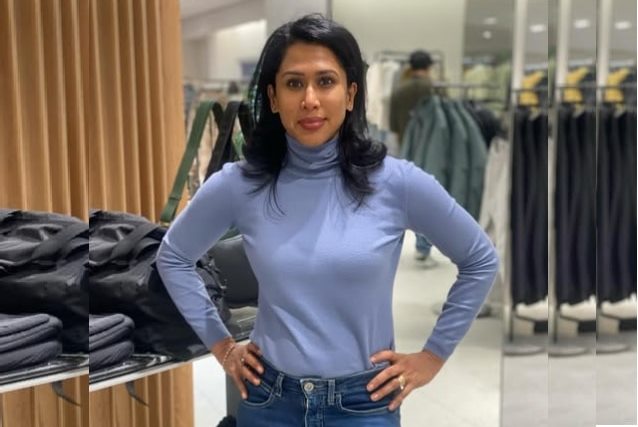
Shama Mohammad, AICC spokesperson and now over a decade in politics, knows all too well the obstacles women face in Indian politics. The numbers speak for themselves: despite the passage of the Women’s Reservation Bill, no Muslim woman from Congress was given a Lok Sabha ticket in 2024, and only two serve as MLAs nationally.
“The biggest obstacles for a woman to progress or survive in politics, especially in Kerala, are men,” she says bluntly. “When I started my journey in Kerala district politics, men in the party felt I can’t make it. And when I started making it, they didn’t like it.”
Shama lists three roadblocks on her way: “First, I am not a dynast, second, I am a woman, and third, I’m a Muslim.”
Unlike Congress, Muslim women like Sofia Firdous in Odisha or Kaneez Fatima in Karnataka, both backed by political families, Shama has no dynastic support. “You won’t find a single Muslim woman in politics who is fighting her way ahead on her own,” she says.
While a party like the Trinamul Congress has actively promoted women — with three out of its five MPs in West Bengal being women — Congress continues to lag,” she adds. (Trinamul Congress has the highest representation of women in Lok Sabha at 38 per cent compared to 13 per cent women by Congress and BJP.)
Her journey into politics didn’t happen overnight. A dentist and then a reporter with ZEE News, Shama grew up in Kuwait, watching debates on BBC, Al Jazeera and other channels with her father, who was passionate about world affairs. “The interest I have today is inherent, as politics is ingrained in my family,” she says.
Known today as a feisty and articulate spokesperson, she developed her political voice over years of actively taking an interest in national and international news, watching and then taking part in media debates, and later, hands-on work in Kerala district politics.
Her media career eventually brought her closer to politics. “I remember watching Manish Sharma, Abhishek Manu Singhvi — my colleagues in AICC now — fighting it out in a war of words on TV evening after evening,” she recalls.
While her job at ZEE News didn’t give her much chance to cover politics, her colleagues recognised her passion, and one of them sent her to meet Randeep Surjewala in the Congress media department. She was soon working for the party, travelling between Pune, where her husband and children were, and Delhi for television debates. “There was no Zoom or Skype then; one had to be physically present for the debates,” she says.
Amidst her work in the media department, she also decided to start working at the district level for the party in her home state of Kerala. But that came with its own challenges. “All this took a huge toll on my children,” she admits. Her elder son was just 14, and her younger was 11 at the time. “But work meant leaving them even as my husband was away in Abu Dhabi again.” Balancing family and political ambitions was a struggle, yet she persisted.
Despite the hurdles, Shama’s commitment to change pushed her on. “I came to politics because I saw rapists, extortionists, and other anti-social elements in Parliament, and we only complain without doing anything about it. So, I wanted to be part of the change,” she says. As a Muslim, she has faced criticism for her faith and assumptions about her patriotism. But this has only made her more resilient: “Because I’m a Muslim, I have to go to Pakistan, I’m a jihadi, I’m anti-national… and I have to take all this,” she adds.
While her progress within the party remains limited due to patriarchy, Shama has turned her energy to grassroots work in Kannur, Kerala, through her Zoya Charitable Trust. “Why I came to politics was to help people, and my trust is in doing precisely that,” she says.
The trust, started in 2018, initially focused on renovating schools, especially following the floods of 2019. It has recently launched a sports school in the district, best known for athlete PT Usha, and another sports school is coming up with funding from the Panchsheel Group, a real estate group. Beyond sports, the trust works on healthcare, education, and women’s empowerment.
Asked what she would like to change about Congress, Shama doesn’t hold back: “Give more tickets to women. Give capable and hardworking women representation as the TMC does.” She knows change is slow, but remains undeterred. “Kerala has 51 per cent women, and if I’m sidelined, I take it as a challenge,” she says. For Shama, being a Muslim and a woman in politics is not just a struggle; it’s a motivation for her to keep pushing, both within her party and through her work at the grassroots.
With Kerala heading once again into election mode, the left-led coalition and the Congress-led coalition will be pitted against each other. Whether her words and vision for women’s representation in politics will become reality remains to be seen, but Shama Mohammad continues her journey, determined to make a difference.
#WATCH | Delhi | On 'Jai Hind Yatra' in all Pradesh Congress Committee (PCC) units today, Congress leader Shama Mohamed says, "We are standing with the army. We are with the country and supporting whatever the government and the army decide. We are showing our support for the… pic.twitter.com/t83hjLe2PG
His 60 wickets led J&K to its maiden Ranji Trophy triumph
AUQIB NABI’S SINGLE-season journey from a largely unknown cricketer outside of Jammu & Kashmir to the toast of the Indian cricketing fraternity, after having led his state to their maiden Ranji Trophy with the ball, is the kind of feat that makes followers of the sport believe in fairytales.
But make no mistake, the 29-year-old fast bowler’s wider arc of becoming a professional cricketer of repute from the Valley is no miracle.
For, Nabi’s phenomenal rise is steeped in hard work, single-minded dedication to his passion despite his father, a middle-school teacher in Baramulla, being dead-set against his choice and a whole lot of belief, given that J&K had no real cricket-infrastructure to speak of when Nabi took up the sport over a decade ago.
Nabi managed to raise some eyebrows with 44 wickets in the previous first-class season (2024-25), but has all but kicked the door to the Indian team down with 60 wickets in 2025-26—the most by any bowler in this Ranji Trophy edition.
He picked them in great bunches, with eight five-wicket hauls studding his tally, including one in the final in Hubballi, the backyard of the favourites, Karnataka.
Far from being intimidated, Nabi ended up counting among his scalps the wickets of KL Rahul, centurion Mayank Agarwal and Karun Nair for nought—all three of whom have or continue to represent India in Test cricket, the ultimate stage and format in the sport that Nabi now seems destined for.
source: http://www.openthemagazine.com / OPEN / Home> Sports / by Aditya Iyer / March 06th, 2026
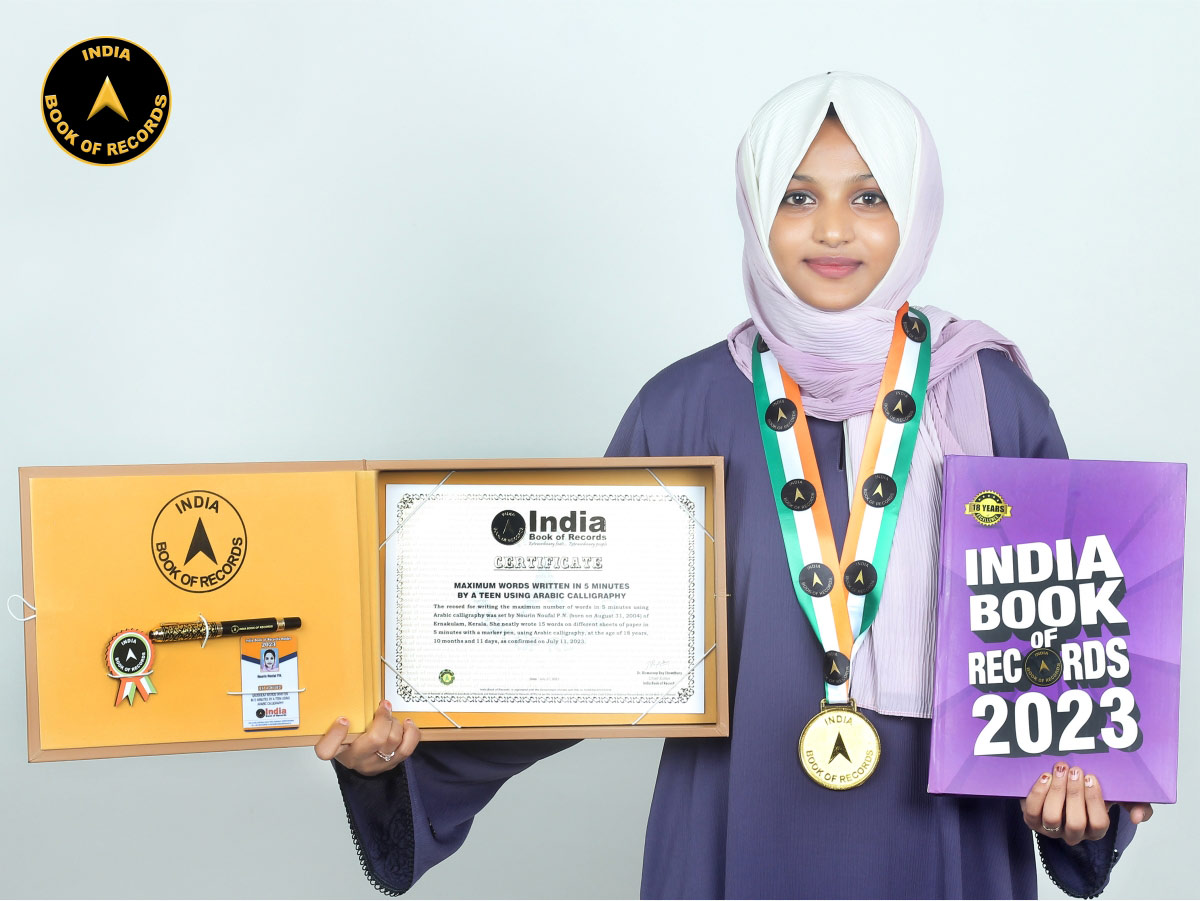
The record for writing the maximum number of words in 5 minutes using Arabic calligraphy was set by Nourin Noufal P.N. (born on August 31, 2004) of Ernakulam, Kerala.
She neatly wrote 15 words on different sheets of paper in 5 minutes with a marker pen, using Arabic calligraphy, at the age of 18 years, 10 months and 11 days, as confirmed on July 11, 2023.
source: http://www.indiabookofrecords.in / India Book of Records / Home> Human Story / by IBR Team / August 18th, 2023