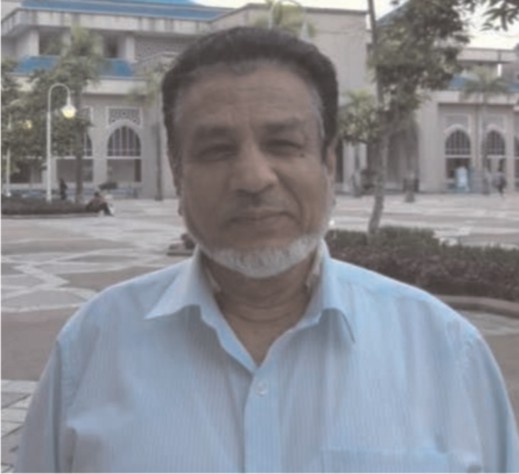
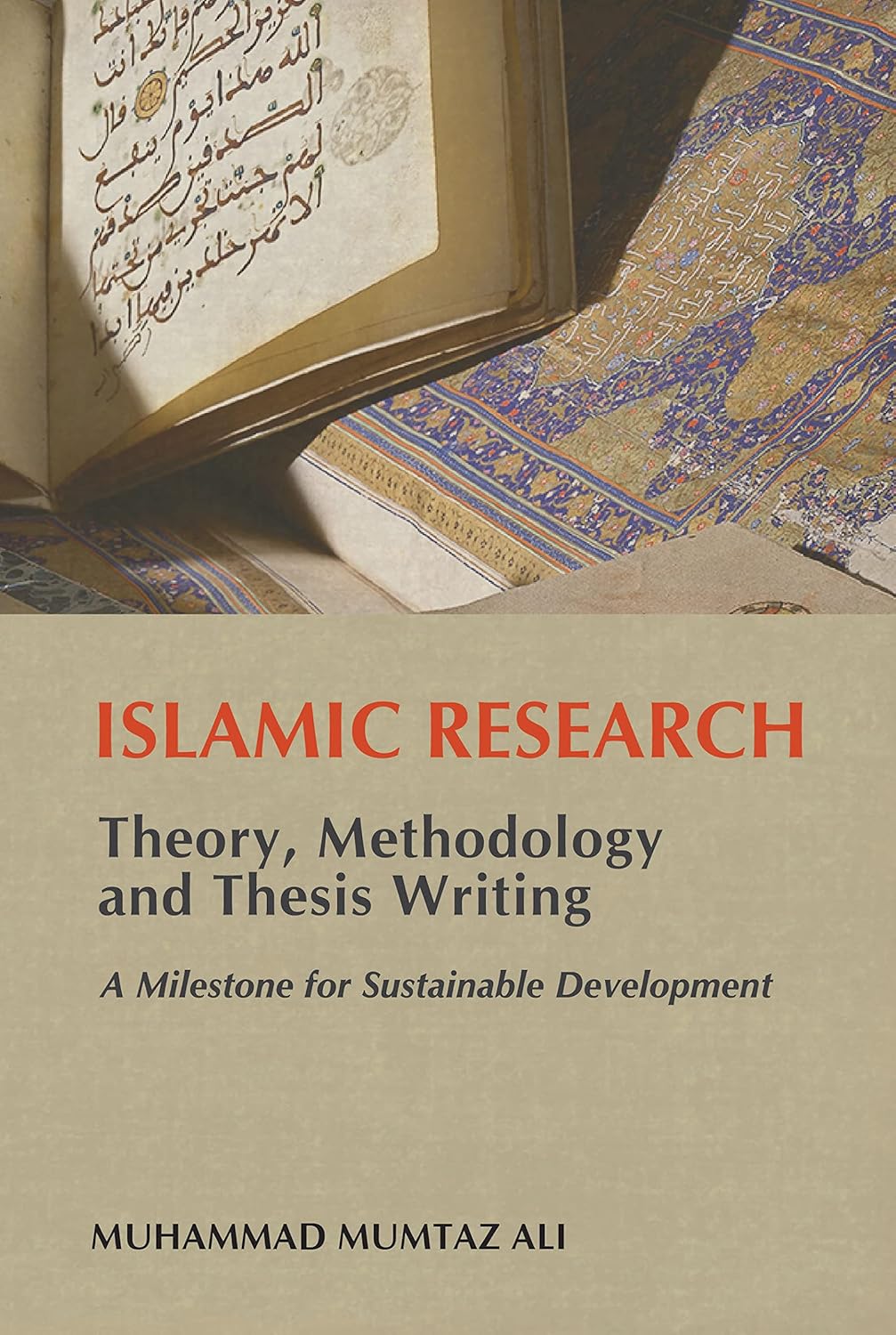
In a significant achievement, Professor (Dr.) Muhammad Mumtaz Ali, hailing from Hyderabad, India, has been honored with Malaysia’s National Book Award for the third time. Currently teaching at the International Islamic University Malaysia (IIUM) in Kuala Lumpur, Prof. Ali was recognized for his outstanding contribution through his latest work, “Islamic Research: Theory, Methodology, and Thesis Writing,” published in 2022.
pix: amazon.in
The prestigious National Book Award 2023 and Certificate for the year 2023 were presented to Prof. Ali in a grand ceremony held on December 22, 2023. The certificate carries the signatures of Prime Minister Dato Seri Anwar Ibrahim and Minister Dato Seri Zambry Abdul Qadir.
Born in Hyderabad in 1955, Prof. Ali holds a doctorate in philosophy in Islamic studies from Aligarh Muslim University. He began his academic journey by completing his master’s degree in Islamic studies at Aligarh Muslim University and a bachelor’s degree in modern western political thought from Osmania University.
Joining IIUM in 1987 as an assistant professor, Prof. Ali has been a dedicated member of the university ever since. Currently, he leads the Abdulhamid Abusulayman Kulliyyah of Islamic Revealed Knowledge and Human Sciences in the Department of Usul al-Din and Comparative Religion.
His award-winning book, “Islamic Research: Theory, Methodology, and Thesis Writing,” advocates for the transcendence of Islamic research beyond religious topics, emphasizing its relevance to all aspects of life and society. The book distinguishes Islamic research from conventional methods, emphasizing the need for a comprehensive theory and methodology.
Prof. Ali’s contributions extend to various branches of Islamic theology, including developmental studies, modernization, epistemological and methodological studies, critical thinking, philosophy of science, and modernity. His books, especially those on the Islamization of Knowledge, are widely regarded as bestsellers on campus.
In 2014, Prof. Ali received the National Book Award for his book, ‘Issues in Islamization of Human Knowledge: Civilization Building Discourse of Contemporary Muslim Thinkers.’ His consistent recognition reflects his commitment to advancing Islamic research and knowledge.
source: http://www.islamicvoice.com / Islamic Voice / Home> National News and Affairs / pix of book added – amazon.in / by Islamic Voice / February 24th, 2024.
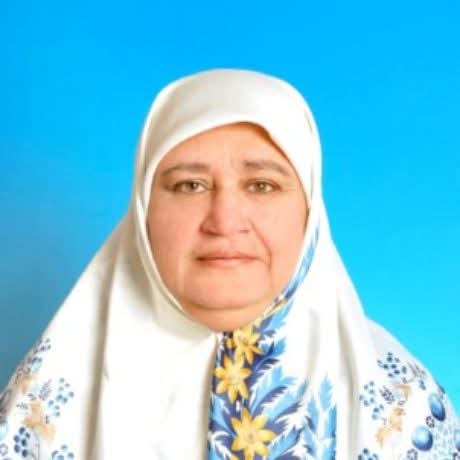
Professor Dr. Zeenat Kausar breathed her last at 12:10 am on March 16, returning to her Creator. She had served for a long time at the International Islamic University Malaysia. Her death is not only a loss for academic circles but also a great loss for the entire Muslim Ummah.
Dr. Zeenat Kausar taught at the International Islamic University Malaysia, in the Department of Political Science from 1990 to 2006 and later taught at Qatar University, in the Department of International Affairs from 2007-2009.
A leading figure in faith-based women’s intellectual struggle, Dr. Zeenat Kausar completed her Master’s degree in 1986 and her PhD in 1991 from Aligarh Muslim University. At international conferences, she frequently spoke as a keynote speaker, presenting Islam and its perspectives on women in a highly effective and engaging manner, leaving a strong impression even on people of other faiths. Her book, Islamic Feminism: A Critique (Islam Vs Feminism: Emancipation, Liberation and the Development of Women) is widely known.
She had deep interest and expertise in various academic fields, including Islamic and Western political thought, feminism and its Islamic critique, modernity, development studies, and globalisation.
Professor Zeenat Kausar used to contribute her thought-provoking articles to Radiance Viewsweekly, especially when the magazine requested her to write articles for its Special issues.
Her recently completed book is about Dr. Wan Azizah, the wife of Malaysia’s Prime Minister Dato’ Seri Anwar Ibrahim. She had also requested Dato Iqbal to arrange a meeting with the Prime Minister’s wife. In this book, Dr. Wan Azizah’s personality is portrayed in detail – as a homemaker, a mother, a party leader, a political activist who helped realise the dreams of her imprisoned husband (when Anwar Ibrahim was Deputy Prime Minister), and a woman of struggle. Sadly, she passed away before her wish to meet Dr. Wan Azizah could be fulfilled.
Professor Dr. Tamim Usama mentioned that Dr. Zeenat was writing a detailed article on “Women’s Empowerment in Islam.”
The distinguished scholar’s husband, Professor Muhammad Mumtaz Ali, is himself a prominent scholar associated with the Department of Revealed Knowledge at the International Islamic University, Kuala Lumpur, Malaysia. When her body was placed in the room and colleagues stood around her, Professor Dr. Mumtaz Ali, spoke emotionally. He said: “It had not even been a month since our marriage. We were standing at a railway station. I had to leave for a training camp organised by the Jamaat. I told my wife, Dr. Zeenat: From this station, two trains are departing in different directions. One goes towards our home, and the other is the one I must take for social and missionary work. You may board whichever train you prefer.”
“Without a moment’s hesitation, she said: I will travel with you on the train that is going for the work of faith and Dawah.”
He further added: “From that day on, throughout our 46 years of married life, she remained my support and strength. Her thoughts and writings were a source of awakening for society. She was a practical example of the freedom that Islam envisions for women. She always had a thirst for knowledge, read extensively, and expressed her ideas in very simple language. As a wife, as the mother of my children, and as a thinker beneficial to society, she lived a meaningful life. I request all of you to pray for her success in the Hereafter.”
Thus, Dr. Mumtaz Ali concluded his brief yet deeply moving words about his wife, Professor Dr. Zeenat Kausar.
May Almighty Allah accept her good deeds and grant her the highest place in Jannat al-Firdaus. Aameen.
source: http://www.radiancenews.com / Radiance News / Home> Focus> Obiturary / by Radiance News Bureau / March 17th, 2026
Ramsha is an alumna of Azim Premji University, Bangalore, where she pursued her undergraduate degree in Liberal Arts. She later went on to complete a Master’s in History and Persian from the School of Oriental and African Studies (SOAS), University of London.
Hyderabad:
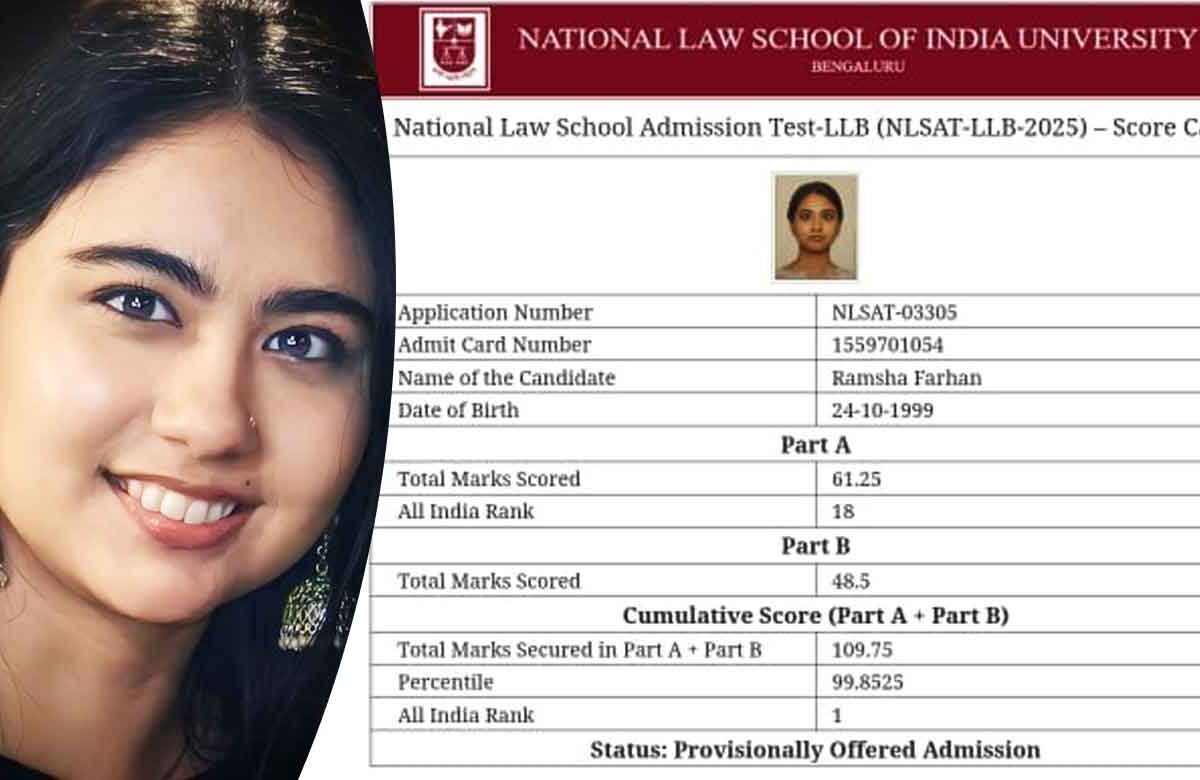
In a moment of immense pride for Hyderabad, RamshaFarhan has secured the 1st Rank in NLSAT-LLB 2025, the national-level entrance examination for admission to the prestigious National Law School of India University (NLSIU), Bangalore — widely regarded as the top law school in the country.
Ramsha is an alumna of Azim Premji University, Bangalore, where she pursued her undergraduate degree in Liberal Arts. She later went on to complete a Master’s in History and Persian from the School of Oriental and African Studies (SOAS), University of London.
She hails from a family with a strong legacy of intellectual and cultural contributions. Ramsha is the daughter of Ashhar Farhan and Humera Ahmed, co-founders of Lamakaan, Hyderabad’s iconic open cultural space. She is also the granddaughter of the celebrated writer and Padma Shri awardee Jeelani Bano.
Known for her academic excellence and deep social commitment, Ramsha Farhan’s achievement is not just personal but a proud milestone for her city and community. Her success is a testament to the values of education, culture, and progressive thought that her family has championed for decades.
We extend our heartfelt congratulations to Ramsha and wish her continued success as she embarks on her legal journey at NLSIU.
source: http://www.munsifdaily.com / Munsif News 24 x 7/ Home> Hyderabad / by Syed Mubashir / June 03rd, 2025
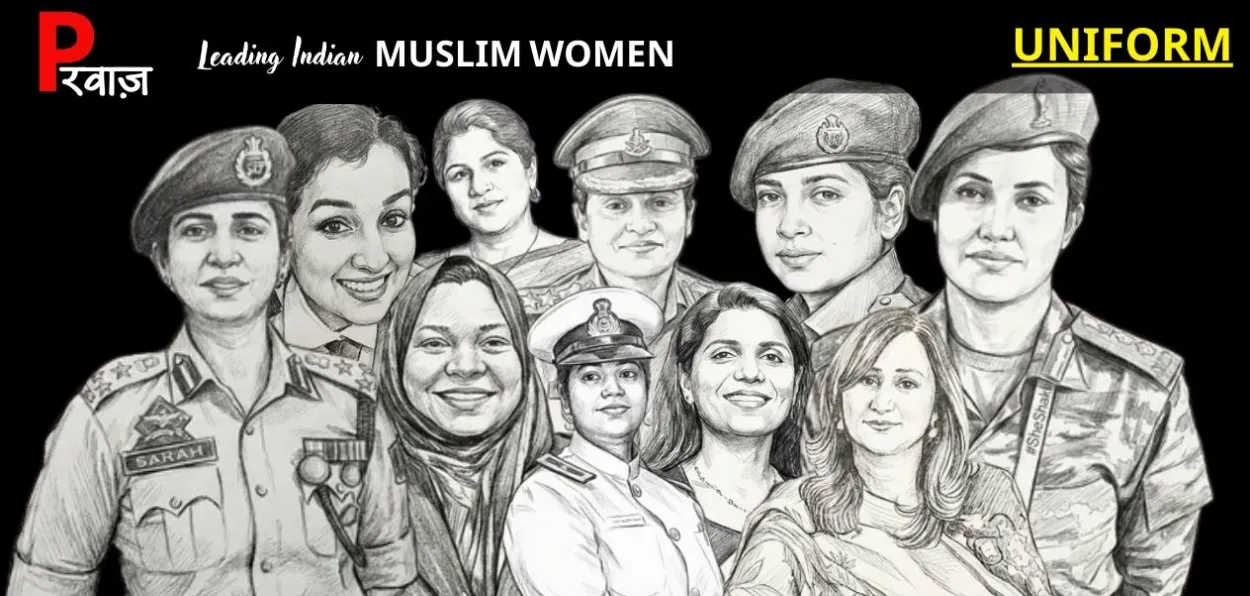
Col. Sofiya Qureshi’s briefing the media during Operation Sindoor surprised the world, for not only an Indian woman but also one from the Muslim community, was briefing the media in the utmost professional manner, befitting an Indian Army Officer. Forget about the world; even many Indians could not believe that the Indian Army had women officers. The fact is that Muslim women have been part of the armed forces and technical workforce for many years.
Awaz-the Voice is bringing you ten stories of such women to inspire the younger generation:
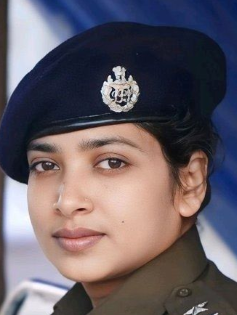
Ajeetha BegumSulthan stands as a compelling example of determination, discipline, and empathy in policing. Rising from a modest background in Coimbatore to become the Inspector General of Police (Crime Branch) in Kerala, she has built a reputation for tackling complex issues ranging from trafficking and drug networks to crimes against women and children. Known for her simplicity and strong sense of duty, Ajeetha believes that a police officer “cannot afford to go wrong,” a principle that has guided her through challenging postings and high-profile investigations.
Her journey reflects not only professional excellence but also a deep commitment to social responsibility and mentoring the next generation through initiatives like the State Police Cadet programme.
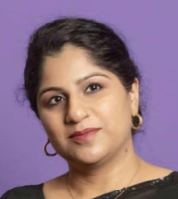
Anisa Nabi represents a rare blend of administrative commitment and athletic passion in Jammu and Kashmir. A 2012-batch JKAS officer and currently the Chief Sports Officer at the J&K Sports Council, she has consistently worked to promote sports, fitness, and youth engagement while building an impressive record as a runner who has completed major races like the Vedanta Delhi Half Marathon and the Tata Mumbai Marathon.
Through her initiative “Wondrous Women,” Anisa encourages women to embrace fitness and mental well-being, while her work in government—from GST awareness to grassroots livelihood programmes—reflects a strong commitment to empowering communities. By promoting sports as a positive pathway for youth, she continues to inspire many to lead healthier and more purposeful lives.
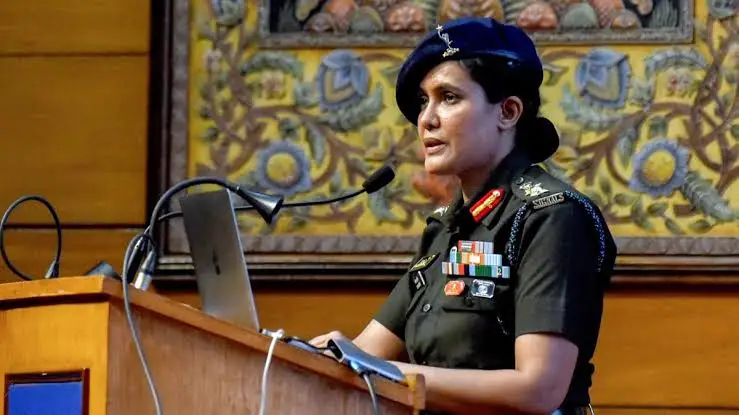
Ishrat Ahmed, hailing from the village of Nuaan in Rajasthan, embodies a remarkable legacy of service, discipline, and patriotism. Commissioned into the Indian Army in 2001, she has risen through the ranks to command an Ordnance Unit in Meerut, becoming the first woman from the Qaimkhani community to hold such a significant role. Coming from a distinguished family of military and civil service officers, Colonel Ishrat’s journey reflects both inherited values and personal determination.
Beyond her achievements in uniform, she continues to inspire young people—especially girls from rural backgrounds—to pursue careers in the armed forces and public service, making her story one of courage, leadership, and lasting inspiration.
Bushra Bano’s journey from a small village in Kannauj to the ranks of the Indian Police Service is a story of resilience, faith, and unwavering determination. A scholar who completed her PhD at Aligarh Muslim University, Bushra balanced motherhood, professional responsibilities, and intense preparation for the civil services examination.
Remarkably, she appeared for her UPSC interview while eight months pregnant and eventually secured a place in the IPS, serving in the West Bengal cadre. Her journey—from lecturer and corporate employee to SDM and now a police officer—stands as an inspiring example for young women, proving that determination, family support, and education can turn even the most challenging circumstances into milestones of success.
Hana Qureshi has emerged as a leading voice in infertility treatment at the Cradle Fertility Centre in Kolkata, where she serves as the Centre-in-Charge of its Garia branch. Specialising in IVF procedures and advanced reproductive diagnostics, she combines cutting-edge medical science with compassionate patient care to help couples realise their dream of parenthood. Honoured with the ISAR Youth Icon Award in 2024, Dr Qureshi believes that discipline, perseverance, and continuous learning are key to success.
Through her patient-centred approach and commitment to innovation, she has become a trusted figure offering renewed hope to families facing infertility challenges.
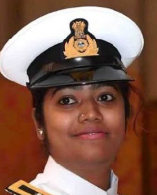
Reshma Niloufer Naha has made maritime history by becoming the world’s first woman river pilot at Kolkata Port Trust in Kolkata. Trained at the Academy of Maritime Education and Training, she spent years sailing across the world before undergoing rigorous pilot training and earning her position in 2018.
Guiding massive ships through narrow and challenging river channels demands exceptional skill, physical strength, and quick decision-making—qualities that Reshma has demonstrated consistently. Honoured with the Nari Shakti Puraskar, her journey stands as a powerful symbol of perseverance and women’s empowerment, inspiring young women to pursue careers even in the most challenging and traditionally male-dominated fields.
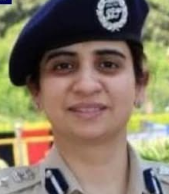
Sara Rizvi, a 2008-batch officer of the Indian Police Service from the Gujarat cadre, has built a distinguished career marked by resilience and dedication to public service. Currently serving as Deputy Inspector General of the Udhampur–Reasi range in Jammu and Kashmir on inter-cadre deputation, she is the only woman officer in the region to hold the DIG/IG rank.
From overcoming early financial struggles and personal loss to handling critical assignments such as elections, intelligence operations, and security challenges, Rizvi has consistently demonstrated leadership and commitment. Her journey—from a determined civil services aspirant in Mumbai to a senior police officer serving in sensitive regions—stands as a powerful testament to perseverance, courage, and a deep sense of social responsibility.
Col Sofiya Qureshi has emerged as a powerful symbol of perseverance and merit in the Indian Army, challenging long-standing stereotypes about gender and identity in the armed forces. Rising through the ranks with discipline and professionalism, she has taken on demanding leadership and operational responsibilities, demonstrating that capability—not background or gender—defines a soldier’s worth.
Through her quiet determination and consistent excellence, Sofiya has inspired many young women to envision a future in uniform, proving that dedication to service and nation can break barriers and reshape perceptions.
Tuba Sanobar, a young lawyer from Seoni now based in Bengaluru, is emerging as a powerful voice for civil rights, women’s empowerment, and data privacy. With an LLM in Criminology from Osmania University, she blends legal expertise with grassroots activism, working closely with the Association for Protection of Civil Rights to raise awareness about domestic violence and minority rights.
Through initiatives like the SOZ programme and her advocacy on digital privacy and community participation, Tuba represents a new generation of lawyers who see the law not merely as a profession but as a tool for social change and dignity.
Hana Mohsin Khan has carved an inspiring path in aviation, proving that determination can overcome social labels and late beginnings. Born in Meerut and educated partly in Saudi Arabia, Hana’s journey to the cockpit was anything but conventional—moving from journalism and entrepreneurship to pursuing aviation after discovering her passion later in life.
After rigorous training in the United States and Greece, she eventually flew her first commercial flight in 2020, becoming one of the few Muslim women pilots in India.
Her story reflects resilience, curiosity, and a refusal to be confined by stereotypes, inspiring young women to pursue their ambitions with confidence and courage.
source: http://www.awazthevoice.in / Awaz, The Voice / Home> Stories / by ATV / posted by Aasha Khosa / March 12th, 2026
Usia Village – Kamsarbar (Ghazipur District), UTTAR PRADESH / Kolkata, WEST BENGAL :
The daughter of Kamsarbar village in Uttar Pradesh becomes the first woman civil servant from her area, inspiring Muslim girls across the country
New Delhi :
In a moment of pride for Indian Muslims, especially young women from small towns, Saima Saraj Khan from Kamsarbar in Ghazipur district, Uttar Pradesh, has once again cleared the prestigious Union Public Service Commission (UPSC) Civil Services Examination. This time, she achieved an impressive All India Rank of 135, improving on her earlier success where she secured Rank 165. With this double achievement, Saima joins the rare group of women in the country who have passed the tough exam twice.
Saima, the only daughter among three siblings, hails from Usia village in the Muslim-majority Kamsarbar area of Ghazipur. Her family later moved to Kolkata, where she grew up and studied. Her father, Saraj Ahmad Khan, is a successful businessman and builder, and he played a big role in encouraging her education from childhood. “My father always said education is the biggest power. Once you get it, paths in life open on their own,” Saima recalled.
Most of Saima’s schooling took place in Kolkata. She completed up to Class 8 at St. Paul’s Boarding and Day School in Kidderpore, then did her Class 12 from Ashok Hall Girls Higher Secondary School. She graduated with honours in Sociology from St. Xavier’s College. During her college days, working with an NGO brought her close to real problems faced by people on the ground. “When I met people and saw their struggles, I felt I wanted to help them, even if in a small way. That need for real authority to make change pushed me towards UPSC,” she said.
Saima prepared for the exam at Educate IAS Academy in Kolkata. After clearing prelims in earlier attempts, she also guided other aspirants for some time. Her journey was not easy. She failed three times before her first success in UPSC 2023, which made her the first woman from Kamsarbar to become a civil servant. Each failure tested her deeply. “Every day after those failures, the thought of giving up came. But I had no other plan. All my dreams were tied to UPSC, so I kept going,” she shared.
To focus fully, Saima cut herself off from social media and most social events for four to five years. She rarely visited relatives or attended weddings, limiting outings to occasional meetings with childhood friends once a month. “There was no fixed study time, but I gave as many hours as possible to studies,” she explained.
Her message to other aspirants is clear and practical. “First, be honest with yourself. If you study five hours, focus on quality, not just quantity. Consistency matters most. Don’t worry too much about results—just keep preparing fully.” She also spoke directly to Muslim girls and women: “Dreaming and working to fulfil those dreams is every girl’s right. Women can succeed in any field. Never give up on your dreams.”
Saima’s success brings huge joy to her family, village, and district. People in Ghazipur and beyond see her as a strong example of self-reliance and hard work for Muslim women, where many still face limits on education and careers. Her story shows that with family support and belief in oneself, no goal is too far.
She quoted a line that sums up her journey: “Where there is a will, there is a way.” Saima often repeats that difficulties and failures are part of success. “Don’t let them take over you. Keep pushing.”
Her achievement also connects to Kolkata’s proud history—from Satyendranath Tagore, the first Indian ICS officer from united India, to now Saima becoming the first woman civil servant from Kamsarbar. “Education is the real power,” she stresses, echoing her father’s words from childhood.
As news of her Rank 135 spread, young Muslim girls in Uttar Pradesh and across India are finding fresh hope. Saima proves that with clear goals, steady effort, and strong resolve, women from humble backgrounds can reach the top. In the words of poet Dushyant Kumar that capture her spirit perfectly:
“Kaise aakaash mein suraakh nahin ho sakta
Ek patthar to tabiyat se uchhaalo yaaro”
(How can the sky not have a hole?
Just throw a stone with real courage, friends.)
Saima Khan has thrown that stone with full courage—and broken through barriers for many to follow. Her story is a shining light for education, perseverance, and the power of dreams in the Indian Muslim community.
source: http://www.clarionindia.net / Clarion India / Home> Editor’s Pick> Indian Muslims> Women / by Mohammad Bin Ismail / March 10th, 2026
Adibah Anam, rickshaw driver’s daughter, becomes Maharashtra’s first Muslim woman IAS officer.
Defying immense odds, Adibah Anam, daughter of a rickshaw driver from Yavatmal, Maharashtra, has achieved an extraordinary feat by securing All India Rank 142 in the UPSC Civil Services Examination 2024.
With this, she becomes the first Muslim woman from her state set to join the prestigious Indian Administrative Service (IAS), according to Clarion India.
Raised in a modest household, Adibah’s story is one of sheer determination and purpose. She began her education in a Zilla Parishad Urdu School, scoring an impressive 94% in SSC and 92.46% in HSC (Science).
Though she once dreamt of becoming a doctor, her maternal uncle, Jan Nizamuddin Sahib, guided her toward civil services, believing she could bring broader change. He supported her emotionally and financially, becoming a pillar in her journey.
Adibah completed her graduation in Mathematics from Abeda Inamdar College, Pune, with 85.20%. Despite clearing the NET exam, she chose not to enter academia and began preparing for the UPSC.
Her early attempts were marked by struggle, especially during the COVID-19 pandemic. Her third attempt, from Mumbai’s Hajj House under Maqsood Khan Sahib’s mentorship, brought her closer, but she still missed the final list.
Refusing to give up, she joined the Residential Coaching Academy at Jamia Millia Islamia in Delhi, where she finally succeeded. Choosing Urdu Literature as her optional subject despite a science background, she showcased her academic versatility and deep cultural roots.
Her parents remained her silent strength. “My father never asked me to stop. He only said, ‘May Allah make you successful,’” she shared.
Today, Adibah’s success is a beacon of hope for marginalized communities. “This victory belongs to every girl told to stay behind,” she says. “This is just the beginning.” — With Agencies Inputs
source: http://www.muslimmirror.com / Muslim Mirror / Home> Indian Muslim / by Muslim Mirror Desk / April 27th, 2025
Yunus Sayyad receiving the award for his book ‘Inuchi Goshta
The conferring of the prestigious ‘Lakshmibai Tilak Award’ by the Maharashtra Government on ‘Inuchi Goshta‘ (The Story of Inu) is a tribute to its author, Yunus Sayyad, for his resilience in fighting a slew of diseases, including cancer, and sharing his experience with public through the book.
Yunus Sayyad was pursuing his Master’s degree at Fergusson College when he was diagnosed with blood cancer.
For the next year, he underwent treatment at Mumbai’s Tata Memorial Hospital. During that time, he had to battle 13 different diseases. Twice, his health deteriorated to the point of hopelessness. Friends who saw him in the ICU thought it would be their last meeting.
However, today, Yunus has dodged death and become a ray of hope for thousands of patients. His book ‘Inuchi Goshta‘ (The Story of Inu) is the story of his struggle with diseases.
Yunus Sayyad receiving the award
A visibly happy Yunus Sayyad told Awaz-the Voice, “When the award was announced, I was doing cancer awareness work in the Konkan region—in Sindhudurg, Ratnagiri, and Raigad. At one place, I was conducting a session for medical officers and primary health centre staff on palliative care centres on the care of cancer patients. Coincidentally, I was in a village very close to Lakshmibai Tilak’s village, and the award is also in her name. It was a great coincidence that I was doing cancer awareness work, which is the exact subject of my book.”
Yunus faced many difficulties while undergoing cancer treatment. Common patients have no information about things, such as the cost of treatment, proper diet, precautions during chemotherapy, and scientific methods of drinking water. Often, many things can be learned only through experience.
Yunus says, “I found solutions myself to all the problems I faced. With the thought that my journey and experiences should benefit other patients, I started writing a diary.” This diary was later transformed into a book. Since Yunus’s nickname is ‘Inu’, the book was named ‘Inuchi Goshta‘, and its tagline was kept as ‘Ajun Mi Jivant Ahe‘ (I am still alive).
Yunus’s mother had never seen the world outside her village till her son was diagnosed with cancer. For Yunus’s treatment, she rented a room in a slum area in Mumbai and lived there.
Yunus says, “My mother’s struggle was bigger than mine. She endured the heat of Mumbai, the environment there, and the constant physical strain caused by my illness for a year.”
Yunus Sayyad with his family
While bedridden and undergoing treatment for cancer, Yunus diligently wrote down memories from his childhood in a diary.
The book ‘Inuchi Goshta‘ is not just confined to cancer patients. Reading the story of a young man who fought and survived 13 diseases in a year is inspiring many ordinary people as well. The Maharashtra State Board of Literature and Culture selected this book from among 80 books.
Receiving a state award for an autobiography in the adult literature category at the age of just 26 makes Yunus the youngest literary awardee this year. He achieved this success purely on the strength of his experience, without previous inclination to writing.
Yunus said, “My book was published at the end of 2024. After publication, it received the ‘Navlekhak‘ (New Author) award from the Pune Book Festival. After that, the book was read by many cancer patients. Most importantly, on Cancer Day last year, I was invited as a guest to Tata Memorial Hospital, the very hospital where I was treated, and an informal launch of the book took place there too.”
Yunus also founded an NGO named ‘Aarambh‘. He says, “It’s wrong to think that our life is over after cancer. Modern medical science has good options like immunotherapy and targeted therapy.”
He also made a video on the treatment process at the Tata Hospital, which was watched by thousands of people. Many of them contacted him, and he helped 2500 patients get admitted into hospitals for treatment.
Today, he says, more than 85 per cent of them are living normal lives.
source: http://www.awazthevoice.in / Awaz, The Voice / Home> Stories / by Bhatki Chalak, Pune / March 10th, 2026
The idea took shape after Aziz read about a food bank in Chennai. Moved by the concept, he decided to start something similar in Hyderabad.
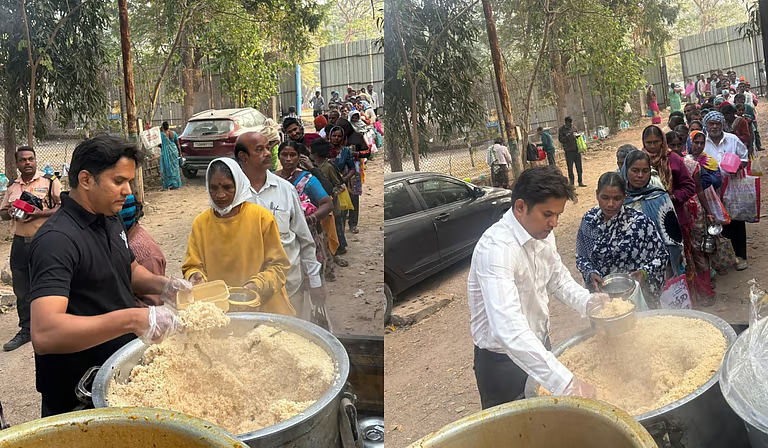
The menu remains simple — usually rice, bagara rice and dal — ensuring freshly cooked, nutritious food for those who need it most.Photo | EPS
Hyderabad :
Hyderabad is a city synonymous with food — from the aroma of biryani to bustling night markets. But for Mohammed Aziz, the city’s most important meal is not served in its famous restaurants. It is handed out at dawn outside hospitals to patients and families who often go hungry after exhausting their savings on treatment. What began in 2015 with 34 packets cooked in his mother’s kitchen has grown into a daily effort feeding nearly 300 people across the city.
The idea took shape after Aziz read about a food bank in Chennai. Moved by the concept, he decided to start something similar in Hyderabad. With help from his mother and four friends, he prepared the first batch of meals and distributed them on the streets. “There was no big plan; just a Facebook page and the belief that if people saw the need, they would come forward,” Aziz, 38, a corporate professional, tells TNIE.
Today, much of the distribution happens near Nizam’s Institute of Medical Sciences, where many patients and caregivers struggle to afford even a basic meal. “My parents always told me that doing good eventually finds its way back to you,” Aziz says. “Hyderabad is known for its food, but seeing eople starving outside government hospitals felt like a personal insult.”
For the past decade, his days have followed a steady rhythm. Early mornings are spent distributing meals to patients, caregivers and migrant workers sleeping on pavements. After the last packet is handed out, he heads to his corporate job. “We serve around 300 to 400 people every morning — patients and their families who have nothing left after paying for medicines,” he says.
Over the years, the initiative has grown into a volunteer network of students, professionals and homemakers. Meals are distributed near major government hospitals such as Niloufer Hospital, Gandhi Hospital and Osmania General Hospital, where the need is often most visible. “You see cancer patients and migrant workers who have not had a hot meal in days. Giving them food is not just about nutrition; it is about ensuring they do not lose their dignity while they are suffering,” Aziz says.
Interestingly, the initiative does not accept monetary donations. For the past decade, the group has followed a zero-cash policy. Those who wish to contribute either cook food at home, sponsor raw materials or volunteer during distribution. As the effort expanded, the team set up a small kitchen in King Koti to manage the daily cooking. Preparations begin at about 5.30 am, and by 7.30 am the meals are ready for distribution.
The menu remains simple — usually rice, bagara rice and dal — ensuring freshly cooked, nutritious food for those who need it most.
What started with four friends has now grown into a citywide volunteer network, with over 40 active members helping with cooking, packing and distribution. After a decade of work, Aziz says the mission remains unchanged. “I want to reach every major hospital in Hyderabad,” he says. “No one waiting for treatment should have to worry about their next meal.”
source: http://www.newindianexpress.com / The New Indian Express / Home> Good News / by Megha Nath / March 15th, 2026
Pakalpara Village (Murshidabad District), WEST BENGAL :
A resident of Pakalpara village, Sana secured an All-India Rank of 764 among 958 candidates recommended in the final list of the 2025 examination, making her eligible for the Indian Revenue Service and other Group-A central government services.
Sana Azmi, a 25-year-old Muslim woman from a modest farming family in Murshidabad’s Sagardighi, brought pride and joy to the region this month by qualifying in the prestigious Civil Services Examination conducted by the Union Public Service Commission (UPSC).
A resident of Pakalpara village, Sana secured an All-India Rank of 764 among 958 candidates recommended in the final list of the 2025 examination, making her eligible for the Indian Revenue Service and other Group-A central government services.
The results of the Civil Services Examination 2025 were declared on March 6.
Though the achievement has been widely celebrated in her village and across Murshidabad district, Sana is dissatisfied with her present rank and has already started preparations to attempt the exam again for a better rank that would enable her to become an Indian Administrative Service (IAS) officer.
The Civil Services Examination, conducted annually by the UPSC, is regarded as one of the toughest in the country with three stages — the preliminary, Main and the personality test/interview. Successful candidates are recommended for appointment to the country’s elite administrative services such as the Indian Foreign Service, Indian Administrative Service, Indian Police Service and Indian Revenue Service.
Born into a large family with limited means, Sana’s UPSC journey has been remarkable on many fronts. Youngest among 10 siblings, Sana grew up in a family focused on education.
That was largely because of her father, Maijuddin Sheikh. A poor farmer with a small patch of land, he had to discontinue his education after Class IX. But he struggled to ensure that all his children, including his seven daughters, received a proper education.
The results of that commitment are now visible.
Two of Sana’s sisters chose to study medicine — one of them, Beauty Khatun, is a doctor at the Burdwan Medical College and Hospital, while another sister is studying MBBS at the North Bengal Medical College and Hospital in Siliguri.
Sana’s success in the UPSC exam has added another feather to the family’s cap.
Sana began her schooling in her native village.
She studied up to Class VIII at Kabilpur High School in a neighbouring village. She later moved to a residential institution run by the Al-Amin Mission, where she completed her Class X and Class XII. She appeared for the Class XII board exams through a high madarsa in Howrah district and stood first in the district.
Then came the big leap.
Encouraged by her family and her own grades, she took admission to the Jamia Millia Islamia in New Delhi, where she graduated in English Honours and completed her MA as well.
During her time in Delhi, she also joined the university’s residential coaching academy for civil services aspirants, where she began a systematic preparation for the UPSC exam.
Remarkably, she cleared the Civil Services Examination in her very first attempt in 2025.
“I had strived hard to crack UPSC, and I thank my family members for their support. I am happy to have done it on my first attempt, but I would not have achieved it without the support of my sister Beauty Khatun. She sent me to Delhi to fulfil my dream. I will take up the job, but ultimately will try to fulfil my dream to become an IAS officer,” said a reclusive Sana, who spoke to the media through her elder brother Md Imran.
Beauty recalled how the family collectively nurtured Sana’s ambition.
“I became a doctor, and another of our sisters is studying MBBS,” she said.
“But we always felt that one of us should become a top civil servant. Sana had that dream. We encouraged her and planned her academic path accordingly. Her admission to Jamia Millia University in Delhi was also part of that plan,” she added.
As congratulations poured in, her mother, homemaker Fulbanu Bibi, couldn’t stop beaming.
“It is a dream come true,” Fulbanu said. “But Sana is not satisfied with the rank she has obtained. Her goal is to become an IAS officer. So she has begun her studies again.”
source: http://www.telegraphindia.com / The Telegraph / Home> West Bengal / by Alamgir Hossain / March 03rd, 2026
Dariyapur Jaka Village (Bulandshahr District), UTTAR PRADESH :
Jamia Millia Islamia’s Nabiya Parvez Secures AIR 29 in UPSC Civil Services Examination 2025.
The Union Public Service Commission (UPSC) has announced the results of the Civil Services Examination 2025, one of the toughest competitive examinations in the world.
According to the official statement, a total of 958 candidates have been selected for appointment to India’s top civil services. These include the Indian Administrative Service (IAS), Indian Foreign Service (IFS), Indian Police Service (IPS), along with several Group A and Group B central services.
Among the successful candidates is Nabiya Parvez, who secured an impressive All India Rank (AIR) 29 in the UPSC CSE 2025. She hails from Dariyapur Jaka village in Bulandshahr district of Uttar Pradesh. Nabiya pursued a Bachelor of Architecture (B.Arch) from Jamia Millia Islamia in New Delhi.
She was also a student of the Residential Coaching Academy (RCA) at Jamia Millia Islamia, which provides guidance to aspirants preparing for civil services examinations.
According to information available on her LinkedIn profile, Nabiya successfully cleared the UPSC Civil Services Examination with AIR 29, placing her among the top 30 candidates in the country.
The UPSC CSE is conducted in three stages: the Preliminary Examination, the Main Examination, and the Interview (Personality Test). The preliminary exam for 2025 was held on May 25, followed by the mains from August 22 to August 31.
The interview process took place in two phases between December 2025 and January 2026. The final merit list was released on March 6, 2026.
The top 10 rank holders of UPSC CSE 2025 include Anuj Agnihotri, Rajeshwari Suve M, Akansh Dhull, Raghav Jhunjhunwala, Ishan Bhatnagar, Zinnia Aurora, A R Rajah Mohaideen, Pakshal Secretry, Astha Jain, and Ujjwal Priyank.
source: http://www.muslimmirror.com / Muslim Mirror / Home> Indian Muslim / by Muslim Mirror Desk / March 08th, 2026