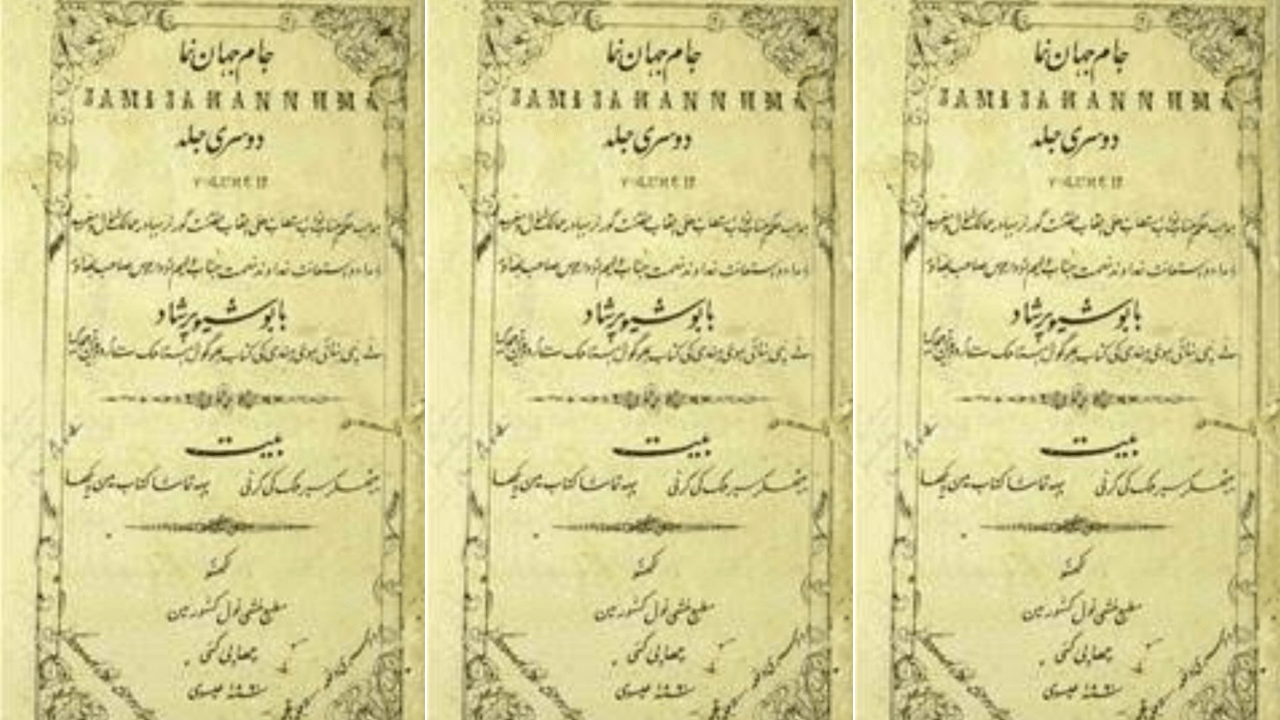
India’s first Urdu newspaper Jam-E-Jahan-Numa. Source: @indoislamicpage
Most people might be unaware, but 27th March is a historic day in the history of Urdu Journalism. On this date, the first-ever printed newspaper in the Urdu language was published exactly 200 years ago.
Urdu Journalism started in the Indian sub-continent from Calcutta with the launch of Jam-e-Jahan Numa on March 27, 2022.
In today’s India, Urdu is associated with Muslims and is considered the language of Muslims. In this context, when we look at the history of Urdu journalism, one may be surprised today to learn of its heritage and secular origins. Urdu, which has been on a decline in India over the years, and one which is much maligned by Hindutva groups, had a Hindu man who established the first journalistic publication.
Hari Hardat, a Bengali Brahmin Hindu, published the Jam-e-Jahan Numa from Calcutta on March 27, 1822. It was published under the editorship of Lala Sada Sukh Lal; a Punjabi. The printer was William Hopkins, a British national and an employee of the East India Company.
The composition of people under whom Urdu Journalism saw the light of day is really remarkable, as it truly reflects its secular characteristics. Non-Muslims had a huge contribution in the growth and development of Urdu journalism, as most of the editors in the 19th century were also not Muslims.
However, in post-independent India, Urdu language, which is widely spoken and read even today, came to be perceived as a Muslim language.
In 1822, with the publication of Jam-e-Jahan Numafrom Calcutta, the journey of Urdu journalism began. Soon it spread to other parts of the subcontinent covering what we study today as the history of the 19th and 20th centuries here. During its two hundred years, Urdu journalism has seen many ups and downs and has left a deep imprint on the history, politics, economics and sociology of the subcontinent.
The history of this entire subcontinent i.e, present-day India, Pakistan, Bangladesh, Burma and Afghanistan would be incomplete without Urdu journalism. The political, economic and cultural conditions of that time truly reflect on the pages of Urdu newspapers of that time.
Urdu journalism started even before Gujarati journalism took off. The latter’s first publication, the Bombay Samachar, appeared first on July 1, 1882. Similarly, Hindi Journalism had its first newspaper – Utand Martand – published on February 9, 1826. For Tamil Journalism, the Tamil Magazine, a journal, was published in 1831.
However, Bengali journalism had set in by that time and the first newspaper in the language was the ―Bengal Gazette appeared in 1816.
After Bengali newspapers, Jam-e-Jahan Numa was the second newspaper that came out in any Indian language from undivided India. At that time, two Bengali newspapers, the Sambad Kaumudi and the Samachar Chandrika were already in circulation. So it can rightly be said that Urdu journalism held the distinction of being the second vernacular which began journalism in India.
Technologically, Urdu journalism is also at par with other vernacular journalism. India has also witnessed the digitisation of Urdu newspapers in the 21st century. There are over three dozen Urdu newspapers that have launched their e-newspapers.
Urdu journalism in its 200-year-long chequered history has seen many ups and downs. It is the only language in the country that sadly also is facing step-motherly treatment in the birth of its place. Today, it is also treated with a suspicious eye in its own country. The integrity of its antecedent is doubted often too.
In spite of all this injustice, today Urdu journalism continues to shine. Its readers owe Harihar Dutt for his idea of starting an Urdu language newspaper.
It is worth mentioning here that when Harihar Dutt launched his newspaper, he had never imagined that he was going to sow the seed of Urdu journalism and that it would also galvanize others to do the same from across the nation.
Jam-E-Jahan-Numa: The Pioneer Urdu Weekly
Jam-e-Jahan Numa – the pioneer Urdu language newspaper was printed at Mission Press, 11, Circular Road, Calcutta and published from No. 2, Colootola – a commercial place of central Calcutta.
It was a 3-sheet (6 pages) weekly of quarter size and issued on every Chahar Stambah (Wednesday). Each page of the Jam-e-Jahan Numa was divided into two columns and there were normally 22 lines in each column. The size of the paper was 20×30/8 centimetre, and it was priced at Rs.2/ per month, and the word ―Chahar Shambah (Urdu word of Wednesday) was printed on each issue below the Masthead with the date.
Harihar Dutta brought out this pioneer Urdu weekly at such a time when the language was not popular in Bengal. Urdu was prevalent only for conversation and it had not been adopted in the field of Journalism. But it was the foresight of Harihar Dutta that he introduced Urdu language as a new field in the printed newspaper form.
But his experience could not succeed at once. Therefore, after 6 issues of Urdu edition of the Jam-e-Jahannuma, he converted it into a Persian weekly. The Jam-e-Jahan Numa which was launched as an Urdu paper ceased to exist in Urdu after its 6th issue and became a Persian newspaper on May 16, 1822.
The reason behind this change was that majority of the readership was illiterate and poor. And Persian was the official language of that period and the language of the elite too. Hence it made sense.
But it seems that this condition was confined only to Bengal. In other parts of the country, Urdu had become popular by that time. So, a few years later Urdu newspapers started publishing in north India. The popularity of Urdu increased rapidly and it compelled the then colonial government to change the official language from Persian to Urdu.
The interest of Harihar Dutta in Urdu did not subside. And after one year he introduced an Urdu supplement with the Persian edition of the Jam-e-Jahan Numa. This supplement was started on May 23, 1823. It consisted of 4 pages and the pages were divided into two columns.
All types of national and international news would publish in the Jam-e-Jahan Numa. Human interest stories and news of scientific inventions would get due coverage.
The Urdu Jam-e-Jahan Numa continued to be published for around four years and eight months; starting from 23rd May 1822 to 23rd January 1828. During this period, around 241 issues were published. Out of these 241 issues, almost 100 issues carried the historical events of Britain, Europe and the Mughal emperor Jahangir.
The Persian edition consisted of 8 pages and the Urdu supplement was of 4 pages. The government was extending some financial support to this newspaper then as well. But high postal charges were a burden on the proprietor of this newspaper.
To curtail the expenditure of the newspaper, Harihar Dutt stopped the Urdu edition once again in January 1828 and continued the Persian edition. The pages of the Urdu edition were also allotted to the Persian edition. However, it finally ceased to exist forever due to non-patronage of the government.
How long the Jam-e-Jahan Numa continued is not known but Abdus Sattar Siddique in his article entitled ―Hindustan Ke Purane Akhbar, wrote that the paper continued to publish till 1845.
Condition Of Urdu
When Harihar Dutt launched the first Urdu newspaper, Urdu was not the language of the elite and educated class. It was in its evolution phase. It was not developed as a reading and writing language among the educated class, and was only used as a means of communication among the people belonging to the lower strata of society.
The readers of Urdu were few. The educated class, be it Hindus, Muslims, Sikhs or others, was Persian reading. All official work was also carried out in Persian which was the official language of that time under the British.
In fact, reading and writing Urdu was considered demeaning during that period, and the educated class considered it an insult to use Urdu, as it was the language of the masses and ordinary people. All official communiqué was done in Persian only.
The nobility would consider the use of Urdu language as below the standard action. Moreover, newspaper reading habit was also not developed by that time. Even the elite did not have time to read newspapers or to know about society in general. Producing a newspaper in Urdu was also not an easy task at that time, hence.
Before the commencement of Jam-e-Jahan Numa, there were a few handwritten newspapers- not printed, which were basically written for the nobility and the rich. These handwritten newspapers were written by a band of writers who were called calligraphers. It was a tiresome and time-consuming act, so the number of copies of these papers that were sold was small.
Even the cost of producing these handwritten newspapers was very high, which was another reason which made it out of reach of the common people. These handwritten papers were the only source of information for the nobility and the rich class as well.
We have to keep this fact in mind while reading about Urdu journalism, when Harihar Dutt published the Jam-e-Jahan Numa, the concept of reading a newspaper had not turned into a habit. So, in a way, after Bengali, it was Urdu journalism that appeared on the horizon and changed things.
This article first appeared in The Siasat Daily. Published here with the author’s permission.
source: http://www.thecognate.com / The Cognate / Home> Culture / by Dr Md Zafar Iqbal / April 01st, 2022
A recent collection of his radio talks point to the stellar role birds play in preserving our environment
Sálim Ali could reach out to a cross-section of society, telling them about birds and the stellar role they play in preserving our environment. (Source: Black Kite)
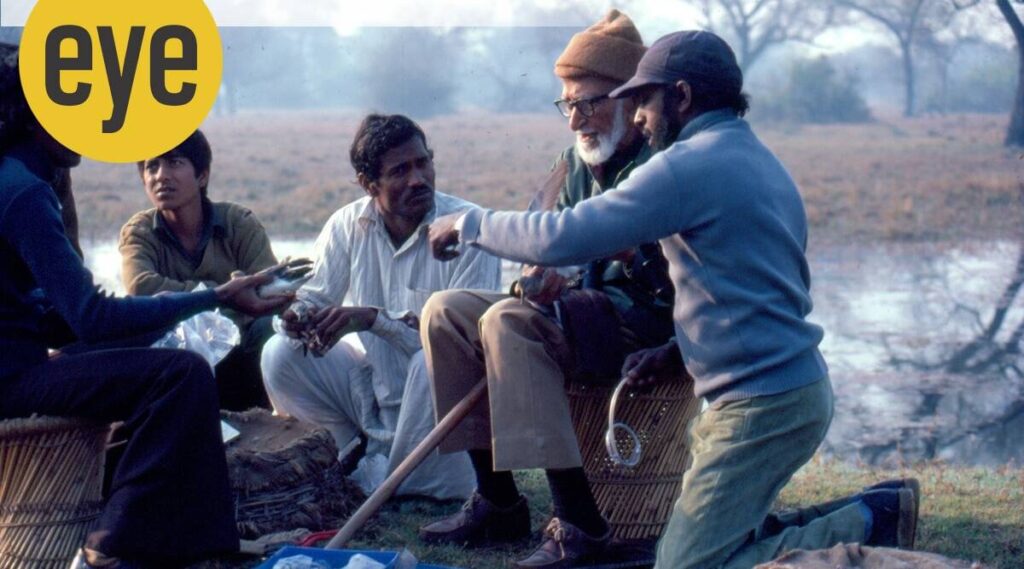
From busting myths about fireflies lighting up the homes of weaver birds to explaining the whys and hows of the spectacular phenomenon of bird migrations, there has been, perhaps, no one better than Sálim Ali, India’s best-known ornithologist, to demystify the avian world. To Ali’s already formidable list of works, comes another: a collection of his radio talks. Edited by Tara Gandhi, Words for Birds (Black Kite), the book shows him doing what he did best — reaching out to a cross-section of society on birds and the stellar role they play in preserving our environment.
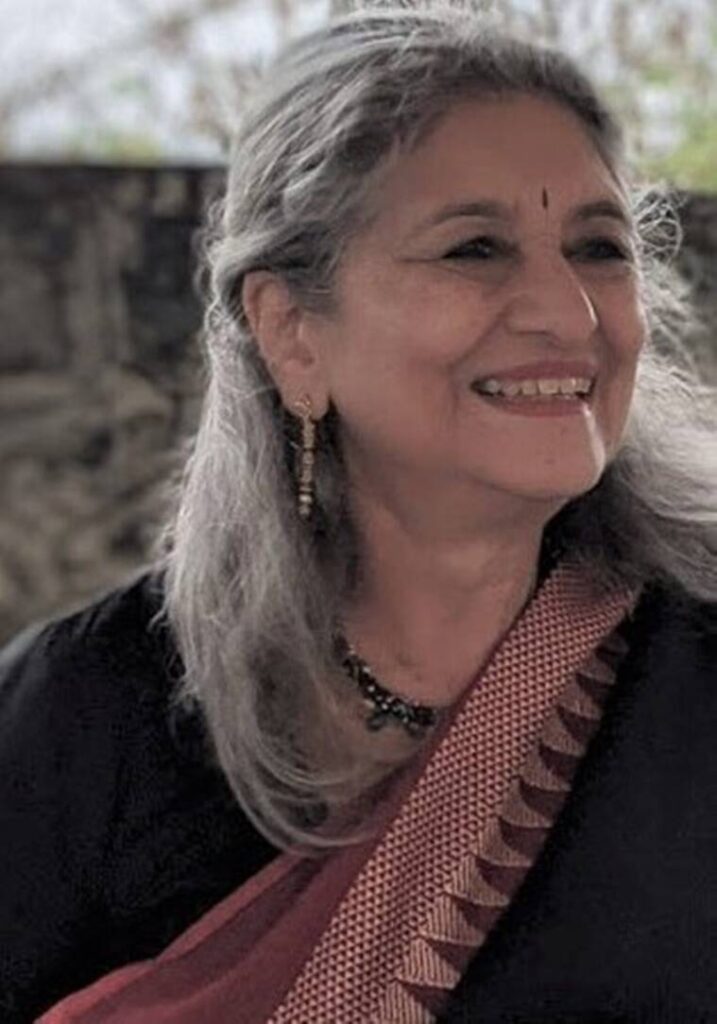
“He was an excellent communicator. He gave a number of lectures and he communicated to people of different professions. For instance, while speaking to mountaineers, he would say — ‘since you go to great heights, to places that ornithologists are not able to go to, look out for nesting sites, for Lammergeiers, the big vultures that are seen in high altitudes. Look around and if you see any birds, let us know, take down notes’. He would talk to people to get out of their own turf or specialisation and become interested in the wider picture,” says Gandhi, who was guided by Ali for her MSc. in field ornithology shortly before he passed away in 1987, at the age of 90.
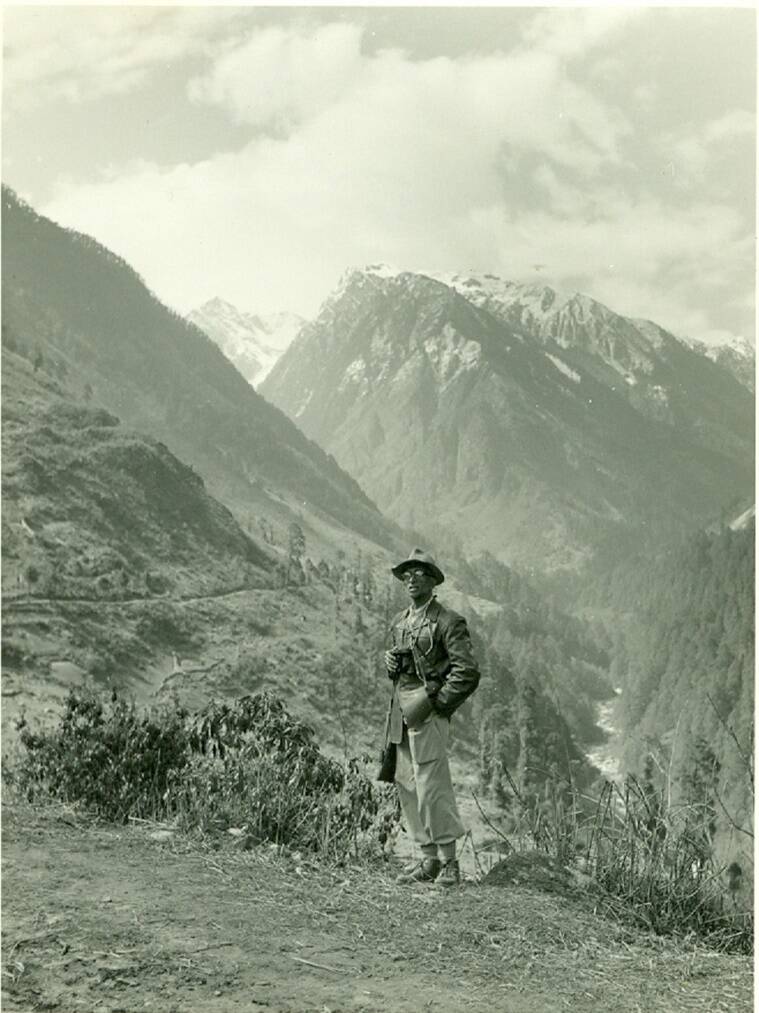
India’s birdman, Sálim Ali. (Source: Black Kite)
He was, as she says, ahead of his times in understanding the importance of involving people in conservation. “You will come across one of his talks where he tells his listeners that if you see any unusual birds on the seashore, write to us. This struck me. Nowadays, we talk about citizen science, lay people’s involvement in scientific documentation. A number of bird watchers are specially involved in citizen science — doctors, teachers and people from many other disciplines are making bird lists and sending them to be compiled. A lot of important material comes out of analysing this data . Those days, nearly 60 to 70 years ago, Sálim Ali would urge his readers and listeners to write to the Bombay Natural History Society (BNHS) to record the information.”
Ali who took over the BNHS after Independence and remained with it for decades, was key in keeping the organisation going and in initiating a systematic study of birds. “He had a vision, which was much ahead of his time and very contemporary,” says Gandhi, who has previously edited A Bird’s Eye View: The Collected Essays and Shorter Writings of Sálim Ali (II Volumes, Permanent Black, 2018) and is the author of Birds, Wild Animals and Agriculture: Conflict and Coexistence in India (The Orient Blackswan; 2015).
Tara Gandhi, who has edited ‘Words for Birds’.(Source: Black Kite)
Delivered between 1941 and 1985, Ali’s talks were recorded mainly at the All India Radio (AIR) station in Mumbai and range from one on trends in bird study to talking about bird life for a school broadcast, in conversational Hindustani titled Chand Hairat Angez Parandon aur Janwaron ke Ghar, speaking to children who didn’t speak English. In his autobiography, The Fall of a Sparrow (Oxford University Press, 1985), he recounts his days as a guide lecturer in the Natural History Section of the Prince of Wales Museum in Mumbai, where he remembers particularly enjoying “talking to pupils from the School for the Blind, because of the lively interest they showed.” Gandhi says, “He made an effort to reach out to children to make them understand more about birds and nature in an easy way.”
After his stint at the Museum, Ali spent a year in Germany, training under Erwin Stresemann at the Berlin University Zoological Museum, returning to India in 1930 and launching on a series of bird surveys across the country. Beginning at a time when ornithology, in his own words, was the “Cinderella of Indian Zoology”, Ali can be credited for taking the discipline outside museums and collections and out in the natural habitat and widening its scope. “The kind of projects he undertook later on from the ’60s onwards were extremely important and absolutely pragmatic. He took on a project on birds in the aviation sector, that is bird hazards in aviation. It was a huge project and it was entirely for saving human lives, for preventing huge losses. The study tried to find methods to avoid bird hits on aircraft — observing the time of the day, the trajectory of the birds, which species were involved and how to prevent them from congregating in the airports. Earlier, his surveys were about collections which became a valuable and permanent resource , but later, he moved away completely from the whole idea of merely collecting specimens when he became the head of BNHS,” says Gandhi.
But being dubbed India’ birdman sometimes shadowed his role as a conservationist. “He would say repeatedly that everything is interlinked in nature. It is not just the birds themselves, it is the habitat of the birds and different ecosystems in India he wanted conserved for the sake of all the flora and fauna within them. He spoke about conservation of endangered species and regretted that so many species had died out. Ali was instrumental in getting a number of national parks and protected areas established. Through his communication skills he was even able to persuade royal families to set aside their hunting reserves for conserving the species within them,” says Gandhi.
source: http://www.indianexpress.com / Indian Express / Home> Books and Literature / by Devyani Onial, New Delhi / April 03rd, 2022
Sufiya Khan began her run from the national capital on December 16, 2020
Sufiya Khan travelled the golden quadrilateral by foot.
Sufiya Khan has set a Guinness World Record for the shortest time taken to travel the ‘golden quadrilateral’ – a network of national highways connecting Delhi, Mumbai, Kolkata and Chennai – by foot. The ultra runner from Delhi completed a journey of 6,002 km in just 110 days, 23 hours and 24 minutes.
Sufiya began her run from the national capital on December 16, 2020. By April 6, 2021, she has completed the golden quadrilateral circuit. A gruelling journey, to be sure, but the 35-year-old athlete was determined to see it through.
“No, I did not think of giving up in the entire attempt,” she was quoted as saying by Guinness World Records. “Though there were very many injuries that happened during the run my full focus was on completing this attempt in minimum time.”
Sufiya was supported on her run by her husband, who drove the support car, took care of her nutrition and physiotherapy and managed her schedule. Besides this, local runners and cyclists joined her at various stretches of her journey.
“Almost all the cities where I was running through, runners and cyclists were joining and supporting us,” Sufiya said. “Most of the time in cities and small-town people were hosting me at their home for a night stay and dinner. Many times during the attempt we took hotels and couple of nights we had to sleep on roadside shelters.”
On Saturday, she was certified as the “fastest female to run along The Indian Golden Quadrilatrel Road.”
_____
Facebook.com / SufiyaSufiRunner
Sunday 27 March 2022 at 06:11
New Guinness World Records and It’s Officially Amazing!! Fastest female to run along The Indian Golden Quadrilatrel Road (6002km in 110 days 23 hours)
Glad to share it with you all who was a part of this amazing world record expedition. I am very grateful to all you amazing people who ran along for few miles to few hundreds miles, who warmly welcomed me in their city, who arranged homefood for me, who encouraged me to run when i was down, who celebrated my every success as t…See more
Sufiya describes ultra-distance running as her passion. Ultra running is any footrace longer than the traditional marathon distance of 42.195 kilometres.
“Ultra-distance running is my passion and I have left my aviation job for it so I always have time for such a journey. I train myself for long runs. This was my third expedition of long-distance running in-country,” she said.
She already holds a Guinness World Record for the fastest woman to run from Kashmir to Kanyakumari.
source: http://www.ndtv.com / NDTV / Home> OffBeat / by Sanya Jain / March 30th, 2022 (headline edited)
Jushna Shahin’s passion for the sport made her achieve the unthinkable.
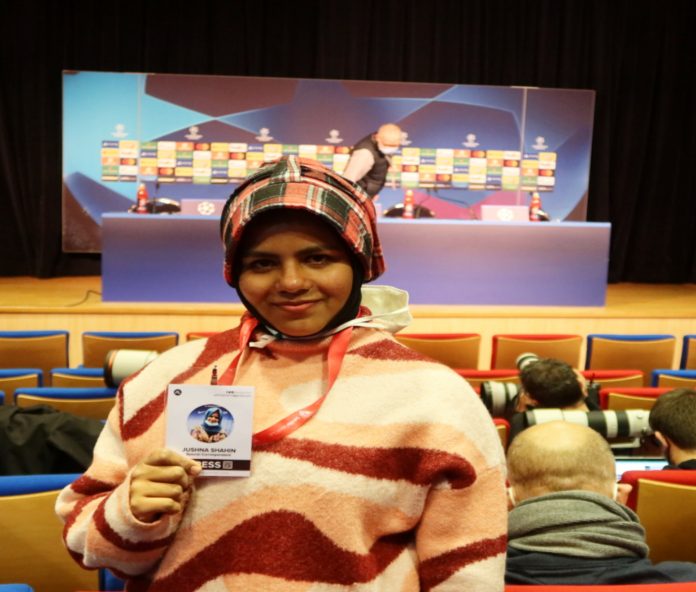
Jushna at the conference room Spain. | Picture by arrangement
Kerala :
Jushna Shahin’s earliest memories are of watching football matches on TV with her family in Kerala’s Mangattuparamb village.
As a die-hard Lionel Messi fan, Shahin got her chance to do her bit for the game in 2009 when she was selected as one among the 70 students in JNU for the language assistant program in Spain by the Ministry of Education, Spain. “In our village, girls rarely went outside of their homes, other than going to school etc,” Shahin, a teaching assistant and football reporter in Spain, told TwoCircles.net. “Girls going out to play was out of the question, and that put an end to my dream of playing the sport.”
The Kendriya Vidyalaya high school where she studied encouraged sports, but Shahin was not comfortable with the usual sports uniform of shorts and t-shirt.
This did not keep the girl away from football. “I spent my time learning about the sport, and its laws and rules,” she said.
Love for Spanish and Messi Shahin said she wanted to study Spanish when she was in 10th grade so that she could talk to Messi.“I don’t know if it will materialize or not but I will make efforts,” she said.
In 2019 when she got her first salary working in Spain, Shain bought tickets for the UEFA Champions League in Barcelona to see her sports hero play live. “It was unreal and amazing,” she said.
The following day, she went over to the Barcelona club’s office and handed over a hand- letter meant for Messi, hoping that he would reply one day.
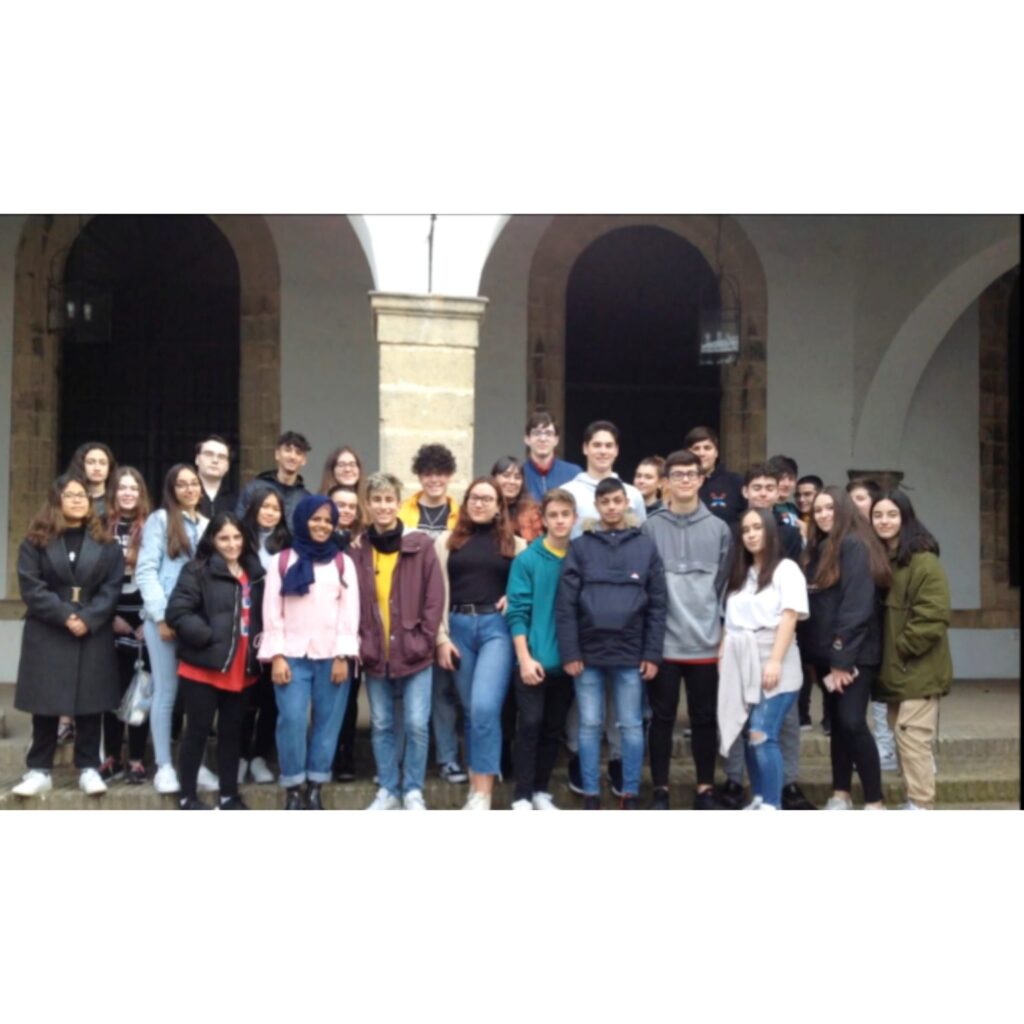
Jushna Shahin on a visit to a Vine Cathedral with her students at the IES Santa Isabel de Hungria, Spain. | Picture by arrangement
Last year when Messi moved to the Paris Saint Germain (PSJ) football club in France, Shahin flew to Paris and witnessed the team getting trained. “My heart-throbbing moment was when I watched Messi getting trained,” she said.
While in 11th grade, Shahin attended a camp organized by students of central universities to help those interested to pursue studies outside Kerala. Contacts she made from the camp helped her for the entrance exams. “Even after I cleared the exams, my parents were not convinced about pursuing Spanish as a graduation course. However, they gave in to my wishes,” she said.
In September 2019, Shahin traveled to Spain on her first international trip.
After landing in Spain she found that the Spanish she had learned from textbooks was not the same as spoken by people in Spain. “It was a challenge. Also, the other Indian student’s who had been selected were all placed in different cities of Spain. To travel to a new country was exciting but I felt tense and insecure initially,” she said.
Love for sports writing In 2014, when Shahin was at JNU, she started writing journalistic pieces for the Companion magazine. She would write short reports about the matches she watched. Her interest in sports writing led her to report for The Footy Times , which is an online magazine devoted to publishing football journalism. She started reporting for the magazine during the 2018 FIFA World Cup and has been writing for it since. She has also reported for Malayalam news channel MediaOne and online news website MaktoobMedia.
Shahin recalled two events as the most exciting during her work as a football reporter. In 2021 when the stadiums were closed to the public amid a global pandemic, she was one of the few media persons with accreditation pass reporting the semi-finals of the Copa del Rey in Spain. “I was seven months pregnant at the time,” she said
In February 2022, she got accreditation from the Paris Saint-Germain (PSG) Football Club to report the UEFA Champions League round 16 in Paris. She also attended a press conference at the home stadium of PSG club where hers was one among the ten questions asked to Karim Benzema (Real Madrid captain). “Now that stadiums are open for the public, I don’t think I will get the chance to go in with the media persons alone to watch a match in a closed stadium. That makes my reporting during the last year very special,” Shahin said.
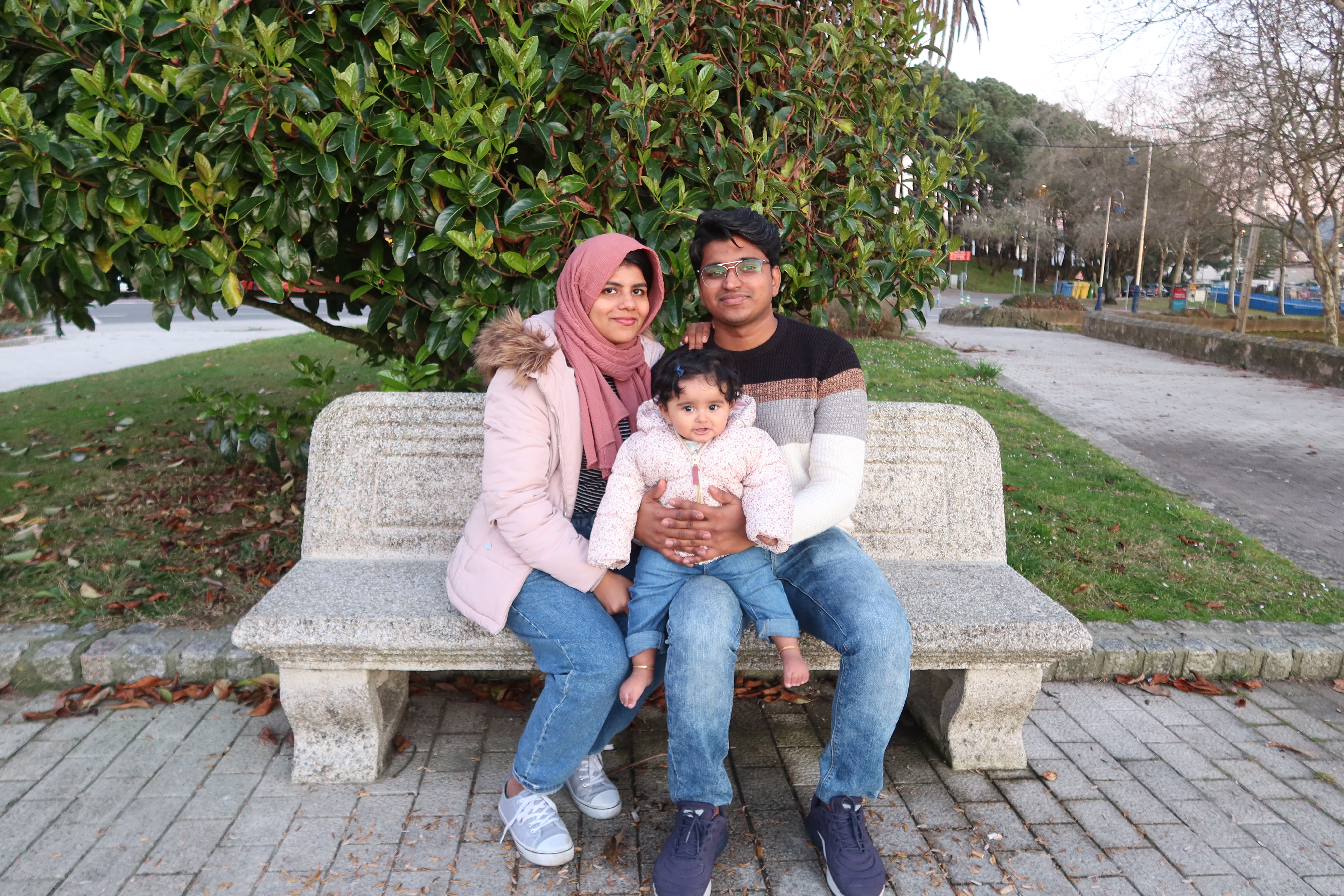
Jushna with her husband Awad and daughter Eva. | Picture by arrangement
Having been called crazy for her dreams and passion, Shahin shrugs it off and said, “What’s important and special for you might be very silly for the other person. It’s better not to see and look at your dreams in other people’s frameworks. Create your own dream and respect it, and be confident. Instead of just dreaming it, try to work on it. The only thing that matters is whether you are happy with it or not,” she added.
Shahin’s parents had seen her love for football only as a childhood interest and never knew she would pursue a career related to the game.
“More than her craze for football through Messi, I am happy that she is in the field of football journalism,” said her father CKA Jabbar, veteran journalist and associate editor of Malayalam news portal kvartha.com. “Love for football and writing have been in her since childhood, and she worked hard to follow her dream,” said her mother, Nazila CH, working in the Animal Husbandry Department under the Government of Kerala in Thiruvananthapuram.
Shahin now lives with her husband, Awad Ahmad, and eight 8-months-old daughter in the city of Vigo in north-western Spain.
Najiya O is a freelance journalist based in Calicut, Kerala. She tweets at @najiyao
source: http://www.twocircles.net / TwoCircles.net / Home> Lead Story / by Najiya O, TwoCircles.net / March 26th, 2022
In an impressive academic performance once again Muslims have emerged as “NEET State Topper” in 5 states for the year 2021.
NEET 2021 Toppers:
In an impressive academic performance once again Muslims have emerged as “NEET State Topper” in 5 states, including one abroad and overseas.
According to NEET 2021 Toppers’ List released Tuesday . Mohammad Zeya Belal, Zarina Batool, Farzina Yasmin Laskar, Shafeek Ahamed AM and Arsalan Mosaddiq are National Eligibility cum Entrance Test State Toppers (NEET UG 2021 Topper)in 5 states.
According to the NEET 2021 State Toppers List of 38 States and Union Territories, Zeya Belal, who also figured in the list of NEET 2021 Top 20, secured the first rank in Bihar. Zeya Belal has bagged 715 out of the total 720 marks in NEET 2021.
Other NEET Toppers 2021 who are Muslims include Zarina Batool who secured 596 marks and topped Ladakh, Farzina Yasmin Laskar who bagged 573 marks and topped Mizoram, whereas Shafeek Ahamed AM got a total of 489 and secured the first position in Lakshadweep,
The 5th Muslim topper is Arsalan Mosaddiq. Arsalan bagged 690 marks and topped NEET overseas centres.
The NTA did not disclose at which centre Arsalan appeared for NEET 2021. It was however announced that besides various exam centres in India, NEET was also held this year in Dubai and Kuwait .
In 2020, a total of 06 Muslim students had found their place in the list of NEET toppers. Among them was Shoyeb Aftab from Assam who had secured AIR 1 in 2020. Aftab is currently studying at AIIMS, New Delhi.
The NEET exams were conducted on September 12 at over 3,800 centres across 202 cities in India.
Around 16 lakh students from all over the country and abroad had applied to appear for the exam.
The NTA declared the NEET result Monday evening. In a first, the NTA sent the NEET score to the candidates on their registered e-mail addresses before publishing it on the official website.
Three students – Mrinal Kutteri from Hyderabad in Telangana, Tanmay Gupta from Delhi (NCR) and Karthika G Nair from Maharashtra have bagged 720 out of the total 720 marks in NEET UG 2021 and secured AIR 1, AIR 2 and AIR 3 ranks.
source: http://www.ummid.com / Ummid.com / Home> Education &Career / by ummid.com news network / November 03rd, 2021
Hamied has successfully steered Cipla on an accelerated growth path with a focus on boosting margins, without diluting the core values it stood for.
Synopsis
“I am humbled and honoured to receive the ET’s Businesswoman of the Year Award. This recognition belongs to each and every one of our 25,000 employees who stand with Cipla, putting patients’ interests before their own and upholding our purpose of Caring for Life,” Hamied, executive vice-chairperson, Cipla, told ET.
Samina Hamied represents a rich legacy. Her grandfather, KA Hamied, a freedom fighter and nationalist, founded Cipla in 1935, making it one of India’s oldest pharmaceutical companies. Her uncle Yusuf Hamied is the doyen of Indian pharma known globally for making affordable generic AIDS drugs accessible to millions of patients in Africa and other low- and middle-income countries.
“I am humbled and honoured to receive the ET’s Businesswoman of the Year Award. This recognition belongs to each and every one of our 25,000 employees who stand with Cipla, putting patients’ interests before their own and upholding our purpose of Caring for Life,” Hamied, executive vice-chairperson, Cipla, told ET.
Hamied has successfully steered Cipla on an accelerated growth path with a focus on boosting margins, without diluting the core values it stood for.
Both as executive director from July 2015 and as executive vice-chairperson from September 2016, Hamied has been instrumental in driving the company’s transformation from a traditional low-cost drug manufacturer to one with a young professional management and an aggressive approach towards inorganic expansion. Under her, Cipla also restructured its business and has also initiated cost-optimisation measures.
She spearheaded Cipla’s entry into the US market with strategic acquisitions of two generic companies, InvaGen Pharma and Exelan Pharma, for $550 million in 2015.
From FY15 to FY21, Cipla’s US revenue grew close to five times. US business contributed one-fifth of the total revenue in FY21.
Cipla’s revenue from operations grew at a compounded annual growth rate of 7% in the last 5 years to Rs 19,160 crore in FY21. Ebitda margin and net profit rose 12% CAGR in the last 5 years to 22.5% and Rs 2,405 crore, respectively, in FY21.
During Covid, Cipla launched antivirals, antibody cocktails, testing kits, masks and sanitizers. Cipla’s India business grew 15% year-on-year to Rs 7,736 crore.
Hamied focuses on board and governance issues, furthering Cipla’s global partnerships, shaping its corporate culture and hiring the right talent.
source: http://www.economictimes.indiatimes.com / The Economic Times / Home> English edition> Business News> Industry> Healthcare-Biotech> Healthcare / by ET Bureau / March 28th, 2022
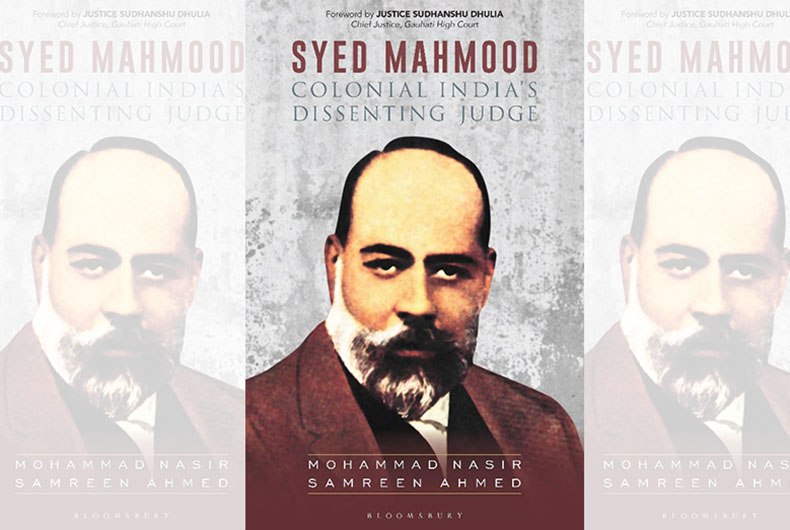
Appointed to the High Court at the remarkably young age of 32, Justice Syed Mahmood displayed during a tenure of just six years that law without conscience was merely a facade for the perpetration of injustice
New Delhi:
In the late 19th century, Justice Syed Mahmood, son of the great social reformer Sir Syed Ahmad Khan , and the first Indian judge of the Allahabad High Court, became an icon of judicial resistance to British colonialism at the apex of British power across the world.
Appointed to the High Court at the remarkably young age of 32, he displayed during a tenure of just six years that law without conscience was merely a facade for the perpetration of injustice.
A number of his dissenting judgments became a template for reference by future generations, Mohammad Nasir and Samreen Ahmed write in “Syed Mahmood: Colonial India’s Dissenting Judge” (Bloomsbury).
Outside of law, his largely invisible but wide-ranging intellectual corpus engages with questions related to colonial transformation of education and its reconciliation with Muslim identity, national integration and religious tolerance.
His role in the making of Aligarh Muslim University (AMU), presently celebrating its centenary, was notable, but survives only as a footnote in history.
This book chronicles the triumphs and tragedies of Syed Mahmood’s life, and his contribution to shaping the consciousness of modern India. It succeeds in exhuming a seminal figure from the dust of history and demonstrates how the past continues to speak in the present.
Mohammad Nasir is Assistant Professor in the Department of Law, Aligarh Muslim University (AMU). He has written on legal and socio-political issues for Hindustan Times, Indian Express, The Wire and OPEN. He co-edited the Special Centenary Issue of the Aligarh Institute Gazette, a periodical started by AMU founder Sir Syed in 1866.
Samreen Ahmed is a legal researcher and writer based at the Aligarh Muslim University. Her academic writings have been published in the Economic & Political Weekly.
source: http://www.ummid.com / Ummid.com / Home> India / by IANS / March 29th, 2022
Award named after N.R. Madhava Menon, father of modern legal studies in India
C.K. Sahala Farsana, student of the Nehru Academy of Law, Lakkidi, and first-rank winner of Calicut University in five-year LLB examination, has won this year’s N.R. Madhava Menon Memorial Award for the best law student.
The award has been given by the Victims Information, Sensitisation, Welfare and Assistance Society (VISWAS), an organisation providing succour for the victims of excesses and crimes.
Ms. Farsana was adjudged the best student considering her academic and non-academic performance, especially her leadership in social work. She had won prizes in quiz, debate, and essay competitions held in several parts of the country.
Kalyani Balachandran from Al Ameen Law College, Kulappully, was adjudged the runner-up. M. Shabas from V.R. Krishnan Ezhuthachan Law College, Elavenchery, and Amrit M. Nair from Al Ameen Law College, Kulappully, won consolation prizes.
Former district judge M.R. Balachandran Nair, former diplomat Sreekumar Menon, and Deputy Director of Prosecution K. Sheeba constituted the judging committee.
Principal district judge B. Kalam Pasha gave away the awards instituted in the memory of N.R. Madhava Menon, who was widely considered the father of modern legal studies in India. Menon was a former Vice Chancellor of the National Law Universities and former director of the National Judicial Academy.
VISWAS secretary P. Premnath, vice presidents B. Jayarajan and R. Devikripa, joint secretaries Deepa Jayaprakash and N. Rakhi spoke.
source: http://www.thehindu.com / The Hindu / Home> News> National> Kerala / by Staff Reporter / Palakkad – January 10th, 2022
Suhana Safar, a fifth-year student of BA LLB integrated course at SDM Law College Mangaluru, has secured second rank at the Karnataka State Law University (KSLU) examination.
Suhana is a resident of Ullal Kodi and daughter of Haneef and Ruqiya.
She had appeared for the KSLU final year exams 2021 in Kannada medium and has secured second university rank.
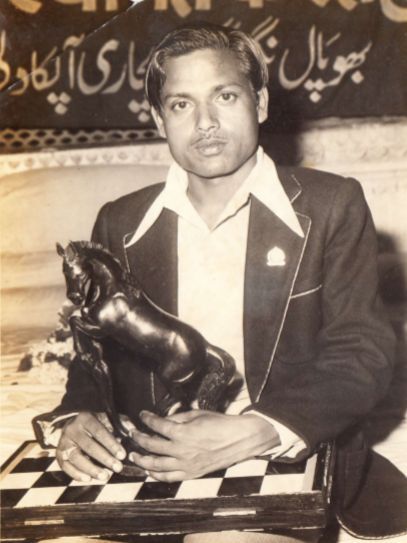
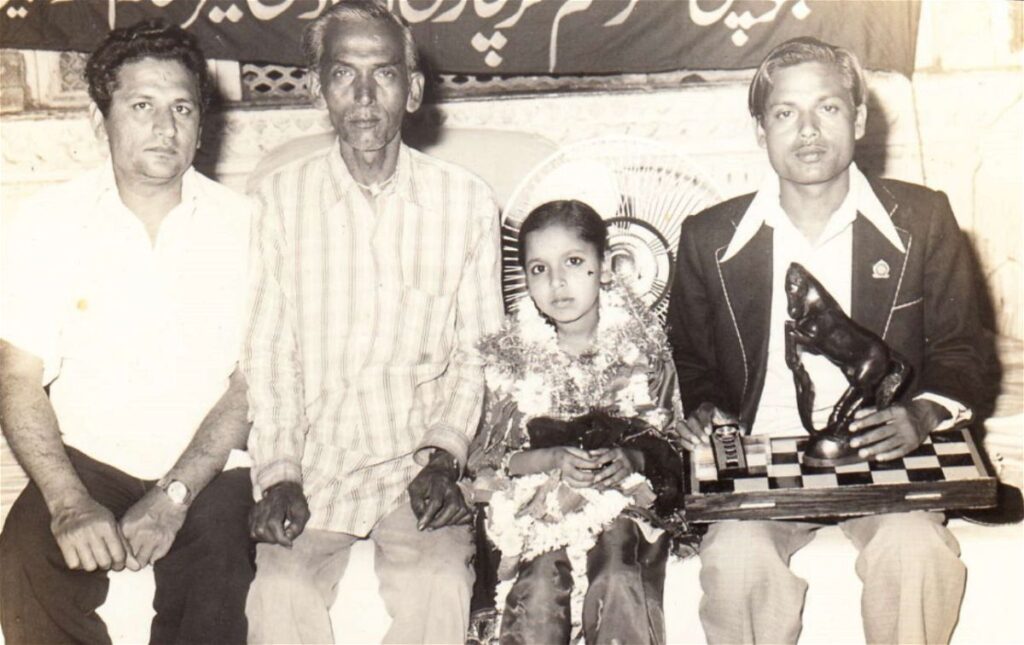
Rafiq was felicitated by the Bhopal Municipal Corporation with this trophy after he won the National A Championship in 1978
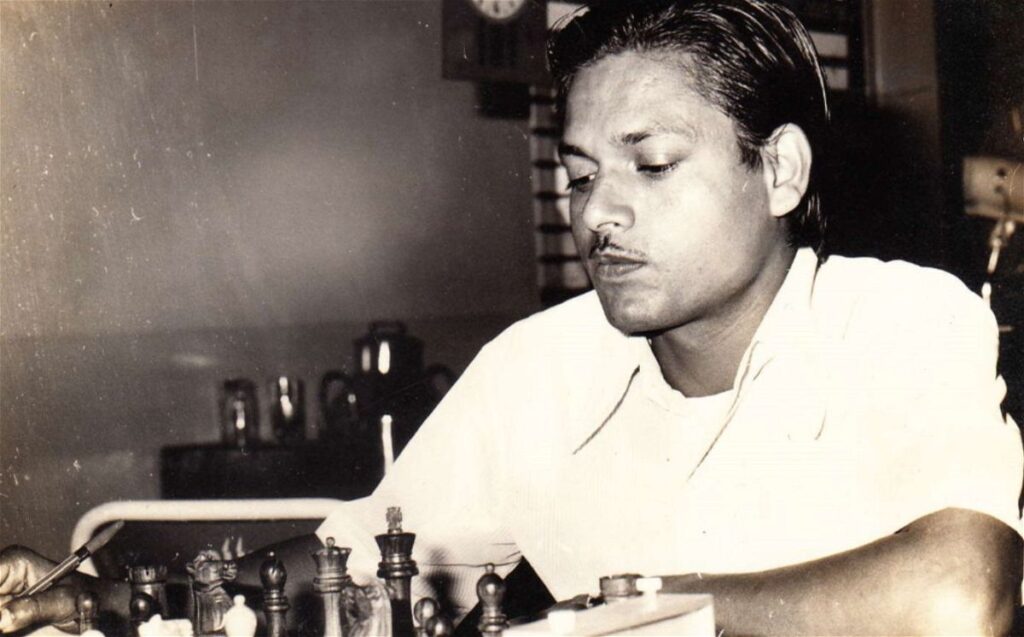
He was the son of a carpenter and had no formal education. He himself became a carpenter to ensure that his daily needs are satisfied. Something about the game of chess attracted him and began playing it actively. Thank God, that he chose chess, because this impoverished, illiterate carpenter from Bhopal, Madhya Pradesh, went on to become one of the finest chess players that India has ever seen. This is the story of Mohamed Rafiq Khan, former national champion of India and the first Olympiad chess medalist for our country. Rafiq Khan passed away at the age of 73 years on 19th of July 2019. With this article we would like to go back in the memory lane and explore the legacy left behind by this great personality. We not only bring you Rafiq Khan’s life story and best game analysis but also messages and anecdotes from his friends, colleagues and contemporaries. A heartfelt eulogy.
The Reincarnation of Sultan Khan
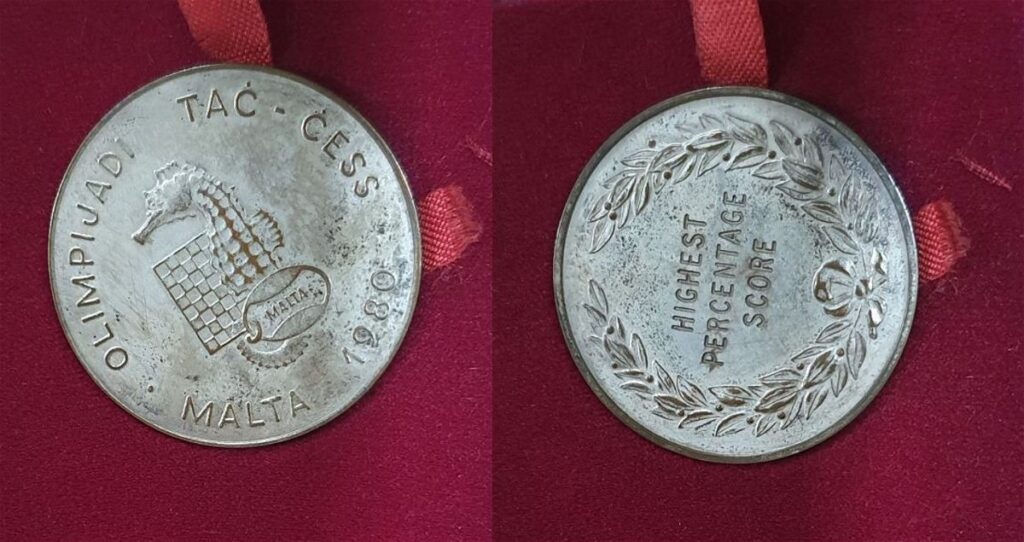
Do you know what is the significance of this medal?
The above medal is India’s first medal at a Chess Olympiad. And do you know the man who won it? It was Mohamed Rafiq Khan, playing for the third board of the Indian team at the Malta Olympiad in 1980.
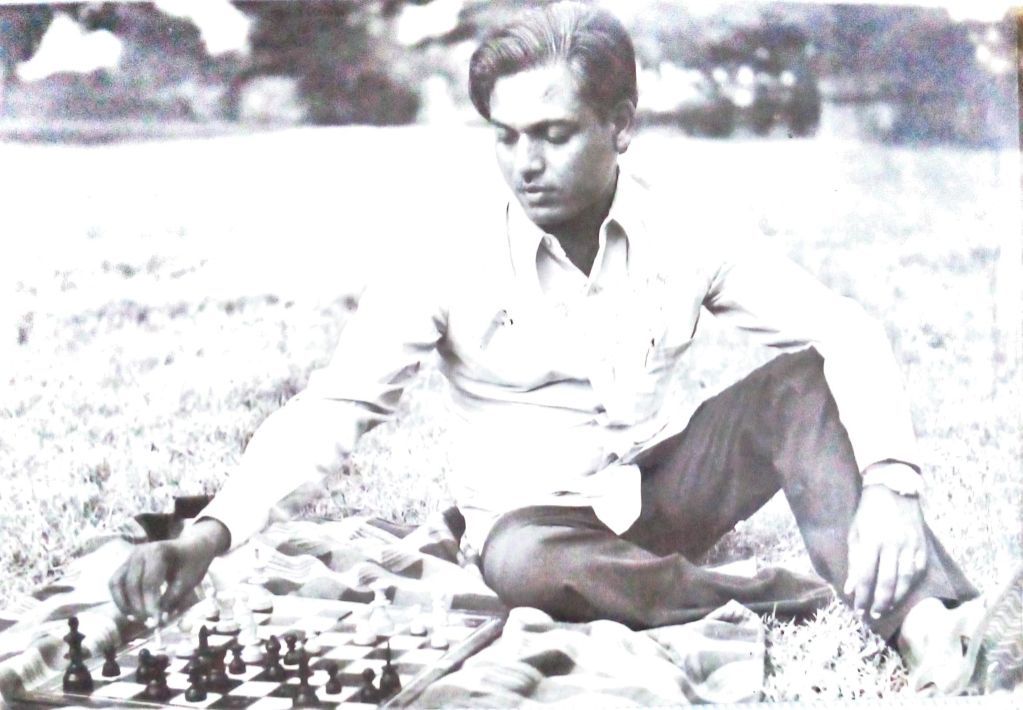
The man who won India’s first medal at a chess Olympiad – Rafiq Khan from Bhopal, Madhya Pradesh
Rafiq Khan’s father was a carpenter by profession and the family living in Bhopal, Madhya Pradesh suffered from poverty and lack of resources. Born on 12th July 1946, Rafiq had no real formal education. He never went to a school. In order to make his ends meet, he started working with his father as his assistant. After putting in hours of carpentry work, he would often get tired and go to his favourite tea stall for a cup of tea. That’s where he would see people playing chess with each other. He was intrigued by the game and decided to learn it. In spite of his hectic schedule, he made a promise to himself that he would play an hour of chess each day before going to bed. It was in this way that Rafiq Khan made his modest beginnings in the royal game. Mind you, what Rafique learnt was the desi form of chess, also called Indian chess, where the pawn would move only one square at a time (not two on the first move like in international chess), a pawn could not be promoted to any piece on the last rank and so on!
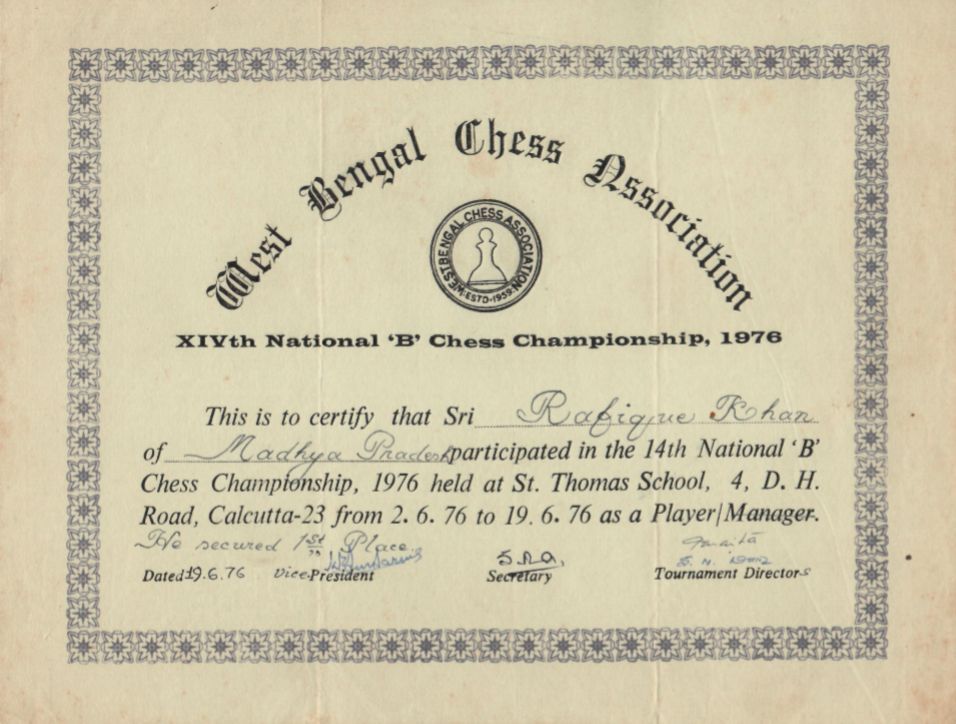
Rafiq’s career in international chess (non desi form of chess that we use today) started when he first took part in the Madhya Pradesh chess championship held during April 1975. He surprised all by winning the championship ahead of Syed Nawab Ali (who represented India in the Varna Olympiad), Rajesh Bahadur, Radhe Shyam Gupta, all National ‘A’ players. He then went on to qualify for National ‘A’ by securing second place behind Raja Ravisekhar at the 13th National ‘B’ held at Patna during June 1975. He shot into prominence by his stupendous performance in the 14th National ‘B’ held in Calcutta during June 1976. There he scored 11 wins and 9 of them were back to back! Once he sat on the first board, he remained there until the end conceding only four draws and winning the championship with massive 13 points! This record is still intact and no one has dominated an event like National B, like Rafiq Khan did in 1976.
Rafique Khan’s certificate after he created a big flutter in Indian chess by winning the National B Championships with a score of 13.0/15.
Says GM Pravin Thipsay, “Rafiq Khan’s result at the 1976 National B Championships stunned the chess fraternity at that time. We were all amused to know about him through the stories we heard from the Mumbai players who returned dumbfounded after the “B”. I then learn that he had been a “desi” player (rules of desi chess are different from international chess. For eg. the pawn moves only one square forward instead of two) for a few years before and had learned the rules of International chess hardly six months before the “B”. Even during the said “B”, Rafiq was reluctant to move pawns two squares and invariably began the game with strange pieces and pawns configuration resulting from starting moves ……e6, d6, g6, Bg7, Ne7, 0-0 followed by ……b6,Bb7,Nd7 etc. Despite this, he not only defended his position well in every game but even went on to exploit the overextended and weakened position of his adversaries to gain material.”
It’s amazing how in spite of being just a desi chess player, Rafiq Khan managed to dominate the National B championships with a score of 13.0/15
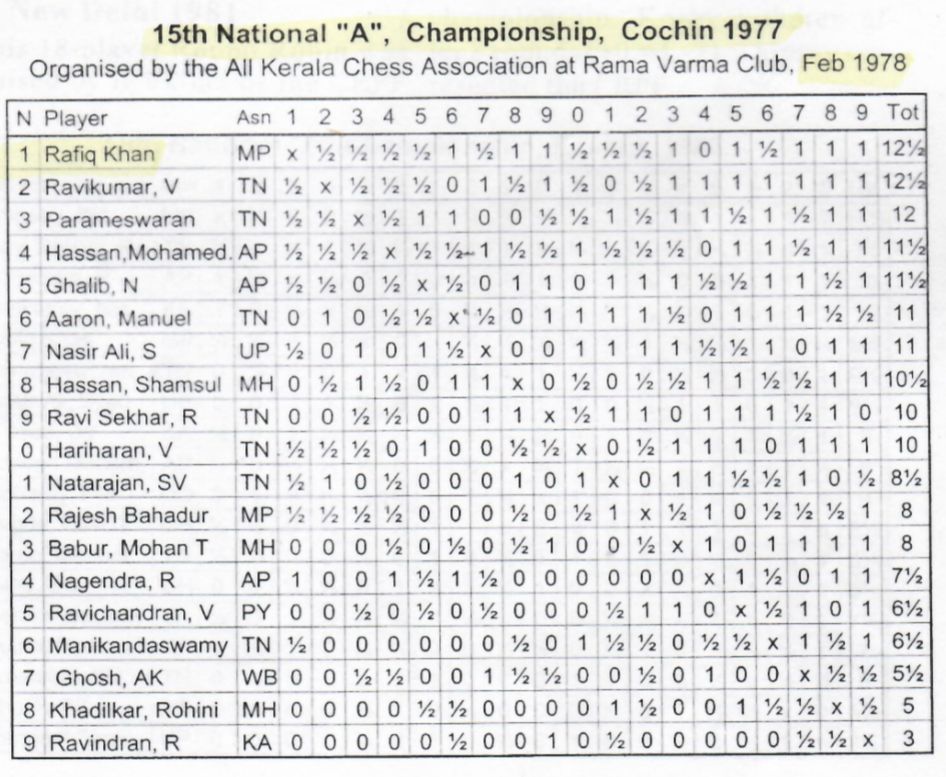
India’s top player at that point in 1976 was Manuel Aaron. Aaron had already won the national title for a record five times until then. What did he think of Rafiq Khan’s 13.0/15 achievement? “In 1976, Rafiq Khan surprisingly won the National “B” Championship in Calcutta and Indian chess looked at him in awe as he finished ahead of almost all the best chess players of India. His rivals were proficient and experienced in modern chess theory which was denied to Rafiq because of his lack of English knowledge, yet he won. I was already aware of his good reputation when I first met him at the 1976 National “A” in Calcutta. But he was a big disappointment to me as he had a few gaps in his understanding of the middle-game, especially the handling of ‘good’ and ‘bad’ bishops. Naturally, he didn’t do well in the “A” at Calcutta. But by the time the next National “A” came in Cochin, he was a transformed player, his middle-game had improved dramatically and he took the title on tie-break from V.Ravikumar who became an IM two years later. Clearly, Rafiq was of IM calibre.”
All the big names of Indian chess participated in the National A championships in 1978 and Rafique Khan came out on top with 12.5/19 | Source: Indian Chess History
Rajesh Bahadur, who was Rafiq’s good friend and also a statemate said, “Rafique Khan became National Champion by winning 17th National ‘A’ held at Cochin during Feb’1978. Though he was in outstanding form throughout this tournament, his encounter with Ravisekhar was the most intriguing. The striking feature of this game was that playing with Black pieces, he dragged Ravisekhar’s King from the security of first rank and brought it right up to the last rank to deliver mate, reminiscent of Ed Lasker – Sir George Thomas encounter.”
A carpenter by profession, came on the Indian chess scene, and defeated the best in the business to become the National Champion! A look back at how the national championships were played back in the day!
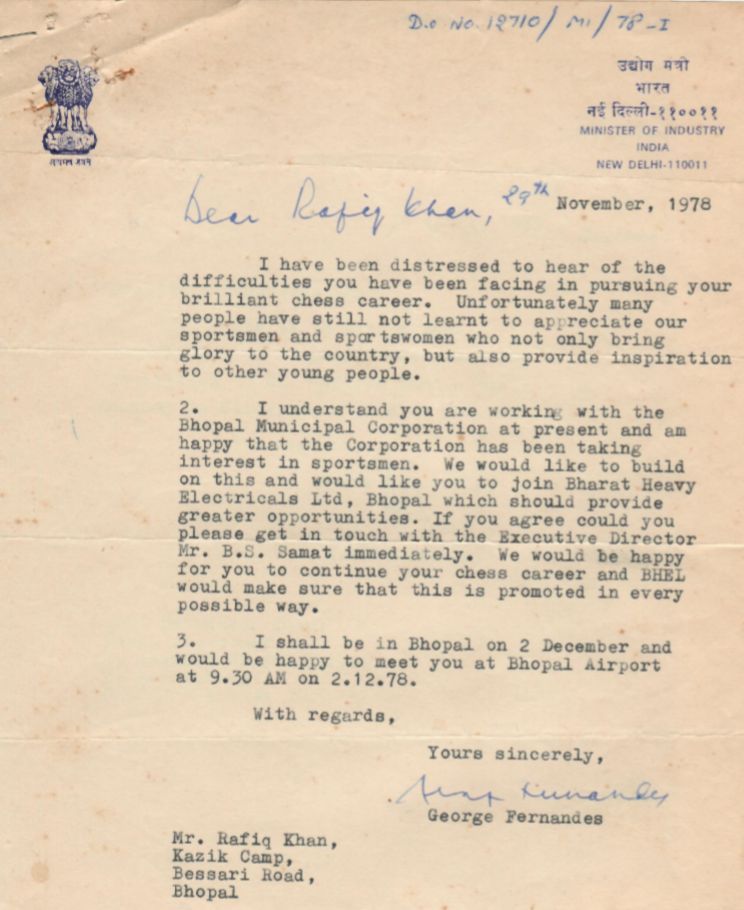
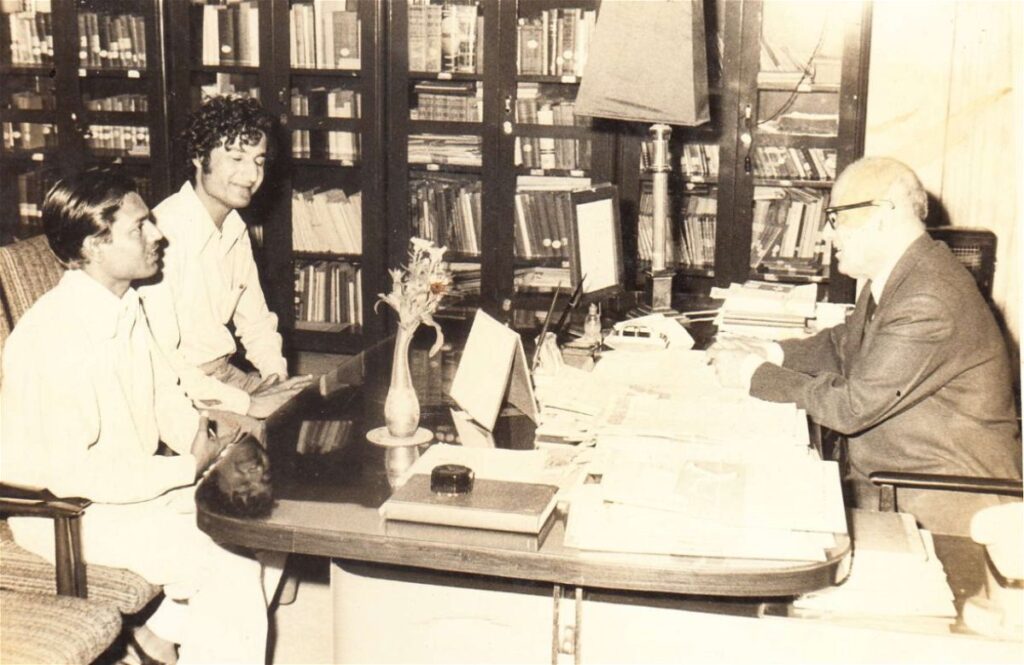
In spite of winning the national title and being one of the strongest chess players in the country, Rafiq Khan’s pangs with financial instability continued. Chess was not going to make his ends meet. At that time there was hardly any money in the sport. Although he was working in the Bhopal Municipal Corporation, the salary wasn’t sufficient for him to focus adequately on his chess career. During this time, an English magazine ‘Onlooker’ did a detailed story on Khan’s achievements and the negligence of government towards him. This story reached the then Industry Minister George Fernandes. Seeing his plight Fernandes wrote a letter to Rafique. Here’s what he said.
George Fernandes’ letter to Rafique Khan making sure that he gets a better livelihood by giving him a job in Bharat Heavy Electricals Limited (BHEL)
Employment in BHEL gave Rafiq Khan’s chess career a much needed boost. He focused on his game and the next breakthrough in his career came during the Malta Olympiad, 1980. Rafiq’s individual silver medal on board three was a big boost not just for him personally but for the entire Indian chess fraternity. Suddenly everyone began to believe that even Indians could not just compete, but even win against the best in the world. Says Thipsay, “An individual medal at the Olympiad going to a Non-European was something no one could even dream of and yet Rafiq achieved it!” Manuel Aaron, who was Rafiq’s team mate at the event, said, “After a gap of many years, the Indian Government sponsored the Indian Men’s team to the Malta Olympiad in 1980. Till then only the Indian Women’s team which comprised solely, or mainly, of the Khadilkar sisters were sponsored. The Government had denied support to the Men’s team till Malta, 1980, as they claimed it was ‘weak’ or sub-standard. Rafiq scored 10/13 to take the silver medal for the second best performance on board three to rubbish the long-held belief of the Government that Indian men are not strong enough for International chess. It was amazing that a Bhopal carpenter won a medal at the Olympiad! Single-handedly, Rafiq had raised the popularity of chess in Madhya Pradesh.”
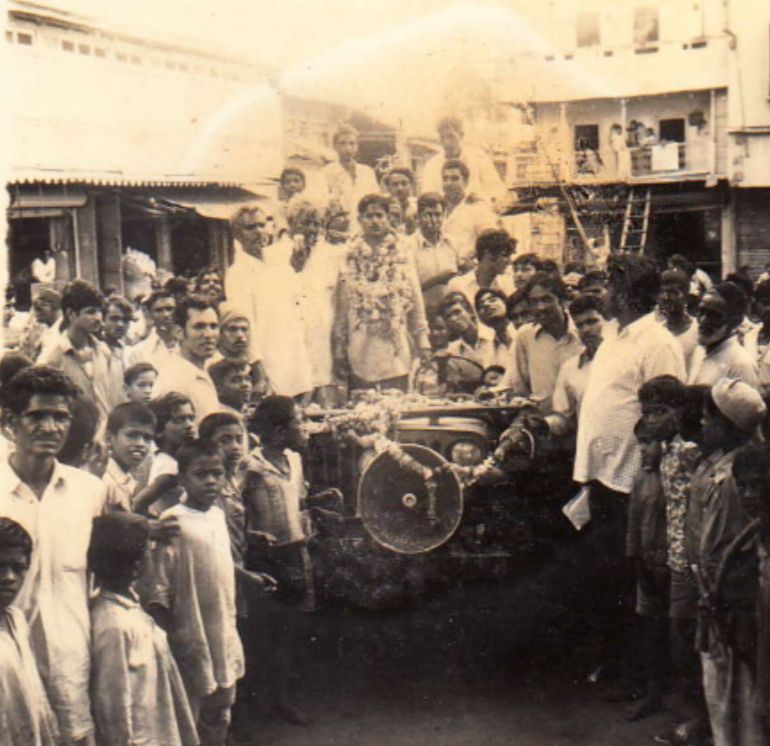
Rafiq Khan was given a hero’s welcome in his hometown of Bhopal after he won the silver medal at the Olympiad in Malta 1980 Rafiq’s achievement made everyone believe that “Nothing was impossible!”
Rafiq Khan continued playing chess after 1980 as well. He was the best performer in the Indian team at the Lucerne Olympiad in 1982. He subsequently won the prestigious Piloo Modi tournament thrice in 1984, 1986 and 1992. His other victories include a tournament in Sehore, P.N. Mehta Memorial tournament in 1990 in Nashik, KU Achla Mudgal tournament in 1994 in Agra. Rafiq Khan loved chess and continued playing it until his last breath. According to Kapil Saxena, Secretary of MPSCA, Rafiq was playing chess on 18th July, until midnight, at Bhopal Chess Club. To the big surprise of everybody, he died of a heart attack the next day at 2:30 pm. He is survived by his wife, two sons and four daughters.
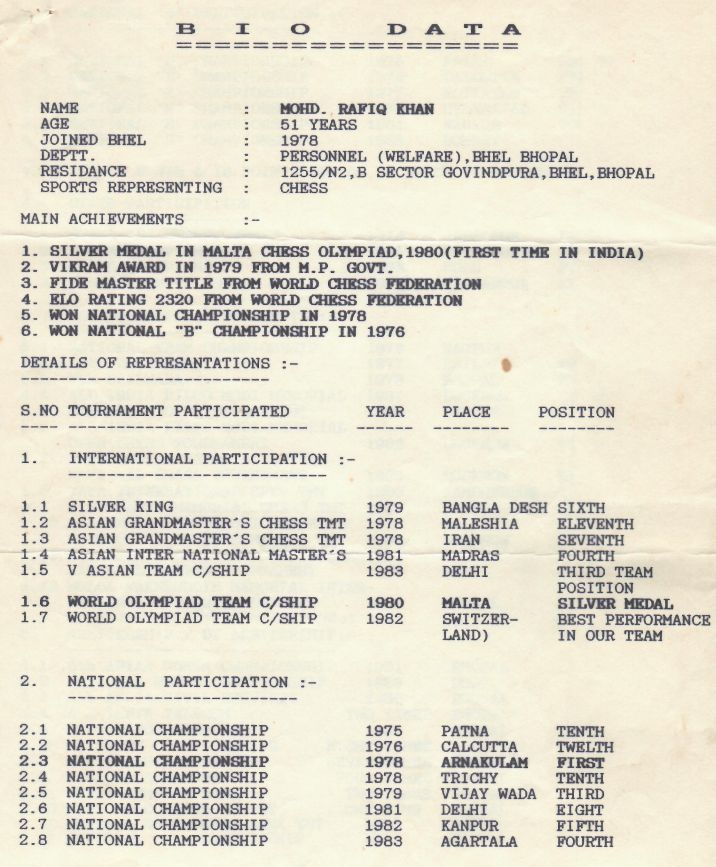
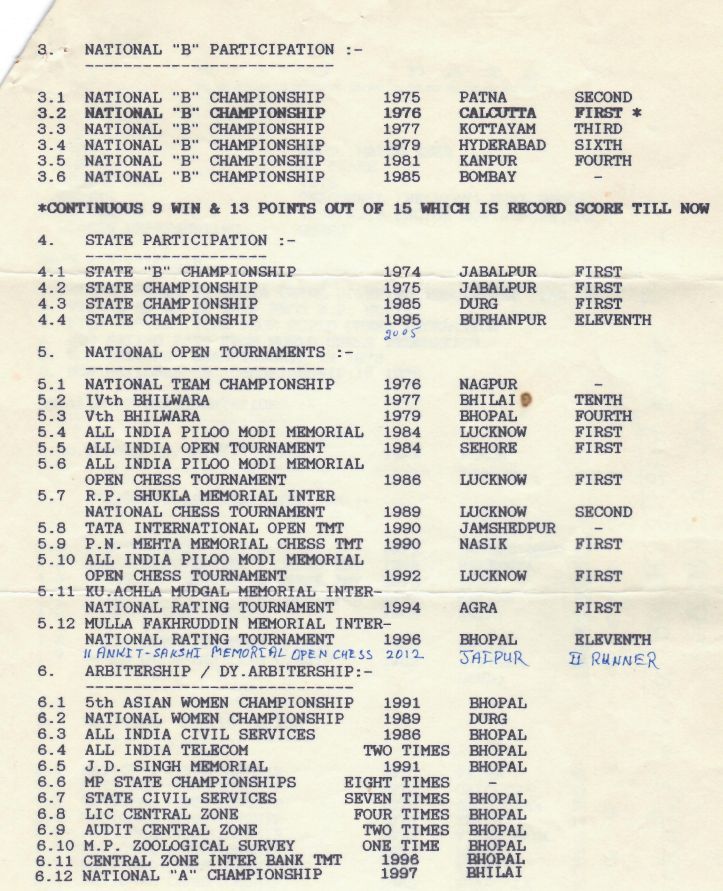
Chess was Rafiq Khan’s first and true love until his very last breathe! Rafiq Khan’s bio dataRafiq Khan’s bio data (continued)
Rafique Khan the chess player
After analyzing many of Rafiq Khan’s games over the last few days I have come to the conclusion that Rafiq Khan liked to play positional chess. He liked to fianchetto his king’s bishop with white after opening with 1.d4. It was not like Rafiq tried to stay away from complications. When the position demanded them, he would go for it whole heartedly. His black repertoire was much more aggressive than his white openings. With white he liked to keep a steady opening edge. When it came to endgames he was simply brilliant. Check out his endgame against a young Dibyendu Barua, where Rafiq manages to magically convert a drawish looking rook endgame into a winning one.
The Endgame maestro
When I was going through many of Rafiq Khan’s games, this one caught my attention. Mainly because the endgame looked drawish and yet Rafiq managed to convert it and secondly his opponent was the very talented youngster and the future GM of India Dibyendu Barua.
Rafiq, Khan Mhd. – D., Barua1-0 Annotations : Sagar Shah
This endgame should be drawn. but it is interesting to see how Rafiq Khan manages to put quite a bit of pressure on Barua! 40.♖b5b641.h5! Fixing the kingside pawns. ♔f742.♔f4♔e643.b4♖b344.♖e5+ The rook makes way for the pawn to come to b5. ♔f645.♖f5+♔e646.b5 If you look at the position carefully, you realize that the rook on f5 controls the pawn on b5 and h5 and also f3. So it is ideally located. But the next question is how to make progress? ♖b147.♖e5+♔f648.♖d5♔e649.♖e5+♔f650.♖f5+♔e651.♔g3 Notice how Rafiq Khan repeated the moves to wear down his opponent before making some progress. This is high class technique. ♖b352.♔g4♖b253.♔f4♖b154.♔e3♖b3+55.♔d4♖b4+56.♔d3♖b3+57.♔c4♖b158.f4 White makes some progress. But as long as the white king cannot enter, nothing much can be done. ♖c1+59.♔d3♖d1+60.♔e2♖h161.♖e5+♔f662.♔e3♖b163.♖d5♖e1+64.♔f3♖f1+65.♔g3♖g1+66.♔f2♖b167.♖f5+♔e668.♖e5+♔f669.♔e3♖b470.♖d5♖b3+71.♔d4♖b4+72.♔d3♖b173.♖f5+♔e674.♖e5+♔f675.♔d4♖b4+?75… ♖d1+ The question is wht didn’t Barua give this check to stop Kd5. 76. ♔c4 The point is that the white rook can now move in with Re8 because any black active rook move is met with Kd5. So in effect Barua should not have landed in this position.75… ♔f7!?76.♔d5! That’s why Kf7 was stronger because now Rxb5+ doesnt work due to Kd6. ♖a476… ♖xb5+ 77. ♔d6 ♖xe577… ♖b1 78. ♖f5# is a pretty mate.78. fxe5++−77.♖e6+♔f778.♖c6♖a579.♖c7+♔g880.♔c6 Magically White has got everything that he wanted! ♖a481.e5♖xf482.e6♔f883.♖xa7♖e484.♖f7+♔g885.♔d5♖e186.♖f5
Tremendous Endgame technique by Rafiq Khan. 1-0
The Malta Olympiad, 1980
The defining tournament of Rafiq Khan’s chess career. Rafiq scored 10.0/13 with nine wins, two draws and two losses. We have chosen three of his games here. The first one is against IM Steen Feder of Denmark. This game shows how White can keep control in the fianchetto variation of the King’s Indian and use his extra space to put Black under pressure.
1.d4♘f62.c4g63.g3♗g74.♗g2O-O5.♘f3d66.O-O♘bd77.♘c3e58.♕c2♖e89.♖d1c610.e4exd411.♘xd4♕b612.h3a512… ♘xe4 13. ♘xe4 ♗xd4 14. ♘xd6±13.♗e3♕c714.♖d2! A quiet little move to double the rooks down the d-file. ♘c515.♘b3♘e616.♖ad1♗f817.♘a4♘d718.f4 Rafiq Khan was just too strong in such positional structures. He would press the life out of his opponents. b619.♗f2♖b820.♕c3♖b721.♔h2♕b822.♕f3♖c723.♘c3♘dc524.♘d4♘xd425.♗xd4f5 The position for Black was already bad. Now with … f5 it only gets worse. 26.e5♘e627.exd6♗xd628.♗xb628. ♗f6 ♗f8 29. ♗e5+−28…♕xb629.♖xd6♕xb230.♖b1♕a331.♖xc6♗b732.♖xb7♖xb733.♕d5 The position is roughly around even. ♖be7?!33… ♕xc3 34. ♖xe6 ♖xe6 35. ♕xe6+ ♖f7 36. ♗d5 ♕c2+ 37. ♔h1 ♕b1+34.♘b5! ♕e335.♘c7♖xc736.♖xc7♔h836… g5! would have given Black good saving chances.37.♖b7♘c538.♖b538. ♕f7 ♘xb7 39. ♕f6+ ♔g8 40. ♗d5++−38…♘e439.♖b3♕a7?! 40.♕c6
Perhaps Fedder resigned a bit too soon, but the position is quite bad in any case. 1-0
Against his Lebanese opponent Tony Abouchaaya, Rafiq was the better player. This game shows us how two minor pieces are more powerful than the rook and pawns when we are still in the middlegame and also how a queen and knight can combine together to launch a deadly attack against an opponent’s king.
Khan, Mohamed Rafiq – Abouchaaya, Tony1-0 Olympiad-24 1980.11.20 Annotations: Sagar Shah
1.d4♘f62.♘f3g63.g3♗g74.♗g2O-O5.O-Od56.c4dxc47.♘a3c38.bxc3c59.♕b3♘c610.♖d1♘a511.♕b5♗d712.♕b2♗a413.♖e1♖c814.e4cxd415.cxd4♕c716.♗d2♘c617.♖ac1a618.♘c4♗b519.a4♗xc420.♖xc4♕d721.♕b6♘g422.h3♘xd423.♖xd4♗xd424.♘xd4♘e525.♗e3♘c426.♕b4♘xe327.♖xe3♖c1+28.♔h2♖a129.♘e2♖xa4 We join the position at this point where the position looks unclear. White has the two pieces for the rook, but Black has two additional queenside pawns. 30.♕b3b5?!30… a5 31. ♘c3 ♖b4 32. ♕a3 e6 was a better way to play even though it meant giving up the a5 pawn. 33. ♕xa5 ♖b2∞31.♘c3! ♖a131… ♖c4 32. ♘d5⩲32.♕b2♖a533.♘d5 In a matter of couple of moves White has now got a completely dominating position! ♖e834.♕d2! The queen and the knight and the rook are going to combine well for a final attack on the black king. ♕d835.♖d3e636.♘e3♕b637.♘g4! ♖c838.♖d6♕c539.♕h6♕c340.e5 Black is murdered on the dark squares! A nice show of how two minor pieces are always much more useful than a rook in a middlegame and also how a queen and knight can be used as potent attackers. 1-0
IM Franz Hoelzl of Austria is a strong player. But Rafiq launched an imaginative attack against his opponent’s king. Quite noteworthy in this game is how the rook lifts itself from the back rank to checkmate black’s king.
Khan, Mohamed Rafiq – Hoelzl, Franz 2415 1-0 Olympiad-24 1980.11.20 Annotations: Sagar Shah
1.d4♘f62.♘f3g63.g3c54.♗g2♗g75.O-O Rafiq Khan stays true to his style. He likes to play openings where he can control the centre, and fianchetto his king’s bishop and castle quickly. O-O6.c4♘c67.d5♘a58.♘a38. ♘fd2!? In order to develop you b1 knight to the normal c3 square.8…d69.♖e1♖b810.e4a611.♕e2♘e811… ♗d7 12. e5±11… e6!?∞12.e5 Once given the opportunity, Rafiq doesn’t hold back and is direct in his play. ♗g413.♗f4♘c714.♕d2b615.♖e4!? A very original idea of trying to swing the rook over to the kingside at some point for an attack and also doubling down the e-file.15. h3 ♗xf3 16. ♗xf3 dxe5 17. ♗xe5 ♗xe5 18. ♖xe5 ♘c6 and the knight jumps to d4.15. ♘h4!? dxe5 16. ♗xe5 ♗xe5 17. ♖xe5 ♘c6 18. ♖e3 ♘d4 19. ♘c2±15…♗f515… ♗xf3 16. ♗xf3 dxe5 17. ♗xe5 ♗xe5 18. ♖xe5 ♘c616.♖e2♘b717.♖ae1 White is now clearly better. b518.♘h418. h3!+−18…♗g419.♖e4♕c820.♗h6♗h321.♗h121. ♗xg7! ♔xg7 22. ♗xh3 ♕xh3 23. ♘xg6! fxg6 24. ♖h4+− would have been a winning attack for White.21…dxe522.♗xg7♔xg723.♖xe5e624.♖h5! Rafiq Khan was alert and spots the tactic. ♖h824… gxh5 25. ♕g5+ ♔h8 26. ♕f6+ ♔g8 27. ♖e5+−25.♕h6+♔f625… ♔g8 26. ♘xg6 fxg6 27. ♖xh3+−26.♖he526. ♘f3 ♗f5 27. ♘e5 Next up is g4 and the king should be mated in the centre of the board.26…♕f827.♕f4+♔g728.♘f328. g4!? h5 29. gxh5+−28…f629.♖5e3♕d630.♕h4♗f531.dxe631. g4!+−31…♘d832.cxb5axb533.e7♘de634.g4g535.♕g3♕xg3+36.hxg3♗xg437.♘h2♗f538.g4♗g639.♖xe6♘xe640.♖xe6 White wins two pieces for the rook and the rest is quite easy. b441.♘c4♗f742.♖e4♗d543.e8=Q♖bxe844.♖xe8♖xe845.♗xd5 1-0
Not shying away from complications
It’s easy to assume that Rafiq Khan didn’t like complications. As a person who thrived on logic, he liked to keep things under control. But when the situation demanded or when wanted to win at all costs, he would unleash his aggressive side as seen in this game against Hari Om Sharma. It is not flawless when subjected to the modern engines, but it shows how Rafiq Khan understood what was required to be done in the position.
Hari Om Sharma – Rafiq Khan0-1 A Mudgal Memorial, Agra 1994.??.?? Annotations: Sagar,Shah
After seeing many games of Rafiq Khan it is easy to believe that he was a highly positional player. However, when the situation demanded to win, he was ready to take risks, like in this game. 1.d4♘f62.c4g63.♘c3♗g74.e4d65.f3O-O6.♗e3♘c67.♕d2e58.d5♘d49.♘ge2♘xe210.♘xe2c611.g4cxd512.cxd5♗xg4! Rafiq Khan is alert and sacrifices a piece for compensation. 13.fxg4♘xe414.♕b4♕h4+15.♘g3♘xg316.♗f2 This was what White was banking on. a5! Rafiq Khan doesn’t let his initiative dissipate. 17.♕a4 Surprisingly the queen doesn’t have too many squares to go to. It must make sure that the knight cannot give a dangerous discovered attack and also that the pawn on g4 doesn’t fall because if it does then Qe4+ would lose the rook on h1.17. ♕d2 ♘xf1!−+17. ♕b3 ♕xg4 18. ♗xg3 ♕e4+−+17. ♕c4 b5 18. ♕d3 ♕xg4 19. ♗xg3 ♕b4+−+17…b517… ♕h6! Rafiq finds this idea on the next move, but here it was even more powerful. 18. ♗xg3 f5!−+ The central pawns are going to simply roll over White’s position.17… e4!? is also an interesting way to continue. 18. ♗xg3 ♕xg4∓18.♕d118. ♗xb5 should have been played. It is understandable that Hari Om Sharma didn’t want more lines to be opened up in the position but this would have been the best. e4! 19. ♗xg3 ♕xg418. ♕xb5 ♕xg4−+18…♕h6! 19.♗xg3♕e3+19… f5!20.♕e2♕c521.♖d121. ♕xb5 ♕d4 followed by Rb8 gives Black decent play.21…e422.♗h3 Objectively White has consolidated, but practically Black still has chances as we shall see in the game. ♖fe823.a3 This move is understandable as it prevents Qb4+ but in future it will allow Black to further open the position with b4.23. ♗f2 e3 24. ♗g3 ♕b4+ 25. ♔f1 ♖ac823. ♔f1!±23…♗e524.♗f2e324… ♗c3+!? 25. ♔f1 e3∞25.♗h4b426.O-Obxa327.bxa3♖ab828.♖b1?!28. ♖c1∞28…♖xb129.♖xb1♕xa330.♗g2♕c531.♖d1? ♕c331… ♖b8!−+32.♖d3♕b233.♕xb2?33. ♗f1∞ And the position is still complicated.33…♗xb2 After exchanging the queens Hari Om Sharma realized that there is no way to stop both e2 and a5 pawns. He resigned the game.33… ♗xb2 34. ♖b3 ♗d4 35. ♗e1 e2+ 36. ♔h1 a4 37. ♖a3 ♖c8−+0-1
Rafiq was a regular at the Piloo Mody Open organised in Lucknow by N.K.Wal (1948-2010). He had won it in 1984 (joint first), 1986 and 1992 (jointly). In 1987, Chess Mate had offered two Brilliancy Prizes of Rs 100 each in the Piloo Mody Open. Surprisingly, both prizes were awarded to Rafiq, not for dashing tactical play, but for beautiful positional play! Both games are given below annotated by IM Manuel Aaron:
This game, and the next, won the brilliancy prizes sponsored by Chess Mate. 1.d4♘f62.♘f3b63.g3♗b74.♗g2e65.O-O♗e76.c4d57.cxd5exd58.♘c3O-O9.♗g5h610.♗xf6♗xf611.♕b3♖e812.e3c613.♖ac1♘a614.♖fd1♘c715.a4♖b816.♘e2g517.♕c2♕e718.g4 White plans to exploit the slight weakness of the f5 square. ♘e619.♘g3♘g720.h3♖bc821.♘f5♘xf522.♕xf5♖c723.b4♗g724.♕b1♖f825.♘h2 This knight is headed for f5. ♖d726.♘f1♖e827.♘g3♗f828.b5c529.♘f5♕f630.dxc5bxc531.a5♖b832.♖d2♗a633.♗xd5♖xb534.♕a2♖b435.e4c4Better was 35… ♗b5 36. ♖dd1 a6 37. ♕a3 ♕e536.♖dc2♖b337.♗xc4♗xc438.♖xc4♖xh339.♖c8♖hd340.♖1c6♕e541.♕c4♖d1+42.♔g2♖1d2 Threat 43. Qf4 targeting f2. 43.♘g3♕f444.♕c5! ♖d845.♖xd8♖xd846.♕f5! ♖d247.♕xf4gxf448.♘f5♖a249.a6♖a350.♘xh6+♗xh651.♖xh6♔g752.g552. ♖d6±52…♖a553.♔f3♖xg554.♖c6♖a555.♔xf4♖a256.f3♖a357.e5♖a4+58.♔f5♖a359.f4♖a5If 59… ♖a4 60. ♖d6 ♖a1 61. e6 fxe6+ 62. ♔xe6 ♖e1+ 63. ♔d5 ♖f1 64. ♖d7+ ♔f6 65. ♖xa7 ♖xf4 66. ♖b7! ♖a4 67. ♖b6++−60.♖d6! ♖a461.e6♖a5+62.♔g4fxe663.♖xe6♔f764.♖h6♖a1If 64… ♔f8 65. f5 ♖a1 66. ♔g5 ♖a2 67. ♖c6 Threat 68.Kf6 winning.65.♖h7+♔f666.♖xa7♖a367.♖a8♖a168.a7♖a369.♖f8+ 1-0
Rafiq Khan, MP…. – S.K.Sharma, Del1-0 Piloo Mody Open, Lucknow 1985.07.06 Annotation : Manuel Aaron 1.e4e52.♘f3♘c63.♗b5g64.d4exd45.♘xd4♗g76.♘xc6bxc67.♗c4♘e78.O-Od59.♗b3O-O10.♘c3d411.♘a4♕d612.c3c513.cxd4cxd414.♗g5♗d7! 15.♖e1c5?15… ♘c616.e5!! From now we see Rafiq’s extra-ordinary natural skill in the middle-game. ♗xe517.♗xe7♕xe718.f4c419.♖xe5♕b4 Looks as though white must return the extra knight, but watch! 20.♘c5! cxb321.♘xd7♖fd822.♖d5!+− bxa223.♖xd4♕xb224.♖d2! ♕c325.♖axa2♖ac826.♕e2♖e827.♖ac2♖xe2If 27… ♕a1+ 28. ♖d1 ♕a4 29. ♘f6+ ♔f8 30. ♖xc8 ♖xc8 31. f5!+−28.♖xc3♖xg2+29.♔xg2♖xc330.♘e5♖c731.♖a2! Always keep your opponent busy defending his weaknesses! f632.♘g4♔g733.♖a6! The way in which white controls this endgame and wins is very instructive. ♖f734.♔f3h535.♘e3♖d736.h4! ♔f737.♘c4♖d3+38.♘e3White plays it safe. He could also win with: 38. ♔e4 ♖h3 39. ♖xa7+ ♔e6 40. ♖a6+ ♔e7 41. ♘b6!+− wins, but requires a bit of calculation.38…g5White hopes to exchange off all the pawns and get a draw in the resultant rook versus rook and knight ending. If 38… ♖d7 39. f5!+−39.hxg5fxg540.♖xa7+♔g641.♖a6+♔f742.fxg5h443.♖h6! Always attack the enemy passed pawn from the rear! h344.♖xh3♔g645.♖g3♖a346.♔e4♖b347.♖g1♖b4+48.♔e5♖b5+49.♘d5 1-0
(Notes : For Chess enthusiasts -If any of the moves are missing, kindly log into the link below: https://www.chessbase.in/news/The-story-of-Rafiq-Khan)
After Rafique Khan passed away, we at ChessBase India contacted some of the people close to him in order to know more about Rafiq the chess player and also a person. Here are some messages sent to us.
Pravin Thipsay, third GM of India:
I met Mohamed Rafiq Khan for the first time in 1978 though I had heard a lot about him. Due to my university exam schedule I didn’t play any National ‘B’ until 1981, so I wasn’t able to personally watch Rafiq until he had become National Champion. But the then National Players from Mumbai always shared the important events and information with the other Mumbai players immediately on return. In one of the National ‘B’ Championships in the late 70s, an unknown Player Mohamed Rafiq Khan belonging to an undeveloped state of MP (in terms of Chess strength) emerged as the surprise winner and that too with an outstanding unparalleled score of 13.0/15! This absolutely stunned the Indian chess fraternity at that time. We were all amused to know about him through the stories we heard from the Mumbai players who returned dumbfounded after the “B”. I then learn that he had been a “desi” player for a few years before and had learned the rules of International chess hardly six months before the “B”. Even during the said “B”, Rafiq was reluctant to move pawns two squares and invariably began the game with a strange pieces and pawns configuration resulting from starting moves ..,e6, d6, g6, Bg7, Ne7, 0-0 followed by …b6, Bb7, Nd7 etc. Despite this, he not only defended his position well in every game but even went on to exploit the overextended and weakened position of the adversary to gain material. The Indian Chess fraternity was mentally shattered after this surprise result. “Doesn’t the strategy we have learnt over the years make any sense at all?” was the major question before the fraternity! Rafiq’s first National ‘A’ was however, quite dismal for him. His ‘strategy’ and tactics, which gave him a record score if 13/15 didn’t work against stalwarts like Ravisekhar, Parameswaran, Aaron, Nasir Ali, Mohamed Hassan, Vaidya. Rafiq failed to make it to the Indian team in his debut National ‘A’ and the Indian chess fraternity gave a sigh of relief. “Our knowledge isn’t a waste after all!” was the reaction. But despite this, with his polite cultured behaviour, Rafiq had made a place in the hearts of the chess players. The National ‘A’ result of 1976 might have led to introspection by him because the next National Championships saw an entirely different Rafiq. He had learnt the basic openings reasonably well and wasn’t getting into bad Positions. This factor, coupled with his tactical accuracy gave him the National title in the second attempt (1978).
I met Rafiq for the first time under the above circumstances. Though I hadn’t Played open Nationals, by virtue of my other results, I had become one of the highest rated players in the country. Due to Rafiq being national champion and my being a highly rated player, we were selected to represent India in closed International Grandmaster Tournament in Tehran in September 1978. During this tournament, we became close friends and my respect for him grew further. Though Rafiq didn’t have any knowledge about the chess strategy, his (natural) understanding of the strategy was fantastic. He had a great judgment and sense of survival. He exactly knew when passive defence would work and when it wouldn’t. This always resulted in him taking decisions quickly. Rafiq also had a fantastic depth and feel for practical endings and rarely made endgame mistakes, strategic or tactical. He understood the nature of chess naturally. In 1980 Malta Olympiad, he scored 10/13 on the third Board. An individual medal in Olympiad going to a Non-European was something no one could even dream of. And yet, Rafiq had achieved it!
Then came a sad phase in his life. where he fell ill unexpectedly and had to be admitted to the KEM hospital (Mumbai) for several weeks for Treatment of Tuberculosis and other respiratory as well as cardiac Problems. Though he fully recovered from the ailments, he was shaken and had lost his confidence to a great extent. The family responsibilities were also growing and he wasn’t able to focus fully on his career. Though he was a member of Indian Team in 1982 (Lucerne Olympiad) and 1983 (New Delhi Asian Team Championship), he wasn’t able to repeat his performance of the Malta Olympiad (1980). In 80s, he prematurely retired as a chess player and was eventually forgotten in the flow of time. On a personal level, we were very good friends. In 1991, during the Asian Women’s Championship (wherein Bhagyshree won the Asian title) and a top International rating Tournament in the country (which I won) Rafiq was a part of organising team and made his presence felt by playing the role of a very courteous and generous host. Rafiq was a very personal friend of both Bhagyshree and me. Unfortunately we never met after Chhattisgarh International Tournament for Chief Minister’s Trophy (2002). Rafiq called me last year just to say Hello and when I told him that Bhagyshree was playing in the International Grandmaster Open Chess Championship, he went to the tournament hall just to meet her. His demise is a severe personal loss to us. Had his health been good, Rafiq could and would have certainly achieved more at the International level. Our salutes to one of the greatest geniuses from the Indian Chess family.
Manuel Aaron, 9-time national champion and 1st IM of India
A poor carpenter from Bhopal, barely educated, Rafiq Khan is a story of a man who briefly became famous because of his prowess in chess. He came into the limelight by winning the Madhya Pradesh State Chess Championship in 1975. In 1976 he surprisingly won the National “B” Championship in Calcutta and Indian chess looked at him in awe as he finished ahead of almost all the best chess players of India. His rivals were proficient and experienced in modern chess theory which was denied to Rafiq because of his lack of English knowledge, yet he won. I was already aware of his good reputation when I first met him at the 1976 National “A” in Calcutta. But he was a big disappointment to me as he had a few gaps in his understanding of the middle-game, especially the handling of ‘good’ and ‘bad’ bishops. Naturally, he didn’t do well in the “A” at Calcutta.
But by the time the next National “A” came in Cochin, he was a transformed player, his middle-game had improved dramatically and he took the title on tie-break from V.Ravikumar who became an IM two years later. Clearly, Rafiq was of IM calibre. Unfortunately for him the AICF and the young MP State Chess Association (MPSCA) at that time lacked the vision and wisdom to help and provide Rafiq with opportunities to become an IM. It may be recalled that when I won the National Championship in 1959, the then AICF Secretary S.K.Narasimhan (1918-1982) worked hard and tirelessly to provide me with opportunities to become India’s first IM. In all likelihood, the MPSCA, with men like D.C.Verma, got him the job with BHEL, Bhopal, which allowed him to live life with dignity. Before Rafiq there were two illustrious Muslim chess players who performed brilliantly in chess despite their lack of English knowledge and chess theory: Sultan Khan (1905-1966) and Mohamed Hassan (1931-1994). Actually people in Bhopal fondly referred to Rafiq as “the second Sultan Khan”. Rafiq qualified and played in all the National “A” Championships from 1976 to 1984. His best was the 1977 Championship in Cochin which he won. His famous victims in Cochin were IMs Manuel Aaron, Ravi Sekhar, WIM Rohini Khadilkar, Ananda Kumar Ghosh, Mohan Babur, et al. After a gap of many years, the Indian Government sponsored the Indian Men’s team to the Malta Olympiad in 1980. Till then only the Indian Women’s team which comprised solely, or mainly, of the Khadilkar sisters were sponsored. The Government had denied support to the Men’s team till Malta, 1980, as they claimed it was ‘weak’ or sub-standard. In the early years of the All India Chess Federation, it was fashionable to speak lowly of our standards when compared with International standards. In 1956, when V.K.Raman Menon (famous for Ramji’s Corner in Times of India) who was secretary of the AICF at that time, tried to raise funds to send India’s first ever team to the Moscow Olympiad (the four players paid for their own airtickets), there were many who disparaged his efforts saying that if our team went to Moscow it will only bring dishonour to India. Our team vindicated Ramji’s efforts by finishing decently with Ramdas Gupta of Kanpur scoring 10.5/17, of which 7/9 (!) came in the final classification group. Rafiq did the same thing for India in Malta. He scored 10/13 to take the silver medal for the second best performance on Board Three to rubbish the long-held belief of the Government that Indian men are not strong enough for International chess. It was amazing that a Bhopal carpenter won a medal at the Olympiad! Single-handedly, Rafiq had raised the popularity of chess in Madhya Pradesh.
After 1984 he did not participate in National championships. However in 2005 after the political shake-up in Indian Chess when a new organisation tried to run a parallel AICF offering huge prize money in their tournaments, Rafiq was tempted to return to chess, especially as some of the organisers of the new group commanded his respect. When he Emailed me through his student D.V.Singh, that he was going to play in a non-AICF tournament I tried to persuade him to avoid it but he did not heed me. Rafiq however, was not successful in those tournaments as a 20-year lay off from tournament chess cannot be kind to anybody’s chess power. Rafiq Khan should have easily become an IM, but it was not to be. A really great player, he was in the wrong place at the right time.
Rajesh Bahadur, former National A player
Rafiq Khan was meek and mild to talk to, never indulged in any mischief, nor did he made any complaint about uncomfortable situation if ever he faced one. Normally Rajendra Bagdi and I shared room with him whenever we participated in tournaments together. Always at ease, valued friendship very high and extended full support for analysis of adjourned games till we arrived at the final solution.
They proclaim “Like Poets Chess players are born”, there can be no better example of this maxim than Rafique. Though he was ignorant of various basic principles which govern chess, he had the knack of finding the smallest available opportunity to seize the initiative and exploit the position. In the beginning of his career he was regularly getting into worse positions out of the openings but once he reached the middle game he showed his class. The depth of his planning with clarity of strategic ideas and sensible judgment sometimes kept me amazed. It is easy to say that it all came naturally to him but without profound training and formal education as to how he demonstrated his skills is an enigma. It was a common occurrence for him to wriggle out of the worse position to defeat his opponents.
In the beginning, he was not at ease with White pieces on account of his limited opening and theoretical awareness, instead he liked his opponent to come after him so that he could take away the game once his opponent faltered at some point. I remember as he struggled with white pieces he opened with 1.d3 against R.B. Sapre (former National champion) in one of rounds in National ‘B‘ Patna 1975. In turn Sapre was so surprised that he thought for about 50 minutes before deciding upon his first move response and ultimately lost the game. However, as the time went by, in the company of elite chess players, given the exposure he learnt how to play decent opening and not to risk his chances in the early phase of the game. A carpenter by trade, he came from a very poor family and was not fortunate to get formal education. Nevertheless, he had high chess acumen and grasped easily whatever came his way particularly things related to chess. However, when he became National champion, he got a job in BHEL Bhopal and his pecuniary condition improved with time.
Up to 1976 we had been using English descriptive notation which is a bit difficult than the Algebraic notation currently in use. Although he struggled writing English letters and numbers for obvious reasons, he recorded the moves with utmost accuracy, I for one had never found an incorrect recorded move in his score-sheet and that indicates towards a vigilant mind, one of the very important attributes of a chess player. He was very proud to show me a game that he won with Black against T.N. Parmeswaran in a National A Championship during early eighties.
Vidit Gujrathi, India no.3
I was playing in an inter school level tournament in Kolkata when I was just 8-9 years old. Perhaps it was the Telegraph, but I don’t remember it accurately. But what I do remember is that I lost one of my games and started crying uncontrollably. My mother was naturally worried. At that point Rafiq Khan spoke to my mom and said, “Don’t worry about him crying. He has a fighter’s attitude just like Bobby Fischer, and he is crying because this game means so much to him.” Words from a great player like Rafiq Khan naturally boosted my mother and gave her the courage to continue my chess journey! My second meet with Rafiq Khan was over the chess board when I was around 10 years old. I remember that a big crowd had gathered around our board and I had managed to beat him. He was very graceful in his defeat. The last episode happened just a few months ago when I was in Pune at the ChampCoach training event with Vishy Anand. One of the students in the camp came towards me and gave me a pen with the words, “My coach Rafiq Khan has sent this pen for you.” What a thoughtful person. Even at this age he remembered me and made sure that I got the pen. Although the time I spent with him was very little, Rafiq Khan had made a deep impression on me not just as a chess player, but as a fine human being.
Dibyendu Barua, 2nd GM of India
The thing I remember about Rafiq Khan is that he was a natural player and was admired by all in 70’s & 80’s. He was very good in endgame.
Raja Ravisekhar, National champion of India in 1976
I am sorry to hear that Mohammed Rafique Khan has passed away – He scored the silver medal (I think with a score of 10/13) on the 3rd board at the 1980 Olympiad 1980 at a time when the financial rewards were not great – He was the National champion in Ernakulam 1978 but then these details are already known to you. His opening knowledge was suspect as he initially used to open 1.d3 but his play in the middle game and endgame was excellent – Like the late Nasiruddin Ghalib and Nasir Ali he learnt international chess after being expert in Indian chess.
Sannidhya Agrawal, student of Rafiq Khan
I met him as a kid in 2002 when I was just 13 to get trained under him. He was not only my coach but a father figure to me. He always treated me like his third son. He used to accompany me for the several tournaments as well. All these years even when I left chess in 2006, I was constantly in touch with him and his family and used to visit at least twice a year. The way I have witnessed his persona, no one ever has. He had an amazing sense of humor with lot of intelligence in it. Although he was not much educated but I haven’t seen much people with the kind of liberal, secular and progressive mindset that he possessed. As a player we all know he was one of the best talents India ever had. He was even called as Mir Sultan khan’s reincarnation by his colleagues. From being National ‘A’ champion to winning India’s first ever silver medal in the Malta Olympiad, winning open championships, he had numerous achievements under his belt. During his times, once he encountered GM O’Kelly in a tournament with white pieces. O’Kelly with black pieces played his own variation ie. O’Kelly variation in sicilian defence (Those who don’t know there is a variation in Sicilian defense with by his name), Mr. Khan crushed O’Kelly in his own variation after a one sided game. Mr. Khan and O’Kelly faced each other once again in a tournament after sometime, when Mr. Rafique Khan defeated him again. This was the kind of talent he had. Mostly he used to analyze his games in his head without any board. Even during his times when the games used to get adjourn, he never used board to analyze his game, as he in humor used to say that board are for those who cannot see. During that time with no computers available, his friends used to sit with him just to get a novelty in their respective lines. Even in later years with deteriorated eyesight, there was hardly a day when he never visited Bhopal Chess club. While attending his funeral a few days ago. I was wondering that it is so unfortunate for us as a chess fraternity to get to know about such legends after their demise. It would have been so much better if we teach about our chess history and its heroes as well to the young talent during their training.
Photo gallery:
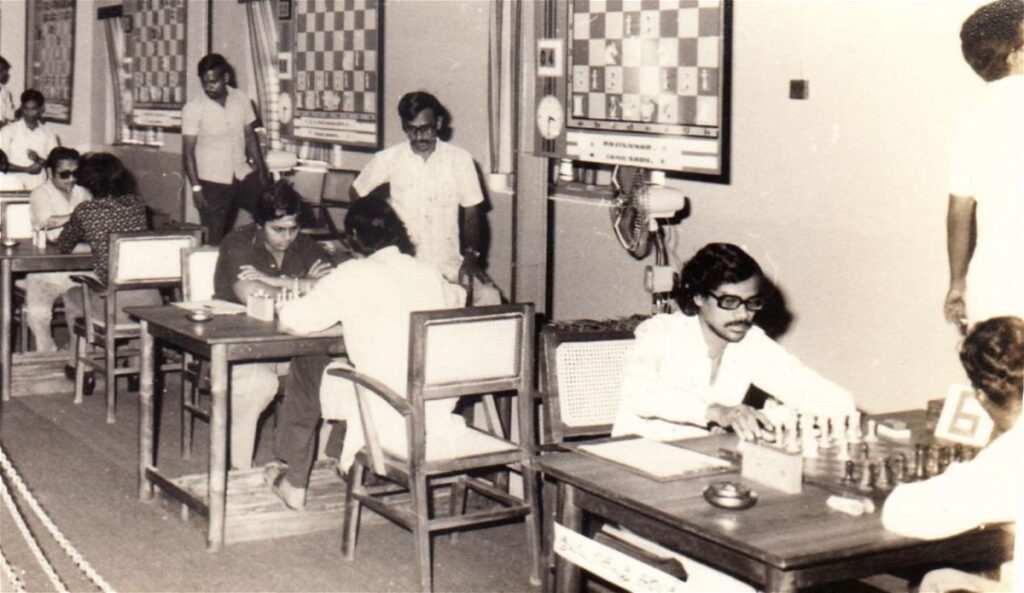
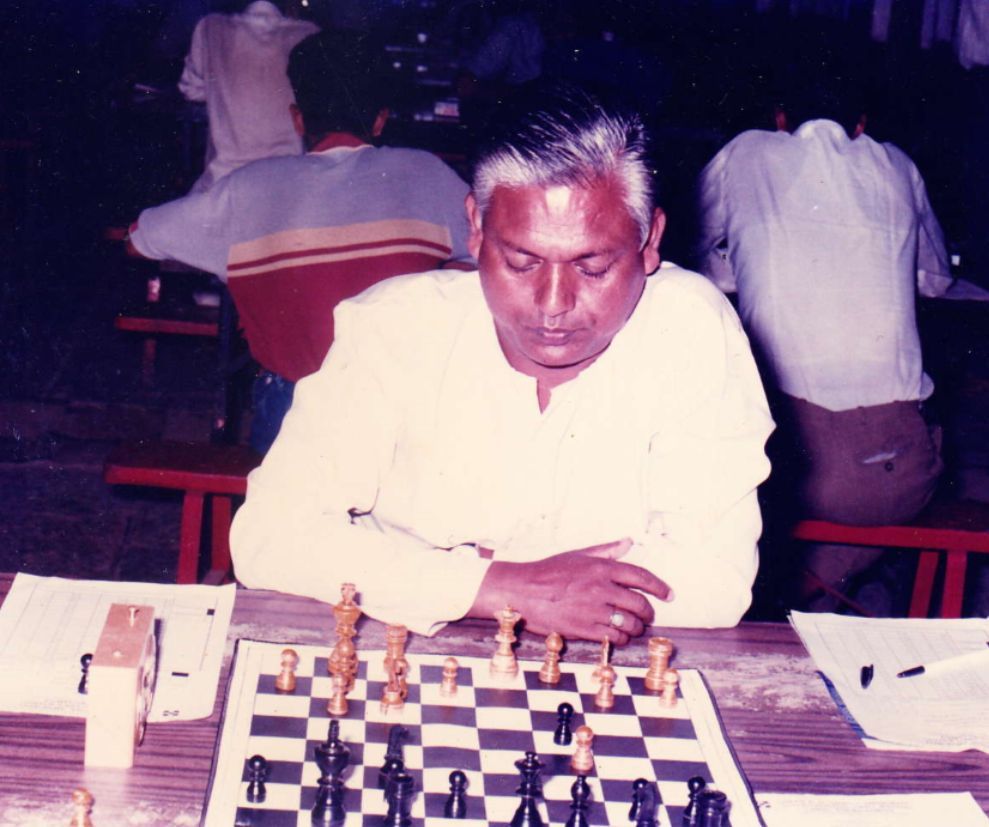
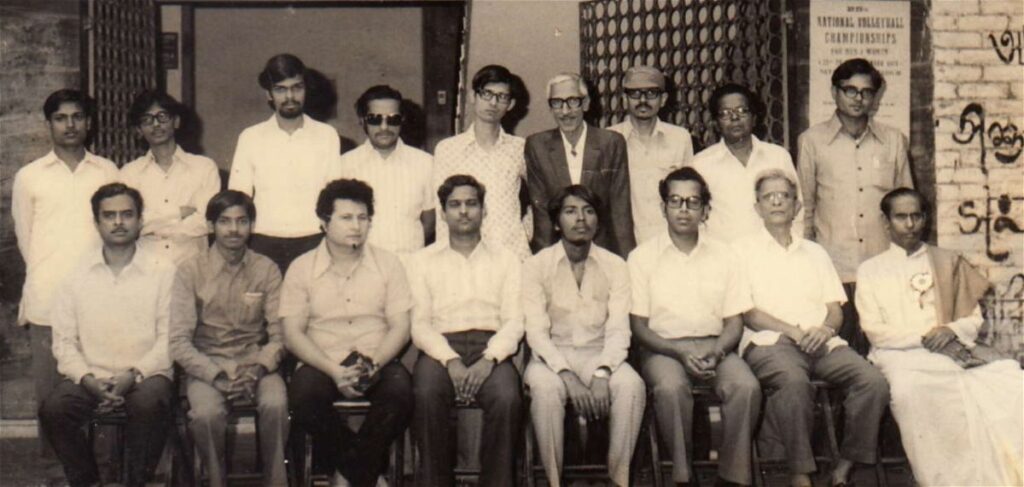
This photo was taken at Trichy National A in 1979. The caption and description of players is done by GM Pravin Thipsay: Sitting (L to R): Nasir Ali (former National Champion and a great master of chess technique and positional play), T N Parameswaran (one of the most talented Indian players of all times. He won who won the Trichi National A in 1979), Viraf Avari (the future world amateur champion at the time of photograph), KBL Srivastava, (a belligerent genius from Delhi with immense over-confidence), Raja Ravisekhar (former twice National Champion), Manuel Aaron (9 times national champion), Ramchandra B Sapre (first National Champion of India, Elluru, 1955-56), S.N. Dutta. Standing (L-R): Md Rafiq Khan, Shyamal Dutta (Barua’s cousin in law), S.N. Ravishankar, S.V. Natarajan (several times member of Indian team and a genius in king side attack who turned into an unsuccessful politician and a social reformist later), Vijay Adhikari, Mohan T Babur, N. Neelakantan, The great Mohd. Hassan and Nasiruddin Ghalib.
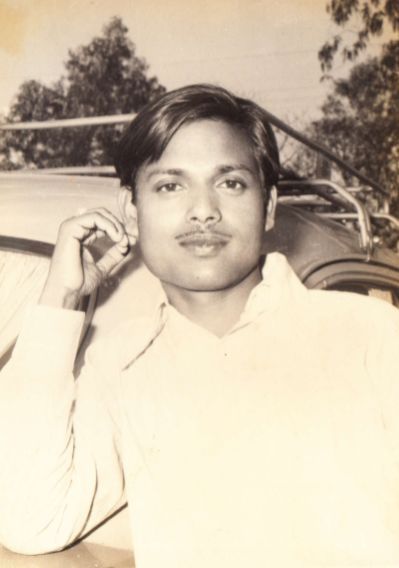
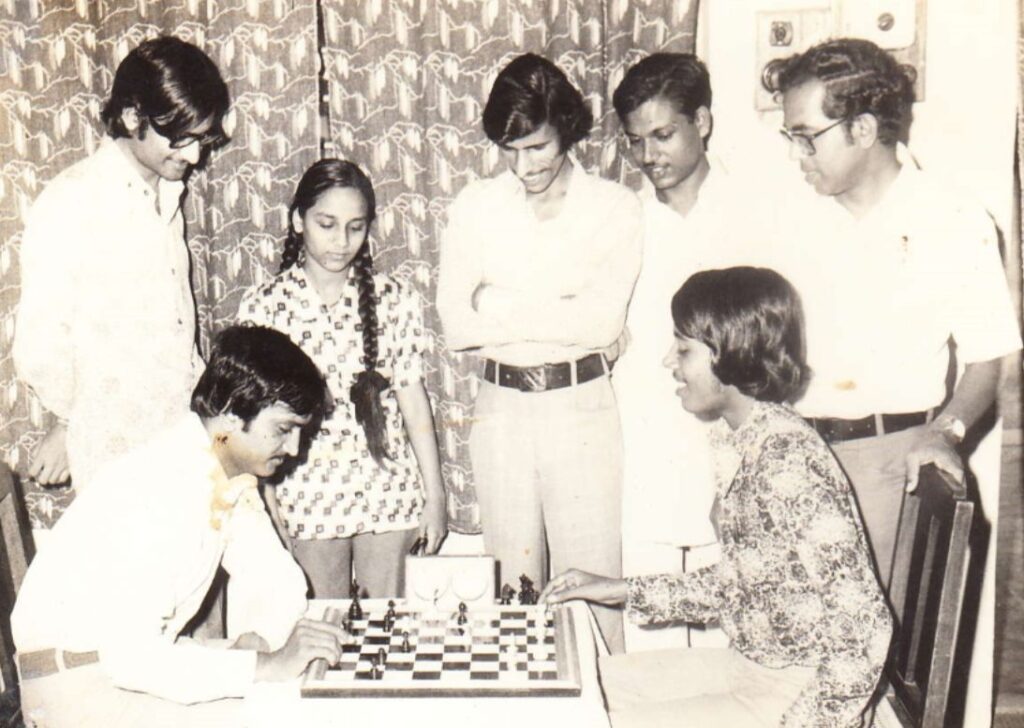
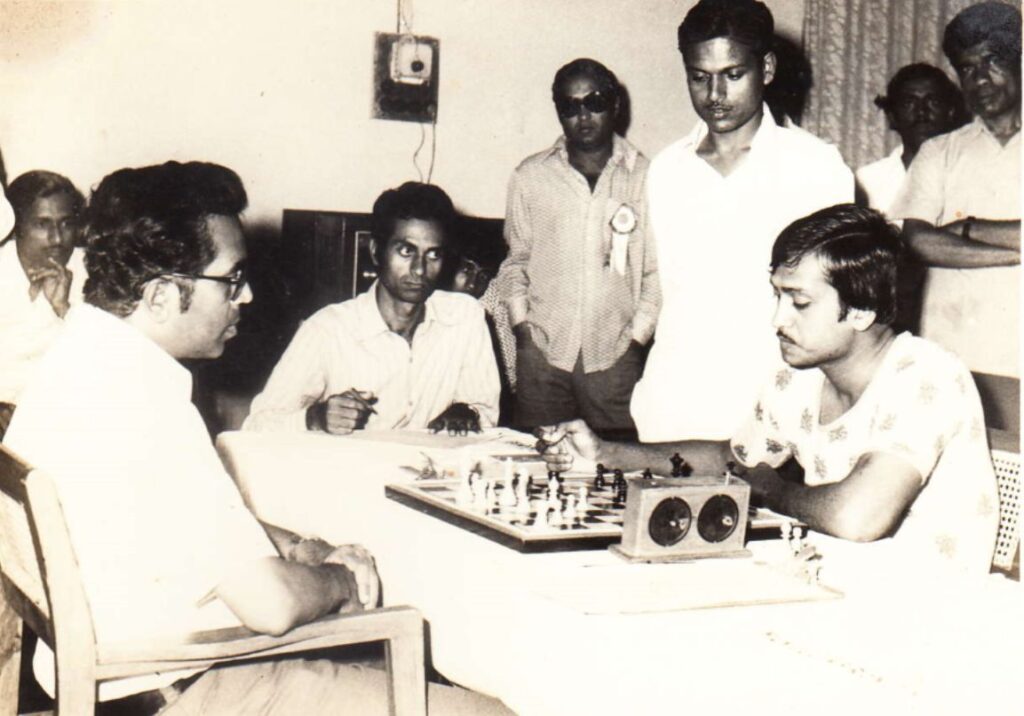
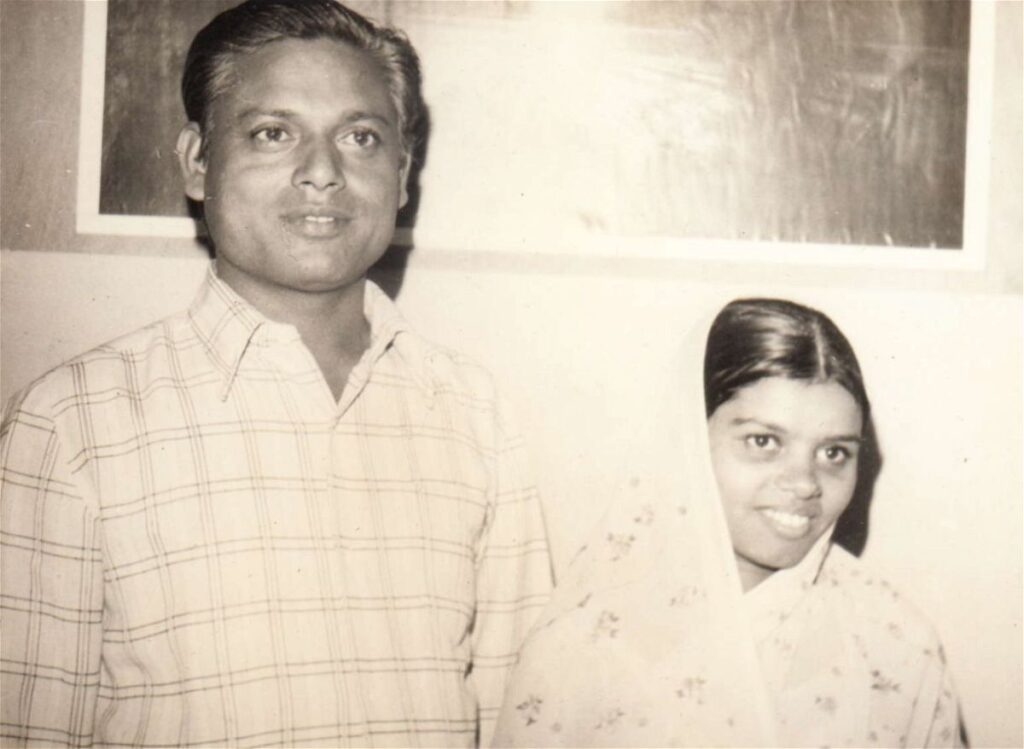
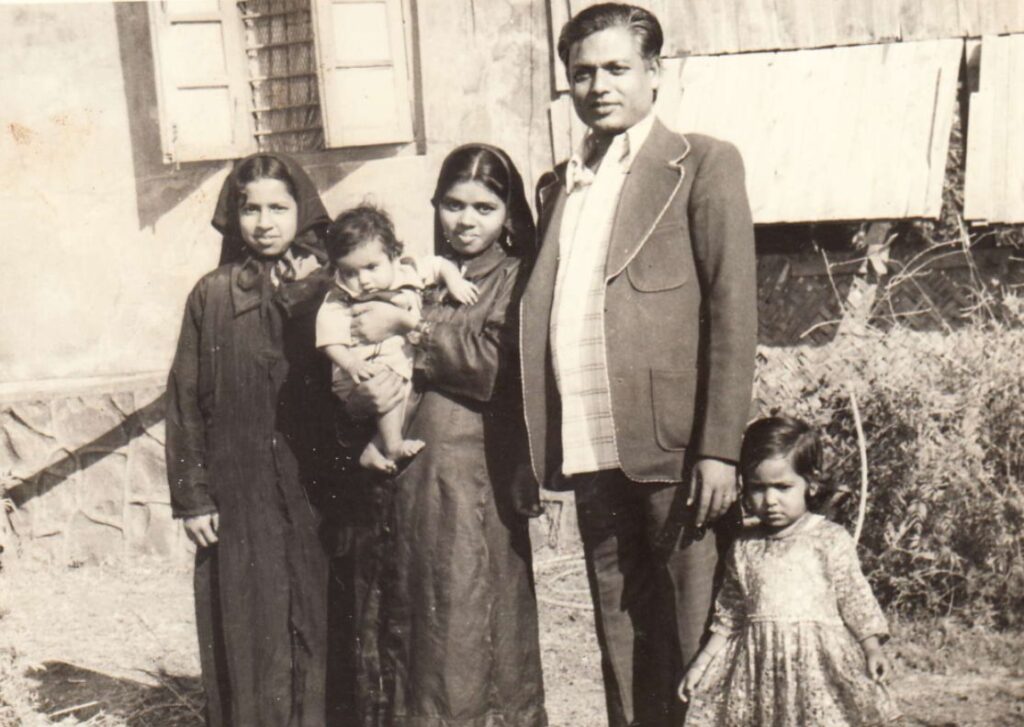
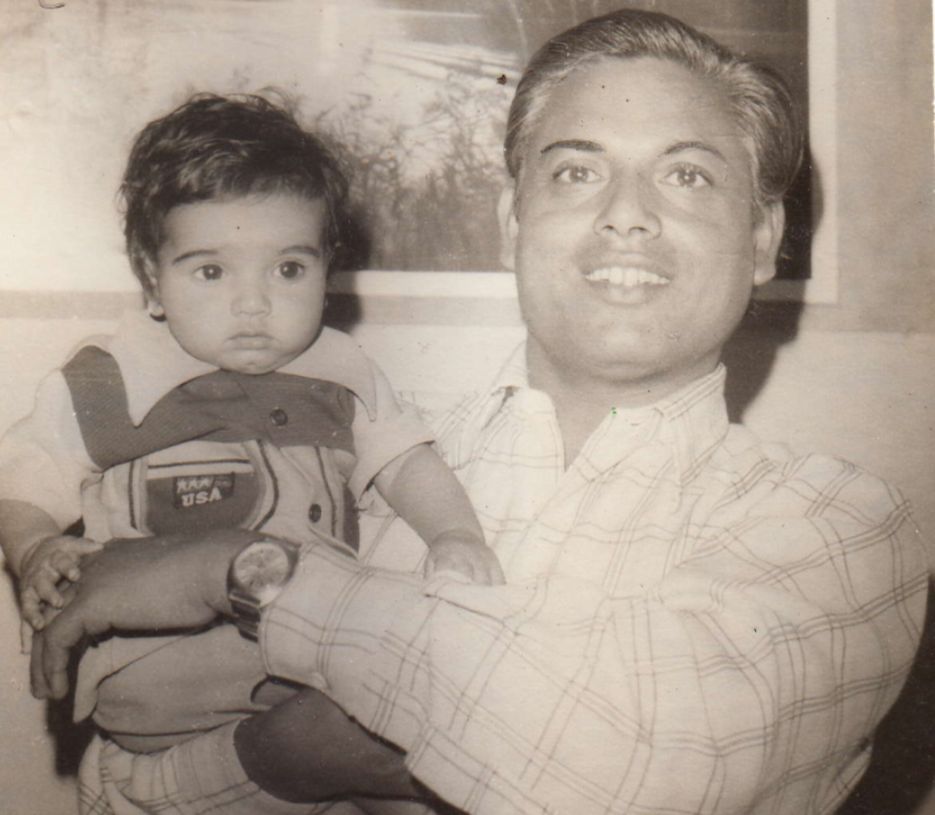
Bagdi (Black) playing against Raja Ravisekhar (sitting on right), the standing players are (from left to right): Vijay Adhikari, Rohini Khadilkar, RadheShyam Gupta, Rafiq Khan and Manuel AaronAbid Ali (black pieces), a talented player from Madhya Pradesh, takes on Manuel Aaron as Rafiq Khan watches onWith his wife Zahida KhanLeft to right- Rafique’s eldest daughter Sajida, his wife Zahida Khan, with their eldest son Shafique in her hands, and his other daughter RashidaRafique Khan with his eldest son Shafique Rafique (on the right) with his daughter Sajida, father Abdul Rashid Khan
Rafiq Khan humorously used to narrate the incident of his appointment in the municipal corporation. When he went to Mr. Buch, the then administrator for the job, his first question was, “Till which grade have you studied?” To which he replied, “Sir, I am an illiterate.” At first, Mr. Buch held his head in his hands, but within five minutes, Mr. Khan got the job.
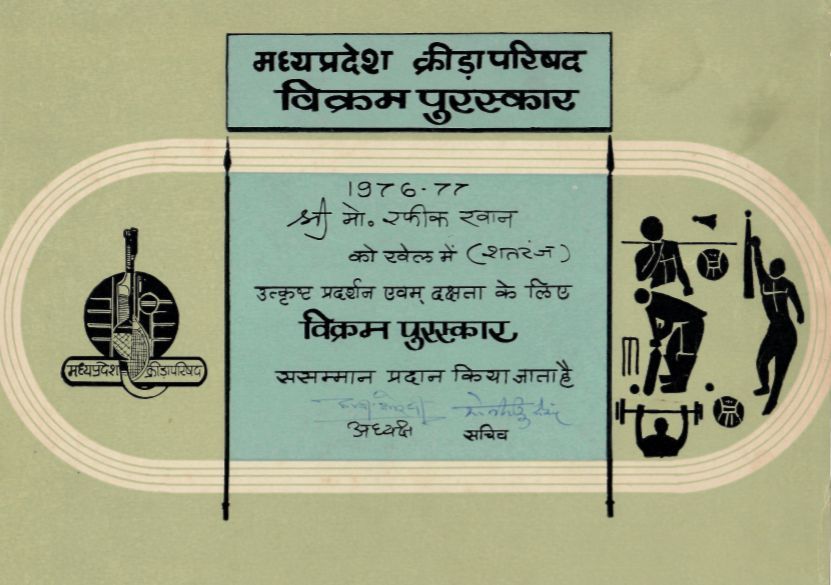
The Vikram Award, highest sports award for any player in Madhya Pradesh, was conferred upon Rafiq Khan in 1976-77
A short biography of Rafiq Khan’s life
By Sannidhya Agrawal
Date of birth – 12th July 1946
Father’s Name – Abdul Rashid Khan (passed away in 1993)
Mother’s name – Khurshid Beghum (passed away when Rafiq Khan was 16 years old)
Sibling – 1 younger sister
Marriage – He got married at the age of 17
Education – Studied at Madrasa, no formal education
Views – He was extremely secular and liberal in his views.
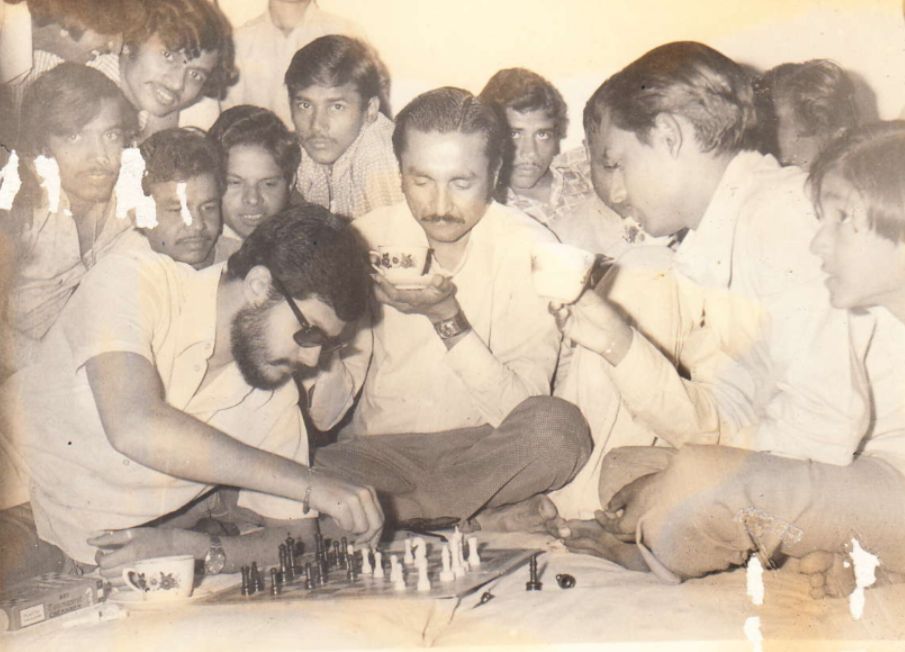
Mhd. Rafiq Khan was born in Bhopal in a poor Muslim family. His father was a poor carpenter who used to earn for his family by doing wood work. Due to the financial and economic crisis of his family, he was deprived of education in his propitious days of childhood. At a raw age, Rafiq began to do carpentry with his father and became his father’s assistant. He had a passion and zeal for all kinds of sports but he did not have the time to play hockey or football. From morning to evening, he and his father used to work really hard and went to bed worn out and fatigued on a daily basis. By the age of 16, he started earning some money from the work of carpentry. In between of all the toil, whenever he used to get exhausted, he had tea at a nearby shop and used to notice some people playing chess and carrom there. He found the game of chess quite intriguing and he started playing and discovering chess. Every day, he used to play chess regularly before sleeping and bound himself to a rule that under all circumstances, he has to play chess at least an hour before sleeping.
Gradually, he developed an understanding for chess moves and got quite a good grasp of the game but all this time, he used to play desi chess (a different form of chess with a few different rules like pawns can move only 1 square even when they are at their starting rank etc.) Rafiq Khan started playing chess on the Patiya (a kind of Nawabi tradition where people play chess and carom on pavements of the streets along with tea.) This pattern continued for a total of 12 years. By then, he had become a staunch player of chess. Later inspired by the success of Bobby Fischer, in 1974, Rafiq Khan participated in his first state tournament, which took place in Jabalpur, and became the champion. On winning that competition, he hoped that he would be identifiable to people, but he still remained anonymous. After becoming the state winner, Rafiq Khan became a participant of the national competition. In 1975, he played his first National ‘B’ Chess Competition held in Patna and secured tenth position. Next year in 1976 he won National ‘B’, held in Calcutta. In 1978, Rafiq Khan went on to become the National ‘A’ champion in Ernakulam, but even then he did not receive much recognition in his own state. Even after reaching the epitome of success, he could not get the fame which others got through the smallest of achievements. Rafiq Khan used to say that it doesn’t matter what economic crisis, problems or miseries you have in your life, if courage, perseverance, regular practice is present, then success can be acquired.
Rafiq Khan was on the verge of discontinuing his practice of chess because of extreme poverty, when Shahnawaz Khan, a chess admirer, noticed him. With the efforts of Mr. Shahnawaz Khan, he was appointed as a carpenter in the Municipal Corporation of Bhopal. He humorously used to narrate the incident of his appointment in the municipal corporation. When he went to Mr. Buch, the then administrator for the job, his first question was, “Till which grade have you studied?” To which he replied, “Sir, I am an illiterate.” At first, Mr. Buch held his head in his hands, but within five minutes, Mr. Khan got the job. While doing carpentry in the municipal corporation, Rafiq Khan became completely determined towards chess. He also played several national and international tournaments in the time being. He continued chess for 9 years with complete immersion and dedication. In this short period, he got the opportunity to play overseas for around four to five times. Firstly, in 1978, he played the Grandmaster Chess Tournament in Malaysia. He participated in his second international competition organized in Iran in the same year. Mr. Khan also participated in the Silver King event held in Dhaka in 1979. He also went to Malta and Switzerland to participate in Chess Olympiads in 1980 and 1982 respectively. His winning the board silver medal in Malta Olympiad created history for Indian chess. He was the first ever Indian chess player to achieve this honour. Rafiq Khan’s national record has not even been broken within the country.
In the national ‘B’ Chess championship 1976, he had set a record of scoring 13 out of 15 points; which is the all-time high till date. Also he made a record of winning 9 back to back rounds in the same event. Rafiq’s huge success was neither acknowledged much by the newspapers nor by the government. When he was at the peak of his career, the Janata Party came to the power. During this time, an English magazine ‘Onlooker’ did a detailed story on Mr. Khan’s achievements and the negligence of government towards him. This story reached the then Industry Minister George Fernandes. George recommended Rafiq Khan for a job in Bharat Heavy Electricals ltd. and he soon got a job in BHEL but his illiteracy became an obstacle for him. He was given the job of Operator Grade. Rafiq Khan probably would have gone farther in chess but unfortunately he could not do it.
In 1984, he suffered from severe sinus disease. After a year of suffering from this disease, he was diagnosed with anemia and he fell really sick. Despite many attempts, his life was saved but chess was lost. Due to health issues, he nearly left playing competitive chess. Although he stayed away from competitions but he was never isolated from the game of chess. He was constantly engrossed in chess, visited City chess club daily till the last day of his life. He also trained a couple of young players who went on to play at national and international levels.
______
Sannidhya Agrawal, the author of the above biography and Rafiq Khan’s student, has contributed heavily to this article. He was instrumental in acquiring the pictures, scanning them and providing them to us. Our heartfelt gratitude to him.
Apart from Sannidhya, I would also like to thank Akshat Khamparia for actively contributing a lot of content to this article. Pravin Thipsay and Manuel Aaron provided a lot insights which gave us a detailed picture of Rafiq Khan the chess player.
Messages from other readers of ChessBase India:
I played in National ‘B’ 1976 and also qualified for ‘A’. I played two games with him then, both drawn. A thorough Gentleman. He got along well with everybody. He was the first to smile – smile would come naturally to him – soon after the eye contact. I could speak ‘broken Hindi’, those days. So, we did have a bit of casual conversation. One incident stands out in my memory. It happened probably during National ‘B’, Delhi 1980. One of his team mate’s games, going to the end game, had just concluded. He was showing a difficult winning line in the ending which his team mate had missed. I had finished my game and happened to stand by watching his analysis. After showing the win to his team mate, he turned to me and remarked ‘Teek Hai?’ The remark speaks volumes of the man as I was no match for his chess ability.
– Ravi Shankar
I met him few times and he was a gentleman and humble also.I faced him once on board and was able to defeat him but that was not his prime time .Win or loss he always was smiling.
– Saket Kumar
Very saddened at the passing away of my chess colleague. I met him over and off the board in those 1970-80s. In the first ever All India Civil Services Chess Championship, Bhopal, he was the guest of honor for the inaugural function and I was a part of the Madras Team. Though he was not selected for the Asian leg of the India’s first Asian GM tournament, and considering his National Championship title, he was selected along with GM Thipsay for the Tehran event in the same year. His bagging the Malta 1980 Silver Medal is an indelible Indian chess record ever to remember. My heartfelt condolences to his family members and friends. May his soul rest in peace and quiet.
– V. Kameswaran, India’s first International Arbiter
He was a great player and human being. Saw him playing in National B. He was not well versed with English. Even he had problem in writing moves like PK4. He became B champion when he played for the first time in National B,don’t remember the year. Natural player, no book knowledge.
– Vinod Sharma
He was an original God gifted chess player. He never studied any chess book but he had defeated all the top players of India. We have lost a great chess player. May his soul rest in peace.
– Manoj Verma
शतरंज के भूतपूर्व राष्ट्रीय चैंपियन माल्टा ओलंपियाड के रजत पदक विजेता एवं विक्रम अवार्ड से सम्मानित उस्ताद रफीक खान का हार्ट अटैक से निधन का समाचार मिलते ही प्रदेश एवं छत्तीसगढ़ की शतरंज प्रेमियों में शोक की लहर फैल गई । उनका पूरा जीवन शतरंज के प्रति समर्पित रहा । अपने स्वाभाविक एवं नैसर्गिक खेल से उन्होंने शतरंज जगत में सम्माननीय मुकाम हासिल किया । मघ्यप्रदेश शतरंज संघ उनको सादर नमन करते हुए उनकी आत्मा की शांति के लिए श्रद्धांजलि अर्पित करता है !
– Kapil Saxena, Secretary of Madhya Pradesh Chess Association
He was not educated, so he couldn’t read and write. Awful in the opening, his forte was middle game. Once he was playing in Malaysia/Singapore. The then FIDE President, Campomanes, watched the board Rafiq Khan playing. The position was horrible for Rafiq. When Compomanes reached his room in the lodge he inquired about the result of this particular board. On learning Rafiq had drawn the game, he said, ” I knew it.”
– Sundarajan Srinivasagam
There are players who play and then there are players who love the game … I remember the time when I was a small kid and all I could aim as a Bhopali chess player was to defeat ‘Ustad’ – thats what they used to call him here. A true inspiration, a true chess lover and an amazing mentor ! He will always be remembered as one of the finest of chess players India ever got and will always be remembered as Ustad ! May his soul Rest in Peace!
– Anshul Saxena
source: http://www.chessbase.in / ChessBase India / Home / by Sagar Shah / August 13th, 2019