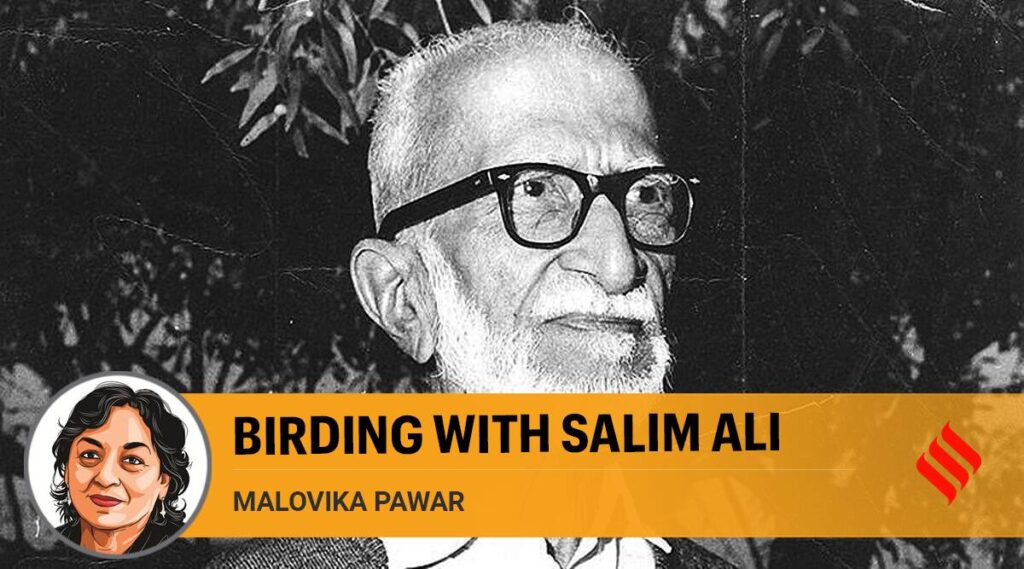
Glossier, more attractive birding books have been published in the 80 years since Ali’s guide first appeared, but it remains indispensable.
The first edition of Salim Ali’s book appeared in 1941. (Source: Wikimedia Commons)
It is a small book, my copy of Salim Ali’s The Book of Indian Birds — a hardcover version, bound in green, a mere 187 pages. I have the 1979 edition. The cover is long gone, leaving behind a few tatters of the original, but I am hard put to think of a book I have treasured and used as much. The book and an old pair of Bushnell binoculars acquired some 20 years ago are a part of my essential travelling kit, as essential as a toothbrush and comb.
The first edition of the book appeared in 1941. Jawaharlal Nehru , a keen nature lover, gifted a copy to his daughter while lodged in Dehradun jail.
Ali was quite matter-of-fact in his autobiography, The Fall of a Sparrow. According to him, the book was “acknowledged as largely responsible for creating and fostering much of the interest in birds and birdwatching seen in the country today”. Indeed, for people of a certain generation, no other guide has been valued and loved in the same way, and even among Ali’s other classic works, it is this book that has iconic status among Indian birdwatchers. While setting off on a birding trip, we would ask each other: “Have you taken your Salim Ali?” Or: “Oh, no, I forgot my Salim Ali.” It was always the small green book that we were talking of. It is the essential — the foundational — field guide for Indian birders. It is now in its 13th edition. No other book can take its place.
I came to birdwatching by serendipity. No one on either side of my family was even remotely interested in birds. By a throw of the dice, I was allotted Bharatpur for my district training in the IAS. The Keoladeo Ghana National Park beckoned. I was hooked. Ali, who had done more than anyone alive to create this “Garden of God” out of a Maharaja’s private wetlands reserve, was still alive, and visited a few times while I was there. Two bird guides, Sohan Lal and Bholu Khan, still active today, were being trained by him and other naturalists. They were to mature into fine birding guides, much in demand.
The Book of Indian Birds is where we learned our basic vocabulary of birdwatching. For instance, we learned that “pied” meant black and white, that “rufous” meant reddish-brown as in rust or oxidised iron, and that “fulvous” indicated tawny. Every carefully chosen word signified something. The clarity and the precision of expression meant that in a short half-page entry, we would have all the necessary information about a species. Each write-up was organised around five or six points — size, field characters or appearance, distribution, habits, food, call and nesting. Size was always charmingly described as myna plus, or house crow minus, or with reference to a sparrow, a bulbul or other common bird. Under “field characters”, Ali beautifully and accurately described the appearance: Colour of the feathers, the shape of the bill, silhouette in flight. A crimson-breasted barbet was “heavy-billed”, a blue-throated barbet “a gaudily coloured, dumpy green, arboreal bird” and the common grey hornbill a “clumsy brownish-grey bird”. Birds are described variously as handsome, squat, soft-plumaged, lively, dapper, dainty, spruce, slim, perky, well-groomed. The common roller or blue jay (neelkanth) is described as a “striking, Oxford and Cambridge blue bird”.
People who have always noticed the easy readability of the prose might not be aware that Ali himself gave credit to his wife, Tehmina, for ironing out the “stilted passages” and for “moderating the language”. He did not fail to praise her “remarkable feeling for colloquial English prose style”.
My Salim Ali bears the marks of the trajectory of my life, where I went, what I did. It is not merely well-worn and well-thumbed, with an unravelling spine and precarious binding; it also bears the added signs of pickle stains and tick marks in ink and pencil. Like me, it has seen better days. I know that many bird guides have been subsequently published with much better production values and better colour plates. I am aware that many of the illustrations in the Salim Ali book are decidedly not true to life. For instance, never did a rosy pastor look as pink in real life as it does in the book. But this is mere quibbling. The core and kernel of the book is that it communicates to us so successfully the magical universe of the birds of India.
The international jury which selected Ali for the J Paul Getty Wildlife Conservation Prize of the World Wildlife Fund in 1975 said in its citation: “Your message has gone high and low across the land and we are sure that weaver birds weave your initials in their nests, and swifts perform parabolas in the sky in your honour.”
On his 34th death anniversary on June 20, it is time to remember the book that Ali gave us, which took us on this magical journey to the birds.
This column first appeared in the print edition on June 19, 2021 under the title ‘Birding with Salim Ali’. The writer is a former IAS officer.
source: http://www.indianexpress.com / The Indian Express / Home> Opinion> Columns / by Malovika Pawar / June 19th, 2021
Like many others, Iqbal too is going through hard times amid the pandemic-imposed lockdown.
In 2020, Abdullah Naan Mahal used to serve Nahari Sherwa too, but had to stop because of Covid-19 and consecutive lockdown.
Hyderabad :
We’ve heard of people donating money, distributing essentials and cooking for the needy during this pandemic. But here’s a breadman in Tolichowki who is helping the needy with his out-of-the-box initiative.
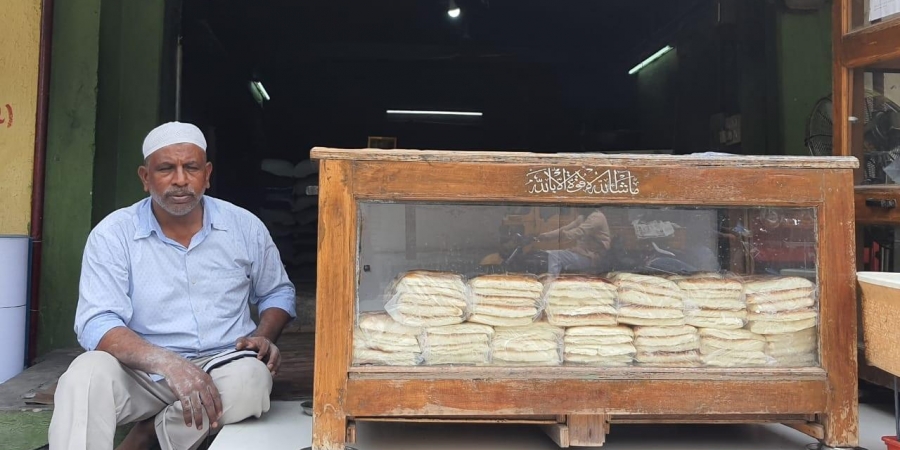
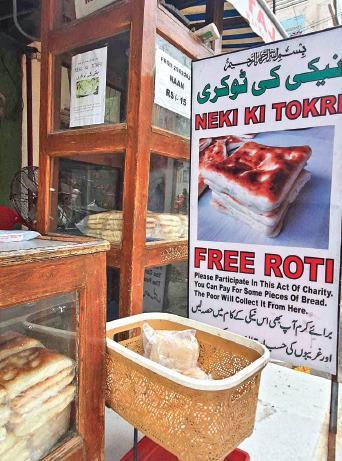
Mohammed Iqbal, who runs Abdullah Naan Mahal, does not want anyone to go hungry. So, he came up with Neki ki Roti (Bread of Goodness). Every morning, he places a basket outside his eatery for people to buy naan rotis and put them in it. “Anyone, rich or poor, can pick up the rotis from this basket. No one should go hungry,” he says.
Iqbal himself places at least 20 rotis a day in the basket. “By doing this, we are not helping people but God. It is God who is making us do this,” he believes. “Even those, who are not my regular customers, are now buying Neki ki Rotis to help the poor.”
Like many others, Iqbal too is going through hard times amid the pandemic-imposed lockdown. “As soon as I get back to being financially stable, I will start making Nahari Sherwa. The poor can have the rotis with it,” he says, adding that, “Nobody likes dry bread. Not even me. But what can we do in these difficult times?”
In 2020, Abdullah Naan Mahal used to serve Nahari Sherwa too, but had to stop because of Covid-19 and consecutive lockdown. However, Iqbal is hopeful that this difficult phase passes and the world becomes a better place again. He wants to continue his initiative for as long as he can. “People ride down to my shop to take these free rotis. We never question them because we do not know what they are going through,” he says.
That’s very thoughtful of him. Long live Neki ki Roti.
source: http://www.newindianexpress.com / The New Indian Express / Home> Good News / by Express News Service / June 12th, 2021
Relief organizations of Hyderabad, run by Muslims, have come to the rescue of the state and offered help to fight the shortage of Oxygen.
A TCN Ground Report features some of them.
Amid a surge in Covid-19 cases in Hyderabad in the southern Indian state of Telangana and rise in deaths due to the virus, the severe shortage of oxygen, ventilators and beds in both the government and private-run hospitals exposed the shortfalls of the healthcare system of the state.
Reports said that many patients were turned away from the hospitals due to a shortage of beds and died in their homes. Those admitted to the hospitals died due to lack of oxygen supply and delay in oxygen tankers reaching them. This lead to hundreds of deaths in Hyderabad alone.
Reports also said that hospitals were overcharging Covid-19 patients. These factors contributed to many people choosing to opt for home treatment.
It was then that the relief organizations of the state, run by Muslims, came to the rescue and offered help to fight the shortage of Oxygen.
Talking to TwoCircles.net, Shiba Minai, an activist said, “I make at least 50 to 60 calls to get a bed for a patient”.
Shiba helps people by connecting them with groups, hospitals and organizations that have been helping patients with beds and oxygen facilities.
Shiba has been doing relief work since the first wave of the Covid-19 pandemic by providing food for the homeless, migrants, poor people in the slums. She has also helped with the funeral services of the victims.
She said that a lot of people reach out to her during crisis time. To help these desperate families, she would seek financial help from friends and family members.
“I get calls from people who are unable to find a bed or oxygen if they are already in the hospital or are under home treatment. Then, I call up hospitals and once I get the right hospital, I then connect the patient or the attendant to that hospital,” she said.
Shiba said the work she does is exhausting. “Making several calls to hospitals that want to know how much can the patient be able to pay and meanwhile handling calls from attendants of patients is taxing,”.
Talking about an incident wherein a 45-year-old woman whose saturation levels dipped low and her family could not find a hospital with a bed, Shiba said that she tried her best but “the hospitals refused to admit her after coming to know that her oxygen levels were quite low and she had fewer chances of survival.”
The family of the patient roamed to 6 hospitals, who earlier had assured of the availability of bed refused to admit her once they saw the saturation levels. The woman was taken home where she later succumbed.
“I tried to help this lady from 9 p.m. till the wee hours of the morning when it was time for Suhoor (early morning meal during the Muslim month of Ramadan). Sadly, she could not be saved,” Shiba said in a sad tone.
Although Shiba has helped sixty persons with beds with oxygen facilities, what makes her sad is that the “number of patients who I could not help is higher than the ones I helped.”
Shiba is not alone in doing Covid-19 relief work. Like her, several organizations have helped Hyderabad overcome the Covid-19 crisis from the last year. This year too they have come forward to battle the oxygen shortage in the state.
‘Oxygen on Wheels’
Mohammed Asif Hussain Sohail, the chairperson of Sakina Foundation, who is popularly known as the ‘Hyderabad Hunger Warrior’ for feeding the hungry for more than 10 years, has been receiving close to 200 calls every day from patients who are being treated at home. He also gets calls from hospitals especially Osmania and Gandhi General Hospitals requesting him for oxygen facilities.
“The price of oxygen cylinders is quite high at Rs 30,000 and the cost of refilling has gone up to Rs 2500 which a common man cannot afford,” Sohail said.
Md Asif Hussain Sohail of Sakina Foundation
Sohail said that as hospitals are running out of oxygen and due to black marketing, he has to verify if the patient needs oxygen or not before helping.
“Sometimes, they don’t need oxygen and we have to counsel and advise them not to give in to their fear and explain to them that a needier person requires it more,” he explained.
Sohail claims that he has “spent more than Rs 10 lakhs from his pocket to buy cylinders and send them to the homes of the needy.”
“Every day, in Hyderabad itself, my Foundation has provided more than 200 free cylinders. We have reached out to at least 2000 people so far,” he said.
Oxygen on Wheels is another initiative of the Sakina Foundation. As part of this initiative, oxygen cylinders are provided to patients who are on their way to the city for treatment from their towns and villages.
“Many people were dying on the way to Hyderabad. Not being able to get proper treatment in their villages they would travel to advanced hospitals in the city. The patients would only be saved if they arrived on time and if the hospital had oxygen,” he said.
“I wanted to save lives so I came up with this idea to provide emergency oxygen cylinders on the highway,” Sohail said.
As soon as they receive an SOS call, his volunteers drive to the spot where the patient is and help him/her with the oxygen.
Sohail said that they have driven up to 200 kilometers to provide oxygen to a patient on the highway.
“Patients were coming not just from the districts of Telangana state but also from Bhopal, Maharashtra, Karnataka. We met them all on the highway and immediately helped them with the oxygen if their saturation levels were low,” Sohail said, adding, “Nearly 150 persons were helped on the highway.”
Sohail said that “love and compassion are necessities, not luxuries.” “Without it, humanity cannot survive,” he added.
700 people given oxygen aid by Helping Hand Foundation
With the oxygen crisis in the state, volunteers of the relief organization Helping Hand Foundation (HHF), headed by Mujtaba Aksari, have been at the forefront.
The group distributed a flyer with their contact numbers for people to seek help in cases of Covid-19 emergency. The group also provide help with giving decent funeral services to Covid-19 victims deaths irrespective of religion.
Mohammed Fareedullah, who heads the project told TwoCircles.net, “When we receive a call for help, our doctors consult them online and based on the doctor’s recommendation, if the patient needs oxygen, we advise the attendant to come to our godown and take the oxygen cylinder without paying any advance or rent.
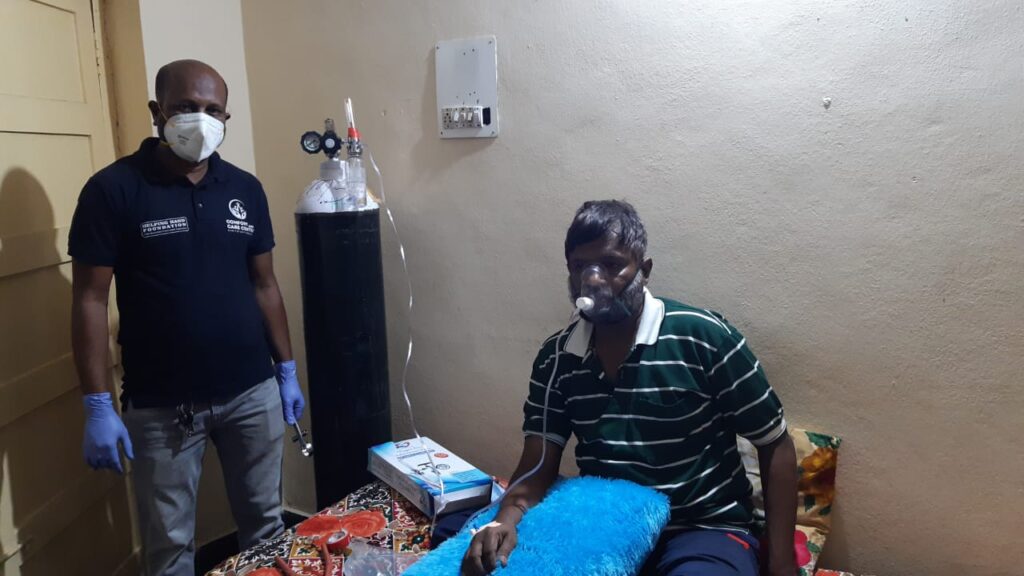
A patient receiving oxygen help from HHF | Photo by HHF
Fareedullah said that the families of the patients just have “to pay the refilling charges.”
“The plant where we get the cylinders refilled have begun to charge double of what they used to charge earlier. But we charge the people a nominal amount,” he said.
“The cylinders provided by HHF are usually for home patients but if the patient develops complications and their saturation level drops despite the oxygen therapy then we help them reach the hospital where again our counsellors in the hospital help them with other needs. When the patient recovers and is discharged we ferry them home in HHF ambulances. If they do not recover the volunteers help the family with the last rites too,” explained Fareedullah.
Helping Hands Foundation owns about 15 ambulances which are free for all patients. The group has 100 cylinders and a luggage trolley to transport the cylinders to the houses of people who cannot come to their go down.
To date, HHF claims to have helped more than 700 people covering the entire old city and many other localities.
Humanity First Foundation: from feeding hungry to procuring Oxygen
Mohammed Shujatullah,founder of relief organization Humanity First Foundation has been feeding patients and their attendants at three government hospitals for the last 5 years.
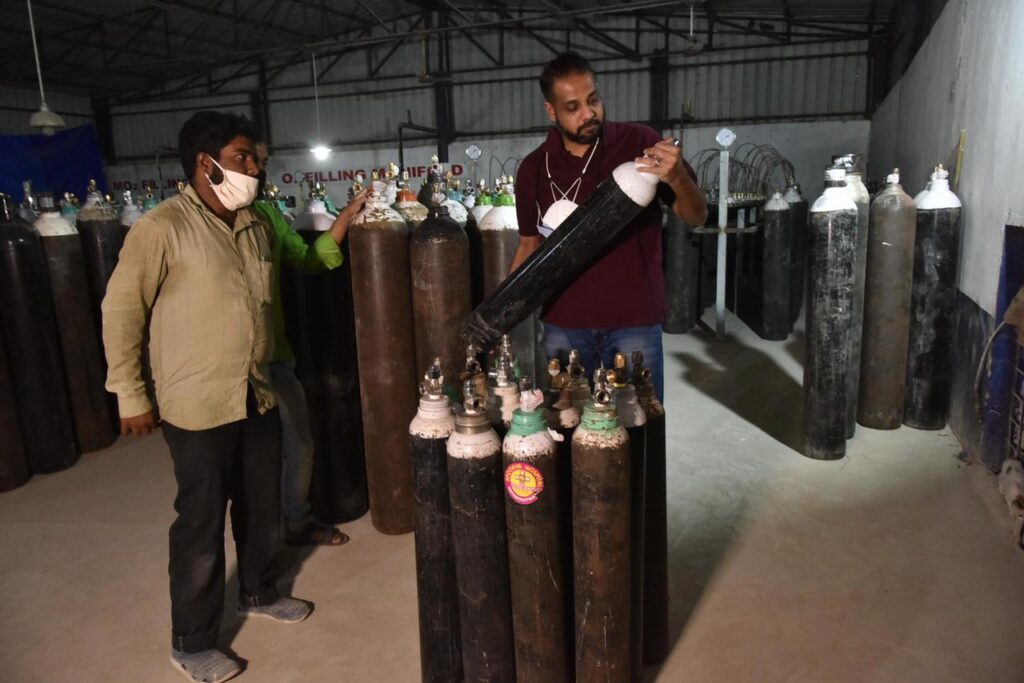
One day when Shujatallah received a call requesting help with oxygen, he decided to buy cylinders and give them for free to patients and then refill the empty ones and help whoever needed them. “Prices had doubled for both the oxygen cylinders and for refilling but through donations to Humanity First, I continued helping people every day with the 110 cylinders we have,” he said.
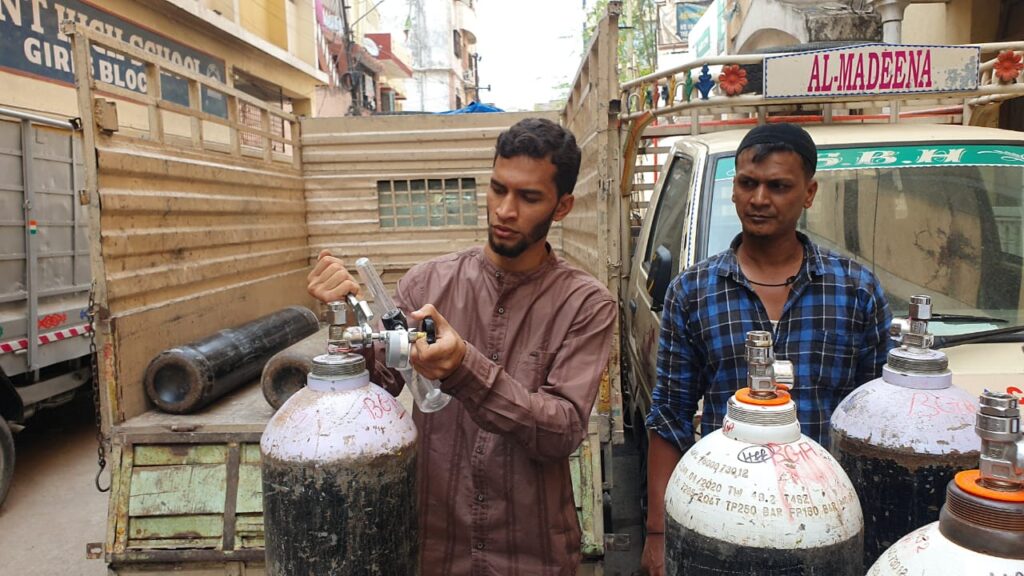
Md Shujatullah of Humanity First Foundation checking oxygen cylinders | Photo by HFF
His organization has an ambulance, which carries the oxygen cylinders to hospitals and homes of patients.
In the month of Ramadan, Shujatallah said that his foundation received good donations and he managed to help as many people as was possible for him.
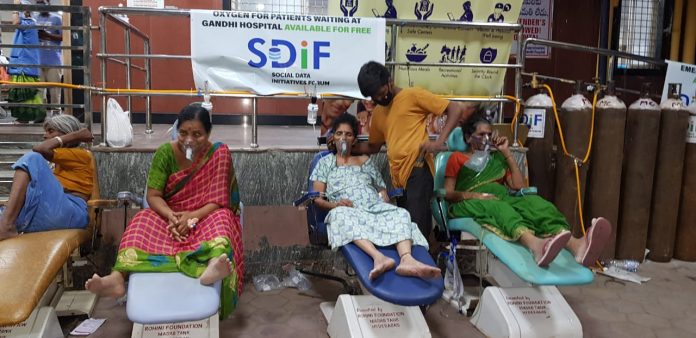
Patients at the gate of a hospital supported by SDIF | Picture: SDIF
‘Our motive to save lives keeps us going’
Another local initiative known as Social Data Initiative Forum (SDIF)founded by Azam Khan and Khalid Saifullah started oxygen services during the first wave of the pandemic with their stock of 15 cylinders.
During the second wave, as the oxygen crisis has only gone worse, the group has been adding to their stockpile of oxygen cylinders.
The founders said that they had to pay more than the normal price for both purchasing and refilling the cylinders.
“Our services are not restricted to just providing oxygen cylinders. We also set up an oxygen bank at Government notified Covid-19 hospitals where usually the poorest of the poor come to access health care. People from the rural parts come to Hyderabad with hopes of quality treatment and they face a lot of hurdles waiting to get admitted after already having travelled a long distance,” Azam Khan said.
“The waiting period at the hospital and the travel time further delays the process of the treatment, which is why we opted to help in the government hospitals,” he clarified.
In Gandhi Hospital alone, which is the largest Covid-19 hospital of Hyderabad, Azam Khan said they have “20 oxygen cylinders in circulation which are serving at least 400 patients per day.”
“This supply of oxygen is crucial to their recovery,” Khalid added.
Apart from the 20 cylinders, they have 100 more cylinders at the other two government-run Covid-19 hospitals of Hyderabad.
They said they have helped more than 100 people so far.
Azam Khan narrated an experience that made them realise the significance of their work.
The King Kothi Government hospital had requested SDIF to set up an oxygen bank.
“I felt we had to start the work immediately and even though it was Sunday, our team went to the hospital. As soon as we reached the hospital, we saw four dead bodies being carried away. We were told the hospital had run out of oxygen causing the death of these four persons. We immediately set up our oxygen cylinders. Later the doctors informed us that our timely help had saved three persons who were critical and would not have survived had we not reached on time. This experience both saddened us and also made us feel happy that we could at least save the lives of other three persons,” he said.
“Our motive to save lives keeps us going,” the duo said.
The SDIF is helped by two other charity organizations from Hyderabad namely Safa Baitul Maal and Access Foundation, who work in close collaboration with them.
Pre and post-Covid care given by Al Hamd Foundation
Al Hamd Foundation, a charitable trust that helps widows, students and the poor, took up Covid-19 relief operations during the last year’s lockdown.
Amid the ongoing second wave, the foundation is continuing with online consultations of patients with doctors.
When patients contact them online, they are connected to doctors who advise home treatment keeping in view the severe crunch in the hospitals and also the fact that many cases can be treated at home with proper medications and care.
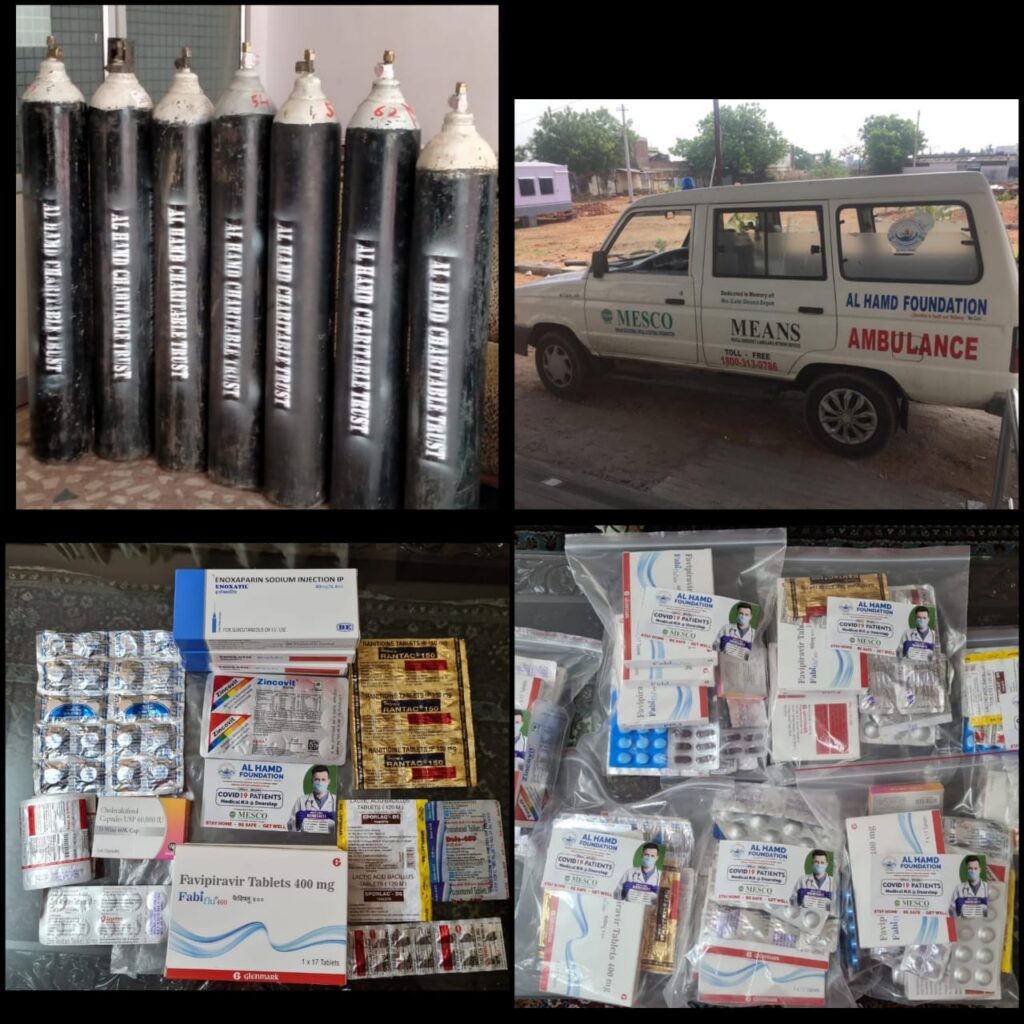
Al Hamd Foundation Covid relief services
The foundation has provided home treatment to fifty-two patients, who had reported low oxygen levels.
The founder of Al Hamd Abdul Azeem Mohammed told TwoCircles.net that the treatment cost they incurred for each patient would have run up to Rs. 7 to 8 lakhs had they been treated in a hospital.
“The team of AL Hamd ensures that the patient does not panic and develops a strong will to fight the disease and survive. The team also helps with the oxygen cylinders, the medicines and regular monitoring by the doctor who visits the patient. At times when the patients are poor and the team notices that they need provisions apart from the medical assistance, Al Hamd provides the family members with rations as well,” Azeem said.
Al Hamd has given 300 oxygen cylinders and 6 oxygen concentrators to other organizations that are helping people affected with Covid-19.
They have four oxygen hubs and seven ambulances in Hyderabad-Secunderabad and a fifth one is coming up soon.
“We have ordered 25 oxygen concentrators from the UK which is likely to arrive by in the last week of May. Each oxygen concentrator of 5-6 litres costs around Rs 46,000. We have also ordered 5 C PAP machines that cure respiratory disorders. And since we are not a hospital, we intend to donate these C PAP machines to the hospitals where there are facilities to treat patient with respiratory disorders that are linked to Covid” explained Azeem.
“We also give post-Covid care by giving immunity-boosting drugs and foodstuff,” he added.
Al Hamd is run with funds from family and close friends.
50-bed oxygen therapy centre set up by Jamaat-e-Islami Hind
Well-known socio-religious organization Jamaat-e-Islami Hind (JIH) Telangana has also set up a 50-bed oxygen therapy centre in Wadi-e-Huda near Shaheen Nagar, Hyderabad. JIH’s sister concern Students Islamic Organisation (SIO) supports recycling the cylinders, rifling them, coordinating with other organisations for availability.
Post Script
To support Helping Hand Foundation, you can make a GooglePay donation here: 8125203286
Muslim tutor helps cremate Hindu trader who died of the infection
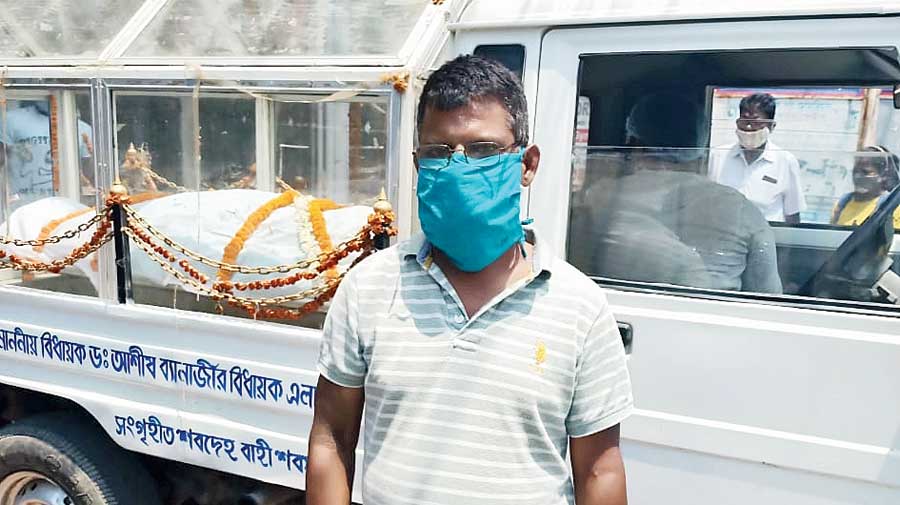
Ataur Rahaman with the Hindu trader’s body in Rampurhat, Birbhum district, on Friday / Telegraph picture
A Muslim private tutor in Birbhum’s Rampurhat spent an entire day to overcome hurdles and cremate the body of a Hindu trader who died of Covid-19 on Friday.
Sudhanshu Karmakar, 37, a trader hailing from Bankura who stayed in Birbhum’s Mohammedbazar, died at a private nursing home in Rampurhat town on Friday.
Radharaman, his elder brother who stays in Bolpur, came to Rampurhat but had no idea how to cremate Sudhanshu.
“I was completely helpless after hospital authorities asked me to receive the body. I had no idea what to do apart from crying out loud,” said Radharaman.
He tried to reach out to people at the hospital but most did not help as the body was of a Covid patient. It was at this point that Ataur Rahaman, 47, appeared.
Ataur, a member of the local social outfit Bangla Sanskriti Mancha, assured Radharaman that he would arrange everything for him. “It was my first experience in handling a Covid body. I took the risk seeing Radharaman’s helplessness,” said Ataur.
However, Ataur had no idea what he would have to face. He arranged a hearse for Rs 1,000 from Rampurhat Municipality but the driver backed out when told he would have to ferry a Covid body to the crematorium.
A local driver, Akbar Ali, agreed to drive the hearse to the crematorium.
But the challenges did not end here.
As soon as the body reached the crematorium in Nalhati, people who found out that the body was of a Covid patient started pelting stones at the hearse.
Ataur called up the former chairman of Rampurhat municipality, Aswini Tiwari, who asked him to take the body to a crematorium dedicated to Covid-19 bodies. “There, I was told Covid bodies are cremated after dusk to avoid protest from residents. But I had to break my Ramazan fast in time too,” he said.
He added that he hired three people who knew Hindu cremation rituals, and went and bought garland and other items needed for last rites. Then, Radharaman cremated his brother and Ataur broke his fast.
“I honestly never thought whether the body was that of a Hindu or a Muslim,” the private tutor told this paper.
Almost in tears, Radharaman said: “I have no idea if there is a God or Allah but he (Ataur) appeared to be that supreme power. I am really grateful to Ataur bhai.”
Samirul Islam, president of Bangla Sanskriti Mancha, said what Ataur did sent the message that Bengal would never allow division on communal lines. “We have seen forces trying to divide Bengal on religious lines. But it can’t be done in Bengal. Here, brotherhood is beyond religion and politics,” said Islam.
Ayodhya couple cured
The Covid-infected couple who had travelled 850km in an ambulance from Ayodhya to Bengal’s Hooghly for oxygen, have recovered and were released late on Friday.
Lalji Yadav, 50, and his wife Rekha, 48, who were denied treatment in their home state Uttar Pradesh, apparently for lack of oxygen, recovered in a private hospital in Hooghly’s Chinsurah.
The couple profusely thanked the hospital and the Bengal government. Lalji said he would return to Uttar Pradesh and tell people that if there was some hope for life amid the pandemic, it was in Bengal. “I have no words to thank the Bengal government and hospital,” said Lalji.
The state government had also arranged Remdesivir for him at the private hospital.
source: http://www.telegraphindia.com / The Telegraph Online / Home> West Bengal / by Snehamoy Chakraborty, Rampurhat / May 09th, 2021
Working for the last 13 years with BCC, Samsher has been picking up dead bodies of several persons and taking them to the graveyard till date for performing their last rites.
Nisar Ahmed Abdulgani Samsher
Belagavi :
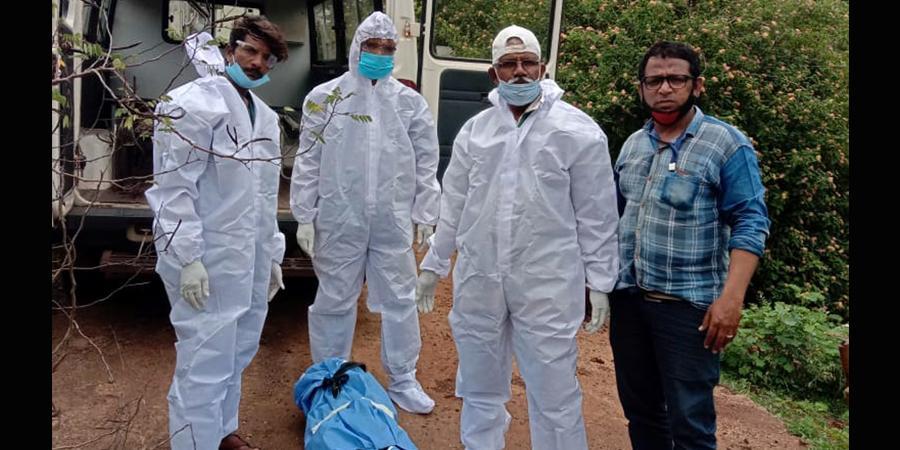
Dedicated to his work, Nisar Ahmed Abdulgani Samsher, a driver of hearse van belonging to Belagavi City Corporation (BCC) has proved himself to be an outstanding Covid warrior by performing his work beyond his duties which can only be said for ‘humanity’.
Working for the last 13 years with BCC, Samsher has been picking up dead bodies of several persons and taking them to the graveyard till date for performing their last rites. But after the Covid – 19 pandemic commenced, his profession was a big challenge for him, which he accepted heartily.
Speaking to ‘The New Indian Express’, Samsher said that on an average he used to pick as many as 40 to 50 dead bodies per month located within BCC limits. But, he said that during Covid pandemic, he has been picking up more than 70 to 80 dead bodies per month. And many of them have died due to Covid, he said.The most tragic thing that comes after Covid is the question in the minds of relatives of the deceased which asks – ‘Who will perform the last rites of the Covid positive patient?’, said Samsher.
He said that he has seen several people refusing to receive the dead body of their relative because that deceased has died due to Covid. Following the same Samsher started taking the responsibility to perform the last rites of those persons who have died due to Covid as his or her relatives are denying to perform the last rites due to the same. Several people have paid him the required amount to perform the last rites of the deceased, who has died due to Covid which amounts about Rs 2,000 to Rs 3,000 per body.
He has even collected the ashes of the cremated dead body from the graveyard and handed it over to the relatives of the deceased at their door steps on their request. Recalling an incident, Samsher said that an old woman died to Covid recently and she had no relative in Belagavi to perform her last rites. He said that there were two sons of the deceased who had died a couple of years ago and her only daughter was residing at Goa.
“The daughter of the deceased called me on my mobile phone and requested to perform the last rites of her mother. Following the same I performed the last rites of the old woman and managed to send the ashes packed in a box to her daughter at her Goa address. The expenses for performing the mentioned last rites was donated by a social worker,” he said. Samsher is working from 6 am to 8 pm per day and during the ongoing Covid pandemic he has been working in a very hectic schedule.
Due to the same, most of his senior officials attached to BCC have appreciated him and several organizations have felicitated him. When speaking to TNIE, Samsher was carrying three orphan dead bodies to the Sadashiv Nagar graveyard and all of them had died due to Covid. Samsher said that he feels happy to help people and the profession into which he is, is the best way to help them. ‘And for whatever good I do, there is a god to bless me, which is more than what earning matters to me,’ he concluded.
source: http://www.newindianexpress.com / The New Indian Express / Home> States> Karnataka / by Tushar A Majukar / Express News Service / June 13th, 2021
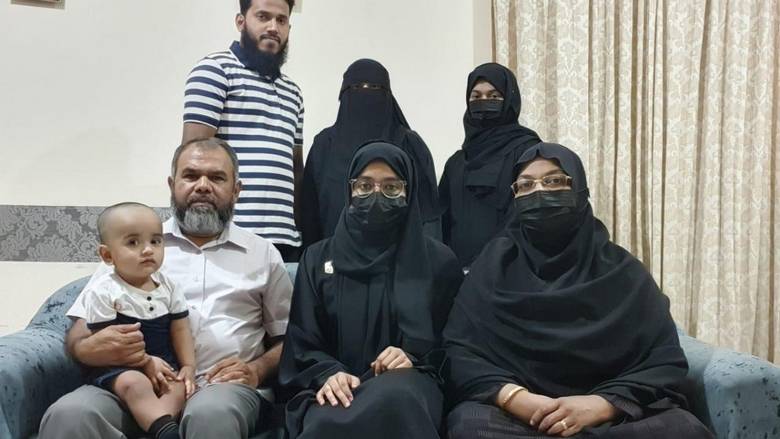
Standing: (from left) Safeer (husband of first daughter Sumayya), Amal (daughter); (sitting) Aslam with grand son Mazyoun , Tasneem Aslam and mother Sunitha Syed. (Supplied)
Tasneem Aslam is pursuing a PG degree in Islamic jurisprudence from the University of Sharjah.
Tasneem Aslam, an Indian student from India’s southern most state Kerala’s Alappuzha district and a namesake of Pakistan’s career diplomat and a former spokesperson of the Ministry of Foreign Affairs, is a proud recipient of a coveted honour of the UAE government.
Her hard work, diligence and intelligence have paid off.
The UAE government has recognised her merit and excellent academic credentials to extend her a 10-year Golden Visa, which is reserved only for prominent global personalities.
Tasneem received the Golden Visa in the exceptional student category and is allowed to stay in the country till 2031, as the UAE unveils major reforms to attract global talents from people belonging to all walks of life.
Tasneem, but naturally, is thrilled by the honour.
“This is one of the best moments in my life. I feel privileged to achieve this and I am thankful to Almighty Allah. My parents ‘support has been enormous, and Insha Allah I hope to sponsor them in near future,” Tasneem told Khaleej Times.
“I take this opportunity to express my gratitude to the wise and visionary leadership of this great nation that has been making rapid strides to promote education. Students, educators, and institutions enjoy great value in this young nation that’s celebrating 50 years of its foundation. I seek solace in the immortal words of Sheikh Mohammed bin Rashid Al Maktoum, Vice-President and Prime Minister of the UAE and Ruler of Dubai, that ‘knowledge is the shortcut to success,’ ” she said.
Tasneem studied Islamic Sharia from Al Qasimia University in Sharjah and topped her class, which consisted of pupils from 72 nationalities, with a grade point average (GPA) of 3.94 on 4.
Tasneem has memorised the Quran. She has enroled for a postgraduate degree in Fiqh (Islamic Jurisprudence) at the University of Sharjah.
She had attended the Emirates National School in Sharjah, where her mother Sunita works as a teacher, and had secured 95.6 per cent in her Grade XII examinations.
Tasneem’s father Muhammad Aslam is a former employee of the Sharjah City Municipality and now runs a typing centre in the emirate.
Her father is ecstatic about their daughter’s feat.
He said: “I’m proud of her achievements. We’ve been flooded with congratulatory calls and messages for the past two days from our friends and relatives from across the globe.”
Tasneem, who is proficient in Arabic, has multitasking skills. She helps her father with Arabic translation at the typing centre and simultaneously manages the social media account of Zahaar perfumes.
Earlier, she worked as a teacher at Nobel Qur’an and Sunnah centre in the emirate. She also taught the Quran and hadith at the Abu Bakr Siddique mosque in Sharjah.
“Tasneem is very creative, and she spends her free time designing her own abaya,” her father signed off
source: http://www.khaleejtimes.com / Khaleej Times / Home> News / by Syed Ayaz Basha, Dubai / filed May 29th, 2021 and updated June 02nd, 2021
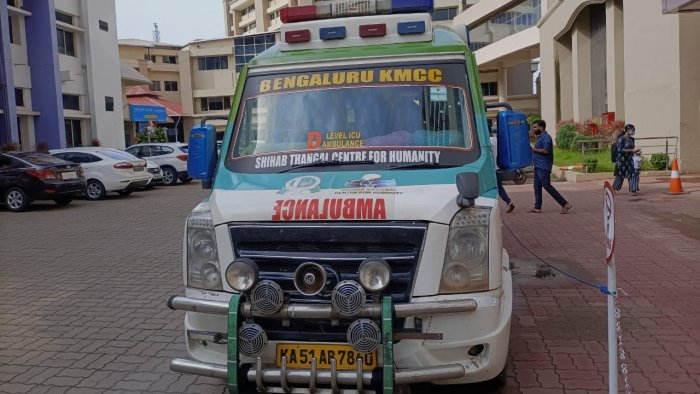
Ishak Thumbe, who oversaw the entire operation, said the ambulance driver did not face any problems
KARNATAKA :
Aneef had left AJ Hospital at 10.40 am with the infant and the parents, who hail from Pavoor on the city’s outskirts, and reached their destination at 3.15 pm. Credit: Special Arrangement
In a bid to save the life of a 22-day-old, KMCC ambulance driver Aneef, yet again, covered over 350 km in over four hours and 30 minutes to reach Narayana Multispeciality Hospital in the Electronic City in Bengaluru.
Aneef had left AJ Hospital at 10.40 am with the infant and the parents, who hail from Pavoor on the city’s outskirts, and reached their destination at 3.15 pm.
Despite the lockdown, volunteers from SKSF, Dakshina Kannada district, MNG Foundation had positioned themselves at places vulnerable to accidents along the stretch and ensured that the ambulance reached the hospital within the golden hour.
Ishak Thumbe, who oversaw the entire operation, said the ambulance driver did not face any problems and was able to reach the hospital at 3.15 pm.
Aneef had in the past driven the ambulance in a similar way to admit babies at hospitals in Bengaluru on time.
source: http://www.deccanherald.com / Deccan Herald / Home> State> Mangaluru / by Harsha, Mangaluru / June 11th, 2021
Prestigious American College of Cardiology, medical organization of America conferred an FACC degree on Dr Abdul Razak U K, cardiologist of Manipal Kasturba Hospital considering his valuable medical service.
Razak hails from Majoor, Kaup taluk, Udupi and is the son of Haji Bavu Beary and Nabisabi. He is the son-in-law of well-known social worker Haji K Aboobacker and resides in Udupi at present.
source: http://www.daijiworld.com / Daiji World.com / Home> Mumbai / by Rons Bantwal, Daijiworld Media Network – Mumbai (EP) / June 11th, 2021
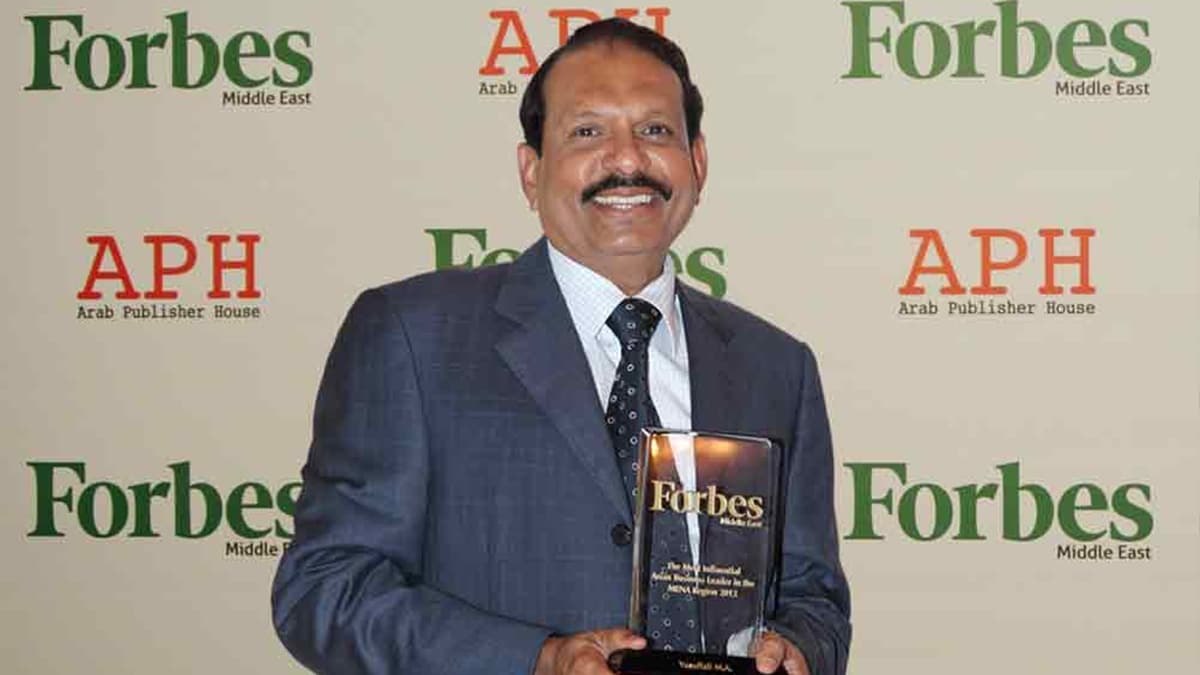
Yusuffali MA is a UAE-based Indian businessman. He is a billionaire who operates the Lulu Group that owns Lulu Hypermarkets and shopping malls.
It was nothing sort of rebirth for Becks Krishnan, serving a death row in UAE when his 500,000 Dirhams (around Rs 1 crore) compensation was paid in full and the man hailing from Kerala was released. The generous compensation was paid by Yusuffali MA, the chairman and managing director of LuLu Group.
Krishnan was sentenced to death by UAE’s Federal Supreme Court. He had been found guilty of killing a young Sudanese boy when he recklessly drove his car and rammed a group of children in September 2012. Ever since the sentence, the family had been trying for his release. But that required a hefty compensation to be paid. This is where Yusuffali stepped in.
In his career as a business tycoon, Yusuffali has headed the Abu Dhabi Chamber of Commerce and Industry (ADCCI). He is the only non-Arab to be elected to the director board of ADCCI for three consecutive terms.
He has been a key mediator in the Kochi Smart City project between the Kerala government and the Dubai-based TECOM Group. Apart from his role in business, he has also organised several relief measures in India, notable among those are during the Lathur earthquake in Maharashtra, the Gujarat earthquake, and the Uttarakhand floods.
Yusauffali was conferred with Padmashree by President Pratibha Devi Singh Patil in 2008 for his achievements in business and industry. He was the first non-resident Indian (NRI) from the Gulf and the Middle East countries to be awarded Padmashree. Previously, he had been given the Pravasi Bharatiya Samman Award by late President APJ Abdul Kalam in 2005.
The UAE government in April awarded him with its highest civilian award for his noble and charitable contribution to the community. After accepting the award, Yusauffali said, “I first arrived in Abu Dhabi 47 years ago with dreams and hopes. I faced a lot of challenges and ups and downs in my life, but, today, I have reached this stage by the grace of Almighty God and the wholehearted support from the Royal Family of the UAE.”
Securing the release of Krishnan, Yusuffali simply “thanked the almighty and the benevolence of visionary rulers of UAE” for the decision, and wished him a happy and peaceful life ahead.
source: http://www.indiatoday.in / India Today / Home> Business / India Today Web Desk, New Delhi / June 04th, 2021
The 45-year-old had been languishing in jail awaiting capital punishment with all hopes quashed.
It is quite literally a second lease of life for Becks Krishnan. The Indian expat, who was on death row in the UAE for causing the death of a young boy in a road accident, can finally see the outside of a jail cell following the intervention of NRI businessman M.A. Yusuff Ali.
The 45-year-old had been languishing in jail awaiting capital punishment with all hopes quashed. But he got a second lease of life, thanks to the efforts of Yusuff Ali, chairman of Lulu Group.
Krishnan was sentenced to death by the UAE Supreme Court after he was found guilty of causing the death of a young boy. He had rammed his car into a group of kids in September 2012.
Ever since, his family and friends have been relentlessly trying for Krishnan’s release without any success, especially as the victim’s family had already gone back and settled in Sudan, putting an end to any kind of discussion or pardon.
As a last attempt, the Krishnan family approached Yusuff Ali, who went about getting the details of the case and got in touch with all stakeholders. At one point, Yusuff Ali flew down the victim’s family from Sudan to Abu Dhabi for a month and held extensive discussions to arrive at a compensation amount and secure pardon for Krishnan.
Ultimately, in January this year, the victim’s family agreed to pardon Krishnan, and Yusuff Ali paid Dh500,000 as compensation in the court to secure the early release.
source: http://www.khaleejtimes.com / Khaleej Times / Home> News> Crime and Courts / by James Jose, Dubai / June 03rd, 2021