Category Archives: Amazing Feats

These COVID-19 warriors are an inspiration for India

Indore, MADHYA PRADESH :

‘We got so many calls after the attack.’
‘Loved ones told us forget all this, nothing was more valuable than our lives.’
‘But we said, ‘No, this wasn’t the way forward — the people, society, the country needs us at this time.’
Dr Trupti Katdare and Dr Zakia Syed tell Archana Masih/Rediff.com their inspiring story.
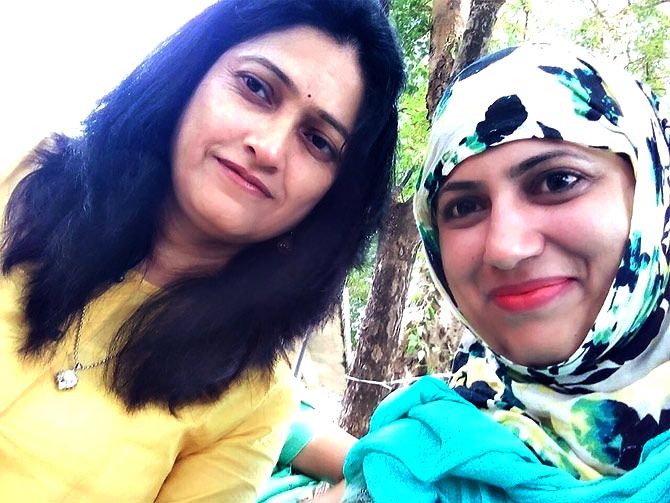
Dr Trupti Katdare, left, with Dr Zakia Syed. All images: Kind courtesy Dr Zakia Syed and Dr Trupti Katdare

Dr Zakia Syed and Dr Trupti Katdare first met during their induction as young doctors nine years ago. The training for their appointments as doctors in the government-run public health centre in rural Madhya Pradesh lasted for a month, but they ended up with an everlasting friendship.

“We are besties till death,” says Dr Trupti, chief medical officer at the public health centre in Shipra near Indore, as she refers to Dr Zakia, who is in-charge of the primary health centre in Kampel, 40 kms away.
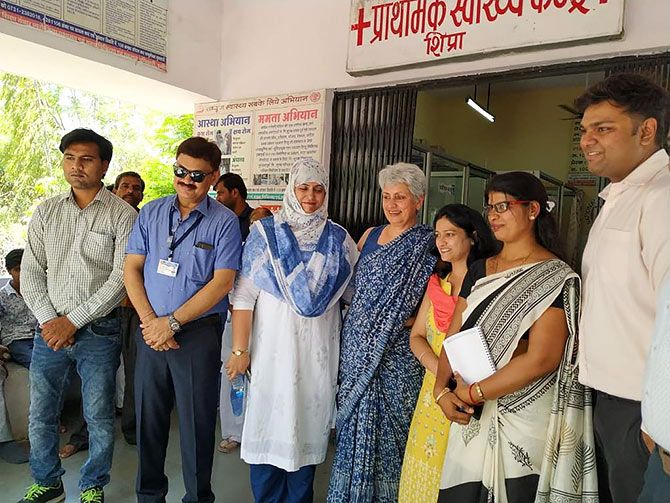
Dr Trupti Katdare and Dr Zakia Syed with other doctors and team members at the Shipra primary health centre.

For the past six weeks, the two doctor friends have been working together at the frontline of the battle against COVID-19 in Indore. They have left their families and moved into a hotel to protect their loved ones from the infection. Dr Trupti is especially concerned about her in-laws who have diabetes and asthma.

When she wanted to wish her husband on his birthday on April 29, they went to her home and wished him from outside.

Dr Zakia last saw her husband and children aged 5 and 9 two weeks ago. She stood outside the gate of her home and had a cup of tea as her son and daughter kept asking her, ‘Mama, when will you come home?’
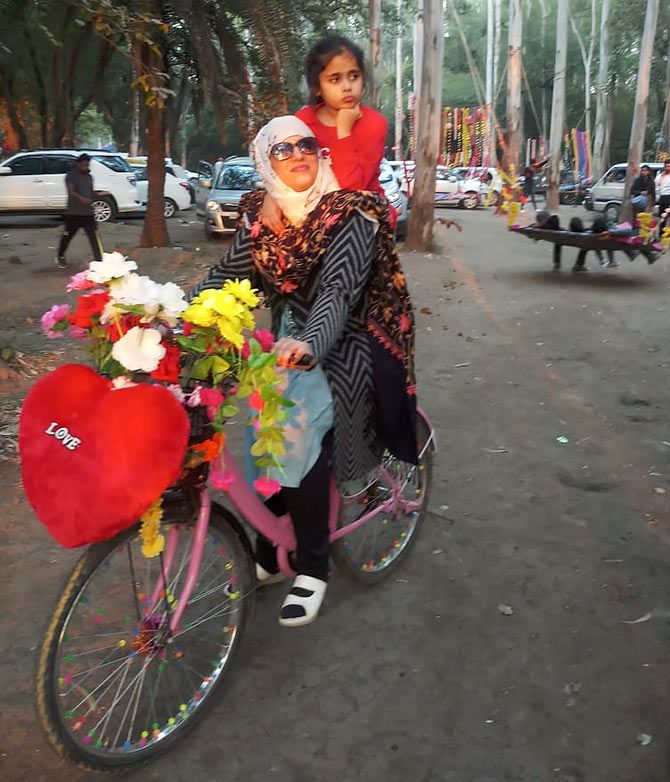
Dr Zakia Syed with her daughter

Every morning, the two friends accompanied by paramedics and government staff, set out, criss-crossing the lanes and by-lanes of a large area which falls under three police stations. They deal with positive cases, identify contacts, treat symptomatic cases, get samples collected, send high-risk individuals to quarantine centres and positive patients to a treatment facility.

They have identified 160 positive cases so far and screen around 200 people every day.

Last month, an incident they encountered became one of the triggers for a new law that will protect doctors from acts of violence
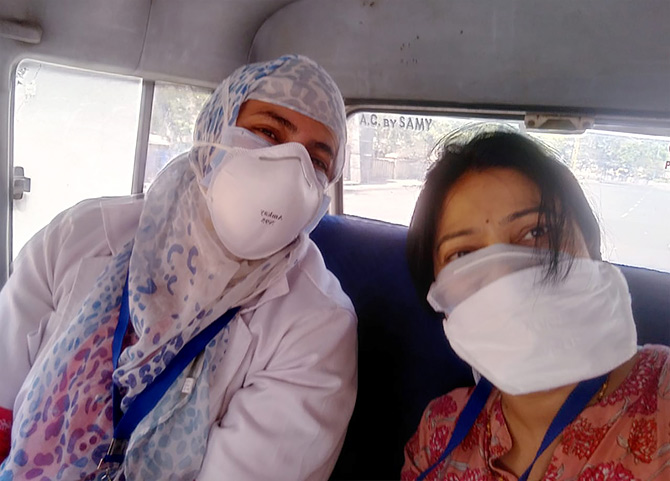
Dr Zakia Syed and Dr Trupti Katdare.

Doctors Zakia and Trupti were attacked by a mob while talking to the mother of a man who later tested positive. They were told that the man was not home. He was apprehended by the police two days later.

“We asked for his mobile number and said he should not be moving around in the first place,” remembers Dr Trupti.

This was the third consecutive day in that specific locality and they had never encountered any problem before.
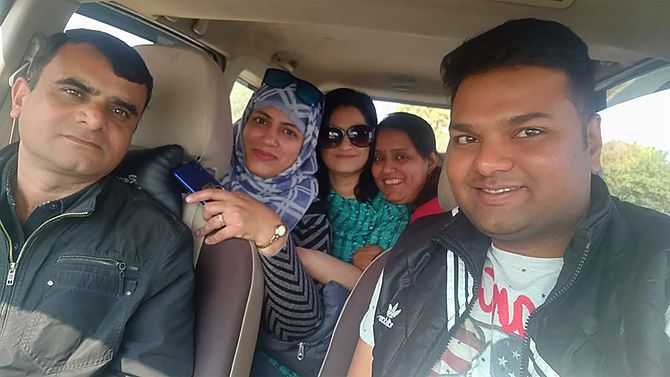
The doctors with their team members.

” Suddenly there was a crowd screaming ‘maro maro‘ running towards us. They started throwing stones. The sub divisional magistrate quickly brought the car in front of us to shield us from the stones. I almost fell. Dr Zakia said she will confront and explain to them. I told her the hostile crowd was in no mood to see reason and pulled her into car. As we drove, the mob was running behind us, hurling stones,” remembers Dr Trupti, over the phone at the end of a 10-hour shift.

“It was very scary.”

“We sustained some blunt injuries where the stones struck us. We were shocked. Shaken,” adds Dr Zakia, the first one in her family to become a doctor, fulfilling the dream of her father who worked in the quality control department at the National Textile Corporation before it shut down. At one time, Indore was known for its three big textile mills.

The doctors filed an FIR. Thirteen people were arrested and the National Security Act was invoked against four. The news of the attack was quickly picked up by the media within hours.
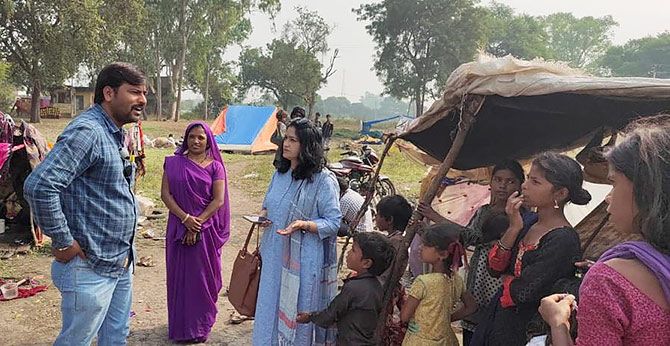
Dr Trupti Katdare out in the field.

” Our worried husbands phoned us, we got so many calls. Loved ones told us forget all this, nothing was more valuable than our lives. But we said, ‘No, this wasn’t the way forward — the people, society, the country needs us at this time,” says Dr Zakia, who wakes up at 4 am and has oats or rusk with a cup of tea as a pre-dawn meal during Ramzan.

In the evening, she breaks her fast with Dr Trupti and Dr Piyush, the third doctor in their COVID-19 response team.

They make tea in the electric kettle in the room and sit down together over tea and dry snacks.

“We said we will not surrender and went back to the same gali the next day after the attack. It was our duty, we could not leave those people until we had screened them and provided treatment,” says Dr Trupti, who attributes her commitment for public service to her father’s zeal for social work.

“They apologised and told us ‘Do not leave us. It will never happen again.’ Now the scenario has completely changed, they cooperate fully and willingly come to be screened and quarantined.”

“After the incident, if either of us had said we will not return, we may not have gone back. But we drew strength from each other and were both determined to finish what we had started,” says Dr Trupti and credits the health department heads, the district administration, family and friends for boosting their morale.

They later discovered that the attack was instigated by rumours and negative messages on social media.
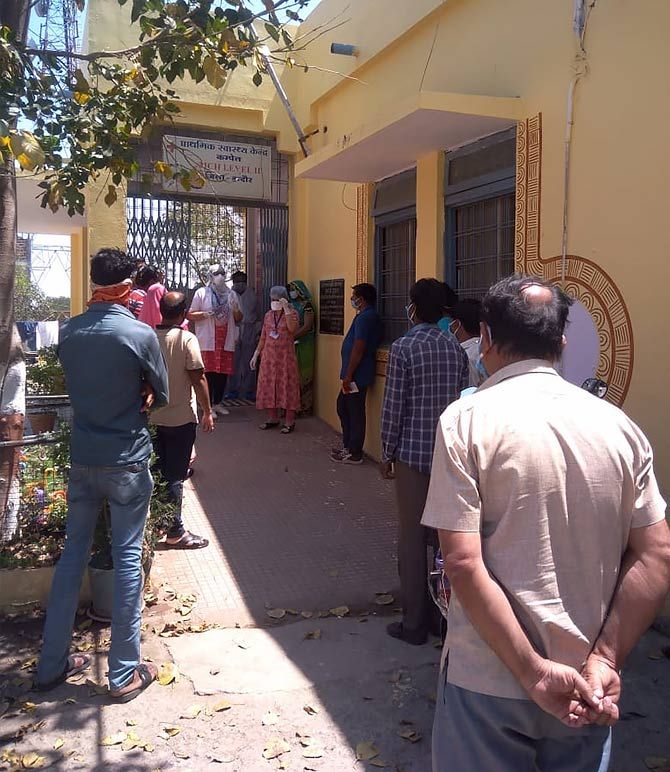
Dealing with a new virus that spreads fast, the two main challenges have been to convince people that though extremely contagious, the disease is not as serious as perceived.

“80% don’t have any symptoms,” says Dr Zakia. Since they work in an area with low socio-economic indices, the second challenge is making people follow social distancing and hygiene.

“Since many are uneducated, it takes time to convince them. Also, it is not easy to make people leave their home and go to a quarantine centre for 14 days,” she explains.
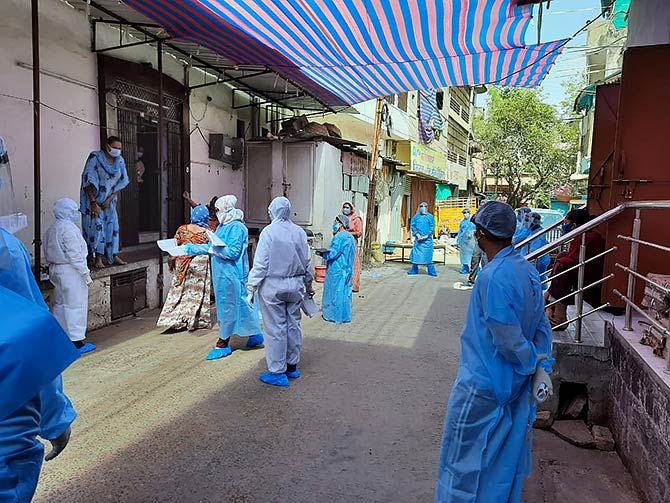
The medical team conducts a survey for possible COVID-19 cases.

A few days ago, they had to screen a community of transgenders after one person tested positive. When the panic-stricken community refused to allow them entry, the doctors had to persuade them with tact, patience and kindness.

“We were able to convince them with our words and screened 50+. They were so happy with our services that they clapped, distributed sweets and sent us away with their blessings,” says Dr Zakia, giving a glimpse into the phenomenal work public health officials have been doing around the country during this emergency.

The doctors set out every morning in a car assigned to their team. In the early days, they would go without drinking water for six hours at a stretch because they would be nervous about removing their masks in an area with several positive cases, but not anymore.

“We have been in the field since March 28 and have travelled quite far in this fight against COVID-19. We are deep into it. Now that we have gained some experience, we try to protect ourselves the best we can,” says Dr Trupti.
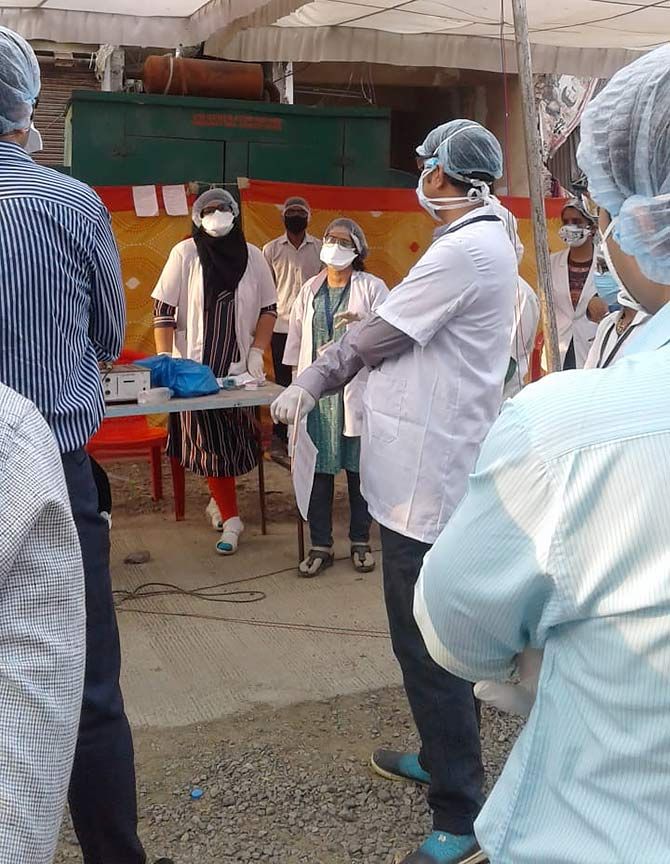
The team at one of their consulting sessions.

They have established a protocol where they take a water break after four hours which is usually the time it takes to deal with screening, testing, contact tracing and shifting a suspected case to the hospital.

“In the summer, you sweat a lot inside the PPE kit. We try to cover the positive area in one stretch so that we can take the PPE off and eat lunch,” explains Dr Trupti.

“We don’t waste PPE because they are very precious. While screening other contacts, we use double masks, gloves and caps.”

There is no fixed time for lunch which they mostly eat inside the car.
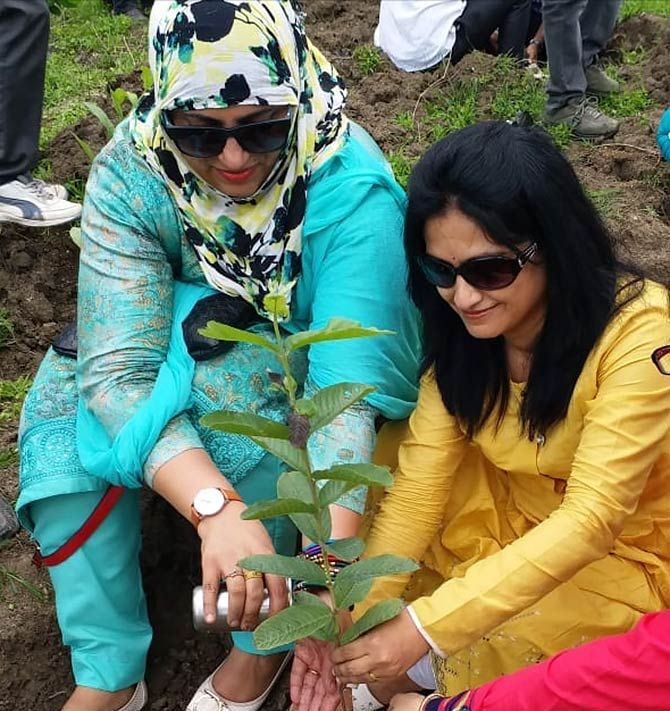
 Dr Zakia and Dr Trupti.

Observing roza has caused no problem on the field, says Dr Zakia. Roza strengthens your will power, it detoxifies both your body and soul. I haven’t felt weak and when you have your friend next to you, let me tell you, how can you feel weary?” she says with a ring in her voice that you can almost see her smile across the telephone line.

The doctors have planned a trip to Udaipur once the crisis is behind them.

They will continue their field duties throughout this month and are undaunted by the road ahead.
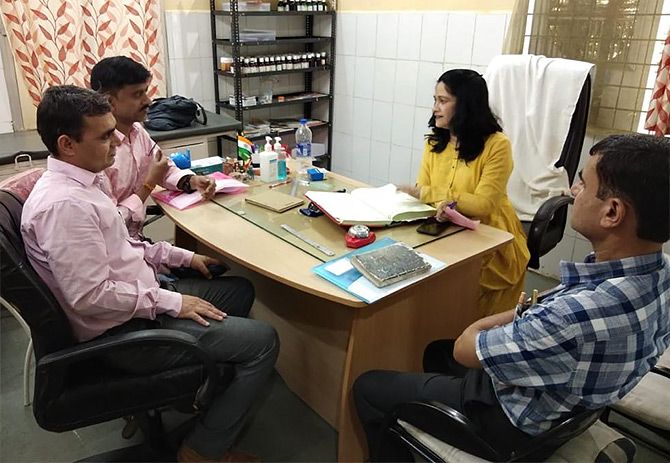
Dr Trupti in consultation with team members.

“Screening is crucial. It’s good that positive cases are being identified because then you can isolate, treat and prevent it from spreading,” points out Dr Trupti, who misses her primary healh centre and takes great pride that it has a 5-star ranking by UNICEF.

“I hope life returns to normal and I feel it will.”

While they battle on in the trenches, their homes are being held together by their husbands who have learnt how to cook and clean in their absence.
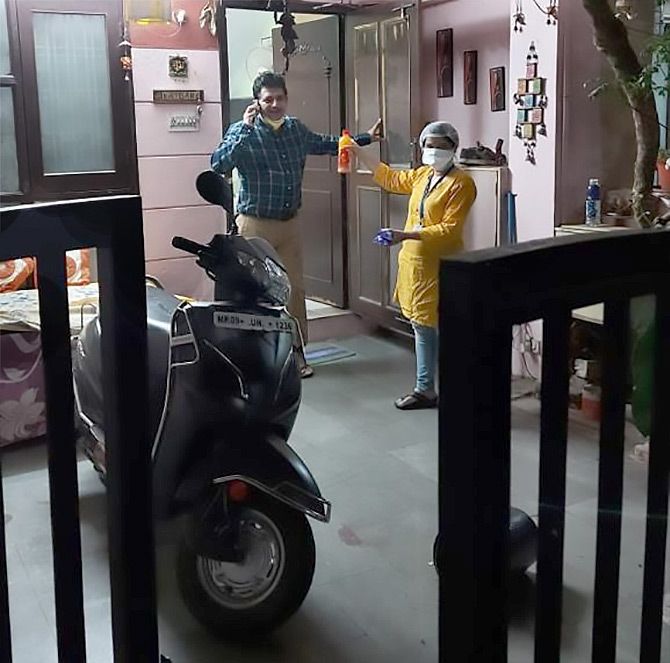
Dr Trupti visits her husband on his birthday on April 29.

“Papa has become both mummy and papa now,” says Dr Zakia.

“My husband keeps encouraging me. With the family by your side you can face any adverse situation,” adds Dr Trupti.
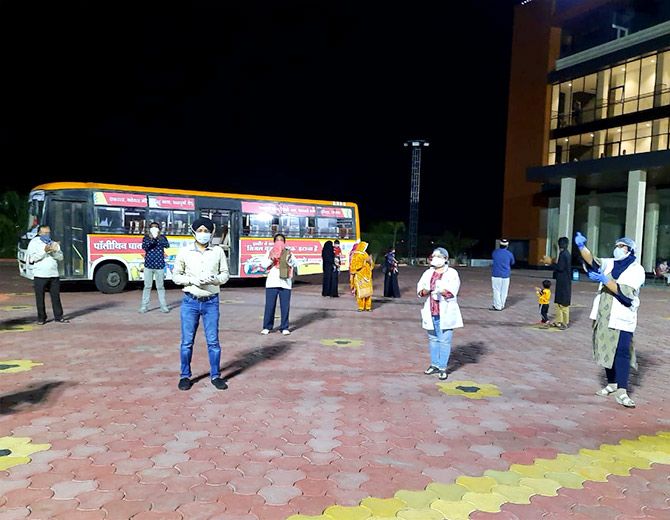
The doctors have 24 quarantine centres in their containment area and have provided their numbers to those under quarantine should they need any assistance.

When a set of people were leaving at the end of 14 days of quarantine, negative reports in hand, their team received a standing ovation.

“It gave us goose-bumps,” says Dr Trupti. “We’ve learnt never to give up. If soldiers can fight for the country, so can we.”

“Some people told us we are soldiers too,” says Dr Zakia, “In white uniforms.”

source: http://www.rediff.com / rediff.com / Home> News / by Archana Masih / May 02nd, 2020
Mumbai man sets up community kitchen to help poor migrants amid COVID-19 curbs

Mumbai, MAHARASHTRA :

Faiyaz Shaikh, who is in his mid 40s, lost his job in August last year, but that did not stop him from helping the poor families in Ambujwadi slum locality at Malwani in suburban Malad.

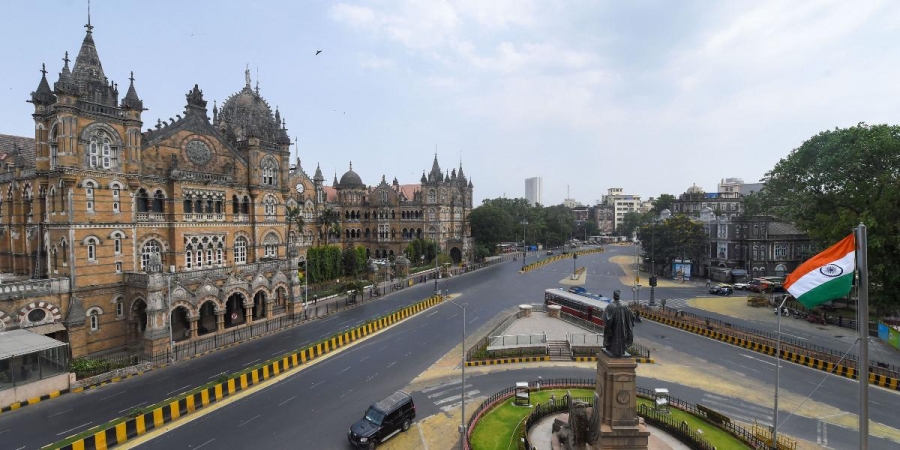
Representational Image. (Photo | ANI)

Mumbai :

Crisis brings out the best in people and a man from Mumbai has proved it as he has set up a community kitchen from his own savings for the poor migrant workers suffering due to the COVID-19-induced restrictions.

Faiyaz Shaikh, who is in his mid 40s, lost his job in August last year, but that did not stop him from helping the poor families in Ambujwadi slum locality at Malwani in suburban Malad.

Now, his community kitchen is providing food to around 500 people every day, Shaikh told PTI.

He is also providing them ration and medicines since last year, he said.

Over one lakh migrant workers live in the Ambujwadi locality and their livelihood is dependent on daily wages.

Shaikh said during the lockdown last year, he got help from some NGOs for ration and medicines, but this time, he had to manage things on his own.

“After I lost my job, I got around Rs 10 lakh from my company. I am utilising that money to offer food to the migrants through the community kitchen and also providing them medicines,” he said.

Shaikh said he came up with the idea of a community kitchen after seeing the sufferings of slum dwellers in Malwani.

“The kitchen must continue to feed the children and the needy,” he said.

He said the community kitchen has also helped in providing employment to locals and at the same time, hygiene is also maintained.

Shaikh said his wife has also been running an English medium school in the area since the last 11 years where around 350 students are enrolled.

“The fees of students was waived off for three months last year, and now for the entire year,” he said.

The locality where the school is situated comprises daily wagers and they don’t give priority to the education of their children, he said.

“If the fee waiver was not allowed, there would have been dropouts from school, endangering the future of these children,” he said.

When Cyclone Tauktae brushed past the Mumbai coast last week, strong winds blew away roofs of several houses in the slum colony.

At that time, the Shaikhs provided shelter to these families in the school and made sure they were well-fed.

Asked how he is managing his own livelihood, Shaikh said, “For the last 11 years, I have two families- my own and this slum colony. I can’t differentiate between the two. I will continue to look after both till I can manage.”

source: http://www.newindianexpress.com / The New Indian Express / Home> Cities> Mumbai / by PTI / May 25th, 2021

It is humanity first for Bilal and his friends

Bidar, KARNATAKA :

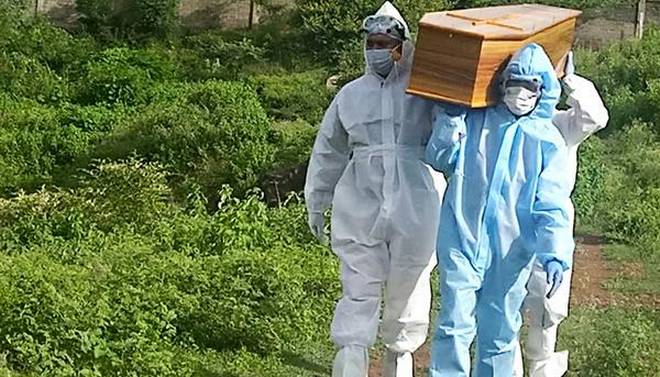
Noble service: Members of the foundation following COVID-19 protocol while performing last rites. GOPICHAND T.  

His NGO has performed last rites of over 700 COVID-19 victims

Humanity First foundation, a Bidar-based NGO, has been performing the last rites of COVID-19 patients ever since the epidemic broke out in 2020.

Majeed Bilal, a small business owner who founded the NGO, says members have performed the last rites of over 700 bodies so far, irrespective of faith.

The rituals of different religions are followed during the final rites . The services are free, though the NGO accepts donations.

Mr. Bilal has spent a considerable amount of his own money on this service. “My family had two small plots in Bidar. I have sold them, to set up this NGO and conduct the final rites of COVID-19 victims with honour,” he told The Hindu.

He feels the stigma attached to COVID-19 is discouraging some families from attending the funerals of their loved ones.

“We mostly work around Bidar. But there haven been instances where our hearses have gone to places like Hyderabad, Kalaburagi, Humnabad, Bhalki, and Aurad to fetch the mortal remains,” he said.

At first, he converted a van that he used for his business into an ambulance and hearse. He rushed patients to hospitals and carried bodies from hospitals to the graveyards. Later, some philanthropists donated two hearses to the NGO.

“In some cases, the families pay us ₹1,000-2,000 per cremation. We use it to buy wood and kerosene. In case of burials, the city municipal corporation helps us by digging pits,” he said.

He began the last rites after an incident near his house early in 2020. “An old woman had died and even her children were afraid to go near the body. CMC personnel carried the body in an earthmover and threw it in a pit. I decided to start volunteering at conducting the last rites and some of my friends joined me,” he said.

Mr. Bilal is married with children. But for over a year he has been living in a boarding house, to avoid any chance of infecting his family members. His friends, business associates, and some family members who have been helping him have also been staying in lodges and boarding houses.

Members of the foundation follow COVID-19 protocol while performing the last rites.

“We have been routinely undergoing RT-PCR tests. I have tested myself 28 times and each time the result was negative. I would like to think that is the Almighty’s way of blessing me,” he added.

source: http://www.thehindu.com / The Hindu / Home> News> States / by Rishikesh Bahadur Desai / Belagavi – May 19th, 2021

How this 26-year-old UP girl came to be known as ‘Cylinder Bitiya’

She reaches out to people in need with Oxygen cylinders.

Shahjahanpur, UTTAR PRADESH :

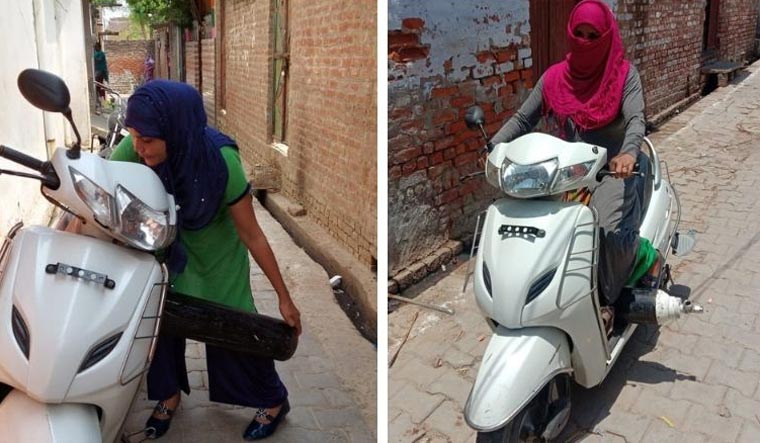
A 26-year-old woman from Uttar Pradesh has earned the moniker Shahjahanpur’s ‘Cylinder Bitiya’ (cylinder daughter), for reaching out to people in need with Oxygen cylinders on her Scooty.

Arshi Ansari’s father, Mashkoor (65), fell ill on April 2, the first day of Ramzan. Tests revealed that he was COVID-19 positive. Arshi went to the city magistrate to ask for an Oxygen cylinder for him but was told that there was no such provision for patients in home isolation. The official suggested that she finds a hospital for her father.

Arshi, a resident of Madar Khel area, went to the district hospital but was appalled by its stench and dirt. She then tried a few private hospitals, but was told that they had no Oxygen and that she would have to make her own arrangements.

“I did not want to leave my father uncared for, in a hospital,” says the woman who has completed her Bachelor of Arts in English and Urdu.

Next morning, she again went to the city magistrate and pleaded for a cylinder. This time she was given one.

Meanwhile, Arshi’s appeal for a cylinder on social media had attracted response from a group of volunteers in Rudraprayag, who sent her 10 cylinders.

Though Arshi’s father took a month to get well, after the first 12 days of illness, he did not need Oxygen cylinders. Arshi then decided that she would distribute these to the needy, who could reach out to her through a WhatsApp group. Around Shahjahanpur and even to Hardoi which is 67 km away, to the neighbouring state of Uttarakhand, Arshi has carried the life-giving gas over long distances without any charge. She also gets empty cylinders filled on request.

“No one hoards a cylinder. After have no use of it, they refill it and pass it on to others in need”, she says.

Arshi started distributing Oxygen cylinders during the month of Ramzan. Yet, she says, she never felt any discomfort or hunger. “It is my belief that I got success in my work because it was Ramzan and I had Allah’s blessings”.

When she started the work, she had to face nasty comments from passers-by and cat calling by boys. “There were even filthy posts and memes made on me”, she said.

However, the woman, who runs a computer coaching institute for underprivileged children, said, “It will be so much better to give up this childish behaviour and get out of your homes to help at least one person in need. This pandemic has taught that all we have are each other”.

source: http://www.theweek.in / The Week / Home> News> India / by Puja Awasthi / May 17th, 2021

Builders of Bengal: Begum Rokeya

Pairaband Village (Rangpur), BENGAL (British India):

A PAST WE MUST PRESERVE | She was a pioneer of women’s education and feminist writing who started the first school for education of Muslim girls in Calcutta

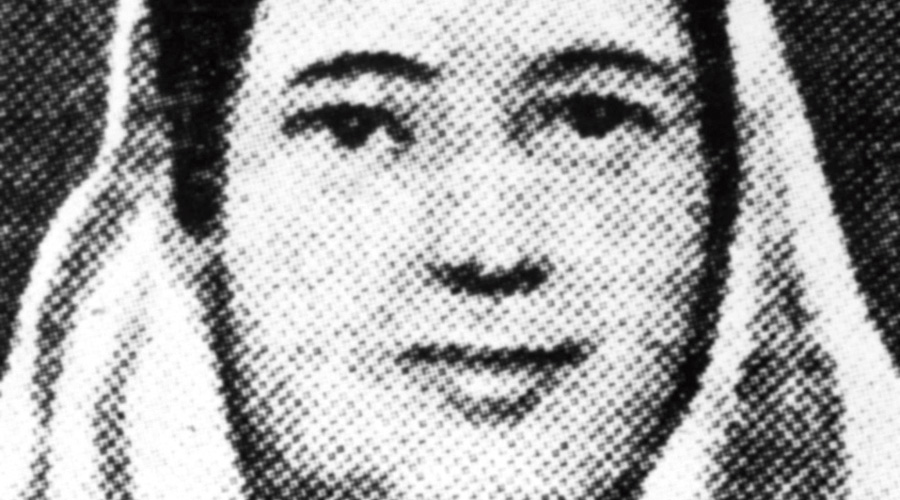
Begum Rokeya, 1880-1932 / File picture

Rokeya Sakhawat Hossain, popularly known as Begum Rokeya, was a pioneer of women’s education and feminist writing who started the first school for education of Muslim girls in Calcutta. She considered education to be crucial to women’s emancipation.

She was born in 1880 at Pairaband village in Rangpur, now in Bangladesh. Her elder sister Karimunnesa, who was a poet who wrote in Bengali, was a great influence on her life. Rokeya at 18 was married to Khan Bahadur Sakhawat Hussain, who was 38 and the deputy magistrate of Bhagalpur.

A liberal man who spoke Urdu, he encouraged his young wife to continue her studies in Bengali and English and to write.

Rokeya chose to principally write in Bengali and her works uphold the equality of men and women. Matichur (1904, 1922) is a two-volume collection of her essays on her thoughts about women and society, Padmarag (1924) is about the oppression of Bengali wives and Abarodhbasini (1931) is a robust critique of the severe forms of purdah for women.

Ten years before the American novelist Charlotte P. Gilman published Herland, Begum Rokeya wrote her feminist utopia Sultana’s Dream in 1905. Written in English, it is a novella set in Ladyland, ruled by women.

A few months after her husband’s death in 1909, Begum Rokeya started Sakhawat Memorial Girls’ High School in Bhagalpur, with five students. She moved the school to Calcutta in 1911, where it is still located, but is run by the government.

In 1916, Begum Rokeya founded Anjuman-e-Khawateen-e-Islam (Islamic Women’s Association) to hold discussions on women, education and progress. She advocated change in Muslim women’s lives and spoke up against rigidity and conservatism.

She went from door to door to ask Muslim families to send their daughters to school. She was engaged till the very end of her life in ideas and activities that would lead to the empowerment of women. She passed away on December 9, 1932, shortly after presiding over a session of the Indian Women’s Conference.

Bangladesh observes Rokeya Day on her death anniversary every year.

source: http://www.telegraphindia.com / The Telegraph Online / Home> Culture> People / by Chandrima S. Bhattacharya / March 28th, 2021

Shahid Jameel quits as head of virus genome sequencing group

Aligarh, UTTAR PRADESH / NEW DELHI :

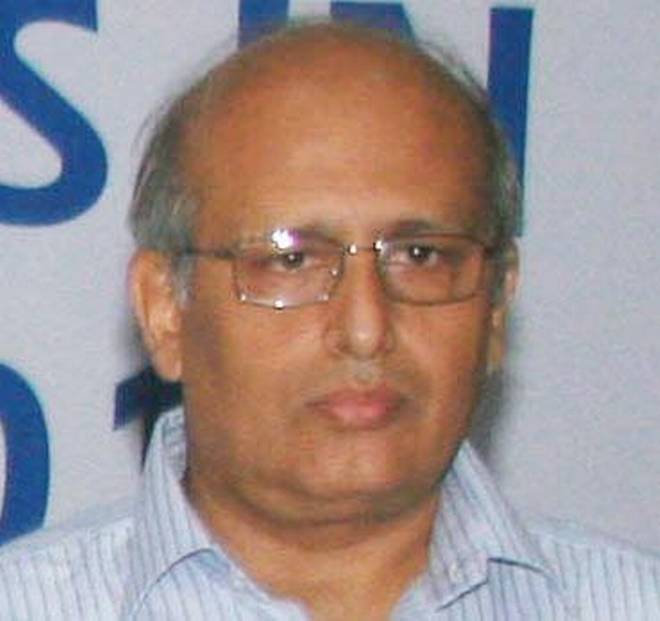
Virologist Shahid Jameel. File   | Photo Credit: Eswarraj R

The eminent virologist did not give any reasons for his departure

Shahid Jameel, eminent virologist and head of the advisory group to the Indian SARS-COV-2 Genomics Consortia (Insacog), resigned from his post on Friday.

Dr. Jameel confirmed to The Hindu that he’d quit but did not give any reasons for his departure.

Multiple scientists who are part of Insacog — a group of 10 laboratories across the country, tasked with tracking evolving variants of the coronavirus — told The Hindu that Dr. Jameel’s decision appeared to be sudden as he hadn’t communicated reasons for his resignation to consortium members but one of them cited “government pressure” as a potential reason.

Dr. Jameel, who is Director, Trivedi School of Biosciences at Ashoka University has been critical of aspects of the government’s handling of the pandemic.

On May 13, in an invited opinion piece for the New York Times, Dr. Jameel summarised India’s response to the multiple waves and the uneven vaccination rollout and concluded by saying “scientists were facing stubborn resistance to evidence-based policy-making. On April 30, over 800 Indian scientists appealed to the Prime Minister, demanding access to the data that could help them further study, predict and curb this virus. Decision-making based on data is yet another casualty, as the pandemic in India has spun out of control. The human cost we are enduring will leave a permanent scar.”

The Insacog, setup in December, faced initial challenges with funds and equipment but since March has considerably accelerated sequencing samples from all over the country for variants. It has been tracking international variants of concern as well as discovered the so called ‘Indian variant ‘ (B.1.617) that is believed to be instrumental in India’s devastating second wave.

source: http://www.thehindu.com / The Hindu / Home> News> National / by Jacob Kohsy / New Delhi – May 16th, 2021

Volunteers from around the world rally to help tackle COVID-19 in Karnataka

KARNATAKA :

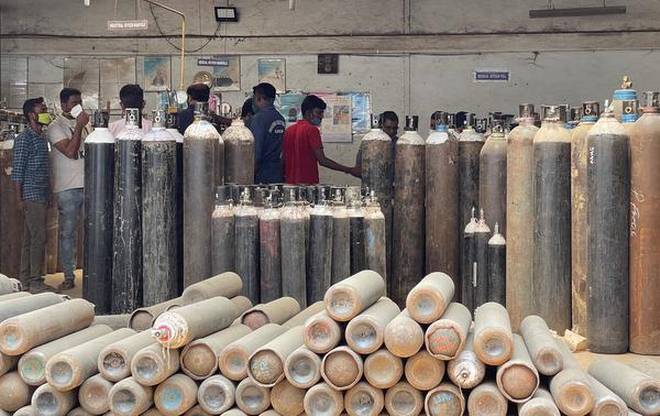
People wait outside an oxygen production unit at Peenya Industrial Area in Bengaluru, after many hospitals ran out of oxygen and beds with ventilators. File photo for representation.   | Photo Credit: K. Murali Kumar

Bangalore Medical College and Research Institute 1992 batch doctors liaise with volunteer groups to offer services

Doctors living across the world — all alumni of the Bangalore Medical College and Research Institute (BMCRI) from the 1992 batch — have now banded together with a coalition of volunteer groups to offer end-to-end COVID-19 management for patients in Karnataka, particularly in Bengaluru.

While the Karnataka COVID-19 Volunteers Team (KCVT), with over 500 members, has set up a helpline (080-47166115) which counsels patients, refers them to doctors for tele-consultation, helps in home management and to find hospital beds, Mercy Mission is operating two COVID-19 care centres and has a tie-up with the HBS Hospital in Shivajinagar for critical care. While the helpline and tele-consultation with doctors is available for patients across the State, other on ground facilities are in the city.

“There are over 50 doctors, most of them from BMCRI 1992 batch, and many living in the U.S. and the U.K., who are offering free tele-consultation for COVID-19 patients. I have been doing this for a week now. Most cases are manageable at home. What patients need is guidance and some confidence,” said Umesh Nareppa, a senior cardiac surgeon at Vikram Hospital in the city, and an BMCRI 1992 batch alumnus.

Fund raising

The doctors abroad have also raised funds to the tune of around ₹2 crore and sent 250 oxygen concentrators to the city for patients who need them during home isolation.

Another BMCRI alumnus, H.V. Vasu, who is coordinating the KCVT, said the helpline also has over 100 trained counsellors and will follow patients through the entire course of the infection, advising them with course of treatment, diet, tele-consultation with doctors and try to organise oxygen, hospital beds, if need be. “We have helped book more than 200 beds in the last few days, all through diligent follow-up with the civic body,” he said.

Meanwhile, the KCVT and BMC-92 have partnered with Mercy Mission, another network of NGOs is also running helplines organising oxygen, beds, food and even cremating COVID-19 patients, and for hospital infrastructure. “We have a tie-up with Al Ameen Hospital and HBS Hospital, both in Shivajinagar. While we refer mild to moderate patients to Al Ameen Hospital, we are partnering with HBS for critical care. Mercy Mission is also looking at partnering with CSI hospital, also in the same area, for which talks are in initial stages. Meanwhile, Mercy Mission has partnered with a hospital in Hassan,” said Ali Shariff, who is coordinating these efforts. Patients who need hospital care are being referred to these hospitals.

Mercy Mission is also looking to reactivate the over 40 on ground triaging centres it operated last year in the city’s slums, with focus on vaccination this time. “There is vaccine hesitancy in the slums and we need to send in motivators who have earlier worked in these slums to get people to take the jab. Vaccine coverage is inequitable and low in these pockets. Once we are assured of vaccine supply, we will begin these centres, where we will also take up triaging for COVID-19 cases,” said Mr. Shariff.

source: http://www.thehindu.com / The Hindu / Home> News> States> Karnataka / by K.V. Aditya Bharadwaj / Bengaluru – May 16th, 2021

100-oxygenated-bed facility at Haj Bhavan inaugurated

Bengaluru, KARNATAKA :

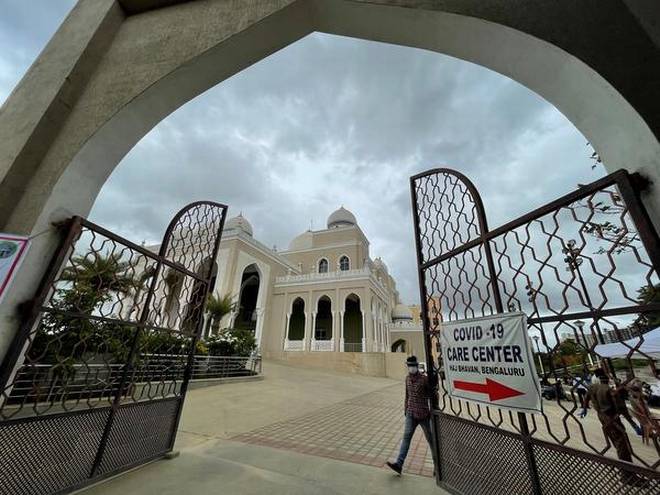
A 100-oxygenated-bed facility was inaugurated at Haj Bhavan COVID-19 Care Centre in Bengaluru on Saturday.   | Photo Credit: Murali Kumar K

8 doctors, 12 nurses, 12 housekeeping staff, data operator posted at the CCC

As many as 100 of the 400 beds at the COVID-19 Care Centre (CCC) in Haj Bhavan in Bengaluru have been converted to oxygenated beds. The facility was inaugurated by Minister for Revenue R. Ashok on Saturday. The Minister told reporters that in the second phase, 50 beds each would be converted to ICU and HDU beds.

According to a press release, 8 doctors, 12 nurses, 12 housekeeping staff and a data operator have been posted at the CCC, which is also a triaging centre. For emergency purposes, 2 ambulances are on standby.

Mr. Ashok said that to mitigate the oxygen shortage supply in the city, all CCCs have been equipped with oxygenated beds. Over 800 oxygen concentrators have been delivered to the CCCs apart from ‘Oxybuses’ to support patients. “Every day, we are striving to increase 100 oxygen beds. This will cut down the oxygen problem in the city,” he said.

CCC with 46 oxygenated beds

A COVID-19 Care Centre with 46 oxygenated beds has been established at the Kempegowda Community Hall, near Nandini Layout, in Mahalakshmi Layout Assembly constituency. The facility, which is also a triage centre, was inaugurated by Union Minister D.V. Sadananda Gowda and Minister for Excise K. Gopalaiah on Saturday.

Mr. Gowda said the CCC will be operational from Sunday. Three oxygen mobile vans have been making the rounds of the constituency to provide oxygen to patients in critical need, he said and added that a systematic plan is in place to contain COVID-19 in the city.

source: http://www.thehindu.com / The Hindu / Home> News> Cities> Bengaluru / by Special Correspondent / May 16th, 2021

The Revolt of 1857: Maulavi Ahmadullah Shah, the Rebel Saint of Faizabad

The Maulavi of Faizabad managed to keep the city free from British rule for almost a year until his death at the hands of British agents on June 5, 1858.

Faizabad (Ayodhya District), UTTAR PRADESH :

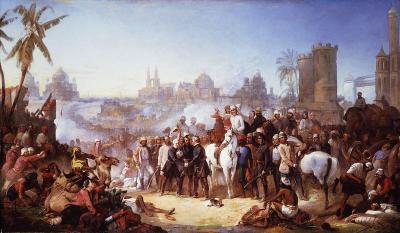
The Relief of Lucknow, 1857, by Thomas Jon Barker. Photo: Wikimedia Commons

Ahmadullah Shah, born in 1787, more famously known as Maulavi of Faizabad, was one of the leading figures of the great Indian revolt of 1857. In the Awadh region, Maulavi Ahmadullah Shah was known as the ‘Lighthouse of Rebellion’. Hailing from a noble warrior family of Awadh in Faizabad, he grew up to be a political leader committed to armed revolutionary insurrection against British rule in India.

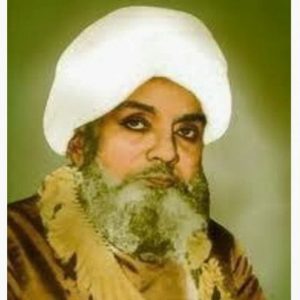
Maulavi Ahmadullah Shah. Credit: YouTube screengrab

During the freedom struggle, Maulavi made Faizabad the centre and launched revolts in all of the Awadh region. He made the local mosque Masjid Sarai located in Chowk area of Faizabad his headquarters. As he liberated Faizabad and the larger part of Awadh region, he used the premises of this mosque to hold meetings with rebellion leaders.

Maulavi Ahmadullah Shah kept Faizabad free from British rule for almost one year, until his death at the hands of British agents on June 5, 1858.

According to researcher and historian Ram Shankar Tripathi, “With being a practicing Muslim, he was also the epitome of religious unity and Ganga-Jamuna culture of Faizabad. In the revolt of 1857, royalties like Nana Sahib of Kanpur, Kunwar Singh of Arrah fought alongside Maulavi Ahmadullah Shah. Maulavi’s 22nd Infantry Regiment was commanded by Subedar Ghamandi Singh and Subedar Umrao Singh in the famous Battle of Chinhat.”

Tripathi narrates, “Maulavi wanted Raja Jagannath Singh of Pawayan, a zamindar in district Shahjahanpur of Uttar Pradesh, to join the anti-colonial war. On June 5, 1858, with prior appointment, he went to meet Raja Jagannath Singh in his fortress-like house. On arriving at the gate, he was greeted with a volley of gunshots from Jagannath Singh’s brother and retainers. The Maulavi breathed his last on the spot.”

“The martyr’s head was severed and carried in a piece of cloth with blood still oozing from it to the district magistrate, Shahjahanpur, by the zamindar. The district magistrate was at lunch with his friends. But the depraved feudal lord rushed in and presented the severed head of the hero on the dining table of the district magistrate. With a reward of Rs 50,000, he returned home, flying atop the flag of loyalty.”

According to another historian Roshan Taqui, “Maulavi use to bring out revolutionary pamphlets mobilising the masses to do ‘Jihad’ against the British. Maulavi was arrested by the British in January 1857 and was held captive in Faizabad, but three months before the revolt broke out in Lucknow on June 3,  he escaped and launched a war against the British in Awadh region including Faizabad, Lucknow and Shahjahanpur.”

“During the revolt, the revolutionaries appointed him as chief of 22nd Infantry Regiment that fought the famous battle of Chinhat in Ismailganj of Lucknow on June 30, 1857, against British forces led by Henry Lawrence. Britishers were badly defeated in this war,” informed Roshan Taqui.

British officers like George Bruce Malleson and Thomas Seaton have made mentions about courage, valour, personal and organisational capabilities of Maulavi Ahmadullah Shah. Malleson has repeatedly mentioned Ahmadullah in the History of Indian Mutiny, a book written in six volumes covering the revolt of 1857.

source: http://www.thewire.in / The Wire / Home> History / by Arshad Afzal Khan / June 05th, 2018

Sheik Chinna Moulana’s recitals immortalised in digital format

Tiruchirapalli, TAMIL NADU :

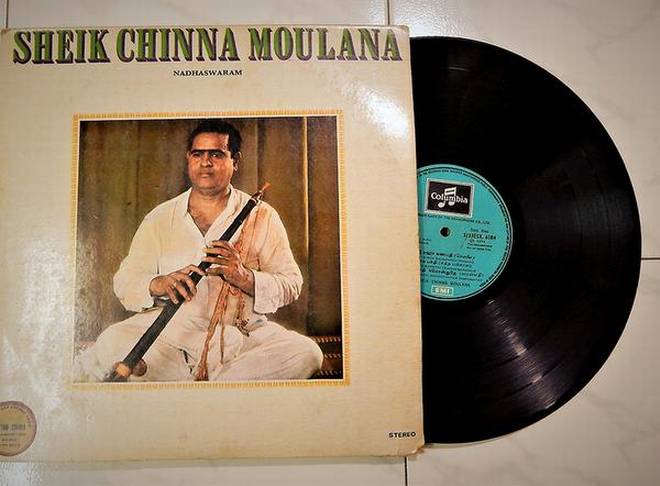
An old record of Sheik Chinna Moulana’s nadaswaram recital from his son Subhan Kasim’s collection.  

The archive is being maintained at ‘Alapana’, the 1950s-era house in Srirangam that was formerly Sheik Chinna Moulana’s residence.

Nadaswaram exponent Subhan Kasim has put the long spells of isolation caused by the lockdown this past year to good use by cataloguing at least 250 hours of music recitals by his grandfather and guru Sheik Chinna Moulana in a digital audio format along with a collection of video performances.

The archive is being maintained at ‘Alapana’, the 1950s-era house in Srirangam that was formerly Sheik Chinna Moulana’s residence and is now Mr. Kasim’s home.

“From the age of 14, I was interested in collecting music discs as a hobby. This shifted to cassette tapes and CDs. I still remember the gramophone which we had to crank up manually to play three-minute recordings in those days,” Mr. Kasim told The Hindu.

The archive is a good example of the advancements in sound recording technology, added Mr. Kasim. “At first we had releases from Columbia Records, [established in 1889], where the discs played only for three minutes. When HMV took over, LP discs introduced in the late 1950s, which allowed for up to 18 minutes of recording per side, made it easier to accommodate lengthier recitals,” he said.

Though he had meticulously preserved much of his grandfather’s work in various formats from an early age, Mr. Kasim opted to digitise the invaluable collection only recently, when some of the tapes started deteriorating. “Though I had the records from HMV and Columbia, the machines to play them were out of production. So I used digital technology to convert everything from wax records to spool tapes, cassettes and CDs into digitised copies, which I have saved in .mp3 and .wav formats.”

In addition to several complimentary discs given by recording companies, Mr. Kasim completed his collection of his grandfather’s work with the help of V.V. Sundaram, a key organiser of the annual Thiyagaraja aradhana (homage concert) in Cleveland, Ohio, and V. K. Viswanathan, a NASA scientist and ardent fan of Sheik Chinna Moulana.

Among the most significant recordings in the archive is that of a live concert in Chennai in the 1950s, whose broadcast by All India Radio had to be extended beyond its allotted two-hour slot to over three hours on popular demand.

The collection also includes the album of Sheik Chinna Moulana’s recital at Haus der Kulturen der Welt (House of World Culture) in Berlin released by German authorities as part of ‘Festival of India’ in 1991.

Mr. Kasim says the digital archive will be useful for aspiring artistes. “I am quite willing to guide serious students of nadaswaram, and share copies of the recordings with them. As per our grandfather’s guidance, the research and education will be free of cost.”

Mr. Kasim collaborates professionally with his younger brother Subhan Babu. Dr. Chinnamoulana Memorial Trust run by them has been encouraging the growth of traditional nadhaswaram music and supporting aging artistes since 1999. Both brothers are special nadaswaram artistes of Tirumala Tirupati Devasthanams.

source: http://www.thehindu.com / The Hindu / Home> News> Cities> Tiruchirapalli / by Nahla Nainar / Tiruchi – May 11th, 2021