Salman Shah (29) was handed over certificate of appreciation by DCP (zone-1) Suresh Mengade, flanked by senior inspector Ravindra Patil of NRI coastal police station
Navi Mumbai :
An autorickshaw driver from Belapur village was felicitated for saving a 11-year-old girl from being sexually assaulted the second time.
The NRI coastal police felicitated Salman Shah for rescuing the girl on January 31 from a 16-year-old accused.
Senior inspector Ravindra Patil, said, “On January 31, at around midnight, the accused, a stranger, called the girl outside her society, when her parents were busy at a religious gathering held in their society. He took her to an isolated spot behind a petrol pump near CBD railway station and sexually assaulted her.”
Patil added, “The juvenile accused was arrested a month after the incident when he was traced to a CBD restaurant and bar where he worked as a waiter. We booked him for rape under the Pocso Act. He has been sent to the juvenile remand home at Bhiwandi.
Auto driver Shah said, “The boy was with the minor girl on the streets in the odd hours and the girl appeared scared. When I questioned the teenager, he panicked and ran away.”
He added that the girl told me that the teenager had kidnapped her and sexually abused her behind the petrol pump . “I contacted the girl’s father with the help of the mobile number the girl gave me. I informed him that his daughter was safe and I had rescued her from a kidnapper, who escaped. Her father told that they were looking for her since two hours,” added Shah.
source: http://www.timesofindia.indiatimes.com / The Times of India / Home> City News> Navi Mumbai News / by George Mendonca / TNN / March 20th, 2021
The flight is said to have landed at 8.05 am at Jaipur Airport following which a doctor and an ambulance was arranged.
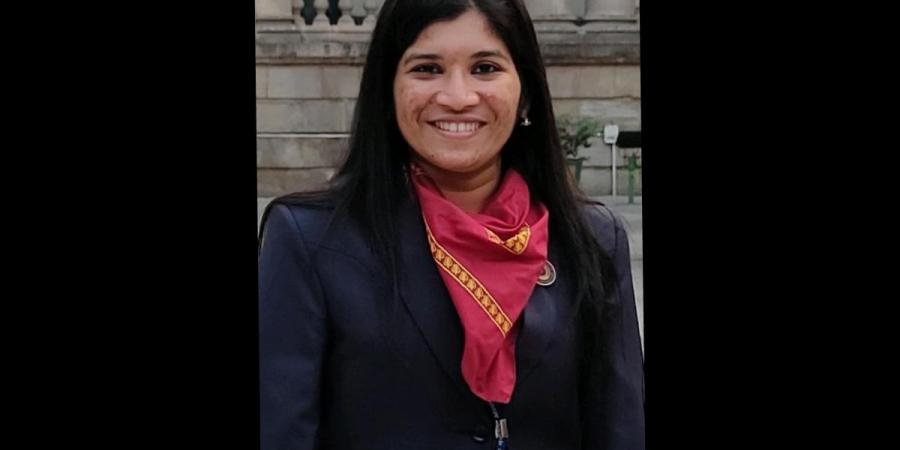
Dr Subhana Nazir
Bengaluru :
A North Western Railway Zone doctor was lauded after she assisted in the delivery of a baby girl onboard an IndiGo flight from Bengaluru to Jaipur on Wednesday. An official communique from the airlines stated that the baby was delivered with the help of the flight crew under the guidance of Dr Subhana Nazir. There were 116 passengers onboard the flight.
The flight is said to have landed at 8.05 am at Jaipur Airport following which a doctor and an ambulance was arranged. The baby and the mother are safe, the airlines said.Dr Subhana received a rousing welcome on landing at Jaipur Airport and was also lauded by her railway zone.
“Committed to duty… anytime… anywhere. Dr Subhana Nazir, a railway doctor of North Western Railways, while travelling Indigo6E from Bengaluru to Jaipur attended to the medical emergency and helped deliver a baby on board. #Proudrailwaywoman,” tweeted the NW zone.“The Indigo crew were able to help the doctor after having received special training for such situations,” said an airline representative. In October last year, the airline had faced a similar situation on a Delhi-Bengaluru flight.
Indigo permits expectant mothers till the end of 36 weeks of pregnancy, provided there are no prior complications, to board flights. If the pregnancy is between the 33rd and 36th week, a fit-to-fly certificate from the treating obstetrician, dated not more than seven days before the date of travel, is required.
source: http://www.newindianexpress.com / The New Indian Express / Home> Good News / by Express News Service / March 18th, 2021
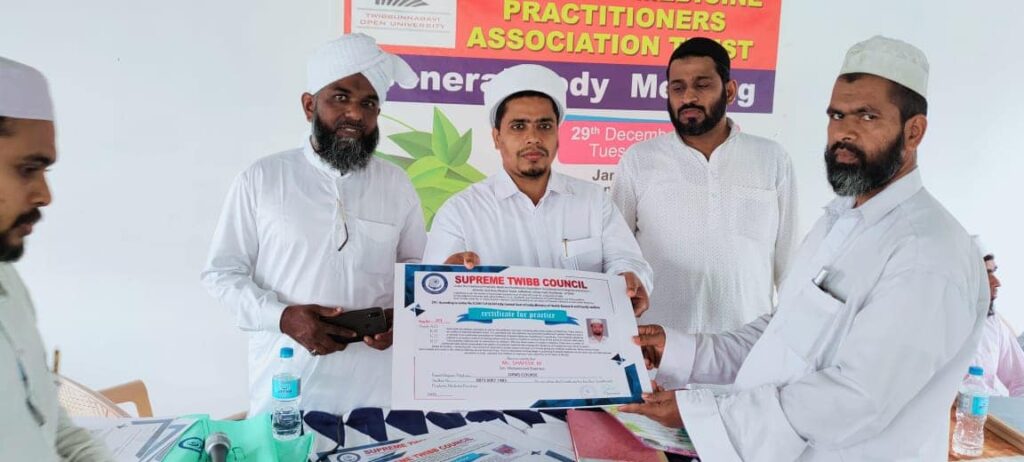
Kerala-based Traditional Prophetic Medicine Association Trust (TPMAT) has launched the Supreme Twibb Council in order to promote Prophetic medicine or Tibb-e-Nabawi.
The initiative aims to provide a platform to doctors and physicians involved in Prophetic medicine and will also give training to those doctors who are interested in practising Tibb-e-Nabawi.
Dr Muhammed Gafoor Saquafi, the council’s president highlighted that the Union Ministry of Health and Family Welfare has recognized Prophetic medicine as one of the alternative medicine as ordered by the ruling of the Supreme Court. TPMAT had filed a petition in the Supreme Court in this regard and after winning the case they decided to initiate Tibb Council.
“Moreover the Prophetic medicines institutes have received various orders from the Central Government in this connection. Based on this and Central Act1882, the TPMAT is registered and Supreme Twibb council is formed under it.
Advice and remedy given by Prophet Muhammad on the matters of health including sickness, hygiene, and treatment are called Prophetic medicine. These remedies are given by the Prophet, which is mentioned in the books of Hadith, and the writings were undertaken by non-physician scholars to collect and explicate these traditions.
In 2014, the Prophetic medicine was recognized as a complementary medicine senate via the Alma Atta Declaration of the World Health Organization. A letter of recognition and appreciation was also provided by the World Health Organization via the Ministry of Ayurveda, Yoga and Naturopathy, Unani, Sidha and Homeopathy (AYUSH).
Prophetic medicine was enlisted as an alternate medicine by Ministry of Health and Family Welfare in 2017 and gains the status of independent practice. This liberty to practice prophetic medicine was given by Supreme Court itself. There are many Prophetic Medicine institutions initiated at various locations of India.
The Court managed to draft bylaws of the Council in contrast with a pending petition given by TPMAT to the Supreme Court earlier, that constitute the legal part of the Prophetic medicine.
The council will also provide memberships to the scientific scholars and traditional scholars in different categories. Moreover national memberships will also be given for the structural expansion of the training institutes in the Country with a head-quarter in the national capital, Delhi.
source: http://www.thecognate.com / The Cognate / Home> News / by Ghazala Ahmad / March 13th, 2021
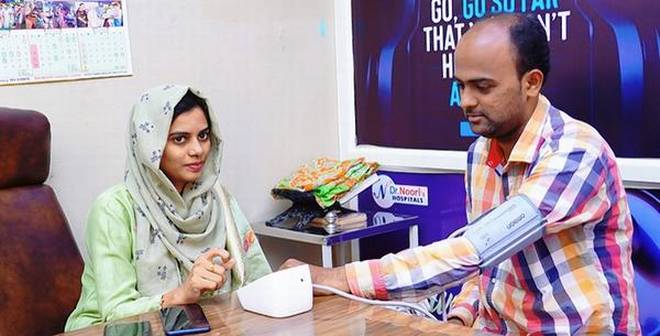
Noori Parveen at her clinic in Kadapa. Photo: Special Arrangement
Noori Parveen wins hearts by making medical care accessible for the poor
A medical practitioner in Kadapa has carved a name for herself by offering medical check-ups to the poor for a consultation fee of ₹10. Dr. Noori Parveen has become a household name for thousands of families by making medical care accessible to people who aren’t able to afford the expensive consultation fees at corporate hospitals.
It all started with children hailing from lower income and socio-economic groups bringing their sick siblings to her clinic in Kadapa city. “They can hardly afford ₹250 or ₹350 as consultation fee, and I thought I should reach out. It was then that I decided to charge a flat consultation fee of ₹10 from every patient,” Dr. Parveen told The Hindu.
In a special interview on the eve of International Women’s Day, she explained that her childhood ambition was not only to become a doctor, but also following in the footsteps of her grandfather Noor Mohammad, a Communist leader in the 1980s, and her father Mohammad Maqbool, a businessman with a charitable bent of mind.
Dr. Parveen studied up to Class IV in Challapalli of Krishna district, and then moved to Vijayawada for pursuing high school in the Urdu medium. Upon getting a medical seat under the minority quota, she joined the MBBS course at the Fatima Institute of Medical Sciences (FIMS), Kadapa.
Her social welfare activities started while at college, when she and her classmates reached out to the local orphanage and old age homes, which continued even after she started her medical practice and launched the Dr. Noori’s Health Care initiative. She soon became known among patients as the “₹10 doctor”.
Dr. Parveen recently launched a women’s health facility where gynaecology services are also offered for ₹10. “Most people with medical complications do not know whom to contact. I refer them to the concerned specialists in neurology, orthopaedics or gynaecology, again, for just ₹10,” Dr. Noori explained.
Though her gesture has brought laurels, she struggles to make ends meet. “Unlike my peers in the medical field, I still ask my father for money to meet my needs, and have no qualms in depending on my spouse after marriage. I am here to serve society, not to make money,” she said.
source: http://www.thehindu.com / The Hindu / Home> News> States> Andhra Pradesh / by A.D. Rangarajan / Kadapa – March 07th, 2021
Bengaluru’s zero-waste advocate Sahar Mansoor has brought out a guide book that provides personal insights and interactive activities to help the reader transition to a more sustainable lifestyle.
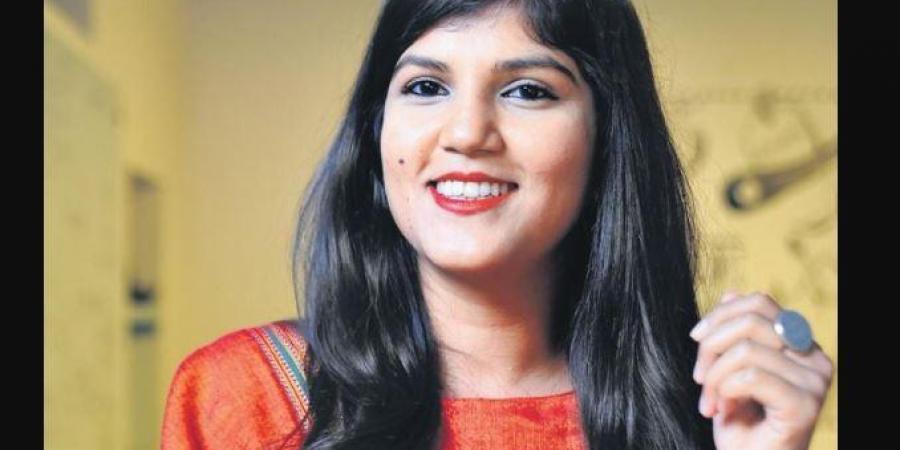
Sahar Mansoor
Bengaluru :
Health and environmental issues have come to the fore in the last one year. With increasing number of people becoming conscious about their choices, the recently-released book, Bare Necessities: How to Live a Zero-Waste Life, by Sahar Mansoor and Tim de Ridder aims to provide personal insights, interactive activities and solutions that can help you transition to a more sustainable lifestyle.
”The book has taken a staged approach where the reader journeys through topics that are intimate such as personal care routines and fashion choices, to more communal areas of life such as the kitchen, home care and festival occasions. It also looks at broad aspects of life, including the community and global impacts of waste. One of the fantastic things that we have achieved is to provide a toolkit of zero-waste information and insights throughout, such as my personal stories about how to make zero-waste products such as toothpaste and food such as holige,” says Mansoor.
Published by Penguin, the guide (Rs 299) includes activity sheets to share ideas with friends and families throughout the text. “We have provided recipes, tips and tricks and other ideas to help people learn, and enjoy the zero-waste journey,” says Mansoor, who has been working in the sustainability sector since 2015, participating in areas like waste reduction and climate change.
Ridder and she began putting pen to paper in September 2019. “Unfortunately he had to work abroad from October to January last year. We had to face challenges such as scheduling meetings across time zones.
When the borders were closed in March 2020, he stayed permanently in Australia,” she says. The situation also provided them a new perspective, and prompted them to add valuable sections in the final version. “We would love the book to be used in schools, where kids can learn about the wealth of resources available in India. There are opportunities to learn how to compost, create a community garden and make sustainable gifts,” says Mansoor.
source: http://www.newindianexpress.com / The New Indian Express / Home> Cities> Bengaluru / by Express News Service / March 09th, 2021
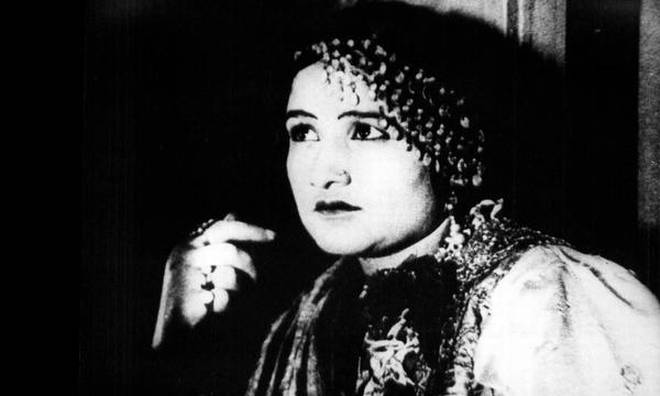
Liani goes back in time to find out how Alam Ara, the first Indian film with sound that was released on March 14, 1931, was made.
With my travelling severely curtailed, I tried the time machine. I turned a few knobs and wham! I was in March 1931 at a studio in Grand Road, Bombay, that overlooked the railway tracks.
“What’s happening?” I asked a mouse that suddenly appeared by my side. He tittered, “This is a film shooting. These rooms are not soundproofed; so these guys have to wait till the trains stop running.”
I looked at him quizzically. “It’s 1930s, my friend. There were only silent movies. See how they are placing those large microphones inside the actors’ costumes, behind the props and every other place possible.”
“Must be uncomfortable right?”
“You bet. Oh! Look at that. They have musicians hiding behind the trees!”
This was fascinating. I hopped across until I found a man gazing out of the window. I introduced myself and asked him to give me the lowdown.
Getting briefed
“Hello,” he said. “I’m Ardeshir Irani, the producer of this film. I was inspired after watching Show Boat, last year. I knew it was the next greatest thing in films. I decided it would be in Hindustani, which is a mixture of Urdu and Hindi. For my story, I had Alam Ara, about warring queens, palace intrigues and, of course, romance too.”
For his heroine, he had found a young actor named Zubeida, and the male lead was Master Vithal, a Marathi stunt star. The villain was Prithiviraj Kapoor. “If the villain is not good, the movie can fail, you know,” he said. “We are almost done here. This is the fourth month of shooting. It takes just a month to shoot a silent movie.”
My time machine was beeping and my time had run out. Intrigued by what I had seen, I read up about Alam Ara. The film was a sensation. The Majestic Cinema in Bombay was mobbed and the police had to be called in. Tickets were sold on the black market for four to five rupees. But here is the sad part: No copy of this film exists. There are just a few stills to remember this pioneering film.
Fun five
Alam Ara was India’s first talkie.
The shooting was done mostly between 1.00 a.m. and 4.00 a.m.
Released on March 14, 1931, at Majestic Cinema in Bombay, its tagline read: All living. Breathing. 100 per cent talking.
The song ‘De De Khuda Ke Naam Par’ was sung by Wazir Muhammad Khan, a neighbourhood watchman. Irani hired him because of his coarse voice. The film had six other songs.
It introduced the concept of music and playback singing.
source: http://www.thehindu.com / The Hindu / Home> Children / by Liani / March 09th, 2021
Ex-Army personnel Sheikh Abdul Kareem drives autorickshaw in Hyderabad. (Photo: Screengrab from youtube video)
Hyderabad:
An ex-serviceman, who was a star medal awardee during the India-China war, now drives an autorickshaw in Hyderabad for a living and has appealed to the state government for help.
Sheikh Abdul Kareem, an ex-Army personnel is a Star Medal recipient, a special award for his contribution to the India-China war.
Speaking to ANI, Kareem said, “I was recruited into the Indian army after the death of my father who worked for the British Army and then for the Indian army. In 1964, I entered the Indian army.”
“I participated in the India-China war and was posted in Lahaul area. I was awarded Star Medal and was the special award recipient in 1971,” he said.
Kareem said, “During the reign of Indira Gandhi, as there were surplus army personnel, many of them were removed from the postings and I was one of them. While in the army, I applied for government land and was given five acres of land in Gollapalli village in what is now Telangana.”
He said, “After nearly 20 years, the five acres land that was given to me has been distributed among seven village persons and after complaining about the same, I was offered another five acres under the same survey number but was denied the original land. Now it has been nearly about one year and till now the document of the land details are not ready.”
He said that after being removed from the army, he faced a lot of problems. He said that he does not even own a home and currently, at the age of 71, is driving auto-rickshaws to feed his family.
“I offered my services to this nation as an army personnel for nine years but was removed and am now driving an auto-rickshaw at the age of 71. It has been difficult to feed my family. I do not even have my own house so that I can look after my family,” he said.
He also urged the government to provide ex-servicemen who are homeless with the double bedroom flats that are given to the poor.
“Despite winning a good service medal, I have not even received any sort of pension or any financial support from the government. I also request the central government to financially support ex-servicemen who are in need of help,” he said.
source: http://www.siasat.com / The Siasat Daily / Home> News> Hyderabad News / by Sakina Fatima / March 03rd, 2021
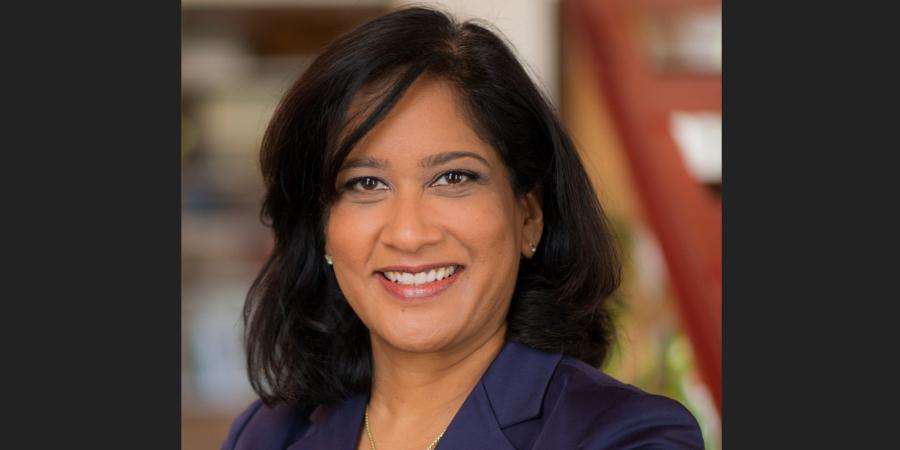
Naureen Hassan, Indian-origin veteran of the financial services industry. (Photo | Twitter/@NewYorkFed)
As the first vice president, Hassan will be the New York Fed’s second ranking officer as well as an alternate voting member of the Federal Open Market Committee.
New York :
An Indian-origin veteran of the financial services industry has been appointed as the first vice president and chief operating officer of the Federal Reserve Bank of New York.
Naureen Hassan has been appointed by the board of directors of the Federal Reserve Bank of New York as the first vice president and chief operating officer, effective from March 15.
The appointment was approved by the Board of Governors of the Federal Reserve System, the Federal Reserve Bank of New York said in a statement.
As the first vice president, Hassan will be the New York Fed’s second ranking officer as well as an alternate voting member of the Federal Open Market Committee.
Hassan, whose parents had immigrated from India, is a 25-year veteran of the financial services industry with expertise in strategy, digital transformation, cybersecurity and regulatory/risk management.
She was, most recently, the Chief Digital Officer for Morgan Stanley Wealth Management (MSWM).
President and Chief Executive Officer of the New York Fed John Williams said Hassan’s leadership background, deep commitment to fostering diverse teams, and extensive technology and financial experience will be critical to her role as a Bank leader.
Denise Scott, executive vice president of the Local Initiatives Support Corporation (LISC) and chair of the New York Fed’s board of directors, said Hassan’s leadership experience and operational expertise are “fully aligned” with what the search committee and he envisioned for this role.
Scott said Hassan will be taking on the role that is critical to advancing the Bank’s mission and strategic priorities.
The statement added that Hassan has served in various capacities in the financial services industry, focusing primarily on digital and business process transformation.
Prior to working at Morgan Stanley, she was at Charles Schwab Corporation beginning as a vice president of corporate strategy and ending her tenure as executive vice president of investor services, segments and platforms.
According to her profile provided by the Bank, Hassan was formerly a member of the Board of Directors at OneSpan, a USD 250MM revenue public security software and hardware firm, and Ascensus, the largest independent record keeping services provider, third-party administrator, and government savings facilitator in the United States.
Hassan also serves on the board of the California Academy of Sciences and the Cathedral School for Boys in San Francisco.
She was previously on the board of the Charles Schwab Bank and the Women’s Initiative for Self-Employment.
She holds a BA from Princeton University and a Masters of Business Administration from the Stanford University Graduate School of Business.
source: http://www.newindianexpress.com / The New Indian Express / Home> World / by PTI / March 06th, 2021
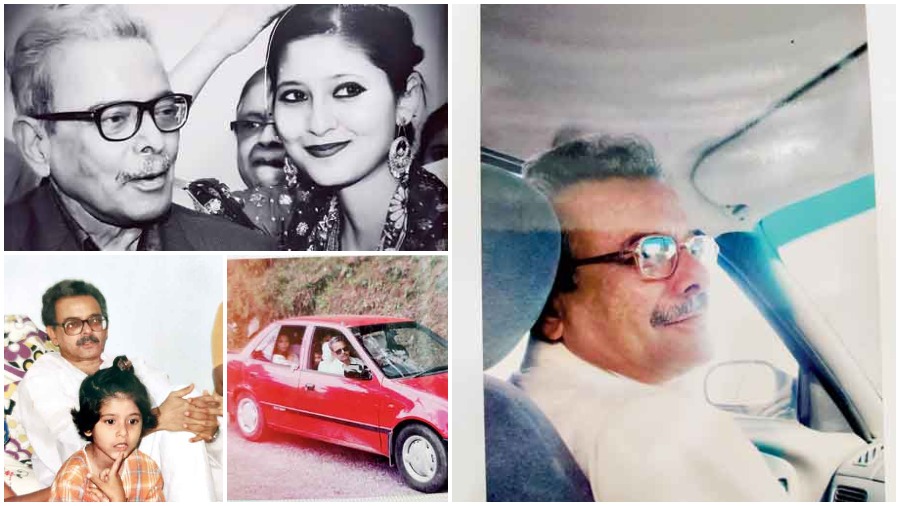
Granddaughter of India’s greatest Urdu poet pens a poignant tribute to her late grandfather
“And He was transfigured before them; and His face shone like the sun, and His garments became as white as light.”— Matthews 17:2-9
My family keeps trying to talk me into mourning the loss of my grandfather, who I lovingly call ‘Bhai’, as did everybody else who knew him. I can’t exactly put this into words and I can’t make people understand that mourning his death is an insult to the madness, the magic, the man, the movement, the miracle, the marvel, the Master. Why don’t you understand that this loss isn’t the kind for me to cry about? This is the kind of loss for me to die about.
When I was a kid, I used to love watching The Lion King. I like to believe that literature and media that you absorb during childhood, shapes your personality as an adult. I always made sure I skipped the scene of Mufasa’s death, with a bewildered and heart-broken Simba trying to wake his father up. It was because I always feared that this day would come, and I would see myself trying to awaken Bhai from eternal, unending sleep. And it did, it happened. And now I am here, and he is there — out there, up there. He is missing from me.
Are they still memories if they’re engraved in my heart, etched on my mind and tattooed on my skin? I like to believe they’re a part of me, my body, an extension to my entity, and as long as I shall live so shall they. So many people argue that he wasn’t my father. They’re right. Because to me, he is God. He is the giver, the provider, creator, the all-encompassing, the all-knowing, the omnipresent.
Provider, because he gave me everything I have and survive on, from my passion and love for animals to my affinity towards literature, music, art. We would stand inside his aviary, enough to accommodate two human beings, where he kept his birds. He would clean and wash their water bowls with his beautiful, wrinkly, holy hands and then he would pick up a bird in the palm of his hands — sometimes a cockatiel, sometimes a budgie, sometimes a quail — and show me, directing my gaze with his finger, the feather patterns, and beak shapes, explaining how a certain type of bird crushes the seed with which exact part of its beak. All-knowing, because he knew everything, quite literally. Anything and everything.
Driving home from a homeopathic clinic, we would have long conversations about The Battle of Karbala, and pretty much every historic event that ever occurred on the face of this planet. We talked about the possibilities of the existence of mermaids — how perhaps, in the course of evolution, a third of the primate population went towards the water and even into it, and developed webbed limbs and tails. We talked about the Fer-De-Lance, we sat and browsed through pictures of wildlife. We discussed dog breeds and how they evolved. He always told me (before the world went ‘vocal for local’) that nothing can beat the hounds of India — the Rajapalayam, The Chippiparai, The Rampur, and the Mudhol. He always had an eye out for the Saluki (a superior type of sighthound that originated in the Fertile Crescent), and would say to me, “Abey Saluki hai kya kahin pe? Saluki mile kahin toh batana, hum le lenge.”
On his birthday in 2019, I had gifted him a deep grey, white-speckled Cockatiel who he named Sooty. He stayed in Bhai’s room, and the two whistled to each other all day. Bhai would talk to him lovingly, and Sooty would chirp back in adoration. When Bhai got sick, Sooty mysteriously died. I had begun to believe that like Bhai’s previous dogs and other pets, Sooty too had died of loyalty in an attempt to take the impending death upon himself. Bhai always believed that wafadaar jaanwar aane wali museebat ko apne sar le lete hain. While it is unlike me — and everyone else in my family — to respond to the death of an animal, that too a beloved pet, with gladness and optimism, Sooty’s sudden passing had given us some hope. We were counting on life to make Bhai get better and to help us get through this untimely qayamat.
Grandfather — this word always gave me the same serotonin release you get from a warm blanket, a cup of hot chocolate, biting through the layers of a Ferrero Rocher, the morning of the day of Id, seeing my birthday cake for the first time.
And now it’s all gone, all taken away away from me. It is so ironic and at the same time baffling how our worst fears manifest right before our eyes. I didn’t allow myself to watch enough of The Lion King growing up because I was afraid if I looked at it then it would somehow happen. And now I see how everything unfolded just like it did in the movie. Covid attacked us like Uncle Scar. And while all of us got Covid, he somehow took it upon himself and while we lived, he left.
My animals in Delhi found me, picked me up, and saved my life, just like Timon and Pumba did with orphaned Simba in The Lion King. I think I have managed to figure out where this affinity comes from and why it has always been this way — the need to be around animals in order to survive. It was just another gift, another tool, another strength my Grandfather was equipping me with and conditioning me for, so that I may be able to carry on someday in his absence, and so that I have a purpose, a reason to live till the time he and I can finally reunite.
Only mourning him isn’t enough, isn’t fair, isn’t needed. His existence was a celebration of life, a creation of art, and his death was transfiguration. He didn’t just lay there still. He sublimated, became one with what he loved most, nature. He united with a power that was of the same immense magnitude that only he alone in this world was made of. If one should live, one should live like this. Not in the lap of luxury but in the embrace of nature. Not in bursts of passion, but in the steadiness of an unwavering purpose. Not for moments of moping, but for the unfazed ambition of the human spirit.
Lead my longing heart
To the high ground, to the clear view
And in awe I’ll be there
Beholding You…
source: http://www.telegraphindia.com / The Telegraph Online / Home> Culture / by Tazmeen Amna Siddiqui / March 04th, 2021
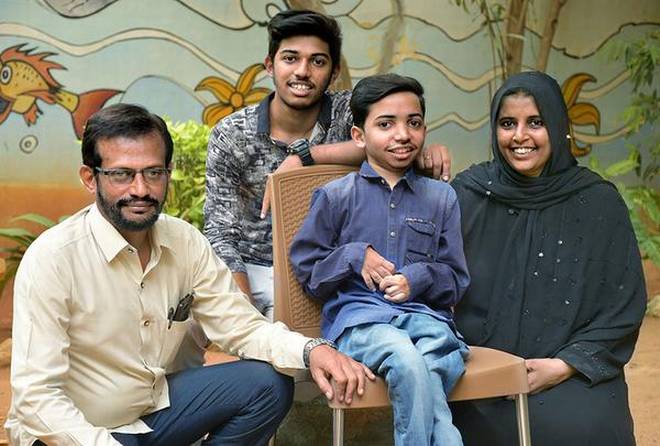
N. Mohammad Afzal with his parents and younger brother Faazil. | Photo Credit: M. Moorthy
N. Mohammad Afzal loves computers and cars, and thanks to his prodigious memory power, he is his family’s ready reckoner on anything from bank transactions to route maps.
“Even in our lowest moments, Afzal has had the most practical and sanguine attitude about his disability, and that has kept us motivated,” says his father Ahmed Nasir, a businessman based in the city.
Diagnosed with juvenile rheumatoid arthritis at the age of 7, Afzal slowly lost the use of his limbs, but remained active in academic pursuits. He passed his Secondary School Leaving Certificate (SSLC) Class 10 exams (written with the help of a scribe) with a total score of 419 in 2016 under the Samacheer Syllabus.
“I was unable to fulfil my dream of studying in NITT due to my personal circumstances, but my son is doing it,” says Mr. Nasir with pride. “While he has got admission to Civil Engineering in the first phase, we hope the authorities will consider him for Computer Science.”
Afzal also has his own YouTube channel, where he showcases his love for technology and gaming. He has taught himself to operate and assemble computer equipment, and prefers no special treatment when he is at home.
“We have adapted the design of our residence in Palpannai to allow him to move around in his wheelchair without assistance,” says his mother Shahida.
He is very excited to be part of a classroom after his many years of private study. And Afzal has just one response for those who may say hurtful things about him.
“I will simply ignore them,” he says with a smile.
source: http://www.thehindu.com / The Hindu / Home> Cities> Tiruchirapalli / by Nahla Nainar / Tiruchi – July 03rd, 2019