Category Archives: Amazing Feats

Indian community in Jeddah slaute patriotic valor of Army hero Brig. Usman

Bibipur (Azamgarh District) , UTTAR PRADESH / NEW DELHI / Jeddah, SAUDI ARABIA :
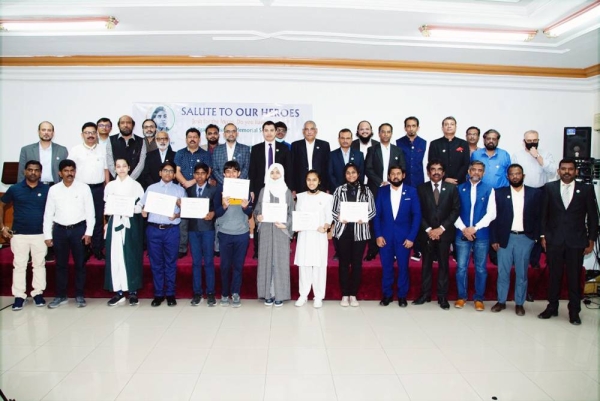
Acting Indian Consul General Y.Sabir poses for photos with winners of Brig. Usman Storytelling Contest and Organizers of the event at Indian Consulate in Jeddah

Jeddah :

Members of the Indian Community in Jeddah gave a big salute to the patriotic valor and great sacrifice of Brig. Mohammed Usman, who laid his life defending the honor of his great nation. Brig. Usman, who at a young age, declined the offer to assume the highest military rank of another country and instead preferred to defeat them in a crucial war by sacrificing his precious life on the war front and thus becoming the highest-ranking Indian Army officer to be martyred in the war.

This great Indian war hero, nicknamed as the “Lion of Nowshera,” was remembered recently during the community’s celebration of the Indian Army Day, which falls on Jan. 15, and that marked paying rich tribute to members of the Indian Armed Forces.

Acting Indian Consul General Y. Sabir was the chief guest of the event, titled “Salute to our heroes,” held in the presence of prominent community members at the conference hall of the Jeddah Consulate in which several highly decorated officers of the Indian Army joined virtually to speak about their experiences right from the field with great enthusiasm and passion.

The most distinguished among them was the keynote speaker Lt. Gen. Bhupinder Singh, former lieutenant governor of Andaman and Nicobar Islands. The younger generation of the community also were part of the celebration and posthumous honoring of the great Indian war hero with their participation in the “Brig. Usman Memorial Storytelling Contest.”

In his speech, Sabir shared with the audience how an Indian Army soldier goes through tough and arduous training that enables him to achieve all round personality development as a true role model of an Indian citizen.

“An Indian Army soldier is the epitome of courage and determination to his duty, and his role and responsibilities are not limited only to warfronts but rather cover much wider areas of serving the entire nation and people,” he said, while calling on the younger generation to come forward to take up a brilliant career in the Indian Armed Forces.

Sabir also lauded the efforts of Indian community for holding a unique event in honoring Brig. Usman, coinciding with the Army Day.

President of India Forum Mir Ferozuddin, who hails from the bloodline of Brig. Usman, spoke about the ‘josh’ of the soldiers that is more ferocious than the roar of a lion. “It is this josh that made the “Sher of Nowshera” reject the offer to become the Chief of Army of the neighboring country and continued to command his country’s army until he became a martyr on the soil of his own beloved country,” he said.

Ferozuddin invited Kargil war veteran Capt. Yashika Tyagi to join the session virtually to give a brief biography of Brig. Usman and insights into his heroic martyrdom.

She began her speech with the remarks of “Shera Shera Nowshera” feeling of pride of belonging to the banner of the great Brigadier. Tyagi described the courage and determination of Brig. Usman in recapturing Jhangar village in Kashmir. “In all senses of the word, Brig. Usman was a great warrior, who faced each set back in his life head-long and defeated each setback with the strength of his character.”

Capt. Tyagi, the first lady officer to be posted in extreme cold weather, also spoke eloquently about how a woman, a mother of a toddler and four-month pregnant, fought bravely to safeguard India’s borders. She motivated Indian girls and boys to join the Indian Armed Forces, with a promise to train them personally.

In his keynote address, Lt. Gen. Bhupinder Singh recalled: “Brig. Usman continued to remain an inspiring war hero all throughout my military and civil life ever since my joining of the Indian Army at the age of 19. Brig. Usman was among my heroes about whom I have been mentioning in all my writings,” he observed and lauded the family of Mir Ferozuddin as a fine example of true patriots.”

The event also saw a virtual CatFit deliberations to mark the Army Day. CatFit, a pioneer of M.A.S.T.S (Military Application and Special Forces Tactics for Students), covers all domains of psychological, mental, physical and emotional development and thereby ensuring that students achieve their optimum potential. Global Head of CatFit Arpan Dixit introduced the speakers.

Maj. D.P. Singh, a distinguished military officer who fought in the Kargil war and sustained serious injuries, spoke about the sheer determination of a soldier. Singh talked about the kind of soldiers the Indian Armed Forces develop with tough trainings. He showed his journey from 1999 when he got injured by a mortar bomb in Kargil to being the first blade runner of India.

Defense expert Brig. Anjum Shahab, who has over three decades of services in Indian Army, addressed the young generation and motivated them to join the Armed Forces and showed direction on how they can join. On his part, Maj. Mohammed Ali Shah drew attention to various TED (Technology, Entertainment and Design) Talks, giving full of inspiration and well connected with the young generation. Shah started off as an actor and then joined the Indian Armed Forces where he served for five years.

The Squadron Leader Meena Arora narrated her stories from the war field. She mentioned the use of technology in the Air Force and how it is influenced in winning a war. Arora talked about the strength of the Indian Air Force and mentioned the fight of Wing Commander Abhinandan Vardhaman, who landed in the enemy area but showed bravery in the face of death.

Zakaria Biladi, a prominent Indian community leader, was mainly behind organizing this unique event with the core objective of creating awareness among the younger generation about picking their brilliant career path in the Indian Defense Forces. In his speech Biladi said: “There is a dire need to ignite the passion for such services in the Indian youth living in Saudi Arabia particularly because they are not exposed to seeing the activities of Indian Army as much as the youth living in India are.”

Earlier, the event began with a welcome speech by Asim Zeeshan, the master of ceremonies, while Mohammed Hyder proposed the vote of thanks. The organizers of the event also included M. Siraj, Mohsin Sharif, KTA Muneer, and Imran Kausar.

Acting Consul General Y. Sabir gave away prizes to winners of the Brig. Usman Memorial Story telling contest. The winners are the following: Junior Category (7-9 classes) — Kavin Adhitiya & Ms. Danhushri Subramanyan (first); Syeda Umamah Qadri (second); and Ashwin Karuppasamy & Ms. Aishwarya Jayasankar (third). Senior Category (10-12 classes): Rimy Tomy (first); Marial Aranha (second) and Sana Ferozuddin (third).

Speaking to Saudi Gazette, Biladi said that the competition has been instrumental in inculcating a huge amount of patriotism and passion among the Indian students as well as to instill in them high esteem to the great sacrifices of Brig. Usman in defending the homeland.

Brig. Usman was the highest ranking officer of the Indian Army killed in action during the Indo-Pakistan War, immediately after the partition of the subcontinent in 1947. At the time of the partition, he, along with many other Muslim officers, declined to move to the Pakistan Army and even turned down the offer to become the first Chief of Army of the new state of Pakistan, and thus becoming a great symbol of India’s inclusive secularism.

It was during the defense of Jhangar in Jammu and Kashmir Usman was killed on July 3, 1948, by an enemy 25-pounder shell. He was then 12 days short of his 36th birthday. His last words were “I am dying but let not the territory we were fighting for fall for the enemy.”

For his inspiring leadership and great courage, he was awarded posthumously with the second highest military decoration for gallantry in the face of enemy, the Maha Vir Chakra. India’s first Prime Minister Jawaharlal Nehru and his Cabinet colleagues attended the funeral of Brig. Usman, who was buried in a grave in the Butla House near the Jamia Millia Islamia campus in New Delhi.

source: http://www.saudigazette.com.sa / Saudi Gazette / Home> Saudi Arabia / by Hassan Cheruppa, Saudi Gazette / January 25th, 2021

Joe Biden nominates Indian-American Uzra Zeya to key State Department position

BIHAR / Chapel Hill (North Carolina), U.S.A :

Joe Biden nominates Indian-American Uzra Zeya to key State Department  position
  • According to key nominations for the Department of State announced by Biden, Uzra Zeya has been nominated to be Under Secretary for Civilian Security, Democracy, and Human Rights

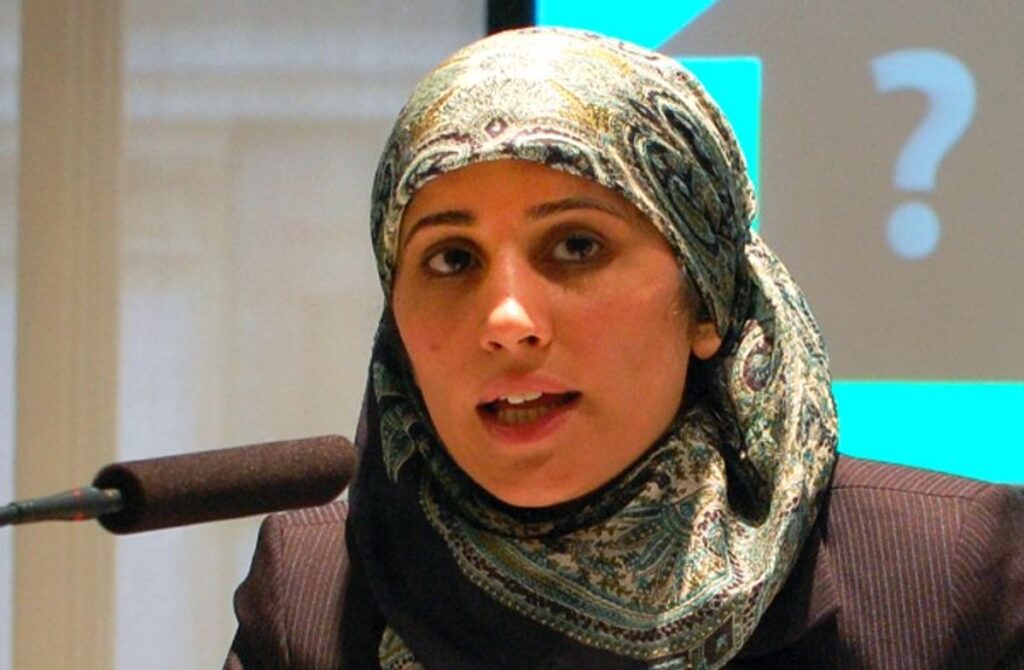
An Indian-American diplomat Uzra Zeya, who had quit the foreign service in 2018 in protest against the policies of US President Donald Trump was nominated on Saturday to a key State Department position by President-elect Joe Biden.

According to key nominations for the Department of State announced by Biden, Uzra Zeya has been nominated to be Under Secretary for Civilian Security, Democracy, and Human Rights.

Sharing the news on Twitter, Uzra Zeya wrote, “In my 25+years as a diplomat, I learned that America’s greatest strength is the power of our example, diversity & democratic ideals. I will uphold & defend these values, if confirmed, as Under Secretary for Civilian Security, Democracy, and Human Rights.”

_________________

Uzra Zeya @UzraZeya

In my 25+years as a diplomat, I learned that America’s greatest strength is the power of our example, diversity & democratic ideals. I will uphold & defend these values, if confirmed, as Under Secretary for Civilian Security, Democracy, and Human Rights.

President-elect Biden Announces Key Nominations for the Department of State / President-Elect Joe….
www.buildbackbetter.gov

Twitter

___________________

Wendy R. Sherman has been nominated to be Deputy Secretary of State, Brian McKeon as Deputy Secretary for Management and Resources, Bonnie Jenkins to be Under Secretary for Arms Control and International Security Affairs and Victoria Nuland to be Under Secretary for Political Affairs.

“This diverse and accomplished team, led by Secretary of State-designate Tony Blinken, embodies my core belief that America is strongest when it works with our allies,” Biden said.

“Collectively, they have secured some of the most defining national security and diplomatic achievements in recent memory — and I am confident that they will use their diplomatic experience and skill to restore America’s global and moral leadership. America is back,” he said.

Uzra Zeya served most recently as CEO and President of the Alliance for Peacebuilding, where she drew on over two decades of diplomatic experience in Near East, South Asian, European, human rights, and multilateral affairs.

As Chargé d’Affaires and Deputy Chief of Mission at the U.S. Embassy in Paris from 2014 to 2017, she oversaw the day-to-day operations of the Embassy, six constituent posts, and 50 offices and agencies engaged in U.S. government work. She quit against Trump’s policies in September 2018.

“Up to now, Foggy Bottom’s upper echelons are looking whiter, more male and less like America,” Zeya wrote in Politico in September 2018 alleging that the State Department under the Trump Administration was facing racial and gender bias.

“In my own case, I hit the buzz saw that Team Trump wielded against career professionals after leading the US Embassy in Paris through three major terrorist attacks over three years and after planning President Trump’s Bastille Day visit,” she wrote.

She said that upon returning to Washington, she was blocked from a series of senior-level jobs with no explanation. “In two separate incidents, however, colleagues told me that a senior State official opposed candidates for leadership positions — myself and an African-American female officer — on the basis that we would not pass the ‘Breitbart test’,” she wrote in Politico.

From 2012 to 2014, Zeya served as Acting Assistant Secretary and Principal Deputy Assistant Secretary in the Bureau of Democracy, Human Rights, and Labour.

She joined the Foreign Service in 1990, serving in New Delhi, Muscat, Damascus, Cairo, and Kingston. From 2011 to 2012, she was Chief of Staff to the Deputy Secretary of State and helped shape the U.S. response to the Arab Spring and worked to deepen U.S. engagement with emerging powers.

Zeya has also served as Deputy Executive Secretary to the Secretary of State, Director of the Executive Secretariat Staff, and as UN General Assembly Coordinator.

She is a recipient of the Légion d’honneur, France’s highest civilian honour, a Presidential Rank Award, and 15 Superior Honour and Senior Performance Awards.

She is a graduate of the Georgetown University School of Foreign Service.

On the key State Department nominations announced by Biden, Vice President-elect Kamala Harris said, “This remarkable team of distinguished diplomats and seasoned leaders reflects the very best of our nation”.

Secretary of State-designate Tony Blinken said, “To meet this moment, we need a Department of State that looks like America, led by diverse women and men who will be unafraid to challenge the status quo.

“That is this team. America at its best still has a greater capacity than any other country on earth to mobilize others to meet the challenges of our time. These passionate, energetic, deeply experienced nominees will help keep our people and our country safe, secure, and prosperous”.

With agency inputs

source: http://www.livemint.com / Mint / Home> News> India / by Staff Writer / January 17th, 2021

Dr. Maryam Afifa Ansari to become the youngest neurosurgeon from Muslim community

Malegaon (Mumbai), MAHARASHTRA / Hyderabad, TELANGANA :

New Delhi: 

Dr. Maryam Afifa Ansari, who has secured admission for a postgraduate course in neurosurgery at Osmania Medical College, Hyderabad, is set to become the youngest neurosurgeon from India’s Muslim community following completion of her degree in three years.

She had gotten 137th rank in the All India NEET SS exams held in 2020.

Interestingly, Ms. Ansari, who has left many amazed with continuous successes, has been educated in Urdu medium schools till 10th class.

She studied till seventh class in the Tahzeen High School in Malegaon, Maharashtra. Then, she moved to Hyderabad and took admission to Princess Durrushawar Girls High School. She was a topper in her school in the 10th class examination and also a gold medalist.

After completing intermediate from MS Junior College, Hyderabad with the top rank, Afifa managed to take admission in MBBS at Osmania Medical College free of cost.

She received five gold medals during her MBBS course. After completing her course in 2017, she succeeded to get admission for a masters course in general surgery in the same college for free.

In 2019, she completed a postgraduate degree, MRCS, from Royal College of Surgeon, England.

In 2020, she did the Diplomate of National Board course. This is a special postgraduate degree awarded to the Specialist Doctors in India. After scoring high in the 2020 NEET SS exams, she was granted free admission in MCH at the Osmania Medical College.

Speaking to Muslim Mirror, she said ” my success is a gift from Allah and a responsibility’ .

She would try to serve the community through her profession, she added.

‘Don’t give up, never let anyone say you can’t do it… Prove them wrong, by achieving it, she said in her message to Muslim girls.

Ms. Ansari’s continuous hard work has helped her cross every hurdle on the path of success. She is an inspiration for the young generation in India.

source: http://www.muslimmirror.com / Muslim Mirror / Home> Featured / by Muslim Mirror Special Correspondent / January 11th, 2021

Ahmedabad: Auto driver’s daughter in Top 25

Ahmedabad, GUJARAT :

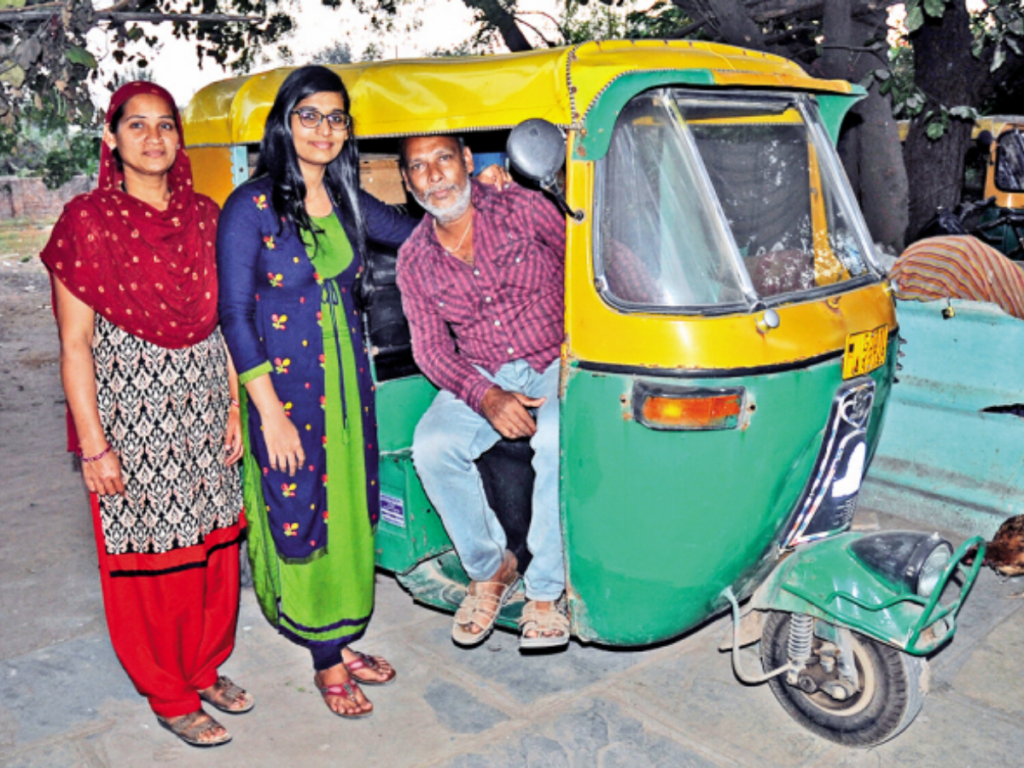
Muskan Sheikh (centre) with her family. Her father in the auto

Ahmedabad :

Muskaan Sheikh is all smiles as she made it to the Top 25 in the country who cleared the Company Secretaries (CS) Foundation Programme Examination held in December.

While her All India Ranking (AIR) is 24, she ranked fifth in Ahmedabad Chapter with 77.50%. The results were declared on Monday.

A student of SLU College where she is pursuing her second year in BCom studies, Muskaan says she has leaped closer to pursuing her dreams of joining a large corporate and helping her family come out of their financial troubles.

Her father is a rickshaw driver whose work has been affected, like many others, in the Covid-19 induced lockdown.

She lives in an one-room house in Behrampura in Satya Jivan Leprosy Colony, a special housing colony built for people suffering from leprosy. Her father’s yearly income is less than 1 lakh.

Sheikh’s grandparents, who passed away some time ago, were victims of the deadly disease.

source: http://www.timesofindia.indiatimes.com / The Times of India / Home> City News> Ahmedabad News / TNN / January 19th, 2021

Building a future from rubble: Jharkhand IAS officer transforms abandoned govt buildings into libraries

Jamtara , JHARKHAND :

These libraries are then handed over to local villagers for day-to-day management by forming a committee.

The renovated buildings – libraries — are provided a general set of books, chairs, tables and other amenities through crowd-funding and under the Corporate Social Responsibility funds.

Jharkhand : 

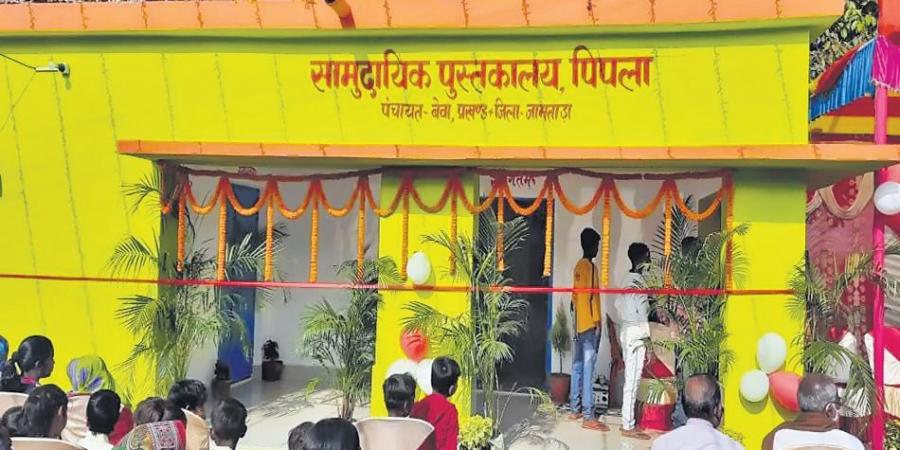
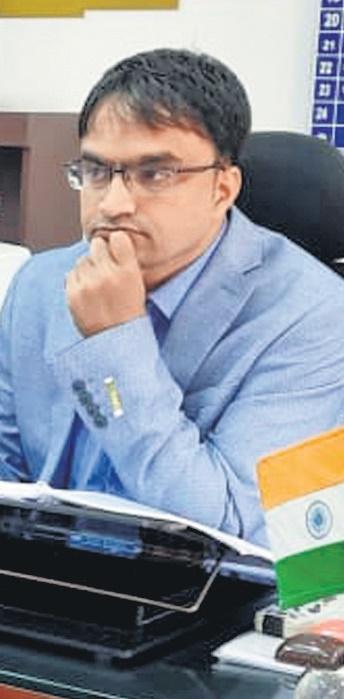
IAS officer Faiz Aq Ahmed Mumtaz has a unique task at hand — that of setting up rural libraries in remote villages of Jamtara so that the poor are motivated to read and write. For that he has made use of abandoned government buildings which have been transformed into 30 libraries under different panchayats of the district. Ahmed says the idea is to provide a better environment to develop reading habits and space at the doorstep of rural youths so that they can clear competitive exams without moving out to cities and towns.

The renovated buildings – libraries — are provided a general set of books, chairs, tables and other amenities through crowd-funding and under the Corporate Social Responsibility funds. These libraries are then handed over to local villagers for day-to-day management by forming a committee. Ahmed says his initiative serves two purposes: the dilapidated buildings are put to use after renovation and, secondly, it develops a community feeling among the villagers.

It has especially benefited girls whose parents are reluctant to send them to a city for education. The deputy commissioner hit upon the idea while holding a ‘janta darbar’ in Chengadih panchayat. A villager while pointing at the lack of education facilities said a library could be a great help for youths who have no means to travel to nearby towns for preparing competitive exams. “I thought in every gram panchayat, there is at least one government building which remains unused. I started renovating these buildings into community libraries.

A first such library was set up at Chengaidih panchayat on November 13 last year,” said Ahmed. The availability of books in these libraries is being ensured under public participation which requires only a modest expenditure, he said. Ahmed said resources are being mobilised with the help of different departments in terms of providing water and electricity to these libraries for which the committee, formed for the purpose, pays. Resources like tables and cupboards are being raised from CSR funds and books are being collected through donations and crowdfunding, he said.

“One bank account has been opened for each library which will help the local committee to raise funds through donations and other means,” said the Deputy Commissioner. The enthusiasm of local villagers has prompted him to expand the initiative to all 118 panchayat in Jamtara. “Reading and education should be given more importance and a library culture should be developed and promoted with community participation. Once this model is successful and a culture of reading develops among rural youths, inter-library competitions could be organized in order to provide a better learning environment to the people, he said. Ahmed believes that libraries can play an important role in the development of any community. “Jamtara is notorious for cyber crimes.

My initiative can help in removing the tag of ‘hub of cyber-crimes’ for Jamtara. Cyber-crimes possibly spread due to the lack of education in the region,” said the Deputy Commissioner. Jharkhand Assembly Speaker Rabindra Nath Mahto, who has inaugurated several such libraries in his Assembly constituency Nala, appreciates Ahmed’s initiative. “Libraries are the temple of knowledge. They ignite our thirst for knowledge and raise one’s mental level,” said the Speaker.

“This is a commendable step taken by the Deputy Commissioner”, he said. Youths are excited about such libraries. “We must thank the deputy commissioner for the precious gift to Chengadih panchayat. We had to travel long distances to get a book,” said Nasiruddin Ansari, a student. “The library is helping us a lot for preparing for various competitive exams”, he said. Ashraf Ali, another student, said the library has given a new hope to the youths in his village. “The library in Chengadih has brought about a positive change among the youths; they are now more serious about books and their studies,” Ali said. Dipankar Mondal, a student, said many youths like him will make him proud one day.

source: http://www.newindianexpress.com / The New Indian Express / Home> Good News / by Express News Service / January 24th, 2021

Joe Biden names Indian-American Sameera Fazili as Deputy Director of National Economic Council

Srinagar, JAMMU & KASHMIR / Atlanta, Georgia ,U.S.A. :

File image of Sameera Fazili, Deputy Director, National Economic Council at the White House| Twitter/ Sameera Fazili

‘Sameera Fazili has been named as Deputy Director, National Economic Council at the White House, the Biden-Harris Transition announced on Friday.

US President-elect Joe Biden has appointed Indian-American Sameera Fazili to a key White House position related to economy.

Sameera Fazili has been named as Deputy Director, National Economic Council at the White House, the Biden-Harris Transition announced on Friday.

The National Economic Council coordinates the economic policy making process and provide economic policy advice to the US president.

Fazili is currently the Economic Agency lead on the Biden-Harris Transition. She was earlier posted at the Federal Reserve Bank of Atlanta where she served as the Director of Engagement for Community and Economic Development.

Fazili is the second Kashmiri-origin Indian-American appointed to a key position in the incoming Biden administration.

In December, Aisha Shah was named as Partnerships Manager at the White House Office of Digital Strategy.

In the Obama-Biden administration, Fazili served as a senior policy advisor on the White House’s National Economic Council and as a senior advisor at the US Treasury Department in both Domestic Finance and International Affairs.

Prior to that she was a clinical lecturer of law at Yale Law School. Originally from Buffalo, she now lives in Georgia with her husband and three children. Fazili is a graduate of Yale Law School and Harvard College.

Before her time in government, Fazili was a clinical lecturer at Yale Law School’s community and economic development clinic, where she helped start a CDFI bank and a local anti-foreclosure initiative, and expanded the clinic’s work to international microfinance.

She also worked at ShoreBank, the nation’s first CDFI (community development financial institution) bank. Her work in finance has spanned consumer, housing, small business and microfinance.

She received her law degree from Yale Law School and her bachelor of arts in social studies from Harvard College.

source: http://www.indianexpress.com / The Indian Express / Home> World / by PTI / Washington – January 16th, 2021

Mangaluru: Syed Mohammed Adnan bags gold medal, top ranks in MBBS

Mangaluru, KARNATAKA :

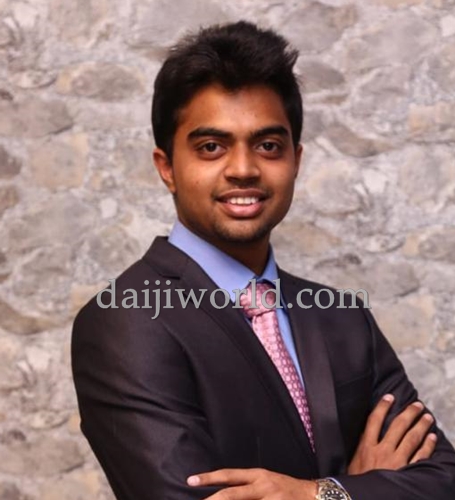
A future surgeon in the making, Syed Mohammed Adnan has done the city proud by bagging an array of gold medals and ranks in MBBS from Rajiv Gandhi University of Health Sciences.

In the recently announced results, Adnan secured the first rank in physiology, third rank in pediatrics, sixth rank in ophthalmology, and ninth rank in forensic medicine, totally four ranks in MBBS.

A former student of Expert College, Mangaluru, Adnan is the son of Dr Syed Ashraf and Nazma Tabassum Ashraf, and grandson of Syed Abubaker and the late M Azeezuddin.

pix: daijiworld.com

A brilliant, hard-working student, Adnan’s dedicated all his time and energy to following a strict study schedule while pursuing his goals.

He bagged free admission to Al-Ameen Medical College, Vijayapura along with winning a scholarship from Karnataka government for four years.

For his accomplishments, Adnan will be felicitated with a gold medal by his college on the day of convocation on February 7.

Asked about his plans for the future, the young doctor said that he wants to become a surgeon and help the underprivileged and economically weaker sections of society who do not have the means to access healthcare.

Here’s wishing Adnan all the best in his endeavours!

source: http://www.daijiworld.com / DaijiWorld / Home> Top Stories / by Daijiworld Media Network – Mangaluru / January 17th, 2021

Ustad Ghulam Mustafa Khan (1931-2020): Open to all music forms, teacher to the greats

Badaun, UTTAR PRADESH / Mumbai, MAHARASHTRA :

He was awarded the Padma Shri in 1991, Sangeet Natak Akademi Award in 2003, Padma Bhushan in 2006 and Padma Vibhushan in 2018.

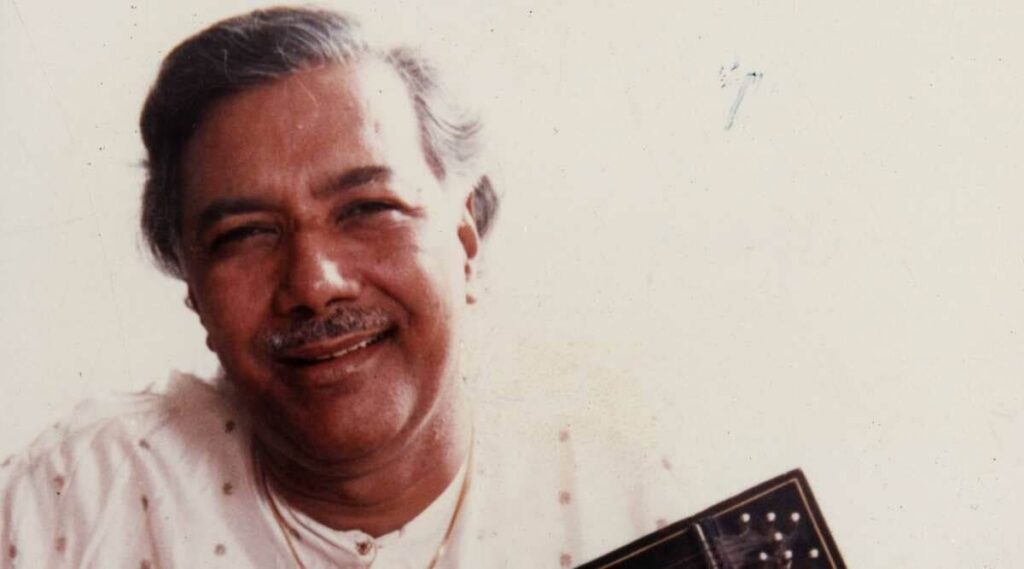
Ustad Ghulam Mustafa Khan

In Umrao Jaan (1980), filmmaker Muzaffar Ali’s seminal film, a five-minute melody manages to put life’s ebb and flow in perspective. The raagmala Pratham dhar dhyaan dinesh illustrates the induction of the protagonist, Ameeran, into classical music and dance and showcases her metamorphosis into Lucknow’s fanciful courtesan, Umrao Jaan.

Composer Khayyam’s composition is ambitious and arduous—based on seven ragas each of which defines time, mood and colour of varied moments in life. To sing this, Ali chose Ut Ghulam Mustafa Khan—the Hindustani classical giant whose deep and dazzling voice was representative of not just an iconic lineage but also a rigorous riyaaz and years spent teaching some of the greatest musicians of our time.

Opening with an alaap that chimes with the word Allah, the melody merges into Brahma, giving a glimpse into the Awadh of the 19th century, when the syncretic fusion of cultures in music was a norm. But a more remembered piece is perhaps Jhoola kinne daala re amaraiyan in raag Desh, the story of a bedecked swing on which two lovers sway together.

Ut Ghulam Mustafa, one of the finest Hindustani classical vocalists and torchbearer of the Rampur Sahaswan gharana, died at his home in Mumbai on Sunday. He was 89.

Expressing his condolences, PM Narendra Modi tweeted, “The passing away of Ustad Ghulam Mustafa Khan Sahab leaves our cultural world poorer. He was a doyen of music, a stalwart of creativity whose works endeared him to people across generations. I have fond memories of interacting with him. Condolences…”

President Ram Nath Kovind tweeted, “…In his passing, music world has lost not only a doyen but also a mentor for young generation…”.

Ut Ghulam Mustafa was born and raised in Badaun, Uttar Pradesh. His mother was the daughter of the legendary vocalist Ut Inayat Hussain Khan, the court musician in Nawab Wajid Ali Khan’s court. He learned from his father Warish Hussain Khan, followed by tutelage under other family members, including Ut Fida Hussain Khan, court singer of Baroda’s royal durbar and then his cousin, Ut Nissar Hussain Khan.

His first performance was at a Janmashtami concert at the age of eight, where he was hailed as a child prodigy. What was also interesting about Ut Ghulam Mustafa was his openness to all forms of music, a rarity in classical maestros of his time. So when most classical singers were banishing Hindi film music, he found it easier to adapt.

According to Pune-based dhrupad maestro Uday Bhawalkar, Ut Ghulam Mustafa changed the colour and tone of how music in Rampur Sahaswan gharana sounded. “Someone like the great Ut Nissar Hussain had an aggression in the tone. Ut Ghulam Mustafa toned it down and made it softer,” says Bhawalkar.

The musician also sang in Mrinal Sen’s Bhuvan Shome (1969), and Badnam Basti (1969) among others. Another significant performance was a part of Coke Studio @MTV where composer and Ut Ghulam Mustafa’s student AR Rahman presented his guru on stage. The musician sang a composition in raag Yaman alongside guitars and drums.

Ut Ghulam Mustafa, till he died, remained an eminent guru to many leading musicians including Asha Bhosle, Manna Dey, Ut Rashid Khan (also his nephew), Waheeda Rehman, Geeta Dutt, Hariharan, Sonu Nigam, Alisha Chinoy and Shilpa Rao.

He was awarded the Padma Shri in 1991, Sangeet Natak Akademi Award in 2003, Padma Bhushan in 2006 and Padma Vibhushan in 2018.

Once at a concert in Mumbai, Ut Ghulam Mustafa sang a thumri in Pilu, and got Ut Bade Ghulam Ali Khan on his feet. “Iitne dooble patle ho, kahan se gaate ho?” asked the musician. Ut Ghulam Mustafa Khan’s music, his bracing voice, its irrepressible vigour, probably came from his strict training. But also, from the joy he got from the seven notes that represented life for him.

source: http://www.indianexpress.com / The Indian Express / Home> Lifestyle> Art and Culture / by Suanshu Khurana, New Delhi / January 18th, 2021

‘Azim Premji: The Man Beyond the Billions’ review: The making of an entrepreneur and a philanthropist

Bengaluru, KARNATAKA / Mumbai, MAHARASHTRA :

How Azim Premji expanded his business from vegetable oils to info-tech and put his money where his heart is

The story of a person can be inspiring. The authors have chosen their subject well, for, everyone knows of Azim Premji, but few truly know what makes the man.

A book about such a person, if well-written, may possibly inspire the reader into action. In this case, soon after you read the book, it’s difficult not to look up the Azim Premji Foundation website, to see if it had any volunteering opportunities, even if you have done nothing like it before!

In chronicling any life, it is easy to get mired down with mind-numbing detail that comes your way if you are sifting through 50-odd years’ worth of the protagonist’s hits and misses. The authors have done well to stick to the most interesting parts of Premji’s life. Two things stand out across events and across time: his integrity and a penchant for frugality.

Zest for austerity

His insistence on paying for personal calls made on his office phone is legendary. His friends know of his love for cars but also about his unwillingness to spend fanciful amounts on one.

He once wanted to buy a Fiat that was registered in Wipro’s name. He got the finance department involved in the discussion as he wanted to play by the rules and pay for the purchase. But with depreciation, the car’s value was zero to the company. The transaction did not go through.

At one point, his friends were agog with excitement at his purchase of a Mercedes, but it was… hold your breath… a second-hand one!

At another time, when his team was preparing to welcome clients on a visit to headquarters, and took Premji over the arrangements that included meals from a five-star hotel, he quipped, “If our cafeteria is good enough for our employees, it should be good enough for clients too!”

It’s probably the same zest for austerity that had him pleased while on a U.S. visit, when two of his senior-most executives bought lunch for the three of them at a Burger King outlet for less than $7.50! And, this was a man who didn’t bat an eyelid when an employee of the vegetable oils business lost ₹25 lakh in a year in a trading position.

A long journey

The book chronicles the journey of Wipro from the time the Premjis put down roots in Mumbai. It throws light on the man’s spirit of entrepreneurship, as the company cautiously experimented with opportunities — expanding from vegetable oils to engineering products, computer hardware, tech services and consumer care and lighting. It also does not shy away from some of Wipro’s missteps such as the investment in financial services, a business which withered away despite the group’s entry into the space after much thought and preparation.

His management style

While doing justice to the man’s talent for perseverance, the authors have touched upon his management style that many say cramped some CEOs under his chairmanship. His taking over as CEO in 2005 after the abrupt exit of Vivek Paul, said to have been primed for the post, or his decision to have a joint CEO structure soon after, at a time when competitors were blazing ahead, had raised eyebrows in the world of IT services at the time.

The reader may get the sense that the authors occasionally sound deferential when talking about the man or his family. But, it’s difficult not to be overawed by someone who has never sold a single share in his company but who chose to give away $21 billion worth of wealth to his foundation, leaving his two sons with shares valued at about ₹65 crore. How can one give away so much wealth and still, on the morning the news about the latest transfer to the foundation breaks, irritably ask an employee — who speaks of congratulatory messages overwhelming social media — “What’s all the fuss about?” ?

This book is a must-read for anyone who can read English.

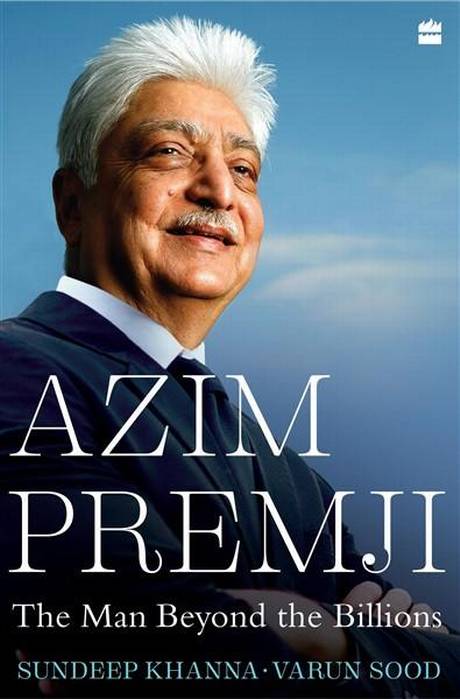
Azim Premji: The Man Beyond the Billions; Sundeep Khanna, Varun Sood, HarperCollins, ₹699.

bharatkumar.k@thehindu.co.in

source: http://www.thehindu.com / The Hindu / Home> Books> Reviews> Profile / by K Bharat Kumar / January 16th, 2021

The learned emperor: ‘Baburnama’

INDIA :

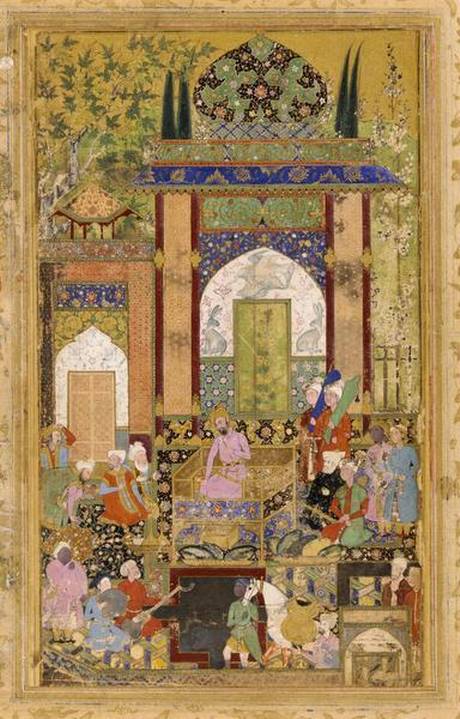
Resplendent: ‘Babur receives a courtier’ (1589) by Farrukh Baig.   | Photo Credit: Wiki Commons

Babur was a sensitive memoirist with the rare ability to distance himself from his writing

Babur’s memoir did not have a name but is referred to as Baburnama or Tuzuk-e-Baburi. It is the first autobiography from the subcontinent and one of the first in the world. Babur came from two different cultures, of which one was literate and aspired to high culture. This was his father’s ancestral family, which was Timurid. His mother came from the nomadic Mongols, who weren’t literate. Babur describes his maternal uncles in his memoir.

The Timurids had a tradition of poetry, hawking, music, and, of course, war. Babur was from a family of minor nobles who had inherited the governorship of Ferghana. His autobiography begins with a description of the geography and tells us that his father, Umar Shaikh Mirza, died in an accident when he was 39 and Babur 12. The young Babur struggled to hold on to his inheritance, losing several battles, including one in Ferghana, which he had to give up to the victor.

Babur describes these decades of his life in an unemotional and direct way: he hardly valorises his own achievements. Like the great Caesar, whose books on his wars in Gaul and against Pompey may as well have been written by a non-partisan observer, Babur has the ability to distance himself from his life.

Keen naturalist

Babur’s life turns when he is found to be the only living heir to the throne of Kabul. He takes it and turns his eyes to India. For 20 years, he campaigns against India, being held back at the borders each time.

Then, as we know, he defeated the Lodi dynasty (introducing firearms to the subcontinent for the first time) and captured north India in 1526 after a decisive battle at Panipat. Babur died four years later, spending much of this time travelling across India and writing his memoir in the afternoons.

These paragraphs show how much of a keen naturalist he was. “The elephant, which the Hindustanis call hathi, is one of the wild animals peculiar to Hindustan. It inhabits the western borders of the Kalpi country… the elephant is an immense animal and very sagacious. If people speak to it, it understands. If they command anything from it, it does it. Its value is according to its size — the larger it is, the higher the price. On some islands an elephant is rumoured to be as tall as 20 or 30 feet, but here it is not more than 10 feet. It eats and drinks entirely with its trunk. If it loses the trunk, it cannot live. It has two great teeth (tusks) in its upper jaw, one on each side of the trunk. By setting these against trees and walls, it is able to bring them down; with these it fights and does whatever hard tasks fall to it. These teeth are called ivory and are highly valued by Hindustanis.’

‘Like a goat, the elephant has no skin hair. It is relied on to accompany every troop of their armies. It crosses rivers with great ease, carrying a mass of baggage, and three or four can drag without trouble a special piece of artillery that takes four or five hundred men to haul. But its stomach is large. One elephant eats as much as a dozen camels.

Elegant and clean

Babur’s book was not freely available till a British amateur linguist named Annette Susannah Beveridge translated it. She taught herself the particular version of Turkish that Babur wrote in (later Mughals wrote in Farsi) and published it in four volumes from 1912 to 1922.

At the time of the first British census a century and a quarter ago, India was 4% literate. Most Indians even today don’t have four generations of literacy: in fact, the proportion of those of us who can claim to have had great-grandparents who could write is tiny. Babur came from a tradition that already had centuries of literacy.

His is elegant and clean writing of the sort that one would expect from a very literate and sensitive person. Babur’s daughter, Gulbadan Begum, sister of Humayun and aunt of Akbar, also wrote a lovely memoir in which she describes her father’s attention to detail which he passed on to his family.

These two works, along with Jahangir’s autobiography, are some of the best material available on the Mughals. It’s a shame that these books are not taught in India’s schools today.

Aakar Patel is a columnist and translator of Urdu and Gujarati non-fiction works.

source: http://www.thehindu.com / The Hindu / Home> Books – Leather Bound / by Aakar Patel / January 16th, 2020