Category Archives: Amazing Feats

The rise of Miss Khan

Kolkata, WEST BENGAL / London, UNITED KINGDOM :

From the desk of Sunday magazine to a celebrated chef now on Netflix’s Chef’s Table, Asma Khan’s story is one of strength, confidence and ambition
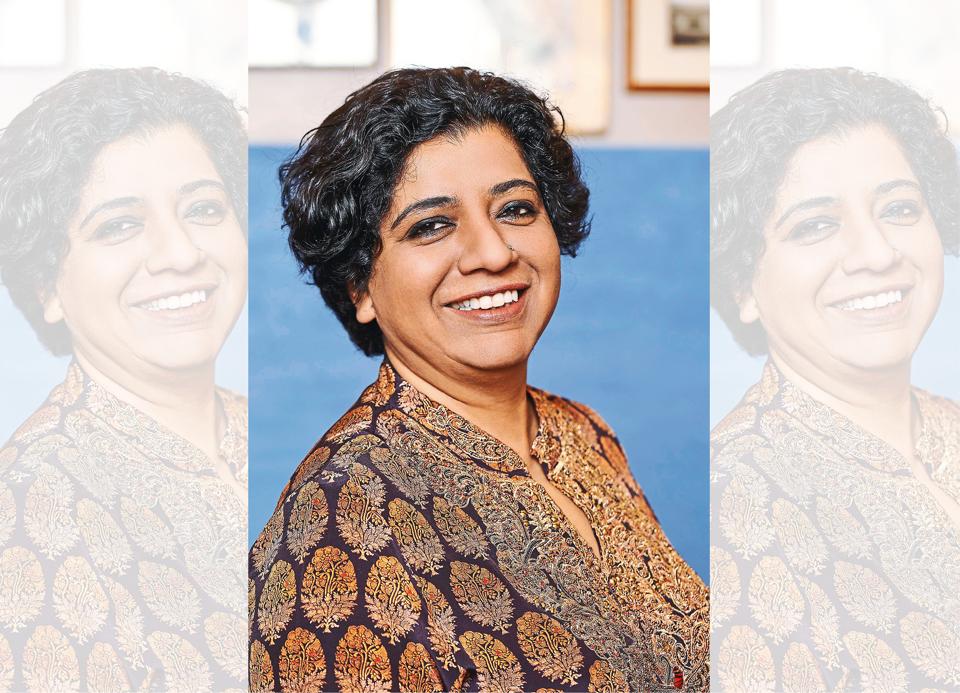
The first British chef to make it to Chef’s Table, Asma Khan is also opening all-women kitchens in conflict zones in Syria(Ming Tang-Evans)

It is a funny feeling when a colleague from decades ago becomes a success in a totally different field. And it feels even stranger when you find yourself writing a profile of somebody you once knew as a sub-editor.

In 1990, when I edited Sunday magazine, a young girl came to see me to ask if she could try her hand at journalism. She worked at Lintas, the ad agency, she said, and wanted to do something different but not entirely unrelated.

I hired her on the spot and all of us in the office thought she was very bright and articulate. Then, a few months later, she announced that she was getting married, resigned from her position and went off to live in Cambridge with her new husband.

And that, I thought, was the last I would hear of Asma Khan.

Wrong, very wrong.

A few years ago, she sent me an email. She was now a chef in London, she wrote. Not only did she organise private dinners at home but she was also running a pop-up in a pub in Soho. Why didn’t I drop in and try her food?

I had to search my memory to remember Asma (time to be candid!) and when I asked old colleagues from the Sunday days, they said that they found it hard to believe that she was now a chef.

Then, in 2015, my friend Fay Maschler, London’s most influential critic, wrote about Asma’s pop-up. It was an unqualified rave review and she rated Asma’s little restaurant serving Kosha Mangsho and Kathi rolls ahead of most of London’s fancy Indian places.

The day the review came out, there was a line outside the pub where Asma ran her pop-up. It began raining but the people still continued queuing. Asma and her cooks were stunned. But like good Indians, they felt bad for the crowds. So they made little bowls of rice with dal and distributed them for free to those lining up. The gesture did not go unnoticed and every night after that, the small restaurant was packed. It became the cool place to go for people who wanted real Indian food.

“Fay Maschler changed my life,” says Asma now. And indeed, the changes have been dramatic. A year and a half ago, the owners of Kingly Court, a new development off Carnaby Street in the centre of London, offered her a dream deal on a site for a full-fledged restaurant. The restaurant opened to glowing reviews and became a symbol of the new London. Nigella Lawson came. Sadiq Khan, the Mayor of London, praised it. And Asma appeared on the list of the 100 most influential people in food in the UK.
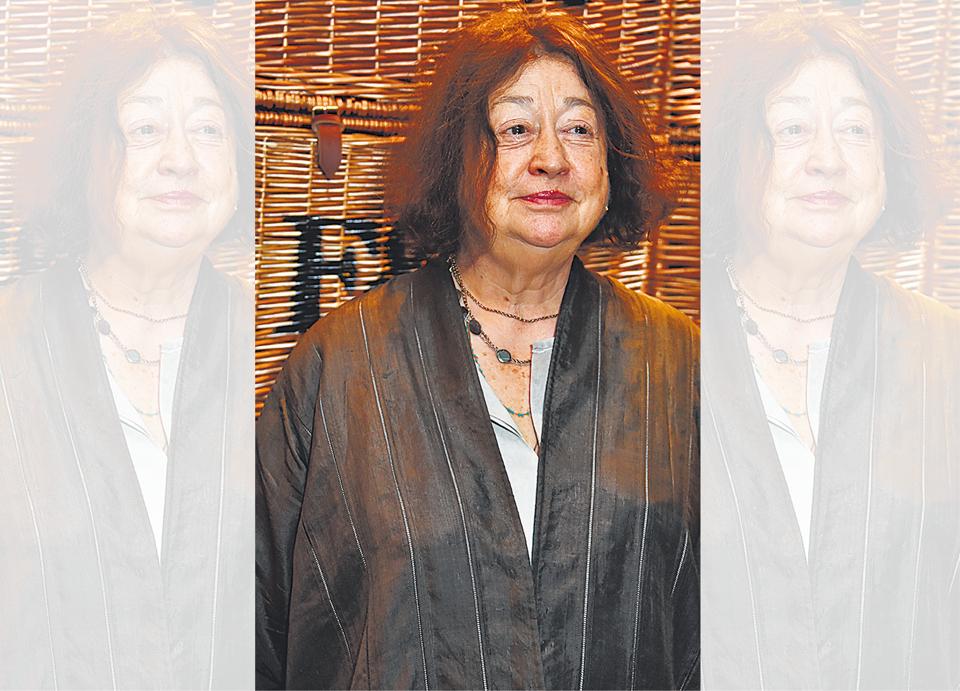
Fay Maschler, London’s most influential critic, discovered Asma

But a few months ago, Asma received her biggest accolade yet. The Netflix series Chef’s Table has featured some of the world’s greatest chefs. It has the power to turn a chef’s life around. Gaggan Anand says that even more than all the honours and awards he has earned (two stars from Michelin, number one restaurant in Asia for an unprecedented four years in a row etc.), it is Chef’s Table that made people from all over the world fly in to Bangkok to eat at his restaurant.

____________________________________________________________

Asma Khan is Kolkata’s second contribution to the global food world

____________________________________________________________

There has been much heartburn in the UK that no British chef has ever made it to Chef’s Table.

So when Netflix announced that it had finally selected a British chef, there was much anticipation. To everyone’s surprise, they chose Asma.

The show airs later this month and as I told Asma, her life will never be the same again. She will soon be one of the world’s most celebrated chefs, the best known Indian chef in the UK and perhaps globally, with the exception of Gaggan.

Chicken samosas served with spicy sesame and red chillies chutney, and tamarind chutney ( Ming Tang-Evans )

As wonderful as all this is, a little voice inside my head kept asking, “How did Asma, the same old Asma from the Sunday desk end up becoming one of the great chefs to be featured on Chef’s Table? Had she been a secret cook all along even as she laboured over copy? Had she worked at some of the world’s best restaurants? Had she reinvented classic Indian dishes?”

The answer: none of the above.

The Asma story is so incredible that if you made a movie with this plot, you would be accused of asking too much of the viewer. Suspension of disbelief is okay, but Asma’s life takes us far beyond that.
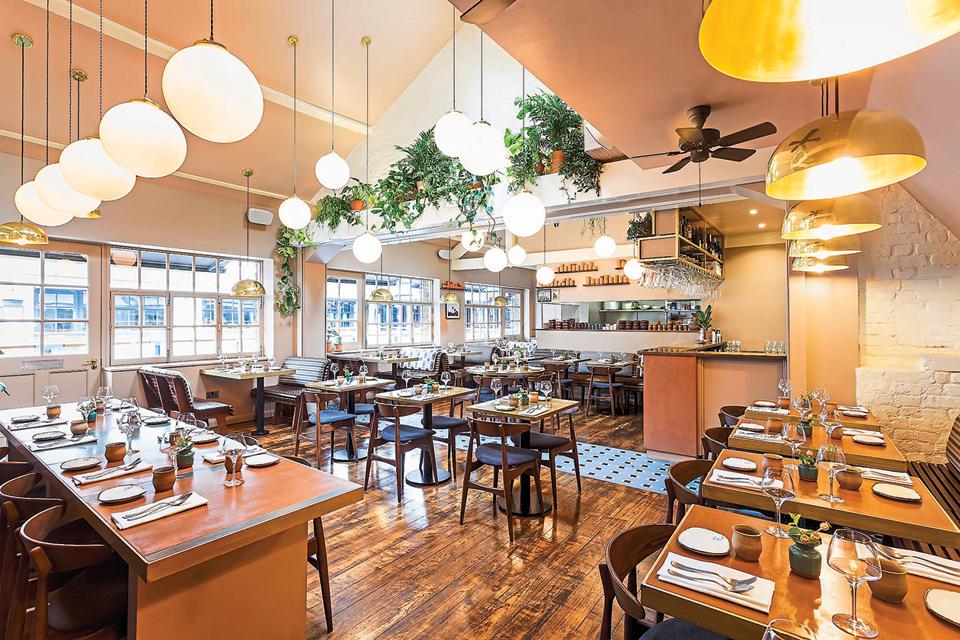
Darjeeling Express started as a dinner for 12 guests at home and is now a hugely successful restaurant ( Ming Tang-Evans )

She was born in Calcutta to a family with roots in nawabi culture (what we would call landed gentry, I guess). She had a standard middle-class upbringing (La Martiniere and Loreto) before going out to work (Lintas and then Sunday). Her parents introduced her to Mushtaq, a brilliant Bangladeshi economist who was a don at Sidney Sussex College in Cambridge. Asma and Mushtaq had, what was for all practical purposes, an arranged marriage and she moved to Cambridge.

Beetroot chops, Bengali spiced croquettes made with British beetroots ( Ming Tang-Evans )

She was miserable. “I thought the Quran had it wrong when it described hell,” she recalls. “Hell was Cambridge.” She hated the cold, the greyness, the drab English environment (especially after the sights, smells and sounds of Calcutta).

Asma’s book, a collection of authentic Indian recipes

Though her mother had run a catering business in Calcutta, Asma did not know how to cook. She could read copy, she could give clever headlines. But she had no kitchen experience. Fortunately Mushtaq had no interest in food.

So she turned to studying. She got a law degree, and then decided to do a PhD in law. By then, Mushtaq had shifted to the School of Oriental and African Studies in London so she applied to King’s College at London University. She talked the dons at King’s into letting her go directly to a doctorate without a Masters.
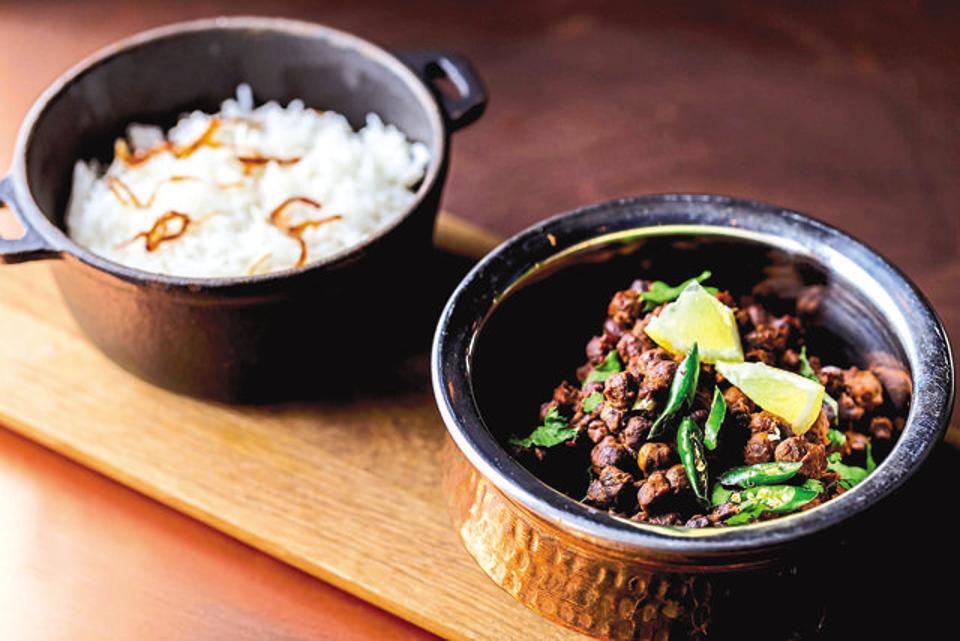
Black chickpeas (kaala channa) cooked with ginger and dried red chilies at Darjeeling Express ( Ming Tang-Evans )

She chose, for her thesis, a subject that was as far removed from Calcutta as possible: how the UK handles the separation of Church and State. But even as she was discussing whether the British monarch should be ‘defender of the faith’, a hitherto undiscovered cooking gene deep inside her reasserted itself.
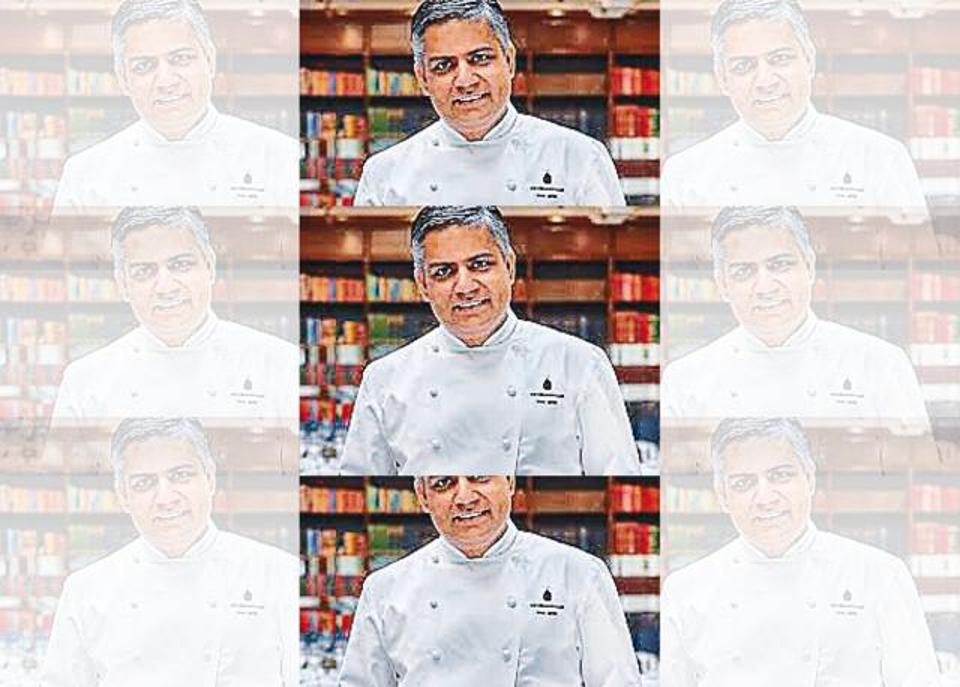
Chef Vivek Singh offered Asma a pop-up at Cinnamon Club

She began to make the food of her ancestors, going back to old family recipes. Eventually, cooking became such an obsession that she started hosting pop-up dinners. Her husband disapproved of the idea so she cooked the dinners when he was travelling. (“We cleared up the house so well,” she laughs “that usko pata hi nahi chala!”)

But her two children, who were not happy with having the house taken over by strangers, complained to their father and soon the jig was up.

Asma is nothing if not super confident, so she called such famous London chefs as Cyrus Todiwala and Vivek Singh to her house for dinner to try her biryani. Even though none of them knew her, they came anyway. They were kind and encouraging. Vivek Singh was so impressed that he offered her a pop-up at his The Cinnamon Club restaurant. She took her all-women team of cooks and won over the all-male Cinnamon Club kitchen team. (“I will always be grateful to Vivek for that,” she says.)
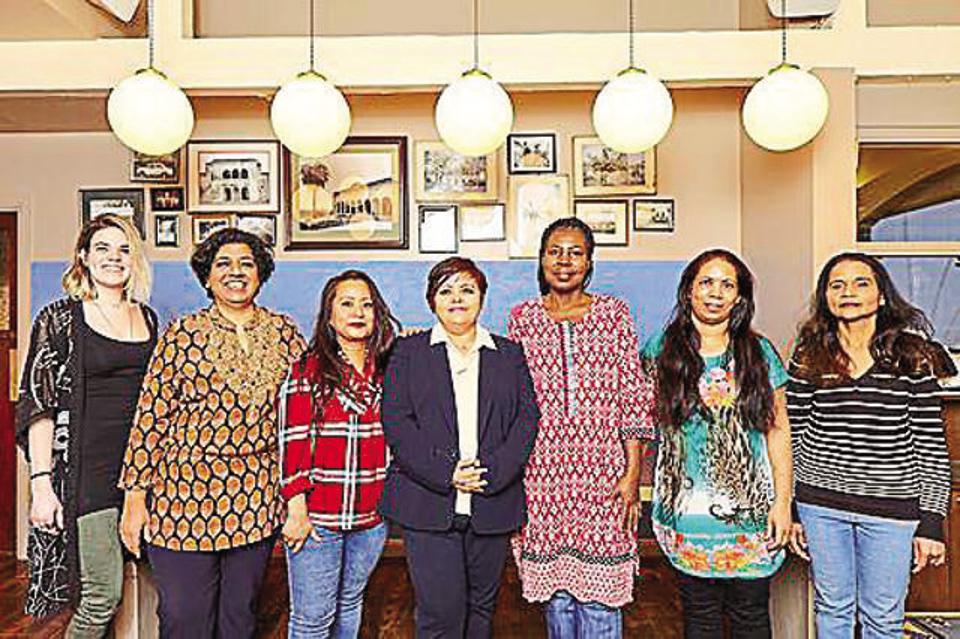
The all-women kitchen team at Darjeeling Express, London

That gave her the credibility to do a full-time pop-up. Word of her skills got out. Fay discovered her. And the rest is the stuff Chef’s Table episodes are made of.

Now, with the success of Darjeeling Express, Asma is well-known in London. People make much of her nearly all-women team. (My wife, who came to lunch at Darjeeling Express with me, loved the female energy; she was sold on the restaurant even before the first dish arrived.) Asma is overtly political, speaking out about sexual harassment in restaurant kitchens, breaking the conspiracy of silence that women in the business have gone along with and has become a symbol of the success that Asian women can find if they overcome prejudice and their own apprehensions.

But ultimately, I judge chefs by their food not by their stories. And Asma’s was terrific. We had puchkas, Bihari phulkis (like pakoras), Kosha Mangsho, a Calcutta mutton chaap, kaalachanna, chicken samosas, beetroot chops and so much more. None of it was molecular or clever, clever. It was just excellent.

You will hear more about Asma in the months ahead.

After Gaggan, she is Kolkata’s second contribution to the global food world.

And you will hear about her in non-food contexts. She is opening all-women kitchens in conflict zones in Syria. As she says, “I don’t want to be remembered as a great chef. I want women to come to my grave and say ‘she changed my life’; that’s what matters.”

She is not short on confidence and ambition, our Asma. And I have a feeling that she will end up being the most successful person to ever emerge from the offices of Sunday magazine!

From HT Brunch, February 24, 2019 / Follow us on twitter.com/HTBrunch /Connect with us on facebook.com/hindustantimesbrunch

source: http://www.hindustantimes.com / Hindustan Times / Home> Brunch / by Vir Sangvi, Hindustan Times / February 24th, 2019
A family’s love for indigenous breeds of cattle

Uppinakote Village (Udupi District) KARNATAKA :

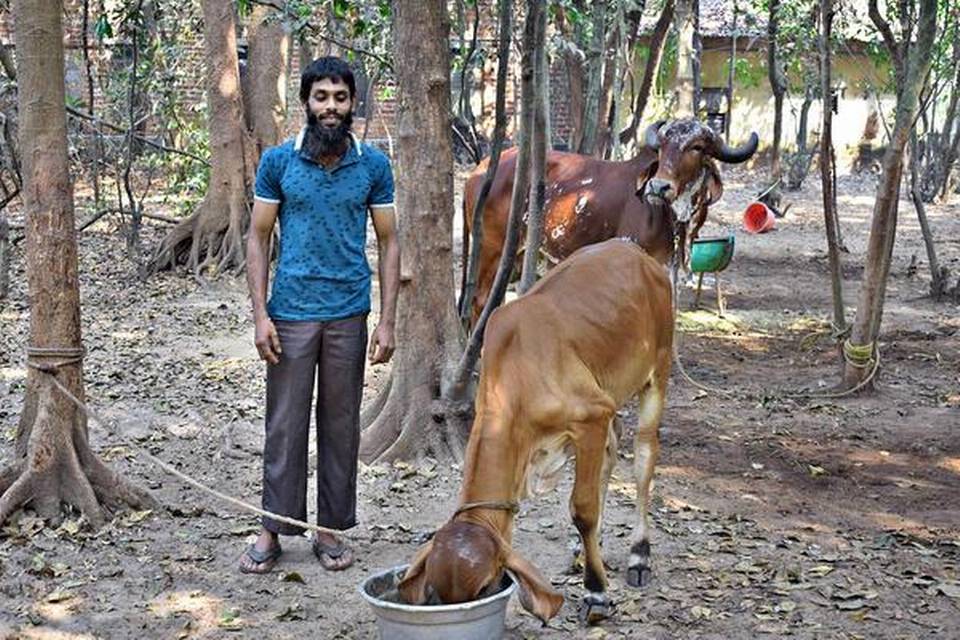
Mohammed Irshad Abideen tending the indigenous breed of cattle in his farm at Uppinakote village in Udupi district.

23 head of cattle are being reared in a farm house near Udupi

Three generations of a family have been conserving and breeding indigenous breeds of cattle here. The family has 23 head of cattle of Gir, Sahiwal, Red Sindhi, and Ongole breeds at Uppinakote village, about 18 km from Udupi. They are being reared in the farm house of 36-year-old Mohammed Irshad Abideen. His younger brothers, Naushad Ahmed, Mumshad Alam, and Sheik Mudassar, are supporting him in running the farm house.

Explaining their love for native breeds of cattle, Mr. Abideen said his grandfather Hanif Shah Saheb used to rear Malnad Gidda. His father, Jainulla Abideen, who used to rear Jersey and HF breeds for some time, later shifted to Malnad Gidda, Punganur, and Sahiwal breeds.

Mr. Abideen was engaged in helping his father ever since he completed his second year pre-university course. However, the family’s interest in indigenous cattle took a leap when Mr. Ahmed, who works as an engineer in Saudi Arabia, had gone to attend a bull show in Brazil about nine years ago.

“Naushad saw that most of the bulls were from India. We then decided to rear and breed only indigenous breeds of cattle,” he said.

More longevity

“The indigenous breeds of cattle are less prone to ailments, have more longevity, and provide better quality of milk,” said Sheik Mudassar.

“A Sahiwal cow gives 16 to 19 litres of milk daily, while a Red Sindhi gives 15 to 16 litres, and a Gir cow 13 to 15 litres of milk. I sell them at ₹70 a litre. Many people come to buy the milk as it is good for health,” said Mr. Abideen.

The breeding of indigenous cattle is lucrative. “We sell a male calf for ₹30,000 and a female for ₹50,000. We make a profit of ₹15 lakh to ₹20 lakh a year,” he said. The family grows corn and grass for their cattle on 2.5 acres of land taken on lease.

Many come to his farm seeking guidance. “We guide them in rearing and breeding of cows. We want our indigenous cattle breeds to thrive,” he said. Sultan, the Ongole bull, reared here, bagged the champion trophy at the Cattle Mela held at Sindhanur in Raichur district in January.

source: http://www.thehindu.com / The Hindu / Home> News> States> Karnataka / by Ganesh Prabhu / Uppinakote (Udupi District) / March 14th, 2019

Woman conquers river and gender hurdle

Chennai, TAMIL NADU / Kolkata, WEST BENGAL :

As a river pilot, Naha’s work is to guide ships from Sagar right up to the Calcutta and Haldia ports through the meandering Hooghly

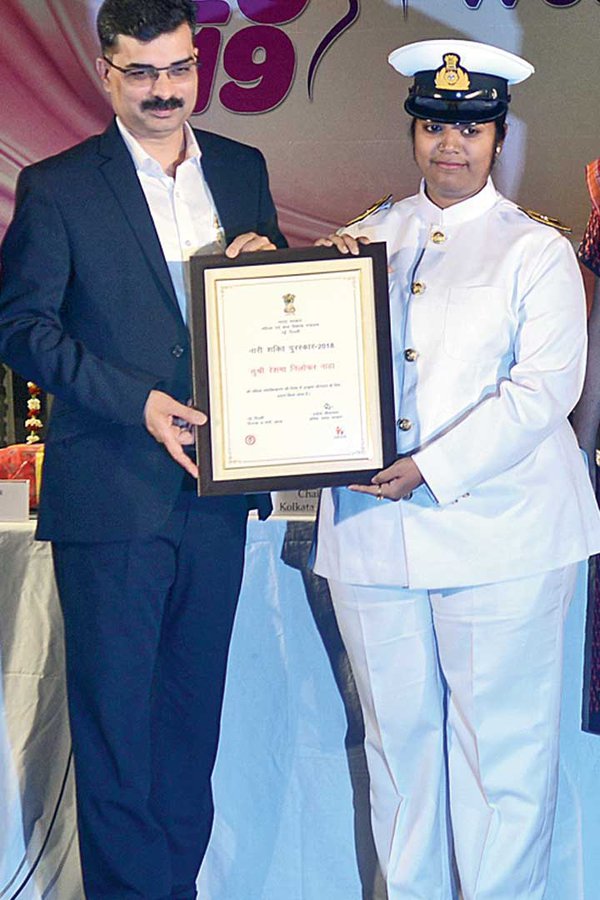
Reshma Nilofer Naha, India’s first woman river pilot, with Vinit Kumar, chairman, Calcutta Port Trust, at ICCR on Monday. Picture Bishwarup Dutta
Reshma Nilofer Naha, India’s first woman river pilot, with Vinit Kumar, chairman, Calcutta Port Trust, at ICCR on Monday.
Picture Bishwarup Dutta

Reshma Nilofer Naha goes to the high sea on a small boat, climbs on to a large vessel with a rope ladder and enjoys it.

India’s first “river pilot” was felicitated at a women’s day programme hosted by the Calcutta Port Trust on Monday, having returned from Delhi where she received the Nari Shakti Puraskar from President Ram Nath Kovind.

As a river pilot, Naha’s work is to guide ships from Sagar right up to the Calcutta and Haldia ports through the meandering Hooghly, something she has been doing “efficiently and professionally”.

“If you think there are no boundaries then you think everything is possible. There is no glass ceiling. It is just an imaginary concept we all have heard for many many years,” Naha, 30, said during a panel discussion on Challenges: Work and Life.

A BE in marine technology, Naha said she had been keen on an offbeat career ever since she was a child. The Chennai woman joined the Calcutta Port Trust in 2011 as a trainee pilot and qualified as a river pilot in 2018.

“It is a great feeling (to be the only woman river pilot) on one hand but on the other hand I would like to have other female colleagues very soon and I look forward to it. I think my story will inspire more women to get in here,” she said.

Naha said navigating the Hooghly is tough because of “bends and narrow channels” where the depth of the water is a concern. “We have different kinds of ships and each ship behaves differently. The tides are strong here… and all this makes pilotage tough,” she said, recalling how she had to once anchor for four days because of bad weather and strong winds.

“It is a proud moment for the Calcutta Port Trust to have India’s first lady river pilot with us…,” said Vinit Kumar, chairman, Calcutta Port Trust, who felicitated her.

“It is a long treacherous journey she has undertaken. To be a first in anything is always a challenge because the infrastructure, the attitudes, the systems are not very friendly or they are made with keeping only men in mind…. So the struggle of the first person is always more than those who follow,” Kumar said.

source: http://www.telegraphindia.com / The Telegraph, online edition / Home> West Bengal / by Jhinuk Mazumdar and Cordelia Nelson in Calcutta / March 12th, 2019

The ragpicker who made it

Kolkata, WEST BENGAL :

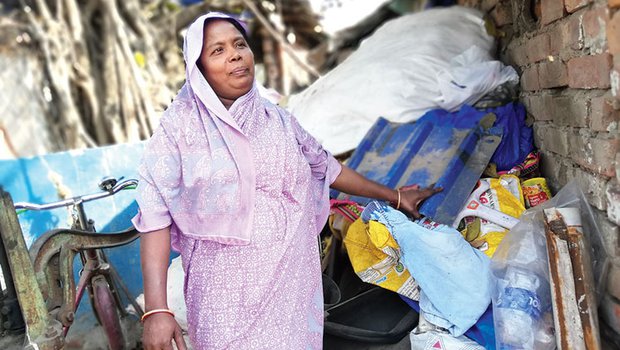
Ajmeri Khatun’s life has been a rags-to-financial security story

Ajmeri Khatun with her collection of waste / Image: Moumita Chaudhuri
Ajmeri Khatun with her collection of waste /
Image: Moumita Chaudhuri

The Topsia Canal Road of south Calcutta is home to 4,000 ragpickers. Forty seven-year-old Ajmeri Khatun is not one of them anymore, strictly speaking. About 10 years ago, she purchased her first rickshaw and today she owns a fleet of 11. But whenever she has some time on her hands she likes to sort waste.

The job of a ragpicker is to sort dry waste, the kind that can be recycled — plastic bottles of shampoo or detergent, glass bottles, tin containers, plastic caps. Ragpickers also look for electrical waste such as regulators of fans, metal changeover switches. “Copper, brass, iron, steel, they all fetch good money. Sometimes we even find silver,” says Ajmeri. Once sorted, these are sold to dealers or the kabadiwallah.

As Ajmeri and I take a walk along Canal Road, we spot some shanties with waste materials heaped in front of them. Some women are sitting on the road with their day’s collection spread out; they are segregating different kinds of waste. Ajmeri explains, “Ragpickers keep things in store for weeks. Only when they collect a biggish heap, do they sell it. Or else there is no money in it.” But before that they have to rummage through a lot of rubbish. She points to the hands and feet of these women, soiled with dirt, their skin rough and coarse from the day’s work.

Ajmeri is not a jaat kachrawali; her father was a rickshaw puller. Once she turned 14, he married her off. She says, “My husband was not employed, but his family owned agricultural land in south Bengal. My parents thought that would guarantee me a good life.” But in time Ajmeri got fed up of her husband’s joblessness. “He would do nothing the whole day. Sometimes he would be out flying kites, sometimes he would lay traps to catch birds, which he would sell at a price. I refused to stay in the village and asked my parents to bring me back to Calcutta,” says Ajmeri.

Back in Calcutta, at first, Ajmeri did not know what to do for a living. She says, “I used to sit at home all day. It was from my neighbours that I got to know that ragpicking could fetch me Rs 80 to Rs 100 a day. It was quite a lot of money in the 1990s.”

When she broached the topic to her family, no one was pleased. “But I was not ashamed of picking up waste,” says Ajmeri, her expression hardening at the memory. It fetched her money enough to pay for her daily expenses and according to her, that is all that mattered.

She continues with a straight face, bereft of any emotions, “The life of a ragpicker is not easy; that dirt will wash but not people’s impression of you. The men are regarded as thieves. And women ragpickers are twice as much despised,” she adds, all the while studying my expression. She keeps talking about how ragpickers get to work very early, often within hours of midnight; she talks about the stiff competition; the suspicious gaze of cops; the stray dogs breaking into a chase; and of course, the unwanted advances.

She narrates an incident wherein a local goon had once attacked her friend. Shehnaz had gone out all by herself one morning. A man whom she had seen earlier in the neighbourhood had followed her with the intention of snatching her silver bangles. There was a tussle and the goon slashed her cheek with a knife.

Says Ajmeri, “Shehnaz is brave girl. She went to the Beniapukur police station [in central Calcutta] bleeding and got her complaint registered. When she came back and told us about the attack, all the ragpickers went to the police station, and gheraoed it until the culprit was arrested and punished.”

She talks about seasonsal challenges too. “In the monsoon months, everything we collect is wet and the kabadiwallah gives us half the money because of this. Also, the waste is far more messier,” she says.

“You have to ignore the smell and the sight of the dirt. You have to put your hand into it to fish out something worthwhile. You have to wade through the rubbish. Nails have pricked my feet through my chappals so many times, I have lost count. Broken glass, rotten tin, sharp objects, there are so many things you have to be careful of,” she goes on.

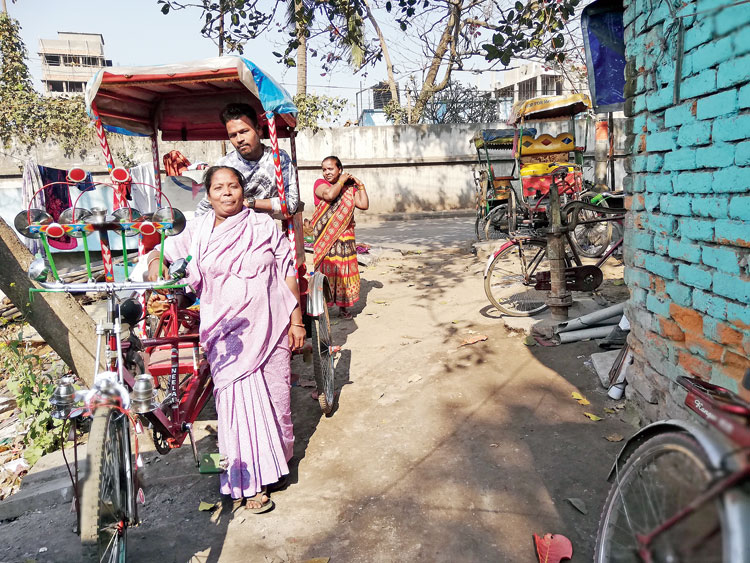
Ajmeri Khatun with her son and some of the rickshaws she has acquired over the years / Image: Moumita Chaudhuri

Ajmeri has given up ragpicking for some years now. “But it is from the money that I earned as a ragpicker that I have built myself a pucca house,” she says pointing to the room where we are sitting. The room is painted a deep green. It has a double bed, an almirah neatly covered with blue synthetic curtains, a brand new refrigerator, a showcase stacked with crockery and shelves lining the walls, laden with aluminium utensils. There is a small kitchen adjoining this room and two more stand-alone rooms that she has built for her children.

It was in 2006 that Ajmeri came to know of the NGO, Tiljala Society for Human and Educational Development, that works towards improving the lives of ragpickers. Heera Ghosh, who works for the NGO, talks about how ragpickers are being phased out. She points out how the civic body has installed compactor machines in almost every place. Also, there are vans that collect domestic waste from households in the mornings. “So the ragpickers do not get to collect the waste at all, however early they might start,” she adds.

The NGO gave Ajmeri a generous grant. Says she, “I used the first instalment to buy a second-hand rickshaw. After three months, when I got the rest of the grant, I spent it to repair the rickshaw, which was in a poor condition.”

In between, Ajmeri lost her husband. He had been working as a daily wage labourer since they moved to Calcutta, but now with him gone Ajmeri says she felt overwhelmed at the prospect of bringing up four children all by herself. “I put the rickshaw on rent and continued to ragpick,” she says.

In 2009, she bought another rickshaw, and thereafter she bought eight more. “I had also opened a bank account and saved some money. I availed every loan that came my way. I am still paying some of them,” she says chirpily.

Today, she has married off two daughters. Her youngest has read up to Class IX. She now gives tuitions to children and attends Urdu classes herself at the local madrasah. “I have also bought a brand new rickshaw three months ago for my son,” she says and then laughingly adds, “My son did not want to pull a rickshaw. He said it was below his dignity but I told him that no work is low or mean as long as it gives you a respectable living.”

She talks about the changes in the ragpickers’ working conditions. “Now ragpickers have identity cards issued by the Rag Pickers Association of India.” Ajmeri along with 11 other women have started a self-help group. “We are saving Rs 100 per member every month and creating a fund which can be used to generate loans to any member who needs the money. That way, we will not have to depend on moneylenders or banks, we would also earn interest, and our kitty would become stronger and stronger,” she says with a sparkle in her eyes.

Ajmeri has given up ragpicking, but she has not given up working. Currently she works as a domestic help. She tells me how she collects plastic shampoo bottles and other waste from the family she is employed with. She says, “Seeing me recycle things, my employers too have started to recycle products of late, instead of throwing them hither and thither.”

source: http://www.telegraphindia.com / The Telegraph, online edition / Home> People / by Moumita Chaudhuri / March 10th, 2019

44 women chosen for Nari Shakti Puraskar-2018

Chennai, TAMIL NADU / Kolkata, WEST BENGAL :

Other awardees included spiritual leader Sister Shivani, commando trainer Seema Rao and the only woman marine pilot in India, Reshma Nilofar Naha.

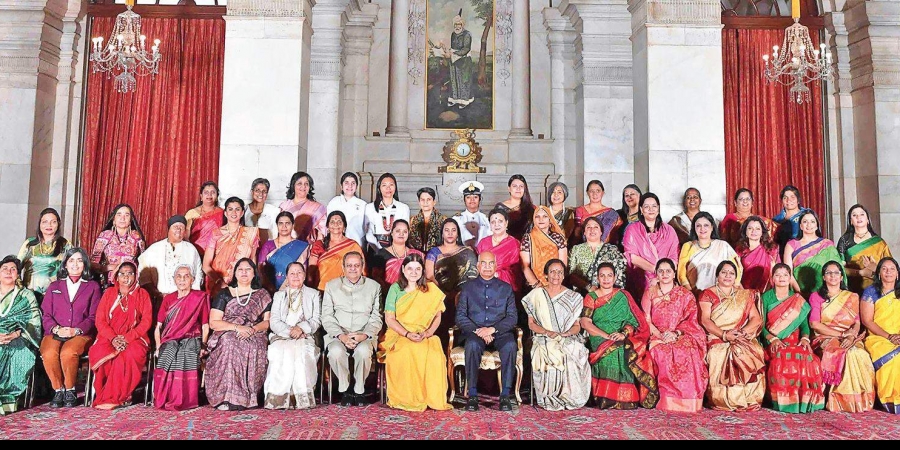
President Ram Nath Kovind with recipients of ‘Nari Shakti Puraskar-2018’ at Rashtrapati Bhawan in New Delhi on Friday.| PTI

New Delhi :

President Ram Nath Kovind on Friday presented the Nari Shakti Puraskar 2018, the highest civilian honour for women, on the occasion of International Women’s Day.

Among 44 awardees selected out of around 1,000 nominations received by the Women and Child Development Ministry were names such as scientists A Seema and Ipsita Biswas, Doordarshan News anchor Neelum Sharma, acid attack survivor Pragya Prasun, radio music composer Madhuri Barthwal and activist Manju Manikuttan.

Other awardees included spiritual leader Sister Shivani, commando trainer Seema Rao and the only woman marine pilot in India, Reshma Nilofar Naha.

“The awardees are a face of change, reflecting a shift in the status of women, from women development to women-led development,” said WCD Minister Maneka Gandhi adding, “No field has been left untouched, where women have not left their indelible mark, making women the leading force of our development trajectory,” she added.

A statement by the ministry said that while making the selection from the nominations,  the nominee’s contributions in empowering vulnerable and marginalised women was taken into account.

source: http://www.newindianexpress.com / The New Indian Express / Home> Nation / by Express News Service / March 09th, 2019

Mumbai Based Businessman Offers Rs 110 Cr To PM Relief Fund For Pulwama Martyrs

Kota, RAJASHTAN / Mumbai, MAHARASHTRA :

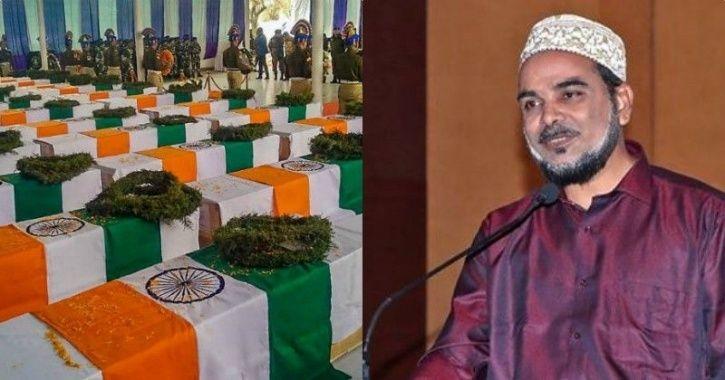
The 44-year-old Murtaza A Hamid, a Mumbai based businessman has offered to donate Rs 110 crore from his taxable income to the PM’s National Relief Fund which gets spent on the welfare of the families of the Pulwama martyrs.

PTI/DAINIK BHASKAR
PTI/DAINIK BHASKAR

The businessman Hamid, who hails from Kota sent an email and  sought an appointment to PM Modi in this regard. Visually impaired by birth, Hamid had graduated from Government Commerce College, Kota and is currently working as a scientist and researcher in Mumbai.

Speaking to TOI over phone Hamid told what inspired him to donate, “The inspiration to help and support those who lay down their lives for our motherland should be in the blood of every citizen of the country.”

ShamimMurtuzaMPOs17mar2019


Hamid also said that he regrets that if the government had recognised his scientific innovation timely, the incident like Pulwama could have been averted. He claimed that he innovated ‘Fuel Burn Radiation Technology’  which helps to trace and to locate any vehicle or object without GPS, camera or any other technical machinery.

He also claimed that he had proposed to government and offered his innovation free of cost to NHAI in September 2016,  but he received the approval two years later in October 2018 and there has been no further development ever since.

(With TOI inputs)

source: http://www.indiatimes.com / India Times / Home> News> India / by Maninder Dabas / March 04th, 2019

Pocket bikes to fast track, Mohamed Mikail starts at 14

Chennai, TAMIL NADU :

To ensure that all his focus is on his racing career, his parents have even taken him out of school — he is currently being home-schooled.

Mohamed Mikail
Mohamed Mikail

Chennai :

Mohamed Mikail will have to wait four more years before he can take his bike on to the road — he’s just 14, after all! But in a couple of months, the Chennai lad will be doing something that most Indian racers, especially those in the two-wheeler scene, can only dream of. He will be racing in an international series abroad. Mikail was the find of the Honda Talent Cup, which was held last year to identify promising young racers. And he proved he had that in oodles! Mikail was the youngest racer in the competition but managed to finish on top of the standings.

His efforts have netted him a drive in the Thai Talent Cup, where he will be joined by 18-year-old Kritik Habib. It was evident that Mikail was meant for the fast lane early on. He took to racing pocket bikes when he was just 10 and even competed in a couple of races in Malaysia. It also helped that his family had a link to the racing fraternity — his uncle Mohammed Haneef used to race cars. “It was a little bit easy for me to get guidance because he knew the basics,” Mikail says.

“I have competed in a couple of pocket bike races in Malaysia before. But the Honda Cup was the first time I was racing proper bikes.” He has his uncle to thank again for that. “It was him who first heard about the Honda initiative and enrolled me in it,” Mikail says.

“My uncle is my biggest support.” His racing career will take him where few 14-year-olds get to go, but it also means that Mikail will be missing out on a lot of experiences that his peers take for granted. While kids his age will be celebrating the summer holidays in a month, Mikail will be going over track data, setting up his bike and undergoing a rigorous fitness regime.

To ensure that all his focus is on his racing career, his parents have even taken him out of school — he is currently being home-schooled. But Mikail is happy with the way things are going for him. He is itching to get his hands on the Honda NSF250 (a machine that Honda has fielded in the Moto3 series) that he will be racing in the Thai Talent Cup. He reckons he will finally be able to start testing the event in April. “I feel excited,” he says. “I haven’t set any targets (for his debut season in the Thai Talent Cup). My first aim is to go learn.”

source: http://www.newindianexpress.com / The New Indian Express / Home> Sports> Others / by Vishnu Prasad / Express News Service / March 02nd, 2019

Kashmir’s first Ashok Chakra for Lance Naik Nazir Ahmad Wani

JAMMU & KASHMIR :

Lance Naik Nazir Ahmad Wani. File

The award will be presented by President Ram Nath Kovind to his wife Mrs. Mahajabeen at the Republic Day parade on Saturday.

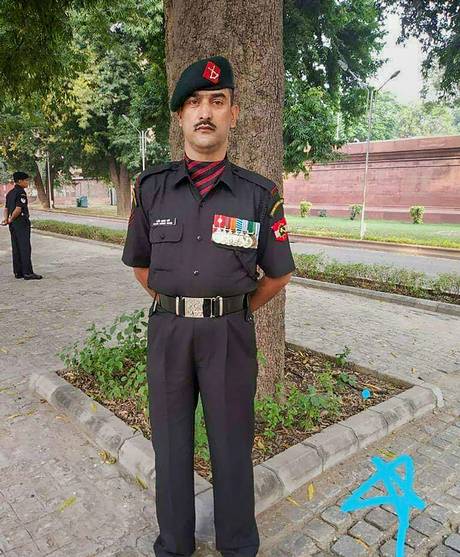
Lance Naik Nazir Ahmad Wani has been posthumously awarded ‘Ashok Chakra’, India’s highest peace time gallantry award for his role in a counter-insurgency operation in Kashmir last year. He is Kashmir’s first Ashok Chakra awardee and was also awarded Sena Medal for gallantry twice in 2007 and 2018 for his acts of valour.

The award will be presented by President Ram Nath Kovind to his wife Mrs. Mahajabeen at the Republic Day parade on Saturday.

On November 25, 2018 Lance Naik Wani was taking part in a counter terrorist operation against six terrorists in Hirapur village near Batgund, Kashmir. Under intense hail of bullets from the terrorists he eliminated the district commander of the LeT and one foreign terrorist in an act of raw courage.

“In the ensuing gunfight he was hit multiple times including his head. He also injured another terrorist before succumbing to his grievous injuries,” the Army said in a statement.

A resident of Cheki Ashmuji of Kulgam district Jammu and Kashmir, he joined the Army’s 162 Infantry Battalion (Territorial Army) in Jammu and Kashmir Light Infantry in 2004. His courage got his recognition very quickly with the Sena Medal for Gallantry in 2007. The 2018 Sena Medal was given for eliminating one terrorist from a very close distance, the Army stated.

To fight the onslaught of Pakistan supported terrorist outfits, he operated with Rashtriya Rifles units in Kashmir, the Army statement said and added, “Throughout his active life he always willingly faced grave potential threats and was a source of inspiration for others.”

Lance Naik Wani comes from a humble background and had worked for the benefit of the underprivileged section in his village and surrounding area.

Apart from his wife, he is survived by two sons Athar (20) and Shaid (18).

source: http://www.thehindu.com / The Hindu / Home> News> National / by Special Correspondent / New Delhi – January 24th, 2019

World War II spy first Indian-origin woman to get Blue Plaque in UK

London, UNITED KINGDOM :

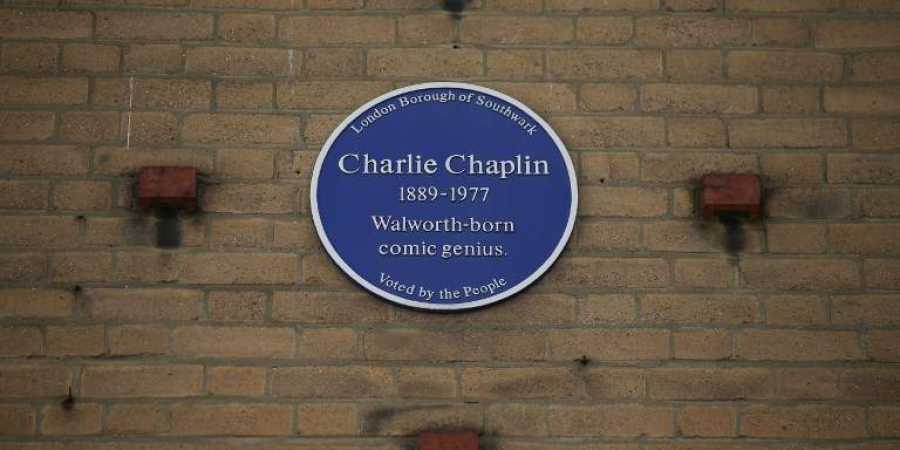
The Blue Plaque scheme run by English Heritage honours notable people who lived or worked in particular buildings across London.

A Blue Plaque about Walworth-born comedian and actor Charlie Chaplin is seen near East Street Market in south London on September 1, 2017. (Photo | PTI)

London :

Britain’s World War II spy Noor Inayat Khan was on Monday confirmed as the first Indian-origin woman to be honoured with a Blue Plaque at her former London home.

The Blue Plaque scheme run by English Heritage honours notable people who lived or worked in particular buildings across London.

Khan’s plaque is set to go up at 4 Taviton Street in Bloomsbury, where she lived as a secret agent during the war. Khan, the daughter of Indian Sufi saint Hazrat Inayat Khan, was an agent for Britain’s Special Operations Executive (SOE) during World War II and was captured and killed by the Nazis in 1944 at just 30 years of age.

“It is from this house that she left on her final and fatal mission. Noor gave her life in the fight against fascism and her message of peace and tolerance of all religions is even more relevant today,” said Shrabani Basu, Chair of the Noor Inayat Khan Memorial Trust (NIKMT).

“The blue plaque will be a wonderful addition to the area that has a special association with Noor. It will be the first Blue Plaque for a woman of Indian-origin in Britain and is a real honour,” said Basu, who has been campaigning for the plaque since 2006 as the author of ‘Spy Princess: The Life of Noor Inayat Khan’.

Taviton Street is close to Gordon Square, which the NIKMT chose for the installation of a memorial bust in 2012 of the spy, a descendant of the 18th century Mysore ruler Tipu Sultan.

The Blue Plaque at her home is expected to be installed following building approval within the next few years.

“The Blue Plaques Panel have agreed that Noor Inayat Khan should be commemorated with a plaque. Once a nomination has been approved, it can take a further two or three years for a plaque to be unveiled,” an English Heritage spokesperson said.

“Noor Inayat Khan has deserved recognition for years. A hero who joined Britain’s effort to fight tyranny,” said Tom Tugendhat, Chair of the UK Parliament’s Foreign Affairs Committee. Born in September 1914 in Moscow to an Indian father and American mother, Khan was raised in both Paris and Britain.

As a Sufi, she believed in non-violence and also supported the Indian Independence movement but she felt compelled to join the British war effort against fascism. She went on to become the first female radio operator to be infiltrated into occupied France, where she was tortured and killed at Dachau concentration camp.

The SOE was an underground force established in Britain in 1940 by war-time Prime Minister Winston Churchill to “set Europe ablaze”.

It recruited men and women to launch guerilla war against Adolf Hitler’s forces.

Historial records show that despite being repeatedly tortured and interrogated, Khan revealed nothing and was executed by a German SS officer and her last word was recorded as “Liberte” or freedom.

She was later awarded the George Cross, the highest civilian decoration in the UK, in recognition of her bravery.

In recent months, Khan was also a frontrunner of a campaign for an ethnic minority personality to be honoured as the face of a redesigned GBP 50 note until the Bank of England announced that the note would feature a scientific figure.

Major Indian figures to be honoured with Blue Plaques in London include Mahatma Gandhi, Jawaharlal Nehru and B R Ambedkar, who spent time in the city during the Indian national movement against Britain’s colonial rule.

source: http://www.newindianexpress.com / The New Indian Express / Home> World / by PTI / February 25th, 2019

Yusuffali M A is fifth highest-ranked Indian philanthropist

KERALA / U.A.E. :

Lulu Group chairman Yusuffali M A is ranked fifth in the list of top 10 philanthropists in the Hurun Indian Philanthropy List 2018 published on Saturday.

Yusuffali M A, CMD, Lulu Group, and A J Pai, Director, Lulu Tech Park, looking at a scale model of Lulu Cyber Tower-2 | Albin Mathew

Kochi :

Lulu Group chairman Yusuffali M A is ranked fifth in the list of top 10 philanthropists in the Hurun Indian Philanthropy List 2018 published on Saturday.

Yusuffali is the lone Malayali to figure in the list which ranks benefactors who have donated  `10 crore or more during the October 2017- September 2018 period, said Anas Rahman Junaid, managing director and chief researcher, Hurun Report India.

He had donated more than `50 crore to the Chief Minister’s Distress Relief Fund in the aftermath of the flood havoc last year.

He had  donated generously during the devastating temblors at Latur, Maharashtra and Bhuj in Gujarat, the 2004 tsunami tragedy, Uttarakhand deluge and floods in Jammu and Kashmir.

Yusuffali has also assisted several Indians, stranded in the Gulf countries, providing them financial aid and flight tickets.

source: http://www.newindianexpress.com / The New Indian Express / Home> States> Kerala / by Express News Service / February 10th, 2019