Category Archives: Amazing Feats

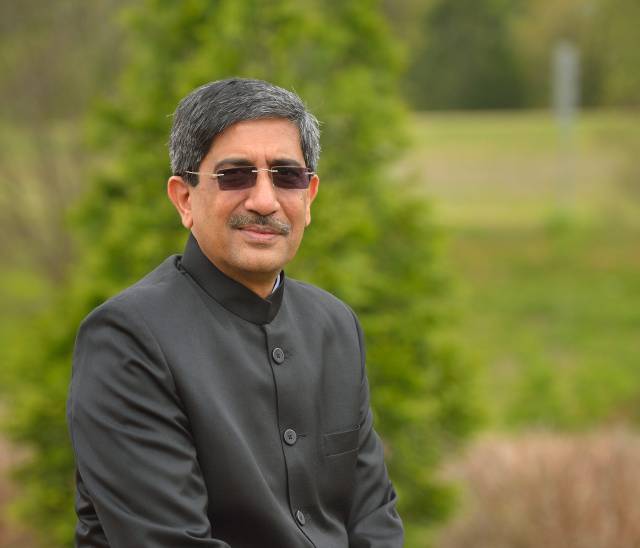
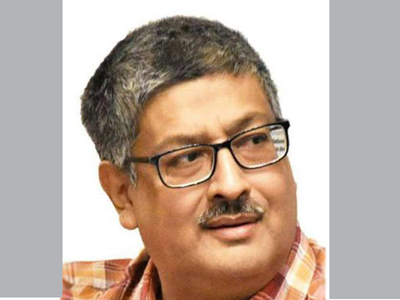
Disability rights crusader Javed Abidi dies at 53

Aligarh, UTTAR PRADESH / NEW DELHI :
JavedAbediMPOs05mar2018

New Delhi :

India’s global face of disability rights movement,  Javed Abidi , died of chest infection on Sunday. He was 53.

Abidi, who founded the Disability Rights Group (DRG), and was serving as the director of the National Centre for Promotion of Employment  for Disabled People, is survived by his mother and two siblings.
Born in Aligarh, Uttar Pradesh, he was diagnosed with spina bifida. Abidi wasn’t operated on for eight years, and as a result, suffered nerve damage. At the age of ten, he injured himself in a fall and required another operation. After this, his family moved to the United States and Javed Abidi received care at the Boston Children’s Hospital and the Rehabilitation Institute of Chicago. At the age of 15, he started using a wheelchair. Abidi, despite difficulties, studied at Wright State University , and in 1989, moved to India seeking a career in journalism.

The 1990s were marked by drastic changes in the disability sector of India through his DRG. He was instrumental in drafting the 1995 disability Act and forcing the inclusion of missing disabilities like autism, dyslexia in the new RPwD Act 2016. He was appointed the vice-chairman of the International Disability Alliance  2013.

“We have lost the most prominent voice of our sector. We have lost an international leader as he was the sole voice of the Global South. He pioneered the cross-disability movement in India and galvanized disability issues as developmental and human rights based issues. An era ends with Javed ji,” said disability rights’ activist, Dr Satendra Singh, Delhi University.

Abidi successfully led several path breaking advocacy initiatives in India, including the drafting and enactment of the Disability Act of 1995, inclusion of disability as a separate category in the Census; India’s ratification of CRPD in 2007, and setting up of a separate Department of Disability Affairs. Most recently, he led the movement towards India’s new disability rights law – the Persons with Disabilities Act 2016.

Abidi strongly believed that empowerment of persons with disabilities is connected to education, which in turn hinges on accessibility. And all three are not possible without enabling laws and policies.

“The world has lost is brightest crusader for disability rights. As an impassioned advocate of ‘Nothing About Us, Without Us’, he has given voice to an ‘invisible minority’ by catalysing path breaking changes in the policy and legislative space,” said Reeta Gupta, Abidi’s long-term friend and supporter in advocacy of disability rights in India.

Abidi started working for Sonia Gandhi in 1993, creating and building the Rajiv Gandhi Foundation’s disabilities Unit. A year later, he founded a small advocate group called the DRG and started raising awareness for the disabled people of India. A large pro-disability rights movement arose, with the goal of getting the Parliament to implement a bill of rights for the disabled.

Abidi led a protest before Parliament on December 19, 1995, that pushed Parliament into passing the Persons with Disabilities Act on December 22, 1995. In 2004, his letter to Chief Justice of India on making the polling booths accessible to persons with disabilities was converted into writ petition. Supreme Court of India then passed direction to make electoral process accessible.

source: http://www.timesofindia.indiatimes.com / The Times of India / News> India News / by Manash Pratim Gohain / TNN / March 04th, 2018
RAAG TAAL GHARANA – The legend of Mian Tansen

Gwalior, MADHYA PRADESH : 

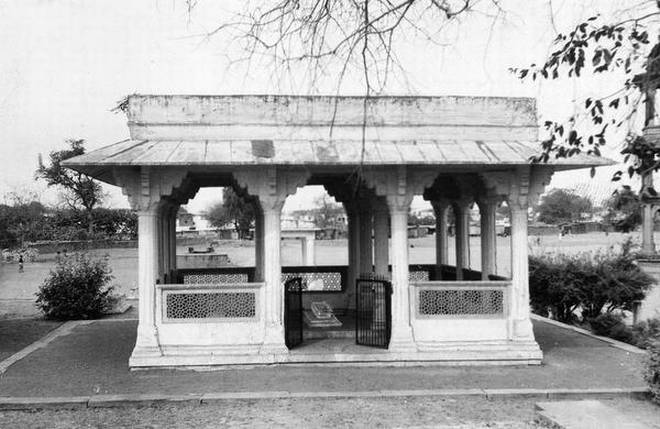
Tansen's tomb in Gwalior | Photo Credit: HINDU PHOTO ARCHIVES
Tansen’s tomb in Gwalior | Photo Credit: HINDU PHOTO ARCHIVES

He created many ragas, could produce any sound and lent a distinct style to Senia gharana

This gharana is made up of the legend of Tansen, the father of Indian classical music. Though Tansen was a vocalist, the gharana also produced sitar maestros. The Senia style of sitar playing started with the legendary Ustad Maseet Sen, who belonged to the sixth generation in the Tansen lineage. ( The pioneer of Maseetkhani style, even today, 100 years later, the Maseetkhan Baj is played by the sitarists of this gharana. These musicians came to be known as the sitarists of Jaipur Senia Gharana. They lay emphasis on the purity of raga and technique. Their style of playing was that of the bin or veena. Ustad Mushtaq Ali Khan, son of Ashiq Ali Khan of Varanasi had the privilege of learning from Ustad Barkhat Ali khan of Jaipur, who went by the title ‘Aftab-e-Sitar’. Pt. Debu Choudhuri was fortunate to learn from ‘Dada Guru’ (Ustad Mushtaq Ali Khan).

On the vocal front, the gharana is referred to as Qawwal Bachcha. Its most well-known exponent of our time is the Lucknow-based Ustad Shamshudeen Khan, popularly called Ustad Gulshan Bharathi (recepient of ‘Yash Bharathi’ award). This style is known as bol bant ki gayaki and bol banav ki gayaki. Short and crisp bol taans are significant features, while the aakar is sparingly used. Many of his disciples have made a mark in films, notable among them being Shashi Suman, music composer of Bajirao Mastani and Harjeet Saxena.

Coming back to Mian Tansen. He was born as Ramatanu and later came to be known as Tanna. There are many legends woven around his life. It is said that he could produce any sound. The story goes that once when the sadhus were crossing a field they heard a lion’s roar and located it to a young boy sitting on a tree. They advised his father to send him to Swami Haridas for training.

However, it is believed that Tansen was born dumb and was taken to the Sufi saint Murshid Mohammed Ghouse Gwaliari. On reaching Gwalior, he visited the Sufi saint and found him in the company of Swami Haridas. The saint blew air into the mouth of the child and Tanna began to speak. When the saint came to know the child was also deaf, he blew air into his ears and he was cured. The Sufi saint then asked Swami Haridas to take him into his fold. Thus began his musical journey (M.A Bakhy).

Titles to Tansen

Tansen was the title given to him by Raja Vikramjit of Gwalior. Tansen was a court musician in the darbar of Raja Ramachandra of Bandavagarh (Rewa).

When Akbar heard of his prodigious talent, he sent a ‘firman’ to the king asking for Tansen and made him one of the Navaratnas in his court. He gave him the title of ‘Mian’. Tansen is also known as the ‘Sangit Samrat’, according to Musical Heritage of India by Lalita Ramakrishna.

Abul Fazl records in his Ain-i-Akbari that Akbar gave Rs 2 lakhs to Tansen for his first performance in the court. He composed many dhrupads on Ganesha, Shiva, Parvati and Rama. He also composed songs on his patrons.

Kalpadruma is a compliation of 300 of his dhrupads that were in Gauhar Bani. Tansen composed in his favourite ragas — Multani, Bhairavi and Todi .

He invented the night raga Darbari Kanhra, morning raga Mian Ki Todi, mid-day raga, Mian ki Sarang, seasonal raga Mian ki Malhar. His descendants and disciples are called Seniyas.

While Tansen graced the court of Akbar, many aspiring singers would practice round the clock and caused a lot of disturbance to him. This came to the notice of Emperor Akbar and he banned one and all from pursuing music. The story goes that a competition was organised between Baiju Bawra, also a disciple of Swami Haridas, and Tansen. The loser was to be executed. The two sang under the magic spell of love and reverence to their Guru. Tansen’s tanpura string broke. Baiju asked Akbar to grant him three wishes — not to execute Tansen, to lift the ban on singers and to set free the people who were innocent.

Another famous story is about theintrigue to bring about Tansen’s end by making him sing Raga Deepak. Tansen, who was known for the purity of his renditions, foresaw his fate, but could not say ‘no’ to the emperor. He had asked all the lamps in the court to be extinguished. As he sang, the lamps lit and the flames engulfed him.

On hearing this, his wife Husseini broke into raga Megh Malhar, beckoned rains and saved Tansen. This was a turning point in the legendary singer’s life and he went back to Sufi saint Hazrat Ghouse Gwaliari. While the Tansen samorah in Gwalior commemorates him as a singer, the yearly Urs has canonised him as a saint.

source: http://www.thehindu.com / The Hindu / Home> Entertainment> Music / by Jyoti Nair / March 01st, 2018

One man, one country, one cycle: for the cause of polio eradication

Mangaluru, KARNATAKA / MALAYSIA  :

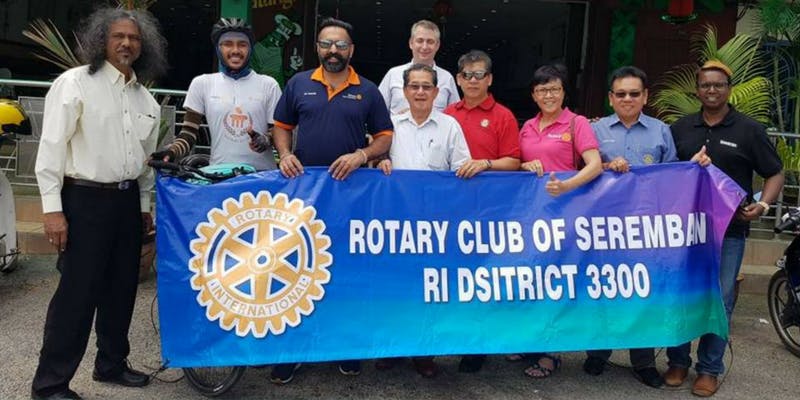
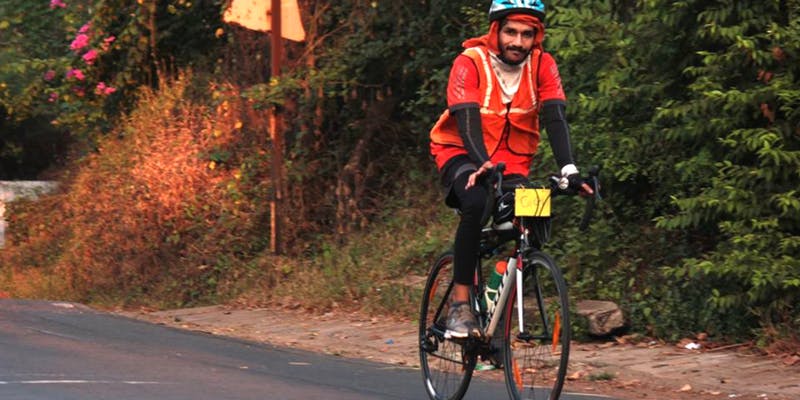
Prof SS Shameem cycled 2,140 kms across Malaysia to spread awareness on the Polio Virus and global eradication of the disease.

Shameem01MPOs02mar2018

The World Health Organization reports Polio cases have decreased by 99 percent across the world since 1988. Yet, even if one child contracts the disease today, the fear of it spreading to 200,000 cases a year lingers.

While awareness campaigns, and health camps, have achieved much in terms of spreading awareness, one man embarked on a solo journey on his bicycle, riding the length and breadth of Malaysia, to spread the word.

SS Shameem, an assistant professor in the Department of Computer Applications in Manipal Institute of Technology, Karnataka, who is posted at Manipal International University, Malaysia, cycled 2,140 km over two weeks from January 31 to February 14 to spread word on eradication of polio.

“Malaysia was declared a Polio-Free country a decade ago; but as it’s known – polio can spread anywhere, anytime unless properly taken care of. I am currently located at Malaysia; so it was decided that the expedition would be held here. Earlier, I had done similar events back in India for causes like Green and Healthy India, among others,” says Shameem.

The campaign 

The cycling campaign helped raise Rs 3 lakh (over 18,000 Malaysian Ringgit) for the global EndPolio mission of Rotary International. Operation Polio Eradication by Manipal is a movement by Manipal Academy of Higher Learning and Manipal Global. Shameem’s cycling expedition also promoted the institution’s Green-Health Awareness Campaign.

Shameem02MPOs02mar2018

“Globally, most governments and NGOs are working on eradicating polio from the face of the earth. But we’re still yet to achieve 100 percent on this. As long as there’s one case, it can spread. Rotary International has been working tirelessly for many years with its EndPolio mission. This cycling expedition was in association with Rotary’s initiative. Manipal, having a strong presence in the medical sector in Malaysia as well, promoted this expedition for the same cause,” Shameem said.

In India, which reported its last case of polio virus in 2011, awareness to ensure the disease doesn’t make another appearance is imperative. Once known as a hotbed for the virus, various pulse polio campaigns led to the successful eradication of the disease.

“A lot of initiatives were taken; but as all would agree, content on an official document and facts/reality have a lot of difference. Much work is needed on the ground level; which needs lot of funding, and more importantly public awareness. At least, I can do my part through such cycling expeditions and campaigns,” he adds.

His journey also translated into a knowledge sharing space, where misunderstandings about the disease were cleared and information spread.

For the love of cycling 

While there are many methods to spread awareness on health issues, Shameem believes that to reach out to as many people as possible, one needs to travel. To support the cause of polio eradication, he cycled 100-200 km a day. He began the two-week voyage from Nilai, passing through Kuala Lumpur, Rewang, Taiping, Ipoh, Penang, Perlis, Kedah, Mersing, Johor, Bahru, Muar, Melacca, Tampin, Seremban, before ending it at Nilai. The expedition covered the whole of Malaysian mainland.

“The attempt caught people’s attention and they wanted to know more about it. That serves our purpose. Also, seeing a solo effort of riding 100-200 km per day, 2000+ km straight, people helped out; which helped in our EndPolio Fund-raising campaign. I don’t think we could have gotten a better response, or raised more money in a Greener way, through a mode other than this.”

Back in India, Shameem has had successful cycling expeditions. In 2016, he rode solo from Kanyakumari to Kashmir, covering a distance of 3200 km in 23 days. His other feats include a solo 1500 km expedition from Bengaluru to Odisha in eight days in 2015, a group stint from Manipal to Jaipur covering 2500 km in 20 days in 2016, and from Okha to Dibrugarh, covering 3200 km in 19 days in 2017.

Shameem03MPOs02mar2018

At the Manipal Institute of Technology, Karnataka, students, alumni and staff have created cycling clubs, and participate in various local and national circuits. Shameem believes the youth needs to be enthused about cycling and using it as a means to create greater community engagement.

“I love cycling. I like to push myself beyond limits; I want to try the tough things. Exploring places on cycle defines me; and that’s why I do it.”

From the cyclist’s journal

The only concerns were wildlife and reptiles. A particular 250 km stretch in northern Malaysia is full of mountains and thick forest, with no trace of human life for miles. Wild-pigs, elephants, even tigers are seen roaming freely on highways. I was lucky to have not encountered any at all. I was carrying two small knives at hands’ reach while cycling on the stretch. – Shameem

source: http://www.yourstory.com / YourStory.com / Home> Social Story / by Deepika Rao / March 02nd, 2018

99 gallstones removed from woman’s abdomen

Tumkur, KARNATAKA :

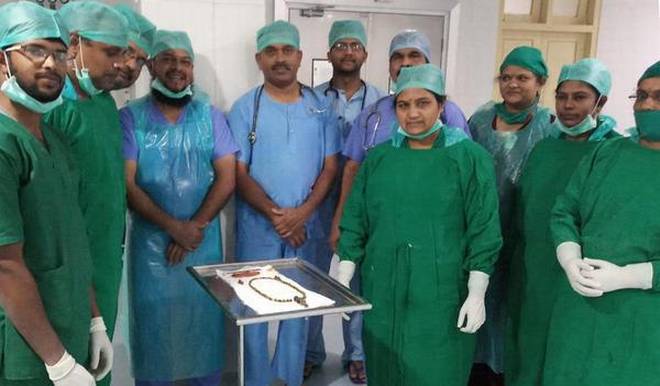
The surgical team displaying the 99 gallstones that were removed from a patient at Tumkur District Hospital. | Photo Credit: Special Arrangement

When 45-year-old Salma went to the Tumkur District Hospital with pain and swelling in her abdomen, little did she know that doctors would detect as many as 99 gallstones. Ms. Salma, a diabetic and having hypertension for the last 10 years, had visited several hospitals and was diagnosed with umbilical hernia. As she also had heart problem, she postponed the surgery.

However, at the Tumkur District hospital, an ultrasound revealed she had multiple gallstones in her abdomen. “When she came to us, she had severe abdomen pain. Her sugar level was abnormally high and haemoglobin was low, apart from other issues. We admitted her for 15 days and stabilised her parameters before we worked her up for the surgery. The surgery was done on Tuesday,” said Dinesh R. and Waseem Imran, the doctors who performed the surgery.

Dr. Waseem said although multiple gallstones are not unusual, finding 99 in a person is rare. “In the three-hour surgery we removed her umbilical hernia and the gallstones. She is recuperating well in the ICU. She will be discharged in eight days, he added.

source: http://www.thehindu.com / The Hindu / Home> News> States> Karnataka / by Special Correspondent / Bengaluru – February 28th, 2018

Parveez Shaikh is M&C Saatchi’s senior VP and ECD

Bengaluru, KARNATAKA / Mumbai, MAHARASHTRA :

M&C Saatchi India has appointed Parveez Shaikh as their senior vice president and executive creative director.Shaikh is best known for building Contract’s creative reputation during the 11 years that he spent at the agency before he quit, in 2003. He has worked as a creative consultant with a few leading agencies for a few years after that.

ParveezShaikhMPOs28feb2018

M&C Saatchi India has appointed Parveez Shaikh as their senior vice president and executive creative director.

Shaikh is best known for building Contract’s creative reputation during the 11 years that he spent at the agency before he quit, in 2003.

He has worked as a creative consultant with a few leading agencies for a few years after that.

Shaikh has worked on premium, blue-chip clients such as Philips Audio, Franklin Templeton AMC, Asian Paints, Shoppers’ Stop, ICICI Bank and Cadbury India.

He has won over a hundred national and international awards, including two Cannes Lions and five finalists at the prestigious Cannes Advertising Festival, an entry in the D&AD, the One Show, the New York Festival and the ‘Copywriter of the Year’ award.

He has also featured in the Indian Copy Book as one of the 16 best Indian copywriters of all time. Shaikh will be based in Mumbai.

source: http://www.campaignindia.in / Campaign India / Home> Advertising / by Campaign India Team / May 22nd, 2008

She lost her legs but pursued her dreams

Mumbai, MAHARASHTRA :

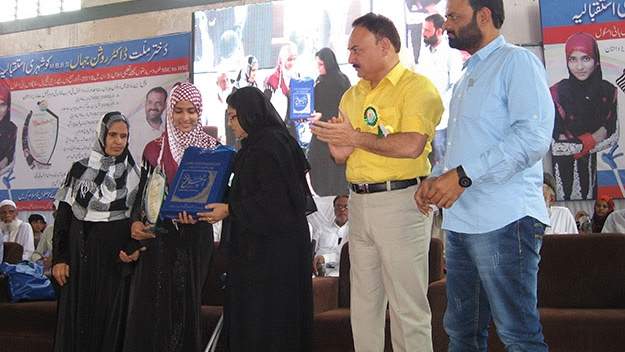
Ex Mayor Tahera Rasheed felicitating Roshan Jahan as her mother Ansara Khatoon, ASP Sunil Khadasne (second from right) and MLA Asif Shaikh (supplied photo)

Fighting all odds and overcoming physical and language barrier, she cracked MBBS exams and is now preparing for post-graduate entrance.

Having lost both legs in a train accident, facing acute poverty, and belonging to a conservative Muslim family. She would not have needed any other excuse to give up in life.

Yet, fighting all odds and overcoming physical and language barrier, she cracked MBBS exams and is now preparing for post-graduate entrance.

The inspiring story of Roshan Jahan, the 23-year-old Muslim girl from Mumbai who hit the headlines after passing this year’s MBBS finals, went viral on print and electronic media, Internet and social networking sites, with each minute detail, except for one thing that she also has a golden voice.

Roshan Jahan left hundreds of students who had gathered at Zaini Basheer Hall in Malegaon to hear her story, mesmerised, and teary-eyed, by reciting tunefully a poem written and composed by her.

The poem was dedicated to her mother, who Roshan said, deserved, after Allah the Almighty, all credit for her extraordinary success.

“It is because of my mother, after Allah, the Almighty and the most Merciful, that I am standing here in front of you as a role model,” she said amid applause from hundreds of students.

She said after losing her both legs in the train accident, there were times, when she would feel completely hopeless. But, it was her mother, she said, who lifted her spirits up and gave her hope in her darkest hours.

“After I survived the train accident, my mother would say think…why Allah gifted you a ‘second life’. It must be for something really big,” she recalled.

Roshan Jahan’s legs had to be amputated after she fell off a local train in October 2008 while travelling from Andheri to Jogeshwari. She has been using prosthetic legs since April 2009. She was returning home after writing her college exam papers at Anjuman-i-Islam Girl’s college, Bandra, when she lost her balance and fell onto the tracks and her legs came under the moving train.

Recounting her ordeal, she said, “Orthopedic surgeon Dr Sanjay Kantharia who operated on me took care of me like I was his daughter. Even after the accident in 2008, I did not drop out and studied at home and appeared for exams.

“I cleared the state’s medical entrance exam, MHCET, and was later asked to go for a medical test for the handicapped at JJ Hospital. The doctors there said that as per the rules, only students who had between 40% to 70% disability could be given admission in the MBBS course. I was denied admission as I had 88% disability.”

She said Kantharia then suggested she move court.

“We met senior lawyer V P Patil, who took up my case for free. During the hearing I would go to the court with my relatives. Justice Shah, after hearing my petition and seeing me visiting the court, directed the college authorities to admit me,” Roshan said.

source: http://www.khaleejtimes.com / Khaleej Times / Home> Specials> Happiness Times / by Ummid.com / April 14th, 2016

UM’s Ikhlas Khan Wins Lifetime Achievement Award

Aligarh, UTTAR PRADESH / Mississippi,  U.S.A  :

Ikhlas Khan. Photo courtesy of Ole Miss Communications

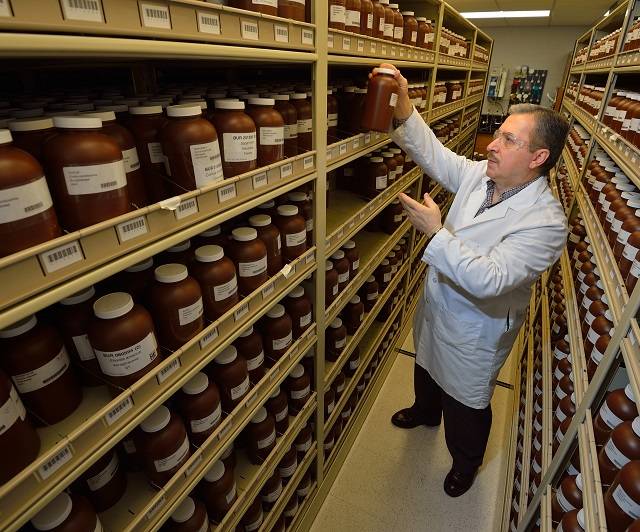
Ikhlas Khan, director of the National Center for Natural Products Research at the University of Mississippi School of Pharmacy, is the winner of AOAC International’s 2018 Harvey W. Wiley Award, which recognizes lifetime scientific achievement.

AOAC International develops global quality standards for microbiological and chemical materials, ranging from food to pharmaceuticals in an effort to ensure public health. Khan, who has been with the university since 1992 and directed the natural products center since 2017, has spent much of his career developing standards for dietary supplements.

“I’m very pleased to receive this award,” Khan said. “AOAC is the top organization for chemical standards, and I appreciate this recognition of my work in this area.”

As part of the honor, Khan will deliver the Wiley Award address and chair the Wiley Award Symposium at AOAC’s annual meeting in August in Toronto.

The Harvey W. Wiley Award has been given to one person a year since 1957, with past recipients including scientists from government, industry and academic institutions from around the world.

The National Center for Natural Products Research maintains a repository with more than 18,000 natural product specimens, derived extracts and pure compounds. Photo by Robert Jordan/Ole Miss Communications

Story by Sydney Slotkin Dupriest, courtesy of Ole Miss Communications

source: http://www.hottytoddy.com / HottyToddy.com / Home> Headlines> News & Views / February 21st, 2018

Sheikh Salim Gafur, driver who saved Amarnath pilgrims, gets second highest award

GUJARAT :

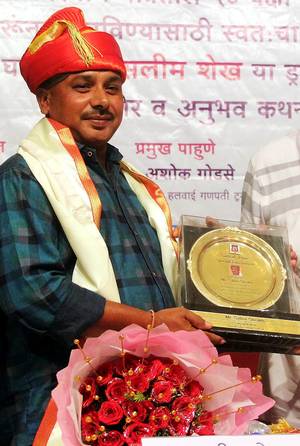
Salim Sheiekh, the bus driver of the ill-fated Amarnath bus who saved the lives of yatra pilgrims during a militant attack. FIle photo.

The Gujarati bus driver who saved 52 Amarnath pilgrims from terror attack has been awarded the “Uttam Jeevan Raksha Padak.”

A bus driver from Gujarat who drove through a hail of bullets and saved the lives of more than 50 Amarnath Yatra pilgrims last year has been selected for the Uttam Jeevan Raksha Padak, the second highest honour given to civilians for gallantry after the Sarvottam Jeevan Raksha Padak.

The Home Ministry announced this on Wednesday ahead of Republic Day.

Sheikh Salim Gafur displayed rare grit and bravery and continued to drive the bus which came under attack on July 10, 2017 in Jammu and Kashmir, an official said.

Daring escape

Seven pilgrims were killed and 14 injured when terrorists opened fire on the bus near Batengoo in Anantnag district, while 52 passengers escaped unharmed as Mr. Gafur showed presence of mind.

The State government will also honour him with a ₹1 lakh cash prize at a function to be held later.

The Jammu and Kashmir police got 38 of the 107 gallantry medals, followed by the CRPF (35) and the police forces of Chhattisgarh (10), Maharashtra (7) and Telangana (6). Five IPS officers are on the medal list.

The highest number of gallantry awards were won by security personnel involved in counter-terror operations in Jammu and Kashmir.

A total of 35 personnel serving in Naxal-affected areas and three in the Northeast too have won them.

Seven police officials have been awarded the medal posthumously.

Among them six were from Chattishgarh who laid down their lives in anti-Naxal operations at Chintagufa in Sukma district.

Nand Kishore Prasad, assistant sub-inspector, CRPF, has been selected for the police gallantry medal for showing exemplary courage in an operation against terrorists who attacked a bus carrying BSF personnel on June 3, 2016.

Of the 785 police medals announced, 616 are for distinguished service.

source: http://www.thehindu.com / The Hindu / Home> News> National / by Special Correspondent / New Delhi – January 24th, 2018

Insha Allah, I will plant one crore trees: Gaffar Bhai

Ramdechi (Gir), Junagar District, GUJARAT :

Talala (Gir forest border):

Rambechi village in Talala region boasts of Quraishi Baagh which has the unique distinction of 23 lakh plants / trees in 4 acre of land with 210 medicinal plants, to their credit the Qureshi couple – Gaffarbhai Muhammadbhai and his wife Zebunnisa provide cheap cure to hundreds of patients on very nominal rates.

With, on an average 25000 visitors every year; the plantation received several awards.

In addition to the prestigious Sardar Vallabhbhai Patel Award of the state government, Qureshi has been felicitated twice by the Presidents of India – Gyani Zail Sinh and A. Kalam.

Having visited plantations all over the country Qureshi imbibed on the spot knowledge of plants and medicines though he has no formal education in agriculture nor any diploma in horticulture.

He maintains a nursery from where people buy plants of their choice.

His most cherished desire is to enrich the earth with one crore trees, Allah willing.

source: http://www.milligazette.com / The Milli Gazette / Home> Online News> Community News / Online April 27th, 2013 (Print April 16-30th, 2013)

Asia’s 1st Woman Engine Driver, Mumtaz Kazi The Motorwoman Runs Mumbai Locals Like A Boss!

Mumbai, MAHARASHTRA :

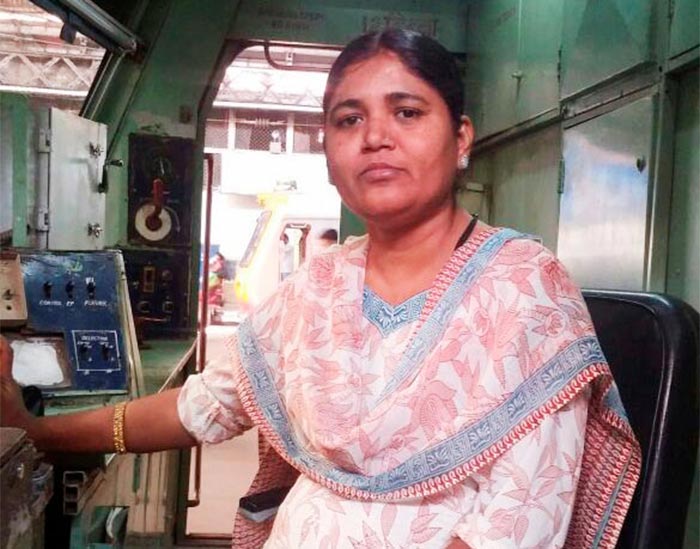
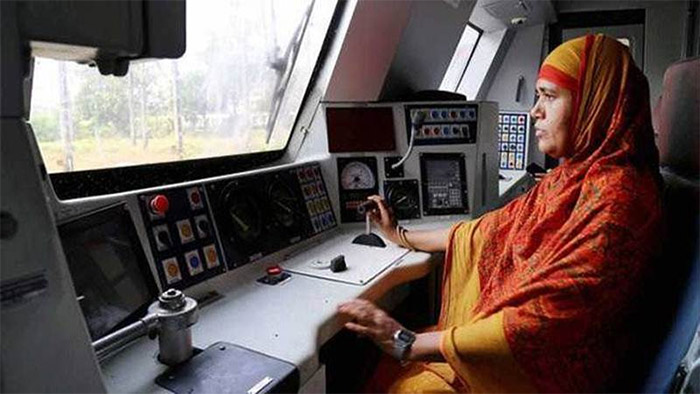
Women are going places, they say. But Mumbai’s Motorwoman, Mumtaz Kazi takes people places by driving them in Mumbai’s local trains. Not only is she one of the few motorwomen the world has seen, but she’s also a first in Asia, to begin with.

In a career span of more than 20 years, Mumtaz has driven various kinds of trains. She is also Asia’s first woman train driver.

MumtazKazi01MPOs28feb2018

Sure that didn’t come easy, did it?

From a very young age, Mumtaz wanted to be in Railways. Her father was a Trunk Superintendent at Churchgate railway station. She grew up in the railway quarters and used to watch the trains pass by.

MumtazKazi02MPOs28feb2018

She was born and brought up in Mumbai and went to Seth Anandilal Poddar High School. In 1989, just after her SSC, she applied for the job of the motorman.

Since that very year there was a change in the railway recruitment board policy in India, Mumtaz could sit for the examinations and applied for it.

MumtazKazi03MPOs28feb2018

She did extremely well in examinations, leaving everyone impressed with her ambitiousness. And, was appointed in 1991 just after her class twelve examination.

While she was extremely happy about the job, she faced a bit of resistance from her father’s side upon her decision. Her father, Allahrakhu Ismail Kathawala, asked her to complete her Diploma in Medical Laboratory Technology (DMLT) course first.

After much convincing, Mumtaz’s father gave in and gave her his blessings. And, she became the first motorwoman. In its 1995 edition Limca Book of Records acknowledged Mumtaz’s success and she became the first woman diesel engine driver in Asia at the age of 20.

Not only that, Mumtaz also went on to become the first train driver to possess the skill of driving both Electric and Diesel engine.

MumtazKazi04MPOs28feb2018

Throughout her journey, Mumtaz was the courageous support system to her family. It was because of her, they could buy a home in Mumbai and she also helped with her brothers’ education. Both her brothers, Imtiyaz and Feroz, are engineers and settled abroad.

But that’s not the only thing for which she makes all look up to her. When she’s not driving trains and being on the job, she is a homemaker and loves spending time with her family.

She got married to an electrical engingeer from Nandoorbar, Maqsood Kazi, in 2002 and is a proud mother of two kids Tausif Ahmed and Fateen.

MumtazKazi05MPOs28feb2018

In the year 2015, she was awarded Railways General Manager Award.

And, in 2017, on International Women’s Day, she was awarded the Nari Shakti Award by President Pranab Mukherjee.

Mumbai’s local train is one of the busiest railway network and Mumtaz, like a boss, pilots the busiest local trains. With her grit and determination, Mumtaz, over the course of more than two decades, has set an example that there’s no job that women can’t do. After all, the levers on the train don’t know if it’s a man or a woman’s hands operating them.

source: http://www.storypick.com / StoryPick. / Home> Culture / by Rachna Srivastava / March 10th, 2017

Images source/s : http://www.rediff.com , www.mid-day.com, www.aanavandi.com