Cricketers congratulate Mohammad Kaif on crossing 10,000 first-class runs
Kaif is still scoring runs in the domestic circuit
A solid middle-order batsman and a live-wire on the field, Mohammad Kaif still holds a special place in the hearts of Team India fans, despite last playing an international match over a decade back. He continues to ply his trade at the domestic level, captaining Chattisgarh in the Ranji Trophy. He recently completed a personal milestone in his career, going past 10,000 first-class runs.
In 178 matches, he averages 39.84, with 19 centuries to his credit. He featured in a total of 125 ODIs and 13 Tests for the national side in a career that extended from 2000-2006. He was also part of the 2003 World Cup team. He played a stellar role in the finals of the 2002 NatWest series, steering India home with an unbeaten 87. He came into the limelight when he captained the Indian U-19 team to victory in 2000.
In 2014, he jumped into the political bandwagon, joining the Indian National Congress ahead of the Loksabha elections.
Cricketers took to Twitter to congratulate the 35-year old on reaching the landmark.
source: http://www.sportskeeda.com / SportsKeeda.com / Home> Cricket> First Class Cricket / by Aadya Sharma @aadyasharma20 / October 10th, 2016
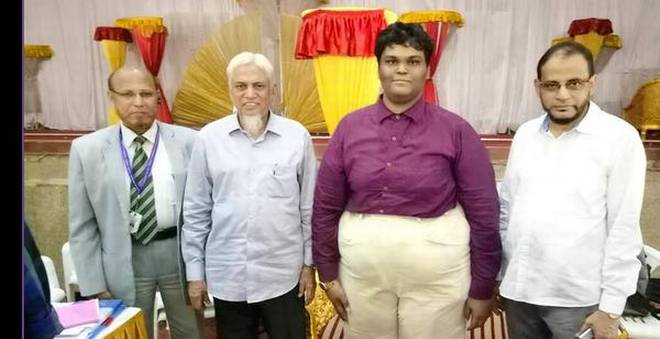
(From left) Zahid Husain, Alhaj A. Mohammed Ashraf, Mohamed Rifath Shaarook Raaj and Amanullah Shah | Photo Credit: special arrangement
Mohamed Rifath has just joined a physics undergraduate course at New College, but his classmates and teachers are seeing him as a star scientist. Read on and find out why
Can you imagine a fresher receiving a rousing welcome at his college, on the day of joining? When Mohamed Rifath Shaarook Raaj recently joined the B.Sc Physics stream of New College, he was being accorded a reception befitting a celebrity. Not only that, the secretary and correspondent of the college, A. Mohammed Ashraf, had waived off his fee for the undergraduate course, and also promised that the college would take care of his education till he completed his Ph.D.
Rifath, 18 years old, is the Lead Scientist of Space Kidz India (SKI), a Chennai-based organisation promoting students’ research in science and working towards making science accessible to students. Rifath is part of a team that has designed a satellite, which is expected to be launched into space on 21 June, 2017 from the NASA Wallops Space Flight Facility, Virginia, at no cost.
Major Zahid Husain, principal of the college, said that fellow students should emulate this young scientist and that it was a great honour for the college to enrol him. The student scientist has not only taken the local educationalists by storm but even the judges and directors of Colorado Space Grans Consortium were awe-struck by his experiment. Thus his satellite (supported by his team-mates) is planned to be launched into space on June 21, 2017 from NASA Wallops Space Flight Felicity, Virginia at no cost.
“NASA and I doodle Learning Inc. conducted a space challenge called ‘Cubes in Space’. Students have to design an experimental satellite which will help develop space technology. The best-designed satellite will get a sub-orbital space flight to real space on a NASA Rocket. Being a member of the NASA Kids Club, I learnt about this challenge and decided to design together with my team, an experimental satellite that will fit inside a 4cm cube and weigh 64 grams with +/- 1 gram limit (neither high nor less since it may affect the centre of gravity). Apart from creating just a payload, we wanted to design, build and launch a full satellite within a 4cm cube with a mass of 64 grams,” he explains.
Rifath, who hails from Pallapatti in Tamil Nadu, completed his schooling from Crescent Matriculation School, scoring 62.5% in the higher secondary board exams, and wants to emulate former President A.P.J. Abdul Kalam.
“It all started when I was chided for making paper rockets; so I was determined to make a real one. I participated in the first edition of Young Scientist-2013 conducted by Space Kidz India and met its director Srimathy. I participated till the third edition of Young Scientist, even though I didn’t win but she noticed my talent. Then, I joined the organisation. My initial project with SKI was making a balloon-satellite with NSLV (Near Space Launch Vehicle) which was a huge success and we got into the Limca Book of Records and became the first private company in India to launch an NSLV. After launching a balloon-satellite to near space (>40km altitude), we wanted to send a satellite or a spacecraft to true Space (>100km where the Karman line and official true space starts). At first, we concentrated on the standard one unit 10cm cube satellite of 1kg mass but as we proceeded, we realised the cost would be too high. As students we were strapped for money and therefore, reduced the size and mass of the Cube satellites (Cube Satellite itself is a Nano satellite but we wanted to reduce the size further).
“At first, we wanted to create something similar to Kicksats but they are not true satellites but just a postcard sized PCB with non-customisable electronics, which cannot work, without a big mother satellite — in other words, it’s just a Space toy. But we always wanted to create an independent full-fledged fully-customisable, scalable, low-cost satellite with new technology. Initially we designed a 125gram, 5cm cube satellite which is 1/8th of a standard cube satellite which will also reduce the cost of the launch. But later, due to NASA’s challenge guidelines we built a 3.8cm independent cube satellite. Previously, a 5cm cube satellite was the smallest satellite, but now we are about to break that record and it’s also going to be the first 3D-printed satellite to be launched into space.
“Here, we are only talking about sub-orbital spaceflight in which our satellite will go into space on a rocket, do the research and land again on surface/ocean in a capsule, so the students can get back their satellite, research more and create a better space system which can be used in orbital and interplanetary missions. Our aim is not to just send a Cube satellite, built from Off-the-shelf components previously available in space market, and launch that into space. Our invention is to create a new space platform. We are also creating a space platform where our future scientists can develop their own payloads, and, for example, we can use this kind of Femto satellite constellations as Ham Radio reflectors which we can use in disaster-like situations when all other communications may fail.
We may face solar flares which may destroy satellites outside earth’s magnetosphere (36,000 km altitude). In situations like these, these Femto satellites can be a backup; they can be quickly launched and protected by an artificial magnetosphere, since they are very small. This satellite is fully 3D-printed, other than electronics.”
source: http://www.thehindu.com / The Hindu / Home> News> Cities> Chennai / by M.O. Badsha / June 16th, 2017
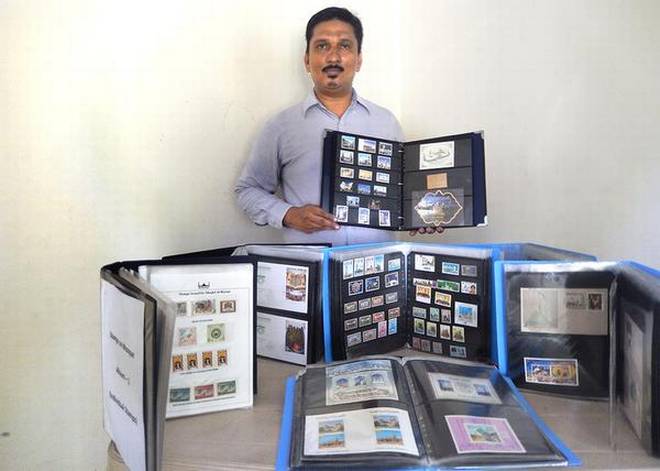
Going strong: Y. Abdul Rasul has been collecting stamps since he was 10 years old.
Abdul Rasul’s trove of 5,915 mosque stamps sets a world record
Y. Abdul Rasul was one of many philatelists collecting whatever stamps came his way, till a chance meeting with Viswanatha Iyer, another philatelist, in 2005 paved the way for his entry into the Guinness Book of Records.
“He gave me his collection and advised me to focus on the theme of mosques and it has paid rich dividends,” recalls Mr. Rasul, a 41-year-old IT professional who has entered the Guinness Book of Records for the largest collection of 5,915 stamps featuring mosques.
The oldest stamp in his possession was released by the Afghanistan government in 1892. Mr. Rasul also has a rare stamp with inverted centre — printed upside down — released in Somalia in 1902. “Normally these stamps are immediately withdrawn. A few people, however, are able to get them and I obtained one,” said Mr. Rasul, who began collecting stamps when he was 10 years old.
Both his grandfather G. Abdul Rasul and father R. Yusuf were ex-servicemen. His grandfather saw action against the Japanese in the Second World War.
“When my father was working in the Middle East, he would write letters and I started collecting the stamps,” recalled Mr. Rasul who has stamps from 95 countries, many displayed on his interactive site www.mosquestamps.com.
Besides Viswanatha Iyer, who had a huge collection of stamps from Travancore, Balakrishna Das, president of the South Indian Philately Association, and Abdul Azeez, a Varanasi-based philatelist, also played a major role in Mr. Rasul achieving his feat.
Saudi Arabia and other Islamic countries release special stamps to mark the annual Haj pilgrimage and these stamps form a section of Mr. Rasul’s collection.
source: http://www.thehindu.com / The Hindu / Home> News> States> Tamil Nadu / by B. Kolappan / Chennai – June 12th, 2017
Bilal Mohiuddin Bhat from remote border district of Handwara in North Kashmir had appeared for the UPSC examination four times.
Bilal Mohi Ud Din Bhat, ranked tenth in the Union Public Service Commission’s civil services examination for 2016, had his heart set on the prestigious administrative services since childhood.(Handout)
Jammu and Kashmir’s Bilal Mohi Ud Din Bhat, ranked tenth in the Union Public Service Commission’s (UPSC) civil services examination for 2016, had his heart set on the prestigious administrative services since childhood. “If you are determined to push the limits, nothing is impossible,” he says. His achievement, Bhat feels, “will mean a lot to the people of the Valley and inspire the youth to make a career in the civil services.”
Someone who believes “everything is well within your reach if you are determined to get it,” Bhat is a 2013 batch Indian Forest Service (IFS) officer who has been posted as deputy conservator of forests in Lucknow since 2015. This was his fourth civil services attempt and topping it is a “dream come true,” says Bhat, delighted at this “good opportunity to serve the country.”
Last year Jammu and Kashmir’s Athar Aamir ul Shafi Khan was ranked second in the 2015 national civil services exam.
Bhat said he could not believe he had made it to the top 10 ranks when the results were announced, “but was glad” with the ranking in the “country’s toughest exam”. The news had taken a few minutes to sink in, he said.
On what his achievement meant, Bhat’s response was that it meant a lot not only to him but to the people of the Valley. “I’m sure our achievements will inspire the youth of the Valley to make a career in civil services and work for the country’s progress.” He felt he was now “responsible for working for people and among people. I want to become a good officer who has the ability to identify and anticipate the problems of the people and to solve them.”
Talking about his home in the remote border district of Handwara in north Kashmir, Bhat says it is a place of peace and solace. “My dada and dadi (grandparents) live there. I often go to visit my village to take their blessings and those of other relatives. The scent of the old house reminds me of techniques of construction which were suitable for us.”
He said the village women struggle for amenities of life, “it’s tough for them.”
When asked about the unrest in J-K, his response was,”let’s not make it political.”
After passing Class 12 in J-K, Bhat did a five-year veterinary course from Jammu and worked as an administrative officer in the J-K Administrative Services between 2011-13 as a commercial tax officer. With his heart set on becoming an IAS officer, however, he started studying in earnest for the civil services examination and in 2013 became an IFS (forest service) officer.
He comes from a family of achievers. His father, GM Bhat, retired as an administrative officer in the J-K government. “We are four brothers and a sister who is eldest among all and is a teacher. My elder brother is a joint director in science and technology in J-K, another brother is a cardiologist posted in Boston, USA. His third brother is a consultant in the medicine department, also in J-K.
On his future plans, this young topper says “I will keep working hard and serve the country to the best of my ability as a civil servant.”
source: http://www.hindustantimes.com / Hindustan Times / Home> Education / by Rajeev Mullick, Hindustan Times, New Delhi / June 02nd, 2017
Durban (Natal), SOUTH AFRICA : (ancestry tracing back to Gujarat) :
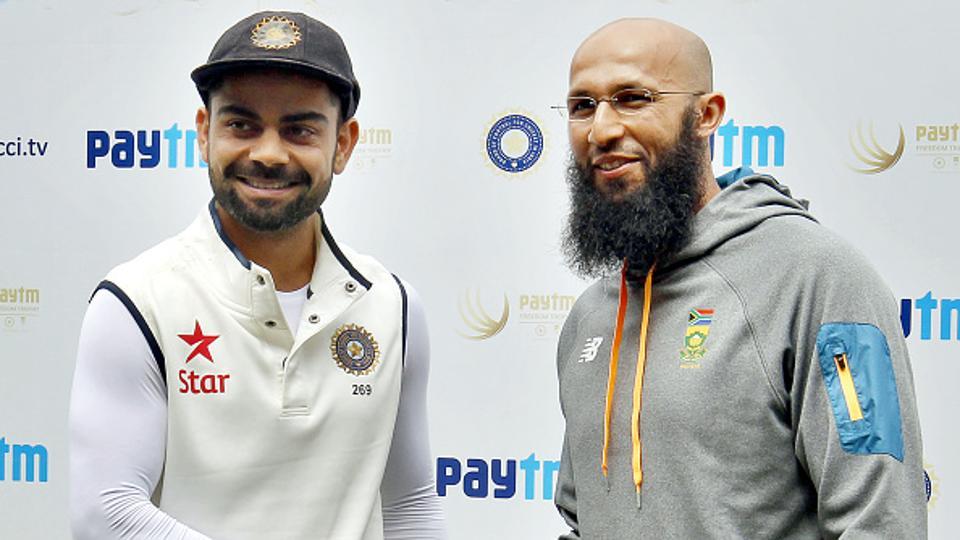
Hashim Amla broke Virat Kohli’s record and became the fastest to 7000 ODI runs during South Africa’s third and final game of the series against England at Lord’s.
Hashim Amla surpassed Virat Kohli to become the fastest to 7000 ODI runs during South Africa’s game against England at the Lord’s on Monday. (Hindustan Times via Getty Images)
Hashim Amla shattered Virat Kohli’s ODI record during the third match between England and South Africa in Lord’s as he became the fastest to aggregate 7000 runs.
The South African opener reached the landmark ( in his 150th ODI innings) in the seventh over of the innings as he pulled England pacer Steven Finn to the deep square leg fence for a boundary.
Virat Kohli had held the record after he went past 7000 ODI runs in 169 innings. The current India skipper reached the milestone during the ODI against Australia in Melbourne in January 2016. It was a memorable match for Kohli as he slammed his 24th century, but India lost by three wickets.
Amla has been in magnificent form in 2017. In the Indian Premier League, he slammed two centuries playing for Kings XI Punjab. Overall, he ended the tournament with 420 runs at an average of 60. In the two matches against England before the Lord’s ODI, he had scores of 73 and 24.
The former South Africa skipper also holds the record for the fastest to 6000 ODI runs, having got there in 123 innings. He was also the fastest to 5000, 4000, 3000 and 2000 runs, having got to the landmarks in 101, 81, 57 and 40 innings respectively.
source: http://www.hindustantimes.com / Hindustan Times / Home> Cricket> CT2017 / by HT Correspondent, Hindustan Times, New Delhi / May 29th, 2017
It’s a double reason for G Naseer Hussain to feel on top of the world. A student of Shaheen PU College here, the boy has secured 3rd rank in the CET for admission to a course in Indian Systems of Medicine and Homoeopathy and 4th rank in the CET for admission to a course in veterinary science.
Naseer is the son of Mehboob, a lawyer, and Ruksana Begum, residents of Sindhanur in Raichur district.
The student has scored 59/60 in chemistry, 58 in physics, 56 in biology and 38 in mathematics. The boy said he used to dedicate 14 hours a day for studies and attended the training programme for CET and NEET in his college. He wants to realise his dream of becoming a doctor and is waiting for the NEET result.
source: http://www.deccanherald.com / Deccan Herald / Home> States / DH News Service, Bidar / May 31st, 2017
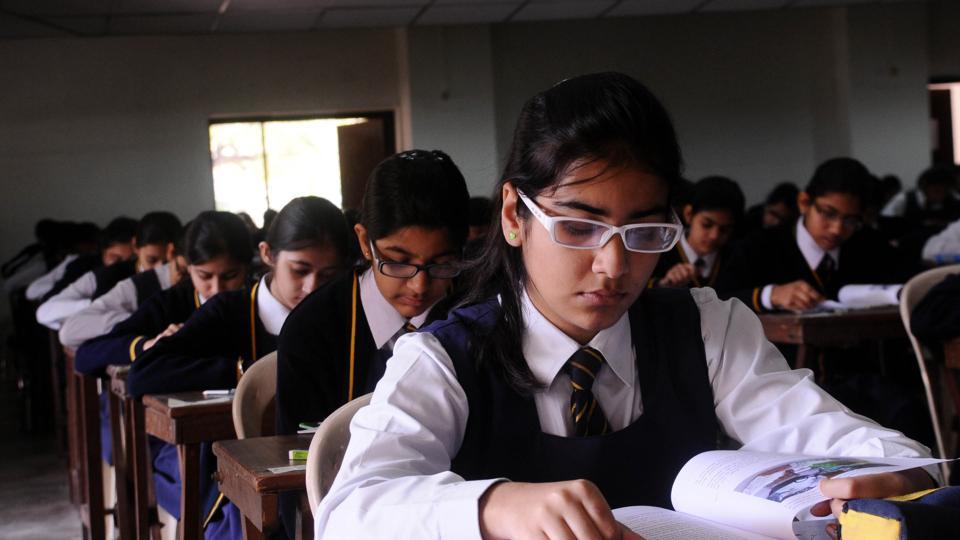
ICSE results 2017: Muskan Abdullah Pathan of Pune’s Hutchings High School and Ashwin Rao of St Paul’s English School, Bengaluru were declared as the joint toppers.
ICSE results 2017: Muskan Abdullah Pathan of Pune’s Hutchings High School and Ashwin Rao of St Paul’s English School, Bengaluru were declared as the joint toppers. (Deepak Gupta/HT photo)
Muskan Abdullah Pathan of Pune’s Hutchings High School and Ashwin Rao of St Paul’s English School, Bengaluru were declared as the joint toppers in the Council of Indian School Certificate Examination’s (CISCE) ICSE or Class 10 exam on Monday.
Both of them scored 99.4% marks.
Nearly 1,76,327 candidates registered for the Indian Secondary Certificate Examination exams this year.
The results for the ICSE and Indian School Certificate (ISC) were delayed this year as the exams began at least a week later than usual because of the assembly elections that were held in five states. Last year the results were declared on May 6.
Candidates can check their results by clicking on the ‘Results 2017’ link on the council’s website – www.cisce.org – or by logging on to the careers portal https://careers.cisce.org/helpdesk/login.aspx. They can also access them by sending a text message to 09248082883.
The CBSE 10th result 2017 will also be announced soon. The Central Board of Secondary Education declared the Class 12 board examination 2017 on Sunday.
source: http://www.hindustantimes.com / Hindustan Times / Home> Education / by HT Correspondent, Hindustan Times – New Delhi / May 29th, 2017
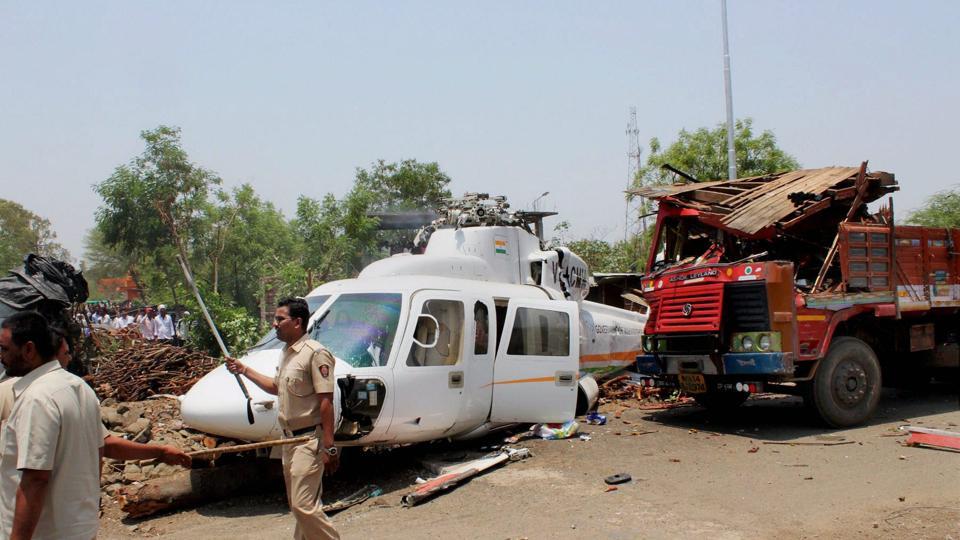
A helicoptor carrying Devendra Fadnavis and his team crashed in Latur on Thursday due to a technical snag.
The wreckage of the helicopter, carrying Maharashtra chief minister Devendra Fadnavis and his team, that crashed-landed in Latur on Thursday.(PTI Photo)
When a chopper carrying Maharashtra Chief Minister Devendra Fadnavis and five others came crashing down in Latur on Thursday afternoon, the first person to rush to the rescue was small-time scrap dealer Irfan Shaikh, who shouted “Our king (CM) is trapped in the chopper”.
While Shaikh ran towards the chopper to rescue those inside, some others nearby ran away from the aircraft, fearing it might explode.
The chopper came hurtling down from a height of nearly 80 feet in a thick cloud of dust, accompanied by some flashes of light and a loud booming sound.
While others bolted from the chopper, the 28-year-old Shaikh – unmindful of the risk, ran towards the craft to see how he could help the people stuck inside.“The copter door was jammed and could not be opened… I pushed it but it didn’t budge… The Chief Minister then responded by pushing it from inside… Then I managed to force it open from outside… I offered my hand to the CM and helped him step down,” Shaikh told a local mediaperson, Govind Ingle of Lokmat Group.A shaken Fadnavis told Shaikh that he was “fit and ok”, and asked him to help the pilots and others on board the chopper even as he walked a few steps away.Officials of the Chief Minister’s Office in Mumbai confirmed the developments on Friday, but declined to say whether Fadnavis would felicitate or honour the scrap dealer for rushing to assist them at a critical time, as the chopper could have exploded.Later, Fadnavis told people that it was the “blessings of the 12-crore people of Maharashtra and Jai Bhavani” which helped him and the five others survive the crash.
source: http://www.hindustantimes.com / Hindustan Times / Home> Cities> Mumbai / by Indo Asian News Service, Latur / May 26th, 2017
Old is gold Mahboob Radios in Hyderabad packed with vintage collections. Serish Nanisetti | Photo Credit: Serish Nanisetti
A ‘shop like no other’ in Hyderabad’s Old City fixes antique radios from across country
“This is a Johnson radio from the U.K. It is over 80 years old. This is a spool tape recorder that I am told is still used by All India Radio and Radio Ceylon. That one is the oldest radio we have: the original GEC radio, which used to run with a dry battery,” says Muhammad Moinuddin, as he walks around his small shop on the Chatta Bazaar Road in Hyderabad’s Old City.
Mahboob Radios is packed with vintage radios, record players and cassette decks from a different era. The names on the electrical devices include Murphy, Philco, Marconi, Telefunken, Grundig, HMV and Philips.
“This Grundig spool recorder and the HMV record player belonged to Marri Chenna Reddy. Only we can repair these as we have a stock of 4-volt and 6-volt valves. There are no repair shops like this anywhere in India. Whatever cannot be repaired, we can repair. We have customers who send their radios from Mumbai and Kolkata,” says Mr. Moinuddin.
80 years old
The 80-year-old shop was established by his father Shaikh Mahboob in his house in the Dabeerpura area. “Once my father realised that the new city would soon become densely populated, he bought this place for Rs. 7,000 and established the shop,” he says.
Now, the shop is run by Mr. Moinuddin and his brother Mujeebuddin.
Earlier, the brothers not only sold and repaired radios, they also assembled them from completely knocked down kits (CKDs). “Most of the radios that are being sold now are use and throw. They cannot be repaired like these,” says Mr. Mujeebuddin, the older brother, who deftly tightens the tuning thread on a Philco.
source: http://www.thehindu.com / The Hindu / Home> Society> History & Culture / by Serish Nanisetti / Hyderabad – May 27th, 2017
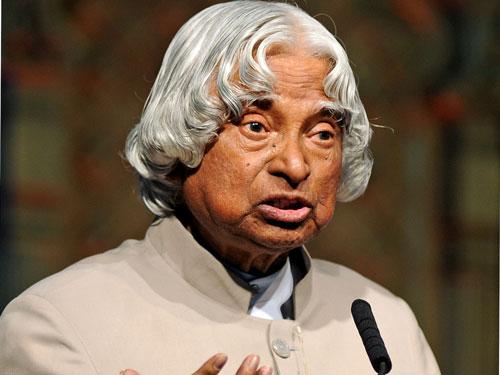
Kalam had his early training at NASA in 1963 before he set up India’s first rocket-launching facility in the fishing village of Thumba in Kerala. DH Photo
In great news for India, scientists at NASA have named a new organism discovered by them after the much-loved A P J Abdul Kalam.
Till date, the new organism — a form of a bacteria — has been found only on the International Space Station (ISS) and has not been found on earth!
Researchers at the Jet Propulsion Laboratory (JPL), the foremost lab of NASA for work on inter-planetary travel, discovered the new bacteria on the filters of the International Space Station (ISS) and named it Solibacillus kalamii to honour the late president, who was a renowned aerospace scientist.
Kalam had his early training at NASA in 1963 before he set up India’s first rocket-launching facility in the fishing village of Thumba in Kerala.
“The name of the bacterium is Solibacillus kalamii, the species name is after Dr Abdul Kalam and genus name is Solibacillus which is a spore forming bacteria,” said Dr Kasthuri Venkateswaran, senior research scientist, Biotechnology and Planetary Protection Group at JPL.
The filter on which the new bug was found remained on board the ISS for 40 months. Called a high-efficiency particulate arrestance filter or HEPA filter, this part is the routine housekeeping and cleaning system on board the international space station.
This filter was later analysed at JPL and only this year did Venkateswaran publish his discovery in the International Journal of Systematic and Evolutionary Microbiology.
According to Venkateswaran, even as it orbits the earth some 400 kilometres above, the ISS is home to many types of bacteria and fungi which co-inhabit the station with the astronauts who live and work on the station.
Venkateswaran said even though Solibacillus kalamii has never been found on earth till date, it is really not an extra-terrestrial life form or ET.
“I am reasonably sure it has hitch hiked to the space station on board some cargo and then survived the hostile conditions of space,” explained Venkateswaran.
Naming the new microbe after Kalam was natural to Venkateswaran and his team.
“Being a fellow Tamilian, I am aware of the huge contributions by Dr. Kalam,” he said.
New bacteria are usually named after famous scientists.
Venkateswaran is part of a team which is asking that eternal question “are we alone in the universe?”
Towards that, his responsibilities include monitoring the bug levels on the ISS and he also has to ensure that all spacecraft that fly to other planets are free of terrestrial bugs.
One of his big jobs was to ensure that NASA’s Mars Curiosity rover — the massive car-sized almost 1000 kg buggy — was totally sterile when it left earth.
By international law, this extreme hygiene is required else other planets could get contaminated by bugs that reach the Martian or other planets hidden on human satellites.
Today the ISS is the size of a football field and its construction started with a launch in 1998 and as of now it is the largest human-made object orbiting the earth.
Weighing about 419 tonnes, it can house a maximum of six astronauts and has costs roughly USD 150 billion.
Till date, 227 astronauts have flown to the space station. This makes the space station actually a very dirty place and maintaining hygiene is critical so that humans can live on it with ease.
On the space station all the air and water is recycled, being a completely closed environment there is a rapid build- up of moulds and bacteria on the station.
These not only have to be cleaned but monitored to ensure that they do not corrode the walls of the space station and do not turn hazardous to the astronauts.
Venkateswaran’s main job is to monitor the environment of the space station so that harmful bugs do not proliferate.
He heads the ‘Microbial Observatory’ on the ISS projects to measure microorganisms associated with compartments owned by the US.
According to NASA, he also directs several research and development tasks for the JPL – Mars Program Office, which enables the cleaning, sterilisation, and validation of spacecraft components.
He directs several NASA competitive awards on the microbial monitoring of spacecraft and associated environments for the Exploration System Mission Directorate, closed habitats like ISS or its earth analogues for the Human Exploration and Operation Mission Directorate.
But is the new bug of some use.
“These spore formers tend to withstand high radiation and also produce some useful compounds protein wise which will be helpful for biotechnology applications,” Venkateswaran said.
His team has not characterised the bacteria fully but he hints that the new bug could be a key source for chemicals that can help protect against radiation damage.
source: http://www.deccanherald.com / Deccan Herald / Home / Press Trust of India, Los Angeles / May 21st, 2017