London, UNITED KINGDOM :

1915 :: Muslim Soldiers of British Indian Army Listening to Eid Khutbah(Sermon) In Working Mosque on Eid , London
source: @IndiaHistorypic (Twitter) / Indian History Pics
London, UNITED KINGDOM :
1915 :: Muslim Soldiers of British Indian Army Listening to Eid Khutbah(Sermon) In Working Mosque on Eid , London
source: @IndiaHistorypic (Twitter) / Indian History Pics
Lucknow , UTTAR PRADESH :
Soaring High

If you thought only guys can do wheelies, twirl in the air on their bikes and land on the ground, only to take off for another stunt, think again. For here’s a young woman who’s sure to give all those men, who brag about great stunts, a run for their money.
Probably the youngest professional bike stunt performer and rider in the country, Anam Hashim says she knew her heart lay in riding when she was barely 11.
In 2015, she became the youngest Indian female rider to scale the Khardung La Pass on a 110cc TVS Scooty, a record-breaking feat which has entered the India Book of Records.
In an interview with Nina C George, Anam talks about what got her hooked to riding and how it felt to be atop one of the country’s highest points.
When did you first discover your love for bikes?
As a child, I used to run behind my father whenever he rode the bike and tried to get a hold of the handle bar. In fact, it is my father who gave me my first ride and a feel of what it is like to handle the machine. He would make me sit in front and give me a chance to hold the handle bar and control the bike.
Have you undergone any formal training in performing bike stunts?
I began learning on my own and slowly, I started taking lessons from a few well-known bikers across the country. I would spend a lot of time reading, researching and understanding what bike stunts are about and the safety measures involved. You can’t suddenly wake up one morning and want to do bike stunts. There’s a certain logic and principle behind the whole process.
Is bike stunt riding a popular sport?
No, it wasn’t popular until recently. Bike stunt riders are aplenty in the West but we don’t find many here. In an effort to introduce a championship for stunt riding in India, I had recently organised the ‘India Bike Week’ Stunt Championships and the response was truly encouraging.
What was it like to scale the Khardung La Pass on a scooty?
At first, it seemed like an impossible task but when I began riding, I not only found the whole process quite challenging but also an enjoyable one. There were places where there were no roads or even a path to ride on. I had to negotiate really rough terrains to reach the top but the excitement of getting atop was irresistible.
Being a woman, do you find stunt riding tough?
I believe nothing is impossible. Every rider has to keep himself or herself extremely fit physically, emotionally and mentally. Bike stunts are not for the weak-hearted. I eat every three hours and exercise to build strength.
How do you keep yourself motivated?
I keep myself updated about the latest developments in the world of stunt riding. I watch a lot of videos and interact with riders who have been in the field for a long time. Sometimes, I look at my own videos to keep my spirits high.
Have you ever experienced fear during your rides?
I’ve certainly experienced fear but I try and overcome it and move on. I try to focus on the task at hand and concentrate on achieving it.
We hear you are a good cook…
Yes. I mustn’t brag about myself, but I make the most amazing ‘Nawabi biryani’ and ‘khichdi’.
What’s next?
I will soon be leading a group of 10 women, riding the TVS Scooty Zest 110cc, to Khardung La Pass in August 2016. The riders will be chosen through an all-India competition named ‘Himalayan High Season 2’. The 10 shortlisted riders will undergo training before the final ride.
source: http://www.deccanherald.com / Deccan Herald / Home> Supplements> MetroLife / DHNS – June 20th, 2016
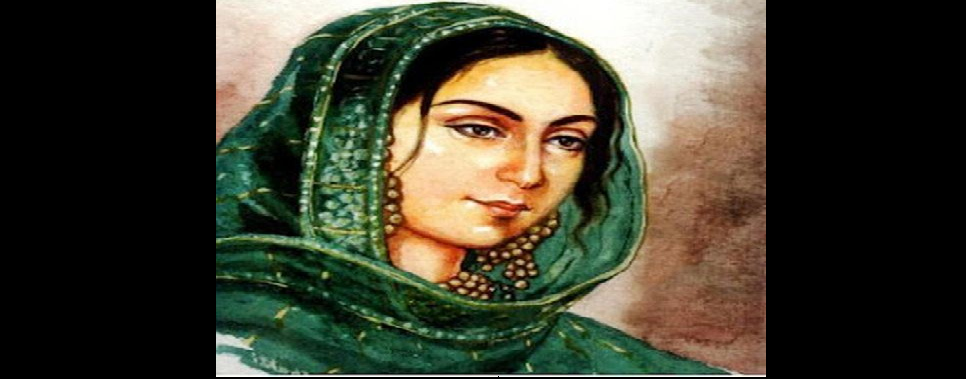
Awadh(Lucknow), UTTAR PRADESH :
June, in particular is a good month to remember Begum Hazrat Mahal who led the first war of independence against the British in Lucknow. This Begum of Avadh had defied British forces of the East India Company in the great uprising of 1857.
She was one of the nine divorced women of Wajid Ali Shah, Lucknow’s last ruler.
“When the king left Lucknow on 13 March 1856 he took with him as well as his mother, three of his wives including Khas Mahal and Akhtar Mahal. An unknown number of wives were left behind in Lucknow as well as nine divorced women including Hazrat Mahal and her young son,” writes Rosie Llewellyn-Jones in The Last King in India.
Begum Hazrat Mahal took charge of the city despite her divorce from the king and her supporters included Raja Jailal Singh, a former Nizam of Azamgarh. It was Raja Jailal who fed support to the rebellion from the suburbs around Lucknow.
The other supporter defending Lucknow was Nana Sahib, a Maratha soldier and childhood friend of Rani Lakshmibai. Nana Sahib led the revolt against the British in Kanpur. Like Begum Hazrat Mahal he too retreated to Nepal after the British regained Lucknow in 1858.
Wajid Ali Shah was forced to leave Lucknow for exile in Calcutta, by the British. Lucknow was one of the most bitterly contested cities during this first war of independence against the British.
Between the exile of Wajid Ali Shah in March 1856 and the first war of independence in June 1857, Lucknow was defended by Begum Hazrat Mahal and she ruled as regent for 10 months. Her 12 year old son Birjis Qadr was crowned in the Baradari at Qaiserbagh, the palace built by his father.
After the British overpowered the freedom fighters, Begum Hazrat Mahal refused a pension and continued gorilla attacks on British military centers till November 1859. She spent the rest of her life in Kathmandu, Nepal and was buried there in 1879.
It may be recalled that fighting broke out at the end of June in 1857 against the British after soldiers mostly from the Avadh region heard that their mild mannered ruler was unceremoniously stripped of his throne and his kingdom by the British on grounds of mismanagement. Their first reaction was one of disbelief. Their second reaction was of anger. soldiers in different parts of north India took up arms and in Lucknow laid siege to the city’s British Residency where English and Anglo Indian inhabitants were hiding for four and a half months between July and November 1857.
But before Begum Hazrat Mahal transformed into a revolutionary she was a fairy. It may be recalled that apart from official wives and temporary wives there was yet another category of women, the pari or fairy who was often taken on as a temporary wife if the king found her pleasing and talented. The fairies were certainly an innovation of Wajid Ali Shah, poet prince and were recruited from the lower classes, including courtesans who lived mainly in Chowk, in the old city.
These women were not educated but after tuitions some of them acquired sophistication. Some fairies went on to become expert singers or dancers while others proved to be good for nothing.
Begum Hazrat Mahal’s maiden name was Muhammadi Khanum, and she was born in Faizabad. Her father was a slave called Umber owned by a Ghulam Hossein Ali Khan. Her mother was a Muslim mistress of Umber. A courtesan by profession, Muhammadi was taken into the royal harem after being sold by her parents.
She was later promoted to a fairy and was called Mahak Pari by the king. She became a begum after being accepted as a royal concubine of Wajid Ali Shah and the title Hazrat Mahal was given to her after the birth of their son, Birjis Qadr.
For some time Wajid Ali Shah was completely smitten by Hazrat Mahal. writing many poems for the dusky beauty.
Soon the king moved on to other women but in 1845 when he learned that Mahak Pari was pregnant, he immediately put her into purdah and gave her the title of Iftikhar-un-nisa or pride of all women.
Now this beautiful fairy, brave freedom fighter and pride of all women is immortalised in a documentary film directed by Mohiuddin Mirza and produced by the Films Division that was screened in the city by Lucknow Expressions Society in the presence of Kaukab Qadr Meerza, great grandson of Begum Hazrat Mahal and Manzilat Fatima, the warrior queen’s great great grand daughter.
“The aim is to never forget how the entire city had united under the leadership of Begum Hazrat Mahal to stand up against the British irrespective of religious and gender differences,” said an organiser of the event.
source: http://www.thecitizen.in / The Citizen / Home / by Mehru Jaffer / Monday – May 30th, 2016
Lucknow:
It will be a royal evening for Lucknow coming Monday when in the company of the last Queen of Awadh, Begum Hazrat Mahal, the city will come face to face with its past. In the 137th death anniversary year of the Queen, an unsung hero of the first war of Independence of 1857, a documentary on her will be screened on May 30.
Claimed to be the first ever film on the Queen, the 26-minute documentary has been directed by national award-winning director Mohi-ud-Din Mirza. Commissioned by the Films Division, the film will be screened by the Lucknow Expressions Society along with the UP Tourism department. Prince Kaukab Qader Meerza, great grandson of the Queen, will also be coming to Lucknow from Kolkata for the day.
The screening comes with an aim to enlighten people about the sacrifices of the freedom fighter for the motherland. Documenting the history of Begum Hazrat Mahal as also including her direct descendants, it shows the Queen in her role as one of the first women revolutionaries in India’s independence struggle.
“It is for the first time that a film has been made on my great great grandmother who is someone that we have grown looking up to,” said Manzilat Khan, a direct descendant of King Wajid Ali Shah and Begum Hazrat Mahal. Khan will also be in the city on the day. It was after King Wajid Ali Shah was exiled to Matiaburj in Kolkata that the Queen fought valiantly against the British troops annexing Awadh, defeating them in Alambagh. She later took refuge in Nepal where she died on April 7, 1879.
“At the time when the independence of women was just a notion, she had a vision for the country’s freedom from the British. She chose to fight and take it on herself. Not many know about her struggle and the film will rightfully do that,” added Khan.
source: http://www.timesofindia.indiatimes.com / The Times of India / News Home> City> Lucknow / TNN / May 26th, 2016
Ballari, KARNATAKA :
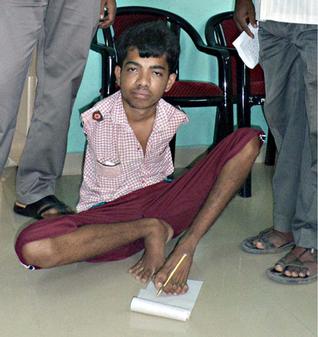
Mustafa did the unbelievable; he used his toes to write the II PU exams
Getting 80 per cent in II PU may not be a remarkable feat today, but it is extraordinary indeed when it has been achieved by a student without both hands. Writing with his toes, Mustafa emerged the topper in Veerashaiva College near Ballari city.
Son of Dasgir Sab, a lorry driver, and Maqbul Banu of Kolagal village, Mustafa (18) was born disabled. He is the second of three siblings and the only one who is disabled in his family.
Rejects assistance
Practice made this studious boy perfect. For the PU exam, Mustafa rejected all assistance extended to the disabled. “Neither did I take any assistance to write the exam, nor did I take exemption for writing language papers,” he said.
His score card reads: 93 in Kannada, 70 in English, 82 in history, 60 in economics, 86 in political science and 83 in social studies. “I have applied for re-evaluation of the economics paper,” he said.
K. Gadilingappa, his teacher, has been his friend, philosopher and guide. “I was transferred to Kolagal around six years ago, and I was astonished and proud to see that Mustafa was independent and faced challenges on his own. Seeing his self-confidence and positive attitude, I helped him get a scholarship for the disabled and gave him moral support to motivate him,” Mr. Gadilingappa said.
Mustafa, who had secured 74 per cent in his SSLC exams, said: “I want to become an IAS officer and serve the country.”
source: http://www.thehindu.com / The Hindu / Home> National> Karnataka / A. Ahiraj / Ballari – May 27th, 2016
JAMMU & KASHMIR :
Srinagar :
Militants today carried out two strikes within as many hours in the summer capital of Jammu and Kashmir, killing three policemen, including an officer, and decamping with service rifle of one of the slain cops.
In the first strike, militants shot dead two policemen in Zadibal area of Srinagar at around 10: 45 AM.
The ultras shot at the two cops from close range at Mill Stop in Zadibal area which connects the city to Hazratbal Shrine and super speciality SKIMS Hospital at Soura, a police official said.
The two cops died on the spot, he said, adding the deceased have been identified as Assistant Sub Inspector Ghulam Mohammad and Head Constable Nazir Ahmad.
The slain cops were posted at Zadibal Police Station.
Police and other security forces have been put on an alert to look out for the assailants, who managed to flee the spot.
In the second strike, militants shot at constable Mohammad Sadiq, who was posted as personal security guard to chairman of J&K Pasmanda Tabqajaat (downtrodden classes) Mohammad Abdullah Chatwal, at Tengpora on Parimpora-Hyderpora Bypass road.
The militants also snatched the service rifle of the injured cop before fleeing from the spot, the official said adding the attack took place at around 12 noon.
The cop later succumbed to injuries at Police hospital at Batamaloo.
These major attacks in the city come after nearly three years.
The last such attack took place on June 22, 2013 when two policemen were shot dead at Hari Singh High Street.
source: http://www.deccanherald.com / Deccan Herald / Home> National / PTI / Srinagar – DHNS, May 23rd, 2016
Published on May 23, 2016
The Juma Masjid in Vadodara houses a unique 250-year-old Quran. At six and a half feet long, and four and a half feet wide, members of the mosque trust claim it to be world’s largest Quran.
Handwritten by Mohammad Ghous nearly 250 years ago, two volumes of the Holy Quran were restored at the Jama Masjid in Vadodara in May
source: http://www.youtube.com
Shedgaon Village & PUNE , MAHARASHTRA :
At an age when most of his privileged counterparts wallow in self-indulgence, 21-year-old Ansar Shaikh refused to be the plaything of a malicious fate and master his own destiny.
Hours after the UPSC results were out, his personal odyssey had already become the stuff of sweat-and-toil legend – how a Muslim boy from a remote backwaters village in drought-racked Marathwada changed his name to a Hindu to crack the Holy Grail of Indian examinations.
Ansar, the son of an autorickshaw driver from Jalna’s Shedgaon village, cleared the IAS in his maiden attempt, snaring a high All-India Rank of 361. Since then, the media has thronged his lodgings in the city in a bid to capture his inspirational and remarkable personal struggle.
A political science graduate from Pune’s Fergusson College, Mr. Shaikh, an exemplary student had secured 91 per cent in his Class X exams (the S.S.C.).
Driven by sheer will, he worked 12 hours a day straight for three consecutive years while preparing for his UPSC exams. Added to these burdens, Mr. Shaikh faced the stigma of social discrimination and a turbulent family life which he triumphed with a strength of character extremely rare for a youth of his age.
“While hunting for a PG accommodation, my friends who were Hindus got rooms but I was refused. So the next time, I said that my name was Shubham, which was actually my friend’s name. Now I don’t have to hide my real name,” says Mr. Shaikh, remarking that this social rejection was “mortifying”.
His troubled background makes his achievement all the more laudable life.
“Education has never been a watchword in my family. My father, a rickshaw driver, has three wives. My mother is the second wife. My younger brother dropped out of school and my two sisters were married off at an early age. When I told them that I had cleared the UPSC and in all likelihood will be an IAS officer, they were stunned shocked,” said the gentle, bespectacled Mr. Shaikh, with a boyish smile that belies years of pain and struggle against seemingly insurmountable odds.
His bitter, first-hand tryst with social ostracisation has made a deep influence on Mr. Shaikh.
“It will be my mission to promote religious equality. Having myself been a victim of discrimination, I will strive to ensure that Hindu-Muslim unity transcends tokenism,” says an earnest Mr. Shaikh.
He credits his success to the efforts of Rahul Pandve, his 30-year-old teacher at Unique Academy who incidentally cracked the UPSC along with Mr. Shaikh, securing an AIR of 200.
Mr. Pandve, who stood seventh in Maharashtra, has a Masters of Business Administration (MBA) degree from the Indian Institute of Management (IIM), Calcutta and had chucked his corporate job for a career in the civil services.
source: http://www.thehindu.com / The Hindu / Home> Cities> Mumbai / by Shoumojit Banerjee / Pune – May 12th, 2016
Narsapur (Medak District), TELANGANA :
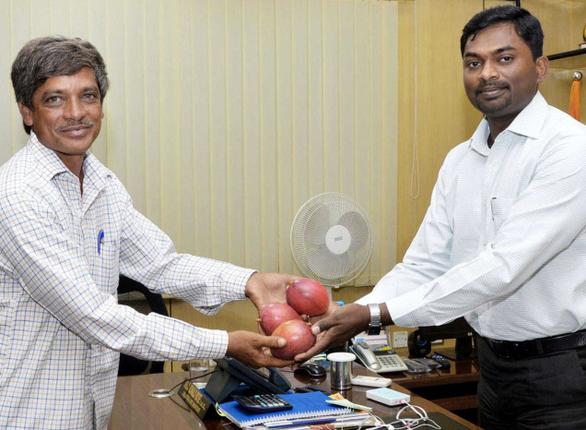
The red-coloured mango, grown by Sk. Jalaludduin of Narsapur in Medak district, was released here on Tuesday.
Mr. Jalaluddin had collected different saplings from forest area for his nursery out of which one was left to grow for a year that yielded red mangoes. Later, he started working on the mother plant and developed seedlings from that. At present, he has five mother trees and about 60 trees grown from the seedlings and he is planning to expand it to another six acres in the coming season. “Even after the harvest, the mango fruit is in good shape and has more fibre. Even the largest fruit will not be more than 300 grams,” Mr. Jalaluddin told The Hindu .
With the expansion, it is estimated that each acre would accommodate about 120 saplings under ultra high density system. He says while the cost for expansion the first year would be between Rs. 18,000 and Rs. 20,000, the annual expenditure would be about Rs. 6,000 from second year onwards. The variety was not yet named and he was in touch with the officials of the Agriculture University.
Mr. Jalaluddin met District Collector D. Ronald Rose
source: http://www.thehindu.com / The Hindu / Home> National> Telangana / by R. Avadhani / Sangareddy – May 11th, 2016
TAMIL NADU :
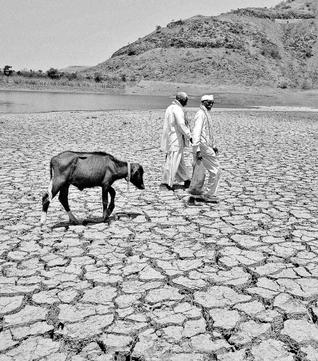
Tamil Nadu-based environmentalist K Abdul Ghani has initiated a fundraiser through crowdfunding to mobilise resources for draught-hit people and cattle in Maharashtra, Telangana, Andhra Pradesh, Karnataka, Madhya Pradesh, Uttar Pradesh and Odisha.
Rs 5 lakh target
The target is to raise Rs 5 lakh, which will be utilised to arrange for water, food, and fodder.
Mr Ghani, who has planted over 40 lakh trees across the country, said Rs 1,000 has been collected so far. “India is facing an unprecedented draught and Maharashtra is worst-hit. It is the result of global warming and climate change. It is high time that we all woke up and protected the mother earth,” Mr Ghani told The Hindu . “The Rs 5 lakh, which we are planning to raise, may not be big, but this is the beginning. Crowdfunding will help spread the message that everyone should support the cause.”
Impact Guru, an online crowdfunding platform, is mobilising the funds through the campaign, #OutTheDrought, which has gone live, while NGO World Vision India will be reaching out to the affected with the relief.
According to official data, over 90 lakh farmers in Maharashtra have been hit. Mr Ghani said an estimated 2,58,117 households in the seven states are to be covered.
“We can mitigate the impact of the drought through collective efforts,” said Piyush Jain, co-founder and CEO, Impact Guru.
source: http://www.thehindu.com / The Hindu / Home> News> Cities> Mumbai / by Lalatendu Mishra / Mumbai – May 12th, 2016