Category Archives: Amazing Feats

From richest to rags in seven generations

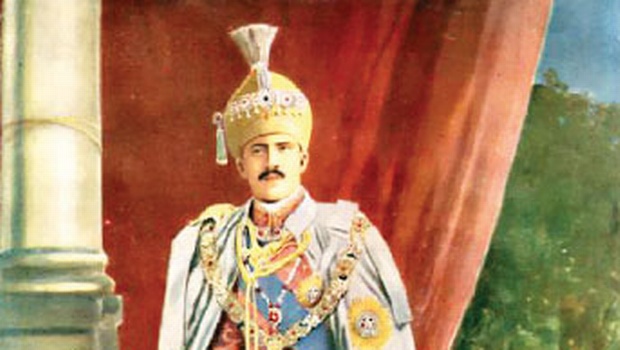
Osman Ali Khan
Osman Ali Khan

His name was Mir Osman Ali Khan Siddiqi. He used a 185-carat diamond worth $200 million for a paperweight, had enough pearls to pave Piccadilly Circus and a stable of horses that would’ve put Godolphin to shame.

His ancestor Mir Qamaruddin Khan started a dynasty on behalf of the Mughals on July 31, 1720, which ended in a sheep farm.

Qamaruddin Khan was Hyderabad’s first Nizam—Urdu for Administrator of the Realm— and Osman Ali Khan was the 7th and last Nizam who has been declared the world’s richest Indian ever—after adjusting his wealth to current inflation figures. In the 1940s, his fortune was estimated to be $2 billion, which was about 2 per cent of the US economy while Independent India’s annual revenue then was only $1 billion.

The British gave him the title of His Exalted Highness because of the taxes he paid to the Empire—his main palace had 6,000 staffers. The only job 38 of them were entrusted with was dusting chandeliers.

The world’s richest Indian was also an enigma: the Nizam was so stingy that he wore the same fez cap for 35 years, wore crumpled pajamas, ate off a tin plate and smoked cigarette butts, refusing to buy even one fresh pack all his life.

His treasury would have put to shame the wealth of the richest oil sheikh: hundreds of millions of pounds worth of gold and silver overflowing in his coffers as well as jewels worth £400 million. He had a prodigious appetite for sex, and had one of the largest private pornographic collections in the world—using hidden cameras inside his zenana and private guest quarters.

Before he died, he sired children from 86 mistresses in his harem and had more than 100 illegitimate children. He also left behind a legacy of legal disputes with hundreds of descendants fighting over money and real estate.

By the 1990s, claimants to his wealth had gone up to 400 legal heirs. Of the Nizam’s 34 children, two sons and three daughters are still alive while there are a total of 104 grandchildren.

The most helpless of all of them is Prince Mukarram Jah who was nominated by his grandfather, the 7th Nizam, to succeed him: he didn’t think his sons deserved to be ruler after his death.

Unfortunately, His Exalted and Imperial Highness Rustam-i-Dauran, Arustu-i-Zaman, Wal Mamaluk, Asaf Jah VIII, Muzaffar ul-Mamaluk, Nizam ul-Mulk, Nizam ud-Daula, Nawab Mir Barkat Ali Khan Bahadur, Sipah Salar, Fatah Jang, Nizam of Hyderabad and Berar, Imperial Prince of the Ottoman Empire and Honourable Lieutenant-General, or simply, Mukarram Jah lives as a frail old diabetic in Istanbul, amidst memories of untold wealth, expensive ex-wives and 14,718 courtiers who bled his inheritance dry.

Of his life in Australia as a sheep farmer decades ago, an aide told an Australian newspaper that “Jah loves to be surrounded by court jesters, just like the maharajahs of the past”.

The remains of his inheritance lie in NatWest Bank, London—£1m deposited by his grandfather in 1948. Now the money is worth almost Rs 3 billion.

When the 7th Nizam deposited the money, the future of Hyderabad was at stake. India wanted Hyderabad to be part of the Union, but the Nizam was inclined to make Hyderabad part of Pakistan—like an Indian West Berlin in the 1940s.

As Mir Barkat Ali Khan remained in a state of indecision, his finance minister Moin Nawaz Jung, who was in charge of the money—£10,07,940 and nine shillings— signed it over to H I Rahimatoola , Pakistan’s new high commissioner in London.

The Indian government came down on the Nizam with all its newly acquired might and forced him to cable Westminster Bank to freeze the account. In September 1948, the Indian Army formally annexed Hyderabad.

The British government converted the money into war bonds and subsequently turned it into a fixed income deposit as it remains to the day.

National Westminster Bank, now incorporated into the Royal Bank of Scotland, refuses to release the sum unless all three parties—India, Pakistan and the Nizam’s heirs—come to an agreement.

The Nizam’s heirs have wanted the foreign ministers of both India and Pakistan to sort it out when they met in Islamabad in September, but they were disappointed.

Nawab Najaf Ali Khan, the other grandson of the seventh Nizam, had even written to President Zardari seeking help. India has offered an out-of-court settlement, but Zardari has not been forthcoming. There is even a Nizam Family Welfare Association.

In 2008, they met Prime Minister Manmohan Singh and then foreign minister Pranab Mukherjee to help them. They are also pressuring the Pakistan government to initiate a dialogue with the Indian government. If the dispute ever gets resolved, the money would be shared between all three as India was owed crores of rupees in back taxes.

Meanwhile, Mukarram lives in penury in a small Istanbul apartment.

He and his brother Muffakam Jah share a London lawyer—Allen & Overy— in a case against NatWest; at one time, he was so poor he couldn’t afford legal fees. Mukarram wasn’t as prolific as his grandfather, but he had married five times only, including a former Miss Turkey who was his third wife.

Turkey has a karmic link with the Nizam—his mother and his first wife Princess Esra were Turkish. So was his last wife, Princess Orchedi.

In the 1980s, when he was moving to raise sheep in Perth, he met and married Helen Simmons, who died of AIDS later.

The third wife was Turkish. The match was arranged by his Turkish aide, Demir Bukey, who was sent to Istanbul with $100,000 to find him a bride. Bukey introduced Manolya Onur, whom the Nizam married in 1990 because on their first meeting in Istanbul, she seemed to him as a woman who “might open a station gate”.

The marriages and subsequent divorces cost him a lot of money in alimony—Esra got alimony of £12 million.

It’s thanks to Esra who returned to India a decade ago with her two children, that the Nizam’s royal residences—Chowmahalla and Falaknuma—were renovated and a semblance of order was brought to the accounts.

Legal wrangles have cost the once flamboyant Mukarram dear: when the Indian government forced the Nizam’s trustees to sell the famous jewels in lieu of tax, the price the court fixed for it was only £43m, lower than the £230m the Nizam’s family had estimated. Mukarram’s share was £13m, but he did not get the money thanks to litigation by his grandfather’s illegitimate dependants.

Mukarram faces 800 writs from relatives—legitimate and illegitimate—who are challenging his entitlement for the privileged share in Nizams’ private estate. In the end, he got Rs 218 crore for the jewellery.

Mukarram’s inheritance originally included one of the world’s most expensive jewellery collection, starting from the 18th century to fin de siècle 20th century. The collection comprised 173 jewels that include over 25,000 diamonds, Colombian emeralds, diamonds from the Golconda mines, Burmese rubies and spinels, pearls from Basra and the Gulf of Mannar. The diamonds alone weigh over 12,000 carats; 2,000 emeralds weigh over 10,000 carats; and pearls exceed 40,000 buddums—the Satlada, the seven-stringed Basrah pearl necklace which has 465 pearls embedded in it is a legendary piece of jewellery.

Mukarram would already have known that his grandfather was the world’s richest Indian ever. In the small Istanbul flat he shares with his fifth wife Princess Orchedi, does he remember his own words to a journalist, “I’m not supposed to have financial problems… I’m supposed to have good advisers.” It seems a fitting epitaph to one of the most legendary royal treasures of all time.

source: http://www.newindianexpress.com / The New Indian Express / Home> Magazine / by Anika Mohla / October 21st, 2014

Indian hockey umpire Javed officiates 100th match

Indian hockey umpire Javed Shaikh earned an unique distinction Thursday by officiating in his 100th international match at the 17th Asian Games in Incheon.

The 39-year-old achieved the milestone during the men’s bronze medal match between South Korea and Malaysia at the Seonhak Hockey Stadium.

“Umpire Javed Shaikh has brought recognition to the country by umpiring his 100th match at the 17th Asian Games. His remarkable achievement gives me immense delight and I congratulate him on behalf of Hockey India (HI) and look forward to seeing more of him on the field,” HI secretary general Narinder Batra said.

source: http://www.business-standard.com / Business Standard / Home> News-IANS> Sports / IANS / New Delhi – October 02nd, 2014

Hockey India Congratulates Umpire Javed Shaikh For Umpiring In His 100th International Match Today At The 17th Asian Games 2014

IncheonMPOs03oct2014

New Delhi :

While the Indian Women Hockey team won the bronze medal at the 17th Asian Games 2014 yesterday, the Indian Hockey Umpire Javed Shaikh gave India another proud moment at the international platform by umpiring in his 100th international match between Korea and Malaysia for the bronze medal at the ongoing Games.

Javed-ShaikhMPOs03oct2014

39-year old Javed Shaikh started officiating hockey matches in the year 2003 and has dedicated over a decade of hard work to the game.

Congratulating Javed on his celebratory achievement, Dr. Narinder Batra, Secretary General, Hockey India said, “Umpire Javed Shaikh has brought recognition to the country in the field of hockey by umpiring his 100th match today at the 17th Asian Games 2014. His remarkable achievement gives me immense delight and I congratulate him on behalf of Hockey India and look forward to seeing more of him on the field.”

FIH World Development Panel Umpire Javed, currently works with the Mumbai Port Trust Sports Club, Mumbai (Maharashtra). He has umpired matches in the Rabobank Hockey World Cup this year at The Hague, Netherlands. Javed has also officiated in the FIH Junior Men World Cup 2013 in New Delhi, FIH World League Round 2 in 2013 in New Delhi, FIH Champions Challenge 1 held in Argentina, 2012 Olympic Qualifiers held in New Delhi 2012, Asia Cup 2009, Commonwealth Games 2006 and Asian Games played at Doha in the year 2006.

source: http://www.hockeyindia.org / Hockey India / Home> News / New Delhi – October 02nd, 2014

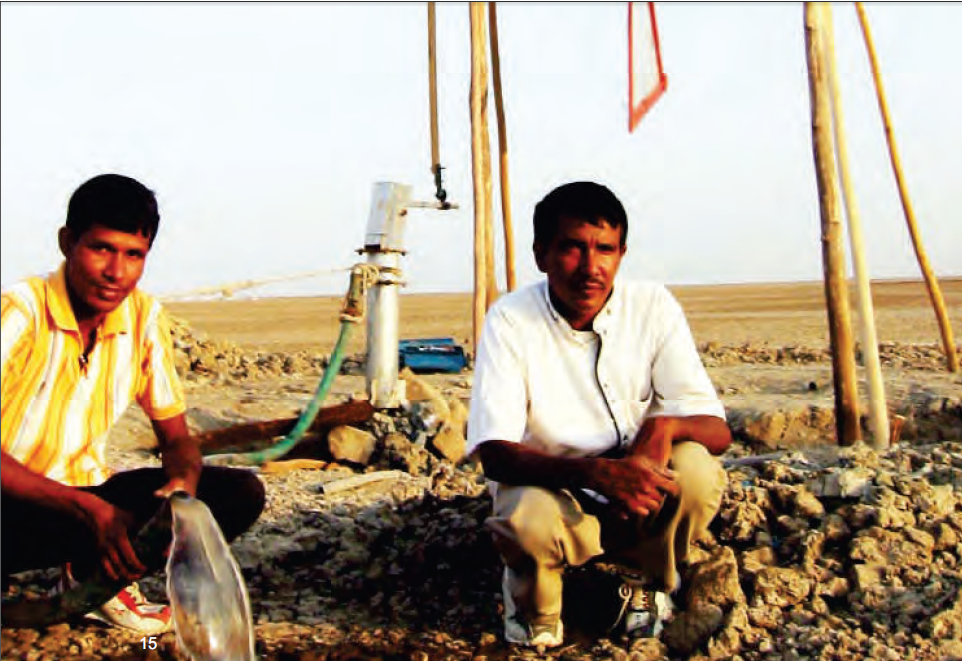
Two Brothers Wanting Power For Their Farms Invented A Bamboo Windmill That Is 10 Times Cheaper!

Brothers Mohammad Methar Hussain and Mushtaq Ahmad wanted power for irrigation and they developed a low cost windmill made out of bamboo, which is more than 10 times cheaper than the regular ones available in the market. Now, there are more than 25 such windmills running in Gujarat. Read to know more about their journey and how they did it. 

Mohammad Methar Hussain and his brother Mushtaq Ahmad from Darrang district in Assam grew paddy in the winter season (also known as bodo paddy). Irrigation involved a lot of manual effort and using diesel sets for pumping  water was a huge drain on the resources. To tackle this issue, Mehtra thought that if they could run a large wheel on wind power, and connect the wheel to the hand pump, that would serve their purpose quite efficiently.

So, both of them started working on making a windmill unit from locally sourced materials such as bamboo wood, strips of old tyres, pieces of iron, etc. With the help of a carpenter, the first prototype was ready in four days. Since the supporting framework was composed of bamboo, the final product costed Rs. 4500, vis-a-vis the commercially available wind mills which cost over Rs. 60,000.

Mehtar and Mushtaq
Mehtar and Mushtaq 

Innovation Diffusion : Assam —–> Gujarat

India is the third largest salt producing country in the world with an average annual production of about 157 lakh tonnes. The Little Rann of Kutch (LRK) supplies 21% of the total salt production of India.

Salt workers, known as Agarias, are some of the poorest people in the state. Agarias mostly used counterpoise, a method that requires two people, one for lowering the counterpoise and other for straining the water. Some of them started using diesel pumps, but the exorbitant machine and fuel costs made a huge dent in their already diminishing returns from salt farming.

With the mission to improve lives of salt farmers, Gujarat Grassroots Innovation Augmentation Network – West (GIAN W) along with National Innovation Foundation (NIF-India) took the lead in diffusing the innovation in salt farming areas.

Based on the feedback received from salt farmers, GIAN W improved the design and developed a multi-dimensional model which was installed at LRK in 2008. Understanding the diverse needs of farmers to increase the efficiency of windmills, GIAN W joined hands with Alstom foundation for design modification and improvement.

As of 2012, 25 of these windmills have been installed in Kathivadar and Kadiali villages in Amreli district.

Low cost windmill has solved irrigation problems for the village

 Benefits of the Windmill Pump

Thanks to the windmill pump, now salt farmers don’t have to slog for hours with the water pump. The windmill pump saves about Rs.50,000 worth of diesel in six months. It has decreased salt farmers’ reliance on manual labour resulting in savings of about Rs. 28,000 per season per person. Farmers can now easily recover their investments within the harvesting season.

The innovation would also result in the reduction of five tonnes of carbon emissions for every 100 tonnes of salt produced. As per NIF, on an average, every windmill-powered hand pump should generate five Carbon Emission Reductions (CERs) certificates worth Rs.3750.

Every rupee saved and milligram of carbon emission reduced is a glaring testimony of how rural innovations impact the community, society and the world at large.

In the next phase, GIAN W plans to erect more windmills in other parts of Gujarat. The salt farmers of Gujarat are indebted to Mehtar and Mustaq for making their lives more efficient and their occupation, profitable.

For any enquiries related to the machine, please get in touch with NIF-India at bd@nifindia.org.

source: http://www.thebetterindia.com / The Better India / Home> Innovation> Gujarat / by Rahul Anand / July 24th, 2014


Heroism of Indian Muslim woman in World War II inspires today

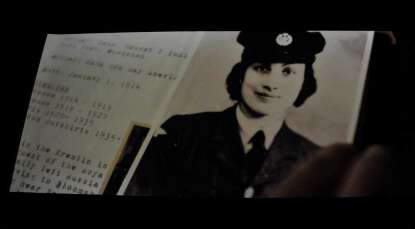
Bruce.Lipsky@jacksonville.com // Noor Inayat Khan is pictured during the film. She was recruited as an operative to help the Allies.
Bruce.Lipsky@jacksonville.com //
Noor Inayat Khan is pictured during the film. She was recruited as an operative to help the Allies.

The quiet, unwavering heroism of a young Indian Muslim woman who sacrificed her life to fight against Nazi domination during World War II offers lessons of faith, courage and inspiration as relevant now as it was back then, say those who heard her story Sunday.

Bruce.Lipsky@jacksonville.com /  Noor Inayat Khan is pictured during the film. The University of North Florida Distinguished Voices Lecture Series presented "Enemy of the Reich: The Noor Inayat Khan Story" Sunday, September 28, 2014, in Jacksonville, Florida, on campus in the Robinson Theater. (Florida Times-Union/Bruce Lipsky)
Bruce.Lipsky@jacksonville.com /
Noor Inayat Khan is pictured during the film. The University of North Florida Distinguished Voices Lecture Series presented “Enemy of the Reich: The Noor Inayat Khan Story” Sunday, September 28, 2014, in Jacksonville, Florida, on campus in the Robinson Theater. (Florida Times-Union/Bruce Lipsky)

“It really makes you think. What would I do in a situation like that? … I hope I would have had her courage,” said K.C. Emerson of Jacksonville, who decided at the last minute Sunday afternoon to attend the screening of “Enemy of the Reich: The Noor Inayat Khan Story” followed by a panel discussion at the University of North Florida’s Andrew A. Robinson Jr. Theater.

The film is the true story of Khan, who sacrificed her life to fight against Nazi domination during World War II. The daughter of an American mother and Indian Muslim father, Khan grew up in a home that nurtured interfaith dialogue and cooperation at a Sufi center of learning in Paris.

In early 1943, she was recruited as a covert operative into Winston Churchill’s Special Operations Executive. By then Khan had trained as a wireless operator in Britain’s Women’s Auxiliary Air Force. As a covert agent, Khan was instrumental to the French Underground’s direct attack on Nazi units in preparation for the Allies’ D-Day invasions.

In August 1943, Khan was the last surviving clandestine radio operator in Paris and signaled London for additional weapons and explosives for the French underground. Khan ultimately was captured and executed at Dachau, the Nazi concentration camp in Germany.

On Sunday, Emerson was among Northeast Florida residents as well as UNF students nearly filling the theater for the screening and panel discussion, part of the 2014 Distinguished Voices Lecture Series. The program co-hosted by UNF and Better Together at UNF, a student organization composed of religiously diverse students with a mission of mobilizing their peers to voice their values, engage with others, and act together to make the world a better place.

“It’s an exploration into meaning and purpose of life, and what values might be worth risking it,” Tarah Trueblood, director of UNF Interfaith Center, said of the program.

Such dialogue, she said, is especially crucial now, given the conflict in the Middle East and fear generated by ISIS and other terrorist groups.

“Peace happens one relationship at a time. And getting to know your neighbor can be that one big step you take today,” said Trueblood, adding sometimes that can take a lot of courage to reach out to our neighbors if they are different from us.

“We want our politicians to make peace or somebody else to make peace. But making peace takes us going over to our neighbors and getting to know them,” Trueblood said.

Bruce.Lipsky@jacksonville.com /  Alex Kronemer, executive producer of the film about Noor Inayat Khan, speaks before the screening of his film.
Bruce.Lipsky@jacksonville.com /
Alex Kronemer, executive producer of the film about Noor Inayat Khan, speaks before the screening of his film.

The panelists included Alex Kronemer, one of the film’s producers, UNF Interfaith students, Cheryl Tupper of the OneJax Institute at UNF and vice president of the Arthur Vining Davis Foundation and Rabbi Jonathan Lubliner of the Jacksonville Jewish Center. UNF President John Delaney facilitated the discussion.

Kronemer is co-founder and executive producer for Unity Productions Foundation. A Muslim, he has delivered talks on religious diversity and Islam for the U.S. departments of Justice and State, FBI and other organizations.

Refusing an order to return to England, Khan stayed in Paris and continued radioing information to the Allies after all her comrades were captured by the Nazis.

“In her case, she just had the determination. She had come with these people, bonded with these people and they had all been captured, but she didn’t want their sacrifice to be meaningless. In retrospect, it was a giant decision to make because it led to her ultimately being killed. But at the time, it was a small decision of heroism,” Kronemer said. “That’s really where I think heroes are made. … Today, what are the small decisions of heroism that we’re making?”

Parvez Ahmed, a faculty mentor and UNF professor, encouraged the audience to continue the conversation sparked Sunday through the program.

“I want us to draw upon the inspiration that Noor gave us through our life and our sacrifices. It would be nice if we could all go beyond the lip service that we often give such inspiration and do something that is actually long-lasting and sustainable,” Ahmed said.

To that end, Ahmed said the UNF Interfaith Center is instituting a service award to be presented annually to one or more deserving students. In the form of a scholarship, it will be the Noor Inayat Khan Interfaith Service Award, he said.

Khan was posthumously awarded the George Cross, the highest civilian medal for bravery and sacrifice in Great Britain. The French awarded her the Croix de Guerre with Gold Star. A plaque bearing her name hangs at Dachau, and a memorial statue of her was erected in London’s Gordon Square in 2012.

source: http://www.members.jacksonville.com / The Florida Times-Union / Home> News / by Teresa Stepzinski: (904) 359-4075 / Sunday – September 28th, 2014

The legend of braveheart Turehbaz Khan lives on

The great patriot, however, remained unsung on January 24, which marks his 153rd death anniversary

The name of Turehbaz Khan conjures up images of valour and sacrifice. The name also puts Hyderabad on the map of the country’s First War of Independence or the Sepoy Mutiny of 1857. But how many of us know that January 24 marked the 153rd death anniversary of Turehbaz Khan, who, along with several others, rebelled against the English Resident, Major Cuthbert Davidson. The day simply passed off without a whimper.

It was in January 24, 1859, that many believe that Turehbaz Khan was killed in the forests of Toopran by the Talukdar, Mirza Qurban Ali Baig.

His body was brought to Hyderabad and according to several historical accounts was hung near the Residency, what is now Koti Women’s College, for public display and to act as a deterrent against any future rebellion.

Many in Hyderabad also do not know that the road in front of Osmania Medical College is named after Turehbaz Khan.

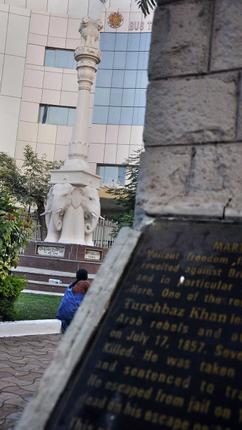
To mark the revolt of 1857, a memorial with the words ‘Memorial to the martyrs of July 17, 1857′ was constructed near Koti bus stand.

Even today, the name Turehbaz Khan is etched on the plaque.

Stark reminder:The memorial for Turehbaz Khan and others at Koti.– Photos: G. Ramakrishna / The Hindu

The uprising was led by Turehbaz Khan and a fiery preacher, Maulvi Allauddin, along with 500 Rohillas, who were of Pashtun (Pathan) stock.

Unequal fight

Essentially, the revolt was to free Jamedar Cheeda Khan, who was held in the prison inside the Residency. The 500 Rohillas tried to storm the Residency under the direction of Turehbaz Khan and Maulvi Allauddin, who controlled the revolt by occupying the houses of two local moneylenders, Abban Saheb and Jaigopal Das.

Historians point out that the fight between the Rohillas and British troops, who were led by Major S. C. Briggs, continued throughout the night. Apparently, Salar Jung alerted the British about the impending revolt. The British troops were prepared and waiting for Khan to attack.

Needless to say, the Rohillas, who wielded swords, were outclassed by trained British soldiers who opened fire on them. By morning the rebellion was crushed.

Shot dead

Many armed men who took part in the revolt were caught and sent to prison. Among them was Turehbaz Khan, who received a life sentence. However, the canny Turehbaz Khan managed to escape from prison on January 8, 1859.

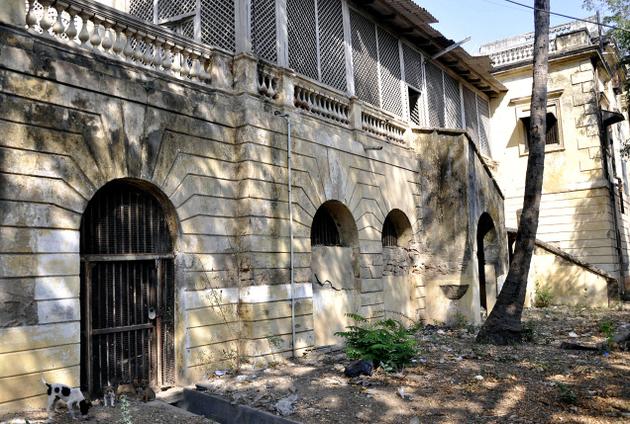
Sentinel of history:The prison inside the Residency building, which is now the Koti Women's College, where it is believed that Jamedar Cheeda Khan was kept.
Sentinel of history:The prison inside the Residency building, which is now the Koti Women’s College, where it is believed that Jamedar Cheeda Khan was kept.

Immediately after the escape, the British authorities offered a reward of Rs. 5,000 to anyone who could apprehend Turehbaz Khan.

Within a few days, many believe that it was on January 24, 1859, when Turehbaz Khan was shot in the forest of Toopran by Talukdar Mirza Qurban Ali Baig. As a reward, the Talukdar received Rs. 5,000 and his salary was also raised by Rs. 200.

He was also promoted as Sadar Talukdar, say historical accounts.

________________________________________________________________________


  • Many believe it was on Jan. 24, 1859, that Khan was killed in Toopran forest by Qurban Ali Baig
  • Khan’s body was hung near the Residency to act as a deterrent against any future rebellion
  • ___________________________________________________________________

source: http://www.thehindu.com / The Hindu / Home> National> Andhra Pradesh / by M. Sai Gopal / Hyderabad – January 27th, 2012

Daughter of the soil

ZainabHussainMPOs23sept2014

by  Mudar Patherya

From knowing zilch about crops, Zainab Husain is now one of Jalgaon and Barwani’s most prosperous farmers.

To find a Dawoodi Bohra agriculturist in the interiors of Madhya Pradesh is not everyday. But that’s not the only reason 33-year-old Zainab Husain merits a story. One of Barwani district’s most prosperous farmers today, Husain inherited her father, Sabir Husain’s 52-acre farm and pesticide and fertiliser business more as liability.

His sudden demise when she was 27, left her, his only child, in charge of the land that yielded cotton, chillies, wheat and bananas. Running the agro-products business was the true challenge, Husain realised, when she discovered that farmers owed her late father Rs 90 lakh.

To sell out, and get her married is the most practical solution, suggested her father’s family. Husain, a post-graduate in chemical science, hadn’t dirtied her hands in the fields.

Neither had she dabbled in business or chased debtors. Based in Jalgaon, a seven-hour drive from Mumbai, Husain had moved there as a child to live with her grandparents since the industrialised city offered the bright student better schooling prospects.

The farm was a good 210 kms from her home, and the family wasn’t moneyed (“We took a Rs 10,000 loan from the jamaat so that we could treat my father in Mumbai,” she says). How would she manage the farm via remote control or dare to sit months at the Barwani trading store? Just when the sale looked most feasible, a contrarian spoke up. Husain herself.

The extended family threw a fit, and just like it sometimes happens, an unlikely game-changer appeared on the scene. It was the goodwill her father had garnered over the years.

“When farmers or farm hands were in trouble,” says Husain, “he’d quietly help them with agrochemical supplies against long credit which they’d repay during the following harvest.

If they needed health assistance, my father would fund the treatment.” When Husain turned up at her store to ferret the list of debtors, she found unlikely allies. “They accompanied me from home to home, farm to farm, requesting the debtors to pay up.”

Sixty per cent of the outstanding was recovered; the family could breathe again. The early months were gruelling — negotiating the eight-hour Jalgaon-Barwani circuit while changing four bus routes; spending three months on the trot in unknown territory; communicating with 50 farm hands to enhance her insight into costing, irrigation potential and cropping patterns, and imploring the general manager of a lending bank in Mumbai to defer instalments. For someone who has been a farmer six years, Husain has a fair report.

Her cotton yields have trebled to 25 quintals per acre, she has more than doubled farm revenues, got into a positive capex cycle with tractor purchase and has plans to set up a back-ended nursery. Success gave her enough confidence to dabble in construction, building bungalows and apartments in Jalgaon. “The construction business provided us advances and perennial revenues, which we could use to fund the seasonal business of agriculture,” she says.

Over the last year, she has ploughed surplus funds into organic manure manufacture (100 tonnes per month, which has proved profitable from year one), forayed into the business of writing education support software, and is widening the construction portfolio to commercial properties.

And, she won’t stop learning. The soft-spoken lady, who could be a small time case study, is pursuing a PhD in agricultural extension.

source: http://www.punemirror.com / Pune Mirror / Home> Others>Sunday Read / May 25th, 2014

The rich legacy of Nizams

Mir Osman Ali Khan receives Prime Minister Lal Bahadur Shastri at Begumpet airport. Responding to Shastri’s appeal, the Nizam donated 5000 kg of gold to the National Defence Fund

OF POWER AND POISON

British Residents in Hyderabad spoke of the mutual antipathy that apparently existed between the Nizam’s eldest wife Dulhan Pasha and her sons Prince Azam Jah and Prince Moazzam Jah.

The mother of the two Sahebzadas was keen to marry them to her nieces, described by the Resident, Lt. Col. T.H. Keyes, as “two half-starved little Hyderabadi girls”. She had even been involved in a public slanging match with the Nizam on the issue of her sons’ marriage, and was supposed by British officials to be not fond of her sons.

To illustrate the discord between the mother and sons, Keyes recalled what Prince Moazzam Jah used to reveal to his guests. The younger Sahebzada claimed that his mother wanted to become the regent on the Nizam’s death. “When someone takes the cue and asks how she could be regent when his brother and he are of age, he replies: ‘We won’t be here. Mother is always experimenting with poisons, and there are no cats left in King Kothi’.”

…The rumours of poisoning in 1932 also led to revival of allegations that Sir Salar Jung I had been poisoned by the Nizam’s zenana as he had been insisting on Mahbub Ali Pasha being sent to Europe for education.

TONNES OF GOLD FOR WAR EFFORT
Mir Osman Ali Khan, Nizam VII, may have delayed his decision on merging Hyderabad State with the Indian Union after Britain left the country in August 1947, but he created a record when he responded to the call of Prime Minister Lal Bahadur Shastri in 1965. The PM visited Hyderabad and requested the Nizam to contribute generously to the National Defence Fund, set up in the wake of the Indo-Chinese skirmish. Without a second thought, Mir Osman Ali announced that he would contribute five tonnes of gold to augment the war fund. In monetary terms, the Nizam’s contribution was about Rs 75 lakh, or about three-fourth of the annual Privy Purse he received from the Centre. In terms of today’s gold price in the international market, this donation translates to a whopping Rs 1,500 crore.

The Nizam’s donation of 5,000 kg of gold to the National Defence Fund in 1965 was the biggest ever contribution by any individual or organisation in India and remains unsurpassed till today.

However, known for his wit and frugality, Mir Osman Ali Khan did not hesitate to seek the return of the empty iron boxes once the gold coins and bars were offloaded in Delhi. “I am donating the gold and not the iron boxes. Do not forget to return them,” the Nizam told the officials even as his son-in-law and confidant Ali Pasha carried trays of gold coins from the Nazri Bagh Palace. The empty boxes were duly returned.

ALBERT ABID AND     THE SILK SOCKS

Hyderabad’s history is full of fables about foreigners who gave Hyderabad a new meaning and purpose. Albert Abid Evans, a Jew from Armenia, gave Hyderabadis their first department store and a new name to an otherwise abandoned locality.

Abid’s, one of the busiest business centres of Hyderabad, owes its name to Albert Abid, who set up a shop that served the needs of Hyderabadis from needle to grains and stationery to clothes.

…As a valet of the Nizam, Abid looked after Mir Mahbub Ali Khan’s wardrobe, the biggest of its kind in the world. It is rumoured that Nizam VI did not like to repeat his silk socks and the enterprising Abid would put the used socks back in the packet they came in and recycle them while his trusting master kept paying for new socks! If rumours are to be believed Abid also helped himself to the rings from his ruler’s fingers when his ruler was in a stupor and promptly thanked the Nizam very profusely the next morning for gifting him the jewellery.

AN UNHAPPY PRINCESS
Niloufer Khanum Sultana, who was called the world’s most beautiful woman, was pained by the fact that she was unable to produce an heir and felt that she had failed in her duty as a princess. It was especially upsetting for her that her cousin Princess Durru Shehvar had given birth to two lovely boys, Prince Mukarram Jah and Prince Muffakham Jah.

On a particular occasion, when Princess Niloufer was in England in response to her mother’s distress call about her financial and social health, Prince Moazzam Jah decided to let everyone know that it was not he who was responsible for their childless marriage. He brought a lady of doubtful repute into his home, and was apparently able to demonstrate his virility. Princess Niloufer returned from England to learn of this treachery and never shared a room with her husband again.

Her husband’s betrayal was not the only fact that pained her. She also returned to find that her personal maid, of whom she was very fond, had died in childbirth. This moved her to open a hospital for children and women. The Niloufer Hospital is still a sought-after medical institution today.

This gesture of the childless princess earned her a place in the hearts of Hyderabadis.

BORN TO RULE
Prince Mukarram Jah had the best of education — Doon, Harrow, Cambridge and LSE. He also trained at the Sandhurst Military Academy in England. …During a visit to Hyderabad, his first wife Princess Esra said he was a bright young man when she married him but was overwhelmed by the fast-paced political developments at home.

In 1969, the Indira Gandhi government decided to discontinue the annual purse to descendants of former rulers of princely states, who numbered around 600. The land bank vanished with the Land Ceiling Act. Mukarram found himself at a complete loss when he lost his privy purse and was compelled to sell off his assets. He would dispose invaluable jewellery to meet his immediate needs without verifying the value of the gems he offered for sale. Not surprisingly, he was taken for a ride by everyone, while the list of those dependent on him kept expanding. This list had grown to include the legion of relatives (14,792), servants (14,000), grandfather’s concubines (42) and children (hundreds of them).

Despairing of the circumstances he found himself in after the demise of his grandfather, this last true blue Nizam protested, “I was taught to be a soldier, not an administrator.”

Given the title of the eighth Nizam and brought up as an imperial prince of the Ottoman Empire, he was not wrong when he once confessed, “I was born to rule. That was the only thing I was prepared for.” Some believe it was the burden of having to deal with so many trusts and their beneficiaries that caused Mukarram Jah to leave for Australia.

3,000 WIVES?

In June 1936, the India Office received a letter from one Irene Cowen from Sheffield, asking how many wives the Nizam had and how many children. “A Hyderabadi had given a lecture on the Nizam’s government and in that had mentioned that the Nizam had over 3,000 wives, but he did not know the exact number, and had described him as having ‘a good many children’,” she wrote. …The Foreign Office sent Miss Cowen this reply: “The statement made by your lecturer is, on (the) face of it, incredible. Nor is any record of the kind suggested maintained in this office.”

The Nizam, however, did have over 100 women in his zenana and was even accused of kidnapping some. As for his progeny, it is claimed that Osman Ali Pasha sired over 147 children. A more modest estimate puts this figure at 28 daughters and 44 sons. However, like most stories about the Nizam, this claim is often exaggerated.

According to his daughter Basheerunissa Begum, it was impossible even for the family to keep track of everyone in the palace as each wife of the Nizam and her children had separate living quarters within the palace and had numbered badges to help the palace guards keep track of their security and identity.

source: http://www.deccanchronicle.com / Deccan Chronicle / Home> Lifestyle> Offbeat / DC Correspondent / June 01st, 2014

Jammu and Kashmir: What an artist in Srinagar managed to save from the floods

MasoodHussainMPos22sept2014

by Chitra Padmanabhan

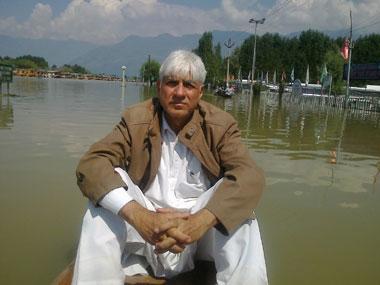
Conversations carried out in fleeting moments of phone connectivity have a timbre their very own. More so if they take place against a backdrop such as the recent inundation of Srinagar by a swollen Jhelum River. But if the person conversing from the other end happens to be the Srinagar-based artist Masood Hussain, renowned for the luminosity of his culturally rooted works, then the conversation is moulded by unfailing grace under pressure so typical of the gentle 61 year old and so familiar to anyone acquainted with him.

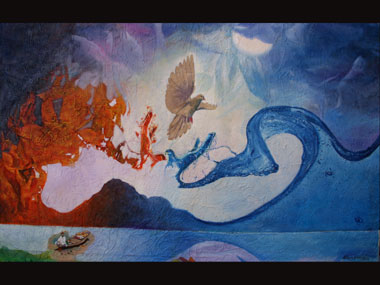
So, what starts as a flurry of phone calls to ascertain the whereabouts of Masood saheb and his family in flood-ravaged Srinagar eventually turns into a ‘serialised’ conversation. Always shy of drawing attention to himself, the artist initially speaks of the year-long work of seven paintings that he had completed barely two weeks before the flood. The paintings are based on seven unpublished couplets that were given to him by the iconic poet Agha Shahid Ali during his Srinagar visit 15 years ago.

Shortly after, Shahid returned to the US where he later succumbed to cancer. Masood vividly remembers the day Shahid handed him a couple of pages saying, “I want you to paint on the theme of these couplets whenever you have the time.” The couplets, on the seasons of Kashmir, resonate with layered meanings, says Masood who quotes their titles: ‘When It is Early Spring,’ ‘The Elements Conspire,’ ‘Autumn Refrain in Kashmir,’ ‘Early Winter,’ ‘Deep January,’ ‘At the Gates of Paradise,’ and ‘The Blossoms Return.’ He mentions Shahid’s couplet, ‘The Elements Conspire,’ in particular: They conspire so that someone, on the shores, awaits the vendor of flowers/And the other side of the earth awaits Kashmir’s sun, its message that water and fire are at peace.

The artist, whose tactile works evoke Kashmir with an intensity that matches the poet’s oeuvre, regards these large-format acrylic and oil paintings among his finest works. “So, on August 29, when I left for Tanmarg, 40 km from Srinagar, to attend a national camp for artists, I was in a lighter frame of mind than I had been for several months.”

However, he returned from the artist’s camp a day earlier, on September 3: “It just did not stop raining and I was anxious because Jawahar Nagar, where I stay, is situated between a flood channel and the Jhelum,” he explains. “In the next few days every time my wife and I looked out of the window, the Jhelum’s water level seemed to have risen, but no one knew what was happening or what to do. Nothing in our past experience had prepared us for what was coming,” says Masood.

The next thing that Masood remembers is the Jhelum River, a familiar enough presence in his canvases, turning unfamiliar, reducing lives and homes to flotsam, erasing a lifetime of landmarks and all vestiges of administration; moreover, reducing a 21st- century existence of connectivity to an enervating isolation in a state already marked by constantly high levels of anxiety.

By 1 am on September 7, nearby areas such as Lal Mandi were surrounded by water. Fearing that Jawahar Nagar would be next, at 2 am Masood and his wife drove their daughters to his sister’s house in Shalimar “which is on somewhat higher ground.” They returned another way to avoid flooded areas but when they got off at Zero Bridge to walk the distance to Jawahar Nagar they found a familiar landmark, the popular restaurant Hat Trick, standing like a forlorn island in a watery expanse. After wading through knee-deep water for 100 metres, Masood and his wife reached their house where his younger brother, Nasir, and sister-in-law were waiting for them.

The first thing that Masood did was to rush to his first floor studio, hoist the new paintings on his shoulder, each a seven-foot- long roll of canvas, and trudge to the attic on the second floor. “I wondered if they would remain safe,” he admits.

The pictures Masood took on his phone gave him a precise timeline of events. “On Sept 7, 11.34 am our ground floor was submerged and the compound wall of our neighbour Mr. AK Kaul, a famous dentist, came crashing down,” he recalls. Between 1 pm and 1.15 pm, two neighbouring houses sank to the ground. Since Masood’s house, too, was an old construction like those buildings and the water had reached the first floor, at about 1.30 pm he decided to move out. The floodwater was 18 to 20 feet high. “Luckily my brother had two inflatable boats he keeps for fishing purposes with a seating capacity of one and two people.”

They rowed their wives over to a four-storeyed house of recent vintage about 200 metres away that was owned by businessman Haji Bashir Ahmed, “a stranger who put his home at our disposal with rare generosity,” remembers Masood. Then the brothers made rounds of the neighbourhood. They first rescued the Kauls whose heads were barely above water, then an aged Sikh couple and an ex-DG Police, Peer Hassan Shah in his 80s. In an even tone Masood recounts a moment of panic when one of the air chambers in the boat developed a puncture as he was ferrying the old and ailing Mrs. Qureishi but “somehow I managed.”

Those who could wade through the water and climb the staircase to Haji Bashir’s house did so. Masood ferried the others to another terrace with an external staircase 45 metres away, also belonging to the businessman. “Old Mrs. Qureishi was in a bad way, but it was the ex-DG’s guards who were whimpering because they could not swim,” recalls Masood.

It took them four hours to shepherd about 40 people to the two terraces by which time the light had started fading, says Masood. One boat was completely punctured; the other one had only one functioning air chamber. While Haji Bashir’s terrace, including Masood’s family, had access to the amenities of a running establishment such as food, water and blankets, Masood and 16 others on the smaller terrace had nothing whatsoever. A sense of shock, the clammy air and lack of blankets made the night of September 7 seem unduly long to them. “We gathered some wood lying around. Mr. Kaul’s daughter- in-law had a matchbox with which we lit a fire. There was no one to see that Pandits, Sikhs and Muslims faced the creeping cold together in a huddle of humanity.”

Next day, the artist fashioned a ropeway with steel wire between the two terraces. Soon baskets bearing food items, blankets and water were sent from the main terrace to the smaller terrace. Later, Masood risked going in the big boat to the main house. On September 9, after two nights and two days on the terrace, the artist and others were airlifted by an Indian Air Force helicopter to a camp near the airport where they stayed overnight. Masood proudly relates that his brother stayed back to rescue more people, “rowing as far as 300 metres to find people. He is 10 years younger than me and has more energy, hai na!”

A painting by Masood Hussain.

Since September 10 Masood and his wife have shuttled between the homes of friends and relatives. Over fractured conversations, he patiently sketches an unnerving topography of displacement: “Two days in Wanbal, 12 kilometres from Jawahar Nagar, then in Nawpora, which is closer to Jawahar Nagar… His itinerant phase is inked in my diary as a series of numbers: ‘Masood Hussain, Masood relative one, two, Masood new…. Every conversation is about a ceaseless exploration of new routes — by car, motorcycle, boat or raft — to reach loved ones or make at least one trip to the submerged home that had been left wide open in the rush to safety. “There are roving bands of thieves,” explains Masood saheb.

September 15, 11 am: Masood mentions that there has been no contact with his daughters for a week. Moreover, he does not know if his precious series of seven is intact. “I gave my word to Shahid 15 years ago; we were co-travellers,” he says. The artist, however, is struck by a curious coincidence. “Shahid’s couplet, ‘The Elements Conspire,’ is about the earth awaiting the message that water and fire are at peace. These elements have marked my life too: once I lost everything when my studio was gutted in a fire during the militancy period; this time I wonder whether the floodwater will spare me.”

September 15, 10 pm: There is a call from Masood: “I made it to Jawahar Nagar today. From Nawpora I reached Lal Mandi where it took me four hours to design a raft that would not sink; there is still no administration in sight. We made a raft out of stray wooden planks. Underneath it we added a layer of thermocol taken from empty LCD TV cartons, and empty water bottles, tying everything up with a ragged cloth banner. It worked and I reached home. The seven paintings are safe. Tomorrow I shall go to meet my daughters.” The phone connection breaks but for once there is no irritation, only a feeling of exultation.

At 8.30 am on September 16, there is a brief text message from Masood completing the broken thread of previous night’s call: Lost everything except the seven paintings.

source: http://www.m.firstpost.com / FirstPost. / Home / by Chitra Padmanabhan / September 21st, 2014

Financial needs led Muslim family to deposit diamond studded Mughal era dupatta

DiamondMPOs20sept2014
Hyderabad :

Khaji Abdul Vali and Rafiya Bibi, were used to work as teachers in Mudduru for more than 60 years ago, hailed from Cheriyal mandal in Warangal district is now in destitution.

But, they are the owner of a diamond-studded chunni (dupatta), dating back to the Mughal era which was a gift to them. The diamond-studded dupatta was given to their only daughter Fathimunnisa Begum as gift from their parents on her D- day.

In search of livelihood, they sold their house in Cheriyal and shifted to Hyderabad.The family with the valuable chunni approached a gemologist in Hyderabad recently to get some financial assistance, but was told that it is precious and need to be preserved.

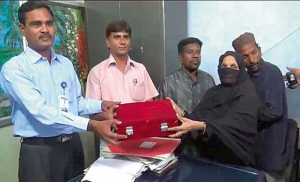
Therefore, the family decided to hand-over the dupatta to the government and also asked for financial help. Warangal district SP directed the Cheriyal police officials to preserve the valuable dupatta and it was kept it in the safe deposit locker of 5131, Cheriyal branch, to protect it from theft.

Locals have urged the officials to put chunni on view for public and provide financial aid to family members of Ms Fathimunnisa Begum.

source: http://www.siasat.com / The Siasat Daily / Home>  Top Stories / Hyderabad – Thursday, September 18th, 2014