This former Sepoy of the Royal Indian Service Corps, did not join Netaji’s Army as he had taken an oath to be loyal to the outfit he served
Honour and loyalty are known to be the mark of a perfect soldier. And World War II veteran, Rasool Khan, a resident of Chanchalguda in Hyderabad, fits the bill notwithstanding his age at over 90 years.
This former Sepoy of the Royal Indian Service Corps, a British Army unit active in the Burmese front during WW II, had even denied himself the chance to enrol in Netaji Subhash Chandra Bose’s Indian National Army as he had taken an oath to be loyal to the outfit he served.
“We were excited when we got an offer to join Netaji’s force but were bound by our oath,” says the ex-soldier, referring to the days when feelers were sent to Indian personnel in the British Army in Burma to desert their units. “We came out of the War with honour,” he adds as he throws light on the crucial period in World history.
The veteran was talking to The Hindu after being honoured at the ex-servicemen rally, which he came to attend in Adilabad, on Sunday. However, he observes, “The uncertainty of those times was quite an experience.”
Born on September 9 1923, Rasool Khan had enrolled in the British outfit in Secunderabad in 1939 at the tender age of 16. He was trained in a military training facility in Allahabad before being shifted to the Burmese front in an anti-aircraft gunnery unit.
“We never got a chance to use the anti-aircraft guns during all the six years I served on the front. Life in the trenches and open jungles, however, taught me to be tough,” says the nonagenarian ex-solider, who has remained single.
The fast paced events associated with the country’s independence made people forget about WW II and its veterans, which had Rasool Khan live a life of virtual seclusion. “Humku koi bhi nai puchte the,” he says in a typical Hyderabadi accent as he talks about the condition of WW II veterans in the wake of independence.
Later in life nevertheless, the ex-soldier was given employment in the Army Supply Corps (Maintenance and Transport) at Ramagundam. He is thankful for the support given by the Army.
source: http://www.thehindu.com / The Hindu / Home> News> Cities> Hyderabad / by S. Harpal Singh / Adilabad – September 15th, 2014
At 93 years of age, MF Husain could have been forgiven for calling it a day. But when he sought exile from India in 2006—on account of the vandalisation of his works and the stress of presenting himself in small-town courts all over India, where cases of obscenity had been filed to harass him for having had the temerity to paint goddesses in the nude—he sought not retirement but revalidation.
And that came easily for, arguably, India’s most popular artist. In spite of his advanced age, the royal family of Qatar commissioned him to paint an epic series on the Arabic civilisation for the Museum of Islamic Art in Doha. And in London, the Mittal family—which had gifted the city the controversial ArcelorMittal Orbit ahead of the Olympic Games—seized the opportunity to ask him to paint a tribute to Indian civilisation.
That should have been enough to keep most artists busy, but Husain, missing familiar places and faces in India, was known to have painted extempore at the homes and offices of a large number of Indian families, demanding nothing more than affection and a home-cooked meal in exchange for a hastily improvised drawing or painting. He would appear at the doughty Dorchester, where the staff invoiced him for scribbling figures on its pristine damask napkins. In Mayfair, where he had a studio, the white-haired and often barefoot artist became a familiar sight for Londoners bemused that he should carry a large paintbrush with him as an indication of his profession. At the venerable Victoria & Albert Museum, like scores of art students on any given day, he could be seen sketching on his pad at the Ironwork Gallery, unaware of the chuckles he inspired among visitors ignorant of his fame but conscious only of his age.
It is from this phase of his life, spent in Doha, Dubai and, in particular, London, that a number of ‘last’ works by the artist are gaining currency.
Most, understandably, are not for sale; they are the legacy of families who befriended him in an alien city and extended warmth and hospitality. Though Husain was wealthy—if his collection of sports cars and bikes is any indication, he was extremely rich—money was something he rarely carried on him, so his art became the currency of exchange for favours rendered. The right-wing parties that had hounded him in India enjoy the support of many non-resident Indians, but in London Husain seemed not so much offensive as vulnerable. Secretly, they clamoured for his works, so even though prices were falling back home—or, at least, they were failing to keep pace with modernists SH Raza, FN Souza, Tyeb Mehta and VS Gaitonde—his popularity never waned. Because he still had a large inventory of unsold canvases, he was not required to paint to eke out an existence, however luxurious. The sale of those works—this writer is privy to some of them—now afforded him the comfort to paint in a manner and style of his choosing.
Some of these ‘last’ works, the ones commissioned by Usha Mittal, will now go to the V&A’s gallery 38A for a viewing as ‘Master of Modern Indian Painting’ from May 28 to July 27. According to a spokesperson, even though Husain is “not very well-known” in London, “this exhibition will rectify that”. The V&A had been in conference with the Mittals about a number of projects, and it was natural that the First Family of Steel should suggest the Husain exhibits as a starting point for that venture.
Husain wanted to paint 31 triptychs or 93 panels to express his vision of India, a country that he referred to as “a museum without walls”. Among the peers of the Progressive Artists’ Group, Husain alone, among the founding members, chose to paint a holistic view of Indian society from the vantage of the street, often portraying myths from the Ramayana and the Mahabharata, but also singers, dancers, musicians in a manner that some described as expressionistic while others dubbed it primitive impressionism. Wrongly called ‘the Picasso of India’—that sobriquet better suiting Souza—Husain was maverick, manipulative, marketable, as popular for his remarkable talent as his ability to command the media. He mocked the press, made films with popular film stars, and was quick with repartee, a one-man act that became the face and form of modern art in India from the 1950s till his death in London in 2011.
Critics and collectors claim his best works were done in the early decades, but Husain continued to reinvent and surprise himself and everyone else. Identified for his paintings of horses, he is equally well regarded for his works on Mother Teresa. He courted controversy during the Emergency, when he painted Indira Gandhi in the form of Durga riding a tiger, but was a member of the Rajya Sabha in the eighties.
An observant artist, his eye for detail livens up the Mittal canvases, even though he was at an advanced age when they were painted. Husain completed eight of the 31 triptychs before he died, each painting consisting of three 12ft x 6ft panels (or 12ft x 18ft for the triptych), and it is this unfinished collection that offers a glimpse into his thinking.
Not only did he refuse to create a linear historicity, his insistence on providing glimpses of the life and culture of India in the manner that he experienced it became the context from which he visualised the whole project. The exhibition, therefore, begins with an invocation to Ganesh, the beloved elephant-headed god who is considered a remover of obstacles, the only single panel or painting in the exhibition. The eight triptychs, which form part of his vision of India from Mohenjodaro to Mahatma Gandhi, span “mythology, architecture and popular culture”, according to Usha Mittal, who was privileged to see the artist work on the series in London.
However sure he might have been, Husain pored over books, journals and tomes to ensure that he chose the correct nuances for the triptychs.
Which other artist would have picked something as banal as Indian Households as a subject for one of those triptychs? Yet, in his hands, it becomes a comment on the co-existence of religions and faith in India with its unique syncretism. The first panel of the painting depicts a Muslim household, where the old man with the hookah could be an allegory for his grandfather, and the little boy playing under the charpoy may be autobiographical. The second panel peeps into an educated Hindu household from the south—witness the head of the family immersed in The Hindu—while the familiar image of the umbrella, another leit-motif for his grandfather, links it to the previous panel. The third panel depicts a warrior Sikh family, but not without its middle-class nuances, captured through the table clock and Singer sewing machine, voyeuristic glimpses of middle class lives in India.
It is these delightful insights that make up the rest of the triptychs. In ‘Indian Dance Forms’, the sage Bharata holds forth on the Natya Shastra, while the other two panels depict bharatnatyam and kathakali. The ‘Hindu Triad’ has, of course, Brahma, Vishnu and Shiva in their roles as protector, preserver and destroyer, while in ‘Three Dynasties’ he picks the Mauryan, the Mughal and the British Raj for their abiding influence. In ‘Tale of Three Cities’, he opts for Delhi for its historicity, Varanasi for its spirituality and Kolkata for its culture, and in ‘Indian Festivals’ he chooses Holi, Tulsi Pooja and Poornima—all Hindu festivals, the right-wingers will be glad to know—while ‘Language of Stone’ highlights the country’s—again, Hindu—sculptural tradition alongside poet-laureate Rabindranath Tagore’s poetry.
Handwritten notes describe each panel and their importance, something he discussed at length with Usha Mittal as part of a venture that, had it been completed, would have changed the visual perspective of India as well as that of its artist.
Let it be said: Husain was its most enthusiastic votary.
Image: Dave M.Benett / Getty Images Steel magnate Lakshmi Mittal with wife Usha and MF Husain
The Commission
Usha Mittal was principally responsible for the patronage the family extended to MF Husain when he began work on the project in 2008 in London. In this email interview, Usha Mittal shares the shaping of the series and her interactions with the artist.
Why did you choose Husain for painting this series?
Husain Sahib had a profound understanding of Indian history and culture and was knowledgeable about many aspects of life in the subcontinent, from mythology and religious beliefs to architecture, poetry, music and the visual arts. On seeing Husain’s series on the Hindi film Mughal-e-Azam, I suggested to him that he should capture the history of the Indian civilisation on canvas. The conversation led to a major commission, which the artist started working on during the final years of his life.
Why pick on the Indian civilisation as the series theme?
The Indian civilisation is rich in culture and diversity, and spans thousands of years. Aspects of Indian civilisation have been represented in Husain’s paintings from the start, whether folk images, rural life, dance, mythology or history. With his immense understanding of India and her culture, I felt that Husain Sahib was uniquely endowed to execute such a commission.
Did he discuss the panels with you before painting them?
He was very inspired by this project. Every time I would meet him, he would talk only about the next panel, and would ask for my opinion. In fact, he was talking and dreaming about the forthcoming panels on his last day.
Which are the other Indian artists in your collection?
Apart from Husain, I very much admire the works of Ram Kumar, Tyeb Mehta and SH Raza.
Can you share incidents
of your interactions with Husain while he was working on this series in London?
I saw him paint on several occasions. When he painted, he was totally submerged in the paintings. He had a childlike enthusiasm, and happily painted while listening to music. He had a great sense of humour, and his knowledge of Indian culture, customs and traditions was commendable. Before he started painting the history of India, he read several books on Indian history, and spent several weeks analysing and determining what he wanted to paint and how. He decided he wanted to paint 31 triptychs, but unfortunately could complete only eight. I always admired his qualities as a painter.
Husain’s worth, or the worth of a Husain
Despite a fall from grace, he cared about his legacy
Image: Amit Verma / A Husain (left) and a Souza displayed on the same wall at the Christie’s auction in Mumbai last December
That he was prolific has never been in doubt, and observers have speculated about the number of paintings he painted in his lifetime: Variously between 20,000 and 40,000 works, which record has a parallel with that other equally productive artist, Pablo Picasso.
Husain was always conscious of his value, using it as a benchmark of his talent as well as his popularity. Early in his career, he would sulk if Raza’s prices at an exhibition were marked higher than his, removing his own works on one such occasion. He did see Raza’s prices, as well as those of Souza’s and Tyeb Mehta’s, best his own in his lifetime, by which time he was concentrating harder on his painting, knowing that time was now against him as he raced to complete commissions that would result in a unique legacy of art.
Even so, for decades he enjoyed the distinction of being India’s most expensive artist, and the movement of Husain’s works in galleries and at auctions has always been brisk. With his most iconic works in museums and in collections that are unlikely to sell, it is only those works in the market that determine his benchmark.
For now, his top canvases do command prices in the region of Rs 2–5 crore. Since uniqueness and provenance adds value to an artist’s worth, his triptychs for the Mittals could be among the more expensive of his works, though Usha Mittal has refrained from commenting on the commission’s value, only commenting that it was “a private matter between Husain Sahib and myself”.
source: http://www.forbesindia.com / Forbes India / Home> Life/Special / by Kishore Singh / May 13th, 2014
This Muslim woman worked for the French resistance in WW2. Hear her remarkable story
By any standards, Noor Inayat Khan led an unusual life. Born in Moscow in 1914, she was a direct descendent of an 18th century Indian Muslim ruler, later becoming an accomplished musician and children’s author. But then the Second World War broke out, and she was recruited by British spies to help the French resistance. Documentary maker Alex Kronemer has been telling her remarkable story.
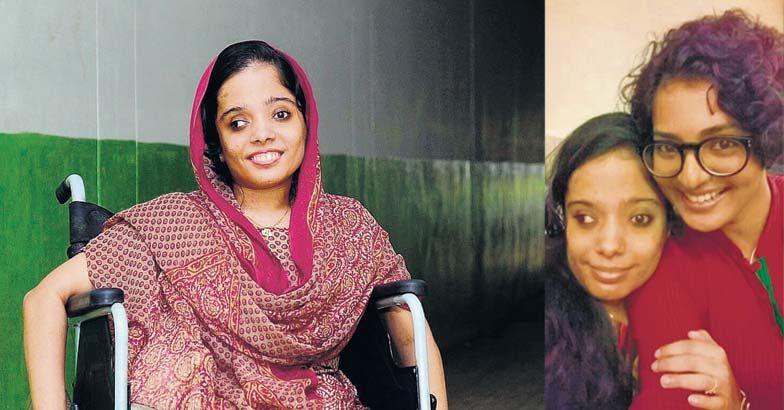
Wheelchair-bound Baby Fatima is the inspiration behind Saira of ‘Bangalore Days’. Insert : Fathima with Parvathy (R)
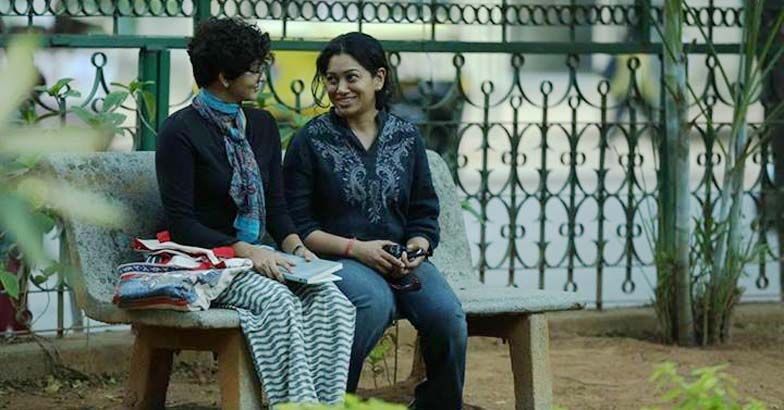
Remember Saira of ‘Bangalore Days’? The character of Saira, who vanquishes the handicaps of the body using sheer willpower, is based on a real life character who caught Anjali Menon’s attention at a ward in the Kozhikode Medical College. Baby Fatima, a wheelchair-bound young girl who went to each patient, made them smile and consoled them, was the real life inspiration behind Saira.
Baby Fatima, like Saira, is also fast becoming a rage in the campuses. Fatima is visiting campuses to garner support of the students for the palliative care work in connection with the ‘Becoz I Care’ campaign jointly conducted by the Institute of Palliative Medicine and Students in Palliative Care.
Even though not a radio jockey like Saira in ‘Bangalore Days’, Fatima, too, has the gift of gab. The palliative care workers contend that once Fatima speak a few words to them, any patient will be able to forget their woes. Ask Fatima how she came to possess such boundless positive energy, and she will wax eloquent about her family and her childhood.
Parvathy (L) with Anjali Menon (R) during the making of the movie, ‘Bangalore Days’
Fatima grew up with her ‘moothumma’ Malappuram Kottappadiyil Kiliyamannil Mumtaz Usman’s family as the pampered lone sister of moothumma’s four sons. It was not as a handicapped child that the family treated her. Having been raised in such a way as to instill confidence in her, proved to be her strength, according to Fatima.
Fathima is a second year BSW student now, though she has not gone to school or college for studies. She studied from home. It was as part of the ‘Becoz I Care’ campaign that Fathima had her first glimpse of a campus, giving her immense joy.
BSW was a natural choice for her as social service is her ambition in life. Soon after completing Class 10, Fathima took the lead to meet up with palliative care workers and became part of their activities.
Apart from all these activities, the entrepreneur in Fatima has launched a designer clothes boutique in her own home. Fatima’s muthumma Jamal Ayesha accompanies her to the Medical College every morning, where patients await the girl, who has been a regular presence there for the past five years with a beaming smile and soothing words of care.
Life +ve Becoz I Care campaign is about each student reaching the brochures and registration forms of palliative care to ten households. The goal is to make the kind-hearted souls who are willing to set aside Rs 3 daily (Rs 1000 annually) as members in the ‘Tracks We Live’ project. The palliative care workers will then be able to deliver one time painkillers to one patient at Rs 3. The project aims at alleviating the pain of a patient using one person’s donation.
For registration form visit: www.instituteofpalliativemedicine.org
Phone: 82816 64752
source: http://www.english.manoramaonline.com / OnManorama / Home> Lifestyle> Health / by Kapil Raj / Friday – July 25th, 2014
Recently seen on Kaun Banega Maha Crorepati, Fatima Khatoon provides a shining example of an individual’s strength to herald a change
BLAZING SPIRITFatima Khatoon
“Arrest the customers who visit brothels; the men who sell the girls and those who procure them and force them into the trade, as they are the real culprits,” says Fatima Khatoon, an activist who took a stand against these social maladies at a tender age. She adds: “The hapless girls should not be punished. They require help and compassion to start life afresh.”
The comment is profound and more so as it comes from a person who is illiterate and was married into a household indulging in the sex trade. Born in a nomadic family in Nepal, Fatima entered matrimony at the age of nine.
“Being constantly on the move, childhood marriages of girls were prevalent in my community to ensure security and safety for them,” she explains, though she faults her parents “who should have checked the antecedents of my in-laws before marrying me off.”
Settling with her husband in Araria in Bihar, it took her more than one-and-a-half-years to realise that the womenfolk in the house, including her four sisters-in-law, were part of the trade. Her mother-in-law ran the business with the help of her four sons. This kept the kitchen pot boiling.
“Being young and lonely I used to speak to the girl inmates though my sisters-in-law never conversed with me. It is only through them I became aware of the facts,” says Fatima. The other three girls in the house were purchased. “They were duped by persons on the pretext of marriage, love or jobs and sold at the brothel,” she explains.
“My heart went out to them as I perceived they were experiencing a slow death every day,” says Fatima. Despite being young, she talked to them and decided to help them escape.
“I gave them clothes and helped them find the way. I also told them to raise an alarm in case anybody tried to stop them.” Severe reprisal followed, with Fatima locked up for three days without food and water till a family member warned that she may die. “After this, I was not allowed to step outside and was never left alone.”
Her kindled spirit received a jolt when she learned that her playmate, Afsana, daughter of an aged sex worker, was compelled to join, when she was visiting her mother. “I was close to Afsana and therefore, deeply hurt. I vowed that I will fight this trade and put an end to it,” she comments. Initially it was difficult but she managed to convince her sisters-in-law who have since left this trade.
Associated since 2004 with Apne Aap Women Worldwide (AAWW), a grassroots organisation working in India to end sex trafficking, Fatima is pleased to talk about the work of the AAWW team in her village. She claims, “A vast majority of the families there indulged in this trade and so far almost all have given it up, barring seven.”
Fatima intends to use the Rs.25 lakh won by her last week in Kaun Banega Maha Crorepati to raise her six children and build a home for them. Apart from this is, she plans to build a shelter for distressed women.
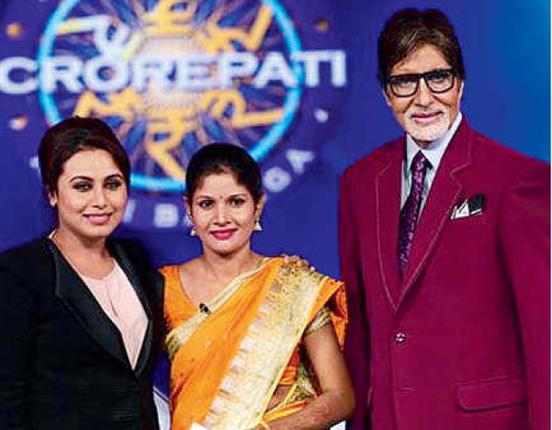
BLAZING SPIRITFatima Khatoon; seen with Amitabh Bachchan and Rani Mukerji on “Kaun Banega Maha Crorepati”
Applauded by Amitabh Bachchan and Rani Mukerji, the crusader hopes her participation in the quiz show will inspire girls to keep up their spirit and courage to achieve their dreams and ambitions.
Arrest the customers who visit brothels; the men who sell the girls and those who procure them and force them into the trade, as they are the real culprits
source: http://www.thehindu.com / The Hindu / Home> Features> MetroPlus / by S. Ravi / August 26th, 2014
Less than a week ago, gynaecologist Laila Beegum supervised the birthing of a set of identical twins to a couple from Kodinhi village, now known globally for the high number of multiple births. The twin babies born on August 7 this year took the total number of such deliveries witnessed by her to 452.
Though the total number of twins in the village has now crossed 500, the mystery behind the phenomenon is yet to be unravelled.
Located close to Tirurangadi town in Malappuram district, Kodinhi village, with its high twinning rate, garnered global media attention around six years ago. At Kodinhi, twins account for 42 per 1,000 live births while the global average of twinning is reportedly around six per 1,000.
Brazil’s Candido Godoi and Nigeria’s Igbo-Ora have witnessed similar birth phenomenon. Attempts by several scientists and organisations to find the secret behind the high twinning rate have failed to bear fruit.
Recently, Dr N K Sribiju, public health consultant, Taluk Hospital, Tirurangadi, approached the state government seeking permission to conduct a genetic study on the local populace.
“Surely, there would be a scientific reason behind the birth of a huge number of twins in such a small area. But, the secret can be revealed only through a detailed genetic and environment study. We are awaiting permission from the ethical committee of the Rajiv Gandhi Centre for Biotechnology at Thiruvananthapuram for the same,” said Dr Sribiju.
Significantly, more than 90 per cent of the couples from Kodinhi who reported twin births conceived normally. “Hence, IVF treatment cannot be considered as a reason for the high rate of twinning in Kodinhi,” Dr Biju said.
Dr Laila, who runs Laila’s Hospital, Chemmad, said multiple births are not just being reported by persons born and brought up here.
“Many women who came to Kodinhi after marrying someone here have also experienced twin birth. So, it could be due to some mysterious element of nature.
“Earlier, we conducted a water test but the results were not conclusive,” Dr Laila added.
Twins and Kins Association (TAKA) of Kodinhi believes that their village has the most density of twins in the world and is planning to approach officials of the Guinness Book to claim a record.
Get-together
“There are families having three pairs of twins and triplets at home. A 90-year-old man here is the eldest among the twins who are alive,” said Bhaskaran Pullani, president, Twins and Kins Association, which is planning to organise a get-together of all Kodinhi twins.
source: http://www.newindianexpress.com / The New Indian Express / Home> States> Kerala / by Santosh Christy / August 17th, 2014
Shanshah Khan received the President’s Award for Bravery at the tender age of 11 for his attempt to rescue four children drowning in the Yamuna.
However, Shanshah, now 18, lives in penury and says he cannot eat the certificate and trophy, and wishes that the President had given him some scholarships for his studies. “I am managing my studies of my own. It is sad that the government remembered to give me an award but forgot that I cannot eat and drink the certificate and trophies. I would have been thankful to the President if she had given me some scholarships for studies,” Shanshah told TOI.
The youth lives in a small hutment on the bank of the Yamuna with his family of nine members and hardly has space to keep the award. His father, Bissa Khan, is also working as a diver and has rescued several people.
Of the four children rescued by Shanshah in 2007, two were rescued alive while two died due to breathlessness. He received more than a dozen bravery awards, medals and certificates for his bravery from local NGOs and the district administration. He received the President’s bravery award in 2009 from then President, Pratibha Patil, at Rashtrapati Bhawan which he has kept in a big suitcase gifted to him by an NGO.
Youngest among his four brothers, Shanshah is a hero in his locality. His friends used to tease him that one day he would rescue a girl drowning in the river and she will be his heroine, forever. Married just six months back, Khan is happy these days because of his high school result. He has just passed Class X from CBSE and managed to get 7.2 CGPA. He wants to pursue his studies further.
However, Bissa said poverty snatched his son’s dreams of becoming an engineer. “My son wanted to be an engineer but I was unable to send him to a proper school. I am proud of what he has done and is doing in life. We do not want medals, but a little help and respect from people.”
Bissa has to look after a big family of nine persons and is struggling to manage even two square meals per day. “People do not give me anything for rescuing them. I also don’t ask for anything. May be their lives were not valuable for anyone, but mine is, for my family. Even police and the district administration do not give the divers anything for their acts of bravery, apart from felicitation on Independence and Republic day,” he added.
source: http://www.timesofindia.indiatimes.com / The Times of India / Home> City> Agra / TNN / August 12th, 2014
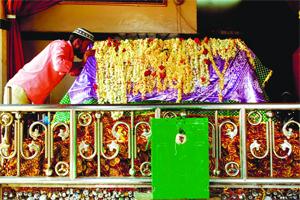
The boy took a lock out of his pocket, fixed it to the grill and turned the key. He closed his eyes, prayed and left. “He has relinquished all his troubles here,” said Nawaz, the khadim-e-dargah (caretaker). “The Pir will now take care of them.” He added that people also consigned ill health and those possessed by spirits to the locks. Everything was possible in the saint’s durbar. All you need is faith.
Faith is what drove Bahadur Khan, the Killedar of the Bangalore Fort, to defend it with his life on March 21, 1791, during the Third Anglo-Mysore War. Like his fellow soldiers, the fort Commandant fought for Mysore and its freedom.
The former Faujdar of the Krishnagiri Fort had been recently shifted to Bangalore under Tipu Sultan’s orders. Tipu himself was busy fighting a determined and desperate General Lord Cornwallis. He trusted that Bahadur Khan, assisted by Muhammad Khan Bakshi and Sayyid Hamid, would be an able protector of the oval Bangalore Fort. The ancient mud structure had been reinforced in stone around 1761 by its erstwhile Killedar, Hazrat Ibrahim Khan, Hyder Ali’s maternal uncle and a Sufi pir of the Shuttari order.
Close to midnight, the English army stealthily attacked the fort. They crept along its walls (now busy KR Road), scaled its ramparts and cut soldiers down quietly by moonlight. A popular conspiracy theory whispers that the Mysorean army was betrayed from within and that the breach blown through earlier by English cannons was deliberately left unguarded. Bahadur Khan and a handful of soldiers fought fiercely till he died of a gunshot through the head. His body was stabbed repeatedly by bayonets.
Approximately 2,000 men lost their lives that night. The prosperous town of Bangalore had been laid siege to earlier, and now the fort had fallen. A victorious Lord Cornwallis commended his bravery and wrote to Tipu asking him where his noble Killedar should be buried. Tipu is said to have wept publicly, and replied that a soldier must be buried where he fell. He requested that the Killedar be handed over to the Muslim population of Bangalore who would ensure that his last rites were attended to appropriately
Bahadur Khan was buried near what is now the KR Market flyover. Flags flutter high over his green domed mausoleum at the corner of Avenue Road and SJP Road. It is revered by local populations and also called ‘The Lock and Key Dargah’ of Hazrath Mir Bahadur Shah Al-Maroof Syed Pacha Shaheed. Other warrior-saints sleep inside the Pete’s labrynthine streets. They create a sacred landscape that is interwoven with this densely commercial area.
The seventy-year-old Killedar was described by historians as a majestic figure, “a tall robust man… with a white beard descending to his middle.” The prophet-like reference only adds to the shrine’s reputation. People of all faiths walk in and out all day. They petition the saint and pray quietly amidst jasmine flowers and incense sticks, while buses ply and frantic commuters run to and fro outside. At dawn, the shrine is surrounded by roses in buckets, as wholesalers from KR Market squat outside its door. Sometimes, I find musicians with harmoniums and percussion instruments singing devotional songs as offerings. There is no courtyard or wall. Its doors remain open for the busy world to take refuge within. The custodian of Bangalore’s historic fortress continues to watch over the city’s population, centuries later.
The writer is a cultural documentarian and blogs at aturquoisecloud.wordpress.com
source: http://www.bangaloremirror.com / Bangalore Mirror / Home> Columns> Other / by Aliyeh Rizvi, Bangalore Mirror Bureau / August 03rd, 2014
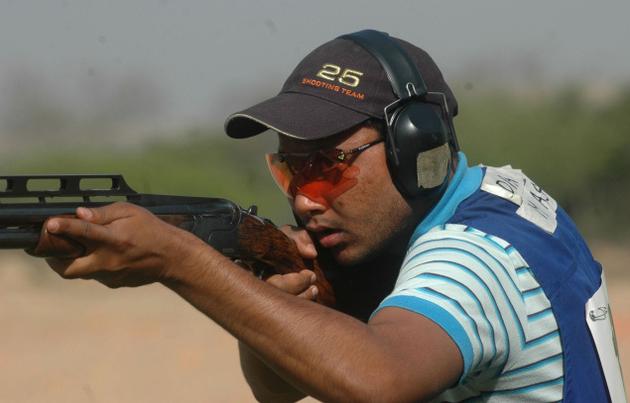
Shooting contibuted yet another medal to India’s medal tally as Asab Mohammed Rizvi grabbed the bronze medal in men’s double trap event. Another Indian shooter Ankur Mittal, who was leading after the qualification round finished in 5th position.
Asab defeated Nathan Xuereb of Malta 26-24 in the bronze medal play-off. Both the Indian shooters started off very well in the qualification round as Ankur and Asab with 135 and 132 points finished on 1st and 2nd respectively in the qualification round to make it to the semifinals.
Asab’s start to the semifinal round was a bit shaky as he missed 3 of the first 10 targets, but after that he didn’t miss a single shot in his next 10 rounds and scored a good 27/30. Along with Asab, two Englishmen Steven Scott and Matthew French finished with the same scoreline as the contest ended in three-way shoot-off.
Asab unfortunately missed one target in the shoot-off as the other two shooters shot a perfect 2/2 to qualify for the gold medal match.
In bronze medal play-off, Asab was leading 8-6 at one stage but then the 17 year old shooter from Malta,Nathan Xuereb made a good comeback to level the scores to 14-14. The inexperience of the Maltian shooter came into play as he missed few shots towards the end of the match.
Steven Scott shot a perfect 30 to clinch the gold medal and his compatriot Matthew French with a score of 29 won the silver medal.
With this medal, India’s medal tally has now gone up to 19 medals which includes 5 golds, 8 silvers and 6 bronze. England, Australia and Scotland hold the top 3 positions respectively.
Final Standings:
Position
Name
Medal
1
Steven Scott (ENG)
GOLD
2
Matthew French (ENG)
SILVER
3
Asab Mohammed (IND)
BRONZE
source: http://www.sportskeeda.com / SportsKeeda / Home> News> Shooting / by Vishal Kungwani / July 27th, 2014
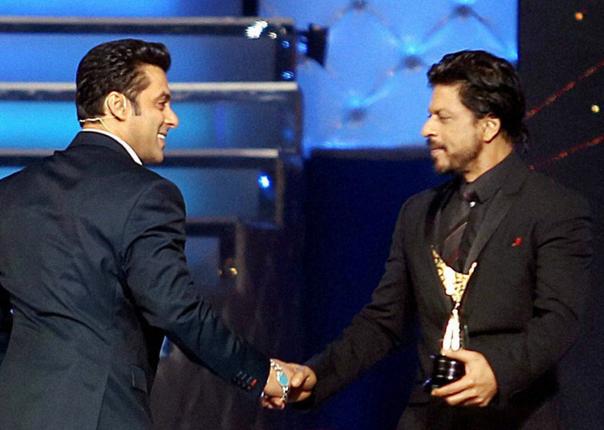
Superstar Salman Khan, who has been delivering hit films back-to-back, feels his arch rival Shah Rukh Khan is the ‘King of Bollywood’.
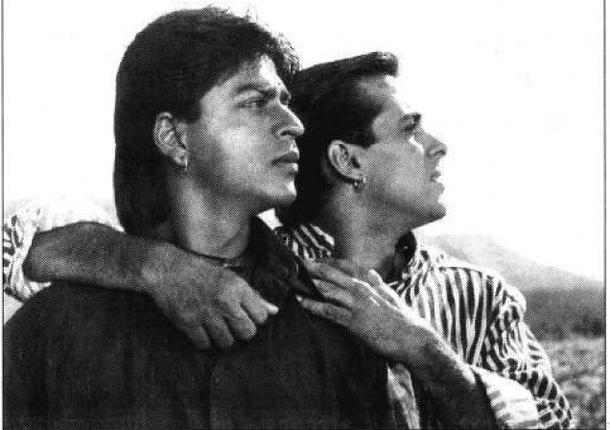
Salman Khan and Shah Rukh Khan in Karan Arjun.
Salman has become the first Bollywood actor to give seven Rs. 100 crore hit films in a row, including his recent release ‘Kick’.
“You can say whatever you want. But there is a king (hinting at Shah Rukh) anyways. You have problem with him being the King? I don’t have problem with him being the king,” Salman said on Thursday when asked if after delivering so many hit films he feels like the new king of Bollywood.
SRK and Salman’s enmity and an eventual patch up has been a fodder for gossip in Bollywood for many years but the ‘Kick’ star indicated that he no longer has a problem talking about the other Khan.
“You are talking about Shah Rukh?” the actor asked a reporter to a query on him being the king of Bollywood, to which the scribe said he was not referring to Shah Rukh.
Salman then said, “I am mentioning (him). If he is the king, he should be the king, that is the good position.”
To a query on where he places himself in the industry, he said, “I would be placing myself much behind, right now I am misplaced.”
With Salman’s recently released ‘Kick’ continuing a good run at the box office, there is a buzz that the film may cross Rs. 200 crore mark. The makers claim ‘Kick’ has already collected Rs. 147.7 crores despite bad reviews.
On the box office result of ‘Kick’, Salman said, “I don’t know about the business. Why talk about Rs. 200 crore, talk about Rs. 300 or Rs. 400 crore or Rs. 500 crore. We would be more than happy if the film does more business.”
On reports that Karan Johar is paying Rs. 150 crore each to him (Salman) and Aamir Khan for doing a film with his production house, the actor said, “Films are not making Rs. 300 crore. I wish we get that much. Films are not making that much money, they are making Rs. 200-250 crore, some not even touching that much. So how can our prices be that much… it is ridiculous.”
Johar also denied the reports on Thursday.
source: http://www.thehindu.com / The Hindu / Home> Features> Cinema Plus / PTI / Mumbai – August 01st, 2014