Category Archives: Amazing Feats

Abracadabra : Passing thoughts on men and mice

Kennedy, Sabu and Anekaroti
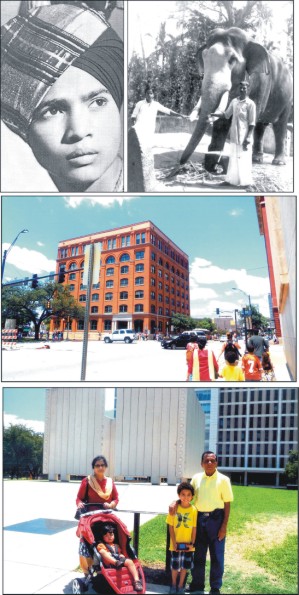
(1-Top Left )Sabu, the elephant boy. (2-Top Right) Sabu with his father, a mahout (3- Middle) This is the rear of the building from where Kennedy was shot and killed. (4-Bottom) The memorial like a wall with vertical lines at the spot where Kennedy delivered his last speech. Dr. Sunder Raj is seen standing by the side of the information plaque.
(1-Top Left )Sabu, the elephant boy.
(2-Top Right) Sabu with his father, a mahout
(3- Middle) This is the rear of the building from where Kennedy was shot and killed.
(4-Bottom) The memorial like a wall with vertical lines at the spot where Kennedy delivered his last speech. Dr. Sunder Raj is seen standing by the side of the information plaque.

A couple of days back, an old friend of mine from Bangalore had come to meet me and casually asked if Dr. J.K. Sunder Raj, a well-known family doctor of our city, had hung his stethoscope. Since I am in regular contact with him either in the Sports Club or Mysore Race Club or in connection with the Zoo (where he treats the gorillas), I answered in the negative.

“What makes you think Dr. Sunder Raj has called it a day and closed shop?” I asked.

It seems my friend had gone to see him at his clinic on Old Mysore Bank Road in city and found there was no clinic. That was news for me too. I called him on telephone to check. Yes, indeed he had closed his city clinic, but continues his service to the sick families from his house on Vivekananda Road in Yadavagiri. It was then that the good doctor said he was wanting to see me personally to hand over a unique newspaper that he had purchased in Dallas, Texas, where he had been recently to be with his daughter.

As promised, he came to my office with his special newspaper and more. The cover page of the newspaper is produced here… and the headline is self-speaking.

The daily newspaper ‘The Dallas Times Herald’, in its Friday evening Nov. 22, 1963 Final Edition, had carried world’s most shocking and tragic news of the day that happened in the city from where the paper was published. The assassination of US President John F. Kennedy. Looking at the paper that appeared as pulled out from the well-preserved archive, I wondered how our doctor managed to get the paper which will have huge antique value ! He asked me to take it easy. There is nothing like grabbing an old copy of that day of tragedy of Nov. 22, 1963. The credit for making available this copy of the newspaper to tourists should go to the Curator of Kennedy Museum at Dallas where Dr. Sunder Raj purchased it by paying $ 4.60. The cover price of the newspaper in 1963 was five cents.

The Museum authorities periodically print this historic newspaper as it was printed on that tragic day and sell them. What better souvenir one would want for visiting the Kennedy Museum ?

I took a copy of it before returning the original to the doctor and wondered if anything like this is being done at Gandhi Museum or Nehru Museum in our country. Readers with information on this may please write or e-mail to me.

Dr. Sunder Raj also gave me two photographs he had taken — one of the building from where Lee Oswald, the assassin, shot the President from the sixth floor which has now been converted into a Museum and another, the spot where President Kennedy delivered his last speech.

Dr. Sunder Raj also had two more surprise photographs with him which were of personal nature. One was a photograph he had clicked in the year 1951-52 at the elephant stables of the Maharaja, known famously as ‘Anekaroti.’ Now the new generation as also of the old generation may not know that the Anekaroti ever existed in Mysore, attracting huge number of tourists those days.

The stable was located where the JSS Hospital Complex is now. There used to be 20 to 25 elephants, well fed and healthy, says the doctor. The area of the Anekaroti used to be green and cool with plenty of trees, adds Dr. Sunder Raj.

The doctor recalls: Once a team of Hollywood film-makers visited Mysore in around 1950. They also visited the then famous Anekaroti. As they went around Anekaroti, they saw a young, bright and handsome boy playing with a huge elephant. His name was Sabu Dastagir who later became a famous Hollywood actor under the name Mysore Sabu (27.1.1924 – 2.12.1963). He was born in Karapore in H.D. Kote, the famous hunting forest of the Maharaja of Mysore. His father was a mahout (elephant attendant) and trainer of elephants. Sabu, his son, too was following his father’s profession where he was spotted by the Hollywood film-maker Robert J. Flaherty.

Dr. Sunder Raj says that Robert Flaherty persuaded Sabu’s father to let him take Sabu to Hollywood. Once in the US, Sabu was taught English and given training in acting.

Sabu acted in several English movies, specially connected to the jungles. His first movie was ‘Elephant Boy’ which was a great hit. Other movies were ‘Song of India,’ ‘The Jungle Book,’ ‘The Thief of Baghdad’ etc. It is sad that such a talented Mysore boy died young at the age of 39.

To those working to develop Mysore as a tourist destination, I may suggest that they revive the ‘Anekaroti’ which is sure to become a tourist attraction. Some lessons from the ‘elephant show’ of Bangkok’s ‘Rose Garden’ may be learnt and incorporated to this Anekaroti. Howzzat?

source: http://www.starofmysore.com / Star of Mysore / Home> Abracadabra….Abracadabra / by  K.B. Ganapathy, Editor  e-mail kbg@starofmysore.com / November 18th, 2013
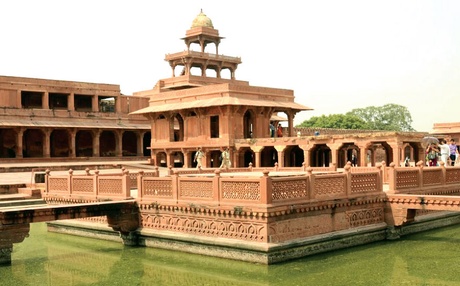
Ruins in perfect preservation

Akbar’s tribute to Sheikh Salim Chisti, Fatehpur Sikri is an abandoned city of red and white sandstone.

Fatehpur Sikri is considered the greatest Mughal city ever built and there is a fascinating story on how the idea behind its construction came about.

As Akbar grew older, his principal anxiety was the lack of a male heir. He learnt of a dervish called Sheikh Salim Chisti, the last of the many great sages in the Chisti line and journeyed to seek his blessings in the tiny town of Sikri — 23 miles west of Agra.  Sheikh recited blessings and made promises. Soon thereafter in 1569, Akbar’s Hindu wife gave birth to a son, Salim, later known as Jahangir followed by two more sons, Murad and Daniyal.

Akbar’s response to Chisti’s magic  probably ranks as one of the most outstanding examples in history of royal gratitude. He commanded that a city be built on the spot where the saint’s retreat was situated and the Sheikh was made the spiritual mentor of the entire metropolis. Almost overnight an army of labourers was mobilised to fashion the city of Akbar’s dreams and by 1570, the construction was in full swing using a kind of pre-fabrication technique.

Wrote Father Monserrate, “The house was built of stone made ready before it was brought thither so that there was neither hammer nor any tool heard in the house when it was building.”

Most of the city was completed in seven years, which was a remarkable feat considering the fact that the Taj Mahal took 22 long years to construct.

Emperor Akbar designed many of the structures himself and worked in the pits with the stonemasons cutting bricks and carving sandstone corbels. Huge battlements and a wall with nine gates appeared and a five story mosque  known as Panch Mahal was later constructed in the style of a Buddhist temple.

A huge rectangular courtyard was erected bounded by symmetrical gardens. There were three palaces, waterworks and baths, a mint for stamping coins with Akbar’s profile, a Turkish palace for his Turkish wife, a Hindu palace for his Hindu wife, a Muslim palace for his Muslim wives, an enamelled hall for the emperor to play hide and seek with all his wives, a court on which to play pachisi with human pieces, viaducts, stables, octagonal towers, domed pigeon houses and more.

There was also a seventy foot octagonal tower built in honour of a pet elephant, a girl’s school, a zoo, a sewage system and the largest gateway in the east — the Buland Darwaza — which served as a gateway to the city.

In Fatehpur Sikri, Akbar gathered the finest singers, the boldest statesmen and the wisest philosophers. His cabinet, known then as the ‘nine gems’ was reputed to hold the nine most capable men in the world.

After 15 years of life at Fatehpur Sikri, the fickle sovereign began to grow bored with his magnificent project. The harsh landscape around Sikri was not conducive to gaiety and drinking water was inaccessible (a manmade lake, dug nearby collected only brackish water).

In 1585, when a military campaign called him to Northwest India, he moved his headquarters to Lahore and abandoned Fatehpur Sikri forever.

The story that Akbar left the city to oblige Sheikh Chisti when he complained that the noise was disturbing his devotions is apocryphal, for Salim died some years before the city was abandoned.

As quickly as it had been populated, the magnificent city emptied.

A few years later, the city was described by a European as “ruinate, lying like a waste district, and very dangerous to pass through at night”.

Today, except for a small community that lives at the foot of the city and lives off the largesse of occasional tourists, the city of Fatehpur Sikri is unoccupied, a ghostly red and white necropolis of sandstone courtyards and endless silent corridors, which are all in a state of perfect preservation.

It really seems too perfect.

In fact, the ingredients of the time — resilient mortar used between the bricks have never been chemically analysed with any real success.

source: http://www.newindianexpress.com / The New Indian Express / Home> Education> Student / by Anjali Sharma – ENS / November 21st, 2013

Idea of Taj Mahal was born here

Ahmedabad :

The Moghul great Shah Jahan, who built the greatest monument for love anywhere in the world — the  Taj Mahal  — had his early training in Ahmedabad. The great builder was inspired by the architectural marvels of Gujarat and honed his skills as a builder in Ahmedabad. Also giving him company was Mumtaz Mahal who stayed with him in Ahmedabad around 1618 when he was serving as governor of Gujarat for his father Emperor Jehangir.

Today, Shahibaug in Ahmedabad is named after him and the present Sardar Patel Smarak was built by him to give employment to locals during a famine. Shah Jahan had not built any monuments before coming to Ahmedabad. Then, he was known as prince Khurram. If historian James Douglas  is to be believed, Ahmedabad’s  picturesque architecture, which was already two centuries old then, inspired Shah Jahan to erect great architectural marvels later in Agra.

Douglas notes in his book ‘Western India’ published in 1893 that the Moghul king acquired a taste for architecture and cultivated it during his stay in this city. He writes, “Shah Jahan in Ahmedabad was watching the flecked light as it fall on panement of marble or alabastar; alone and silent , observing, measuring, comparing, digesting, perhaps copying, drinking in all wisdom, deftness of hand, cunning craft and workmanship, beauty of colour, harmony of form.

Shah Jahan, who ruled as an emperor from 1627 to 1658, also got the Azamkhan Sarai built near the Bhadra fort. Taj Mahal, which was completed in 1653, sent Shah Jahan’s earlier construction into oblivion. But a connoisseur like Douglas was quick to recognise the roots of the architectural revolution in India . He paid the ultimate tribute to the city: “The bud was here: The blossom and fruit to be in Agra? Everything has a beginning, Greece  before Rome, Damacus before Cairo , Agra follows Ahmedabad.”

He further wrote: “Ten of Ahmedabad’s mosques were built before Columbus discovered America…It was here the master builder drank in the elements of his taste which was to display such glorious results elsewhere.”

source: http://www.articles.timesofindia.indiatimes.com / The Times of India / Home> City> Ahmedabad / by Ashish Vashi , TNN / November 22nd, 2013

Sharon Stone’s Taj memories set in stone

This wasn’t the typical Sharon Stone you see posing in glamorous gowns on red carpets across the world. The star decided to ditch the gowns for a much more casual black smock with her hair tied up in a ponytail, and traded the fashion poses for the more awkward touristy ones, as she went about dropping to her haunches and leaning alarmingly far back to capture her friends, with the Taj Mahal in the background, at the best angle possible.

(Sharon Stone strikes the…)

Stone took her sweet time on this visit. Not only was her camera trained on every stone carving, she’d also stop to point the lens at cows, cute Indian babies or other locals. When two Indian women pointed their camera at her, the actress was so fascinated with their sindoor that she started clicking them back. It took them 10 seconds to change their expression from bewilderment to a smile.

This was also not a typical Hollywood celebrity visit to an Indian monument. Missing, for starters, was the sea of paparazzi we’d witnessed when Tom Cruise was here in 2011. There wasn’t even one bodyguard in sight. Instead, Stone chose to sightsee with six of her closest friends, including family friend Tikka Shatrujit Singh.

“I have known her for eight years, she’s a crusader,” Singh said. When asked if he catches up with the star regularly, Singh replied, “It’s because she’s here in India for the first time that I got to spend so much time with her. Wahan pe kahan time milta hai? Bade Hollywood star hain.”

The Taj Mahal didn’t fail to impress the Basic Instinct actress, who was teary-eyed when the guide told her the story behind the monument, and she broke down at Shah Jahan and Mumtaz Mahal’s graves. Stone continued to whisper ‘beautiful’ and ‘magical’, until it was time to leave.
When asked about her lasting impressions of India, Stone chose to be bitingly frank rather than politically correct. Calling India a poem that was both beautiful and sorrowful, she said, “I think that there are things that are required to gracefully bridge the gap between the eccentricity of wealth and the slumber of the poverty. For example, the millions of people that are defecating in the streets, I think it’s not only of service to those people to create a sanitary system, but also for the wealthy people. It’s not logical or intelligent to breathe that in the air. And so, for modern sense of grace, and a higher elevated sense of that same poetry, it seems logical to produce the sanitization system.”

She also spoke about CBI Chief Ranjit Sinha’s recent “rape is inevitable” remark. “When we see public officials making statements that, you know, ‘rape is inevitable’, ‘when it happens to you, enjoy it’ – it lacks the logic that rape is not a gender issue and that lacks compassion, and should be regarded in that way. So, I think it’s a sense of creating maybe one step further in the use of modern communication to achieve that goal,” she said.

“For example, if six out of 10 people aren’t registered to vote, it’s illogical that we don’t use the six billion cellphones or the cellphones that the six billion people on the planet have to register people to vote. Because, if you have everyone voting, then you have a more logical sense of fluidity among the people. And a more modern sense of the inevitable. Because the world, with communication as it exists, is taking an inevitable step towards understanding what’s happening on a global sense,” she elaborated.

source: http://www.articles.timesofindia.indiatimes.com / The Times of India / Home> Entertainment> Hollywood> Taj Mahal / by Kritika Kapoor, TNN / November 22nd, 2013

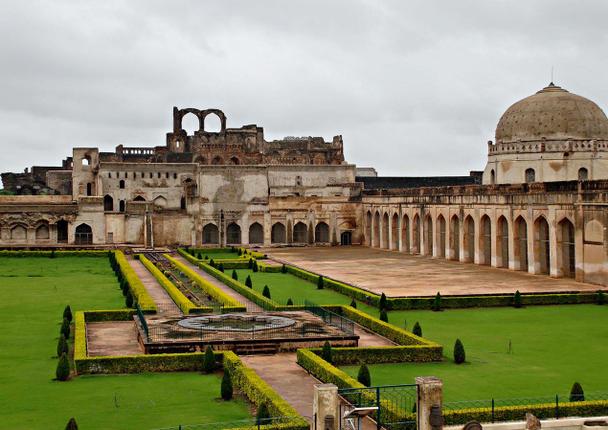
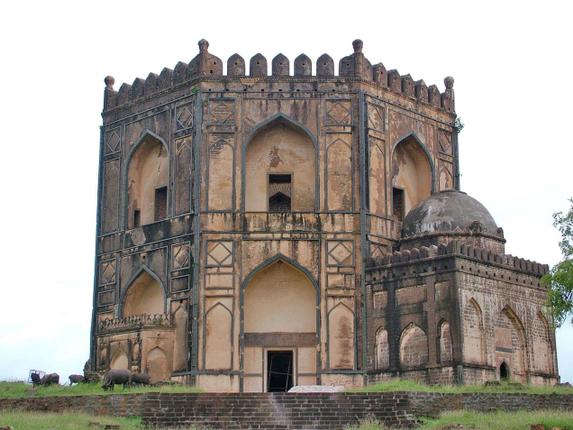
Bidar only South Indian monument to figure in latest World Monuments Fund list

According to the World Monuments Fund, the sites in the list are crying for immediate attention for preservation, protection, and adaptive reuse. / The Hindu

House of Sheikh Salim Chisti in Fatehpur Sikri and Juna Mahal in Rajasthan are also on the list

The historic city of Bidar figures in the 2014 World Monuments Watch list released by the World Monuments Fund (WMF), a New York-based NGO working for the protection of monuments.

WMF president Bonnie Burnham announced the list in New York on October 8, according to P.C. Jaffer, Deputy Commissioner of Bidar. The WMF had received 741 proposals from 166 countries. But the final list contains 67 sites from 41 countries.

The three sites in India to figure in the list are the house of Sheikh Salim Chisti in Fatehpur Sikri, Juna Mahal in Rajasthan and “the historic city of Bidar”. These, according to the list, are sites are in need of immediate attention for preservation, protection, and adaptive reuse.

Benefits

Mr. Jaffer said the announcement would benefit the city in many ways. It would attract worldwide attention, leading to increased tourist footfalls. It would also help the government get technical advice and support from institutions specialised in the preservation of monuments.

“It could also help us raise funds from the government or donor agencies for protection and preservation of monuments,” Dr. Jaffer said.

Bidar has three national monuments - Bidar Fort, Ashtur tombs and the Madrasa of Mahmud Gawan. / The Hindu
Bidar has three national monuments – Bidar Fort, Ashtur tombs and the Madrasa of Mahmud Gawan. / The Hindu

Bidar has three national monuments – Bidar Fort, Ashtur tombs and the Madrasa of Mahmud Gawan. The city also has 20 sites recognised by the State Department of Archaeology and Heritage and over 40 unrecognised sites of the medieval periods.

Facebook page

“We will upload the WMF recommendations on the district website. We will also open a Facebook page on Bidar on the WMF watch list and raise awareness about the issue,” the Deputy Commissioner said.

Two interpretations centres would be set up in the Bidar Fort and at Ashtur at a total cost of Rs. 80 lakh. This would provide information to tourists on the architectural and cultural aspects of monuments. In this background, an international seminar on Bidar’s heritage would be organised in January.

According to a release issued by Ms. Burnham, a copy of which was sent to the district administration, the list contains sites that are facing several preservation challenges like climate change, armed violence, neglect by authorities, lack of resources or even increased tourism activity that can damage monuments. An independent panel of international experts on archaeology, culture and preservation had prepared the list, Ms. Burnham said.

Over 150 sites have been preserved and protected by the WMF and its associate organisations in several countries since 1996. Famous sites restored by the WMF personnel include Venice in Italy, Gokarna Mahadev temple in Nepal, and the Citadelle Laferrière in northern Haiti.

The WMF also takes up restoration works on sites referred by Unesco.

source: http://www.thehindu.com / The Hindu / Home> News> National> Karnataka / by Rishikesh Bahadur Desai / Bidar – October 10th, 2013

Husain’s ‘Bhopal’ to go under the hammer

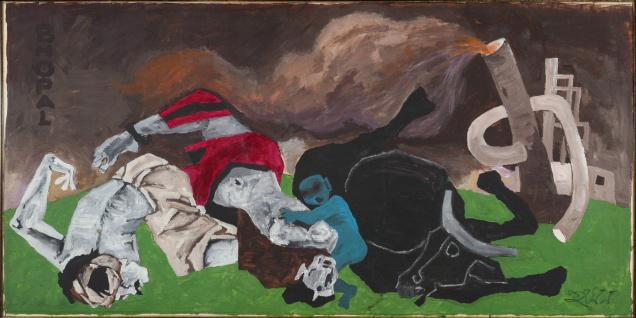
M.F. Husain’s “Bhopal”. / Photo: Special Arrangement / The Hindu

The oil on canvas has been valued at £200,000-300,000

‘Bhopal’, Maqbool Fida Husain’s anguished representation of the terrible consequences of industrial negligence in Bhopal, is to go under the hammer on October 8 at the Bonhams Auction House in London.

Husain’s framed and signed oil on canvas, with ‘Bhopal’ painted boldly on the side of the canvas — as if to leave no doubt on which disaster he is depicting — has been valued between £200,000 and 300,000, a press release from the auctioneers said.

“Just as Pablo Picasso’s passion and outrage towards the Spanish Civil War had inspired him to create ‘Guernica’ (1937), ‘Bhopal’ was the result of Husain’s horror at the long-lasting effects of the leak,” the press release said, though attributing the work’s energy to Husain’s own genius that was moulded by life around him. The Bhopal disaster occurred on December 3, 1984 when a poison gas leak from a Union Carbide factory killed around 2000 people.

Headlined by Husain’s ‘Bhopal,’ the October 8 auction of Indian and Islamic art will also auction ‘Bindu’ by Syed Haidar Raza (b.1922) that has been valued between £100,000 and 150,000, and ‘Untitled’ by Francis Newton Souza (1924-2002) valued between £40,000 and 60,000.

Raza started painting the Bindu series in the 1980s. “An act of meditation and the ‘Bindu’ is the centre of calm” the press release says.

Yet another highlight of the auction is ‘Four Figures” by Pakistani artist Sadequain (1937-1987) with an estimated valuation of £45,000-65,000.

This is not the first time that Husain’s paintings have been sold by Bonham’s, which specialises in Asian art. This April, an untitled Husain painting of horses was sold for £205,250; and in 2007, at the height of Husain’s troubles with right wing Hindu nationalist groups who hounded him for painting disrespectful and nude representations of Hindu goddesses, the same auction house sold his ‘Nude Woman’, a masterly painting of the naked female form, one that unfortunately had to find its home outside the country that inspired all his art.

source: http://www.thehindu.com / The Hindu / Home> Arts / by Parvathi Menon / London – September 20th, 2013

A Braveheart never dies

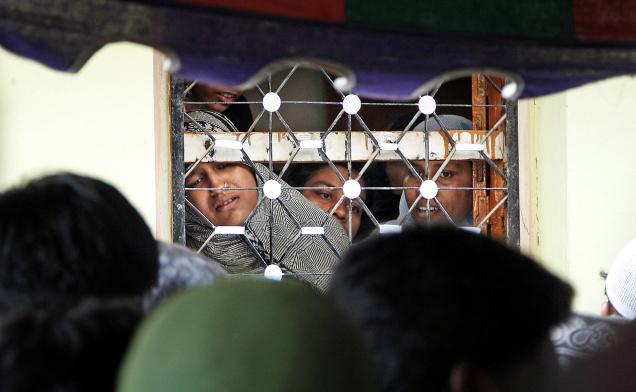
Nasreen Fatima, left, cries during the funeral ceremony of her husband Indian army soldier Firoz Khan, as she looks out from the window of her home in Hyderabad on Thursday./  Photo: AP / The Hindu
Nasreen Fatima, left, cries during the funeral ceremony of her husband Indian army soldier Firoz Khan, as she looks out from the window of her home in Hyderabad on Thursday./ Photo: AP / The Hindu

Indian Army soldier Mohd. Firoz Khan, who died in Pakistan’s shelling across the Line of Control (LoC) in Poonch district of Jammu & Kashmir on Tuesday, is given a tearful farewell and buried with military honours

The city bade a tearful adieu to martyred soldier Mohd. Firoz Khan on Thursday. Businesses and commercial establishments voluntarily shut down in the Nawab Sahab Kunta area of Old City to pay respects to the soldier who died in Pakistan’s shelling across the Line of Control (LoC) in Poonch district of Jammu & Kashmir on Tuesday.

Hundreds of people from various parts of the city converged at a local burial ground where the jawan was buried with full military honours on Thursday.

Procession

The funeral prayers were held at the ‘Masjid-e-Saliheen’ after which his body was draped in the national flag and taken out in procession led by a military band.

Onlookers raised slogans denouncing Pakistan and praising the martyr.

Women and children too participated in the procession by climbing on to the rooftops to have a final glimpse of the body of the brave soldier. Before burial, the martyr was offered a gun salute by Army personnel while Additional DCP South, K. Babu Rao offered the wreath on behalf of the State government along with other officials of the armed forces.

Labour Minister D. Nagender, YSRC president Y. S. Jaganmohan Reddy, BJP leaders Bandaru Dattatreya and G. Kishan Reddy, MIM leaders Asaduddin Owaisi, Akbaruddin Owaisi, Ahmed Pasha Quadri and Mohd Moazam Khan and Mayor Majid Hussain visited the house of the slain army man and offered condolences to the family.

The leaders demanded government to take all necessary steps to extend every possible assistance to the family and also provide adequate ex-gratia. They also called upon the Central Government to take strong measures to prevent frequent skirmishes at the LoC.

Mr. Akbaruddin Owaisi offered to take the responsibility of providing education to the three children of the slain army man.

IANS reportrs: Earleir, heart-rending scenes were witnessed at Firoz’s house. His mother Razia Begum and wife Nasreen Fatima were inconsolable.

Many were in tears after seeing his four—year—old daughter Afshin Fatima, two—year—old son Arshad Khan and eight—month—old daughter Aisha Fatima.

Firoz has been serving with the Madras Regiment for 12 years.

Firoz Khan had last visited his family on the occasion of Eid—ul—Fitr two months ago.

According to family members, he spoke to his wife over phone a couple of days ago to express his inability to come home on Eid and asked her to buy new clothes for the children.

source: http://www.thehindu.com / The Hindu / Home> News> Cities> Hyderabad / by Staff Reporter / Hyderabad – October 17th, 2013

A red paper poppy for India too

Farrukh Dhondy
Farrukh Dhondy

”   Britain is not fully aware of the fact that thousands of Indian soldiers were used as cannon fodder in this war and sent to various parts of the world to fight the Germans and their Turkish allies ”


“Why do hearts break
And minds bend?
Why isn’t there a stick
With only one end?

Why does day break
The sun set
And the moon wax and wane?


—For heaven’s sake
What was the debt
That Abel owed to Cain?”


From Booch Sakhat Booch (A Parsi Discourse on Stoppers) by Bachchoo


Britain has been commemorating the end of the First World War this last week. The Queen and other Royals laid wreaths at the cenotaph in Whitehall, London, marking the memory of the war dead and in the war cemeteries in Belgium. The populace buys and wears red paper poppies on their left lapels or their blouses.

This is the last ceremony of remembrance before the 100th anniversary of the war. Next year will see a tsunami of books, TV dramas, stage plays, songs and services about the First World War. I hereby confess that I’ve been commissioned to write a stage play about it — but from a slightly unexplored angle.

With the commission in hand I began to explore this angularity. The play is to be about the soldiers from Imperial India who were recruited to fight this “Sahib’s War”. Britain is not fully aware of the fact that thousands of Indian soldiers were used as cannon fodder in this war and sent to various parts of the world — the Western Front in Europe, Africa, Malaya and West Asia — to fight the Germans and their Turkish allies. What Britain can recall if it will was that several hundred of these Indian wounded were hospitalised during the war in the Brighton Pavilion, a building or folly conceived it would seem for a film set of Ali Baba. Some bright spark thought its oriental structure with domes and frills would make the Indians feel at home.

Several Indians who displayed bravery in the field were rewarded with the Victoria Cross and other decorations.

One story that sticks in my memory is what our family cook Hukam Ali told me when I was a child. When he was a teenager he used to be a ball-boy on the tennis courts of the Poona Club. A British officer took a shine to him and offered him employment in his house. Hukam Ali took it on and by his own account gave good service. The officer was then summoned with his regiment, which consisted of “native” companies and British officers to war and suggested to Hukam Ali that he enlist as an infantryman, which Hukam Ali did.

He recalled his experience in this war — a British war against other “goras”. I was too young to appreciate then which war this was or who was fighting whom, but “Hukams” said he went on a long voyage by ship and then by train and his regiment was joined by Australians and South Africans, all “goras”. The Indians were bivouacked separately from the whites for a few days.

Then the fighting began and in Hukam Ali’s words the cry went up “Kaaley ko aagey dhaklo! Kaaley ko aagey dhaklo! (Shove the blacks forward)”. At the tender age at which I heard the story I didn’t think of querying the fact that the British officers were shouting this command or slogan in Hindustani. The import of Hukams’ story was clear and the end of it tragic. He said hundreds of his regiment, thrown on the enemy lines died. He survived and must have been in his sixties when he found employment in our household which helps me date his war.

My play begins with the memory of this story. I have discovered that long before Subhas Chandra Bose’s Indian National Army fell on the tactic of recruiting Indian Prisoners of War in Japanese camps to fight for Indian Independence by siding with the Nazis and Japanese, a similar initiative was attempted in the 1914-18 War. The Germans set out to persuade Muslim soldiers of the Raj whom they had captured to switch sides.

Their argument was that Germany was allied with Turkey and the Ottoman Emperor was the Caliph, the leader of world Islam. No Muslim should be fighting him and his forces. The other argument was, of course, that the British had manifestly used Indian troops as cannon fodder and thrown badly trained, badly equipped and badly led Indians against superior German forces, which proved how little the Raj cared for Indian lives. No doubt some argument about a victorious Germany granting India its political and economic Independence was dragged in.

Though several Muslim soldiers are reported to have been persuaded to switch sides, no such force was consolidated or ever put into the field by the Germans. Perhaps there were too few of recruits to this cause or perhaps the Germans didn’t trust their conversion.

Nevertheless, my researches have thrown up a story that’s not very well known. Britain is, despite all the trumpeting about heroism, deeply ambivalent about this centenary. Yes, the British and their allies defeated Willhelm’s troops in the end but can a victory which cost both sides millions of deaths be “celebrated”? Will the centennial be dedicated to the utter futility and meaninglessness of this slaughter?

Historians repeatedly claim that they can’t conclusively say why the assassination of the Archduke of Austria by a Balkan patriot in Sarajevo should lead to millions of men fighting each other in the soggy trenches of Belgium.

Their confusion is confusing. The usual answer to the causes of the First World War is that all the participant nations were obliged by treaty to join battle with and against each other. This explanation may satisfy addicted domino players but anyone with any sense ought to know that treaties are pieces of paper.

That war was Germany’s attempt to eliminate all the other Imperial powers and become the only one. If it had succeeded, with or without the help of its Indian Muslim PoW converts, would it have ended the colonial exploitation of India — or taken it a step further?

source: http://www.asianage.com / The Asian Age / Home> Opinion> Columnist / by Farrukh Dhondy / November 16th, 2013

Azim Premji tops philanthropy list with donation of Rs 8,000 crore

Mumbai :

When it comes to philanthropy, Indians don’t share the table with the likes of Bill Gates but still there are a few who do really donate and the latest list is topped by Azim Premji of Wipro.

Close on the heels of releasing the second edition of Hurun India Rich List, China-based Hurun Report Inc launched the inaugural Hurun India Philanthropy List 2013, with IT tycoon Azim Hashim Premji emerging as the most generous Indian with a donation of Rs 8,000 crore in the past year.

Hurun Report included donations made by companies in which an individual had a significant share, by applying the percentage the individual has of the company on the donations. Education was the most important area for the Indian philanthropists with a total contribution of Rs 12,200 crore.

It was followed by social development (Rs 1,210 crore), healthcare (Rs 1,065 crore), rural development (Rs 565 crore), environmental cause (Rs 170 crore) and agriculture (Rs 40 crore).

“This list demonstrates the responsibility taken by entrepreneurs,” Rupert Hoogewerf, chairman and chief researcher of Hurun Report said. HCL group chairman Shiv Nadar is the second highest contributor in the list with a donation of Rs 3,000 crore. The Shiv Nadar Foundation, which completed 20 years in philanthropy this year, works towards educational initiatives and expansion programmes, directly benefiting 15,000 students across India.

Hurun India Philanthropy List is a ranking of 31 Indians who donated more than Rs 10 crore (equivalent to $1.6 million) in cash or cash equivalent during April 1, 2012 till March 31, 2013. GM Rao, through GMR Varalakshmi Foundation, donated Rs 740 crore for the education of underprivileged children, becoming the third biggest philanthropist in India’s corporate world. Nandan and Rohini Nilekani stand fourth in the list with a contribution of Rs 530 crore.

Ronnie Screwvala, whose initiatives are housed under the Ronnie Screwvala, whose initiatives are housed under the Swadesh Foundation (UTV group), contributed Rs 470 crore for achieving rural empowerment through the best practices and modern technology values.

“Biotech Queen” Kiran Mazumdar Shaw made a donation worth Rs 330 crore, while Ratan Tata  donated Rs 310 crore to various charitable organizations for the underprivileged through the JRD Tata Trust and Sir Ratan Tata Trust.

London-based mining major Vedanta Resources  chairman Anil Agarwal donated Rs 290 crore to support the cause of healthcare. PNC Menon of Sobha Developers and DLF chairman Kushal Pal Singh  contributed Rs 270 crore and Rs 200 crore, respectively for programmes like adoption of villages and skill training of the youth.

The average age of the philanthropists in the list is 62 years while the average age of the top 10 donors is 64 years. Region-wise, the report said, south Indians showed the way for making contributions with a cumulative donation of Rs 10,000 crore while north Indians pitched in with contributions of Rs 4,865 crore.

The Companies Bill, 2013 mandates companies, with a net worth of more than Rs 500 crore or revenue of more than Rs 1,000 crore or net profit of more than Rs 5 crore, to earmark at least two per cent of their average net profits of the preceding three years for CSR activities.

“This amendment to the Companies Bill should provide more transparent reporting of corporate donations,” said Anas Rahman Junaid, publisher at large of Hurun Report India.

source: http://www.timesofindia.indiatimes.com / The Times of India / Home> India / by PTI / November 13th, 2013

She flies high with her wings of passion

Meet Saara Hameed Ahmed, all of 24 and flying commercial flights for the last 18 months! In her words, she is living the dream she dreamt for herself every moment of her life.

SaraHameedMPos08Nov2013

Often seen piloting a private airline’s Boeing 737 out of Bangalore to destinations such as Pune, Ahmedabad, Kolkata, Kochi, Chennai, she was one among the 70 pilots recruited by the company from among 600 candidates holding commercial flying licence in 2010.

Several hurdles

Saara had left for Florida (US) immediately after her PUC at Jyothi Nivas College in 2007 to join a pilot training school in Orlando. A year’s rigorous training which entailed logging 200 flying hours within the course period, yielded her a commercial pilot’s licence. But that was not all. Several hoops lay ahead on return to India. Supply was more than the demand and several were in the queue for fewer jobs. Conversion of the American licence to an Indian one required a waiting period. Even recruitment was not the end of the road to success. A month’s further training in Lithuania for learning the nitty-gritty of specific aircraft types preceded the start of her entry into the cockpit.

The kickstart

Saara says she loved heights from her childhood and had several sessions of training in climbing mountains, trekking, rappelling in Kanteerva Stadium before the choice of a career in flying got crystallized.

Her mother recalls that she was adventurous type from the very childhood and would not balk at doing what is normally expected of boys.
Some counselling. Some support.

But it was participation in a career counseling session by an Australian pilot in her college which actually lit the initial spark. From then on, there was no looking back. She began to see herself being a pilot from 2006 onwards. Her father’s friend, Atif Fareed, a pilot with the South West Airlines in the US, was a major support for her. He got her enrolled in Paris Air Inc. flying school in Vero Beach in Florida.

Religion no bar

She says, odds were formidable from the beginning itself. “I would think, wouldn’t the authorities at the US Consulate in Chennai think twice before issuing visa to a Muslim girl after 9/11? But by God’s grace, it took just five minutes for them to decide. No questions were asked and I was out with a visa in hand within five minutes. It was as if all the forces of Nature were propelling me forward towards my goal,” she muses.

Child’s wings of dreams

While her mother remembers Saara asking her permission to join bungee jumping even while in high school, father Hameed says she had jumped from a balcony to a lower parapet at the age of three inviting reprimands. She would look at planes flying low in skies while approaching former HAL Airport while they stayed in a house in Madiwala during her childhood.

Fly, girl! Fly!

While admitting inhibitions mainly stemming from the way a girl child is brought up in Indian families, she says she never faced any prejudices on the basis of faith. As for the pilot training school in the US, she says gender did not make any difference there. “Of course, women comprised merely 20%, but the stress was on physical fitness, perceptivity and basic aptitude for learning,” she reveals.

Male world?

Didn’t she ever feel she was risking her life for a career which has so far been dominated by males? Saara says, “Be it male or female, you have to be courageous to take up a career such as this. It demands tremendous self confidence and gender does not make women any less confident with the right kind of upbringing.”

On flying high, eternally.

Saara says all airlines make the atmosphere extremely safe for the women staffers with element of gender sensitivity forming part of the training. Intelligence and decisiveness play a very crucial role while commanding an aircraft.

Saara has so far put in 1,200 flying hours in 18 months and hopes to continue her career in the skies till retirement, regardless of circumstances.

source: http://www.deccanherald.com / Deccan Herald / Home> Supplements> She / by M A Siraj / October 19th, 2013