In the aftermath of the Kargil War, Muzzamil Hussain’s family unearthed a treasure of Silk Road artefacts in their ancestral property near Kargil’s bazaar.
At the request of Hussain’s ailing grandfather, the family inspected an old property near Kargil’s bazaar.(Pixabay)
In 1999, during the violent onset of the Kargil War, Muzzamil Hussain and his family fled their hometown in Ladakh and sought refuge in the remote Suru Valley. The conflict, which left a lasting imprint on the region, marked a turning point in Hussain’s life. Upon returning to Kargil after India claimed victory, a significant discovery awaited the family, changing their lives forever.
At the request of Hussain’s ailing grandfather, the family inspected an old property near Kargil’s bazaar, originally built by his great-grandfather, Munshi Aziz Bhat. Behind hand-carved wooden doors sealed with a rusty latch, they discovered a trove of artefacts, including silks from China, Persian rugs, silver cookware from Afghanistan, Tibetan turquoise, and luxury items from London and New York. The collection would later be recognised as one of India’s finest private Silk Road relics.
Preserving the past
Initially unsure how to handle the artefacts, the family received guidance from anthropologists Dr. Jacqueline Fewkes and Nasir Khan from Florida Atlantic University in 2002. Recognising the collection’s historical significance, they encouraged its preservation, according to the BBC.
This advice led to the establishment of the Munshi Aziz Bhat Museum in central Kargil, overseen by Hussain’s uncles. The museum showcases hundreds of Silk Road artefacts, such as 18th-century Ladakhi sheep-horn bows and 19th-century Chinese copper pipes.
“The Munshi Aziz Bhat [museum] doesn’t have to, and should not, be the British Museum or the Smithsonian because it offers its own perspective that is invaluable to both local and global audiences,” Dr. Fewkes stated. “The stories are focused on identities that are significant to the descendants … family and local histories provide an alternative understanding about the past.”
Carrying forward a legacy
While his uncles manage the museum’s daily operations, Hussain dedicates his efforts to researching and tracing his family’s Silk Road heritage. He believes these initiatives help reconnect the local community with its roots.
“In places impacted by war, like Kargil, there is often an identity crisis and lack of pride,” Hussain remarked. “Tourism can be a powerful tool for healing. When visitors appreciate your history and heritage, it fosters a sense of pride.”
Born in Leh in 1866, Munshi Aziz Bhat—Hussain’s great-grandfather—studied in Skardu, now in Pakistan. He later established a thriving trade hub in Kargil, featuring shops, an inn, and stables for long-distance traders arriving from places such as Lhasa and Yarkand.
At its peak, this hub connected Central Asia, mainland India, China, Europe, and the Americas. However, the 1948 partition between India and Pakistan shut down trade routes, effectively ending Bhat’s prosperous business. The property remained locked for nearly half a century.
In 2013, Hussain and his brother Tafazzul launched Roots Ladakh, a travel company promoting the region’s cultural and natural heritage. While most tourists visit Leh, Hussain aims to highlight Kargil’s historical significance.
“Our vision is to change the preconceived notion of Kargil as a warzone through the lens of heritage,” Hussain explained.
Hussain frequently travels along the perilous Zoji La pass, connecting Kashmir to Ladakh—a route still considered one of the world’s most dangerous.
A new chapter for Kargil
The family’s efforts continue to reshape Kargil’s image. Hussain’s engagement with visitors mirrors the legacy of his ancestors, who once hosted traders from across the globe.
“I reminisce a lot about my ancestors and the interesting people they must have met. Kargil today is still a transit location, just like in the past, and I feel like I am continuing that legacy by hosting travelers and guests,” Hussain shared.
source: http://www.hindustantimes.com / Hindustan Times / Home / by Simran Singh / January 30th, 2025
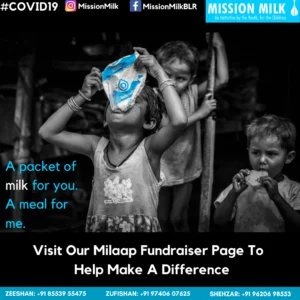
In an interview with The Global Hues, three cousins from Bengaluru – Zeeshan Javid, Zufishan Pasha, and Shehzar Sheriff shared their incredible journey of mission milk ensuring milk supply to impoverished kids in their city since the onset of the first lockdown in April 2020.
In what would arguably be the largest mass exodus in the history of independent India, the plight of migrant workers and their kids — stranded, exhausted, physically battered, mentally drained, forced to travel hundreds of miles on foot, often on hungry stomachs and with no money to get by — brought to the fore the vulnerability, dread, and agony of millions. As the centre and state governments tried their best to ensure the supply of essentials to the needy, milk (a basic source of nutrition for kids ) was being overlooked.
Realizing the urgency of this salient requirement, these young cousins from Bengaluru began Mission Milk in April 2020. The idea of Mission Milk originated with a ration distribution drive that was conducted by the families of this trio. Zufishan recounts how once while conducting these drives, a group of really poor migrant workers had approached them with the woes of their children who often had to go to bed hungry as it wasn’t always plausible to make arrangements to cook the dal and rice that they would receive through the ration kit distribution.
“We are lucky enough to be in a situation where we don’t necessarily have to worry about basic needs such as food,” says Zeeshan. It was a sense of empathy and personal responsibility they felt regarding the condition of poverty-stricken children going hungry during the pandemic that birthed the idea of “Mission Milk”. Today, they are distributing about 500 liters of milk a day throughout the city.
Why Milk?
While brainstorming ways to help out these kids, they came up with the idea of distributing milk. Compared to ration kits, which would sometimes cost up to 3000 rupees per kit, milk was relatively cheap. Moreover, distributing milk which costs around rupees 37 per liter would allow for more people to help out at their capacity. Even a child could help out the needy with milk by saving up some money from his weekly allowances. This would allow for a wider network to join hands with the initiative and amplify its reach.
Remaining faithful to their tagline “By the youth, For the children”, they aspired to take the mission in a direction that surged youth participation, not only for the sake of the children but also for their personal growth as humble individuals. Mission Milk believes in giving back to society by helping the distraught in times of need, such as the pandemic. It teaches one humility and compassion and makes one feel grateful about their own situation.
A Movement To Inspire
Zeeshan, the co-founder of Mission Milk tells us that their goal was to spark a nationwide movement where people felt stirred enough to organize similar initiatives in their cities to help out the needy. He tells us that theirs is not an organization with any secrets which aspires for popularity or recognition. They have put up several videos on their platform showcasing methods to implement such initiatives anywhere in the country. The idea behind its inception is to galvanize people, especially the youth, to take prompt actions in improving the condition of their immediate neighborhoods.
The goal is to allow this movement to set off the build-up of similar organizations like theirs which work dedicatedly in their areas & capacities for the benefit of those hit severely by the pandemic. In the words of Shehzar (co-founder, Mission Milk) “It has been the immense motivation received from donors, milk angels ( anybody who has been involved with mission milk), and the joy on children’s faces that has kept them going at it tirelessly”.
Functioning Of Mission Milk
The first step involves the collection of funds which is followed by a survey to analyze the number of families and kids in a designated area who could benefit from the initiative. To make this happen, local volunteers are chosen who have a better idea about the demographics of the area and are aware of the location of dairy points. An agreement is set up with the dairy partner regarding the designated packets that the local volunteers would be buying to distribute.
A decentralized and adaptable approach is used whereby the local volunteers are free to buy and distribute milk as per the requirement of the community. For example, migration workers who were leaving for train stations as the lockdown was announced last year, were provided with tetra milk packets that guaranteed longevity and did not require refrigeration or heating to be consumed. Taking assistance from the already available databases of various NGOs, they could ensure better reach to those in need. It helped them nearly double their reach.
A decentralized approach of Mission Milk makes local and NGO volunteers work hand in hand in surveying new places and estimating their requirements.
After getting repeated requests from orphanages throughout Bangalore, they have recently started distributing milk to around 5 orphanages in different parts of the city during the second wave of the pandemic.
source: youtube.com
COVID-19 Care :
Their job simply doesn’t end at distributing milk. With the help of local volunteers, information regarding covid-19 safety is spread throughout the communities they serve. The volunteers make sure to make use of masks, sanitizers, and gloves not just for their own safety but also to set an example for these communities.
Overcoming Barriers
“Funding was a roadblock initially but things fall in place once you get into the thick of things and begin the work”
Zeeshan exclaimed. Updates about their activities are regularly given to the donors through texts to maintain accountability and trust. The creation of a fundraising page was premier in helping them gather enough funds to get the mission started. With the second wave of the pandemic hitting people much closer to home, it was not feasible to gather enough volunteers to do the job. This situation was grappled with by seeking help from local NGO volunteers who were dedicated enough to carry out these services during the pandemic.
Delivering milk before it gets spoiled was another challenge that was overcome by coordinating timings with the local milk vendor and making timely deliveries. Future plans of this organization involve getting registered as an authentic company or a trust to spread their reach nationwide and help as many as possible.
source: http://www.theglobalhues.com / The Global Hues / Home> Interview> Magazine / by The Global Hues / May 31st, 2021
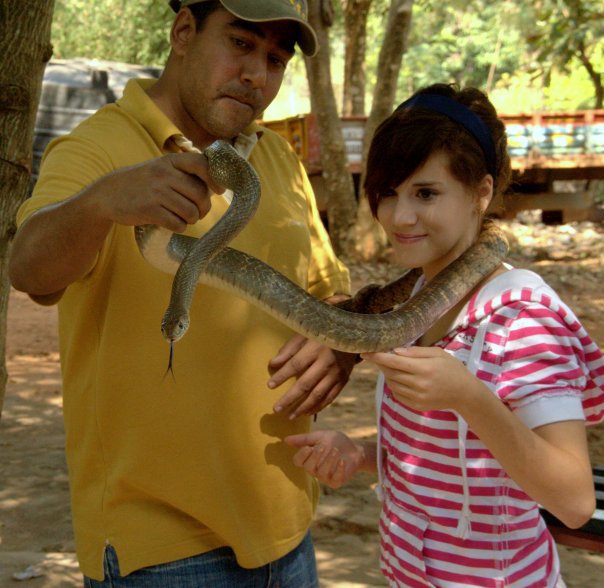
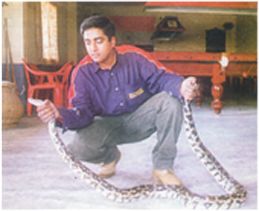
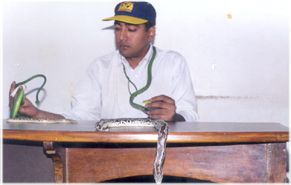
After catching thousands of snakes (venomous and non-venomous), featuring in several shows on Animal Planet, Discovery and National Geographic, shooting one-hour documentaries on snakes for the same channels and having acquired the status of a celebrity snake-catcher over 20 long years, what reason could Mohammed Anees have to be slightly bitter about it all? In his words, ‘the lack of respect people have for the profession’.
His passion for snakes began as a child, and he trained himself over the years through various books by respected herpetologists and experts and despite opposition from his family, he made long trips on his bike in the early days to follow up on calls from bite victims and people who wanted snakes removed from their property.
But Anees is quite upset with the government’s approach towards snakes and snake- catchers.
“They are not supporting them at all.
All their pleas have fallen on deaf ears for so long now. Unlike other professions, here you have to put in money from your own pocket to survive. I can’t pin the blame on a single person, it is the system to blame which doesn’t respect snakes or snake-catchers,” says Anees.
“It’s a thankless job, but I have stuck to it for the sake of the many lives which are at risk from snakes, and of course for the snakes too,” he says. It never did and still doesn’t pay enough to clear his overheads, and he addresses that problem with his construction business and by manufacturing billiards tables.
His life is a heady mix of many things, of course snakes figure predominantly, despite him not being able to go out on calls often due to a niggling back problem.
He loves cats and has several Persian cats, besides his beloved Lost-2, the cat he is most attached to. His son Shoaib, is following his footsteps, as is evident from a picture of the spirited kid with large snakes hanging from his body.
Just like any other day in his life which is flooded by calls from people wanting his expert advice regarding snakes, Tuesday began with a call from Tumkur at 6 am, from a family who wanted him to help their daughter, who was suspected to have been bitten by a snake. He gave them real-time advice and asked them to send him pictures of the bitten area. This was followed by a slew of calls from JP Nagar, HSR Layout and a lot of other places.
He now has a team of four boys he has trained personally, who go out on regular calls. When it comes to training people and raising awareness about the reptiles, he has trained over 300 people till now, who are now practising snake catchers across the state. One more thing that he is proud of is the fact that none of his students have ever got bitten.
“By god’s grace till now I have never been bitten by snakes and I have never even killed one in my life.” says Anees.
“A snake-catcher who knows his profession will never need to kill one,” he signs off.
source: http://www.newindianexpress.com / The New Indian Express / Home> Bengaluru / by The New Indian Express – Online Archive / pixs edited from facebook.com / May 16th, 2012
Mohammed Anees was in the 3rd standard and on his way to Baldwin Boys high School, where he studied, when he laid eyes on the first one. It was run over by a truck and the hind part of its tail smashed on the tarmac.
But, little Mohammed, picked it up, put it in his school bag and took it to school. During class, somehow it managed to wriggle out. In no time the whole class was screaming, and Mohammed got beaten by his class teacher, his Principal, and later in the day by his parents and then his uncles, in that order.
It was Mohammed’s first encounter with the species.
The snake.
Since that fateful day, which he remembers with a sheepish grin, Mohammed has rescued caught and rehabilitated more than 2500 snakes, earning him the title ” The Snake Charmer of Bangalore”.
From Majestic to Shivajinagar, residents remember him fondly as the man who ‘charmed’ hundreds of poisonous snakes out of their compounds and houses.
Online Bangalore met up with this extraordinary human who snaked his way into our hearts. He talks fondly of his undying love for snakes, their habitats and our relationship with the most misunderstood of God’s creatures. As we seated ourselves on his balcony, and sipped tea, Mohammed unwraps a cloth covered glass tank, and displays to us two baby snakes, each about 15 centimeters long.
With one eye on these beautiful specimens, and the other on Mohammed, their guardian, we start the conversation.
What Snakes are these? These are baby Trinkets. And this is for the first time in India that they are being bred in captivity. I found their mother almost dead. I brought her home, and nurtured her. She laid 8 eggs. These are the two which hatched ( He tosses in a baby lizard into the tank as feed).
Contrary to what the reptile theoreticians assume, it took 85 days for them to hatch. They said 45 to 50 days. I have proved them wrong. Until you do it by yourself, you’ll never know for sure.
Have you bred any other snakes in captivity before? Yes. I have incubated, hatched and raised 17 cobras in captivity.
When and where was your earliest contact with snakes? On my uncles farm in Chickballapur. It was punishment transfer according to my folks, ‘coz I’d fared badly in my 10th standard exams. But for me, it was some of the greatest days of my life, as I would catch lots of snakes and then release them in the nearby forests. I guess I became an expert from those days on the farm.
How did you become popular as a snake catcher in Bangalore? After I moved to Bangalore after the farm days, I used to help catch snakes initially from the houses of my friends and relatives. Gradually the word spread and then people from all parts of the city started calling me.
Which parts of Bangalore are most infested with snakes? The whole of Bangalore actually. But, the most densely infested areas are Kamanahalli, Bashweshwar Nagar, HAL – Indiranagar, Rajarajeshwari Nagar and Giri Nagar areas.
Which were your biggest and memorable catches upto date? The biggest catch was 57 snakes from the compound of the Drug Testing Laboratory and 21 snakes from the compound of the residence of the Chief Judicial Magistrate, then Mr. Bhaskar Rao, both on the same road.
What is the reaction of the people after you catch the snakes. Relieved naturally. But, I’m surprised at the concern that the people of Bangalore have for snakes. In some cases, after they find out that the snake is not poisonous, they have requested me to release it there itself. Having a non poisonous snake in your yard is actually a prevention against poisonous ones and they also get rid of all the rodents.
Do you have anybody to assist you? Earlier, I was alone, but now I have about 16 persons who have been trained by me.
What is your ‘modus operandi’ so to speak? We are alerted of the presence of snakes by phone calls. We then reach the spot immediately and trace out the snake. The catch is made usually with bare hands, but we use the hook at times when we have to get them out of holes or crevasses. We then put them into specially made snake bags that are 4 feet long and then bring them to my house where they are then placed in snake boxes. After a gap of 7-8 days, we then take them to the Banerghatta forest where they are released in the presence of the Government Forest officer.
Where do these snakes normally tend to hide? Almost anywhere actually. I have caught them from ceiling fans, inside car bonnets, motorbikes, suitcases…..practically everywhere.
What are the varieties common to Bangalore? Cobras, which are poisonous and rat snakes which are non-poisonous. In all there are 19 varieties of snakes in Bangalore, (though the theoreticians wrongly state 21) including the big four poisonous snakes. In fact after all these years I can tell where the snake is from when I see it. The ones from Bashweshwar Nagar area have a dark tinge to their skin, while those from other areas bear different characteristics.
What are the Big Four? They are the four most poisonous snakes in the world, and Bangalore has all four of them. The Cobra, Krait, Russell’s Viper and the Saw-scaled Viper.
Why do snakes attack humans? Actually snakes never attack unless they are provoked or attacked. So if you see a snake, just keep still and look at it in the eye. Don’t ever make a move towards it. 65% of all snake bite cases are those that take place when the snake is attacked. 25% when they are stamped upon unknowingly in the dark. 5% when people roll over them in their sleep, especially in the villages where the snake snuggles up to keep warm. And only 5% to so called ‘freak’ causes. Remember,snakes never bite that which they cannot swallow and all they know is eating, mating and hiding!
How do you manage without any public support? I love snakes. Somehow I feel it my duty to protect these lovely creatures from unwanted killing. By the grace of God or by the strangest of coincidences, every time I rescue a snake after a call, I manage to get an order for making a Billiard table, which is my line of business. So, touch wood, so far I have not felt the pinch. But I sincerely wish someone would come forward with help. It is always welcome. But somehow it is not in me to go around asking for it.
Have you won any awards for your meritorious service? One Government official has been telling me for the last 3 years that they propose to give me the Rajyotsava Award for the service I’m doing for the public. Nothing has happened. Nothing will, even for the next 3 years. ( He laughs) The S.P.C.A. gave me an award last year for my service .I attend to snake calls for the S.P.C.A. also.
Do you have any future plans? Yes. I have a lot of plans. But without funding It’s helpless. I have compiled all my experiences with snakes into a book, which I feel can be read and understood by both 3rd standard school kids as well as medical professionals. I hope to publish it someday, if somebody is willing to fund it.
As we thank him and get up to go, one of his assistants arrive with a cobra, caught that morning from Kamanahalli. Mohammed is suddenly alert as he inspects the snake and instructs the man to put it in one of the snake boxes.
We wonder if the cobra is aware that in a week’s time, it will be free again, in its own habitat, thanks to a 29 year old, who became their protector and guardian since that fateful morning 21 years ago.
Interviewed by Monu D. Surendran
If you wish to donate to the cause of rescuing and rehabilitating snakes or for snake rescue:
Contact: Mohammed Anees / No.15 Coles Road,/ Opp. Bank of Baroda Frazer Town / Bangalore 560 005 / Ph: 5487424, Mobile: 98440 37424
source: http://www.onlinebangalore.com / Online Bangalore.com / Home / by Monu B Surendran
Zillur Rahman, a professor, poet and hakim, has established a museum-cum-library in Aligarh to preserve books and artefacts that tell the story of Delhi of yore.
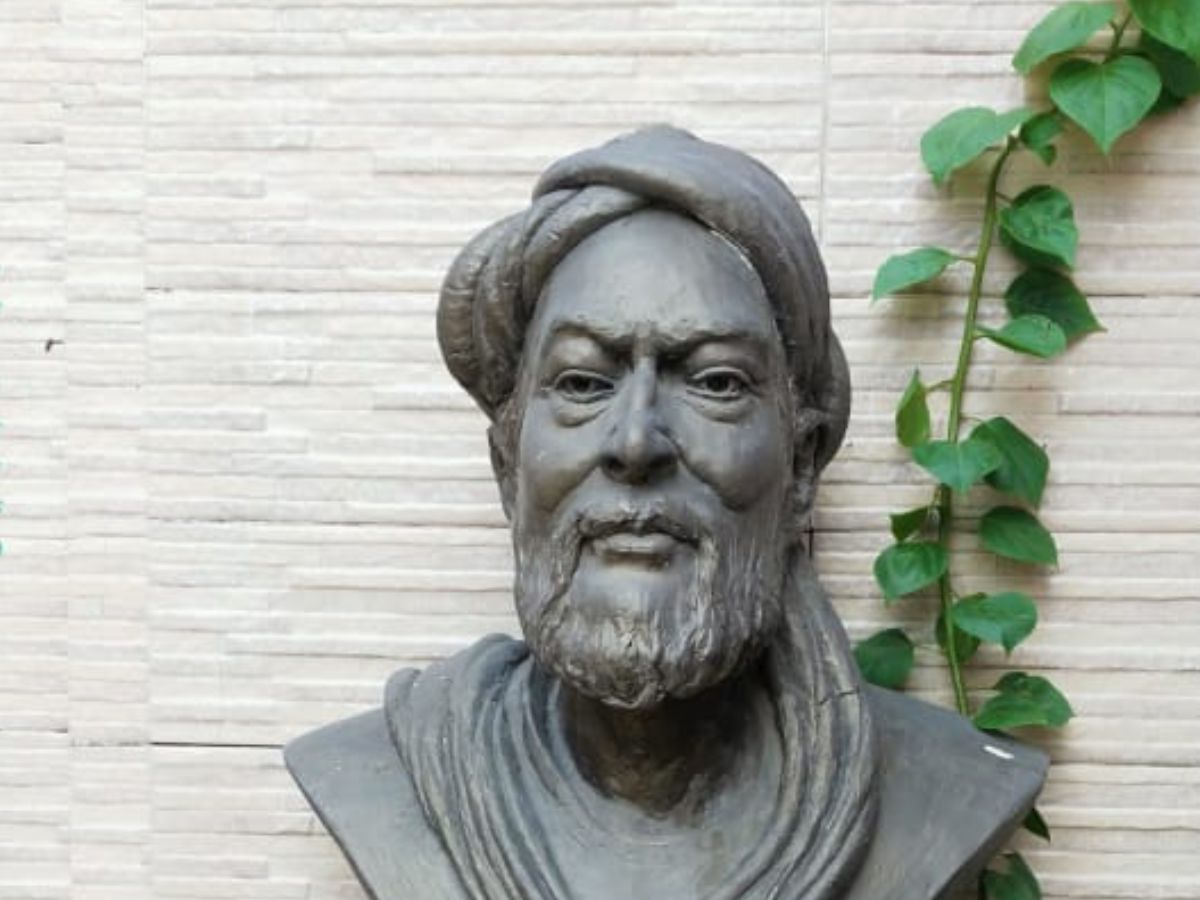
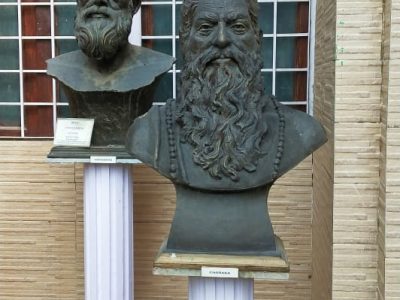
PIONEER: A bust of Ibn Sina, a physician and philosopher, who lived over a thousand years ago, at the Ibn Sina Academy in Aligarh
Nestled in the heart of the city of Aligarh, Uttar Pradesh, is Ibn Sina Academy of Medieval Medicine and Sciences, named after famous scholar of philosophy and medicine Abu Ali Ibn Sina (980 -1037), who lived over a thousand years ago.
Located at Tijara House, the non-profit, non-government and non-political academy was established in the year 2000 by Professor Syed Hakim Zillur Rahman, an academic and a litterateur from Aligarh.
A one of its kind museum and library, it was aimed at encouraging and promoting researches and studies in medieval sciences, especially Ibn-Sina’s, as well as arts, culture, poetry among other subjects.
Notably, Ministry of Ayush, Government of India gave accreditation to the academy in 2004 and promoted it as a Centre of Excellence in 2008. The professor had a mammoth personal library that he had established in 1960s. After Ibn Sina Academy was born, the library became a part of it.
The specialty of this museum lies in its varied collection that includes sofas, crockery, jewels, armours, stamps, mirrors, outfits of princesses, queens and kings as well as turbans worn during battles by historical legends.
The Zillur Rahman Library houses 32,000 rare books and magazines, 1,100 manuscripts apart from paintings, sketches, citations, artefacts and much more.
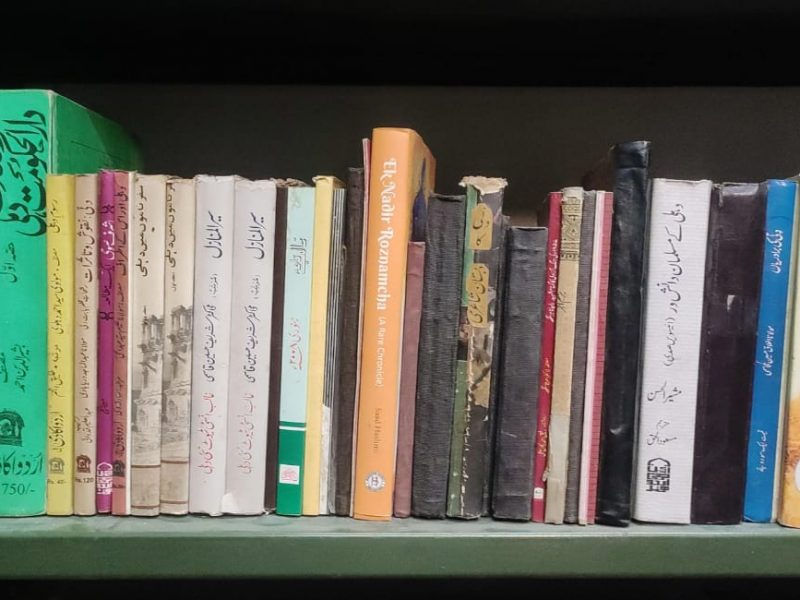
RARE: A collection of books on Delhi
The Delhi connection
There are 7,500 books on Delhi of yore in the library, including on poet Iqbal, dictionaries as old as 150 years, authentic diwaan on Ameer Khusrau, books dating back to 1893, on and by the last Mughal emperor Bahadur Shah Zafar, British Raj–Victorian Era with pictures in lithographs and more.
But considering Delhi is dry without the ‘zikr’ (mention) of the poetic legacy of Asadullah Khan ‘Ghalib’, the library has dedicated a special space for the poet: “Ghalib Study Centre”.
A galaxy in itself, this part has 1,350 rare books in Urdu, Persian, English and Hindi on Ghalib apart from several special issues in different magazines (called risala in Urdu) which are now available only in this museum.
For instance, an important old publication called Sooraj (meaning sun) had special Ghalib edition.
One of the books has illustrations of most of the ghazals he had penned, while in his own Deewan (collection of his authentic shayri) there, Ghalib’s original ghazals had no pictures or illustrations.
MASTERPIECE: The translation of the book written by Hakim Zillur Rahman
One of the most important collections here is a book by renowned author Shakeel ur Rahman called Mirza Ghalib aur Mughaliyaat, which has illustrations from Muraqqa-i-Chughtai, an illustrated selection of Ghalib’s work by AR Chughtai, a renowned artist of early last century. The illustrations are based on an important topic or issue that the poet raised in his couplet (sher).
Rare books with names like Jihad-e-Ghalib, Ghalib Satrung, Soz-e-Ghalib, his letters in Persian and many more ornate the archive.
Additionally, a book called Naqsh-e-Rung from Pakistan which was brought to India by scholar Urdu litterateur and poet professor (late) Shamsur Rehman Farooqui enriches the book shelves.
Tehqeeq-nama Ghalib, Ghalib’s ghazal in Persian called Ghazaliayat-e-Farsi, Ghalib, few rare and special issues of magazines like Shama, Nuqoosh, Hunoon, Taar-e-Nau, film magazines, Al-Ilm, Shayar, Kaarvaan with special edition on Ghalib are the other charms.
A rare pocket-sized edition on Ghalib is a popular one.
Travels to Delhi
Another section on Delhi consists of travels and trips done in Delhi by the authors, travellers and poets of old times. Rare books like Safarnama Dehli and Sair-ul-Manazir provide an inside view of Delhi in the 18th century.
LEGEND: Bust of a renowned Indian physician Charaka at the academy in a section dedicated to physicians and medicinal plants
Also, over 200 rare books on Delhi’s poets (shayars) in Urdu and important personalities form another gallery here. For instance, there is Aslam Parvez’s award-winning book on Bahadur Shah Zafar, and his another one called Meri Dilli. There is also a book on Hamare Zamane Ki Dehli, Charagh-e-Dilli, Dilli Wale by famous author Salauddin, Aalam mein intekhab-e-Delhi among others.
Rare and significant books on personalities include those on Hakim Ajmal Khan, Sir Ross Masood, former India President Zakir Hussain, Sir Syed Ahmad Khan, Raja Mahendra Pratap and many more.
An entire unit is also devoted to all the journals that came out of Delhi during the War for Independence “and those from late 17th century to beginning of 19th century. The Delhi College was established in 1824, with it, all these journals rose to a great height. These form an enticing collection in the museum,” apprises Aftab Najmi, the coordinator and convener at Ibn Sina Academy.
On enquiring why such a large collection in Urdu finds space here, Professor Rahman adds, “Our own language and culture is much better described only in Urdu and Persian. So, it was very important to have a different section on Urdu to give a peep into what Delhi was in olden times.”
However, countless notable oldest books in English and Hindi on Delhi also enrich the collection on the Capital.
A legacy himself
Professor Zillur Rahman has 56 books to his credit. The subjects are related to Tib (Unani medicine) and Urdu literature. His books on medical sciences with oldest references (100 to 200 years old) are immensely popular. He is also a poet and an ardent admirer of Urdu poets of yore. He has also edited Diwan-e-Ghalib and many books on Urdu shayri. So far, 11 books have been written on him by students from different parts of India and globe in Arabic, Urdu and English. There are two academies, in Meerut and Bhopal, named in his honour. A part of the library has books on Zillur Rahman’s own family and their contribution to academics, medicine, poetry and culture.
For the next generation
On why he decided to make such a rare museum and library under one roof, Rahman says, “I was just a teacher at AMU. I had no money like businessmen to construct roads and hospitals so I decided to build this museum and library to help those who want to study but have neither books nor a place for the same. I want the current generation to know that books on all our glorious histories and personalities were penned in Urdu before 1947.
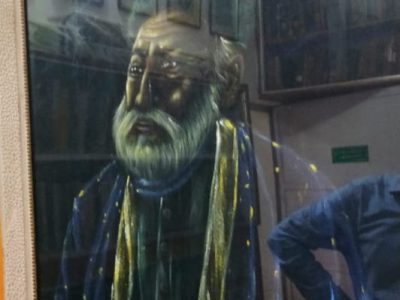
ICONIC: A portrait of Mirza Ghalib at the library, which boasts of rare works on the Delhi-based poet
“So, our generation has to know Urdu to understand their buzurgs (elders) and what charismatic works they had done. Our current generation, which doesn’t know Urdu, is like a blackboard. Anyone can write anything on it and it doesn’t impact them because they are so ignorant of legacies of their own language.”
Professor Rahman has travelled abroad 44 times. He visited Greece, including its capital Athens, Samarkand and Bukhara in Uzbekistan, Spain, Turkey, Germany and other countries.
“I went to Iran 11 times to gather books and study how it has preserved its arts and culture, literature, medicine and environment,” he says adding that children of every country know their mother tongue and can read and write in it.
“India’s children, especially the new Muslim community, is ignorant of its own legacy in Urdu.”
The Ibn Sina Academy has a tremendous collection of Islamic sciences and Islamic medicines. The professor has procured them from across the globe.
“Some are bought, some gifted and some requested and begged for. Hamaare 3,200 hazaar kitaabon mein, Ghalib ka collection jo hamaare paas hai vo duniya mein kisi ke paas nahi hai (No one in the world has the rare collection on Ghalib that we have among our 32,000 books). Even Delhi’s own Ghalib Institute and Ghalib Academy visit us and take photocopies of the rare material they require. We have made our academy work on Delhi’s poets, littérateurs, historical buildings and monuments,” he adds.
Most books, he adds, are from Iran, Samarkand and Bukhara.
“The richest in education, philosophy, medicine and culture is Uzbekistan but it could not present it to the world, the way Iran did.”
Why Delhi in Aligarh?
Why Delhi forms a special section at his library, has its reasons.
“Delhi was always the capital of India, be it during the Mughal, British eras or post-Independence period. So, it has always been not only a melting pot of cultures but also an abode for the best of poets, authors and travellers. The number of academics, authors, sufis, litterateurs, shayars (poets), lovers of arts and music and academic institutions that Delhi had, no other capital in the world has it till date,” he reasons with pride.
To know Delhi better, he suggests books penned by the renowned Dehlvi family.
For instance, there is Dilli jo aik shahar thaa by Shahid Ahmad Dehlvi, who was born in Delhi in 1902.
He wrote extensively on vanishing culture of Delhi which was a symbol of Indo-Muslim culture ruined by violence and blood of the War of Independence. Post Independence, he went to Pakistan and died in 1967.
Waqyaat-e-Darool Hukoomat in three volumes by Bashiruddin Ahmad Dehlvi published from Urdu Academy, Delhi in 1990, and books on 1857 revolution are also there in the academy.
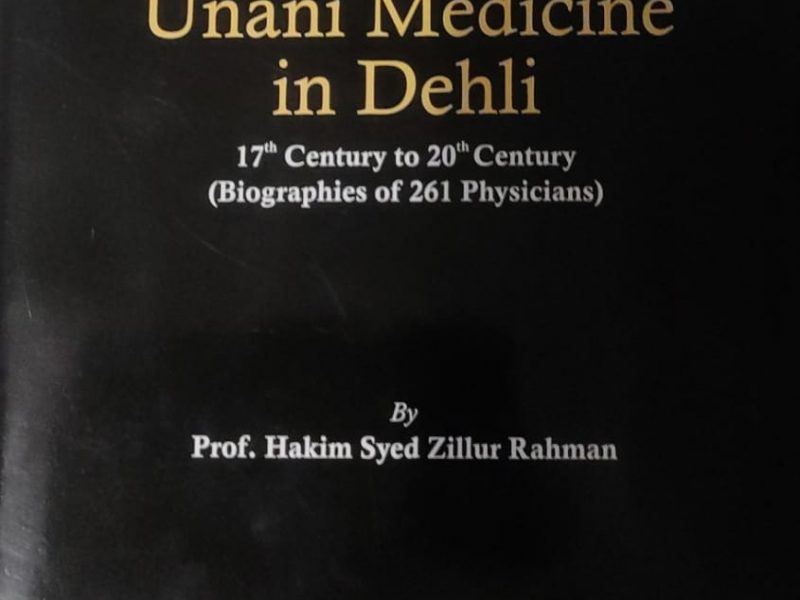
Delhi just got richer by another book by Zillur Rahman — Dilli aur Tibbi Unani which has just come out in Urdu. It is translated in English by Toronto-based Zakaria Virk, titled ‘History of Unani Medicine in Delhi – 17th Century to 20th Century – Biographies of 261 physicians’.
source: http://www.thepatriot.in / The Patriot / Home> Delhi NCR / by Rana Siddiqui Zaman, Delhi NCR / November 15th, 2023
Badruddin Tyabji, the grandson of freedom fighter and third Congress President by the same name, was entrusted with arrangements for the inaugural Republic Day celebrations in 1950.
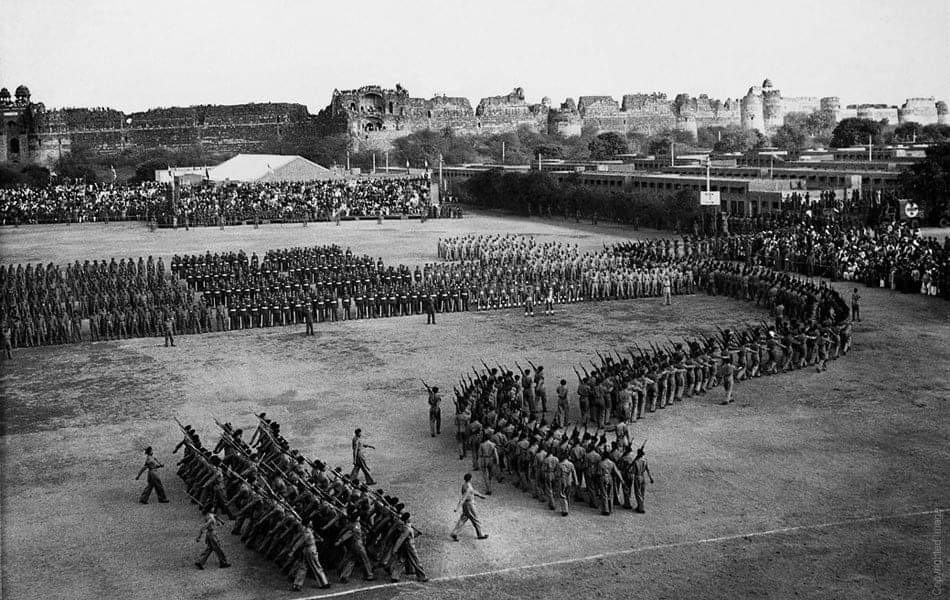
HISTORIC: National Stadium during the first Republic Day Parade. Old Fort is also visible
Every year on January 26, the Tyabji family sit together in their posh West End Colony house (near Vasant Vihar) to watch the Republic Day Parade which holds special significance for them.
Their late patriarch Badruddin Tyabji, a 1936 batch Punjab cadre Indian Civil Service officer, was responsible for looking after the arrangements of January 26, 1950 functions: first at the President House and later at Irwin Stadium (now Major Dhyan Chand National Stadium).
Tyabji’s painter wife Surayya Tyabji made the prototype of the Tri-colour on paper based on which the flag of cloth for Republic Day was made in Connaught Place.
“Just a couple of weeks before the first Republic Day, Prime Minister Pandit Jawaharlal Nehru entrusted me to look after the arrangements of the January 26 functions,” Tyabji told this writer in his south Delhi house in 1994.
He was also member secretary of the Constituent Assembly.
“I was called by Pt. Nehru and he gave me the huge responsibility for the historic day. I used to live at Sujan Singh Park during those days.”
From that day onwards, the tall and gracious Tyabji moved from the President House (now Rashtrapati Bhavan) to Irwin Stadium several times a day to finalise the arrangements as time was running out for the big day.
HAPPY FAMILY: The Tyabji clan including Laila Tyabji (centre, front row), who is a social worker, designer, writer and crafts activist
The big day for which Tyabji had worked so hard was also hectic for Rajendra Prasad, the soon-to-be first President of independent India. He marked the momentous occasion with a visit to Raj Ghat to pay homage to Gandhiji. He remained there for around 15 minutes.
But before the would-be President of India could get to the President House, C Rajagopalachari, the Governor General of India, had already reached there. The latter used to live in the double-storeyed bungalow at the then 10, Hastings Road, which was later renamed after him as Rajaji Marg. Edwin Lutyens, the chief architect of New Delhi, also lived in the bungalow, and so did Pranab Kumar Mukherjee, who also lived in that house after demitting his office of President of India.
“Dr Rajendra Prasad was sworn in as the country’s first President at around 9 am by the Governor General of India, C. Rajagopalachari. Rajvanshi Devi, his wife, and other family members were also there. The swearing-in ceremony was attended by over 500 guests, who had assembled inside the Durbar Hall. President Sukarno of Indonesia and several members of the Diplomatic Corps, members of the Constituent Assembly and prominent citizens had graced the occasion. The President was dressed in black achkan, white churidar and a white Gandhi cap. Pandit Nehru and his other Cabinet colleagues were sworn in soon after Rajendra Prasad,” recalled Tyabji, who was named after his grandfather, the third President of Indian National Congress.
Immediately after returning from Raj Ghat, Rajendra Prasad was sworn in. The Chief Justice of India, Sir Hiralal Kania, read the oath of office in Hindi. President Prasad repeated it sentence by sentence.
“The outgoing Governor General, C. Rajagopalachari; our first Prime Minister, Pandit Jawaharlal Nehru, beaming with pride and joy; the Deputy Prime Minister, Sardar Patel; cabinet ministers, judges of the Supreme Court and the Auditor-General of India, were present in the hall to witness the historic moment of India’s history. Pandit Nehru and his other cabinet colleagues were sworn in soon after.”
The national emblem of Ashoka Pillar with three lions was placed in the Durbar Hall for the first time near the throne where the British Viceroys used to sit.
A smiling statue of Lord Buddha was also placed behind the throne for the first time. Rajendra Prasad, the President, who greeted the large gathering smilingly with folded hands, made a short speech in Hindi and English, stating that it was a memorable day in our annals.
“Let us begin by offering our thanks to the Almighty Power who has enabled us to see this day; to the Father of the Nation who showed us and to the world at large his infallible method of Satyagraha, and led us on along it to freedom and to the numberless men and women, whose suffering and sacrifice have rendered the attainment of independence and establishment of this sovereign democratic Republic possible.”
The birth of the Republic was celebrated by the masses in the Capital through Prabhat Pheries (early morning movement of people singing patriotic songs). Outside the Durbar Hall, there were unforgettable scenes of jubilation. Large crowd of men, women and children had assembled in the forecourt of President House.
People raised slogans of Gandhiji-ki-jai and Vande Mataram.
After a dignified ceremony was held at the President House, the scene shifted to Irwin Stadium. The new President travelled to the stadium in a horse-drawn carriage and Delhi’s roads were lined up with enthusiastic crowd standing along the five-mile route with the Tri-colour in their hands. A huge crowd greeted the President’s entourage when it reached the vicinity of Connaught Place. And when the first President of India reached the stadium, he was welcomed with a booming 31-gun salute.
According to Tyabji, “Rajendra Prasad made a brief speech at the stadium. Later, students from various schools of the Capital presented cultural programmes.”
Old timers still recall that there were very few policemen guarding the VIPs inside the stadium. After the programme, the leaders mingled with the people. Nehru was mobbed by his admirers. He spent a good 20 minutes with them.
Tyabji, who could not sleep for several days ahead of the big occasion, was there managing the affairs carefully with his colleagues. Following very cold weather days in Delhi, brilliant sunshine greeted the Capital on January 26, 1950.
It was India’s defining moment, the day India truly freed itself from the shackles of colonialism to become a Republic. A truly sovereign state.
The talk of the first Republic Day cannot be complete without discussing the role of Tyabji’s wife, Surayya, in the making of the first Tri-colour.
According to Tyabji, “Once the Constituent Assembly finalised our Tri-colour with Ashok Dharma Chakra inside the flag, I was asked to furnish the model of Tri-colour on both paper and cloth.”
Without wasting any time, Badruddin Tyabji went straight to his Sujan Singh Park residence and asked his wife Surayya to make the Tri-colour on paper. She did not disappoint her husband. Once she made it on paper, Tyabji carried the design to the now defunct SC Tailors at Regal building of Connaught Place and asked them to make the Tri-colour in cloth. The rest, as they say, is history.
After retirement from government service, Tyabji also served as the Vice-Chancellor of Aligarh Muslim University in the 1960s.
He finally settled in Delhi and passed away in 1999. His wife, Suraiya, had died before him.
During one of our meetings, Tyabji had told me that when he came to Delhi from Hyderabad to appear for ICS examination, he was staying in Daryaganj.
He used to take a tonga to reach Metcalfe House in Civil Lines to appear for his examinations.
“Delhi was a very small city then. Except for old Delhi and villages, there was not much here. New Delhi was coming up,” he had said.
When India was divided on the basis of religion in 1947, he was perhaps one of the only two Muslim ICS officers who opted to stay in India instead of accepting Islamic Pakistan.
OFFICER RANK: Badruddin Tyabji was a 1936-batch ICS officer of Punjab cadre. His wife, Surayya was a painter
Tyabji’s first son, Hindal Ahmad, was an IAS officer. He passed away last year.
Tyabji’s daughter, Laila Tyabji is a noted social worker, designer, writer and crafts activist. She is one of the founders of Dastkar, a Delhi-based non-governmental organisation working for the revival of traditional crafts in India.
Like in the past, the Tyabji family would watch the annual parade this year too. After all, they are the true and proud first family of India’s Republic Day. Yet, they are so self-effacing.
source: http://www.thepatriot.in / The Patriot / Home> Cover Story / by Vivek Shukla / January 26th, 2024
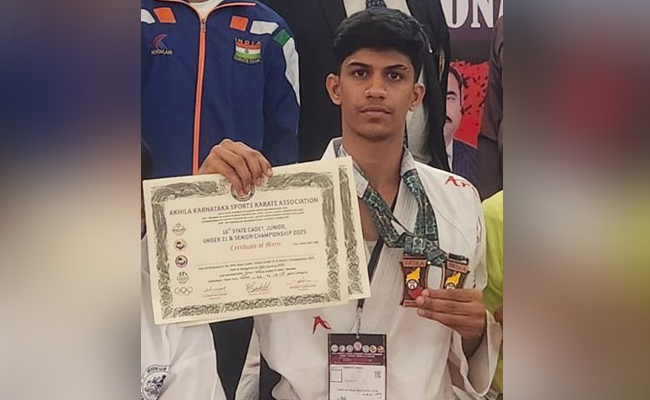
Ismail Nameer, a ninth-grade student at Huda Islamic School, Mangaluru, won two bronze medals at the State Karate Selections held at Koramangala Indoor Stadium, Bengaluru, on January 26, 2025.
The event was organized by Akhila Karnataka Sports Karate Organization.
He secured bronze in the 14-15 years below 63kg category and another in the under-21 years below 65kg category. The event had around 650 participants from across Karnataka.
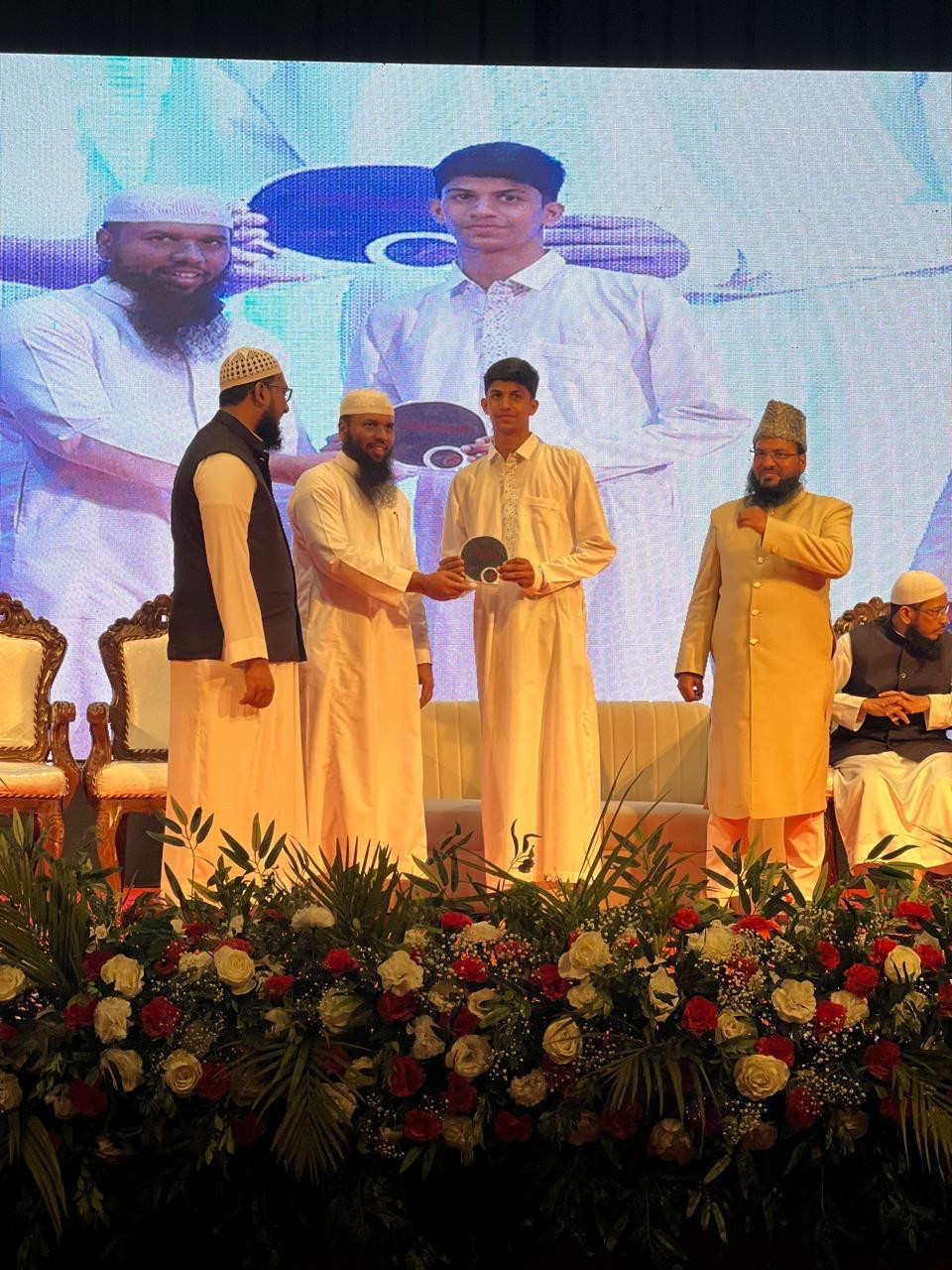
Originally from Bhatkal in Uttara Kannada district, Nameer has been living in Mangaluru with his family for the past few years. His school recognized his achievement during its annual day celebrations on Monday with a special award.
In previous competitions, Nameer had won first place in kata and kumite at a national-level event in 2023, organized by Guru Goju Ryu Karate Academy India. He also secured third place at the 24th Asian/International WFSKO Open Karate Championship in Mumbai in 2019. In 2020, he won first place in kata and third in kumite at the 5th National Level Open Karate Championship in Moodbidri.
source: http://www.english.varthabharati.in / Vartha Bharati / Home> Karavali / by Vartha Bharati / January 26th, 2025
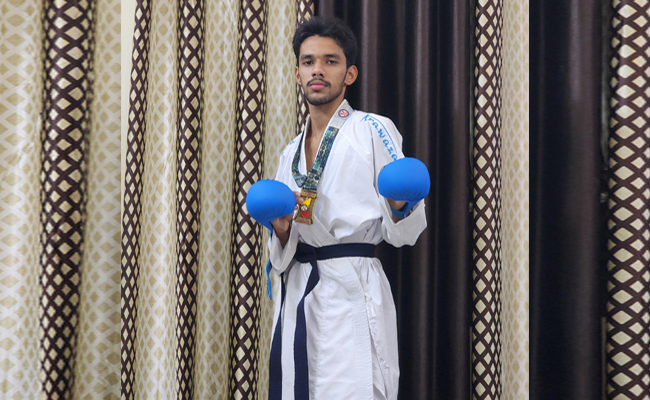
Mohammed Zaid, a student of Anjuman Boys’ High School, Bhatkal, and a trainee at Alliance Martial Arts Academy, Bhatkal has secured first place at the Akhila Karnataka Sports Karate Association State-Level Selection held at Koramangala Indoor Stadium, Bengaluru.
With this achievement, Zaid has earned a place in the National Karate Championships in Hyderabad, where he will represent Karnataka. This is a significant moment for Uttara Kannada district, as there have been very few instances in the championship’s 16-year history where a participant from the region has represented the state at the national level.
Zaid, the son of Mohammed Mohsin Raja, has been training under Alliance Martial Arts Academy, Bhatkal, which he said played a key role in his success.
source: http://www.english.varthabharati.in / Vartha Bharati / Home> Karavali / by Vartha Bharati / January 28th, 2025
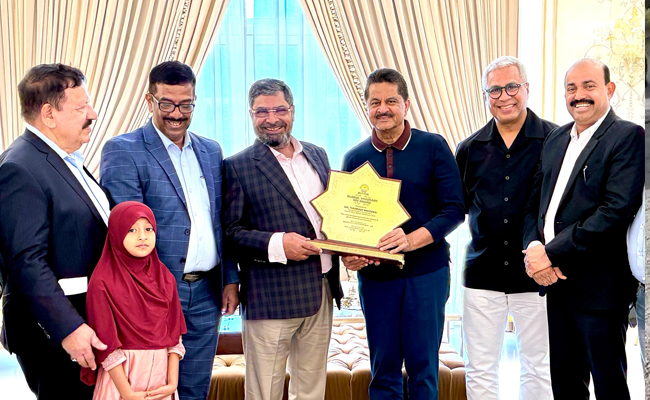
Dr. Thumbay Moideen, Founder President of Thumbay Group and Patron of Bearys Cultural Forum (BCF), has been conferred the distinguished “Global Visionary NRI Award” by Bearys Cultural Forum (BCF) – UAE. The award was presented by Naseer Ahmed, Member of the Legislative Council and Political Secretary to the Chief Minister of Karnataka, India, during a grand event held at Thumbay Medicity, Ajman.
The “Global Visionary NRI Award” is a recognition of Dr. Moideen’s unparalleled contributions to global healthcare, education, and innovation. A celebrated entrepreneur and philanthropist, Dr. Moideen has successfully transformed Thumbay Group into a global brand, driving growth through innovation and serving as a beacon of inspiration for Non-Resident Indians worldwide, a press statement from Thumbay Group added.
Speaking at the ceremony, Naseer Ahmed commended Dr. Moideen’s visionary leadership and his efforts in building Thumbay Medicity as a hub of excellence in healthcare, education, and research. The event also featured a visit by Naseesr Ahmed to Thumbay Medicity, where he witnessed the state-of-the-art facilities and cutting-edge advancements that have placed it on the global map.
Dr. Thumbay Moideen, upon receiving the award, expressed his gratitude to Bearys Cultural Forum (BCF) for this recognition and reaffirmed his commitment to fostering innovation, global citizenship, and community welfare.
“This award is a testament to our collective efforts in making a positive impact globally. I dedicate this honor to my incredible team, whose unwavering dedication has been the cornerstone of our success,” said Dr. Moideen during his acceptance speech.
source: http://www.english.varthabharati.in / Vartha Bharati / Home> Gulf / by Press Release / January 20th, 2025
Mir was among 139 Padma awardees announced on Saturday, making him one of only two Padma Shri awardees from Jammu and Kashmir this year
Farooq Ahmad Mir’s 60 years of artistry earn Padma Shri
Srinagar :
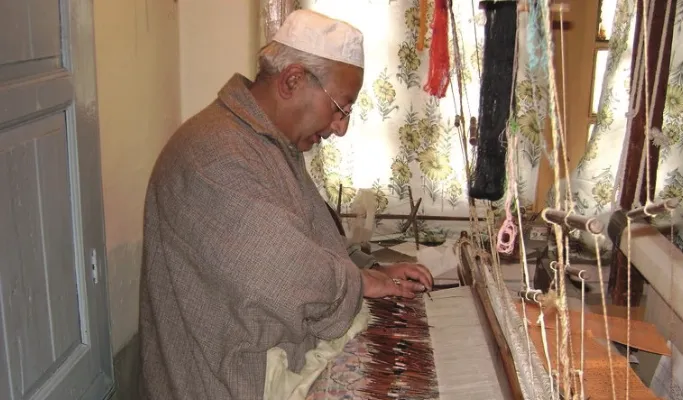
In a heartfelt tribute to the art of craftsmanship, Farooq Ahmad Mir, a master shawl weaver from Srinagar, was conferred the prestigious Padma Shri award on January 25. At 73 years old, Mir embodies the spirit of dedication, having devoted over six decades to a craft that intertwines patience with artistry.
Mir was among 139 Padma awardees announced on Saturday, making him one of only two Padma Shri awardees from Jammu and Kashmir this year.
Starting his journey at the tender age of 10, Mir’s story resonates through generations. “Pashmina artisans require patience, much like education. It teaches us about the intricate nuances of our craft,” he reflects, drawing parallels between learning and weaving. Hailing from a lineage of artisans, Mir has not only preserved but revitalised the Kani shawl tradition, once favored by Mughal, Afghan, Sikh, and Dogra rulers.
Mir’s influence extends beyond his family; he has painstakingly taught the art of Kani shawl weaving to over many individuals in Srinagar’s old city.
“In a world where modern careers are alluring, many aspiring artisans are deterred by societal perceptions and a lack of patience for traditional craft,” he notes. Yet, Mir’s commitment to his heritage has inspired not only his children, skilled weavers in their own right, but countless young men and women in his community.
“Your work should speak for itself,” Mir shares humbly when asked about his relative anonymity in a world that often celebrates flashy accolades over dedication. His contributions, however, haven’t gone unnoticed. He has received multiple national and state awards, including recognition from Prime Minister Narendra Modi himself.
The exquisite Kani shawls, woven using cane needles rather than shuttles, can take between four to eighteen months to create. However, the beauty of this art form is in jeopardy. As younger generations lean towards more modern occupations, the skills required to produce these heirlooms risk fading away. Mir’s tireless efforts aim to ensure this heritage is not lost.
Born into a weaver’s family in Srinagar, Mir’s start was modest. Despite barriers to formal education, he channeled his passion into honing his skills, becoming one of the finest artisans in Kashmir. Alongside his successful weaving career, he managed to educate his siblings and inspire a new wave of artisans dedicated to preserving Kani shawl weaving.
In an age driven by industrialisation, the importance of handmade products is gaining renewed appreciation globally. Mir stands as a pioneer in safeguarding this cultural legacy, instilling pride in his craft and ensuring its continuation across generations. His handcrafted Kani shawls have not only found a place in the hearts of locals but also captured the attention of international clientele, including the Ambani family and major corporations like Tata and Aditya Birla Group.
Farooq Ahmad Mir’s journey exemplifies resilience and dedication. As an unsung hero of the Kani shawl tradition, he reminds us that true artistry thrives in the shadows, waiting for the right moment to emerge into the light.
Director Handicrafts and Handloom, Mussarat Islam in a tweet on social media extended heartfelt congratulations to Farooq Ahmad Mir on being awarded #PadmaShri 2025 for his significant contributions to Kani Shawl weaving and the preservation of Jammu and Kashmir’s rich cultural heritage.
source: http://www.greaterkashmir.com / Greater Kashmir / Home> Business / by Mukeet Akmali (headline edited) / January 26th, 2025