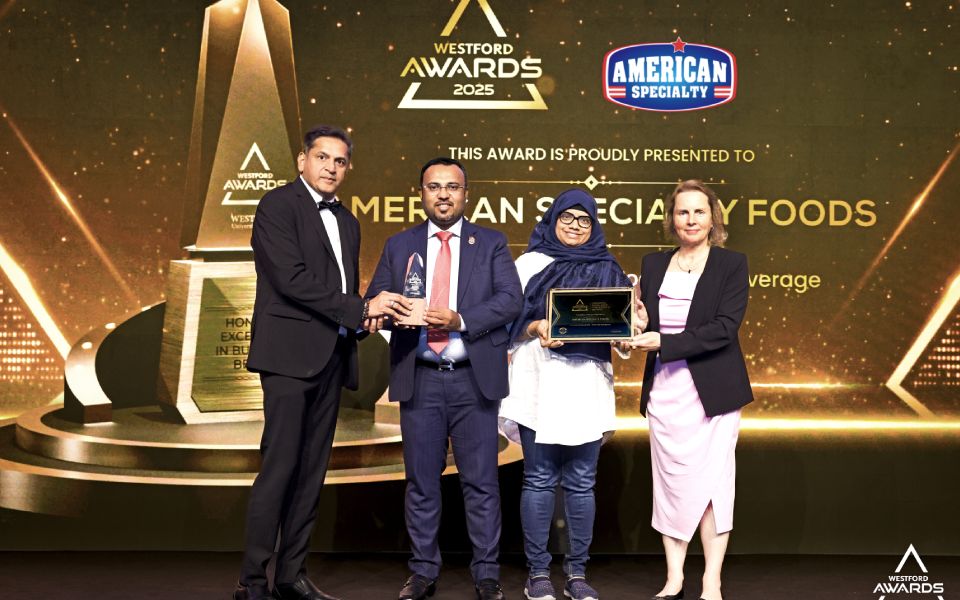
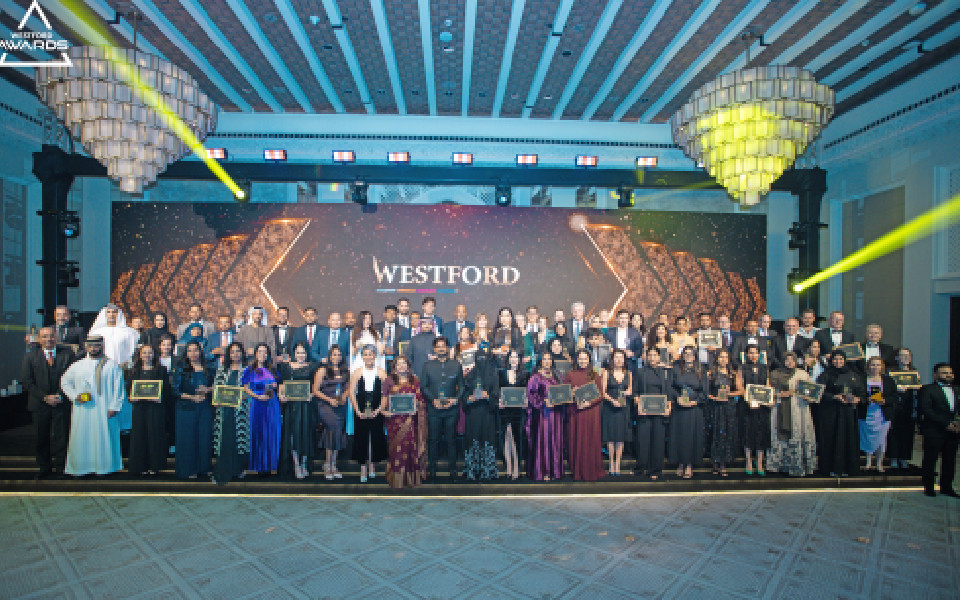
American Specialty Foods Co has been honored with the prestigious Westford Award for Business Excellence in the Food & Beverage category. The award was presented at a grand ceremony held at Madinat Jumeirah, Mina Al Salam, Dubai, on January 24, 2025.
The award was received by the company’s Founder and CEO, Hany M. Haneef, along with Co-founder and Director, Shahanaz Haneef. Expressing his gratitude, Haneef stated, “I am truly honored to receive this award. It belongs to our incredible team, partners, and supporters. Success is built on dedication, teamwork, and excellence. This is just the beginning; there is so much more ahead.”
Established in 2013, American Specialty Foods Co has grown into a leading provider of premium global food solutions. Headquartered in Maryland, USA, the company also has offices in New York, Mexico, the UK, and the UAE. With a distribution network spanning over 50 countries, the company offers more than 20 specialty food categories and actively participates in major international food trade events worldwide.
The Westford Awards recognize outstanding business achievements across various industries, providing winners with greater visibility and networking opportunities. “This recognition further cements American Specialty Foods Co’s position as a leader in the specialty food and beverage sector,” a statement from the company added.
source: http://www.english.varthabharati.in / Vartha Bharati / Home> Gulf / by Vartha Bharati / January 31st, 2025
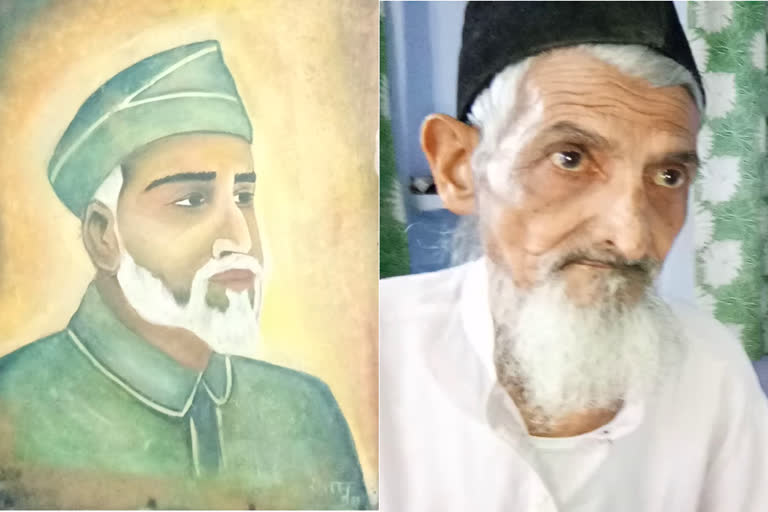
Nawab Shafan Khan, the heir of Nawab Khan Bahadur Khan, who kept the Rohilkhand region free from British rule for eleven months during the 1857 freedom movement, has passed away.
Nawab Shafan Khan breathed his last at the age of 80. The sacrifices of his ancestors are recorded in golden words in the pages of history.
Death of Nawab Shaffan Khan, heir of Nawab Khan Bahadur Khan
Nawab Shafan Khan, a resident of Shahabad area of Bareilly city, has passed away. He was laid to rest in Bhor graveyard near his home after Zuhr prayers. He was the heir to a great family whose ancestors ruled not only Bareilly but also in about 9 surrounding districts. His great-grandfather Nawab Khan Bahadur Khan had set a great example of bravery and sacrifice in the style of his namesake.
He was a hero of the 1857 revolution. He was born in 1791 into a Nawab family. He was the grandson of Rohilla Sardar Hafiz Rehmat Khan.
The slogan of revolution was raised in Meerut on 10 May 1857 and when the news of it reached Bareilly on 14 May, preparations were intensified here too. On 31 May, Khan Bahadur Khan and his generals and soldiers, led by Subedar Bakht Khan, declared a rebellion against the British government.
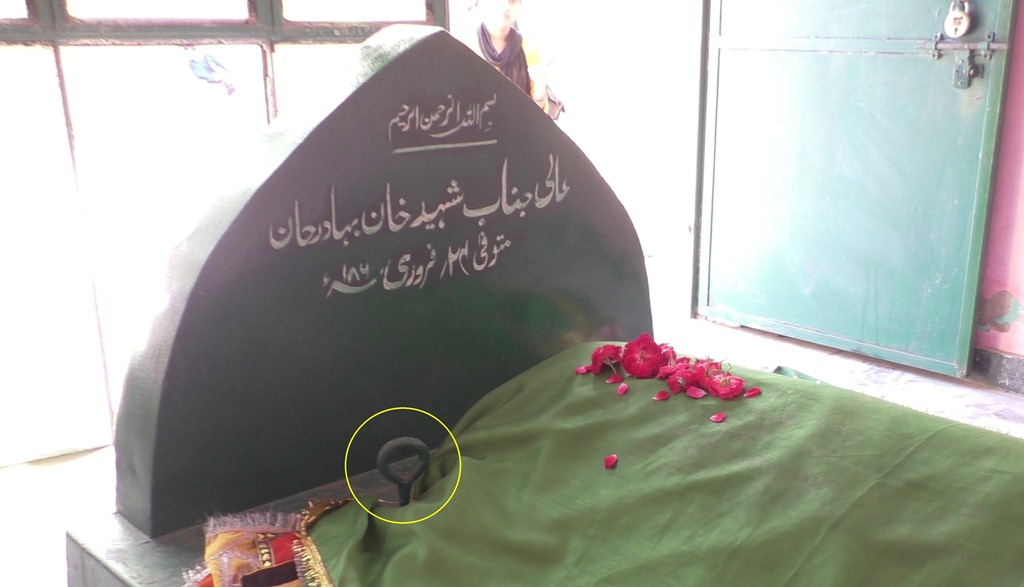
Tomb of Nawab Khan Bahadur Khan
The then magistrate, civil sergeant, jail superintendent and principal of Bareilly College, “C.Buk”, were killed by the revolutionaries. By five in the evening, the revolutionaries had taken control of the Bareilly division.
On June 1, these revolutionaries took out a triumphant procession. When the procession reached Kotwali, a large number of Bareilly citizens crowned Nawab Khan Bahadur Khan and elected him the Nawab of the Bareilly division.
Heir of Nawab Khan Bahadur Khan
An example of the bravery of Nawab Khan Bahadur Khan is that despite the numerous atrocities and abuses of the British government and being a powerful ruler, he kept the Bareilly division free from the rule of the British government for eleven months.
However, later, the British government arrested Nawab Khan Bahadur Khan while fighting a war at one place. He was brought to the same Kotwali where he was awarded the title of Nawab. He was imprisoned and kept in an unknown place.
Then on February 24, 1860, the hero of the urban people was brought on foot to the Kotwali and hanged on the same day at 7:10 am. A strange silence fell in the city and darkness prevailed.
Heir of Nawab Khan Bahadur Khan
To prevent any unrest in the city after the hanging of Nawab Khan Bahadur Khan, his body was taken to the district jail in an armored police vehicle and buried in the premises of the district jail.
Heir of Nawab Khan Bahadur Khan
The special thing is that he was buried with irons. Even today, the irons are clearly visible on the head of his grave. The British government had also buried Khan Bahadur Khan in the prison premises so that people could not gather at his grave and there would be no further excitement in the revolution.
Now let us mention Nawab Shafan Khan, the heir of Khan Bahadur Khan. He struggled for life and livelihood till his last breath. Despite belonging to the Nawab family, his family had to face difficulties for years or even their entire lives. Despite this, the struggle did not end in his life till his last breath.
According to his younger brother Nawab Liaquat Khan, Nawab Shaffan Khan’s health had deteriorated for the past five days. He was unable to go to the mosque to offer prayers during those days. Due to the weak financial condition of the family, he was undergoing treatment at home. But in the morning, his health deteriorated further and he died after a few moments.
source: http://www.etvbharat.com / ETV Bharat – Urdu / Home> Urdu> State / by Urdu translation into English / July 02nd, 2021
“When you help someone, you don’t think of his religion or sect; saving a life is human and a duty. Religion also teaches that human life is the most precious thing in the world.”
This is what Farhan Alam, a young lawyer and social worker from Prayagraj, who saved Ramshankar by giving him timely CPR when the former suffered a heart attack during the Mahakumbh at Prayagraj, Uttar Pradesh, said. Cardiopulmonary resuscitation (CPR) is an emergency treatment done on someone who se breathing or heartbeat has stopped.
Last week’s incident came to light when a video of Farhan Alam administering the life-saving procedure on Ramshankar went viral on social media. In the clip, Farhar is seen applying pressure with both hands on the chest of an unconscious Ramshankar as his wife and child are seen crying.
Later it was revealed that Farhan Alam had saved the life of Ramshankar, a devotee who had come to Maha Kumbh.
Speaking with Awaz-the Voice, Farhan Alam said this was not unusual for him. “It was a part of my responsibility that I performed well. The important thing is that I tried reviving him through CPR and Allah helped me.”
pix02
Remembering the incident, he said, “I was posted at the railway station, but one of my colleagues Muhammad Arshad told me about the passing out of a devotee on the walkie-talkie. I rushed there within a few minutes. He was unconscious and his breathing had stopped. I quickly started the CPR procedure. After a few moments of hard work, he started breathing; his heart was beating. As the wave of life ran through Ramshankar, it also rejuvenated the people around – onlookers and most importantly his child and wife.”
Farhan Alam is working with UNICEF on behalf of the Prayagraj-based NGO HAQ that works on child rights. Along with HAQ, he is also the founder of Prim Rose Siksha Sansthan.
Farhan’s interest in volunteering as a social worker comes from his late father Dr. Noor Alam. In 1994, he trained the Railway Protection Force personnel in emergency medical assistance procedures.
However, Farhan Alam says saving life is always a challenge; so it was in the case of Ramshankar. “I can do my best with all the courage I have. The rest is Allah’s will”.
Farhan Alam told Awaz-The Voice that before the Maha Kumbh, he trained Railway Protection Force jawans led by Inspector Shiv Kumar Singh in the run-up to the Mahakumbh. He imparted them training on administering CPR. This was part of the preparations for the Mahakumhb which is expected to be visited by a record 45 crore people.
Farhan Alam says that the Maha Kumbh Mela is the center of the faith of Hindus, but we all respect it and the residents of Prayagraj are ready to take up every kind of responsibility for its smooth conduct as “All devotees are our guests.”
He says being from Prayagraj it’s “our responsibility and duty to protect them till they return from the Kumbh Mela. I believe that this is the Maha Kumbh of brotherhood and communal harmony. There are also Muslims here who volunteer to serve crores of devotees. Muslim volunteers work day and night with great pride to help the devotees.”
pix03
Farhan Alam told Awaz-The Voice that at the Maha Kumbh Mela, there is no difference between Hindus and Muslims. “No one stopped us from serving because of our religion nor did anyone object. We, the people of the city, consider it our social and human responsibility to serve the visitors. We all work with the spirit that we should tackle problems that devotees might face. Volunteers have no religion; they are in the service of humanity.”
Later, Farhan Alam met Ram Shankar in the hospital in Prayagraj. All those in the hospital came to meet and thanked him for his act. However, Farhan Alam was happy to see Ramshankar’s smiling countenance.
Interestingly, Farhan Alam also shared a video clip in which he is seen administering CPR on a devotee at a religious festival on social media.
Speaking as a volunteer, Farhan Alam told Awaz that this incident demonstrated to common devotees how much preparations have been done by the administration for the Mahakumbh.
People are praising Farhan Alam for this deed and calling him the real hero of Mahakumbh.
source: http://www.awazthevoice.in / Awaz, The Voice / Home> Stories / posted by Aasha Khosa, ATV / January 30th, 2025
From technology to hospitality, Muslim businessmen are raising India’s stature on the global stage
New Delhi :
In the ever-evolving world of business, several prominent figures are not just shaping the Indian economy but also placing the country on the global map. Among them, six Muslim businessmen stand out, with their remarkable ventures spanning across various sectors, such as technology, healthcare, retail, and hospitality. These influential entrepreneurs are enhancing India’s image worldwide, further solidifying its position in the global business arena.
Azim Premji – The Tech Magnate Azim Premji, often regarded as the richest Muslim businessman in India, has played a pivotal role in the growth of India’s technology sector. As the chairman of Wipro, one of the country’s largest IT companies, Premji’s leadership has helped the company expand its reach across various international markets. His contributions extend beyond the business world as well. “India’s rise in the global tech landscape is closely tied to Wipro’s innovation and excellence,” said Premji. Through Wipro, Premji has established himself as a philanthropist, with substantial donations to charitable causes.
Meraj Manal – The Herbal Business Visionary Meraj Manal, the driving force behind the success of ‘Himalaya,’ India’s prominent herbal company, is known for his dedication to promoting natural wellness. His business expertise has helped Himalaya expand into a globally recognised brand, selling products in over 90 countries. Manal attributes his success to innovation and a commitment to quality. “We’re not just selling products; we’re selling a way of life,” he shared. His continued success has played an essential role in reinforcing the global appeal of Indian herbal and natural products.
Rafiq Malik – Footwear Industry Leader Rafiq Malik, founder and owner of ‘Metro,’ one of India’s leading footwear brands, has seen significant international growth. His entrepreneurial vision has positioned Metro as a key player in the retail space, both in India and abroad. Under his leadership, Metro has expanded its footprint, contributing to the growing demand for Indian brands in global markets. “Metro is about more than just shoes; it’s about delivering quality and style to every customer,” said Malik.
Yusuf Ali – Hospitality and Retail Mogul Yusuf Ali, owner of ‘Lulu,’ one of the largest retail chains and shopping malls in many world countries and in India, has firmly placed his mark in the retail and hospitality sectors. With Lulu Mall’s presence in multiple countries, his business is recognised globally. From large-scale shopping centres to luxury hotels, Yusuf Ali’s diverse portfolio is a testament to his entrepreneurial prowess. “Our mission is to provide an unparalleled shopping experience for our customers, no matter where they are,” Yusuf Ali explained.
Other Notable Names While Premji, Manal, Malik, and Yusuf Ali are among the most prominent, several other Muslim businessmen are also contributing significantly to India’s economic growth. Their ventures span multiple industries, from healthcare to infrastructure, highlighting the diversity and dynamism of Muslim entrepreneurs in India.
These businessmen not only continue to lead successful ventures but also serve as role models for the younger generation, proving that entrepreneurship knows no bounds. Through their business acumen, these individuals are ensuring that India continues to grow as an economic powerhouse on the global stage.
source: http://www.clarionindia.net / Clarion India / Home> Editors Pick> India / by Team Clarion / December 07th, 2025
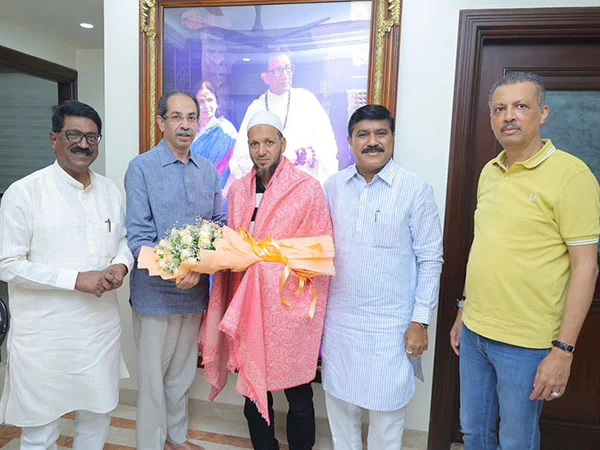
Shiv Sena (UBT) chief Uddhav Thackeray on Tuesday felicitated Arif Bamane who rescued around 35 passengers following the collision of a Navy speedboat with a passenger ferry off the Mumbai coast that resulted in the death of 15 people.
In a post on X, the party informed about the felicitations. The post also contains photographs of Thackeray with Arif.
“Arif Bamane, who showed bravery in saving the lives of 35 passengers in the Nilkamal boat accident, was honoured by party chief Hon. Uddhavsaheb Thackeray. Shiv Sena leader MP Arvind Sawant, Secretary MLA Milind Narvekar and Deputy Leader MLA Manoj Jamsutkar were present on this occasion,” said the party.
The tragic maritime accident occurred on December 18 near Mumbai when an Indian Navy boat collided with the passenger ferry Neelkamal causing it to capsize. The ferry was headed to the Elephanta Caves from Gateway of India. A total of 101 people were rescued.
According to reports, on receiving a distress call, Arif and his team rushed to the accident site, traversing a distance typically covered in 18–20 minutes in just eight minutes. Describing the horrific scene to reporters, Arif said, “It was devastating. People were crying for help, some floating on the waves, while others struggled to stay afloat without life jackets. I saw a little girl lying motionless, with her lungs filled with water. I also rescued a newborn who wasn’t breathing and revived him by hanging him upside down.”
Arif, aboard his boat Porwa, a pilot vessel used to assist larger ships in anchoring, led his team in pulling people out of the treacherous waves. While many at the Gateway of India stood as helpless spectators, praying for the victims, Arif jumped into action. His priority was the vulnerable — children and women — whom he dragged to safety, calmed with reassuring words, and provided them with life jackets.
source: http://www.clarionindia.net / Clarion India / Home> Editors Pick> India / by Team Clarion / December 24th, 2024
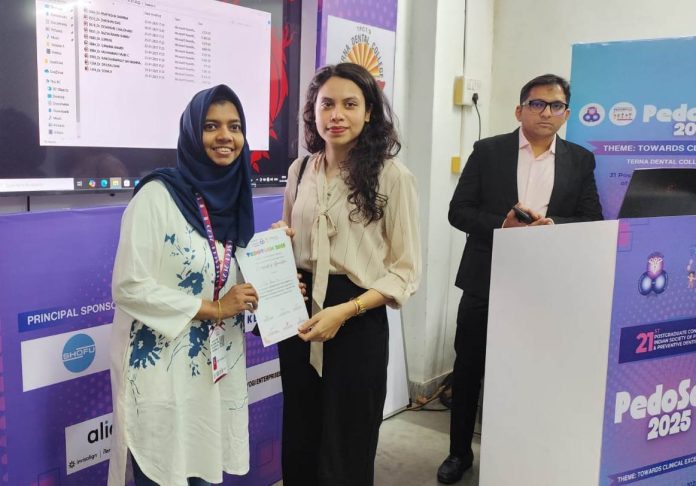
Dr. Fasna K receiving the best paper award at Mumbai
Aligarh:
Dr. Fasna K, a Junior Resident-III in the Department of Pediatric and Preventive Dentistry, Dr. Z.A. Dental College, Aligarh Muslim University got the Best Paper Award at the 21st National Postgraduate Convention of the Indian Society of Pedodontics and Preventive Dentistry (PedoSoch 2025), held in Mumbai, recently.
Her Guide, Prof Saima Yunus Khan, Chairperson of the department congratulated Dr. Fasna on the achievement.
source: http://www.radiancenews.com / Radiance News / Home> Pride of the Nation> Awards> Latest News / by Radiance News Bureau / February 05th, 2025
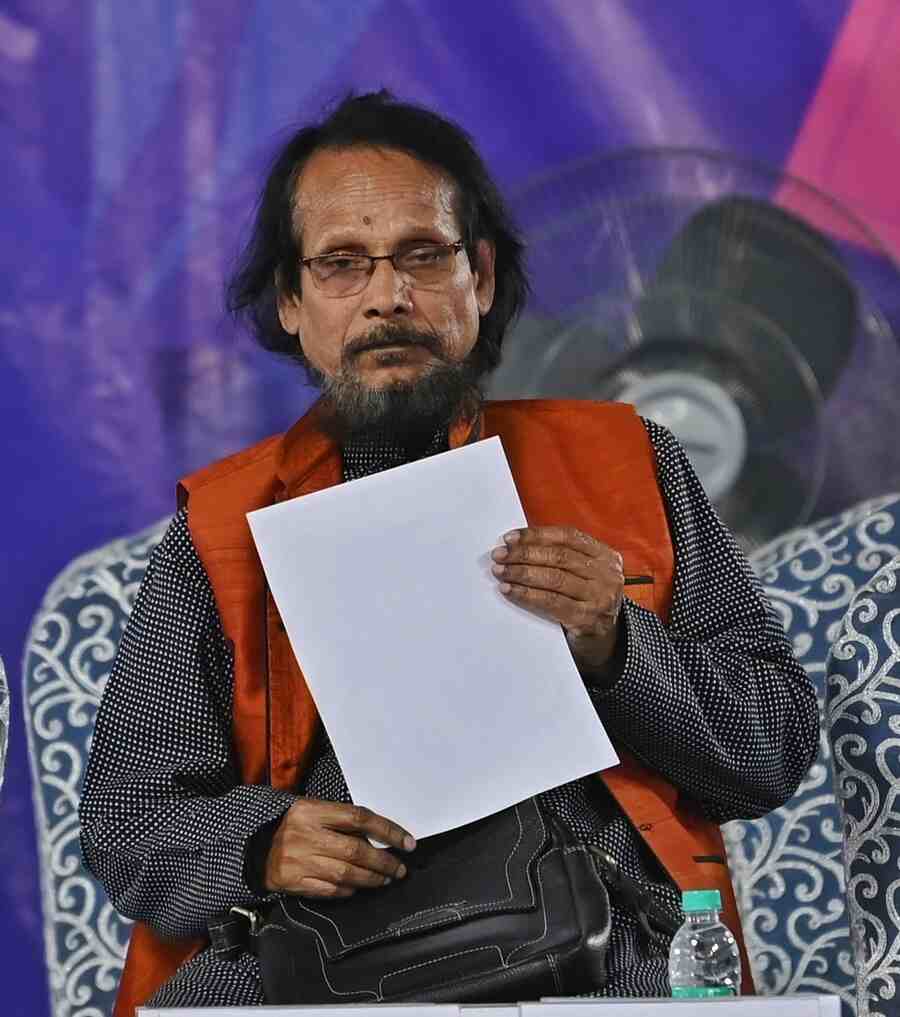
The award-winning Bengali author talks about his books, development of minority communities, Kolkata Book Fair, social media, and more.
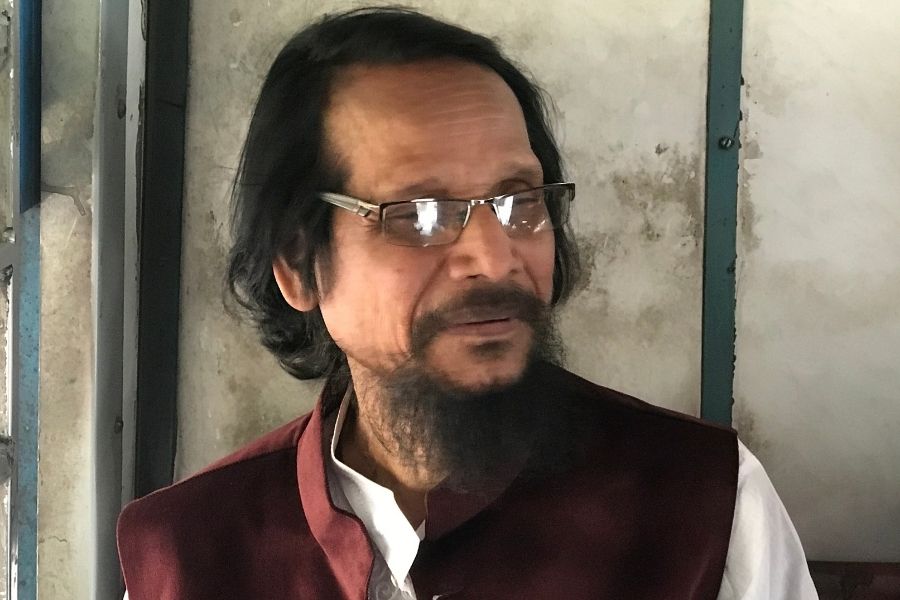
Abul Bashar — the author of ‘Agnibalaka’ and several other popular titles — is one of the prominent voices documenting the lives of minority communities in Bengal / Wikimedia Commons
Born in Murshidabad at a time when the zilla’s literacy rate was 12.9 per cent, it was an uphill battle for Abul Bashar to not just educate himself but also to live his dream of becoming an author.
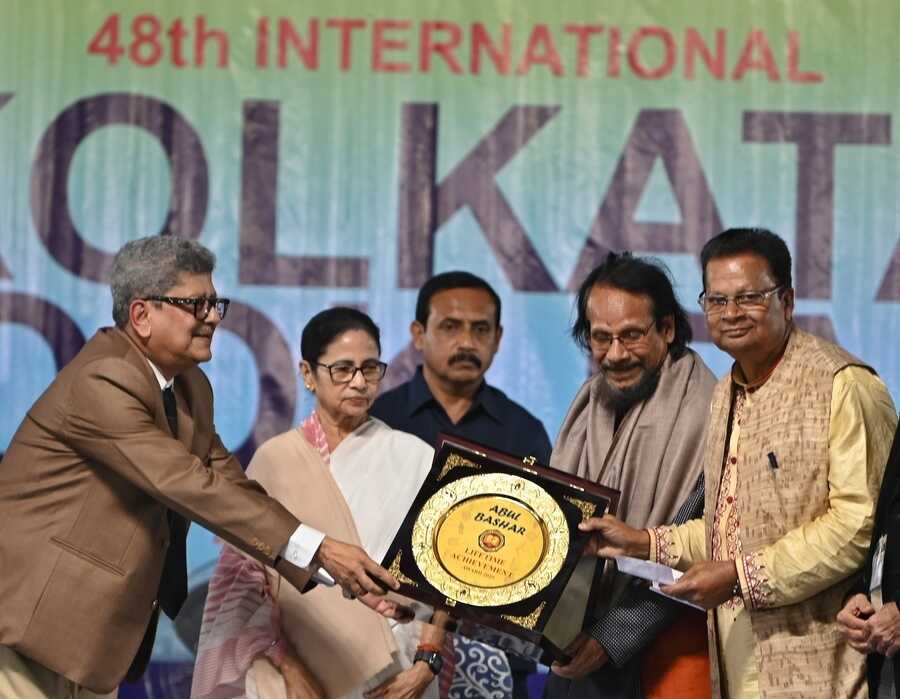
With 40 books to his name, including popular titles such as Agnibalaka, Marusvarga, Jol, Mati, Aguner Upakkhayan, and Dharmer Grahon, Bashar has documented the lives and issues of minority communities and socio-religious matters through his works. A recipient of top honours such as the Ananda Puraskar and Banga Bhushan, he was awarded the Guild Lifetime Literary Award in 2025 at the 48th International Kolkata Book Fair.
My Kolkata met Bashar at the boi mela for a conversation, discussing India’s evolution, the status of the Bengali Muslims, his career as an author, and more. Edited excerpts follow.
My Kolkata: India celebrated its 76th Republic Day this year. You were born in 1951. As an author who has been documenting the growth of society in his works, how do you see India’s evolution?
Abul Bashar: One thing that has been catching my attention is that the culture that comprises both Hindus and Muslims is in a state of dialectics and adjustment with the ‘Indian culture’. We have imbibed the virtues of Indian society, but there are a few aspects of Bengali society that do not marry well with the Indian society. This concerns me, because this is not how it was earlier. The incidents around the Babri Masjid and the Ram Mandir have changed the political diaspora of India.
It is now a global situation and not just confined to India. It is prevalent in the subcontinent that religious minorities are under attack. Civilisation is under threat, but this is not how it is supposed to be. The Indian Constitution speaks about equality towards minority communities, their representation in the power structure of the society, and a homogeneity of culture. These were the ideals of Rabindranath Tagore and Mahatma Gandhi. The lack of homogeneity in the culture is worrying me. Of course, the extent varies from place to place, but there are a few incidents that happen that make me feel imperiled.
In this country, the constitutional rights and duties of people from all walks of life are directly and intrinsically involved with the idea of democracy. India is a pluralist country where diverse religious identities and cultures cohabit in an interesting milieu, but this fabric is facing a push back.
You have written extensively on Bengali Muslims. What do you think of their current socio-religious status?
More than the religious identity, the Muslim community continues to be backward in terms of financial independence, and I give more importance to financial independence. One of the primary tenets of India is the growth of any backward community — be it among Hindus, Muslims, or any other community. The Constitution aims towards that.
The financial backwardness of the Muslim community has affected the education of modernism. It is difficult for a financially backward community to become modern. The State, thus, has to fulfill its responsibility towards removing this roadblock so that a symbiosis between community and modernism takes place.
I have not only written about the Muslim community, but also about the Hindu community. My novel, Maruswarga, can be termed — ekjon Bangali lekhoker Ihudi upanyash (a Bengali writer’s Jewish novel). My work is extensively based on various mythologies and the folk culture of Bengal, focusing on the baul-fakirs. There is a unique amalgamation of Buddhism and Islam in the bauls, which was evident through the life of Lalon Shah. My thoughts revolve around these aspects, and I want comprehensive development of the Muslim society through cultural amalgamation.
Through my books, I have addressed the religious superstitions and other roadblocks that can cause hindrance to the development of society.
Abul Bashar was conferred the Guild Lifetime Achievement Award by chief minister of West Bengal, Mamata Banerjee, on January 28 at the inauguration of the 48th International Kolkata Book Fair / My Kolkata
Do you think awards and accolades you have received have made it easier for your voice to reach society?
No, absolutely not. In my initial days as an author, I found that the readerbase of my genre of writing in West Bengal was very constricted because I belonged from a backward society. I have had a readerbase in Bangladesh since the inception of my career. Here [in West Bengal], it has taken time, but a community of people who read my kind of writings have developed. My thought process, and my novels that are based on mythology have found an academic discourse, and a doctoral candidate from Murshidabad, did his PhD on my work at Jadavpur University.
What surprised me was that a member of the society that created barriers for me and refused to accept my words did a doctoral thesis on the mythical treatment in my literature as an academic discourse. Society has evolved, and the environment of the present times is removing roadblocks, making way for an educated middle-income strata that is progressive and free thinking.
From Agnibalaka to Bhor Poati Tara — how do you see your evolution as an author?
It is a journey that I made, I would say. I have been influenced by several thoughts at different points in my life. I was an activist of Leftist politics that was different from today’s times. Leftist politics was known as the politics of sacrifice. Agnibalaka’s protagonists, if you notice, are characters who do not conform to societal norms. They are free thinkers and are characters who have imbibed Marxism in order to elevate their lives. They are the voices of dissent against stigmas and stereotypes of society.
Agnibalaka is a political novel in which dialectical materialism among various stratas of the society as well as the dialectics in interpersonal relationships between two political parties is shown. The conflict between the social strata during the 19-month long Emergency period in India, and how Marxism could be brought into praxis — Agnibalaka is an experimentation on that.
However, I do not share the same thoughts today, and by this I mean that it has been removed from my life in some ways. I have not removed it from my life, but the ideology is gradually vanishing on a global scale. It is possible that my experiments or observations are incorrect, but in today’s time, this is how I see it.
When the world starts facing a situation like today in reference to Marxism, existentialism takes its course, and becomes a replacement and anti thesis for Marxism. Everyone is in a state of endangerment, and the very thought that society that was created for its residents, is now in oblivion. Social norms were made for the development of people, but development is not entirely dependent on norms. An excessive emphasis on following social norms has given rise to conflict between man and society. This was the reason behind the two World Wars. This has also given birth to existentialist literature, as well as poets like Jibanananda Das and Michael Madhusudan Dutta.
Abul Bashar at the Kolkata Book Fair, 2025 / My Kolkata
The Kolkata International Book Fair is one of the largest book fairs in the world. In a day and age when social media has diminished attention spans, how do you see the importance of book fairs?
Social media is not a replacement for books. There is no conflict between gadgets that we use on a regular basis versus books. Gadgets like phones are essential to attain information and gain knowledge, but literature is not just information. When we speak of literature, we usually refer to the written. But what about oral literature, which is a significant part of Bengali literature? The works of Lalon Shah, for instance, are originally songs and are kabya sahitya (poetry). Another example is Rabindrasangeet — a youngster, who is engrossed in his or her phone, is also a listener of Rabindranath Tagore’s music.
There is a trough and crest when it comes to readership, but eradicating books from our lives will never be possible — just like classical music, songs like Kaa Karu Sajni, or verses of Kabir. We have to increase our habit of reading because that will increase our creativity and strengthen our culture as well as inter-personal relationships. There is evolution in the publishing industry with the digitisation of books, which has increased the readerbase. And because of book fairs, there is a boost in the number of bibliophiles.
What is your next work?
I intend to go back to my zilla (Murshidabad) to work on a piece that would complete an unfinished novel.
source: http://www.telegraphindia.com / The Telegraph Online / Home> My Kolkata / by Pooja Mitra / February 02nd, 2025
In an era where medical expenses are skyrocketing, a doctor from Patna has been a beacon of hope for the poor and underprivileged.
For an astonishing three decades, Dr. Ejaz Ali has been charging a mere Rs 10 for consultation, earning him the revered title of “messiah” among his patients.
From March 20, 2008, to July 7, 2010, he represented the Janata Dal (United) in the Rajya Sabha from Bihar. He has also served as the National Convenor of the All-India Backward Muslim Morcha, an organization dedicated to campaigning for Dalit Muslims since its founding in 1994.
Since 1984, Dr. Ali has worked as a general surgeon in Bikhna Pahari, Patna. The kind physician took a different approach, while the others around him charged exorbitant fees. By keeping his fees at Rs 10, he made himself available to those in need.
His clinic, which is situated in Bikhna Pahari on Ashiana-Digha Road, draws patients from all across Bihar who are looking for reasonably priced healthcare.
With more than 100 patients every day and multiple surgeries completed, Dr. Ali’s dedication to affordable healthcare is clear. He emphasizes his consistent commitment to aiding people in need. In order to save them money on lodging and other costs, he makes sure that every patient who has travelled to visit him receives a consultation that same day.
In addition to charging minimal fees for consultations, Dr. Ali performs surgeries at a reasonable cost. He permits his patients to pay in installments and even declines to charge them.
The late wife of Dr. Ali was a doctor as well. His three children now work in the same field, truly carrying on their father’s legacy. They asserted that their father has always put patients first.
His daughter, Gynecologist Dr. Suraiya Anjum, says, “He is the type of person who never yells or becomes agitated. Patients frequently regard him like a messiah.
Despite his fame and recognition, Dr. Ali remains humble and dedicated to his work. His clinic continues to attract patients from all over the state.
source: http://www.twocircles.net / Two Circles.net / Home> Articles> Indian Muslim / by TCN News / February 03rd, 2025
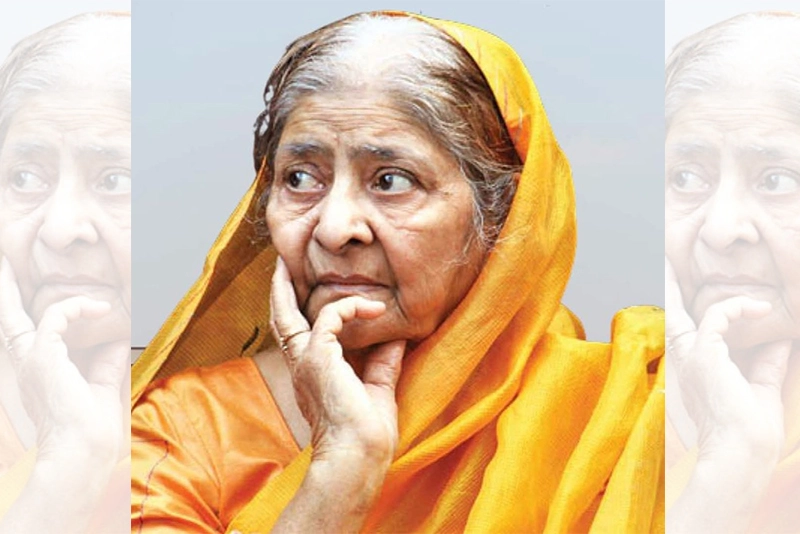
Zakia Jafri, wife of former Congress MP Ehsan Jafri – the Legal Crusader who became a Symbol of Resistance, died at her residence in Ahmedabad Saturday February 01, 2025.
Mumbai:
Zakia Jafri, wife of former Congress MP Ehsan Jafri – the Legal Crusader who became a Symbol of Resistance, died at her residence in Ahmedabad Saturday February 01, 2025.
Zakia Jafri was 86.
Zakia Jafri is survived by sons Tanveer and Zubair, and daughter Nishrin. “Mom passed away at around 11:30 AM”, she told media.
Zakia Jafri’s sad demise was later shared with the world by Rights Activist, Journalist and Author, Teesta Setalvad.
“Zakia Appa a compassionate leader of the Human Rights Community passed away just 30 minutes ago!” Teesta Setalvad wrote on her X account around 01:30 PM Saturday.
“Her visionary presence will be missed by the nation, family. friends & world! Rest in Power and Peace Zakia appa!” Teesta wrote while condoling Zakia Jafri’s death.
Originally from Khandwa district of Madhya Pradesh, Zakia Jafri had shifted to Ahmedabad, Gujarat in 1971. This after living in a refugee camp after her home in Khandwa was burnt during the 1969 communal riots.
Zakia Jafri’s husband Ehsan Jafri was a freedom fighter and Member of Parliament.
Ehsan Jafri and his family had provided shelter to dozens of Muslim families at their Gulbarg Society in Ahmedabad during the 2002 Gujarat riots.
But, the society, considered to be a safe haven because of Jafri family’s stature, too was targeted by the rioters who burnt alive and killed at least 68, including Ehsan Jafri.
Zakia Jafri later fought a long legal battle to seek justice for the 2002 Gujarat riot victims. She had also challenged the SIT clean chit given to Prime Minister Narendra Modi, who was Chief Minister Gujarat, during the riots.
During the long legal battle she was threatened and later cajoled by different means and tactics. She however remained firm.
Zakia Jafri is likely to be laid to rest beside her husband in Ahmedabad.
Condolences pour in
Meanwhile, condolences are pouring in from different circles after the demise of Zakia Jafri.
Kerala Chief Minister, Pinarayi Vijayan, in his condolence message said, “Zakia Jafri, an unwavering voice for the victims of the 2002 Gujarat riots, is no more. The widow of former MP Ehsan Jafri, who was brutally murdered by a Sangh Parivar-led mob, she dedicated her life to the pursuit of justice. Her relentless fight leaves behind a legacy of courage and resilience. Her memory will continue to inspire us in our fight against communalism and divisive forces.”
Congress Spokesperson, Pawan Khera, wrote, “Zakia Jafri died today. Her Hope for justice had died in her life time. She chronicled the history of ‘New India’ through her tears, her sobs, her fight and her defeat.”
Hyderabad MP and AIMIM Chief Asaduddin Owaisi in his condolence message wrote, “Zakia Jafri watched her husband being murdered by a mob in 2002. For nearly two decades, she fought a lonely legal battle against some of India’s most powerful men, never showing fear. She passed away today. May Allah grant her peace and strength to her loved ones.”
Sanjiv Bhatt (IPS) who was posted in Gujarat during the 2002 Godhra Riots condoled Zakia Jafri’s death in these words.
“Zakia Jafri Ji was an unshakable voice of truth against power. For decades, she fought not just for justice, but for truth, dignity and the very soul of our democracy. Her strength in the face of unimaginable loss will forever inspire us. Today, India has lost a true warrior, but her courage will live on! Rest in power, Zakia Ji!!”
Condoling the death of Zakia Jafri, Journalist and TV Anchor Rajdeep Sardesai worte: “Sad news: Zakia Jafri, whose husband and former Cong MP Ehsan Jafri was brutally killed in the 2002 Gujarat riots passed away today. For years, she fought a valiant battle for justice. When even an MP’s wife struggles to be heard, imagine the plight of an ordinary citizen. And yet, she remained steadfast and courageous till the end. Refused to give up.”
Mumtaz Patel, daughter of Congress leader Ahmed Patel, condoled Zakia Jafri’s death in these words.
“Zakia Jafri ji, symbol of resilience and an unwavering voice for justice, is no more. Her fight for truth and accountability in the face of unimaginable tragedy will always be remembered. May she rest in power.”
My heart goes out to the brave lady #ZakiaJafri who fought against these devils and those three judges who betrayed you . But they all will have to pay for their karmas before they depart from this world,this also includes the supreme leader . pic.twitter.com/JQUZTueTuI— Ravinder Kapur. (@RavinderKapur2) February 1, 2025.
“Zakia Jafri, widow of former parliamentarian Ehsan Jafri, who was killed by a Hindutva mob in the 2002 Gujarat genocide, Zakia Jafri Survived in genocide and become the relentless voice of Justice”, Noor Mahvish, a lawyer, wrote on X.
“Zakia Jafri . A life time of a fight for justice 23 years out of the 85 she spent on this earth ,waiting for justice for the killing of her husband along with the people they tried to protect inside Gulberg Society in Gujarat 2002”, a social media user, who identifies her as Realm of Bohemia, wrote.
“Brave and fearless, she fought for Justice till the end”, an activist wrote.
“She left this world fighting for justice and showing the whole world how to never give up”, Razia Pathan, an activist, wrote.
source: http://www.ummid.com / Ummid.com / Home> India / by ummid.com News Network / February 01st, 2025
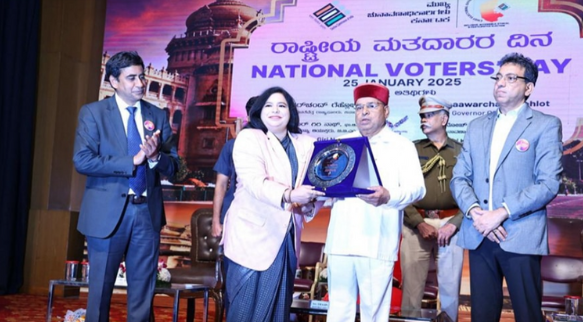
Anjum Tabassum, Tahsildar of Humnabad in Bidar district of Karnataka was presented with an award for her excellent performance as Assistant Electoral Registration Officer during Parliamentary elections 2024.
State governor Thawarchand Gehlot gave away the award to her on National Voters’ Day in Bengaluru on January 25.
This prestigious recognition is a testament to her outstanding efforts and dedication during the Lok Sabha Elections 2024. Her hard work has paid off, and this award is a well-deserved acknowledgment of her commitment to ensuring free and fair election.
Anjum Tabassum Lashkari from Gulbarga cracked the Karnataka Administrative Services (KAS) in 2014. She did her masters from Gulbarga University and had schooling earlier in Shahbad town.
source: http://www.radiancenews.com / Radiance News / Home> Pride of the Nation> Awards> Latest News / by Mohammed Atherulla Shariff / January 27th, 2025