Pandit was undergoing treatment at a hospital in Delhi after he was detected with cancer about a month ago, his family said
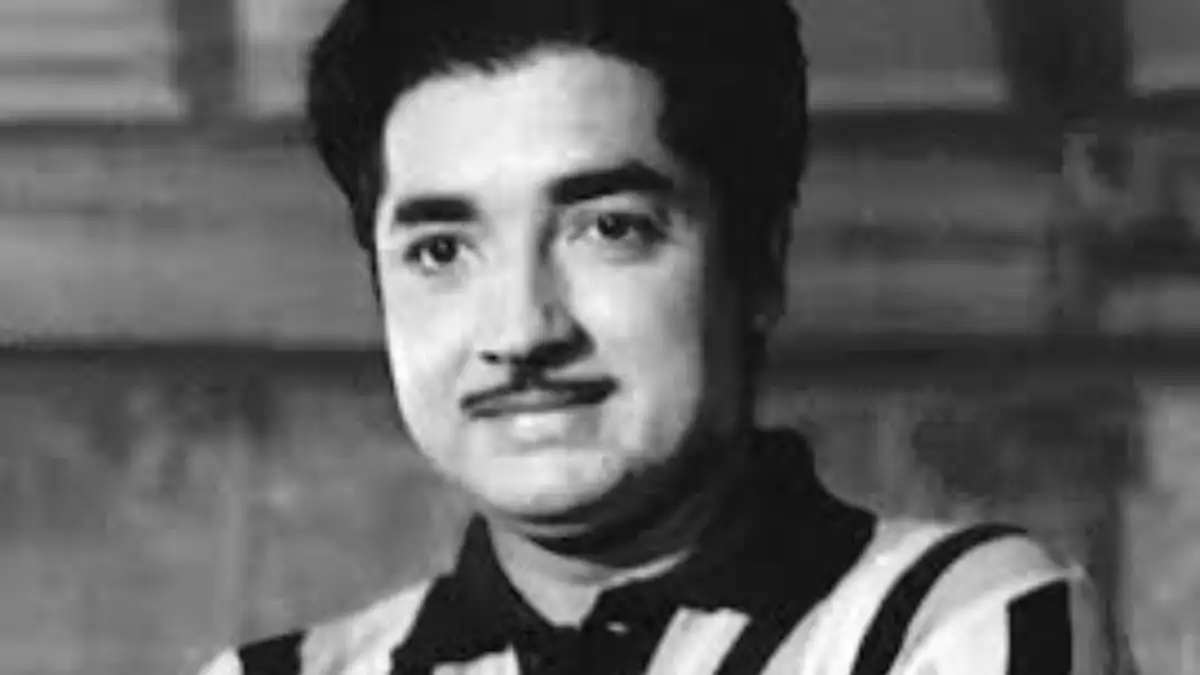
In the bureaucratic circles, Pandit was widely viewed as a chief secretary that Jammu and Kashmir never had. Image: X@Jairam_Ramesh
Mohammad Shafi Pandit, the first Muslim IAS officer from Jammu and Kashmir, passed away on Thursday. He was 80.
Pandit was undergoing treatment at a hospital in Delhi after he was detected with cancer about a month ago, his family said.
Pandit was the first Muslim from Jammu and Kashmir to qualify the civil services examinations in 1969. His final assignment with the government was as the head of autonomous Jammu and Kashmir Public Service Commission.
In the bureaucratic circles, Pandit was widely viewed as a chief secretary that Jammu and Kashmir never had.
The soft-spoken Pandit was part of many civil society and philanthropic initiatives in Kashmir. He also played a key role in rolling out of the Mandal Commission report as he was the joint secretary in the Government of India in 1992.
Pandit’s body will be flown to Srinagar later in the day.
“If possible, he will be laid to rest today,” his family said.
Congress leader Jairam Ramesh condoled the death of the IAS officer.
“My good friend of many years. Mohammed Shafi Pandit, has just passed away.He was a 1969-batch IAS officer who occupied important positions with distinction, both in J&K and at the Centre,” Ramesh wrote in a post on X.
“After retirement, he devoted himself to various public causes and emerged as a leading voice of civil society. Soft-spoken and extremely gentle by nature, he epitomised the glorious composite heritage of J&K and was a role model for youth from the Valley to join the civil services,” the Congress leader added.
source: http://www.business-standard.com / Business Standard / Home> India News / by PTI, Srinagar / September 19th, 2024
The Razack family, renowned for their legacy of generosity, has donated Rs 5 crore to St Joseph’s Boys’ High School (SJBHS) to support the institution’s ongoing projects.
The unveiling of the ‘Razack Family Block’ plaque in September 2024 marked a significant moment for the school. Present at the event were prominent alumni, including Irfan Razack, Managing Director of Prestige Estates Projects (Batch of 1968), along with his brothers Rezwan Razack (Batch of 1970) and Noaman Razack (Batch of 1974).
The generous contribution will fund crucial developments at the school, including the construction of a playground with a double basement and additional classrooms. These infrastructure upgrades aim to align with the new National Education Policy (NEP) and address longstanding challenges such as parking limitations in Bengaluru’s Central Business District.
During the ceremony, Irfan Razack expressed his gratitude, saying, “It is a privilege to give back to my alma mater, which has shaped me into who I am today. Your recognition of my efforts is humbling, and I am deeply grateful.” The sentiments were echoed by Rezwan Razack and other family members, all underscoring their continued commitment to supporting the school’s growth.
Jayashree Prince Jacob, a teaching faculty member at SJBHS, highlighted the deeper meaning of the Razack family’s donation, stating, “This contribution represents more than just financial support. It is a testament to the lasting bond between the school and its alumni, inspiring future Josephites to uphold the tradition of giving back.”
In a statement, the school reflected on its cherished motto, “Fide et Labore” (Faith and Toil), emphasizing that the values imparted through the years continue to resonate with the alumni. “Once a Josephite, always a Josephite” remains more than a saying—it embodies the unyielding love and loyalty of the Josephite community.
The Razack family’s contribution serves as a lasting example of dedication to the school’s mission, ensuring that St Joseph’s Boys’ High School continues to thrive and inspire future generations.
source: http://www.radiancenews.com / Radiance News / Home> Latest News> Report / by Radiance News Bureau / October 12th, 2024
Silver medal for the shooter has brought pride not only to his family but also to his city and the community.
Bhagalpur :
Syed Saad Hussaini, a promising young shooter from Bhagalpur in Bihar, has won the silver medal at the state-level Junior Rifle Shooting Championship. The victory has brought pride not only to his family but also to his city and the community.
Saad Hussaini, son of Syed Shah Fakhre Alam Hasan, a senior official of Pir Dumaria Shah’s monastery, competed against a large pool of state-level shooters at the five-day championship held by the Bihar State Rifle Association in Siwan district.
The recent competition saw participation from numerous shooters across Bihar. Saad’s exceptional performance in the 50m rifle shooting category earned him the silver medal, marking a historic achievement for Bhagalpur. This is the first time a shooter from Bhagalpur has secured such a high rank in a junior shooting event at the state level.
In a ceremony hosted by the Monger Rifle Association Shooting Club, Saad was felicitated by Monger SSP Imran Masood for his outstanding performance. The recognition is a testament to his hard work and dedication to the sport.
Saad Hussaini expressed his gratitude, stating, “I am thrilled to have achieved this milestone. It is the result of relentless effort and dedication. I extend my thanks to everyone who supported me throughout this journey.” He further mentioned his aspirations to compete at the national and international levels, with plans to prepare for the Olympics in the future.
Currently focused on memorisation of the Noble Qur’an, Saad plans to chart his path forward in shooting while continuing his religious studies. His achievement has sparked a sense of pride and inspiration within the community, highlighting the potential and talent emerging from Bhagalpur.
source: http://www.clarionindia.net / Clarion India / Home> Editors’s Pick> Indian Muslim> by Team Clarion / August 07th, 2024
Mumbai’s 16-year-old prodigy fights all odds to study in Singapore
Mumbai :
Sheikh Tayyaba Kausar Muhammad Arif, a 16-year-old student from Holy Mother English High School in Malvani in the northern area of Malad in the country’s financial capital, has secured a ₹2 crore scholarship to study at the United World College (UWC) in Singapore, starting August 10. Her achievement has brought immense pride to her family and community.
Tayyaba scored 93% in her SSC exams despite her modest background. Her father is a tailor, her mother a homemaker, and she has two younger sisters. Her disciplined study routine included early mornings and late nights, demonstrating her dedication.
Her journey began in October 2023 with an essay competition, followed by a rigorous selection process and a challenging interview in Pune on January 20. “Without the support from my school and NGOs, the documentation process would have been daunting,” she said.
Principal Rafiq Siddiqui of the Holy Mother School played a crucial role. He recalled how Tayyaba, who had to leave her previous school due to unpaid fees, joined Holy Mother in the sixth grade. “Moved by her determination, we assured her she’d never have to worry about fees again,” he said. NGOs like Smile Foundation and Teach for India also provided vital support.
In an interview, Tayyaba expressed her gratitude: “I thank Allah, my parents, my sisters, my principal, and the NGOs. I am excited to study in Singapore but aim to return and serve my country.”
Tayyaba’s journey from Mumbai’s Malvani to securing a ₹2 crore UWC scholarship is a testament to perseverance, hard work, and community support. Her success is an inspiration, showing that with determination and the right support, anything can be made possible.
source: http://www.clarionindia.net / Clarion India / Home> Editors’s Pick> Indian Muslim> by Team Clarion / August 07th, 2024
In a landmark effort to uplift the educational aspirations of Muslim minority students across India, the Kalam Learning Centre has announced the launch of a substantial Rs.50 crore scholarship fund.
This ambitious initiative, which stands as one of the largest scholarships programs specifically targeting Muslim minority students, aims to provide essential financial support to deserving students, helping them achieve their academic dreams without the burden of economic constraints.
The scholarship program is open to students from Class 5 to Class 12, as well as recent 12th-grade graduates who are preparing for their next academic steps. The initiative covers a wide spectrum of students, making it accessible to a large segment of the Muslim minority population. To qualify, students will need to participate in a scholarship examination conducted by the centre, ensuring that the scholarships are awarded based on merit and need.
By offering these scholarships, the Kalam Learning Centre aims to empower young students with access to quality education, removing financial hurdles that often prevent talented individuals from pursuing higher studies. The centre’s vision aligns with the broader goal of enhancing the educational landscape for minorities in India, especially at a time when educational inequalities persist across different sections of society.
The `50 crore scholarships fund represents a significant milestone in the ongoing efforts to promote inclusive education. It is set to play a pivotal role in the academic journeys of thousands of students, allowing them to focus on their studies, reach their full potential, and contribute meaningfully to society. This initiative will not only benefit the students but also strengthen the foundation of India’s future workforce by nurturing young minds through education.
In addition to this, the scholarships program resonates with the legacy of Dr. APJ Abdul Kalam, India’s former president and renowned advocate for education. Several scholarships across India bear his name, each dedicated to advancing his dream of a fully literate nation. These scholarships, offered by various state governments, educational institutions, and organizations, aim to provide deserving and financially struggling students with the necessary resources to complete their education. Dr. Kalam’s legacy continues to inspire efforts like the Kalam Learning Center’s initiative, which seeks to build a more inclusive and educated India, one student at a time.
Through this scholarship, the Kalam Learning Centre is not only supporting individual students but also contributing to the broader mission of promoting literacy, equality, and opportunity for the underrepresented and marginalized sections of society. This initiative sets a precedent for other organizations to follow, encouraging more efforts to bridge the educational gap for minorities in India.
For more information or registration, you may click here, or download Kalam Learning Centre App, or call KLC helpline number +91-9335004071.
source: http://www.radiancenews.com / Radiance News / Home> Education> Focus / by Radiance News Bureau / October 15th, 2024
Their work focused on Muslim women writers and their contributions to magazines in Kerala during the period.
Reading Rumours curators Haneena P A and Jazeela Basheer
Kozhikode :
Victorian-era English novelist and poet Mary Ann Evans famously adopted the pseudonym George Eliot to escape the constraints of social norms and patriarchy.
As times changed, female writers increasingly gained the courage to publish under their own names. However, in Kerala – a region still grappling with significant gender disparities – women defied the odds and entered the publishing industry as early as the 1900s. Yet, tracing the contributions of some, particularly Mappila women, proves challenging.
The exhibition titled Reading Rumours, held at Silk Street in Kozhikode, shed light on the hidden history of women’s involvement in Kerala’s print culture between 1900 and the 1950s. Curated by research scholar Haneena P A and exhibition designer Jazeela Basheer, the event is the result of two years of research by the collective Around The Sufrah. Their work focused on Muslim women writers and their contributions to magazines in Kerala during the period.
“Print culture flourished in Kerala from 1900 to 1950, and readership grew. But the contributions of women writers from this era have largely been overlooked,” Haneena told TNIE.
“Reading Rumours brings together the micro-histories of these women writers, encouraging visitors to engage with their stories and legacies.” The title, Reading Rumours, symbolises women’s quest for knowledge and their fight for recognition.
“Rumours are often seen as statements without a reliable source of truth, frequently associated with women. Much of women’s knowledge, history, and experiences are dismissed as mere gossip. The title is also a play on the traditional vayanashaala, or reading rooms, where men would gather to read and discuss,” Haneena explained.
The idea for Reading Rumours originated from a desire to present Haseena’s postgraduate thesis in a more accessible, popular format.
“This exhibition is an extension of my thesis, which focused on Mappila women in print. We are generally aware of only a handful of female writers from the early 1900s, but my research uncovered around 25 Muslim women who were actively involved in writing for magazines and other publications,” she said.
The three-day exhibition, which began on October 4, received enthusiastic support from the public. “The response has been overwhelming,” Haneena noted.
“Many visitors expressed surprise at discovering the significant role Muslim women played in Kerala’s early print culture,” she said.
source: http://www.newindianexpress.com / The New Indian Express / Home> Kerala / by Lakshmi Athira / October 07th, 2024
Meet 25-year-old specially-abled girl, who plays basketball, does motivational speaking and drives a car.
Ishrat Akhter in Team India jersey | eNewsroom India
Delhi:
Ishrat Akther from Baramulla in Jammu and Kashmir is a multi-faceted personality. She is an international wheelchair basketball player, a motivational speaker, Kashmir’s young leader and an achiever’s award-winner. Indeed, six years back, Ishrat’s life had no meaning — but an incident changed it all.
Now, Ishrat has become an inspiration for all those individuals who set limitations for themselves. Who refuse to dream and achieve their ambitions.
The girl next door
Ishrat was born in a village where women did not participate in sports. Like any other girl, she believed whatever her family taught her and did not dare to dream big. However, her life changed on August 24, 2016, when she fell from the balcony of her house. The injury was serious, it damaged her spinal cord – making her physically challenged.
Life changed for the good when the 25-year-old girl from the Authoora area in north Kashmir’s Baramulla district started her basketball career in 2018. For her, playing basketball was not just a love for the sport but a passion for standing against all odds, come what may.
“I never played any sport before 2016, not even in school, but in 2016 when I was just 18 years old, I met with an accident. I fell off from the balcony of my house and this made me bedridden for two long years,” recalls Ishrat.
Did not surrender to fate
A brave and resilient girl, she developed the will power to transform adversity into hope. Certainly, she did not wish to live a life of hopelessness and despair.
“After that accident, I was a patient at the Voluntary Medicare Society. I saw some boys coming to play basketball on the court which was in the society and all of them were in wheelchairs! Seeing them play, I was deeply influenced. I was inspired. I thought, “I don’t want to sit idle. Let people form their own, biased opinions,” she says and continues:
I, therefore, decided to play basketball. I remember that when the selection process for the Indian team started, police and army people came to my home and informed me that my name was in the list and if I wanted to attend the three-day selection process for the Indian team, I must leave for Chennai within a day. For me, this was a golden opportunity, so I left for Chennai all alone, and participated in the selection process. Luckily, and to my great joy, I got selected. Since then, I have been determined to live a life based on self-conviction, will power and courage.
At the Medicare Society, I joined the Wheelchair Basketball Team and got selected for the ‘nationals’ in Tamil Nadu, representing Delhi. Jammu and Kashmir did not have a team at that time. I was part of a team of good players. Eventually, a team for the state was conceived. I played the second national game at Mohali, representing J&K.
Ishrat Akhter receiving an award by the Lieutenant Governor of Jammu and Kashmir, Manoj Sinha | eNewsroom India
Conquering world
“I was selected to represent India at the Asia Oceania Wheelchair Basketball Championship at Pattaya, Thailand in 2019. I am the only girl from my state who has represented India at the international level. Besides, I have participated in a Boys’ Wheelchair Race, I being the only girl in the race. Happily, I secured the first position. I also play Wheelchair Table Tennis,” says Ishrat, with great pride.
Among others, Colonel Isenhower has been a constant support for Ishrat. He has been her guide, mentor and guru. And she is full of praise for him.
“When the selection process for the Indian team was going on, communication services were suspended in Kashmir. Hence, Colonel Isenhower, who was in Kochi, traced me out in two days and arranged everything. Since then, he has been an inspiration for me. He has always been motivating me to do much, much more. He always says that I have to make my name and thus refuse to be restrained — because I am a wheelchair-bound person,” says Ishrat.
Ishrat’s family has always acted with amazing positivity and magnanimity, giving her optimism and courage. She feels that, undoubtedly, it is due to the support of her family that she has reached the international forum, something impossible to conceive for a girl with the kind of difficulties she had faced in her life.
On the flip side, she believes that her life has completely changed because of the accident which resulted in her opting for basketball.
Indeed, after four years of the accident, Ishrat has resumed her academic life, and is currently pursuing a diploma in the Women’s Polytechnic College, Srinagar.
Truly, she represents the eternal metaphor of hope. For her, sky is the limit.
“Not just an international recognition but after 4 years of my accident, I resumed my studies. I passed my Class 10 and also appeared for my Class 12 exams. Now, I’m also pursuing my Diploma,” she says.
Controls her life
The specially-abled Ishrat, braving all odds drives a car, all by herself without anyone’s support.
“In the beginning, it was very difficult, but I wanted to drive by myself. If one has courage and willpower – one can achieve anything in life,” she adds.
“I remember, I used to feel scared even if I had to go some miles away from my home but today I travel alone, even when I have to go to some places outside Kashmir. There are instances when I observe people looking at me and seeing how I manage things but at the same time I’m proud of the fact that today, I get invited to speak as a motivational speaker across India,” she points out.
In 2019, she was also selected for a Sports Visitors Program- Wheelchair Basketball and Accessibility in the USA but because of personal issues she was not able to attend it.
Ishrat is also a motivational speaker and has delivered many talks in Kashmir and other states. She was presented the Kashmir Young leadership award and Kashmir Young Achievers Award 2021 by the Lieutenant Governor of Jammu and Kashmir, Manoj Sinha.
She has also received the Women Steel award 2022 from JKPCC.
source: http://www.enewsroom.in / eNews Room India / Home> Play On> She / by Varalika Mishra / May 08th, 2022
Dr Shahana A K, Ayurvedic expert in anorectal disease
The disease can mean pain as much as shame. This is especially so when it comes to anorectal diseases. Remedies are available in Allopathy but these are expensive and do not guarantee non-recurrence.
Piles free for five rupees….read the headline in a Malayalam daily recently. This claim was made not by an Allopath but by an Ayurveda practitioner in the Ksharasootra clinic of the Government Ayurveda Hospital in Chelakkara in Thrissur district.
The clinic and its head Dr Shahana A. K. have been attracting patients from different parts of the state and even from outside for treatment of anorectal diseases like fistula, hemorrhoids, anal fissures, and rectal prolapse. She treats them with an ancient method of ksharasootra which involves insertion of a medicated thread through the affected area or fistula.
The practice called Ksharasootra takes very little time and the patient need not even be admitted. The thread is replaced by fresh ones a few times till the patient is healed. It is simple, non-invasive, with no side effects, cost-effective, and leads to no recurrence of the problem unlike in surgery.
Dr Shahana doing a surgical procedure in her clinic
Sushruta is considered the “Father of Plastic Surgery” and lived in India sometime between 1000 and 800 BC. He is the author of the treatise The Suśrutasaṃhitā which includes unique chapters describing surgical training, instruments, and procedures in ancient India. One of the oldest Sushrutasamhita palm-leaf manuscripts is preserved at the Kaiser Library of Nepal.
Dr Shahana has been practicing this ancient Ayurvedic para-surgical process in the government clinic for the past few decades and her name has come to be attached to Ksharasootra. The success stories have been traveling through the state by sheer word of mouth, says the doctor. No one has tried to publicize it. People come here after hearing about it from people who have healed, she says.
Speaking of the recent item in a newspaper, she said: I want more people to know of the treatment so that they don’t fall victim to quacks, who spoil their cases forever and charge them huge sums.
After her BAMS (Bachelor of Ayurvedic Medicine and Surgery) she went on to do her master’s in surgery or Shalya tantra which had just three seats in the state colleges then. In Ayurveda surgery has many para-surgical procedures including Ksharasootra, rakthamoksham, ksharakarmamand so on.
Ksharasootra though devised by the father of Ayurveda Susruta centuries ago, the procedure has evolved over the years, she points out to this scribe.
As for why she opted for Ksharasootra, she says, “I wanted to use my education to help the maximum number of people.”
The world of anorectal diseases is a dark, quiet, and obscure one where patients suffer silently in fear and shame to disclose their suffering as it concerns their private parts. If the patients are women, then it is even more shameful to discuss this with doctors.
Chelakkara Gram Panchayat Government Ayurveda Hospital in Thrissur
Patients do get treatment in Allopathy and go through multiple surgeries as the piles or fissures recur. So they are drained of money by the time they turn to Ayurveda with a recurrent condition, she says.
“When I started working quacks ruled the roost, as they promoted themselves as experts in this ancient method and offered treatment for piles, fissures, and fistula without surgery. Patients still fall for their hype and lose a lot of money and their health,” she says.
The treatment for diseases like piles, fistula, or fissures is free in her clinic, while other government Ayurveda hospitals in Kerala charge a token fee. In private Ayurveda clinics, it can cost a lot.
The main advantage she says it does not cause incontinence. Since it is a treatment in the anal region, patients often lose control over their bowel movements after surgery in Allopathy.
The profile of patients suffering anorectal disorders has been changing dramatically she says. “Earlier there were mostly middle-aged people. Today there is no age difference. They come from every age group including youth and children. Poor toilet habits, stress, junk food, and lack of physical activity all lead to anorectal diseases in children even below the age of ten,” she says.
Dr. Shahana spreading awareness about rectal disease
These diseases are also occurring in pregnant women mainly because of the traditional food supplements they take for a healthy child. These days, women don’t have the digestive capacity and are still given meat supplements. So women who are already suffering from constipation get even worse and develop anorectal complications and come here,” she says.
Patients cut across caste and community and ironically every religious festival leads to a spike in the number of patients in her clinic.
Onam, Easter, Christmas, and Eid all cause a spurt in cases and aggravate of old cases. During the fasting month of Ramzan, patients suffer a lot as they eat very spicy and oily food to break a day’s fast. It aggravates these disorders, she says. In some festivals drinking of alcohol leads to a spike.
Her clinic is gearing up to observe World Piles Day on November 20 with awareness camps and posters. “We are trying our best to reach out to more and more people so that they are saved from quacks, she says. Often people go for self-medication, to avoid medical examination of their private parts. Or they go to quacks to avoid surgery. They don’t realize that often rectal cancer and piles show the same symptoms which only a good doctor can detect,” she says.
A bust of Sage Sushrut
The Ksharasootra clinic run single-handedly by her for the past few decades is to be declared a centre of excellence by the Kerala Government. This would mean more doctors and more funds. “Of course, I would have retired by then but the treatment facilities would improve,’’ she says.
Asked if there was a stigma attached to practicing Ksharasootra she agrees that the number of Ksharasootra practitioners is very few in the state. But she feels it is because very few seats are available for surgery or Shalyatantra. “Not everyone who does the course may get the opportunity or have the mental willingness to pursue this line. It’s not possible for everyone,” she adds quoting Susruta on the qualities required by a surgeon… shauryamashukriyataishyam…. meaning courage, fast and unfearing while being insightful of the patient’s condition.…
“As for me, I feel it is an opportunity to do some good. People come to me after two or three allopathic surgeries. Just recently I had a patient who had been operated on for piles and fistula eight times. He was mentally and physically shattered and hopeless. I’m able to bring these people, many of whom are on the verge of suicide, back to hope and normalcy, ‘’ she says.
She says her religion Islam or her gender does not discourage the work she is doing.
“Being a woman has been an advantage I feel as I can empathise with their suffering and approach patients with maternal affection and concern. As a Muslim the work I do is considered equivalent to devotion. Islam considers all good deeds done with good intentions as ibadat or devotion. These are considered superior to prayers or reading of scriptures,’’ she says.
Dr Shahana believes that if one has a job that allows doing good to the masses then one should do the maximum possible. “That is my policy. Often people ask me why I take so much trouble to reach out to these patients. I feel that for anyone like doctors or politicians who are in a position to do work for the wellbeing of the public and do not do it, then it is not appropriate for them to be in that position.”
The author is a former social-editor of Business Standard and is teaching in a alternative school in Andhra Pradesh
source: http://www.awazthevoice.in / Awaz, The Voice / Home> Story / by Sreelatha Menon, Thrissur / October 15th, 2024
Have you walked through India’s first art district of Lodhi Colony in South Delhi where high walls along streets come across as vibrant art works? The man behind this and the street art movement of India Hanif Kureshi is no more; he passed away on Sunday at 41.
Hanif, an alumnus of the Baroda Art College died of cancer leaving behind a culture of vibrant public spaces and colourful neighbourhoods across India.
A wall in South Delhi’s Lodhi Road created by Kureshi
Kureshi’s quest for vibrant neighborhoods brought him to Lodhi Colony in Delhi in 2013, where the high walls and pedestrian-friendly lanes became a canvas for murals that quickly captured the community’s attention.
His death was announced on Instagram. The post read: “Hanif Kureshi, the man behind the Amazing street art you see across India has passed away…”
“Hanif Kureshi (@hanifkureshi) will forever be remembered as a visionary artist who transformed the urban landscape, one wall at a time.
After transitioning from advertising, Kureshi took the lead in shaping India’s modern street art movement and reviving the fading art of hand-painted typography.
An art work created by HanifHanif Kureshi in Chennai
Through St+art India (@startindia), Kureshi and his co-founders built a community of urban artists whose projects have revitalized cities across India, turning public spaces into cultural landmarks. From the vibrant Sassoon Docks in Mumbai and the iconic Lodhi Art District in Delhi to Kannagi Nagar in Chennai, the Serendipity Arts Festival in Goa, and international showcases like the London Design Biennale, Venice Biennale, and Centre Pompidou, Kureshi’s artistic imprint is unmistakable.
In light of his untimely passing, we reflect on the enduring legacy Kureshi leaves behind—on walls, in typographic art, and throughout neighborhoods and communities nationwide.”
Hanif Kureshi co-founded St+art India and started giving shape to his vision in 2013. When he started transforming public spaces into vibrant canvases, he could not have anticipated the profound impact it would have across the nation.
Asian Paints posted this image of Kureshi’s work on X:
@asianpaints / The MTNL building in Bandra has a shiny new coat of paint. Love the work by @StartMumbai / December 09, 2014 / 4.55 pm
This young visionary artist devoted his life to making art accessible to everyone. “Our aim is to make art more accessible. When you are working in an art gallery, your concerns are different, but this is art on the streets for everyone,” he said in an interview.
Kureshi was behind popularizing street art in India and setting up a model that has inspired countless artists.
According to Storyboard 18, art curator Rahul Bhattacharya, a close friend and former classmate at Maharaja Sayajirao University in Baroda, reflects on Kureshi’s unconventional approach: “He was constantly exploring new avenues.”
His journey began with an interest in sign-board painting and hand-lettering, leading him to seek out local sign painters and eventually digitzing their unique styles under the banner of HandpaintedType.
He launched St+art India as a not-for-profit organization dedicated to creating public art projects.
Kureshi’s first project was Lodhi Colony in Delhi where the high walls and pedestrian-friendly lanes became a canvas for murals that quickly captured the community’s attention.
Gupt Dwar by Kureshi’s NGO in Lodhi Colony
Gond artist Bhajju Shyam, who collaborated with Kureshi in Lodhi Colony, remembered him as modest and patient. “He was extremely sincere and listened to constructive feedback during our discussions,” Shyam noted, highlighting Kureshi’s collaborative spirit.
Kureshi’s St+art India has since organized numerous art festivals and painted murals across cities like Mumbai, Hyderabad, and Chennai, inviting both local and international artists to contribute. Kureshi was actively involved in his project including the installation at the Sassoon Dock Art Project in Mumbai.
Kureshi’s influence extended beyond borders afters he showcased his work at prestigious venues including the London Design Biennale and the Venice Biennale-. His recent solo exhibition at Wildstyle Gallery in Sweden in June 2023 impacted the world of art globally.
source: http://www.awazthevoice.in / Awaz, The Voice / Home / posted by Aasha Khosa, ATV / September 26th, 2024
Shabir and his team stepped in, despite the language barrier, to assist the grieving daughter.
Vellore :
At the chaotic Ariyur auto stand in the heart of Vellore, amidst the blare of honking rickshaws and the buzz of commuters, 39-year-old Mohammed Shabir orchestrates a life-saving mission that few would notice.
With one eye scanning for passengers and the other glued to his phone, he is constantly coordinating urgent blood donations for patients in dire need. For Shabir, it’s more than just a local cause.
His focus stretches across borders and helps patients from as far as West Bengal, Jharkhand, Bihar, and Assam, who come all the way to Vellore, most of them clinging to the last straw of hope for critical medical treatment.
Since 2019, Shabir has been at the helm of a team of volunteers, racing against time to provide emergency blood donations across the districts of Vellore, Tirupathur, and Ranipet. Their relentless efforts have become a lifeline for patients at their most desperate moments, a beacon of hope in the face of life-threatening crises.
Shabir, a BBA graduate from Vellore, was forced to take up the role of an auto driver in life in 2013 due to financial difficulties at home. However, the course of life changed forever after a personal tragedy struck him.
His father, Ansar Basha, was a kidney patient and was admitted to the Vellore Government Hospital and Medical College. Back then, according to Shabir, the hospital didn’t have a well-equipped facility for dialysis, and despite his desperate efforts, he could not secure a blood donor for his father’s treatment on time.
Tragically, his father passed away within a week due to the unavailability of blood. “The incident shattered me,” Shabir recalls, tears welling up in his eyes. “I couldn’t move on from it for a long time,” he added, reflecting on the event that now fuels his determination to help others.
Driven by this loss, Shabir began arranging blood donations in 2013, focussing particularly on patients from North India, who often face language barriers in Vellore.
Despite financial challenges, Shabir formalised his work in 2019 by rallying a group of volunteers and forming the Nodtigal Trust. Every day, they receive about 10 requests from various hospitals, prioritising the most urgent cases. “We manage to fulfil at least five requests weekly within Vellore,” Shabir said.
The outbreak of Covid-19 added another layer of complexity to their work. Arranging blood donations during the pandemic became increasingly difficult. But Shabir and his team were undeterred, stepping up to the challenge.
In 2020, they encountered a particularly heartbreaking case involving a cancer patient from West Bengal. The patient passed away while her husband was away trying to sell his land to fund treatment. Their daughter was left alone with her mother’s body.
Shabir and his team stepped in, despite the language barrier, to assist the grieving daughter. With the husband’s permission, they arranged for the woman’s burial in Vellore, free of charge. “It was a deeply emotional moment for us,” Shabir said. “The husband saw his wife’s body over a video call and thanked me in Bengali. I couldn’t understand his words, but I could read the emotion on his face.”
What began during the pandemic has now become a regular part of Nodtigal Trust’s work. “We’ve buried over 24 bodies so far, mostly North Indian patients who don’t have any local connections,” Shabir explained. “It costs around Rs 5,000 to bury one body, and we’ve been covering the costs ourselves, with help from friends and well-wishers.” In addition, Shabir also cares for five orphaned girls in Vellore, committing to support them for life.
Looking ahead, Shabir has broader ambitions for the Trust. He is particularly concerned about the lack of awareness and support for transgender people in Vellore. “If any transgender individuals want to study and live a decent life, we are ready to support them,” he said. He also aims to assist mentally ill people found on the streets, helping them reunite with their families.
However, the work is not without challenges. “We sometimes struggle to cover transportation costs for the burials,” Shabir shared. “It would be a great help if the district administration could provide us with an ambulance for these cases.”
(For more details, Mohammed Shabir can be contacted at 9361719520)
(Edited by Sneha Joseph)
source: http://www.newindianexpress.com / The New Indian Express / Home> Good News / by Rajalakshmi Sampath / October 13th, 2024