Kakrauli Village (Jansath Tehsil, Muzaffarnagar District),UTTAR PRADESH :
Zia Chaudhary, SP district president visited Tauheeda’s home to express their support towards her.
Photo:X
A Muslim woman named Tauheeda has emerged as a symbol of bravery after confronting a police officer who pointed a pistol at her while she was on her way to vote during the by-elections at the Meerapur assembly seat in Uttar Pradesh on November 20, 2024.
The incident occurred when Tauheeda, a resident of Kakrauli, faced SHO Rajiv Sharma, who allegedly tried to intimidate her into abandoning her right to vote.
A photograph capturing this tense moment quickly went viral, igniting public outrage and drawing attention to the broader issues of voter intimidation during the elections.
In a statement to reporters, Tauheeda declared, “I am not afraid of bullets… I was not allowed to vote.”
Following her courageous stand, the Samajwadi Party (SP) announced plans to honour her for her fearless act amidst reports of violence and police misconduct during the polling process, which included allegations that officers were preventing voters, particularly from Muslim communities, from exercising their franchise.
SP announce plans
The SP announced plans to honour Tauheeda for her courageous stand against an armed police officer during the recent by-elections in Uttar Pradesh.
Zia Chaudhary, the district SP president, along with other party leaders, visited Tauheeda’s home to express their support and assure her that party president Akhilesh Yadav would personally felicitate her.
Tauheeda booked
However, despite her courageous stand, Tauheeda was reportedly among those booked by police for alleged violence during polling. The SP leaders have accused the police officials of harassing Muslim voters, pulling veils off some burqa-clad women to take their photographs.
Police officials suspended
In response to the complaints by the Samajwadi Party, the Election Commission suspended at least five police officers involved in the incident. Others were removed from poll duty for flouting Election Commission (EC) guidelines and stopping electors from casting votes.
source: http://www.siasat.com / The Siasat Daily / Home> News> India / posted by Sayima Ahmed / November 23rd, 2024
Sabsit Village (Bagnan Town, Howrah District) , Kolkata, WEST BENGAL :
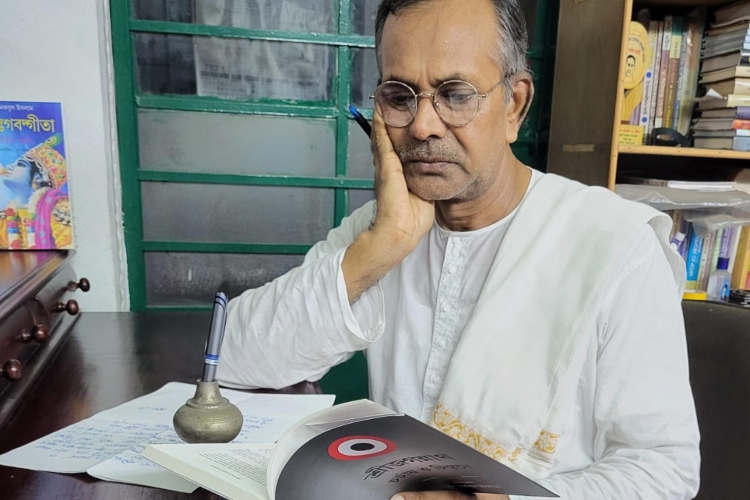
Prof Sheikh Maqbool Islam with his latest book on Lord Jaganath
Meeting Professor Sheikh Maqbool Islam is like sitting in the cool shade of a Banyan tree. In my first meeting with this Kolkata academic in his mid-fifties, my feeling was akin to that of a traveler who finds shade on the banks of a cool river in the middle of his journey on a hot day.
Professor Sheikh Maqbool, Bengali language professor of St. Paul’s College of Kolkata is an expert on Shrimad Bhagwat Gita, the ancient scripture of Hindus as well as the Holy book in Islam the Quran, and of the Christians the Bible.
Besides he is an expert on Bhagwan Jagannath of Puri (Odisha), who is the reigning deity of the Eastern States.
Prof Islam feels he is a born Sufi as he is the son of Sheikh Sajad Ali, a Sufi, and his mother Hazra Khatun. However, growing up he never imagined that one day he would write as many as 65 books.
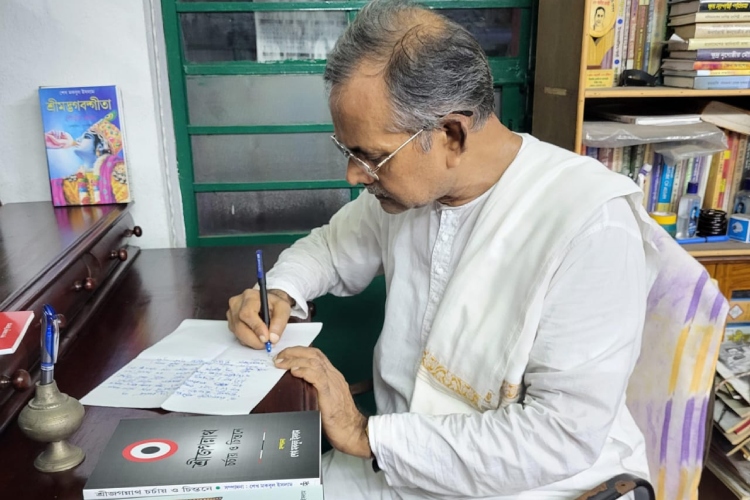
Sheikh Maqbool Islam in his study
Prof Sheikh Maqbool Islam’s mother tongue is Bengali but he knows Hindi, Hindustani, Bengali, Oriya, Assamese, and English languages.
He says, “When I was two and a half years old, I met Sufi saints in my village. My father Sheikh Sajad Ali was himself a Sufi, so Sufi saints and scholars visited our house.”
“In the village, we had many Sufis and a large number of Vaishnav people. So when I was four and a half years old, I gradually started getting influenced by both. At this age, I also came to know about Shri Jagannath Bhagwan of Puri (Odisha).”
He says, “As I grew up, my mind opened up. I started knowing a little bit about all religions and cultures. “It felt as if I was finding the path to freedom from illusion.”
Prof Islam was born in the Sabsit village of Bagnan town of Howrah district, which is two and a half hours from Kolkata.
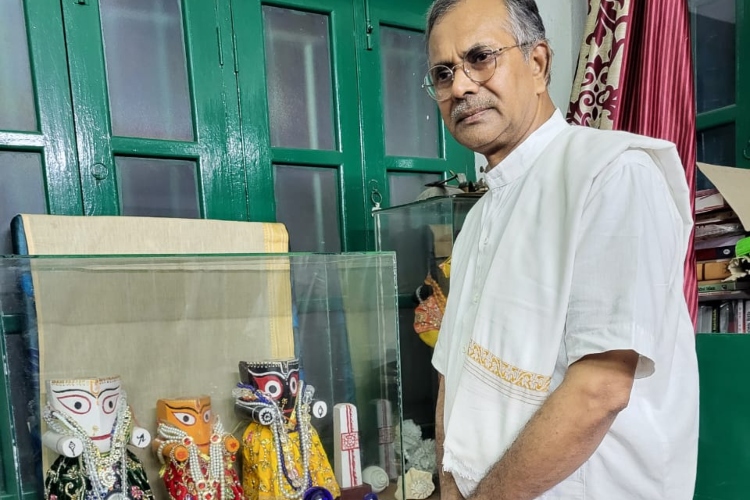
Prof Sheikh Manzoor Islam with Lord jaganath and other deities in his study
He came to the city (Calcutta) in 1985 holding the hands of his father.“I have been living near Howrah station since 1985. I studied all through in Calcutta.”
The author of 65 book, Prof Sheikh Maqbool Islam says he has Surdas (the 16th-century devotional poet who was blind)), Tulsidas, (Author of the epic Ramcharitramans, the story of Lord Ram in the Awadhi language) and Meerabai (the 16th century Saint who is known for her devotion to Lord Krishna close to in his heart.
Some of his most widely read books include ‘Gita-Quran Comparative Study’, ‘Tattva Chinta of Folk Culture’, and research subject ‘Lok Sangeet Vigyan’ .
He holds a D.Litt in ‘India-Odia Cultural Relations’ from Utkal University of Odisha in the year 2015, then PhD in ‘Comparative Study of Bangla-Odia Folk Literature’.
Professor Sheikh Maqbool Islam has also been a ‘Senior Research Fellow’ at the Asiatic Society of Calcutta. It is the largest center of oriental studies in our country.
Professor Sheikh Maqbool Islam in his study
Since 1997, he has been working as an Associate Professor at Calcutta’s oldest St. Paul’s Cathedral Mission College. He teaches Bengali language and literature in this college, which was established in 1865.
Professor Sheikh Maqbool Islam believes that the fight over religion is meaningless. The main reason for this is the lack of culture.
He says, “It is very important to have a culture to create brotherhood. It needs to be understood properly, otherwise we will keep fighting.”
Prof Sheikh Maqbool Islam, who has traveled to the Philippines, Thailand, Malaysia, Sri Lanka, Bangladesh, and Nepal, has received many awards.
He was awarded Odisha’s highest honour ‘Navakalevara Award’ in the year 2015 for his research work on Lord Jagannath.
Prof Islam was given this award by Puri’s Shankaracharya Swami Nischalananda Saraswati.
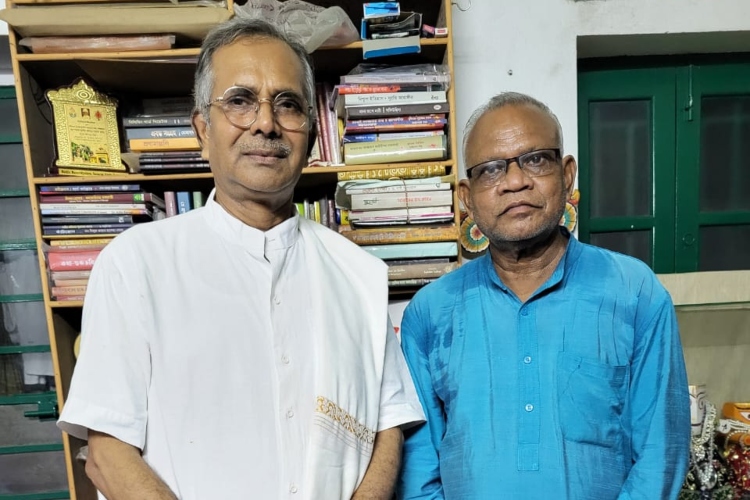
Prof Sheikh Manzoor Islam with the author
He says, “He has a total of 14 books on Jagannath.’ Among these books, ‘Shri Jagannath: Bengali Manas and Lokayat Jeevan’ is the most popular. Professor Sheikh Maqbool Islam has also done research work on Ramakrishna Paramhansa and Sri Chaitanya.
Professor Islam is doing a new research on the spread of Vaishnavism in South Asia and South East Asia
He considers Jagannath, Sri Chaitanya, Tulsidas, and Guru Granth Sahib as his idols, and is currently researching ‘How did Sri Jagannath and our Vaishnavism reach South Asia and South East Asia?’
These countries include the Philippines, Cambodia, Thailand, Indonesia, Malaysia, Sri Lanka, Bangladesh, Nepal, Myanmar, Singapore and Japan. He says, “I have been to some of these countries. Some are still left. I have been engaged in research for a long time.”
Prof Sheikh Maqbool Islam eats vegetarian food. Leaving his library with countless books, I remembered the following lines of Iqbal Sajid:
Suraj Hoon, Zindgi ki ramak choor jauga; Mein Doob bhi gaya tou shafak chod jaonga
(I am the Sun, I will leave behind the joy of life. Even if I set, I will leave behind the dawn)
source: http://www.awazthevoice.in / Awaz, The Voice / Home> Story / by Jayanarayan Prasad, Kolkata / August 18th, 2024
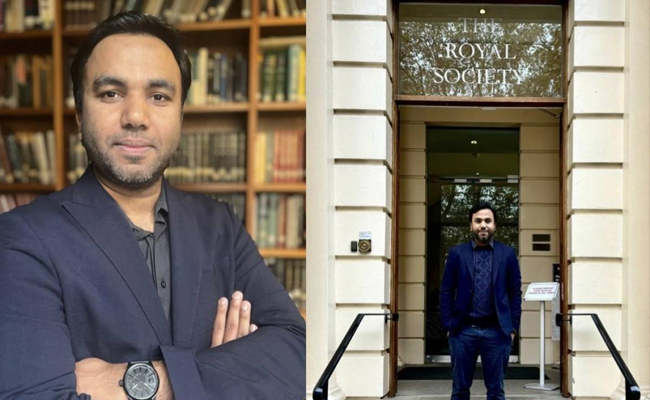
Dr. Safeer CK, a distinguished physicist from Kerala and faculty member at the University of Oxford, has been awarded the esteemed Royal Society University Research Fellowship for 2024. This recognition comes with a significant funding grant of £1.85 million (approximately Rs 19.73 crore).
A pioneer in spintronics, Dr. Safeer’s groundbreaking research in nanomaterials, just one atom thick, aims to revolutionize next-generation electronics, including brain-inspired computing architectures. He leads the Oxford-MIND group at the renowned Clarendon Laboratory in Oxford.
Hailing from Malappuram, Kerala, Dr. Safeer’s academic journey began at Mongam Ummul Qura Higher Secondary School and Morayur V.H.M. Higher Secondary School.
He later pursued Physics at Delhi University’s Hansraj College, followed by postgraduate studies at Joseph Fourier University in France with scholarships from the Indian and French governments. He completed his doctorate in Nanophysics at France’s Spintec Laboratory, part of the French Atomic Centre.
Dr. Safeer’s accolades include the prestigious Marie Curie Individual Fellowship and three international patents in magnetic memory technologies. He has also published 18 research articles, including papers in Nature journals, and teaches Physics and Electronics at Oxford.
The Royal Society Fellowship, one of the highest honors in the scientific community, has previously recognized legends like Isaac Newton, Albert Einstein, Srinivasa Ramanujan, and C.V. Raman.
source: http://www.thehindustangazette.com / The Hindustan Gazette / Home> News> National> Kerala / by Shifa / November 19th, 2024
The Shaheen Group of Institutions is set to host a groundbreaking international conference on November 30 and December 1, 2024, in Bidar, Karnataka.
Touted as India’s first event of its kind, the conference aims to spotlight the contributions of Indian Muslims in critical sectors such as education, politics, media, economics, IT, social services, and madrassa education, envisioning their role in shaping a developed India by 2047, the centenary of the nation’s independence.
The conference will serve as a platform for thought leaders, intellectuals, and influencers from India and abroad to network and exchange ideas. Attendees will deliberate on the community’s potential to drive transformative change in various fields, aligning with India’s vision for growth and development.
This pioneering event highlights the Shaheen Group’s commitment to fostering dialogue and collaboration within the Indian Muslim community to contribute effectively to the nation’s progress.
source: http://www.thehindustangazette.com / The Hindustan Gazette / Home> News> Education / by Shifa (image source: shaheengroup.org) / November 27th, 2024
New battle-lines are being drawn in Parliament, and out of it, with waqf and its management at the centre of a major political slugfest.
New battle-lines are being drawn in Parliament, and out of it, with waqf and its management at the centre of a major political slugfest.
At this juncture, it is appropriate to recall the achievements of Hakeem Abdul Hameed, the founder of Jamia Hamdard, whose birth centenary was celebrated in December 2008, and the waqf he founded ~ the Hamdard (Waqf) Laboratories ~ is well into its ninth decade. Speaking during Hakeem saheb’s centenary celebrations at Jamia Hamdard, then Vice-President of India Hamid Ansari observed, “in our recent history Hakeem Abdul Hameed is probably the first, and the most successful, to resurrect the waqf concept in innovative ways so that a modern company was registered as a wakf institution whose income was to be used for public good in the areas of education, medical relief and the advancement of knowledge.
It was an important signal in the immediate aftermath of the painful Partition of India to thread together the religious element with socio-economic progress and alleviation of poverty.” The Vice-President added, “Since the 1930s and 1940s, over 25 educational research institutions were established, culminating in the Jamia Hamdard. The range is astounding ~ ranging from primary education to post-doctoral research, from Unani Medicine to Information Technology, from Islamic Studies to Business Management. Besides the university, the colleges and hospitals established for service to society, there are a set of institutions that bear testimony to his scholarly interests.
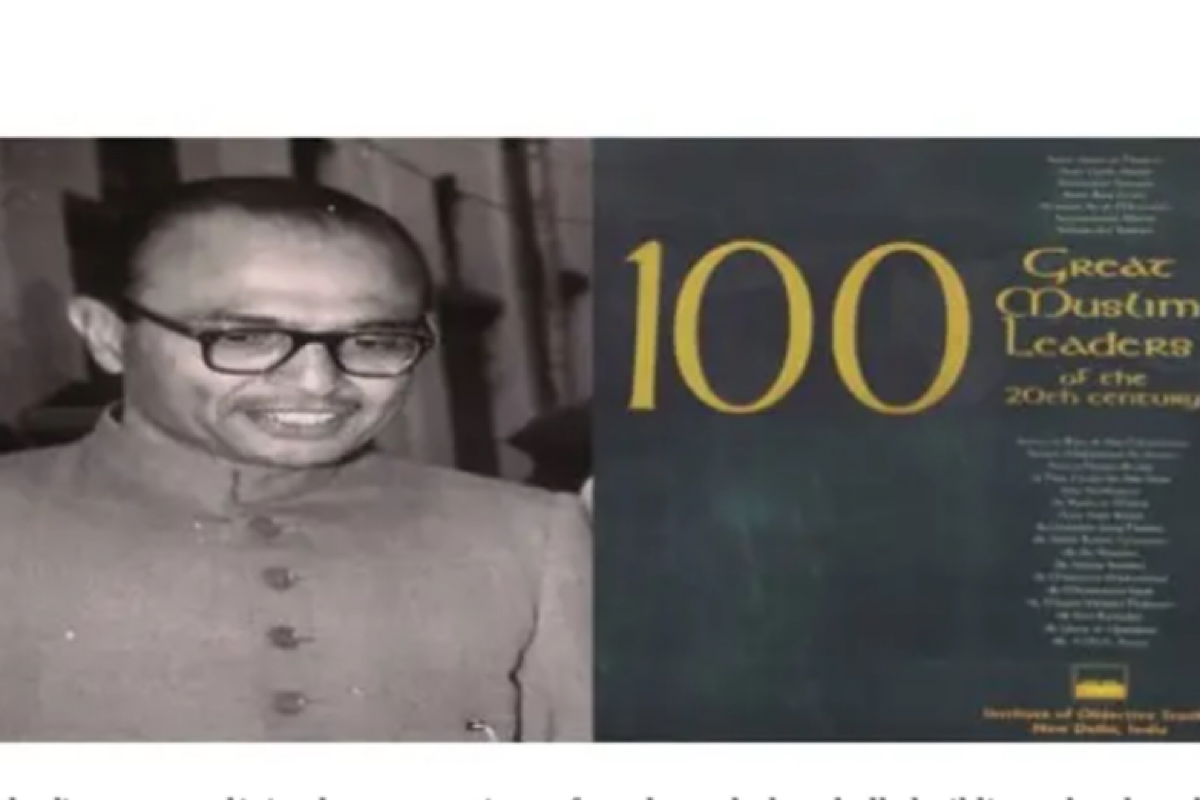
I refer to the Institute of History of Medicine, the Institute of Islamic Studies, the Ghalib Academy and the Institute of Federal Studies. Each of these has rendered significant service to scholarship.” Undoubtedly the list of achievements is long but as Hamid Ansari commented, “these achievements hold a mirror to the potential of what public-minded personalities can achieve through the institution of waqf for the socio-economic, educational and cultural betterment of the community. Future generations would behold Jamia Hamdard and Talimabad and wonder at the capacity, vision and dedication of an individual.” Truly so, for in ‘100 Great Muslim Leaders of the 20th century’, a publication of the New Delhi based Institute of Objective Studies (IOS), Dr Mohd Manzoor Alam provided a larger global context to understanding the achievements of Hakeem Abdul Hameed as an outstanding educationist and social reformer, along with his equally illustrious younger brother Hakeem Mohammad Said.
“In the face of formidable challenges which marked the lives of a selected 100 great Muslim men and women of the 20th century,” wrote Dr Alam in the preface, “their lives, struggles and contributions reflect the response of Muslims to the multiple challenges over the century…the ‘100 Great’ belonged to five continents and they came from different cultural and linguistic backgrounds, they were inspired by the eternal values and principles of Islam and the precepts of their illustrious forebears in the annals of Islamic history.” Through the tumultuous decades of the 20th century, Dr Alam observed that the ‘100 great Muslim leaders’ were unwavering in their “faith in the Holy Quran describing Muslims as ‘good people’, whose mission on earth is to help others live a meaningful life.
Even in the darkest hour the world of Islam was not plaued by a dearth of men and women who had the stature, mettle and competence to rise to the occasion. The two revered Hakim brothers ~ Hakeem Abdul Hameed and Hakeem Mohammad Said ~ who revived the Unani or Greco-Arab system of medicine and created two institutions, the Hamdard in India and its twin in Pakistan, are inspiring examples of leadership. They did not really belong to any one place. This is aggravated by Western colonial redrawing of the Muslim world map: Hakeem Abdul Hameed in India and Hakeem Mohammad Said in Pakistan were, in fact, two sides of a single sub-continental picture of Islamic excellence.”
The lifetime achievements of Hakeem Abdul Hameed were myth-busters: it had been an enduring myth of the 20th century that the Muslim world had been in deep slumber, their state of somnolence stretching back to centuries. Said Dr Manzoor Alam, “the 20th century instead turns out to be a period of extraordinary intellectual, moral and social awakening and struggle across the Muslim world with societies from Malaysia to Morocco trying hard to reform, promote and practice Islam as a living reality that could guide them through difficult times.” The Hamdard story began over a century ago when Abdul Hameed’s father, Hakeem Hafiz Abdul Majeed, established the Hamdard Dawakhana in 1906.
The vision was implicit in the name. Hamdard means ‘the sharing of pain’ and willingness to mitigate it was to be the motto of future generations as well. The vision was also to break the exclusivity of medicinal preparation of each Unani Hakim and make it available to the masses through modern laboratories along scientific lines. A traditional system of medicine was thus modernised with a nationalist inspiration and an indigenous base. “For this reason, Hakeem saheb can rightly be called a Mujaddid (or reformer) of Unani medicine,” said Ansari in the centenary speech.
Writing in ‘Muslim Mirror’, Abdul Rashid Agwan detailed the story. After Independence in 1947, Hamdard University or Jamia Hamdard has been the first institution that was established and managed on the basis of waqf income. In 1948, the manufacturing and selling unit of Hamdard Daw – akhana, Hamdard (Waqf) Laboratories, was converted into an endowment. Its deed dated 28 August 1948 provided for “Qaumi Income” (Public income) and “Khandani Income (Family income). However, the concept of family income was abolished by a declaration of the Settler/ Founder-Wakif Mutawalli in 1985, with retrospective effect from 1 January 1973. From the profits of the company, Hamdard Tibbi College was set up in 1963 in Old Delhi which later shifted to its present 90-acre campus in Tughlaqabad. In order to effectively manage and utilize the income accrued from Hamdard Waqf Laboratories for the promotion of its objective, Hamdard National Foundation was created on 12 May 1964 to disburse company profits to promote interests of society.
All profits of the company were obligated to go to the Foundation. Both Hamdard and the Foundation were registered under Section 12A of the Income Tax Act. Coinciding with the establishment of the Hamdard National Foundation in India, Hamdard Waqf Laboratories Pakistan also formed Hamdard Foundation Pakistan the same year. Its founder, Hakeem Muhammad Said, expressed the mission in these words, “Hamdard … has chosen to serve through activities for the promotion of good health and education ~ the twin pillars of progress.” Through the 1950s and 60s, when educational institutions namely, Indian Institutes of Technology, Indian Institutes of Management, AIIMS and Jawaharlal Nehru University ~ were being established with Government resources and with the focus of providing a new nation the benefit of modern science and education, Hakeem Abdul Hameed was single-handedly building schools, colleges and the university under the Jamia Hamdard banner, relying on internal resources of Hamdard Waqf Laboratories, and focused on rejuvenating the millennia-old Greco-Arab medicine which came to be simplistically known as Unani medicine. In this long process of reviving ancient knowledge, Hakeem saheb’s original contribution was the use of modern scientific methods and technology for the standardisation and manufacture of Unani medicine. “Quite early in life, when he was studying medicine at the Tibbia College, he was deeply impressed by the systematic and methodical approach of Hakeem Ajmal Khan towards the classification and standardisation of Unani medicines,” the IOS publication narrated. The Hakeem brothers travelled across Asia and Europe in the 1950s closely observing modern methods and techniques of drug making. They were convinced of the relevance and necessity of using modern technology for medical experimentation and manufacture of Unani medicines. At Hamdard Laboratories, Hamdard University, Hamdard Nursing Home and Majidia Hospital, these modern methods and technology were put into good use, ensuring the regimen of Unani system of medicine could co-exist with modern science and technology.
“This integrated, holistic approach to diagnosis and therapy is one of the most original and outstanding contributions of Hakeem Abdul Hameed,” the IOS publication stated. Eleven books on Unani medicine: Arab medicine and its relevance to modern medicine; Earth, elements and man: Search for a solid foundation of the theory and practice of medicine; and the magnum opus Qarabadin-e-Hamdard or Hamdard Pharmacopoeia are testimony to Hakeem Abdul Hameed’s medical observations, experiences and researches. In the 1980s, he initiated path breaking research on Ibn Sina’s Al-Qanun fit-Tibb or The Canon of Medicine. The 3-volume study was made available in multiple languages, including English.
Several national and global awards were bestowed on Hakeem Abdul Hameed who lived an austere life on campus till the age of 91, with a Gandhian determination to build the new nation through promotion of medicine, modern education and public charity. Like Sir Syed Ahmed Khan and Hakeem Ajmal Khan, Hakeem Abdul Hameed remains a towering personality whose contribution to modern education and medicine is second to none. It is in the domain of waqf management that Hakeem saheb gave modern India a new path for sustainable, equitable development.
(The writer is a researcher writer on history and heritage issues and a former deputy curator of Pradhanmantri Sangrahalaya)
source: http://www.thestatesman.com / The Statesman / Home> Opinion / by Raju Mansukhani, New Delhi / October 07th, 2024
Jamia Millia Islamia’s Professor Mohammad Zahid Ashraf has been honoured with prestigious Indian Council of Medical Research (ICMR) award for research on oxygen regulation.
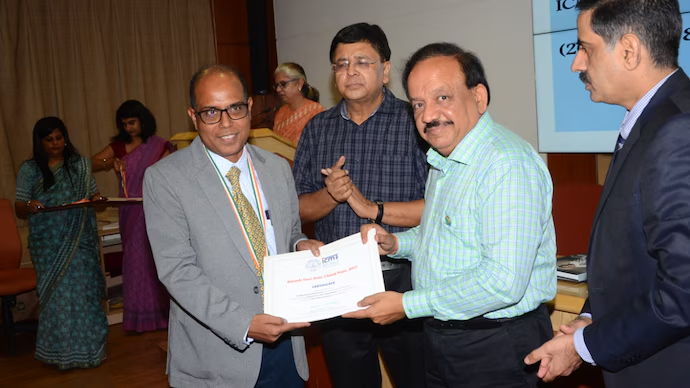
Prof. Mohammad Zahid Ashraf receives Basanti Devi Amir Chand Prize, an award instituted by Indian Council of Medical Research (ICMR).
Mohammad Zahid Ashraf, professor in the Department of Biotechnology, Jamia Millia Islamia(JMI) has been awarded the prestigious Basanti Devi Amir Chand Prize, an award instituted by Indian Council of Medical Research (ICMR). The prize was given by Union Health Minister, Harsh Vardhan yesterday in recognition of Prof. Ashraf’s research excellence.
Basanti Devi Amir Chand Prize is one of the earliest instituted awards of the ICMR in the year 1953 for the significant research contributions in the field of biomedical sciences.
What was Prof Ashraf’s research famous for?
Prof. Ashraf’s lab has been instrumental in understanding the role of low oxygen due to high altitude in the development of cardiovascular disorders including blood clotting.
The significance of research of cellular reactions in response to low oxygen could be analyzed from the fact that this year’s Nobel Prize committee for physiology or medicine recognized the potential of the discovery of how cells sense and adapt to oxygen availability and jointly awarded the three scientists for their landmark discoveries in this field. Oxygen is required for the process of oxidation that produces energy. Therefore, its short supply might result in lung damage, brain dysfunction, heart problems and many more.
” Prof. Ashraf’s research has provided an insight into the role of oxygen-regulated mechanisms behind blood clotting disorders and demonstrated the detrimental effects of low oxygen availability at high altitude.
About Mohammad Zahid Ashraf
Dr Ashraf is Fellow of both National Academy of Sciences and the Indian Academy of Sciences. He is also the recipient of prestigious DBT’s S Ramachandran-National Biosciences Award 2018. He is currently holding the position of Director (Academics) in the university.
Prior to his joining at JMI, he was Head of Genomics Division at Defence Institute of Physiology and Allied Sciences (DIPAS), Defence Research and Development Organization (DRDO), Delhi.
source: http://www.indiatoday.in / India Today / Home> News> Education> Today> News / by India Today Web Desk / October 17th, 2019
Muhammad Musthafa is an award-winning director and actor who predominantly works in the Malayalam film industry.
Muhammad Musthafa is an award-winning director and actor who predominantly works in the Malayalam film industry. The critically acclaimed actor-turned-filmmaker made his directorial debut with the 2020 film Kappela. The film earned Anna Ben the Best Actress Award and Musthafa the Best Debut Director Award, respectively, at the 51st Kerala State Film Awards. Additionally, its production design by Anees Nadodi was honored at the 68th National Film Awards. Musthafa also won a special mention for his performance in the film Ain at the 62nd National Film Awards.
Musthafa’s second movie, Mura, with all its tropes of a gangster drama — revenge, high-end action, and bloodshed — is running in theatres now. The film features Suraj Venjaramoodu and All We Imagine As Light-fame Hridhu Haroon in the lead roles. Mura also stars Maala Parvathi, Kani Kusruti, Kannan Nayar, among others.
Musthafa talks to Maktoob’s Nikita Ramanarayanan:
Nikita Ramanarayanan:Mura takes a raw, intense portrayal of violence and revenge, marking a shift from the subtle suspense and drama in your debut work Kappela. What inspired this gritty new direction?
Muhammad Musthafa: After Kappela, I wanted to explore something more visceral and intense. The scriptwriter and I had been discussing various subjects, and ultimately, we felt most drawn to a story rooted in the raw realities he had witnessed in his hometown. He brought with him a wealth of experiences and observations from his own community events and stories he had seen or heard, each carrying an edge of realism and grit.
By weaving these together, we shaped a story that felt grounded yet powerful. This approach not only only allowed us to create a narrative that is genuine and impactful, but also gave us the opportunity to work with new talent.
Nikita:Mura features elements of Trivandrum’s local culture, especially in its use of dialect and slang. Could you share how you approached the cultural aspect of the film and why it was important to root the tale in Trivandrum?
Musthafa: Our screenwriter, who is from Trivandrum, drew heavily from his own observations of the city. The culture, stories, dialect, colloquial slang, and mannerisms of the people he grew up around naturally influenced the story’s setting and language, adding a layer of authenticity that we aimed to preserve, resulting in a narrative that feels raw and relatable.
However, while the essence of Trivandrum is embedded in the film, we wanted to creatively craft a story that could resonate with it. By setting Mura in Trivandrum, we were able to showcase a side of the city that often goes unseen, using the dialect and local flavor to bring a distinct realism to the characters and story.
To further root the film in Trivandrum’s culture, we chose actors with ties to the location. We held auditions there to find emerging talent who could bring the local nuances to life. Also we were fortunate to have talented actors like Hridhu, Suraj, and Mala Parvathy, who also share ties with Trivandrum. Their performances brought depth to the characters, helping us capture the city’s spirit in a genuine way.
Nikita: You brought in new talents for this film. The friendship between the four main characters is central to the plot, how did you approach directing this group dynamic?
Musthafa: Working with fresh talent was a rewarding experience, and I was genuinely impressed by how quickly they adapted to the demands of their roles. Although most of them were newcomers, they didn’t let that hold them back. To build their confidence and help them develop a natural rapport, we organized a 10 day workshop before filming. This preparation was essential for addressing any initial camera fear, allowing them to fully embrace their characters and form a close bond as a group.
Hridhu, the only one with prior film experience, played a key role in this process. We brought him into the workshop, so he could help guide and support the others, allowing them to feel more comfortable in front of the camera. His presence was a big boost to their confidence, and it set the tone for the group dynamic we wanted to achieve. Suraj also visited the workshop to interact with the cast and share his insights.
By the time we started, the actors had developed a beautiful camaraderie that felt genuine and natural on screen. Their friendship became the heart of the film, adding depth to the story. Despite being new to acting, they brought a raw, candid energy to their roles.
Nikita: The film incorporates powerful visual motifs that enhance the storytelling and highlight the film’s deeper themes. Could you talk about the visual choices and how they contribute to the overall mood of the story?
Musthafa: The pre production phase was absolutely key in developing the visual motifs that shape Mura. We dedicated significant time to brainstorming and experimenting with visuals that could subtly convey the film’s deeper themes and emotional tone.
There was a strong sense of dedication across the team, with everyone committed to making the film as visually and emotionally compelling as possible. By the time filming began, the visual motifs had become an essential storytelling tool, allowing us to communicate the film’s underlying themes.
Nikita: character of Ani, portrayed by Suraj Venjaramoodu, acts as a mentor figure for the younger men in Mura. And why did you choose to place Rema Devi, a female character, as his superior in the power hierarchy?
Musthafa: When the scriptwriter first shared the story, Rema Devi’s character already stood out as a strong, commanding presence. Her role was envisioned with a sense of dominance and authority. In many recent cases, there’s often a significant, sometimes unexpected, influence of women in positions of power or control.We wanted to reflect this complexity.
Rema’s position not only adds depth to the narrative but also challenges typical power structures. Her authority brings a new layer to the story. Ani, a seasoned figure himself, respects and even defers to Rema’s judgment, reflecting her formidable influence.
In developing Rema’s character, we aimed to craft a figure who could embody both strength and a touch of mystery, someone whose actions and decisions are respected, even if they may seem unconventional. Audiences have started taking notice of Rema, which is encouraging.
source: http://www.maktoobmedia.com / MaktoobMedia.com / Home> Film & TV / by Nikita Ramanarayanan / November 17th, 2024
Sania Khan, originally from Shahjahanpur, Meerut, Uttar Pradesh, has been honoured with the prestigious SHE INSPIRES AWARD 2024 in the Rising Star category in the United Kingdom.
Sharing his pride, Sania’s father, Mehr Alam Khan, Editorial Consultant at Cineink, London, said, “This remarkable recognition reflects her inspiring journey marked by resilience, determination, and a commitment to creating meaningful change.”
Sania’s journey began in the small village of Shahjahanpur. Despite facing personal challenges, she founded the Silver Lining Fostering Agency in London, a leading organisation dedicated to transforming the lives of vulnerable children and empowering foster carers.
Under her leadership, Silver Lining Fostering was awarded an “Outstanding” rating by Ofsted in 2024, a testament to its excellence in providing safe, nurturing homes and comprehensive support for foster families. The agency supports over 60 foster families and 70 children across London and the Midlands.
Sania said, “The seeds of my dreams were sown in my village. Despite limited resources, I learned that with determination and vision, the seemingly impossible can be achieved. Those lessons inspire me daily to create opportunities for others, especially vulnerable children.”
Sania completed her early education at Dewan Public School in Meerut and pursued higher studies at Jamia Millia Islamia, New Delhi. In 2018, she founded Silver Lining Fostering, which focuses on tailored support for foster carers and achieving positive outcomes for children, particularly those who have faced immense adversity.
On receiving the award, Sania said, “This recognition isn’t just about me; it’s about the incredible foster carers, staff, and children who inspire me every day. Together, we’ve shown how fostering can change lives. I hope this motivates more families to step forward and provide loving homes for children in need.”
Her agency stands out for its innovative Wrap Around Service and its commitment to recruiting foster carers from diverse and underrepresented communities. Sania’s leadership has not only empowered carers to achieve personal milestones like financial independence and home ownership but has also set new standards in foster care.
source: http://www.radiancenews.com / Radiance News / Home> Pride of Nation>Awards / by Radiance News Bureau / November 23rd, 2024
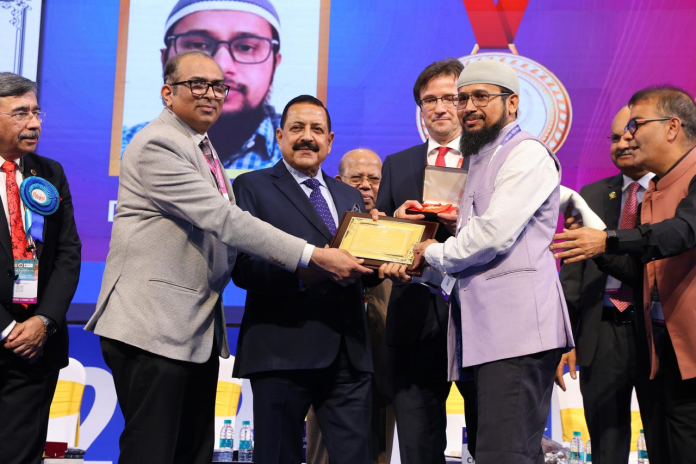
Dr. Hamid Ashraf, Associate Professor and former Director, Rajiv Gandhi Centre for Diabetes and Endocrinology, Aligarh Muslim University, has been honoured with the Best Innovation in Diabetes Care award at the annual conference of the Research Society for the Study of Diabetes in India (RSSDI).
The award was presented by Dr. Jitendra Singh, Minister of State for Science and Technology, Government of India during a ceremony held at Yashobhoomi, New Delhi.
Dr. Ashraf got the recognition for his ground-breaking research on “Machine Learning Techniques for Diabetes Detection Using Iris and Conjunctival Images.” He said that this innovative approach leverages artificial intelligence to enhance early diagnosis and management of diabetes by analysing subtle ocular changes linked to the disease.
He expressed gratitude to his co-investigators Dr. Nadeem Akhtar and Mr. Ehtesham Sana from Department of Computer Engineering, AMU for their contribution.
source: http://www.radiancenews.com / Radiance News / Home> Awards> Latest News / by Radiance News Bureau (headline edited) / November 22nd, 2024
An adaptation of Benyamin’s 2008 best-selling Malayalam novel, ‘Aadujeevitham: The Goat Life’, starring Prithviraj Sukumaran, follows the real-life story of Najeeb, a Malayali immigrant labourer in Saudi Arabia.
Music composer A R Rahman. | Photo Credit: Velankanni Raj B
A.R Rahman has won the prestigious Hollywood Music in Media Awards 2024 for the background score of Aadujeevitham: The Goat Life in the Independent Film (Foreign Language) category.
Director Blessy who received the award on Rahman’s behalf at the gala ceremony in Los Angeles shared the news with The Hindu.
The HMMA Awards are considered the bellwether award for the Oscars. Earlier this week, Blessy told The Hindu that he was holding screenings in the US to make a bid for the Academy Awards in the general category.
“I truly believe Rahman has woven magic with both the songs and the background score. The BGM alone captures the character’s struggle, the raw emotion of their fight for survival in the desert. In a way, the score itself tells its own story, mirroring the depth of the character’s emotions,” he had said.
In a strong field, Rahman was competing against Segun Akinola for Girl You Know It’s True, Arli Liberman and Tiki Taane for Ka Wahawhai Tonu, Hao-Ting Shih and Tae-Young Yu for Mongrels, Karzan Mahmood for The Seed of the Sacred Fig and Sandro Morales-Santoro for The Shadow of The Sun for the jury’s nod.
An adaptation of Benyamin’s 2008 best-selling Malayalam novel, the Malayalam film follows the real-life story of Najeeb, a Malayali immigrant labourer in Saudi Arabia. The film stars Prithviraj Sukumaran and Jimmy Jean Louis, K.R. Gokul and Amala Paul.
source: http://www.thehindu.com / The Hindu / Home> Entertainment> News / by The Hindu Bureau (headline edited) / November 21st, 2024