Category Archives: Arts, Culture & Entertainment

Dr Tausif Malik: Entrepreneur, maverick, evangelist and artist

Pune, MAHARASHTRA / Chicago,  U.S.A :

The new treasurer for Democrats Abroad India, Dr Tausif Malik is the founder of America’s largest community-based Spelling Bee competition (muslimspellingbee.com). The Indian-American social entrepreneur brings a tremendous amount of experience and knowledge to the job; he is the pioneer in creating branding through recruitment advertisement of IT clients in the mid-90s. Connected to India engaged with him to know about his journey from Pune to Chicago and back to Pune again. Here are the excerpts:
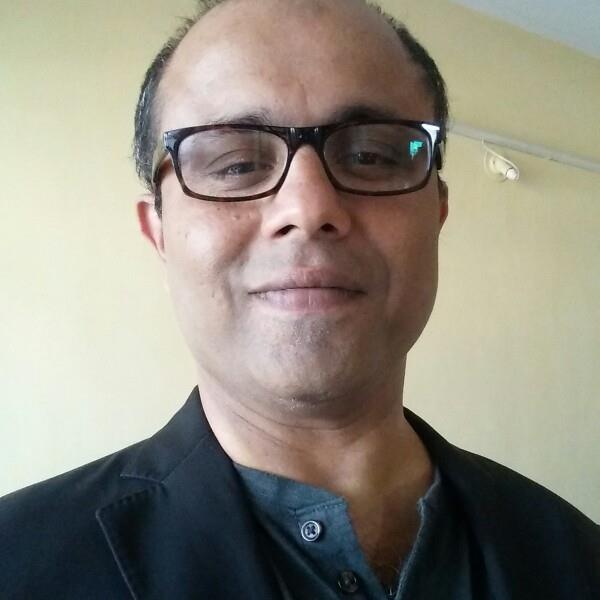
Dr Tausif Malik - treasurer for Democrats Abroad India.
Dr Tausif Malik – treasurer for Democrats Abroad India.

CtoI: Your LinkedIn profile says you are an entrepreneur, maverick, evangelist and an artist. How do you manage to be good at so many things?

Tausif Malik: According to me, all my personality attributes are interrelated; for example, one has to be a maverick to take the risk to be an entrepreneur, you need to be an artist to create an image about your work and evangelist to promote your work and business.

CtoI: What is your vision as the new Treasurer for Democrats Abroad India?

Tausif Malik: My vision as an elected board member for Democrats Abroad India (Democratic Party USA’s International chapter) is to create awareness amongst Americans living abroad that they can register and vote for city, state and federal elections through a vote by mail option. America is one of the few countries which offers this option to its citizens, so Americans living in any part of the world can participate in elections. Many Americans living abroad are not aware of these rights.

Currently, America is getting affected on a daily basis due to incompetent leadership. My hope is more Americans living abroad get registered and vote by mail and elect competent candidates.

CtoI: Please tell us in detail about your recent ventures; Muslim Spelling Bee, Muslim Science Bee, Muslim Math Bee, Muslim Geography Bee and Muslim History Bee.

Tausif Malik: The Muslim Spelling Bee was started in 2012 with the intention of being the first-ever spelling competition specifically meant for Muslim students. The competition is open to students of all ethnicities and religious denominations. The main impetus for creating the bee was to provide an opportunity for Muslim students between the ages of 8 and 14 to have such a contest.

All other major minority groups in the US have their own spelling bees, but Muslims did not, hence, I decided to go ahead and start one. It was during the month of Ramadan in 2011 that the idea for the spelling bee occurred to me. I started getting the word out with local friends and community leaders in the Chicago area, but soon found that I was being inundated with requests for more information from organisers around the country. This was surprising as I had only sent the information out to a few people in the local area. I really did not anticipate the kind of level and support this idea got from all over the US.

In 2012, the first iteration of the Muslim Spelling Bee was held, with 460 students participating from cities all over the nation. The bee currently takes place in 11 different cities, with some 55 community organisations coordinating their own regional competitions. These competitions are divided into four different groups, labelled A through D, and each one has several winners who rank from 1-3. Each of the groups is of a different age level: 0-7, 8-9, 10-11, and 12-14 years of age. The winners then advance to the championship round in Chicago.

Two contestants in 2013 were even Hindu students from India, a great sign of how widespread the reach and power of the spelling bee really is.

Dr Tausif Malik: Entrepreneur, maverick, evangelist and artist
Photo courtesy: Dr Tausif Malik

CtoI: You had your initial education from Pune, India and then you moved to Chicago, US, and now you are back to Pune. What brought you back to your roots? Please tell us about your journey and experiences.

Tausif Malik: I was born and raised in Pune (Maharashtra) and now I’m based out of Chicago. I did my schooling from Bishop’s School Pune, studied at Poona College (11th to M.Com) and Institute of Management Education, Pune (PGDBA). I did my Doctorate in Business Administration (DBA) from Argosy University, Chicago.

I emigrated to Chicago in 2007 to fulfil the dream of my late father Ata-ur-Rehman Malik, who believed that I can have a great future in the US. I returned to India in 2015 to take care of my ailing mother, during that time I launched various startup festivals, including the All India Muslim Business Startup Network (AIMBSN.com), GCC Startup Fest (GCCStartupFest.com), India Startup Fest (IndiaStartupFest.com), GCCStartup.News (GCCStartup.News) and Schoolpreneur.biz, in an effort to empower individuals to achieve economic liberation and benefit from India’s government initiatives Make in India, Digital India, Skill India, Standup India and Startup India.

CtoI: In a sentence describe your life as an Indian-American.

Tausif Malik: It’s actually a great combo, being part of India, the largest democracy, and America, the oldest democracy. I love both countries because they gave me a great platform to excel personally and professionally. Life is exciting as I am living as an American expat in India and in US, I was living as an Indian expat.

CtoI: Do you think that the xenophobia which has engulfed America, which started during the elections and continues post the election of President Trump, will settle down? Or is this the new America?

Tausif Malik: I don’t know how far this will go and how it will impact in the long term. But it has truly rallied Americans under one banner, and everyone is standing shoulder to shoulder with their fellow Americans. After the Muslim ban, Americans stood with their fellow American-Muslims across US. I have never seen this happening anywhere in the world. This xenophobia, in fact, has pushed many American-Muslims to contest city, state and federal elections and they have got a lot of support from fellow Americans. I also contested for the same reason.

CtoI: You did your doctorate in Chicago. Please share your achievements and experience as an Indian-American.

Tausif Malik: I was the pioneer in creating branding through recruitment advertisement of IT clients in mid-90s. I had developed and executed branded recruitment advertisement campaigns for Infosys, Geometric Software Services, Scala Mindworks, ITB India, Veritas Software India and others. I had co-founded Crossover Software with India’s no #1 pop star Lucky Ali and later moved to Sultanate of Oman and established Oman’s first PR agency SIMPA PR and Press Club of Oman. I was invited to co-author a book Doing Business with Oman, which has been selling since 2002. I headed major advertising agency networks in the Middle East and India. I teach at major MBA and MassComm Institutes, and a speaker at major startup events and mentors startups.

My Achievements:
1.
Nominated and shortlisted for prestigious Ellis Island Medal of Honor, USA 2016.
2. Past Nominated for Sheikh Muhammad Al Makhtoum ruler of Dubai, UAE promoted Prestigious Global Islamic Economy Award – Dubai Government in association with Thompson Reuters.
3. Panellist with The Guardian Newspaper UK.
4. Community Member on Illinois Muslim Council by Governor Pat Quinn.
5. External Review committee member University of Wisconsin School of Architecture.

CtoI: You are inclined towards start-ups. Can you share your ideas on marginal groups (Dalits and Muslims) still lagging behind?

Tausif Malik: Yes, startups help the youth and individuals through empowerment, as it provides employment and a source of income. But nowadays, the way they are established and operated is highIy unprofessional as many are there for the quick money. But consolidation will happen before long and they will change from boys to men.

As per the Indian census, Muslims constitute 13-15 % of the population and they best way to connect them to the mainstream is through the Prime Minister Narendra Modiji’s policies such as Make in India, Digital India, Skill India, Standup India and Startup India.

These programmes can help Muslims in India to earn income, create income and create economic growth. I have hosted two different events in 2016 and we have generated a large business amongst the attendees. Our next event, All India Muslim Business Startup Network (AIMBSN.com), will be hosted in July 2017 in Jaipur. We are also setting up incubators and innovation at minority institutions, so we can inform people about the startup ecosystem, Make in India, Digital India, Skill India, Standup India and Startup India and enrol more Muslim entrepreneurs.

Also, we will be hosting All India Muslim Business Startup Network (AIMBSN.com) at global locations where are sizeable Indian Muslims, such as London, Dubai, New York, Chicago, Singapore and Australia. As many Non-resident Indians (NRIs) Muslims want to establish businesses in India, invest in India and support Indian Startup Ecosystem. Hence, our All India Muslim Business Startup Network (AIMBSN.com) connects the Indian Muslims diaspora with entrepreneurship & Indian Startup Ecosystem.

source: http://www.connectedtoindia.com / Connected To India / Home> News> USA / by Garjma Kapil / April 20th, 2017
NRIF felicitates Mrs. Zeenat Jafri, Abdulrahman Saleem for awards

Riyadh, SAUDI ARABIA :

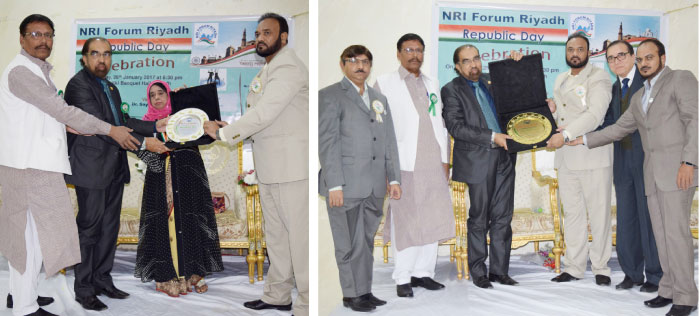
NRIF felicitates (Left) Mrs. Zeenat Jafri, (Right) Abdulrahman Saleem for awards
NRIF felicitates (Left)
Mrs. Zeenat Jafri, (Right) Abdulrahman Saleem for awards

Riyadh :

The NRI Forum (NRIF) Riyadh celebrated the 68th Republic Day of India with fanfare here. Patriotic songs and popular Bollywood numbers by eminent singers and the felicitation of Pravasi Bharatiya Sammam and Pravasi Excellence Award winners marked the celebration.

Mrs. Zeenat Jafri was felicitated by NRIF for her latest accomplishment of receiving the Pravasi Bharatiya Samman Award by Indian President Pranab Mukharjee in India. Terming her as the torch-bearer of knowledge and education in the Kingdom, Vice President NRI Forum Dr. Sayeed Mohiuddin said, “Selfless service and utmost dedication are the words that truly describe her.”

“At the time when expatriate community in the capital did not have any educational facility for children of Indian expatriates, Mrs. Jafri ventured into this field by making a small beginning. An educationist herself, she started a school for Indian children at her home. The school, which was established with the blessings and permission of Mrs. Indira Gandhi, groomed by Mrs. Jafri is now known as International Indian School Riyadh (IISR) and is one of the prominent Indian community schools in Saudi Arabia. She was the principal of the girls section of IISR from Aug 1982 to May 2014,” Mohiuddin said.

After receiving the memento of appreciation from eminent community leaders Mohammed Abdulrahman Saleem, Mohammed Quaiser and Syed Akram Mohiuddin, Mrs. Jafri thanked NRIF for the honor and Indian Embassy officials for recommending her name to the Indian government for the prestigious award. She highlighted the importance of education and stressed on the necessity for all to gain knowledge and education. She appreciated the activities of NRIF and assured her support in all possible ways.

Chief Guest Mohammed Abdulrahman Saleem, president Hindustani Bazm-e-Urdu Riyadh, was felicitated by NRIF for receiving the Pravasi Excellence Award by the Confederation of Telangana Associations (COTA) in Hyderabad. A memento of appreciation and floral garland was presented to him. COTA conferred on him this award in recognition of his continuous services spread over four decades.

He founded different professional and cultural organizations and worked for the promotion of Urdu language and literature. An ardent lover of Urdu language and literature, his passion is to keep Deccani Tahzeeb alive and see it flourish.

Saleem thanked the NRIF and highlighted his activities and accomplishments during his long stay in the Kingdom.

Guest of Honor, President Tanzeem Hum Hindustani Mohammed Quaiser congratulated Mrs. Zeenat Jafri and Abdulrahman Saleem for achieving eminent awards.

President NRIF Syed Akram Mohiuddin highlighted the activities of NRIF and said the forum is involved in various activities since its inception, including educational, sports, cultural, religious and other social activities. The memorable ghazal nite by Zulfiqar Ali Khan was a grand success and was very much applauded by the expatriates in the Kingdom.

Eminent Singers of “NRI Melody Makers” — Rahmat Ali Khan, Abdul Qadeer Ali Alvi, Syed Riyaz, Muneer Ahmed and Miss Shreeja Janardhan presented melodious songs to make the evening memorable.

A young student of Al Yara International School Aswin Siva Prasad addressed the gathering on the Republic Day of India and its importance.

General Secretary Nooruddin Jahangeer and Vice President Cultural Affairs Shakeel Mah handled the overall arrangements.

source:  http://www.saudigazette.com.sa / Saudi Gazette / Home / February 14th, 2017

‘Diversity in Portrait’ a delight for art connoisseurs

Kurnool, ANDHRA PRADESH  / Sharjah, U.A.E :

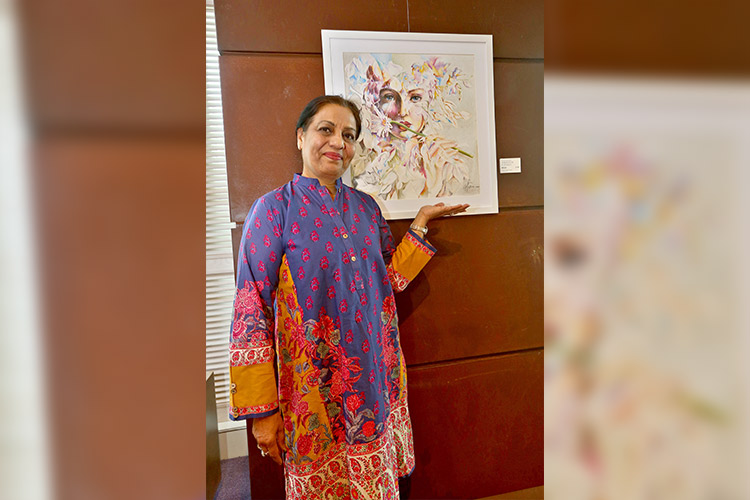
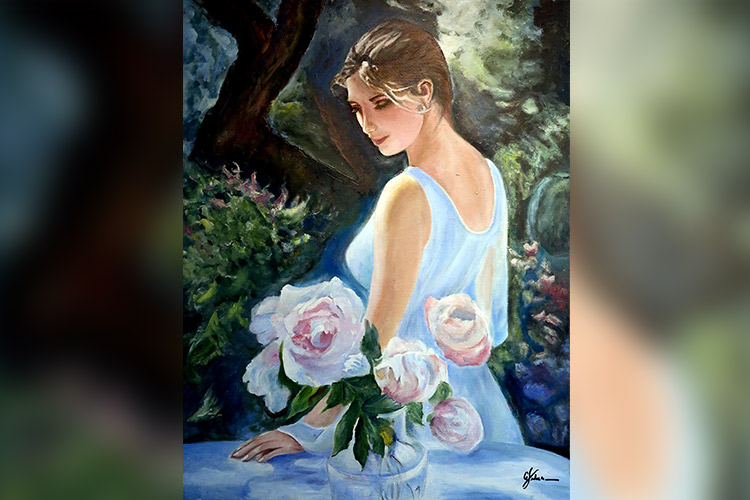
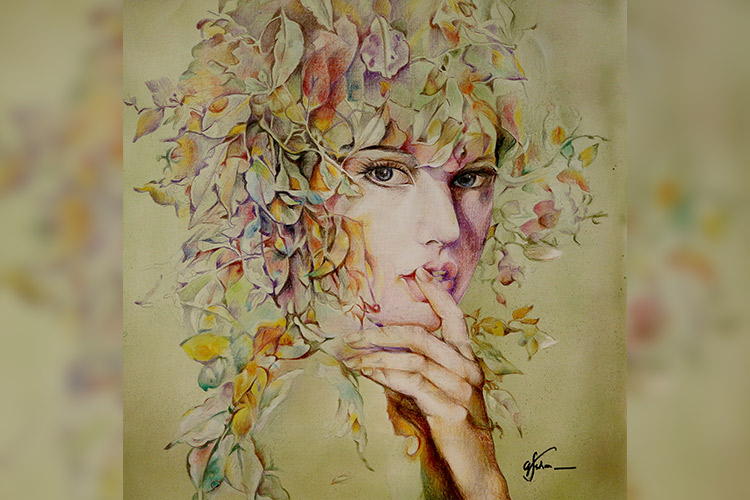
Artwork by Indian artist Afshan Quraishi displayed in Dubai. Photographer: Kamal Kassim/ Gulf Today

Dubai :

While walking at the Z Lounge of Four Points by Sheraton, Dubai, visitors gravitate towards the art works gracing the walls of the lounge. Each and every artwork mesmerises you and makes your stay pleasant. As you watch, adore, and pass by these paintings and artworks, curiosity to know more about the artist grows very strong and you get a desire to meet the mind behind these wonderful works to appreciate the artist and her artworks.

But you will be really surprised and amazed to know that these artworks are created by an Indian artist, Afshan Quraishi, whose journey is also very appealing and inspiring. She started her professional journey only after her kids grew up and settled in their lives.

Afshan can be considered a born artist. Without having any formal education in the subject, she does magic with her hands. When did she realise that she has an art in her?

She said, “It was my dad who noticed that I was a good artist. I was doing one of my science projects during my college days and he looked at my finished work and appreciated that. That time only my dad decided to get a coach for the art.

“My father, who himself comes from a royal family of Kurnool, Hyderabad, India, was very much into the art himself.”

Afshan Quraishi with one of her artworks

My father introduced me to a very famous artist, Azeez Azmi Saheb, who was my mentor for fine arts. Azeez Azmi was the founder of The Fine Arts Society in Kurnool, my hometown, she added.

Afshan feels privileged to be mentored by him. She said, “He was a harsh critic and encouraged us to be self-critical of our work. He was a master in portraits in oil.”

Recalling her master’s words, she said, “He would always tell, ‘Everyone can paint but you need a lot of patience and don’t expect instant gratification. Be your own judge and critic’.”

He would come every day to her house to coach her sister and her until she graduated and married.

A postgraduate in science, Afshan’s training under the able master ended soon after her marriage.

Soon after her marriage she landed in the UAE leaving her passion for the arts behind to begin a new journey of life.

Sharing her experience of arriving in the UAE in the early 80s, she said, “I have been here for four decades and kept on travelling back and forth to India.”

Meanwhile, Afshan dedicated herself completely to her family. She got busy into making her house a beautiful place. She considered her house a canvas where she wanted to see her son and daughter’s dream painted and fulfilled. And she succeeded in doing so.

Afshan can be considered a born artist

She was so occupied with her two kids that she did not even look back at the brush and paints which she had left long ago.

When did she embrace the canvas and brush to paint a beautiful journey of an artist which was unattended in pursuit of looking after her family?

She said, “My kids went abroad to study leaving me alone. So it was a very lonely time for me. It looked like my children grew up very fast. So I started sketching my children in order to get connected with them. Then I started oil portraits and acrylic and that was the beginning of my new innings.”

Sharing her experience of starting her journey of rediscovering she said. “I met a beautiful lady in Dubai who was organising group shows at an Italian café. She saw my artworks and encouraged me take part in a group show. Though I was not confident but to my surprise two of my paintings got sold the same evening and that was a big inspiration for me.”

I participated in World Art Dubai with the same group three years ago and I moved ahead, she said.

Talking about her solo show “Diversity in Portraits by Afshan Quraishi,” at Z Lounge at Four Points by Sheraton, Dubai, she said, “This is my second solo exhibition which started on March 17 and will continue till May 31. I want to thank Anu Van Der Sande and Nakul Ankolikar for their wonderful opportunity they have provided me.”

Frida Kahlo and Rembrandt are her all-time favourite artists. “I copied a lot of Rembrandt’s work while I was learning the ropes of art.”

When asked to look at her journey, she said, “People around me love my work. They always say you have talents, so keep doing the work and never give up.”

A resident of Sharjah herself, while praising the art scene in Sharjah, she said, “Sharjah has lots of beautiful places, like Sharjah Art Foundation and Maraya Art Centre. Both the destinations are fantastic for artists. It is a great place for emerging artists like me.”

Sharing her daily routine, she said, “I have a discipline. I spend 2-3 hours every day in my studio. I do something every day. I make sure I dedicate some time for art.”

Calling herself a passionate traveller, she said, “I have travelled all over the world. Travelling is something like an art which gives your mind an opportunity to think more.”

Praising the artworks, Anu Van Der Sande, Public Relations and Marketing Manager of the hotel said, “These are great pieces of work. People who come here always appreciate these paintings. Lots of people ask about these artworks.”

source: http://www.gulftoday.ae / Gulf Today / Home> Culture / by Raghib Hassan, Staff Reporter / April 03rd, 2019

Indian artist Haafiza Sayed’s ‘Towards Abstraction’ is a visual treat for art lovers

Mumbai, MAHARASHTRA / Dubai, U.A.E.  :

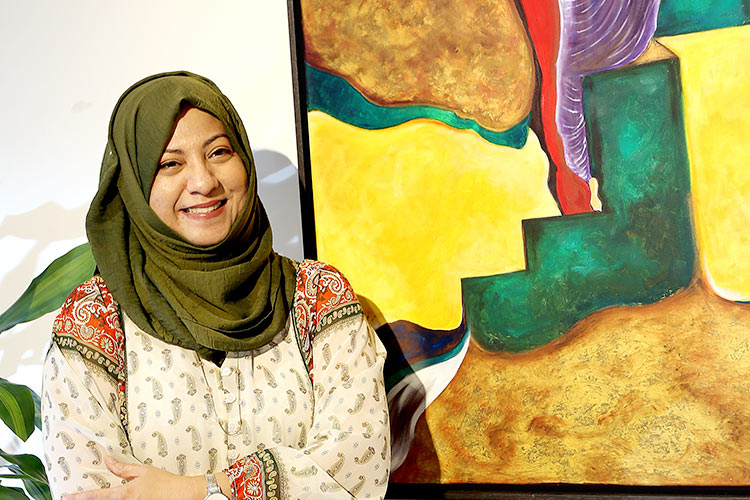
Haafiza Sayed poses next to her artwork in Dubai. Photographer: Kamal Kassim/ Gulf Today

While walking through the Studio Seven Art Gallery, you are forced to pause, click, and appreciate the artworks, which explains a glorious journey of an Indian artist, Haafiza Sayed, who has the distinction of having studied at the JJ School of Art, Mumbai, India. The JJ School of Art, Mumbai, India is one of the finest institutions in the country and is widely respected for its illustrious alumni. World-renowned painters like M F Husain and Jatin Das, Bollywood actors Amol Palekar, Nana Patekar and many more luminaries have been associated with it. If you look at the works of Haafiza, you will instantly understand that she too carries the signature of that institution.

Born and raised in Mumbai, India, she belongs to an illustrious family of writers and artists. She is also a trained interior designer and has worked extensively in this field in the early days of her career. Having a passion for art since childhood, she started painting professionally only a decade ago, after arriving in Dubai. Talking about that she said, “Had I not come to Dubai, I would not have taken up my painting. I got into serious painting only after coming to Dubai. Earlier I only had one exhibition, while I was in another country. This exhibition is the my journey in Dubai and of my art.”

_______________________________

“Dubai has opportunities for all levels of artists. You get to participate in group shows and exhibitions. You also get lots of encouragement.     Haafiza Sayed

______________________________

Dubai is considered a paradise for artists and art lovers. Praising the Dubai art scene, she said, “Dubai gave me opportunities. I participated in lots of group works and exhibitions. Once I also worked with the Sharjah Museum of Islamic Civilisation and that was a very long exhibition. It was a year-long exhibition and was well received by the people here.”

She added, “Dubai has opportunities for all levels of artists. You get to participate in group shows and exhibitions. You also get lots of encouragement.”

So armed with full-on encouragement, she decided to go ahead with her childhood passion.

Haafiza’s solo art exhibition, “Towards Abstraction,” at Studio Seven, Business Bay, Dubai, opened on April 10 and will continue till April 24. The exhibition reveals close to 30 paintings that represent the journey of an artist in different phases. She received lots of appreciation on the very first day of the exhibition.

While sharing her journey, she said, “I took up art very late in my life. I was pursuing an interior designing job because that was my family business. My father was also an artist but he had stopped painting and started the business of interior designing. So I did the same for a very long time until I landed in Dubai.

“Despite being away from serious painting for a very long period of time, the art in me and training which I had from JJ School of Art stayed with me like a shadow and never went away from me, though I would paint and sketch at home in my free time.”

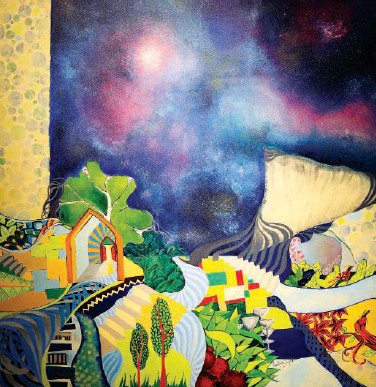
Haafiza Sayed's artwork is on display at a gallery in Dubai
Haafiza Sayed’s artwork is on display at a gallery in Dubai

A well respected artist, she is a very familiar face in the UAE art circuit. Recalling her childhood, she said, “As a child, I was born into the family of an artist. I picked up the brush at the age of 3 or 4. My dad was there to guide me. I received education at home as well as in the university.”

Haafiza comes from a family of artists and laureates. Talking about that, she said, “My father was a writer himself. All my aunts from my father’s side were writers. So, art and culture, literature, were in the family.”

When asked how she sees herself as an artist, she said, “I was actually a surrealist, that was my style from the beginning. JJ School of Art teaches you to follow realism. You get realistic elements inculcated during your stay at the college. But gradually along the way I moved away from realism to landscape art. Though you can still find reality in my works, I am also enjoying landscape art.

“I travel a lot. I love to travel. I love capturing the landscape. I can sit at a place and observe for hours and hours and this helps me in drawing landscape art,” she added.

Praising her learning at the JJ School of Art, she said, “I am fortunate enough to be there. I am quite proud of it. What I have learnt over there remained with me, and that was the trademark of teaching.”

A humble Haafiza is enjoying her journey and success in Dubai. And she also believes that being a mother and a wife can’t be a hindrance if you wish to pursue your passion. A great artist, Haafiza loves poetry as well, if you go through her artwork, you will also find lovely couplets gracing the painting.

source: http://www.gulftoday.ae / Gulf Today / Home> Culture / by Raghib Hassan, Staff Reporter / April 12th, 2019

Modern Muslim Women Are Born With Wings: Daisy Khan

JAMMU & KASHMIR / U.S.A :

DaisyKhan01MPOs14jun2019

Daisy Khan was just 3 when she put on a pair of red boxing gloves and walked to the front yard of her family home in Kashmir. She had been bullied by a bigger child the day before and her father wanted to teach her how to throw a punch in order to stand up for herself. In those gloves, young Daisy saw the need to not physically fight a bully but to become someone else, someone who fights for what she believes in. And ever since that day in the yard, Daisy has never set down her boxing gloves.

As Founder and Executive Director at the Women’s Islamic Initiative in Spirituality and Equality (WISE) – a women-led organisation committed to peacebuilding, equality and justice for Muslims around the globe – she continues to don her gloves and shows up to the world’s arena every single day.

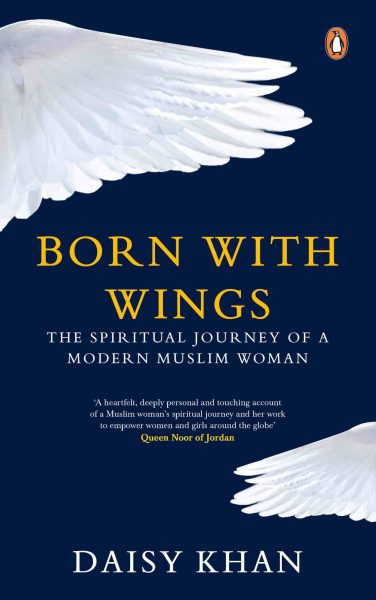
SheThePeople.TV converses with Daisy Khan, author and reformer, about life as an advocate for Muslim women’s rights, as recounted in her memoir Born With Wings: The Spiritual Journey of a Modern Muslim Woman.

“It is a moral imperative for people of all faiths to speak out against injustices committed in the name of their religion, because ‘a crime committed in the name of religion is a crime against religion.”

Daisy Khan founded WISE in 2005 to address the propagation of gender inequality in the name of Islam. “Every religion has seen the oppression as well as the emancipation of women. It is a moral imperative for people of all faiths to speak out against injustices committed in the name of their religion, because ‘a crime committed in the name of religion is a crime against religion.’ ” asserts Khan. Among its many successful programmes and actions, WISE partnered with an Afghani WISE woman to conduct the Imam Training Programme to End Violence Against Women (ITP) in 2010 in Afghanistan.

Communities in Afghanistan deeply trust and respect Imams – even the Taliban. With the aim to clarify distorted patriarchal misinterpretations of the Quran, WISE spread the message about girls’ education through 50 of the most respected Imams in Jalalabad and Kabul. Wary at first, the Imams soon embraced the programme as it spoke of women’s rights within an Islamic framework with no ulterior agenda. Daisy emphasises this role of Muslim men who can wield power openly or behind the scenes – whether they reside in conservative, traditional or secular societies – to restore the God-given rights of women. This is reflected in Prophet Muhammed, who honoured his wife Khadijah, gave property rights to women, abolished the pre-Islamic practice of female infanticide, scrupulously helped with chores, respected his daughters and sought his wife’s advice on community affairs. The Prophet, in his last sermon, even emphasised this point by saying “treat your women well and be kind to them for they are your partners and committed helpers.”

Daisy Khan believes that “an essential part of women’s struggle is the demand that their voices be at the forefront of the debates about their roles, responsibilities and status.”

Daisy Khan believes that “an essential part of women’s struggle is the demand that their voices be at the forefront of the debates about their roles, responsibilities and status.” The author and reformer maintains that women advocates who recognise and appreciate the importance of religion in the day to day lives of Muslim women , and who speak with a humane voice – the Islamic voice – are effectively challenging the religious legitimacy of people who use Islam to disadvantage women and girls. “Muslim women activists who tend to avoid Islam altogether suffer from an absence of religious legitimacy which in turn fails to speak to most Muslims,” explains Khan.

Image Credit: Penguin Random House India

WISE established the first Global Muslim Women’s Shura Council to examine issues that Muslim women of all sects were facing worldwide. Its 30 members included women from different nationalities with divergent views and comprised of scholars who were well versed in Islamic law, as well as activists with comprehensive knowledge of contemporary issues faced by Muslim women. The Council has mitigated any criticism because its position papers on FGM, child marriage, domestic violence, adoption and women’s leadership are thoroughly researched, evidence-based and grounded in scripture. The Council discussed how, wherever obstructions have been encountered by women, it has not been by Islam the faith, but by local traditions and customs and interpretations mandated by men in the name of faith. With the support of this council, women would no longer have to rely on the interpretation of male scholars with outdated attitudes toward women.

One woman challenged Daisy Khan. She asked the author – who gave you the authority to create a Muslim women’s shura council? Daisy’s answer was to point to the sky.

However, everyone did not agree. One woman challenged Daisy Khan. She asked the author – who gave you the authority to create a Muslim women’s shura council? Daisy’s answer was to point to the sky. She cited the Quran 42:38–39: “Those who respond to their Lord, and establish regular prayer, whose affairs are conducted by mutual consultation [shura] among themselves, and from what we have provided them, they spend, and who, whenever tyranny afflicts them, defend themselves.”

Khan also shared that there were shura councils dominated by men all over the world and that there were no barriers to women creating one for themselves. It took a number of years to create an effective working structure for the shura council. “I attribute the success of the Council to one key factor – by bringing a religious dimension to Muslim women’s advocacy, we were able to prove that Muslim women’s rights are embedded in Islam,” states Daisy.

Daisy Khan believes that it is important to engage in serious dialogue with people of other faiths, distinctly when religious and ethnic differences become powerful tools that tear the social fabric of society

Daisy Khan believes that it is important to engage in serious dialogue with people of other faiths, distinctly when religious and ethnic differences become powerful tools that tear the social fabric of society. Prior to setting up WISE, Khan co-founded the American Society for Muslim Advancement (now the Cordoba House), with her husband Imam Feisal Abdul Rauf, where she led interfaith collaborative events such as the theatre productions Same Difference and the Cordoba Bread Fest Banquet which saw Christians, Jews and Muslims come together on stage. “If we look at things with human eyes, we see a multitude of perspectives; but with sincere interfaith dialogue, we can step into a space where we see one another as God’s creatures, bound by one compact, by one set of ethical and moral values. In that space, we see with God’s eyes, we see with no astigmatism,” expresses Khan.

The author observes that a vast majority of Muslims reject violence as they continually struggle to divorce themselves from extremism. American Muslims are peaceful and patriotic members of their communities who proactively condemn terrorism – yet, one terrorist attack is used to condemn an entire faith community. “The branding of all Muslims as a national security threat may be popular today, but in reality, it is offensive and counter-productive; it burns bridges, brings in a rhetoric of ignorance on the world stage and allows extremists on both sides to divide us by playing on our worst fears. Now, more than ever, is the time for unity – unity of purpose and unity of achievement. This is a practical unity – one that we can use to build a better future,” emphasises Daisy Khan.

Feature Image Credit: Penguin Random House India

Born With Wings: The Spiritual Journey of a Modern Muslim Woman, by Daisy Khan, has been published in Viking by Penguin Random House India. It is priced at Rs. 599, and is available online and in bookstores.

source: http://www.shethepeople.com / She The People / Home / by Jessica Xalxo / June 19th, 2019

The haleem debate: Why some Indian Muslims are renaming the Ramzan delicacy ‘daleem’

Kolkata, WEST BENGAL : 

The new social media-driven Indian Muslim has suddenly realised that ‘haleem’ is a name for God. What does that say about religion in a hyperconnected age?

Baba Ki Haleem/Facebook

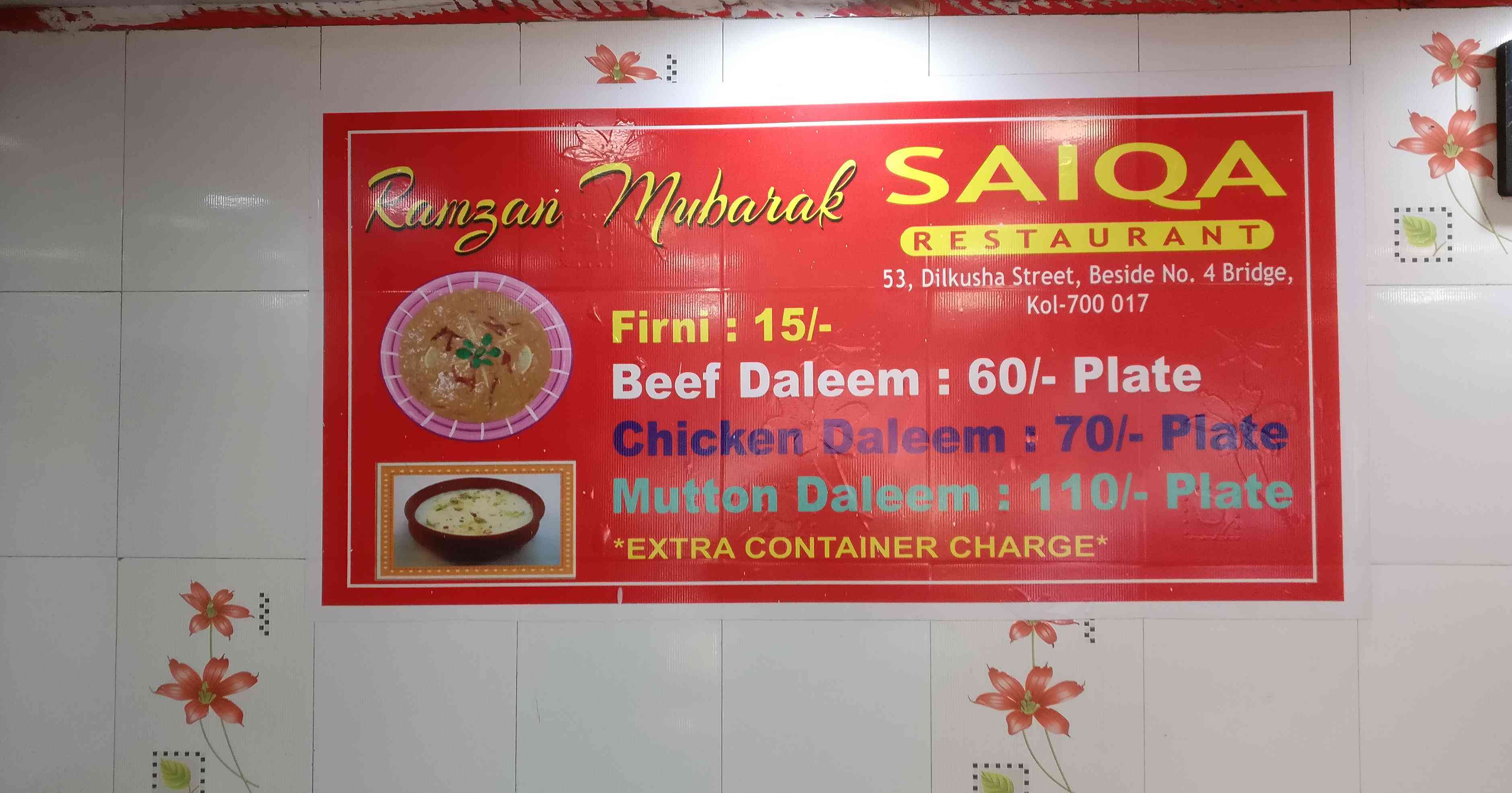
While out to buy some haleem during the first week of Ramzan, I discovered that the popular Kolkata restaurant Saiqa had introduced a new dish: daleem. A red menu board on a tiled wall proudly advertised the dish, ensuring nobody missed it.

There is a lot to be said for Saiqa, a mostly working-class place, but I had never thought food innovation to be among its charms. Curious, I asked the person manning the counter about the culinary invention – only to be met with a googly. “It’s not a new thing – it’s haleem only,” said Mohammad Asghar Ali, the son of the proprietor. “Daleem is actually the correct name.”

Photo credit: Shoaib Daniyal

Was daleem actually the right name? I had grown up eating the lentil-wheat-meat stew that was available only during Ramzan, the Islamic month of dawn-to-dusk fasting. I was pretty sure it had always been called haleem.

But as it turned out, Saiqa wasn’t an outlier. A number of Mughlai restaurants across Kolkata had made the nomenclatural switch, breaking away other restaurants that still stuck to a name of which I now suddenly felt possessive: haleem.

The question was why. Why were eateries across Kolkata – and other parts of South Asia – suddenly changing the name of this dish that crowns iftar spreads during Ramzan? As it happens, this almost trivial renaming is an indicator of just how radically social media is impacting religion and, in this case, Indian Muslims.

From Arabia to India

The origin of India’s haleem goes back to an ancient Arab dish: the hareesah. There are records of it being consumed in the Abbasid Caliphate in the 8th century. The dish was simple but laborious to prepare it : it involved boiling shredded meat, cooking it again with ground wheat all night in a tannur (or tandoor) and then, grinding this mixture to a smooth paste. This dish is still consumed in West Asia, Iran and in Hyderabad’s Arab quarter , Barkas.

Once it reached India, the simple hareesah received some significant upgrades to suit desi palates. Spices were added, as also a variety of lentils (Saiqa claims it includes 13 different kinds). A new name was given to this dish: haleem, the Persian name for the bland wheat-and-meat hareesah.

The hareesah from Hyderabad's Arab quarter, Barkas. Photo credit: Shoaib Daniyal
The hareesah from Hyderabad’s Arab quarter, Barkas. Photo credit: Shoaib Daniyal

Saiqa’s Asghar Ali was clear on why daleem was the correct name for the dish: “Dal se banta hai, isliye daleem.” It’s made with dal (lentils), hence daleem.

But the real reason had less to do with alliteration and more to do with the almighty. “Haleem is a name for Allah,” explained Shamsher Alam of Zam Zam, another Mughlai restaurant in Kolkata that now goes with daleem. “It seemed wrong to name a food item that uses a name for Allah, so last year I changed it.”

How did Alam realise this evident fact after happily selling haleem for two decades? As with so much else in these fractious times, the culprit was social media. “Nowadays, mashallah, we have a lot of information on WhatsApp and on the internet,” said Alam. “Someone saw it there and told me. That’s when I realised I should change the name.”

Going viral

Alam wasn’t alone. Debates around whether it’s right to name a stew after an attribute of God have raged across South Asia. In 2017, The Times of India  reported on this tussle among the Muslims of Hyderabad, the world capital of haleem. Much the same discussion is happening in Pakistan  and Bangladesh , too.

Not everyone in the subcontinent supports the rechristening. One Pakistani user on Twitter brusquely called it a “postmodern renaming attempt by mullah clowns ”. A Bangladeshi food blogger argued that it is clear that when she uses haleem for the name of a dish, she is not referring to the attributes of God. “Allah knows what is in my heart. I don’t intend to please a few important people,” she wrote on her Facebook page, showing the incredible power of social media in engendering conflict even on a thing as universally loved as haleem.

Kolkata’s biggest Mughlai restaurant chain Arsalan has also resisted calls to change the name. “Wakeel [the Urdu word for lawyer] is also one name for Allah. Will people stop using that too?” asked Mohammad Ghulam Mustafa, a member of the family that owns Arsalan. “People who don’t read the namaaz, read a few messages on WhatsApp and start to think they are an alim [Islamic scholar]. That is the problem.”

Social media faith

Mustafa’s snarky dismissal of “WhatsApp alims” is the most interesting insight to arise from what is at best a quirky change of name. Social media has given – for better or worse – the average Muslim more of a say in his religion, a role that was earlier performed by religious scholars.

Quite a bit of social science research has noted the impact of social media on faith and its role in weakening religious gatekeepers. American sociologist Paul McClure argues  that the internet encourages “religious tinkering” and “religious participation as free agents”. Adding to that, Heidi Campbell, an American scholar of religion, notes  how social media allows people to constantly reinvent their religious identities:

“It used to be that a religious identity was something you took on through maybe religious education or confirmation or baptism. You kind of put it on like a cloak. But now people see identity as something that you can negotiate, that you construct and you perform. So individuals especially use the Internet and other resources to seek out their own ‘spiritual tribe’ online – a group of people where they can make sense of their religious self and their religious belief. Facebook and Twitter, blogs, social media allow people to express their religious identity, to experiment and to create a cohesive identity that’s free from institutional constraints.”

Predating Mustafa’s “WhatsApp alim” quip, a 2011 article in The Guardian  says: “Individuals now have a much more autonomous role in deciding whom to approach as a source. Those people may have official, traditional credentials or they may be Rabbi Google.”

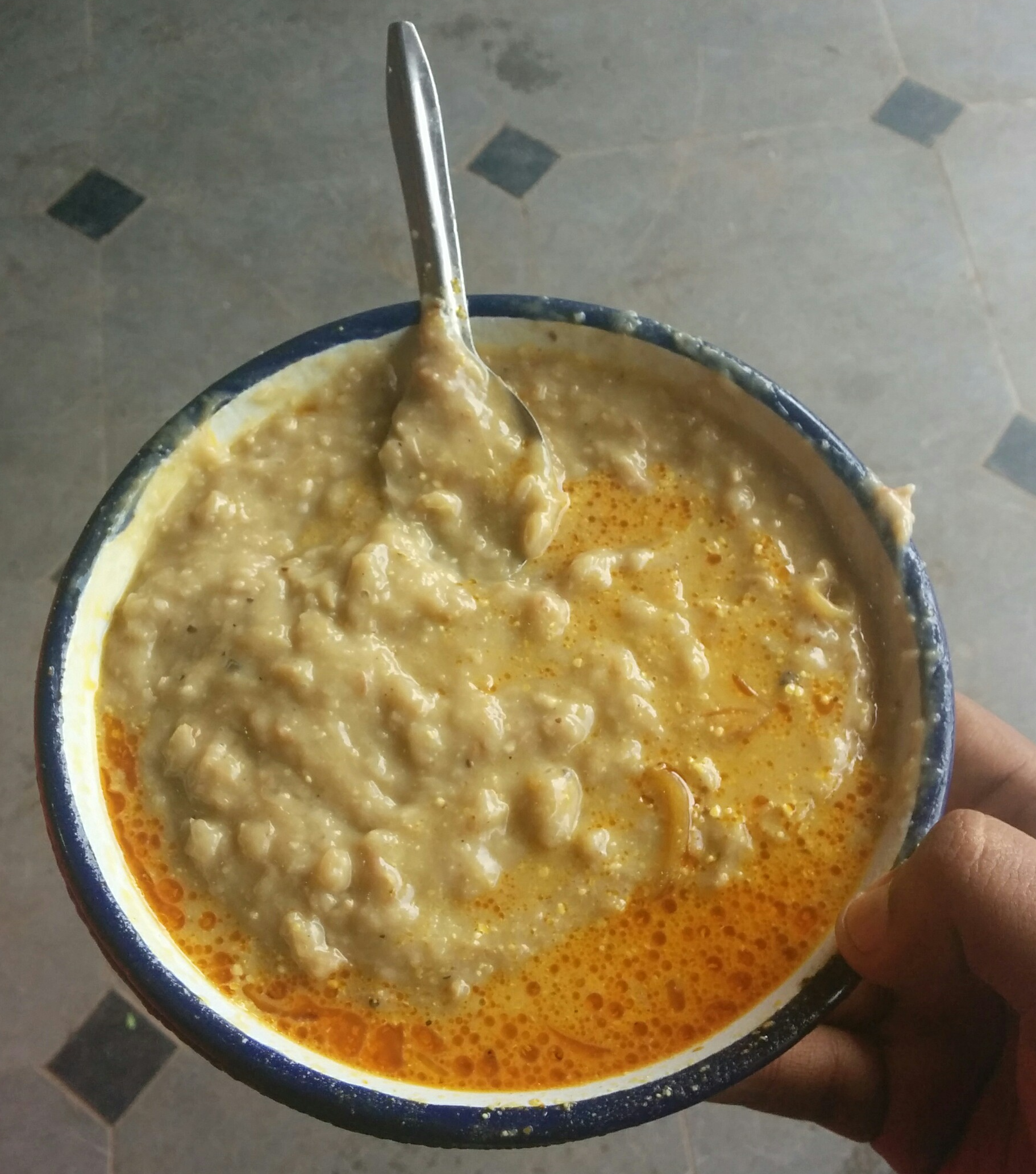
A pot of haleem at Saiqa in Kolkata. Photo credit: Shoaib Daniyal

While the greatest impact of social media is on Christianity, given the deep penetration of the internet in the West, its effects are spreading to Muslims and how they practise their faith. Mohammed Ibahrine of the American University in Sharjah writes  on the London School of Economics’ Middle East Centre blog:

“For centuries, interpretations of the Quran were kept a reserved domain for a small minority of ulama (the plural of alim). Social networking websites have become avenues for disseminating sacred interpretations, sometimes undermining traditional religious authorities. The blossoming of digital fatwas is also an indication of the splintering of orthodoxies and the emergence of heresies. Consequently, religious authority has become a contested domain, rather than an accepted reality by the uneducated masses.”

Modern conservatism

While this undermining of the traditional ulama is democratic, it might also, paradoxically, lead to conservative outcomes. In Indonesia, for example, social media is encouraging irreligious millennials to become born-again, ultra-orthodox Muslims as part of a movement known as hijrah .

While there has been no such stark change in India, clearly even here, social media is allowing people to fashion their own understanding of Islam, free of traditional social structures. One outcome of this is an attempt to follow a so-called purer form of Islam in which even a detail as trivial as the name of a stew – unnoticed for centuries – is “corrected” by social media didacticians.

source: http://www.scroll.in / Scroll.in / Home> Magazine> Language Log / by Shoaib Daniyal / June 03rd, 2019

Birds of Bengal at Sweden auction

Patna, BIHAR /  Calcutta, BENGAL :

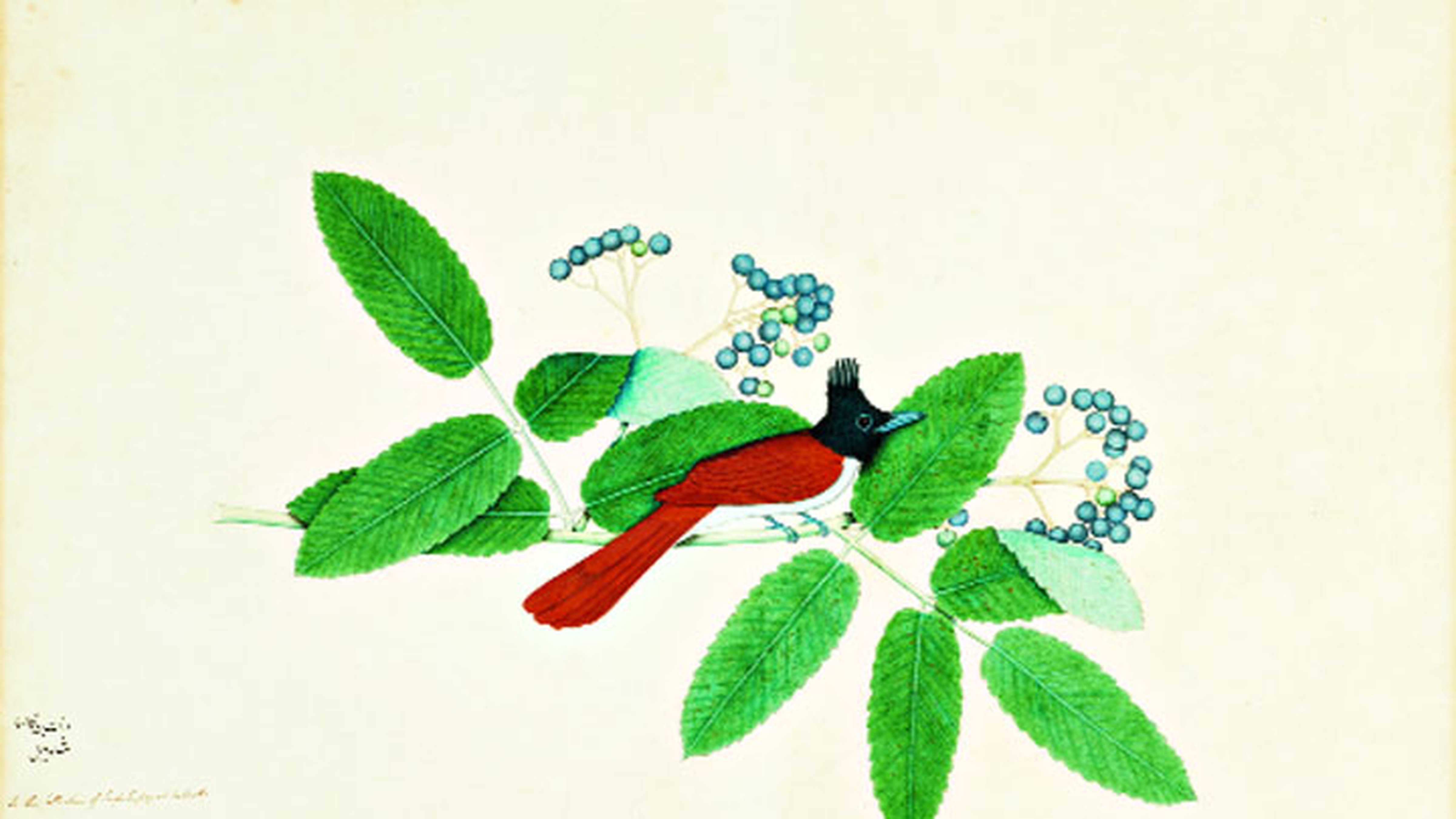
The paintings by Zayn al-Din were commissioned by Mary Impey, an English natural historian and patron of the arts in Bengal

Falsa Tree with King’s Nightingale was painted on a 53.5cm x 75cm canvas by Zayn al-Din in 1782 . / Picture courtesy: Stockholm Auction House
Falsa Tree with King’s Nightingale was painted on a 53.5cm x 75cm canvas by Zayn al-Din in 1782 . /
Picture courtesy: Stockholm Auction House

Two watercolour and pencil-on-paper artworks painted in Calcutta in the late 18th century by one of the most famous exponents of the Company School of Art will go under the hammer at the world’s oldest auction house in Sweden on June 12.

The paintings by Zayn al-Din were commissioned by Mary Impey (March 2, 1749 -February 20, 1818), an English natural historian and patron of the arts in Bengal. She was the wife of Elijah Impey, the first chief justice of the Supreme Court at Calcutta (1774-82), who had infamously sent Maharaja Nandakumar — a highly-placed officer in the nawabi administration — to the gallows on charges of perjury.

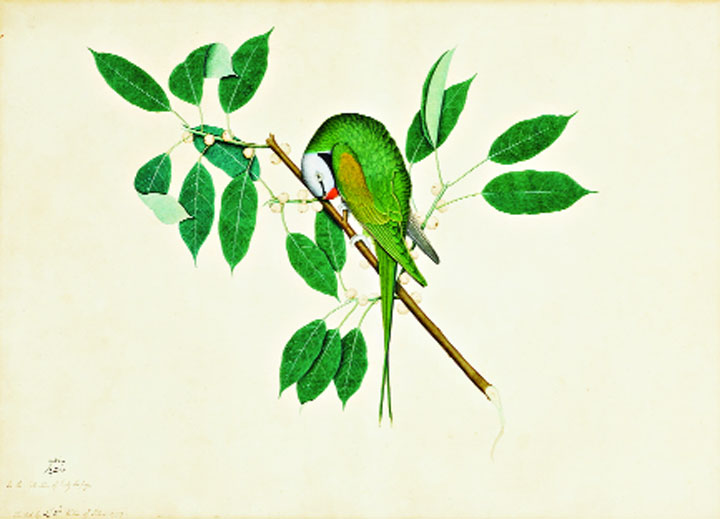
Falsa Tree with King’s Nightingale, dated 1782, and Parrot in a Parkar Tree, dated 1779, have been in the possession of a Swedish family for long.

“We are immensely proud to present these rare artworks. We are not sure how they reached Sweden. They have been in the same Swedish family for a long time and this is the first time that they reach the market,” Victoria Svederberg Bojsen, a specialist in classic and modern art at the Stockholms Auktionsverk (Stockholm Auction House), founded in 1674, told Metro over phone from Stockholm.

“The estimate price is Euro 51,000 (Rs 40 lakh) to 61,500 (Rs 48 lakh). However, we believe they will reach an even higher price. Our hope is naturally that they will now be returned to India where they originated,” she said.

Birds are the subjects of both the paintings. Falsa Tree with King’s Nightingale is a 53.5cm x 75cm canvas.

The inscriptions on both pictures read: In the Collection of Lady Impey of Calcutta. Painted by Zayn al-Din Native of Patna 1782.

“Both paintings include a description of the subject in Persian — Darakht ban falsa, Shah Bulbul in the first and Madna Tota, Darkaht Pakar in the other. The artist’s name is also written in Persian,” said Nandini Chatterjee, associate professor of history at the University of Exeter in the UK.

The painting (right), titled Parrot in a Parkar Tree, is signed and dated 1779. The inscriptions on both artworks read: “In the Collection of Lady Impey of Calcutta. Painted by Zayn al-Din Native of Patna 1782”. / Picture courtesy: Stockholm Auction House
The painting (right), titled Parrot in a Parkar Tree, is signed and dated 1779. The inscriptions on both artworks read: “In the Collection of Lady Impey of Calcutta. Painted by Zayn al-Din Native of Patna 1782”. /
Picture courtesy: Stockholm Auction House

Metro had sent the images to Chatterjee, who is part of a research on two sets of natural history drawings produced between the late 18th and early 19th centuries in Calcutta. The drawings are held at the Victoria Memorial Hall and the Royal Albert Memorial Museum & Art Gallery in Exeter.

The Impeys moved to India in 1773 after Elijah Impey was made the chief justice of Bengal. They set up a menagerie at their house in Calcutta’s Middleton Row. When they shifted to Fort William two years later, they started a collection of native birds and animals on the extensive gardens of the estate.

Mary Impey commissioned several local artists to paint the fauna and flora they had collected. Her three principal artists were Sheikh Zayn al-Din, and brothers Bhawani Das and Ram Das. All three had come from Patna.

Together, Zayn al-Din and the Das brothers painted more than 300 artworks, half of them of birds. The collection, often known as the Impey Album, is an important example of Company style painting.

“With the decline of the Mughal courts, the artists sought the patronage of Europeans. These artists had to change their traditional techniques to suit their new masters. These revisions included a more accurate representation of the subject and a change in perspectives,” said Jayanta Sengupta, the curator of the Victoria Memorial.

Little is known of Zayn al-Din, the artist whose works will be auctioned in Sweden next month. He is known for his extraordinarily detailed paintings for the Impey Album. His drawings of mountain rats, hanging bats, parrots and storks serve as interesting zoological studies and are now preserved at the Ashmolean Museum in Oxford.

“The artworks from the Impey Album rarely reach the international market and the few that have been sold previously at Christies, Sothebys and Bonhams have fetched between $80,000 (Rs 55.5 lakh) and $140 000 (Rs 97.7 lakh),” Bojsen said.

The real study of the Indian subcontinent’s natural history is said to have started with the Mughals. Baburnama — the memoirs of the first Mughal ruler — has beautiful illustrations of birds and animals. Shah Jahan also took a keen interest in the flora and fauna.

With the fall of the Mughals, the artists sought the patronage of Europeans. Calcutta became a thriving centre of the (East India) Company school of painting.

“India was an unknown land for Europeans and along with its indigenous archaeology and history, they also wanted to explore its abundant flora and fauna. Imperial documentation differs from its Mughal predecessor in scale and systematic approach,” Sengupta said.

“Mary Impey was part of a circuit of Europeans who commissioned paintings of Indian natural history. Apart from the pictorial documentation of flora and fauna, the extensive notes kept by her about their habitat and behaviour were of great use to later biologists,” he said.

The collection went to England with the Impeys in 1783 and were sold at a London auction in 1810. Several pieces are in various museums, including the Metropolitan Museum of Art in New York and the Victoria and Albert Museum in London.

“The style of inscription, and the handwriting is identical to other paintings all around the world. I do not believe Zayn al-Din’s name is in his own handwriting. It was probably written by a British collector, maybe Lady Impey herself. Many such British Orientalists (and perhaps some of their spouses) knew Persian,” Chatterjee said.

Some of Zayn al-Din’s works are at the Royal Albert Memorial Museum too. “But those have his name written in English and Bengali, perhaps by a collector who was interested more in the vernacular language, than Persian, which was the Mughal language of administration and courtly culture,” Chatterjee said.

source: http://www.telegraphindia.com / The Telegraph, online edition / Home> West Bengal / by Debraj Mitra in Calcutta / May 28th, 2019

Governor announces financial assistance of Rs 5 lakh to tourist guide Rouf’s family

Srinagar, JAMMU & KASHMIR :

Tourist Guide Who Saved Five Lives But Unfortunately Lost His Life In A Act Of Bravery

Srinagar

Governor Satya Pal Malik has saluted the bravery of Tourist Guide Rouf Ahmad Dar, who lost his life while rescuing tourists from the Lidder river in Pahalgam. He described Rouf as a real-life hero who sacrificed his life for saving the lives of others.

Governor has prayed for eternal peace to the departed soul and strength to the bereaved family in its hour of grief.

Honouring the exemplary display of selfless action, Governor has announced financial assistance of Rs 5 lakh for the family of Rouf.

Dar saved five tourists, two of them foreigners, after their boat capsized in fast flowing river Lidder near Mawoora area of Pahalgam in south Kashmir’s Anantnag district on Friday evening.

Unfortunately, Dar lost his life in an act of bravery which is being hailed by people and the administration.

source: http://www.kashmirlife.net / Kashmir Life / Home> Latest News / by KL News Network / June 01st, 2019

The Hindu lensmen bag prizes

Machilipatnam , TELANGANA :

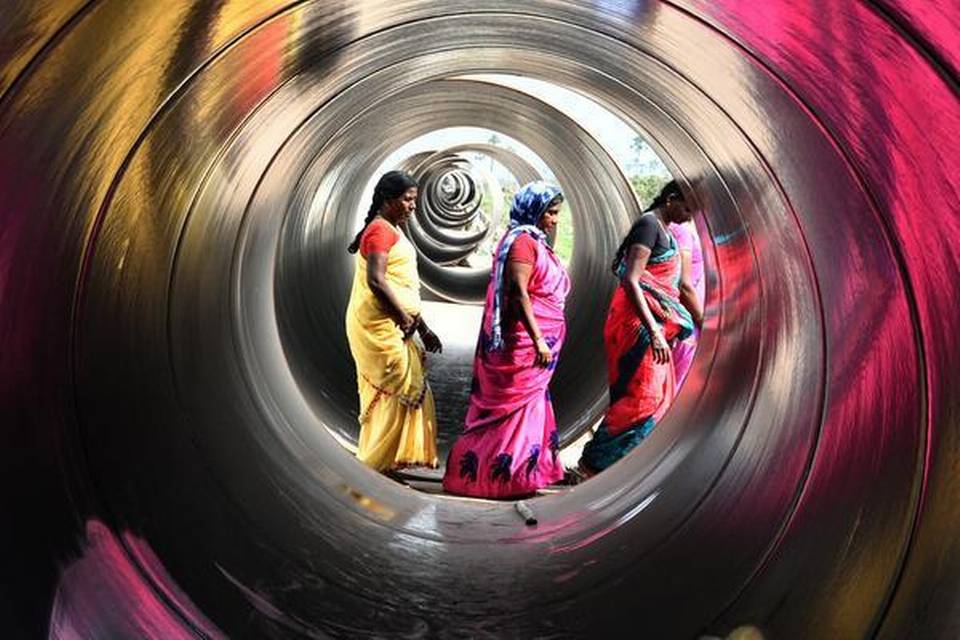
This photograph has been selected second prize in the Press Club Hyderabad Photo contest this year. Women from a nearby village walk between huge pipes used in the construction activity at Mandadam in the core capital region near Vijayawada of AP, | Photo Credit: CH_VIJAYA BHASKAR

The Hindu photographer at Vijayawada, Ch.V.S. Vijaya Bhaskara Rao, won second prize in the third edition of photo contest for photo journalists conducted by the Press Club of Hyderabad on the occasion of the club’s foundation day celebrations.

The first prize went to Sakshi Nalgonda photographer K.B. Prasad and the third to Bhaskar Reddy of V6 Velugu daily in Siddipet.

The first three prizes carry cash award of ₹ 15,000, ₹ 10,000 and ₹ 5,000 respectively.

The consolation prize winners were K.V.S. Giri (The Hindu – Hyderabad), A. Ramachandra Rao (Andhra Bhoomi – Vijayawada), V. Peddi Raju (The Hindu – Vijayawada), G. Ramu (Eenadu – Hyderabad), Gunti Vinod (Namasthe Telangana – Wanaparthy), J. Azeez (Sakshi – Machilipatnam), N. Rajesh Reddy (Sakshi – Hyderabad), K. Bajrang Prasad (Sakshi – Nalgonda), A. Yakaiah (Sakshi – Suryapet) and S. Ravinder (Eenadu – Suryapet).

All of them will get ₹ 2,000 each.

The prize distribution will be held at Press Club Hyderabad on June 9.

source: http://www.thehindu.com / The Hindu / Home> News> States> Telangana / by Special Correspondent / Hyderabad June 01st, 2019

A brush with tradition

Achampet , TELANGANA :

OxMPOs01jun2019

Exquisite detailing goes into Mohammed Osman’s renditions of Gangireddu cow and ox

Did you ever think a cow or bull could inspire an artist to such an extent, he would make it his favourite subject? “I used to see these beautifully-decorated cows and bulls being paraded during festivals in my hometown, Achchampet in Telengana and I fell in love with their form,” says artist Mohammed Osman at his ongoing exhibition at Gallery G. The visually stunning body of work “Dance with the Bulls” captures the bovine form in all their embellished glory.

Talking of his fascination for cows and bulls, Osman says, “It is a rare subject. When you see the grace with which Gangireddu animals are decked with clothes, beads, paint and bells, it is visually enriching,” says Osman, 47, who grew up in rural Achchampet, which is on the way from Hyderabad to Srisailam. “There have been times when I’ve gazed at these beautiful beasts for hours on end, when they would be part of pageants and their caretakers collected gifts for their upkeep,” he says.

Osman, after finishing a course in Fine Arts in Hyderabad in 2002, meticulously worked on his art pieces, all the while looking for the ‘right subject’ on which to pursue a full-fledged career. He zeroed in on Gangireddu or Basava (in Kannada) and the decorated bull now forms the crux of his artistic subject. “I attempt to capture the beauty of these lavishly-decorated animals in the best possible way. From 2006, I have created nearly 500 pieces and sold most of them,” says Osman, who regularly gets orders from connoisseurs.

Settling on a subject is a challenge for any artist, as according to Osman, “this is what makes an artist exclusive.” Specialisation is the key to any career, he adds. On whether he faced any difficulties on the choice of subject, Osman says, “When I started my work in 2006, I gathered reams of information from Indian mythology. I introduced Lord Krishna beside the cows as he is often depicted alongside cows and bulls. Radha Krishna and Gangireddu cows are frequently used in my canvas, as the form captures scenes from days of yore. I believe in Indian culture, in integrating myself and not in segregations such as Hindu or Muslim. I am happy that from the time I took up this work I have been flooded with orders. Khuda Ki Meharbani (god’s grace),” says Osman.

Having spent 20 years in rural landscapes outside Hyderabad, Osman’s palette is bright and brilliant, borrowing from the colourful garments and lifestyle of village folk there. His visual language is strong and his strokes are bold, using nearly 50 colours to capture a single Gangireddu. “I have done 100 variants of the subject; each one taking up to 20 days to finish given the minutiae of details I provide,” Osman explains.

The kind of ‘feats’ a Gangireddu can perform are stunning. “An ox can dance to the tune of its master’s nadaswara, it can nod at his command or shake its head to indicate no, kneel down and prostrate or bow when asked to. You can often see a Gangireddu stand on its master’s chest and bow in complete humility, appreciating a patron who has bestowed money or food on them. The ‘Dance with the Bulls’ series showcases the feats they perform,” says Osman.

(Dance With The Bulls – Gangireddu, solo by artist Mohammed Osman, is on till June 5 at Gallery G, Lavelle Road)

source: http://www.thehindu.com / The Hindu / Home> Society> History & Culture / by Ranjani Govind / May 30th, 2019