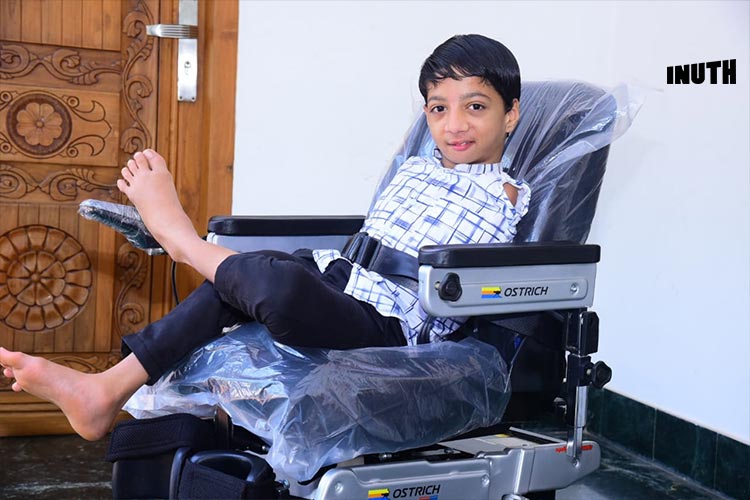
“I want to become a social worker,” a 12-year-old boy from Kerala confidently told Congress president Rahul Gandhi during his recent visit to the state. But Mohammed Asim’s dreams have hit a roadblock.
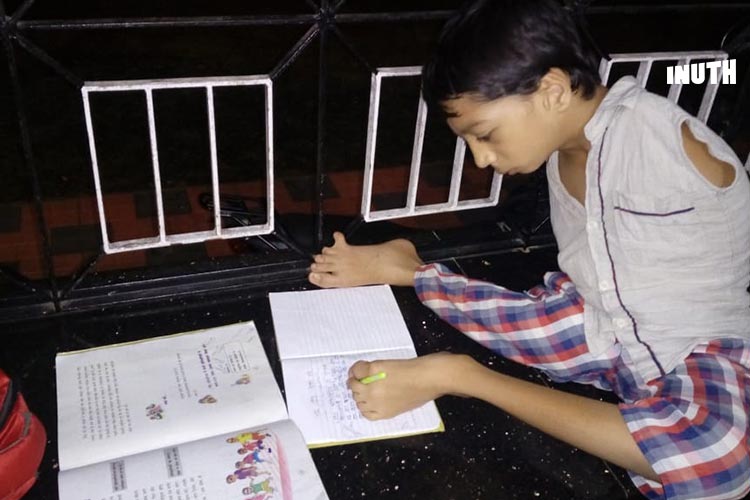
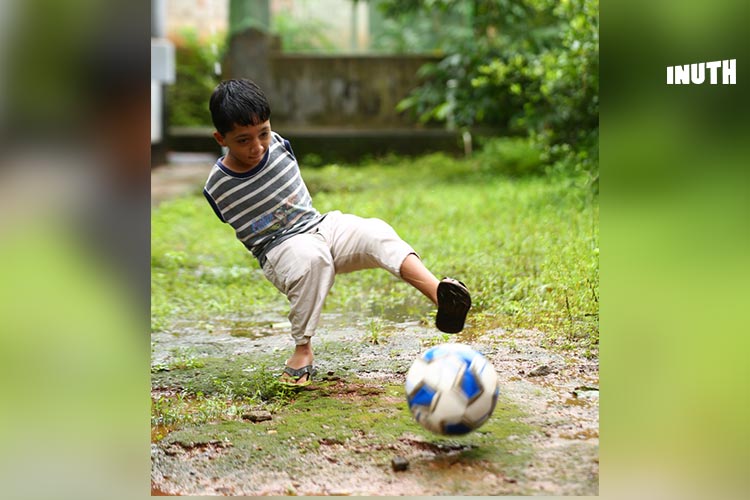
Born without hands, he has trained himself to draw and write with legs. Recognising his talents, the state government had presented him ‘Ujjwala Balyam’ award. Asim, who lives in Kozhikode, has completed his seventh standard from Govt Mapplia Upper Primary School in Vellimanna. But the panchayat has no government high schools and Asim will have to travel for over six kms to continue his studies. For several months he has been going from pillar to post, with a request to upgrade the school to a high school. He has even written a letter to Chief Minister Pinarayi Vijayan.
“Sir, I don’t have two hands from birth. I have a disability with my legs too. I need assistance to go to school and for my basic needs. My parents need to accompany me to school for my basic needs. I request you to upgrade my school to high school, as I can’t travel to a far off school, ” reads his letter.
Asim has three younger siblings and his parents are making all efforts to fulfill their son’s dream. “My son does not want to study at home. He likes to learn and play with other kids in the school,” said Asim’s father, Muhammad Sayeed Yamini, a Madrasa teacher.
In June 2018, his demand saw the light when the Kerala High Court ordered the government to upgrade the school and do the needful for him.
”But soon after that Kerala government submitted a report saying only 2 out of 37 students are left and the rest of them have taken admissions in other high schools”, says Asim’s father.
The 12-year-old boy has been the torch bearer for other students in the panchayat as well. “It’s not just for me”, he says, “it is for everyone here in my small village. There is no high school in our panchayat.”
Vellimanna School, which was a Lower Primary School, was upgraded to an Upper Primary School in 2014 only after Asim wrote a letter to the then chief minister Oommen Chandy. Asim is determined to continue his struggle. He has sent a video message to Prime Minister Narendra Modi as well, besides writing letters to Union ministers Sushma Swaraj and Prakash Javadekar seeking help.
Asim’s path to his dreams seems hard, but he is determined to move forward.
source: http://www.inuth.com / Inuth / Home> Beyond The Headlines / by Gayatri Menon / January 31st, 2019
Sammad is the younger of two siblings and lives in a joint family, with a grandmother, aunt and uncle. His businessman father deals with property as well as dry fruits.
Mohammad Sammad in a still from Selection Day.
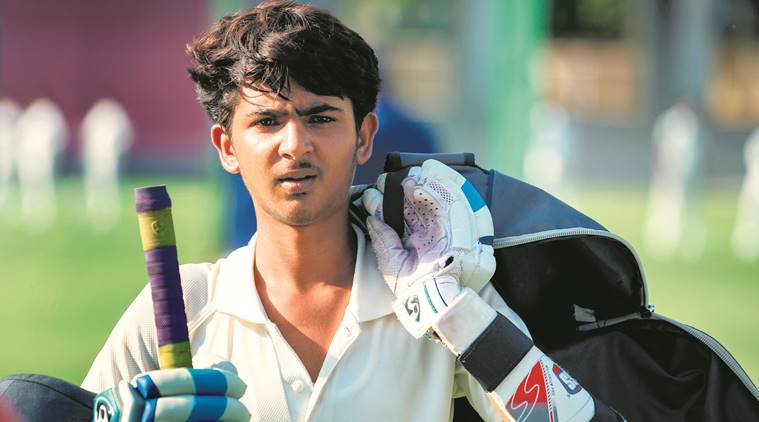
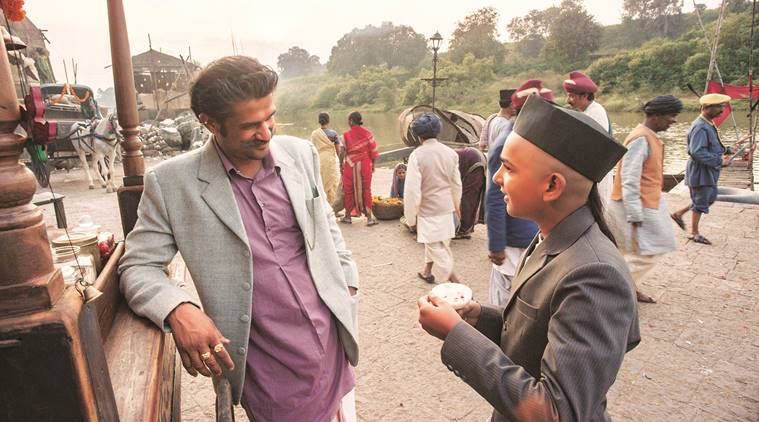
Between struggling with commerce lessons and accounting tables — in preparation of his forthcoming class 12 boards — 18-year-old Mohammad Sammad has had to also mug up lines for a film, and practice cricket for at least two hours every day. Sammad, who calls himself a “lucky, accidental actor” has had a stellar year. He played a precocious 12-year-old and also the dying grandmother in the horror film, Tumbbad, and earned rave reviews for his rendition of Pandurang in the film. Next up was the role of Manju Nath in Netflix’s Selection Day, where he plays an upcoming cricketer, who deals with a controlling father, sexuality and a new social order.
Did he always want to act? “Actually no. Main dekhta tha filmein, but never had aspirations to act. It was all a matter of luck. I was selected out of 200 kids after some workshops, when the team of Gattu, directed by Rajan Khosa, came to conduct auditions in my school. Sab chance ki baat thi,” says Sammad, who divides his time between Roorkee and Mumbai. “The final scene, which I think clinched the role for me, was done off camera. I had to search for my lost goat, and cry. It’s only after shooting for Gattu, that I actually thought, yeh main kar sakta hun,” says Sammad who was all of 12, when he got selected for Gattu. Post Gattu he landed Tumbbad — the fantasy horror film set in Maharashtra in which a family seeks a jinxed ancestral treasure — and Shlok Sharma’s Haramkhor.
Sammad is the younger of two siblings and lives in a joint family, with a grandmother, aunt and uncle. His businessman father deals with property as well as dry fruits. “My father wanted ‘safe’ career options for me. And Mumbai is very far. But my mother and grandmother convinced him. They are my biggest supporters,” he adds.
It’s with Tumbbad that Sammad found himself in the big league. “I, till date, don’t really know why they asked me. It was a difficult shoot, especially the ones inside the ‘womb’, where even breathing seemed like a task. When I saw myself on screen, I felt a hint of pride. I felt good that I was able to pull those roles off. I was very young and inexperienced when we shot the film,” says Sammad.
Mohammad Sammad with actor Soham Shah in a still from Tumbbad
While Tummbad had him dealing with a multi-layered narrative, with an all-adult cast, in the recent Selection Day he is with people his own age and is seen talking about issues related to young adults. “Selection Day shoots are a lot more fun. It’s a different vibe all together when you are working with people your age, as opposed to working with an adult team. You can’t really talk to adults. But it’s not easy – I am not athletic, I had to practice cricket for hours for five months, build my stamina and also work on my physique. I also got to meet Sachin Tendulkar on the sets. I had previously worked with Rajesh sir (Tailang), in a short film, so we were pretty comfortable,” adds Sammad, who is reprising his role in the forthcoming second season.
Sammad’s story gives hope to many who harbour dreams of Mumbai. “I haven’t struggled much. I was represented by good agents and mangers. I have met other young actors who are struggling and have asked me to help them find work. I am blessed and very grateful,” he says. Sammad maintains, that while the exterior of show business is glitzy, it takes a while to reap the awards. “I have heard stories of people getting rich, even as children and young actors. My lifestyle is still the same. I do the same chores around the house, fetch anda-bread-milk for my mother when she asks me to,” adds Sammad.
Questions about his future plans are met with an earnest “I want to do good work”. “I don’t want to become a Khan, but I want to work with them for sure. And yes, I am being slightly selective. I am not saying yes to everything. I am not even doing advertisements,” says Sammad, who is now busy shooting for Maya Sabha, Rahi Anil Barve’s next in which he plays Javed Jaafri’s son.
source: http://www.indianexpress.com / The Indian Express / Home> Lifestyle> Art and Culture / byEktaa Malik / January 31st, 2019
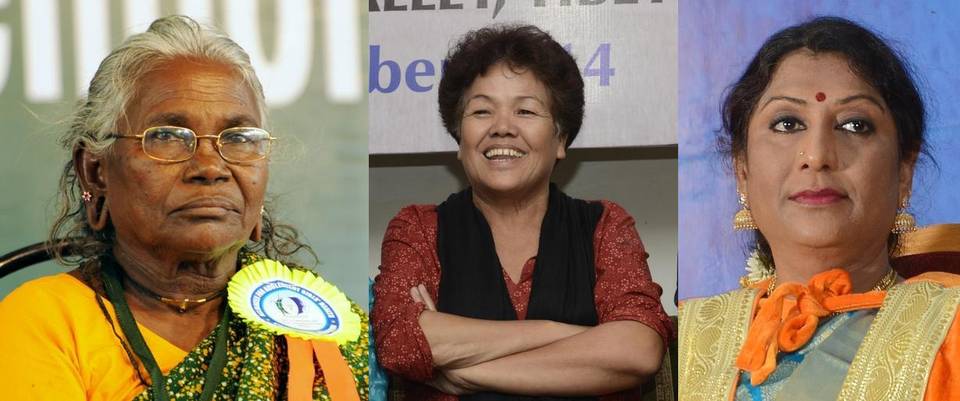
21 of the awardees are women and the list also includes 11 persons from the category of foreigners/NRI/PIO/OCI, 3 posthumous awardees and 1 transgender person.
Padma Awards — one of the highest civilian Awards of the country, are conferred in three categories, namely, Padma Vibhushan, Padma Bhushan and Padma Shri. The Awards are given in various disciplines/ fields of activities, viz. art, social work, public affairs, science and engineering, trade and industry, medicine, literature and education, sports, civil service, etc. ‘Padma Vibhushan’ is awarded for exceptional and distinguished service; ‘Padma Bhushan’ for distinguished service of high order and ‘Padma Shri’ for distinguished service in any field. The awards are announced on the occasion of Republic Day every year.
These awards are conferred by the President of India at ceremonial functions which are held at Rashtrapati Bhawan usually around March/ April every year. This year the President of India has approved conferment of 112 Padma Awards including one duo case (in a duo case, the Award is counted as one) as per list below. The list comprises 4 Padma Vibhushan, 14 Padma Bhushan and 94 Padma Shri Awards. 21 of the awardees are women and the list also includes 11 persons from the category of foreigners/NRI/PIO/OCI, 3 posthumous awardees and 1 transgender person.
Bharat Ratna (3)
1. Nanaji Deshmukh (posthumous)
2. Dr. Bhupen Hazarika (posthumous)
3. Pranab Mukherjee
Padma Vibhushan (4)
1. Ms. Teejan Bai — Art-Vocals-Folk — Chhattisgarh
Chikhala Village (Solapur District) / Mumbai , MAHARASHTRA :
Mumbai :
In downtown Worli, it is common to hear the strange greeting of ‘Assalamu-Alaykum, Guruji’ whenever an 80-year-old Muslim man steps out of his modest home.
He is none other than renowned Sanskrit scholar Pandit Gulam Dastagir, who over six decades has impressed the Shankaracharyas, late prime minister Indira Gandhi, RSS leaders and Islamic scholars, all with equal elan.
Armed with a deep knowledge of both Islam and Sanskrit, Pandit Dastagir can speak with authority on any religious topic — and earn their unabashed admiration.
Born in Chikhali village in Solapur district, Pandit Dastagir completed his schooling before joining a government Sanskrit institution.
“I was the only Muslim student in a class of around four dozen Brahmins. My Brahmin Guruji developed a special liking for me and encouraged me. I acquired my entire Sanskrit knowledge of the scriptures, Vedas and other texts there,” Pandit Dastagir told IANS.
Around mid-1950s, he shifted to Mumbai and joined the Maratha Mandir Sansthan’s Marathi-medium Worli High School as a Sanskrit teacher for all classes.
Two decades later, to comply with professional requirements, he appeared directly for a Master’s degree in Sanskrit from Mysore University. After the Emergency, when the Janata Party ruled India, Pandit Dastagir was suddenly targeted. “They suspected I was a namesake Muslim propagating the RSS and Jana Sangh ideology through Sanskrit. It was only after a long investigation that they were proved wrong,” the man chuckled.
When Indira Gandhi returned to power in 1980, she summoned him and was surprised to discover that Pandit Dastagir was actually a ‘Syedvanshi’, or belonging to a clan considered the direct descendents of Prophet Mohammed.
“She met me several times and appreciated my knowledge and love for Sanskrit. In 1982, she told the education ministry to appoint me as a ‘Rashtriya Sanskrit Pracharak’,” Pandit Dastagir said.
When baffled officials asked Gandhi how should his duties be classified, she reportedly shot back: “He will teach us what needs to be done. Let him function independently.”
For two years, he toured India extensively and propagated Sanskrit in government and private institutions. He quit the post after Gandhi’s assassination in 1984.
“I acquired MA in Sanskrit only in 1987 when I was around 50 years old although I was proficient in the language long before.”
Since his retirement, Pandit Dastagir lectures on the similarities between Islam and Hinduism with reference to various aspects of one of the world’s oldest and richest languages, Sanskrit.
“Sanskrit is not only for Brahmins. But this perception made the masses reluctant to study it. I create awareness about Sanskrit all over India among different castes and religions,” he said.
Pandit Dastagir explained that Hinduism does not recognize ‘conversions’ or the caste system. “The current craze for ‘conversions’ has no basis in Hindu scriptures. It is not recognized. At best, you can change a person’s name, not his soul from the religion of his/her birth,” he said.
An old darling of the Rashtriya Swayamsewak Sangh (RSS), Pandit Dastagir credits the group with giving him full encouragement to pursue his vocation without having to change his religion.
He feels the RSS was not against any religion. “But if anybody threatens Hinduism, they will hit back, irrespective of the opponent’s religious beliefs,” Pandit Dastagir said.
He has also never encountered objections from fellow Muslims over his passion for Sanskrit. “Comparative study of different religions makes you more reasonable. I am not a fanatic, just an ordinary Muslim.”
His love for Sanskrit has not made him lose Islamic identity. He prays daily at the mosque. “I have built up a huge library of thousands of books on Sanskrit and Islam which I study and propagate,” Pandit Dastagir said.
He laments that there are many other Muslim Sanskrit scholars in the country but financial constraints prevent them from propagating the ancient Indian language.
Pandit Dastagir’s wife Vahida is a supporting housewife. Their son Badiujjama is a Sanskrit scholar but runs a shop, elder daughter Gyasunissa Shaikh runs a Sanskrit research centre in Solapur, and their other daughter Kamrunnisa Patil never pursued her father’s passion.
IANS
source: http://www.oneindia.com / One India / Home> News> Feature / by IANS / December 27th, 2014
In 1947, Gandhi visited a village in the region to urge the Muslims living there not to leave the land of their forefathers for Pakistan.
One of Ghasera fort’s four entrance gates – and the only one standing – in Haryana’s Ghasera village. | HT
Every December 19 since 2000, Meo Muslims in Haryana have been commemorating Mahatma Gandhi’s visit to Ghasera village in Mewat district as Mewat Diwas.
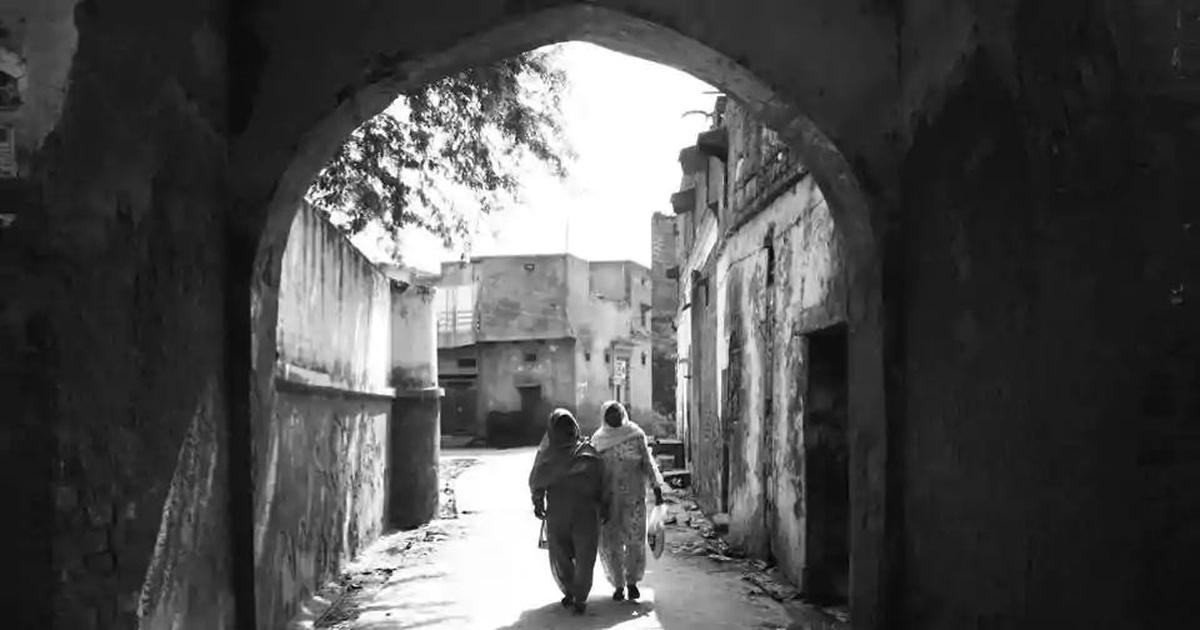
On this day, the Meos, who have long been the target of a campaign of communal violence unleashed by Hindutva groups, gather at Ghasera village to recall how Gandhi had called the Meos “Iss desh ke reed ke haddi” or the backbone of India.
The Meos are a large community found in the Mewat region, which is spread across the states of Uttar Pradesh, Haryana and Rajasthan. They profess Islam but also follow several Hindus customs.
During his visit, Gandhi had assured the community that they would not be forced to leave India. He also asked those who wanted to leave to stay on in the land of their forefathers. A month later, Gandhi was assassinated in Delhi
Gandhi’s assassination came as a blow to the Meos. “The Meos who had been convinced to stay once again started feeling they would have to leave,” said local historian Siddique Ahmad, who belongs to the Meo community and has written extensively about Mewat’s connection to Gandhi. “The women of Mewat used to sing a song – ‘Bharosa utth gaya Mevan ka, goli lagee hai Gandhiji kay chathee beech.’” The Meos have lost their trust, now that a bullet has pierced Gandhiji’s chest.
At the village, now sometimes referred to as Gandhigram Ghasera, Deen Mohammed, a key organiser of Mewat Diwas explains how the commemmoration began. “We felt the need to commemorate this occasion every year because our children must know our past,” he said. “There are people who call Mewat mini-Pakistan and us Pakistanis, but try as they may, the truth is that this is our land, we have shed blood for it and Gandhiji was with us in this fight. The world should be reminded of that.”
Haryana’s Ghasera village. (Photo: HT).
‘Ethnic cleansing’
“The Meos believe that one of the reasons for Gandhi’s assassination was that he managed to ensure that a large population of Muslims residing near Delhi was stopped from leaving,” said Ahmad, sitting in his study in Banarsi village in Mewat district. “This angered men like [Gandhi’s assassin Nathuram] Godse.”
Ahmad conceded that there were others reasons for Gandhi’s assassination such as his insistence that Pakistan be paid the arrears promised to it under the terms of the division of assets and liabilities between India and Pakistan, but insisted that his visit to Mewat was also a reason.
To buttress his argument, he cited an oft-repeated but never confirmed story that the pistol involved in the assassination was supplied by the Alwar royal family, which had once ruled over parts of Mewat region.
As Ahmad related the story of how the Meos were affected by Partition, the reasons for their respect for Gandhi and their distrust of the princely families of Alwar and Bharatpur became clear. (Both Alwar and Bharatpur lie in present-day Rajasthan.) In 1933, after the royal family of Alwar imposed heavy taxes, the Meos launched a successful agitation that led to the British deposing the Alwar king and taking over the administration of the state.
“The king of Alwar was already angry with the Meo farmers for an agitation they had led against him and one that got him dethroned so he already had great animosity against the Meo,” said Ahmad. “The Raja of Bharatpur wanted to create a Jatistan that would stretch from Nuh in Haryana to Bharatpur.”
Ahmad’s accounts of the violence during Partition are backed by historians like Shail Mayaram who have worked extensively on the history of the region. Mayaram noted in a 2000 article :
“[In 1947] the Meos are subject to one of the first exercises of ethnic cleansing. This is euphemistically (and literally) called safaya (to clean). Thirty thousand Meos are killed in the princely state of Bharatpur alone. And this is an official figure. No figures are available for the numbers killed and displaced in Alwar. But the total Meo population in the two princely states is nearly 200,000. Overnight, the Meos are slaughtered or evicted by multi-caste mobs referred to as dhars. Their villages are razed to the ground. Only those allowed to stay have been subject to shuddhi (so-called purification, in fact, a euphemism for a conversion rite). The violence is hardly spontaneous. It is completely organised by the princely states and orchestrated by the organisations of what are today referred to as the ‘Hindu Right’. Certain national level leaders belonging to the Congress are also among its supporters/participants.”
Those who survived the violence fled to camps that were mushrooming across Nuh, Rewari and Sohna, which were then in Punjab. These were “waiting camps” where people would live till the time they were made to cross over to Pakistan. “Everyone wanted the Meos to go to Pakistan,” said Ahmad. “The rulers of Alwar and Bharatpur, of course, the Hindu Mahasabha, every right-wing Hindu organisation, but even the Congress.”
The land of their forefathers
That the Meos resisted the pressures to leave in the midst of such madness speaks of their love for their land. Ahmad pointed to a record of a famous panchayat held at the time, where community leaders declared that the Meos would not leave their homeland.
According to him the idea to ask Gandhi to intervene initially came when Abdul Hai, the secretary of the All India Mev Panchayat, spoke to the Communist leader PC Joshi. Joshi is believed to have said that only Gandhi could bring peace. Led by the most respected and cherished leader of the Meos, Chaudhary Yasin Khan, a delegation met Gandhi on September 20, 1947, at Birla House in Delhi. “The Meos told Gandhiji that we would prefer to die than go to Pakistan,” said Ahmad.
In the ballads sung by the Meo mirasins (folk singers), Gandhi is said to have ended that meeting with a statement that “he too would prefer to die with those who never want to die in their motherland and were unwilling to leave her”.
Gandhi may well have been killed for expressing sentiments such as this. But the Meos refused to leave. It is a battle they still fight against the intellectual descendants of those who unleashed the violence against the community during Partition. One of the ways they resist is by annually invoking the memory of Gandhi and the promise he made to them.
The author was supported by Karwan-e-Mohabbat fellowship for this article.
source: http://www.scroll.in / Scroll.in / Home> History Revisited / by Radhika Bordia / January 30th, 2019
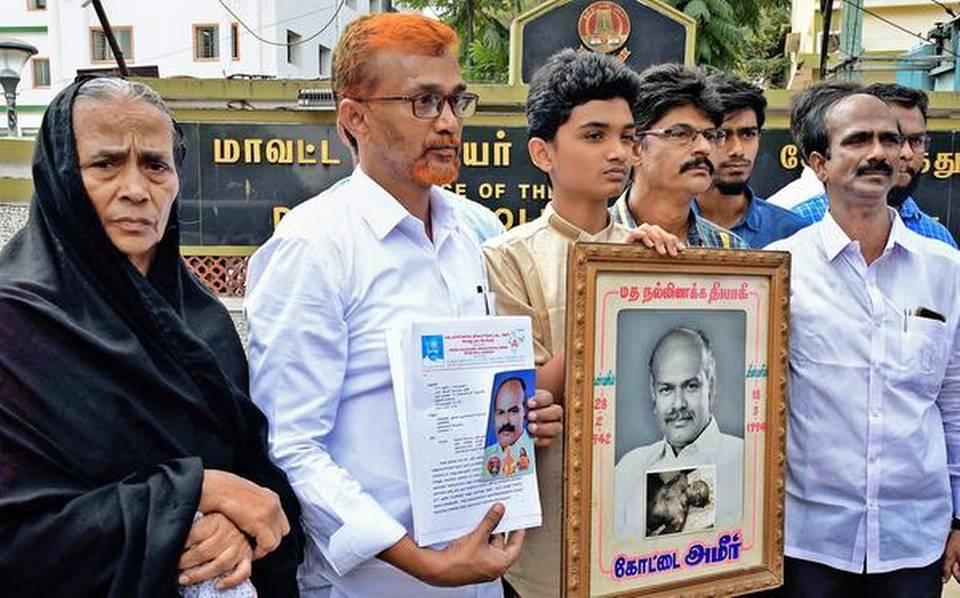
The family members of Kottai Ameer at the Collectorate in the city on Monday. | Photo Credit: S_SIVA SARAVANAN
The family of Kottai Ameer, in whose name the State Government presents a communal harmony award ever year on Republic Day, has called for continuing the tradition. In a petition submitted at the weekly grievances redress meeting here on Monday, Kottai Ameer’s son C.V.A. Jaleel said though the government gave away the Uthamar Gandhi Medal, Aringar Anna Medal and other awards this Republic Day, as it does customarily, it did not present the Kottai Ameer award.
The government’s failure to do so had caused consternation among Ameer’s family members and those who worked for promoting communal harmony.
To continue the tradition, the government must constitute a committee at least six months prior to Republic Day to identify the right candidate and continue presenting the award without fail.
This year, to make up for the failure, the government must confer the award on an eligible person on March 18, which was Kottai Ameer’s 25th death anniversary, Mr. Jaleel demanded.
source: http://www.thehindu.com / The Hindu / Home> News> Cities> Coimbatore / by Special Correspondent / Coimbatore – January 29th, 2019
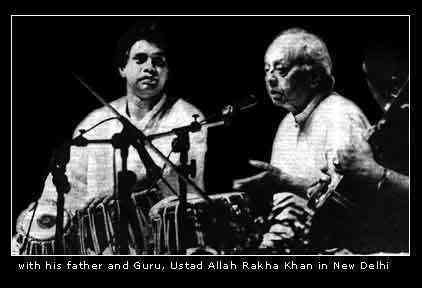
In the centenary year of Allarakha’s birth, his son talks about their music school and carrying forward an immense legacy.
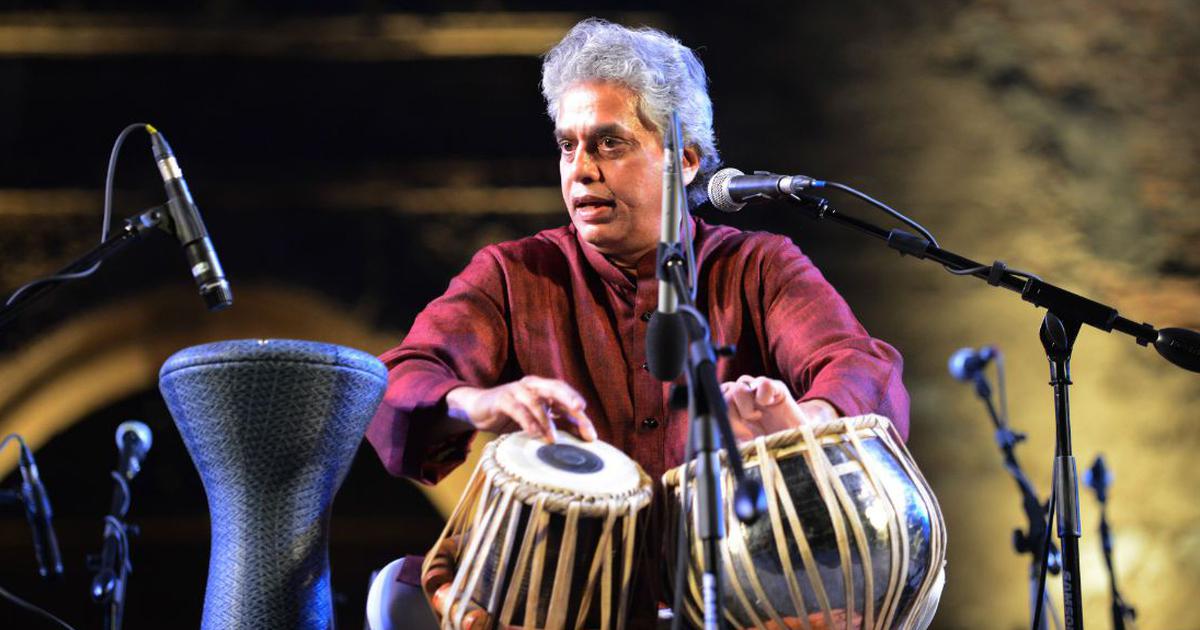
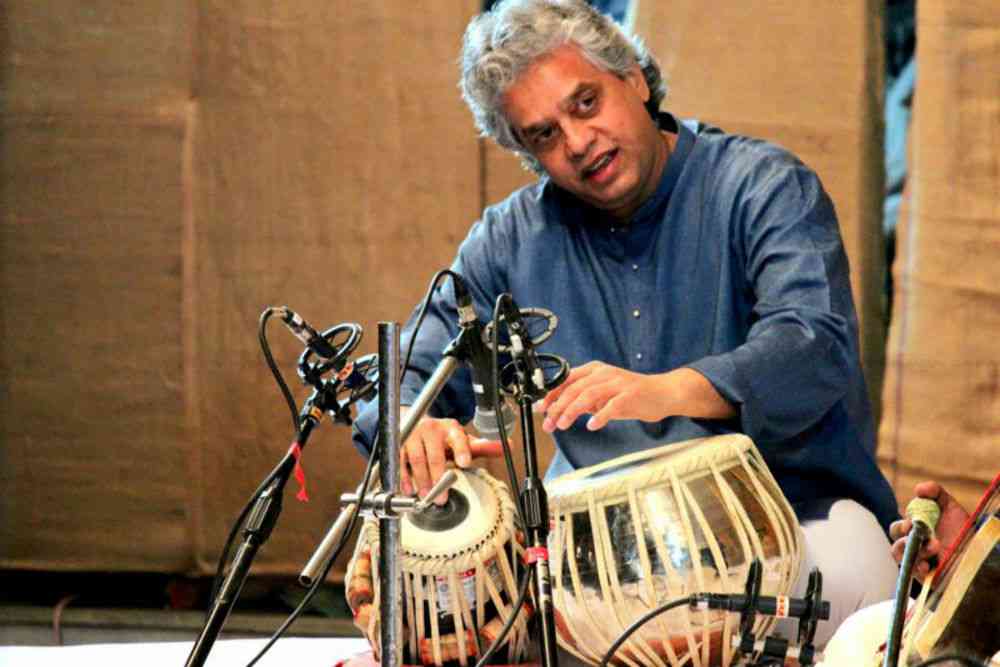
Fazal Qureshi | Sam Panthaky/ AFP
This year marks the 100th birth anniversary of arguably one of the greatest tabla players of all time – Ustad Allarakha. Born on April 29, 1919, in Phagwal, Jammu and Kashmir, Allarakha’s passion for music and talent came to the fore when he was only 12. During his many successful decades on the stage, he accompanied several of India’s most proficient musicians. His jugalbandi with sitar maestro Pandit Ravi Shankar is perhaps what he is most remembered for.
Allarakha was also a singer who composed music – under the family name AR Qureshi – for close to 40 films. He spent several years teaching in America and Mumbai, where he started the Ustad Allarakha Institute of Music in 1985.
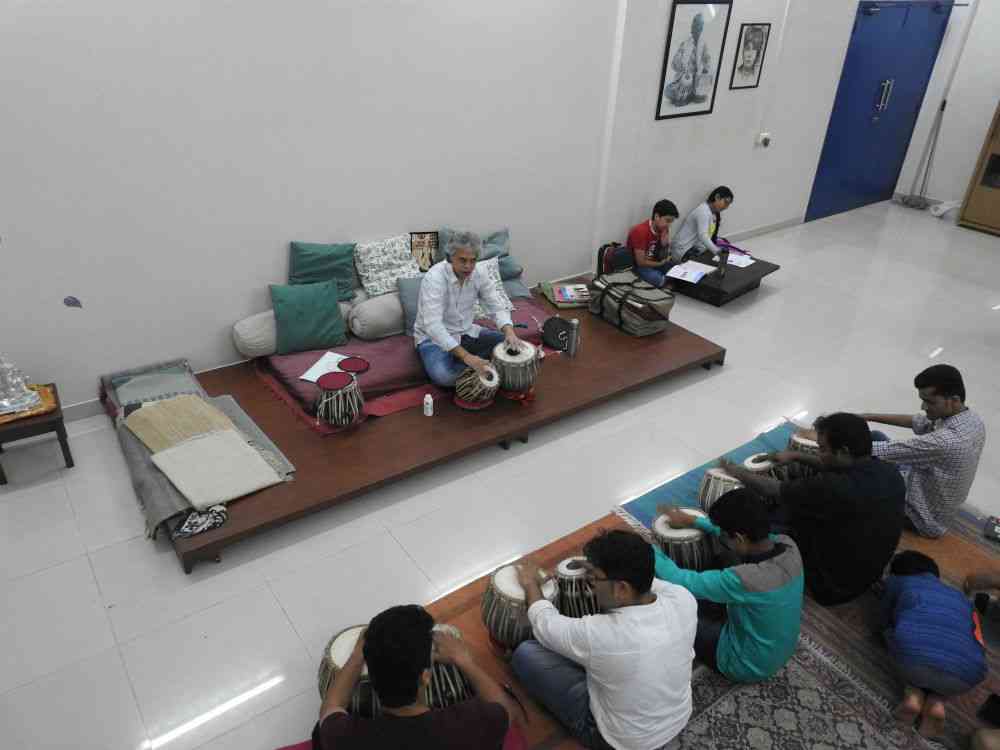
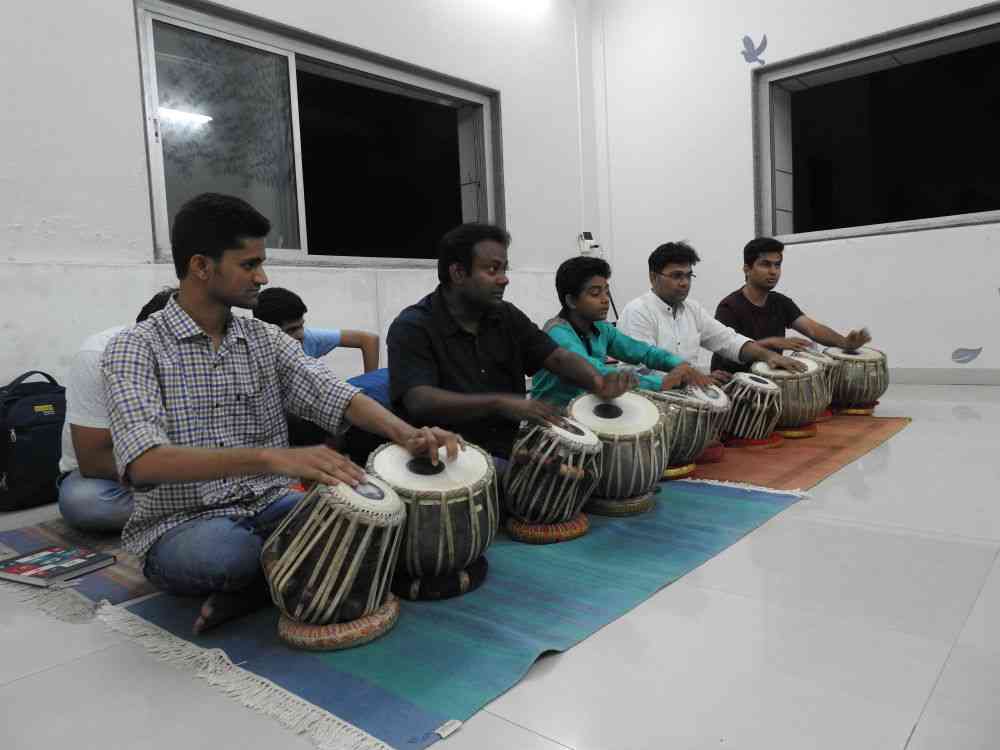
His son Fazal Qureshi, an accomplished tabla player in his own right, now runs the institute. Classes are held in a large room in the Gala Building within the Mahatma Gandhi Memorial Swimming Pool complex in Shivaji Park. I remembered the institute from having shot a scene there for a documentary film I was making on Guru Dutt in 1989.
I returned to it last December. After nearly an hour of listening to the exhilarating sounds of several tablas being played together under the guidance of Qureshi, I sat down to speak with him. During a long, freewheeling conversation, he spoke about the institute’s origins, his father’s teaching style, what prompted him to take up the tabla, his memories of his father and what makes classical music a draw for youngsters today.
Fazal Qureshi with students at the institute. Photo credit: Sanket Washikar.
How did the institute come about?
My father knew DM Sukthankar and S Tinaikar, both music lovers and commissioners at the Brihanmumbai Municipal Corporation [then called the Bombay Municipal Corporation]. Tinaikar’s son Mahesh played the guitar and was in a band called Indus Creed. Zubin Balaporia and I played in the band too. Back in those days, Abbaji said, “Mujhe sikhana hai, kuchh karna chhahiye aap logon ko (I would like to teach the tabla, you both must help me)”. So Sukhtankar and Tinaikar managed to allot a room for Abbaji in the building over there.
The deputy municipal commissioner, GR Khairnar, was a strict and upright person – he had, at the time, demolished many illegal structures in Mumbai. He lived in the house just behind the building where we were, and he used to come and listen to my father and his students. Later we moved to this classroom.
Did your father have many students?
Yes, and for many years. Previously they would come to our home in Shimla House. At one point, my father had decided he wanted to dedicate most of his time to teaching. There were many students who wanted to learn from him, and having a classroom was a boon. [Even if he] wasn’t feeling well, he would say, “No, no, I have to go. The students are coming there.” He enjoyed teaching and because of that his students enjoyed learning.
Your father was taught in a one-to-one relationship with his guru. How did he or you find teaching to a group? I teach about seven to 10 students at a time and I manage to concentrate on each one of them. They are at different levels, and so they are divided into sub-groups. That is exactly how my father used to teach.
[Let me tell you about how] I learned from my father. [Back then] he was so busy – he was travelling and [performing at] concerts. When he would come home, he’d just sit and practise. I would sit in front of him and play whatever he was playing. There was no question of being the student – whatever he played, I played.
You were mirroring him? Learning by imitation?
Yes, by imitation. There was no time to write the bols down. I had to learn them by heart. And properly, because the next time Abbaji was home after a tour, or the day after a concert, he would ask me to play whatever he had played. I did not always get the kaidas right, so I would [listen to] a recording of a concert in which he played that particular kaida, and study the variations. That helped me reproduce it. He would be impressed and would say, “Seekh gaya bacha. (You have got it.)”
Fazal Qureshi / Facebook.
And how old were you at the time?
About 15. I started pretty late. There’s a story behind that. There was a documentary made on my father in the 1970s by the Films Division in which you can see me playing the tabla with Taufiq [Fazal Qureshi’s younger brother]. We were just kids. After that I didn’t touch the tabla.
Abbaji used to tour America and also taught there, so some of his students would come to study here. There was a 16-year-old boy called Peter Peringer who came all the way from America to experience Indian culture. He was my father’s student and was very good. He stayed with us in Shimla House, and used to practise the whole day. I would go to school in the morning and when I’d come home, he would still be practising. I would take the tabla, sit in front of him, and play whatever he was playing, just as fast as him. Peter would say, “I practise this thing the whole day, and he just comes, picks up the tabla and plays the same thing, and as fast as me. How is that possible?” He recounted this incident to his friends in America who later told me about it.
But how did you do it?
I don’t know. The Peter incident was before my father had started teaching me. For me, it was something [that came] naturally. I was a little boy. I recently saw a video of a three-year-old playing the drums in an orchestra. A three-year old – now what does he know? But he plays as if he does.
Peter inspired me. I thought, look at this guy: he’s come all the way from America. And he’s just 16. He used to recite the bols so well. Zakir bhai [Zakir Hussain, Fazal Qureshi’s older brother] used to teach him too. He would take Peter to all his concerts and ask him to recite. Everyone was fascinated by his recitation: here’s this American who could recite almost like my father. He was so good. Sadly, Peter is no more.
Do you think there are more students today than when your father was teaching?
Of course. It’s [cyclical] – you come, you learn for a few years, and then you go because you’re already at a certain level and you want to perform on stage. Some of Abbaji’s students are now performing, including Yogesh Shamshir, Aditya Kalyanpur and Anuradha Pal. Then comes the next batch and the next. Many of Abbaji’s students are in America, and many of my students have established themselves as teachers and performers.
Students at the institute. Photo credit: Sanket Washikar.
How many classes do you have in a week?
We have about 40-50 students in circulation. I don’t call all the students at the same time – we give them specific days. We have classes from Tuesday to Saturday. If I miss a lesson because I am on tour, then I take the class on a Sunday. I want every student to come at least twice a week. Our fee is Rs 700 a month. It’s nominal because we want people to learn the tabla [irrespective of whether they are] rich or poor. I have a blind student who comes from beyond Thane. His grandfather brings him here. I teach him by reciting the bols. He’s got very good hearing, and could play even before we met, [though] he wasn’t taught.
Can we say your teaching belongs to a certain gharana?
For the newcomers, it’s basic training like how to use the right and left hand. I have watched and learned that from Abbaji. There are a lot of students who already have some facility in hand movements.
I am not strict about sticking to one gharana – when I teach a certain bol, [in] the way my father taught me, I want them to play in that style/gharana. But some students come to me [after] having been taught in a different gharana, so I don’t really change their hand. I cannot, because that would be starting from scratch. Over a period of time the students realise there’s a certain way they need to play, so they change by themselves. I don’t have to tell them. Nowadays they can watch videos on YouTube, and observe the way bols are played by Abbaji, Zakir bhai or Fazal bhai.
How long do you think it takes for a student to perform on stage? I can’t say, [but] I can give you my example. I started learning when I was around 14 or 15 and by the time I was 18, I was performing on stage. That’s not very much in terms of years, but remember, I was brought up in a musical atmosphere.
If I were to generalise, I’d say you need to learn for at least five or six years. You’ve got to get into the groove. A music school doesn’t teach you how to perform. You have to get out there. It’s like studying for an MBA – but then how do you apply what you’ve learned? You have to work in an office [and] learn the ropes, as they say.
A person must know how to apply their knowledge. Many of my students send me videos of their performances. I watch them and say, “Okay, here there was no need for you to play this or you played a little too long. It was not required.”
When you’re performing on stage, it’s [all about] teamwork. There is the instrumentalist and the tabla player, and together they [put up a] good performance. It’s not two performances happening at the same time – it’s one performance. You have to be in sync with each other. This is the attitude I want to instil in my students.
What is the most difficult thing about teaching the tabla?
I’m finding my way. Abbaji had his own thought process or philosophy behind the creation of a new composition, and that applied to when he was performing a kaida or rela. I am following his system because I used to ask myself how he created those variations. Analysis is important, and because of that I am able to add my variations to his compositions – I follow the same patterns.
It’s a way of thinking that’s passed on, and I’m trying to pass that philosophy to my students: I’m teaching you a variation, see how it’s created, see how you can develop it. From one variation another emerges. It’s like a chain. You need to understand how the chain is built and only then will you understand the composition. Create your own stuff later.
Does it surprise you that young people are still drawn to learning classical music in today’s fast-paced life? No – in fact, I see more students now than earlier. If you go to a Zakir Hussain concert, you’ll see many young people in the audience.
It’s [about] that one personality who brings in the audience. In the ’70s, it was Ravi Shankar. Everyone wanted to learn the sitar because of Raviji – that he had played with The Beatles [was a big draw]. Then there was Ustad Ali Akbar Khan saab, who was a big name in sarod. Everyone wanted to learn the sarod. The santoor and the flute became popular thanks to Pandit Shivkumar Sharma and Pandit Hariprasad Chaurasia. They made a good team with Zakir bhai. When they were on the stage, people went gaga over them. The tabla was already popular and with Zakir bhai, it has become even more popular.
The musician makes an instrument popular. That’s why the Rudra veena or the Saraswati veena are not very popular. It is because we don’t have a personality associated with these instruments. Why is the mandolin popular? It’s thanks to U Srinivas who was a great mandolin player. The mandolin is not even an Indian instrument, it’s a western instrument. The violin is not an Indian instrument either but it’s popular because of the personalities of the musicians who play the violin in the South as well as the North.
Pandit Ravi Shankar and Ustad Allarakha/YouTube.
This year marks your father’s 100th birth anniversary. How would you like him to be remembered?
My father was way ahead of his time. And a lot of people would agree with me. While everyone performed straightforward taals, he was creating new compositions in different rhythm cycles – he played six and a half, seven and a half, things the others were not doing. He was very innovative.
Abbaji was one of the first tabla players to accompany South Indian musicians, international drummers and classical violinists from the West. He was the first tabla player to compose film music. In later years, other classical musicians starting composing for the movies, including Ravi Shankar, Ustad Ali Akbar Khan and Ustad Vilayat Khan. Abbaji was a very open-minded musician. Despite being a traditionalist at heart, he was doing all this other stuff which was not connected to the tabla. In the 1940s, he was even employed as a vocalist with the All India Radio.
I’d like people to remember him as an all-round musician. He was a tremendous film composer. That’s one of the reasons why we created The Journey Continues, a musical tribute for my father with actor-storyteller Danish Hussain. It showcased Abbaji’s many talents.
What do you remember of him as a father?
He was a very calm and relaxed person who did not lose his temper. Taufiq and I were closer to each other in age. Zakir bhai was older. Abbaji never scolded us, [even though] we kids were up to all kinds of mischief, running amok around the house. He never scolded us. My mother would go crazy, but he would sit calmly – and let us do whatever we wanted. He had a lot of aspirations for Zakir bhai because he was the first son born in the family. It was not just Abbaji – most people around him shared his feelings. “Bhai, Ustad Allarakha ka ladka hai, pehla ladka hai, yeh to bajayega hi. (After all, he’s Ustad Allarakha’s eldest son, he is bound to play the tabla).”
Was your father an affectionate man?
He was very affectionate. And unbiased. If I was sitting among his students and practicing, he would not pay me more attention just because I was his son. He was very impartial. For him, talent was important – if you’re good, no matter who you are, rich or poor, I’ll teach you more.
Fazal Qureshi / Facebook.
What if a student is no good? What do you do?
I have to tell them – look, this is not happening, try something else. I don’t want them to waste their time or mine. If I want to be a professional musician and I am not good enough, I should realise it myself. Just because your father is in that profession, you don’t have to follow him.
When it comes to my relationship with the students, I’d like them to treat me as a friend, they should feel free to talk to me. They can ask me questions. I prefer a relaxed atmosphere – hierarchy shouldn’t exist.
How did your father deal with his students?
The older generation were very direct in telling people if they were going wrong. He used to sit in the audience and if his student was making a mistake, he would say out loud: “Arre, kya kar rahe ho? (What do you think you’re doing?)
Abbaji was outspoken. He used to think if you have something to say about someone, say it to their face, don’t talk behind their back. That’s how many great musicians were in those days.
source: http://www.scroll.in / Scroll.in / Home> Magazine> Interview / by Nasreen Munni Kabir / January 12th, 2019
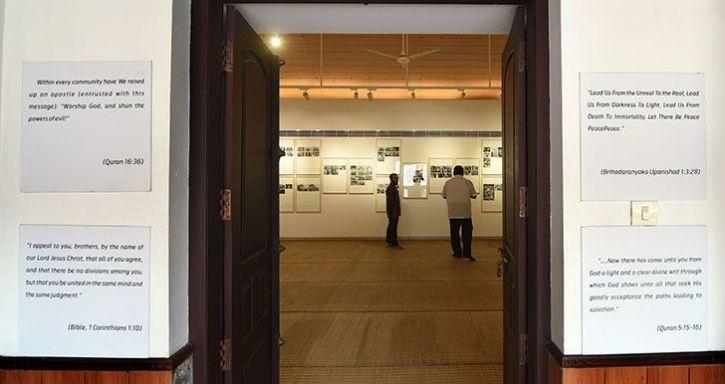
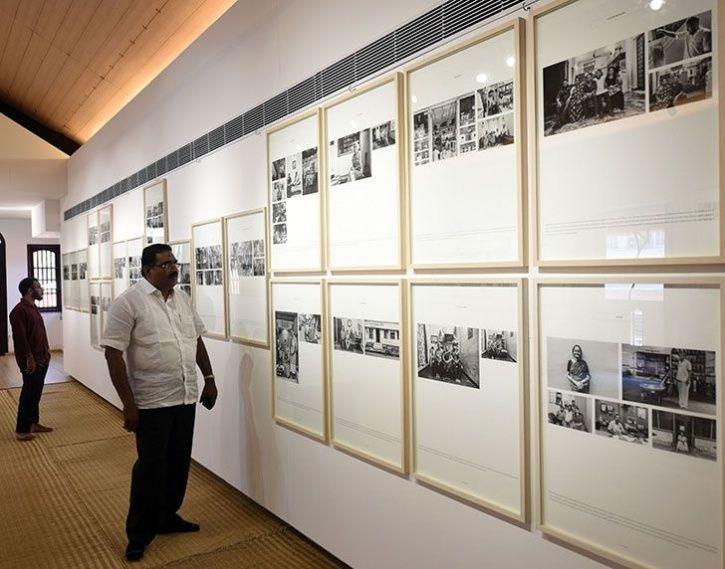
For the past 10 months, the faithful offering jumu’ah (Friday afternoon prayer) at Masjid-ul Islam in a lane opposite the RDO office in Fort Kochi have been doing so in a hybrid space — for, inside the mosque is a modern art gallery which was opened in April last year.
On Fridays, when it is prayer time, white curtains are hung from discreet hooks covering the art works; currently on show is a photo documentation of 42 communities found in the 5.5 sq km area of Mattancherry and Fort Kochi.
“The only reason why we are covering them during prayers is to ensure that people are not distracted,” says K A Mohammed Ashraf, chairman of the mosque committee, a businessman who set up the place of worship with his own funds four years ago.
Kerala mosque welcomes all, irrespective of faith & gender
The mosque has a board welcoming all, irrespective of faith and gender, and celebrates the diversity of religion with citations from revered spiritual texts. “We want to be inclusive. We don’t have restrictions on the type of dress one should wear,” Ashraf says, adding that the gallery, close to biennale venue, is visited by lot of foreigners.
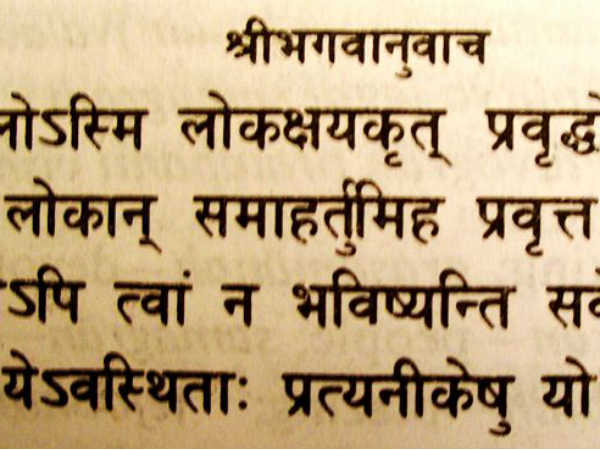
As one climbs the marble-paved, narrow flight of stairs to the Islamic Heritage Centre (IHC) art gallery on the second floor of the building, two quotes welcome you: a sukta from the Rigveda on the right and a verse from the Quran on the left, epitomising the shared destinies of both religions. The balcony space has several other quotes that build on the syncretic tradition.
On one side of the art gallery, neatly-labelled wooden shelves showcase books ranging from religious texts to even novels and poetry. “This is not much but we are trying to source some rare books. A large reference library is also on the anvil,” says Ashraf, who also runs Masjidul Islam charitable trust.
BCCL
The IHC and the gallery is a joint initiative of the trust and Forum for Faith and Fraternity (3F) who are fascinated by the golden age of Islam between AD 8 and AD 14, when mosques were centres of learning and art and science flourished.
“We want people to understand the principles of pluralism, cultural diversity and the importance of upholding these traits in the contemporary world,” says Ashraf who feels this is the only mosque in India which houses an art gallery.
C H Abdul Rahim, chairman, 3F, describes their organisation as a small group of professionals working silently to promote cultural diversity through study of different religions.
“It is a myth that Islam is antithetical to art. It has always promoted art and music and historically mosques were seats of learning,” said Rahim, former executive director of KIMS and a chartered accountant.
The show Transcendence by Biju Ibrahim is emblematic of this vision of plurality. From Lohanas, who are followers of Jhulelal, to Dhakni Muslims and 24 Telugu Manai Chettiars, Biju’s photographs capture vibrant communities in all their diversity.
“I don’t think there is any place in the world that houses so much diversity within such a small geographic space,” says Biju, who began working on the project in 2017 as a resident of Uru Art Harbour.
Most of these community members have strived to preserve their language and culture within their home but share a common identity when they step out of the four walls. “The show began in April but once the biennale kicked off I added five more panels to the exhibition,” he says. His show will be on till end of March.
Originally Published In The Times Of India
source: http://www.indiatimes.com / India Times / Home> News> India / by Binu Karunakaran / TNN / January 14th, 2019
Writer U.A. Khader shares a lighter moment with lyricist Poovachal Khader during a meeting to commemorate actor Prem Nazir in Kozhikode on Tuesday. | Photo Credit: S_RAMESHKURUP
Prem Nazir Samskarika Vedi’s award presented to lyricist Poovachal Khader
“The coincidental meeting of three Abdul Khaders” was how writer U.A. Khader described the 29th death anniversary commemoration meet of actor Prem Nazir in Kozhikode on Tuesday. The first being the actor whose real name was Abdul Khader, the second, the writer himself and the third Poovachal Khader, noted lyricist and poet who bagged the Prem Nazir Samskarika Vedi’s 10th anniversary award on Tuesday.
‘Memories still alive’
Prem Nazir, who holds many a record in Malayalam cinema, passed away in 1989 at the age of 62. “It is not for nothing that his memories are still alive in the minds of cinema viewers,” said the writer, adding that Prem Nazir had immortalised many of his characters. He cited the actor’s performance as Bhranthan Velayudhan in Iruttinte Athmavu as a classical one.
Film producer P.V. Gangadharan, who presented the award to Poovachal Khader, recalled how Prem Nazir supported him in his early days as a producer.
The Prem Nazir Samskarika Vedi has been presenting the award to many known and lesser known personalities in cinema over the last 10 years. Actors T.R. Omana, Shantha Devi and Sreelatha Namboothiri were some of the recipients of the award in previous years. Poovachal Khader, a relative of Prem Nazir, is also the president of Thiruvananthapuram-based Prem Nazir Foundation.
source: http://www.thehindu.com / The Hindu / Home> News> Cities> Kozhikode / by Staff Reporter / Kozhikode – January 17th, 2018
The date of inauguration of the exhibition hasn’t been decided yet, but most of the groundwork for the event has been completed.
For the first time in almost 12 years, the National Museum in Delhi is preparing to display the priceless jewellery collection of the Nizam of Hyderabad.
The date of inauguration of the exhibition hasn’t been decided yet, but most of the groundwork for the event has been completed. The National Museum exhibited the jewellery for the first time in 2001 and again e in 2007. There have also been two exhibitions of the jewellery at the Salarjung Museum in Hyderabad during the same period.
“In India, jewellery is an integral part of lifestyle. Among them, the Nizam’s collection of jewels is especially unique. It, therefore holds a significant position in the history of gemology and jewellery,” said Sanjib Kumar Singh , curator of the exhibition.
Soon after India’s independence and the annexation of erstwhile princely state of Hyderabad, the seventh and last Nizam, Mir Osman Ali Khan, created 54 trusts. The jewels, now in the custody of the Indian government, were part of the assets of these exclusive trusts. In March 1951, HEH the Nizam’s Jewellery Trust was created and it took over 103 items including state regalia; in February 1952, HEH the Nizam’s Supplemental Jewellery Trust took custody of 144 pieces of jewellery.
Negotiations began in 1972 between the Indian government and the family for the sale of the priceless heritage. In 1995, the Indian government finally acquired a part of the inventory for Rs. 217 crore. The actual value of this precious legacy is difficult to asses because it not only represents some of the finest jewels found in the Indian subcontinent, but also stands as a silent witness to the history of the Deccan region.
According to the government, the present collection comprises a total of 173 items acquired from the two trusts. The actual number of pieces, if pairs and groups of ornaments are split up, is 325 not, including 22 unset emeralds, and the 185-carat Jacob diamond, one of the world’s largest by size.
The collection includes turban ornaments, necklaces, earrings, armbands, bracelets, bells, buttons and cufflinks , anklets, watch chains and rings—all jewels once worn by the once fabulously wealthy Nizams of Hyderabad, their wives, children and grandchildren.
“This collection is a national treasure and comprises of jewels of fine beauty and rarity. I believe the jewels should be on permanent display as they belong to the people of India,” says art historian Deepthi Sasidharan, who has co-authored the book, Treasures of the Deccan–Jewels of the Nizams, published recently.
The exhibition is likely to feature around 33 showcases. The National Museum proposes to charge visitors Rs 50 for a 30-minute tour of the exhibition.
source: http://www.hindustantimes.com / Hindustan Times / Home> India / by Vanita Srivastava, Hindustan Times, New Delhi / January 11th, 2019