Category Archives: Arts, Culture & Entertainment

Kashmir’s papier mache art: Pulp fiction

JAMMU & KASHMIR :

PaperMacheMPOs12nov2018

Kashmir’s papier mache art is a story in itself.

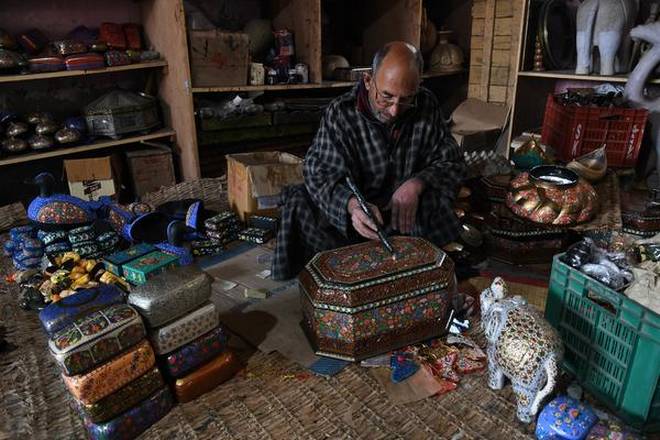
The credit goes to the Shia community of Kashmir for keeping alive papier mache art — colourful, exquisite, highly decorative and delicate — in the Valley since the 14th century. “This wealth has been handed down to me by my father who inherited it from my grandfather and so on. The colours and the shapes we carve from paper is what adds meaning to our lives,” says Zahid Rizvi, 40, a papier-mache artisan at Zadibal in Srinagar.

Over the centuries, the Shia community, now forming about 14% of the Valley’s population, has been perfecting the art. Historians believe that papier mache became popular as an art in the 15th century. Legend has it that a Kashmiri prince was sent to a jail in Samarkand in Central Asia, where he acquired the fine art, which is often equated with patience and endurance. The Muslim rulers of India, particularly Mughal kings, were fond of this art and were its patrons.

The process begins with soaking waste paper in water for days till it disintegrates and then mixing it with cloth, paddy straw and copper sulphate to form pulp. The pulp is put into moulds and given shape and form. Once it dries, the shape is cut away from the mould into two halves and then glued together. It is polished smooth with stone or baked clay and pasted with layers of tissue paper. Now, it is completely the baby of an artisan. After applying a base colour, the artisan draws a design. The object is then sandpapered or burnished and is finally painted with several coats of lacquer. The art got a major boost from the government in 2016, when the Nawakadal girls’ college in Srinagar introduced it in the craft curriculum. Saleem Beg, who heads the Kashmir chapter of the Indian National Trust for Art and Cultural Heritage, believes the future of papier mache lies in elaborate murals.

(Text by Peerzada Ashiq and photos by Nissar Ahmad)

source: http://www.thehindu.com / The Hindu / Home> News> States> Other States / by Peerzada Ashiq & Nissar Ahmad / November 11th, 2018

Nazar Nasir: Breaking gender stereotypes in Kashmir through crochet

Srinagar, JAMMU & KASHMIR :

Nazar Nasir
Nazar Nasir

Srinagar:-

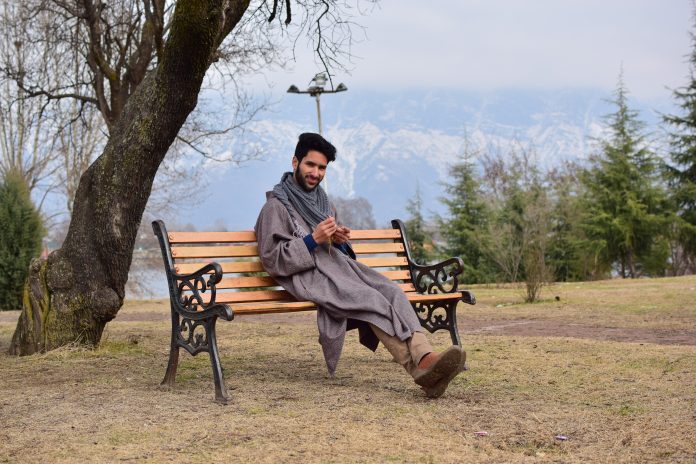
At the age of 19, Nazar Nasir decided to share the idea of him knitting and crocheting with his family members. Their reaction was exactly as he had expected. He was told in blunt words that this line of work didn’t suit males. But Nazar had made up his mind and decide to live his dreams despite the resistance.

Crocheting has been a well-known art amongst Kashmiris but it has been mostly pursued by the women for decades. It is for the very first time that a male while breaking some rigid stereotypes has made a business out of it. Nazar, who wet up Knotty Crafts, is gaining a huge following not only in the Valley but outside the state too.

A resident of downtown, Srinagar, Nazar is a student of literature. Apart from being a student, he keeps himself busy with crochet. He is the first and the only male who crochets from Kashmir.

Crocheting is a process of creating fabric by interlocking loops of yarn, thread, or strands of other materials using a crochet hook.

It all started two years ago when his sister brought a crochet hook and some yarn from her aunt and while she was wiggling the hook with the yarn strand, Nazar was so fascinated that he brought himself a hook and some yarn and started experimenting and has never stopped since then.

Crochet02MPOs10nov2018

From being just a mere experimental hobby, his passion for crocheting kept increasing and he turned it into a part-time business.

“For me, crocheting is not just a small business, but an escape from the world as I almost forget my being while crocheting. It’s so healing and so peaceful to me that I can work non-stop without worrying about anything else,” Nazar says during a conversation with TwoCircles.net.

“In a society where knitting and crocheting are considered too feminine a profession to be taken up by men, it was very difficult for me to do something that women usually do here,” he adds.

But paying no need for criticism, Nazar made-up his mind and started crocheting. It has been almost two years now and his business is flourishing day by day.

“People always talk and they say what they have to say, but today those who criticized me are always there for appreciation,” he says.

Nazar says he has been attracted to different forms of art for as long as he remembers.“I first learnt how to crochet and then I got deeper into the world of craft and taught myself to knit, to do macramé and to weave and I’m always learning new things,” Nazar says.

Nazar made his work public through social media apps like Facebook and Instagram and is getting a tremendous response.

CrochetMPOs10nov2018

“I earned a huge customer base within two years with the help of social media,” Nazar says.

He says he is blessed to be a part of such a big maker community in this age “I can’t describe how perfect I feel being a part of it. I will always try to explore and create more interesting things,” he says.

For people, it’s unusual to see a boy in this field of craft but Nazar says he is proud to call himself, ‘The only male crocheter of Kashmir’.

source: http://www.twocircles.net / TwoCirlcles.net / Home> Indian Muslim> Lead Story> TCN Positive> Youth / by Auqib Javeed, TwoCircles.net / November 09th, 2018

World from a writer’s plane

KERALA :

Writer B.M. Suhara
Writer B.M. Suhara

“I do not mix writing with my life,” novelist B.M. Suhara said at the fourth ‘My Writing, My Life’ programme organised by the Calicut Public Library to facilitate interaction of the public with Malayalam writers here on Wednesday.

“Life is enclosed by physical spaces, family and human relationships but writing is my door to an outside world,” she said.

Born in a conservative Muslim household at Thikkodi in Kozhikode district, Suhara’s family was a bit too restrictive but she read a lot and grew up adoring writers.

“It was my dream to do something with my life, but when the dream took the form of words, my mother was scared,” said Suhara.

Marriage to literary critic M.M. Basheer while pursuing her graduation took her to Thiruvananthapuram and out of her rural confines but the trepidation of stepping into the public sphere, ensured she would not take up a job. Motherhood followed, and the next years of her life was occupied in raising her children.

“My husband had a good collection of books and I read world classics and novels translated from other Indian languages,” Suhara said. “When my children grew up and went pursuing their dreams, a vacuum crept in and I could no more ignore the urge to write.”

Suhara began work on her first novel, Kinavu, but the process took five years. “I constantly wrote, rewrote and reworded to give final shape to the novel.” But a crisis of confidence emerged until her husband convinced her that the work could not be left unpublished.

Like several writers, the transition from the first to second novel was difficult for Suhara too and she decided her store of writing ideas had run dry. Dr. Basheer stepped in again and to provoke or inspire her said, “anybody can write one novel,” Vanitha had then approached her to write a serialized novel and thus Mozhi was born.

Suhara’s most noted work, Aaakashabhoomikalude Thakkol was her critique of polygamy in the Muslim community. The novel dealt with the lives of three Muslim women from different economic classes in society, married to the same man.

Nizhal, her fourth novel was an attempt to step outside the realm of familiar surroundings. The story was set in Thiruvananthapuram, with the characters speaking in the colloquial Trivandrum dialect.

Delving into the writing effort Suhara said, “I write in the daytime after my household chores are done. I get sick if I shun sleep and write at night.”

“Nowadays I feel that without writing, I cannot have a life ahead. The belief that I have more works to offer, fuels my journey ahead.”

source: http://www.thehindu.com / The Hindu / Home> National> Kerala / by Jiby Kattakayam / October 02nd, 2009

A common man’s labor of love: A mini-Taj Mahal for his beloved wife

Kaser Kalan (Bulandshahr District) , UTTAR PRADESH :

Retired postman Faizul Hassan Qadri walks out out the monument he is building for his late wife, Tajammuli, in the town Kaser Kalan in India’s Uttar Pradesh on Nov. 27, 2014. (AP Photo/Bernat Armangue)

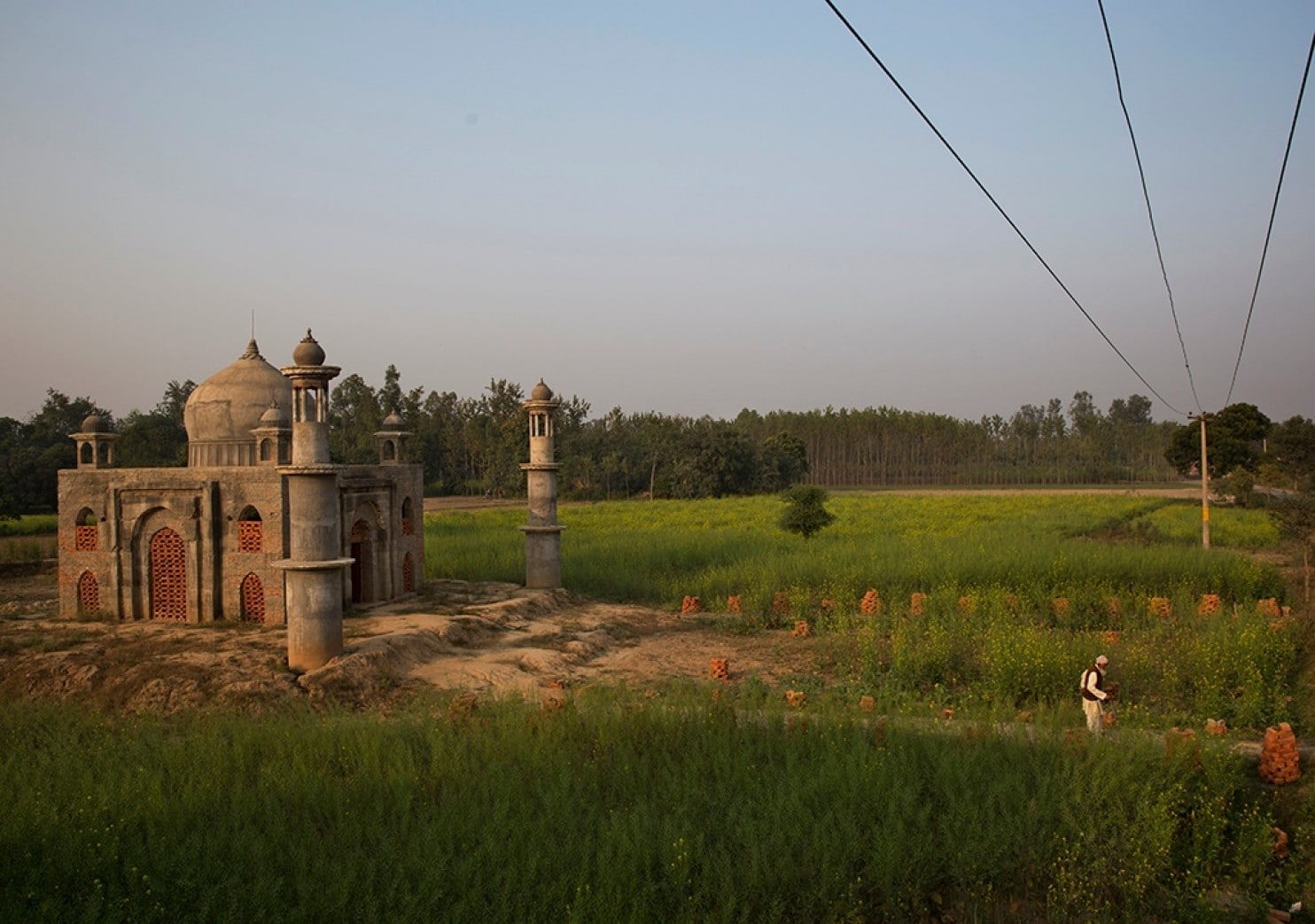
With 80 years of wrinkles and a beard that has long turned white, Faizul Hassan Qadri has been working away his golden days on what he calls a labor of love — a grave for his wife, his “begum.”

For years, the retired postmaster has been building a monument reminiscent of India’s ancient shrines outside his home in Kaser Kalan, a village in India’s Uttar Pradesh, pausing from time to time when he runs out of money for materials. He has sold farmland and his wife’s finest jewelry to get enough rupees to finish the job, according to the Hindustan Times . But it’s a promise he made to his wife, Tajammuli, who died from throat cancer in 2011.

Tajammuli had asked him who would remember her when she died.

“I will build a tomb that everybody will remember,” he replied.

The tomb has become known as a “mini Taj Mahal” and Qadri as a common man’s Shah Jahan, the Mughal emperor who built the original at Agra during the 17th century for his Persian empress, Mumtaz Mahal.

Visitors from all over have traveled to see Qadri’s mausoleum that sits on 5,000 square feet of ground in his garden, Press TV reported. “I traveled almost [15 miles] with my friends just to get a glimpse of this structure,” Pahasu resident Zakir Ali told Hindustan Times . “The efforts put in by him is really commendable.”

Qadri and Tajammuli married as teens in 1953, according to the newspaper.

“We were just a normal couple,” he told the Associated Press  last year.

Since Tajammuli’s death, Qadri has dedicated himself to preserving her memory. He said he designed her tomb on his own but got help with the construction from a local mason who “prepared the dome and constructed the four ‘minars’ around the central building, which is a little more than 27-feet in height,” he recently told the Hindustan Times. “The structure is built on my own land and I have also tried to plant some trees around it and have a small water body at the back side of the building.”

But construction has been touch-and-go, coming to a halt last year.

“Initially, I sold a piece of land for Rs 6 lakh [about 600,000 rupees or $9,000] and my wife’s gold and silver jewelry for Rs 1.5 lakh and got the ‘makbara’ [mausoleum] constructed with the help of a local mason named Asgar,” he recently told the Hindustan Times. “A total of Rs 11 lakh was spent, but now I have to get marble studded on the monument and also to build a lush green park around it, both of which is likely to cost me another Rs 6-7 lakh.”

Many, including the state’s chief minister, have offered him help but he won’t accept.

“The chief minister wants to meet Qadri to appreciate his efforts and to offer some financial help so that he can complete his unfinished building,” additional district magistrate Vishal Singh told the Hindustan Times.

“It is a proof of love,” Qadri told the Associated Press last year. “I have to do it on my own.”

He wants to finish the tomb before he dies, he said, and then he wants to be buried in it too.

“I have told my brother to bury me here by the side of my wife,” he told the Hindustan Times . “Everything that comes has to go away some day. My wife is dead. I will also die some day. The monument too might not stand forever. I just wish to see it complete before I die.”

source: http://www.washingtonpost.com / The Washington Post / Home> Sections> Modern Mix / by Lindsey Bever / August 21st, 2015

Yuvan is my biggest influence after AR Rahman, says composer AH Kaashif

Chennai, TAMIL NADU :

KaashifMPOs09nov2018

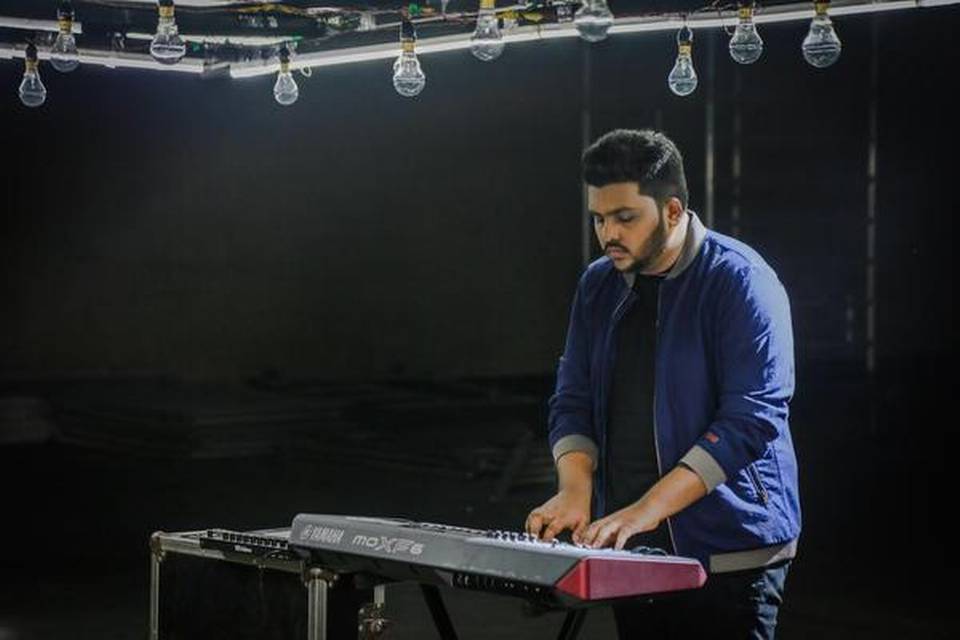
Music composer AH Kaashif chats about his upcoming film Kaatrin Mozhi

Music has always been part of AH Kaashif, who says he was forced to learn the art form at the age of four. What initially started as entertainment later developed into passion. “I was seriously into music during Class IX. I decided that music would be my career. I completed a course in sound engineering, after which, I started interning with my uncle,” says AH Kaashif.

Not many know that Kaashif is related to AR Rahman. “It wasn’t brand ‘Rahman’ that landed me an opportunity in films. If I’m here today, it’s because of my work,” he says rather proudly. Kaashif took a detour from music to enjoy school life. But even in school, he participated in most cultural programmes. Kaashif dropped out of college since he felt it wasn’t the “right place” for him. “That’s when I began to do mainstream work for my uncle. I started working on background scores,” he says.

Kaashif worked as a music producer for AR Rahman and has contributed to the background score and songs in films like Mersal and Beyond the Clouds. His most recent work, apart from Kaatrin Mozhi, is the Vijay-starrer Sarkar.

Despite the Rahman factor, Kaashif quickly admits that he’s a big admirer of music composer Yuvan Shankar Raja. “Obviously, Rahman is my mentor, guru and everything. But in Tamil, one composer who really inspired me a lot during childhood is Yuvan Shankar Raja. He was the one who redefined electronic music. Of course, my uncle brought it in here, but Yuvan based his entire career on electronic music. Everybody knows I’m a big Yuvan fan.”

Kaashif has been releasing independent albums through social media. It was the song ‘Kadhal’ that fetched him an offer to compose for the Jyotika-starrer Kaatrin Mozhi, which is a remake of the Hindi film Tumhari Sulu.

“The producer was very impressed with my work. I met Radha Mohan later and he asked me to compose a few sample tunes. The whole process took about three months,” he says. He hasn’t watched the original version yet.

Kaashif believes there’s good scope for independent music in Tamil. However, he clarifies that it’s all about channelising and packaging stuff. “The scope of independent music is always there. For instance, Sony did an independent thing, which worked big time. When you have a brand representing you to promote your stuff, then it’ll definitely work out. But in my case, there wasn’t any brand backing me. When I put out my music, people got to know about this. In a way, everything happened in a very organic manner,” he explains, “Having a brand might ease the process. But at the end of the day, it’s about content.”

The songs ‘Kelambitale Vijayalakshmi’ and ‘Dirty Pondati’ seem to have become a rage on the Internet. Kaashif says that the former is the central theme of Kaatrin Mozhi that resonates with Jyotika’s on and off-screen persona. The composer is relatively young to process a situation like say, the romance between husband and wife. How does he manage to convert this little piece of briefing into a soulful number like the song ‘Po Urave’? “I really don’t know. In fact, it was the easiest song for me. Once the director explains the situation, I keep running it in my head. And then, I sit for composition and the tune begins to flow,” he adds.

Kaashif has signed the forthcoming Malayalam film Pathinettam Padi, directed by Shankar Ramakrishnan. He has been getting a couple of offers in Tamil as well.

source: http://www.thehindu.com / The Hindu / Home> Entertainment> Music / by Srivatsan S / November 08th, 2018

The last of eight generations of Rogan art in Kutch

Nirona Village, (Kutch District ),  GUJARAT :

Abdul Gafur Khatri at work at his residence in Nirona village, Kutch | Photo Credit: Vijay Soneji

The Khatris have practised the art for eight generations now

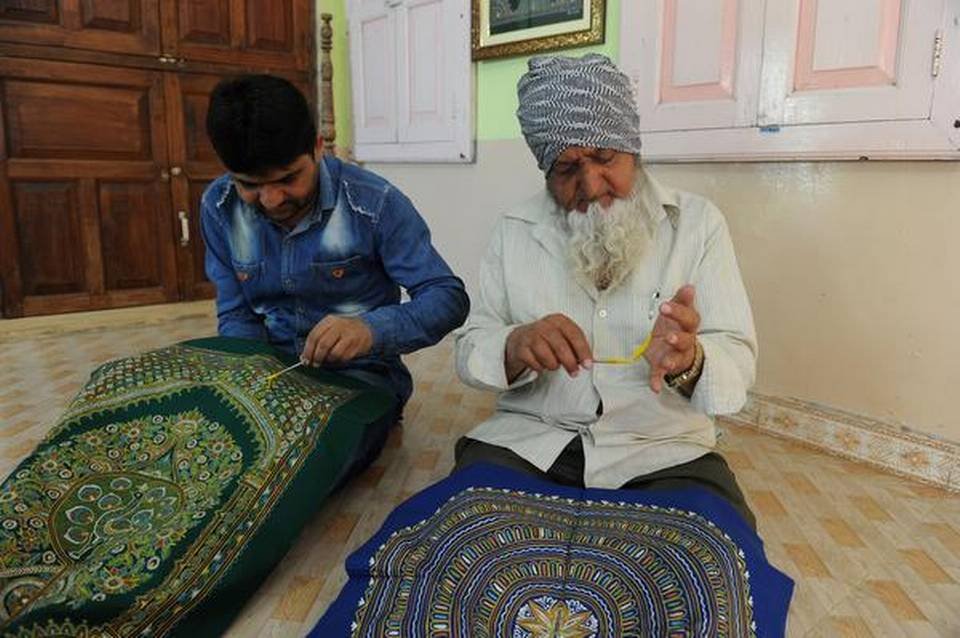
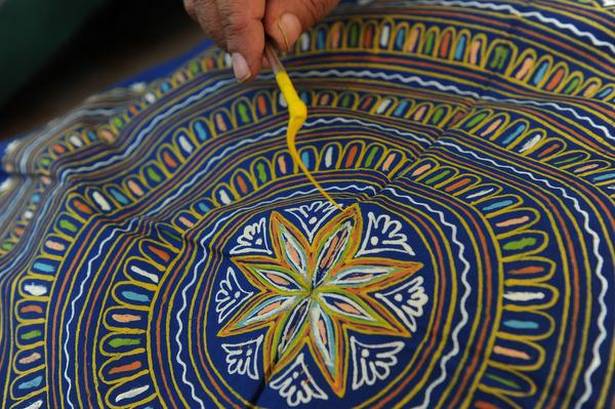
Sitting on the floor, Abdul Hamid carefully twists a thick spool of yellow paint around a metal pin. Stretched out before him is a piece of red cloth, pinned on either side to the legs of his trousers. He dabs the paint on the heel of his left palm — it’s a gummy mass and has to be worked into something more malleable. Hamid then brings the tip of the pin a few inches above the cloth, and as it hovers, an elastic strand of colour streams on to the surface. And the magic begins: an intricate pattern grows beneath the swirling pin that never touches the cloth. The floral design looks like needlework.

Hamid then folds the cloth and, just like that, a flawless mirror-image of the pattern appears and an exquisite piece of Rogan art is born.

“We have practised Rogan for eight generations now,” says Hamid. “The first six generations did not get their due for preserving the art, but now, finally it is widely recognised and we couldn’t be happier.”

‘Rogan’ in Persian means oil: the paint is made with castor oil. Rogan art is believed to have originated in Persia some 300 years ago and was traditionally used to embellish bridal trousseaus. As it crossed borders, it began fading from the collective memory of its creators. But nine members of the Khatri family in Nirona, a small village in Gujarat’s Kutch district, are the last surviving custodians of the art form.

The Khatri community once did Rogan work on the clothes of local animal herders and farming communities. But as machine-made textiles became a more affordable alternative and Khatri youth lost interest in learning the art, Rogan began to disappear. “But our family revived it in 1985,” says Hamid. In fact it is Hamid’s elder cousin, Abdul Gafur Khatri, a national award winner, who is credited with resurgence of Rogan art.

P.M.’s pick

The ‘Tree of Life’, an intricately patterned tree with hundreds of dots and dashes, is their signature painting and most in demand. A 14×17” painting can take 12 days to complete— Prime Minister Narendra Modi chose one to gift to the then U.S. President Barack Obama during his U.S. visit.

“Rogan art is 100% an artist’s imagination on a piece of cloth,” Gafur bhai, as he is better known, explains. “There is no tracing, no drawings to refer to.”

But preparing the base from castor oil is a laborious process and can take two days. The oil is heated and cooled in a (special) vessel and continuously stirred so it doesn’t burn. After two days, the residue left behind is mixed with cold water and it thickens into a sticky paste called rogan. Natural colour pigments are then added to the oil base. “Yellow, for instance, comes from a particular stone that is ground,” says Hamid. The pigments are added to the castor oil base and stored in earthen pots.

Wall pieces made by Abdul Gafur Khatri in Nirona village, Kutch | Photo Credit: Vijay Soneji

The nine artists have six national awards and six State awards between them. They proudly show me photographs of celebrities — politicians, film stars, sports stars — who have either bought their art work or felicitated them at awards functions.

Men last longer

It strikes me as odd that all nine members of the family working on the art form are men. This could perhaps do with the belief that women, once they get married, would pass on their knowledge to their husband’s families, threatening the art with dilution. But as Rogan faces extinction, Gafur bhai, has taken upon himself the task of teaching the technique to 200 girls from his village. And this has breathed fresh life into the dying art.

“We taught most of these girls for free. They can now create at least the basic designs,” Gafur bhai says, adding that 25 girls also help the family with their work. In another effort to popularise Rogan, the family conducts live demonstrations for every visitor at their doorstep. During the 30-minute demonstration, artists patiently answer questions and explain the techniques they use. On an average, the family gets 150 visitors a day. And between November and February, during the Rann Utsav — the Kutch desert festival — the numbers shoot up to 250 or 300.

No tough competition

Unlike other forms of textile art such as Ajrakh that face are under threat by factory-made products, Rogan faces no such competition, but meeting market demand has been a challenge.

“You will not find Rogan art the way you find other arts in the markets. It’s not because we don’t want it to go out to the people, it’s because we have limited resources,” says Gafur bhai. We go to five or six exhibitions around the country in a year, and rest of the time we are at home, working.”

It has been a long journey for the Khatri family: from reviving the art to creating public interest to recovering from the Bhuj earthquake setback. But today, they are only seeing a huge resurgence of interest.

The writer is an independent journalist based in Gujarat. When not researching her stories, she is busy spinning tales for her toddler.

source: http://www.thehindu.com / The Hindu / Home> Society – Rubric / by Azera Parveen Rehman / January 20th, 2018

How one woman’s story changed the lives of Turtuk’s women forever

Turtuk (Leh District ), JAMMU & KASHMIR  :

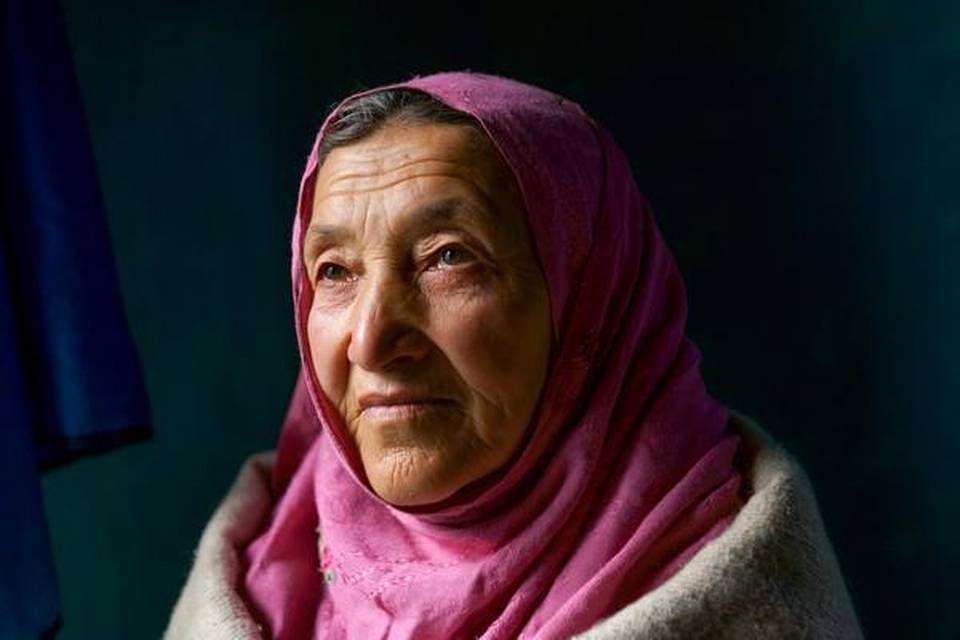
Rahima Begum | Photo Credit: Kartiki Selena Gonsalves

She was the first girl of this border village to finish school when other girls did not even get schooling; and she became the first woman to get a government job here

Rahima Begum was a young bride and new mother when she awoke one morning in December 1971 to find her dreams shattered and her new family divided. India had captured her village of Turtuk and three neighbouring villages of Chalunka, Thang and Tyakshi on the India-Pakistan border. Overnight, the LoC had shifted. For India it meant a tactical victory, and new vantage points for the forces. For the villagers, it meant separation, heartbreak and hardship.

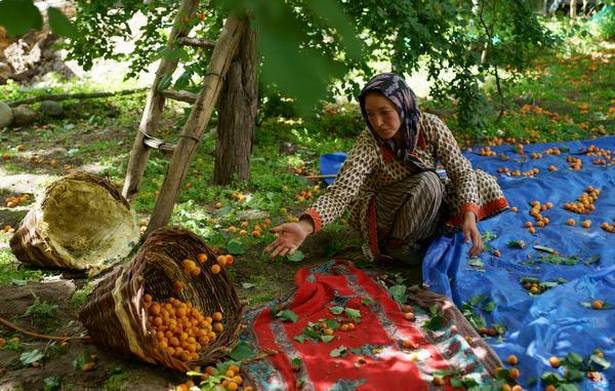
Turtuk, with its lush fields and blue skies, is an oasis amid the stark, stony peaks of the Pamir and Hindukush mountains. The sprawling flowering buckwheat fields are dotted with the orange-canopied and entangled trunks of apricot trees. Water from the glacier gurgles along Turtuk’s cobbled paths, and in summer, laughter echoes across the fields as children splash about in a natural pool in the village centre.

This is where Rahima grew up in the 1960s. She was a bright, free-spirited child, full of dreams. Her parents had ambitions for their young daughter. Her great-grandfather was a famous Balti poet. Rahima attended the local school and, at 14, became the first girl to graduate from it.

A Balti woman harvesting apricots | Photo Credit: Kartiki Selena Gonsalves

She recalls how in summer the children jumped into the pond to bathe. They did so with their school uniforms on, so they got washed too. They would then stand under the sun, arms outstretched, and dry out.

As was the custom, as soon as Rahima finished Class VI, her family found her a husband. He happened to be her cousin, Sher Ali and was known as the most handsome man in the area, and in fact in all of Pakistan. Rahima considered herself fortunate. Ali worked in the Pakistan army and marriage promised travel and a steady income.

Daily chores

As a married woman, Rahima took on household and farm work. She woke early, prayed, and made breakfast of kisir (buckwheat pancake) and grangthur (curd with local herbs). She would then set out to work in the fields or orchards. On some days she returned by afternoon, on others she toiled till sunset. At home, there were donkeys and chickens to feed and other domestic chores. Then, in November 1971, Rahima’s daughter Aisha Sudiqa was born.

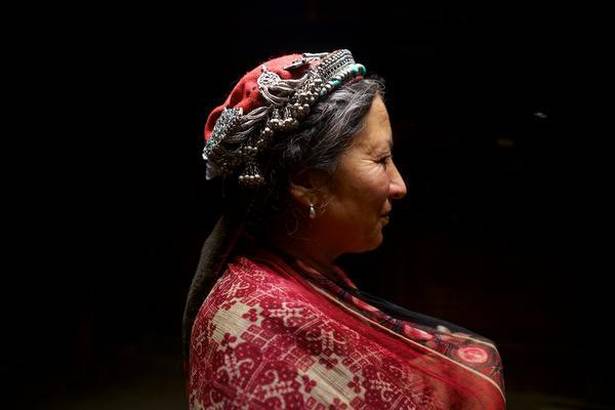
Traditional Balti attire and jewellery | Photo Credit: Kartiki Selena Gonsalves

In December, when India captured the area, Chalunka’s residents gathered all the possessions they could and fled across the new border into Pakistan-occupied Kashmir. The three other villages decided to stay in India.

For some time, Rahima’s life remained unchanged; she was immersed in her baby daughter. But Sher Ali was not permitted to cross the border and come to India and Turtuk. Aisha was growing up; she began to accompany her mother to the apricot orchards and splash in the pond. But Rahima missed Sher Ali very much. She had not foreseen that she would be raising her daughter on her own. She waited hopefully for news of his return. Three years passed.

Then, in 1974, Rahima finally received a letter. It was from Sher Ali. Her hands trembled as she opened it. He wrote to say that he missed her very much, he asked about Aisha. He said he hoped to be reunited with them soon, and asked her to take care of herself and their daughter.

After reading the letter, Rahima became even more determined to live with him, even if it meant crossing the border into Pakistan. The very same day she packed some clothes and documents and set out with Aisha on the long journey to the Wagah border. Miles of barren, unforgiving terrain later, she gazed out of the tempo window to find men in khaki and green, and army trucks trundling by every few minutes. The vehicle slammed brakes, and she was ordered to get down with everyone else. She walked to the border control. She was afraid, but knew she had to be strong.

The officials inspected her documents, and checked records from a big book to make sure she had no history of attempted border-crossing. An officer then walked towards her, and said she could not cross. She pleaded with him, but it was of no use. Heartbroken, Rahima and Aisha returned to Turtuk. She wondered if she would ever see Sher Ali again.

Boys drying themselves after a swim. | Photo Credit: Kartiki Selena Gonsalves

Bolt from beyond

Two more years passed. Then, when Aisha was six, in 1976, Rahima received a letter. It said “As-salaam-alaikum. I hope you and Aisha are well. I am upset to bring to you the news that I don’t think we have hope of ever meeting again. I tried many times to cross the border and was rejected. I think it is time to say goodbye. I need to marry another woman. Khuda Hāfiz.” For Rahima, life went on.

Six years later, Sher Ali wrote again. It had now been 12 years since their village had been brought into India. This time, the letter asked for a divorce. Rahima’s eyes welled up with tears, her hands shook as she read the letter. “Take care of Aisha,” the letter said. “I wish you luck in life. Khuda Hāfiz.”

The divorce came through. In October 1983, Rahima’s and Sher Ali’s parents persuaded her to marry Sher Ali’s younger brother, Abdul Kareem. Aisha was delighted to have a father, and the next year, the couple had a baby girl they named Farida Khanum. Ten years went by. Rahima, now a mother of six, was determined to make something of her life. She decided she wanted to improve the lives of Turtuk’s residents. With her education, she was able to take up a government post in Turtuk as an Urdu teacher.

BaltiWomenMPOs04nov2018

Rahima sent all her children, boys and girls, to school, and encouraged others to educate their children too. She led by example: she was after all the first girl of her village to finish school when other girls did not even get schooling, and she also became the first village woman to get a government job.

School topper

Rahima’s daughter Aisha also excelled in school, and became the first girl to leave Turtuk village and enrol in high school in Hunder. She then went to Srinagar’s Maulana Azad National Urdu University for a B.Sc. degree, and then an MBBS as well.

Nobody from Turtuk had ever gone outside Ladakh to study before. Aisha was excited and proud. After her training, she returned to Turtuk, the first woman doctor in the village.

Aisha, like her mother before her, became a role model for Turtuk’s girls. She visited her neighbours, friends and relatives, and even the schools in Turtuk and neighbouring villages. She spoke to the young girls there, ignited in them dreams and hopes, spoke about careers, income, knowledge and education of women. Today, everyone in Turtuk wants their girls to be like Aisha, to go to school, to work, discover the world outside. It has been a major leap.

One evening during Ramzan, in 1995, Aisha returned home to break her fast, but feeling fatigued and disoriented, she went to bed, and passed away in the early hours of the morning. She had been suffering from anaemia and the strain of travel and fasting had proved too much.

Rahima mourned her first-born, and the village the loss of their strong, independent and educated daughter.

But Turtuk vowed to keep her memory alive by educating girls and improving their lives. Thanks to the mother and daughter, life in Turtuk has changed a lot. Now, all girls attend school. Many continue their education in Kashmir or Delhi in big universities.

To the average tourist, Turtuk may look like it’s stuck in a time-warp. But its residents know that their lives have changed dramatically. And that a big part of this revolution owes to two of Turtuk’s daughters, Rahima and Aisha.

The Mumbai-based writer is a Sony Artisan, photojournalist and cinematographer.

source:  http://www.thehindu.com / The Hindu / Home> Society / by Kartiki Gonsalves / November 03rd, 2018

Journey of music: How members of Dilli gharana are keeping up with changing times

NEW DELHI :

Even today, the custodians of the centuries-old Dilli Gharana of music, known for its Khayal gayaki, live and practice their art in the old, romantically named Mausiqi Manzil in the Walled City. But with changing times and commercialisation, they are experimenting with their craft to stay relevant

It will be too much to expect Aalif Iqbal Khan to understand the significance of being the youngest descendant of the Dilli gharana. He is five years old – too young to know the history of the family or the legacy he will have to uphold in the years to come. But the family elders seem to have already decided for him. They enjoy seeing Aalif spend time with his grandfather, Ustad Iqbal Ahmed Khan, 64, the head or khalifa of the clan, in the living room of Mausiqi Manzil, their more-than-200-year-old house in Delhi’s Walled City. They film the child when he exerts his vocal chords while sitting cross-legged on his grandfather’s chest. “Look how beautifully he sings. There is no match to his talent,” says Aalif’s mother, Vusat Iqbal Khan, 32, with pride.

Musical families across the country have seen far-reaching changes over the decades because of the evolving tastes of audiences, the death of royal patronage, the impact of technology and plethora of alternative leisure activities. Having felt the ripple effects of this transformation, the family representing the Dilli Gharana of music (gharana refers to a style of presentation) is trying to remain relevant to the times without compromising on its rich history.

The family is one of the oldest in the country to propagate the city’s Khayal gayaki – a style of singing popularised by 13th century Sufi poet Amir Khusrau. Over time, members of the clan preserved and promoted more than two dozen sub-genres of singing such as sawela, tirvat, dhamar and sawan geet. Some members of the gharana have mastered musical instruments too, such as the tabla, sitar and violin.

“It is hard to find another family which is such a rich a repository of Khusrau’s compositions. They also know the journey of the compositions and the many influences on each composition over the course of centuries,” says Vivek Prajapati, 30, Iqbal’s disciple and a PhD scholar at the faculty of music and fine arts, Delhi University.

According to Hindustani classical singer and writer Vidya Rao, the Dilli gharana strongly suggests that one of the influences on the development of Khayal gayaki could be Sufi tradition and music. “Also, it is perhaps the only Khayal gharana where the ghazal is an integral part of the gharana’s repertoire,” she says.

According to Dr Sunanda Pathak, scholar, performing artiste and author of Origin and Evolution of Raag in Hindustani Classical Music, the Dilli gharana’s style of presentation offers tremendous scope for developing ragas. “The style is taan pradhan or variation in notes is the primary ornamentation tool,” she says.

According to Delhi historian and chronicler RV Smith, “Before Khusrau, there was only bhakti sangeet in India. Khusrau combined the temple music with the music of the Arab peninsula to develop multiple genres of singing, among which, Khayal was the one mostly practiced by the founders of Dilli gharana.”

In the old days, classical artists like Siddheshwari Devi, Malika Pukhraj, musicians and composers like KL Saigal, Roshan Lal Roshan, and Mumtaz Jahan Dehlvi (much before she arrived in Hindi cinema as actor Madhubala), were regulars at Mausiqi Manzil. “In 1938, there was a conference near Jubilee cinema in Chandni Chowk, where she sang. Back then she was just Baby Mumtaz,” says Iqbal.

The narrow lane leading to Mausiqi Manzil has shrunk even further over the decades due to haphazard construction. The bylanes resemble tunnels within a tunnel. The windows of one house open into the bedroom of the facing house. Sunlight is a luxury. Goats are parked along with two wheelers, cycle rickshaws and carts. A web of electricity wires sags above passersby.

Iqbal lives with his wife Zohra, son (Saad, 22) and youngest daughter (Sadiya, 23) on the first floor. Pictures of Khan’s great grandfather Ustad Mamman Khan, grandfather and teacher Ustad Chand Khan and his brother Jahan Khan hang on the wall, silently watching the proceedings in the living room. Iqbal’s books and awards are stacked in a wooden showcase. He takes out a briefcase from a trunk. It contains Chand Khan’s manuscripts in Urdu, Arabic and Persian, and all his medals. An old, dark green pouch contains a few of his belongings, including one of his pens and even a tooth! “Babu miyan had asked me to throw it. But I kept it safely,” says Iqbal, recalling his mentor.

FILMI SONGS
Times are tough. Iqbal’s descendants perform on a freelance basis, take up teaching assignments and perform with him in regional and international concerts.

They are open to trying different formats and styles as long it is in sync with the family’s tradition. Iqbal’s first cousin and student Imran Khan, 38, was in his early 20s when he was approached for a television reality show. “Ab tum filmi gaaney gaaogey?” his mentor said. But Imran says if he got the offer now, he would accept it. “I don’t think playback singing is a bad thing. I sing for bands. In a mehfil, I sing Sufi songs, ghazals, and film songs,” he says. “Hmmm…maybe things would have been different had I participated in that reality show.”

Iqbal faced a similar situation in his youth. “Filmmaker Rajinder Singh Bedi offered me a film. I said I would be comfortable if the composition was similar to what Bade Ghulam Ali Khan sahib sang in Mughal-e-Azam. Otherwise, I was not interested. It didn’t work out,” he says.

More women in Iqbal’s clan have been to college than men. Iqbal, a graduate from Delhi’s Dayal Singh College, and his younger brother, the late Dr Anis Ahmed Khan, a music scholar, were exceptions. “I am all for education. But it cannot replace talent. And then, look at the sheer number of educated unemployed youth,” says Iqbal. After a moment, he adds. “Riyaz consumes lot of time. It does not leave any time for school and college.”

Iqbal’s family is learning to make the art form commercially viable without degenerating the guru-shishya tradition. In 2012, Iqbal’s daughter Vusat quit her job as a communications consultant with the union ministry of information & technology to help her father and add to the family’s body of work. Apart from overseeing the management of two family enterprises – the Amir Khusrau Institute of Music and the Sursagar Society – Vusat conceptualised and performed storytelling for two productions (Rudad-e-Shireen and Ghalib, Umrao Ki Nazar Se). “I realised that my family members were not getting the exposure they deserved. Also, they have a classical music mindset. It is a good thing. But these days, you have to contemporise to become commercially viable. It is the need of the hour,” she says.

The experiments didn’t come about without disagreements. Sometime in 2015, she was designing a performance of Indian classical vocal and instrumental fusion. Her father did not want to compromise on certain elements. His apprehension was that adding instruments might lead to confusion. “He belongs to the era when the world was straightforward and transparent. But we have to look at the commercial aspect as well. It is very difficult to convince abba ji. But eventually we manage,” she says.

Iqbal says he does have a sense of changing times. “In the beginning, our forefathers had the patronage of royal families. Then came the Nawabs. Now, mass media takes us places.”

US AND THEM 
The family members continue to face prejudice in varied degrees in their neighbourhood. Their customs often leave people bewildered. Touching the feet of elders, especially gurus is the norm; there is no fuss about singing Sai bhajans at private gatherings; Iqbal and his students celebrate Holi, Basant Panchmi and Guru Purnima at the institute. They don’t perform during the first 10 days of the month of Muharram because they mourn the martyrdom of Prophet Muhammad’s grandson Imam Hussain – a practice that makes them appear close to Shia Muslims. “Singing and music have no religion,” says the khalifa.

Sitar player Adnan Khan, 25, is Iqbal’s nephew. After learning the sitar from his father, Ustad Saeed Khan, Adnan was at the ITC Sangeet Research Academy, Kolkata, for five years to polish his craft. He remembers the caste slurs hurled at him in the neighbourhood in his early teens. “We were told to ignore remarks such as meerasi, pandit, and we did. But there were occasions when it led to arguments. The situation is very different now. Many of my friends are from non-musical backgrounds,” Adnan says.

FINDING SOUL SISTERS
Miyan Samti, Amir Khusrau’ contemporary and grandson of vocalist Hasan Sawant finds mention in the shijra or family tree of the Dilli gharana. Samti’s descendant Miyan Achpal Khan, the khalifa of the tradition in the early 19th century, was the court musician during the reign of the last Mughal king, Bahadur Shah Zafar. Later, Iqbal’s grandfather Ustad Chand Khan became the khalifa.

Chand Khan didn’t have a son. He raised Iqbal like his son since he was three months old. His formal training began at the age of four with soz khwani or songs of lament. In later years, his day would begin at dawn with warm-up exercises which comprised of squats. Then he would practice sapat (straight) taan on prayer beads “It had 500 beads. We had to finish six strings every morning,” recalls Iqbal.

During his training, he met Krishna Bisht and Bharti Chakravarti, two disciples of Chand Khan, who became Iqbal’s guru behenein (sisters). Bisht, former dean at faculty of music and fine arts, Delhi University, is the senior most living disciple of Chand Khan.

After Chand Khan’s death, Iqbal was declared the khalifa or the representative of the Gharana in February 1981.

Iqbal avoids performing at gatherings where art is considered as entertainment. “We perform for people who know our history,” he says.

Back at Mausiqi Manzil, the new generation is preparing to take on the mantle. Vusat’s youngest sister, Sadiya, a post graduate in political science, may soon become the first woman of the family to sing on stage. “Somehow, women could not get to sing on stage. I doubt if they tried. Sadiya is not a trained singer but she has got a very good voice. Men in the family were particularly surprised when I said she should perform. Battles within the family are more difficult than the ones outside,” says Vusat.

source: http://www.hindustantimes.com / Hindustan Times / Home> Art & Culture / by Danish Raza , Hindustan Times / October 27th, 2018
The progressive princess of Hyderabad

Hyderabad :

Princess Durru Shehvar

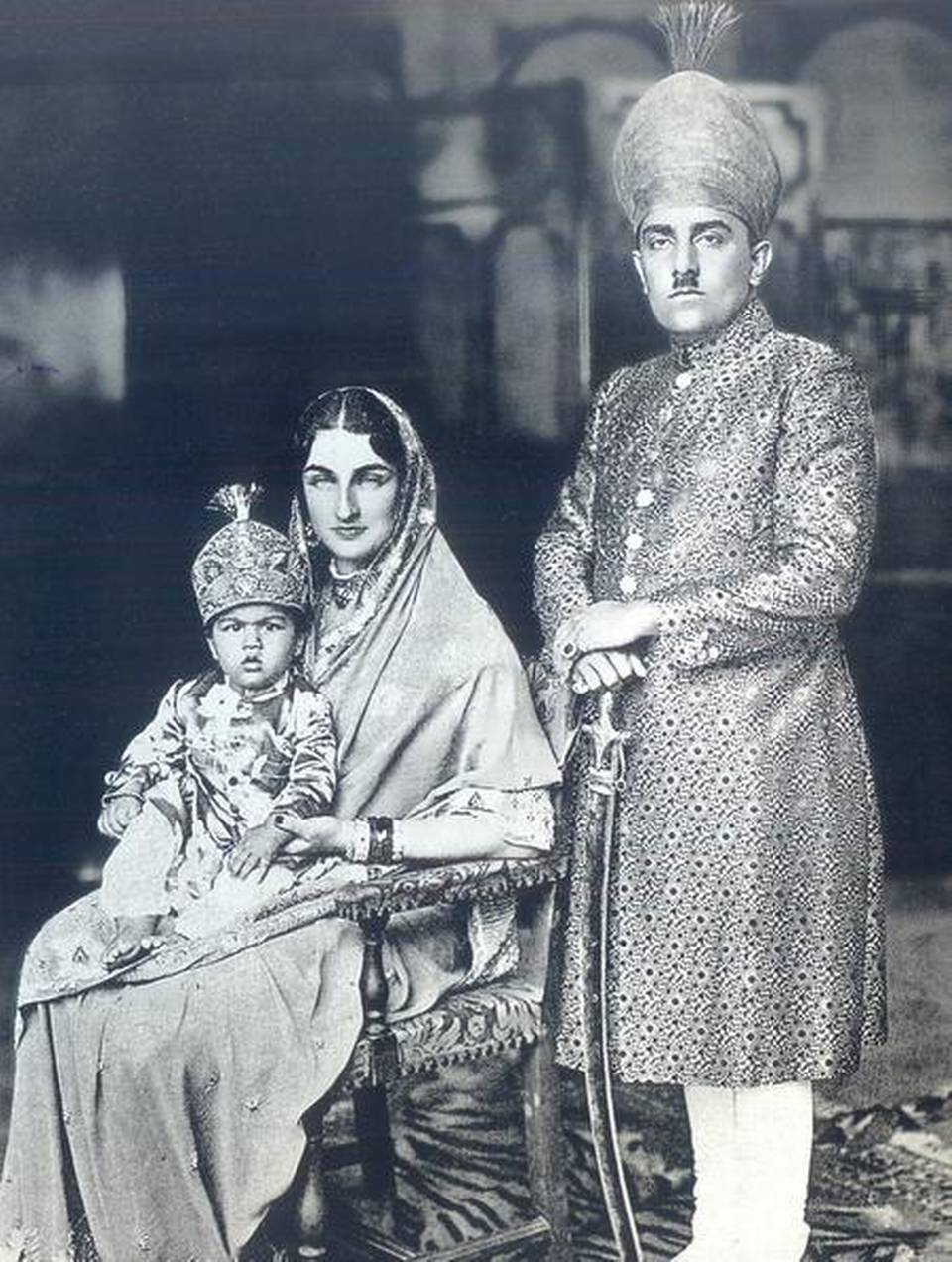
Princess Durru Shehvar ushered modernity into Nizam’s household

The name of Durru Shehvar, the elder daughter-in-law of the Nizam of Hyderabad ,  Mir Osman Ali Khan, is remembered for the social and philanthropic work she so zealously engaged in Hyderabad. Born in Turkey, brought up in France but married to the son of the world’s richest man, the Nizam of Hyderabad, Princess Durru Shehvar chose to spend her last years in London. She brought modernity to the Nizam’s household and worked for the upliftment of women in Hyderabad.

Her marriage with prince Azam Jah Bahadur, the elder son of the seventh Nizam, Mir Osman Ali Khan, resulted in the union of two illustrious Muslim families, the Turkish Caliphate and the Asaf Jahis of Hyderabad. Durru Shehvar, the only daughter of Abdul Majjid II, the Caliph of Turkey was born in 1914 and brought up with modern education, training in martial arts and was intended to succeed her father.

Nizam and the exiled Caliph

In March 1924 after Turkey became a Republic, the Caliphate was abolished and the royal family expelled. Abdul Majjid and his family settled in Nice, a southern French Mediterranean port city. The British Red Cresent Society friendly with the deposed ruler appealed to Muslim rulers around the world to come to the aid of the impoverished Caliph. Persuaded by Maulana Shaukath Ali and his brother, Maulana Mohammad Ali, Nizam Mir Osman Ali Khan decided to send a life-time monthly pension of 300 pounds to the deposed Caliph, and allowances to several individuals in the family.

When Durru Shehvar, came of age, she was sought in marriage by several Muslim Royals including the Shah of Persia and the King of Egypt for their heirs. Shaukat Ali prevailed on the Nizam to send a proposal to the Caliph asking for Darru Shever’s hand for his elder son, Prince Azam Jah. The deposed Caliph could hardly reject the offer from his benefactor.

But it was not that easy; the Mehr (the bride money) of 50,000 pounds that the Caliph demanded for his daughter was “too big”, the Nizam felt. But with the intervention of Shaukath Ali, the Caliph proposed to offer for the same Mehr, the hand of his brother’s daughterNiloufer, for the Nizam’s younger son, Prince Mauzam Jah. The Nizam readily agreed and sent his two sons to France.

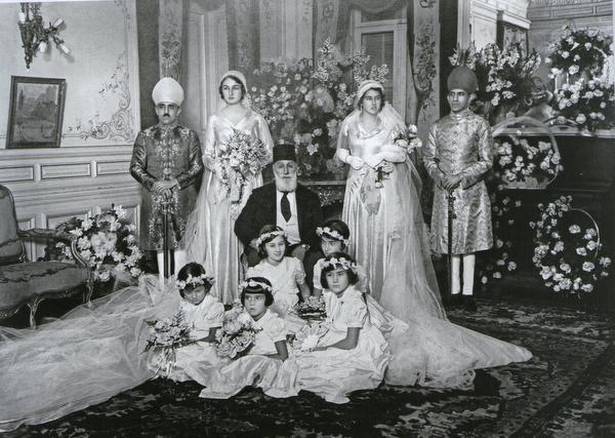
The marriage of Princess Durru Shehvar with Prince Azam Jah, along with that of Prince Mauzam and Niloufer took place in Nice, in France, on 12 November, 1931, in a simple ceremony attended by only a simple affair with only the members of Sultan’s family at Nice, a few Turkish nobles and friends as well as representatives of the Nizam — Sir Akbar Hydari and Nawab Mehdi Yar Jung, who happened to be in Europe at that time to attend the Round Table Conference. The Khalifa himself performed the ceremonies. All the offices and educational institutions in the Nizam’s dominions were given a holiday on the day.

A photograph of the princess and her family

Meeting the Mahatma

After a month of festivities in Nice, the Princes with their concerts set sail from Venice to India on December 12, 1931. The ship they were travelling in also contained a star co-passenger, Mahatma Gandhi, who was returning after attending the Second Round Table conference in London. Shaukat Ali, who was accompanying him, having known Gandhi’s sympathy for the exiled Caliph for whose restoration, he pleaded during his non-cooperation struggle, arranged a meeting of the young Hyderabadi Royals with Gandhi on the board of the ship.

However, there was a hitch Gandhi who was traveling in III class would not step into Ist. class where the young couples stayed; nor would the Hyderabad Princes be willing to go to III class where Gandhi stayed. Shoukath Ali, worked out a compromise and the meeting of Gandhi and the newly weds took place in a lounge in the II class.

Active in Hyderabad

In Hyderabad, Durru Shehvar soon identified herself with the people . With a great passion for providing health care and education for common people, she set up a general and children’s hospital in Purani Haveli, which still runs in her name. A Junior College for girls in Yakutpura, Bagh-e-Jahanara, is also run on the funds she provided. She inaugurated the Ajmal Khan Tibbiya College Hospital in Aligarh Muslim University (AMU) . The Nizam called her his precious Jewel (Nagina) and encouraged her to participate actively in Hyderabad’s social life. The proud father -in -lawloved to point out how Durru Shehvar was taller than his son. In the company of her friend Rani Kumudini Devi, she rode horses, drove cars and played Tennis. With her beauty and charm, etiquette and dress sense, she transformed Hyderabad’s social circuit.

Durru Shehvar also laid the foundation stone of the Begumpet Airport building in 1936. Until then a small strip at Hakimpet served as the airport for Hyderabad. She ensured her sons, Prince Mukarram Jah and Prince Muffakam Jah, received the best possible western education in Europe and married Turkish brides, as she desired. Mukarram studied in Eton, where India’s first prime minister, Jawaharlal Nehru had earlier studied. Years later, Mukarram, declared heir to Hyderabad throne, at the suggestion of his grandfather, Mir Osman Ali Khan, served as Honorary Aid De Camp (ADC) to Prime MinisterNehru!

Durru Shehvar was fluent in French, English, Turkish and Urdu and even contributed articles to French magazines. She believed that women should earn their own living and worked hard to remove the practice of purdah. However, there was a great gulf between the Princess and the Prince, Azam Jah and their marriage fell apart within few years. It is an irony that when she was born, her father, the Caliph was the head of all the Muslims in the world; but was overthrown and sent away in exile. After her marriage, Hyderabad state was abolished and integrated with the Indian Union in 1948. She faced fame and power as well as adversary, displacement and agony, all with equanimity, and won the hearts of the people in Hyderabad, where she spent most of her adult life.

Princess Durru Shehvar, after shifting permanently to London, frequented the city. Her last visit to the city was in 2004, two years before she passed away in London at the age of 92. With her death, ended a glorious chapter of Hyderabad.

source: http://www.thehindu.com / The Hindu / Home> Society> History & Culture – Nizam Matters / by KSS Seshan / October 30th, 2018

How Bahadur Shah Zafar’s daughter had to flee from Delhi after he lost his empire

INDIA :

A translation of one of the many stories collected by Khwaja Hasan Nizami about the survivors of the Mughal emperor’s family.

BahadurShahMPOs01nov2018

Khwaja Hasan Nizami wrote numerous books on the events that unfolded in 1857, all based on eyewitness accounts of the survivors. Begamat ke Aansu: Tears of the Begums are stories collected by Khwaja Hasan Nizami from the survivors of the Mughal family after the fall of Delhi in September 1857, when they had to flee from the Red Fort. Begamat ke Aansu was originally published in 1922 and has been reprinted many times since. This story is one of the accounts from Begamat ke Aansu. It describes Kulsum Zamani Begum’s escape from the Red Fort.

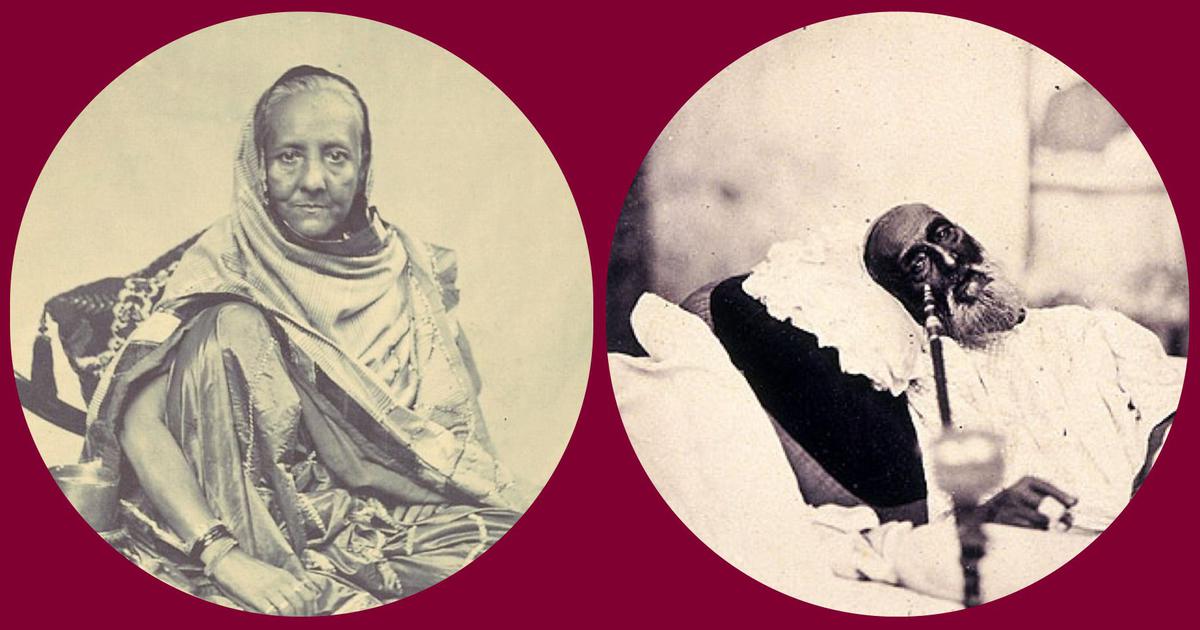
This is the true story of a female dervish who suffered through the travails of life. Her name was Kulsum Zamani Begum, and she was the pampered daughter of Delhi’s last emperor, Abu Zafar Bahadur Shah. Although she died a few years ago, I have heard her story from her own mouth many times. She was a sincere devotee of Mehboob-e-Ilahi Khwaja Nizamuddin Auliya and was so attached to his dargah that she would often come there. I would talk to her there and listen to her tragic tale. Whatever I have written down has been told to me either by her or her daughter, Zainab Zamani Begum, who is still alive and lives in Pandit ka Kucha.

Her story is narrated below in her own words:

“The night my Babajan lost his empire and the end was near, there was a tumult in Lal Qila. The very walls seemed to be weeping.

“The pearly white marble palaces had been blackened by soot from the gunfire and cannon shots in the past four months. No one had eaten for a day and a half. Zainab, my daughter, was a year-and-a-half old and crying for milk. Neither I nor any of the foster mothers were lactating because of the hunger and trouble all around us. We sat disconsolately when Hazrat Zill-e-Subhani’s special khwaja sara came to call us. It was midnight and the pin-drop silence was broken by intermittent cannon shots. We were terrified, but since Zill-e-Subhani had called us, we immediately left our palace and presented ourselves before him.

“Huzur sat on his prayer mat with a rosary in his hands. I stood before him and presented three salutations. Huzur called me close to him with great affection and said, ‘Kulsum, I entrust you to the care of Khuda. If fate permits, we will meet again. Go away immediately with your husband. I am also leaving. I don’t want to separate myself from my beloved children at this stage, but I don’t want to embroil you in my problems. If you are with me, destruction is certain. Maybe if you are alone, God will open a path of escape for you.’

“He raised his shaking hands in prayer and cried out to Allah, ‘Dear god, I entrust this orphan girl into your care. Brought up in magnificent palaces, they now venture into the wilderness and desolate jungles. They have no friends or protectors. Please protect the honour of these princesses of the Timurid dynasty. Preserve their honour. The entire Hindu and Muslim population of Hindustan are my children and trouble surrounds them all. Don’t let them suffer because of my actions. Give them relief from all troubles.’ With that, he patted my head, embraced Zainab, gave a few jewels to my husband Mirza Ziauddin, and sent us off along with Nur Mahal Saheba, who was Huzur’s begum.

“We left the Qila before dawn. My husband, Mirza Ziauddin, and the Badshah’s brother-in-law, Mirza Umar Sultan, accompanied the three women: myself and two other ladies, Nawab Nur Mahal and Hafiza Sultan, whose daughter was married to one of the emperor’s sons.

“When we climbed into our bullock cart, it was dawn. Only the morning star still twinkled in the sky, and all the other stars had vanished. We cast a last glance at the royal palace. We wept and yearned for what had once been our happy abode. Nawab Nur Mahal’s lashes were laden with tears and the morning star was reflected in them.

“We left the Lal Qila forever and reached Kurali village, where we rested for a while in the house of our cart driver. We were given bajra roti and some buttermilk. We were so hungry that the food tasted better than biryani and mutanjan.

“That night was spent peacefully, but the next day jats and gujjars from nearby areas came to loot Kurali. They were accompanied by hundreds of women who encircled us like witches. They took away all our jewellery and clothes. While these coarse women snatched the jewellery off our necks, we got a whiff of their breath which smelt so foul that we felt nauseous. After this, we didn’t even have enough money to buy ourselves our next meal. We didn’t know what was in store for us now.

“Zainab began to howl with hunger. A zamindar was passing by and I cried out, ‘Bhai, please give some water to this baby.’ The blessed man brought some water in an earthen cup and said, ‘From today, you are my sister and I’m your brother.’

“He was a well-to-do person from Kurali, and his name was Basti. He brought his cart and said he would take us wherever we wanted to go. We asked him to take us to Ijara, where Mir Faiz Ali, who was the shahi hakim and a long association with our family, lived. But when we reached Ijara, Mir Faiz Ali was extremely discourteous and refused to shelter us. ‘I am not going to destroy my house by giving you shelter,’ he told us.

“We were heartbroken and didn’t know what to do. Penniless and homeless, we were scared of the British forces chasing after us. Those who were eager to follow every glance of our eyes and obey even our slightest gestures had now turned away from us.

“And then there was Basti, who didn’t leave our side and fulfilled his covenant of calling me his sister. We left Ijara and set our destination as Hyderabad.”

Kulsum Zamani Begum eventually reached Hyderabad with her family and lived there for some time. For some time her husband made a living by making and selling calligraphic pieces and teaching the Quran but as the British influence spread to Hyderabad and they lived in fear of being arrested they were more or less housebound. Whatever jewellery had escaped loot on the way to Hyderabad had been sold off.

The son of Bahadur Shah Zafar’s spiritual master Kale Miyan Saheb Chisti Nizami Fakhri, heard of their plight and arranged finances for them. They left for Mecca to make the Hajj pilgrimage. Basti, who had stood by them like a rock, was sent home from Bombay with whatever reward they afford for his invaluable services.

“Aboard the ship, whoever heard that we were the Shah-e-Hind’s family was eager to meet us. We were all dressed in the clothes of dervishes. One Hindu, who owned a shop in Aden and had no idea who we were, asked us which sect of fakirs we belonged to. The question inflamed our wounded hearts. I replied, ‘We are the disciples of the Mazloom Shah Guru. He was our father and our guru. Sinners have snatched away his crown and separated us from him and exiled us into the wilderness. Now he longs for us, while we are restless and yearn for a glimpse of his face. That is the truth of our faqeeri.’

“The Hindu began to cry when he heard our story and said to us, ‘Bahadur Shah was our father and guru but what could we do? It was Lord Ram’s will, and an innocent man was destroyed.’”

They lived in Mecca for several years before returning to Delhi.

“When we came back, the British government took pity on us and fixed a sum of ten rupees per month for us. I laughed at this pension. They had taken away my father’s empire and offered us ten rupees as compensation.

“But then I remembered, this land belongs to god and he gives it to whoever he wants and takes it as he pleases. Man can do nothing about that.”

BahadurShah02MPOs01nov2018

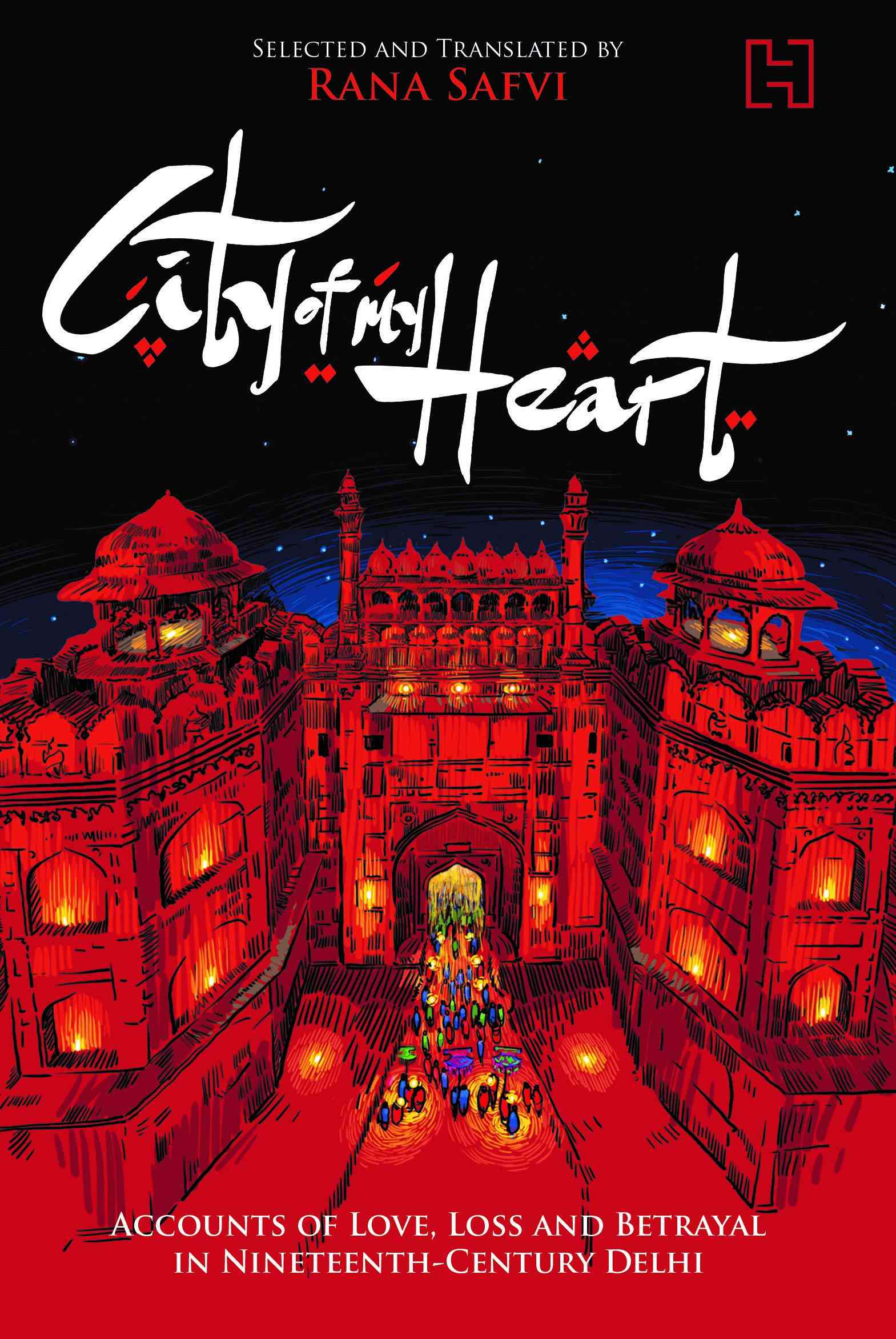
Excerpted with permission from City Of My Heart: Accounts Of Love, Loss And Betrayal In Nineteenth-Century Delhi, Selected and Translated by Rana Safvi, Hachette India.

source: http://www.scroll.in / Scroll.in / Home> Book Excerpt / by Khwaja Hasan Nizami & Rana Safvi / November 01st, 2018