Category Archives: Arts, Culture & Entertainment

View from the other side

NEW DELHI :

“Urdu Adab Mein Ghair Ka Tasawwur” explores the concept of the other in Urdu literature

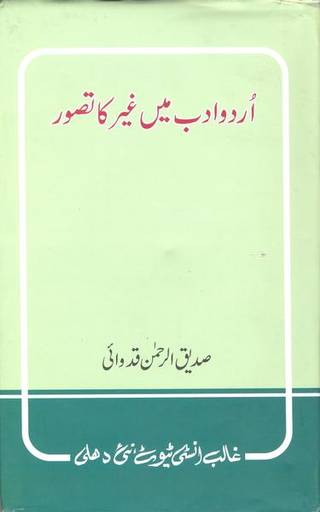
The biggest ‘other’ is not the one whose religious beliefs, cultural practices and social convictions and the mode of expression – language – stand poles apart but it is the one who is deeply revered and worshipped and people seek his blessing all the time. It refers to the almighty who remains inaccessible to all those who adore Him. Man cannot reach to Him though he feels His presence everywhere. The multiple and contradictory referents of the term “other” constitute literary texts which set people free from the humdrum of life. These poignant and pithy observations are offered by a widely- acclaimed fiction writer of Urdu, Khalid Javed in his article “Lafz-e-Ghair – Falsafiyana Tanazur Mein” (the Other in Philosophical Perspective) which is carried by an astutely produced anthology, “Urdu Adab Mein Ghair Ka Tasawwur” (The concept of the other in Urdu Literature) published by the Ghalib Institute, New Delhi recently.

The book, carrying 18 articles, presented in an international seminar on the concept of the other and aptly edited by Professor Siddiqur Rehman Kidwai, explains how the much-debated and hatred filled notion of the other is perceived and presented in various genres of Urdu literature. The articles also discuss how this concept is creatively depicted by prominent Urdu authors and poets such as Meer, Ghalib, Daagh, Momin, Manto, Premchand, Qurratulain Hyder, NM Rashid, Meeraji, Akhtarul Iman and Shahryar, etc.

Delineating invisible power

Khalid Javed, whose two novels – “Maut Ki Kitab” and “Naimat Khana” created waves in Urdu literature, asserts that every invisible power is essentially the other, no matter it is God or Devil. Invisible but all-pervasive power conjures up ecstasy and fear simultaneously and it gives birth to “Myth” and “Faith”. According to the ancient Indian philosophy, ‘ego’ is the other as Atma is the essence of existence and Khalid Javed rightly asserts that people completely unaware of their inner self or Atma, take the body, sensory organs and intellect for their existence. When one attains enlightenment, he realises that a marked sense of distance exists between the inner self and its ill-conceived outer manifestations.

Describing the term as the most commonly used tool of political subjugation, Siddiqur Rehman Kidwai points out that the process of othering is conveniently adopted by the people who consider themselves rescuers who assert that they are committed to empowering all those who are at the receiving end.

In his brilliantly structured address, “Formation of the Other – Strategy and Kinds”, noted Urdu critic Qazi Afzal Hussain says that the concept of other portrayed in literature hardly endorses what is being projected by the social scientists.

The collective other created by the power that – be is not acceptable as it unfailingly produces hate literature. In literature, the other is a foil for creativity that refuses to divide men into caste, colour, linguistic and religious categories and in the creative world, political affiliations and ideologies hardly have any significance. Qazi Afzal brilliantly concludes by saying that if a literature does not respect the sensibilities of others , it loses value and it fails to ensure the transcendence of life.

A well- author known fiction writer Zakia Mashadi points out that uneasy co-existence, no matter how old it is, sets in motion the process of subjugation which in the final reckoning perpetuates an intense feeling of impotent rage among people who are being marginalised – unconditional emulations is the most lethal form of othering as it wipes out every trace of self -identity

Dalit novel in Urdu

Can a religious text that espouses the cause of equality can be used as a formidable tool for not granting the right to worship to the subalterns? Yes it is being used for administering severe punishment to those belonging to the downtrodden class and who have been denied and this sums up the poignant narrative produced by a prominent Urdu Novelist Ghazanfar in his novel “Divya Vani” which is perhaps first full-length Dalit novel in Urdu
LucidWritingsMPOs14nov2018

Lucid writings

Many prominent authors such as Anis Ashfaq, Qazi Jamal, Ziauddin Shakaib, Ali Ahmad Fatimi, Abul Kalam Qasmi, Khalid Qadri, Deepak Budiki, Sarwarul Huda, Mushraff Alam Zauqi, Abubakar Abbad and Javed Danish took pains in delineating various manifestation of the other in easy to understand the idiom.

The articles covering across a huge sweep of the time attempt to understand various shades of vexation of the pain of those whose sufferings remains unheard. It is the book that acquaints the readers with varying and enticing perspectives on the dominant discourse of our times.

source: http://www.thehindu.com / The Hindu / Home> Books> Authors / by Shafey Kidwai / August 17th, 2018

FORTUNE COOKIE: The secret recipes of Avadh’s Taluqdars

UTTAR PRADESH / Gurgaon, HARYANA   :

Salma Husain has quietly been digging up culinary gems

When Salma Husain arrived in Delhi in 1964 to take up a translator’s job in the Persian section of the National Archives of India, she was the first young woman from her community to move out of her parental home and pursue a career when she was still unmarried.

Salma apa, as she’s known among her younger colleagues, has never worn this fact as a badge of honour — I have known her well for 20 years, but I just learnt about it.

She doesn’t need to, for Salma apa, encouraged by the former boss of ITC Hotels, Habib Rehman, has quietly been digging up culinary gems lost in old Indo-Persian manuscripts, stumbling upon such beauties at the British Library as the Nuskha-e-Shahjahani, a cookbook dating back to Emperor Shahjahan (that was when red chillies were still not common, nor were tomatoes, and brinjals were popular because of their ubiquity).

The repertoire of Persian scholar and food historian Salma Husain extends from the humble Dabi Arvi Ka Salan to Avadh’s 'national dish', Shaami Kababs (above), without which no royal dastarkhwan is considered complete
The repertoire of Persian scholar and food historian Salma Husain extends from the humble Dabi Arvi Ka Salan to Avadh’s ‘national dish’, Shaami Kababs (above), without which no royal dastarkhwan is considered complete

You’ll find the accumulated fruits (or orchard, I would say) of the long hours she has invested in locating old cookbooks and recreating recipes from royal memoirs and the accounts of foreign travellers in her anecdote-studded cookbook, The Emperor’s Table.

With Flavours of Avadh, though, Salma apa has produced for the first time a cookbook that goes beyond the much-travelled by-lanes of Aminabad, Lucknow, and travels across the kitchens of the taluqdars who defined (and refined) the culture of region after 1857.

Salma apa’s journey starts at the dastarkhwan of Rajkumar Muhammad Amir Naqi Khan of the Mahmudabad family, whose stunningly attractive wife, Kulsum Begum from Hyderabad, has had Delhi and Mumbai eating out of her hands during her stints with the ITC.

It moves on to Kotwara, a principality 160km from Lucknow bordering Nepal in the Lakhimpur Kheri district. Kotwara is famously associated with the filmmaker and fashion designer Muzaffar Ali, whose kitchen in his Gurgaon home is presided over by Rehana, the family’s retainer for six decades.

The Flavours of Avadh story hits the Grand Trunk Road and meanders into the principality of Tirwa in Kannauj district, whose most illustrious ruler, Durga Narain Singh, travelled extensively across Europe in the years before World War II and came home with a French chef to preside over his kitchen.

The story returns to Lucknow, where we meet the colourful Nawab Jafar Mir Abdullah in his lair, Sheesh Mahal; moves to Sitapur, which was awarded by a grateful British Raj to the Kapurthala family for leading the operation against the sepoys behind the historic siege of the Lucknow Residency; and has a Kharbooze Ki Kheer at the Lucknow home of the Zaheer family of old Congress leaders, whose most illustrious member was Syed Nurul Hasan, the erudite historian and Indira Gandhi’s education minister who introduced the 10+2 system.

Itt ends at Shakarganj, the ancestral home of the descendants of Baba Farid, the most famous of whom was the late Dr Abdul Jalil Faridi, a sought-after medical practitioner and popular MLA with a famous sense of humour.

From these blue-blooded families, Salma apa has collected old recipes to put together a fascinating collection. Of course, you can’t have an Avadhi cookbook minus recipes of such celebrity dishes as the Galawat ke Kabab, Kundan Qaliya, Murgh Mussallam, Dumpukht Gosht and Ande Ka Halwa. Salma apa has them all.

What makes her cookbook special, though, is its ability to cater to our appetite for the exotic. We have, for instance, the Mahmudabad house favourite, Dhungare Baigan (smoked brinjals with yoghurt, onions and Serrano chillies), or the Tirwa family’s Subz Mewa Malai Pulao, where ghee, cream and hung yoghurt are used as generously as seasonal vegetables, or the Ananas ke Paranthe (layered pineapple paranthas) served by the Sheesh Mahal family for breakfast during winter, or the Gajar ka Bharta perfected by Sitapur’s cooks, or Baba Farid ki Meethi Khichri, which has been cooked at Shakarganj on every death anniversary of the mystic saint.

Salma apa has made sure that we’ll see Avadhi cuisine in an entirely different light.

source: http://www.dailymail.co.uk / Mail Online India / Home> India / by Sourish Bhattacharyya / February 26th, 2015

Breaking it down with Hasan Minhaj

Aligarh, UTTAR PRADESH / Davis, California,  U.S.A. :

HasanMinhajMPOs12nov2018

Ending 2018 with his highest note so far, the Indian American comedian hopes to reinvent the late night talk show with the Patriot Act

Like most Indians abroad, Hasan Minhaj appreciates the value of a good lota. The “manual transmissions of bidets”, as the Indian American comedian calls them, features hilariously in episode two of his Netflix show, Patriot Act with Hasan Minhaj. The sophomore instalment took on Saudi Arabia’s crown prince Mohammed bin Salman. Like most other late night hosts, the 33-year-old too focussed on the atrocious hit on journalist Jamal Ahmad Khashoggi, who was dismembered by 15 assassins inside the Saudi consulate in Istanbul. But unlike anyone else, Minhaj worked a surprising, yet seamless, segue to a much lighter topic: imploring his audience to treat their bodies with the same respect as they would a pair of expensive albeit soiled Air Jordans. You would not use only toilet paper to clean them, right? So Minhaj laid down some “booty hygiene tips”.

Political comedy high

The Patriot Act — the latest to jostle for eyeballs among the oh-so-crowded pecking order of late night political comedies — dropped on the streaming giant’s website three weeks ago. A “woke TED talk”, as he puts it, the 20-something-minute show highlights a single topic with a generous dollop of humour. Contrarily, Minhaj’s peers — from Late Night with Seth Meyers to The Late Show with Stephen Colbert — devote a mere segment of an entire episode to news. “There’s a lot of tweet chasing that’s happening right now and I think this show is one of the few in the marketplace that provides insight and an in-depth look at really big issues,” he says. “But I think it’s awesome for me to do a huge geopolitical deep dive and then also do a different run on lotas.”

So far three episodes have aired, each featuring a wildly-gesticulating Minhaj in his trademark performance style. He goes through a gamut of emotions on stage, embodying sass, wide-eyed wonder and even outrage, while talking a mile a minute. The carefully-planned tirades are only amplified by an incredibly cool set, thanks to production/set and lighting designer Marc Janowitz. Surrounded by screens that double as walls, Minhaj stands on a stage that projects in 4K high-def. As images and graphics whoosh in and out, the comedian deftly uses every inch of space available, capturing his audience’s attention. Take, for instance, this writer’s personal highlight of episode three, Amazon, featuring Bill Gates’ possible worst nightmare. The founder of Microsoft, along with former CEO Steve Ballmer, proudly stars in a parody of the 1998 cult comedy, A Night at the Roxbury, replete with shiny disco suits. “Bill Gates wants us to forget that video so bad, he’s trying to end malaria,” sasses Minhaj to audience cackles.

Deeper focus

Despite the many jibes and comic tangents, he stresses that the focus is always on large political and cultural topics that often do not get covered in mainstream news cycles. “This is a news-driven show. It starts with news, facts and a take that comes from our senior news team,” says Minhaj, about his colleagues who comprise former reporters from illustrious publications like The New York Times and The Associated Press. “They’re print journalists who’ve spent years cutting their teeth on hard news. They’ve been waiting for the opportunity to put [news] in a format that is easily digestible.”

___________________

Minhaj’s late night picks

  • The Daily Show with Trevor Noah
  • Last Week Tonight with John Oliver
  • Late Night with Seth Meyers
  • The Late Show with Stephen Colbert
  • Full Frontal with Samantha Bee

___________________

Once the dossiers of information are collected, a unique peg is established. Minhaj has declared that the Patriot Act needs to be simultaneously current and with a long shelf-life. A paradox, if we have ever heard one. But he is confident he will successfully pull it off. Take, for example, the episode on Affirmative Action, which was actually about meritocracy and the rising anti-black sentiments in the Asian community.

As an [Indian] American, I can have a unique perspective on that,” he says. “India has programmes like that too, where there are seats reserved for under-represented groups. It is a heavily debated thing that’s both topical and evergreen.” Similarly, Amazon was about understanding monopolies and anti-trust laws; important issues that will not vanish any time soon. “Every single headline that we talk about ties into a larger fundamental question,” he emphasises, adding that whenever possible, he would like to run the topic through the prism of his own experiences. “I want it to be both broad in terms of its topical subject matter, but niche in terms of ‘this is how I feel about it’.”

Rise to the top

Before Minhaj brought us Patriot Act, he appeared on The Daily Show from to 2014 to 2018, first working with Jon Stewert and then Trevor Noah. As the show’s senior correspondent, he gave us gems like ‘Halal Things Considered’, a segment that addressed racism against Muslims. It was spurred from an incident where a woman was denied a canned beverage aboard an airplane for fear she would transform it into a weapon. Another memorable bit was highlighting American ignorance when a wave of racial intolerance and Islamophobia was hurled against the Sikh community. Among a collage of images which included a Sikh person, several US citizens picked the least likely representation of a member of the community. Often, they even chose a bird instead of an actual human being.

But what skyrocketed his rising fame was his set at the 2017 White House Correspondents’ Association Dinner. US President Donald Trump, who famously boycotted the event, was the ‘elephant not in the room’ according to Minhaj. “The leader of our country is not here,” he ribbed. “And that’s because he lives in Moscow. It is a very long flight. It’d be hard for Vlad [Putin] to make it. Vlad can’t just make it on a Saturday.” His likening of the President to the HBO show Game of Thrones’ vicious King Joffrey and the dinner akin to the Red Wedding bloodbath elicited a lot of applause.

Desi by heart

Later that year, Minhaj released his Netflix special, Homecoming King, recorded in his hometown of Davis, California. The hour-something show cemented his definitive rise to become one of America’s best comedians. With savage anecdotes and other poignant stories, Minhaj hung his heart out for the world. “I think audiences are really savvy. It’s an insult if you try to put on a front or present a different version of yourself,” he says, about the need to be vulnerable on stage. “I want people to feel like I’m speaking to them and hanging out with them.”

___________________

The Daily Show ticket

  • Racism got Minhaj his senior correspondent gig and the chance to work with Jon Stewert. Revved up by an episode of HBO’s Real Time with Bill Maher — where he talked about containing Muslims — Minhaj wrote an original piece for his audition. But it was the horror on guest Ben Affleck’s face at the time that really encouraged the comedian. His bit, titled ‘Batman vs Bill Maher’ (Affleck played the DC superhero in a slew of films), impressed Stewart. Minhaj even included a joke about host’s then latest film, Rosewater(2014), cinching the deal

_________________

In this vein, we got to know Minhaj was slapped in a department store aisle after his father checked that no one witnessed it. Plus, his encounter with the eternally-beloved Hindi phrase “log kya kahenge” when seeking his father’s blessing to marry a Hindu woman. “I can kick it with all my American friends, but the Indianness is entrenched in who I am,” says Minhaj, who danced to ‘Saajan Ji Ghar Aye’ from Kuch Kuch Hota Hai at his wedding. He also travelled back home from New York to Sacramento a few months ago to watch Dangal with his dad, Najme Minhaj. “What’s beautiful about art is that it travels very quickly,” he laughs. “My baby [dances] to the latest Bollywood hits. I am kheema roti, dal chawal and rajma chawal.”

As the first comedian of Indian descent to pull off something like the Patriot Act, Minhaj is expected to end Netflix’s bad romance with talk shows. They have cancelled Chelsea Handler’s Chelsea, The Joel McHale Show with Joel McHaleand Michelle Wolf’s The Break citing low viewership. Fortunately for Minhaj, the streaming giant has already ordered 29 more episodes, giving him plenty of time to hone his act. In an endless sea of similar formats, his series aims to push the boundaries of political comedy and we really like what we have seen so far.

Streaming now on Netflix.

source: http://www.thehindu.com / The Hindu / Home> Entertainment / by Deborah Cornelious / November 09th, 2018

Kashmir’s papier mache art: Pulp fiction

JAMMU & KASHMIR :

PaperMacheMPOs12nov2018

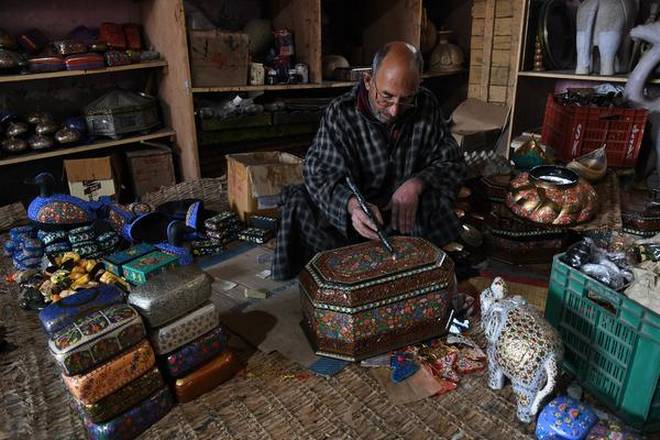
Kashmir’s papier mache art is a story in itself.

The credit goes to the Shia community of Kashmir for keeping alive papier mache art — colourful, exquisite, highly decorative and delicate — in the Valley since the 14th century. “This wealth has been handed down to me by my father who inherited it from my grandfather and so on. The colours and the shapes we carve from paper is what adds meaning to our lives,” says Zahid Rizvi, 40, a papier-mache artisan at Zadibal in Srinagar.

Over the centuries, the Shia community, now forming about 14% of the Valley’s population, has been perfecting the art. Historians believe that papier mache became popular as an art in the 15th century. Legend has it that a Kashmiri prince was sent to a jail in Samarkand in Central Asia, where he acquired the fine art, which is often equated with patience and endurance. The Muslim rulers of India, particularly Mughal kings, were fond of this art and were its patrons.

The process begins with soaking waste paper in water for days till it disintegrates and then mixing it with cloth, paddy straw and copper sulphate to form pulp. The pulp is put into moulds and given shape and form. Once it dries, the shape is cut away from the mould into two halves and then glued together. It is polished smooth with stone or baked clay and pasted with layers of tissue paper. Now, it is completely the baby of an artisan. After applying a base colour, the artisan draws a design. The object is then sandpapered or burnished and is finally painted with several coats of lacquer. The art got a major boost from the government in 2016, when the Nawakadal girls’ college in Srinagar introduced it in the craft curriculum. Saleem Beg, who heads the Kashmir chapter of the Indian National Trust for Art and Cultural Heritage, believes the future of papier mache lies in elaborate murals.

(Text by Peerzada Ashiq and photos by Nissar Ahmad)

source: http://www.thehindu.com / The Hindu / Home> News> States> Other States / by Peerzada Ashiq & Nissar Ahmad / November 11th, 2018

Nazar Nasir: Breaking gender stereotypes in Kashmir through crochet

Srinagar, JAMMU & KASHMIR :

Nazar Nasir
Nazar Nasir

Srinagar:-

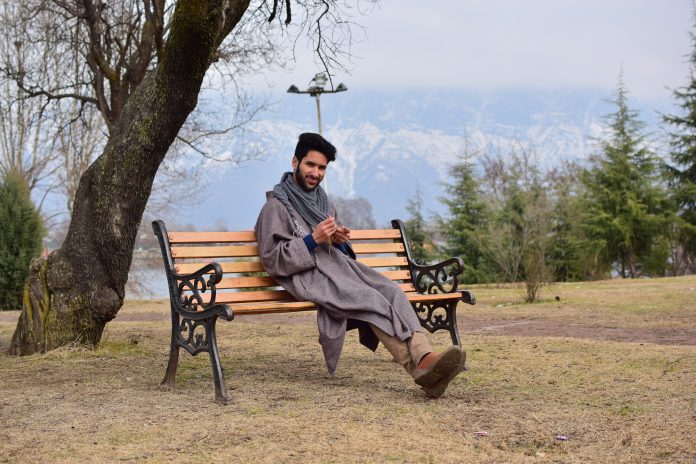
At the age of 19, Nazar Nasir decided to share the idea of him knitting and crocheting with his family members. Their reaction was exactly as he had expected. He was told in blunt words that this line of work didn’t suit males. But Nazar had made up his mind and decide to live his dreams despite the resistance.

Crocheting has been a well-known art amongst Kashmiris but it has been mostly pursued by the women for decades. It is for the very first time that a male while breaking some rigid stereotypes has made a business out of it. Nazar, who wet up Knotty Crafts, is gaining a huge following not only in the Valley but outside the state too.

A resident of downtown, Srinagar, Nazar is a student of literature. Apart from being a student, he keeps himself busy with crochet. He is the first and the only male who crochets from Kashmir.

Crocheting is a process of creating fabric by interlocking loops of yarn, thread, or strands of other materials using a crochet hook.

It all started two years ago when his sister brought a crochet hook and some yarn from her aunt and while she was wiggling the hook with the yarn strand, Nazar was so fascinated that he brought himself a hook and some yarn and started experimenting and has never stopped since then.

Crochet02MPOs10nov2018

From being just a mere experimental hobby, his passion for crocheting kept increasing and he turned it into a part-time business.

“For me, crocheting is not just a small business, but an escape from the world as I almost forget my being while crocheting. It’s so healing and so peaceful to me that I can work non-stop without worrying about anything else,” Nazar says during a conversation with TwoCircles.net.

“In a society where knitting and crocheting are considered too feminine a profession to be taken up by men, it was very difficult for me to do something that women usually do here,” he adds.

But paying no need for criticism, Nazar made-up his mind and started crocheting. It has been almost two years now and his business is flourishing day by day.

“People always talk and they say what they have to say, but today those who criticized me are always there for appreciation,” he says.

Nazar says he has been attracted to different forms of art for as long as he remembers.“I first learnt how to crochet and then I got deeper into the world of craft and taught myself to knit, to do macramé and to weave and I’m always learning new things,” Nazar says.

Nazar made his work public through social media apps like Facebook and Instagram and is getting a tremendous response.

CrochetMPOs10nov2018

“I earned a huge customer base within two years with the help of social media,” Nazar says.

He says he is blessed to be a part of such a big maker community in this age “I can’t describe how perfect I feel being a part of it. I will always try to explore and create more interesting things,” he says.

For people, it’s unusual to see a boy in this field of craft but Nazar says he is proud to call himself, ‘The only male crocheter of Kashmir’.

source: http://www.twocircles.net / TwoCirlcles.net / Home> Indian Muslim> Lead Story> TCN Positive> Youth / by Auqib Javeed, TwoCircles.net / November 09th, 2018

World from a writer’s plane

KERALA :

Writer B.M. Suhara
Writer B.M. Suhara

“I do not mix writing with my life,” novelist B.M. Suhara said at the fourth ‘My Writing, My Life’ programme organised by the Calicut Public Library to facilitate interaction of the public with Malayalam writers here on Wednesday.

“Life is enclosed by physical spaces, family and human relationships but writing is my door to an outside world,” she said.

Born in a conservative Muslim household at Thikkodi in Kozhikode district, Suhara’s family was a bit too restrictive but she read a lot and grew up adoring writers.

“It was my dream to do something with my life, but when the dream took the form of words, my mother was scared,” said Suhara.

Marriage to literary critic M.M. Basheer while pursuing her graduation took her to Thiruvananthapuram and out of her rural confines but the trepidation of stepping into the public sphere, ensured she would not take up a job. Motherhood followed, and the next years of her life was occupied in raising her children.

“My husband had a good collection of books and I read world classics and novels translated from other Indian languages,” Suhara said. “When my children grew up and went pursuing their dreams, a vacuum crept in and I could no more ignore the urge to write.”

Suhara began work on her first novel, Kinavu, but the process took five years. “I constantly wrote, rewrote and reworded to give final shape to the novel.” But a crisis of confidence emerged until her husband convinced her that the work could not be left unpublished.

Like several writers, the transition from the first to second novel was difficult for Suhara too and she decided her store of writing ideas had run dry. Dr. Basheer stepped in again and to provoke or inspire her said, “anybody can write one novel,” Vanitha had then approached her to write a serialized novel and thus Mozhi was born.

Suhara’s most noted work, Aaakashabhoomikalude Thakkol was her critique of polygamy in the Muslim community. The novel dealt with the lives of three Muslim women from different economic classes in society, married to the same man.

Nizhal, her fourth novel was an attempt to step outside the realm of familiar surroundings. The story was set in Thiruvananthapuram, with the characters speaking in the colloquial Trivandrum dialect.

Delving into the writing effort Suhara said, “I write in the daytime after my household chores are done. I get sick if I shun sleep and write at night.”

“Nowadays I feel that without writing, I cannot have a life ahead. The belief that I have more works to offer, fuels my journey ahead.”

source: http://www.thehindu.com / The Hindu / Home> National> Kerala / by Jiby Kattakayam / October 02nd, 2009

A common man’s labor of love: A mini-Taj Mahal for his beloved wife

Kaser Kalan (Bulandshahr District) , UTTAR PRADESH :

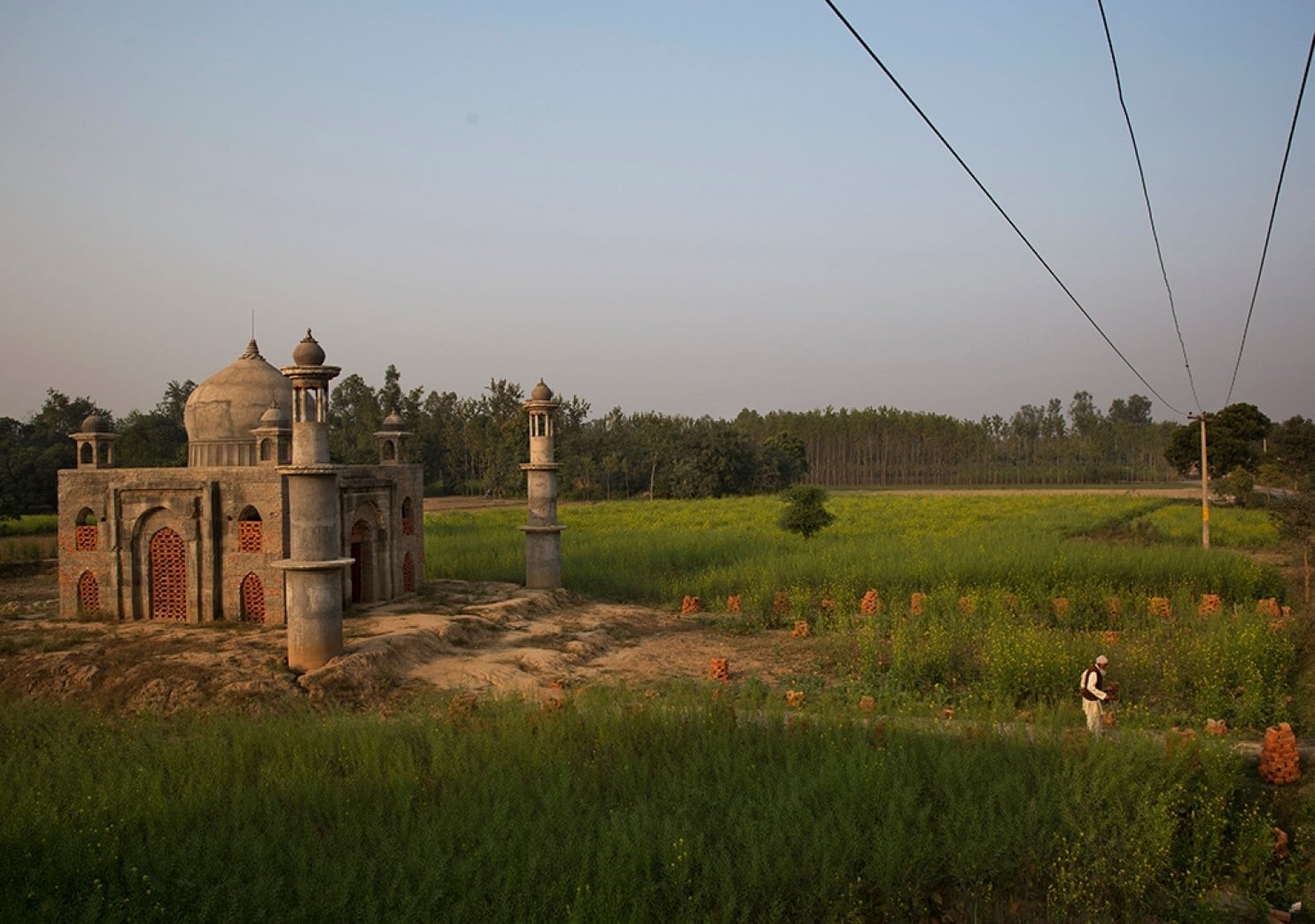
Retired postman Faizul Hassan Qadri walks out out the monument he is building for his late wife, Tajammuli, in the town Kaser Kalan in India’s Uttar Pradesh on Nov. 27, 2014. (AP Photo/Bernat Armangue)

With 80 years of wrinkles and a beard that has long turned white, Faizul Hassan Qadri has been working away his golden days on what he calls a labor of love — a grave for his wife, his “begum.”

For years, the retired postmaster has been building a monument reminiscent of India’s ancient shrines outside his home in Kaser Kalan, a village in India’s Uttar Pradesh, pausing from time to time when he runs out of money for materials. He has sold farmland and his wife’s finest jewelry to get enough rupees to finish the job, according to the Hindustan Times . But it’s a promise he made to his wife, Tajammuli, who died from throat cancer in 2011.

Tajammuli had asked him who would remember her when she died.

“I will build a tomb that everybody will remember,” he replied.

The tomb has become known as a “mini Taj Mahal” and Qadri as a common man’s Shah Jahan, the Mughal emperor who built the original at Agra during the 17th century for his Persian empress, Mumtaz Mahal.

Visitors from all over have traveled to see Qadri’s mausoleum that sits on 5,000 square feet of ground in his garden, Press TV reported. “I traveled almost [15 miles] with my friends just to get a glimpse of this structure,” Pahasu resident Zakir Ali told Hindustan Times . “The efforts put in by him is really commendable.”

Qadri and Tajammuli married as teens in 1953, according to the newspaper.

“We were just a normal couple,” he told the Associated Press  last year.

Since Tajammuli’s death, Qadri has dedicated himself to preserving her memory. He said he designed her tomb on his own but got help with the construction from a local mason who “prepared the dome and constructed the four ‘minars’ around the central building, which is a little more than 27-feet in height,” he recently told the Hindustan Times. “The structure is built on my own land and I have also tried to plant some trees around it and have a small water body at the back side of the building.”

But construction has been touch-and-go, coming to a halt last year.

“Initially, I sold a piece of land for Rs 6 lakh [about 600,000 rupees or $9,000] and my wife’s gold and silver jewelry for Rs 1.5 lakh and got the ‘makbara’ [mausoleum] constructed with the help of a local mason named Asgar,” he recently told the Hindustan Times. “A total of Rs 11 lakh was spent, but now I have to get marble studded on the monument and also to build a lush green park around it, both of which is likely to cost me another Rs 6-7 lakh.”

Many, including the state’s chief minister, have offered him help but he won’t accept.

“The chief minister wants to meet Qadri to appreciate his efforts and to offer some financial help so that he can complete his unfinished building,” additional district magistrate Vishal Singh told the Hindustan Times.

“It is a proof of love,” Qadri told the Associated Press last year. “I have to do it on my own.”

He wants to finish the tomb before he dies, he said, and then he wants to be buried in it too.

“I have told my brother to bury me here by the side of my wife,” he told the Hindustan Times . “Everything that comes has to go away some day. My wife is dead. I will also die some day. The monument too might not stand forever. I just wish to see it complete before I die.”

source: http://www.washingtonpost.com / The Washington Post / Home> Sections> Modern Mix / by Lindsey Bever / August 21st, 2015

Yuvan is my biggest influence after AR Rahman, says composer AH Kaashif

Chennai, TAMIL NADU :

KaashifMPOs09nov2018

Music composer AH Kaashif chats about his upcoming film Kaatrin Mozhi

Music has always been part of AH Kaashif, who says he was forced to learn the art form at the age of four. What initially started as entertainment later developed into passion. “I was seriously into music during Class IX. I decided that music would be my career. I completed a course in sound engineering, after which, I started interning with my uncle,” says AH Kaashif.

Not many know that Kaashif is related to AR Rahman. “It wasn’t brand ‘Rahman’ that landed me an opportunity in films. If I’m here today, it’s because of my work,” he says rather proudly. Kaashif took a detour from music to enjoy school life. But even in school, he participated in most cultural programmes. Kaashif dropped out of college since he felt it wasn’t the “right place” for him. “That’s when I began to do mainstream work for my uncle. I started working on background scores,” he says.

Kaashif worked as a music producer for AR Rahman and has contributed to the background score and songs in films like Mersal and Beyond the Clouds. His most recent work, apart from Kaatrin Mozhi, is the Vijay-starrer Sarkar.

Despite the Rahman factor, Kaashif quickly admits that he’s a big admirer of music composer Yuvan Shankar Raja. “Obviously, Rahman is my mentor, guru and everything. But in Tamil, one composer who really inspired me a lot during childhood is Yuvan Shankar Raja. He was the one who redefined electronic music. Of course, my uncle brought it in here, but Yuvan based his entire career on electronic music. Everybody knows I’m a big Yuvan fan.”

Kaashif has been releasing independent albums through social media. It was the song ‘Kadhal’ that fetched him an offer to compose for the Jyotika-starrer Kaatrin Mozhi, which is a remake of the Hindi film Tumhari Sulu.

“The producer was very impressed with my work. I met Radha Mohan later and he asked me to compose a few sample tunes. The whole process took about three months,” he says. He hasn’t watched the original version yet.

Kaashif believes there’s good scope for independent music in Tamil. However, he clarifies that it’s all about channelising and packaging stuff. “The scope of independent music is always there. For instance, Sony did an independent thing, which worked big time. When you have a brand representing you to promote your stuff, then it’ll definitely work out. But in my case, there wasn’t any brand backing me. When I put out my music, people got to know about this. In a way, everything happened in a very organic manner,” he explains, “Having a brand might ease the process. But at the end of the day, it’s about content.”

The songs ‘Kelambitale Vijayalakshmi’ and ‘Dirty Pondati’ seem to have become a rage on the Internet. Kaashif says that the former is the central theme of Kaatrin Mozhi that resonates with Jyotika’s on and off-screen persona. The composer is relatively young to process a situation like say, the romance between husband and wife. How does he manage to convert this little piece of briefing into a soulful number like the song ‘Po Urave’? “I really don’t know. In fact, it was the easiest song for me. Once the director explains the situation, I keep running it in my head. And then, I sit for composition and the tune begins to flow,” he adds.

Kaashif has signed the forthcoming Malayalam film Pathinettam Padi, directed by Shankar Ramakrishnan. He has been getting a couple of offers in Tamil as well.

source: http://www.thehindu.com / The Hindu / Home> Entertainment> Music / by Srivatsan S / November 08th, 2018

The last of eight generations of Rogan art in Kutch

Nirona Village, (Kutch District ),  GUJARAT :

Abdul Gafur Khatri at work at his residence in Nirona village, Kutch | Photo Credit: Vijay Soneji

The Khatris have practised the art for eight generations now

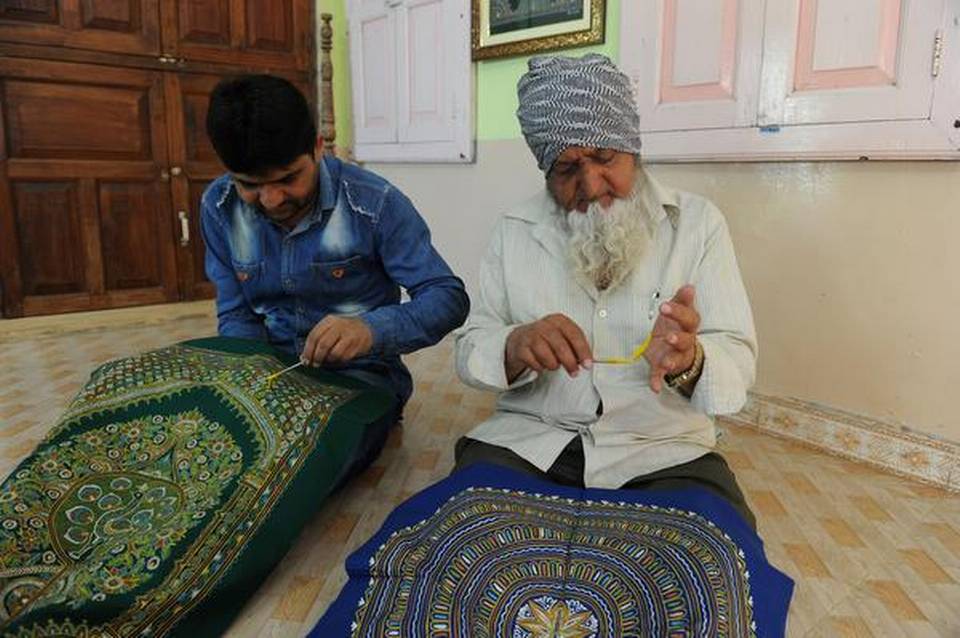
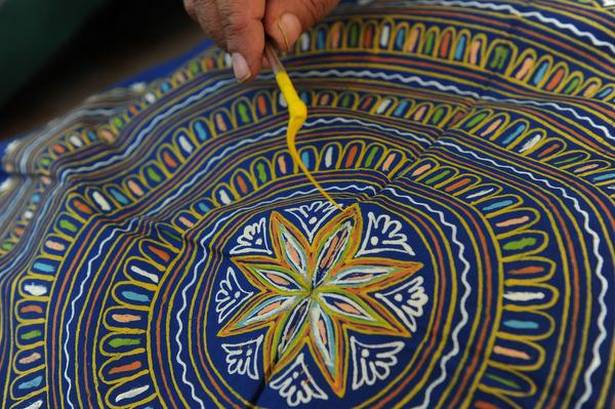
Sitting on the floor, Abdul Hamid carefully twists a thick spool of yellow paint around a metal pin. Stretched out before him is a piece of red cloth, pinned on either side to the legs of his trousers. He dabs the paint on the heel of his left palm — it’s a gummy mass and has to be worked into something more malleable. Hamid then brings the tip of the pin a few inches above the cloth, and as it hovers, an elastic strand of colour streams on to the surface. And the magic begins: an intricate pattern grows beneath the swirling pin that never touches the cloth. The floral design looks like needlework.

Hamid then folds the cloth and, just like that, a flawless mirror-image of the pattern appears and an exquisite piece of Rogan art is born.

“We have practised Rogan for eight generations now,” says Hamid. “The first six generations did not get their due for preserving the art, but now, finally it is widely recognised and we couldn’t be happier.”

‘Rogan’ in Persian means oil: the paint is made with castor oil. Rogan art is believed to have originated in Persia some 300 years ago and was traditionally used to embellish bridal trousseaus. As it crossed borders, it began fading from the collective memory of its creators. But nine members of the Khatri family in Nirona, a small village in Gujarat’s Kutch district, are the last surviving custodians of the art form.

The Khatri community once did Rogan work on the clothes of local animal herders and farming communities. But as machine-made textiles became a more affordable alternative and Khatri youth lost interest in learning the art, Rogan began to disappear. “But our family revived it in 1985,” says Hamid. In fact it is Hamid’s elder cousin, Abdul Gafur Khatri, a national award winner, who is credited with resurgence of Rogan art.

P.M.’s pick

The ‘Tree of Life’, an intricately patterned tree with hundreds of dots and dashes, is their signature painting and most in demand. A 14×17” painting can take 12 days to complete— Prime Minister Narendra Modi chose one to gift to the then U.S. President Barack Obama during his U.S. visit.

“Rogan art is 100% an artist’s imagination on a piece of cloth,” Gafur bhai, as he is better known, explains. “There is no tracing, no drawings to refer to.”

But preparing the base from castor oil is a laborious process and can take two days. The oil is heated and cooled in a (special) vessel and continuously stirred so it doesn’t burn. After two days, the residue left behind is mixed with cold water and it thickens into a sticky paste called rogan. Natural colour pigments are then added to the oil base. “Yellow, for instance, comes from a particular stone that is ground,” says Hamid. The pigments are added to the castor oil base and stored in earthen pots.

Wall pieces made by Abdul Gafur Khatri in Nirona village, Kutch | Photo Credit: Vijay Soneji

The nine artists have six national awards and six State awards between them. They proudly show me photographs of celebrities — politicians, film stars, sports stars — who have either bought their art work or felicitated them at awards functions.

Men last longer

It strikes me as odd that all nine members of the family working on the art form are men. This could perhaps do with the belief that women, once they get married, would pass on their knowledge to their husband’s families, threatening the art with dilution. But as Rogan faces extinction, Gafur bhai, has taken upon himself the task of teaching the technique to 200 girls from his village. And this has breathed fresh life into the dying art.

“We taught most of these girls for free. They can now create at least the basic designs,” Gafur bhai says, adding that 25 girls also help the family with their work. In another effort to popularise Rogan, the family conducts live demonstrations for every visitor at their doorstep. During the 30-minute demonstration, artists patiently answer questions and explain the techniques they use. On an average, the family gets 150 visitors a day. And between November and February, during the Rann Utsav — the Kutch desert festival — the numbers shoot up to 250 or 300.

No tough competition

Unlike other forms of textile art such as Ajrakh that face are under threat by factory-made products, Rogan faces no such competition, but meeting market demand has been a challenge.

“You will not find Rogan art the way you find other arts in the markets. It’s not because we don’t want it to go out to the people, it’s because we have limited resources,” says Gafur bhai. We go to five or six exhibitions around the country in a year, and rest of the time we are at home, working.”

It has been a long journey for the Khatri family: from reviving the art to creating public interest to recovering from the Bhuj earthquake setback. But today, they are only seeing a huge resurgence of interest.

The writer is an independent journalist based in Gujarat. When not researching her stories, she is busy spinning tales for her toddler.

source: http://www.thehindu.com / The Hindu / Home> Society – Rubric / by Azera Parveen Rehman / January 20th, 2018

How one woman’s story changed the lives of Turtuk’s women forever

Turtuk (Leh District ), JAMMU & KASHMIR  :

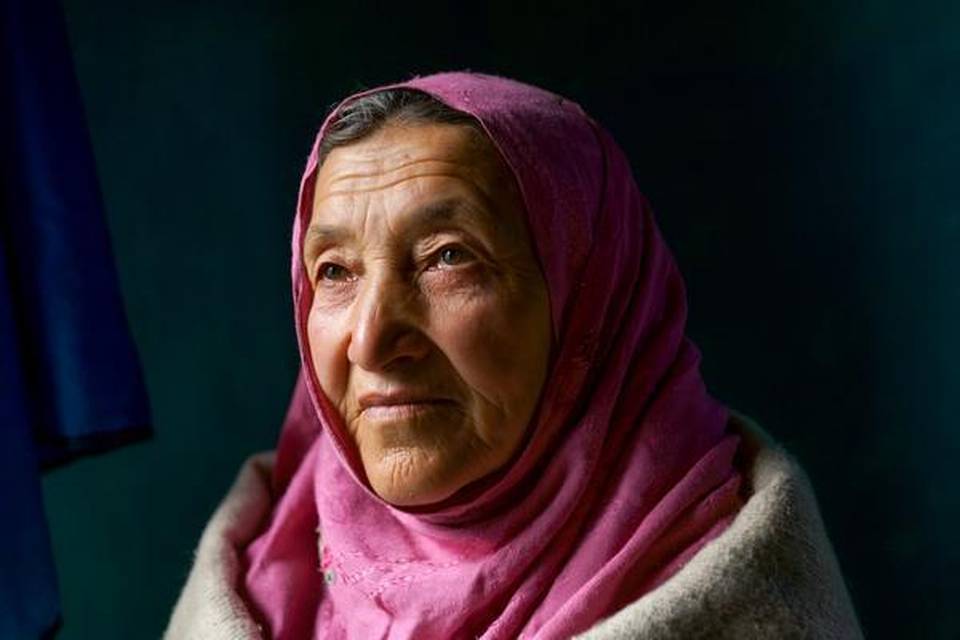
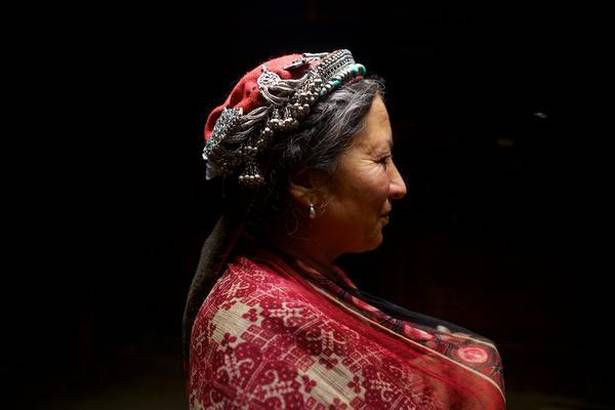
Rahima Begum | Photo Credit: Kartiki Selena Gonsalves

She was the first girl of this border village to finish school when other girls did not even get schooling; and she became the first woman to get a government job here

Rahima Begum was a young bride and new mother when she awoke one morning in December 1971 to find her dreams shattered and her new family divided. India had captured her village of Turtuk and three neighbouring villages of Chalunka, Thang and Tyakshi on the India-Pakistan border. Overnight, the LoC had shifted. For India it meant a tactical victory, and new vantage points for the forces. For the villagers, it meant separation, heartbreak and hardship.

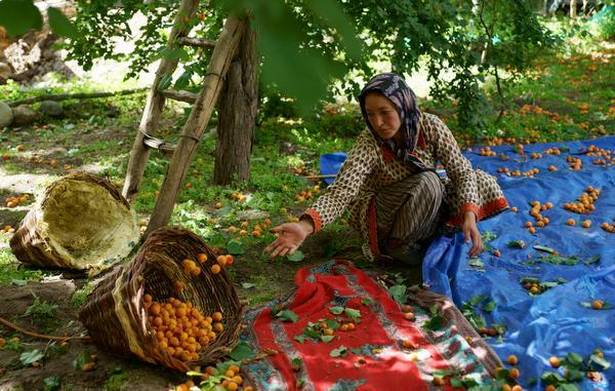
Turtuk, with its lush fields and blue skies, is an oasis amid the stark, stony peaks of the Pamir and Hindukush mountains. The sprawling flowering buckwheat fields are dotted with the orange-canopied and entangled trunks of apricot trees. Water from the glacier gurgles along Turtuk’s cobbled paths, and in summer, laughter echoes across the fields as children splash about in a natural pool in the village centre.

This is where Rahima grew up in the 1960s. She was a bright, free-spirited child, full of dreams. Her parents had ambitions for their young daughter. Her great-grandfather was a famous Balti poet. Rahima attended the local school and, at 14, became the first girl to graduate from it.

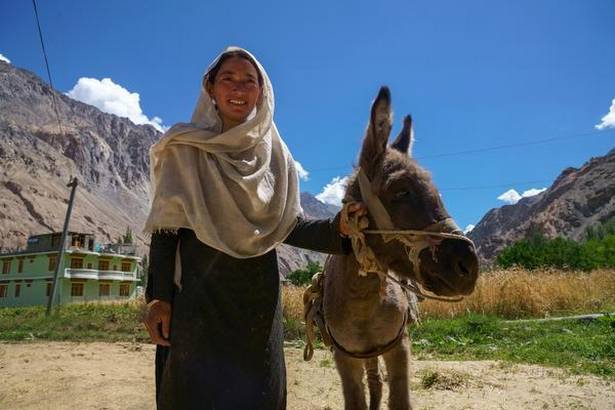
A Balti woman harvesting apricots | Photo Credit: Kartiki Selena Gonsalves

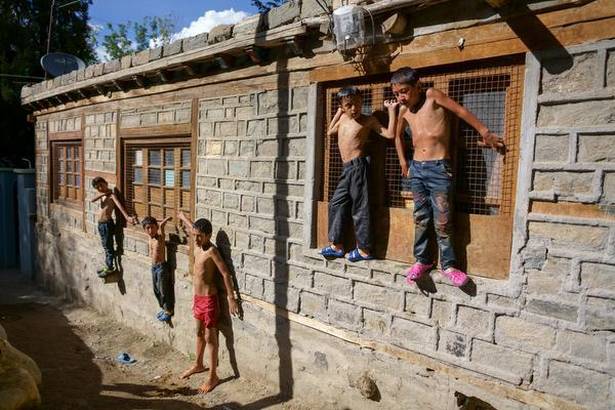
She recalls how in summer the children jumped into the pond to bathe. They did so with their school uniforms on, so they got washed too. They would then stand under the sun, arms outstretched, and dry out.

As was the custom, as soon as Rahima finished Class VI, her family found her a husband. He happened to be her cousin, Sher Ali and was known as the most handsome man in the area, and in fact in all of Pakistan. Rahima considered herself fortunate. Ali worked in the Pakistan army and marriage promised travel and a steady income.

Daily chores

As a married woman, Rahima took on household and farm work. She woke early, prayed, and made breakfast of kisir (buckwheat pancake) and grangthur (curd with local herbs). She would then set out to work in the fields or orchards. On some days she returned by afternoon, on others she toiled till sunset. At home, there were donkeys and chickens to feed and other domestic chores. Then, in November 1971, Rahima’s daughter Aisha Sudiqa was born.

Traditional Balti attire and jewellery | Photo Credit: Kartiki Selena Gonsalves

In December, when India captured the area, Chalunka’s residents gathered all the possessions they could and fled across the new border into Pakistan-occupied Kashmir. The three other villages decided to stay in India.

For some time, Rahima’s life remained unchanged; she was immersed in her baby daughter. But Sher Ali was not permitted to cross the border and come to India and Turtuk. Aisha was growing up; she began to accompany her mother to the apricot orchards and splash in the pond. But Rahima missed Sher Ali very much. She had not foreseen that she would be raising her daughter on her own. She waited hopefully for news of his return. Three years passed.

Then, in 1974, Rahima finally received a letter. It was from Sher Ali. Her hands trembled as she opened it. He wrote to say that he missed her very much, he asked about Aisha. He said he hoped to be reunited with them soon, and asked her to take care of herself and their daughter.

After reading the letter, Rahima became even more determined to live with him, even if it meant crossing the border into Pakistan. The very same day she packed some clothes and documents and set out with Aisha on the long journey to the Wagah border. Miles of barren, unforgiving terrain later, she gazed out of the tempo window to find men in khaki and green, and army trucks trundling by every few minutes. The vehicle slammed brakes, and she was ordered to get down with everyone else. She walked to the border control. She was afraid, but knew she had to be strong.

The officials inspected her documents, and checked records from a big book to make sure she had no history of attempted border-crossing. An officer then walked towards her, and said she could not cross. She pleaded with him, but it was of no use. Heartbroken, Rahima and Aisha returned to Turtuk. She wondered if she would ever see Sher Ali again.

Boys drying themselves after a swim. | Photo Credit: Kartiki Selena Gonsalves

Bolt from beyond

Two more years passed. Then, when Aisha was six, in 1976, Rahima received a letter. It said “As-salaam-alaikum. I hope you and Aisha are well. I am upset to bring to you the news that I don’t think we have hope of ever meeting again. I tried many times to cross the border and was rejected. I think it is time to say goodbye. I need to marry another woman. Khuda Hāfiz.” For Rahima, life went on.

Six years later, Sher Ali wrote again. It had now been 12 years since their village had been brought into India. This time, the letter asked for a divorce. Rahima’s eyes welled up with tears, her hands shook as she read the letter. “Take care of Aisha,” the letter said. “I wish you luck in life. Khuda Hāfiz.”

The divorce came through. In October 1983, Rahima’s and Sher Ali’s parents persuaded her to marry Sher Ali’s younger brother, Abdul Kareem. Aisha was delighted to have a father, and the next year, the couple had a baby girl they named Farida Khanum. Ten years went by. Rahima, now a mother of six, was determined to make something of her life. She decided she wanted to improve the lives of Turtuk’s residents. With her education, she was able to take up a government post in Turtuk as an Urdu teacher.

BaltiWomenMPOs04nov2018

Rahima sent all her children, boys and girls, to school, and encouraged others to educate their children too. She led by example: she was after all the first girl of her village to finish school when other girls did not even get schooling, and she also became the first village woman to get a government job.

School topper

Rahima’s daughter Aisha also excelled in school, and became the first girl to leave Turtuk village and enrol in high school in Hunder. She then went to Srinagar’s Maulana Azad National Urdu University for a B.Sc. degree, and then an MBBS as well.

Nobody from Turtuk had ever gone outside Ladakh to study before. Aisha was excited and proud. After her training, she returned to Turtuk, the first woman doctor in the village.

Aisha, like her mother before her, became a role model for Turtuk’s girls. She visited her neighbours, friends and relatives, and even the schools in Turtuk and neighbouring villages. She spoke to the young girls there, ignited in them dreams and hopes, spoke about careers, income, knowledge and education of women. Today, everyone in Turtuk wants their girls to be like Aisha, to go to school, to work, discover the world outside. It has been a major leap.

One evening during Ramzan, in 1995, Aisha returned home to break her fast, but feeling fatigued and disoriented, she went to bed, and passed away in the early hours of the morning. She had been suffering from anaemia and the strain of travel and fasting had proved too much.

Rahima mourned her first-born, and the village the loss of their strong, independent and educated daughter.

But Turtuk vowed to keep her memory alive by educating girls and improving their lives. Thanks to the mother and daughter, life in Turtuk has changed a lot. Now, all girls attend school. Many continue their education in Kashmir or Delhi in big universities.

To the average tourist, Turtuk may look like it’s stuck in a time-warp. But its residents know that their lives have changed dramatically. And that a big part of this revolution owes to two of Turtuk’s daughters, Rahima and Aisha.

The Mumbai-based writer is a Sony Artisan, photojournalist and cinematographer.

source:  http://www.thehindu.com / The Hindu / Home> Society / by Kartiki Gonsalves / November 03rd, 2018