Category Archives: Arts, Culture & Entertainment

Three lions and Tipu’s Tiger

KARNATAKA / London, UNITED KINGDOM  :
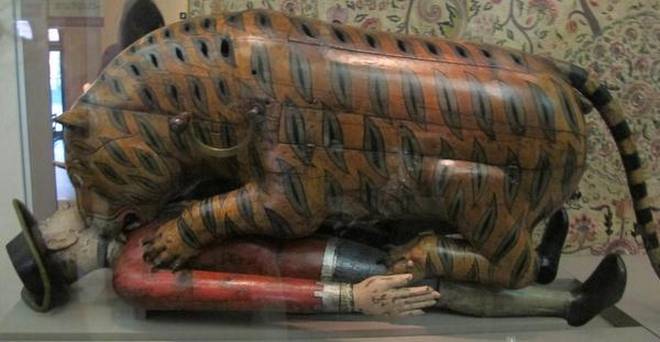
Could the Tiger’s position — now behind a glass case, its crank handle inaccessible to the public — be an apology for the disrespect permitted in East India House?

The artefact sitting in V&A was iconic, identifiable and far away from home

The day I saw Tipu’s Tiger behind its glass case at the Victoria and Albert Museum in London was a day of significance. That morning, after months of being cooped up in Oxford, some friends and I took the train to Marylebone and found the absence of dreaming spires refreshing to say the least. At noon, a friend from India was waiting for me on the other side of the busy Camden High Street. As we hugged amidst the crush of gliding Londoners, her muffled exclamation might have been: ‘It’s so crazy we’re meeting here of all places, so far from home.’

That phrase would be borrowed by me on two separate occasions during the day. In the evening, I stood before Julian Barnes at the Royal Institution and told him how I had read ‘A Short History of Hairdressing’ over and over again to teach myself the ‘architecture’ of a short story. I felt a potent urge then to parrot my friend. It was ‘crazy’ to see and hear Barnes in the flesh, so far from my bedroom in Kolkata, the only other place he had seemed real and, dare I say, attainable through his prose and through the material object, that is, his books in my hands, the only feasible rendezvous with the man.

I had never thought then it would happen: to have someone I studied so minutely sit before me and confess he didn’t think as highly of his short prose as I did.

Iconic meeting

The second occasion I was inclined to echo her words that day was when I stood in the South Asia section of the V&A before Tipu’s Tiger, which had always been relegated to the Did You Know section of our history books. It was not exactly like meeting an old friend or a revered author, but it bore all the characteristics of such a meeting. Like Barnes and my Kolkata friend, it was instantly iconic, identifiable from a distance, and a ready reminder of my distance from India. In fact, standing before the wooden automaton, slightly disconcerted, I addressed it and thought: ‘You are so far away from home.’

The possible inspiration for the mechanical figure seems fitting to some. Hector Munro Jr, whose father defeated Tipu’s father Hyder Ali in the Second Anglo-Mysore War in 1781, was mauled by a royal Bengal tiger at Saugor Island in 1792 and died from the injuries. This must have seemed like divine intervention to Tipu, a wrong set right. The carved and painted, almost life-size, wooden musical automaton was created for the Sultan, whose personal emblem was a tiger and whose hatred of the British was well-known.

The last laugh

With the fall, however, of Seringapatam and the execution of Tipu in the Fourth Mysore War of 1799, the Tiger travelled from the music room of Tipu’s summer palace to the Company’s East India House at Leadenhall Street in London, where the public was given access to view and play with it.

Its wooden body with a keyboard embedded in the flank was thrown open to the English masses who came in and played ‘God Save the King’ and ‘Rule, Brittania!’ upon it. If Tipu thought he had been mocking the Englishmen with the Tiger, they were now having the last laugh.

I deal with issues of empire and post-colonial anxiety almost on a daily basis, especially in a place like Oxford, especially on a course called World Literatures in English. Of course, when I first saw it, I silently demanded a restoration of the tiger to its previous owner, to its previous nation. My anger at seeing the Tiger in an English museum, so far away from home, was justifiable. The Tiger was not borrowed. Nor was it touring, as it had to New York’s MoMA in the 50s. Instead, it was a ‘permanent’ acquisition at the V&A.

Of collaborations

For every Indian schoolchild, the Tiger, just an artefact but nonetheless awe-inspiring, was not an affordable train or flight away, like Fatehpur Sikri or Sher Shah’s tomb.

For me, the Tiger’s distance from my home was a reiteration of the national and racial distinctions not only of the Anglo-Mysore variety, but also of the Jadavpur-Oxford type that I faced every day. Besides dodging questions like ‘If you’re from India, how’s your English so good?’ for the past few months, I had had to clarify to a white friend who subsisted on the chic-ideal of Zadie Smith that India has Bengalis too, and no, I did not have relatives in Brick Lane, not that I knew of anyway.

Seeing Tipu’s Tiger that day catalysed a recollection of an afternoon in 2016 in the Victoria Memorial Hall with Thomas Daniell and his nephew William. Their tranquil scenes of India, while in stark contrast to the ferocity of the Tiger, do something interesting.

The English hands of the Daniells reproduce the Indian hands of the architects behind the buildings and locations they sketch. Their canvas becomes a surface of Anglo-Indian collaboration, similar to how it is conjectured that the mechanics of the Tiger have an Indo-French history.

This recollection, and the subsequent contemplation on collaboration, made me think of several works of restoration that the V&A carried out upon the Tiger, especially after the bombing of London in World War II. Could this act of restoration be seen as an act of reparation? Could the Tiger’s position — now behind a glass case, its crank handle inaccessible to the public — be an apology for the disrespect permitted in East India House?

The Tiger, so far from home, is an icon that reminds me of a past based on plunder and pillage by the nation it sits in. Yet, its 18th century splendour has weathered war and wear so well. Do present acts of safekeeping obliterate the violent history of its, for want of a better word, theft?

I am persuaded to wonder if the Tiger is now a collaboration between Tipu’s Mysore craftsmen and its modern conservationists in England and if I should be thankful for the restoration. Are the acquisition and conservation of an Indian object in a British museum and the works of British painters displayed in a Calcutta museum an instance of transnational collaboration and exchange? But in the case of Tipu’s Tiger, this then also begs the question: how long is too long before we forget that what is ‘acquired’ is what was once ‘removed’ from its home?

The writer, a Felix Scholar, is studying World Literatures in English at Oxford

source: http://www.thehindu.com / The Hindu / Home> Society> History & Culture / by Rohit Chakraborty / May 05th, 2018
A mushaira with only female poets in Lucknow

Lucknow, UTTAR PRADESH :

Mushairas and Kavi Sammelans, being one of the latest trends in Lucknow, usually get to witness a majority of male poets with only a handful of lady poets in attendance.

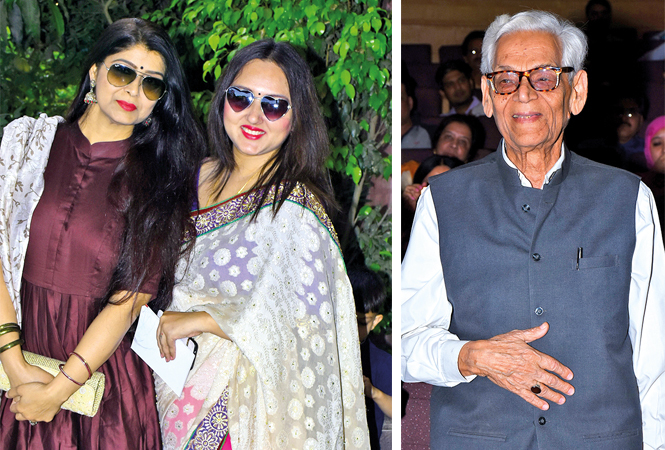
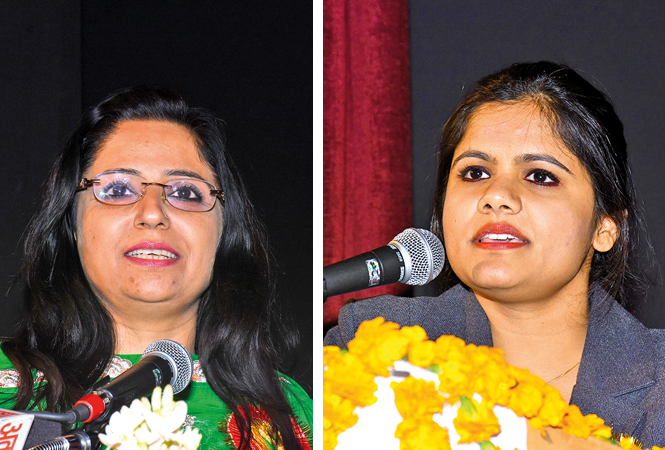
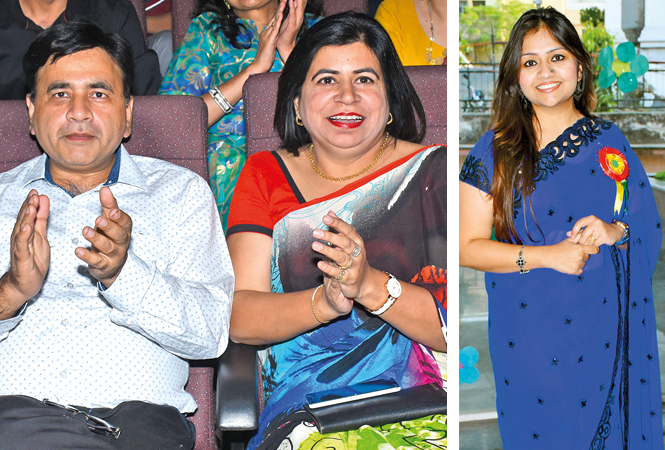
Qazi Meraj Ahmad and Sabiha Ahmad (R) Aisha Ayub (BCCL/ Vishnu Jaiswal

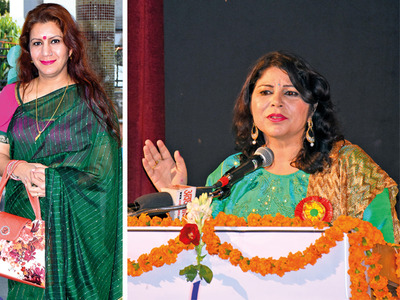
However, to give the trend a twist, Aisha Ayub organised a mushaira titled Raushnaai – Bazm-e-Sukhan at Buddha Research Centre which had just women poets participating.

A total of 11 ladies from all across India, shared their thoughts and feelings in the form of poetry with the audience and surprised many with their talent.

Aisha, while highlighting the reason for this initiative, shared, “It is said that women are more expressive than men, then why do we get to see the majority of males in the field of mushaira? In order to bring a change and prove that women are no less than their male counterparts, I organised this event. It took me around two months to gather 11 women poets, whom people don’t know much about but who are strong with their poetic skills for this event.”

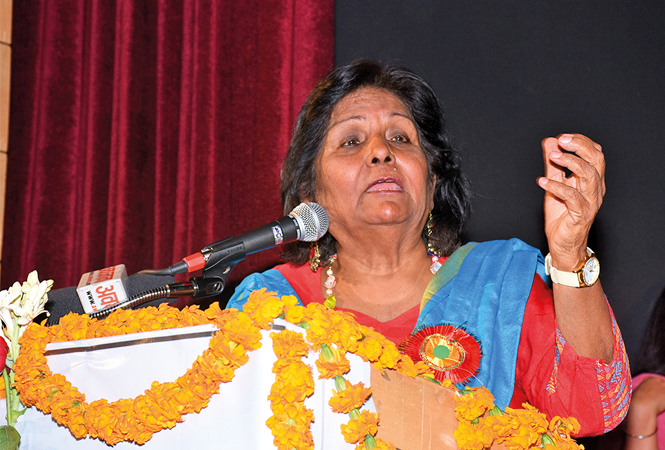
Sabra Habib (BCCL/ Vishnu Jaiswal)

Dr Sabra Habib, a professor and a writer anchored the event.

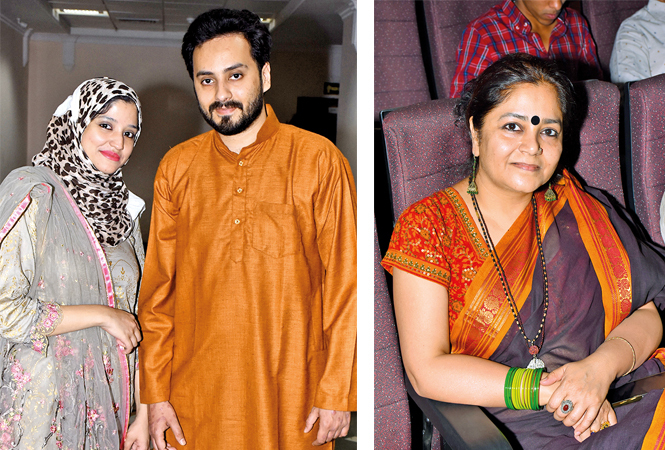
Malvika Hariom and Meenakshi (BCCL/ Vishnu Jaiswal)
Manisha Sharma and Raj Smriti (R) Sharib Rudaulvi (BCCL/ Vishnu Jaiswal)
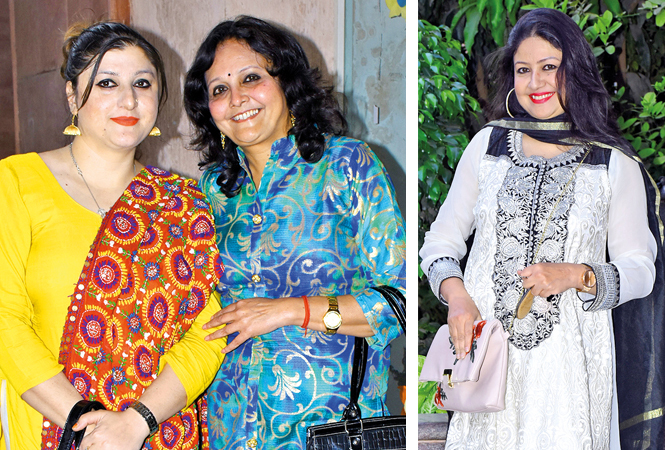
Uzma Ishrat and Taha Mahmood (R) Dimple Trivedi (BCCL/ Vishnu Jaiswal)
Dr Mehnaz and Mini (R) Faryal Faisal (BCCL/ Vishnu Jaiswal)
Hina (R) Geetanjali Rai (BCCL/ Vishnu Jaiswal)

Geetanjali Rai, a 28-year-old poet and an IT analyst, recited her poems Neem Ka Ped and Jaadugar, while Hina Rizvi, a housewife, presented the poems Binte Hawa Hun Main, Daamane Ulfat Se Nikalna Bhi Nahi Hai Mujhko, among others.

source: http://www.timesofindia.indiatimes.com / The Times of India / Home> News> Entertainment> Hindi> Events> Lucknow / TNN / by Adnan Rizvi / May 04th, 2018

Feeding Kolkata, one hungry mouth at a time

Kolkata, WEST BENGAL :

Kolkata :
Four friends sat down to hang out one evening in 2016, a couple of months before Durga Puja. The idea was to discuss a plan that one of them had, to bounce it off among the other three. Fortunately, they were very excited at the idea… and thus started their project to feed Kolkata.
It started as one “ATM” to “ladle” out free food  to the hungry. In a period of just nine months, it’s gone up to three ATMS. And, if things go according to plan, there’ll be two more before Puja this year.Together, the three Food ATMs, as the project is being lovingly called, feed at least 2,000 people each day. The first one came up on the EM Bypass at Uttarpanchanna Gram, the second opposite Ladies Park on CIT Road, and the third one inside Ramleela Maidan off Moulali. The fourth is supposed to come up at Bhowanipore, near Chakraberia, and then a fifth near the 8B bus stand at Jadavpur.

Restaurateur Asif Ahmed and his three entrepreneur friends Prakash Nahata, Rahul Agarwal and Nirmal Bajaj decided to start their endeavour as a sort of experiment by connecting with clubs that organise Puja. With the first letters of their names they formed Pran, a group to fight for a hunger-free Kolkata. Almost every club cooks and feeds bhog on all four days of Puja. “We requested them to cook some extra bhog, so that we could distribute it among pavement-dwellers,” Ahmed says. “We were able to convince 15 clubs, and they gave us immense quantities of food, which we were able to distribute among hungry pavement-dwellers. The gratitude and satisfaction we saw on those poor faces was the incentive that sowed the seeds of the Food ATM project.”

Ahmed first turned his attention towards the food that his restaurant was left with at the end of each day. At his Uttar Panchannagram outlet, he got his workers to cool, pack and refrigerate the food, so that it could be distributed. His friends got a real estate company to donate a specially designed refrigerator, kept outside his restaurant, packed with food. Twice a day, the food was distributed to the needy. “We started on August 15, 2017 to emphasize the freedom factor. What is the value of freedom unless we are able to give freedom from hunger to everyone in the city?” Ahmed says.

Bengali New Year’s Day was celebrated on April 15 a little differently at the Ramleela Maidan. Members of the Entally Yuvak Brinda joined hands with Pran to start the city’s third food ATM. A special room was built beside the park, where the refrigerator is kept stocked with food, water and cold drinks, to be distributed among the homeless twice each day. At least 10 restaurants in the vicinity have been sending their packed excess food to the food ATM. “We just had to visit the restaurant owners and tell them about our intent, and they readily agreed. If the city restaurants stop wasting their leftover food and refrigerate it, we will be able to eradicate hunger completely,” says Jami Siddique, the club’s secretary.

Most restaurants have to throw away the food even after feeding their staff, as they do not have extra refrigeration facilities and also because they cannot serve it to customers the next day. They just needed an organised, hygienic and efficient collection and distribution system, which is why the idea of the food-ATM seemed so appealing to the donors. “Once in a while, restaurants also give away cold drink bottles, which we gratefully accept,” says Sujoy Banerjee, a member of the club’s Food ATM organising committee. Members are now going a step further and approaching households in the area, telling them not to waste food but to pack it up neatly and call a helpline number that the club has set up, so that it can be collected from their doorsteps. “Even one small container of rice and a little dal or dry sabzi, which is what we are able to collect from most households, is enough lunch for a hungry mouth,” Siddique says.

You have to be present at Ramleela Maidan around 1pm or 9pm any given day to see how the distribution is done and to see how happily the recipients — especially the kids — are, leaving with the food packets. “Khub bhalo khabar… we even get pieces of chicken, fish or eggs at times,” says Monua Patra, a 70-year-old woman who comes with her grandchildren for the food every day. “We share the food amongst us. God bless these good men,” she says.

Perhaps the most popular of all the food ATMs is the one opposite Ladies Park on CIT Road. “At this ATM, we are not only getting food from restaurants, but also get excess food and cakes from birthday parties, wedding halls and party organisers,” says Surjya Kanta Haldar, the points person for this ATM.

This ATM is also getting a lot of donations from schoolchildren of Don Bosco Park Circus and Mahadevi Birla Girls HS School, who keep chocolate, juices and cakes on their birthdays. “These happen quite often nowadays and we are able to happily distribute the goodies among the needy kids,” Haldar says.

Both in Bhowanipore and Jadavpur, Pran is in the last stages of discussion about starting the ATMs. The refrigerators come free from the real estate group in accordance with the agreement with Pran. “The real challenge is that the club members need to network with local restaurants and in the neighbourhood to get a steady chain of donors,” Ahmed adds.

At each partner restaurant, efforts are on to educate patrons about the initiative so that after they have eaten what they need, they can ask waiters to pack up the leftovers. Needless to say, the idea has clicked.

source: http://www.timesofindia.indiatimes.com / The Times of India / Home> News> City News> Kolkata News> Civic Issues / TNN / May 05th, 2018

Irshad Kamil presents scholarships in his mother’s name

Malerkotla (Sanjrur District), PUNJAB  /  Mumbai, MAHARASHTRA :

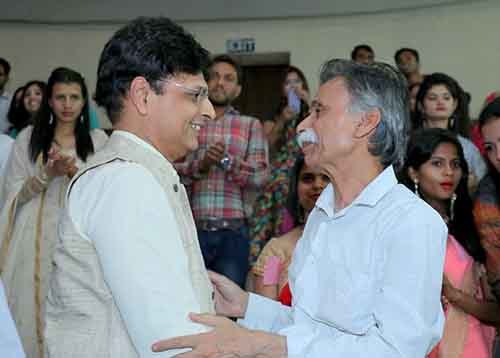
Irshad Kamil at Panjab University's Hindi department
Irshad Kamil at Panjab University’s Hindi department

Department of Hindi, Panjab University organized ‘Rukhsat 2018’ the farewell ceremony for M.A fourth semester students on Wednesday.

The students of the department presented a cultural program and brought together the folk dances like Gidda, Himachali Naati and Rajasthani folk dance.

Irshad02MPOs05may2018

The chief guest for the event was celebrated Bollywood lyricist Dr Irshad Kamil.

He awarded 26 meritorious students with various scholarships. He also presented the special scholarship as a tribute to his mother Begum Iqbal to two meritorious students, Divya and Manjinder.

Irshad03MPOs05may2018

The Department presented Kamil with his portrait as a souvenir.

Chairperson of Hindi dept, Dr Gurmeet Singh said that the highlight of the program was participation from a number of alumni of the department.

The judges panel comprised choreographer Preeti Arora, budding actor Satish Yadav and transgenderr activist Dhananjay.

source: http://www.timesofindia.indiatimes.com / The Times of India / News> City News> Chandigarh News / TNN / May 02nd, 2018

A mosque to elevate the mind

Jamshedpur, JHARKHAND :

Library, career counselling & English-speaking on cards

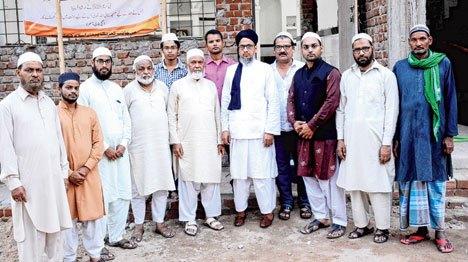
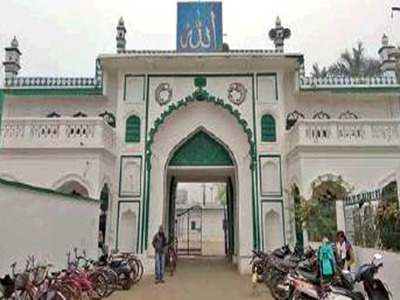
PURE INTENT: Members of Paigham-e-Islam Masjid and Islamic Centre pose for a picture in Mango, Jamshedpur, on Thursday. Picture by Bhola Prasad

Jamshedpur:

At a time of increasing suspicion and intolerance, an upcoming mosque here seeks to build bridges with knowledge and wisdom.

Paigham-e-Islam Masjid and Islamic Centre in Mango will be arguably a first of its kind mosque in Jharkhand with a library offering Islamic books along with those of Hindi, English and Urdu literature and a reading room.

These apart, the learning centre attached to the mosque will offer English-speaking classes to poorer students and youths, tuition for competitive exams, career counselling and inspirational talks by teachers and professionals from various fields. People of other faiths would be welcome to participate in discussions and seminars and use the library and reading room.

The mosque and the learning centre will be run by Paigham-e-Islam Education and Welfare Trust, an outfit formed in 2011 with the cream of Muslim intelligentsia in Jamshedpur and some NRIs, including academics, lawyers, bureaucrats, social workers and professionals, as members.

The Trust members said they were inspired by the holy Al-Masjid an-Nabawi in Medina, a mosque built by the Prophet himself, and his final resting place.

Religious scholar and social worker Syed Saifuddin Asdaque, the director-founder of the Paigham-e-Islam Education and Welfare Trust, said they always wanted to be a part of a mosque that would spread peace, knowledge and wisdom.

“As far as our knowledge goes, a mosque with books on literature and a reading room nowhere exists in India. Though we have less space now (2,400sqft), we plan to expand with more such innovative plans in the future,” he said. “We know this has never happened before here but we are trying to bring something new.”

Intellectuals associated with the Paigham-E-Islam Masjid are optimistic of the venture.

Karim City College English professor Yahiya Ibrahim, who is a member of the advisory board of the Trust, called the proposed activities revolutionary for society as a whole.

“And I am happy to be a small part of this,” Ibrahim said. “This centre will have a library, a reading room, a seminar hall, facility for counselling by experts such as doctors, lawyers and teachers. At present, it is a small beginning but we will move ahead towards fulfilling our dreams on a very large scale.”

source: http://www.telegraphindia.com / The Telegraph,Calcutta,India / Home> Jharkhand / by Antara Bose / May 04th, 2018

Life lessons learnt from a gaming console

Hyderabad, TELANGANA :

Passion and dedication is the key towards success. Whatever you choose to do, you must do it wholeheartedly. Winning or losing is secondary, what matters is participation.

habeebullahKhanGamerMPOs01may2018

Bengaluru :

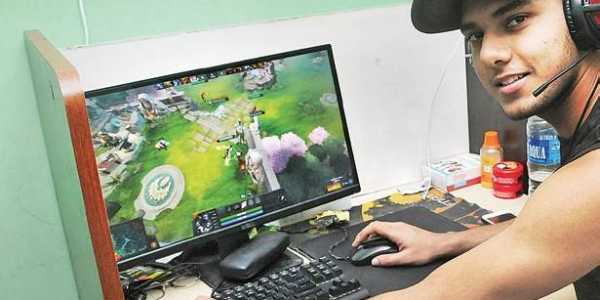
Passion and dedication is the key towards success. Whatever you choose to do, you must do it wholeheartedly. Winning or losing is secondary, what matters is participation. This is what gaming has taught me,” says the 21-year-old Habeeb Ullah Khan from Hyderabad.

He started gaming full-time in 2014. He had to cope with studies, career and gaming simultaneously. He says, “I was part of a boot camp in Delhi without any kind of financial support. I’m glad I have made it so far.”

After he finished his B.Com, he realised that it was time to follow his passion. “My cousin used to play national tournaments. I always had a competitive spirit within me, but didn’t know how to nurture it. With help from my cousin, I ventured into professional gaming,” says Habeeb.

He started playing Counter Strike Global Offensive initially, but later chose DOTA-2.

Over the past three years he developed a team — Wipeout, which includes four other members.

He has participated in 30-40 national tournaments. He won six tournaments last year, such as Taiwan Excellence Gaming and The Indian E-Sports Championship.
He is known as ‘CLown (K)’ in the virtual world and practices 14 hours a day. Team Wipeout also practices every day whenever they are free. They maintain separate schedules for gaming and other activities.

He says, “Gaming is similar to outdoor sports. The more you practice, the more skilled you become. It involves coordination and quick thinking. E- Sports (electronic sports) is a great community where you grow as a person. There is no hectic schedule, unlike other professions.” He has learned patience, focus and anger management.

He suggests that the aspiring gamers should not get de-motivated by failures. He cites his own example and says, “My journey in the gaming world has been a roller coaster ride. I have failed numerous times, but I never stopped learning. I’m successful today because of my failures.”

Talking about the gaming field in India he says that gaming is still not considered as a career. He says, “The youth should be encouraged to take up gaming as a profession. One should not think about losing. Winning and losing is a part of life. You will always gain valuable experience. Although E-Sports does not have adequate resources right now, over the next few years it will gain momentum. It has wide scope and rewards well.”

source: http://www.newindianexpress.com / The New Indian Express / Home> Lifestyle> Tech / by Ivy Chatterjee / Express News Service / April 13th, 2018

When the Nawab gifted Gorakhpur an Imambara

Gorakhpur, UTTAR PRADESH :

Miyan Sahab Ka Imambara in Gorakhpur sees lakhs of devotees around Muharram every year.

Not many might know that Gorakhpur, the epicentre of the Nath sect, is home to a two-century-old Imambara as well. Built with the help of Nawab Asaf-ud-Daulah, the Imambara has been included in the list of places being promoted by UP Tourism.

Legend goes that once when the Nawab was out hunting in a forest in Gorakhpur, he came across a man meditating by the side of a dhuni (slow burning fire) deep in the woods.

Seeing the mystic wearing almost no clothes, the Nawab offered his expensive shawl to him as it was a bonechilling winter evening.

However, not welcoming of the move, the man, identified as mystic Hazrat Roshan Shah, threw it over the dhuni. But, instead of burning to ashes, the shawl did not catch fire at all, leaving the Nawab bewildered. Seeing his expressions, the mystic replied that the shawl was kept in the safest of places and he could reproduce it on demand. Then, the man took the unscathed shawl out from his ‘dhuni’ and offered it back to the Nawab.

Amazed at his spiritual powers, the Nawab offered him a handsome grant but Shah refused. When the Nawab insisted, Shah asked him to get an Imambara built for Imam Hussain and give some land for the Imambara’s waqf.

As ordered, Asaf-ud-Daulah granted 17 villages in Daud Chak area cash and promised to send gold and silver tazias to the saint. In a book titled Shahernama Gorakhpur, an article by Afganullah Khan notes that the land for the Imambara was handed over to Shah in 1796 and construction began soon after.

The saint died in 1805 and was succeeded by his nephew Ahmed Ali Shah, popularly known as Miyan Sahab. The Imambara came to be known as Miyan Sahab Ka Imambara. It is this name that has been included in the list of places being promoted by the Uttar Pradesh government to bring Gorakhpur on the national tourist map.

It found a mention in the ‘list of places of interest for tourism’ at Gorakhpur Mahotsava too. The government also plans to invite proposals from corporates for investment at tourist sites—including this Imambara.

With its impeccably white exterior, the grandeur of the Imambara can be seen only during the first 10 days of Muharram when azadari rituals are performed. “At least 1 lakh devotees visit the Imambara during Muharram,” says Nahid Shama, principal of a girls’ PG college run by the Imambara Trust.

Blogger Mazhar Naqvi has noted that the traditions of azadari came to the Imambara from Awadh. “Nawab Asaf-ud-Daula sent gold- and silver-plated tazias for the Imambara here from Lucknow. It is believed that the saint had promised to conduct azadari on behalf of the Nawab, and he kept his word,” Naqvi has noted in his article ‘Roshan Ali Shah and the Imambara of Gorakhpur’.

Local writer Prem Paraya stated that the estate grew manifold under the leadership of Roshan’s successors who took keen interest in administrative affairs of the Imambara and related property. “It is said that by then, the estate’s exchequer had lakhs in cash, many gold and silver blocks and a treasure of ‘asharfis’. The waqf was so wealthy that it gave a loan to the East India Company as well,” says Paraya.

source: http://www.timesofindia.indiatimes.com / The Times of India / Home> News> City News> Lucknow News / by Shailvee Sharda / TNN / April 01st, 2018

Food from the Courtallam Border Rahmath Kadai

Coimbatore, TAMIL NADU :

Food from the menu | Photo Credit: The Hindu

Courtallam Border Rahmath Kadai, a 40-year-old eatery opens its doors in Coimbatore

Located in the busy road of Race Course is the newly opened restaurant, Courtallam Border Rahmath Kadai. We are there for dinner. Painted white and well lit, the restaurant has two floors and we choose the first floor as the ground floor was packed, and we go up a flight of wooden stairs. Red kolam and mirror works decorate the walls and there are old-fashioned glass lanterns hanging too.

The menu is South Indian with several chicken, quail, prawns, fish and egg. The chicken lover in me is already happy.The restaurant is known for its border porotta and poricha kozhi. We order the same to start with. The food is served on banana leaves with no delay. The porotta came with chicken gravy and the poricha kozhi is red and I love the strong whiff of coconut oil. The dish is mildly spicy and the meat is tender. We also order chicken kothu porotta and a generous portion of it arrives with a lot of onion and curry leaves along with soft chicken pieces. It is one of the best I have had so far.

Pichi potta pepper chicken fry is spicy, and the shredded chicken is again redolent of coconut oil, onion and pepper. We then dig into the idiappom, gun chicken (so named because the piece looks like a gun!) and a masala kalakki that is an egg dish. I particularly like the masala kalakki as the egg is gooey and cooked perfectly. The small pieces of cinnamon, pepper, cloves, onion and cardamom add to its flavour.

Satiated we climb down the stairs and meet I.Mohammed Asan, Director of the restaurant. He tells me, “My grandfather started the hotel as a small eatery at Courtallam for lorry drivers 40 years ago. Then it served only tea, porotta and chicken gravy. It was known as Border Kadai as it was situated on the Kerala- Tamil Nadu border. Tourists to Courtallam began flocking to our eatery for our border porotta. The one in Coimbatore is our sixth branch. We have four others in Chennai.” Their speciality is the fact that they use country chicken from their farm in Courtallam and the masala is homemade. “We are particular about maintaining quality.” They faithfully follow the recipes of his grandfather and cook the biriyani and gravies in firewood stove. “It is the traditional way and helps to lock the flavours better.”

As I make my way to the parking space, I see people waiting patiently outside for their turn to get a taste of their food.

Info you can use

Courtallam Border Rahmath Kadai is open from 12.00 noon to 11.00 pm.

Average cost for two : ₹500

@ Courtallam Border Rahmath Kadai, 74, Race Course Road, Gopalapuram.

Call 0422 4203777 for more details

source: http://www.thehindu.com / The Hindu / Home> Life & Style> Food / by Susan Joe Philip / January 04th, 2018

Ansari wins

TAMIL NADU / South Carolina,  U.S.A :

AzizAnsari26apr2018

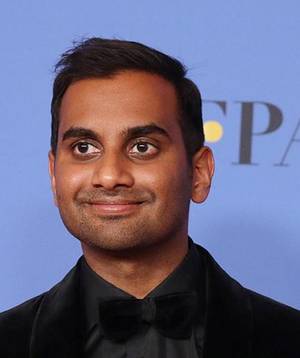
Indian-origin star Aziz Ansari became the first man of Asian origin to bag the title of best actor in a TV series (musical/comedy) at the Golden Globes.

The 34-year-old won the trophy for his role in Master of None .

“I genuinely didn’t think I would win as all the websites said I was gonna lose,” Ansari said.

He was up against Anthony Anderson of ( Black-ish ), Kevin Bacon ( I Love Dick ), William H. Macy ( Shameless ) and Eric McCormack ( Will and Grace ).

source: http://www.thehindu.com / The Hindu / Home> Life / PTI / January 07th, 2018

Sunni centre to adopt 100 villages

Kozhikode, KERALA :

Kozhikode  :

Markazu Saqafathi Sunniyya (Sunni Cultural Centre) led by Kanthapuram A P Aboobacker Musaliyar  has decided to adopt 100 villages in the country as part of the 41st anniversary of the institution.

Dr Wael Albattrekhi, deputy head of Palestine embassy in India, inaugurated the programme held at Markaz on Wednesday. He stated that Markaz’s activities have been incredible as the institution carefully engages the marginalised communities in the country.

Kanthapuram handed over a cheque of Rs 1.5 crore to orphans at the function. In his address, the Sunni leader said Markaz had spread its activities to 22 states decades before to improve the living conditions of poor people. Now, Markaz has extended its activities by adopting 100 villages as part of as part of the mission’s focus on educational and humanitarian activities, he said.

Sayyid Zainul Abideen Bafakhi Thangal launched ‘One Million Notebooks’ project and Chennai district judge Zakkir Hussain inaugurated the smart village project during the occasion. C Muhammed Faizy, the general manager of Markaz, delivered the keynote address.

Besides providing food and shelter to the residents, Markaz will impart education and training in the 100 villages with the intention of changing the status of villages. Markaz also will supply one million notebooks and other educational equipment to underprivileged students. As part of Markaz Orphan Care Project, 5000 orphans are being given financial aid.

source: http://www.timesofindia.indiatimes.com / The Times of India / Home> News> City News> Kozhikode News / TNN / April 19th, 2018