Category Archives: Arts, Culture & Entertainment

Heritage enthusiasts pay rich tributes to seventh Nizam

Hyderabad, TELANGANA :
NizamMPOs08apr2018

Series of public events held to mark his birth anniversary

Hyderabad marked the 132nd birth anniversary of the seventh Nizam Mir Osman Ali Khan with rich tributes at his grave near Judi Masjid and a series of public events in different parts of the city. Early in the morning, family members of Nizam offered floral tributes, although they said that they had marked the event as per the Hijri calendar a few days ago.

“We are proud of our heritage. The City Improvement Board was a brilliant idea of Nizam to plan and create the modern city of Hyderabad,” said Sajjad Shahid, convener, Centre for Deccan Studies, speaking at a function organised to showcase achievements of Mir Osman Ali Khan at Ibrahim Mahal in Secunderabad. Rare photographs from the collection of Raja Deen Dayal family were put on display along with a number of firmans and hukums of the seventh Nizam.

Among the rare images were two of Hussainsagar lake with one showing smoke billowing out of the thermal power plant. Another was a document showing the establishment of archaeology department at a cost of ₹ 9,795 on September 30, 1913, with a caveat that the government bear the cost of restoration of murals in the caves of Ajanta. The accompanying photographs showed the before and after effects of Nizam’s intervention in Ajanta caves.

One of the photographs from 1940s showed a paved street near Charkaman. “Visweswariah wanted a dust-free city and the choice was cement. A cement plant was built near Shabad and most of it was used to build road and even the roofing of buildings in Patthergatti are RCC,” informed Mr. Shahid as he narrated the various aspects of Nizam’s rule.

The event was hosted by the Deccan Heritage Trust in partnership with Heritage Buffs, a group of heritage lovers. “We want to make meaningful contributions to sustainable conservation of Hyderabad’s heritage,” said Mohammad Safiullah of Deccan Heritage Trust.

Plea for statue

The Nizam Family Welfare Association made a plea for installation of statues of Mir Osman Ali Khan at Osmania Hospital, Osmania University and NIMS. “The monuments and buildings built by Nizam VII should be protected, preserved and repaired and not demolished,” said Najaf Ali Khan a descendant of Nizam.

source: http://www.thehindu.com / The Hindu / Home> News> Hyderabad / by Special Correspondent / Hyderabad – April 07th, 2018
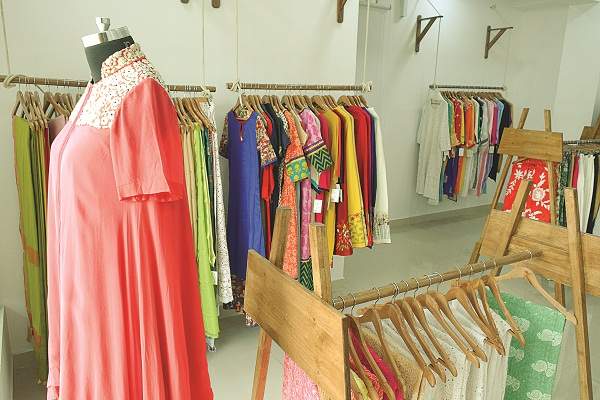
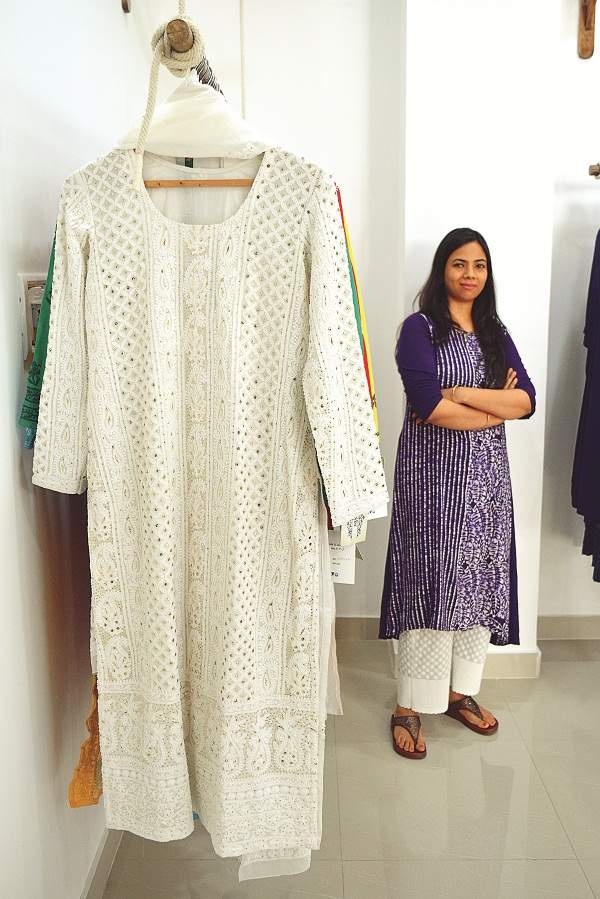
This new store offers a mix of Chikankari and Gotta-Patti crafts

Lucknow, UTTAR PRADESH / Bengaluru, KARNATAKA :

Sajda Boutique
Sajda Boutique

When Lucknow-based Sadaf Haseen designed her line of handbags under the brand Sajda in 2012 for the Bangalore Fashion Week, little did she know that this experiment would turn into a larger boutique Sajda, The Fashion House predominantly showcasing Chikankari craft. “I worked on the line of handbags till 2015. In 2016, I shifted to Bengaluru and decided that it was time to take the brand to the next level,” says Sadaf.

SajdaBoutique02MPOs08apr2018

Under the brand, Sadaf curates exquisite traditional clothing and accessories from across India, and not just Lucknow. “We also stock ready-to-wear garments and fabrics with Gotta-Patti work (gold or silver ribbon and lace with intricate detailing) from Rajasthan, Bengal cotton saris and stoles from Kolkata and Benarasi saris,” explains Sadaf who threw open the doors of her boutique in February this year. “I personally handpick everything and there is nothing in our store that I wouldn’t want to wear myself,” says Sadaf, an alumni of NIFT, Kolkata.
Apart from traditional salwar sets and dresses, they also offer Banarasi, Chikankari and Phulkari dupattas.
Next, Sadaf plans to launch a line of her handbags called Azilea in June.
Rs 300 upwards. At Sector 1, HSR Layout. Details: 48522359

source: http://www.indulgexpress.com / Indulge – The New Indian Express / Home> Lifestyle / by Ayesha Tabassum / June 02nd, 2017

A rare eponymous gathering

Mallapuram, KERALA :

HamzaMPOs08apr2018

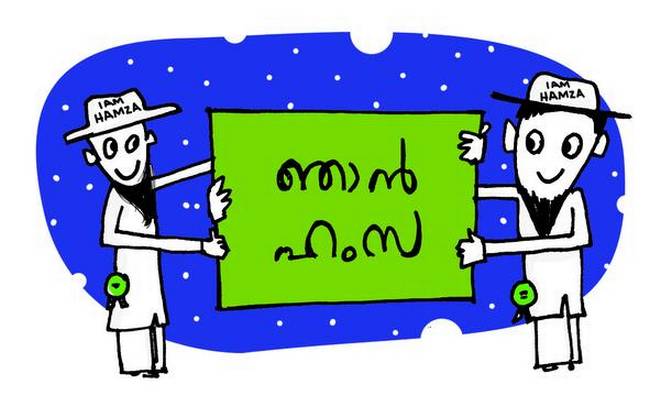
5,000 people with the name Hamza to meet in Malappuram

The District Tourism Promotion Council (DTPC) auditorium at Kottakkunnu here will witness a rare eponymous get-together on Saturday. The gathering is expected to make it to the Limca Book of Records when hundreds of people with the name Hamza rally under a unique banner.

The get-together of Hamzas from across the district will be the first of its kind. Anyone bearing the name Hamza either born or settled in the district can be part of the get-together.

5,000 ‘Hamzas’ to attend

About 5,000 people with the name Hamza are expected to attend the gathering. A WhatsApp group formed for the purpose has already included more than 500 Hamzas.

Hamza is one of the most popular Muslim names among middle-aged people in the district. However, this name is rarely given to newgen boys as most people consider it old-fashioned. “It was this cavalier attitude to a beautiful male name that made us go for a get-together,” said Hamza Haji, better known as Lovely Hamza, one of the organisers.

Apart from salvaging the lost glory of the name, the Hamza gathering will chalk out plans to motivate its members for the betterment of society. Motivational programmes, educational classes, business improvement programmes and charity work will be organised by the Hamza collective.

The organisers said that those attending Saturday’s gathering should bring any photo identity card to support the credentials of their name. Everyone will be given a badge and a cap, which will flaunt their name as ‘I’m Hamza’.

The oldest three Hamzas and the youngest three Hamzas will be honoured at the function.

source: http://www.thehindu.com / The Hindu / Home> News> State> Kerala / by Abdul Latheef Naha / Malappuram – April 05th, 2018

Shabana congratulates Javed Akhtar for receiving award

UTTAR PRADESH / Mumbai, MAHARASHTRA :

JavedMPOs07apr2018

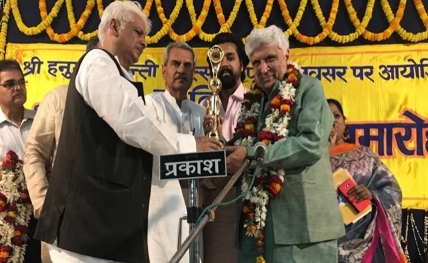
Actress-socialist Shabana Azmi has congratulated veteran writer-lyricist Javed Akhtar
for being feted with the Shanti Dhoot citation and award.

Shabana shared a photograph of Akhtar receiving the award and captioned it: “Congratulations Javed Akhtar for receiving the prestigious Shanti Dhoot citation and Award from (On the left in black jacket) the Kashi Mahant Shri Vishwamber Nath Mishra.”

Shabana married Akhtar in 1984. Akhtar was previously married to Honey Irani, with whom he had two children, Farhan Akhtar and Zoya Akhtar.

source: http://www.ianslive.in / IANSLive.in /  Home> Entertainment> Bollywood Country Report / April 07th, 2018

A photographical tribute

Hyderabad, TELANGANA :

Wildlife photographer Masood Hussain’s first solo exhibit was his way of thanking his school teachers for everything they did.

Masood Hussain (second from left) with his teachers and Andrew Fleming, Deputy British High Commisioner

A photograph holds the power to take you back into time, and for city-based wildlife photographer Masood Hussain, the moment he clicked a peacock flying, he was reminded of the first ever drawing he made in nursery class. In order to revisit his educational roots, Masood’s maiden solo exhibition at Roastery Coffee House serves as a tribute to all of his school teachers.

A known personality in Hyderabad’s photography circuit, Masood holds the AFIAP (Artist, International Federation of Photographic Art, France) distinction and was awarded the Natural Capital Award by Yes Bank last year.

Tiger chase
Tiger chase

Titled Meraki by mh, Masood says this is an attempt to give back to the teachers who imparted him the knowledge that has got him here. Elaborating on the exhibition, Masood says, “During my kindergarten days, I was asked to draw a peacock by my teacher. Till date I have that drawing with me and it reminds me of my first tryst with wildlife. At the exhibition too, there’s a photo of a peacock taking flight; it’s called ‘Colours of Freedom’.”

Odkf Butterfly
Odkf Butterfly

He further states that the thought of a tribute exhibition had been on his mind for a long time. “But it got wings during a school reunion. When one of my teachers saw that photo, I could see tears of joy in her eyes and for me life came a full-circle at that moment. More so because of the presence of my teachers from Hyderabad Public School (HPS) at the preview show on March 31, where I made it a point to invite most of my teachers.”

The guest of honour at the preview was Nooshi Ahsan, Masood’s pre-primary class teacher at the HPS Begumpet way back in 1982. Also present were Mercy Luke (class teacher in Class III, 1985), Lulu John (class teacher in Class IV, 1986), Gowri Sircar (Class VII, 1989) and Dennis Powell, his music teacher. “My teachers have made me who I am and there isn’t enough that can be done to give back to our teachers,” says Masood.

'Colours of Freedom'
‘Colours of Freedom’

He also feels that perhaps his photographs will help future generations learn about nature — and they can put their best foot forward to preserve it. That’s the reason Masood is in talks with the HPS administration to conduct a wildlife photography workshop for students regularly. “First I will start with my school and then proceed to other schools. It’s my bit to preserve our environment,” he concludes.

source: http://www.deccanchronicle.com / Deccan Chronicle / Home> Lifestyle> Books  and Art / by Reshmi Chakravorty / April 04th, 2018

From her perspective

Gorakhpur, UTTAR PRADESH  / NEW DELHI :

Celebrating works of female photographers, an exhibition was mounted in New Delhi’s Indira Gandhi National Centre for the Arts

You would be familiar with the ‘male gaze’, a term coined by feminist critic Laura Mulvey, which states that the point of view of almost all cinema or photograph is masculine. But if one pays attention to the recent trend in photography, women are actually taking back the gaze. Female gaze can be ascribed to anything photographed by a woman and in that process frees females from the “male-constructed” photographs that have developed an image of femininity in our minds throughout the history of image making.

Similar themes were central to Prof. Farhat Basir Khan’s recently concluded exhibition Feminography at the Indira Gandhi National Centre for the Arts, which was the result of his observations and curated work of female photographers which includes media practitioners, teachers, scholars, writers, mothers and daughters.

On the rationale of holding an exhibition based on women’s perspective of the world, Prof. Khan, who also teaches photography at MCRC, Jamia Millia Islamia, said: “Feminography celebrates the work of women in India and their journey of both being and becoming a woman. It is a narrative of the people, places and spaces, and the relation women shares within it, which is shot through the lens.”

Prof. Khan is happy that more and more women are now asserting their position through social media platforms like Instagram and the broader perspective on the way we look at the woman is changing through it. It is also reflected in the shifting of many institutional magazine’s portrayals of women, which are now showing them as a character in a visual narrative, not as an object of desire.

Transcending barriers

Nitisha Malick takes inspiration from urban eccentricities and captures the connection with the wilderness in her picture Maids Of Gurgaon. “I wanted to show the emotions of those women who live in the shadows of modern cities but their life is still very far from development,” said Mallick, while explaining her work. In an another picture, she explored the contentment of a girl despite all hardships and challenges in her life. All images shown were powerful stories of cities andspaces that women photographers inhabit and the barriers that they transcend.

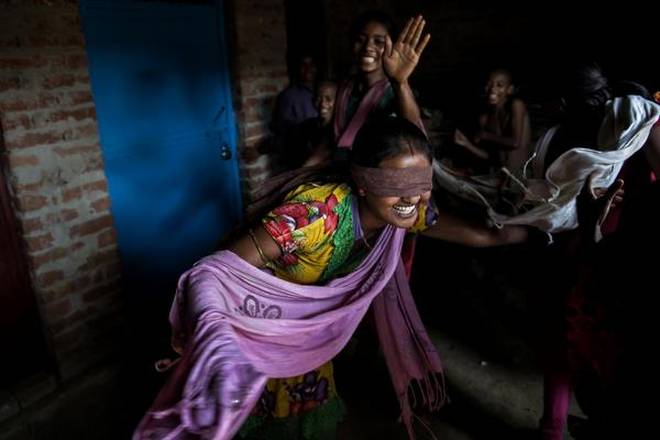
FROM HER PRISM Saumya Khandelwal’s “Child Bride in Shravasti”

Some were independent memories shot with a half smile; others with grit and determination, still others with a gentle non-abrasive press of a shutter. Saumya Khandelwal’s “Child Bride in Shravasti”, questions the life of young married girls yet reflects the happiness that they have built for themselves. “The subjects in the works includes forms and textures – the mundane and the ordinary which is transcending them into works of art to frame, admire and cherish,” concluded Prof. Khan.

source: http://www.thehindu.com / The Hindu / Home> Entertainment> Art / by Atif Khan / January 04th, 2017

An underwater photography exhibition for Lucknowites

(L to R) Farhat Basir Khan, Prof. S.P. Singh at the exhibition of Aditya Havelia (BCCL / Vishnu Jaiswal)

Lucknow, UTTAR PRADESH :

Lucknowites  witnessed an underwater photography exhibition titled Into the Blue, by Aditya Havelia  at an art gallery in Aliganj.

Giving the social message of saving our water from pollution, the eight-day exhibition attracted a lot of photography enthusiasts.

The exhibition, which had 54 pictures clicked by the photographer from the year 2010, was inaugurated by Prof SP Singh, vice-chancellor, Lucknow University. Singh said, “I really enjoyed seeing the underwater life.

Aditya’s initiative to promote the cause of water pollution was also worth appreciating.”
Curated by the academician, Farhat Basir Khan, the photos displayed Aditya’s work from Lakshadweep, Andaman and Nicobar Islands, Netrani Island, Malaysia and Mauritius.

Telling us about the hard work put in to get the perfect clicks, Aditya said, “We usually don’t get a perfect guide for underwater photography, which made it a bit of a challenge for me to click these photographs.”

source: http://www.timesofindia.indiatimes.com / The Times of India / Home> News> City News> Lucknow News> Events / by Adnaan Rizvi / TNN / April 05th, 2018

How the fashionable sixth Nizam helped in the evolution of the ‘sherwani’

Hyderabad , (Old – ANDHRA PRADESH ) :

MahbubAliKhanMPOs04apr2018

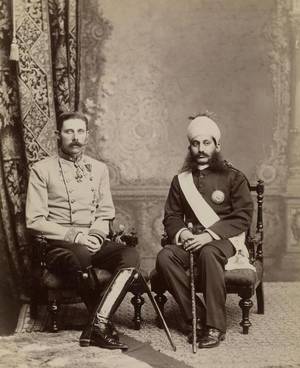
The sherwani that Mahbub Ali Khan wore evolved from the achkan with elements from Edwardian and Victorian frock coat

It is a known fact that the Sixth Nizam Mahbub Ali Khan had a taste for the good things in life. Visitors to the Nizam’s Museum in Purani Haveli area of Hyderabad  are stunned to see the walk-in wardrobe that appears endless. “He never repeated a dress,” is the whispered word. But new research has spotlighted his role in the evolution of the sherwani which is now the dress of choice during weddings and is preferred by the political class during ceremonial occasions. Former prime minister Jawaharlal Nehru even used the sherwani as a style statement during his visits to various foreign countries and events in India. Soldiers of the Pakistani Army are allowed to wear it for various events.

But it was on January 24, 1893, perhaps at 4 pm, that the world got its first memorable glimpse of the sherwani when Mahbub Ali Khan wore it and sat down with Archduke Franz Ferdinand of Austria, then travelling in India, for a post-lunch photograph by the team of Raja Deen Dayal at the Chowmahalla Palace. History was made. According to a Ph D thesis by Toolika Gupta, the photograph is the first evidence of sherwani being used as it evolved from achkan. The achkan itself evolved from a garment called angarakha with the addition of buttons which were a European novelty.

The Lucknow historian Abdul Halim Sharar who spent a few years in Hyderabad tutoring the sons of a Paigah nobleman wrote about the evolution: “The achkanwas extremely popular and the style started to find its way from the towns to the villages. In a very short time it was worn throughout India. In Hyderabad, it developed, with a few alterations, into the sherwani. Its sleeves were made like those of an English coat, the adornments over the chest were discarded and for the lower part the shape of an English overcoat was adopted. It became so popular everywhere, including Lucknow, that it is now the national dress of all Hindus and Muslims in India.”

While the achkan is the gift of the nobility from Lucknow, Hyderabad can lay claim on the ownership of the sherwani. The sherwani was a gradual evolution of angarakha which had laces on either the right or left shoulder to tie up the flaps. A similar garment would be a women’s kurti with the cut not in the middle but across the right or left shoulder. But the sherwani revolution happened when the buttons moved to the centre and the oriental dress appeared like a version of frock coat which was popular during Edwardian and Victorian eras in England. One only has to think of Darcy and Bingley in Jane Austen’s Pride and Prejudice for the frock coat (some of the more popular illustrations were done by Hugh Thomson in 1894).

The 28-year-old Nizam who was a fashionista naturally adapted the trend, though Archduke Ferdinand remarks: “He always wears European dress; most of the times he is in a black frock coat and the only native piece preserved in his costume is a turban-like cap made out of yellow cloth with a golden tassel. He never takes off this headdress.” But for casual events, the Nizam knew the comfort factor in Indian clothes.

It was just perfect that it was in a kingdom where the British mingled with Indians with absolute freedom that the sherwani evolved.

source: http://www.thehindu.com / The Hindu / Home> Society> History & Culture> Living Hyderabad / by Serish Nanisetti / March 10th, 2018

Hyderabad: 400-year-old Makkah Masjid and its grandeur

Hyderabad, TELANGANA :

MakkaMasjid01MPOs03apr2018

Hyderabad:

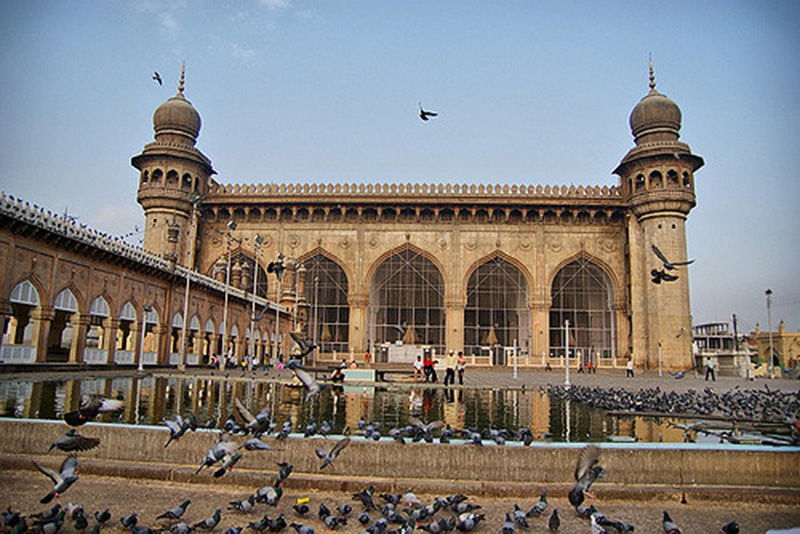
Makkah Masjid in Hyderabad is one of the biggest mosques in India and the foundation stone for its construction was laid during 1616-17 CE and the foundation was laid by the Qutub Shahi ruler, Sultan Mohammad Qutub Shah VI.

MakkaMasjid02MPOs03apr2018

The construction was completed by Mughal Emperor Aurangzeb in 1694 after 77 years.

The mosque is also listed as a heritage building. The Masjid is built in granite and the bricks for its construction were brought from Mecca, the holy city of Saudi Arabia.

source: http://www.siasat.com

The chief mason was Rangaiah Chowdhury while the engineer was Faizullah Baig.

The prayer hall can accommodate 10,000 people owing to its large size with dimensions of 75 feet high, 180 feet long and has a width of 220 feet.

According to the information available on the Hyderabad.org.uk, it is believed that a strand of Prophet Mohammed’s hair is preserved in a room in the mosque’s courtyard.

MakkaMasjid03MPOs03apr2018

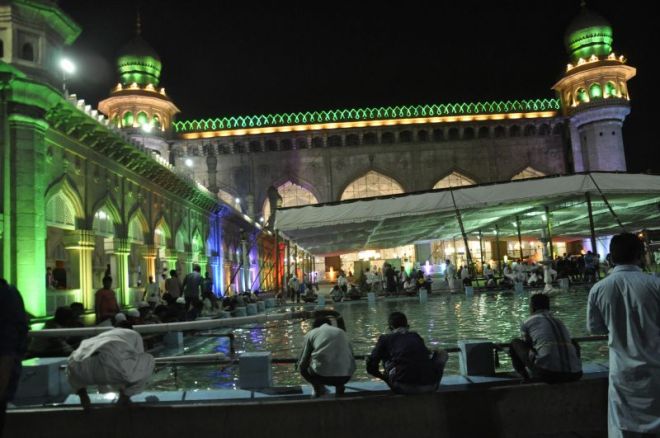
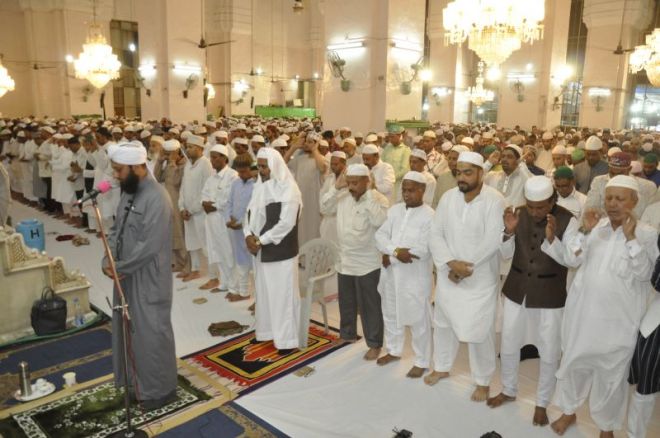
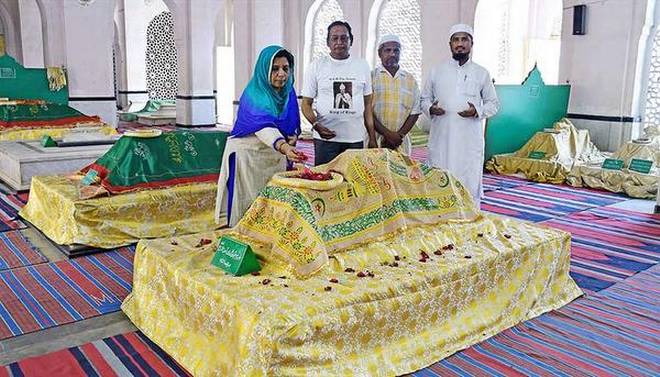
There are 15 intricately designed arches that support the roof of the main hall, in which 5 arches were constructed on 3 walls. The mosque is decked with Belgian crystal chandeliers, which adds to the beauty of the exquisitely designed interiors of the mosque. Inside the mosque, there are 5 passageways and tombs of the rulers belonging to the ‘Asaf Jahi’ dynasty.

MakkaMasjid04MPOs03apr2018

According to the news reported in Times of India, during the Qutub Shahi rule, Iran was specifically mentioned in Friday sermons in all mosques in Hyderabad and elsewhere in the Qutub Shahi kingdom.

According to the historian Abdul Majeed Siddique in his ‘History of Golcunda (1956)’ one of the reasons for the Mughal rulers to attack the Qutub Shahi kingdom was the recital of the name of the Shah of Iran (Safavid dynasty) in Friday sermons. Emperor Shahjahan was so angry that he sent a letter to Abdullah Qutub Shah VII to stop mentioning the name of the Shah.

Historian Abdul Majeed Siddique quotes Emperor Shahjahan’s words that order “the abandonment of the name of the Safavid King and replacement thereof by the emperor’s own name in both, the Friday sermons and coins”.

Currently, the restoration works are being done to welcome the Iranian President Dr. Hassan Rouhani who will be the first Iranian President to address the congregation, though he is the second leader to visit the mosque. After the Islamic Revolution in 1979, Mohammad Khatami became the first Iranian President to visit Hyderabad (January 28, 2004), but he did not participate in the Friday congregation.

source: http://www.siasat.com / The Siasat Daily / Home> Hyderabad> News> Top Stories / February 15th, 2018

Seminar on Tribal literature and Tribal poet meet to grace Sahitya Akademi’s ‘Annual Festival of Letters’

NEW DELHI :

FestivalofLettersMPOs30mar2018

New Delhi:

This year, Sahitya Akademi’s ‘Annual Festival of Letters’ will feature a seminar on Oral and Tribal literature and Tribal poet meet. The Annual Festival of Letters is going to take place in New Delhi at Rabindra Bhavan from Monday, February 12 to 17, 2018.

This year the theme of the six-day long festival is ’70 Years of Indian Independence’. The festival will begin with the inauguration of the Akademi exhibition by Hindi writer Chitra Mudgal followed by the  Sahitya Akademi Awards presentation ceremony.

The seminar on Oral and Tribal literature and Tribal poet meet will be held on February 13 and 14 and feature eminent writers and scholars from all over the country, including over 30 tribal poets.

The following tribal poets will take part in the seminar and reading session at the Akademi’s annual Festival of Letters: Arjun Singh Dhurve (Baiga), Rajkishore Nayak (Bathudi), Kuldeep Singh Bampal (Bhotia,  Sudarshan Bhumij (Bhumij), Zohming Thanga (Bongchar), Kulin Patel (Dhodia), Colnat B. Marak (Garo), Rafiq Anjum (Gojri), Roop Singh Khusram (Gondi), Veera Rathod (Gormati), Rudra Narayan Panigrahi (Halbi), Kairasing Bandia (Ho), Riquoma Rq. Lalloo (Jayantia), On Teran (Karbi), Saroj Kerketta (Kharia), Minimon Laloo (Khasi), M. P. Rekha (Kodava), Bikas Ray Debbarma (Kokborok), Mahabir Oraon (Kurux), Deenabandhu Kanhar (Kui), Konchok Rigzen (Ladakhi), Kachyo Lepcha (Lepcha), Kalachand Mahali (Mahali), Th. Thumbu Maram (Maram, Dipok Kumar Doley (Missing), Puni Losii (Mao), Ashrita Tuti (Mundari),  Jamuna Bini Tadar (Nyishi), N Vumsuan (Paite),Charu Mohan Rabha (Rabha), Rajesh Rathava (Rathavi), Aasim Sardar Tadavi (Tadavi), and Satyajit Toto (Toto).

The keynote address will be delivered by T.V. Kattimani, Vice-Chancellor, Indira Gandhi National Tribal University.

The six-day-long festival will witness participation of more than 250 writers and scholars from different parts of the country representing various languages.

“National seminar on ’70 Years of Indian Independence: Literary Portrayals’ and a seminar on Tribal and Oral Literature will feature eminent scholars and writers from all over the country. Apart from other regular features, we will have Indo-Israeli Writers’ Meet on the occasion of the 25th anniversary of the establishment of diplomatic relations between India and Israel,” said the Akademi’s Secretary K. Sreenivasarao while talking to media persons .

Importantly, three Muslim writers were selected among others representing 24 Indian languages for 2017 Sahitya Akademi award. Afsar Ahmed for his Bengali novel, “Sei Nikhonj Manusta”, Baig Ehsas for his Urdu short stories “Dakhma” and poet Late Inqulab for his Tamil poetry “Kandhaal Naatkal” are among those honored with Sahitya Akademi award 2017.

Two more Muslims, Iqbal Nazki and Mahmood Ahmed Sahar were selected for Sahitya Akademi prize for translating Tamil novel “Chaivu Narkli” to Kashmiri “Araam Kursi” and Sanskrit poetry “Meghdootam” to “Kalidas ki Azeem Shairi” respectively.

On December 21, 2017, Sahitya Akademi had announced its annual awards in 24 languages.

source: http://www.twocircles.net / TwoCircles.net / Home> Adivasis / by Raqib Hameed Naik, TwoCircles.net / February 09th, 2018