Category Archives: Arts, Culture & Entertainment

Israeli academic hails Kerala’s multiculturalism

Says the system preserves the identity of every community

Kerala’s traditional multiculturalism has much to offer to the policy and decision makers in modern times, says Ophira Gamliel from the University of Ruhr, the Israeli academic who has been closely associated with Kerala studies.
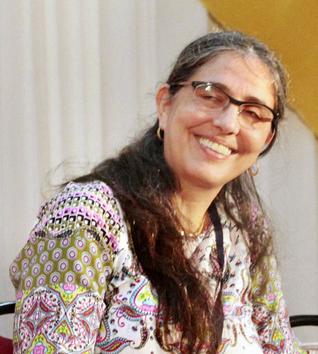
Ophira Gamliel says the traditional festivals and performing arts in Kerala are highly structured so as to ensure the collaboration of the various communities at different levels

Speaking to The Hindu on the sidelines of the third International Kerala History Conference here on Friday, Prof. Gamliel says a closer look at the multiculturalism inherited by the State would point to a dynamic system which preserves the identity of every community, even as it provides space for each of them to integrate into one system.

“You don’t lose your identity. Even small communities do not get swallowed. Your literature, culture, everything are well preserved. Instead of getting integrated at the personal level, you are integrated at the community level,” she says.

Prof. Gamliel says the roots of this unique system, still preserved, could be traced to the ancient long-distance trade exchanges which were exceptionally different in character from the modern global trade. “Unlike the modern global trade, which is marked by brutal expropriation of resources and labour, the ancient trade between the western coast of India and west Asia was marked by a great amount of cultural and knowledge exchanges at the community level,” she adds.

Documents

The more-than-1,000-year-old Cairo Documents (referring to deals between west Asian traders and those from Kerala) and the 9th century Tharisapalli plates (referring to a grant issued to Syriac Christians of Kerala) are rich evidences to this multiculturalism. “In fact, the Tharisapalli plates are signed in three languages: Persian (in Hebrew script), Pahlavi, and Cufic Arabic,” she says pointing to the efforts taken to preserve the identity of the different trading organisations.

Even the traditional festivals and performing arts here are highly structured so as to ensure the collaboration of the various communities at different levels. Beyond the complexity of what happens on the stage, this underlying structure assured collaboration at the communal level even in performing art forms, she says.

This unique system of multiculturalism should be subject of in-depth research, especially at a time when traditional communities are under threat of being swallowed up in the wave of globalisation, leading to tensions and conflicts at the community and societal level, she adds.

source: http://www.thehindu.com / The Hindu / Home> National> Kerala / by George Jacob / Kottayam – November 29th, 2015

Felicitation

Mysuru, Karnataka :

Rifa-Hul Muslimeen Educational Trust, and Farooqia Educational Institutions, Mysuru, is felicitating city Police Commissioner B. Dayananda on Nov. 30 at 11.30 am at Aiwan-e-Tipu Sultan, Farooqia Dental College Hospital, Farooqia Educational Complex, Eidgah, Mysuru and distribution of Gold medals to meritorious students of Farooqia Institutions.

Dr. Fouzia Choudhary, Chairperson, Karnataka Urdu Academy, Bengaluru, will be the chief guest. Trust President Prof. Riyaz Ahmed will preside.

source: http://www.starofmysore.com / Star of Mysore / Home> In Brief / Sunday – November 29th, 2015

Shabana Azmi recalls her ancestral village Mijwan

Lucknow :

Mijwan, a small village in Azamgarh that did not even have a pin code to its name, has empowered the village women such that Hollywood actress Naomi Campbell and several Bollywood actors are clients of their embroidery. Similar stories from the village were shared by Shabana Azmi at the Lucknow Literature Carnival organised by Lucknow Expressions in association with TOI here on Saturday. Mijwan is the village where her father Kaifi Azmi was born and where he founded the Mijwan Welfare Society in 1993, now run by Shabana.

“Students there are now getting English tuitions through Skype by volunteers in America and London,” she said. She also shared how the women are running beauty parlours and organizing fashion shows all by themselves.

Sharing success stories of the villagers, Azmi said people generally undermine the impact of music and theater in personality development. “My mother Shaukat Azmi used to give the girls lessons in theater and there was, and still is, an evident change in their personalities,” she said.

She also claimed that the village now has no girl married before the age of 18 which was possible only after a long struggle to bring about such positive change in the lives of women.

Parallel cinema alive in new avatar’

Maintaining that parallel cinema still survives in India, Shabana Azmi said that it has only assumed a new avatar. Quoting the example of Meghna Gulzar’s Talvar and others like Masaan and Kissa, Azmi said that filmmakers today work on current issues that interest and provoke them. “Parallel cinema does not only mean making films on villages or on feudalism only. The latter has long been left behind. To go out of the formula and have a discourse around it can be called parallel cinema too,” said Azmi.

Kaifi Azmi Academy likely to come up by 2016

The much-awaited All-India Kaifi Azmi Academy in UP might see the light of the day by March 2016, said Shabana Azmi on Saturday. She was responding to a question from the audience at the Lucknow Literature Carnival. She said she was hopeful of the assurance made to her by the UP chief minister. “Last time when I met the CM, he assured me that I shall have the key to the academy by March,” said Azmi. She also added that the CM felt bad Azmi had to make consistent efforts in the matter. She said she wishes to make the academy “a sort of an adda for intellectual arguments, debates and discussions.” Praising the people of the state, she said that UP has a lot of talent which she pines to make a part of her academy. “The advantage of good language, pronunciation and finesse comes as a natural talent to people here,” she said. The UP cabinet had cleared a proposal to provide financial assistance for setting up the All-India Kaifi Azmi Academy in July 2014. UP Rajkiya Nirman Nigam had been appointed nodal construction agency for it.

source: http://www.timesofindia.indiatimes.com / The Times of India / News Home> City> Lucknow / TNN / November 29th, 2015

Kaifi Azmi Academy likely to come up by 2016

Lucknow  :

The much-awaited All-India Kaifi Azmi Academy in UP might see the light of the day by March 2016, said Shabana Azmi on Saturday. She was responding to a question from the audience at the Lucknow Literature Carnival. She said she was hopeful of the assurance made to her by the UP chief minister. “Last time when I met the CM, he assured me that I shall have the key to the academy by March,” said Azmi. She also added that the CM felt bad Azmi had to make consistent efforts in the matter.

She said she wishes to make the academy “a sort of an adda for intellectual arguments, debates and discussions.” Praising the people of the state, she said that UP has a lot of talent which she pines to make a part of her academy. “The advantage of good language, pronunciation and finesse comes as a natural talent to people here,” she said.

The UP cabinet had cleared a proposal to provide financial assistance for setting up the All-India Kaifi Azmi Academy in July 2014. UP Rajkiya Nirman Nigam had been appointed nodal construction agency for it.

‘Parallel cinema alive in new avatar’
Maintaining that parallel cinema still survives in India, Shabana Azmi said that it has only assumed a new avatar.

Quoting the example of Meghna Gulzar’s Talvar and others like Masaan and Kissa, Azmi said that filmmakers today work on current issues that interest and provoke them.

“Parallel cinema does not only mean making films on villages or on feudalism only. The latter has long been left behind. To go out of the formula and have a discourse around it can be called parallel cinema too,” said Azmi.

source: http://www.timesofindia.indiatimes.com / The Times of India / News Home> City> Lucknow / TNN / November 29th, 2015

Muslims collect Rs 50k to bail out Hindu convicts

Bareilly  :

As the controversy rages over “intolerance” in the country, here is a group of Muslim men who have quietly done for 15 Hindu men what even their own kin could not.

The Muslim men pooled in money to be able to pay a fine of Rs 50,000 to secure the release of the Hindu prisoners languishing for want of money in the district jail. They had been lodged in jail on charges of petty crime like ticketless travel. Unable to cough up the fine to make reparation for their misdeeds, the men were serving an additional sentence. Once the money was paid, the 15 men walked out free birds.

Outside the jail, the Muslims who paid for their release welcomed them into freedom with a warm embrace. As the 15 men stepped out of jail on Wednesday evening, there were smiles and tears all around.

One of the inmates, Nand Kishore, had served out the period of his sentence for ticketless travel, but was not released as he failed to pay a Rs1,000-fine. But as he left the jail premises and strode towards home, Haji Yasin Qureshi and his friends, all Muslims, hugged him and walked along.

Qureshi shrugged off the effusive gratitude that the men showed him and his friends, and said it is just the Almighty who needs to be thanked. He told the 15 men that they should swear never to repeat their mistakes.

The Muslim men had also made arrangements for Nand Kishore’s travel back to his native village. He was given a small sum as “pocket money” too. His eyes moist, Kishore bid the Muslim youth adieu as jail staffers watched, awe-struck.

Among the others to taste freedom were Ajay Kumar, Kishan Sagar, Pappu and Tilak. All of them were warmly embraced as they emerged from the jail, all deeply moved by the gesture of their benefactors who had come to their aid in a time of crisis.

Qureshi, who led the group that collected funds for the release of the men, told TOI on Thursday, “When we learnt of their plight from jail authorities, we decided that we should do what we could. We are never guided by the feeling that our efforts should be directed only towards members of our own community. We believe that if we help in releasing a man from captivity, Allah will bless us. Moreover, what better occasion than a time when there is all this talk about who should live in this country and who should leave.”

Haji Mohd Anees, a businessman, who too had contributed to the release of the men, said, “Sahib yeh to hamara watan hai aur Hindu hamare bhai hain. Hum yahin paida huwey hai aur yahin khaak mein milengey” (This is our land too, Hindus are our brothers. We were born here, we will be buried here and mix with the soil here.)

BR Maurya, superintendent of the Bareilly district jail, said, “The 15 inmates were charged with petty crimes. Some were arrested on apprehension of breach of peace. They were serving out sentences ranging from 6 months to 10 years. The majority of them had served out the full sentence, but could not pay the fine imposed on them by the court.”

source: http://www.timesofindia.indiatimes.com / The Times of India / News Home> City> Bareilly / by Mrigank Tiwari, TNN / November 26th, 2015

‘Saeed was an insurance for any director’

Kolkata  :

In a career spanning more than half a century, Saeed Jaffrey had made almost 200 screen appearances, working with directors including John Huston, James Ivory, David Lean, Richard Attenborough and Stephen Frears. But, his performance as Mir Roshan Ali in Satyajit Ray’s ‘Shatranj Ke Khiladi’ remains the high point of his career. When news of the demise of the 86-year-old actor reached the Ray family, it brought back many memories of him working at Kolkata’s Indrapuri studio.

In the film, set in 1856, Jaffrey had played the role of one of the two Indian noblemen in Lucknow who was obsessed with the game of chess. “Back then, I was assisting my father. I remember having spent some wonderful time with him on the sets. Always full of life, he came across as a sparkling personality. He was a colourful man and always jovial,” recalled filmmaker Sandip Ray, who remembered shooting with Jaffery both in Kolkata as well as in a village near Lucknow for the climax of the film.

Jaffrey was the first actor to have come on board for the film. “Baba had cast him even before he had cast Amjad (Khan), Sanjeev (Kumar) and Richard Attenborough. Prior to that, we had all heard of Saeed’s name. Sometimes, Baba and he would meet up casually. They would bump into each other at airports. Whenever they met, Saeed would say: ‘Manik-da, I am waiting for your call’,” Ray said.

When that call finally came from Ray, while he was planning ‘Shatranj…’, Jaffrey was “literally on the seventh heaven”. “I don’t remember whether Baba had made a telephone call or sent him a letter. All I can recall is that he was elated. Later, when he came down, we all sat and read the short story by Munshi Premchand on which the film was based,” he said.

While many have said that the character of Mir Roshan Ali was naive and absurd, others have described it as complex and elusive. “I don’t think it was a simple character. Saeed gave his best. He was practically a one-take artist,” Ray said.

Not just his own acting, Jaffrey apparently helped Sanjeev Kumar, too, on the sets. “It was a story of two friends and Saaed used to help out Sanjeev in some of the scenes. When he was on the sets, he would make sure that the environment was lively,” Ray recalled.

Mimicry, according to Ray, was his passion. “But, when it came to acting, he was totally focused. He brought certain nuances to the character, especially the nawabi style, that added so much to the film. Casting him ensured that a director was safe,” Ray said.

Once the shooting was over and the film was to release in the US, Jaffrey had accompanied Ray on the trip as well.

On Sunday, Jaffrey’s niece broke the news of his death on Facebook. When this news reached Sandip Ray, he said, “We lost an actor who was an insurance for any director.”

source: http://www.timesofindia.indiatimes.com / The Times of India / News Home> City> Kolkata / by Priyanka Dasgupta, TNN / November 17th, 2015

Azam’s wife, SP MP gave Rs 50 lakh for Shankaracharya’s gau shala

Lucknow  :

Amid the beef row and BJP’s allegations that Mohammad Azam Khan was spreading communal hatred, an upcoming gau shala (cow shelter) of Puri Shankaracharya Swami Adhokshjanand at Radha Rani kund in Mathura has got enormous help from the senior UP minister.

Azam Khan was also the chief guest at the foundation stone laying ceremony of the gau shala on April 5. Talking to TOI, Puri Shankaracharya termed Khan as an honest and noble person. He said Khan had asked his wife and Rajya Sabha MP Tazeen Fatima to give Rs 25 lakh for the construction of the gau shala from her MPLAD fund and the same had been done by SP’s Rajya Sabha member Chaudhary Munawwar Saleem.

The revelation comes days after te Shankaracharya gifted a cow to Azam. The Shankaracharya said that by this gesture Azam Khan had once again showed what Indian culture is all about. He added that while a good Muslim like Azam Khan had been caring for cows, there were instances where Hindus had not shown the respect the holy cow deserves.

Confirming giving Rs 25 lakh from the MPLAD fund, Chaudhary Munawwar Saleem told TOI that the main aim was to prove that the picture of communal tension being presented in the name of beef was not the correct one. “Gai aur Ganga itihaas mein bhi mahatpoorna hain aur siddhanth bhi hain (Both cow and the river Ganges are relevant in history as well as in principles of social life),” Chaudhary said.

Chaudhary pointed out that in the first cabinet meeting after the Akhilesh Yadav government was formed, Azam insisted on passing a resolution on banning slaughter houses and sending the same to the Centre. In the past three years, he had ensured that a slaughter house in Meerut was shut down. Chaudhary said Fatima had also given Rs 25 lakh from her MPLAD fund for the gau shala.

In the initial phase, the gau shala will house around 5,000 cows, the Shankaracharya said and added that of these, half would be of various varieties, which would help in increasing the number of good quality cows.

Hitting out at the saffron pariwar, the Shankaracharya said that after their government was formed, the BJP had forgotten “gai aur Gita”, but people like Azam Khan continue to show the affection for the cow.

To a question on his liking for Azam, the Shankaracharya said: “The seers and saints don’t rely on books and newspapers to make their opinion. We search for a human being among the people solely through spiritualism and Khan is one such human being who speaks truth which is bitter that leaves him at the receiving end.”

Azam Khan did not reply to several phone calls and SMSes from TOI.

source: http://www.timesofindia.indiatimes.com / The Times of India / News Home> City> Lucknow / by Rajiv Srivastava, TNN / November 20th, 2015

Shelving the ideas

Every time you flip a page of a book (regardless of its content) you are accosted by a scent that refuses to fade away.

It may be the mustiness of a yellowing page, freshness of mown sides or potent helpings of glue and ink but every page and book has it’s own distinct fragrance. Just like that, it also has its own personality, which shines best when it’s in the hands of its owner.

Whether the book is stacked neatly in a bookshelf, strewn across a table or lying on the ground, it has a story to tell. But this story is always fluid. There was once a time when books sat cloistered in unimaginative and on the whole, utilitarian shelves that only worked to diminish their beauty. But now, people are unabashed about the books they own and want to scream their titles to the world. With this comes an influx of creative thought that makes owning a book an art — much like flower arrangements, every aspect of the showcase matters, including the bookshelf.

Alifia Shabbir, who owns a start-up called ‘Designmint’, works on innovative home decor items, including bookshelves. Maintaining a minimalist theme, she creates shelves that are not only utilitarian but also bring out the best aesthetics. “The shelves I make are from metal and some of them are upcycled from scraps. The idea behind ‘Designmint’ is to create something unique, one-of-a-kind, so that people relate to their home decor,” she says.

Relating to the shelves has become increasingly important as they (along with the books) reflect one’s personality. Says Rohith Subramanian, founder of ‘Fundmydreams’, “When I moved houses, what happened was that all my clothes and other items fit into one bag but I needed a car to fit all my books in. In the new house, I kept these books stacked on the floor for a while but that didn’t work out because my help would grumble each time she swept the room. This is when I decided to get a bookshelf.” After failing to find a good shelf on online stores, he decided to make one of his own. “The ones I found were expensive so I bought some wood, hired a carpenter and made one myself. I’m different from normal ‘jantha’ and your regular, rectangular shelves don’t reflect my personality and who I am,” he adds. The outcome was a large shelf in the shape of a ‘V’, inspired by ‘V for Vendetta’.

ShelvingMPOs19nov2015

Elaborating on his idea, Rohith says, “I love the movie and comic. The idea of standing up for what you want inspires me.” When Maitri Vasudev, a student, was renovating her house, she decided to get a bookshelf that represents her more accurately. “Before, we had a shelf built in the wall with granite slabs and wooden doors. There was nothing unique about it. When we decided to renovate the house, I thought I’d get something different. Now, I have a marble designed back board with nothing but thin slabs of glass to hold the books. I wanted textured material but that was too expensive,” she says.

While open shelves could be a bot tiresome to maintain, it’s nothing people can’t handle. “I love to dust so I don’t mind cleaning the shelf every week. I’d rather people see my collection and borrow them if they like something. Yes, there is a possibility that I might never get the book back (it’s happened before) but I don’t mind that,” says Maitri. Proud of her book collection, she mentions that displaying the books is just as important as owning them.

Alifia, who likes minimal artwork, designs shelves in geometric shapes. She also custom-makes them for the customer. So, whether it’s an invisible shelf, equilibrium shelf, ones made from pipes or in patterns that you like best, there is always space to get creative. “Though these shelves can’t hold as many books as the traditional ones, they look good and brighten up the house. People can opt to rotate their books on these stands,” she says.

source:  http://www.deccanherald.com / Deccan Herald / Home> Supplements> MetroLife / by Ananya Revanna / DHNS , November 18th, 2015

Bengaluru’s Jewish cemetery with a muslim caretaker shows that ancient conflicts have no meaning here

Bengaluru  :

Located off the busy Mysore Road flyover, it is easy to miss the Jewish burial ground, unless you were looking for a bright green facade of the low-roofed house built there. The house has been home for Sheikh Rafiq and family for the last 24 years, since the time he agreed to take care of the graveyard for the Moses family, who have been custodians of the property since 1904.

A gift from Mysore Maharajah Krishnaraja Wadiyar to the family, this cemetery is among a handful of Jewish cemeteries in the country. (TOI photo)

A gift from Mysore Maharajah Krishnaraja Wadiyar to the family, this cemetery is among a handful of Jewish cemeteries in the country, and the only one of its kind in Bengaluru. “I am the third generation of the family taking care of the land and it is hallowed ground for us,” says Sidney Moses, a retired horse trainer.

The first grave to be laid here was of Subedar Major Samuel Moses Nagavkar (a Bene Israeli) in 1904, and six years later, his son Benjamin Abraham Nagavkar was buried here as well,” he says about the oldest graves in the cemetery. The 50 graves that quietly lie there make for an interesting exploration and there are stories to be shared like why it’s the resting spot for a Russian circus owner. “Mrs Isaaco who was proprietress of the famous Russian Circus died while she was in Bengaluru. Her burial here was quite unusual because the whole circus came and they even brought her favourite white horse for the final goodbye,” says Moses. Now, about the curious choice of employing a Muslim family to take care of these Jewish graves, Moses simply states, “My uncle (Maurice Moses) appointed him as the caretaker but there wasn’t any particular reason why he hired him. In fact, Rafiq volunteered for the job.” “He is very clean and has been taking very good care of the graveyard since he joined,” he adds. “The place was covered with weeds and there was a huge anthill when I first came here,” recalls Rafiq of the swathe of land that is well-tended today.

And where the thought of living adjacent to a cemetery is enough to spook most of us, for Rafiq and his family it’s just part of life. “My son was four years old when we moved here and he has practically grown up playing here,” says Rafiq of his son, Sheikh Rizwan, who helps his father in the cemetery’s upkeep today. “Sleeping here in the night doesn’t scare us. In fact, it is very peaceful here,” says Rafiq who views his unusual job as a blessing. “It is a noble job to take care of the dead,” he says before shrugging off the ‘religion’ angle with a mere, “we all pray to the same god and in death, we are all equal.”

source:  http://www.timesofindia.indiatimes.com / The Times of India / News Home> City> Bengaluru / Mahalakshmi  P, TNN / November 14th, 2015

Actor Saeed Jaffrey was first Indian named to Order of British Empire

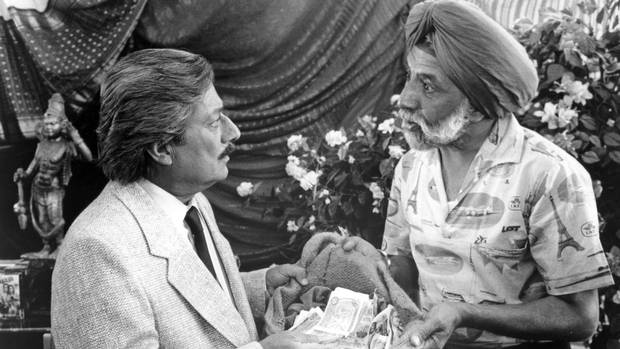
Saeed Jaffrey, left, in Masala. (Cinephile)
Saeed Jaffrey, left, in Masala.
(Cinephile)

Saeed Jaffrey, one of the best-known faces of British-Indian cinema and television, has died at the age of 86.

The Indian-born British actor appeared in the Oscar-winning Gandhi and films such as My Beautiful Laundrette, as well as many Bollywood films and British television productions, including Coronation Street.

Among his screen credits in a career spanning more than 50 years were roles in director John Huston’s The Man Who Would Be King and Indian director Satyajit Ray’s The Chess Players, as well as the BBC television series and film versions of A Passage to India.

A statement issued by his family on Monday said he passed away peacefully on Nov. 14 at a London hospital; he collapsed at his home in London from a brain hemorrhage and did not regain consciousness, they said.

In a career that spanned more than 50 years, Mr. Jaffrey worked with actors and directors including Sean Connery, Michael Caine, Roshan Seth, Daniel Day-Lewis, James Ivory and Richard Attenborough.

Mr. Jaffrey’s other international works included the popular 1980s television series The Jewel in the Crown (in which he played the Nawab of Mirat) and films such as Chicken Tikka Masala.

In a tweet on Monday, Indian Prime Minister Narendra Modi described Mr. Jaffrey as “a multifaceted actor whose flair and versatility will always be remembered.”

Saeed Jaffrey was born on Jan. 8, 1929, into a Muslim family in Malerkotla, Punjab, and started his acting career by setting up his own theatre company in New Delhi. He worked at the state-run All India Radio before moving to the United States as a Fulbright scholar and studying drama at the Catholic University of America, according to the Press Trust of India news agency.

He was the first Indian to take Shakespearean plays on a tour to the United States. He later quit the tour to marry his first wife, Madhur Jaffrey, an Indian-born actor, food and travel writer and television personality. The couple, whose marriage ended in divorce in 1965, had three daughters, Sakina, Zia and Meera.

Sakina Jaffrey is also a film and television actor (Raising Helen, House of Cards, Sleepy Hollow), and appeared with her father in the 1992 Canadian-made film Masala, which was set in Toronto’s Indian community. Globe and Mail reviewer Rick Groen praised it for being a “movie that refuses to compromise … and that perfectly embodies the meaning of its exotic title: ‘a spicy combination of elements.’”

In addition to his children, Mr. Jaffrey leaves his second wife, Jennifer, whom he married in 1980.

In the 1975 film The Man Who Would Be King, he played opposite Mr. Cain and Mr. Connery. In 1982, he portrayed Patel in Gandhi, which starred Ben Kingsley. In 1985’s My Beautiful Laundrette, which starred Mr. Day-Lewis, he play the laundrette owner, Nasi.

Mr. Jaffrey developed his Bollywood career in the 1970s and 80s with roles in popular movies such as Masoom (Innocent), Mr. Ray’s Chess Players and later Henna. He worked with several top Bollywood actors, including Amitabh Bachchan, Aamir Khan and Madhuri ixit.

In 1995, Mr. Jaffrey became the first Indian to named to the Order of the British Empire, for his contributions to drama.

With files from AP and staff

source: http://www.theglobeandmail.com / The Globe and Mail / Home> Arts> Film / by Michael Roddy / Reuters / Monday – November 16th, 2015