Category Archives: Arts, Culture & Entertainment

Death of a book connoisseur

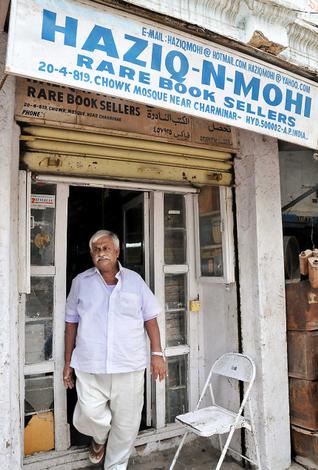
Ahmed Bin Mohammed Bafanna of Haziq-N-Mohi, had run the shop for about 50 years, in Hyderabad.– Photo: G. Krishnaswamy

The death of Mohammed Bafanna, who used to run Haziq-N-Mohi, has come as a shock to lovers of rare books

At about 3 a.m. on October 17, 67-year-old Ahmed Bin Mohammed Bafanna breathed his last at his house in the lanes of Himmatpura near Charminar. While many may not be aware of his existence, his passing away has come as a shock, especially for Urdu and Persian literature lovers, who would contact him whenever they needed rare books which they could not find.

And nobody knows the importance of Haziq-N-Mohi Rare Book Suppliers, Buyers and Exporters better than 42-year-old Khaled Bafanna, the youngest of the late Mr. Bafanna’s siblings. “He had been running the store for about 50 years, selling rare books and buying them. We have now got two book experts to help us in running the shop, which all of us brothers will run together,” said Khaled. Situated in a small lane after Chowk Masjid near Laad Bazar area, Mr. Bafanna’s book store is one place where anyone looking for something different or a particular book from a certain period would never be disappointed.

The 50-year-plus old shop was set up by him after he inherited his grandfather’s collection of books from his library. Later, he began purchasing books from Nawabs and others, who sold their books to add to his collection. “He was introduced to Persian, Urdu, English and French literature by our grandfather Salim Bin Ali Bafna Jamedar, who came here from Yemen, and used to work for the then Nizam government,” said Khaled. With the passing away of Mr. Bafanna, his siblings have vowed to run the shop with the same passion their oldest brother had for it. “It’s a big responsibility. Ahmed had a good knowledge of books, as he was with our grandfather, who had a vast collection of books and who also loved him the most. Later, while in college, our brother began collecting books and started the shop,” explained Khaled. In fact, their oldest brother’s passion was so well known at the Sunday morning book bazaar at Abids that sellers would call him and inform him whenever they had any rare book.

Ever since his demise, Khaled has been receiving calls from different countries, who are their customers. Apart from the two experts they have sought help from, his two nephews will also soon help them run the shop. “More than selling, he loved collecting rare books, which was his passion. For that, he had even learnt French apart from Arabic and Persian,” said Abdallah Bafanna, another sibling.

Both the brothers said that their oldest brother did not suffer from any acute illness, and that Mr. Bafanna’s death came as a shock to them as well. “He just had fever and cold from three days before he passed away. In fact, the doctor had also checked his health a day before, and said that he could start working again from the next day,” said Khaled.

Among others, Mr. Bafanna had also supplied Persian sources to author William Dalrymple for his book White Mughals . Having never married, he was the oldest among seven siblings, out of which five are alive today. The shop would be open from October 26, said Khaled.

He had been running the store for about 50 years. We now have got two book experts to help us in running the shop, which all of us brothers will run together  / Khaled Bafanna – Mohammed Bafanna’s brother

source: http://www.thehindu.com / The Hindu / Home> News> Cities> Hyderabad / by Yusus M. Lasania / Hyderabad – October 27th, 2015
Tipu’s b’day bash divides opinion

Bengaluru  :

The state government’s move to celebrate Mysuru warrior Tipu Sultan’s birth anniversary as an official event across Karnataka on November 10 has ruffled the BJP and right-wing groups. They’ve opposed the government’s move to celebrate the event in a grand manner, terming the ruler as anti-national.

The decision to commemorate Tipu’s birth anniversary as a state-sponsored one was made by chief minister Siddaramaiah at the release of a book on Tipu in 2014.The BJP has accused the CM of trying to appease the minorities with the decision and has opposed the setting up of a university named after the ruler. Senior BJP leader D H Shankaramurthy, who is chairman of the Karnataka legislative council, told TOI that though he cannot comment on the celebrations, he will not attend the main function in Bengaluru.

The government’s move has cleaved opinion on Tipu, with historians, writers and politicians on both sides. While historian M Chidananda Murthy has likened Tipu to Adolf Hitler, writer S Shettar says reviling the rule without research is abuse of scholarship. Shettar said, “Condemning Tipu as anti-Hindu without properly studying the facts about his contributions and administration amounts to abuse of our scholarship. It is possible that Tipu might have hurt the sentiments of a particular community during his rule which could be a political compulsion rath er than his hatred for that community.

The scholars.” With less than a week for the function, right wing groups have gone into a huddle deliberating ways to oppose. BJP legislator from Mysuru, Go Madhusudan, is against setting up of a Tipu varsity , claiming that Tipu had offered support to Afghan ruler Ahmed Khan Abdali in waging war against India. “This shows he was an anti-national and doesn’t deserve to be venerated,” he said.

Historian Talakadu Chikkarange Gowda debunks theories that the ruler killed Hindus for refusing to convert to Islam. “In 1781, Peshwa Parasuram Bahu pillaged Sringeri Shankaracharya’s mutt. It was Tipu who came to the mutt’s rescue. Do right-wingers know that Chhatrapati Shivaji was betrayed by his own Peshwas,” he asked.

He also pointed to temples in the vicinity of Tipu’s palaces in Mysuru or Bengaluru. “I agree there are lapses on his part. But one mistake should be overlooked for the 99 other welfare measures he brought in,” he added.

Barkur Udaya, assistant professor, department of history, Mangalore University, said the anti-Tipu brigade is only reiterating Britishers’ view of him as a traitor.

source: http://www.timesofindia.indiatimes.com / The Times of India / News Home> City> Bengaluru / TNN / November 06th, 2015

Who is the superstar?

ShahrukhMPOs07nov2015

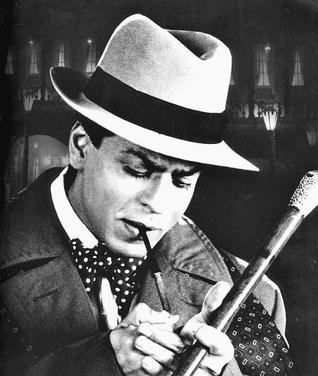
Shahrukh Khan has managed to become the darling of the press and the public. He’s forthright and speaks his mind but is never offensive

It’s strange. The troika of superstars that bamboozles pundits and blazes the box-office and effortlessly breaks records seemingly every single time in Hindi cinema are fifty years old. While Aamir and Shahrukh have touched the landmark, Salman is just shy of it. As far as I’m concerned, nobody has yet occupied the throne left by Amitabh Bachchan. The three Khans occupy it temporarily depending on the financial figures thrown up by their last release. It’s a throne with thorns. Right now Salman sits uneasily on it after the humungous success of ‘Bhajrangi Bhaijan’. Shahrukh’s next release could unseat him, albeit temporarily. Among the three, Shahrukh is the outsider with absolutely no ‘filmi’ background. Connections don’t guarantee success but there’s an aura of respect when you make it without a reference that’ll open doors.

Shahrukh has come a long way. Essentially a budding sportsman, he was the typical, aimless teenager who was befuddled by the choices that lay before him. A bad back injury scuttled the chances of his appearing in the sports pages. He wanted to chase an MBA but ended up pursuing a course in Mass Communication which was akin to learning filmmaking. Theatre beckoned and he joined Barry John. Hindi cinema was the last thing on his mind. Trained in theatre, he probably had a condescending attitude towards cinema. “I felt Hindi cinema was not for serious actors. The attitude at that age foolishly was that I was better equipped,” said Shahrukh, when I had interviewed him during ‘Dil Se’. “The actors I liked were Naseer Saab, Kamal Haasan and Smita Patil. I thought they were the ones who knew about acting.” Well, destiny had different designs for him. Lekh Tandon watched a play and recommended he do a TV serial. “TV was just becoming big and Aziz and Saeed Mirza were the kind of makers I liked.” Shahrukh became popular with mothers wanting to lovingly ruffle his mop of mane and girls dreaming of drowning in his dimples. “I’d promised my sister and Gauri that I’d commute between Delhi and Bombay. Kundan Shah and Mani Kaul told me I had a third dimension as an actor and I succumbed. On June 26th, 1991, I signed four films, with FC Mehra, Hema Malini, Rakesh Roshan and GP Sippy. Four days later, I signed ‘Deewana’. I was stuck in Bombay,” he had said.

Success did not come overnight but there was something about him that audiences identified with and it was not just moony-eyed females. There was an aura about him that permeated earnestness and sensitivity. Add to that the fact that there were not even whispers of any kind of misdemeanour. He laughed when I suggested that there were more women envious of his wife because he professed monogamy, than men who envied his success. “My wife tells me the same thing but says that’s because they don’t know me. I’m not a fantastic husband. I think she’s a better person. I’ve just been monogamous so far. I don’t even promise that in the future. I may fall in love with someone else and I’ve told my wife that too. I’m basically shy. I belong to a time when platonic relationships are possible. Gauri is quite wonderful. She’s not very sweet to me neither is she very caring. As a matter of fact, she’s not very nice to me either. I like her for what she is. She smiles when she sees me which is not very often but I know that smile is exclusively for me.

I’ve never made claims that I’m a one woman man, it’s just that I’ve never thought of sleeping with the girls I work with. I’m not that kind of person. I love intelligent, good-looking women but don’t see them as objects of desire. Beyond that we’re not even very compatible, ,” said the star who speaks sans a pause but with rare candour.

Success does strange things to people. Some develop a demeanour of arrogance as a defence mechanism. The lack of privacy becomes an irritant strangely after craving for adulation and attention. Shahrukh has managed to become the darling of the press and the public. He’s forthright and speaks his mind but is never offensive. He confessed that he loved the lack of privacy. “If I were private I’d be alone. I’d rather have the problem of walking into a restaurant and being mobbed than walk along Chandni Chowk unrecognised. An actor spends half his life trying to be recognised and the rest wearing dark glasses. It’s stupid. I’m myself in public. I’m an honest actor. I don’t want people to feel I’m different or superior. If you ask me what makes me a successful actor I’d say it’s because I’m forthright. I don’t have the voice of Amitabh, the acting capability of Kamal, the dancing prowess of Prabhu Deva or the comic timing of Govinda,” he had said.

Shahrukh is hardworking, humble and hassle-free as Mani Ratnam mentioned. His greatest asset is that he knows his limitations and doesn’t try to be someone he’s not or can’t be. His energy levels and drive could be the envy of today’s teenagers. He’s at the pinnacle of success and his powers as an entertainer and performer. For him fifty is just a number.

sshivu@yahoo.com

source: http://www.thehindu.com / The Hindu / Home> Features> Friday Review / by S. Shivakumar / Bengaluru – November 05th, 2015

The Muse speaks from prison

Poems by ten people who were imprisoned during the Emergency.

The Emergency in 1975 has had many gruesome after-effects. But ‘Thadavara Kavithakal’ is one positive outcome of the times.

The anthology, the English translation of which is getting ready to be published soon under the title ‘Poems from the Prison’, consists of poems penned by ten people who had been imprisoned during the emergency for various reasons. It was their endless days in prison that unearthed the poets in most of them.

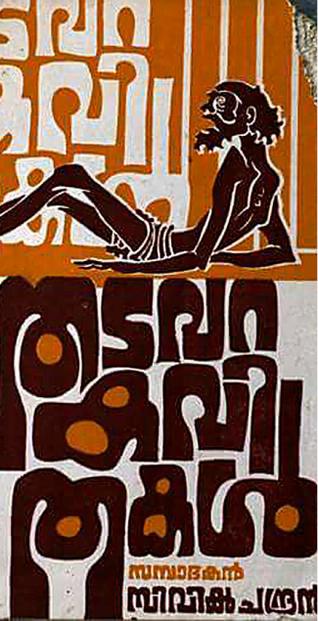
The anthology in Malayalam was first published in 1977, edited by Civic Chandran, one of the poets, and republished with extensive notes and memoirs in 2010. Some of the poems had been translated and used in various English anthologies over the time.

The cover photo of 'Thadavara kavithakal' the English translation of which is getting ready to be published.
The cover photo of ‘Thadavara kavithakal’ the English translation of which is getting ready to be published.

First time

This is for the first time an attempt was made to translate the anthology completely into English and published as one book.

Freshly translated by noted Malayalam poet K. Satchidanandan, with a foreword by Balachandran Chullikkad, the anthology carries 25 poems by ten poets, most of whom are still alive, while a few like Muhammed Ali and Udayabhanu have bid adieu to this world.

The remaining — M. Somanathan, V. K. Prabhakaran, M. M. Somasekharan, Das (Kuttikrishnan), C. K. Raghunath, Purushothaman, C. K. Abdul Azees and Civic Chandran –- are mostly still active as writers, theoreticians, editors and activists, having moved away from the Maoist ideology that had stirred them in the Seventies.

The poems are on diverse themes. ‘An evening note’ by P. Udayabhanu recalls the turbulent times when revolution was brewing across the country while V.K. Prabhakaran’s ‘The People of my village’ is about the unrest beneath the surface.

However, they are marked by certain recurring symbols such as storm and rain and the spirit of revolution.

source: http://www.thehindu.com / The Hindu / Home> News> Cities> Kozhikode / by Aabha Anoop / Kozhikode – November 04th, 2015

Hussain Zaidi’s back to live action!

Hussain Zaidi
Hussain Zaidi

Journalist and author S Hussain Zaidi talks on crime reporting and what keeps him ticking

Journalist and author Hussain Zaidi, the face behind seven books based on the underworld, and also an active journo, who’s making his presence felt at Tata Literature Live! (Mumbai LitFest) speaks on fiction writing, underbelly, crime reporting and his understanding of cinema in a chat with MetroPlus.

What reorientation did you have to undergo when writing a fiction with Mumbai?

I had a 20-year long stint in journalism, which made it easy for me to write non-fiction. I basically had to write larger versions of my stories and make it into a book. Meanwhile, with Mumbai Avengers, fiction was a new territory, but I was very interested to weave in a plot around the 26/11 incident and show the discontentment of a nation. I was aghast on how easily a terrorist group could cross the borders and create mayhem in another country.

Writing a script was a challenge but there was a top cop from Mumbai, who was immensely helpful in getting the research and the detailing right, so much that I titled my lead character after him (Brijesh Singh). I approached Kabir Khan to make a film out of the idea (Phantom), who later introduced me to producer Sajid Nadiadwala.

Phantom, the film adapted from the same book received extreme reactions worldwide. How did you deal with the troubles?

The trouble in Pakistan was something that I’d honestly anticipated. What shocked me the most was how, without the film being censored or watched, the Pakistan Government sided with the petition filed by the suspect Hafiz Saeed. It was heartbreaking to see the rejection sans a proper basis. Interestingly, this entire incident raked up curiosity in the Gulf and the film’s collection in the region showed a sudden jump. Otherwise too, the film didn’t get affected much financially.

Given you had ventured into a space not many had gone into, was it easier to get noticed as an author?

It was an advantage that I’d written about the underworld, a subject that many hadn’t touched. I understood it was fresh. The intention also was because I realised nobody would have read my work had it been a done-to-death genre. Now having written a series of books on the same subject, I doubt if I have more material to write. So, moving forward, the ambition will be to choose another niche genre.

How did your the journalistic roots come to use and how different was it to get material on the subject?

The journalist roots did help me find sources. I had clear cut information on who were the witnesses, victims and how I had to procure the background information. Having been in the same field, it’s easier to work than others and get material, when the sources trust you. My first novel Black Friday took about four years to complete, Dongri to Dubai, about seven and Mumbai Avengers, close to 1.5 years. Journalism helps you to get into a writing habit everyday, so from 2000 words a day to 60000 words in a month wasn’t so big a challenge.

How does your family react with your involvement in such a dark space?

My wife is also a crime reporter, so it’s not conventional talk that goes on in the house. I have a college-going son and at home, it’s not movies or serials that get us talking. We talk about gangsters, their lives, hideouts rather openly, because our world as investigative journos revolves around that. It’s quite normal though.

Your views on the break he took from journalism and getting back?

I’m back to working as a reporter now. It feels good to be back in action from where I’d started. I had basically taken a break from my journo career in 2011 due to a series of commitments made to publishers, producers and directors. A lot of things were on the backburner and I had to finish nearly four books in the meantime.

The differences you noticed between cinema and written media?

I still feel it’s Greek and Latin when I talk about the cinematographic representation of a book. WithPhantom too, it was a revenge mission for the 26/11 incident of its own kind. In spite of the story being similar in both formats, I sensed a lot of difference in the results, the treatment, the characterisations. It may take its own time for the distinction to set in me.

Did you still have that bit of adrenaline rush when you heard the news of Chota Rajan’s arrest?

When I just heard the news of him being arrested, I didn’t have to search hard to access information about him. I sat on my desk, had all that extra material to write while all the other reporters in the country were desperate in their search of authentic and exclusive information.

source: http://www.thehindu.com / The Hindu / Home> Features> MetroPlus / by Srivathsan Nadadhur / Hyderabad – October 31st,  2015

Neglected Armenian cemetery in Hyderabad sports new look

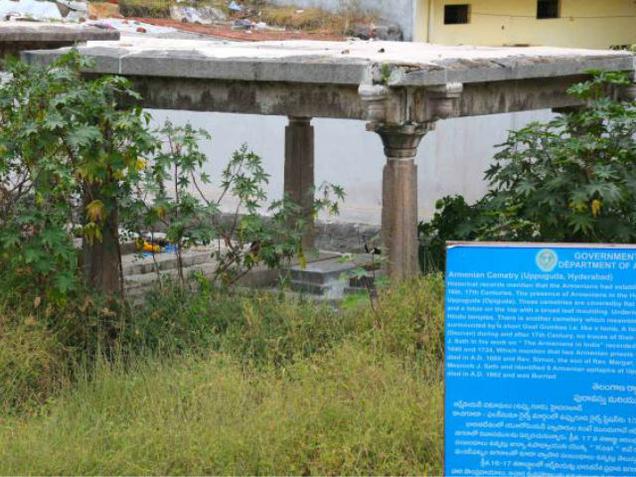
State Archaeology and Museums all set to put new life into most neglected heritage monument of the 17th century Armenian Cemetery situated at Uppuguda (Opiguda) in Hyderabad'old city will likely to opened for the general public and tourists. Photo: Mohammed Yousuf
State Archaeology and Museums all set to put new life into most neglected heritage monument of the 17th century Armenian Cemetery situated at Uppuguda (Opiguda) in Hyderabad’old city will likely to opened for the general public and tourists. Photo: Mohammed Yousuf

The existence of the cemetery of Armenians was brought to light by Mohammed Ziauddin Ahmed Shakeb, a historian from the city in 1970.

Two of Hyderabad’s most famous Armenians, Albert Abid and Alexander Jacob, are not buried at the Armenian cemetery in Uppuguda. But the cemetery is preparing to enlighten people on the role of the two Armenians in the 16 and 17 century. After lying in a state of neglect for decades, the Armenian cemetery, will be opened to public shortly.

The Department of Archaeology and Museums, which is the custodian of the cemetery, renovated the premises some months ago.

“ A caretaker will be posted at the cemetery to look after its maintenance,” said Sunita M. Bhagwath, Director, Archaeology and Museums Department.

Armenians came to India between 16th and 17th centuries as traders travelling through Persia, Afghanistan and Tibet. “A large number of Armenians settled in Hyderabad during the 17th century. Though there are no written records of their activities, traditions and social conditions , the Armenian epitaphs acknowledge their presence,” M.A. Qayyum, former Deputy Director Archaeology and Museums said.

There are about 20 graves in the cemetery, 19 are of Armenians and one is of a Dutch trader.

The graves of two priests Rev Johannes, who died in 1680, and Rev. Margar, who died in 1724, are also here. A single dome on the premises representing the Qutb Shahi style of architecture and two mandapa-like structures, one square and the other octagonal, are distinct features of the cemetery.

The existence of the cemetery of Armenians was brought to light by Mohammed Ziauddin Ahmed Shakeb, a historian from the city in 1970.

“Dr. Shakeb chanced upon a letter written by British Resident W. Haig in Hyderabad to a government official in 1907 about the Armenian cemetery. Soon, officials were informed about it and the place was identified,” Qayyum explained.

Rs. 25 lakh for renovation
The department spent around Rs. 25 lakh for renovating the place. Wild shrubs were cleared and the height of the compound wall has been increased. The authorities took care to see that the wall was renovated using granite, lime and mortar to keep in tune with the character of the precinct.

The tough task ahead for them is to see that the basalt stones with Armenian engravings on the graves are restored. “We will be seeking the help of experts for the job,” Ms. Bhagwath said. Historians suggest that the government seek the Armenian authorities’ help in establishing the identity of all those who are buried here.

source: http://www.thehindu.com / The Hindu / Home> News> Cities> Hyderabad / by Asif Yar Khan / Hyderabad – October 31st, 2015

Rahman on a Signature Track

Hrithik Roshan and Kangana Ranaut will grace MAMI opening ceremony

MamiMPOs28oct2015

The 17th edition of the MAMI Mumbai Film Festival partnered by Mumbai Mirror will open with a light show on Thursday at the Gateway of India. The program features a visual spectacle reflected on the monument.

Two-time Academy Award winner AR Rahman has created a signature tune for the festival, that he will perform at the ceremony.

The star-studded night will be hosted by Kalki Koechlin and will have actors like Hrithik Roshan, Kangana Ranaut, Parineeti Chopra and Radhika Apte in attendance. Filmmakers Rajkumar Hirani, Anand Gandhi, Vishal Bharadwaj, Dibakar Banerjee, Juhi Chaturvedi, Neeraj Ghaywan will grace the event. Writer-duo Salim-Javed, who have penned iconic films like Deewaar, Sholay and Zanjeer, will be felicitated with the ‘Excellence in Cinema’ award for their outstanding work.

“It was Chief Minister Devendra Fadnavis who took active interest in the festival and also made the venue available. He will be in attendance at the opening ceremony,” the spokesperson of the festival told Mirror.

A celebrity after party will follow the opening ceremony, which will be hosted at Antilla, home of Nita and Mukesh Ambani. Ava DuVernay, head of the International Jury, will attend the party, among other Bollywood celebrities.

A new addition to the festival, presented by Jio, this year is the Movie Mela, which will feature actors participating in panel discussions on October 31 at Mehboob Studio. “The discussion between young actors and experienced moderators will bring forth interesting opinions on the future of Bollywood in the next five years. With the industry seeing so many developments each year, the discussion appears to be a promising one. I am looking forward to it,” says Parineeti, who will be one of the panelists.

For the festival, designer Masaba Gupta has created a special power bank for the jury that will leave them with a ‘Bollywood masala’ touch. “I think it’s very important for Mumbai to have a festival of its own, since it is the heartbeat of Bollywood. I am looking forward to being a part of all the festivals to come,” Masaba, whose design for MAMI, features Amitabh Bachchan as the angry young man of B-town, told Mirror

source: http://www.bangaloremirror.com / Bangalore Mirror / Home> Entertainment> Bollywood / by Sanyukta Iyer, Bangalore Mirror Bureau / October 27th, 2015

Hyderabad misses glitter of Nizam’s priceless jewels

In the absence of any concrete effort, the jewels are confined to RBI vaults in Delhi. Photo: AP

In the absence of any effort, they are confined to RBI vaults in Delhi.

Vows forgotten and proposals put on backburner have resulted in priceless heritage of Hyderabad staying away from the city and remaining confined to Reserve Bank of India (RBI) vaults in New Delhi.

It had been almost a decade since the Nizam’s jewels, a precious collection with value running into several thousand crore rupees, was exhibited on temporary basis in the city. The then A.P. government vowed to have the collection brought to the city and put on a permanent display here and several proposals were drafted too.

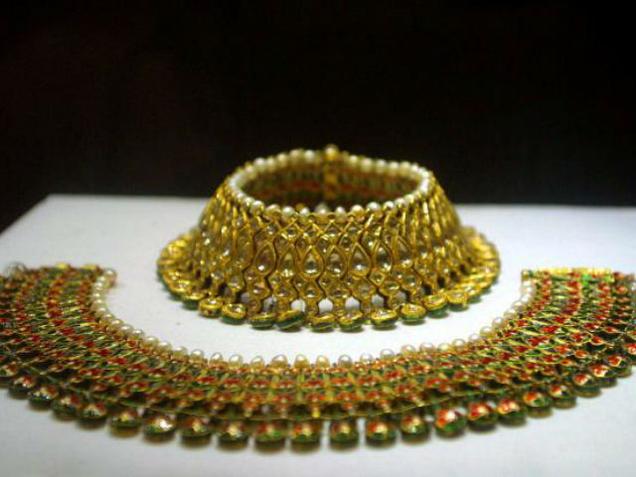
Comprising 173 exquisite pieces, including the famed 184.50-carat Jacob diamond from the treasury of the erstwhile Nizams of Hyderabad, the collection has been with the Union government and deposited in the safe vaults of the RBI.

Few other pieces of the royal compilation include priceless uncut Colombian emeralds, rare carat Alexandrite ring, a necklace with 12 flat diamonds and emerald armbands weighing 150 carats said to have belonged to the Mysore ruler, Tipu Sultan.

Hyderabad, the city to which the jewellery actually belongs, twice hosted exhibition of the collection in the year 2001 and 2006 at Salar Jung Museum which had large crowds thronging for a look.

‘Security not an issue’

Former Director of Salar Jung Museum A.K.V.S. Reddy, who supervised the temporary exhibitions in the city, says the priceless collection belonged to the city and argues a permanent facility to display them here was not unviable.

“Security is key aspect for such galleries and a decade ago when it was displayed here, we had to deploy nearly 120 security personnel. However, with more advanced technologies in the form of camera surveillance and alarms, the requirement will be less,” he says.

Salar Jung Museum officials rule out the possibility of hosting a permanent exhibition of such precious collection at its premises now given the developments at the museum.Telangana Deputy Chief Minister Mohammad Mahmood Ali describes the collection of erstwhile Nizam rulers as an asset of the city and says all efforts will be made to get it here for a permanent display.

source: http://www.thehindu.com / The Hindu / Home> National> Andhra Pradesh / by T. Lalith Singh / Hyderabad – October 28th, 2015

M F Husain’s son dies of liver cancer at 69

Known for flattened surfaces and uncluttered depictions, Shamshad Hussain’s often dealt with social concerns in his works that ranged from oils to acrylics

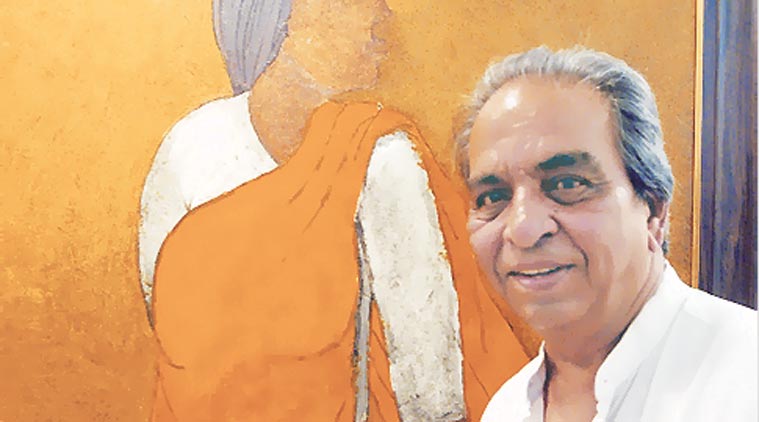
Shamshad Husain was best known for flattened surfaces and figurative depictions in a subdued palette.

He lived under the shadow of his father in the world of art where he strived to paint a picture that would be reckoned as his masterpiece.

Shamshad Husain, son of late veteran artist MF Husain, breathed his last on Saturday evening at his Delhi home. Diagnosed with liver cancer in September, his condition rapidly deteriorated. He was admitted at the Institute of Liver and Biliary Sciences, Vasant Kunj.

The 69-year-old artist is survived by two daughters. “He had developed a style of his own. A gentle person, his figuration was modest and had a personal quality, unlike the more flamboyant works of his father,” says artist Vivan Sundaram.

Postgraduate from the Royal College of Art, London, Shamshad was best known for flattened surfaces and figurative depictions in a subdued palette. His themes ranged from environmental and social concerns to dark realities and human relations. Primarily working with oils and acrylic, his popular works include a series based on ‘Love In The Time of Cholera’, Gabriel Garcia Marquez’s famous book. He also reportedly worked on a series dedicated to his father.

“He was great fun and liked to party; one of the nicest guys I knew. My father (J Swaminathan) really liked him. Husain saab used to say ‘yeh ghar ka gau hai’. It’s sad that he and Mrinalini Mukherjee passed away in the same year. I can’t think of the Delhi art scene without them,” says art writer S Kalidas.

Known to be close to his father, “his death in 2011 left a deep impact on Shamshad”, says photographer and activist Ram Rahman, who is close to the Husain family.

“He was one of his favourites and very sensitive,” says Rahman, who met Shamshad last month at an art exhibition marking MF Husain’s 100th birth anniversary in Delhi.

source: http://www.indianexpress.com / The Indian Express / Home> India> India-News-India / Top News / October 2015

Mark Zuckerberg visits ‘stunning’ Taj Mahal

Agra :

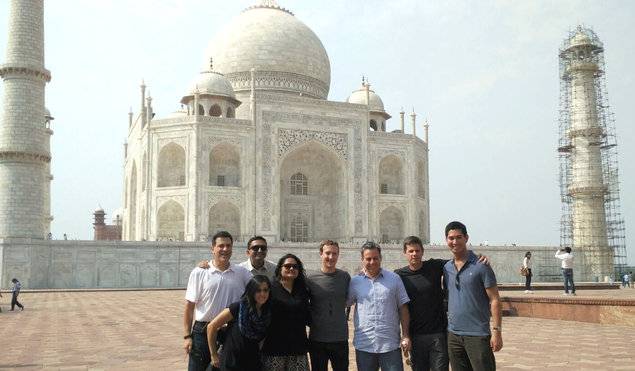
Facebook CEO Mark Zuckerberg visited Taj Mahal on Tuesday, along with group of seven people who were supposedly his colleagues.

At around 4:20pm (GMT + 5:30) Zuckerberg posted an image of him which was clicked by his colleagues while he was sitting on the east side of Taj Mahal watching the magnificent structure.

ZuckerbergTajMahalMPOs28oct2015

Confirming Zuckerberg’s visit to Taj, Image Public Relation Pvt Limited — which handles Facebook public relation in India — said, “Yes, CEO of Facebook did visited Taj Mahal on Tuesday.”
However, Ram Ratan, Archaeological Survey of India conservation assistant, Taj Mahal claimed, “We had no idea about his visit to Taj. It might be possible that he wanted to keep his visit low profile to avoid unnecessary attention.”
According to CISF official source, “Since nobody knew about Mark visit, he must had walk through long queue of security check like all ordinary tourist do.”

The tech entrepreneur will visit IIT Delhi tomorrow to interact with students and faculty at the Indian Institute of Technology in Delhi in a town hall.

Last month during PM Modi visit to US, Zuckerberg had shared an anecdote about his earlier visit to India and claimed that, “when things weren’t really going well — we had hit a tough patch and a lot of people wanted to buy Facebook — I went and I met with Steve Jobs and he said that to reconnect with what I believed was the mission of the company, I should go visit this temple in India that he had gone to early in the evolution of Apple, when he was thinking about what he wanted his vision of the future to be.”
source: http://www.timesofindia.indiatimes.com / The Times of India / Home> Tech / by Arvind Chauhan, TNN / October 27th, 2015